CHAPTER 2
CONCEPTUAL FRAMEWORK FOR FINANCIAL
REPORTING
IFRS questions are available at the end of this chapter.
TRUE-FALSE—Conceptual
Answer No. Description
MULTIPLE CHOICE—Conceptual
Answer No. Description
Test Bank for Intermediate Accounting, Seventeenth Edition
2 – 2
MULTIPLE CHOICE—Conceptual (cont.)
Answer No. Description
Conceptual Framework Underlying Financial Accounting
2 – 3
MULTIPLE CHOICE—Conceptual (cont.)
Answer No. Description

Test Bank for Intermediate Accounting, Seventeenth Edition
2 – 4
MULTIPLE CHOICE—CPA Adapted
Answer No. Description
BRIEF EXERCISES
Item Description
BE2–134 Qualitative characteristics.
BE2–135 Accounting concepts—identification.
BE2–136 Accounting concepts—identification.
EXERCISES
Item Description
E2–137 Accounting concepts—matching.
E2–138 Accounting concepts—fill in the blanks.
E2–139 Basic assumptions.
E2–140 Historical cost principle.
E2–141 Expense recognition concept.
CHAPTER LEARNING OBJECTIVES
1. Describe the usefulness of a conceptual framework and the objective of financial reporting.
2. Identify the qualitative characteristics of accounting information and the basic elements of
financial statements.
3. Review the basic assumptions of accounting.
4. Explain the application of the basic principles of accounting.
*5. Compare the conceptual frameworks underlying GAAP and IFRS.

Conceptual Framework Underlying Financial Accounting
2 – 5
SUMMARY OF QUESTIONS BY LEARNING OBJECTIVES AND BLOOM’S TAXONOMY
Item
LO
BT
Item
LO
BT
Item
LO
BT
Item
LO
BT
Item
LO
BT
TRUE-FALSE STATEMENTS
1.
1
K
5.
1
K
9.
2
C
13.
2
K
17.
4
K
2.
1
K
6.
1
K
10.
2
K
14.
3
C
18.
4
K
3.
1
K
7.
1
K
11.
2
K
15.
3
K
19.
4
C
4.
1
K
8.
2
K
12.
2
C
16.
4
K
20.
4
C
MULTIPLE CHOICE QUESTIONS
21.
1
K
44.
2
K
67.
2
K
90.
4
K
113.
4
K
22.
1
K
45.
2
K
68.
2
K
91.
4
C
114.
4
C
23.
1
K
46.
2
K
69.
2
C
92.
4
C
115.
4
C
24.
1
K
47.
2
K
70.
2
K
93.
4
C
116.
4
C
25.
1
C
48.
2
K
71.
3
K
94.
4
C
117.
4
C
26.
1
C
49.
2
K
72.
3
C
95.
4
C
118.
4
C
27.
1
K
50.
2
K
73.
3
C
96.
4
C
119.
4
K
28.
1
C
51.
2
K
74.
3
C
97.
4
K
120.
4
K
29.
1
C
52.
2
K
75.
3
C
98.
4
C
121.
4
K
30.
2
K
53.
2
K
76.
3
K
99.
4
C
122.
4
C
31.
2
K
54.
2
K
77.
3
K
100.
4
K
123.
4
C
32.
2
K
55.
2
C
78.
3
K
101.
4
K
124.
4
C
33.
2
K
56.
2
C
79.
3
C
102.
4
C
125.
2
K
34.
2
C
57.
2
K
80.
3
C
103.
4
C
126.
2
K
35.
2
C
58.
2
K
81.
3
C
104.
4
K
127.
2
K
36.
2
K
59.
2
K
82.
3
K
105.
4
C
128.
2
K
37.
2
K
60.
2
K
83.
3
C
106.
4
C
129.
2
K
38.
2
C
61.
2
K
84.
4
C
107.
4
C
130.
2
K
39.
2
C
62.
2
K
85.
4
C
108.
4
C
131.
2
K
40.
2
K
63.
2
K
86.
4
C
109.
4
K
132.
2
K
41.
2
K
64.
2
C
87.
4
C
110.
4
K
133.
4
K
42.
2
C
65.
2
K
88.
4
K
111.
4
C
43.
2
C
66.
2
K
89.
4
K
112.
4
C
BRIEF EXERCISES
134.
1
C
135.
2, 3,
4, 4
C
136.
2, 4,
4
C
EXERCISES
137.
2, 4
K
138.
2, 3,
4
K
139.
3
K
140.
3, 4
AN
141.
4
C

Test Bank for Intermediate Accounting, Seventeenth Edition
2 – 6
TRUE-FALSE—Conceptual
1. A soundly developed conceptual framework enables the FASB to issue more useful and
consistent pronouncements over time.
2. A conceptual framework is a coherent system of concepts that flow from an objective.
3. The first level of the conceptual framework identifies the recognition, measurement, and
disclosure concepts used in establishing accounting standards.
4. The second level of the conceptual framework provides the qualitative characteristics that
make accounting information useful and the elements of financial statements.
5. Although the FASB has developed a conceptual framework, no Statements of Financial
Accounting Concepts have been issued to date.
6. The objective of financial reporting is the foundation of the conceptual framework.
7. Users of financial statements are assumed to need no knowledge of business and financial
accounting matters to understand information contained in financial statements.
8. Relevance and faithful representation are the two fundamental qualities that make
accounting information useful for decision making.
9. The idea of consistency does not mean that companies cannot switch from one accounting
method to another.
10. Timeliness and neutrality are two ingredients of relevance.
11. Verifiability and predictive value are two ingredients of faithful representation.
12. Revenues, gains, and distributions to owners all increase equity.
Conceptual Framework Underlying Financial Accounting
2 – 7
13. Comprehensive income includes all changes in equity during a period except those
resulting from investments by owners and distributions to owners.
14. The historical cost principle would be of limited usefulness if not for the going concern
assumption.
15. The economic entity assumption means that economic activity can be identified with a
particular legal entity.
16. The expense recognition principle states that debits must equal credits in each transaction.
17. Revenues are recognized in the accounting period in which the performance obligation is
satisfied.
18. Supplementary information may include details or amounts that present a different
perspective from that adopted in the financial statements.
19. In order to justify requiring a particular measurement or disclosure, the benefits to be
derived from it must equal the costs associated with it.
20. In cost-benefit analysis, costs are generally more difficult to quantify than are benefits.
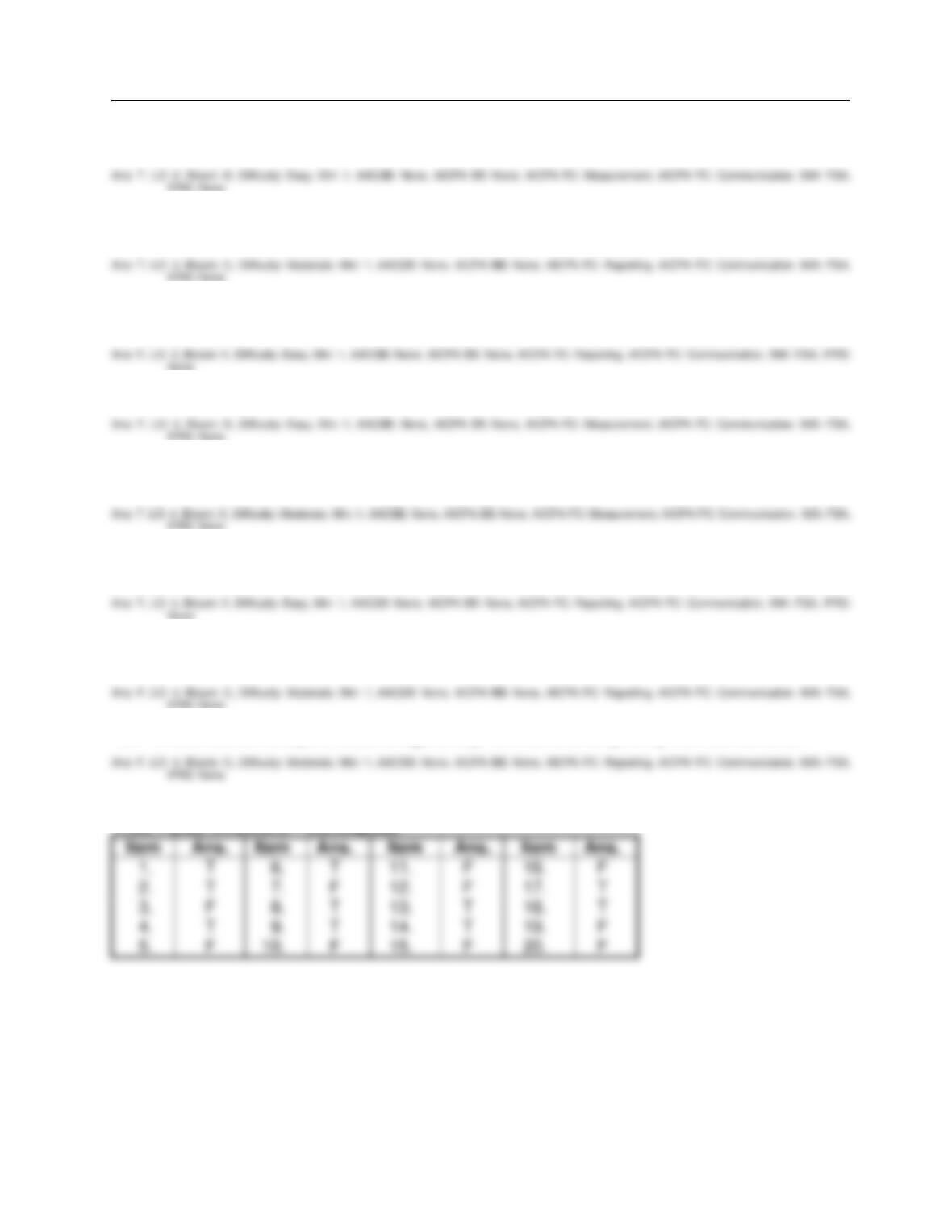
True False Answers—Conceptual

Test Bank for Intermediate Accounting, Seventeenth Edition
2 – 8
MULTIPLE CHOICE—Conceptual
21. Generally accepted accounting principles
a. are fundamental truths or axioms that can be derived from laws of nature.
b. derive their authority from legal court proceedings.
c. derive their credibility and authority from general recognition and acceptance by the
accounting profession.
d. have been specified in detail in the FASB conceptual framework.
22. A soundly developed conceptual framework of concepts and objectives should
a. increase financial statement users’ understanding of and confidence in financial
reporting.
b. enhance comparability among companies’ financial statements.
c. allow new and emerging practical problems to be more quickly solved.
d. All of these answer choices are correct.
23. Which of the following is not true concerning a conceptual framework in accounting?
a. It should be a basis for standard-setting.
b. It should allow practical problems to be solved more quickly by reference to it.
c. It should be based on fundamental truths that are derived from the laws of nature.
d. All of these answer choices are true.
24. What is a purpose of having a conceptual framework?
a. To make sure that economic activity can be identified with a particular legal entity.
b. To segregate activities among different companies.
c. To provide comparable information for different companies.
d. To enable the profession to more quickly solve emerging practical problems and to
provide a foundation from which to build more useful standards.
S25. Which of the following is not a benefit associated with the FASB Conceptual Framework
Project?
a. A conceptual framework should increase financial statement users’ understanding of
and confidence in financial reporting.
b. Practical problems should be more quickly solvable by reference to an existing
conceptual framework.
c. A coherent set of accounting standards and rules should result.
d. Business entities will need far less assistance from accountants because the financial
reporting process will be quite easy to apply.

Conceptual Framework Underlying Financial Accounting
2 – 9
26. In the conceptual framework for financial reporting, what provides “the why”—the purpose
of accounting?
a. Recognition, measurement, and disclosure concepts such as assumptions, principles,
and constraints
b. Qualitative characteristics of accounting information
c. Elements of financial statements
d. Objective of financial reporting
27. The underlying theme of the conceptual framework is
a. decision usefulness.
b. understandability.
c. faithful representation.
d. comparability.
28. The objective of general-purpose financial reporting is to provide financial information
about a reporting entity to each of the following except
a. potential equity investors.
b. potential lenders.
c. present investors.
d. All of these answers are correct.
29. The objective of general-purpose financial reporting is?
a. to provide financial information about the reporting entity that is useful to present and
potential equity investors, lenders, and other creditors in making decisions in their
capacity as capital providers
b. to provide companies with the option to select information that favors one set of
interested parties over another
c. to provide users with financial information that implies total freedom from error.
d. to provide a metric for financial information used to determine when the boundary
between two or more entities should be disregarded and the entities considered to be
a licensing arrangement.
P30. If the LIFO inventory method was used last period, it should be used for the current and
following periods because of
a. consistency.
b. materiality.
c. timeliness.
d. verifiability.
S31. Which of the following is a characteristic describing the fundamental quality of relevance?
a. Predictive value.
b. Neutrality.
c. Verifiability.
d. Understandability.

Test Bank for Intermediate Accounting, Seventeenth Edition
2 – 10
32. Which of the following is a fundamental quality of useful accounting information?
a. Comparability
b. Relevance
c. Neutrality
d. Materiality
33. Which of the following is a fundamental quality of useful accounting information?
a. Conservatism
b. Comparability
c. Faithful representation
d. Consistency
34. What is meant by comparability when discussing financial accounting information?
a. Information has predictive or confirmatory value.
b. Information is reasonably free from error.
c. Information is measured and reported in a similar fashion across companies.
d. Information is timely.
35. What is meant by consistency when discussing financial accounting information?
a. Information presented by a company applies the same accounting treatment to similar
events, from period to period.
b. Information is timely.
c. Information is classified, characterized, and presented clearly and concisely.
d. Information is verifiable.
36. Which of the following is an ingredient of relevance?
a. Completeness
b. Neutrality
c. Timeliness
d. Materiality
37. Which of the following is an ingredient of faithful representation?
a. Predictive value
b. Materiality
c. Neutrality
d. Confirmatory value

Conceptual Framework Underlying Financial Accounting
2 – 11
38. Changing the method of inventory valuation should be reported in the financial statements
because of which qualitative characteristic of accounting information?
a. Consistency
b. Verifiability
c. Timeliness
d. Comparability
39. A company issuing its annual financial reports within one month of the end of the year is
an example of which enhancing quality of accounting information?
a. Comparability
b. Timeliness
c. Understandability
d. Verifiability
40. What is the quality of information that is capable of making a difference in a decision?
a. Understandability
b. Materiality
c. Timeliness
d. Relevance
41. Neutrality is an ingredient of which fundamental quality of information?
a. Faithful representation
b. Comparability
c. Relevance
d. Understandability
42. If the FIFO inventory method was used last period, it should be used for the current and
following periods because of
a. relevance.
b. neutrality.
c. understandability.
d. consistency.
43. The pervasive criterion by which accounting information can be judged is that of
a. decision usefulness.
b. freedom from bias.
c. timeliness.
d. comparability.

Test Bank for Intermediate Accounting, Seventeenth Edition
2 – 12
44. The two fundamental qualities that make accounting information useful for decision
making are
a. comparability and timeliness.
b. materiality and neutrality.
c. relevance and faithful representation.
d. faithful representation and comparability.
45. Accounting information is considered to be relevant when it
a. can be depended on to represent the economic conditions and events that it is
intended to represent.
b. is capable of making a difference in a decision.
c. is understandable by reasonably informed users of accounting information.
d. is verifiable and neutral.
46. The quality of information that means the numbers and descriptions match what really
existed or happened is
a. relevance.
b. faithful representation.
c. completeness.
d. neutrality.
47. Which of the following does not relate to relevance?
a. Materiality
b. Predictive value
c. Confirmatory value
d. All of these answer choices relate to relevance.
48. According to Statement of Financial Accounting Concepts No. 8, materiality is an ingredient
of the fundamental quality(ies) of:
Relevance Faithful Representation
a. Yes Yes
b. No Yes
c. Yes No
d. No No
49. According to Statement of Financial Accounting Concepts No. 8, completeness is an
ingredient of the fundamental quality(ies) of:
Relevance Faithful Representation
a. Yes No
b. Yes Yes
c. No No
d. No Yes

Conceptual Framework Underlying Financial Accounting
2 – 13
50. According to Statement of Financial Accounting Concepts No. 8, neutrality is an ingredient
of the fundamental quality(ies) of:
Relevance Faithful Representation
a. Yes Yes
b. No Yes
c. Yes No
d. No No
51. Neutrality means that information
a. provides benefits which are at least equal to the costs of its preparation.
b. can be compared with similar information about an enterprise at other points in time.
c. would have no impact on a decision maker.
d. cannot favor one set of interested parties over another.
52. The characteristic that is demonstrated when a high degree of consensus can be secured
among independent measurers using the same measurement methods is
a. relevance.
b. faithful representation.
c. verifiability.
d. neutrality.
53. According to Statement of Financial Accounting Concepts No. 8, predictive value is an
ingredient of the fundamental quality(ies) of:
Relevance Faithful Representation
a. Yes No
b. Yes Yes
c. No No
d. No Yes
54. Under Statement of Financial Accounting Concepts No. 2, free from error is an ingredient
of the fundamental quality of
Faithful Representation Relevance
a. Yes Yes
b. No Yes
c. Yes No
d. No No

Test Bank for Intermediate Accounting, Seventeenth Edition
2 – 14
55. Financial information demonstrates consistency when
a. firms in the same industry use different accounting methods to account for the same
type of transaction.
b. a company changes its estimate of the salvage value of a fixed asset.
c. a company fails to adjust its financial statements for changes in the value of the
measuring unit.
d. None of these answer choices are correct.
56. Financial information exhibits the characteristic of consistency when
a. expenses are reported as charges against revenue in the period in which they are paid.
b. a company applies the same accounting treatment to similar events, from period to
period.
c. extraordinary gains and losses are not included on the income statement.
d. accounting procedures are adopted which give a consistent rate of net income.
57. Information about different companies and about different periods of the same company
can be prepared and presented in a similar manner. Comparability and consistency are
related to which of these objectives?
Comparability Consistency
a. Companies Companies
b. Companies Periods
c. Periods Companies
d. Periods Periods
58. When information about two different enterprises has been prepared and presented in a
similar manner, the information exhibits the characteristic of
a. relevance.
b. faithful representation.
c. consistency.
d. None of these answer choices are correct.
59. The elements of financial statements include investments by owners. These are increases
in an entity’s net assets resulting from owners’
a. transfers of assets to the entity.
b. rendering services to the entity.
c. satisfaction of liabilities of the entity.
d. All of these answer choices are correct.

Conceptual Framework Underlying Financial Accounting
2 – 15
60. In classifying the elements of financial statements, the primary distinction between
revenues and gains is
a. the materiality of the amounts involved.
b. the likelihood that the transactions involved will recur in the future.
c. the nature of the activities that gave rise to the transactions involved.
d. the costs versus the benefits of the alternative methods of disclosing the transactions
involved.
61. A decrease in net assets arising from peripheral or incidental transactions is called a(n)
a. capital expenditure.
b. cost.
c. loss.
d. expense.
62. One of the elements of financial statements is comprehensive income. As described in
Statement of Financial Accounting Concepts No. 6, “Elements of Financial Statements,”
comprehensive income is equal to
a. revenues minus expenses plus gains minus losses.
b. revenues minus expenses plus gains minus losses plus investments by owners minus
distributions to owners.
c. revenues minus expenses plus gains minus losses plus investments by owners minus
distributions to owners plus assets minus liabilities.
d. None of these answer choices are correct.
63. Which of the following elements of financial statements is not a component of
comprehensive income?
a. Revenues
b. Distributions to owners
c. Losses
d. Expenses
P64. The calculation of comprehensive income includes which of the following?
Operating Income Distributions to Owners
a. Yes Yes
b. No No
c. No Yes
d. Yes No

Test Bank for Intermediate Accounting, Seventeenth Edition
2 – 16
S65. According to the FASB conceptual framework, which of the following elements describes
transactions or events that affect a company during a period of time?
a. Assets.
b. Expenses.
c. Equity.
d. Liabilities.
S66. According to the FASB Conceptual Framework, the elements⎯assets, liabilities, and
equity⎯describe amounts of resources and claims to resources at/during a
Moment in Time Period of Time
a. Yes No
b. Yes Yes
c. No Yes
d. No No
67. Which of the following is not a basic element of financial statements?
a. Assets
b. Balance sheet
c. Losses
d. Revenue
68. Which of the following basic elements of financial statements is more associated with the
balance sheet than the income statement?
a. Equity
b. Revenue
c. Gains
d. Expenses
69. Issuance of common stock for cash affects which basic element of financial statements?
a. Revenues
b. Losses
c. Liabilities
d. Equity
70. Which of these basic elements of financial statements arises from peripheral or incidental
transactions?
a. Assets
b. Liabilities
c. Gains
d. Expenses

Conceptual Framework Underlying Financial Accounting
2 – 17
71. Which of the following is not a basic assumption underlying the financial accounting
structure?
a. Economic entity assumption
b. Going concern assumption
c. Periodicity assumption
d. Historical cost assumption
72. Which basic assumption is illustrated when a firm reports financial results on an annual
basis?
a. Economic entity assumption
b. Going concern assumption
c. Periodicity assumption
d. Monetary unit assumption
73. Which basic assumption may not be followed when a firm in bankruptcy reports financial
results?
a. Economic entity assumption
b. Going concern assumption
c. Periodicity assumption
d. Monetary unit assumption
74. Which accounting assumption or principle is being violated if a company provides financial
reports only when it introduces a new product?
a. Economic entity
b. Periodicity
c. Revenue recognition
d. Full disclosure
S75. Which of the following basic accounting assumptions is threatened by the existence of
severe inflation in the economy?
a. Monetary unit assumption
b. Periodicity assumption
c. Going-concern assumption
d. Economic entity assumption
S76. During the lifetime of an entity accountants produce financial statements at artificial points
in time in accordance with the concept of
Relevance Periodicity
a. No No
b. Yes No
c. No Yes
d. Yes Yes

Test Bank for Intermediate Accounting, Seventeenth Edition
2 – 18
77. Under current GAAP, inflation is ignored in accounting due to the
a. economic entity assumption.
b. going concern assumption.
c. monetary unit assumption.
d. periodicity assumption.
78. The economic entity assumption
a. is inapplicable to unincorporated businesses.
b. recognizes the legal aspects of business organizations.
c. requires periodic income measurement.
d. is applicable to all forms of business organizations.
79. Preparation of consolidated financial statements when a parent-subsidiary relationship
exists is an example of the
a. economic entity assumption.
b. relevance characteristic.
c. comparability characteristic.
d. neutrality characteristic.
80. During the lifetime of an entity, accountants produce financial statements at arbitrary
points in time in accordance with which basic accounting concept?
a. Cost constraint
b. Periodicity assumption
c. Conservatism
d. Expense recognition principle
81. What accounting concept justifies the usage of depreciation and amortization policies?
a. Going concern assumption
b. Fair value principle
c. Full disclosure principle
d. Monetary unit assumption
82. The assumption that a company will not be sold or liquidated in the near future is known
as the
a. economic entity assumption.
b. monetary unit assumption.
c. periodicity assumption.
d. None of these answer choices are correct.

Conceptual Framework Underlying Financial Accounting
2 – 19
83. Which of the following is an implication of the going concern assumption?
a. The historical cost principle is credible.
b. Depreciation and amortization policies are justifiable and appropriate.
c. The current-noncurrent classification of assets and liabilities is justifiable and
significant.
d. All of these.
84. Proponents of historical cost ordinarily maintain that in comparison with all other valuation
alternatives for general purpose financial reporting, statements prepared using historical
costs are more
a. verifiable.
b. relevant.
c. indicative of the entity’s purchasing power.
d. conservative.
85. Valuing assets at liquidation values rather than cost is inconsistent with the
a. periodicity assumption.
b. expense recognition principle.
c. materiality constraint.
d. historical cost principle.
86. Revenue is recognized in the accounting period in which the performance obligation is
satisfied. This statement describes the
a. consistency characteristic.
b. expense recognition principle.
c. revenue recognition principle.
d. relevance characteristic.
87. Generally, revenue from sales should be recognized at a point when
a. management decides it is appropriate to do so.
b. the product is available for sale to the ultimate consumer.
c. the entire amount receivable has been collected from the customer and there remains
no further warranty liability.
d. None of these answer choices are correct.
88. Revenue generally should be recognized
a. at the end of production.
b. at the time of cash collection.
c. when realized.
d. when the performance obligation is satisfied.