41
Listed below are ten terms followed by a list of phrases that describe or characterize each of the
terms. Match each phrase with the correct term.
A) Refers to inflows of assets from the sale of goods and services.
B) A list of the general ledger accounts and their balances.
C) Collection of storage areas, called accounts.
D) Records the effects of internal transactions.
E) Cash received from a customer in advance of providing a good or service.
F) Last step in the accounting processing cycle.
G) Asset recorded when an expense is paid for in advance.
H) Changes in the retained earnings component of shareholders’ equity.
I) Expenses incurred but not yet paid.
J) Revenue recognized before cash is received.
106) Unadjusted trial balance
107) Accrued receivables
108) Deferred revenues
42
109) Temporary accounts
110) Accrued liabilities
111) Adjusting entries
112) Prepaid expense
113) General ledger
43
114) Revenues
115) Post-closing trial balance
Use this information to answer the following questions:
The account titles to be responded to are provided in no particular order. Assume that all
accounts have normal balances according to whether the account is increased by a debit or
increased by a credit.
Required:
In column A, indicate whether a debit will:
1. Increase the account balance, or
2. Decrease the account balance.
In column B, classify each account according to the following scheme. For contra accounts,
indicate the classification of the account to which it relates.
1. A current asset in the balance sheet.
2. A noncurrent asset in the balance sheet.
3. A current liability in the balance sheet.
4. A long-term liability in the balance sheet.
5. A permanent equity account in the balance sheet.
6. A revenue account in the income statement.
7. An expense account shown in the income statement.
8. Account does not appear in either the balance sheet or the income statement.
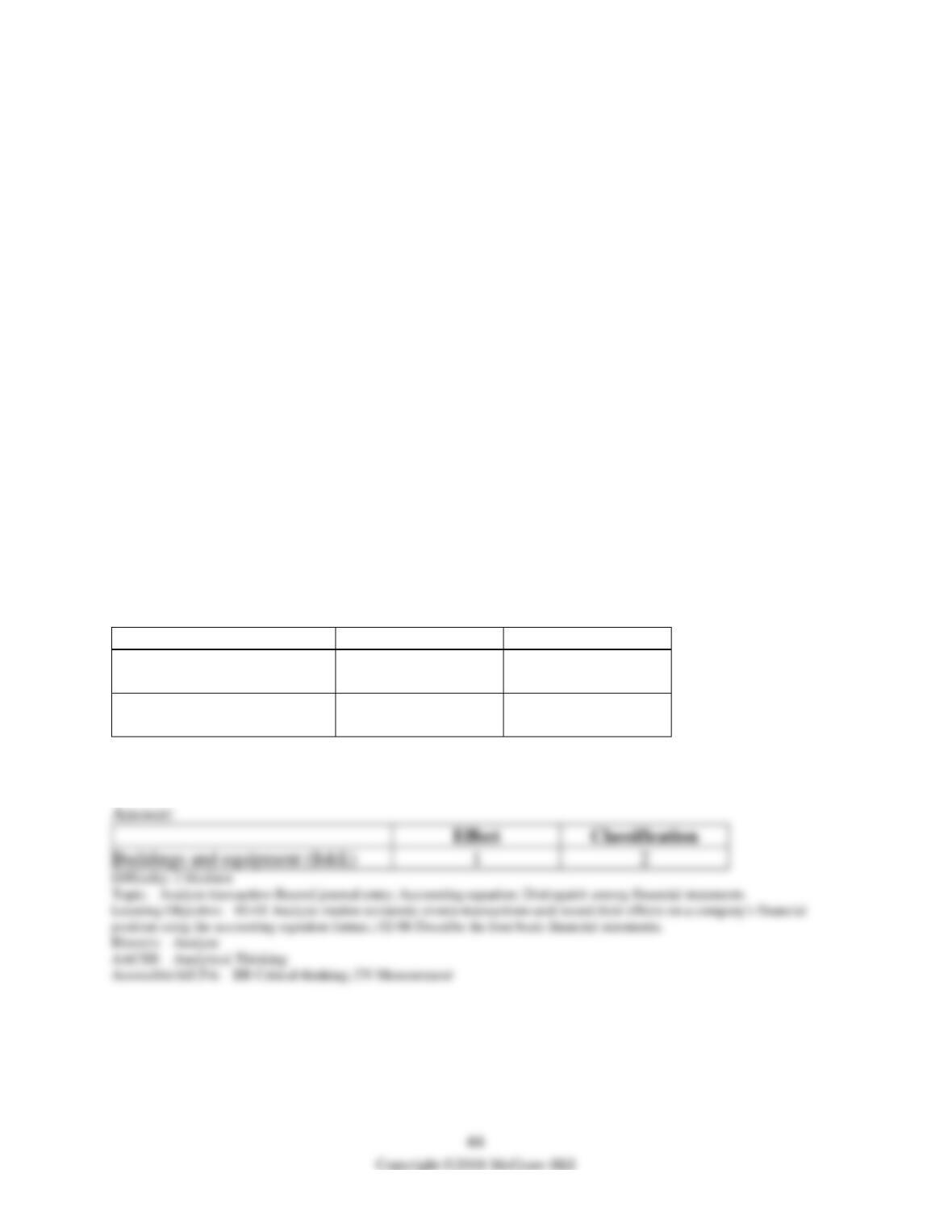
A
B
Effect of a debit
on account
Classification
EXAMPLE: Advertising
expense
1
7
116) Buildings and equipment (B&E)
Buildings and equipment (B&E)
45
117) Short-term notes payable
118) Cost of goods sold
119) Accounts receivable
120) Inventory
46
121) Deferred revenue
122) Property taxes payable
123) Retained earnings
124) Interest revenue
47
125) Supplies expense
126) Prepaid rent
127) Common stock
48
Use this information to answer the following questions:
1100
Cash
2170
Property taxes payable
1120
Short-term investments
2180
Rent payable
1130
Notes receivable
2200
Long-term notes payable
1140
Accounts receivable
3100
Common stock
1145
Loan receivable
3200
Retained earnings
1150
Interest receivable
5000
Sales revenue
1160
Other accrued receivables
5300
Interest revenue
1200
Inventory
6000
Cost of goods sold
1250
Supplies
6200
Advertising expense
1260
Prepaid expenses
6210
Miscellaneous expense
1320
Buildings and equipment (B&E)
6220
Depreciation expense
1325
Accumulated depreciation-B&E
6230
Insurance expense
2110
Short-term notes payable
6240
Property tax expense
2120
Interest payable
6250
Rent expense
2130
Accounts payable
6260
Supplies expense
2140
Deferred revenue
6270
Salaries and wages expense
2150
Salaries and wages payable
6400
Interest expense
2160
Dividends payable
6999
Income summary account
Required:
Using the chart of accounts provided, indicate by account number the account or accounts that
would be debited and credited in the following transactions. Also enter the number 1, 2, or 3 to
indicate the type of transaction as: (1) an external transaction, (2) an internal transaction recorded
as an adjusting journal entry, or (3) a closing entry. The company uses a perpetual inventory
system. All prepayments are initially recorded in permanent accounts.
TRANSACTION
Account(s)
debited
Account(s)
credited
Transaction
type
EXAMPLE: Sold $110,000,000 in common
stock for cash.
1100
3100
1
49
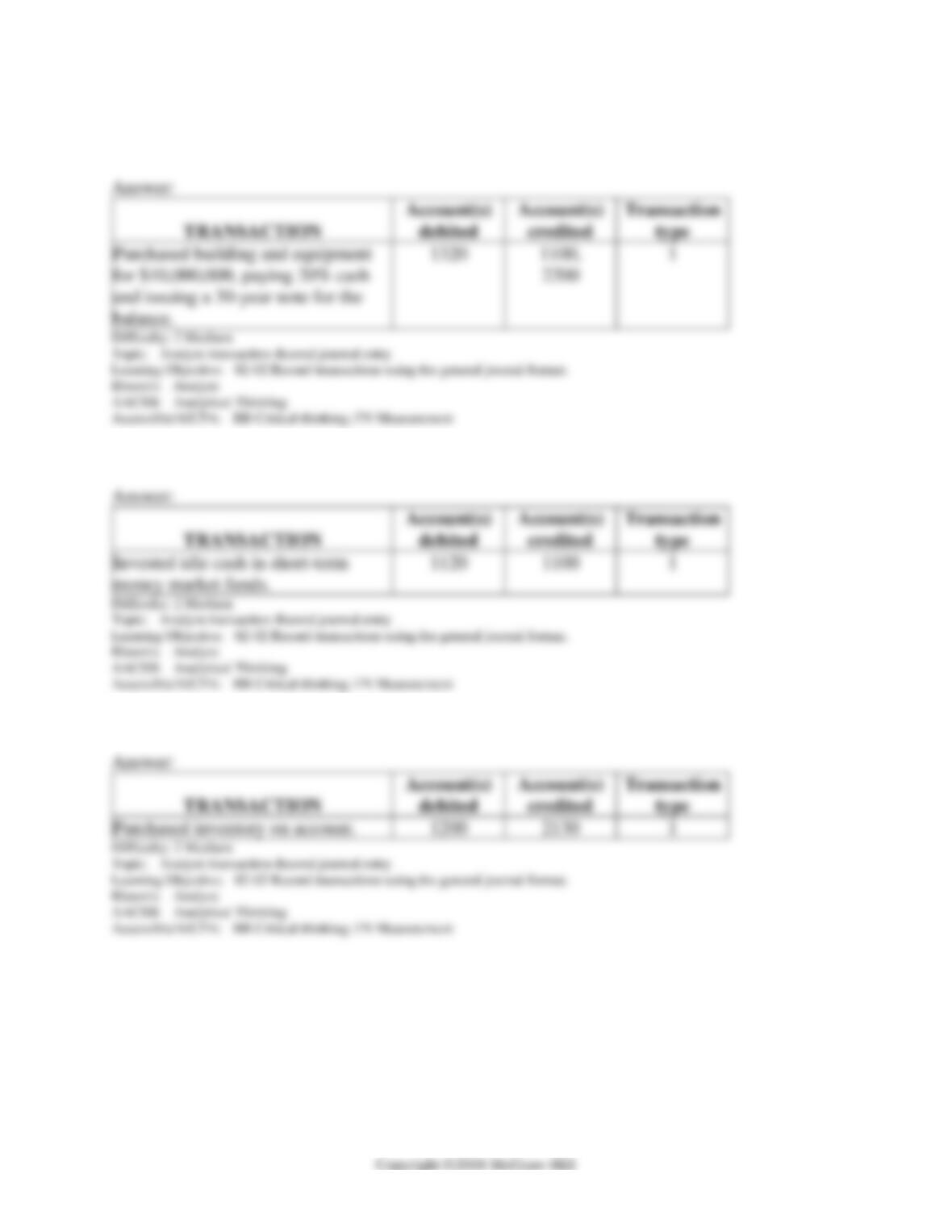
128) Purchased building and equipment for $10,000,000, paying 20% cash and issuing a 30-year
note for the balance.
129) Invested idle cash in short-term money market funds.
130) Purchased inventory on account.
50
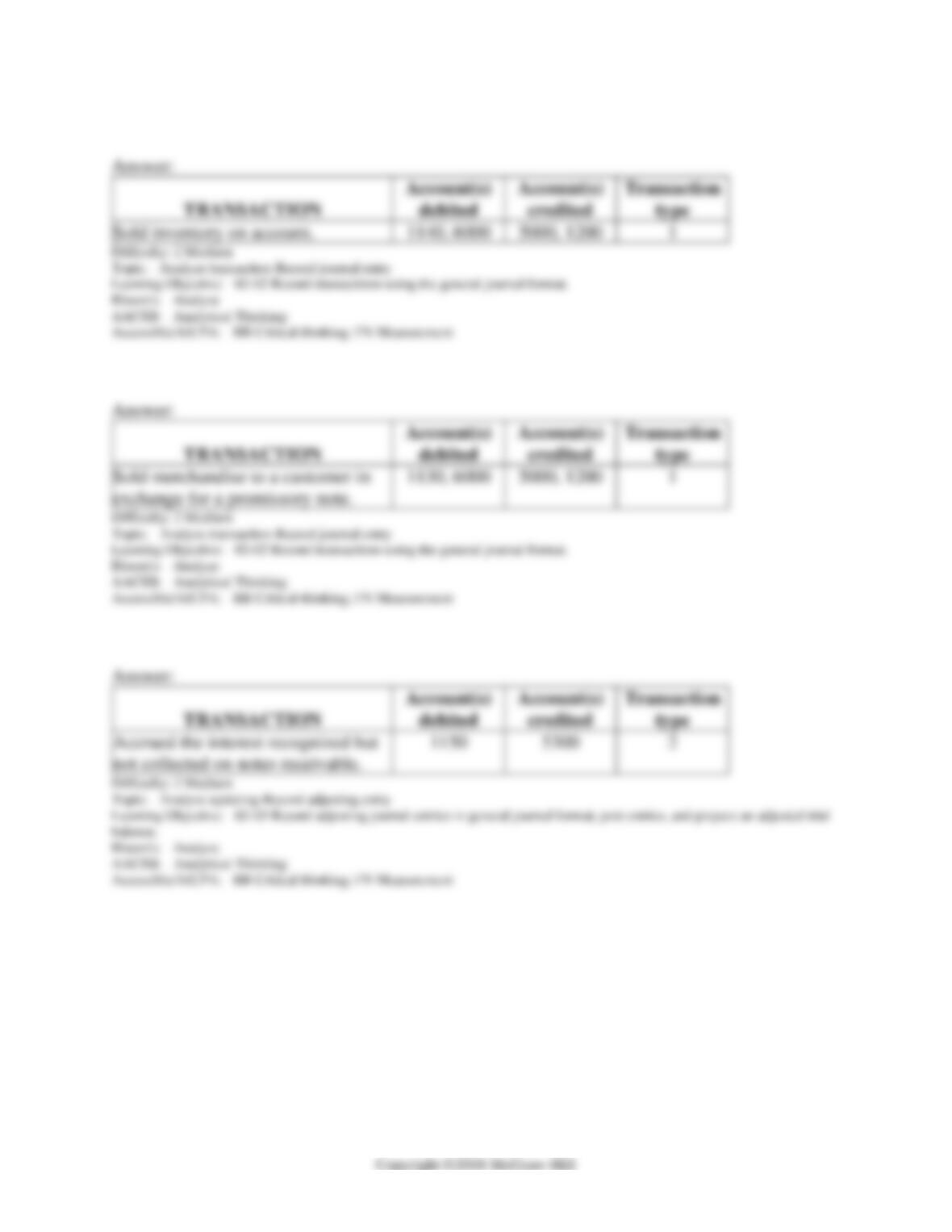
131) Sold inventory on account.
132) Sold merchandise to a customer in exchange for a promissory note.
133) Accrued the interest recognized but not collected on notes receivable.
51
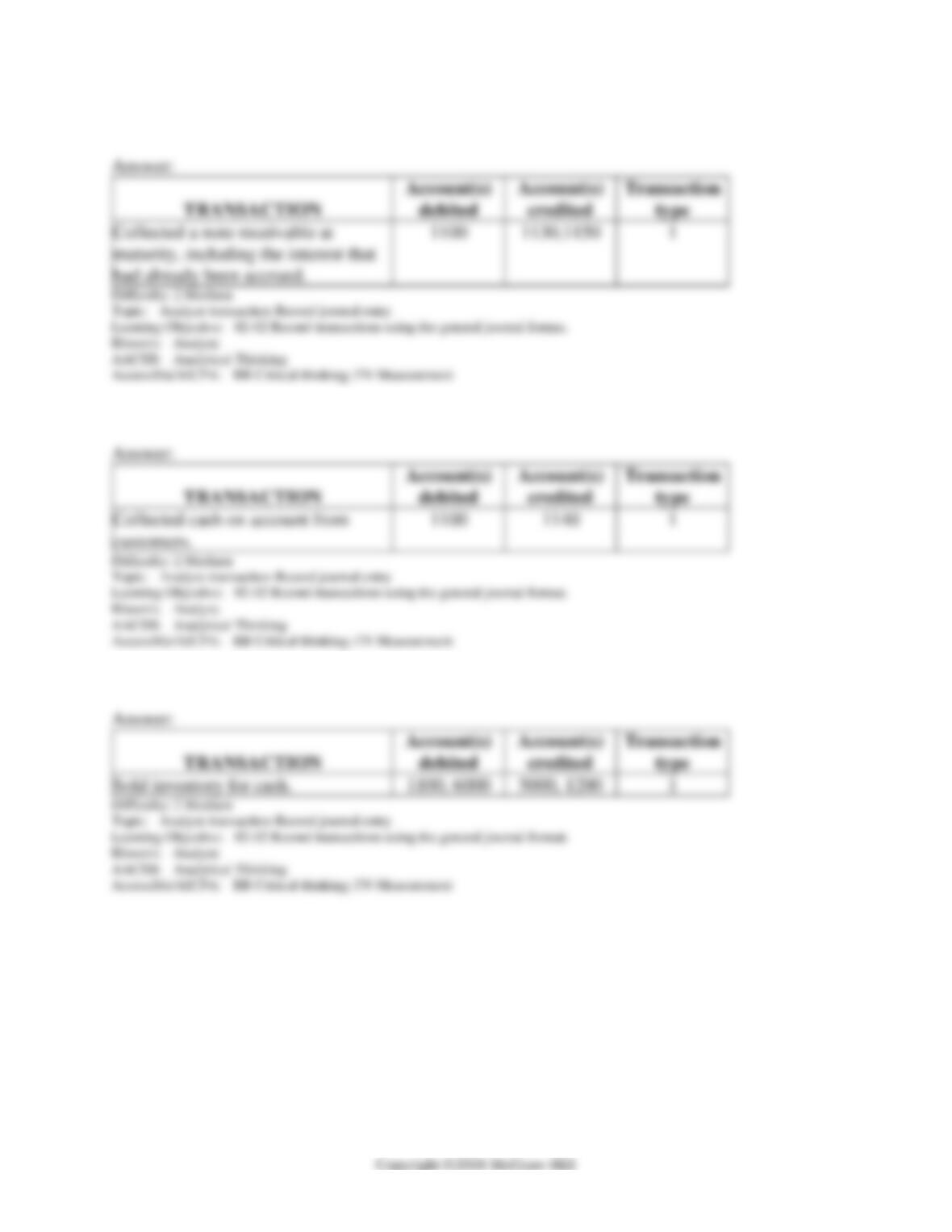
134) Collected a note receivable at maturity, including the interest that had already been accrued.
135) Collected cash on account from customers.
136) Sold inventory for cash.
52
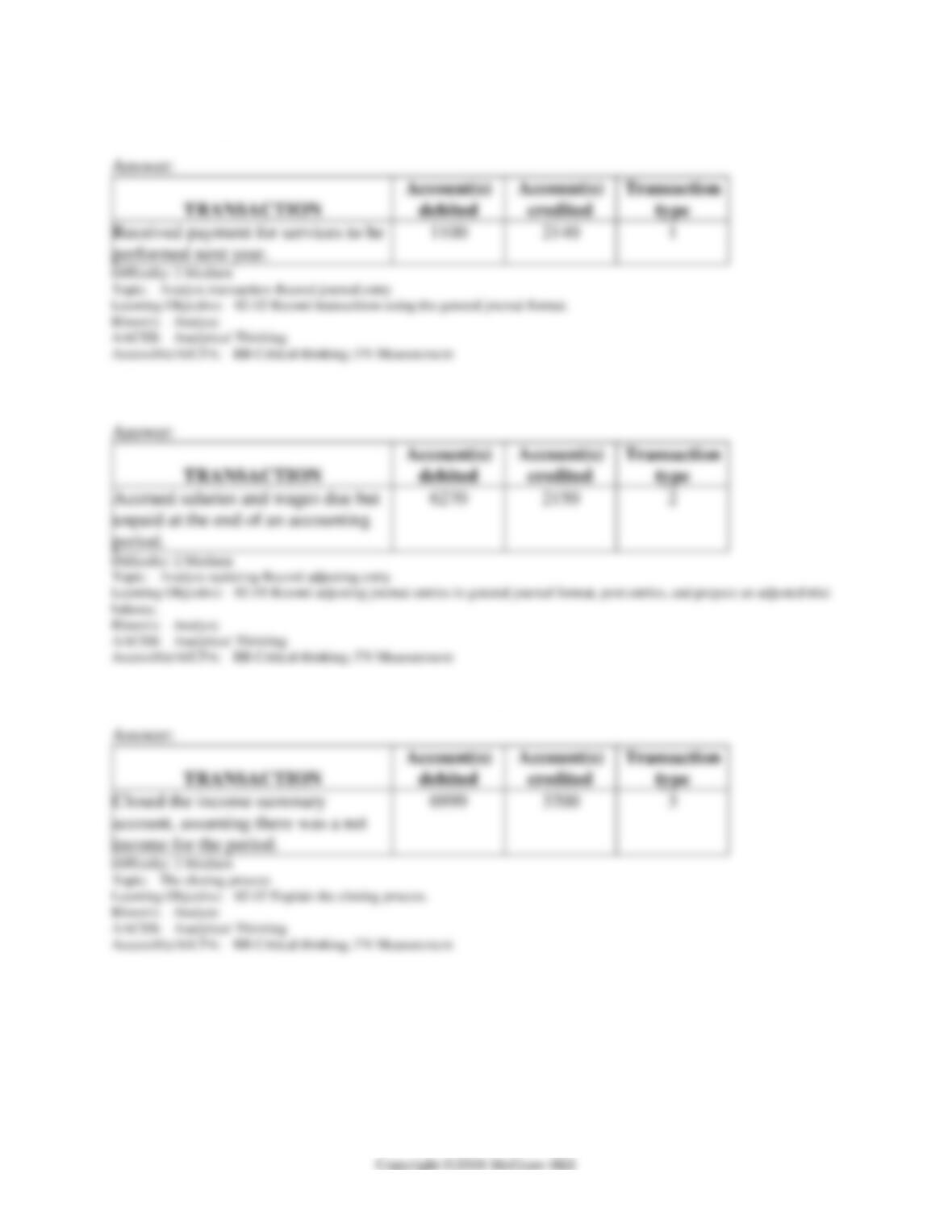
137) Received payment for services to be performed next year.
138) Salaries and wages have been recognized but are unpaid at the end of an accounting period.
139) Closed the income summary account, assuming there was a net income for the period.
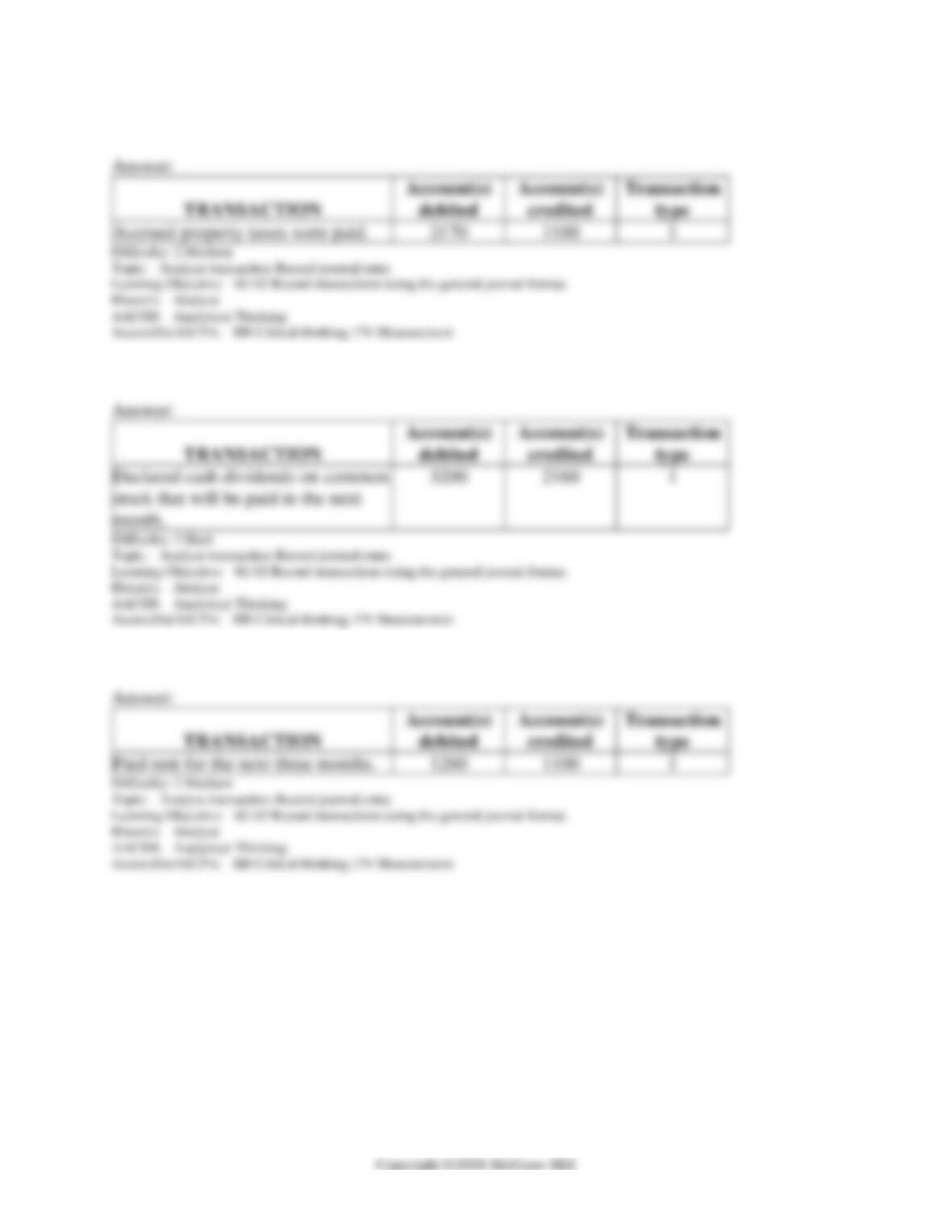
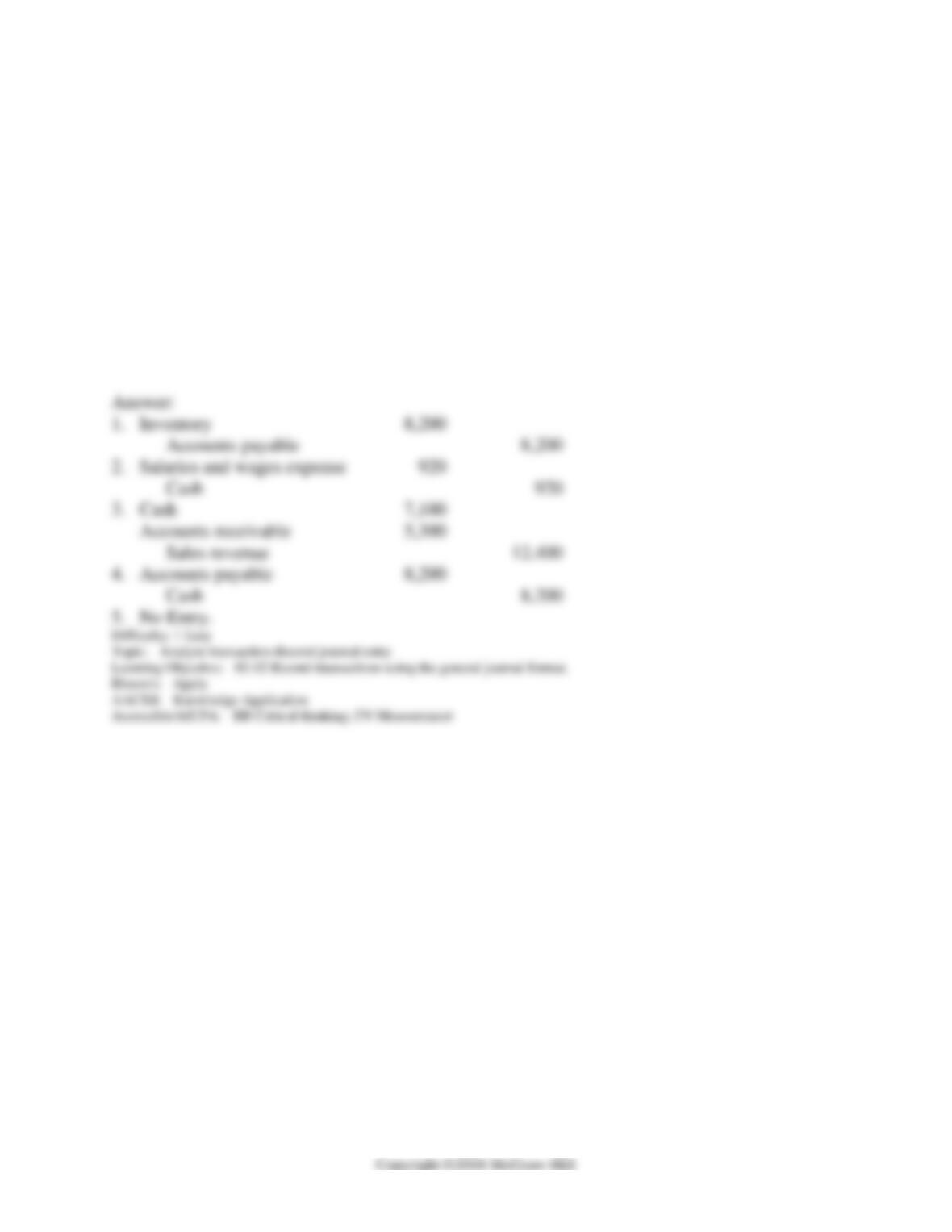
53
140) Accrued property taxes were paid.
141) Declared cash dividends on common stock that will be paid in the next month.
142) Paid rent for the next three months.
54
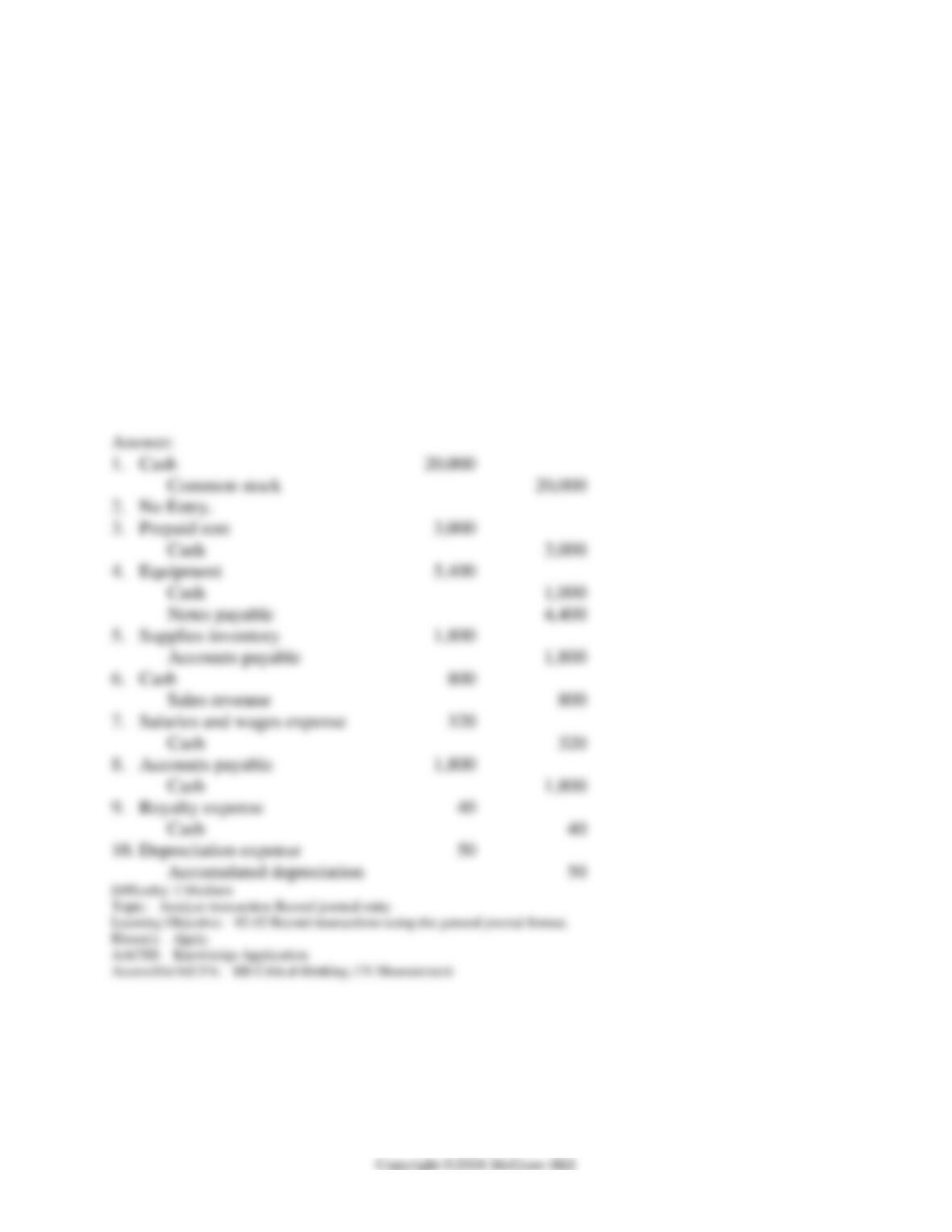
143) Rite Shoes was involved in the transactions described below.
Required:
Prepare the appropriate journal entry for each transaction. If an entry is not required, state “No
Entry.”
1. Purchased $8,200 of inventory on account.
2. Paid weekly salaries and wages, $920.
3. Recorded sales for the first week: Cash: $7,100; On account: $5,300.
4. Paid for inventory purchased in event (1).
5. Placed an order for $6,200 of inventory.
55
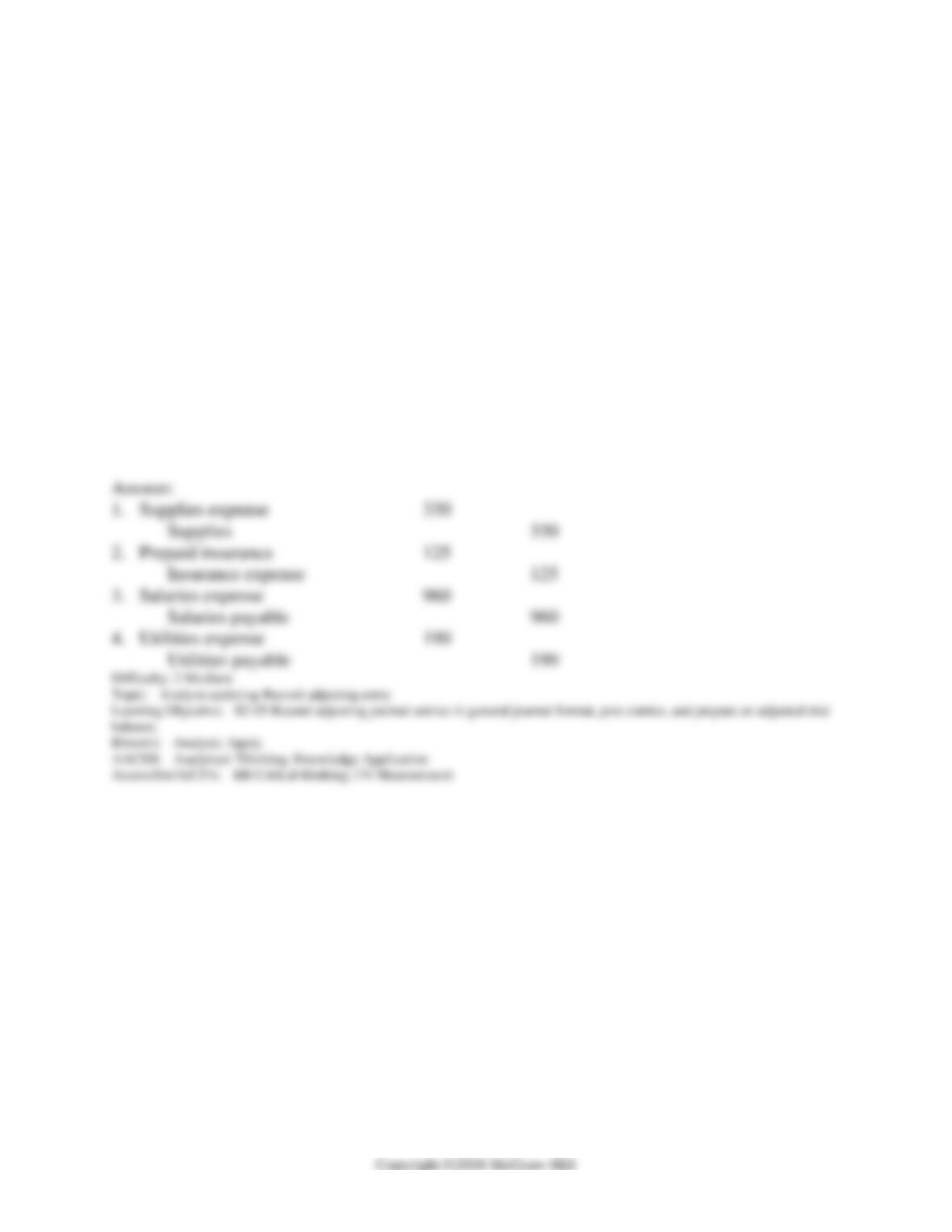
144) Prepare journal entries to record the following transactions of Daisy King Ice Cream
Company. If an entry is not required, state “No Entry.”
1. Started business by issuing 10,000 shares of common stock for $20,000.
2. Signed a franchise agreement to pay royalties of 5% of sales.
3. Leased a building for three years at $500 per month and paid six months’ rent in advance.
4. Purchased equipment for $5,400, paying $1,000 down and signing a two-year, 10% note for
the balance.
5. Purchased $1,800 of supplies on account.
6. Recorded cash sales of $800 for the first week.
7. Paid weekly salaries and wages, $320.
8. Paid for supplies purchased in item (5).
9. Paid royalties due on first week’s sales.
10. Recorded depreciation on equipment, $50.
56
145) Flint Hills, Inc. has prepared a year-end 2018 trial balance. Certain accounts in the trial
balance do not reflect all activities that have occurred.
Required:
Prepare adjusting journal entries, as needed, for the following items.
1. The Supplies account shows a balance of $540, but a count of supplies reveals only $210 on
hand.
2. Flint Hills initially records the payments of all insurance premiums as expenses. The trial
balance shows a balance of $420 in Insurance expense. A review of insurance policies reveals
that $125 of insurance is unexpired.
3. Flint Hills employees work Monday through Friday, and salaries of $2,400 per week are paid
each Friday. Flint Hills’ year-end falls on Tuesday.
4. On December 31, 2018, Flint Hills received a utility bill for December electricity usage of
$190 that will be paid in early January of 2019.
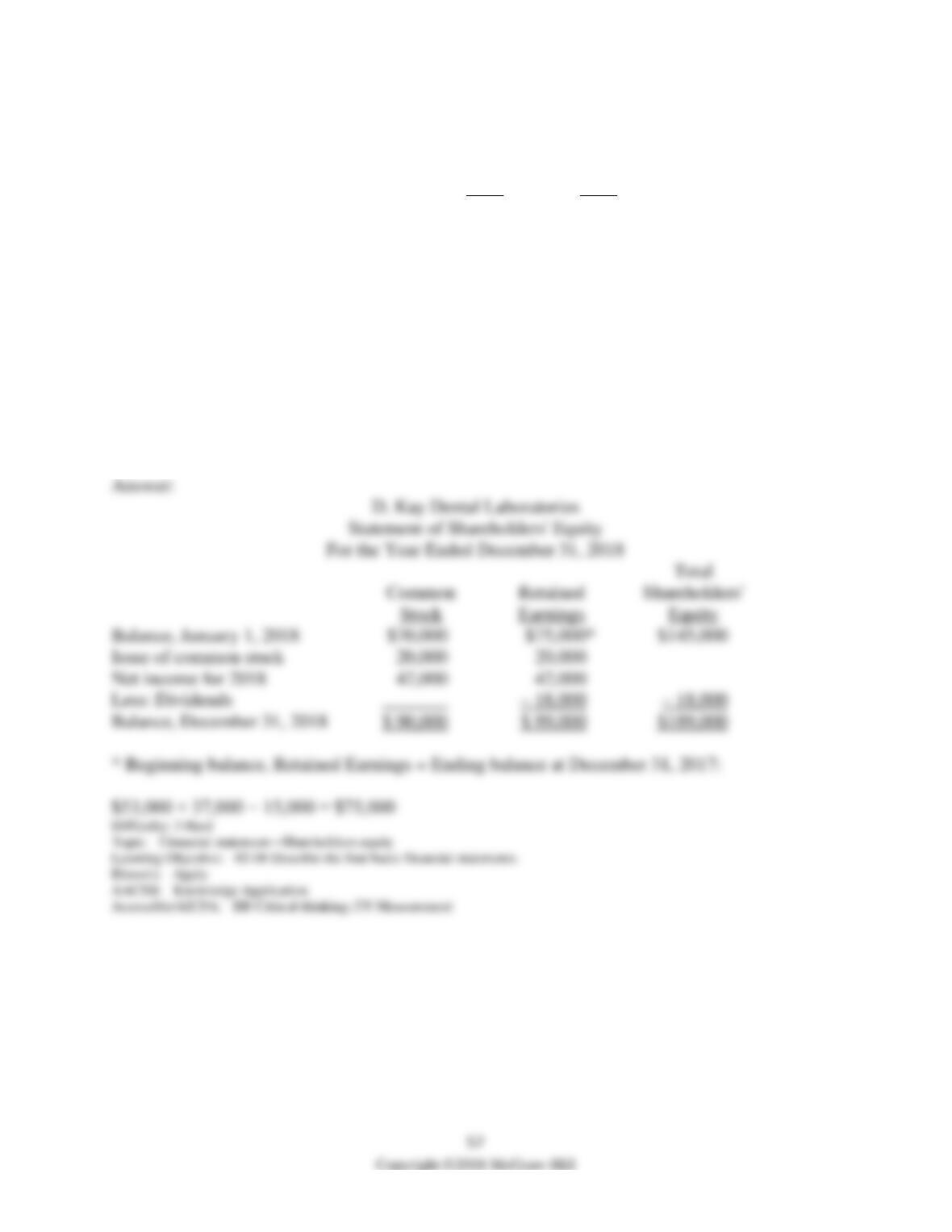
146) The following is selected financial information for D. Kay Dental Laboratories for 2017
and 2018:
2017 2018
Retained earnings, January 1 $53,000 ?
Net income 37,000 42,000
Dividends declared and paid 15,000 18,000
Common stock 70,000 ?
Kay issued 2,000 shares of additional common stock in 2018 for $20,000. There were no other
shareholder transactions.
Required:
Prepare a statement of shareholders’ equity for D. Kay Dental Laboratories for the year ended
December 31, 2018.

58
147) The Yankel Corporation’s controller prepares adjusting entries only at the end of the fiscal
year. The following adjusting entries were prepared on December 31, 2018:
Debit Credit
Interest expense 1,800
Interest payable 1,800
Insurance expense 60,000
Prepaid insurance 60,000
Interest receivable 3,000
Interest revenue 3,000
Additional information:
1. The company borrowed $30,000 on June 30, 2018. Principal and interest are due on June 30,
2019. This note is the company’s only interest-bearing debt.
2. Insurance for the year on the company’s office buildings is $90,000. The insurance is paid in
advance.
3. On August 31, 2018, Yankel lent money to a customer. The customer signed a note with
principal and interest at 9% due in one year.
Required:
Determine the following:
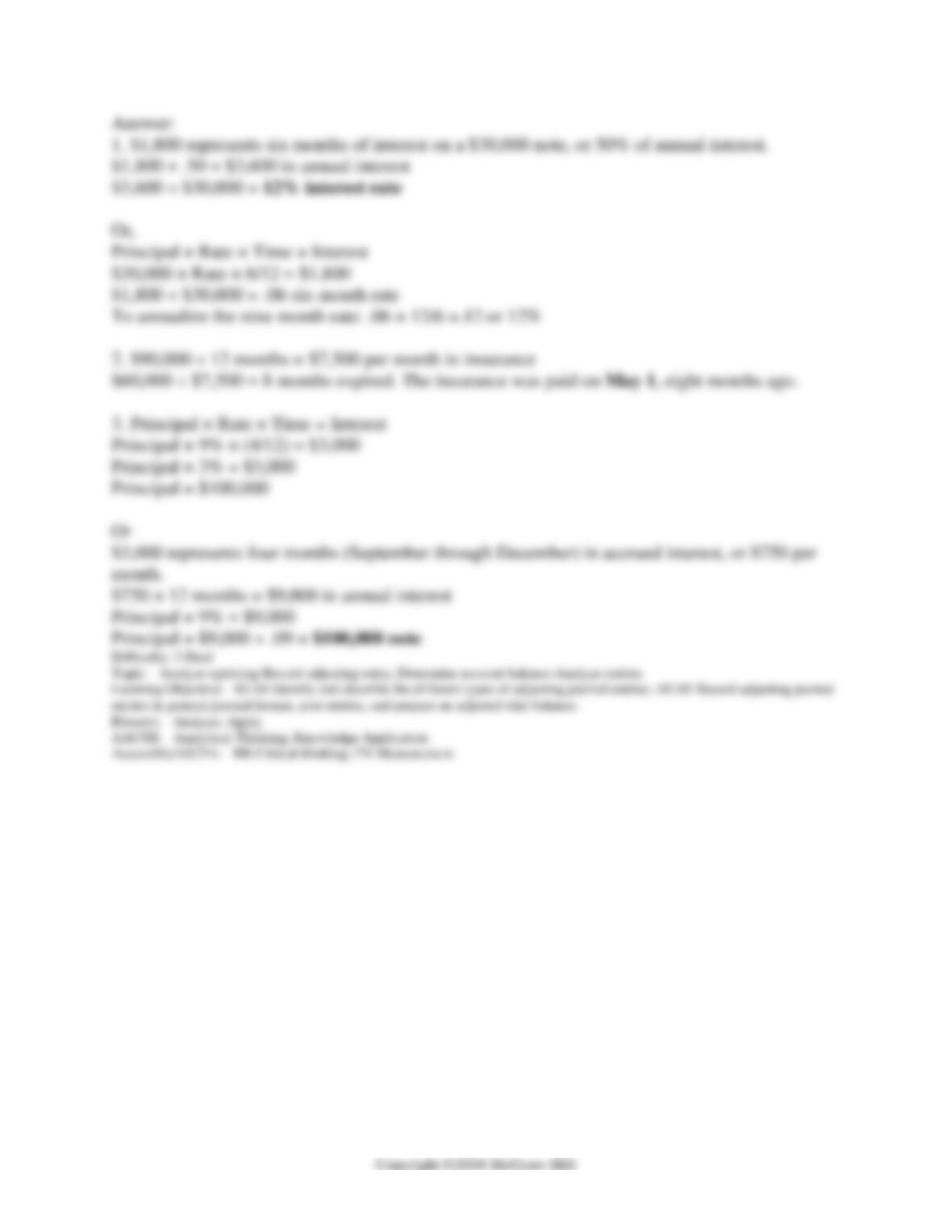
1. What is the interest rate on the company’s note payable?
2. The 2018 insurance payment was made at the beginning of which month?
3. How much did Yankel lend its customer on August 31?
59
Use this information to answer the following questions:
Suppose that Laramie Company’s adjusted trial balance ignored the following information. For
each item of information, indicate what effects, if any, these omissions would have on the stated
components of Laramie Company’s 2018 Income Statement and 12/31/18 Balance Sheet.
Assume no income taxes.
Use the following code for your answers and be sure to include the dollar amounts of the effects
next to the letter O or U:
N = No Effect
O = Overstated
U = Understated
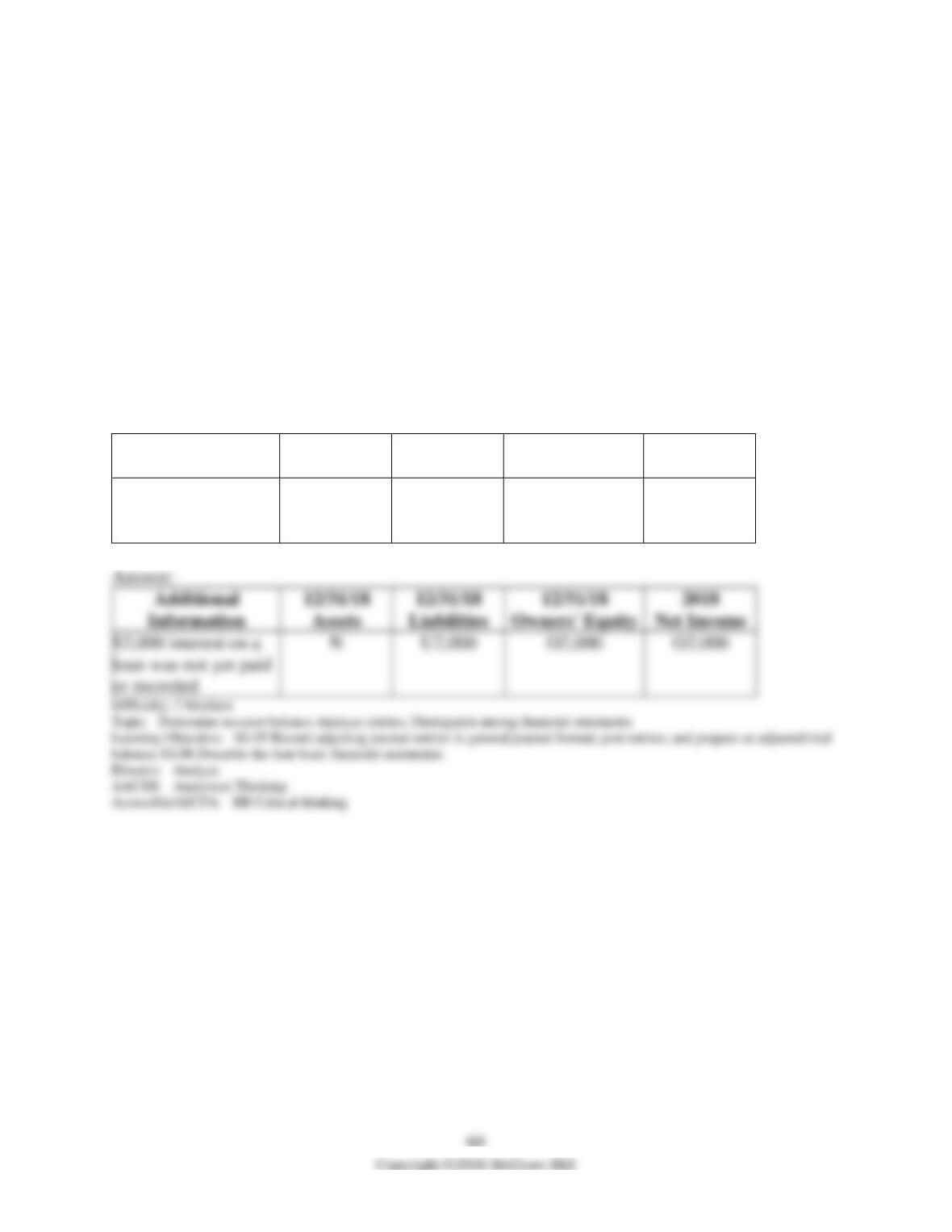
148)
Additional
Information
12/31/18
Assets
12/31/18
Liabilities
12/31/18
Owners’ Equity
2018
Net Income
$2,000 interest on a
loan was not yet paid
or recorded
Additional
Information
12/31/18
Assets
12/31/18
Liabilities
12/31/18
Owners’ Equity
2018
Net Income
loan was not yet paid
or recorded