2-235
128.
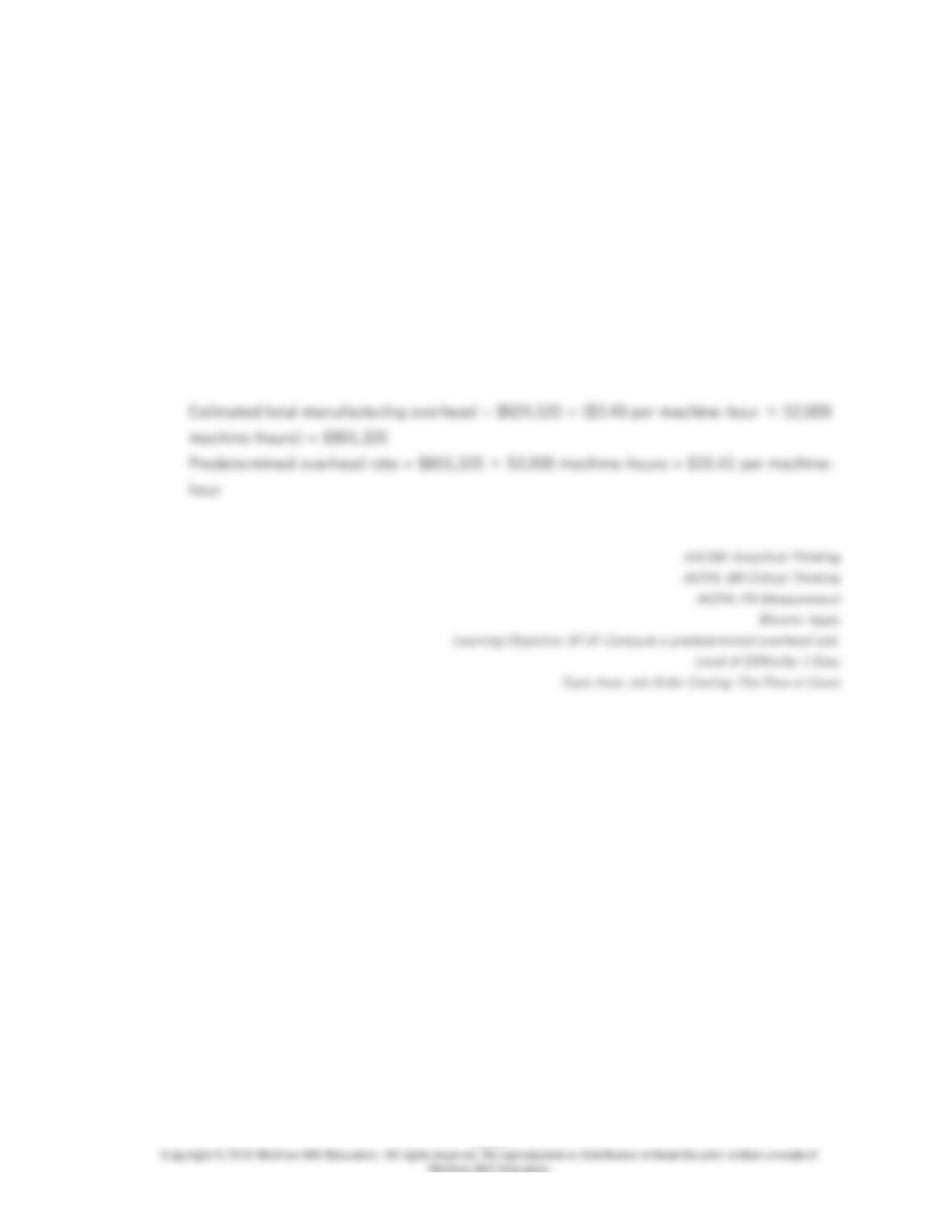
Sigel Corporation bases its predetermined overhead rate on the estimated machine-hours
for the upcoming year. At the beginning of the most recently completed year, the company
estimated the machine-hours for the upcoming year at 52,000 machine-hours. The
estimated variable manufacturing overhead was $3.40 per machine-hour and the
estimated total fixed manufacturing overhead was $624,520.
Required:
Compute the company’s predetermined overhead rate.
2-236
129.
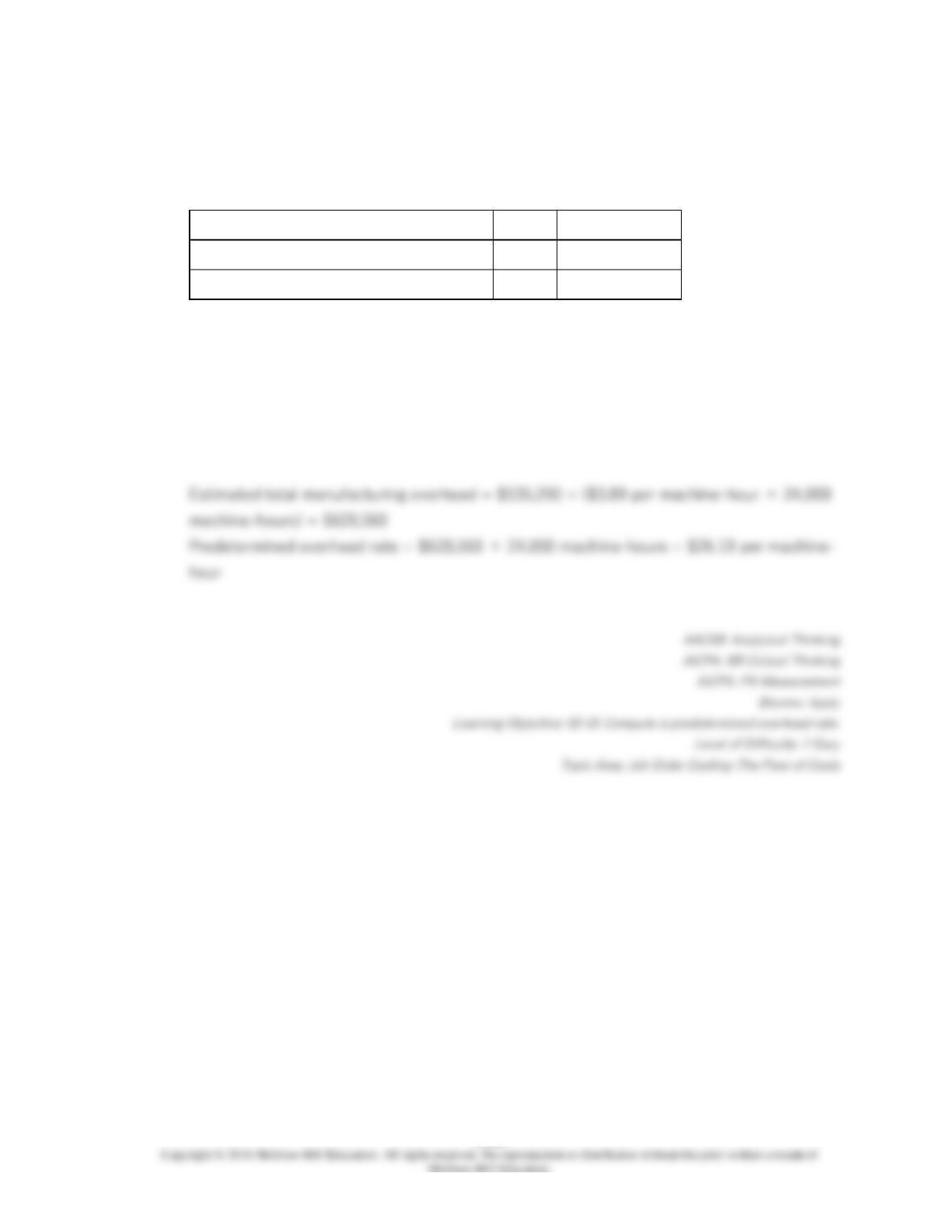
Huckeby Corporation bases its predetermined overhead rate on the estimated machine-
hours for the upcoming year. Data for the upcoming year appear below:
Estimated machine-hours
24,000
Estimated variable manufacturing overhead
$3.89
per machine-hour
Estimated total fixed manufacturing overhead
$535,200
Required:
Compute the company’s predetermined overhead rate.
2-237
130.
Quark Spy Equipment manufactures espionage equipment. Quark uses a job-order costing
system and applies overhead to jobs on the basis of direct labor-hours. For the current
year, Quark estimated that it would work 100,000 direct labor-hours and incur $20,000,000
of manufacturing overhead cost. The following summarized information relates to January
of the current year. The raw materials purchased include both direct and indirect
materials.
Raw materials purchased on account
$1,412,000
Direct materials requisitioned into production
$1,299,500
Indirect materials requisitioned into production
$98,000
Direct labor cost (7,900 hours @ $40 per hour)
$316,000
Indirect labor cost (10,200 hours @ $16 per hour)
$163,200
Depreciation on the factory building
$190,500
Depreciation on the factory equipment
$890,700
Utilities for the factory
$79,600
Cost of jobs finished
$2,494,200
Cost of jobs sold
$2,380,000
Sales (all on account)
$3,570,000
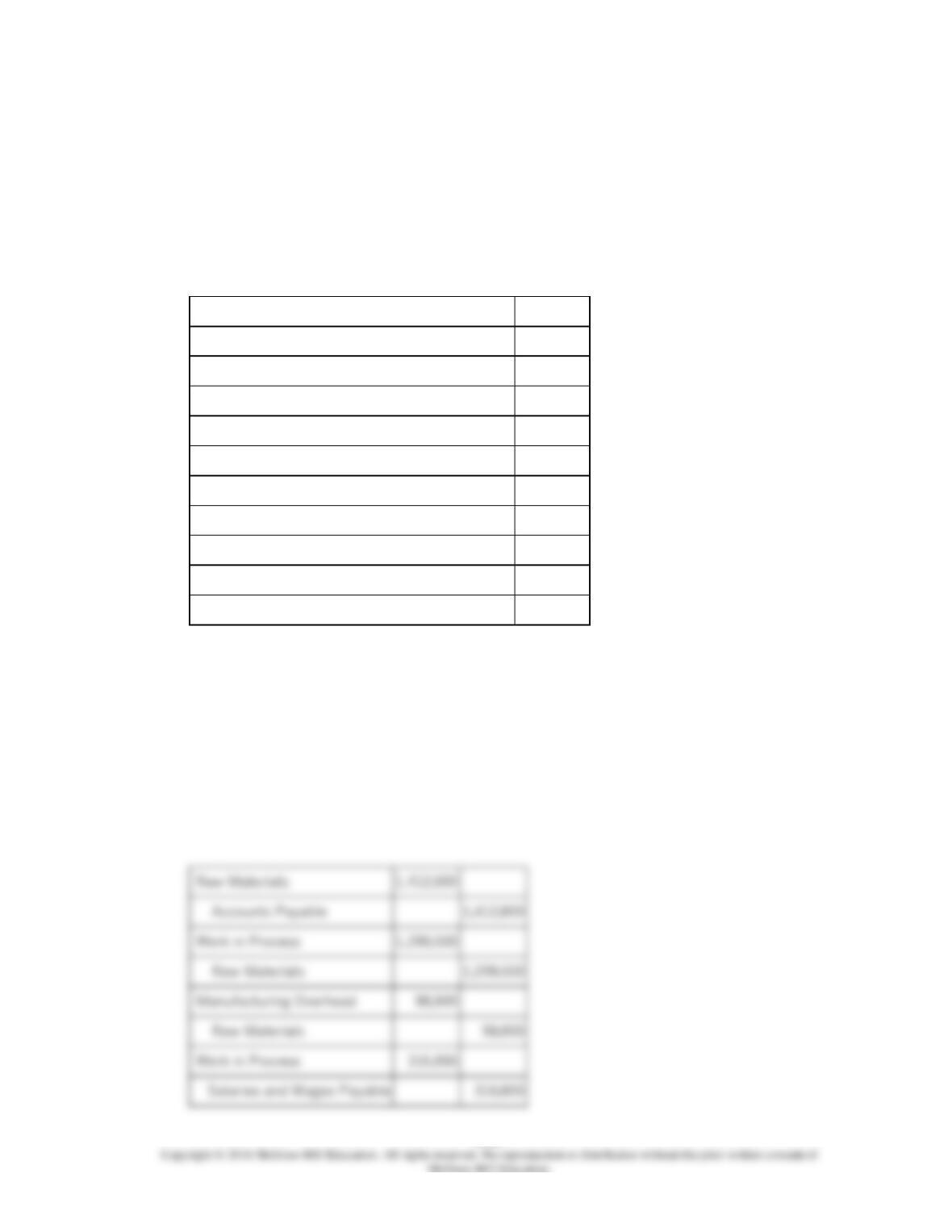
Raw Materials
1,412,000
1,412,000
Work in Process
1,299,500
1,299,500
Manufacturing Overhead
98,000
98,000
Work in Process
316,000
Required:
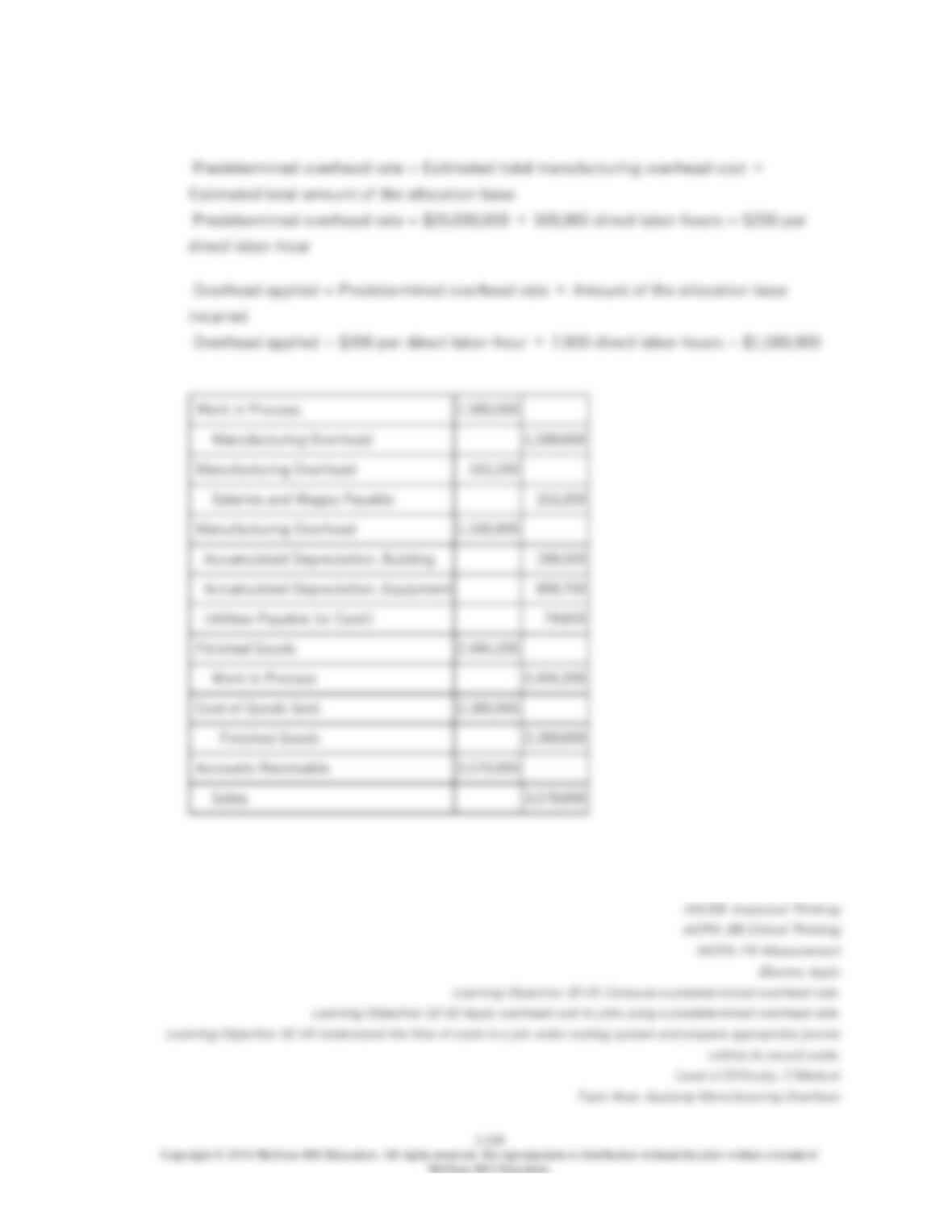
Prepare journal entries to record Quark’s transactions for the month of January. Do not
close out the manufacturing overhead account.

2-239

2-240
131.
Allenton Company is a manufacturing firm that uses job-order costing. At the beginning of
the year, the company’s inventory balances were as follows:
Raw materials
$26,000
Work in process
$47,000
Finished goods
$133,000
The company applies overhead to jobs using a predetermined overhead rate based on
machine-hours. At the beginning of the year, the company estimated that it would work
31,000 machine-hours and incur $248,000 in manufacturing overhead cost. The following
transactions were recorded for the year:
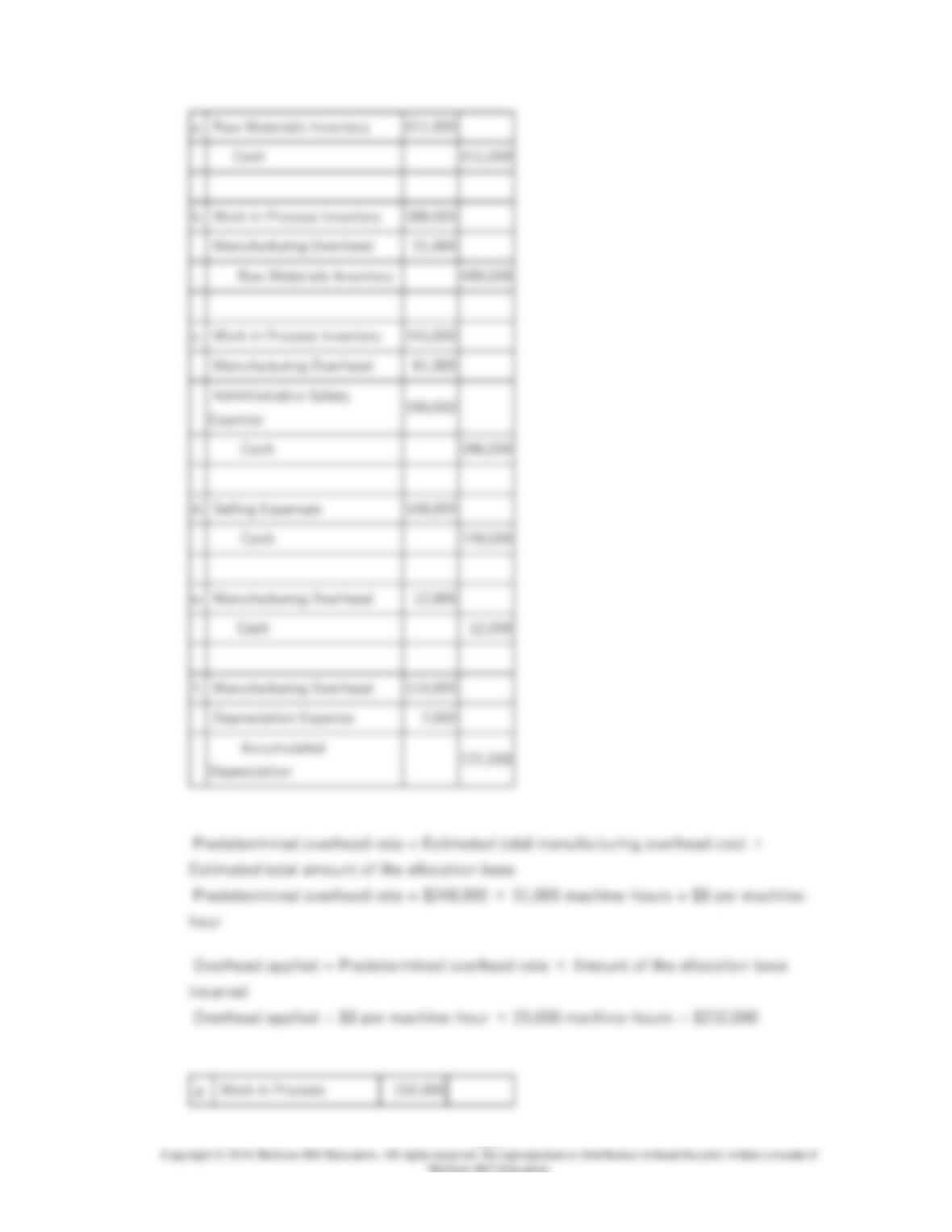
a. Raw materials were purchased, $411,000.
b. Raw materials were requisitioned for use in production, $409,000 ($388,000 direct and
$21,000 indirect).
c. The following employee costs were incurred: direct labor, $145,000; indirect labor,
$61,000; and administrative salaries, $190,000.
d. Selling costs, $148,000.
e. Factory utility costs, $12,000.
f. Depreciation for the year was $121,000 of which $114,000 is related to factory
operations and $7,000 is related to selling, general, and administrative activities.
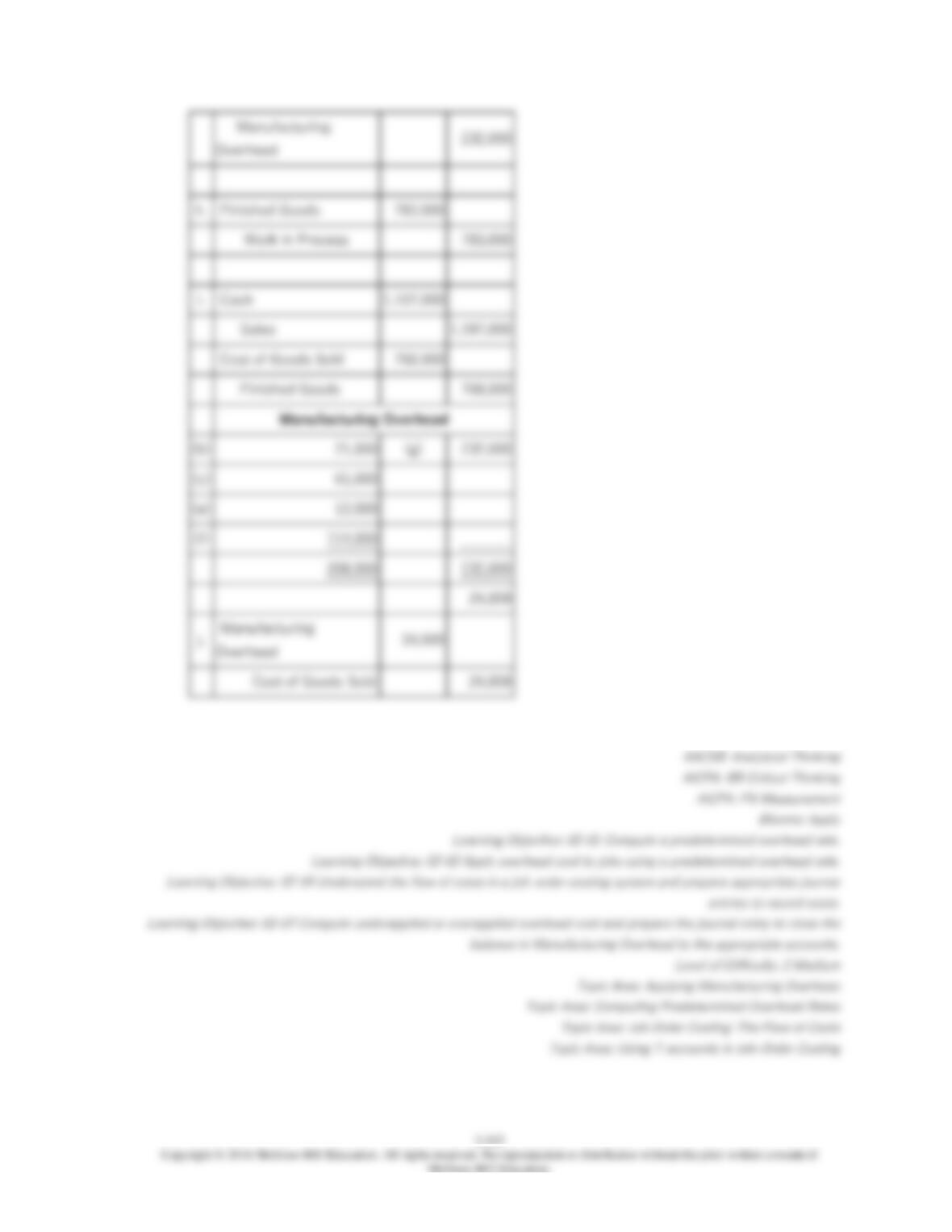
g. Manufacturing overhead was applied to jobs. The actual level of activity for the year
was 29,000 machine-hours.
h. The cost of goods manufactured for the year was $783,000.
i. Sales for the year totaled $1,107,000 and the costs on the job cost sheets of the goods
that were sold totaled $768,000.
j. The balance in the Manufacturing Overhead account was closed out to Cost of Goods
Sold.
Required:
Prepare the appropriate journal entry for each of the items above (a. through j.). You can
assume that all transactions with employees, customers, and suppliers were conducted in
cash.
2-241

2-243
132.
Bakerston Company is a manufacturing firm that uses job-order costing. The company’s
inventory balances were as follows at the beginning and end of the year:
Beginning
Balance
Ending
Balance
Raw materials
$14,000
$22,000
Work in
process
$27,000
$9,000
Finished
goods
$62,000
$77,000
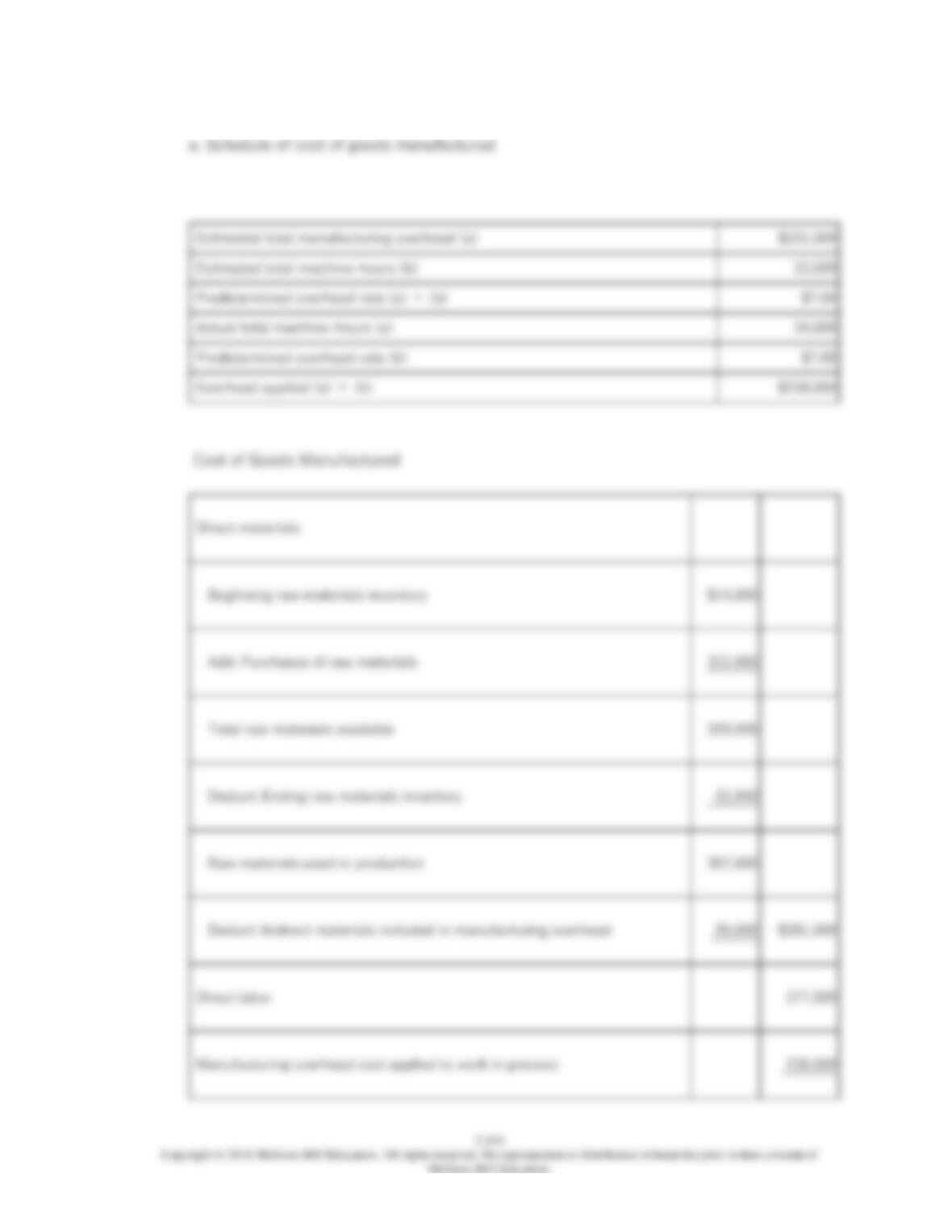
The company applies overhead to jobs using a predetermined overhead rate based on
machine-hours. At the beginning of the year, the company estimated that it would work
33,000 machine-hours and incur $231,000 in manufacturing overhead cost. The following
transactions were recorded for the year:
• Raw materials were purchased, $315,000.
• Raw materials were requisitioned for use in production, $307,000 ($281,000 direct and
$26,000 indirect).
• The following employee costs were incurred: direct labor, $377,000; indirect labor,
$96,000; and administrative salaries, $172,000.
• Selling costs, $147,000.
• Factory utility costs, $10,000.
• Depreciation for the year was $127,000 of which $120,000 is related to factory
operations and $7,000 is related to selling, general, and administrative activities.
• Manufacturing overhead was applied to jobs. The actual level of activity for the year was
34,000 machine-hours.
• Sales for the year totaled $1,253,000.
Required:
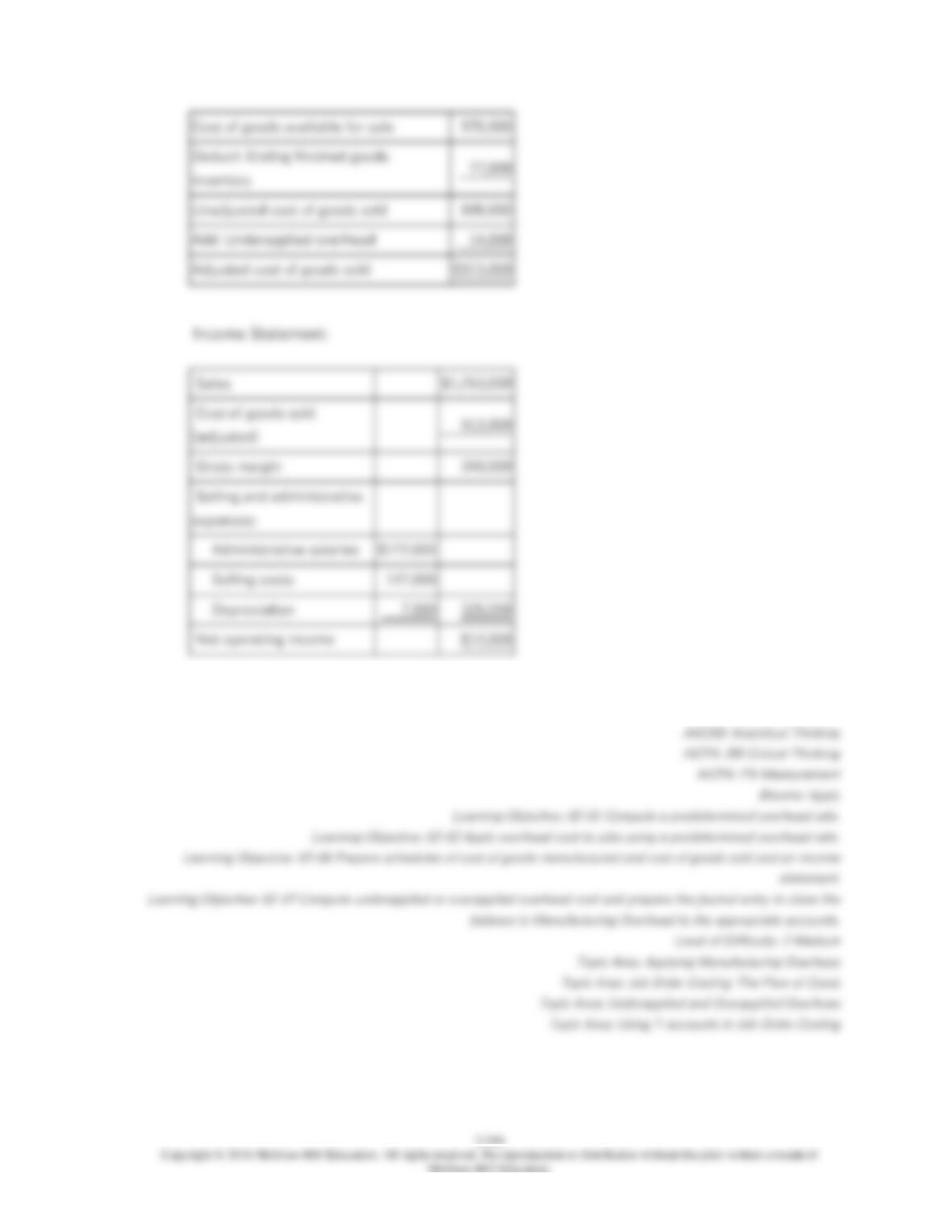
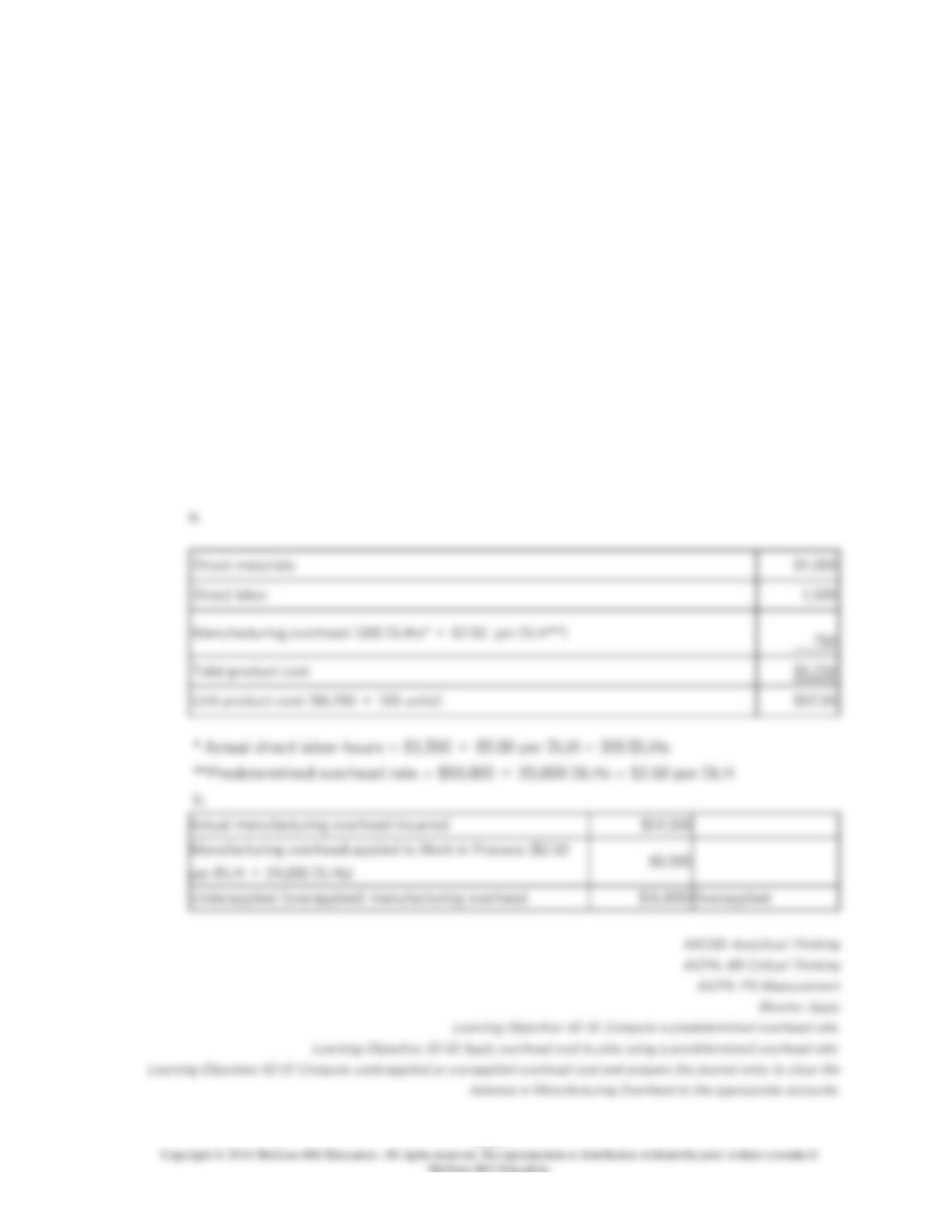
a. Prepare a schedule of cost of goods manufactured.
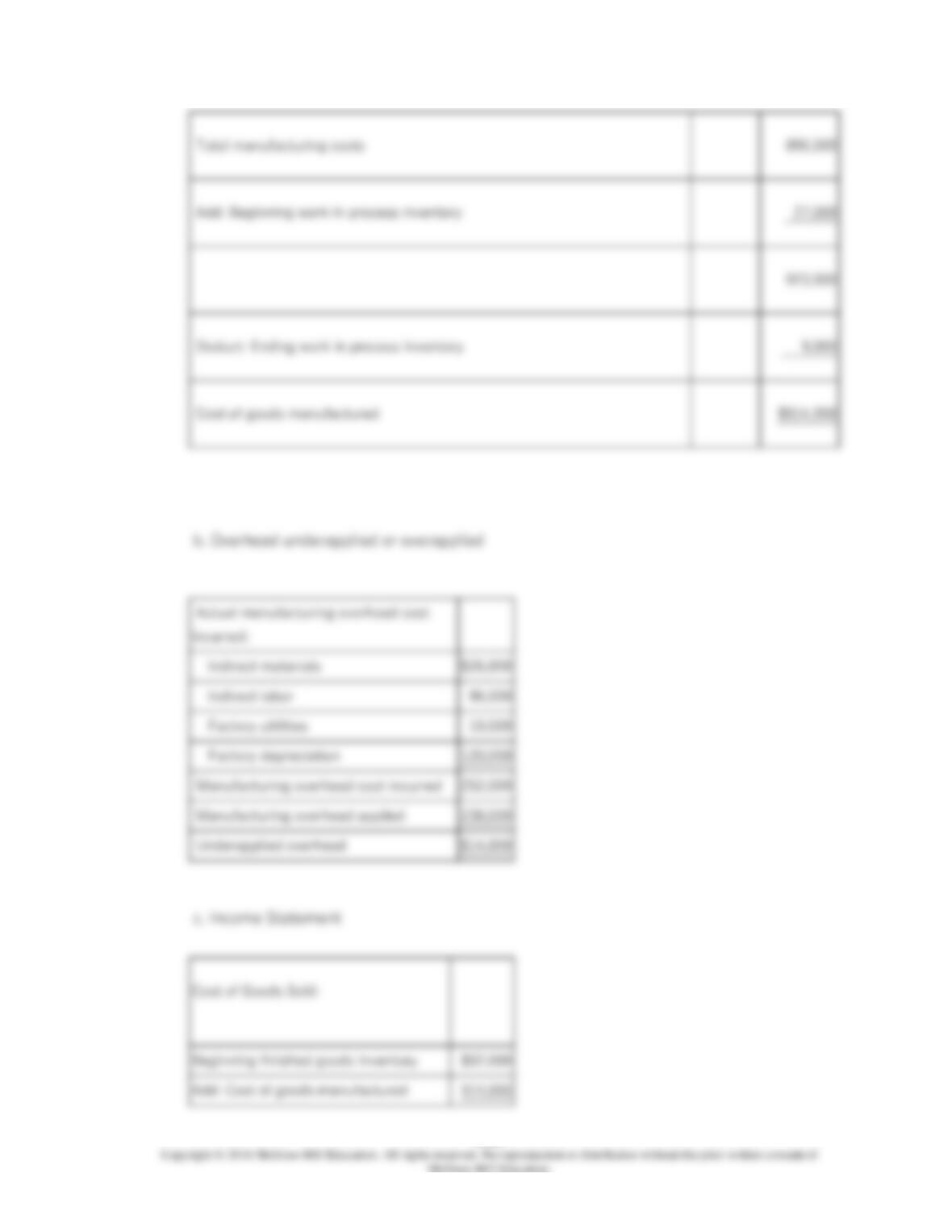
b. Was the overhead underapplied or overapplied? By how much?
c. Prepare an income statement for the year. The company closes any underapplied or
overapplied overhead to Cost of Goods Sold.
2-245
2-247
133.
Parker Company uses a job-order costing system and applies manufacturing overhead to
jobs using a predetermined overhead rate based on direct labor-hours. Last year
manufacturing overhead and direct labor-hours were estimated at $50,000 and 20,000
hours, respectively, for the year. In June, Job #461 was completed. Materials costs on the
job totaled $4,000 and labor costs totaled $1,500 at $5 per hour. At the end of the year, it
was determined that the company worked 24,000 direct labor-hours for the year and
incurred $54,000 in actual manufacturing overhead costs.
Required:
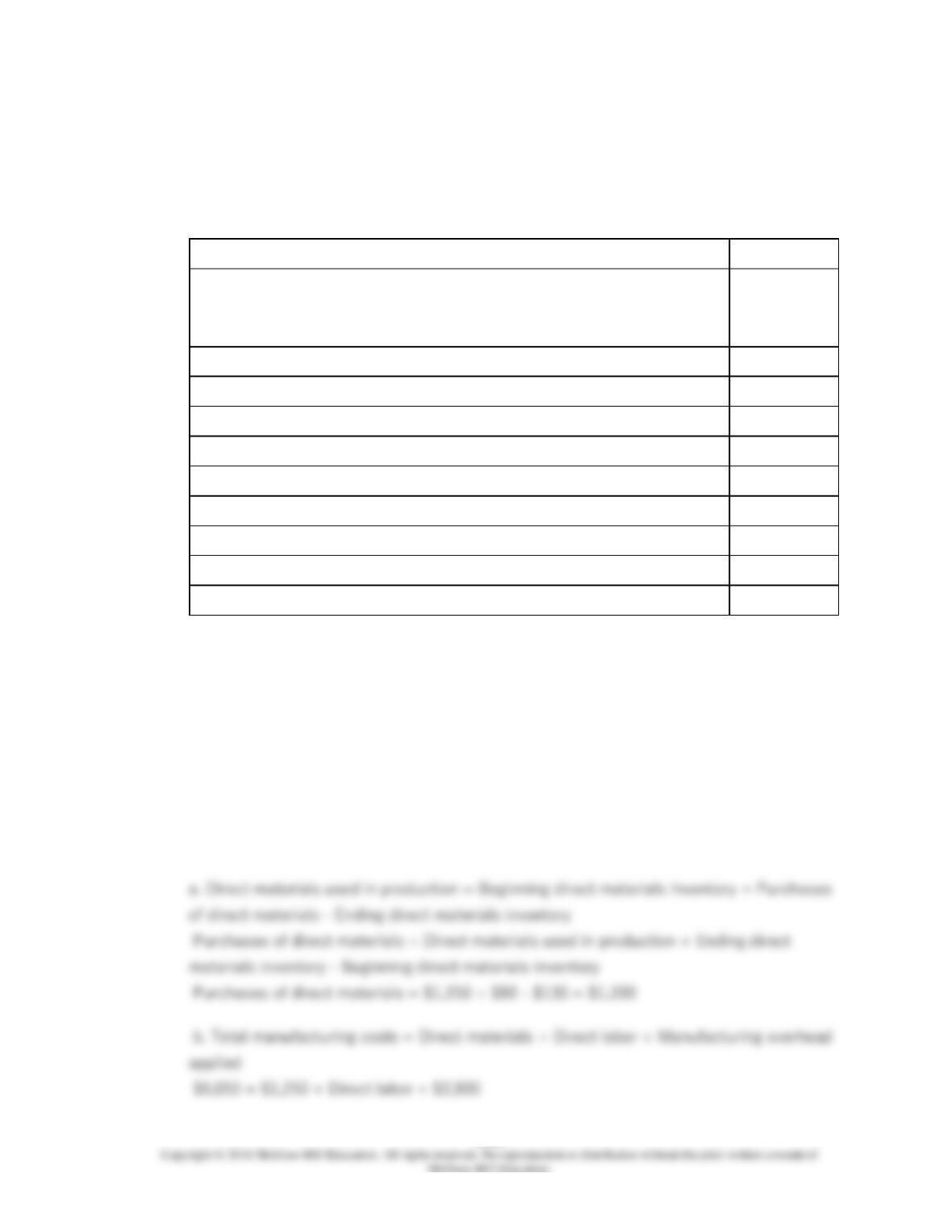
a. Job #461 contained 100 units. Determine the unit product cost that would appear on
the job cost sheet.
b. Determine the underapplied or overapplied overhead for the year.

2-248
2-249
134.
Hacken Company has a job-order costing system. The company applies manufacturing
overhead to jobs using a predetermined overhead rate based on direct labor cost. The
information below has been taken from the cost records of Hacken Company for the past
year:
Direct materials used in production
$1,250
Total manufacturing costs charged to production during the year (includes direct
materials, direct labor, and applied manufacturing overhead)
$6,050
Manufacturing overhead applied
$2,800
Selling and administrative expenses
$1,000
Inventories:
Direct materials, January 1
$130
Direct materials, December 31
$80
Work in process, January 1
$250
Work in process, December 31
$400
Finished goods, January 1
$300
Finished goods, December 31
$200
Required:
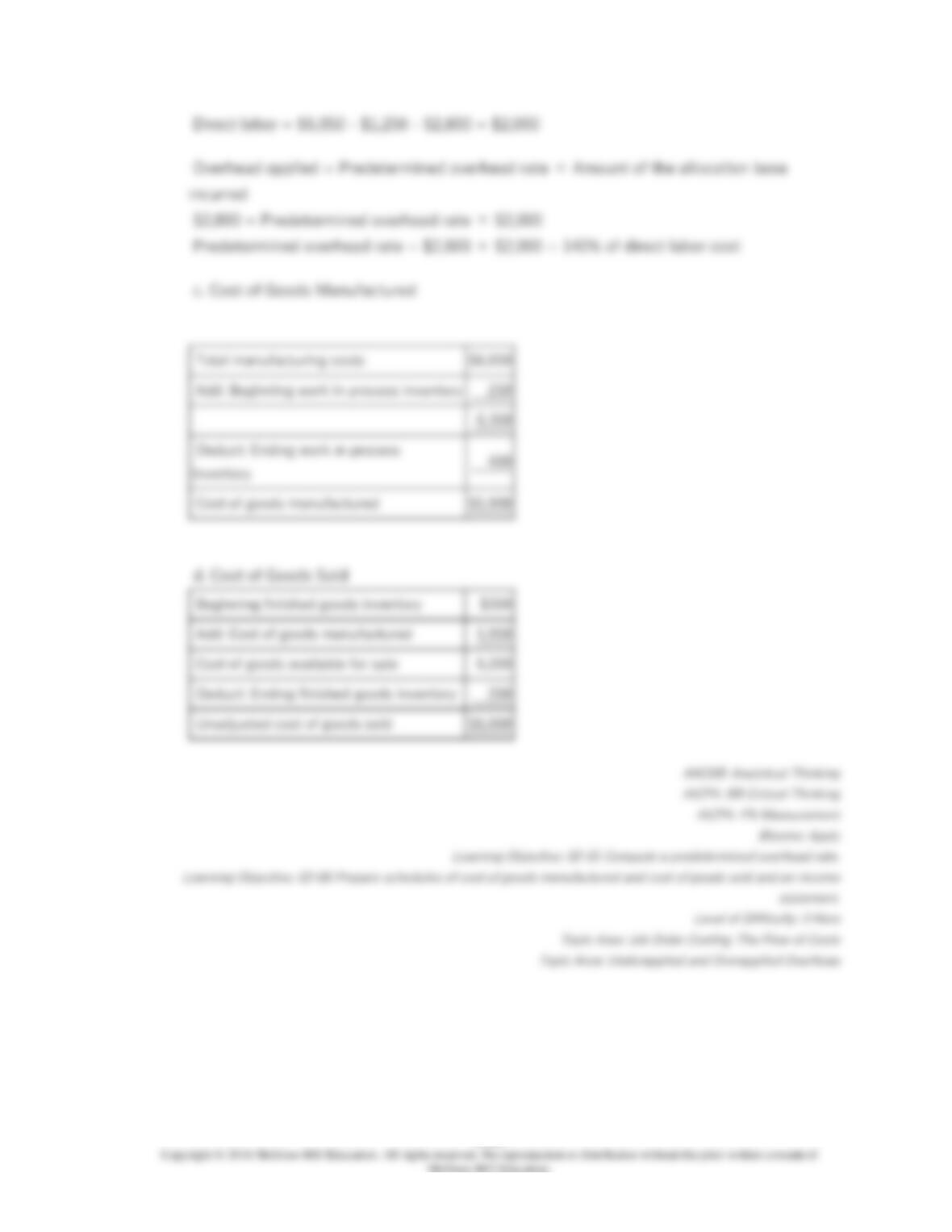
a. Compute the cost of direct materials purchased during the year.
b. Compute the predetermined overhead rate that was used during the past year.
c. Compute the Cost of Goods Manufactured for the past year.
d. Compute the unadjusted Cost of Goods Sold for the past year.
2-250
2-251
135.
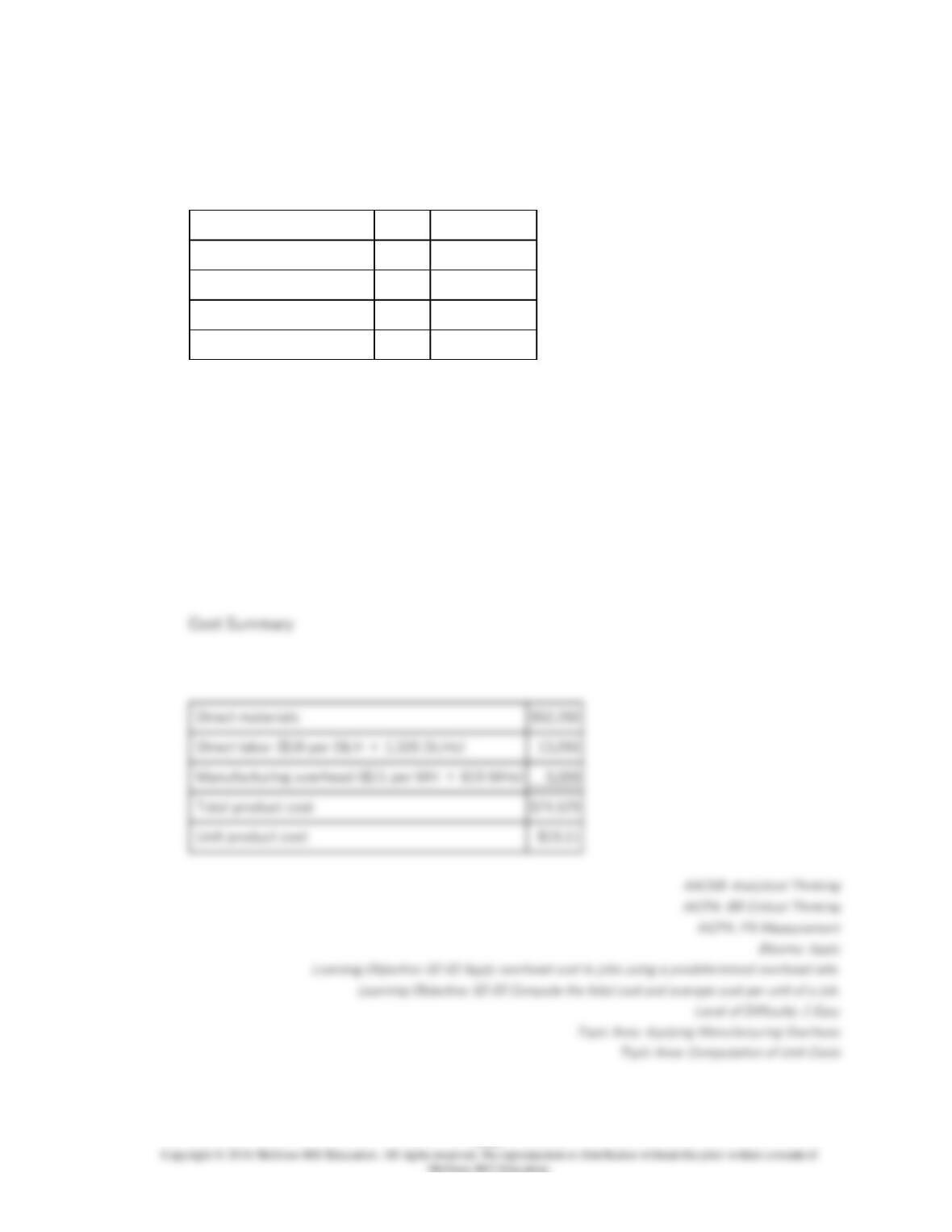
Job 231 was recently completed. The following data have been recorded on its job cost
sheet:
Direct materials
$52,260
Direct labor-hours
1,326
labor-hours
Direct labor wage rate
$10
per labor-hour
Machine-hours
819
machine-hours
Number of units completed
3,900
units
Direct materials
$52,260
Total product cost
$74,529
Unit product cost
The company applies manufacturing overhead on the basis of machine-hours. The
predetermined overhead rate is $11 per machine-hour.
Required:
Compute the unit product cost that would appear on the job cost sheet for this job.
2-252
136.
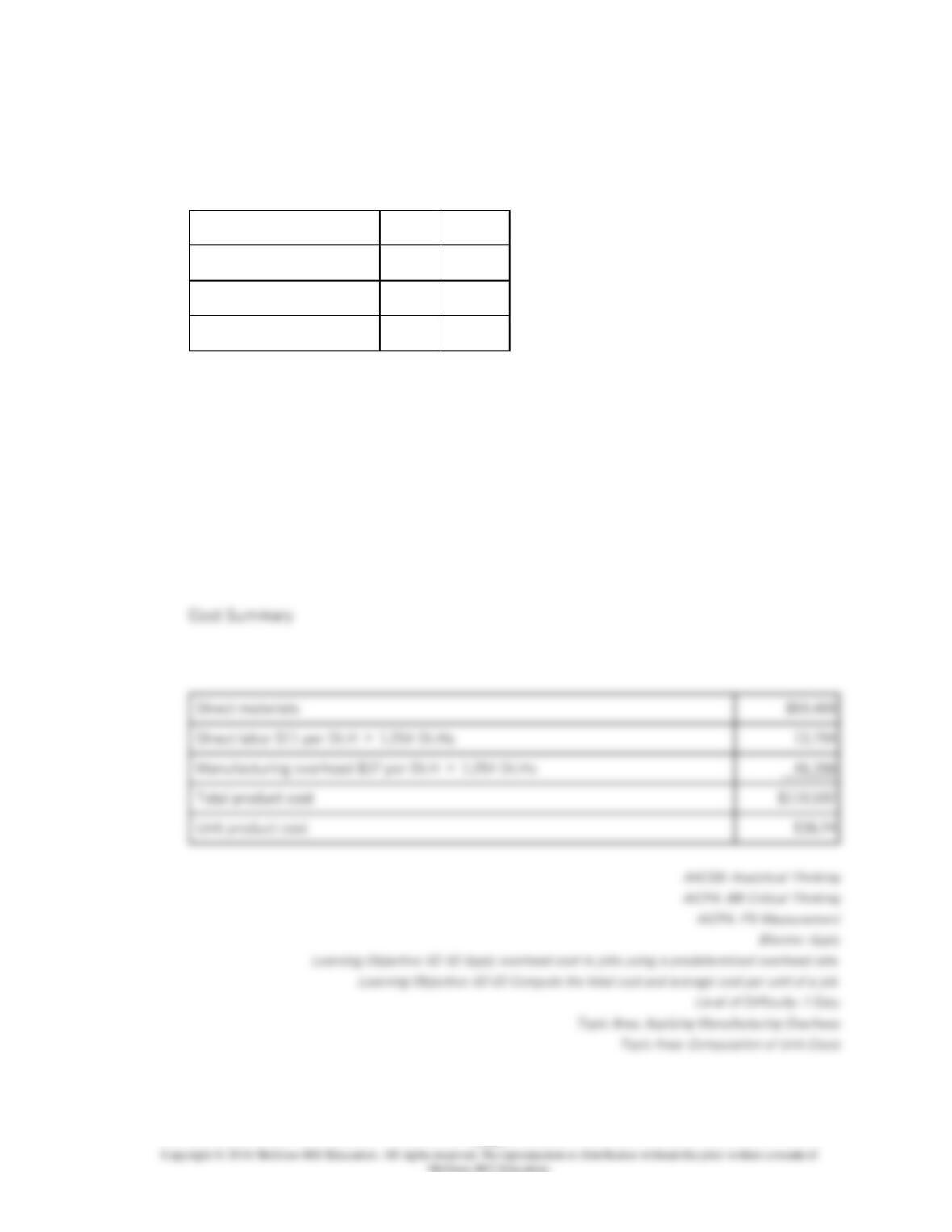
Job 397 was recently completed. The following data have been recorded on its job cost
sheet:
Direct materials
$59,400
Direct labor-hours
1,254
DLHs
Direct labor wage rate
$11
per DLH
Number of units completed
3,300
units
The company applies manufacturing overhead on the basis of direct labor-hours. The
predetermined overhead rate is $37 per direct labor-hour.
Required:
Compute the unit product cost that would appear on the job cost sheet for this job.