41. The term “gross margin” for a manufacturing firm refers to the excess of sales over:
42. How would property taxes paid on a factory building be classified in a manufacturing
company?
43. How would miscellaneous supplies used in assembling a product be classified for a
manufacturing company?
44. How would a 5% sales commission paid to sales personnel be classified in a
manufacturing company?
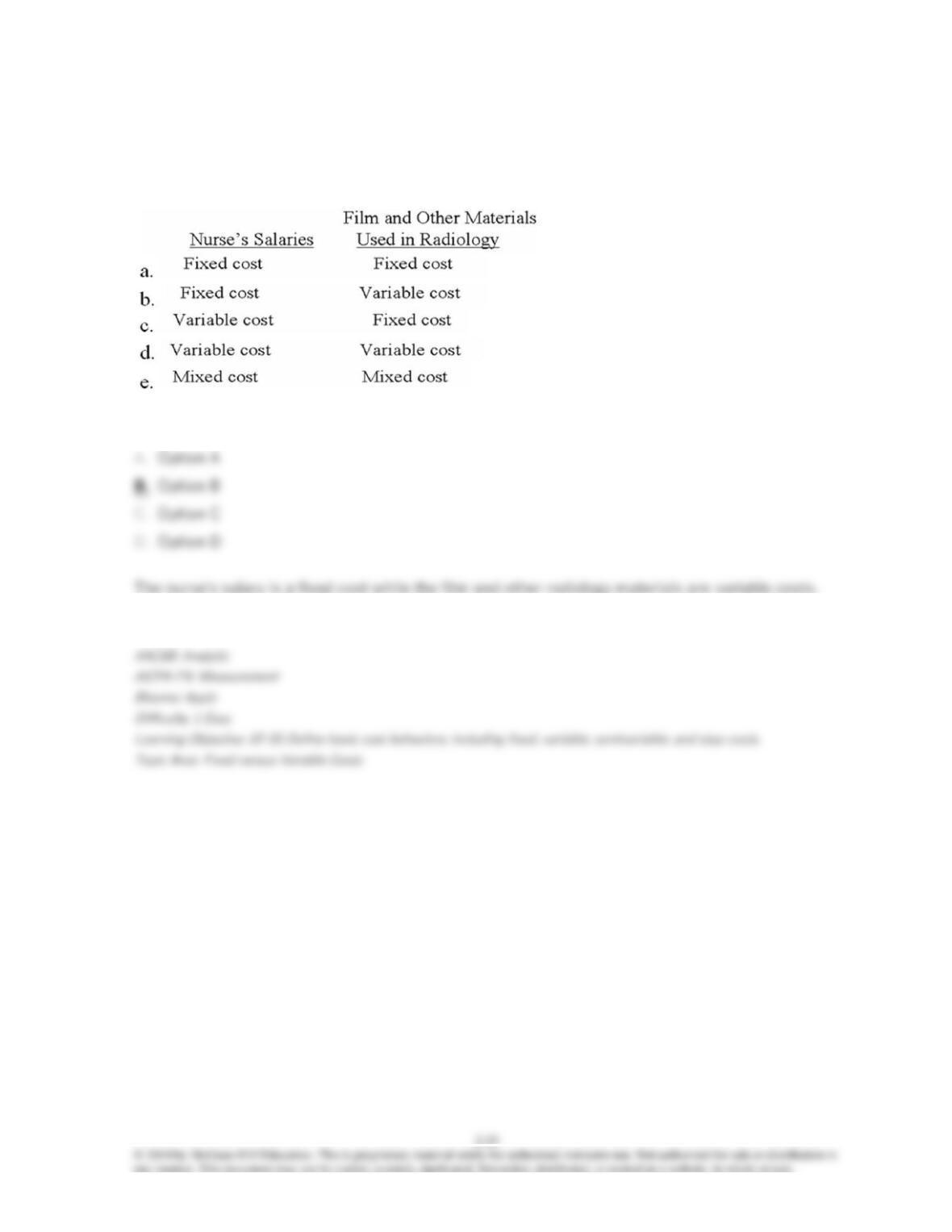
45. The student health center employs one doctor, three nurses, and several other employees.
How would you classify (1) the nurses’ salary and (2) film and other materials used in radiology to
give X-rays to students? Assume the activity is the number of students visiting the health center.
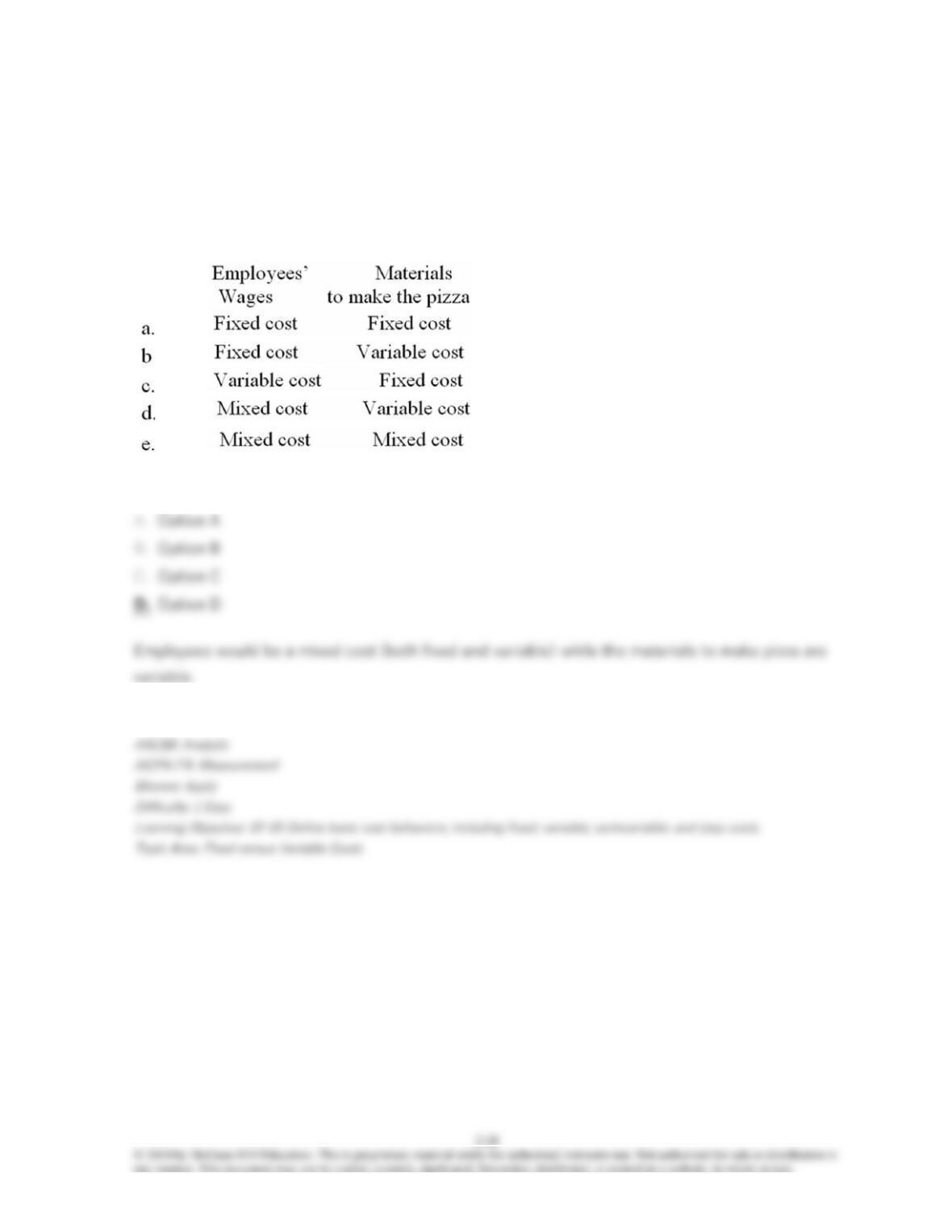
46. Pete’s Pizza Place has four pizza makers and ten other employees who take orders from
customers and perform other tasks. The four pizza makers and the other employees are paid an
hourly wage. How would one classify (1) the wages paid to the pizza makers and other employees
and (2) materials (e.g., cheeses, sauce, etc.) used to make the pizza? Assume the activity is the
number of pizzas made.
47. Which of the following statements is (are) true?
(1). The term
full
cost
refers to the cost of manufacturing and selling a unit of product and
includes both fixed and variable costs.
(2). The fixed cost per unit is considered constant despite changes in volume of activity within the
relevant range.
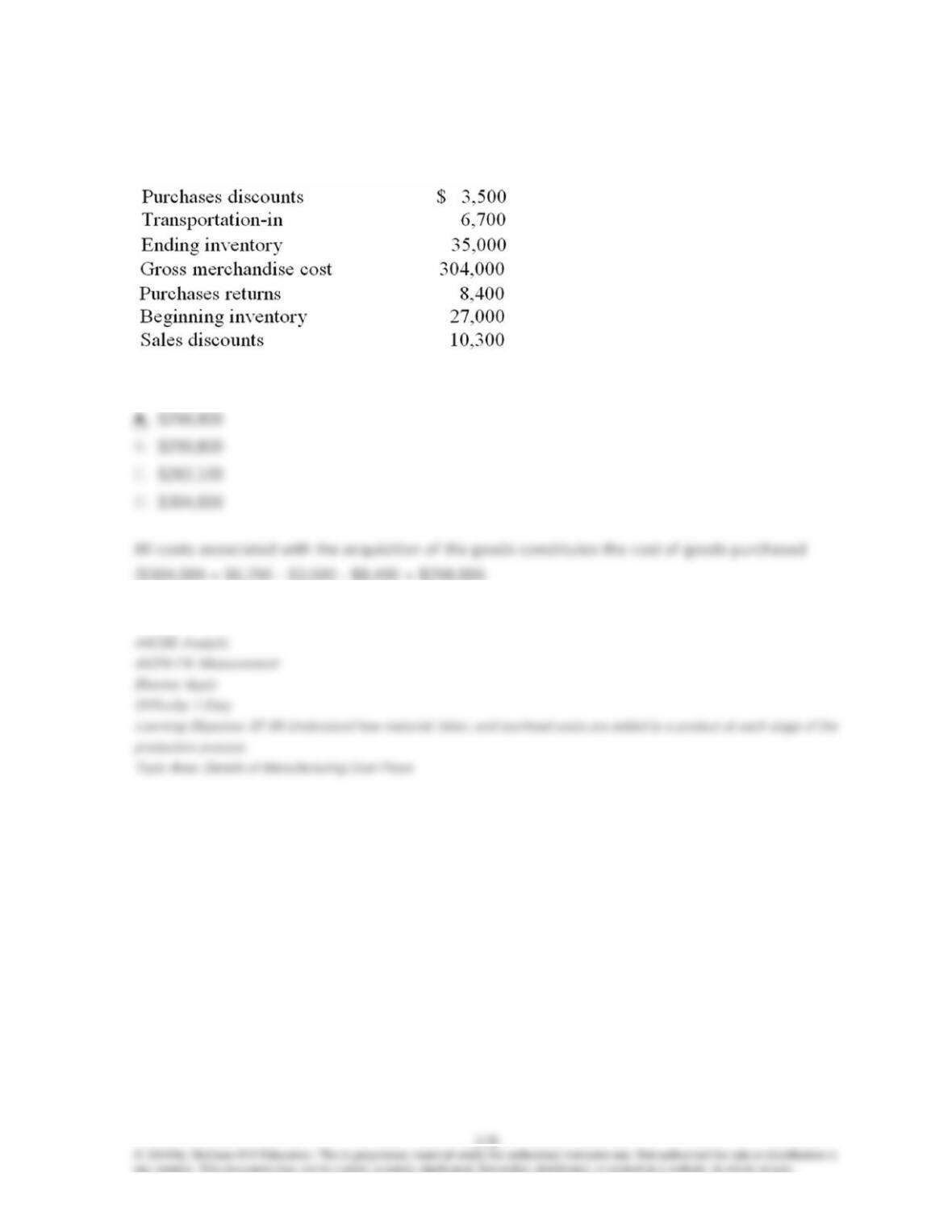
48. Given the following information for a retail company, what is the total cost of goods
purchased for the period?
49. A company had beginning inventories as follows: Direct Materials, $300; Work-in-Process,
$500; Finished Goods, $700. It had ending inventories as follows: Direct Materials, $400; Work–in–
Process, $600; Finished Goods, $800. Material Purchases (net including freight) were $1,400,
Direct Labor $1,500, and Manufacturing Overhead $1,600. What is the Cost of Goods Sold for the
period?
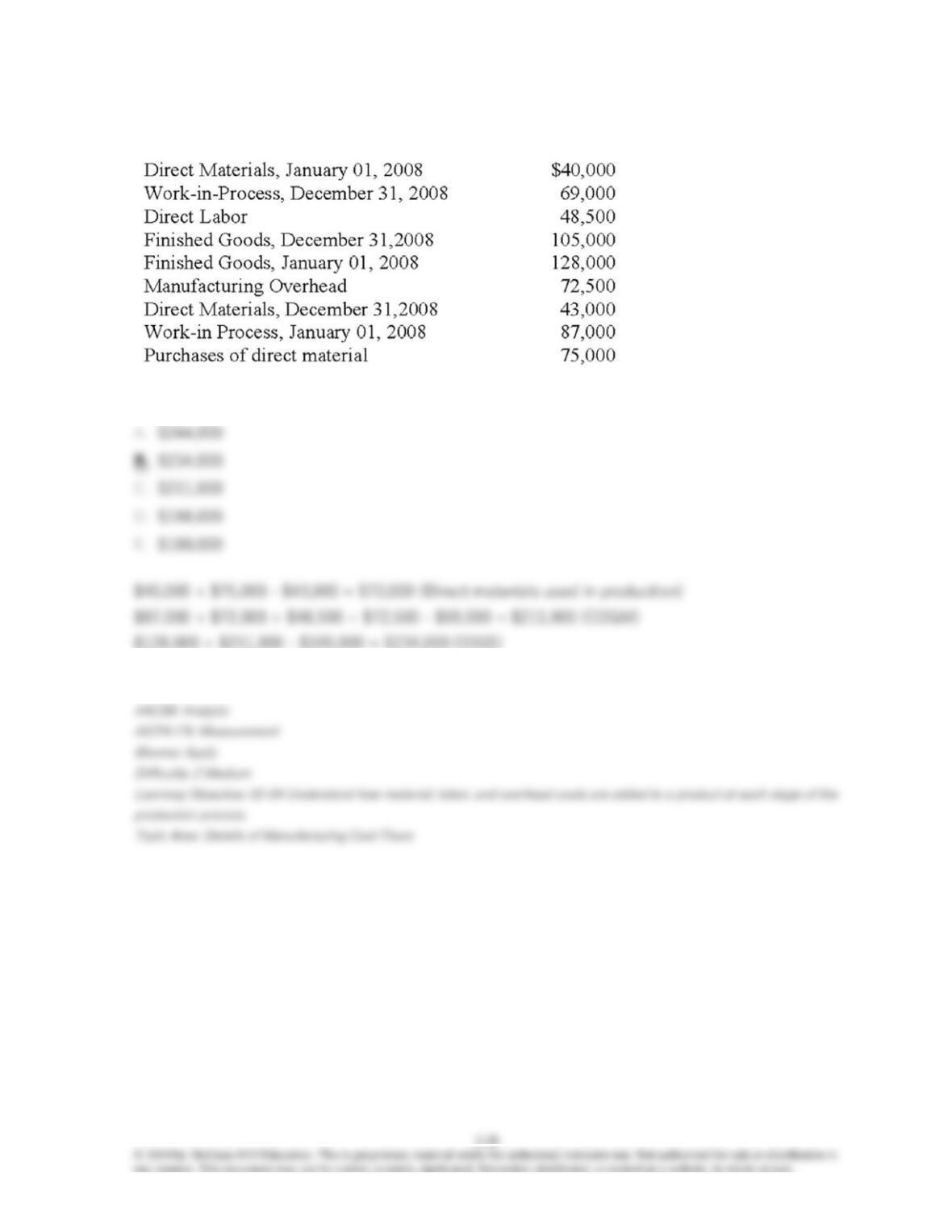
50. Compute the Cost of Goods Sold for 2008 using the following information:
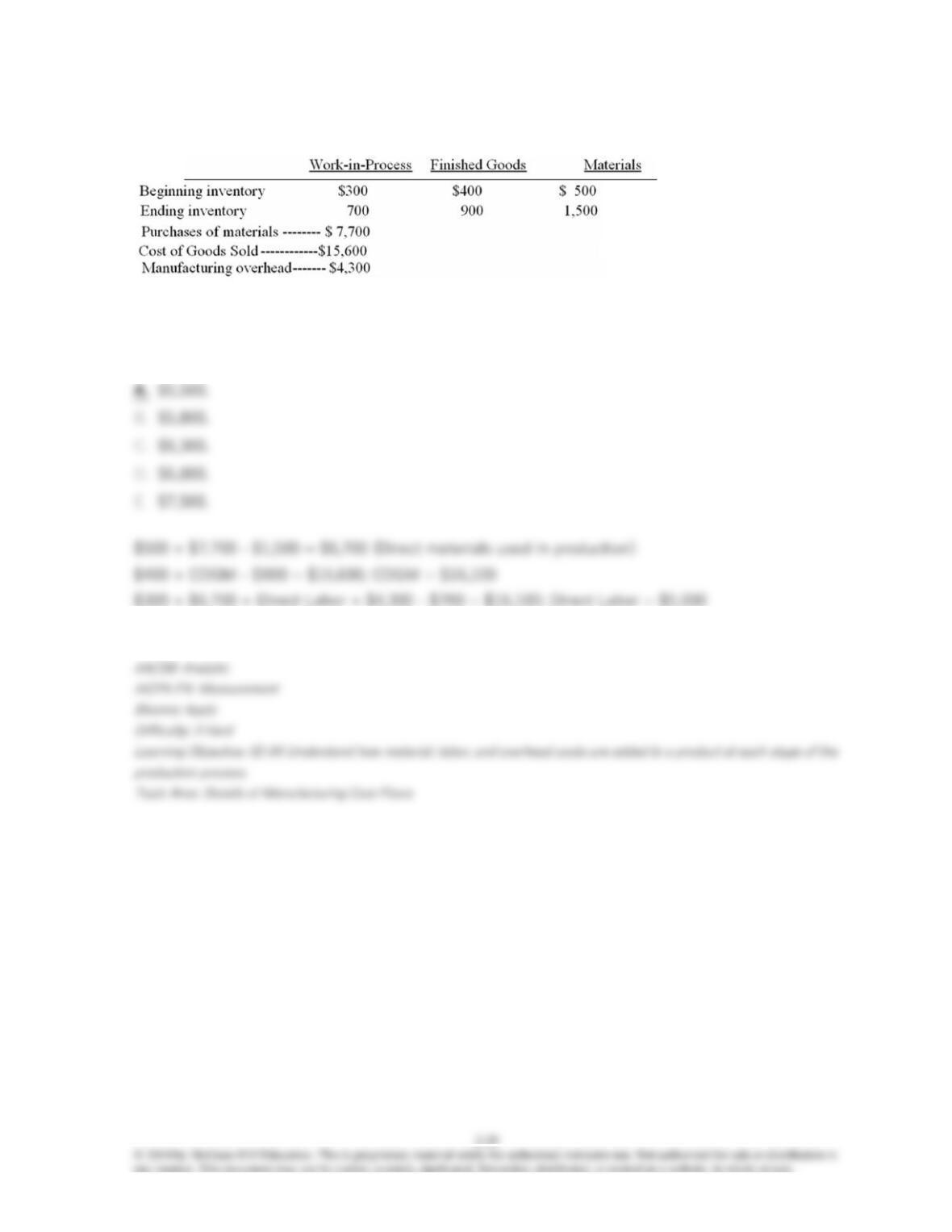
51. Seiler Company has the following information:
What was the direct labor for the period?
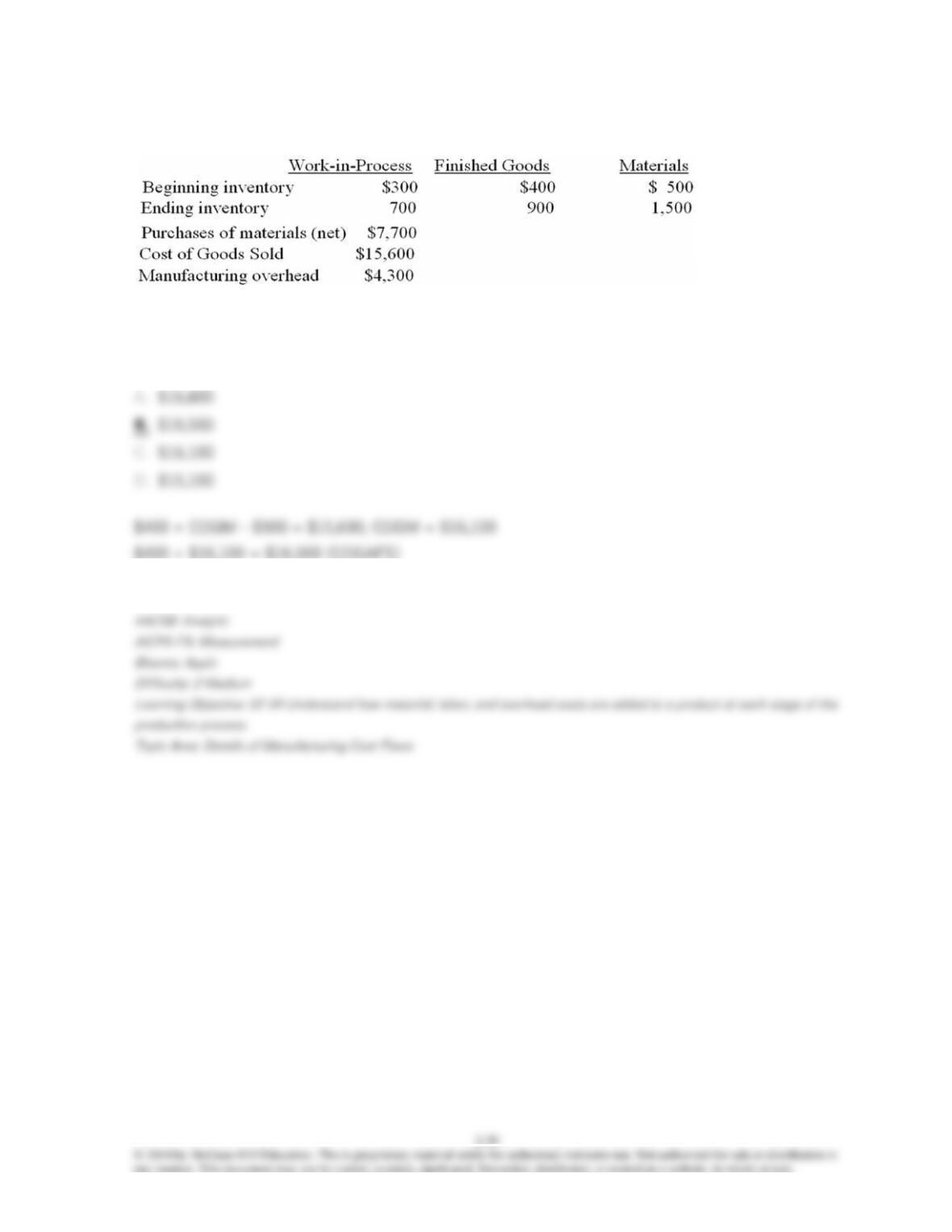
52. Seiler Company has the following information:
What was the cost of goods available for sale for the period?
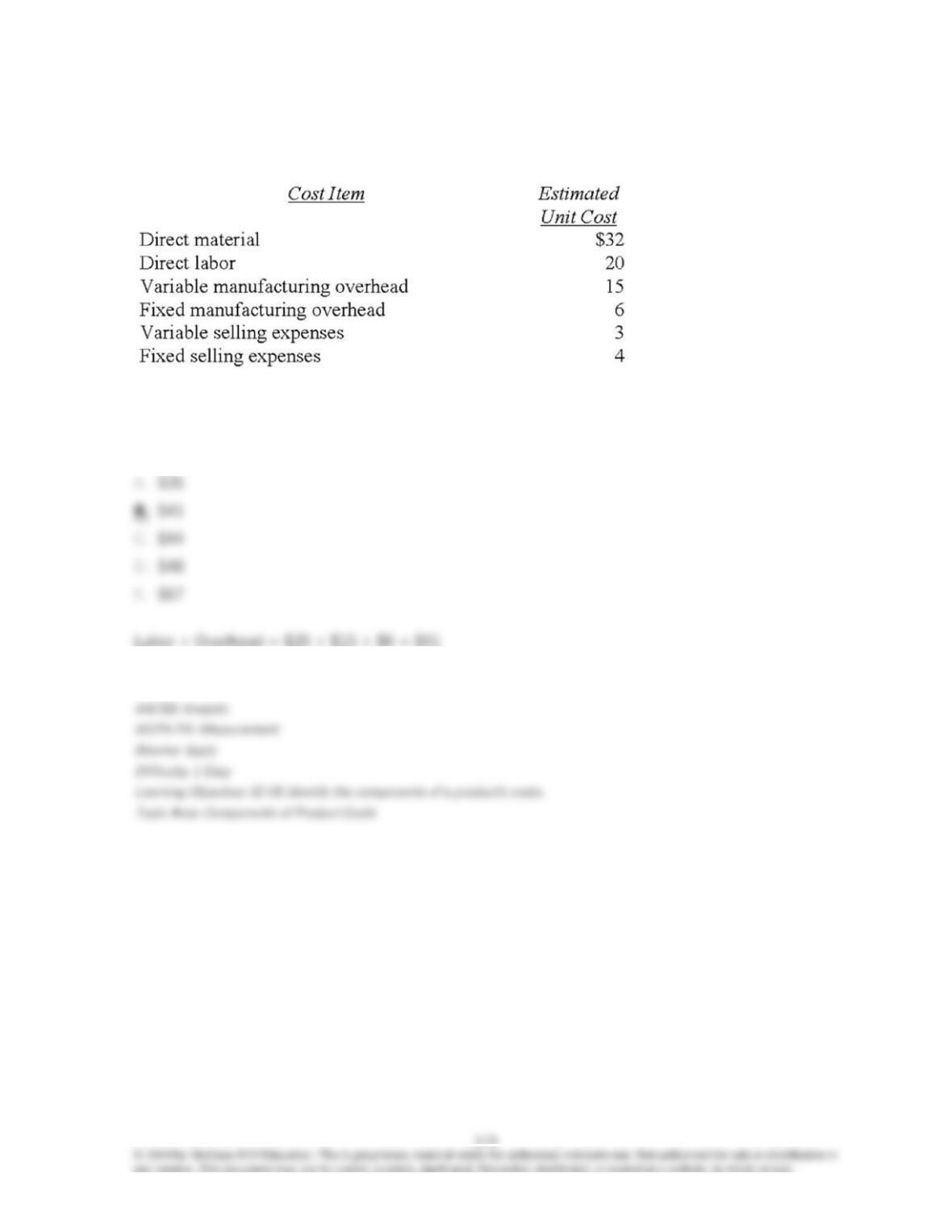
53. The estimated unit costs for a company to produce and sell a product at a level of 12,000
units per month are as follows:
What are the estimated conversion costs per unit?
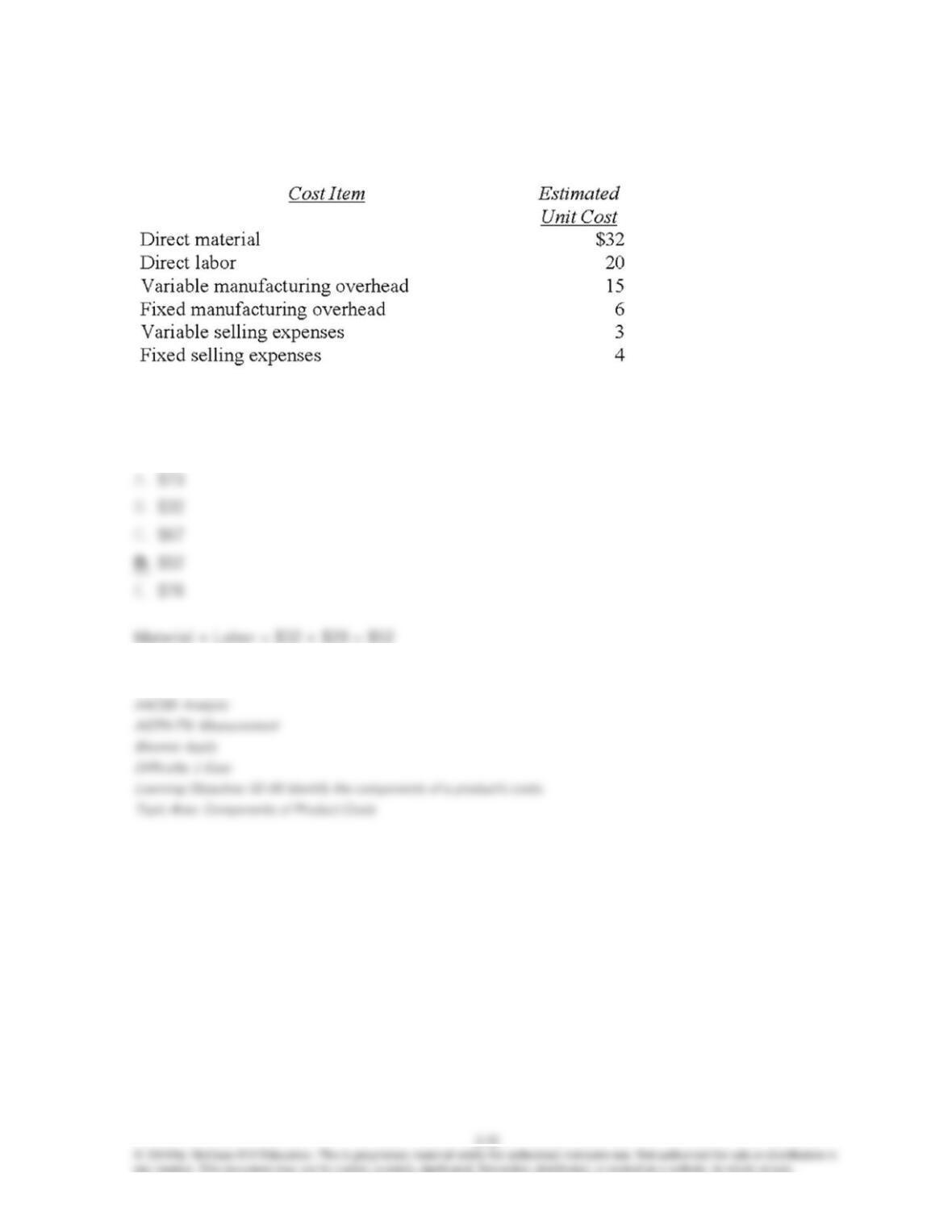
54. The estimated unit costs for a company to produce and sell a product at a level of 12,000
units per month are as follows:
What are the estimated prime costs per unit?
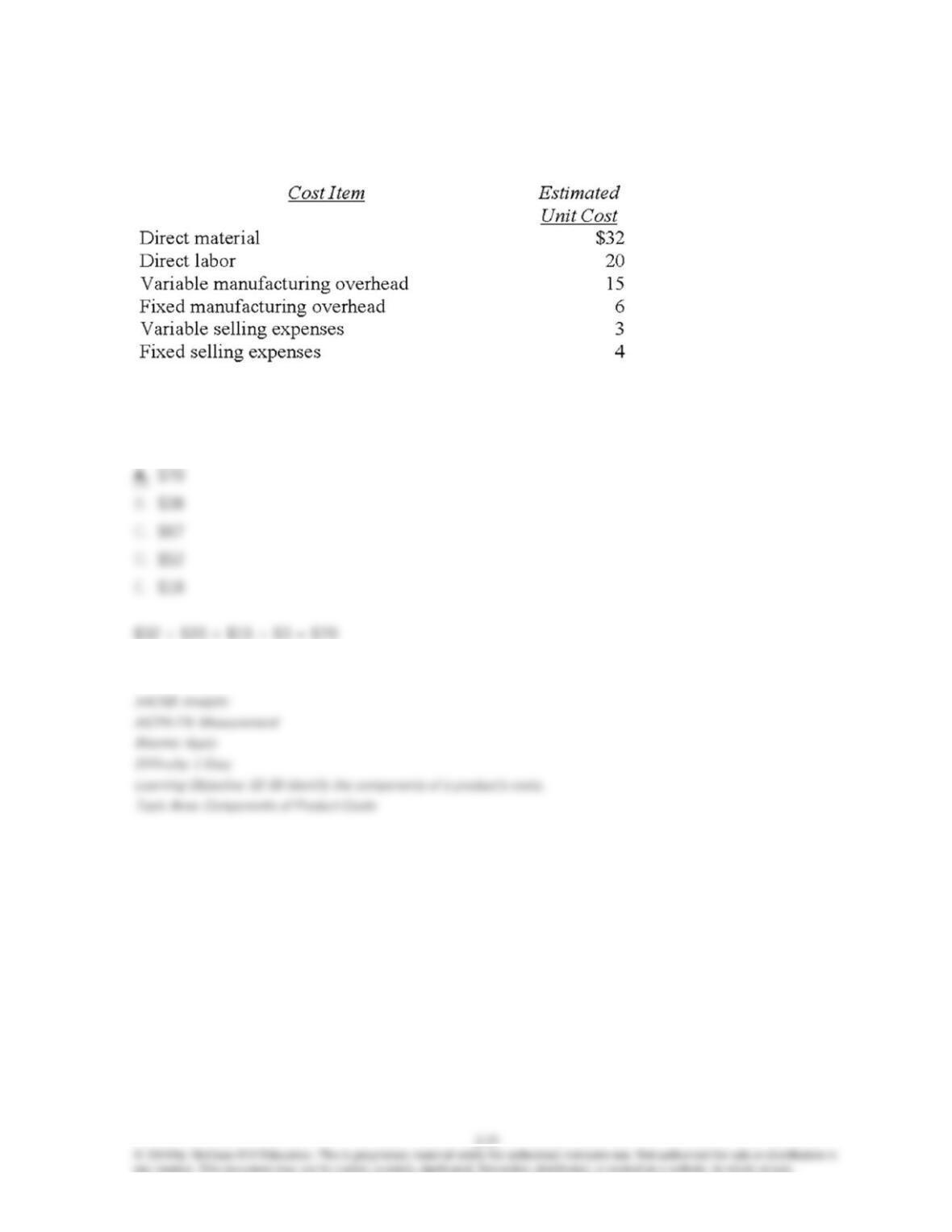
55. The estimated unit costs for a company to produce and sell a product at a level of 12,000
units per month are as follows:
What are the estimated variable costs per unit?
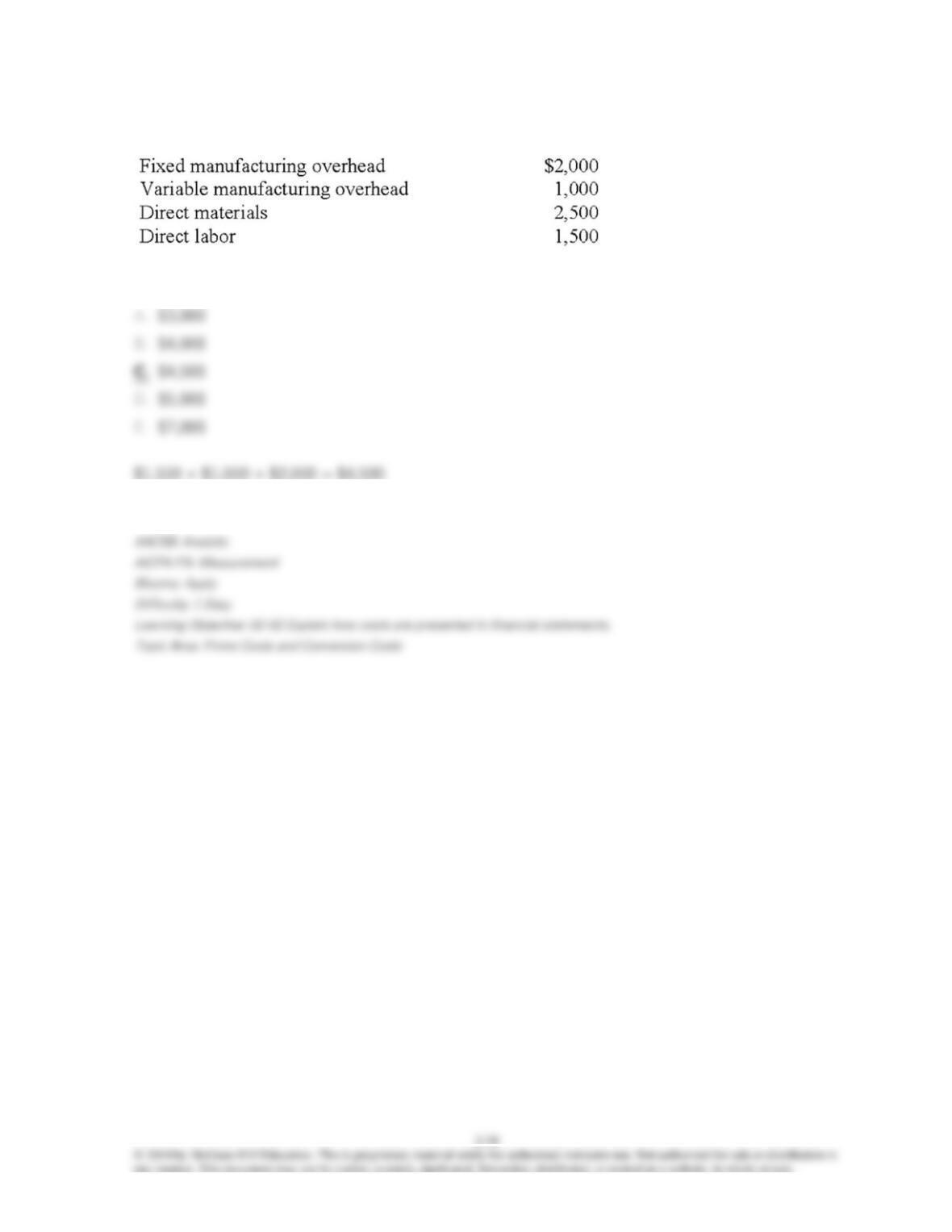
56. Calculate the conversion costs from the following information:
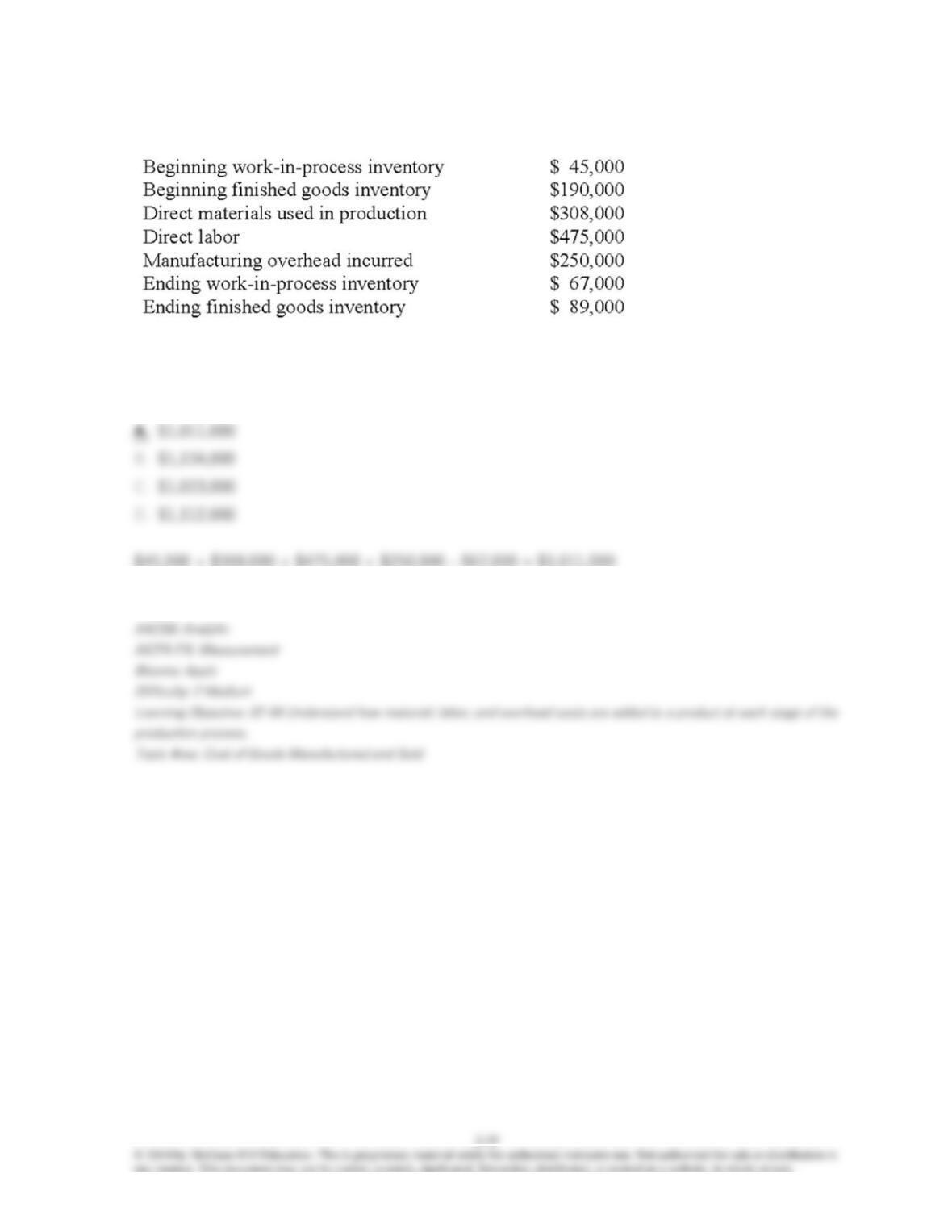
57. During the year, a manufacturing company had the following operating results:
What is the cost of goods manufactured for the year?
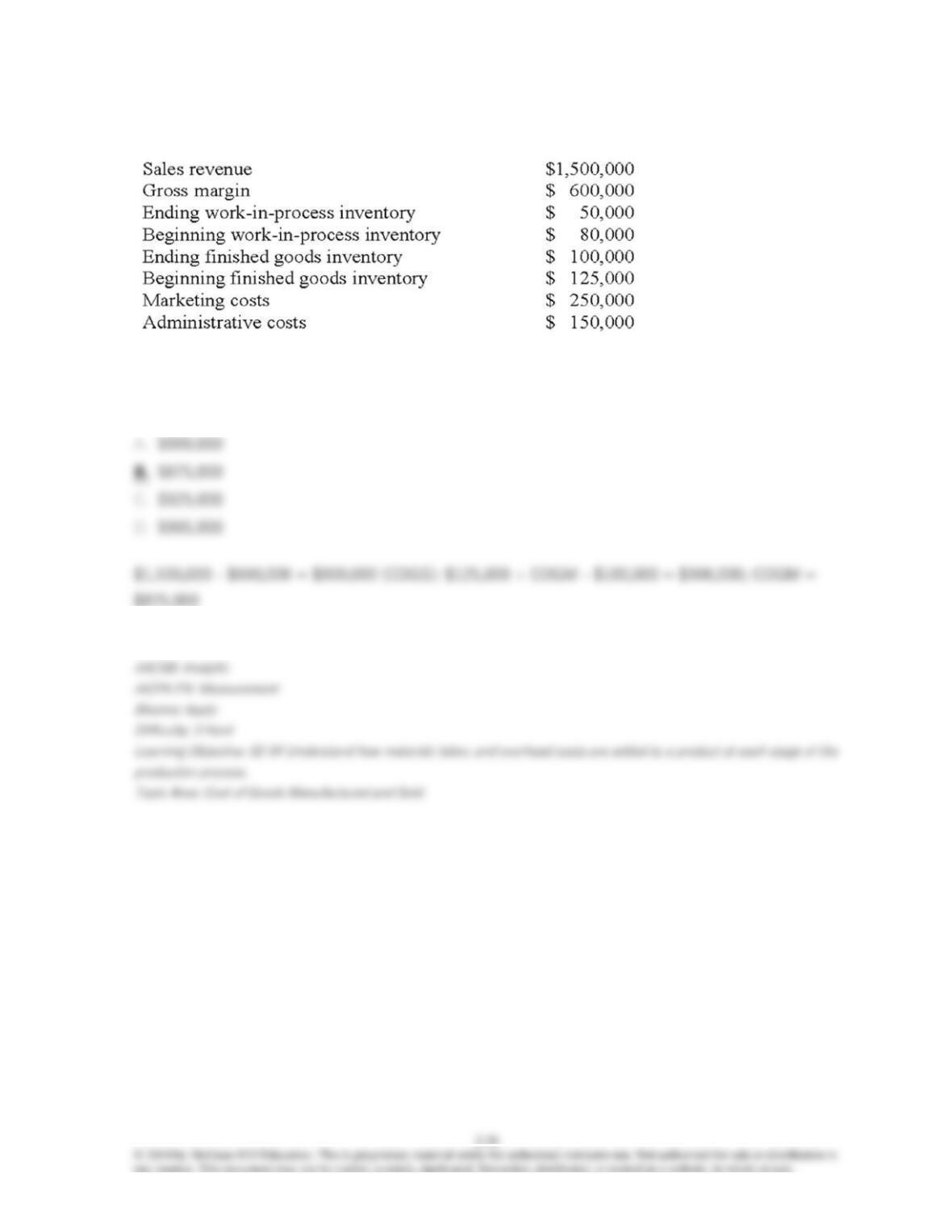
58. During April, the CJG Manufacturing Company had the following operating results:
What is the cost of goods manufactured for April?
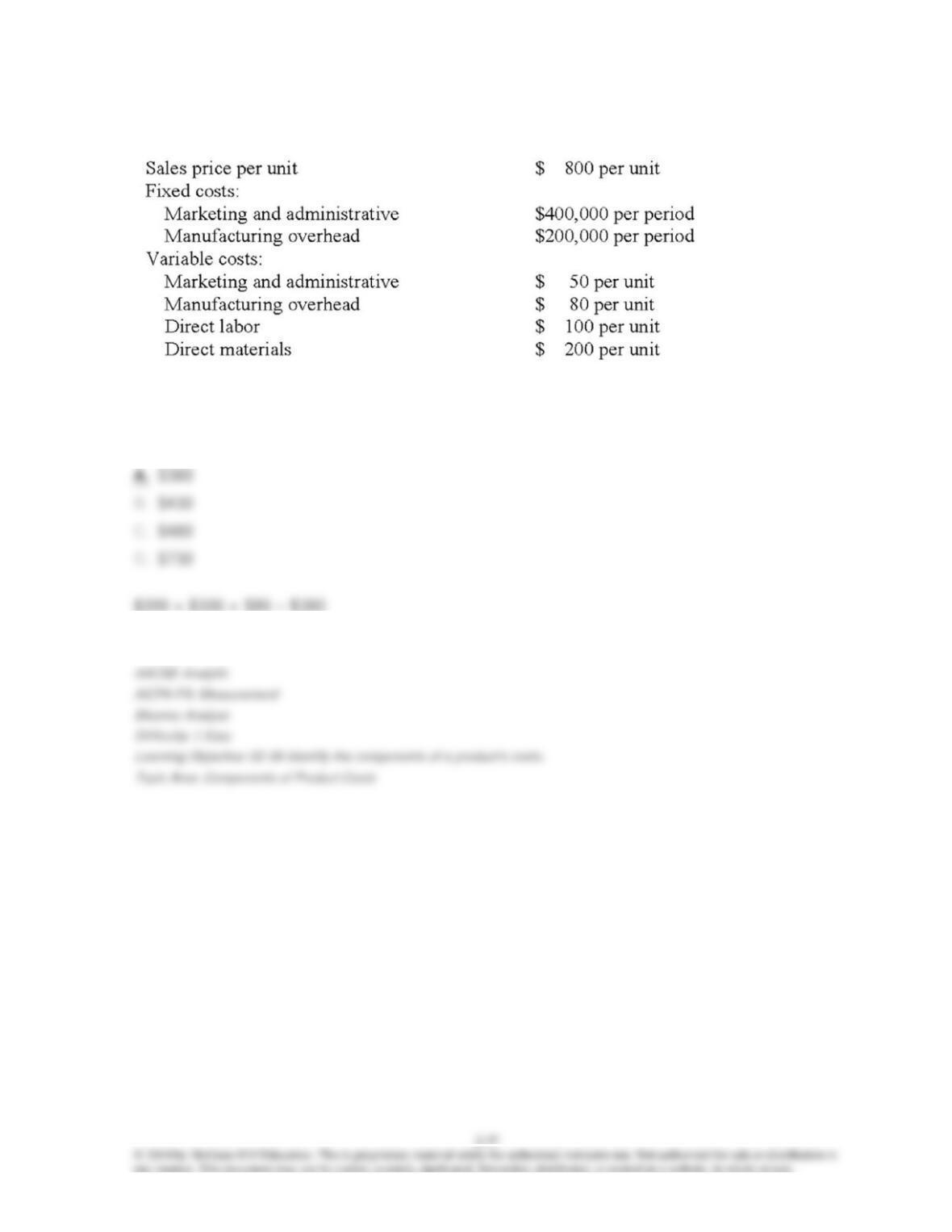
59. Laner Company has the following data for the production and sale of 2,000 units.
What is the variable manufacturing cost per unit?
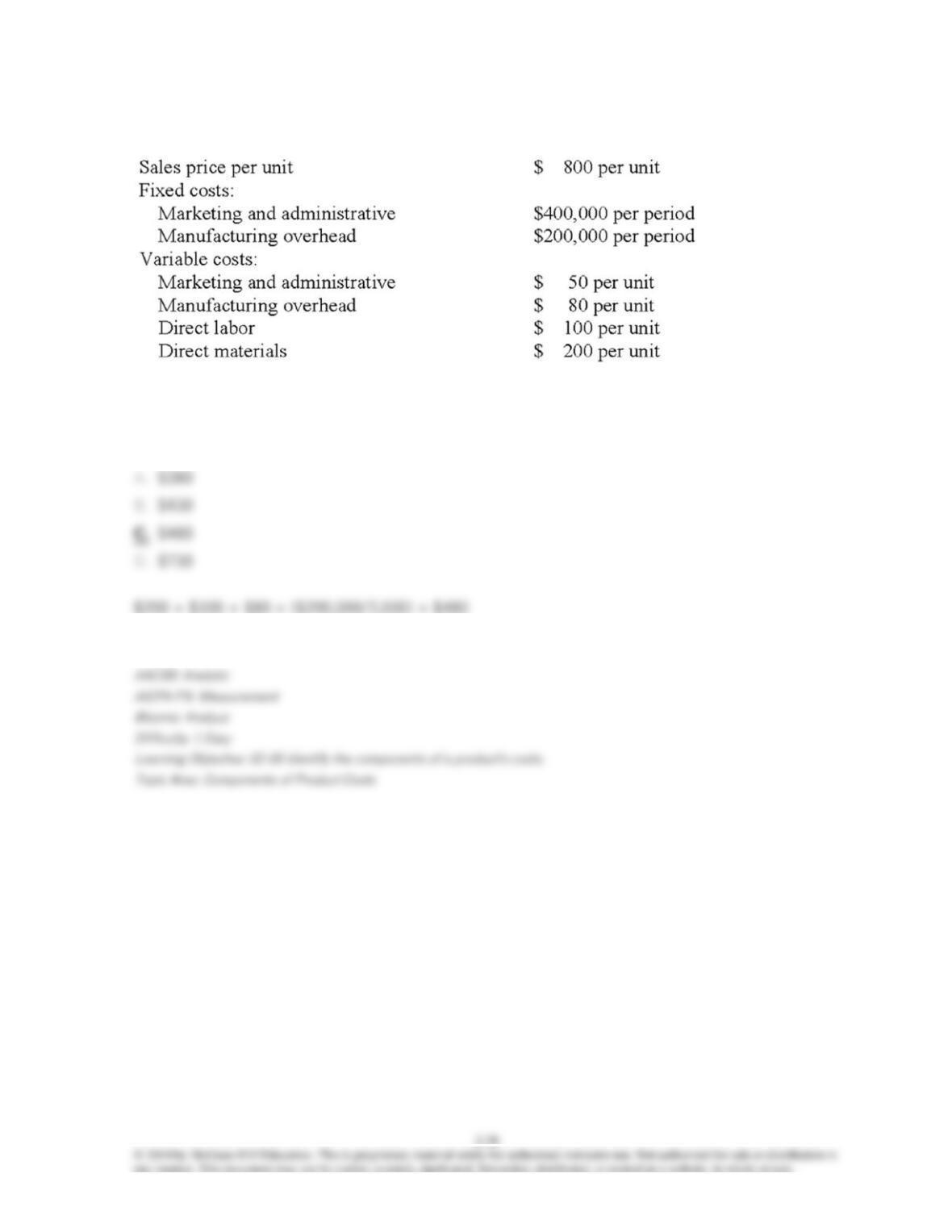
60. Laner Company has the following data for the production and sale of 2,000 units.
What is the total manufacturing cost per unit?
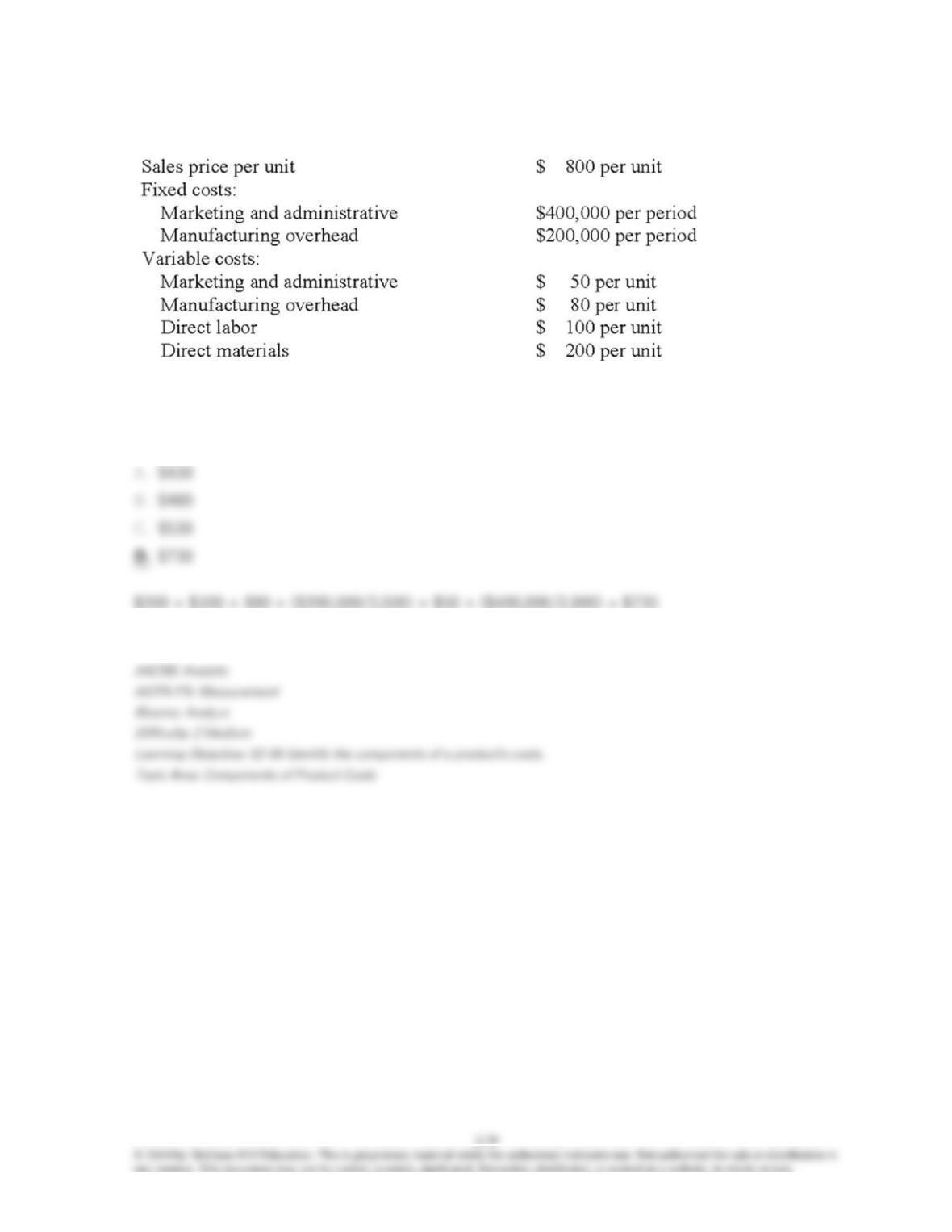
61. Laner Company has the following data for the production and sale of 2,000 units.
What is the full cost per unit of making and selling the product?
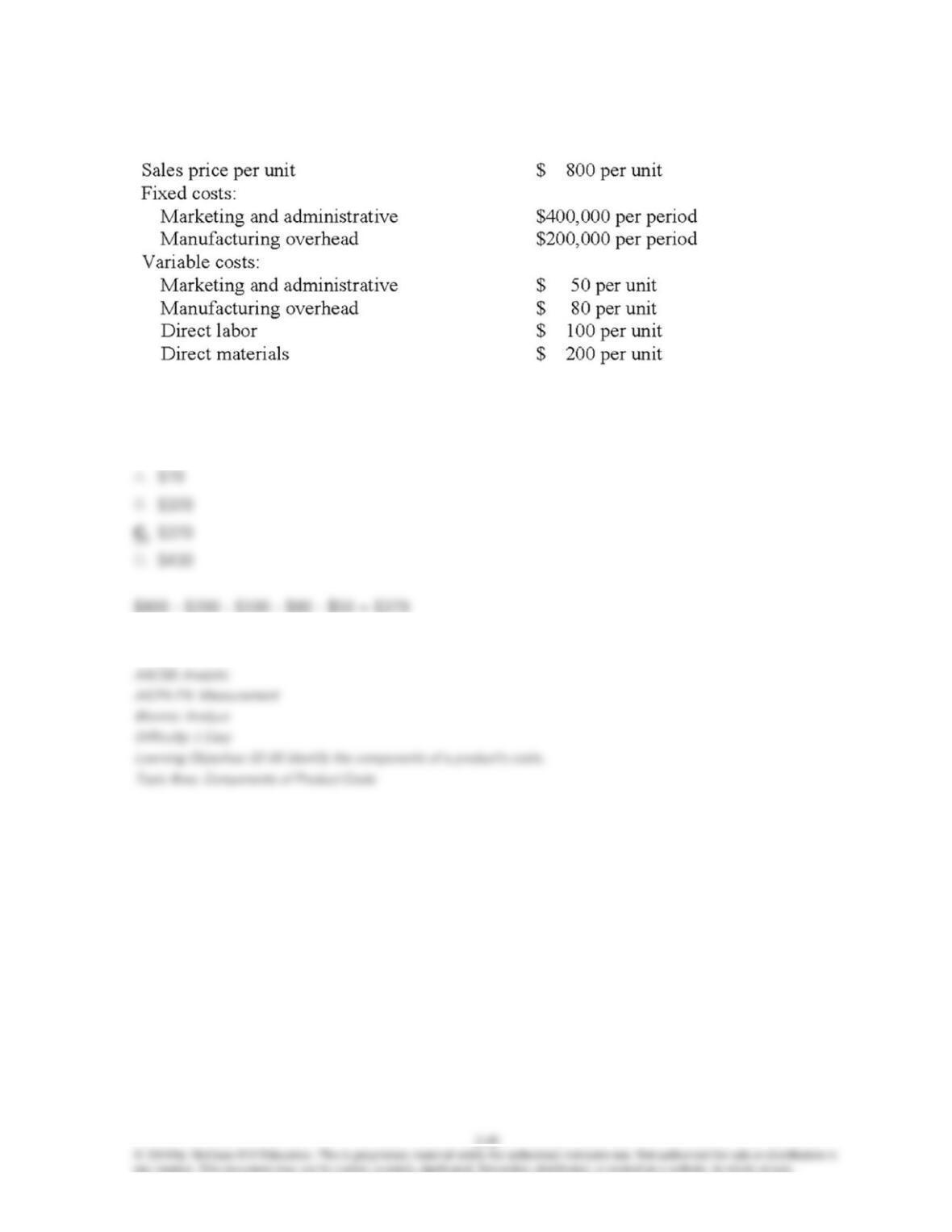
62. Laner Company has the following data for the production and sale of 2,000 units.
What is the contribution margin per unit?