74) Unearned revenues refer to a(n):
A) Asset that will be used over time.
B) Expense incurred because a customer has paid in advance.
C) Liability that is settled in the future when a company delivers its products or services.
D) Increase in assets as a result of delivering products or services to a customer.
E) Decrease in an asset.
75) Prepaid accounts (also called prepaid expenses) are generally:
A) Payments made for products and services that never expire.
B) Classified as liabilities on the balance sheet.
C) Classified as equity on the balance sheet.
D) Assets that represent prepayments of future expenses.
E) Promises of payments by customers.
76) A company’s written promise to pay (in the form of a promissory note) a future amount is
a(n):
A) Unearned revenue.
B) Prepaid expense.
C) Credit account.
D) Note payable.
E) Account receivable.
77) The record of all accounts and their balances used by a business is called a:
A) Journal.
B) Chart of accounts.
C) General Journal.
D) Balance column journal.
E) Ledger (or General Ledger).
78) A company’s ledger is:
A) A record containing increases and decreases in a specific asset, liability, equity, revenue, or
expense item.
B) A journal in which transactions are first recorded.
C) A collection of documents that describe transactions and events entering the accounting
process.
D) A list of all identification numbers used by the company.
E) A record containing all accounts and their balances used by the company.
79) A company’s list of accounts and the identification numbers assigned to each account is
called a:
A) Source document.
B) Journal.
C) Trial balance.
D) Chart of accounts.
E) General Journal.
80) A credit:
A) Always decreases an account.
B) Is the right-hand side of a T-account.
C) Always increases an account.
D) Is the left-hand side of a T-account.
E) Always increases asset accounts.
81) A debit:
A) Always increases an account.
B) Is the right-hand side of a T-account.
C) Always decreases an account.
D) Is the left-hand side of a T-account.
E) Always increases liability accounts.
82) The right side of a T-account is a(n):
A) Debit.
B) Increase.
C) Credit.
D) Decrease.
E) Account balance.
83) Identify the statement below that is incorrect.
A) The normal balance of accounts receivable is a debit.
B) The normal balance of dividends is a debit.
C) The normal balance of unearned revenues is a credit.
D) The normal balance of an expense account is a credit.
E) The normal balance of the common stock account is a credit.
84) A credit is used to record an increase in all of the following accounts except:
A) Accounts Payable
B) Service Revenue
C) Unearned Revenue
D) Wages Expense
E) Common Stock
85) A debit is used to record an increase in all of the following accounts except:
A) Supplies
B) Cash
C) Accounts Payable
D) Dividends
E) Prepaid Insurance
86) Identify the account below that is classified as a liability in a company’s chart of accounts:
A) Cash
B) Unearned Revenue
C) Salaries Expense
D) Accounts Receivable
E) Supplies
87) Identify the account below that is classified as an asset in a company’s chart of accounts:
A) Accounts Receivable
B) Accounts Payable
C) Common Stock
D) Unearned Revenue
E) Service Revenue
88) Identify the account below that is classified as an asset account:
A) Unearned Revenue
B) Accounts Payable
C) Supplies
D) Retained Earnings
E) Service Revenue
89) Identify the account below that is classified as a liability account:
A) Cash
B) Accounts Payable
C) Salaries Expense
D) Retained Earnings
E) Equipment
90) Identify the account below that impacts the equity of a business:
A) Utilities Expense
B) Accounts Payable
C) Accounts Receivable
D) Cash
E) Unearned Revenue
91) Which of the following is NOT an equity account:
A) Unearned Revenue
B) Retained Earnings
C) Services Revenue
D) Wages Expense
E) Dividends
92) Which of the following is NOT an asset account:
A) Cash
B) Land
C) Services Revenue
D) Buildings
E) Equipment
93) A business uses a credit to record:
A) An increase in an expense account.
B) A decrease in an asset account.
C) A decrease in an unearned revenue account.
D) A decrease in a revenue account.
E) A decrease in a common stock account.
94) A tool that represents a ledger account and is used to show the effects of transactions is
called a:
A) Dividends account.
B) Retained earnings account.
C) Trial balance.
D) T-account.
E) Balance column sheet.
95) Identify the statement below that is correct:
A) The left side of a T-account is the credit side.
B) Debits decrease asset and expense accounts, and increase liability, equity, and revenue
accounts.
C) The left side of a T-account is the debit side.
D) Credits increase asset and expense accounts, and decrease liability, equity, and revenue
accounts.
E) The total amount debited need not equal the total amount credited for a particular transaction.
96) An account balance is:
A) The total of the credit side of the account.
B) The total of the debit side of the account.
C) The difference between the total debits and total credits for an account including the
beginning balance.
D) Used to identify source documents.
E) Always a credit.
97) Select the account below that normally has a credit balance.
A) Cash.
B) Office Equipment.
C) Wages Payable.
D) Dividends.
E) Sales Salaries Expense.
98) A debit is used to record which of the following:
A) A decrease in an asset account.
B) A decrease in an expense account.
C) An increase in a revenue account.
D) An increase in the common stock account.
E) An increase in the dividends account.
99) A credit entry:
A) Increases asset and expense accounts, and decreases liability, common stock, and revenue
accounts.
B) Always decreases an account.
C) Decreases asset and expense accounts, and increases liability, common stock, and revenue
accounts.
D) Is recorded on the left side of a T-account.
E) Always increases an account.
100) A double-entry accounting system is an accounting system:
A) That records each transaction twice.
B) That records the effect of each transaction in at least two accounts with equal debits and
credits.
C) In which each transaction affects and is recorded in two or more accounts but that could
include two debits and no credits.
D) That allows total credits to be greater than total debits.
E) That allows total debits to be greater than total credits.
101) Edison Consulting received a $300 utilities bill and immediately paid it. Edison’s general
journal entry to record this transaction will include a:
A) Debit to Utilities Expense for $300.
B) Credit to Accounts Payable for $300.
C) Debit to Cash for $300.
D) Credit to Utilities Expense for $300.
E) Debit to Accounts Payable for $300.
102) GreenLawn Co. provides landscaping services to clients. On May 1, a customer paid
GreenLawn $60,000 for 6-months services in advance. GreenLawn’s general journal entry to
record this transaction will include a:
A) Debit to Unearned Revenue for $60,000.
B) Credit to Accounts Receivable for $60,000.
C) Credit to Cash for $60,000.
D) Credit to Unearned Revenue for $60,000.
E) Debit to Accounts Receivable for $60,000.
103) Willow Rentals purchased office supplies on credit. The general journal entry made by
Willow Rentals will include a:
A) Debit to Accounts Payable.
B) Debit to Accounts Receivable.
C) Credit to Cash.
D) Credit to Accounts Payable.
E) Credit to Common Stock.
104) An asset created by prepayment of an insurance premium is:
A) Recorded as a debit to Unearned Revenue.
B) Recorded as a debit to Prepaid Insurance.
C) Recorded as a credit to Unearned Revenue.
D) Recorded as a credit to Prepaid Insurance.
E) Not recorded in the accounting records until the insurance period expires.
105) Victor Cruz contributed $70,000 in cash and land worth $130,000 to open a new business,
VC Consulting, in exchange for common stock. Which of the following general journal entries
will VC Consulting make to record this transaction?
A) Debit Accounts Payable $200,000; Credit Common Stock, $200,000.
B) Credit Cash and Land, $200,000; Credit Common Stock, $200,000.
C) Debit Cash $70,000; Debit Land $130,000; Credit Common Stock, $200,000.
D) Debit Common Stock, $200,000; Credit Cash $70,000, Credit Land, $130,000.
E) Debit Common Stock, $200,000; Credit Assets, $200,000.
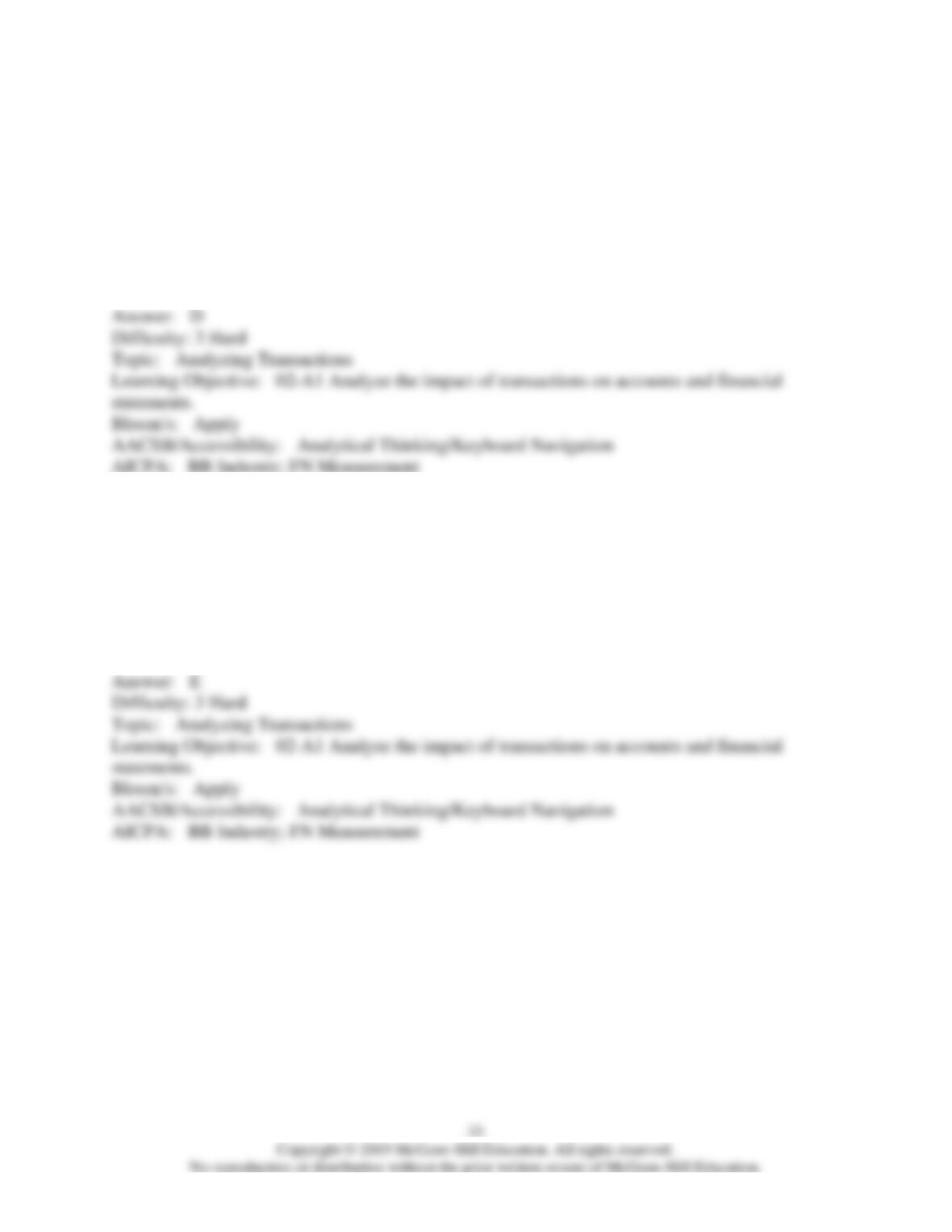
106) Green Cleaning purchased $500 of office supplies on credit. The company’s policy is to
initially record prepaid and unearned items in balance sheet accounts. Which of the following
general journal entries will Green Cleaning make to record this transaction?
A) Debit Office supplies expense, $500; credit Cash, $500.
B) Debit Cash, $500; credit Office supplies, $500.
C) Debit Office supplies, $500; credit Cash, $500.
D) Debit Office supplies, $500; credit Accounts payable, $500.
E) Debit Accounts payable, $500; credit Office supplies, $500.
107) Alicia Tax Services paid $500 to settle an account payable. Which of the following general
journal entries will Alicia Tax Services make to record this transaction?
A) Debit Office supplies expense, $500; credit Cash, $500.
B) Debit Cash, $500; credit Office supplies, $500.
C) Debit Office supplies, $500; credit Cash, $500.
D) Debit Office supplies, $500; credit Accounts payable, $500.
E) Debit Accounts payable, $500; credit Cash, $500.
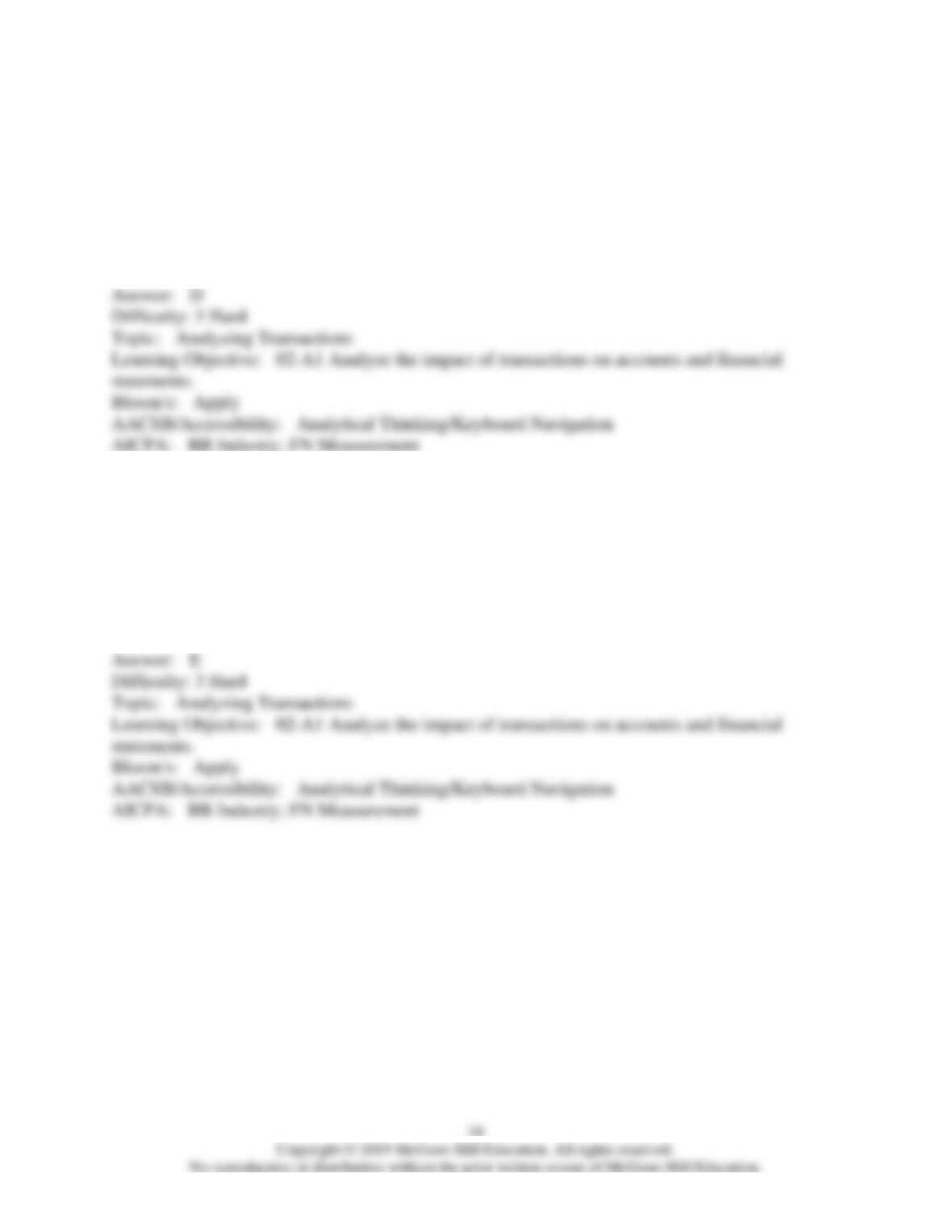
108) A law firm billed a client $1,800 for work performed in the current month. Which of the
following general journal entries will the firm make to record this transaction?
A) Debit Accounts Receivable, $1,800; credit Unearned Legal Fees Revenue, $1,800.
B) Debit Cash, $1,800; credit Unearned Legal Fees Revenue, $1,800.
C) Debit Legal Fees Revenue, $1,800; credit Accounts Receivable, $1,800.
D) Debit Accounts Receivable, $1,800; credit Legal Fees Revenue, $1,800.
E) Debit Cash, $1,800; credit Accounts Receivable, $1,800.
109) A law firm collected $1,800 on account for work performed in the previous month. Which
of the following general journal entries will the firm make to record this collection of cash?
A) Debit Accounts Receivable, $1,800; credit Unearned Legal Fees Revenue, $1,800.
B) Debit Cash, $1,800; credit Unearned Legal Fees Revenue, $1,800.
C) Debit Legal Fees Revenue, $1,800; credit Accounts Receivable, $1,800.
D) Debit Accounts Receivable, $1,800; credit Legal Fees Revenue, $1,800.
E) Debit Cash, $1,800; credit Accounts Receivable, $1,800.
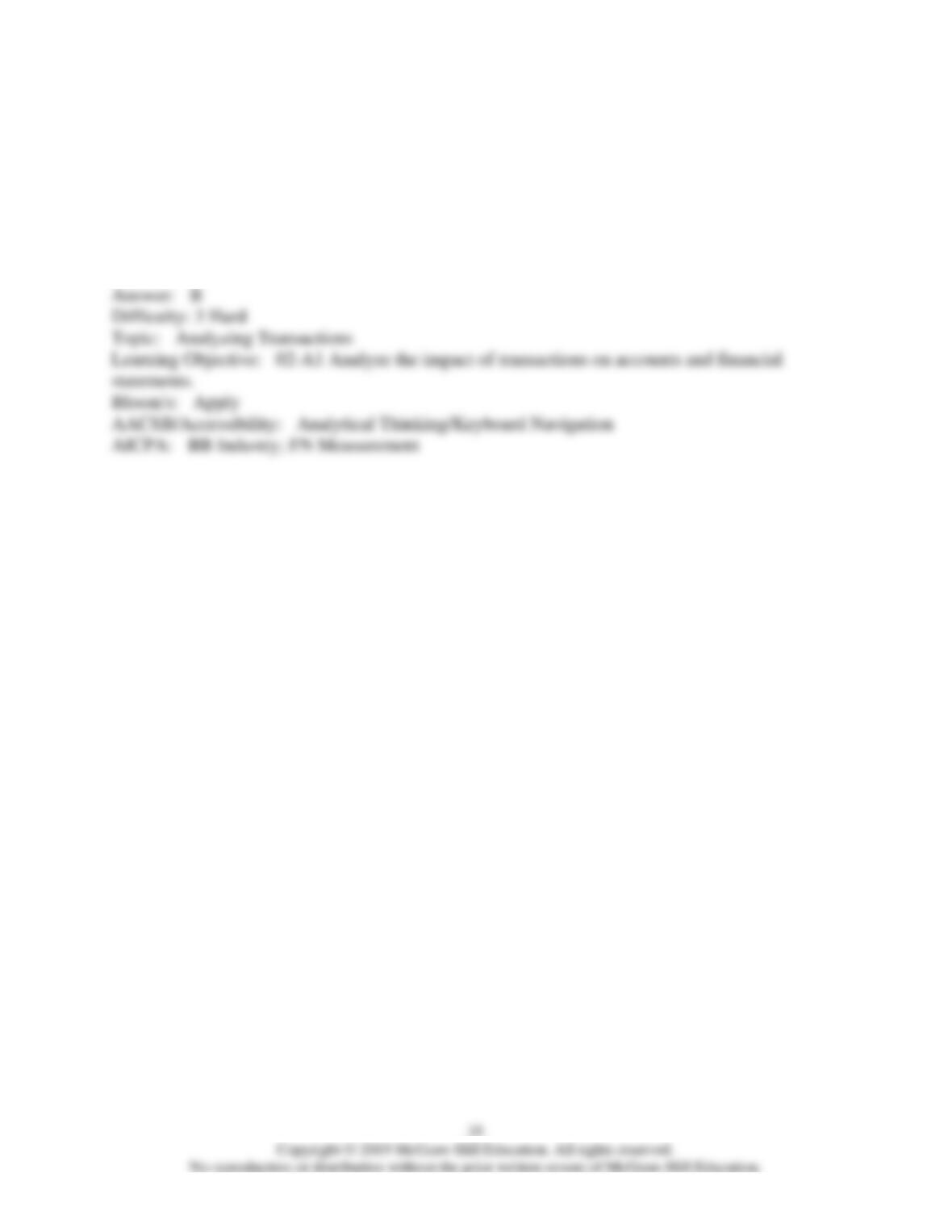
110) A law firm collected $1,800 in advance for work to be performed in three months. Which of
the following general journal entries will the firm make to record this transaction?
A) Debit Accounts Receivable, $1,800; credit Unearned Legal Fees Revenue, $1,800.
B) Debit Cash, $1,800; credit Unearned Legal Fees Revenue, $1,800.
C) Debit Legal Fees Revenue, $1,800; credit Accounts Receivable, $1,800.
D) Debit Accounts Receivable, $1,800; credit Legal Fees Revenue, $1,800.
E) Debit Cash, $1,800; credit Accounts Receivable, $1,800.
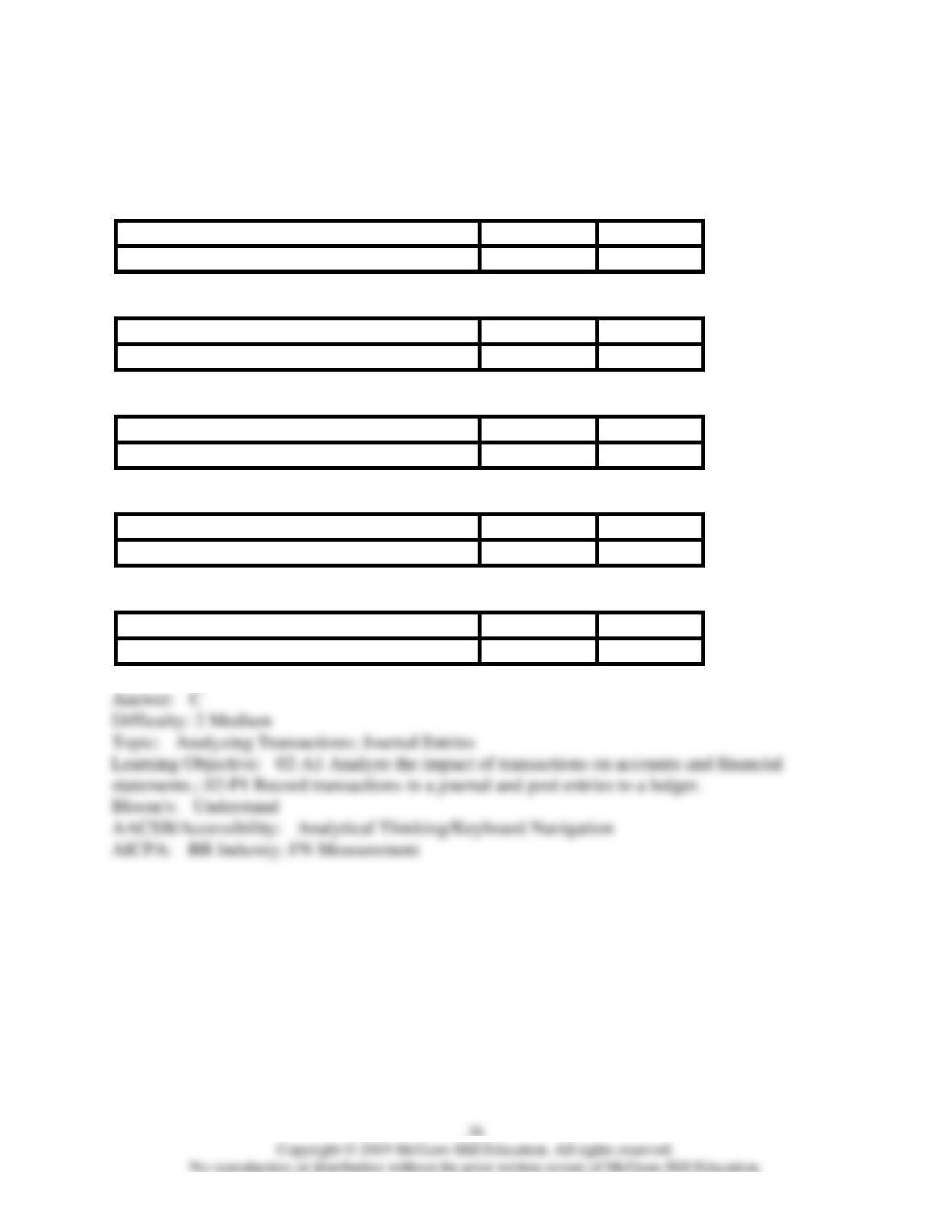
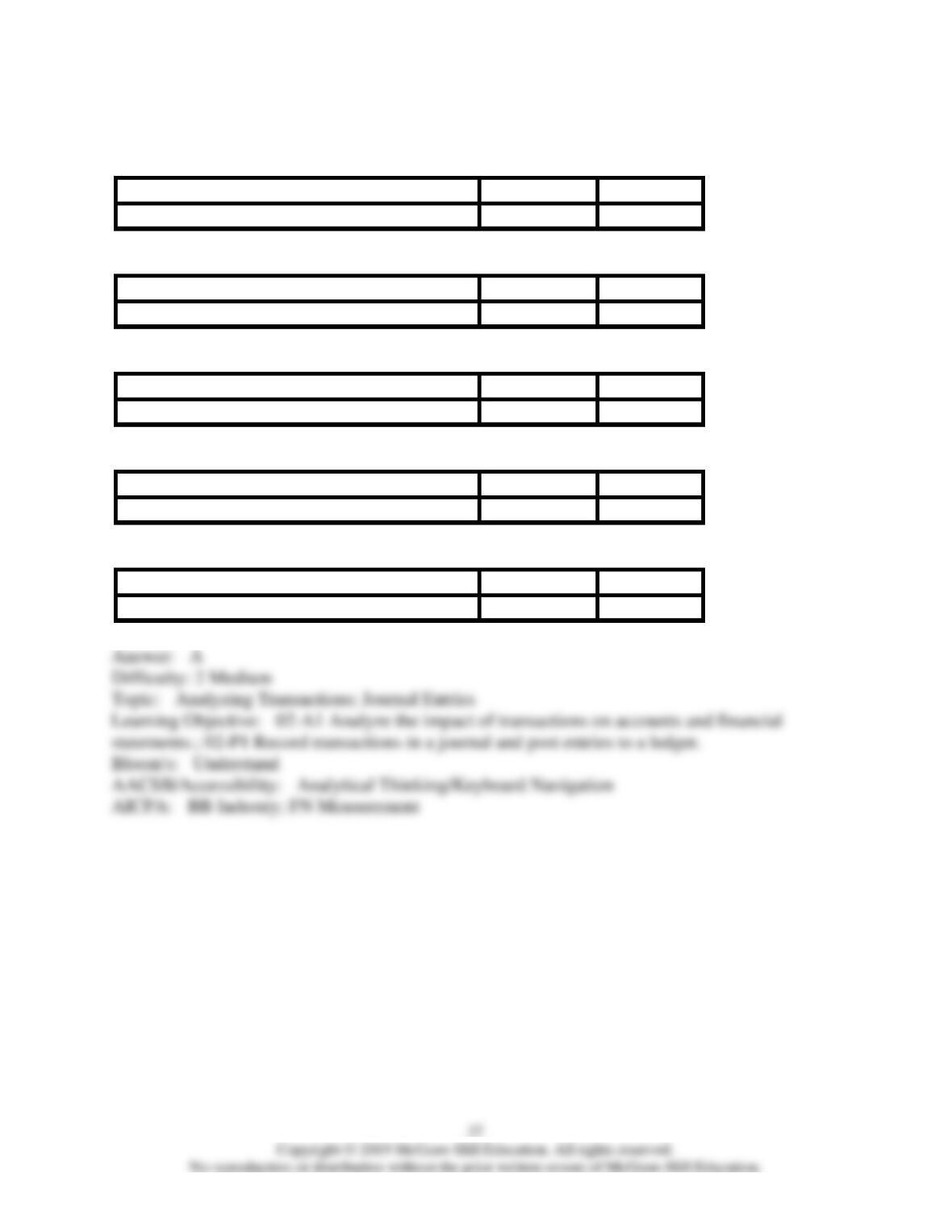
111) Specter Consulting purchased $7,000 of supplies and paid cash immediately. Which of the
following general journal entries will Specter Consulting make to record this transaction?
Assume the company’s policy is to initially record prepaid and unearned items in balance sheet
accounts.
A)
Accounts Payable
7,000
Supplies
7,000
B)
Cash
7,000
Supplies
7,000
C)
Supplies
7,000
Cash
7,000
D)
Supplies
7,000
Accounts Payable
7,000
E)
Supplies Expense
7,000
Accounts Payable
7,000
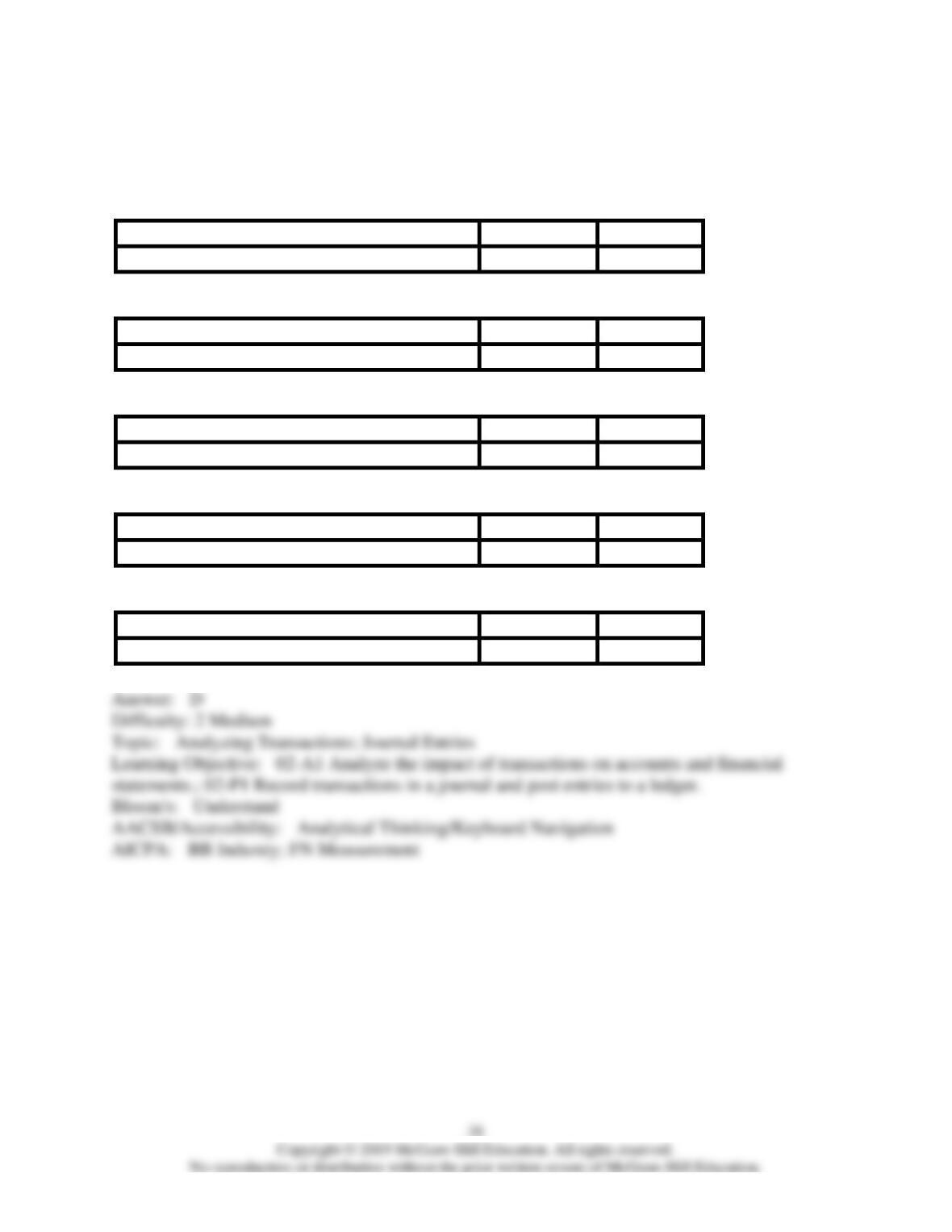
112) Jose Consulting paid $500 cash for utilities for the current month. Determine the general
journal entry that Jose Consulting will make to record this transaction.
A)
Utilities Expense
500
Cash
500
B)
Cash
500
Utilities Expense
500
C)
Cash
500
Accounts Payable
500
D)
Utilities Expense
500
Accounts Payable
500
E)
Prepaid Utilities
500
Accounts Payable
500
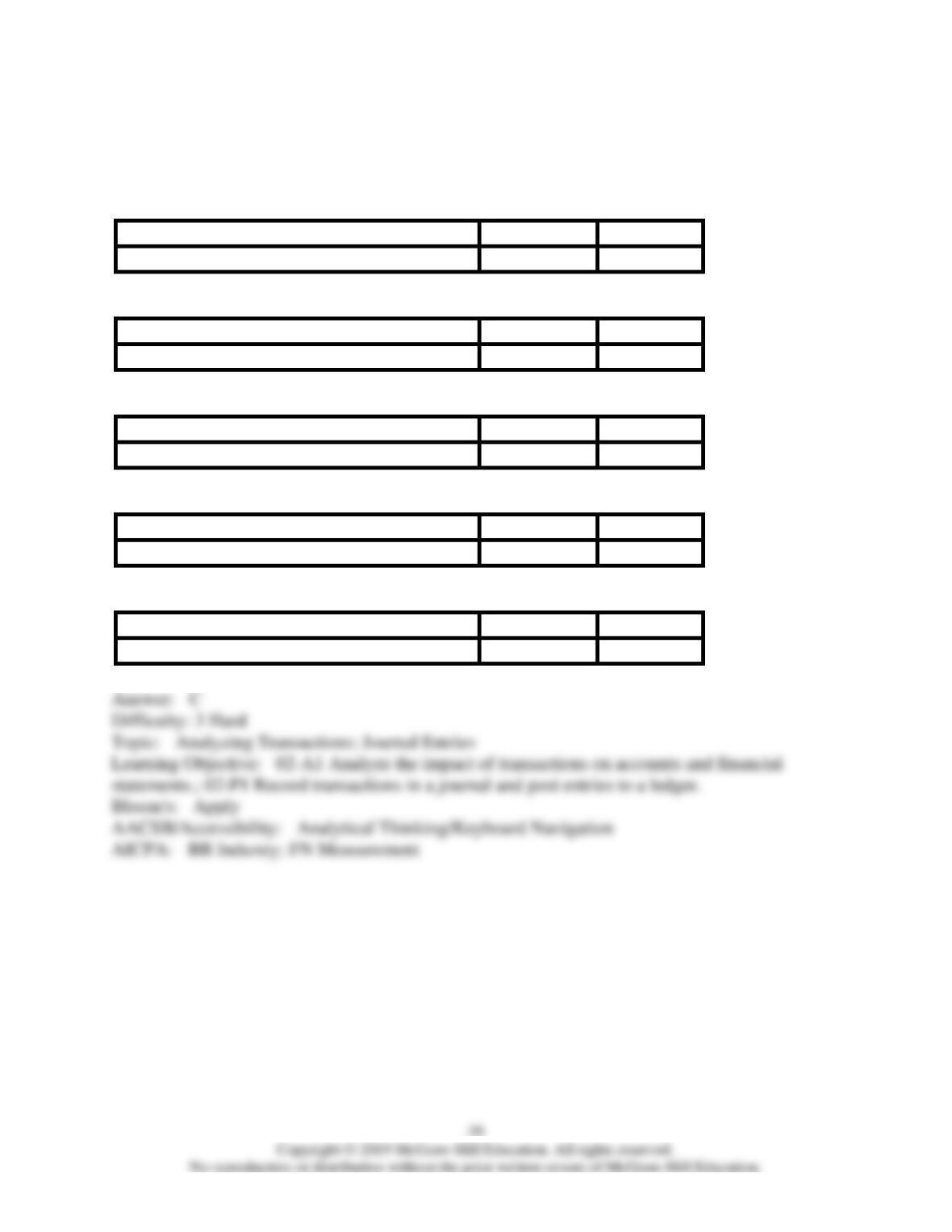
113) Alejandro Consulting paid $2,500 cash for a 5-month insurance policy that begins on
March 1. Given the choices below, determine the general journal entry that Alejandro Consulting
will make to record the cash payment. Assume the company’s policy is to initially record prepaid
and unearned items in balance sheet accounts.
A)
Insurance Expense
2,500
Cash
2,500
B)
Cash
2,500
Insurance Expense
2,500
C)
Cash
2,500
Prepaid Insurance
2,500
D)
Prepaid Insurance
2,500
Cash
2,500
E)
Insurance Expense
2,500
Prepaid Insurance
2,500
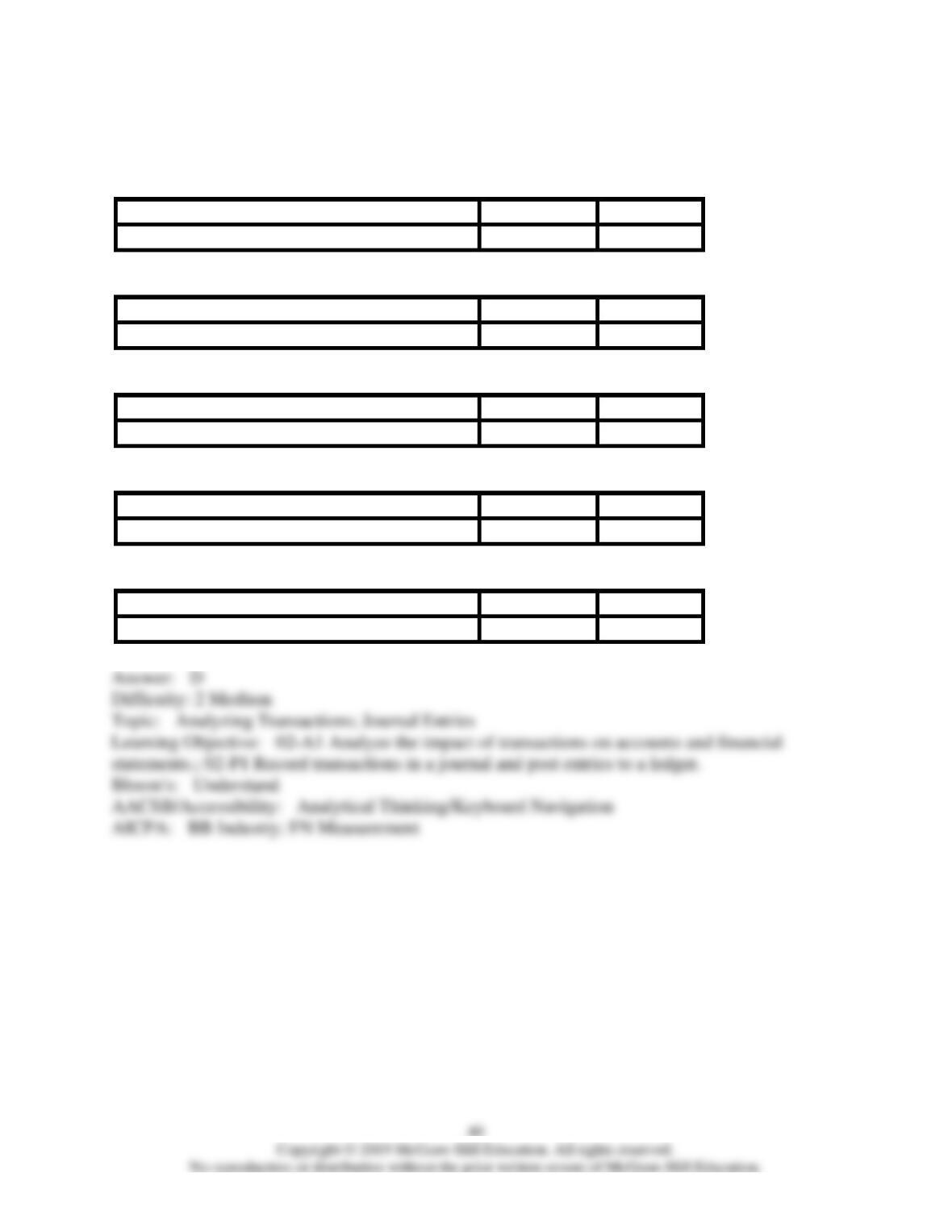
114) Ted Catering received $800 cash in advance from a customer for catering services to be
provided in three months. Determine the general journal entry that Ted Catering will make to
record the cash receipt. Assume the company’s policy is to initially record prepaid and unearned
items in balance sheet accounts.
A)
Unearned Catering Revenue
800
Catering Revenue
800
B)
Cash
800
Accounts Receivable
800
C)
Cash
800
Unearned Catering Revenue
800
D)
Cash
800
Catering Revenue
800
E)
Accounts Receivable
800
Catering Revenue
800
115) Gloria Catering provided $1,000 of catering services and billed its client for the amount
owed. Determine the general journal entry that Gloria Catering will make to record this
transaction.
A)
Unearned Catering Revenue
1,000
Catering Revenue
1,000
B)
Catering Revenue
1,000
Accounts Receivable
1,000
C)
Accounts Receivable
1,000
Unearned Catering Revenue
1,000
D)
Accounts Receivable
1,000
Catering Revenue
1,000
E)
Accounts Payable
1,000
Catering Revenue
1,000