132. Vitko Corporation makes automotive engines. For the most recent month, budgeted
production was 6,000 engines. The standard power cost is $8.80 per machine-hour. The
company’s standards indicate that each engine requires 6.1 machine-hours. Actual production
was 6,400 engines. Actual machine-hours were 38,730 machine-hours. Actual power cost totaled
$350,628.
Required:
Determine the rate and efficiency variances for the variable overhead item power cost and
indicate whether those variances are unfavorable or favorable. Show your work!
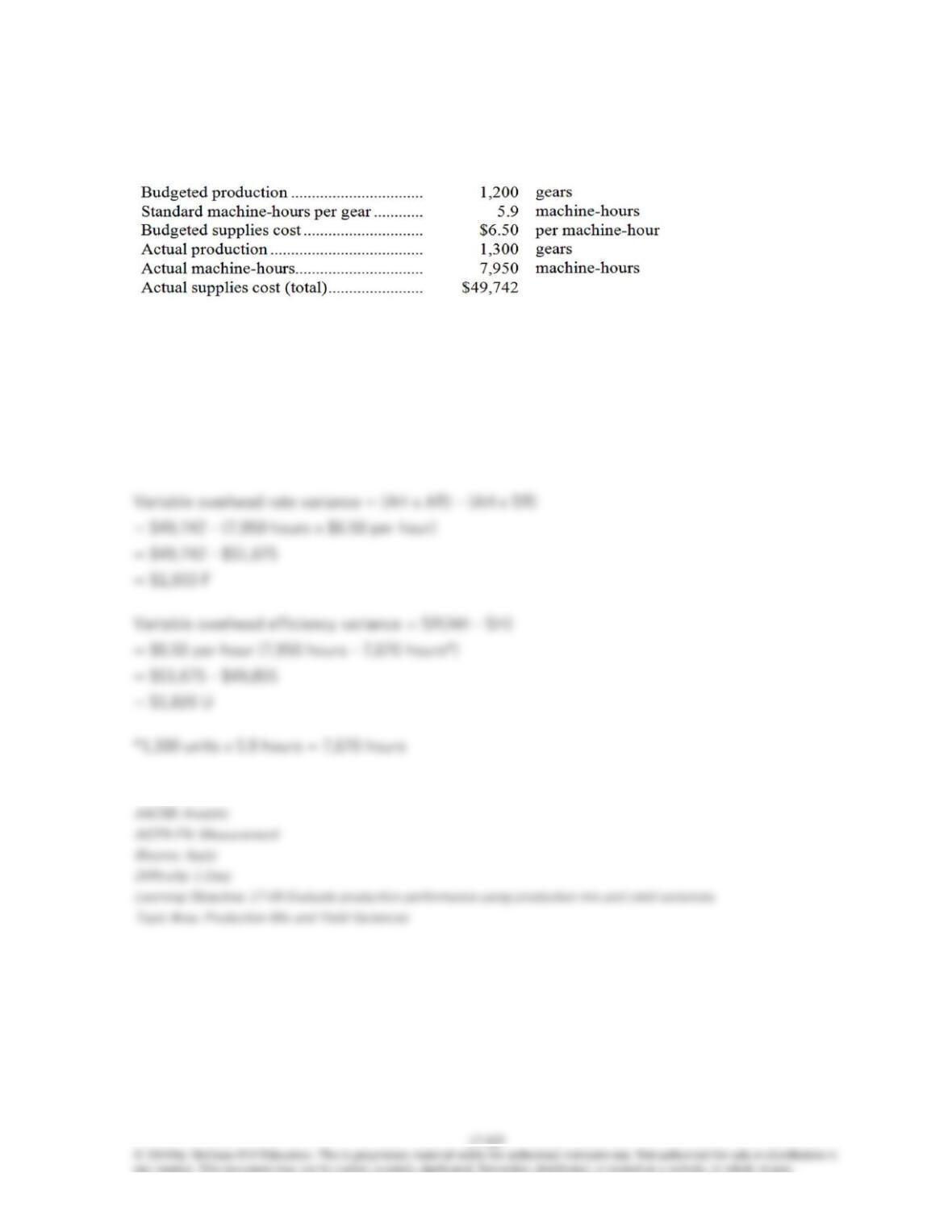
133. Buis Corporation, which makes landing gears, has provided the following data for a recent
month:
Required:
Determine the rate and efficiency variances for the variable overhead item supplies and indicate
whether those variables are favorable or unfavorable. Show your work!
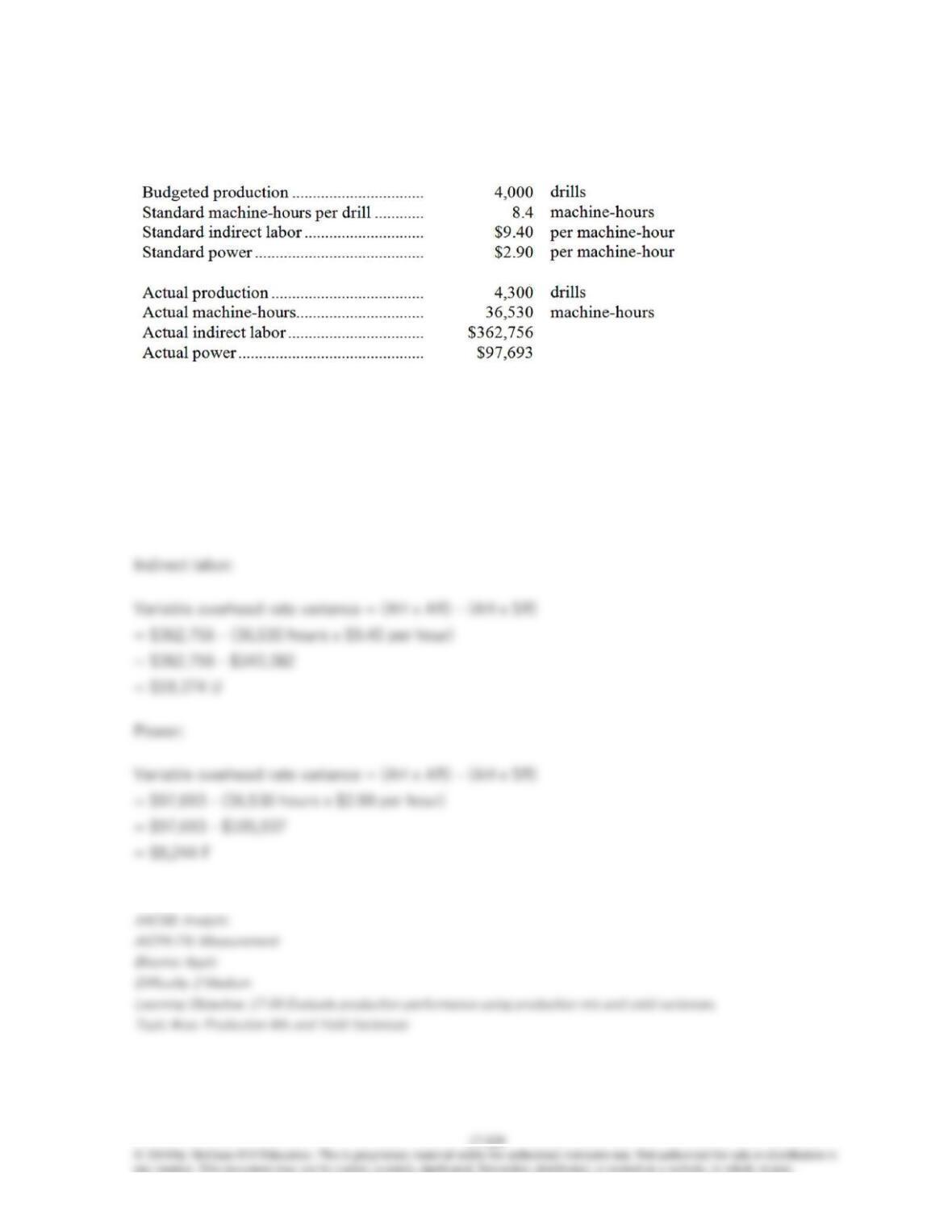
134. The following data for November have been provided by Rickenbaker Corporation, a
producer of precision drills for oil exploration:
Required:
Compute the variable overhead rate variances for indirect labor and for power for November.
Indicate whether each of the variances is favorable (F) or unfavorable (U). Show your work!
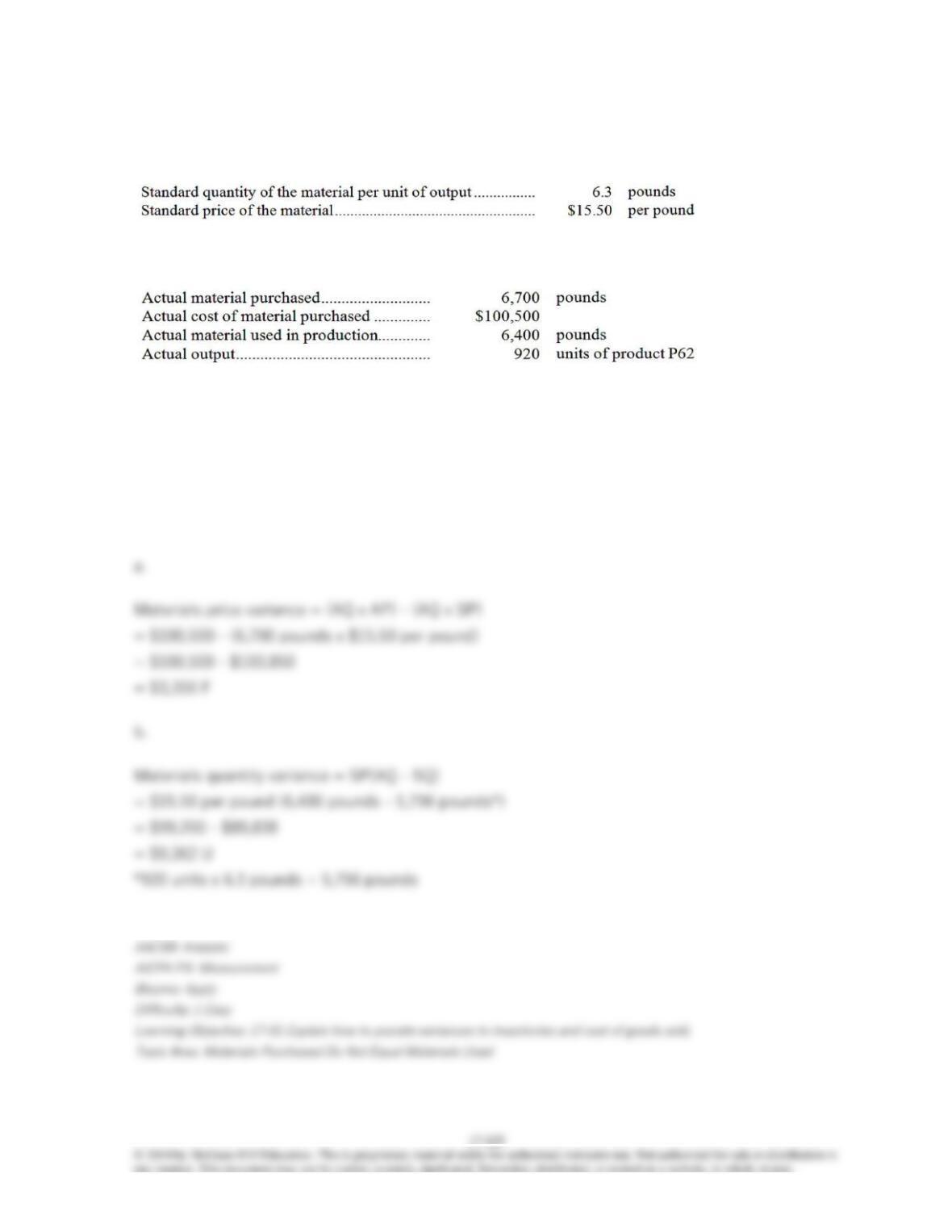
135. The following standards have been established for a raw material used to make product
P62:
The following data pertain to a recent month’s operations:
Required:
a. What is the materials price variance for the month?
b. What is the materials quantity variance for the month?
136. What is the advantage of recognizing materials price variances at the time of purchase
rather than at the time of use?
137. Explain the difference between the market share variance and the industry volume
variance.
138. Explain the difference between the sales mix variance and the sales quantity variance.
139. When deciding how many variances to calculate, what two items need to be considered?
Be sure to define your terms.
140. Explain what production mix and production yield variances measure. How do these
variances relate to efficiency variances?
17-129
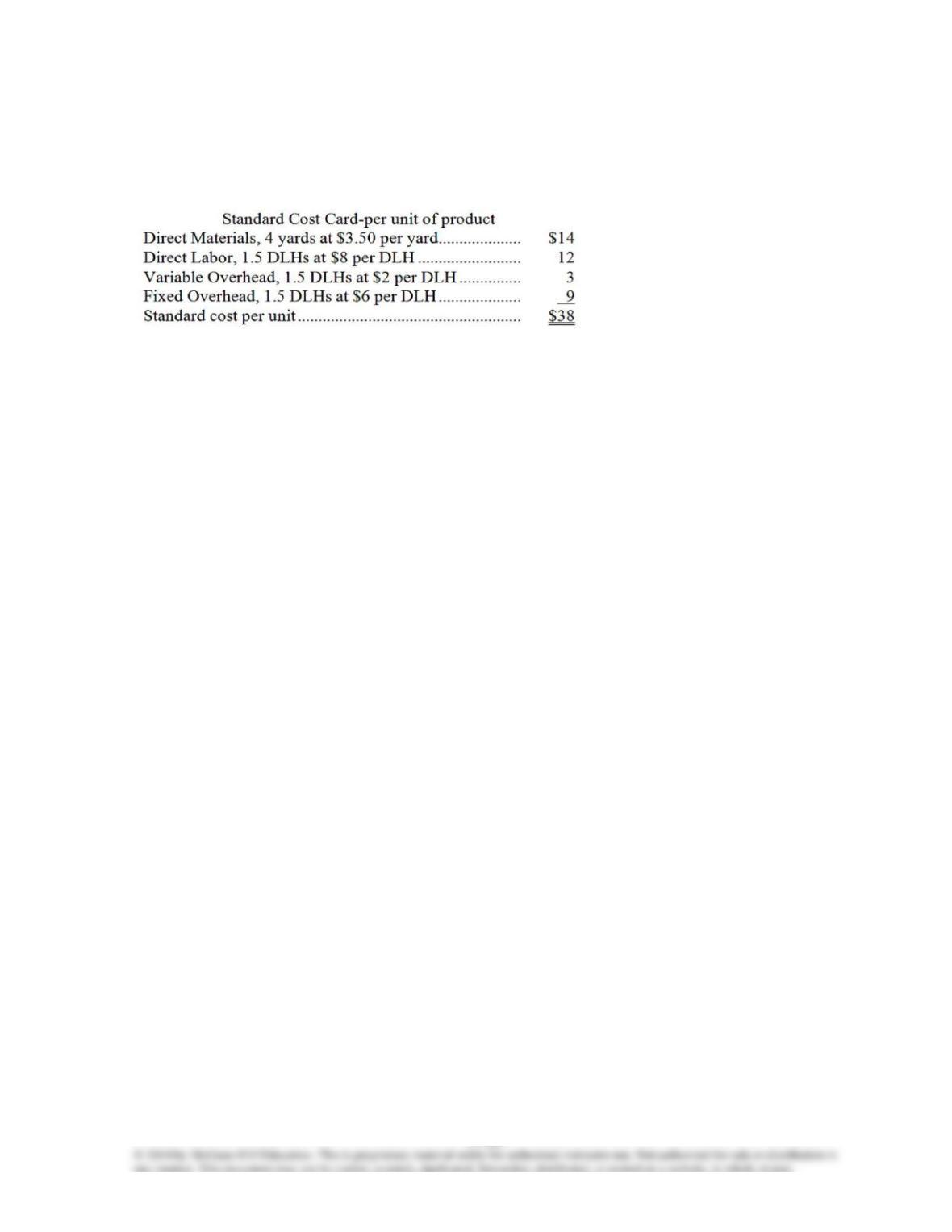
141. The Clayton Company uses a standard cost system in which manufacturing overhead
costs are applied to units of the company’s single product on the basis of standard direct labor–
hours (DLHs). The standard cost card for the product follows:
The following data pertain to last year’s activities:
• The company manufactured 18,000 units of product during the year. A total of 70,200 yards of
material was purchased during the year at a cost of $3.75 per yard. All of this material was used to
manufacture the 18,000 units.
• The company worked 29,250 direct labor-hours during the year at a cost of $7.80 per hour.
• The denominator activity level was 22,500 direct labor-hours.
• Budgeted fixed manufacturing overhead costs were $135,000 while actual manufacturing
overhead costs were $133,200.
• Actual variable overhead costs were $61,425.
Required:
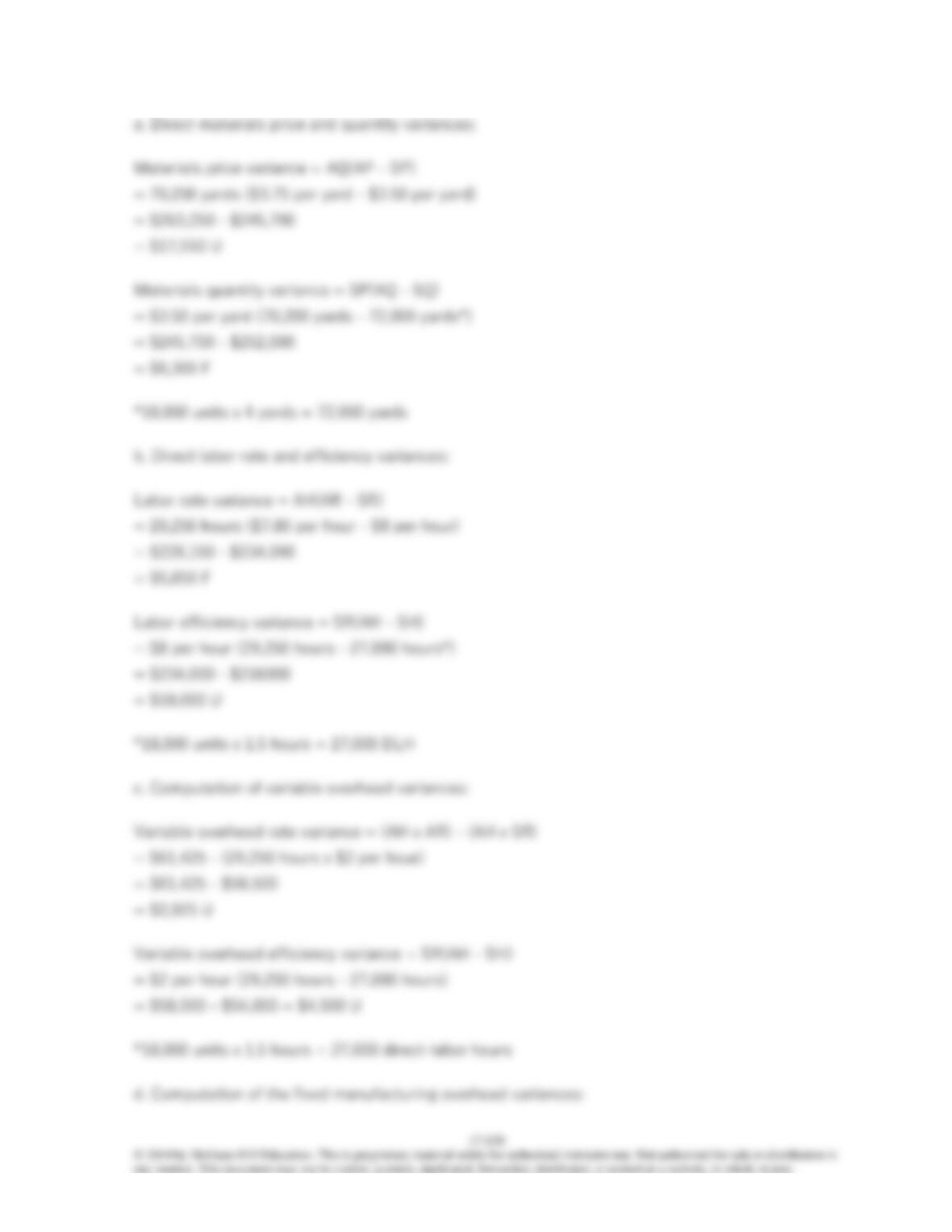
a. Compute the direct materials price and quantity variances for the year.
b. Compute the direct labor rate and efficiency variances for the year.
c. Compute the variable overhead rate and efficiency variances for the year.
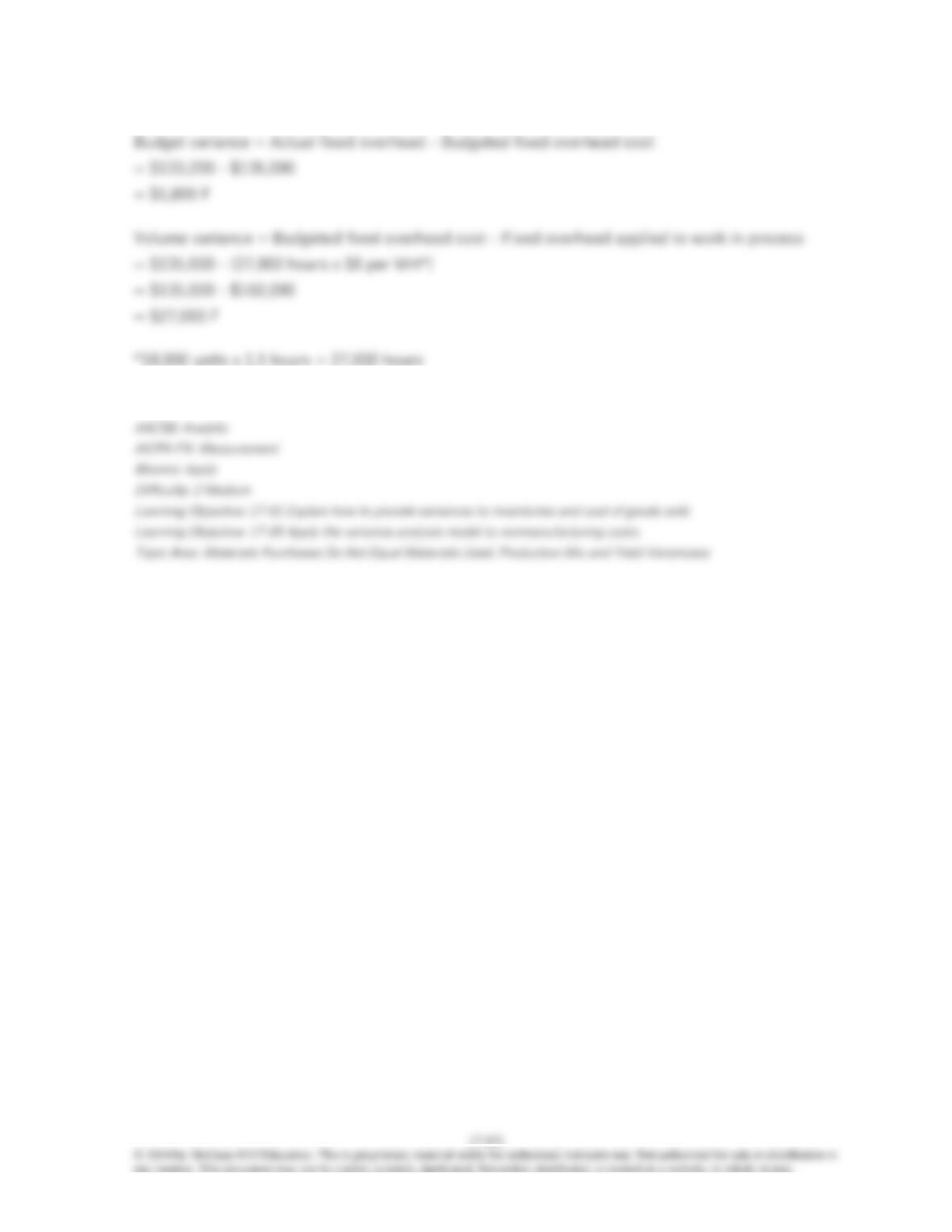
d. Compute the fixed manufacturing overhead budget and volume variances for the year.
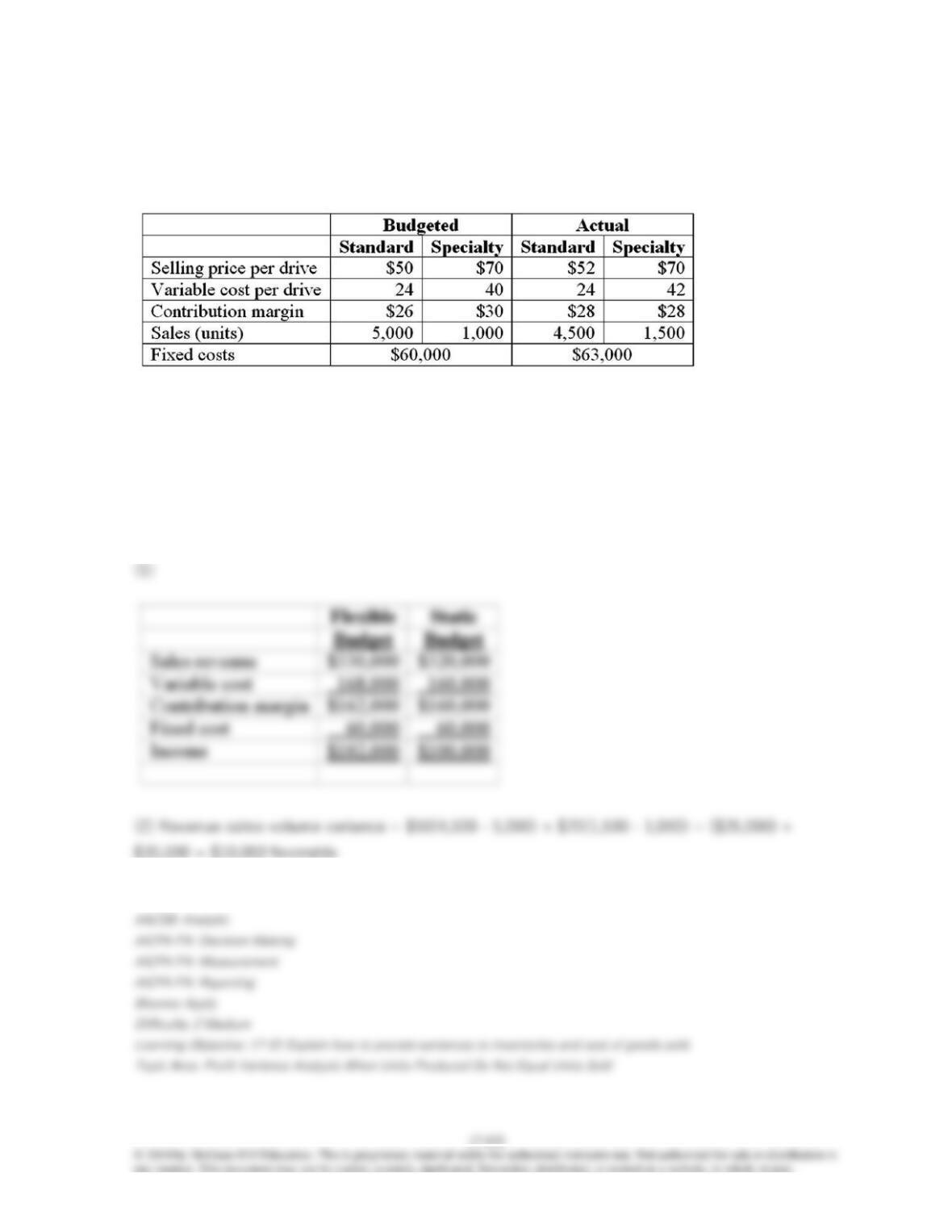
142. Gimmel Co. sells two types of drives—standard and specialty. The budget is based on a
combination of last year’s information as well as forecasted industry sales and the company’s
market share. The following information is provided for June:
Required:
1) Prepare a static budget and flexible budget for the company for June.
2) What is the revenue sales-volume variance?