100. When the actual amount of a raw material used in production is greater than the standard
amount allowed for the actual output, the journal entry would include:
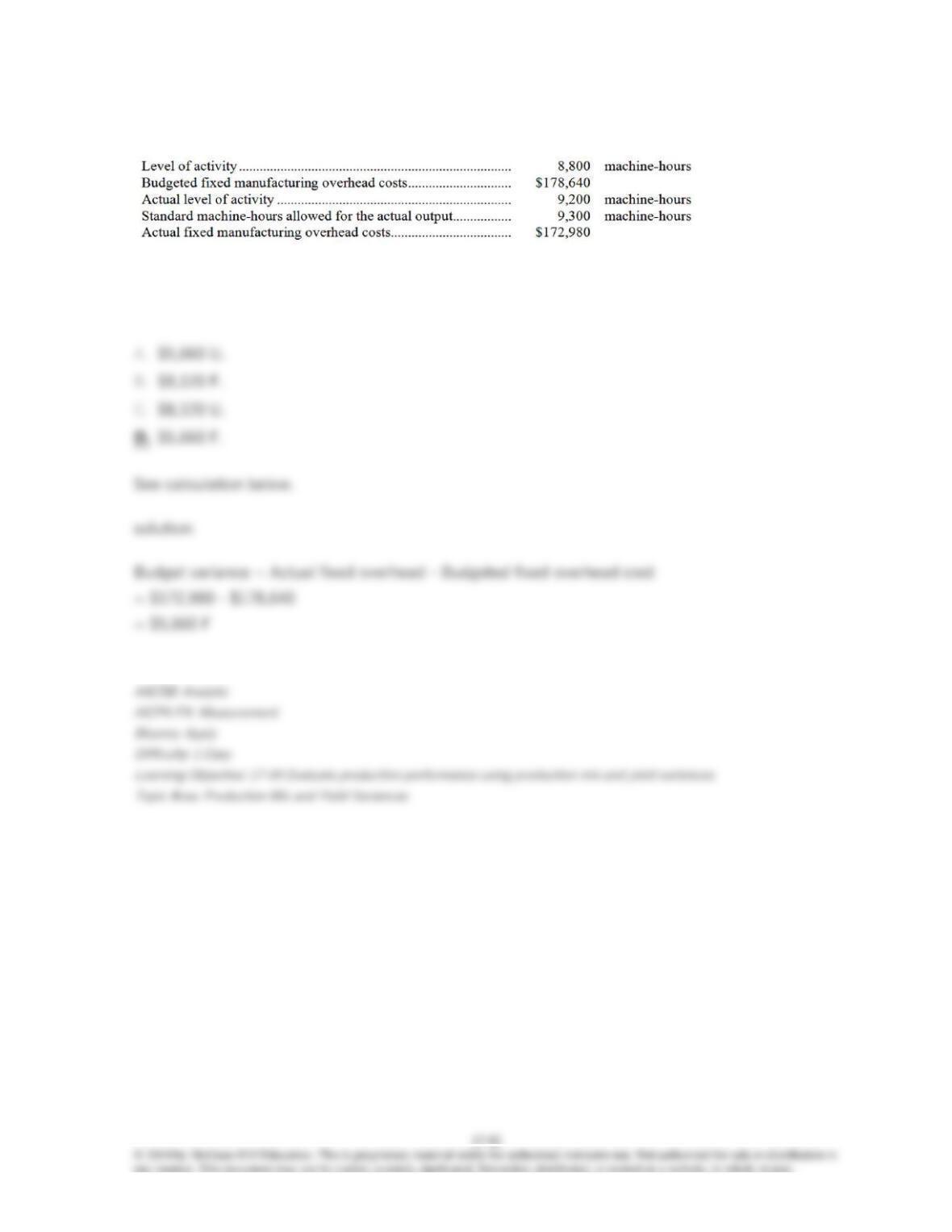
101. The following data for April has been provided by Mittler Corporation.
The budget variance for April is:
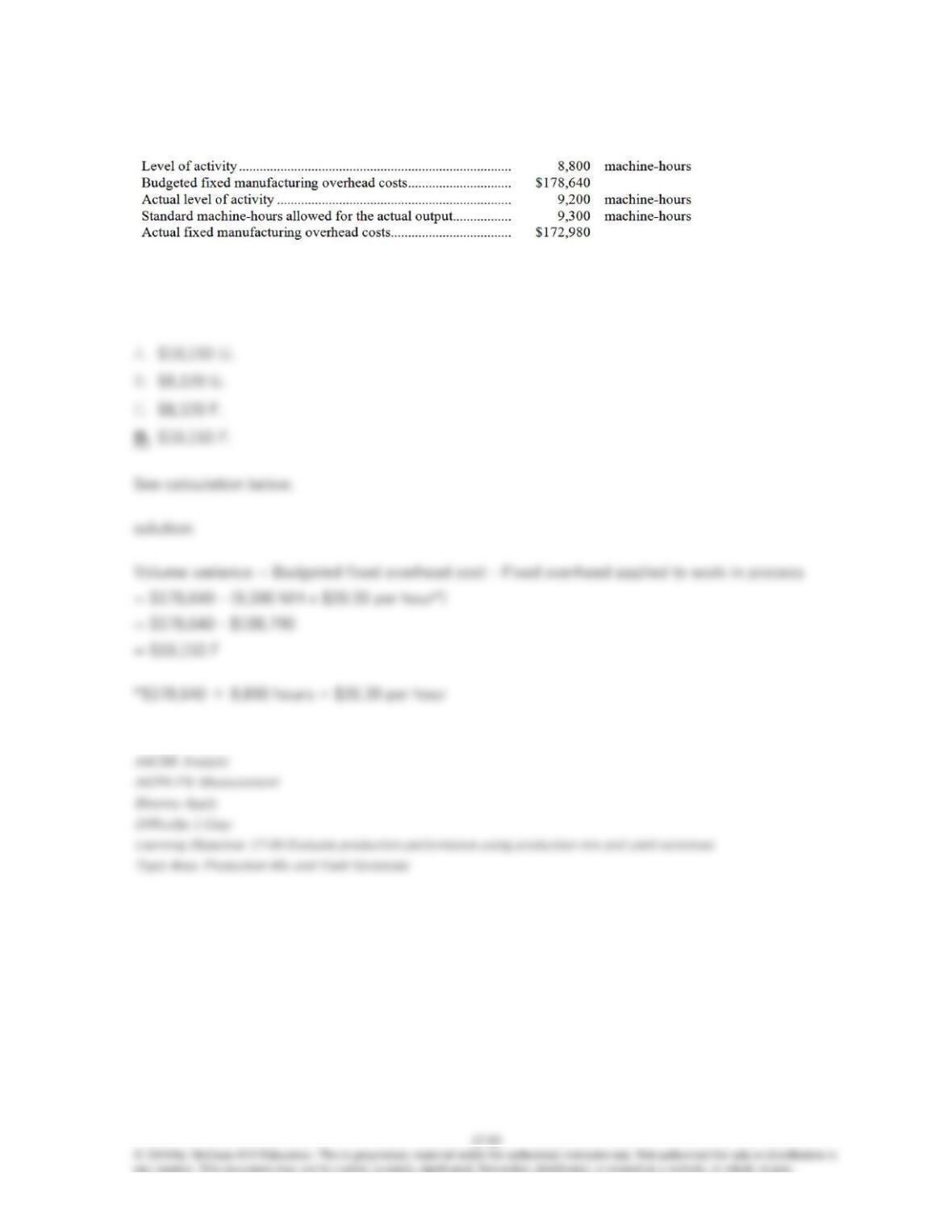
102. The following data for April has been provided by Mittler Corporation.
The volume variance for April is:
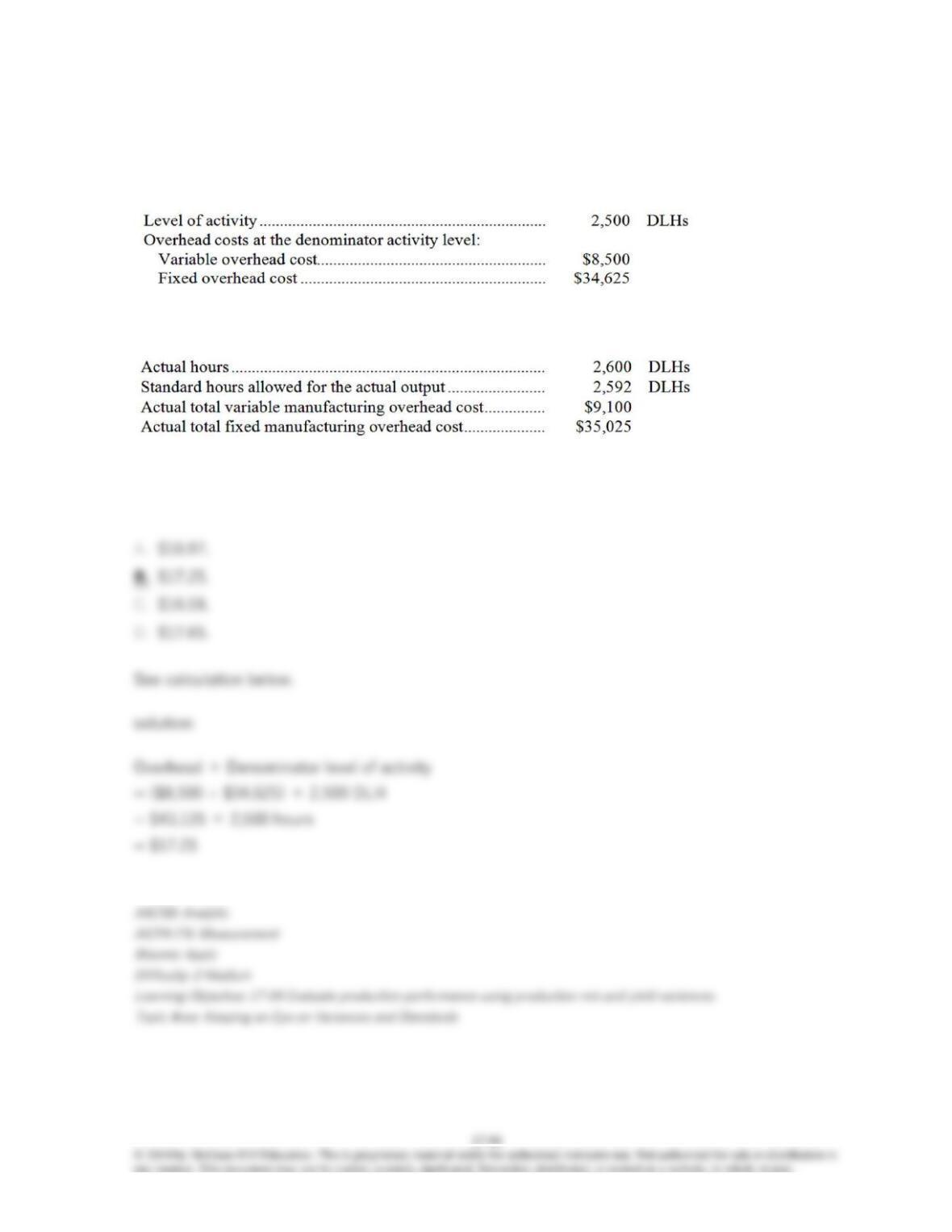
103. A manufacturer of industrial equipment has a standard costing system based on standard
direct labor-hours (DLHs) as the measure of activity. Data from the company’s flexible budget for
manufacturing overhead are given below:
The following data pertain to operations for the most recent period:
What is the predetermined overhead rate to the nearest cent?
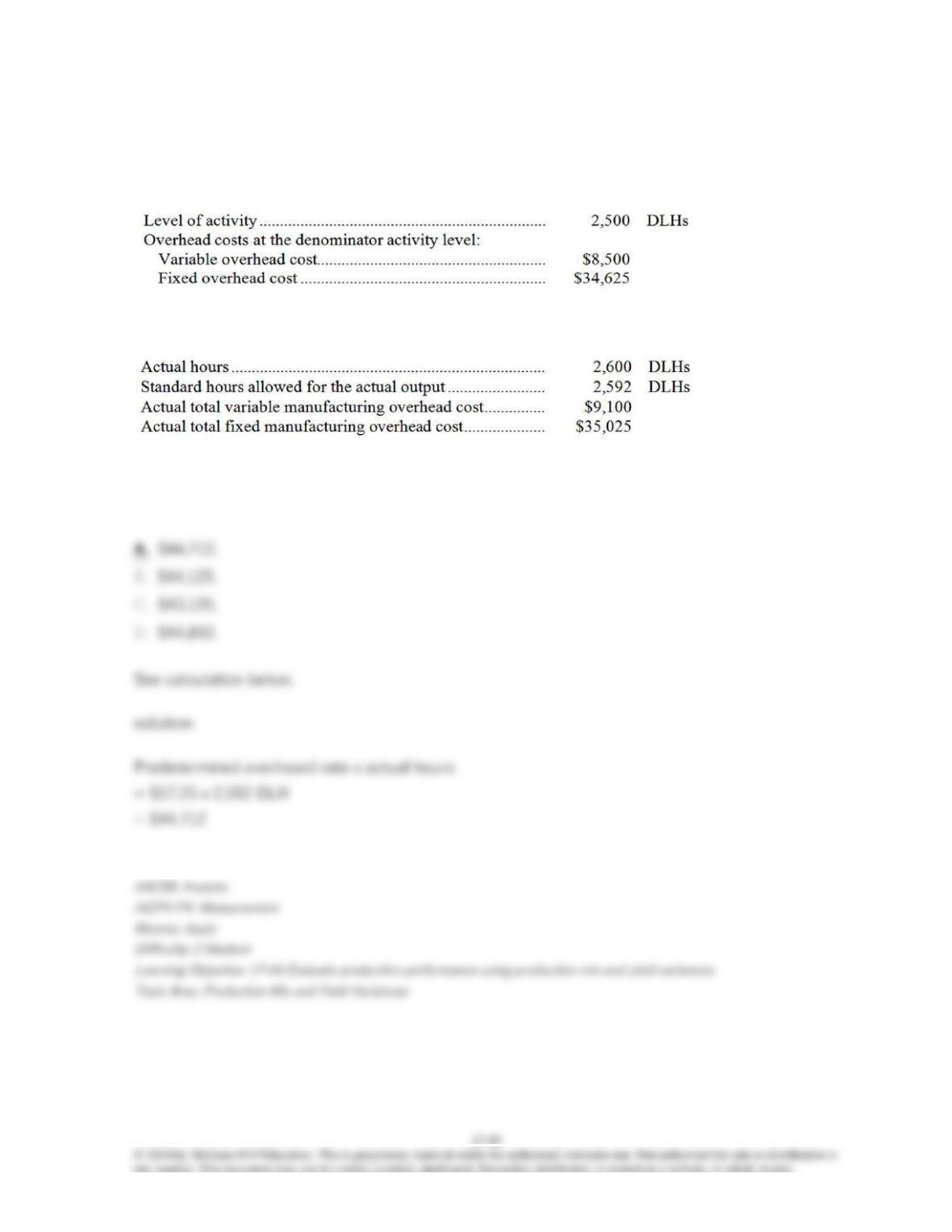
104. A manufacturer of industrial equipment has a standard costing system based on standard
direct labor-hours (DLHs) as the measure of activity. Data from the company’s flexible budget for
manufacturing overhead are given below:
The following data pertain to operations for the most recent period:
How much overhead was applied to products during the period to the nearest dollar?
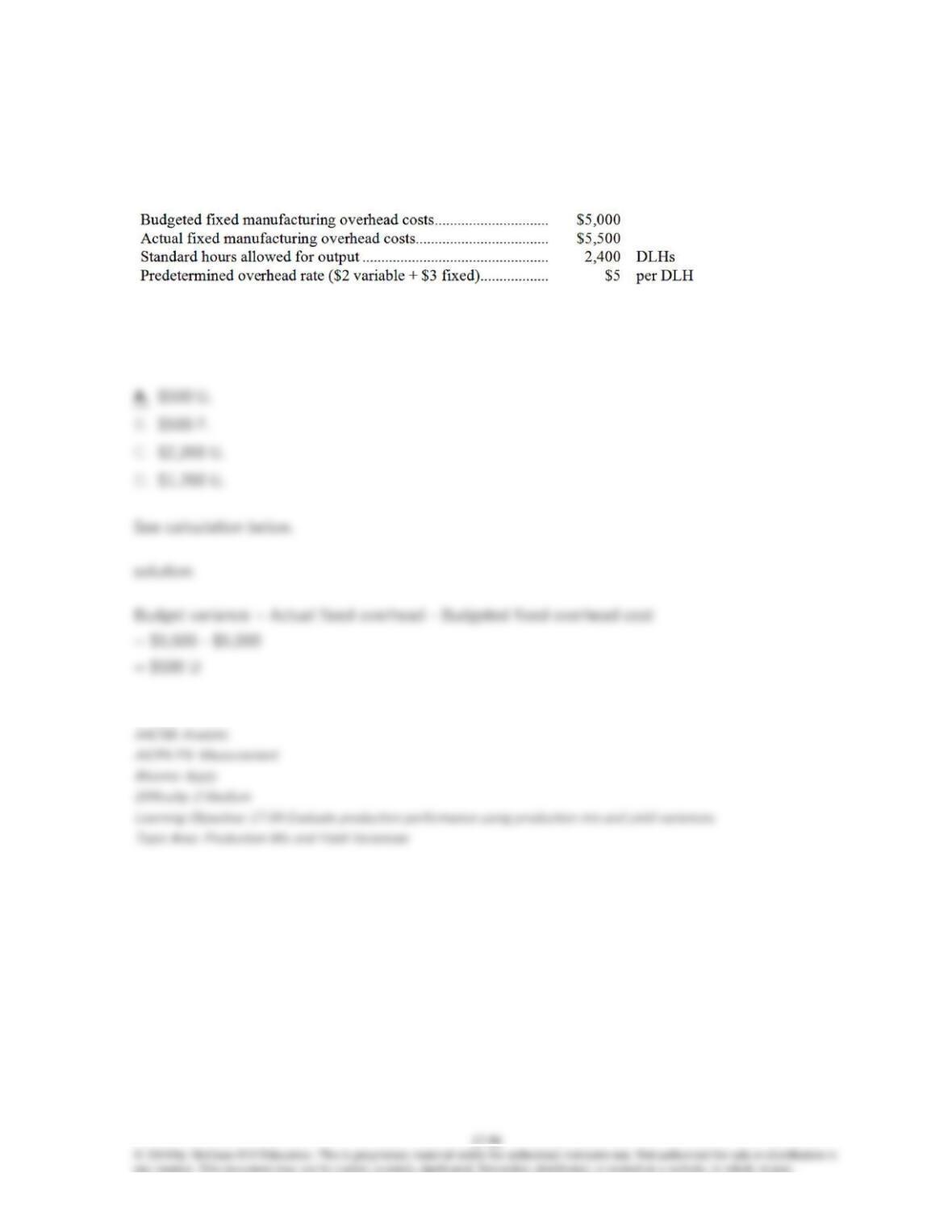
105. Jaune Company uses a standard cost system in which it applies manufacturing overhead
to units of product on the basis of standard direct labor-hours (DLHs). The following data pertain
to last month’s operations:
The fixed manufacturing overhead budget variance is:
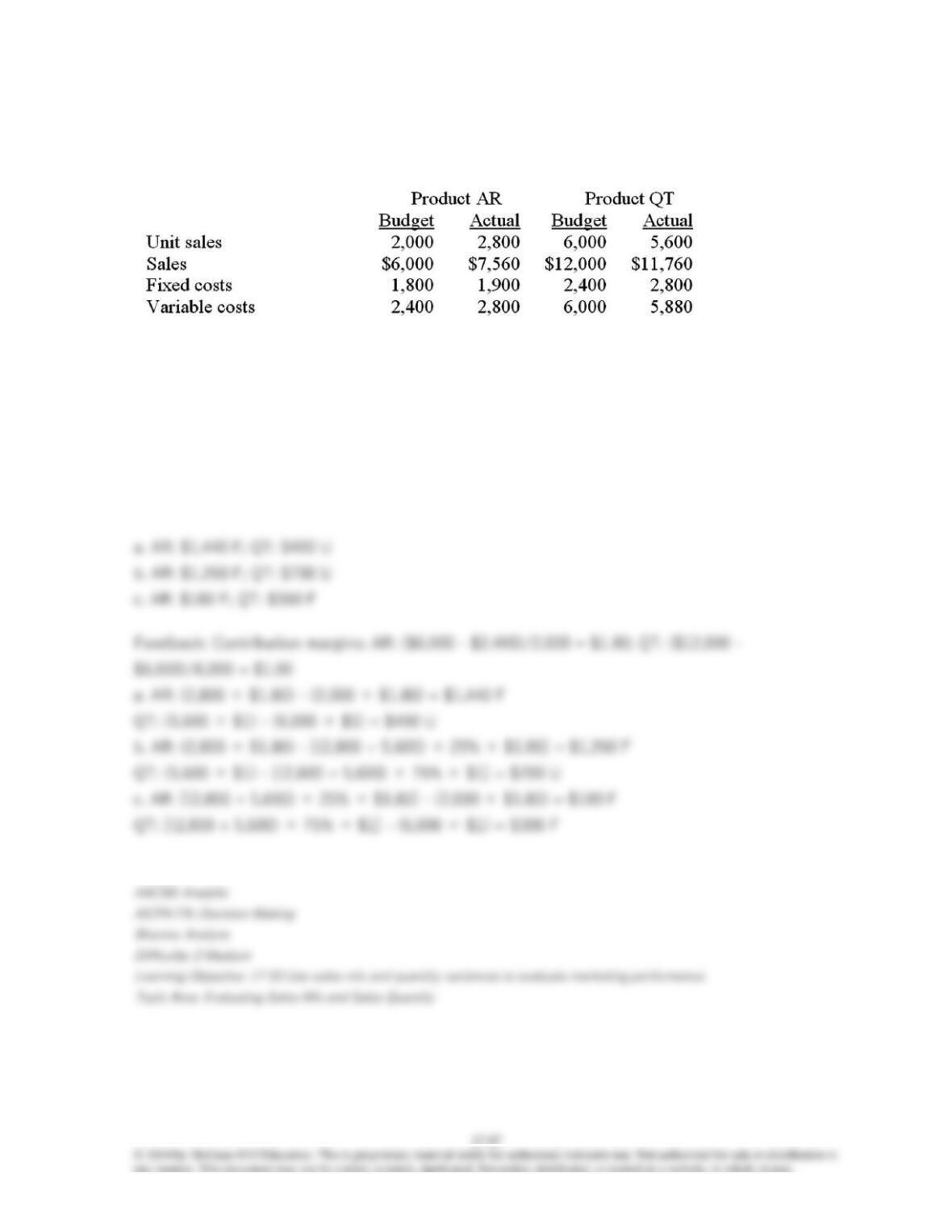
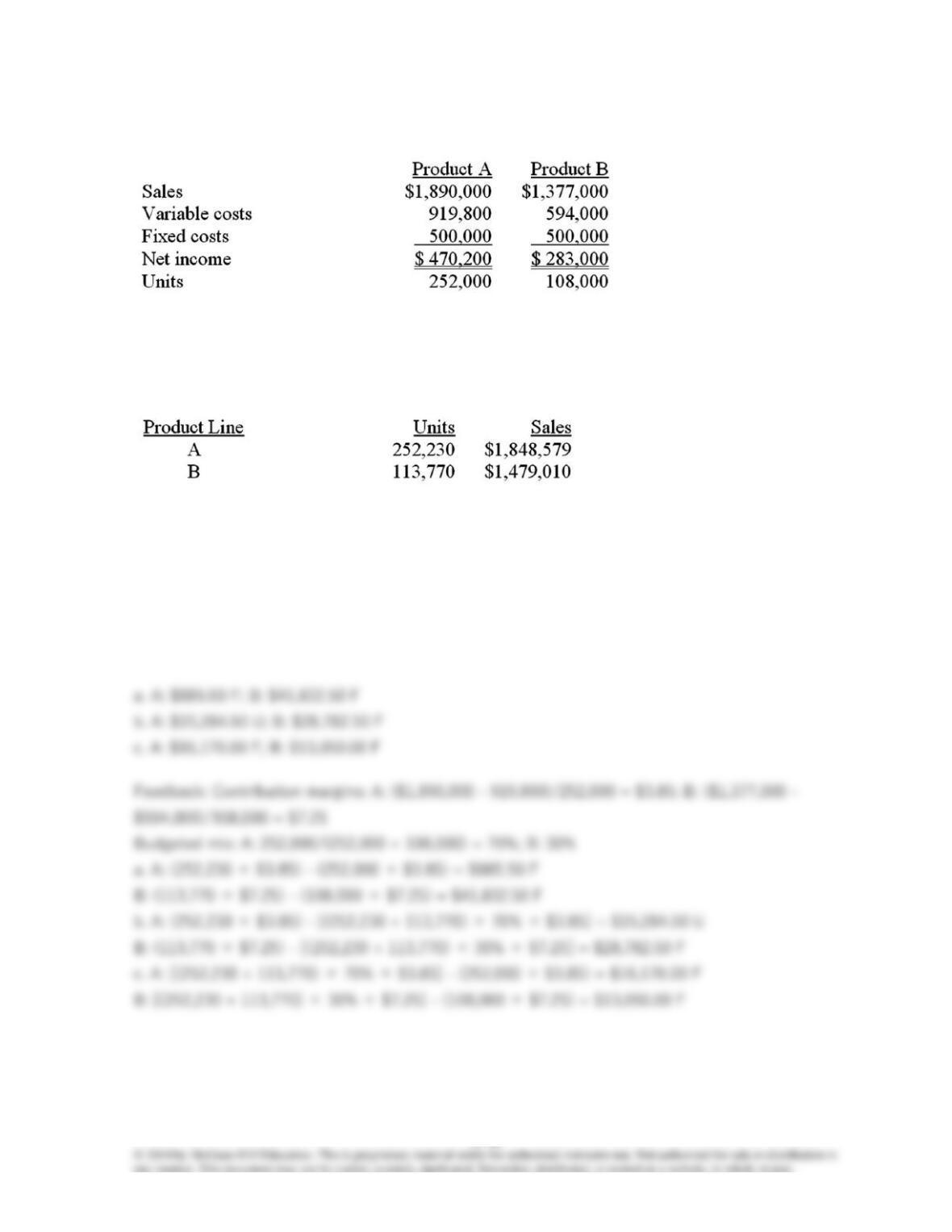
106. Marie Enterprises produces two products, AR and QT. Actual and budgeted information for
the year ending April 30 is provided below:
Required: (Be sure to indicate whether the variance is favorable or unfavorable.)
a. Compute the sales activity variance for each product.
b. Compute the sales mix variance for each product.
c. Compute the sales quantity variance for each product.
17–88
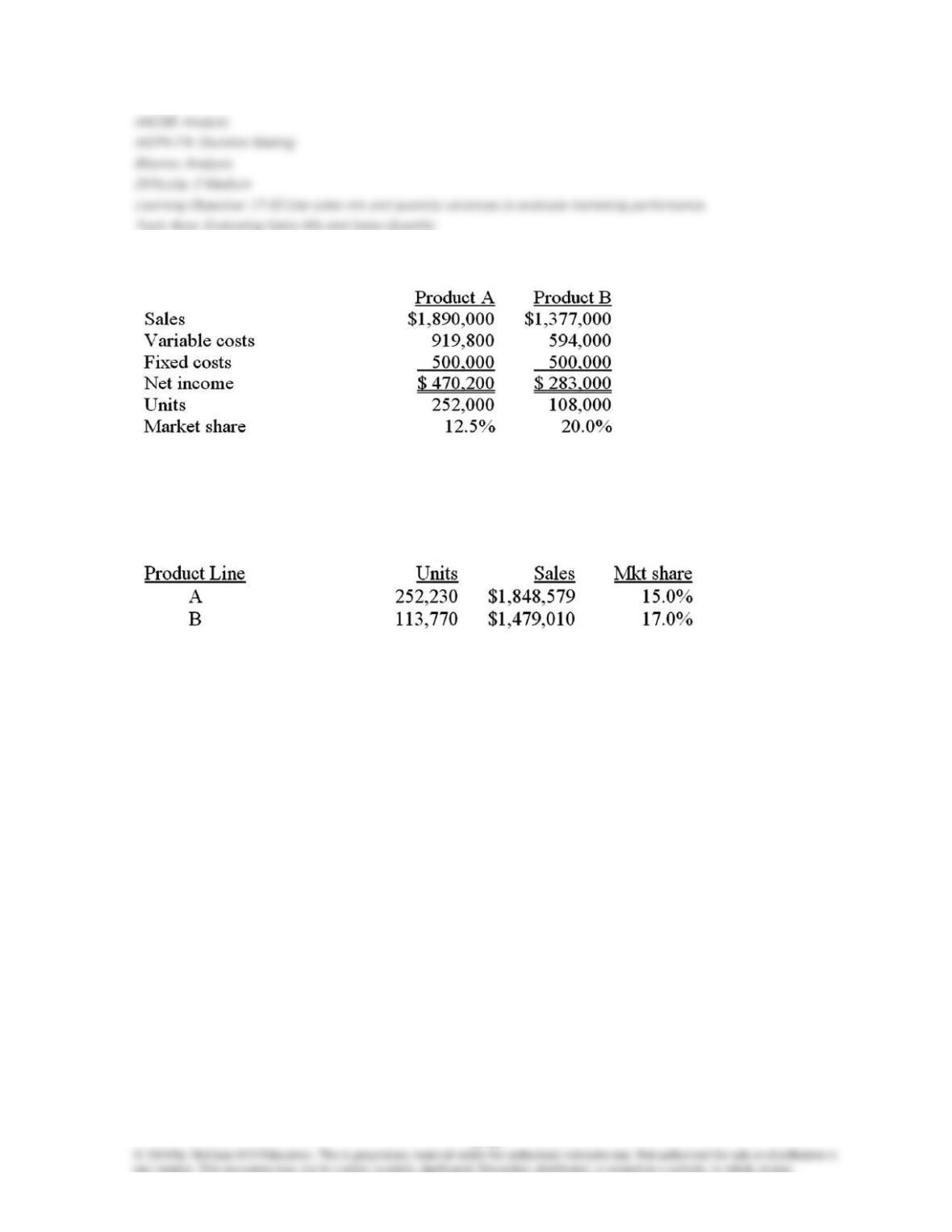
107. The next year’s budget for Green, Inc., a multi-product company, is given below:
At the end of the year, the total fixed costs and the variable costs per unit were exactly as
budgeted, but the following units per product line were sold. Green analyzes the effects its sales
variances have on the profitability of the company.
Required: (Be sure to indicate whether the variance is favorable or unfavorable.)
a. Compute the sales activity variance for each product.
b. Compute the sales mix variance for each product.
c. Compute the sales quantity variance for each product.
17–89
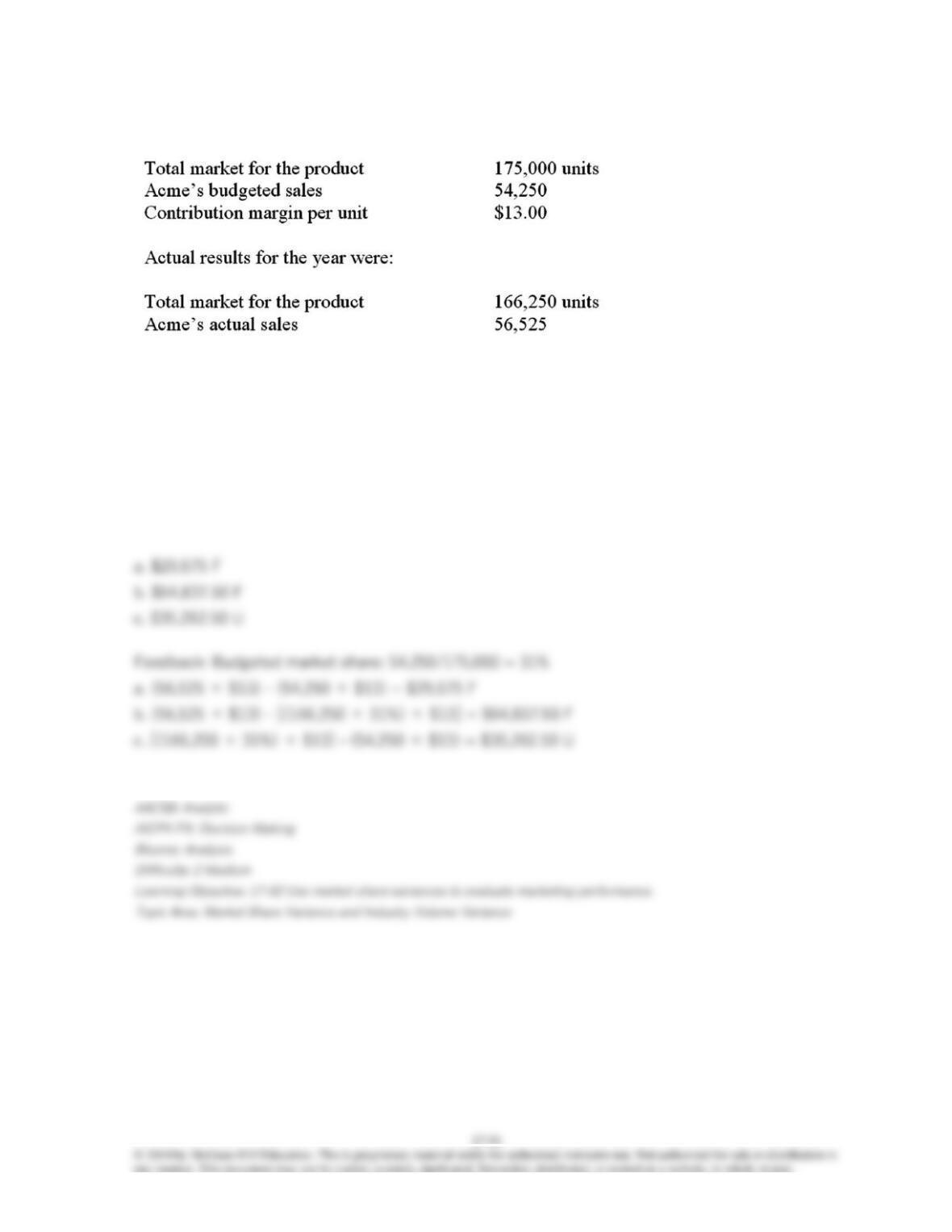
108. The next year’s budget for Black, Inc., a multi-product company, is given below:
At the end of the year, the total fixed costs and the variable costs per unit were exactly as
budgeted, but the following units per product line were sold. Black analyzes the effects its sales
variances have on the profitability of the company.
Required: (Be sure to indicate whether the variance is favorable or unfavorable.)
a. Compute the sales activity variance for each product.
b. Compute the market share variance for each product.
c. Compute the industry volume variance for each product.
109. The Acme Company had the following expectations:
Required: (Be sure to indicate whether the variance is favorable or unfavorable.)
a. Compute Acme’s sales activity variance.
b. Compute Acme’s market share variance.
c. Computer Acme’s industry volume variance.
110. Wood’s Run builds fence panels to custom order. Materials include 15 units of lumber at
$2.25/unit. Standards call for 3 hours of labor at $25/hr.
During October, 3,121 fence panels were built. Materials purchased totaled $113,650 for 51,100
units of lumber. Actual lumber usage in production was 51,069 units. The October payroll was
$248,000 for 9,500 hours.
Required: (Be sure to indicate whether the variance is favorable or unfavorable.)
a. Compute the direct material price variance.
b. Compute the direct material quantity variance.
c. Compute the direct labor rate variance.
d. Compute the direct labor efficiency variance.
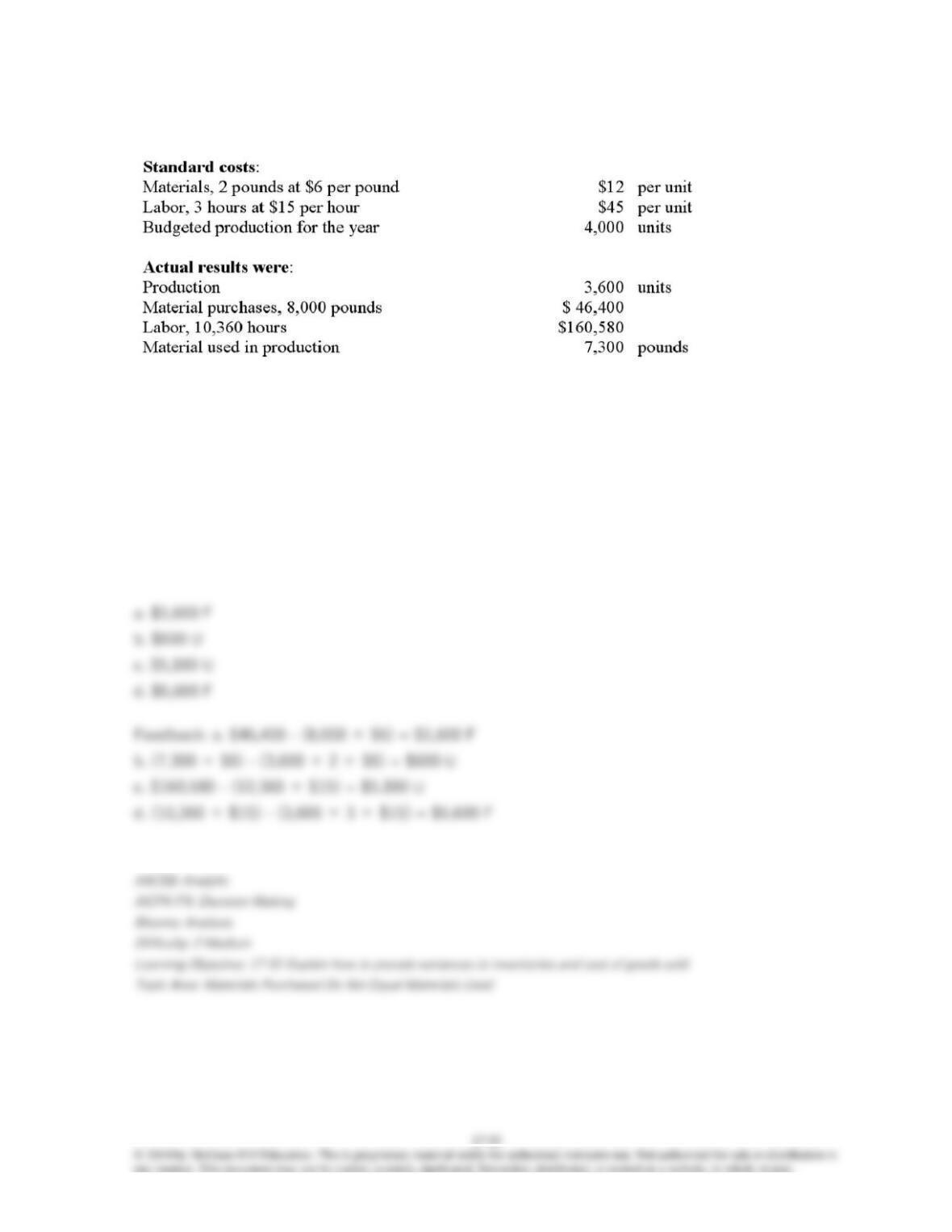
111. The data below relate to a product of Colfax Company.
Required: (Be sure to indicate whether the variance is favorable or unfavorable.)
a. Compute the direct material price variance.
b. Compute the direct material quantity variance.
c. Compute the direct labor rate variance.
d. Compute the direct labor efficiency variance.
17–94
112. A chemical company in the Midwest produces a solvent used by manufacturers of plastics.
Three basic chemicals go into this solvent. The standards for one-liter of this product are:
Chemical A: 500 ml. @ $10 per liter
Chemical B: 100 ml. @ $50 per liter
Chemical C: 400 ml. @ $20 per liter
During the last period, 10,000 liters of the solvent were produced and the company purchased the
following amounts of each chemical:
Chemical A: 6,400 liters @ $9.00 per liter
Chemical B: 900 liters @ $75.00 per liter
Chemical C: 4,200 liters @ $20.00 per liter
Because these chemicals are volatile, the company uses them immediately upon purchase, so
there are no beginning and ending inventories.
Required: (Be sure to indicate whether the variance is favorable or unfavorable.)
a. Compute the direct material price variances.
b. Compute the direct material efficiency variances.
c. Compute the direct material mix variances.
d. Compute the direct material yield variances.
17–95
17–96
113. A chemical company produces a product used by manufacturers of plastics. Two basic
chemicals go into this product. The standards for one-liter of this product are:
Chemical 1: 800 ml. @ $50 per liter
Chemical 2: 200 ml. @ $200 per liter
During the last period, 5,000 liters of the solvent were produced and the company purchased the
following amounts of each chemical:
Chemical 1: 5,400 liters @ $59.00 per liter
Chemical 2: 900 liters @ $225.00 per liter
Because these chemicals are volatile, the company uses them immediately upon purchase, so
there are no beginning and ending inventories.
Required: (Be sure to indicate whether the variance is favorable or unfavorable.)
a. Compute the direct material price variances.
b. Compute the direct material efficiency variances.
c. Compute the direct material mix variances.
d. Compute the direct material yield variances.
17–97
114. A company’s direct labor standards for a given operation and the actual results for the
current period are provided below:
Standard rates:
Level One: $20 per hour
Level Two: $15 per hour
Time to produce one unit:
Two (2) Level One workers at 15-minutes each
Three (3) Level Two workers at 10 minutes each
Actual Results:
Units produced: 10,000
Labor used:
4,000 hours of Level One workers at $25 per hour
6,800 hours of Level Two workers at $15 per hour
Required: (Be sure to indicate whether the variance is favorable or unfavorable.)
a. Compute the labor price (rate) variances for each worker level.
b. Compute the labor efficiency variances for each worker level.
c. Compute the labor mix variances for each worker level.
d. Compute the labor yield variances for each worker level.
17–99
115. A company’s direct labor standards for a given operation and the actual results for the
current period are provided below:
Standard rates:
Class A: $24 per hour
Class B: $12 per hour
Time to produce one unit:
Three (3) Class A workers at 20 minutes each
Two (2) Class B workers at 15-minutes each
Actual Results:
Units produced: 6,000
Labor used:
5,800 hours of Class A workers; total payroll: $156,600
3,500 hours of Class B workers; total payroll: $49,000
Required: (Be sure to indicate whether the variance is favorable or unfavorable.)
a. Compute the labor price (rate) variances for each worker level.
b. Compute the labor efficiency variances for each worker level.
c. Compute the labor mix variances for each worker level.
d. Compute the labor yield variances for each worker level.