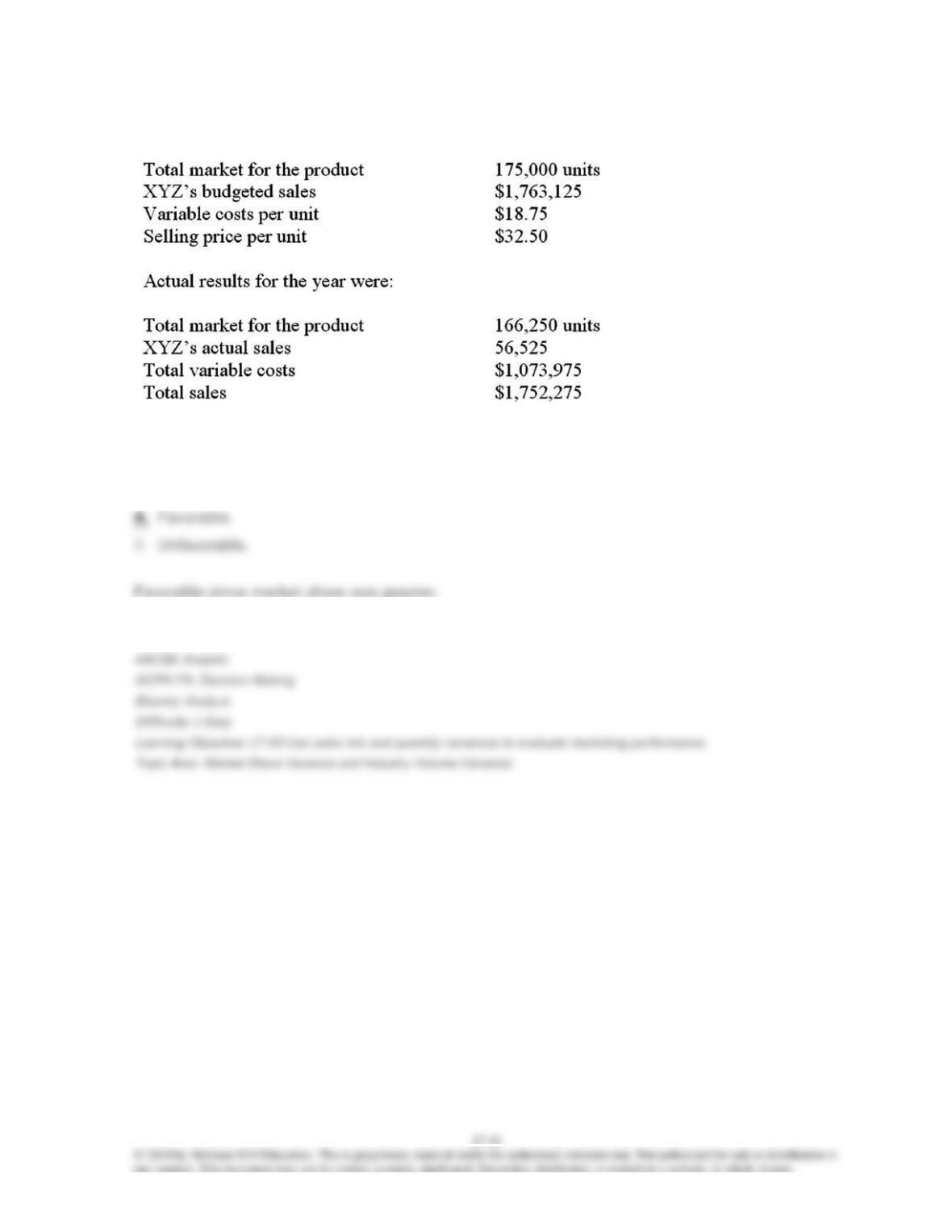
61. The XYZ Company had the following expectations for the year:
Is the market share variance favorable or unfavorable?
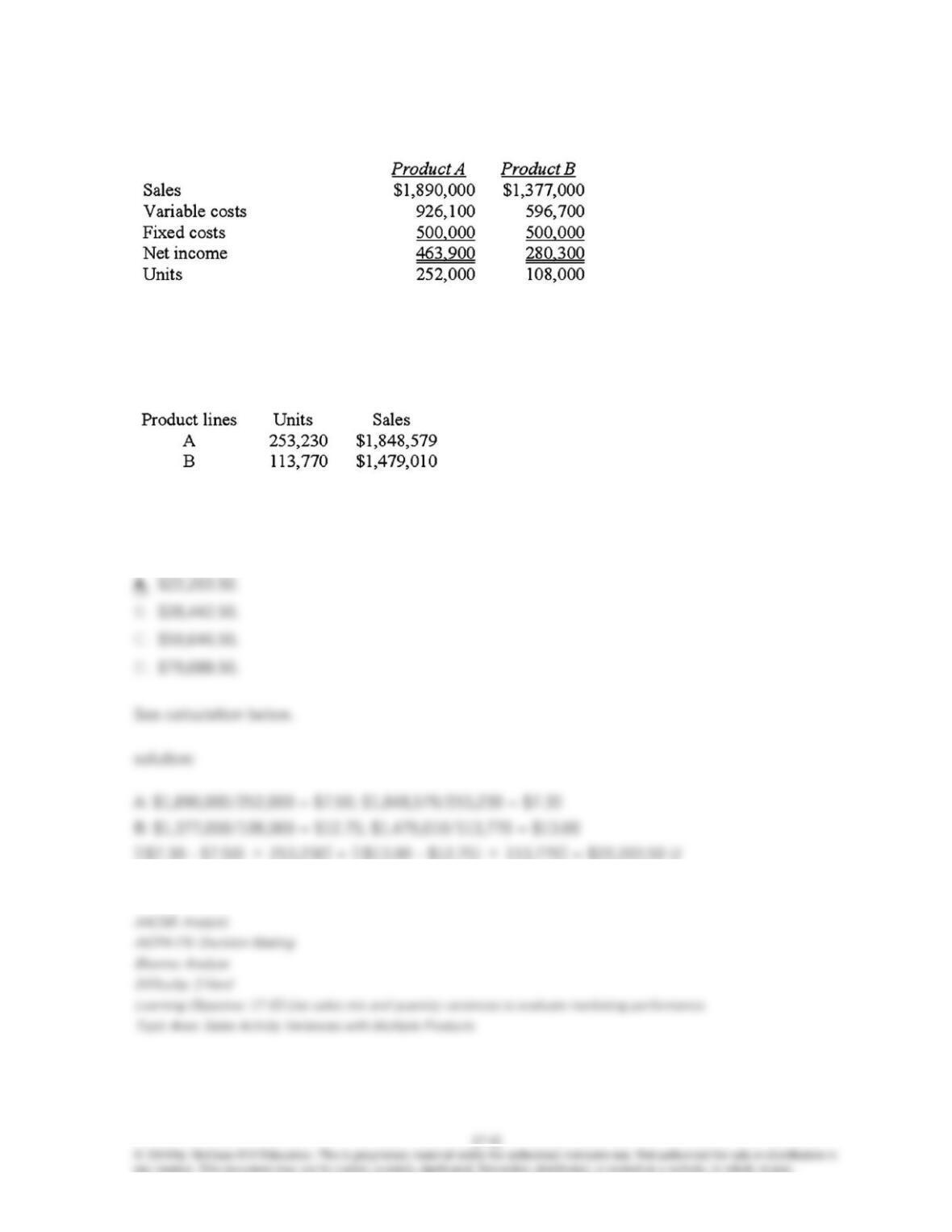
62. The next year’s budget for Green, Inc., a multi-product company, is given below:
At the end of the year, the total fixed costs and the variable costs per unit were exactly as
budgeted, but the following units per product line were sold. Green analyzes the effects its sales
variances have on the profitability of the company.
What is the
total
sales price variance?
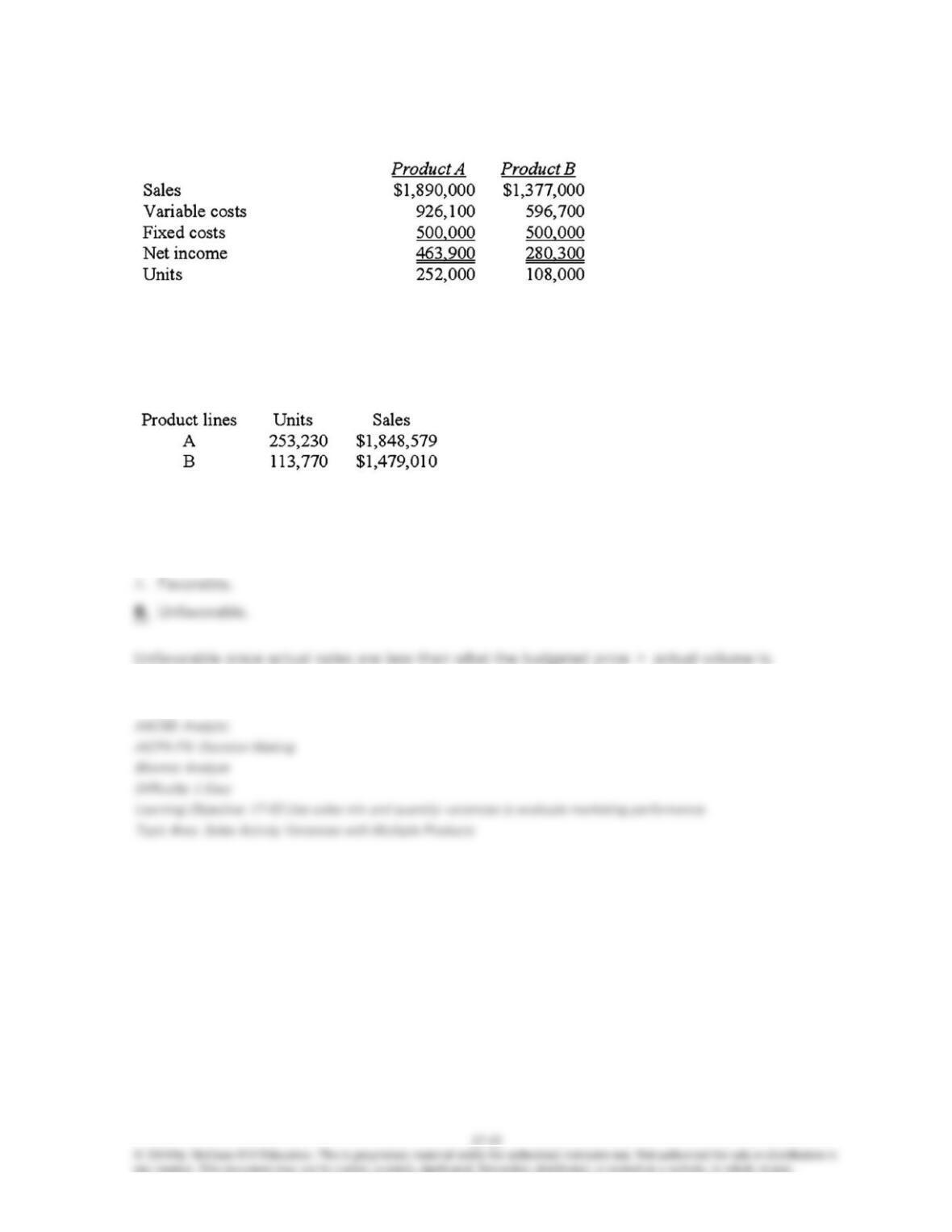
63. The next year’s budget for Green, Inc., a multi-product company, is given below:
At the end of the year, the total fixed costs and the variable costs per unit were exactly as
budgeted, but the following units per product line were sold. Green analyzes the effects its sales
variances have on the profitability of the company.
Is the total sales price variance favorable or unfavorable?
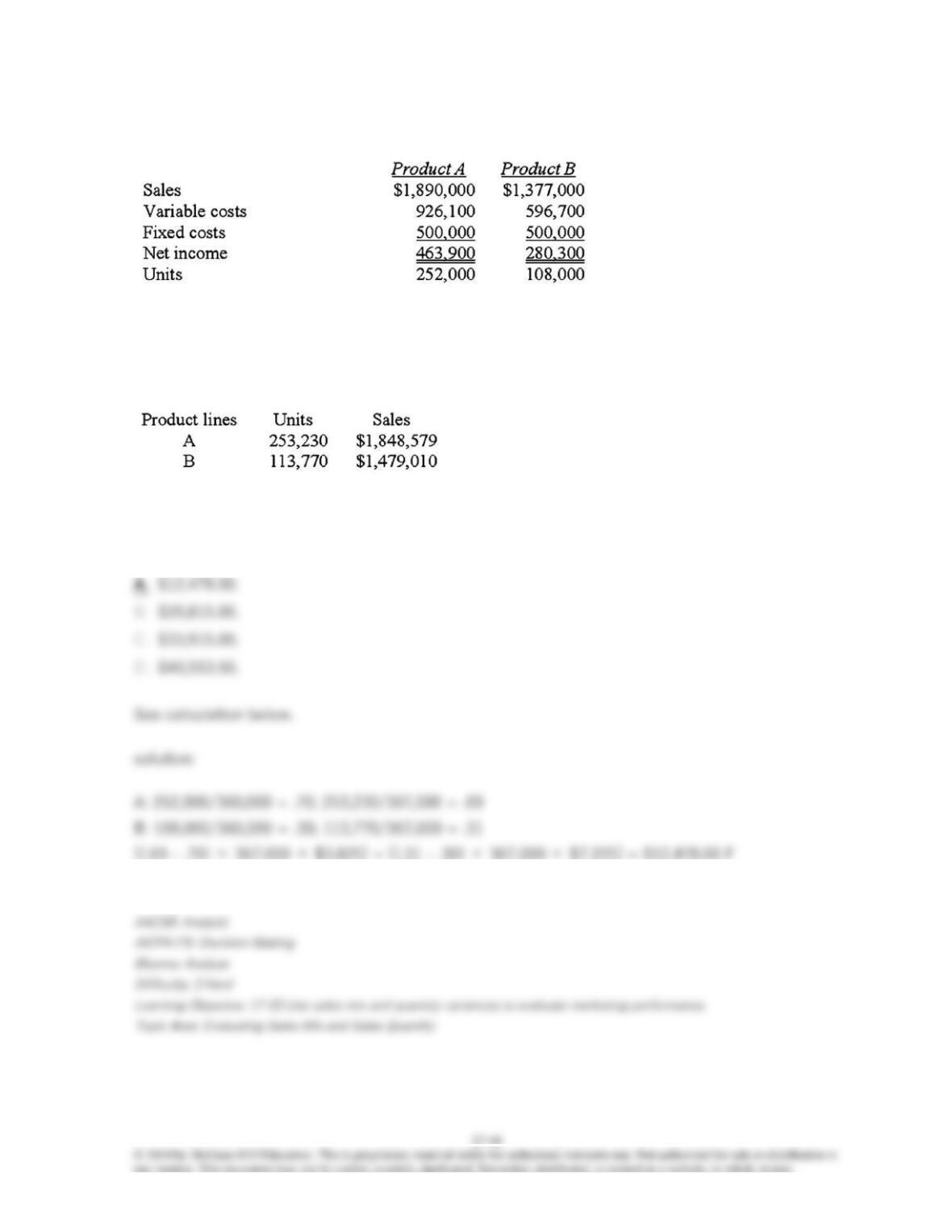
64. The next year’s budget for Green, Inc., a multi-product company, is given below:
At the end of the year, the total fixed costs and the variable costs per unit were exactly as
budgeted, but the following units per product line were sold. Green analyzes the effects its sales
variances have on the profitability of the company.
What is the
total
sales mix variance?
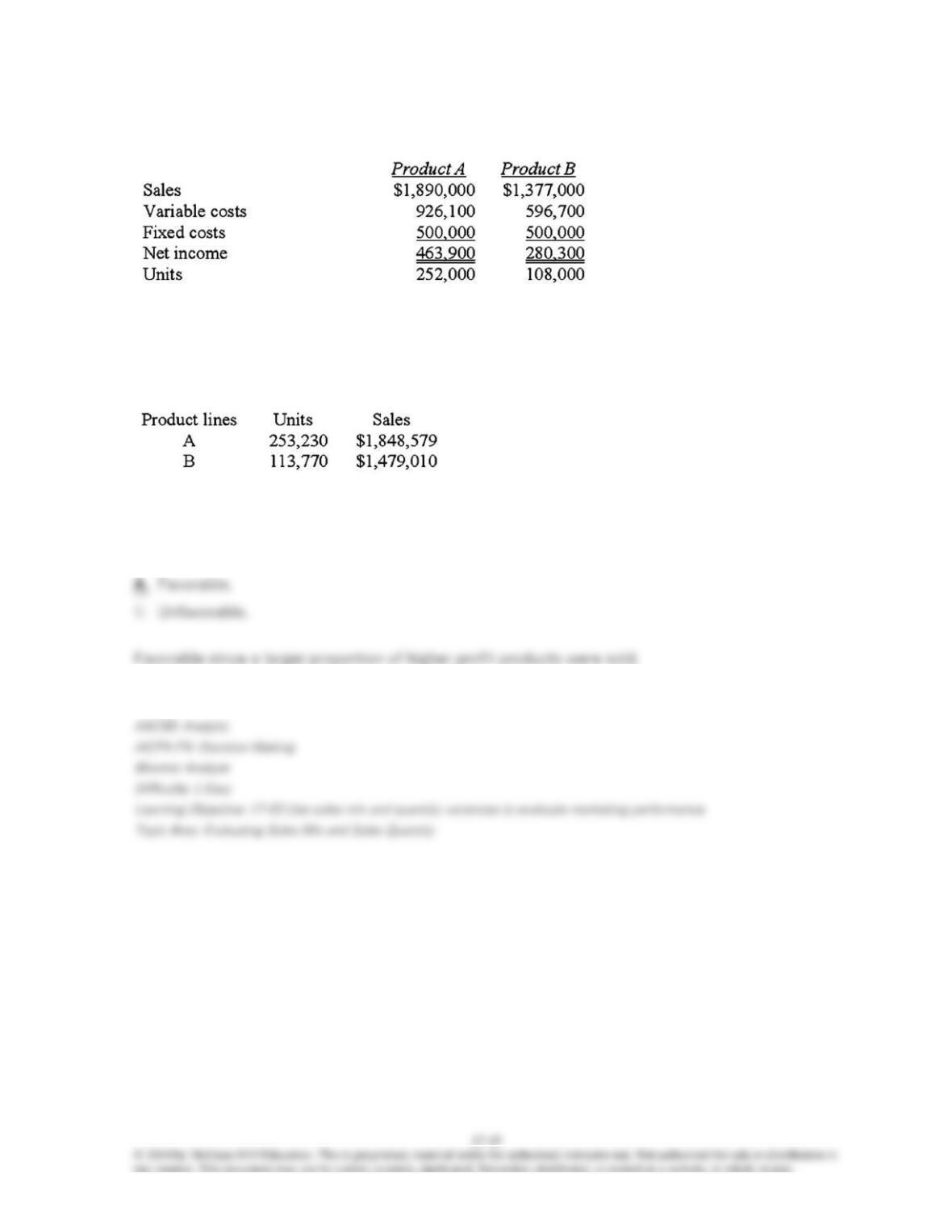
65. The next year’s budget for Green, Inc., a multi-product company, is given below:
At the end of the year, the total fixed costs and the variable costs per unit were exactly as
budgeted, but the following units per product line were sold. Green analyzes the effects its sales
variances have on the profitability of the company.
Is the
total
sales mix variance favorable or unfavorable?
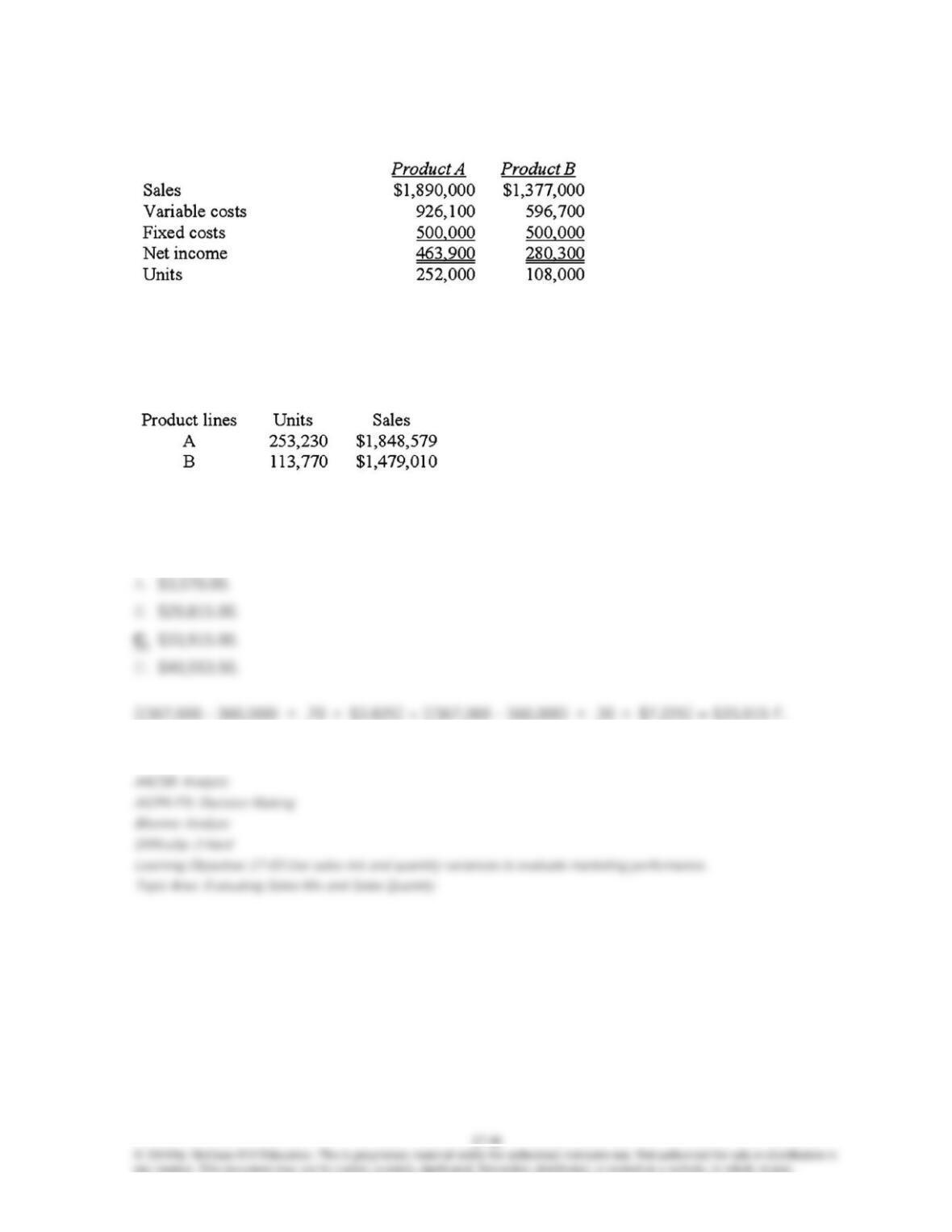
66. The next year’s budget for Green, Inc., a multi-product company, is given below:
At the end of the year, the total fixed costs and the variable costs per unit were exactly as
budgeted, but the following units per product line were sold. Green analyzes the effects its sales
variances have on the profitability of the company.
What is the total sales quantity variance?
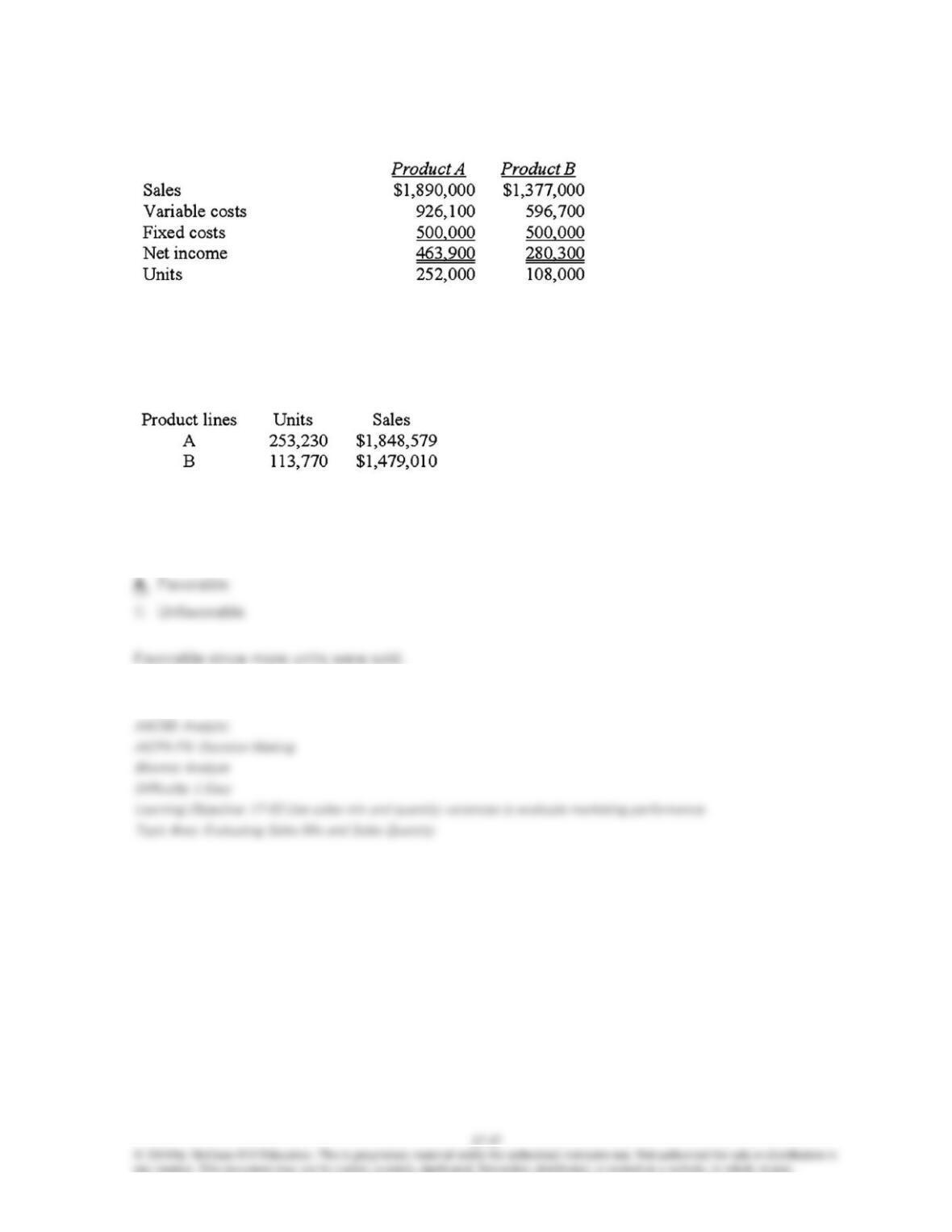
67. The next year’s budget for Green, Inc., a multi-product company, is given below:
At the end of the year, the total fixed costs and the variable costs per unit were exactly as
budgeted, but the following units per product line were sold. Green analyzes the effects its sales
variances have on the profitability of the company.
Is the total sales quantity variance favorable or unfavorable?
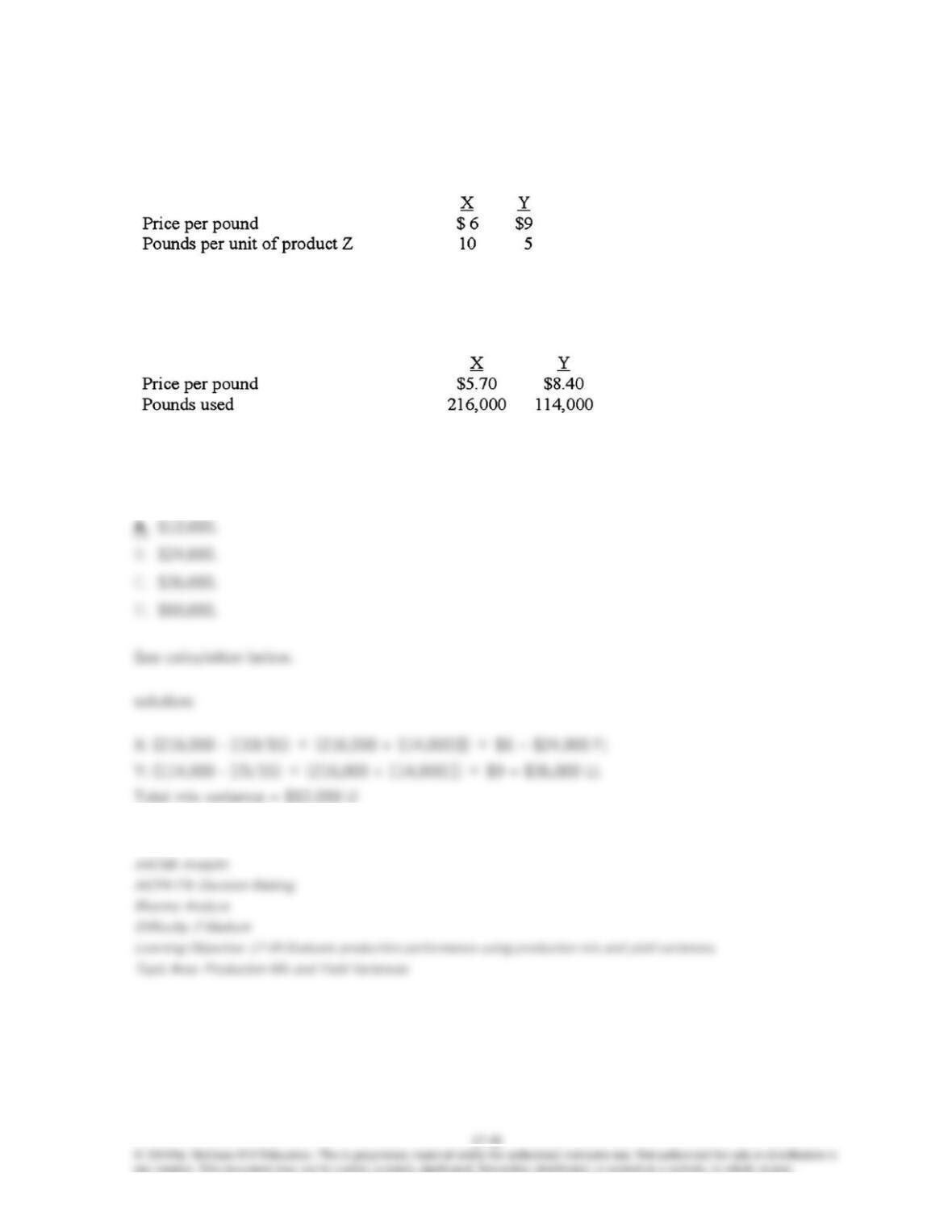
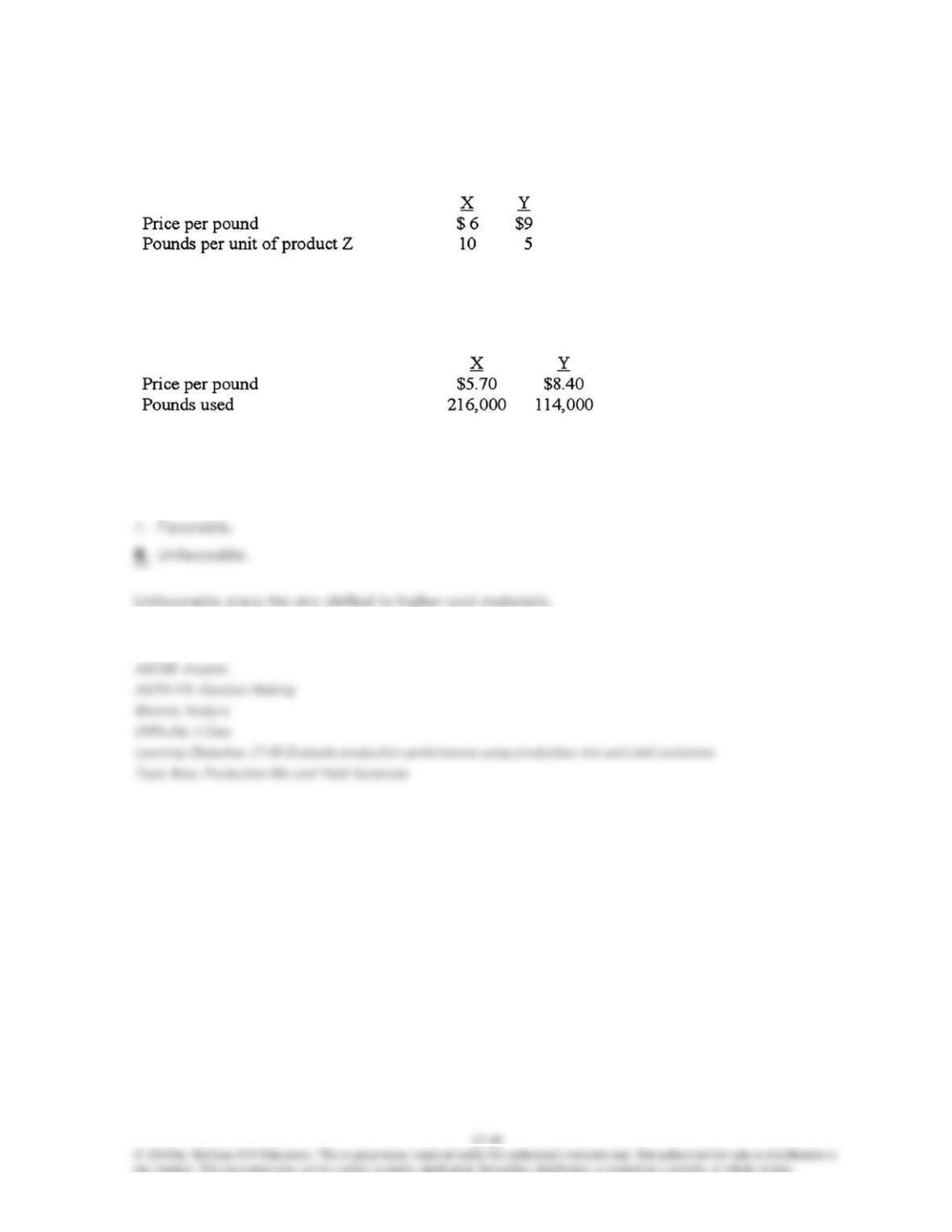
68. The Genes Company makes a product, Z, from two materials: X and Y. The standard
prices and quantities are as follows:
In May, 21,000 units of Z were produced by Genes Company, with the following actual prices and
quantities of materials used:
What is the
total
direct materials mix variance for May?
69. The Genes Company makes a product, Z, from two materials: X and Y. The standard
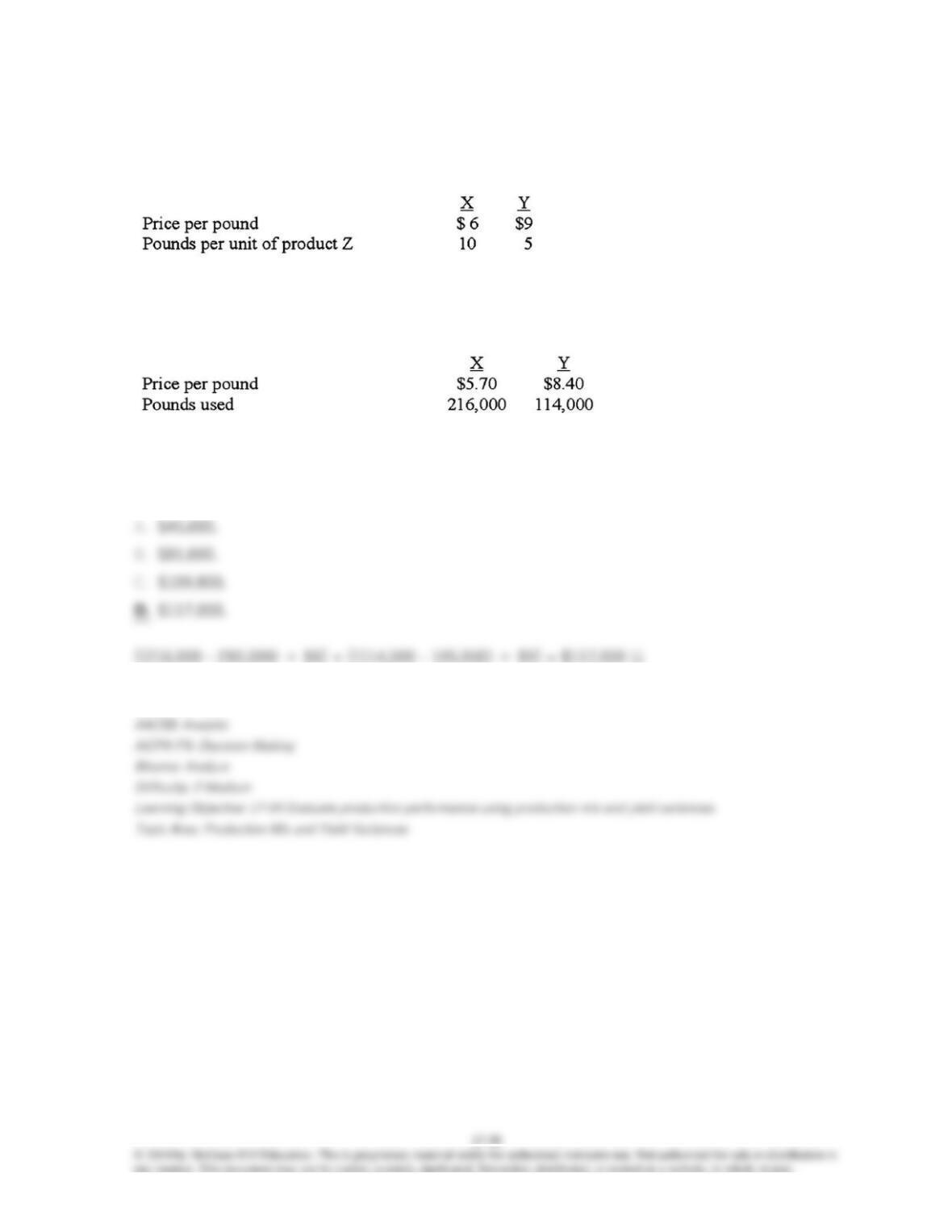
prices and quantities are as follows:
In May, 21,000 units of Z were produced by Genes Company, with the following actual prices and
quantities of materials used:
Is the total direct materials mix variance favorable or unfavorable?
70. The Genes Company makes a product, Z, from two materials: X and Y. The standard
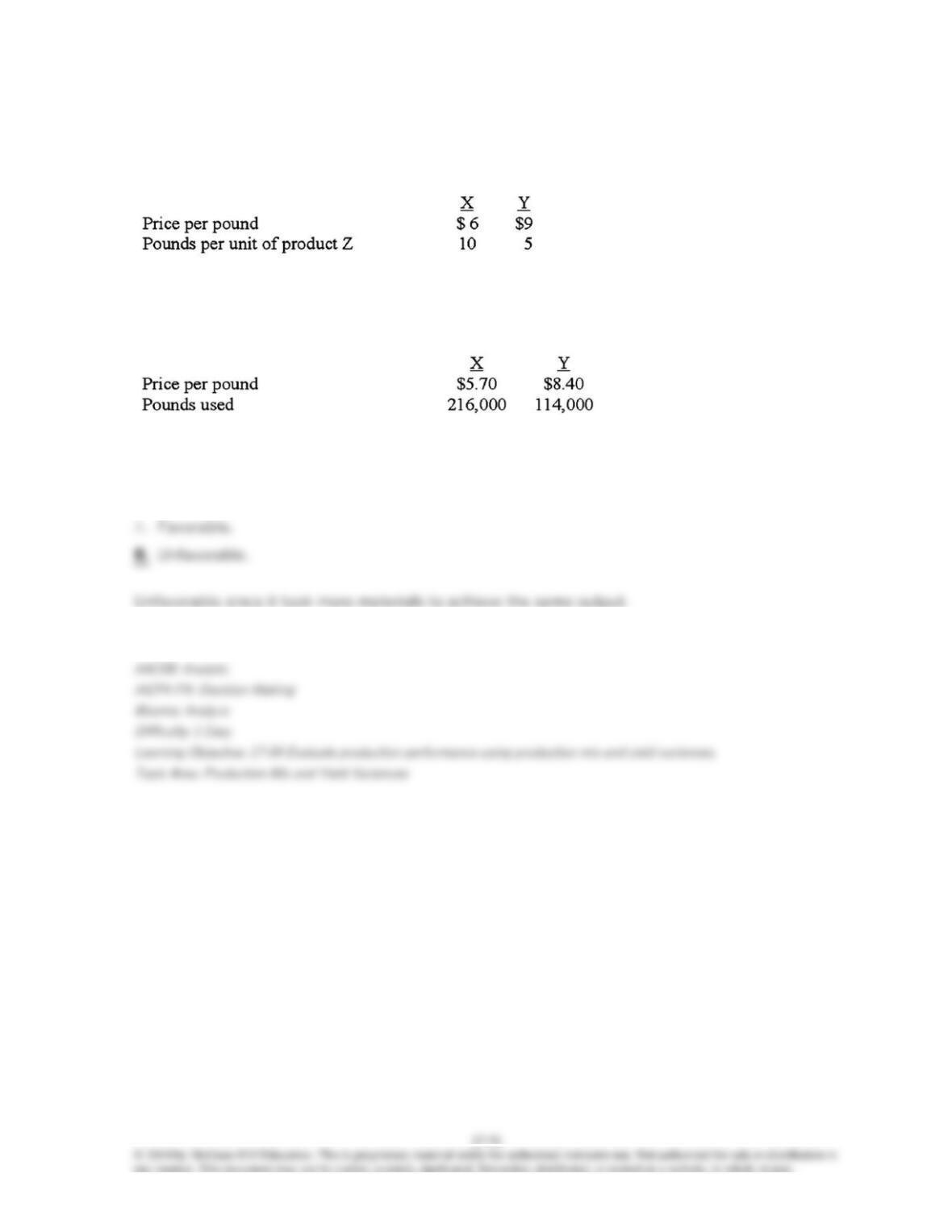
prices and quantities are as follows:
In May, 21,000 units of Z were produced by Genes Company, with the following actual prices and
quantities of materials used:
What is the
total
direct material yield variance for May?
71. The Genes Company makes a product, Z, from two materials: X and Y. The standard
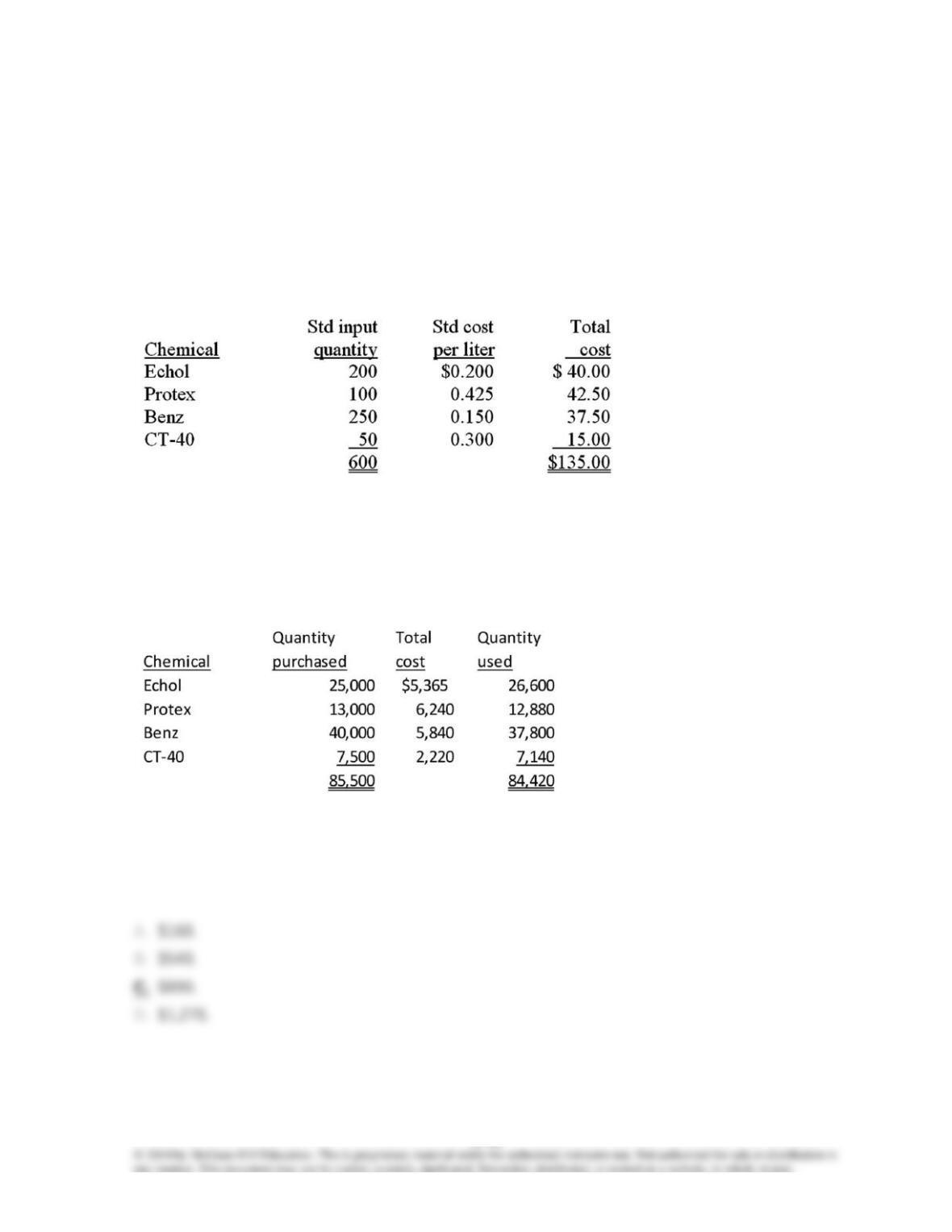
prices and quantities are as follows:
In May, 21,000 units of Z were produced by Genes Company, with the following actual prices and
quantities of materials used:
Is the total direct material yield variance favorable or unfavorable?
17–52
72. The Kinetic Modification Group (KMG) produces a gasoline additive, Gas Gain. This
product increases engine efficiency and improves gasoline mileage by creating a more complete
burn in the combustion process. Careful controls are required during the production process to
insure that the proper mix of input chemicals is achieved and that evaporation is controlled. Loss
of output and efficiency may result if the controls are not effective.
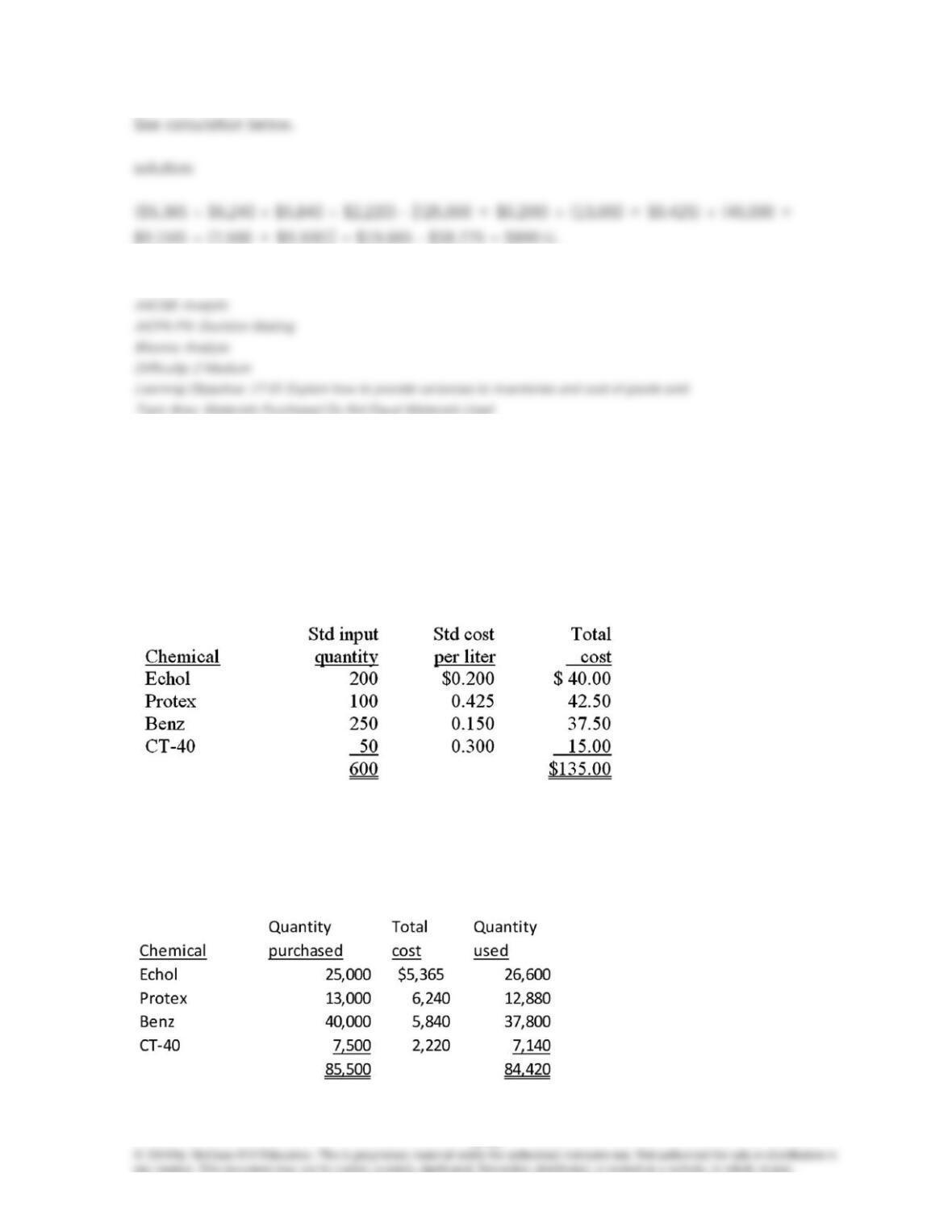
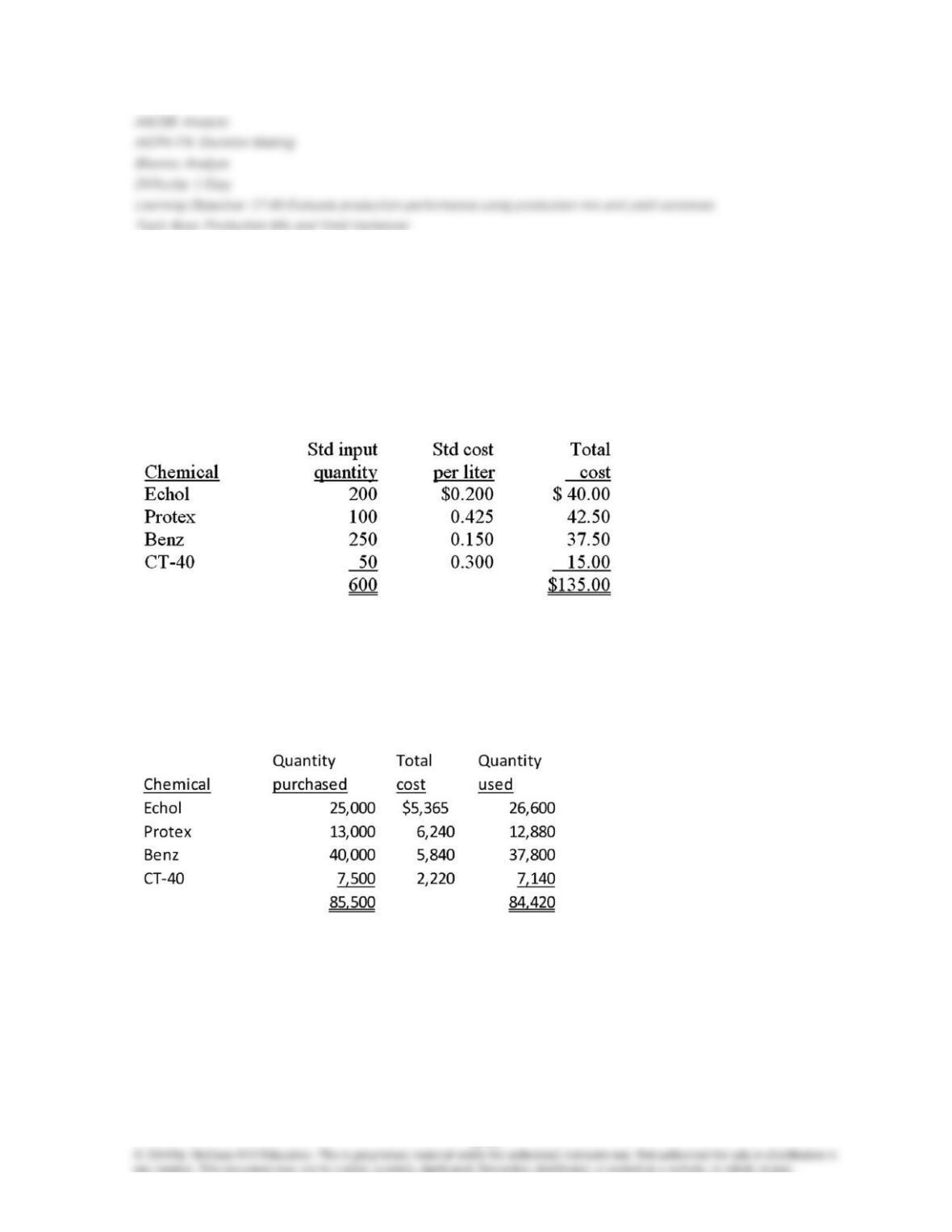
The standard cost of producing a 500-liter batch of Gas Gain is $135. The standard materials mix
and related standard cost of each chemical used in a 500-liter batch are:
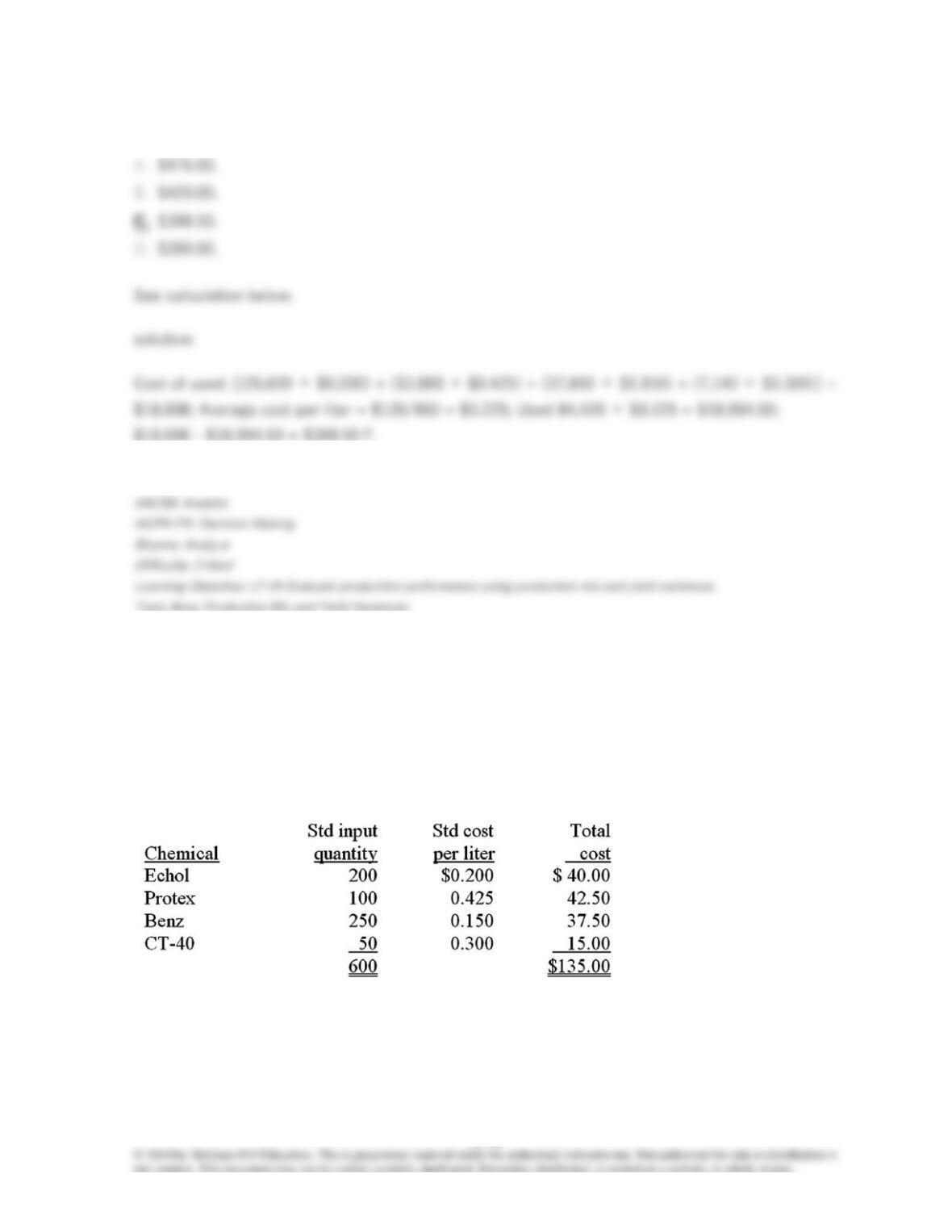
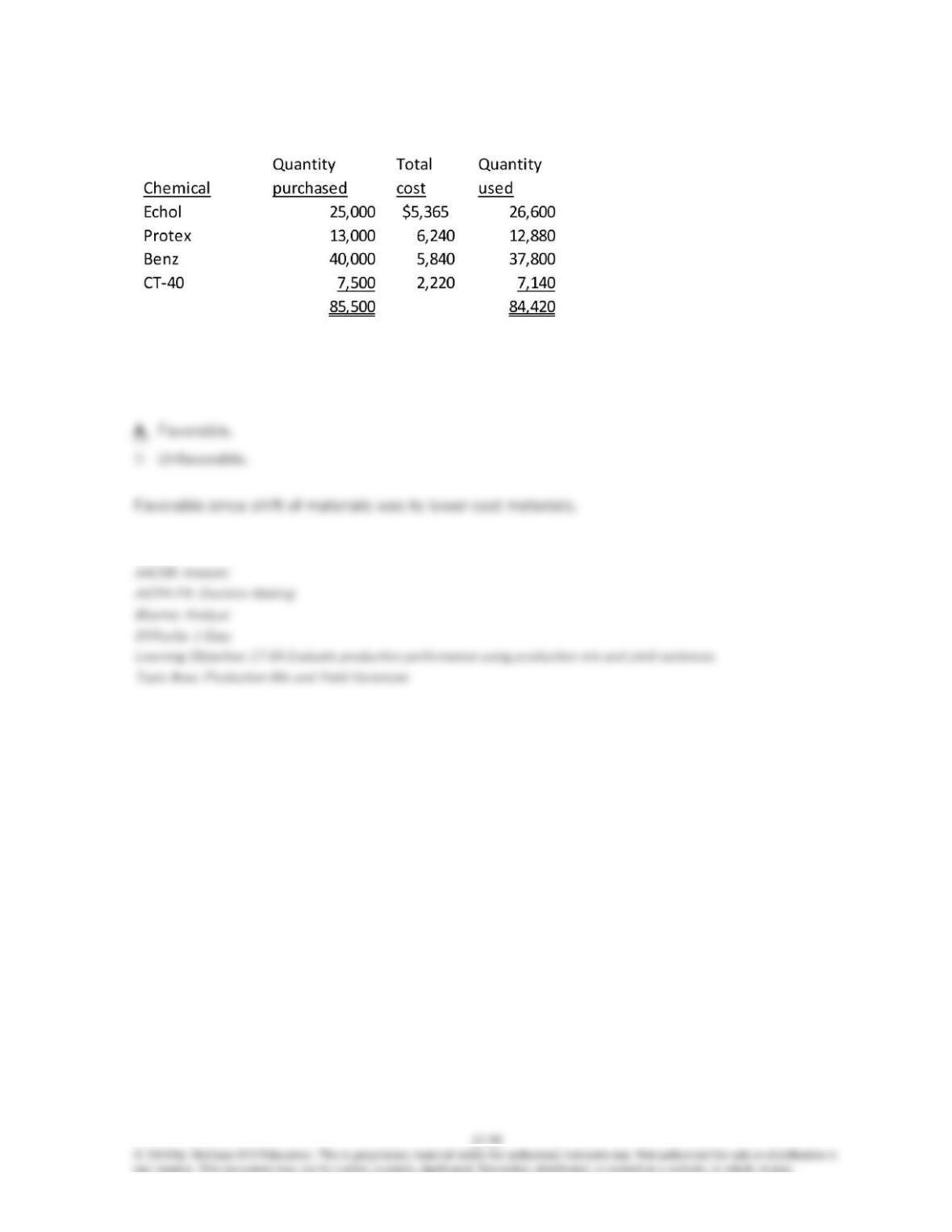
The quantities of chemicals purchased and used during the current production period are shown
in the schedule below. A total of 140 batches of Gas Gain were manufactured during the current
production period. The controller of KMG has determined its costs and chemical usage variations
at the end of the production period.
If KMG recognizes all variances at the earliest possible moment, what is the
total
material price
variance?
17–53
73. The Kinetic Modification Group (KMG) produces a gasoline additive, Gas Gain. This
product increases engine efficiency and improves gasoline mileage by creating a more complete
burn in the combustion process. Careful controls are required during the production process to
insure that the proper mix of input chemicals is achieved and that evaporation is controlled. Loss
of output and efficiency may result if the controls are not effective.
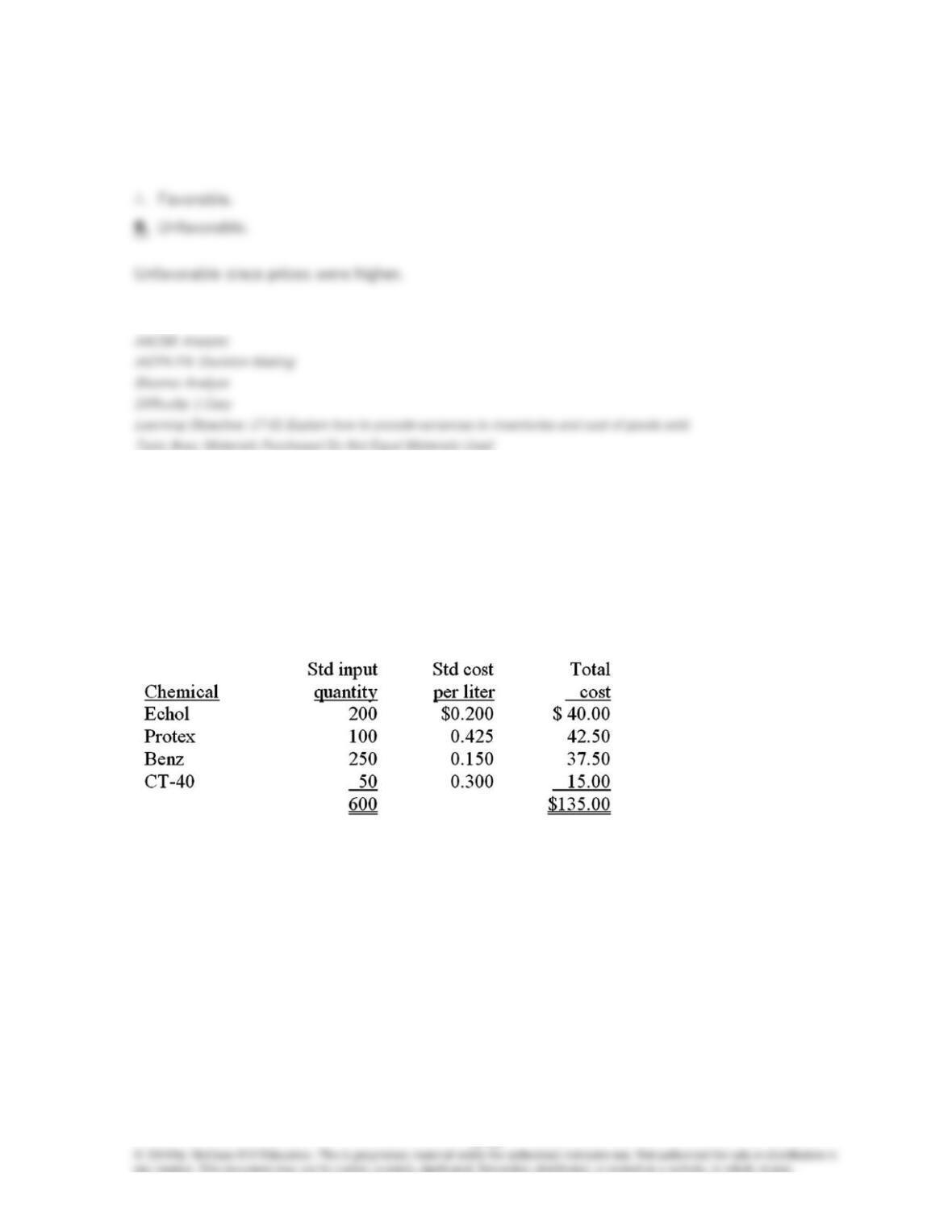
The standard cost of producing a 500-liter batch of Gas Gain is $135. The standard materials mix
and related standard cost of each chemical used in a 500-liter batch are:
The quantities of chemicals purchased and used during the current production period are shown
in the schedule below. A total of 140 batches of Gas Gain were manufactured during the current
production period. The controller of KMG has determined its costs and chemical usage variations
at the end of the production period.
17–54
Is the
total
material price variance favorable or unfavorable?
74. The Kinetic Modification Group (KMG) produces a gasoline additive, Gas Gain. This
product increases engine efficiency and improves gasoline mileage by creating a more complete
burn in the combustion process. Careful controls are required during the production process to
insure that the proper mix of input chemicals is achieved and that evaporation is controlled. Loss
of output and efficiency may result if the controls are not effective.
The standard cost of producing a 500-liter batch of Gas Gain is $135. The standard materials mix
and related standard cost of each chemical used in a 500-liter batch are:
The quantities of chemicals purchased and used during the current production period are shown
in the schedule below. A total of 140 batches of Gas Gain were manufactured during the current
production period. The controller of KMG has determined its costs and chemical usage variations
at the end of the production period.
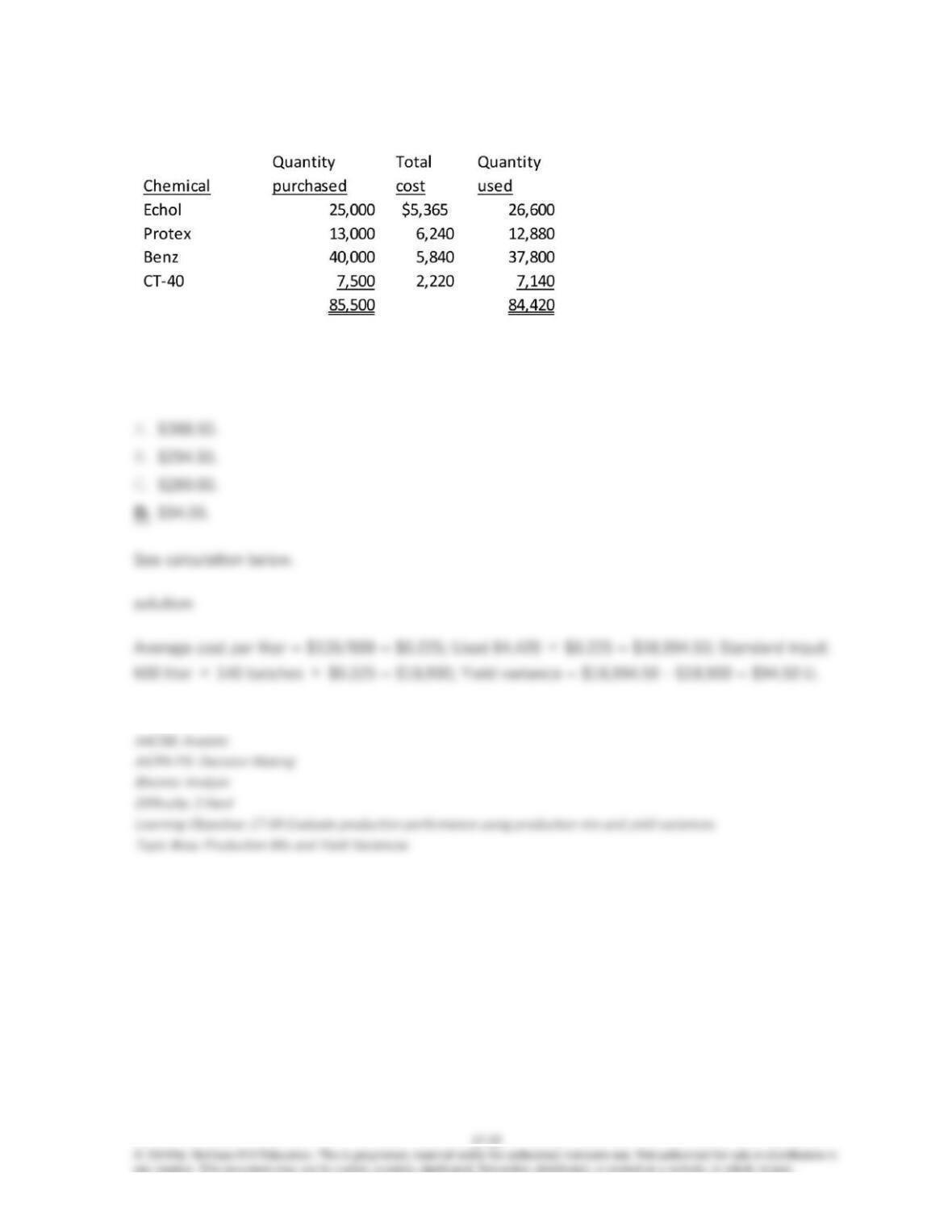
What is the
total
materials yield variance?
17–56
75. The Kinetic Modification Group (KMG) produces a gasoline additive, Gas Gain. This
product increases engine efficiency and improves gasoline mileage by creating a more complete
burn in the combustion process. Careful controls are required during the production process to
insure that the proper mix of input chemicals is achieved and that evaporation is controlled. Loss
of output and efficiency may result if the controls are not effective.
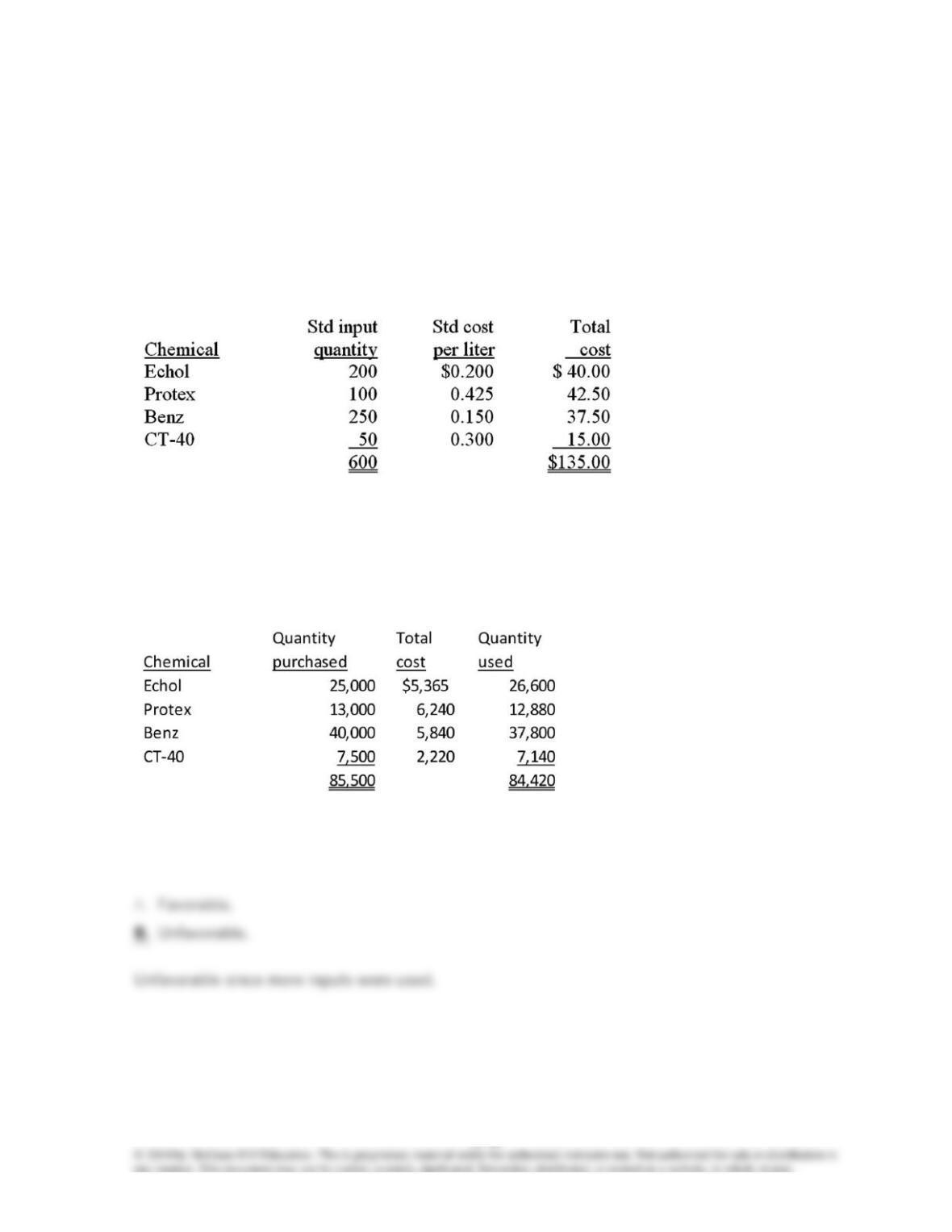
The standard cost of producing a 500-liter batch of Gas Gain is $135. The standard materials mix
and related standard cost of each chemical used in a 500-liter batch are:
The quantities of chemicals purchased and used during the current production period are shown
in the schedule below. A total of 140 batches of Gas Gain were manufactured during the current
production period. The controller of KMG has determined its costs and chemical usage variations
at the end of the production period.
Is the materials yield variance favorable or unfavorable?
17–57
76. The Kinetic Modification Group (KMG) produces a gasoline additive, Gas Gain. This
product increases engine efficiency and improves gasoline mileage by creating a more complete
burn in the combustion process. Careful controls are required during the production process to
insure that the proper mix of input chemicals is achieved and that evaporation is controlled. Loss
of output and efficiency may result if the controls are not effective.
The standard cost of producing a 500-liter batch of Gas Gain is $135. The standard materials mix
and related standard cost of each chemical used in a 500-liter batch are:
The quantities of chemicals purchased and used during the current production period are shown
in the schedule below. A total of 140 batches of Gas Gain were manufactured during the current
production period. The controller of KMG has determined its costs and chemical usage variations
at the end of the production period.
What is the total materials mix variance?
17–58
77. The Kinetic Modification Group (KMG) produces a gasoline additive, Gas Gain. This
product increases engine efficiency and improves gasoline mileage by creating a more complete
burn in the combustion process. Careful controls are required during the production process to
insure that the proper mix of input chemicals is achieved and that evaporation is controlled. Loss
of output and efficiency may result if the controls are not effective.
The standard cost of producing a 500-liter batch of Gas Gain is $135. The standard materials mix
and related standard cost of each chemical used in a 500-liter batch are:
The quantities of chemicals purchased and used during the current production period are shown
in the schedule below. A total of 140 batches of Gas Gain were manufactured during the current
production period. The controller of KMG has determined its costs and chemical usage variations
at the end of the production period.
Is the materials mix variance favorable or unfavorable?
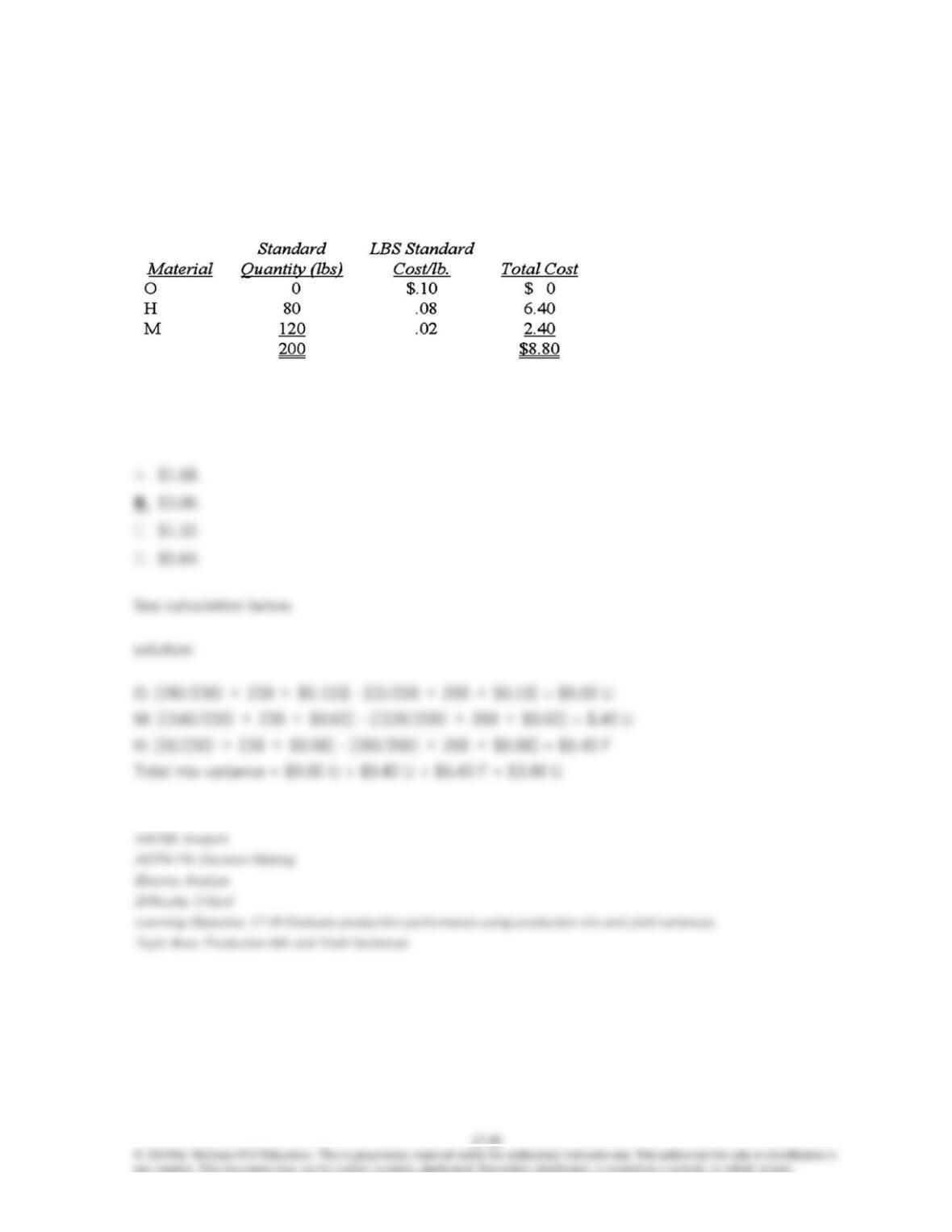
78. A company makes a product using two materials, one of which is interchangeable with a
third material. The standards for producing one 200-pound batch are presented below. The last
200-pound batch was produced using 140 pounds of M and 90 pounds of O. The price of M was
$0.03 per pound and the actual price of O was $0.10.
What is the materials mix variance?