1. The variable production cost variances are computed using the units produced instead of
the units sold.
2. If variances are not prorated at the end of the accounting period, they are closed to the
Cost of Goods Sold.
3. If the number of units produced exceeds the number of units sold, the full-absorption
operating profit will be lower than variable costing operating profit.
4. The direct material price variance is based on the quantity of materials purchased when
the quantity purchased is different from the quantity used.
5. The market share variance is more controllable by the marketing department than the
industry volume variance.
6. The industry volume variance is the portion of the sales activity variance due to a change
in the company’s proportion of sales in the markets in which they operate.
7. An increase in an industry’s volume and a decrease in a company’s market share implies
that the company’s sales price variance is unfavorable.
8. If a company sells two products, it is possible for both products to have a favorable sales
mix variance.
9. The sales quantity variance is the same as the sales activity variance on a flexible budget
performance report.
10. If a company sells two products, it is possible for both products to have an unfavorable
sales quantity variance.
11. The production cost yield variance is conceptually the same as the sales quantity
variance.
12. The production mix variance measures the impact of substituting one material for another
material during the production process.
13. The direct labor yield variance is unfavorable when the total hours worked during a period
are less than the total standard hours allowed for the actual number of units produced.
14. The basic variance analysis framework used for manufacturing companies can also be
used in service organizations.
15. Labor variances are more important than material variances in service organizations.
16. Professional accounting firms could not compute a labor mix and labor yield variance for
their auditors because labor in accounting is not substitutable.
17. Two important characteristics to consider when deciding how many variances to review
are how large the variance is and the extent to which the variance can be managed.
18. The only variances that should be investigated are those for which the expected benefits
of correction exceed the costs of investigating and correcting.
19. Some variances are the result of accounting errors and omissions, including timing
differences.
20. Some variances are the result of standards that are inaccurate or do not reflect the
current production process.
21. Which of the following statements is (are) true?
(A) If variances are prorated at the end of the accounting period, an unfavorable direct materials
price variance will, when prorated, increase the value of the Finished Goods Inventory.
(B) Insignificant variances are not generally prorated at the end of the accounting period and are
closed to the Cost of Goods Sold.
22. Standard costs should be based on:
23. In a standard cost system, overhead is applied to production on a basis of:
24. One feature of a standard cost system is that it:
25. Which of the following statements is (are) false?
(A) All variances should be prorated to inventories and cost of goods sold at the end of the
accounting period.
(B) If the number of units produced exceeds the number of units sold, the full-absorption
operating profit will be lower than variable costing operating profit.
26. If raw materials are carried in the Direct Materials Inventory at standard cost, then it is
reasonable to assume that the:
27. Which of the following sales variances is further analyzed into the market size and
industry volume variances?
28. Which of the following statements is (are) true?
(A) The market share variance is more controllable by the marketing department than the industry
volume variance.
(B) The industry volume variance is the portion of the sales activity variance due to a change in
the company’s proportion of sales in the markets in which they operate.
29. The sales activity variance is equal to the sum of the market share variance and the:
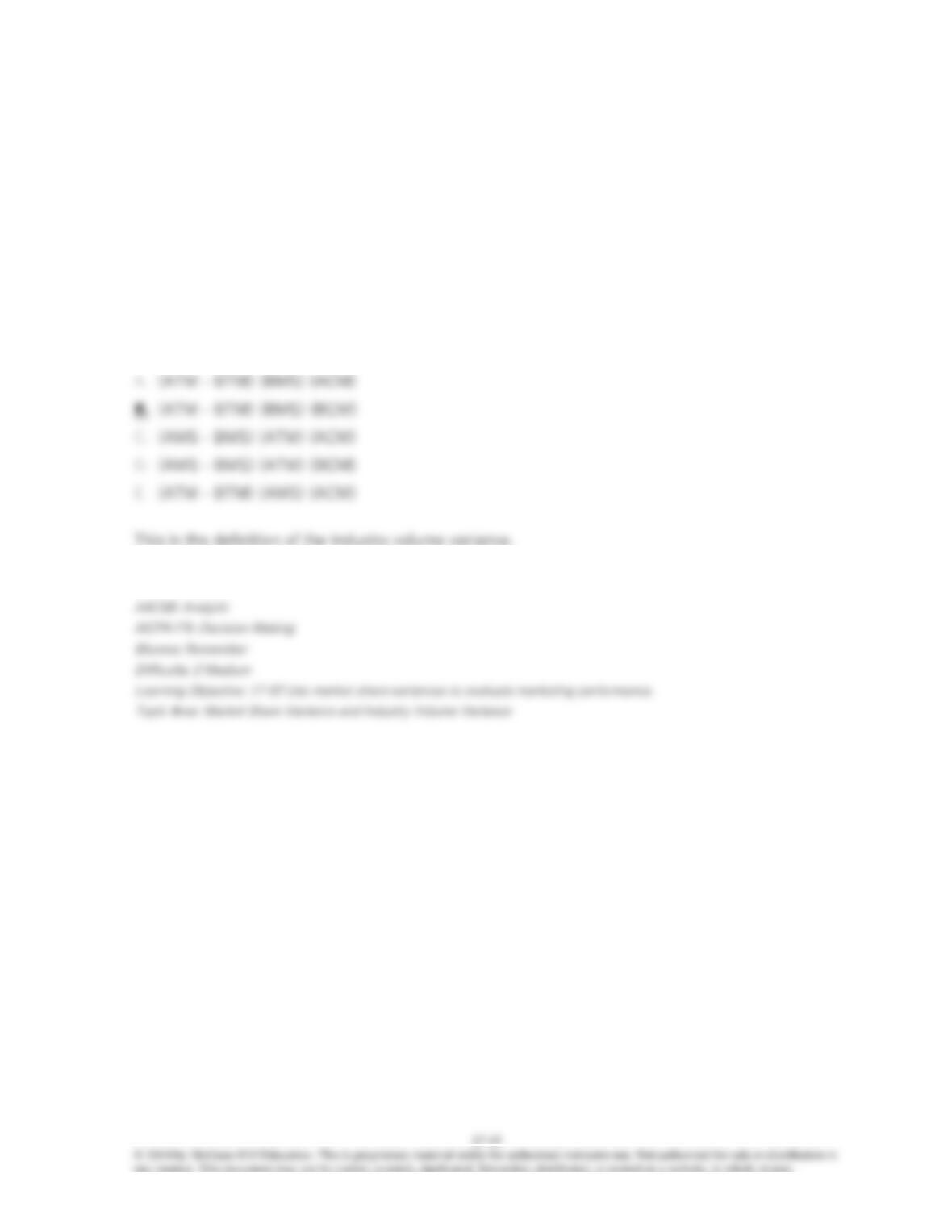
30. Using the abbreviations listed below, what is the formula for the industry volume
variance?
AMS = actual market share
BMS = budgeted market share
BCM = budgeted contribution margin per unit
ACM = actual contribution margin per unit
ATM = actual total market
BTM = budgeted total market
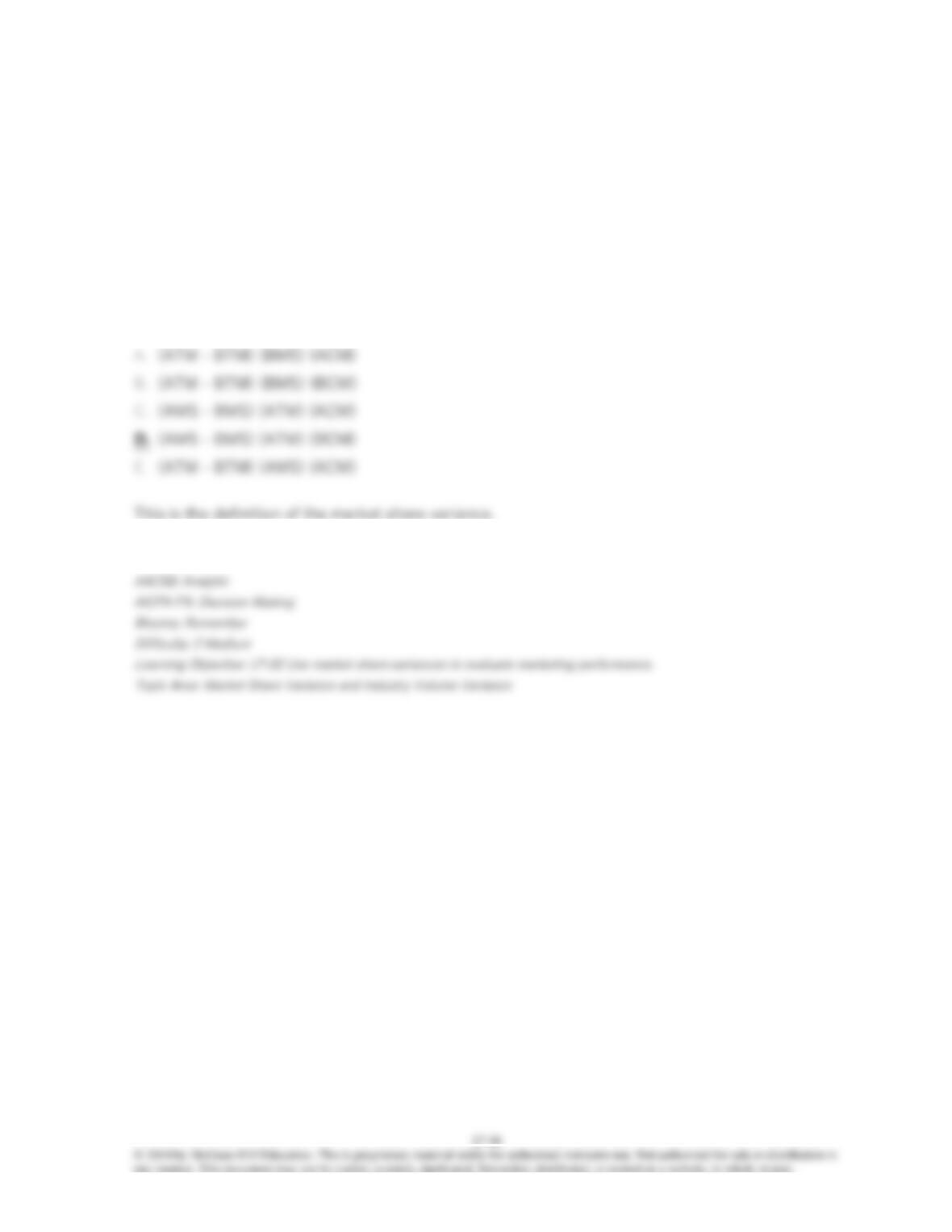
31. Using the abbreviations listed below, what is the market share variance?
AMS = actual market share
BMS = budgeted market share
BCM = budgeted contribution margin per unit
ACM = actual contribution margin per unit
ATM = actual total market
BTM = budgeted total market
32. Which of the following income statement items is analyzed using the sales mix and the
sales quantity variances?
33. The sales mix variance would be:
34. The sales quantity variance would be favorable when a company sells:
35. The labor yield variance is actual total hours at:
36. The labor mix variance is actual total hours at:
37. The computation of the material yield variance does not require the:
38. A credit balance in the labor yield variance implies: