Version 1 1
Student name:__________
1) The management of Truelove Corporation is considering a project that would require an
initial investment of $349,000 and would last for 7 years. The annual net operating income from
the project would be $29,400, including depreciation of $45,800. At the end of the project, the
scrap value of the project’s assets would be $28,400.
Required:
Determine the payback period of the project. (Round your answer to 2 decimal places.)
2) Ursus, Incorporated, is considering a project that would have a five-year life and would
require a $690,000 investment in equipment. At the end of five years, the project would
terminate and the equipment would have no salvage value. The project would provide net
operating income each year as follows (Ignore income taxes.):
Sales $ 1,800,000
Variable expenses 1,250,000
Contribution margin 550,000
Fixed expenses:
Fixed out-of-pocket cash expenses $ 320,000
Depreciation 138,000 458,000
Net operating income $ 92,000
Version 1 2
Click here to view Exhibit 14B-1 and Exhibit 14B-2, to determine the appropriate discount
factor(s) using the tables provided.
All of the above items, except for depreciation, represent cash flows. The company’s required
rate of return is 14%.
Required:
a. Compute the project’s net present value. (Round your intermediate calculations and final
answer to the nearest whole dollar amount.)
b. Compute the project’s internal rate of return. (Round your final answer to the nearest
whole percent.)
c. Compute the project’s payback period. (Round your answer to 2 decimal place.)
d. Compute the project’s simple rate of return. (Round your final answer to the nearest whole
percent.)
3) Ramson Corporation is considering purchasing a machine that would cost $554,960 and
have a useful life of 7 years. The machine would reduce cash operating costs by $99,100 per
year. The machine would have a salvage value of $107,280 at the end of the project. (Ignore
income taxes.)
Required:
a. Compute the payback period for the machine. (Round your answer to 2 decimal places.)
b. Compute the simple rate of return for the machine. (Round your intermediate calculations
to nearest whole dollar and your final answer to 2 decimal places.)
Version 1 3
4) Joanette, Incorporated, is considering the purchase of a machine that would cost
$590,000 and would last for 9 years, at the end of which, the machine would have a salvage
value of $59,000. The machine would reduce labor and other costs by $119,000 per year.
Additional working capital of $5,000 would be needed immediately, all of which would be
recovered at the end of 9 years. The company requires a minimum pretax return of 18% on all
investment projects. (Ignore income taxes.)
Click here to view Exhibit 14B-1 and Exhibit 14B-2, to determine the appropriate discount
factor(s) using the tables provided.
Required:
Determine the net present value of the project. (Negative amount should be indicated by a
minus sign. Round your intermediate calculations and final answer to the nearest whole
dollar amount.)
5) (Ignore income taxes in this problem.) Bradley Corporation’s required rate of return is
14%. The company has an opportunity to be the exclusive distributor of a very popular consumer
item. No new equipment would be needed, but the company would have to use one-fourth of the
space in a warehouse it owns. The warehouse cost $200,000 new. The warehouse is currently
half-empty and there are no other plans to use the empty space. In addition, the company would
have to invest $100,000 in working capital to carry inventories and accounts receivable for the
new product line. The company would have the distributorship for only 5 years. The
distributorship would generate a $17,000 annual net cash inflow.
Required:
What is the net present value of the project?
Version 1 4
6) Mattice Corporation is considering investing $870,000 in a project. The life of the project
would be 6 years. The project would require additional working capital of $37,000, which would
be released for use elsewhere at the end of the project. The annual net cash inflows would be
$184,000. The salvage value of the assets used in the project would be $47,000. The company
uses a discount rate of 13%. (Ignore income taxes.)
Click here to view Exhibit 14B-1 and Exhibit 14B-2, to determine the appropriate discount
factor(s) using the tables provided.
Required:
Compute the net present value of the project. (Negative amount should be indicated by a
minus sign. Round your intermediate calculations and final answer to the nearest whole
dollar amount.)
7) HI Corporation is considering the purchase of a machine that promises to reduce
operating costs by the same amount for every year of its 6-year useful life. The machine will cost
$207,580 and has no salvage value. The machine has a 14% internal rate of return. (Ignore
income taxes.)
Click here to view Exhibit 14B-1 and Exhibit 14B-2, to determine the appropriate discount
factor(s) using the tables provided.
Required:
What are the annual cost savings promised by the machine? (Round your intermediate
calculations and final answer to the nearest whole dollar amount.)
Version 1 5
8) Devon Corporation uses a discount rate of 8% in its capital budgeting. Partial analysis of
an investment in automated equipment with a useful life of 8 years has thus far yielded a net
present value of −$498,941. This analysis did not include any estimates of the intangible benefits
of automating this process nor did it include any estimate of the salvage value of the equipment.
(Ignore income taxes.)
Click here to view Exhibit 14B-1 and Exhibit 14B-2, to determine the appropriate discount
factor(s) using the tables provided.
Required:
a. Ignoring any salvage value, how large would the additional cash flow per year from the
intangible benefits have to be to make the investment in the automated equipment financially
attractive?
b. Ignoring any cash flows from intangible benefits, how large would the salvage value of the
automated equipment have to be to make the investment in the automated equipment financially
attractive?
(Round your final answers to the nearest whole dollar amount.)
9) The management of an amusement park is considering purchasing a new ride for $86,000
that would have a useful life of 10 years and a salvage value of $10,600. The ride would require
annual operating costs of $35,000 throughout its useful life. The company’s discount rate is 9%.
Management is unsure about how much additional ticket revenue the new ride would generate-
particularly since customers pay a flat fee when they enter the park that entitles them to
unlimited rides. Hopefully, the presence of the ride would attract new customers. (Ignore income
taxes.)
Click here to view Exhibit 14B-1 and Exhibit 14B-2, to determine the appropriate discount
factor(s) using the tables provided.
Required:
How much additional revenue would the ride have to generate per year to make it an attractive
investment? (Round your intermediate calculations and final answer to the nearest whole
dollar amount.)
Version 1 6
10) The management of Winstead Corporation is considering the following three investment
projects (Ignore income taxes.):
Project Q Project R Project S
Investment required $ 32,000 $ 68,500 $ 116,500
Present value of cash inflows $ 34,120 $ 78,500 $ 128,465
The only cash outflows are the initial investments in the projects.
Required:
Rank the investment projects using the project profitability index.
11) The management of Nixon Corporation is investigating purchasing equipment that would
cost $540,000 and have a 7 year life with no salvage value. The equipment would allow an
expansion of capacity that would increase sales revenues by $375,000 per year and cash
operating expenses by $216,500 per year. (Ignore income taxes.)
Required:
Determine the simple rate of return on the investment. (Round your answer to 1 decimal
place.)
Version 1 7
12) Russnak Corporation is investigating automating a process by purchasing a new machine
for $515,000 that would have a 10 year useful life and no salvage value. By automating the
process, the company would save $115,000 per year in cash operating costs. The company’s
current equipment would be sold for scrap now, yielding $22,000. The annual depreciation on
the new machine would be $51,500. (Ignore income taxes.)
Required:
Determine the simple rate of return on the investment. (Round your answer to 1 decimal
place.)
13) Ostermeyer Corporation is considering a project that would require an initial investment
of $247,000 and would last for 7 years. The incremental annual revenues and expenses for each
of the 7 years would be as follows (Ignore income taxes.):
Sales $ 198,000
Variable expenses 46,000
Contribution margin 152,000
Fixed expenses:
Salaries $ 22,000
Rents 32,000
Depreciation 33,000
Total fixed expenses 87,000
Net operating income $ 65,000
At the end of the project, the scrap value of the project’s assets would be $16,000.
Required:
Determine the payback period of the project.
Version 1 8
14) The management of Truelove Corporation is considering a project that would require an
initial investment of $321,000 and would last for 7 years. The annual net operating income from
the project would be $28,000, including depreciation of $42,000. At the end of the project, the
scrap value of the project’s assets would be $27,000. (Ignore income taxes.)
Required:
Determine the payback period of the project.
15) Ursus, Incorporated, is considering a project that would have a ten-year life and would
require a $1,000,000 investment in equipment. At the end of ten years, the project would
terminate and the equipment would have no salvage value. The project would provide net
operating income each year as follows (Ignore income taxes.):
Sales $ 2,000,000
Variable expenses 1,400,000
Contribution margin 600,000
Fixed expenses:
Fixed out-of-pocket cash expenses $ 300,000
Depreciation 100,000 400,000
Net operating income $ 200,000
All of the above items, except for depreciation, represent cash flows. The company’s required
rate of return is 12%.
Click here to view Exhibit 14B-1 and Exhibit 14B-2, to determine the appropriate discount
factor(s) using the tables provided.
Required:
a. Compute the project’s net present value.
b. Compute the project’s internal rate of return to the nearest whole percent.
c. Compute the project’s payback period.
d. Compute the project’s simple rate of return.
Version 1 9
16) Hady Corporation is considering purchasing a machine that would cost $688,800 and
have a useful life of 7 years. The machine would reduce cash operating costs by $118,759 per
year. The machine would have no salvage value. (Ignore income taxes.)
Required: a. Compute the payback period for the machine.
b. Compute the simple rate of return for the machine.
17) Bied’s Pharmacy has purchased a small auto for delivery of prescriptions. The auto cost
$28,000 and will be usable for seven years. Delivery of prescriptions (which the pharmacy has
never done before) should increase revenues by at least $25,000 per year. The cost of these
prescriptions will be about $18,000 per year. The pharmacy depreciates all assets by the straight-
line method. (Ignore income taxes.)
Required:
a. Compute the payback period on the new auto.
b. Compute the simple rate of return of the new auto.
18) Cardinal Pharmacy has purchased a small auto for delivery of prescriptions. The auto cost
$28,000 and will be usable for four years. Delivery of prescriptions (which the pharmacy has
never done before) should increase revenues by at least $40,000 per year. The cost of these
prescriptions will be about $30,000 per year. The pharmacy depreciates all assets by the straight-
line method. (Ignore income taxes.)
Required:
a. Compute the payback period on the new auto.
b. Compute the simple rate of return of the new auto.
Version 1 10
19) Ramson Corporation is considering purchasing a machine that would cost $756,000 and
have a useful life of 8 years. The machine would reduce cash operating costs by $132,632 per
year. The machine would have a salvage value of $151,200 at the end of the project. (Ignore
income taxes.)
Required:
a. Compute the payback period for the machine.
b. Compute the simple rate of return for the machine.
20) The following data concern an investment project (Ignore income taxes.):
Investment in equipment $ 180,000
Annual net cash inflows $ 42,000
Salvage value of the equipment $ 70,000
Working capital required $ 20,000
Life of the project 5 years
Required rate of return 12%
The working capital will be released for use elsewhere at the conclusion of the project.
Click here to view Exhibit 14B-1 and Exhibit 14B-2, to determine the appropriate discount
factor(s) using the tables provided.
Required:
Compute the project’s net present value.
Version 1 11
21) The management of Kinion Corporation is considering the purchase of a machine that
would cost $170,000, would last for 4 years, and would have no salvage value. The machine
would reduce labor and other costs by $60,000 per year. The company requires a minimum
pretax return of 12% on all investment projects. (Ignore income taxes.):
Click here to view Exhibit 14B-1 and Exhibit 14B-2, to determine the appropriate discount
factor(s) using the tables provided.
Required:
Determine the net present value of the project.
22) Bill Anders is considering investing in a franchise in a fast-food chain. He would have to
purchase equipment costing $420,000 to equip the outlet and invest an additional $30,000 for
inventories and other working capital needs. Other outlets in the fast-food chain have an annual
net cash inflow of about $120,000. Mr. Anders would close the outlet in 5 years. He estimates
that the equipment could be sold at that time for about 10% of its original cost and the working
capital would be released for use elsewhere. Mr. Anders’ required rate of return is 8%. (Ignore
income taxes.)
Click here to view Exhibit 14B-1 and Exhibit 14B-2, to determine the appropriate discount
factor(s) using the tables provided.
Required:
What is the investment’s net present value? Is this an acceptable investment?
Version 1 12
23) Wary Corporation is considering the purchase of a machine that would cost $240,000 and
would last for 5 years. At the end of 5 years, the machine would have a salvage value of $29,000.
The machine would reduce labor and other costs by $63,000 per year. The company requires a
minimum pretax return of 10% on all investment projects. (Ignore income taxes.)
Click here to view Exhibit 14B-1 and Exhibit 14B-2, to determine the appropriate discount
factor(s) using the tables provided.
Required:
Determine the net present value of the project.
24) Joanette, Incorporated, is considering the purchase of a machine that would cost
$240,000 and would last for 5 years, at the end of which, the machine would have a salvage
value of $48,000. The machine would reduce labor and other costs by $62,000 per year.
Additional working capital of $7,000 would be needed immediately, all of which would be
recovered at the end of 5 years. The company requires a minimum pretax return of 17% on all
investment projects. (Ignore income taxes.)
Click here to view Exhibit 14B-1 and Exhibit 14B-2, to determine the appropriate discount
factor(s) using the tables provided.
Required:
Determine the net present value of the project.
Version 1 13
25) Gallatin, Incorporated, has assembled the estimates shown below relating to a proposed
new product. These estimates are based on a 5-year project life, at the end of which the new
equipment would be sold, working capital would revert to other uses in the company, and the
product would be discontinued. Gallatin uses a discount rate of 10%. (Ignore income taxes.)
Annual cash sales $ 450,000
Annual out-of-pocket cash expenses $ 340,000
Annual depreciation on new equipment $ 52,000
Initial cost of new equipment $ 300,000
Salvage value of equipment in 5 years $ 50,000
Working capital requirement $ 60,000
Click here to view Exhibit 14B-1 and Exhibit 14B-2, to determine the appropriate discount
factor(s) using the tables provided.
Required:
Compute the net present value of the new product.
26) Strausberg Incorporated is considering investing in a project that would require an initial
investment of $270,000. The life of the project would be 4 years. The annual net cash inflows
from the project would be $81,000. The salvage value of the assets at the end of the project
would be $27,000. The company uses a discount rate of 10%. (Ignore income taxes.)
Click here to view Exhibit 14B-1 and Exhibit 14B-2, to determine the appropriate discount
factor(s) using the tables provided.
Required:
Compute the net present value of the project.
Version 1 14
27) Jim Bingham is considering starting a small catering business. He would invest $125,000
to purchase a delivery van and various equipment and another $60,000 for inventories and other
working capital needs. Rent for the building used by the business will be $35,000 per year. In
addition to the building rent, annual cash outflow for operating costs will amount to $40,000.
The annual cash inflow from the business will amount to $120,000. Jim wants to operate the
catering business for only six years. He estimates that the equipment could be sold at that time
for 4% of its original cost. Jim uses a 16% discount rate. All cash flows, except for the initial
investment, would occur at the ends of the years.The investment in working capital would be
returned at the end of the six years. (Ignore income taxes.)
Click here to view Exhibit 14B-1 and Exhibit 14B-2, to determine the appropriate discount
factor(s) using the tables provided.
Required:
Compute the net present value of this investment.
28) Mattice Corporation is considering investing $440,000 in a project. The life of the project
would be 5 years. The project would require additional working capital of $34,000, which would
be released for use elsewhere at the end of the project. The annual net cash inflows would be
$123,000. The salvage value of the assets used in the project would be $49,000. The company
uses a discount rate of 11%. (Ignore income taxes.)
Click here to view Exhibit 14B-1 and Exhibit 14B-2, to determine the appropriate discount
factor(s) using the tables provided.
Required:
Compute the net present value of the project.
Version 1 15
29) Consider the following three investment opportunities:
Project I would require an immediate cash outlay of $40,000 and would result in cash savings
of $9,000 each year for 5 years.
Project II would require cash outlays of $7,000 per year and would provide a cash inflow of
$40,000 at the end of 5 years.
Project III would require a cash outlay of $36,000 now and would provide a cash inflow of
$60,000 at the end of 5 years. (Ignore income taxes.)
Click here to view Exhibit 14B-1 and Exhibit 14B-2, to determine the appropriate discount
factor(s) using the tables provided.
Required:
The discount rate is 10%. Use the net present value method to determine which, if any, of the
three projects is acceptable.
30) Cooney Incorporated has provided the following data concerning a proposed investment
project (Ignore income taxes.):
Initial investment $ 160,000
Life of the project 4 years
Annual net cash inflows $ 70,000
Salvage value $ 16,000
The company uses a discount rate of 17%.
Click here to view Exhibit 14B-1 and Exhibit 14B-2, to determine the appropriate discount
factor(s) using the tables provided.
Required:
Compute the net present value of the project.
Version 1 16
31) Tiff Corporation has provided the following data concerning a proposed investment
project (Ignore income taxes.):
Initial investment $ 960,000
Life of the project 5 years
Working capital required $ 20,000
Annual net cash inflows $ 288,000
Salvage value $ 144,000
The company uses a discount rate of 16%. The working capital would be released at the end of
the project.
Click here to view Exhibit 14B-1 and Exhibit 14B-2, to determine the appropriate discount
factor(s) using the tables provided.
Required:
Compute the net present value of the project.
32) Maxcy Limos, Incorporated, is considering the purchase of a limousine that would cost
$187,335, would have a useful life of 9 years, and would have no salvage value. The limousine
would bring in cash inflows of $45,000 per year in excess of its cash operating costs. (Ignore
income taxes.)
Click here to view Exhibit 14B-1 and Exhibit 14B-2, to determine the appropriate discount
factor(s) using the tables provided.
Required:
Determine the internal rate of return on the investment in the new limousine.
Version 1 17
33) HI Corporation is considering the purchase of a machine that promises to reduce
operating costs by the same amount for every year of its 5-year useful life. The machine will cost
$205,980 and has no salvage value. The machine has a 14% internal rate of return. (Ignore
income taxes.)
Click here to view Exhibit 14B-1 and Exhibit 14B-2, to determine the appropriate discount
factor(s) using the tables provided.
Required:
What are the annual cost savings promised by the machine?
34) The management of Zachery Corporation is considering the purchase of a automated
molding machine that would cost $203,255, would have a useful life of 5 years, and would have
no salvage value. The automated molding machine would result in cash savings of $65,000 per
year due to lower labor and other costs. (Ignore income taxes.)
Click here to view Exhibit 14B-1 and Exhibit 14B-2, to determine the appropriate discount
factor(s) using the tables provided.
Required:
Determine the internal rate of return on the investment in the new automated molding machine.
Version 1 18
35) Boxton Corporation’s required rate of return is 12%. The company is considering the
purchase of a new machine that will save $20,000 per year in cash operating costs. The machine
will cost $128,360 and will have a 10-year useful life with zero salvage value. Straight-line
depreciation will be used. (Ignore income taxes.)
Click here to view Exhibit 14B-1 and Exhibit 14B-2, to determine the appropriate discount
factor(s) using the tables provided.
Required:
Compute the machine’s internal rate of return. Would you recommend purchase of the
machine?
36) The management of Harling Corporation is considering the purchase of a machine that
would cost $90,504 and would have a useful life of 5 years. The machine would have no salvage
value. The machine would reduce labor and other operating costs by $27,000 per year. (Ignore
income taxes.)
Click here to view Exhibit 14B-1 and Exhibit 14B-2, to determine the appropriate discount
factor(s) using the tables provided.
Required:
Determine the internal rate of return on the investment in the new machine.
Version 1 19
37) The management of Crosson Corporation is investigating the purchase of a new satellite
routing system with a useful life of 9 years. The company uses a discount rate of 17% in its
capital budgeting. The net present value of the investment, excluding its intangible benefits, is
−$173,055. (Ignore income taxes.)
Click here to view Exhibit 14B-1 and Exhibit 14B-2, to determine the appropriate discount
factor(s) using the tables provided.
Required:
How large would the additional cash flow per year from the intangible benefits have to be to
make the investment in the automated equipment financially attractive?
38) Devon Corporation uses a discount rate of 8% in its capital budgeting. Partial analysis of
an investment in automated equipment with a useful life of 8 years has thus far yielded a net
present value of −$496,541. This analysis did not include any estimates of the intangible benefits
of automating this process nor did it include any estimate of the salvage value of the equipment.
(Ignore income taxes.)
Click here to view Exhibit 14B-1 and Exhibit 14B-2, to determine the appropriate discount
factor(s) using the tables provided.
Required:
a. Ignoring any salvage value, how large would the additional cash flow per year from the
intangible benefits have to be to make the investment in the automated equipment financially
attractive?
b. Ignoring any cash flows from intangible benefits, how large would the salvage value of the
automated equipment have to be to make the investment in the automated equipment financially
attractive?
Version 1 20
39) The management of an amusement park is considering purchasing a new ride for $80,000
that would have a useful life of 10 years and a salvage value of $10,000. The ride would require
annual operating costs of $32,000 throughout its useful life. The company’s discount rate is 9%.
Management is unsure about how much additional ticket revenue the new ride would generate-
particularly since customers pay a flat fee when they enter the park that entitles them to
unlimited rides. Hopefully, the presence of the ride would attract new customers. (Ignore income
taxes.)
Click here to view Exhibit 14B-1 and Exhibit 14B-2, to determine the appropriate discount
factor(s) using the tables provided.
Required:
How much additional revenue would the ride have to generate per year to make it an attractive
investment?
40) Chipps Corporation uses a discount rate of 9% in its capital budgeting. Management is
considering an investment in telecommunications equipment with a useful life of 5 years.
Excluding the salvage value of the equipment, the net present value of the investment in the
equipment is −$530,985. (Ignore income taxes.)
Click here to view Exhibit 14B-1 and Exhibit 14B-2, to determine the appropriate discount
factor(s) using the tables provided.
Required:
How large would the salvage value of the telecommunications equipment have to be to make
the investment in the telecommunications equipment financially attractive?
41) Choudhury Corporation is considering the following three investment projects (Ignore
income taxes.):
Project H Project I Project J
Investment required $ 11,000 $ 53,000 $ 89,000
Version 1 21
Present value of cash inflows $ 12,980 $ 61,480 $ 96,120
The only cash outflows are the initial investments in the projects.
Required:
Rank the investment projects using the profitability index.
42) The management of Winstead Corporation is considering the following three investment
projects (Ignore income taxes.):
Project Q Project R Project S
Investment required $ 14,000 $ 48,000 $ 74,000
Present value of cash inflows $ 14,140 $ 54,720 $ 82,140
The only cash outflows are the initial investments in the projects.
Required:
Rank the investment projects using the profitability index.
43) The management of Nixon Corporation is investigating purchasing equipment that would
cost $518,000 and have a 7 year life with no salvage value. The equipment would allow an
expansion of capacity that would increase sales revenues by $364,000 per year and cash
operating expenses by $211,000 per year. (Ignore income taxes.)
Required:
Determine the simple rate of return on the investment to the nearest tenth of a percent.
Version 1 22
44) Russnak Corporation is investigating automating a process by purchasing a new machine
for $198,000 that would have a 9 year useful life and no salvage value. By automating the
process, the company would save $68,000 per year in cash operating costs. The company’s
current equipment would be sold for scrap now, yielding $18,000. The annual depreciation on
the new machine would be $22,000. (Ignore income taxes.)
Required:
Determine the simple rate of return on the investment to the nearest tenth of a percent.
45) Ducey Corporation is contemplating purchasing equipment that would increase sales
revenues by $79,000 per year and cash operating expenses by $27,000 per year. The equipment
would cost $150,000 and have a 6 year life with no salvage value. The annual depreciation
would be $25,000. (Ignore income taxes.)
Required:
Determine the simple rate of return on the investment to the nearest tenth of a percent.
46) The management of Schenk Corporation is investigating automating a process by
replacing old equipment by a new machine. The old equipment would be sold for scrap now for
$13,000. The new machine would cost $648,000, would have a 9 year useful life, and would
have no salvage value. By automating the process, the company would save $186,000 per year in
cash operating costs. (Ignore income taxes.)
Required:
Determine the simple rate of return on the investment to the nearest tenth of a percent.
Version 1 23
47) Amster Corporation has not yet decided on the required rate of return to use in its capital
budgeting. This lack of information will prevent Amster from calculating a project’s:
Payback Net Present Value Internal Rate of Return
A) No No No
B) Yes Yes Yes
C) No Yes Yes
D) No Yes No
A) Choice A
B) Choice B
C) Choice C
D) Choice D
48) Rennin Dairy Corporation is considering a plant expansion decision that has an estimated
useful life of 20 years. This project has an internal rate of return of 15% and a payback period of
9.6 years. How would a decrease in the expected salvage value from this project in 20 years
affect the following for this project?
Internal Rate of Return Payback Period
A) Decrease Decrease
B) No effect Decrease
C) Decrease No effect
D) Increase No effect
E) No effect No effect
A) Choice A
B) Choice B
C) Choice C
D) Choice D
E) Choice E
Version 1 24
49) The profitability index and the internal rate of return:
A) will always result in the same preference ranking for investment projects.
B) will sometimes result in different preference rankings for investment projects.
C) are less dependable than the payback method in ranking investment projects.
D) are less dependable than net present value in ranking investment projects.
50) Some investment projects require that a company increase its working capital. Under the
net present value method, the investment and eventual recovery of working capital should be
treated as:
A) an initial cash outflow.
B) a future cash inflow.
C) both an initial cash outflow and a future cash inflow.
D) irrelevant to the net present value analysis.
51) A company has unlimited funds to invest at its discount rate. The company should invest
in all projects having:
A) an internal rate of return greater than zero.
B) a net present value greater than zero.
C) a simple rate of return greater than the discount rate.
D) a payback period less than the project’s estimated life.
52) If the net present value of a project is zero based on a discount rate of 16%, then the
internal rate of return is:
Version 1 25
A) equal to 16%.
B) less than 16%.
C) greater than 16%.
D) cannot be determined from this data.
53) The assumption that the cash flows from an investment project are reinvested at the
company’s discount rate applies to:
A) both the internal rate of return and the net present value methods.
B) only the internal rate of return method.
C) only the net present value method.
D) neither the internal rate of return nor net present value methods.
54) The internal rate of return method assumes that a project’s cash flows are reinvested at
the:
A) internal rate of return.
B) simple rate of return.
C) required rate of return.
D) payback rate of return.
55) A preference decision in capital budgeting:
A) is concerned with whether a project clears the minimum required rate of return
hurdle.
B) comes before the screening decision.
C) is concerned with determining which of several acceptable alternatives is best.
D) involves using market research to determine customers’ preferences.
Version 1 26
56) Jarvey Corporation is studying a project that would have a ten-year life and would require
a $450,000 investment in equipment which has no salvage value. The project would provide net
operating income each year as follows for the life of the project (Ignore income taxes.):
Sales $ 500,000
Less cash variable expenses 200,000
Contribution margin 300,000
Less fixed expenses:
Fixed cash expenses $ 150,000
Depreciation expenses 45,000 195,000
Net operating income $ 105,000
The company’s required rate of return is 12%. The payback period for this project is closest to:
A) 3 years
B) 2 years
C) 4.28 years
D) 9 years
57) Olinick Corporation is considering a project that would require an investment of
$338,000 and would last for 8 years. The incremental annual revenues and expenses generated
by the project during those 8 years would be as follows (Ignore income taxes.):
Sales $ 269,000
Variable expenses 20,000
Contribution margin 249,000
Fixed expenses:
Salaries 28,000
Rents 41,000
Depreciation 36,000
Total fixed expenses 105,000
Net operating income $ 144,000
The scrap value of the project’s assets at the end of the project would be $18,000. The cash
inflows occur evenly throughout the year. The payback period of the project is closest to:
(Round your answer to 1 decimal place.)
A) 1.9 years
B) 2.3 years
C) 2.1 years
D) 1.6 years
Version 1 27
58) Olinick Corporation is considering a project that would require an investment of
$343,000 and would last for 8 years. The incremental annual revenues and expenses generated
by the project during those 8 years would be as follows (Ignore income taxes.):
Sales $ 227,000
Variable expenses 52,000
Contribution margin 175,000
Fixed expenses:
Salaries 27,000
Rents 41,000
Depreciation 40,000
Total fixed expenses 108,000
Net operating income $ 67,000
The scrap value of the project’s assets at the end of the project would be $23,000. The cash
inflows occur evenly throughout the year. The payback period of the project is closest to:
A) 3.0 years
B) 5.1 years
C) 3.2 years
D) 4.8 years
59) The Zingstad Corporation is considering an investment with the following data (Ignore
income taxes.):
Year 1 Year 2 Year 3 Year 4 Year 5
Investment $ 32,000 $ 12,000
Cash inflow $ 8,000 $ 8,000 $ 20,000 $ 16,000 $ 16,000
Cash inflows occur evenly throughout the year. The payback period for this investment is:
A) 3.0 years
B) 3.5 years
C) 4.0 years
D) 4.5 years
Version 1 28
60) The management of Lanzilotta Corporation is considering a project that would require an
investment of $218,000 and would last for 6 years. The annual net operating income from the
project would be $106,000, which includes depreciation of $31,000. The scrap value of the
project’s assets at the end of the project would be $26,000. The cash inflows occur evenly
throughout the year. The payback period of the project is closest to (Ignore income taxes.):
(Round your answer to 1 decimal place.)
A) 1.6 years
B) 2.1 years
C) 1.3 years
D) 2.8 years
61) The management of Lanzilotta Corporation is considering a project that would require an
investment of $263,000 and would last for 8 years. The annual net operating income from the
project would be $66,000, which includes depreciation of $31,000. The scrap value of the
project’s assets at the end of the project would be $15,000. The cash inflows occur evenly
throughout the year. The payback period of the project is closest to (Ignore income taxes.):
A) 3.8 years
B) 2.6 years
C) 2.7 years
D) 4.0 years
62) A company with $675,000 in operating assets is considering the purchase of a machine
that costs $77,000 and which is expected to reduce operating costs by $23,000 each year. These
reductions in cost occur evenly throughout the year. The payback period for this machine in
years is closest to (Ignore income taxes.): (Round your answer to 1 decimal place.)
A) 3.3 years
B) 8.8 years
C) 0.3 years
D) 29.3 years
Version 1 29
63) A company with $500,000 in operating assets is considering the purchase of a machine
that costs $60,000 and which is expected to reduce operating costs by $15,000 each year. These
reductions in cost occur evenly throughout the year. The payback period for this machine in
years is closest to (Ignore income taxes.):
A) 0.25 years
B) 8.3 years
C) 4 years
D) 33.3 years
64) Buy-Rite Pharmacy has purchased a small auto for delivering prescriptions. The auto was
purchased for $26,000 and will have a 6-year useful life and a $5,500 salvage value. Delivering
prescriptions (which the pharmacy has never done before) should increase gross revenues by at
least $33,500 per year. The cost of these prescriptions to the pharmacy will be about $28,000 per
year. The pharmacy depreciates all assets using the straight-line method. The payback period for
the auto is closest to (Ignore income taxes.): (Round your answer to 1 decimal place.)
A) 4.7 years
B) 3.7 years
C) 5.7 years
D) 5.1 years
65) Buy-Rite Pharmacy has purchased a small auto for delivering prescriptions. The auto was
purchased for $24,000 and will have a 6-year useful life and a $6,000 salvage value. Delivering
prescriptions (which the pharmacy has never done before) should increase gross revenues by at
least $28,000 per year. The cost of these prescriptions to the pharmacy will be about $22,000 per
year. The pharmacy depreciates all assets using the straight-line method. The payback period for
the auto is closest to (Ignore income taxes.):
A) 2 years
B) 1.8 years
C) 4 years
D) 1.2 years
Version 1 30
66) An investment project requires an initial investment of $100,000. The project is expected
to generate net cash inflows of $28,000 per year for the next five years. These cash inflows occur
evenly throughout the year. Assuming a 12% discount rate, the project’s payback period is
(Ignore income taxes.):
A) 0.28 years
B) 3.36 years
C) 3.57 years
D) 1.40 years
67) Ataxia Fitness Center is considering an investment in some additional weight training
equipment. The equipment has an estimated useful life of 7 years with no salvage value at the
end of the 7 years. Ataxia’s internal rate of return on this equipment is 10%. Ataxia’s discount
rate is also 10%. The payback period on this equipment is closest to (Ignore income taxes.):
Click here to view Exhibit 14B-1 and Exhibit 14B-2, to determine the appropriate discount
factor(s) using the tables provided.
A) 7 years
B) 4.868 years
C) 4 years
D) 5.968 years
68) Ataxia Fitness Center is considering an investment in some additional weight training
equipment. The equipment has an estimated useful life of 10 years with no salvage value at the
end of the 10 years. Ataxia’s internal rate of return on this equipment is 8%. Ataxia’s discount
rate is also 8%. The payback period on this equipment is closest to (Ignore income taxes.):
Click here to view Exhibit 14B-1 and Exhibit 14B-2, to determine the appropriate discount
factor(s) using the tables provided.
Version 1 31
A) 10 years
B) 6.71 years
C) 5 years
D) 7.81 years
69) Jark Corporation has invested in a machine that cost $75,000, that has a useful life of four
years, and that has no salvage value at the end of its useful life. The machine is being depreciated
by the straight-line method, based on its useful life. It will have a payback period of two years.
Given these data, the simple rate of return on the machine is closest to (Ignore income taxes.):
(Round your answer to 1 decimal place.)
A) 21.4%
B) 22.5%
C) 25.0%
D) 75.0%
70) Jark Corporation has invested in a machine that cost $60,000, that has a useful life of six
years, and that has no salvage value at the end of its useful life. The machine is being depreciated
by the straight-line method, based on its useful life. It will have a payback period of four years.
Given these data, the simple rate of return on the machine is closest to (Ignore income taxes.):
A) 8.3%
B) 7.2%
C) 9.5%
D) 25%
Version 1 32
71) Parks Corporation is considering an investment proposal in which a working capital
investment of $10,000 would be required. The investment would provide cash inflows of $2,000
per year for six years. The working capital would be released for use elsewhere when the project
is completed. If the company’s discount rate is 10%, the investment’s net present value is closest
to (Ignore income taxes.):
Click here to view Exhibit 14B-1 and Exhibit 14B-2, to determine the appropriate discount
factor(s) using the tables provided.
A) $1,290
B) $(1,290)
C) $2,000
D) $4,350
72) In an effort to reduce costs, Pontic Manufacturing Corporation is considering an
investment in equipment that will reduce defects. This equipment will cost $420,000, will have
an estimated useful life of 10 years, and will have an estimated salvage value of $50,000 at the
end of 10 years. The company’s discount rate is 22%. What amount of cost savings will this
equipment have to generate per year in each of the 10 years in order for it to be an acceptable
project? (Ignore income taxes.).
Click here to view Exhibit 14B-1 and Exhibit 14B-2, to determine the appropriate discount
factor(s) using the tables provided.(Round your intermediate calculations to 3 decimal
places.)
A) $50,690 or more
B) $41,315 or more
C) $105,315 or more
D) $94,316 or more
73) Respass Corporation has provided the following data concerning an investment project
that it is considering:
Initial investment $ 160,000
Annual cash flow $ 54,000 per year
Salvage value at the end of the project $ 11,000
Expected life of the project 4 years
Version 1 33
Discount rate 15%
Click here to view Exhibit 14B-1 and Exhibit 14B-2, to determine the appropriate discount
factor(s) using the tables provided.
The net present value of the project is closest to:
A) $67,000
B) $160,516
C) $516
D) $(5,776)
74) Puello Corporation has provided the following data concerning an investment project that
it is considering:
Initial investment $ 480,000
Annual cash flow $ 145,000 per year
Click here to view Exhibit 14B-1 and Exhibit 14B-2, to determine the appropriate discount
factor(s) using the tables provided.
The life of the project is 4 years. The company’s discount rate is 8%. The net present value of
the project is closest to:
A) $480,000
B) $480,240
C) $100,000
D) $240
75) Haroldsen Corporation is considering a capital budgeting project that would require an
initial investment of $350,000. The investment would generate annual cash inflows of $133,000
for the life of the project, which is 4 years. At the end of the project, equipment that had been
used in the project could be sold for $32,000. The company’s discount rate is 14%. The net
present value of the project is closest to:
Click here to view Exhibit 14B-1 and Exhibit 14B-2, to determine the appropriate discount
factor(s) using the tables provided.
Version 1 34
A) $214,000
B) $37,429
C) $56,373
D) $406,373
76) Moates Corporation has provided the following data concerning an investment project
that it is considering:
Initial investment $ 380,000
Annual cash flow $ 124,000 per year
Expected life of the project 4 years
Discount rate 10%
Click here to view Exhibit 14B-1 and Exhibit 14B-2, to determine the appropriate discount
factor(s) using the tables provided.
The net present value of the project is closest to: (Round your intermediate calculations and
final answer to the nearest whole dollar amount.)
A) $380,000
B) $12,956
C) $(256,000)
D) $(12,956)
77) Moates Corporation has provided the following data concerning an investment project
that it is considering:
Initial investment $ 410,000
Annual cash flow $ 117,000 per year
Expected life of the project 4 years
Discount rate 9%
Click here to view Exhibit 14B-1 and Exhibit 14B-2, to determine the appropriate discount
factor(s) using the tables provided.
The net present value of the project is closest to:
Version 1 35
A) $378,963
B) $(31,037)
C) $410,000
D) $58,000
78) Byerly Corporation has provided the following data concerning an investment project
that it is considering:
Initial investment $ 670,000
Working capital $ 61,000
Annual cash flow $ 227,000 per year
Salvage value at the end of the project $ 20,000
Expected life of the project 3 years
Discount rate 10%
Click here to view Exhibit 14B-1 and Exhibit 14B-2, to determine the appropriate discount
factor(s) using the tables provided.
The working capital would be released for use elsewhere at the end of the project. The net
present value of the project is closest to:
A) $(151,658)
B) $(105,847)
C) $11,000
D) $(44,847)
79) Penniston Corporation is considering a capital budgeting project that would require an
initial investment of $630,000 and working capital of $73,000. The working capital would be
released for use elsewhere at the end of the project in 3 years. The investment would generate
annual cash inflows of $228,000 for the life of the project. At the end of the project, equipment
that had been used in the project could be sold for $29,000. The company’s discount rate is 12%.
The net present value of the project is closest to:
Click here to view Exhibit 14B-1 and Exhibit 14B-2, to determine the appropriate discount
factor(s) using the tables provided.
Version 1 36
A) $(134,696)
B) $(82,720)
C) $(9,720)
D) $54,000
80) The management of Penfold Corporation is considering the purchase of a machine that
would cost $400,000, would last for 10 years, and would have no salvage value. The machine
would reduce labor and other costs by $60,000 per year. The company requires a minimum
pretax return of 13% on all investment projects.
Click here to view Exhibit 14B-1 and Exhibit 14B-2, to determine the appropriate discount
factor(s) using the tables provided.
The net present value of the proposed project is closest to (Ignore income taxes.): (Round your
intermediate calculations and final answer to the nearest whole dollar amount.)
A) $(74,440)
B) $(34,440)
C) $(86,240)
D) $(62,640)
81) The management of Penfold Corporation is considering the purchase of a machine that
would cost $440,000, would last for 7 years, and would have no salvage value. The machine
would reduce labor and other costs by $102,000 per year. The company requires a minimum
pretax return of 16% on all investment projects. The net present value of the proposed project is
closest to (Ignore income taxes.):
Click here to view Exhibit 14B-1 and Exhibit 14B-2, to determine the appropriate discount
factor(s) using the tables provided.
A) $(28,022)
B) $96,949
C) $(79,196)
D) $274,000
Version 1 37
82) Dowlen, Incorporated, is considering the purchase of a machine that would cost $150,000
and would last for 6 years. At the end of 6 years, the machine would have a salvage value of
$23,000. The machine would reduce labor and other costs by $36,000 per year. Additional
working capital of $6,000 would be needed immediately. All of this working capital would be
recovered at the end of the life of the machine. The company requires a minimum pretax return
of 12% on all investment projects. The net present value of the proposed project is closest to
(Ignore income taxes.):
Click here to view Exhibit 14B-1 and Exhibit 14B-2, to determine the appropriate discount
factor(s) using the tables provided.
A) $9,657
B) $(2,004)
C) $6,699
D) $13,223
83) Stomberg Corporation has provided the following data concerning an investment project
that it is considering:
Initial investment $ 550,000
Annual cash flow $ 180,000 per year
Salvage value at the end of the project 14,000
Click here to view Exhibit 14B-1 and Exhibit 14B-2, to determine the appropriate discount
factor(s) using the tables provided.
The life of the project is 4 years. The company’s discount rate is 10%. The net present value of
the project is closest to:
A) $184,000
B) $579,982
C) $29,982
D) $20,420
Version 1 38
84) Fossa Road Paving Corporation is considering an investment in a curb-forming machine.
The machine will cost $240,000, will last 10 years, and will have a $40,000 salvage value at the
end of 10 years. The machine is expected to generate net cash inflows of $60,000 per year in
each of the 10 years. Fossa’s discount rate is 18%. The net present value of the proposed
investment is closest to (Ignore income taxes.):
Click here to view Exhibit 14B-1 and Exhibit 14B-2, to determine the appropriate discount
factor(s) using the tables provided.
A) $5,840
B) $37,280
C) $(48,780)
D) $69,640
85) Charlie Corporation is considering buying a new donut maker. This machine will replace
an old donut maker that still has a useful life of 6 years. The new machine will cost $3,760 a year
to operate, as opposed to the old machine, which costs $4,200 per year to operate. Also, because
of increased capacity, an additional 21,600 donuts a year can be produced. The company makes a
contribution margin of $0.10 per donut. The old machine can be sold for $8,600 and the new
machine costs $31,600. The incremental annual net cash inflows provided by the new machine
would be (Ignore income taxes.):
A) $2,600
B) $440
C) $2,160
D) $6,440
86) Charlie Corporation is considering buying a new donut maker. This machine will replace
an old donut maker that still has a useful life of 6 years. The new machine will cost $3,600 a year
to operate, as opposed to the old machine, which costs $3,800 per year to operate. Also, because
of increased capacity, an additional 20,000 donuts a year can be produced. The company makes a
contribution margin of $0.10 per donut. The old machine can be sold for $7,000 and the new
machine costs $30,000. The incremental annual net cash inflows provided by the new machine
would be (Ignore income taxes.):
Version 1 39
A) $2,200
B) $200
C) $2,000
D) $5,000
87) The following data pertain to an investment proposal (Ignore income taxes.):
Cost of the investment $ 42,000
Annual cost savings $ 12,000
Estimated salvage value $ 4,000
Life of the project 5 years
Discount rate 11%
Click here to view Exhibit 14B-1 and Exhibit 14B-2, to determine the appropriate discount
factor(s) using the tables provided.
The net present value of the proposed investment is closest to: (Round your intermediate
calculations and final answer to the nearest whole dollar amount.)
A) $2,352
B) $4,724
C) $2,372
D) $26,000
88) The following data pertain to an investment proposal (Ignore income taxes.):
Cost of the investment $ 35,000
Annual cost savings $ 12,000
Estimated salvage value $ 6,000
Life of the project 5 years
Discount rate 18%
Click here to view Exhibit 14B-1 and Exhibit 14B-2, to determine the appropriate discount
factor(s) using the tables provided.
The net present value of the proposed investment is closest to:
Version 1 40
A) $2,622
B) $5,146
C) $2,524
D) $31,000
89) Kanzler Corporation is considering a capital budgeting project that would require an
initial investment of $450,000 and working capital of $25,000. The working capital would be
released for use elsewhere at the end of the project in 4 years. The investment would generate
annual cash inflows of $143,000 for the life of the project. At the end of the project, equipment
that had been used in the project could be sold for $10,000. The company’s discount rate is 14%.
The net present value of the project is closest to:
Click here to view Exhibit 14B-1 and Exhibit 14B-2, to determine the appropriate discount
factor(s) using the tables provided.
A) $(27,521)
B) $(37,721)
C) $(52,521)
D) $132,000
90) Nevland Corporation is considering the purchase of a machine that would cost $130,000
and would last for 6 years. At the end of 6 years, the machine would have a salvage value of
$18,000. By reducing labor and other operating costs, the machine would provide annual cost
savings of $44,000. The company requires a minimum pretax return of 19% on all investment
projects. The net present value of the proposed project is closest to (Ignore income taxes.):
Click here to view Exhibit 14B-1 and Exhibit 14B-2, to determine the appropriate discount
factor(s) using the tables provided.
A) $38,040
B) $26,376
C) $74,902
D) $20,040
Version 1 41
91) Facio Corporation has provided the following data concerning an investment project that
it is considering:
Initial investment $ 770,000
Working capital $ 65,000
Annual cash flow $ 274,000 per year
Salvage value at the end of the project $ 20,000
Click here to view Exhibit 14B-1 and Exhibit 14B-2, to determine the appropriate discount
factor(s) using the tables provided.
The working capital would be released for use elsewhere at the end of the project in 3 years.
The company’s discount rate is 8%. The net present value of the project is closest to:
A) $(113,022)
B) $(61,412)
C) $3,588
D) $52,000
92) Anthony operates a part time auto repair service. He estimates that a new diagnostic
computer system will result in increased cash inflows of $1,500 in Year 1, $2,100 in Year 2, and
$3,200 in Year 3. If Anthony’s required rate of return is 10%, then the most he would be willing
to pay for the new diagnostic computer system would be (Ignore income taxes.):
Click here to view Exhibit 14B-1 and Exhibit 14B-2, to determine the appropriate discount
factor(s) using the tables provided.
A) $4,599
B) $5,501
C) $5,638
D) $5,107
Version 1 42
93) Goergen Corporation is considering a capital budgeting project that would require an
initial investment of $700,000. The investment would generate annual cash inflows of $267,000
for the life of the project, which is 4 years. The company’s discount rate is 10%. The net present
value of the project is closest to:
Click here to view Exhibit 14B-1 and Exhibit 14B-2, to determine the appropriate discount
factor(s) using the tables provided.
A) $368,000
B) $846,123
C) $146,123
D) $700,000
94) Whitton Corporation uses a discount rate of 16%. The company has an opportunity to
buy a machine now for $18,000 that will yield cash inflows of $10,000 per year for each of the
next three years. The machine would have no salvage value. The net present value of this
machine is closest to (Ignore income taxes.):
Click here to view Exhibit 14B-1 and Exhibit 14B-2, to determine the appropriate discount
factor(s) using the tables provided.
A) $22,460
B) $4,460
C) $(9,980)
D) $12,000
95) A company has provided the following data concerning a proposed project (Ignore
income taxes.):
Initial investment $ 10,000
Annual cost savings $ ?
Salvage value $ 0
Life of the project 8 years
Discount rate 14%
Net present value $ 1,300
Version 1 43
Click here to view Exhibit 14B-1 and Exhibit 14B-2, to determine the appropriate discount
factor(s) using the tables provided.
The annual cost savings must be closest to: (Round your intermediate calculations to 3
decimal places.)
A) $4,024
B) $2,436
C) $1,875
D) $3,704
96) Orbit Airlines is considering the purchase of a new $275,000 maintenance hangar. The
new hangar has an estimated useful life of 5 years with an expected salvage value of $50,000.
The new hangar is expected to generate cost savings of $90,000 per year in each of the 5 years.
A $20,000 increase in working capital will also be needed for this new hangar. The working
capital will be released at the end of the 5 years. Orbit’s discount rate is 18%. What is the net
present value of the new hangar? (Ignore income taxes.)
Click here to view Exhibit 14B-1 and Exhibit 14B-2, to determine the appropriate discount
factor(s) using the tables provided.
A) $8,280
B) $9,440
C) $17,020
D) $28,280
97) Basey Corporation has provided the following data concerning an investment project that
it is considering:
Initial investment $ 510,000
Working capital $ 30,000
Annual cash flow $ 173,000 per year
Salvage value at the end of the project $ 12,000
Expected life of the project $ 4 years
Discount rate 15%
Version 1 44
Click here to view Exhibit 14B-1 and Exhibit 14B-2, to determine the appropriate discount
factor(s) using the tables provided.
The working capital would be released for use elsewhere at the end of the project. The net
present value of the project is closest to:
A) $(9,048)
B) $(39,048)
C) $(21,888)
D) $194,000
98) Cannula Vending Corporation is expanding operations and needs to purchase additional
vending machines. There are currently two companies, Viscera, Incorporated and Gullet
International, that produce and sell machines that will do the job. Information related to the
specifications of each company’s machine are as follows (Ignore income taxes.):
Viscera Gullet
Purchase price per machine $ 18,000 $ 24,000
Useful life of machine 5 years 5 years
Expected salvage value of machine in 5 years $ 2,000 $
5,000
Estimated annual operating cost per machine $ 4,000 $
3,000
Click here to view Exhibit 14B-1 and Exhibit 14B-2, to determine the appropriate discount
factor(s) using the tables provided.
Cannula’s discount rate is 18%. Cannula uses the straight-line method of depreciation. Using
net present value analysis, which company’s machine should Cannula purchase and what is the
approximate difference between the net present values of the competing company’s machines?
A) Gullet, $127
B) Viscera, $1,562
C) Viscera, $1,749
D) Viscera, $3,438
99) Basta Corporation has provided the following data concerning an investment project that
it is considering:
Version 1 45
Initial investment $ 780,000
Working capital $ 94,000
Annual cash flow $ 268,000 per year
Salvage value at the end of the project $ 26,000
Click here to view Exhibit 14B-1 and Exhibit 14B-2, to determine the appropriate discount
factor(s) using the tables provided.
The working capital would be released for use elsewhere at the end of the project in 4 years.
The company’s discount rate is 8%. The net present value of the project is closest to:
A) $101,816
B) $126,726
C) $32,726
D) $318,000
100) Congener Beverage Corporation is considering an investment in a project that has an
internal rate of return of 20%. The only cash outflow for this project is the initial investment. The
project is estimated to have an 8 year life and no salvage value. Cash inflows from this project
are expected to be $100,000 per year in each of the 8 years. Congener’s discount rate is 16%.
What is the net present value of this project? (Ignore income taxes.)
Click here to view Exhibit 14B-1 and Exhibit 14B-2, to determine the appropriate discount
factor(s) using the tables provided.
A) $5,215
B) $15,464
C) $50,700
D) $55,831
Version 1 46
101) Highpoint, Incorporated, is considering investing in automated equipment with a ten-year
useful life. Managers at Highpoint have estimated the cash flows associated with the tangible
costs and benefits of automation, but have been unable to estimate the cash flows associated with
the intangible benefits. Using the company’s 12% required rate of return, the net present value of
the cash flows associated with just the tangible costs and benefits is a negative $282,500. How
large would the annual net cash inflows from the intangible benefits have to be to make this a
financially acceptable investment? (Ignore income taxes.)
Click here to view Exhibit 14B-1 and Exhibit 14B-2, to determine the appropriate discount
factor(s) using the tables provided.
A) $20,000
B) $28,250
C) $35,000
D) $50,000
102) Crockin Corporation is considering a machine that will save $9,000 a year in cash
operating costs each year for the next six years. At the end of six years it would have no salvage
value. If this machine costs $33,165 now, the machine’s internal rate of return is closest to
(Ignore income taxes.):
Click here to view Exhibit 14B-1 and Exhibit 14B-2, to determine the appropriate discount
factor(s) using the tables provided.
A) 16%
B) 17%
C) 18%
D) 19%
103) The following data pertain to an investment project (Ignore income taxes.):
Investment required $ 34,055
Annual savings $5,000
Life of the project 15 years
Click here to view Exhibit 14B-1 and Exhibit 14B-2, to determine the appropriate discount
factor(s) using the tables provided.
The internal rate of return is closest to:
Version 1 47
A) 12%
B) 14%
C) 10%
D) 8%
104) Heap Corporation is considering an investment in a project that will have a two year life.
The project will provide a 10% internal rate of return, and is expected to have a $40,000 cash
inflow the first year and a $50,000 cash inflow in the second year. What investment is required
in the project? (Ignore income taxes.)
Click here to view Exhibit 14B-1 and Exhibit 14B-2, to determine the appropriate discount
factor(s) using the tables provided.
A) $74,340
B) $77,660
C) $81,810
D) $90,000
105) Bau Long-Haul, Incorporated, is considering the purchase of a tractor-trailer that would
cost $296,426, would have a useful life of 7 years, and would have no salvage value. The tractor-
trailer would be used in the company’s hauling business, resulting in additional net cash inflows
of $84,500 per year. The internal rate of return on the investment in the tractor-trailer is closest
to (Ignore income taxes.):
Click here to view Exhibit 14B-1 and Exhibit 14B-2, to determine the appropriate discount
factor(s) using the tables provided.
A) 21%
B) 20%
C) 23%
D) 18%
Version 1 48
106) Bau Long-Haul, Incorporated, is considering the purchase of a tractor-trailer that would
cost $281,656, would have a useful life of 7 years, and would have no salvage value. The tractor-
trailer would be used in the company’s hauling business, resulting in additional net cash inflows
of $76,000 per year. The internal rate of return on the investment in the tractor-trailer is closest
to (Ignore income taxes.):
Click here to view Exhibit 14B-1 and Exhibit 14B-2, to determine the appropriate discount
factor(s) using the tables provided.
A) 19%
B) 18%
C) 21%
D) 16%
107) Welch Corporation is planning an investment with the following characteristics (Ignore
income taxes.):
Useful life 7 years
Yearly net cash inflow $ 60,000
Salvage value $ 0
Internal rate of return 14%
Required rate of return 10%
Click here to view Exhibit 14B-1 and Exhibit 14B-2, to determine the appropriate discount
factor(s) using the tables provided.
The initial cost of the equipment is closest to:
A) $360,100
B) $257,280
C) $267,630
D) Cannot be determined from the given information.
108) Welch Corporation is planning an investment with the following characteristics (Ignore
income taxes.):
Useful life 6 years
Yearly net cash inflow $ 45,000
Version 1 49
Salvage value $ 0
Internal rate of return 18%
Required rate of return 14%
Click here to view Exhibit 14B-1 and Exhibit 14B-2, to determine the appropriate discount
factor(s) using the tables provided.
The initial cost of the equipment is closest to:
A) $157,410
B) $175,005
C) $235,890
D) Cannot be determined from the given information.
109) Golab Roofing is considering the purchase of a crane that would cost $69,846, would
have a useful life of 6 years, and would have no salvage value. The use of the crane would result
in labor savings of $21,000 per year. The internal rate of return on the investment in the crane is
closest to (Ignore income taxes.):
Click here to view Exhibit 14B-1 and Exhibit 14B-2, to determine the appropriate discount
factor(s) using the tables provided.
A) 18%
B) 20%
C) 19%
D) 17%
110) Laws Corporation is considering the purchase of a machine costing $16,000. Estimated
cash savings from using the new machine are $4,120 per year. The machine will have no salvage
value at the end of its useful life of six years and the required rate of return for Laws Corporation
is 12%. The machine’s internal rate of return is closest to (Ignore income taxes.):
Click here to view Exhibit 14B-1 and Exhibit 14B-2, to determine the appropriate discount
factor(s) using the tables provided.
Version 1 50
A) 12%
B) 14%
C) 16%
D) 18%
111) Given the following data (Ignore income taxes.):
Cost of equipment $ 48,680
Annual cash inflows $ 10,000
Internal rate of return 10%
Click here to view Exhibit 14B-1 and Exhibit 14B-2, to determine the appropriate discount
factor(s) using the tables provided.
The life of the equipment must be:
A) It is impossible to determine from the data given
B) 5 years
C) 6 years
D) 7 years
112) The management of Elamin Corporation is considering the purchase of a machine that
would cost $365,695 and would have a useful life of 9 years. The machine would have no
salvage value. The machine would reduce labor and other operating costs by $61,000 per year.
The internal rate of return on the investment in the new machine is closest to (Ignore income
taxes.):
Click here to view Exhibit 14B-1 and Exhibit 14B-2, to determine the appropriate discount
factor(s) using the tables provided.
A) 9%
B) 11%
C) 12%
D) 10%
Version 1 51
113) The management of Byrge Corporation is investigating buying a small used aircraft to
use in making airborne inspections of its above-ground pipelines. The aircraft would have a
useful life of 5 years. The company uses a discount rate of 10% in its capital budgeting. The net
present value of the investment, excluding the intangible benefits, is −$395,750. (Ignore income
taxes.)
Click here to view Exhibit 14B-1 and Exhibit 14B-2, to determine the appropriate discount
factor(s) using the tables provided.
How large would the annual intangible benefit have to be to make the investment in the aircraft
financially attractive? (Round your intermediate calculations and final answer to the nearest
whole dollar amount.)
A) $395,750
B) $104,392
C) $79,150
D) $39,575
114) The management of Byrge Corporation is investigating buying a small used aircraft to
use in making airborne inspections of its above-ground pipelines. The aircraft would have a
useful life of 8 years. The company uses a discount rate of 10% in its capital budgeting. The net
present value of the investment, excluding the intangible benefits, is −$448,460. To the nearest
whole dollar how large would the annual intangible benefit have to be to make the investment in
the aircraft financially attractive? (Ignore income taxes.)
Click here to view Exhibit 14B-1 and Exhibit 14B-2, to determine the appropriate discount
factor(s) using the tables provided.
A) $44,846
B) $56,058
C) $84,060
D) $448,460
Version 1 52
115) Croce, Incorporated, is investigating an investment in equipment that would have a useful
life of 9 years. The company uses a discount rate of 16% in its capital budgeting. The net present
value of the investment, excluding the salvage value, is −$579,623. (Ignore income taxes.)
Click here to view Exhibit 14B-1 and Exhibit 14B-2, to determine the appropriate discount
factor(s) using the tables provided.
How large would the salvage value of the equipment have to be to make the investment in the
equipment financially attractive? (Round your intermediate calculations and final answer to
the nearest whole dollar amount.)
A) $579,623
B) $92,740
C) $3,622,644
D) $2,203,890
116) Croce, Incorporated, is investigating an investment in equipment that would have a useful
life of 7 years. The company uses a discount rate of 8% in its capital budgeting. The net present
value of the investment, excluding the salvage value, is −$515,967. To the nearest whole dollar
how large would the salvage value of the equipment have to be to make the investment in the
equipment financially attractive? (Ignore income taxes.)
Click here to view Exhibit 14B-1 and Exhibit 14B-2, to determine the appropriate discount
factor(s) using the tables provided.
A) $41,277
B) $885,021
C) $515,967
D) $6,449,588
117) The management of Osborn Corporation is investigating an investment in equipment that
would have a useful life of 6 years. The company uses a discount rate of 12% in its capital
budgeting. The net present value of the investment, excluding the annual cash inflow, is
−$408,214. To the nearest whole dollar how large would the annual cash inflow have to be to
make the investment in the equipment financially attractive? (Ignore income taxes.)
Click here to view Exhibit 14B-1 and Exhibit 14B-2, to determine the appropriate discount
factor(s) using the tables provided.
Version 1 53
A) $48,986
B) $68,036
C) $99,298
D) $408,214
118) The management of Osborn Corporation is investigating an investment in equipment that
would have a useful life of 8 years. The company uses a discount rate of 12% in its capital
budgeting. The net present value of the investment, excluding the annual cash inflow, is
−$401,414. To the nearest whole dollar how large would the annual cash inflow have to be to
make the investment in the equipment financially attractive? (Ignore income taxes.)
Click here to view Exhibit 14B-1 and Exhibit 14B-2, to determine the appropriate discount
factor(s) using the tables provided.
A) $48,170
B) $50,177
C) $80,800
D) $401,414
119) Boe Corporation is investigating buying a small used aircraft for the use of its executives.
The aircraft would have a useful life of 9 years. The company uses a discount rate of 10% in its
capital budgeting. The net present value of the investment, excluding the salvage value of the
aircraft, is −$439,527. Management is having difficulty estimating the salvage value of the
aircraft. To the nearest whole dollar how large would the salvage value of the aircraft have to be
to make the investment in the aircraft financially attractive?
Click here to view Exhibit 14B-1 and Exhibit 14B-2, to determine the appropriate discount
factor(s) using the tables provided.
A) $439,527
B) $43,953
C) $4,395,270
D) $1,036,620
Version 1 54
120) Perkins Corporation is considering several investment proposals, as shown below:
Investment Proposal
A B C D
Investment required $ 104,000 $ 130,000 $ 78,000 $ 97,500
Present value of future net cash flows $ 124,800 $ 195,000 $
109,200 $ 192,000
If the profitability index is used, the ranking of the projects from most to least profitable would
be:
A) D, B, C, A
B) B, D, C, A
C) B, D, A, C
D) A, C, B, D
121) Perkins Corporation is considering several investment proposals, as shown below:
Investment Proposal
A B C D
Investment required $ 80,000 $ 100,000 $ 60,000 $ 75,000
Present value of future net cash flows $ 96,000 $ 150,000 $
84,000 $ 120,000
If the profitability index is used, the ranking of the projects from most to least profitable would
be:
A) D, B, C, A
B) B, D, C, A
C) B, D, A, C
D) A, C, B, D
122) Ryner Corporation is considering three investment projects: S, T, and U. Project S would
require an investment of $20,000, Project T of $69,000, and Project U of $83,000. No other cash
outflows would be involved. The present value of the cash inflows would be $23,200 for Project
S, $77,970 for Project T, and $94,620 for Project U. Rank the projects according to the
profitability index, from most profitable to least profitable. (Ignore income taxes.)
Version 1 55
A) U, T, S
B) T, S, U
C) U, S, T
D) S, U, T
123) Trovato Corporation is considering a project that would require an investment of
$69,000. No other cash outflows would be involved. The present value of the cash inflows would
be $91,080. The profitability index of the project is closest to (Ignore income taxes.):
A) 0.68
B) 0.32
C) 1.32
D) 0.24
124) Trovato Corporation is considering a project that would require an investment of
$48,000. No other cash outflows would be involved. The present value of the cash inflows would
be $51,840. The profitability index of the project is closest to (Ignore income taxes.):
A) 0.07
B) 0.08
C) 0.92
D) 1.08
125) A project has an initial investment of $100,000 and a profitability index of 0.15. The
discount rate is 12%. The present value of cash inflows for the project is closest to:
A) $15,000
B) $115,000
C) $112,000
D) $12,000
Version 1 56
126) The management of Solar Corporation is considering the following three investment
projects (Ignore income taxes.):
Project L Project M Project N
Investment required $ 37,000 $ 55,000 $ 82,000
Present value of cash inflows $ 38,480 $ 62,150 $ 90,200
Rank the projects according to the profitability index, from most profitable to least profitable.
A) M, N, L
B) L, N, M
C) N, L, M
D) N, M, L
127) A project requires an initial investment of $67,000 and has a profitability index of 0.336.
The present value of the future cash inflows from this investment is:
A) $22,512
B) $89,512
C) $67,000
D) $44,488
128) A project requires an initial investment of $200,000 and has a profitability index of
0.250. The present value of the future cash inflows from this investment is:
A) $50,000
B) $25,000
C) $250,000
D) $225,000
129) A company is pondering an investment project that has an internal rate of return which is
equal to the company’s discount rate. The profitability index of this investment project is:
Version 1 57
A) 0.0
B) 0.5
C) 1.0
D) 1.5
130) Information on four investment proposals is given below:
Proposal Investment Net Present Value
1 $ 8,000 $ 3,200
2 $ 12,000 $ 3,600
3 $ 10,000 $ 2,500
4 $ 4,000 $ 2,000
Rank the proposals in terms of preference from highest to lowest according to the profitability
index:
A) 3, 2, 1, 4
B) 2, 3, 1, 4
C) 2, 1, 3, 4
D) 4, 1, 2, 3
131) The management of Leitheiser Corporation is considering a project that would require an
initial investment of $41,000. No other cash outflows would be required. The present value of
the cash inflows would be $52,580. The profitability index of the project is closest to (Ignore
income taxes.):
A) 1.28
B) 0.72
C) 0.28
D) 0.22
Version 1 58
132) The management of Leitheiser Corporation is considering a project that would require an
initial investment of $51,000. No other cash outflows would be required. The present value of
the cash inflows would be $57,630. The profitability index of the project is closest to (Ignore
income taxes.):
A) 1.13
B) 0.87
C) 0.13
D) 0.12
133) The management of Plotnik Corporation is investigating purchasing equipment that
would increase sales revenues by $269,000 per year and cash operating expenses by $156,000
per year. The equipment would cost $294,000 and have a 6 year life with no salvage value. The
simple rate of return on the investment is closest to (Ignore income taxes.):
A) 16.7%
B) 38.4%
C) 23.8%
D) 21.8%
134) A company is considering buying a machine that costs $500,000, has a useful life of ten
years, and is depreciated over its useful life by the straight-line method. The salvage value of the
machine at the end of ten years will be $40,000. This machine will replace an old machine that is
fully depreciated; the old machine has a salvage value of $75,000 now. If the simple rate of
return of this investment is 12.7%, then the anticipated annual incremental net operating income
from this machine for each of the next ten years is (Ignore income taxes.):
A) $100,000
B) $63,825
C) $53,975
D) $46,380
Version 1 59
135) The management of Ro Corporation is investigating automating a process. Old
equipment, with a current salvage value of $24,000, would be replaced by a new machine. The
new machine would be purchased for $426,000 and would have a 6 year useful life and no
salvage value. By automating the process, the company would save $147,000 per year in cash
operating costs. The simple rate of return on the investment is closest to (Ignore income taxes.):
(Round your answer to 1 decimal place.)
A) 18.9%
B) 17.8%
C) 34.5%
D) 16.7%
136) The management of Ro Corporation is investigating automating a process. Old
equipment, with a current salvage value of $11,000, would be replaced by a new machine. The
new machine would be purchased for $243,000 and would have a 9 year useful life and no
salvage value. By automating the process, the company would save $69,000 per year in cash
operating costs. The simple rate of return on the investment is closest to (Ignore income taxes.):
A) 18.1%
B) 11.1%
C) 28.4%
D) 17.3%
137) An expansion at Fey, Incorporated, would increase sales revenues by $150,000 per year
and cash operating expenses by $47,000 per year. The initial investment would be for equipment
that would cost $328,000 and have an 8 year life with no salvage value. The annual depreciation
on the equipment would be $41,000. The simple rate of return on the investment is closest to
(Ignore income taxes.):
A) 41.3%
B) 18.9%
C) 12.5%
D) 31.4%
Version 1 60
138) Crowl Corporation is investigating automating a process by purchasing a machine for
$796,500 that would have a 9 year useful life and no salvage value. By automating the process,
the company would save $134,500 per year in cash operating costs. The new machine would
replace some old equipment that would be sold for scrap now, yielding $21,500. The annual
depreciation on the new machine would be $88,500. The simple rate of return on the investment
is closest to (Ignore income taxes.): (Round your answer to 1 decimal place.)
A) 11.15%
B) 16.75%
C) 5.94%
D) 5.15%
139) Crowl Corporation is investigating automating a process by purchasing a machine for
$792,000 that would have a 9 year useful life and no salvage value. By automating the process,
the company would save $132,000 per year in cash operating costs. The new machine would
replace some old equipment that would be sold for scrap now, yielding $21,000. The annual
depreciation on the new machine would be $88,000. The simple rate of return on the investment
is closest to (Ignore income taxes.):
A) 11.1%
B) 16.7%
C) 5.7%
D) 5.1%
140) Denny Corporation is considering replacing a technologically obsolete machine with a
new state-of-the-art numerically controlled machine. The new machine would cost $140,000 and
would have a fourteen-year useful life. Unfortunately, the new machine would have no salvage
value. The new machine would cost $18,000 per year to operate and maintain, but would save
$48,000 per year in labor and other costs. The old machine can be sold now for scrap for
$14,000. The simple rate of return on the new machine is closest to (Ignore income taxes.):
(Round your answer to 1 decimal place.)
Version 1 61
A) 14.29%
B) 34.29%
C) 31.75%
D) 15.87%
141) Denny Corporation is considering replacing a technologically obsolete machine with a
new state-of-the-art numerically controlled machine. The new machine would cost $450,000 and
would have a ten-year useful life. Unfortunately, the new machine would have no salvage value.
The new machine would cost $20,000 per year to operate and maintain, but would save $100,000
per year in labor and other costs. The old machine can be sold now for scrap for $50,000. The
simple rate of return on the new machine is closest to (Ignore income taxes.):
A) 8.75%
B) 20.00%
C) 7.78%
D) 22.22%
142) Slomkowski Corporation is contemplating purchasing equipment that would increase
sales revenues by $298,000 per year and cash operating expenses by $143,000 per year. The
equipment would cost $712,000 and have an 8 year life with no salvage value. The annual
depreciation would be $89,000. The simple rate of return on the investment is closest to (Ignore
income taxes.):
A) 9.3%
B) 21.8%
C) 22.1%
D) 12.5%
143) Vandezande Incorporated is considering the acquisition of a new machine that costs
$370,000 and has a useful life of 5 years with no salvage value. The incremental net operating
income and incremental net cash flows that would be produced by the machine are (Ignore
income taxes.):
Version 1 62
Incremental Net Operating Income Incremental Net Cash Flows
Year 1 $ 54,000 $ 128,000
Year 2 $ 31,000 $ 105,000
Year 3 $ 52,000 $ 126,000
Year 4 $ 49,000 $ 123,000
Year 5 $ 48,000 $ 122,000
Click here to view Exhibit 14B-1 and Exhibit 14B-2, to determine the appropriate discount
factor(s) using the tables provided.
Assume cash flows occur uniformly throughout a year except for the initial investment.
If the discount rate is 10%, the net present value of the investment is closest to:
A) $370,000
B) $457,479
C) $234,000
D) $87,479
144) Vandezande Incorporated is considering the acquisition of a new machine that costs
$467,000 and has a useful life of 5 years with no salvage value. The incremental net operating
income and incremental net cash flows that would be produced by the machine are (Ignore
income taxes.):
Incremental Net Operating Income Incremental Net Cash Flows
Year 1 $ 75,000 $ 152,000
Year 2 $ 81,000 $ 160,000
Year 3 $ 92,000 $ 175,000
Year 4 $ 55,000 $ 157,000
Year 5 $ 97,000 $ 159,000
Assume cash flows occur uniformly throughout a year except for the initial investment.
The payback period of this investment is closest to: (Round your answer to 1 decimal place.)
A) 2.0 years
B) 5.0 years
C) 4.1 years
D) 2.9 years
Version 1 63
145) Vandezande Incorporated is considering the acquisition of a new machine that costs
$370,000 and has a useful life of 5 years with no salvage value. The incremental net operating
income and incremental net cash flows that would be produced by the machine are (Ignore
income taxes.):
Incremental Net Operating Income Incremental Net Cash Flows
Year 1 $ 54,000 $ 128,000
Year 2 $ 31,000 $ 105,000
Year 3 $ 52,000 $ 126,000
Year 4 $ 49,000 $ 123,000
Year 5 $ 48,000 $ 122,000
Assume cash flows occur uniformly throughout a year except for the initial investment.
The payback period of this investment is closest to:
A) 2.9 years
B) 4.9 years
C) 3.1 years
D) 5.0 years
146) Joetz Corporation has gathered the following data on a proposed investment project
(Ignore income taxes.):
Investment required in equipment $ 30,000
Annual cash inflows $ 6,000
Salvage value of equipment $ 0
Life of the investment 15 years
Required rate of return 10%
The company uses straight-line depreciation on all equipment. Assume cash flows occur
uniformly throughout a year except for the initial investment.
The payback period for the investment is:
A) 5 years
B) 15 years
C) 2 years
D) 7.143 years
Version 1 64
147) Joetz Corporation has gathered the following data on a proposed investment project
(Ignore income taxes.):
Investment required in equipment $ 39,000
Annual cash inflows $ 9,600
Salvage value of equipment $ 0
Life of the investment 15 years
Required rate of return 10%
The company uses straight-line depreciation on all equipment. Assume cash flows occur
uniformly throughout a year except for the initial investment.
The simple rate of return for the investment (rounded to the nearest tenth of a percent) is:
(Round your answer to 1 decimal place.)
A) 31.2%
B) 17.9%
C) 26.1%
D) 12.6%
148) Joetz Corporation has gathered the following data on a proposed investment project
(Ignore income taxes.):
Investment required in equipment $ 30,000
Annual cash inflows $ 6,000
Salvage value of equipment $ 0
Life of the investment 15 years
Required rate of return 10%
The company uses straight-line depreciation on all equipment. Assume cash flows occur
uniformly throughout a year except for the initial investment.
The simple rate of return for the investment (rounded to the nearest tenth of a percent) is:
A) 20.0%
B) 13.3%
C) 18.0%
D) 10.0%
Version 1 65
149) Joetz Corporation has gathered the following data on a proposed investment project
(Ignore income taxes.):
Investment required in equipment $ 30,000
Annual cash inflows $ 6,000
Salvage value of equipment $ 0
Life of the investment 15 years
Required rate of return 10%
Click here to view Exhibit 14B-1 and Exhibit 14B-2, to determine the appropriate discount
factor(s) using the tables provided.
The company uses straight-line depreciation on all equipment. Assume cash flows occur
uniformly throughout a year except for the initial investment.
The net present value of the investment is:
A) $15,636
B) $24,000
C) $45,636
D) $60,000
150) Joetz Corporation has gathered the following data on a proposed investment project
(Ignore income taxes.):
Investment required in equipment $ 35,500
Annual cash inflows $ 8,200
Salvage value of equipment $ 0
Life of the investment 15 years
Required rate of return 10%
The company uses straight-line depreciation on all equipment. Assume cash flows occur
uniformly throughout a year except for the initial investment.
Click here to view Exhibit 14B-1 and Exhibit 14B-2, to determine the appropriate discount
factor(s) using the tables provided.
The internal rate of return of the investment is closest to:
Version 1 66
A) 24%
B) 22%
C) 20%
D) 26%
151) Joetz Corporation has gathered the following data on a proposed investment project
(Ignore income taxes.):
Investment required in equipment $ 30,000
Annual cash inflows $ 6,000
Salvage value of equipment $ 0
Life of the investment 15 years
Required rate of return 10%
The company uses straight-line depreciation on all equipment. Assume cash flows occur
uniformly throughout a year except for the initial investment.
Click here to view Exhibit 14B-1 and Exhibit 14B-2, to determine the appropriate discount
factor(s) using the tables provided.
The internal rate of return of the investment is closest to:
A) 16%
B) 18%
C) 20%
D) 22%
152) Oriental Corporation has gathered the following data on a proposed investment project:
Investment in depreciable equipment $ 580,000
Annual net cash flows $ 74,000
Life of the equipment 20 years
Salvage value $ 0
Discount rate 11%
Version 1 67
The company uses straight-line depreciation on all equipment. Assume cash flows occur
uniformly throughout a year except for the initial investment.
The payback period for the investment would be: (Round your answer to 1 decimal place.)
A) 0.1 years
B) 1.0 years
C) 5.8 years
D) 7.8 years
153) Oriental Corporation has gathered the following data on a proposed investment project:
Investment in depreciable equipment $ 200,000
Annual net cash flows $ 50,000
Life of the equipment 10 years
Salvage value $ 0
Discount rate 10%
The company uses straight-line depreciation on all equipment. Assume cash flows occur
uniformly throughout a year except for the initial investment.
The payback period for the investment would be:
A) 2.41 years
B) 0.25 years
C) 10 years
D) 4 years
154) Oriental Corporation has gathered the following data on a proposed investment project:
Investment in depreciable equipment $ 200,000
Annual net cash flows $ 50,000
Life of the equipment 10 years
Salvage value $ 0
Discount rate 10%
Version 1 68
The company uses straight-line depreciation on all equipment. Assume cash flows occur
uniformly throughout a year except for the initial investment.
The simple rate of return on the investment would be:
A) 10%
B) 35%
C) 15%
D) 25%
155) Oriental Corporation has gathered the following data on a proposed investment project:
Investment in depreciable equipment $ 200,000
Annual net cash flows $ 50,000
Life of the equipment 10 years
Salvage value $ 0
Discount rate 10%
Click here to view Exhibit 14B-1 and Exhibit 14B-2, to determine the appropriate discount
factor(s) using the tables provided.
The company uses straight-line depreciation on all equipment. Assume cash flows occur
uniformly throughout a year except for the initial investment.
The net present value of this investment would be:
A) $(14,350)
B) $107,250
C) $77,200
D) $200,000
156) Fast Food, Incorporated, has purchased a new donut maker. It cost $16,000 and has an
estimated life of 10 years. The following annual donut sales and expenses are projected (Ignore
income taxes.):
Sales $ 22,000
Expenses:
Flour, etc., required in making donuts $ 10,000
Version 1 69
Salaries 6,000
Depreciation 1,600 17,600
Net operating income $ 4,400
Assume cash flows occur uniformly throughout a year except for the initial investment.
The payback period on the new machine is closest to:
A) 5 years
B) 2.7 years
C) 3.6 years
D) 1.4 years
157) Fast Food, Incorporated, has purchased a new donut maker. It cost $16,000 and has an
estimated life of 10 years. The following annual donut sales and expenses are projected (Ignore
income taxes.):
Sales $ 22,000
Expenses:
Flour, etc., required in making donuts $ 10,000
Salaries 6,000
Depreciation 1,600 17,600
Net operating income $ 4,400
Assume cash flows occur uniformly throughout a year except for the initial investment.
The simple rate of return for the new machine is closest to:
A) 20%
B) 37.5%
C) 27.5%
D) 80.0%
158) Purvell Corporation has just acquired a new machine with the following characteristics
(Ignore income taxes.):
Cost of the equipment $ 50,000
Annual cash savings $ 15,000
Life of the machine 8 years
Version 1 70
The company uses straight-line depreciation and a $5,000 salvage value. Assume cash flows
occur uniformly throughout a year except for the initial investment and the salvage at the end of
the project.
The payback period is closest to:
A) 3.33 years
B) 3.0 years
C) 8.0 years
D) 2.9 years
159) Purvell Corporation has just acquired a new machine with the following characteristics
(Ignore income taxes.):
Cost of the equipment $ 50,000
Annual cash savings $ 15,000
Life of the machine 8 years
The company uses straight-line depreciation and a $5,000 salvage value. Assume cash flows
occur uniformly throughout a year except for the initial investment and the salvage at the end of
the project.
The simple rate of return would be closest to:
A) 30.0%
B) 17.5%
C) 18.75%
D) 12.5%
160) Morrel University has a small shuttle bus that is in poor mechanical condition. The bus
can be either overhauled now or replaced with a new shuttle bus. The following data have been
gathered concerning these two alternatives (Ignore income taxes.):
Present Bus New Bus
Purchase cost new $ 32,000 $ 40,000
Remaining net book value $ 21,000 0
Major repair needed now $ 9,000 0
Annual cash operating costs $ 12,000 $ 8,000
Salvage value now $ 10,000 0
Trade-in value in seven years $ 2,000 $ 5,000
Version 1 71
Click here to view Exhibit 14B-1 and Exhibit 14B-2, to determine the appropriate discount
factor(s) using the tables provided.
The University could continue to use the present bus for the next seven years. Whether the
present bus is used or a new bus is purchased, the bus would be traded in for another bus at the
end of seven years. The University uses a discount rate of 12% and the total cost approach to net
present value analysis.
If the new bus is purchased, the present value of the annual cash operating costs associated
with this alternative is closest to:
A) $(54,800)
B) $(36,500)
C) $(16,200)
D) $(42,800)
161) Morrel University has a small shuttle bus that is in poor mechanical condition. The bus
can be either overhauled now or replaced with a new shuttle bus. The following data have been
gathered concerning these two alternatives (Ignore income taxes.):
Present Bus New Bus
Purchase cost new $ 32,000 $ 40,000
Remaining net book value $ 21,000 0
Major repair needed now $ 9,000 0
Annual cash operating costs $ 12,000 $ 8,000
Salvage value now $ 10,000 0
Trade-in value in seven years $ 2,000 $ 5,000
Click here to view Exhibit 14B-1 and Exhibit 14B-2, to determine the appropriate discount
factor(s) using the tables provided.
The University could continue to use the present bus for the next seven years. Whether the
present bus is used or a new bus is purchased, the bus would be traded in for another bus at the
end of seven years. The University uses a discount rate of 12% and the total cost approach to net
present value analysis.
If the present bus is repaired, the present value of the annual cash operating costs associated
with this alternative is closest to:
A) $(36,500)
B) $(16,200)
C) $(47,200)
D) $(54,800)
Version 1 72
162) Morrel University has a small shuttle bus that is in poor mechanical condition. The bus
can be either overhauled now or replaced with a new shuttle bus. The following data have been
gathered concerning these two alternatives (Ignore income taxes.):
Present Bus New Bus
Purchase cost new $ 32,000 $ 40,000
Remaining net book value $ 21,000 0
Major repair needed now $ 9,000 0
Annual cash operating costs $ 12,000 $ 8,000
Salvage value now $ 10,000 0
Trade-in value in seven years $ 2,000 $ 5,000
Click here to view Exhibit 14B-1 and Exhibit 14B-2, to determine the appropriate discount
factor(s) using the tables provided.
The University could continue to use the present bus for the next seven years. Whether the
present bus is used or a new bus is purchased, the bus would be traded in for another bus at the
end of seven years. The University uses a discount rate of 12% and the total cost approach to net
present value analysis.
If the present bus is repaired, the present value of the salvage received on sale of the bus seven
years from now is closest to:
A) $(2,260)
B) $2,260
C) $904
D) $(904)
163) Westland College has a telephone system that is in poor condition. The system either can
be overhauled or replaced with a new system. The following data have been gathered concerning
these two alternatives (Ignore income taxes.):
Present System Proposed New System
Purchase cost new $ 250,000 $ 300,000
Accumulated depreciation $ 240,000 0
Overhaul costs needed now $ 230,000 0
Annual cash operating costs $ 180,000 $ 170,000
Salvage value at the end of 8 years $ 152,000 $ 165,000
Working capital required 0 $ 200,000
Version 1 73
Click here to view Exhibit 14B-1 and Exhibit 14B-2, to determine the appropriate discount
factor(s) using the tables provided.
Westland College uses a 10% discount rate and the total cost approach to capital budgeting
analysis. Both alternatives are expected to have a useful life of eight years.
The working capital would be released for use elsewhere when the project is completed.
The net present value of the alternative of overhauling the present system is closest to:
A) $(1,279,316)
B) $(1,119,316)
C) $801,284
D) $(1,194,036)
164) Westland College has a telephone system that is in poor condition. The system either can
be overhauled or replaced with a new system. The following data have been gathered concerning
these two alternatives (Ignore income taxes.):
Present System Proposed New System
Purchase cost new $ 250,000 $ 300,000
Accumulated depreciation $ 240,000 0
Overhaul costs needed now $ 230,000 0
Annual cash operating costs $ 180,000 $ 170,000
Salvage value at the end of 8 years $ 152,000 $ 165,000
Working capital required 0 $ 200,000
Click here to view Exhibit 14B-1 and Exhibit 14B-2, to determine the appropriate discount
factor(s) using the tables provided.
Westland College uses a 10% discount rate and the total cost approach to capital budgeting
analysis. Both alternatives are expected to have a useful life of eight years. The working capital
would be released for use elsewhere when the project is completed.
The net present value of the alternative of purchasing the new system is closest to:
A) $(1,076,495)
B) $(1,236,495)
C) $(1,169,895)
D) $(969,895)
Version 1 74
165) Lambert Manufacturing has $100,000 to invest in either Project A or Project B. The
following data are available on these projects (Ignore income taxes.):
Project A Project B
Cost of equipment needed now $ 100,000 $ 60,000
Working capital investment needed now $ 0 $ 40,000
Annual cash operating inflows $ 40,000 $ 35,000
Salvage value of equipment in 6 years $ 10,000 $ 0
Click here to view Exhibit 14B-1 and Exhibit 14B-2, to determine the appropriate discount
factor(s) using the tables provided.
Both projects will have a useful life of 6 years and the total cost approach to net present value
analysis. At the end of 6 years, the working capital investment will be released for use elsewhere.
Lambert’s required rate of return is 14%.
The net present value of Project A is:
A) $51,000
B) $60,120
C) $55,560
D) $94,450
166) Lambert Manufacturing has $100,000 to invest in either Project A or Project B. The
following data are available on these projects (Ignore income taxes.):
Project A Project B
Cost of equipment needed now $ 100,000 $ 60,000
Working capital investment needed now $ 0 $ 40,000
Annual cash operating inflows $ 40,000 $ 35,000
Salvage value of equipment in 6 years $ 10,000 $ 0
Click here to view Exhibit 14B-1 and Exhibit 14B-2, to determine the appropriate discount
factor(s) using the tables provided.
Both projects will have a useful life of 6 years and the total cost approach to net present value
analysis. At the end of 6 years, the working capital investment will be released for use elsewhere.
Lambert’s required rate of return is 14%.
The net present value of Project B is:
A) $90,355
B) $76,115
C) $36,115
D) $54,355
Version 1 75
167) Lambert Manufacturing has $120,000 to invest in either Project A or Project B. The
following data are available on these projects (Ignore income taxes.):
Project A Project B
Cost of equipment needed now $ 120,000 $ 70,000
Working capital investment needed now $ 0 $ 50,000
Annual net operating cash inflows $ 50,000 $ 45,000
Salvage value of equipment in 6 years $ 15,000 $ 0
Click here to view Exhibit 14B-1 and Exhibit 14B-2, to determine the appropriate discount
factor(s) using the tables provided.
Both projects have a useful life of 6 years. At the end of 6 years, the working capital
investment will be released for use elsewhere. Lambert’s discount rate is 14%.
The net present value of Project A is closest to:
A) $82,241
B) $67,610
C) $74,450
D) $81,290
168) Lambert Manufacturing has $120,000 to invest in either Project A or Project B. The
following data are available on these projects (Ignore income taxes.):
Project A Project B
Cost of equipment needed now $ 120,000 $ 70,000
Working capital investment needed now $ 0 $ 50,000
Annual net operating cash inflows $ 50,000 $ 45,000
Salvage value of equipment in 6 years $ 15,000 $ 0
Click here to view Exhibit 14B-1 and Exhibit 14B-2, to determine the appropriate discount
factor(s) using the tables provided.
Both projects have a useful life of 6 years. At the end of 6 years, the working capital
investment will be released for use elsewhere. Lambert’s discount rate is 14%.
The net present value of Project B is closest to:
A) $77,805
B) $127,805
C) $55,005
D) $105,005
Version 1 76
169) Becker Billing Systems, Incorporated, has an antiquated high-capacity printer that needs
to be upgraded. The system either can be overhauled or replaced with a new system. The
following data have been gathered concerning these two alternatives (Ignore income taxes.):
Overhaul Present System Purchase New System
Purchase cost when new $ 300,000 $ 400,000
Accumulated depreciation $ 220,000 $ 0
Overhaul costs needed now $ 250,000 $ 0
Annual cash operating costs $ 120,000 $ 90,000
Salvage value now $ 90,000 $ 0
Salvage value in ten years $ 30,000 $ 80,000
Working capital required $ 0 $ 50,000
Click here to view Exhibit 14B-1 and Exhibit 14B-2, to determine the appropriate discount
factor(s) using the tables provided.
The company uses a 10% discount rate and the total-cost approach to capital budgeting
analysis. The working capital required under the new system would be released for use
elsewhere at the conclusion of the project. Both alternatives are expected to have a useful life of
ten years.
The net present value of the overhaul alternative is closest to:
A) $(750,300)
B) $(725,800)
C) $(975,800)
D) $(987,400)
170) Becker Billing Systems, Incorporated, has an antiquated high-capacity printer that needs
to be upgraded. The system either can be overhauled or replaced with a new system. The
following data have been gathered concerning these two alternatives (Ignore income taxes.):
Overhaul Present System Purchase New System
Purchase cost when new $ 300,000 $ 400,000
Accumulated depreciation $ 220,000 $ 0
Overhaul costs needed now $ 250,000 $ 0
Annual cash operating costs $ 120,000 $ 90,000
Salvage value now $ 90,000 $ 0
Salvage value in ten years $ 30,000 $ 80,000
Working capital required $ 0 $ 50,000
Version 1 77
Click here to view Exhibit 14B-1 and Exhibit 14B-2, to determine the appropriate discount
factor(s) using the tables provided.
The company uses a 10% discount rate and the total-cost approach to capital budgeting
analysis. The working capital required under the new system would be released for use
elsewhere at the conclusion of the project. Both alternatives are expected to have a useful life of
ten years.
The net present value of the new system alternative is closest to:
A) $(862,900)
B) $(552,900)
C) $(758,400)
D) $(987,400)
171) The management of Opray Corporation is considering the purchase of a machine that
would cost $360,000, would last for 7 years, and would have no salvage value. The machine
would reduce labor and other costs by $78,000 per year. The company requires a minimum
pretax return of 11% on all investment projects. (Ignore income taxes.)
Click here to view Exhibit 14B-1 and Exhibit 14B-2, to determine the appropriate discount
factor(s) using the tables provided.
The present value of the annual cost savings of $78,000 is closest to:
A) $763,064
B) $177,027
C) $546,000
D) $367,536
172) The management of Opray Corporation is considering the purchase of a machine that
would cost $360,000, would last for 7 years, and would have no salvage value. The machine
would reduce labor and other costs by $78,000 per year. The company requires a minimum
pretax return of 11% on all investment projects. (Ignore income taxes.)
Click here to view Exhibit 14B-1 and Exhibit 14B-2, to determine the appropriate discount
factor(s) using the tables provided.
The net present value of the proposed project is closest to:
Version 1 78
A) $15,646
B) $89,588
C) $7,536
D) $186,000
173) Paragas, Incorporated, is considering the purchase of a machine that would cost $370,000
and would last for 8 years. At the end of 8 years, the machine would have a salvage value of
$52,000. The machine would reduce labor and other costs by $96,000 per year. Additional
working capital of $4,000 would be needed immediately. All of this working capital would be
recovered at the end of the life of the machine. The company requires a minimum pretax return
of 19% on all investment projects. (Ignore income taxes.)
Click here to view Exhibit 14B-1 and Exhibit 14B-2, to determine the appropriate discount
factor(s) using the tables provided.
The combined present value of the working capital needed at the beginning of the project and
the working capital released at the end of the project is closest to:
A) $(3,004)
B) $0
C) $(12,080)
D) $11,816
174) Paragas, Incorporated, is considering the purchase of a machine that would cost $370,000
and would last for 8 years. At the end of 8 years, the machine would have a salvage value of
$52,000. The machine would reduce labor and other costs by $96,000 per year. Additional
working capital of $4,000 would be needed immediately. All of this working capital would be
recovered at the end of the life of the machine. The company requires a minimum pretax return
of 19% on all investment projects. (Ignore income taxes.)
Click here to view Exhibit 14B-1 and Exhibit 14B-2, to determine the appropriate discount
factor(s) using the tables provided.
The net present value of the proposed project is closest to:
Version 1 79
A) $9,584
B) $78,530
C) $22,532
D) $19,528
175) Almendarez Corporation is considering the purchase of a machine that would cost
$320,000 and would last for 7 years. At the end of 7 years, the machine would have a salvage
value of $51,000. By reducing labor and other operating costs, the machine would provide
annual cost savings of $72,000. The company requires a minimum pretax return of 18% on all
investment projects. (Ignore income taxes.)
Click here to view Exhibit 14B-1 and Exhibit 14B-2, to determine the appropriate discount
factor(s) using the tables provided.
The present value of the annual cost savings of $72,000 is closest to:
A) $22,608
B) $874,298
C) $504,000
D) $274,464
176) Almendarez Corporation is considering the purchase of a machine that would cost
$230,000 and would last for 6 years. At the end of 6 years, the machine would have a salvage
value of $22,000. By reducing labor and other operating costs, the machine would provide
annual cost savings of $47,000. The company requires a minimum pretax return of 8% on all
investment projects. (Ignore income taxes.)
Click here to view Exhibit 14B-1 and Exhibit 14B-2, to determine the appropriate discount
factor(s) using the tables provided.
The net present value of the proposed project is closest to: (Round your intermediate
calculations and final answer to the nearest whole dollar amount.)
A) $(1,141)
B) $7,779
C) $(52,000)
D) $(14,206)
Version 1 80
177) Almendarez Corporation is considering the purchase of a machine that would cost
$320,000 and would last for 7 years. At the end of 7 years, the machine would have a salvage
value of $51,000. By reducing labor and other operating costs, the machine would provide
annual cost savings of $72,000. The company requires a minimum pretax return of 18% on all
investment projects. (Ignore income taxes.)
Click here to view Exhibit 14B-1 and Exhibit 14B-2, to determine the appropriate discount
factor(s) using the tables provided.
The net present value of the proposed project is closest to:
A) $(29,522)
B) $(45,536)
C) $5,464
D) $(94,042)
178) Treads Corporation is considering the purchase of a new machine to replace an old
machine that is currently being used. The old machine is fully depreciated but can be used by the
corporation for five more years. If Treads decides to buy the new machine, the old machine can
be sold for $60,000. The old machine would have no salvage value in five years.
The new machine would be purchased for $1,000,000 in cash. The new machine has an
expected useful life of five years with no salvage value. Due to the increased efficiency of the
new machine, the company would benefit from annual cash savings of $300,000.
Treads Corporation uses a discount rate of 12%. (Ignore income taxes.)
Click here to view Exhibit 14B-1 and Exhibit 14B-2, to determine the appropriate discount
factor(s) using the tables provided.
The net present value of the project is closest to:
A) $171,000
B) $136,400
C) $141,500
D) $560,000
Version 1 81
179) Treads Corporation is considering the purchase of a new machine to replace an old
machine that is currently being used. The old machine is fully depreciated but can be used by the
corporation for five more years. If Treads decides to buy the new machine, the old machine can
be sold for $60,000. The old machine would have no salvage value in five years.
The new machine would be purchased for $1,000,000 in cash. The new machine has an
expected useful life of five years with no salvage value. Due to the increased efficiency of the
new machine, the company would benefit from annual cash savings of $300,000.
Treads Corporation uses a discount rate of 12%. (Ignore income taxes.)
Click here to view Exhibit 14B-1 and Exhibit 14B-2, to determine the appropriate discount
factor(s) using the tables provided.
The internal rate of return of the project is closest to:
A) 14%
B) 16%
C) 18%
D) 20%
180) Jojola Corporation is investigating buying a small used aircraft for the use of its
executives. The aircraft would have a useful life of 5 years. The company uses a discount rate of
13% in its capital budgeting. The net present value of the initial investment and the annual
operating cash cost is −$439,238. Management is having difficulty estimating the annual benefit
of having the aircraft and estimating the salvage value of the aircraft. (Ignore income taxes.)
Click here to view Exhibit 14B-1 and Exhibit 14B-2, to determine the appropriate discount
factor(s) using the tables provided.
Ignoring the annual benefit, to the nearest whole dollar how large would the salvage value of
the aircraft have to be to make the investment in the aircraft financially attractive?
A) $57,101
B) $439,238
C) $3,378,754
D) $808,910
Version 1 82
181) Jojola Corporation is investigating buying a small used aircraft for the use of its
executives. The aircraft would have a useful life of 5 years. The company uses a discount rate of
13% in its capital budgeting. The net present value of the initial investment and the annual
operating cash cost is −$439,238. Management is having difficulty estimating the annual benefit
of having the aircraft and estimating the salvage value of the aircraft. (Ignore income taxes.)
Click here to view Exhibit 14B-1 and Exhibit 14B-2, to determine the appropriate discount
factor(s) using the tables provided.
Ignoring any salvage value, to the nearest whole dollar how large would the annual benefit
have to be to make the investment in the aircraft financially attractive?
A) $439,238
B) $124,890
C) $87,848
D) $57,101
182) Cabe Corporation uses a discount rate of 18% in its capital budgeting. Partial analysis of
an investment in automated equipment with a useful life of 7 years has thus far yielded a net
present value of −$155,606. This analysis did not include any estimates of the intangible benefits
of automating this process nor did it include any estimate of the salvage value of the equipment.
(Ignore income taxes.)
Click here to view Exhibit 14B-1 and Exhibit 14B-2, to determine the appropriate discount
factor(s) using the tables provided.
Ignoring any salvage value, to the nearest whole dollar how large would the additional cash
flow per year from the intangible benefits have to be to make the investment in the automated
equipment financially attractive?
A) $40,820
B) $22,229
C) $28,009
D) $155,606
Version 1 83
183) Cabe Corporation uses a discount rate of 18% in its capital budgeting. Partial analysis of
an investment in automated equipment with a useful life of 7 years has thus far yielded a net
present value of −$155,606. This analysis did not include any estimates of the intangible benefits
of automating this process nor did it include any estimate of the salvage value of the equipment.
(Ignore income taxes.)
Click here to view Exhibit 14B-1 and Exhibit 14B-2, to determine the appropriate discount
factor(s) using the tables provided.
Ignoring any cash flows from intangible benefits, to the nearest whole dollar how large would
the salvage value of the automated equipment have to be to make the investment in the
automated equipment financially attractive?
A) $495,561
B) $28,009
C) $155,606
D) $864,478
184) The management of Hansley Corporation is investigating an investment in equipment
that would have a useful life of 5 years. The company uses a discount rate of 18% in its capital
budgeting. Good estimates are available for the initial investment and the annual cash operating
outflows, but not for the annual cash inflows and the salvage value of the equipment. The net
present value of the initial investment and the annual cash outflows is −$273,300. (Ignore income
taxes.)
Click here to view Exhibit 14B-1 and Exhibit 14B-2, to determine the appropriate discount
factor(s) using the tables provided.
Ignoring any salvage value, to the nearest whole dollar how large would the annual cash inflow
have to be to make the investment in the equipment financially attractive?
A) $54,660
B) $49,194
C) $87,400
D) $273,300
Version 1 84
185) The management of Hansley Corporation is investigating an investment in equipment
that would have a useful life of 5 years. The company uses a discount rate of 18% in its capital
budgeting. Good estimates are available for the initial investment and the annual cash operating
outflows, but not for the annual cash inflows and the salvage value of the equipment. The net
present value of the initial investment and the annual cash outflows is −$273,300. (Ignore income
taxes.)
Click here to view Exhibit 14B-1 and Exhibit 14B-2, to determine the appropriate discount
factor(s) using the tables provided.
Ignoring the cash inflows, to the nearest whole dollar how large would the salvage value of the
equipment have to be to make the investment in the equipment financially attractive?
A) $625,400
B) $1,518,333
C) $273,300
D) $49,194
186) The management of Hibert Corporation is considering three investment projects-W, X,
and Y. Project W would require an investment of $21,000, Project X of $66,000, and Project Y
of $95,000. The present value of the cash inflows would be $22,470 for Project W, $73,920 for
Project X, and $98,800 for Project Y. (Ignore income taxes.)
The profitability index of investment project X is closest to:
A) 0.11
B) 0.88
C) 1.12
D) 0.12
187) The management of Hibert Corporation is considering three investment projects-W, X,
and Y. Project W would require an investment of $21,000, Project X of $66,000, and Project Y
of $95,000. The present value of the cash inflows would be $22,470 for Project W, $73,920 for
Project X, and $98,800 for Project Y. (Ignore income taxes.)
Rank the projects according to the profitability index, from most profitable to least profitable.
Version 1 85
A) Y, W, X
B) X, Y, W
C) X, W, Y
D) W, Y, X
188) Eddie Corporation is considering the following three investment projects (Ignore income
taxes.):
Project C Project D Project E
Investment required $ 12,400 $ 55,000 $ 100,000
Present value of cash inflows $ 14,830 $ 78,950 $ 117,160
The profitability index of investment project D is closest to:
A) 0.44
B) 1.44
C) 0.56
D) 0.30
189) Eddie Corporation is considering the following three investment projects (Ignore income
taxes.):
Project C Project D Project E
Investment required $ 36,000 $ 41,000 $ 85,000
Present value of cash inflows $ 39,960 $ 47,560 $ 92,650
The profitability index of investment project D is closest to:
A) 0.16
B) 0.84
C) 0.14
D) 1.16
190) Eddie Corporation is considering the following three investment projects (Ignore income
taxes.):
Project C Project D Project E
Version 1 86
Investment required $ 82,800 $ 94,300 $ 195,500
Present value of cash inflows $ 91,908 $ 109,388 $ 213,095
Rank the projects according to the profitability index, from most profitable to least profitable.
A) E, C, D
B) E, D, C
C) D, C, E
D) C, E, D
191) Eddie Corporation is considering the following three investment projects (Ignore income
taxes.):
Project C Project D Project E
Investment required $ 36,000 $ 41,000 $ 85,000
Present value of cash inflows $ 39,960 $ 47,560 $ 92,650
Rank the projects according to the profitability index, from most profitable to least profitable.
A) E, C, D
B) E, D, C
C) D, C, E
D) C, E, D
192) In the payback method, depreciation is added back to net operating income when
computing the annual net cash flow.
⊚ true
⊚ false
193) When a company is cash poor, a project with a short payback period but a low rate of
return may be preferred to a project with a long payback period and a high rate of return.
⊚ true
⊚ false
Version 1 87
194) A shorter payback period does not necessarily mean that one investment is more
desirable than another.
⊚ true
⊚ false
195) In calculating the payback period where new equipment is replacing old equipment, any
salvage value to be received on disposal of the old equipment should be deducted from the cost
of the new equipment.
⊚ true
⊚ false
196) The payback method is most appropriate for projects whose cash flows do not extend far
into the future.
⊚ true
⊚ false
197) The required rate of return is the maximum rate of return that an investment project must
yield to the acceptable.
⊚ true
⊚ false
198) The cost of capital is the average rate of return that the company earns on its investments.
⊚ true
⊚ false
Version 1 88
199) Discounted cash flow techniques automatically take into account recovery of the initial
investment.
⊚ true
⊚ false
200) When discounted cash flow methods of capital budgeting are used, the working capital
required for a project is ordinarily counted as a cash outflow at the beginning of the project and
as a cash inflow at the end of the project.
⊚ true
⊚ false
201) The net present value method assumes that cash flows from a project are immediately
reinvested at a rate of return equal to the internal rate of return.
⊚ true
⊚ false
202) Neither the net present value method nor the internal rate of return method can be used as
a screening tool in capital budgeting decisions.
⊚ true
⊚ false
203) If the internal rate of return is less than the required rate of return for a project, then the
net present value of that project is positive.
⊚ true
⊚ false
Version 1 89
204) An investment project with a profitability index of 0.04 has an internal rate of return that
is less than the discount rate.
⊚ true
⊚ false
205) The internal rate of return is the rate of return of an investment project over its useful life.
⊚ true
⊚ false
206) When the net cash inflow is the same every year for a project after the initial investment,
the internal rate of return of a project can be determined by dividing the initial investment
required in the project by the annual net cash inflow. This computation yields a factor that can be
looked up in a table of present values of annuities to find the internal rate of return.
⊚ true
⊚ false
207) The internal rate of return is computed by finding the discount rate that equates the
present value of a project’s cash outflows with the present value of its cash inflows.
⊚ true
⊚ false
208) The internal rate of return method assumes that the cash flows generated by the project
are immediately reinvested elsewhere at a rate of return that equals the company’s cost of capital.
⊚ true
⊚ false
Version 1 90
209) An increase in the expected salvage value at the end of a capital budgeting project will
increase the internal rate of return for that project.
⊚ true
⊚ false
210) The minimum required rate of return is the discount rate that makes the net present value
of the project equal to zero.
⊚ true
⊚ false
211) The salvage value of new equipment should not be considered when using the internal
rate of return method to evaluate a project.
⊚ true
⊚ false
212) If the salvage value of equipment at the end of a project is highly uncertain, the salvage
value should be ignored in capital budgeting decisions.
⊚ true
⊚ false
213) In preference decisions, the profitability index and internal rate of return methods will
rank projects in the same order of preference.
⊚ true
⊚ false
Version 1 91
214) When the internal rate of return method is used to rank investment proposals, the higher
the internal rate of return, the more desirable the investment.
⊚ true
⊚ false
215) If investment funds are limited, the net present value of one project should not be
compared directly to the net present value of another project unless the initial investments in
these projects are equal.
⊚ true
⊚ false
216) In calculating the “investment required” for the profitability index, the amount invested
should not be reduced by any salvage recovered from the sale of old equipment.
⊚ true
⊚ false
217) When computing the profitability index of an investment project, the investment required
should exclude any investment made in working capital at the beginning of the project.
⊚ true
⊚ false
218) The simple rate of return focuses on cash flows rather than on accounting net operating
income.
⊚ true
⊚ false
Version 1 92
219) The simple rate of return is computed by dividing the annualincremental net operating
income generated by a project by the initial investment in the project.
⊚ true
⊚ false
220) An increase in the discount rate:
A) will increase the present value of future cash flows.
B) will have no effect on net present value.
C) will reduce the present value of future cash flows.
D) is one method of compensating for reduced risk.
221) Suppose an investment has cash inflows of R dollars at the end of each year for two
years. The present value of these cash inflows using a 12% discount rate will be:
A) greater than under a 10% discount rate.
B) less than under a 10% discount rate.
C) equal to that under a 10% discount rate.
D) sometimes greater than under a 10% discount rate and sometimes less; it depends on
R.
222) Suddeth Corporation has entered into a 6 year lease for a building it will use as a
warehouse. The annual payment under the lease will be $2,468. The first payment will be at the
end of the current year and all subsequent payments will be made at year-ends. If the discount
rate is 5%, the present value of the lease payments is closest to (Ignore income taxes.):
Click here to view Exhibit 14B-1 and Exhibit 14B-2, to determine the appropriate discount
factor(s) using the tables provided. (Round your intermediate calculations to 3 decimal
places.)
Version 1 93
A) $12,528
B) $14,103
C) $14,808
D) $11,050
223) How much would you have to invest today in the bank at an interest rate of 8% to have
an annuity of $4,800 per year for 7 years, with nothing left in the bank at the end of the 7 years?
Select the amount below that is closest to your answer. (Ignore income taxes.)
Click here to view Exhibit 14B-1 and Exhibit 14B-2, to determine the appropriate discount
factor(s) using the tables provided. (Round your intermediate calculations to 3 decimal
places.)
A) $33,600
B) $2,798
C) $24,989
D) $31,111
224) At an interest rate of 14%, approximately how much would you need to invest today if
you wanted to have $2,000,000 in 10 years? (Ignore income taxes.)
Click here to view Exhibit 14B-1 and Exhibit 14B-2, to determine the appropriate discount
factor(s) using the tables provided. (Round your intermediate calculations to 3 decimal
places.)
A) $383,436
B) $540,000
C) $740,741
D) $1,043,200
Version 1 94
225) A company wants to have $40,000 at the end of a five-year period through investment of
a single sum now. How much needs to be invested in order to have the desired sum in five years,
if the money can be invested at 10% (Ignore income taxes.)?
Click here to view Exhibit 14B-1 and Exhibit 14B-2, to determine the appropriate discount
factor(s) using the tables provided. (Round your intermediate calculations to 3 decimal
places.)
A) $10,551
B) $8,000
C) $24,840
D) $12,882
226) Domebo Corporation has entered into a 9 year lease for a piece of equipment. The annual
payment under the lease will be $3,800, with payments being made at the beginning of each
year. If the discount rate is 12%, the present value of the lease payments is closest to (Ignore
income taxes.):
Click here to view Exhibit 14B-1 and Exhibit 14B-2, to determine the appropriate discount
factor(s) using the tables provided. (Round your intermediate calculations to 3 decimal
places.)
A) $34,200
B) $10,630
C) $23,333
D) $22,678
227) Domebo Corporation has entered into a 7 year lease for a piece of equipment. The annual
payment under the lease will be $3,400, with payments being made at the beginning of each
year. If the discount rate is 14%, the present value of the lease payments is closest to (Ignore
income taxes.):
Click here to view Exhibit 14B-1 and Exhibit 14B-2, to determine the appropriate discount
factor(s) using the tables provided. (Round your intermediate calculations to 3 decimal
places.)
Version 1 95
A) $9,511
B) $16,623
C) $20,877
D) $23,800
228) In order to receive $12,000 at the end of three years and $10,000 at the end of five years,
how much must be invested now if you can earn 14% rate of return? (Ignore income taxes.)
Click here to view Exhibit 14B-1 and Exhibit 14B-2, to determine the appropriate discount
factor(s) using the tables provided. (Round your intermediate calculations to 3 decimal
places.)
A) $12,978
B) $8,100
C) $13,290
D) $32,054
229) A company wants to have $20,000 at the end of a ten-year period by investing a single
sum now. How much needs to be invested in order to have the desired sum in ten years, if the
money can be invested at 12%? (Ignore income taxes.)
Click here to view Exhibit 14B-1 and Exhibit 14B-2, to determine the appropriate discount
factor(s) using the tables provided. (Round your intermediate calculations to 3 decimal
places.)
A) $3,254.68
B) $3,539.82
C) $6,440
D) $7,720
Version 1 96
230) You have deposited $7,620 in a special account that has a guaranteed rate of return of
19% per year. If you are willing to completely exhaust the account, what is the maximum
amount that you could withdraw at the end of each of the next 7 years? Select the amount below
that is closest to your answer. (Ignore income taxes.)
Click here to view Exhibit 14B-1 and Exhibit 14B-2, to determine the appropriate discount
factor(s) using the tables provided. (Round your intermediate calculations to 3 decimal
places.)
A) $1,295
B) $2,056
C) $2,219
D) $1,089
231) You have deposited $16,167 in a special account that has a guaranteed rate of return. If
you withdraw $3,000 at the end of each year for 7 years, you will completely exhaust the balance
in the account. The guaranteed rate of return is closest to: (Ignore income taxes.)
Click here to view Exhibit 14B-1 and Exhibit 14B-2, to determine the appropriate discount
factor(s) using the tables provided. (Round your intermediate calculations to 3 decimal
places.)
A) 7%
B) 8%
C) 6%
D) 9%
232) You have deposited $24,764 in a special account that has a guaranteed rate of return. If
you withdraw $4,300 at the end of each year for 9 years, you will completely exhaust the balance
in the account. The guaranteed rate of return is closest to: (Ignore income taxes.)
Click here to view Exhibit 14B-1 and Exhibit 14B-2, to determine the appropriate discount
factor(s) using the tables provided. (Round your intermediate calculations to 3 decimal
places.)
Version 1 97
A) 6%
B) 10%
C) 17%
D) 56%
233) The present value of a cash flow will never be greater than the future dollar amount of the
cash flow.
⊚ true
⊚ false
234) The higher the discount rate, the higher the present value of a given future cash flow.
⊚ true
⊚ false
235) The present value of a cash flow increases as it moves further into the future.
⊚ true
⊚ false
236) The present value of an amount to be received in five years is exactly twice as large as
the present value of an equal amount to be received in ten years.
⊚ true
⊚ false
237) The present value of a given future cash flow will decrease as the discount rate decreases.
Version 1 98
⊚ true
⊚ false
238) Rapozo Corporation has provided the following information concerning a capital
budgeting project:
Investment required in equipment $ 498,000
Net annual operating cash inflow $ 257,000
Tax rate 30%
After-tax discount rate 7%
The expected life of the project and the equipment is 3 years and the equipment has zero salvage
value. The company uses straight-line depreciation on all equipment and the depreciation
expense on the equipment would be $166,000 per year. Assume cash flows occur at the end of
the year except for the initial investments. The company takes income taxes into account in its
capital budgeting. The net annual operating cash inflow is the difference between the incremental
sales revenue and incremental cash operating expenses.
Click here to view Exhibit 14B-1 to determine the appropriate discount factor(s) using table.
Required:
Determine the net present value of the project. (Round intermediate calculations and final
answer to the nearest dollar amount.)
Version 1 99
239) Shanks Corporation is considering a capital budgeting project that involves investing
$628,000 in equipment that would have a useful life of 3 years and zero salvage value. The
company would also need to invest $27,000 immediately in working capital which would be
released for use elsewhere at the end of the project in 3 years. The net annual operating cash
inflow, which is the difference between the incremental sales revenue and incremental cash
operating expenses, would be $342,000 per year. The project would require a one-time
renovation expense of $70,500 at the end of year 2. The company uses straight-line depreciation
and the depreciation expense on the equipment would be $209,333 per year. Assume cash flows
occur at the end of the year except for the initial investments. The company takes income taxes
into account in its capital budgeting. The income tax rate is 30%. The after-tax discount rate is
15%.
Click here to view Exhibit 14B-1 to determine the appropriate discount factor(s) using table.
Required:
Determine the net present value of the project. (Negative amount must be entered with a
minus sign. Round intermediate calculations and final answer to the nearest dollar
amount.)
240) Petro Corporation has provided the following information concerning a capital budgeting
project:
After-tax discount rate 11%
Tax rate 30%
Expected life of the project 4
Investment required in equipment $ 80,000
Salvage value of equipment $ 0
Working capital requirement $ 20,000
Annual sales $ 180,000
Annual cash operating expenses $ 140,000
Version 1 100
The working capital would be required immediately and would be released for use elsewhere at
the end of the project. The company uses straight-line depreciation on all equipment. Assume
cash flows occur at the end of the year except for the initial investments. The company takes
income taxes into account in its capital budgeting.
Click here to view Exhibit 14B-1, to determine the appropriate discount factor(s) using the
table provided.
Required:
Determine the net present value of the project. Show your work!
241) Morefield Corporation has provided the following information concerning a capital
budgeting project:
Investment required in equipment $ 40,000
Expected life of the project 4
Salvage value of equipment $ 0
Annual sales $ 170,000
Annual cash operating expenses $ 130,000
The company uses straight-line depreciation. The depreciation expense will be $10,000 per year.
Assume cash flows occur at the end of the year except for the initial investments. The company
takes income taxes into account in its capital budgeting. The income tax rate is 30% and the
after-tax discount rate is 12%.
Click here to view Exhibit 14B-1, to determine the appropriate discount factor(s) using the
table provided.
Required:
Determine the net present value of the project. Show your work!
242) Duma Corporation has provided the following information concerning a capital
budgeting project:
Version 1 101
After-tax discount rate 11%
Tax rate 30%
Expected life of the project 4
Investment required in equipment $ 160,000
Salvage value of equipment $ 0
Annual sales $ 490,000
Annual cash operating expenses $ 350,000
The company uses straight-line depreciation on all equipment. Assume cash flows occur at the
end of the year except for the initial investments. The company takes income taxes into account
in its capital budgeting.
Click here to view Exhibit 14B-1, to determine the appropriate discount factor(s) using the
table provided.
Required:
Determine the net present value of the project. Show your work!
243) Rapozo Corporation has provided the following information concerning a capital
budgeting project:
Investment required in equipment $ 480,000
Net annual operating cash inflow $ 230,000
Tax rate 30%
After-tax discount rate 7%
The expected life of the project and the equipment is 3 years and the equipment has zero salvage
value. The company uses straight-line depreciation on all equipment and the depreciation
expense on the equipment would be $160,000 per year. Assume cash flows occur at the end of
the year except for the initial investments. The company takes income taxes into account in its
capital budgeting. The net annual operating cash inflow is the difference between the incremental
sales revenue and incremental cash operating expenses.
Click here to view Exhibit 14B-1, to determine the appropriate discount factor(s) using the
table provided.
Required:
Determine the net present value of the project. Show your work!
Version 1 102
244) Condo Corporation has provided the following information concerning a capital
budgeting project:
Investment required in equipment $ 480,000
Net annual operating cash inflow $ 230,000
Tax rate 30%
After-tax discount rate 12%
The expected life of the project and the equipment is 3 years and the equipment has zero salvage
value. The company uses straight-line depreciation on all equipment and the depreciation
expense on the equipment would be $160,000 per year. Assume cash flows occur at the end of
the year except for the initial investments. The company takes income taxes into account in its
capital budgeting. The net annual operating cash inflow is the difference between the incremental
sales revenue and incremental cash operating expenses.
Click here to view Exhibit 14B-1, to determine the appropriate discount factor(s) using the
table provided.
Required:
Determine the net present value of the project. Show your work!
Version 1 103
245) Shanks Corporation is considering a capital budgeting project that involves investing
$600,000 in equipment that would have a useful life of 3 years and zero salvage value. The
company would also need to invest $20,000 immediately in working capital which would be
released for use elsewhere at the end of the project in 3 years. The net annual operating cash
inflow, which is the difference between the incremental sales revenue and incremental cash
operating expenses, would be $300,000 per year. The project would require a one-time
renovation expense of $60,000 at the end of year 2. The company uses straight-line depreciation
and the depreciation expense on the equipment would be $200,000 per year. Assume cash flows
occur at the end of the year except for the initial investments. The company takes income taxes
into account in its capital budgeting. The income tax rate is 30%. The after-tax discount rate is
15%.
Click here to view Exhibit 14B-1, to determine the appropriate discount factor(s) using the
table provided.
Required:
Determine the net present value of the project. Show your work!
246) Falkowski Corporation has provided the following information concerning a capital
budgeting project:
Investment required in equipment $ 200,000
Expected life of the project 4
Salvage value of equipment $ 0
Working capital requirement $ 20,000
Annual sales $ 480,000
Annual cash operating expenses $ 320,000
The working capital would be required immediately and would be released for use elsewhere at
the end of the project. The company uses straight-line depreciation. The depreciation expense
will be $50,000 per year. Assume cash flows occur at the end of the year except for the initial
investments. The company takes income taxes into account in its capital budgeting. The income
tax rate is 30% and the after-tax discount rate is 8%.
Click here to view Exhibit 14B-1, to determine the appropriate discount factor(s) using the
table provided.
Required:
Determine the net present value of the project. Show your work!
Version 1 104
247) Dunstan Corporation is considering a capital budgeting project that involves investing
$450,000 in equipment that would have a useful life of 3 years and zero salvage value. The
company would also need to invest $20,000 immediately in working capital which would be
released for use elsewhere at the end of the project in 3 years. The net annual operating cash
inflow, which is the difference between the incremental sales revenue and incremental cash
operating expenses, would be $220,000 per year. The company uses straight-line depreciation
and the depreciation expense on the equipment would be $150,000 per year. Assume cash flows
occur at the end of the year except for the initial investments. The company takes income taxes
into account in its capital budgeting. The income tax rate is 30%. The after-tax discount rate is
11%.
Click here to view Exhibit 14B-1, to determine the appropriate discount factor(s) using the
table provided.
Required:
Determine the net present value of the project. Show your work!
248) Nessen Corporation has provided the following information concerning a capital
budgeting project:
After-tax discount rate 6%
Tax rate 30%
Expected life of the project 4
Investment required in equipment $ 200,000
Salvage value of equipment $ 0
Annual sales $ 580,000
Annual cash operating expenses $ 400,000
One-time renovation expense in year 3 $ 90,000
Version 1 105
The company uses straight-line depreciation on all equipment. Assume cash flows occur at the
end of the year except for the initial investments. The company takes income taxes into account
in its capital budgeting.
Click here to view Exhibit 14B-1, to determine the appropriate discount factor(s) using the
table provided.
Required:
Determine the net present value of the project. Show your work!
249) Ariel Corporation has provided the following information concerning a capital budgeting
project:
Investment required in equipment $ 630,000
Working capital requirement $ 30,000
Net annual operating cash inflow $ 300,000
Tax rate 30%
After-tax discount rate 14%
The expected life of the project and the equipment is 3 years and the equipment has zero salvage
value. The working capital would be required immediately and would be released for use
elsewhere at the end of the project. The company uses straight-line depreciation on all equipment
and the depreciation expense on the equipment would be $210,000 per year. Assume cash flows
occur at the end of the year except for the initial investments. The company takes income taxes
into account in its capital budgeting. The net annual operating cash inflow is the difference
between the incremental sales revenue and incremental cash operating expenses.
Click here to view Exhibit 14B-1, to determine the appropriate discount factor(s) using the
table provided.
Required:
Determine the net present value of the project. Show your work!
Version 1 106
250) Skowyra Corporation has provided the following information concerning a capital
budgeting project:
Investment required in equipment $ 540,000
Working capital requirement $ 30,000
Net annual operating cash inflow $ 270,000
One-time renovation expense in year 2 $ 70,000
The expected life of the project and the equipment is 3 years and the equipment has zero salvage
value. The working capital would be required immediately and would be released for use
elsewhere at the end of the project. The company uses straight-line depreciation on all equipment
and the depreciation expense on the equipment would be $180,000 per year. Assume cash flows
occur at the end of the year except for the initial investments. The company takes income taxes
into account in its capital budgeting. The income tax rate is 30%. The after-tax discount rate is
7%. The net annual operating cash inflow is the difference between the incremental sales
revenue and incremental cash operating expenses.
Click here to view Exhibit 14B-1, to determine the appropriate discount factor(s) using the
table provided.
Required:
Determine the net present value of the project. Show your work!
251) McCrohan Corporation is considering a capital budgeting project that would require
investing $160,000 in equipment with a 4 year useful life and zero salvage value. Data
concerning that project appear below:
Annual incremental sales $ 410,000
Annual incremental cash operating expenses $ 330,000
An investment of $30,000 in working capital would be required immediately and would be
released for use elsewhere at the end of the project. The company uses straight-line depreciation
on all equipment. Assume cash flows occur at the end of the year except for the initial
investments. The company takes income taxes into account in its capital budgeting. The
company’s tax rate is 30% and the after-tax discount rate is 10%.
Click here to view Exhibit 14B-1, to determine the appropriate discount factor(s) using the
table provided.
Required:
Determine the net present value of the project. Show your work!
Version 1 107
252) Galati Corporation has provided the following information concerning a capital
budgeting project:
Investment required in equipment $80,000
Expected life of the project 4
Salvage value of equipment $0
Working capital requirement $30,000
Annual sales $200,000
Annual cash operating expenses $150,000
One-time renovation expense in year 3 $10,000
The working capital would be required immediately and would be released for use elsewhere at
the end of the project. The company uses straight-line depreciation. The depreciation expense
will be $20,000 per year. Assume cash flows occur at the end of the year except for the initial
investments. The company takes income taxes into account in its capital budgeting. The income
tax rate is 30% and the after-tax discount rate is 8%.
Click here to view Exhibit 14B-1, to determine the appropriate discount factor(s) using the
table provided.
Required:
Determine the net present value of the project. Show your work!
253) Patenaude Corporation has provided the following information concerning a capital
budgeting project:
Investment required in equipment $ 690,000
Working capital requirement $ 20,000
Net annual operating cash inflow $ 340,000
One-time renovation expense in year 2 $ 80,000
Tax rate 30%
After-tax discount rate 7%
Version 1 108
The expected life of the project and the equipment is 3 years and the equipment has zero salvage
value. The working capital would be required immediately and would be released for use
elsewhere at the end of the project. The company uses straight-line depreciation on all equipment
and the depreciation expense on the equipment would be $230,000 per year. Assume cash flows
occur at the end of the year except for the initial investments. The company takes income taxes
into account in its capital budgeting. The net annual operating cash inflow is the difference
between the incremental sales revenue and incremental cash operating expenses.
Click here to view Exhibit 14B-1, to determine the appropriate discount factor(s) using the
table provided.
Required:
Determine the net present value of the project. Show your work!
254) Cirillo Corporation is considering a capital budgeting project that involves investing
$660,000 in equipment that would have a useful life of 3 years and zero salvage value. The net
annual operating cash inflow, which is the difference between the incremental sales revenue and
incremental cash operating expenses, would be $350,000 per year. The company uses straight-
line depreciation and the depreciation expense on the equipment would be $220,000 per year.
Assume cash flows occur at the end of the year except for the initial investments. The company
takes income taxes into account in its capital budgeting. The income tax rate is 30%. The after-
tax discount rate is 6%.
Click here to view Exhibit 14B-1, to determine the appropriate discount factor(s) using the
table provided.
Required:
Determine the net present value of the project. Show your work!
Version 1 109
255) Bellows Corporation is considering a capital budgeting project that would require
investing $80,000 in equipment with a 4 year useful life and zero salvage value. Data concerning
that project appear below:
Annual incremental sales $ 170,000
Annual incremental cash operating expenses $ 120,000
One-time renovation expense in year 3 $ 20,000
The company uses straight-line depreciation on all equipment. Assume cash flows occur at the
end of the year except for the initial investments. The company takes income taxes into account
in its capital budgeting. The company’s tax rate is 30% and the after-tax discount rate is 11%.
Click here to view Exhibit 14B-1, to determine the appropriate discount factor(s) using the
table provided.
Required:
Determine the net present value of the project. Show your work!
256) Debona Corporation is considering a capital budgeting project that would require
investing $80,000 in equipment with a 4 year useful life and zero salvage value. Annual
incremental sales would be $300,000 and annual incremental cash operating expenses would be
$230,000. A one-time expense of $30,000 for renovations would be required in year 3. The
company uses straight-line depreciation on all equipment. Assume cash flows occur at the end of
the year except for the initial investments. The company takes income taxes into account in its
capital budgeting. The company’s tax rate is 30% and the after-tax discount rate is 12%.
Click here to view Exhibit 14B-1, to determine the appropriate discount factor(s) using the
table provided.
Required:
Determine the net present value of the project. Show your work!
Version 1 110
257) Shilt Corporation is considering a capital budgeting project that would require investing
$40,000 in equipment with a 4 year useful life and zero salvage value. Data concerning that
project appear below:
Annual incremental sales $ 120,000
Annual incremental cash operating expenses $ 100,000
The company uses straight-line depreciation on all equipment. Assume cash flows occur at the
end of the year except for the initial investments. The company takes income taxes into account
in its capital budgeting. The company’s tax rate is 30% and the after-tax discount rate is 13%.
Click here to view Exhibit 14B-1, to determine the appropriate discount factor(s) using the
table provided.
Required:
Determine the net present value of the project. Show your work!
258) Padmore Corporation has provided the following information concerning a capital
budgeting project:
Investment required in equipment $ 720,000
Working capital requirement $ 40,000
Net annual operating cash inflow $ 340,000
Tax rate 30%
After-tax discount rate 6%
The expected life of the project and the equipment is 3 years and the equipment has zero salvage
value. The working capital would be required immediately and would be released for use
elsewhere at the end of the project. The company uses straight-line depreciation on all equipment
and the depreciation expense on the equipment would be $240,000 per year. Assume cash flows
occur at the end of the year except for the initial investments. The company takes income taxes
into account in its capital budgeting. The net annual operating cash inflow is the difference
between the incremental sales revenue and incremental cash operating expenses.
Click here to view Exhibit 14B-1, to determine the appropriate discount factor(s) using the
table provided.
Required:
Determine the net present value of the project. Show your work!
Version 1 111
259) Yau Corporation is considering a capital budgeting project that would require investing
$120,000 in equipment with a 4 year useful life and zero salvage value. Data concerning that
project appear below:
Annual incremental sales $ 360,000
Annual incremental cash operating expenses $ 250,000
One-time renovation expense in year 3 $ 50,000
An investment of $20,000 in working capital would be required immediately and would be
released for use elsewhere at the end of the project. The company uses straight-line depreciation
on all equipment. Assume cash flows occur at the end of the year except for the initial
investments. The company takes income taxes into account in its capital budgeting. The
company’s tax rate is 30% and the after-tax discount rate is 9%.
Click here to view Exhibit 14B-1, to determine the appropriate discount factor(s) using the
table provided.
Required:
Determine the net present value of the project. Show your work!
260) Hawthorn Corporation has provided the following information concerning a capital
budgeting project:
Investment required in equipment $ 510,000
Net annual operating cash inflow $ 240,000
One-time renovation expense in year 2 $ 60,000
Tax rate 30%
After-tax discount rate 7%
Version 1 112
The expected life of the project and the equipment is 3 years and the equipment has zero salvage
value. The company uses straight-line depreciation on all equipment and the depreciation
expense on the equipment would be $170,000 per year. Assume cash flows occur at the end of
the year except for the initial investments. The company takes income taxes into account in its
capital budgeting. The net annual operating cash inflow is the difference between the incremental
sales revenue and incremental cash operating expenses.
Click here to view Exhibit 14B-1, to determine the appropriate discount factor(s) using the
table provided.
Required:
Determine the net present value of the project. Show your work!
261) Olis Corporation is considering a capital budgeting project that would require investing
$240,000 in equipment with a 4 year useful life and zero salvage value. Annual incremental sales
would be $690,000 and annual incremental cash operating expenses would be $480,000. The
company uses straight-line depreciation on all equipment. Assume cash flows occur at the end of
the year except for the initial investments. The company takes income taxes into account in its
capital budgeting. The company’s tax rate is 30% and the after-tax discount rate is 8%.
Click here to view Exhibit 14B-1, to determine the appropriate discount factor(s) using the
table provided.
Required:
Determine the net present value of the project. Show your work!
Version 1 113
262) Vore Corporation is considering a capital budgeting project that involves investing
$570,000 in equipment that would have a useful life of 3 years and zero salvage value. The net
annual operating cash inflow, which is the difference between the incremental sales revenue and
incremental cash operating expenses, would be $280,000 per year. The project would require a
one-time renovation expense of $60,000 at the end of year 2. The company uses straight-line
depreciation and the depreciation expense on the equipment would be $190,000 per year.
Assume cash flows occur at the end of the year except for the initial investments. The company
takes income taxes into account in its capital budgeting. The income tax rate is 30%. The after-
tax discount rate is 8%.
Click here to view Exhibit 14B-1, to determine the appropriate discount factor(s) using the
table provided.
Required:
Determine the net present value of the project. Show your work!
263) Przewozman Corporation has provided the following information concerning a capital
budgeting project:
After-tax discount rate 13%
Tax rate 30%
Expected life of the project 4
Investment required in equipment $ 120,000
Salvage value of equipment $ 0
Working capital requirement $ 20,000
Annual sales $ 290,000
Annual cash operating expenses $ 210,000
One-time renovation expense in year 3 $ 40,000
The working capital would be required immediately and would be released for use elsewhere at
the end of the project. The company uses straight-line depreciation on all equipment. Assume
cash flows occur at the end of the year except for the initial investments. The company takes
income taxes into account in its capital budgeting.
Click here to view Exhibit 14B-1, to determine the appropriate discount factor(s) using the
table provided.
Required:
Determine the net present value of the project. Show your work!
Version 1 114
264) Sester Corporation has provided the following information concerning a capital
budgeting project:
Investment required in equipment $ 750,000
Net annual operating cash inflow $ 360,000
One-time renovation expense in year 2 $ 70,000
Tax rate 30%
After-tax discount rate 7%
The expected life of the project and the equipment is 3 years and the equipment has zero salvage
value. The company uses straight-line depreciation on all equipment and the depreciation
expense on the equipment would be $250,000 per year. Assume cash flows occur at the end of
the year except for the initial investments. The company takes income taxes into account in its
capital budgeting. The net annual operating cash inflow is the difference between the incremental
sales revenue and incremental cash operating expenses.
Click here to view Exhibit 14B-1, to determine the appropriate discount factor(s) using the
table provided.
Required:
Determine the net present value of the project. Show your work!
Version 1 115
265) Porco Corporation is considering a capital budgeting project that would require investing
$280,000 in equipment with a 4 year useful life and zero salvage value. Annual incremental sales
would be $680,000 and annual incremental cash operating expenses would be $480,000. A one-
time expense of $90,000 for renovations would be required in year 3. An investment of $20,000
in working capital would be required immediately and would be released for use elsewhere at the
end of the project. The company uses straight-line depreciation on all equipment. Assume cash
flows occur at the end of the year except for the initial investments. The company takes income
taxes into account in its capital budgeting. The company’s tax rate is 30% and the after-tax
discount rate is 12%.
Click here to view Exhibit 14B-1, to determine the appropriate discount factor(s) using the
table provided.
Required:
Determine the net present value of the project. Show your work!
266) Roemen Corporation is considering a capital budgeting project that would require
investing $160,000 in equipment with a 4 year useful life and zero salvage value. Annual
incremental sales would be $410,000 and annual incremental cash operating expenses would be
$280,000. An investment of $20,000 in working capital would be required immediately and
would be released for use elsewhere at the end of the project. The company uses straight-line
depreciation on all equipment. Assume cash flows occur at the end of the year except for the
initial investments. The company takes income taxes into account in its capital budgeting. The
company’s tax rate is 30% and the after-tax discount rate is 12%.
Click here to view Exhibit 14B-1, to determine the appropriate discount factor(s) using the
table provided.
Required:
Determine the net present value of the project. Show your work!
Version 1 116
267) Newfield Corporation has provided the following information concerning a capital
budgeting project:
Investment required in equipment $ 120,000
Expected life of the project 4
Salvage value of equipment $ 0
Annual sales $ 280,000
Annual cash operating expenses $ 210,000
One-time renovation expense in year 3 $ 20,000
The company uses straight-line depreciation. The depreciation expense will be $30,000 per year.
Assume cash flows occur at the end of the year except for the initial investments. The company
takes income taxes into account in its capital budgeting. The income tax rate is 30% and the
after-tax discount rate is 13%.
Click here to view Exhibit 14B-1, to determine the appropriate discount factor(s) using the
table provided.
Required:
Determine the net present value of the project. Show your work!
268) In net present value analysis, the release of working capital at the end of a project should
be:
A) ignored.
B) included as a cash outflow.
C) included as a cash inflow.
D) included as a tax deduction.
269) In net present value analysis, an investment in equipment at the beginning of a project
should be:
Version 1 117
A) ignored.
B) included as a cash outflow.
C) included as a cash inflow.
D) included as a tax deduction.
270) Nakama Corporation is considering investing in a project that would have a 4 year
expected useful life. The company would need to invest $128,000 in equipment that will have
zero salvage value at the end of the project. Annual incremental sales would be $420,000 and
annual cash operating expenses would be $275,000. In year 3 the company would have to incur
one-time renovation expenses of $76,000. Working capital in the amount of $10,000 would be
required. The working capital would be released for use elsewhere at the end of the project. The
company’s tax rate is 30%. The company uses straight-line depreciation on all equipment.
The income tax expense in year 2:
A) $33,900
B) $30,900
C) $32,100
D) $11,100
271) Nakama Corporation is considering investing in a project that would have a 4 year
expected useful life. The company would need to invest $280,000 in equipment that will have
zero salvage value at the end of the project. Annual incremental sales would be $640,000 and
annual cash operating expenses would be $480,000. In year 3 the company would have to incur
one-time renovation expenses of $50,000. Working capital in the amount of $20,000 would be
required. The working capital would be released for use elsewhere at the end of the project. The
company’s tax rate is 30%. The company uses straight-line depreciation on all equipment.
The income tax expense in year 2:
A) $48,000
B) $12,000
C) $14,500
D) $27,000
Version 1 118
272) A company anticipates incremental net income (i.e., incremental taxable income) of
$37,000 in year 3 of a project. The company’s tax rate is 30% and its after-tax discount rate is
8%.
Click here to view Exhibit 14B-1 to determine the appropriate discount factor(s) using table.
The present value of this future cash flow is closest to: (Round your final answer to the
nearest whole number.)
A) $11,100
B) $8,813
C) $25,900
D) $20,565
273) A company anticipates incremental net income (i.e., incremental taxable income) of
$20,000 in year 3 of a project. The company’s tax rate is 30% and its after-tax discount rate is
8%.
Click here to view Exhibit 14B-1 to determine the appropriate discount factor(s) using table.
The present value of this future cash flow is closest to:
A) $6,000
B) $4,763
C) $14,000
D) $11,116
274) A company needs an increase in working capital of $10,000 in a project that will last 3
years. The company’s tax rate is 30% and its after-tax discount rate is 14%.
Click here to view Exhibit 14B-1 to determine the appropriate discount factor(s) using table.
The present value of the release of the working capital at the end of the project is closest to:
(Round your final answer to the nearest whole number.)
Version 1 119
A) $6,750
B) $3,000
C) $6,900
D) $3,250
275) A company needs an increase in working capital of $50,000 in a project that will last 4
years. The company’s tax rate is 30% and its after-tax discount rate is 8%.
Click here to view Exhibit 14B-1 to determine the appropriate discount factor(s) using table.
The present value of the release of the working capital at the end of the project is closest to:
A) $36,750
B) $15,000
C) $25,726
D) $35,000
276) Rhoads Corporation is considering a capital budgeting project that would require an
investment of $160,000 in equipment with a 4-year expected life and zero salvage value. Annual
incremental sales will be $460,000 and annual incremental cash operating expenses will be
$330,000. The company’s income tax rate is 30% and the after-tax discount rate is 15%. The
company uses straight-line depreciation on all equipment; the annual depreciation expense will
be $40,000. Assume cash flows occur at the end of the year except for the initial investments.
The company takes income taxes into account in its capital budgeting.
Click here to view Exhibit 14B-1 to determine the appropriate discount factor(s) using table.
The net present value of the project is closest to:
A) $178,252
B) $252,000
C) $97,040
D) $134,168
Version 1 120
277) Fontana Corporation is considering a capital budgeting project that would require
investing $240,000 in equipment with an expected life of 4 years and zero salvage value. The
annual incremental sales would be $640,000 and the annual incremental cash operating expenses
would be $440,000. The company’s income tax rate is 30%. The company uses straight-line
depreciation on all equipment.
The total cash flow net of income taxes in year 2 is:
A) $158,000
B) $200,000
C) $88,000
D) $140,000
278) The following information concerning a proposed capital budgeting project has been
provided by Jochum Corporation:
Click here to viewExhibit 14B-1 to determine the appropriate discount factor(s) using tables.
Investment required in equipment $ 172,000
Salvage value of equipment $ 0
Working capital requirement $ 26,000
Annual sales $ 640,000
Annual cash operating expenses $ 454,000
One-time renovation expense in year 3 $ 60,000
The expected life of the project is 4 years. The income tax rate is 30%. The after-tax discount
rate is 13%. The company uses straight-line depreciation on all equipment and the annual
depreciation expense would be $43,000. Assume cash flows occur at the end of the year except
for the initial investments. The company takes income taxes into account in its capital budgeting.
The net present value of the project is closest to: (Round intermediate calculations and final
answer to the nearest dollar amount.)
A) $179,288
B) $358,400
C) $214,411
D) $323,700
279) The following information concerning a proposed capital budgeting project has been
provided by Jochum Corporation:
Investment required in equipment $ 280,000
Version 1 121
Salvage value of equipment $ 0
Working capital requirement $ 10,000
Annual sales $ 630,000
Annual cash operating expenses $ 480,000
One-time renovation expense in year 3 $ 60,000
The expected life of the project is 4 years. The income tax rate is 30%. The after-tax discount
rate is 9%. The company uses straight-line depreciation on all equipment and the annual
depreciation expense would be $70,000. Assume cash flows occur at the end of the year except
for the initial investments. The company takes income taxes into account in its capital budgeting.
Click here to view Exhibit 14B-1 to determine the appropriate discount factor(s) using table.
The net present value of the project is closest to:
A) $176,900
B) $182,000
C) $84,770
D) $92,770
280) Coache Corporation is considering a capital budgeting project that would require an
investment of $340,000 in equipment with a 4 year useful life and zero salvage value. The annual
incremental sales would be $740,000 and the annual incremental cash operating expenses would
be $460,000. In addition, there would be a one-time renovation expense in year 3 of $41,000.
The company’s income tax rate is 30%. The company uses straight-line depreciation on all
equipment.
The total cash flow net of income taxes in year 3 is:
A) $192,800
B) $239,000
C) $124,650
D) $165,650
Version 1 122
281) Coache Corporation is considering a capital budgeting project that would require an
investment of $120,000 in equipment with a 4 year useful life and zero salvage value. The annual
incremental sales would be $310,000 and the annual incremental cash operating expenses would
be $230,000. In addition, there would be a one-time renovation expense in year 3 of $30,000.
The company’s income tax rate is 30%. The company uses straight-line depreciation on all
equipment.
The total cash flow net of income taxes in year 3 is:
A) $44,000
B) $35,000
C) $65,000
D) $50,000
282) Mester Corporation has provided the following information concerning a capital
budgeting project:
After-tax discount rate 12%
Tax rate 30%
Expected life of the project 4
Investment required in equipment $ 64,000
Salvage value of equipment $ 0
Annual sales $ 160,000
Annual cash operating expenses $ 115,000
One-time renovation expense in year 3 $ 20,000
Click here to view Exhibit 14B-1 to determine the appropriate discount factor(s) using tables.
The company uses straight-line depreciation on all equipment. Assume cash flows occur at the
end of the year except for the initial investments. The company takes income taxes into account
in its capital budgeting.
The net present value of the project is closest to: (Round intermediate calculations and final
answer to the nearest dollar amount.)
A) $36,311
B) $100,311
C) $67,200
D) $30,093
Version 1 123
283) Mester Corporation has provided the following information concerning a capital
budgeting project:
After-tax discount rate 15%
Tax rate 30%
Expected life of the project 4
Investment required in equipment $ 120,000
Salvage value of equipment $ 0
Annual sales $ 260,000
Annual cash operating expenses $ 180,000
One-time renovation expense in year 3 $ 30,000
The company uses straight-line depreciation on all equipment. Assume cash flows occur at the
end of the year except for the initial investments. The company takes income taxes into account
in its capital budgeting.
Click here to view Exhibit 14B-1 to determine the appropriate discount factor(s) using table.
The net present value of the project is closest to:
A) $65,640
B) $119,000
C) $171,822
D) $51,822
284) Last year the sales at Summit Corporation were $401,000 and were all cash sales. The
expenses at Summit were $250,500 and were all cash expenses. The tax rate was 30%. The after-
tax net cash inflow at Summit last year was:
A) $150,500
B) $45,150
C) $105,350
D) $401,000
285) Last year the sales at Summit Corporation were $400,000 and were all cash sales. The
expenses at Summit were $250,000 and were all cash expenses. The tax rate was 30%. The after-
tax net cash inflow at Summit last year was:
Version 1 124
A) $150,000
B) $45,000
C) $105,000
D) $400,000
286) Coffie Corporation has provided the following information concerning a capital
budgeting project:
Tax rate 30%
Expected life of the project 4
Investment required in equipment $ 160,000
Salvage value of equipment $ 0
Annual sales $ 440,000
Annual cash operating expenses $ 310,000
The company uses straight-line depreciation on all equipment.
The total cash flow net of income taxes in year 2 is:
A) $90,000
B) $75,000
C) $130,000
D) $103,000
287) Bonomo Corporation has provided the following information concerning a capital
budgeting project:
Tax rate 30%
Expected life of the project $ 4
Investment required in equipment $ 66,000
Salvage value of equipment $ 0
Annual sales $ 255,000
Annual cash operating expenses $ 178,500
One-time renovation expense in year 3 $ 26,000
The company uses straight-line depreciation on all equipment.
The income tax expense in year 3 is:
Version 1 125
A) $10,200
B) $9,900
C) $4,950
D) $7,800
288) Bonomo Corporation has provided the following information concerning a capital
budgeting project:
Tax rate 30%
Expected life of the project 4
Investment required in equipment $ 160,000
Salvage value of equipment $ 0
Annual sales $ 420,000
Annual cash operating expenses $ 300,000
One-time renovation expense in year 3 $ 50,000
The company uses straight-line depreciation on all equipment.
The income tax expense in year 3 is:
A) $24,000
B) $15,000
C) $36,000
D) $9,000
289) Stepnoski Corporation is considering a capital budgeting project that would involve
investing $224,000 in equipment with an estimated useful life of 4 years and no salvage value at
the end of the useful life. Annual incremental sales from the project would be $520,000 and the
annual incremental cash operating expenses would be $360,000. A one-time renovation expense
of $50,000 would be required in year 3. The project would require investing $24,000 of working
capital in the project immediately, but this amount would be recovered at the end of the project
in 4 years. The company’s income tax rate is 30% and its after-tax discount rate is 12%.
The company uses straight-line depreciation on all equipment.
The income tax expense in year 3 is:
Version 1 126
A) $16,200
B) $48,000
C) $25,800
D) $31,200
290) Stepnoski Corporation is considering a capital budgeting project that would involve
investing $280,000 in equipment with an estimated useful life of 4 years and no salvage value at
the end of the useful life. Annual incremental sales from the project would be $610,000 and the
annual incremental cash operating expenses would be $490,000. A one-time renovation expense
of $20,000 would be required in year 3. The project would require investing $30,000 of working
capital in the project immediately, but this amount would be recovered at the end of the project
in 4 years. The company’s income tax rate is 30% and its after-tax discount rate is 11%.
The company uses straight-line depreciation on all equipment.
The income tax expense in year 3 is:
A) $15,000
B) $9,000
C) $7,000
D) $36,000
291) Schweinsberg Corporation is considering a capital budgeting project. The project would
require an investment of $120,000 in equipment with a 4 year expected life and zero salvage
value. The company uses straight-line depreciation and the annual depreciation expense will be
$30,000. Annual incremental sales would be $230,000 and annual incremental cash operating
expenses would be $180,000. The company’s income tax rate is 30% and the after-tax discount
rate is 15%. The company takes income taxes into account in its capital budgeting.Assume cash
flows occur at the end of the year except for the initial investments.
Click here to view Exhibit 14B-1 to determine the appropriate discount factor(s) using table.
The net present value of the project is closest to:
Version 1 127
A) $22,800
B) $125,664
C) $56,000
D) $5,664
292) Infante Corporation has provided the following information concerning a capital
budgeting project:
After-tax discount rate 12%
Tax rate 30%
Expected life of the project 4
Investment required in equipment $ 200,000
Salvage value of equipment $ 0
Working capital requirement $ 20,000
Annual sales $ 480,000
Annual cash operating expenses $ 390,000
One-time renovation expense in year 3 $ 30,000
The company uses straight-line depreciation on all equipment.
The total cash flow net of income taxes in year 2 is:
A) $78,000
B) $63,000
C) $92,000
D) $42,000
293) Eison Corporation has provided the following information concerning a capital budgeting
project:
After-tax discount rate 12%
Tax rate 30%
Expected life of the project 4
Investment required in equipment $ 280,000
Salvage value of equipment $ 0
Working capital requirement $ 20,000
Annual sales $ 610,000
Annual cash operating expenses $ 470,000
One-time renovation expense in year 3 $ 50,000
Version 1 128
The company uses straight-line depreciation on all equipment.
The income tax expense in year 3 is:
A) $21,000
B) $42,000
C) $15,000
D) $6,000
294) Mcelveen Corporation has provided the following information concerning a capital
budgeting project:
After-tax discount rate 13%
Tax rate 30%
Expected life of the project 4
Investment required in equipment $ 80,000
Salvage value of equipment $ 0
Working capital requirement $ 20,000
Annual sales $ 180,000
Annual cash operating expenses $ 130,000
The company uses straight-line depreciation on all equipment. Assume cash flows occur at the
end of the year except for the initial investments. The company takes income taxes into account
in its capital budgeting.
Click here to view Exhibit 14B-1 to determine the appropriate discount factor(s) using table.
The net present value of the project is closest to:
A) $60,960
B) $21,934
C) $84,000
D) $34,194
295) Inocencio Corporation has provided the following information concerning a capital
budgeting project:
Tax rate 30%
Expected life of the project 4
Investment required in equipment $ 246,000
Salvage value of equipment $ 0
Annual sales $ 695,000
Annual cash operating expenses $ 479,000
Version 1 129
One-time renovation expense in year 3 $ 103,000
The company uses straight-line depreciation on all equipment.
The total cash flow net of income taxes in year 3 is:
A) $56,950
B) $97,550
C) $159,950
D) $113,000
296) Inocencio Corporation has provided the following information concerning a capital
budgeting project:
Tax rate 30%
Expected life of the project 4
Investment required in equipment $ 240,000
Salvage value of equipment $ 0
Annual sales $ 680,000
Annual cash operating expenses $ 470,000
One-time renovation expense in year 3 $ 100,000
The company uses straight-line depreciation on all equipment.
The total cash flow net of income taxes in year 3 is:
A) $35,000
B) $95,000
C) $165,000
D) $110,000
297) Maurer Corporation is considering a capital budgeting project that would involve
investing $206,000 in equipment with an estimated useful life of 4 years and no salvage value at
the end of the useful life. Annual incremental sales from the project would be $565,000 and the
annual incremental cash operating expenses would be $449,000. A one-time renovation expense
of $43,000 would be required in year 3. The company’s income tax rate is 30%.
The company uses straight-line depreciation on all equipment.
The income tax expense in year 3 is:
Version 1 130
A) $6,450
B) $34,800
C) $12,900
D) $19,350
298) Maurer Corporation is considering a capital budgeting project that would involve
investing $200,000 in equipment with an estimated useful life of 4 years and no salvage value at
the end of the useful life. Annual incremental sales from the project would be $550,000 and the
annual incremental cash operating expenses would be $440,000. A one-time renovation expense
of $40,000 would be required in year 3. The company’s income tax rate is 30%.
The company uses straight-line depreciation on all equipment.
The income tax expense in year 3 is:
A) $6,000
B) $33,000
C) $18,000
D) $21,000
299) Dobrinski Corporation has provided the following information concerning a capital
budgeting project:
After-tax discount rate 14%
Tax rate 30%
Expected life of the project 4
Investment required in equipment $ 256,000
Salvage value of equipment $ 0
Working capital requirement $ 34,000
Annual sales $ 670,000
Annual cash operating expenses $ 504,000
One-time renovation expense in year 3 $ 66,000
The company uses straight-line depreciation on all equipment. Assume cash flows occur at the
end of the year except for the initial investments. The company takes income taxes into account
in its capital budgeting.
Click here to view Exhibit 14B-1 to determine the appropriate discount factor(s) using table.
The net present value of the project is closest to: (Round intermediate calculations and final
answer to the nearest dollar amount.)
Version 1 131
A) $144,290
B) $220,000
C) $93,364
D) $60,749
300) Dobrinski Corporation has provided the following information concerning a capital
budgeting project:
After-tax discount rate 14%
Tax rate 30%
Expected life of the project 4
Investment required in equipment $ 240,000
Salvage value of equipment $ 0
Working capital requirement $ 30,000
Annual sales $ 630,000
Annual cash operating expenses $ 480,000
One-time renovation expense in year 3 $ 60,000
The company uses straight-line depreciation on all equipment. Assume cash flows occur at the
end of the year except for the initial investments. The company takes income taxes into account
in its capital budgeting.
Click here to view Exhibit 14B-1 to determine the appropriate discount factor(s) using table.
The net present value of the project is closest to:
A) $144,210
B) $210,000
C) $77,709
D) $59,949
301) Truskowski Corporation has provided the following information concerning a capital
budgeting project:
After-tax discount rate 14%
Tax rate 30%
Expected life of the project 4
Investment required in equipment $ 176,000
Salvage value of equipment $ 0
Annual sales $ 370,000
Annual cash operating expenses $ 255,000
Version 1 132
The company uses straight-line depreciation on all equipment; the annual depreciation expense
will be $44,000. Assume cash flows occur at the end of the year except for the initial
investments. The company takes income taxes into account in its capital budgeting.
Click here to view Exhibit 14B-1 to determine the appropriate discount factor(s) using table.
The net present value of the project is closest to: (Round intermediate calculations and final
answer to the nearest dollar amount.)
A) $198,800
B) $198,800
C) $81,884
D) $81,884
E) $272,948
F) $272,948
G) $96,948
H) $96,948
302) Truskowski Corporation has provided the following information concerning a capital
budgeting project:
After-tax discount rate 13%
Tax rate 30%
Expected life of the project 4
Investment required in equipment $ 240,000
Salvage value of equipment $ 0
Annual sales $ 600,000
Annual cash operating expenses $ 440,000
The company uses straight-line depreciation on all equipment; the annual depreciation expense
will be $60,000. Assume cash flows occur at the end of the year except for the initial
investments. The company takes income taxes into account in its capital budgeting.
Click here to view Exhibit 14B-1 to determine the appropriate discount factor(s) using table.
The net present value of the project is closest to:
A) $280,000
B) $386,620
C) $235,840
D) $146,620
Version 1 133
303) Marasco Corporation has provided the following information concerning a capital
budgeting project:
Investment required in equipment $ 80,000
Salvage value of equipment $ 0
Expected life of the project 4
Annual sales $ 220,000
Annual cash operating expenses $ 160,000
One-time renovation expense in year 3 $ 30,000
The income tax rate is 30%. The after-tax discount rate is 13%. The company uses straight-line
depreciation on all equipment; the annual depreciation expense will be $20,000. Assume cash
flows occur at the end of the year except for the initial investments. The company takes income
taxes into account in its capital budgeting.
Click here to view Exhibit 14B-1 to determine the appropriate discount factor(s) using table.
The net present value of the project is closest to:
A) $91,000
B) $128,199
C) $77,650
D) $48,199
304) Antinoro Corporation has provided the following information concerning a capital
budgeting project:
After-tax discount rate 12%
Tax rate 30%
Expected life of the project 4
Investment required in equipment $ 200,000
Salvage value $ 0
Working capital requirement $ 20,000
Annual sales $ 480,000
Annual cash operating expenses $ 360,000
One-time renovation expense in year 3 $ 60,000
The company uses straight-line depreciation on all equipment.
The income tax expense in year 2 is:
A) $3,000
B) $18,000
C) $36,000
D) $21,000
Version 1 134
305) Halwick Corporation is considering a capital budgeting project that would have a useful
life of 4 years and would involve investing $120,000 in equipment that would have zero salvage
value at the end of the project. Annual incremental sales would be $360,000 and annual cash
operating expenses would be $280,000. The company uses straight-line depreciation on all
equipment. Its income tax rate is 30%.
The income tax expense in year 2 is:
A) $6,000
B) $9,000
C) $15,000
D) $24,000
306) Lennox Corporation has provided the following information concerning a capital
budgeting project:
Investment required in equipment $ 80,000
Expected life of the project 4
Salvage value of equipment $ 0
Annual sales $ 200,000
Annual cash operating expenses $ 150,000
One-time renovation expense in year 3 $ 20,000
The company’s tax rate is 30%. The company’s after-tax discount rate is 8%. The project would
require an investment of $20,000 at the beginning of the project. This working capital would be
released for use elsewhere at the end of the project. The company uses straight-line depreciation
on all equipment.
The total cash flow net of income taxes in year 2 is:
A) $30,000
B) $26,000
C) $41,000
D) $50,000
307) Barbera Corporation has provided the following information concerning a capital
budgeting project:
After-tax discount rate 9%
Version 1 135
Tax rate 30%
Expected life of the project 4
Investment required in equipment $ 200,000
Salvage value of equipment $ 0
Working capital requirement $ 20,000
Annual sales $ 540,000
Annual cash operating expenses $ 380,000
One-time renovation expense in year 3 $ 80,000
The company uses straight-line depreciation on all equipment.
The total cash flow net of income taxes in year 3 is:
A) $77,000
B) $104,000
C) $71,000
D) $80,000
308) Bratton Corporation has provided the following information concerning a capital
budgeting project:
After-tax discount rate 13%
Tax rate 30%
Expected life of the project 4
Investment required in equipment $ 160,000
Salvage value of equipment $ 0
Annual sales $ 390,000
Annual cash operating expenses $ 280,000
One-time renovation expense in year 3 $ 60,000
The company uses straight-line depreciation on all equipment; the annual depreciation expense
will be $40,000. Assume cash flows occur at the end of the year except for the initial
investments. The company takes income taxes into account in its capital budgeting.
Click here to view Exhibit 14B-1 to determine the appropriate discount factor(s) using table.
The net present value of the project is closest to:
A) $104,686
B) $196,000
C) $154,000
D) $75,580
Version 1 136
309) Colantro Corporation has provided the following information concerning a capital
budgeting project:
Tax rate 30%
Expected life of the project 4
Investment required in equipment $ 240,000
Salvage value of equipment $ 0
Annual sales $ 490,000
Annual cash operating expenses $ 390,000
The company uses straight-line depreciation on all equipment.
The income tax expense in year 2 is:
A) $30,000
B) $3,000
C) $9,000
D) $12,000
310) Chene Corporation has provided the following information concerning a capital
budgeting project:
Investment required in equipment $ 208,000
Annual sales $ 490,000
Annual cash operating expenses $ 352,000
The equipment will have a 4 year expected life and zero salvage value. The company’s income
tax rate is 30%, and the after-tax discount rate is 10%. The company uses straight-line
depreciation on all equipment; the annual depreciation expense will be $52,000. Assume cash
flows occur at the end of the year except for the initial investments. The company takes income
taxes into account in its capital budgeting.
Click here to view Exhibit 14B-1 to determine the appropriate discount factor(s) using table.
The net present value of the project is closest to: (Round intermediate calculations and final
answer to the nearest dollar amount.)
A) $323,838
B) $212,000
C) $215,570
D) $147,562
Version 1 137
311) Chene Corporation has provided the following information concerning a capital
budgeting project:
Investment required in equipment $ 200,000
Annual sales $ 470,000
Annual cash operating expenses $ 340,000
The equipment will have a 4 year expected life and zero salvage value. The company’s income
tax rate is 30%, and the after-tax discount rate is 10%. The company uses straight-line
depreciation on all equipment; the annual depreciation expense will be $50,000. Assume cash
flows occur at the end of the year except for the initial investments. The company takes income
taxes into account in its capital budgeting.
Click here to view Exhibit 14B-1 to determine the appropriate discount factor(s) using table.
The net present value of the project is closest to:
A) $335,914
B) $224,000
C) $169,516
D) $135,914
312) Stockinger Corporation has provided the following information concerning a capital
budgeting project:
Investment required in equipment $ 286,000
Expected life of the project 4
Salvage value of equipment $ 0
Annual sales $ 595,000
Annual cash operating expenses $ 429,000
Working capital requirement $ 30,000
One-time renovation expense in year 3 $ 83,000
The company’s income tax rate is 30% and its after-tax discount rate is 11%. The working capital
would be required immediately and would be released for use elsewhere at the end of the project.
The company uses straight-line depreciation on all equipment. Assume cash flows occur at the
end of the year except for the initial investments. The company takes income taxes into account
in its capital budgeting.
The total cash flow net of income taxes in year 2 is:
A) $137,650
B) $166,000
C) $94,500
D) $78,000
Version 1 138
313) Stockinger Corporation has provided the following information concerning a capital
budgeting project:
Investment required in equipment $ 280,000
Expected life of the project 4
Salvage value of equipment $ 0
Annual sales $ 580,000
Annual cash operating expenses $ 420,000
Working capital requirement $ 30,000
One-time renovation expense in year 3 $ 80,000
The company’s income tax rate is 30% and its after-tax discount rate is 11%. The working capital
would be required immediately and would be released for use elsewhere at the end of the project.
The company uses straight-line depreciation on all equipment. Assume cash flows occur at the
end of the year except for the initial investments. The company takes income taxes into account
in its capital budgeting.
The total cash flow net of income taxes in year 2 is:
A) $133,000
B) $160,000
C) $90,000
D) $77,000
314) Stockinger Corporation has provided the following information concerning a capital
budgeting project:
Investment required in equipment $ 302,000
Expected life of the project 4
Salvage value of equipment $ 0
Annual sales $ 635,000
Annual cash operating expenses $ 453,000
Working capital requirement $ 30,000
One-time renovation expense in year 3 $ 91,000
The company’s income tax rate is 30% and its after-tax discount rate is 11%. The working capital
would be required immediately and would be released for use elsewhere at the end of the project.
The company uses straight-line depreciation on all equipment. Assume cash flows occur at the
end of the year except for the initial investments. The company takes income taxes into account
in its capital budgeting.
The total cash flow net of income taxes in year 3 is:
Version 1 139
A) $86,350
B) $91,000
C) $54,000
D) $134,000
315) Stockinger Corporation has provided the following information concerning a capital
budgeting project:
Investment required in equipment $ 280,000
Expected life of the project 4
Salvage value of equipment $ 0
Annual sales $ 580,000
Annual cash operating expenses $ 420,000
Working capital requirement $ 30,000
One-time renovation expense in year 3 $ 80,000
The company’s income tax rate is 30% and its after-tax discount rate is 11%. The working capital
would be required immediately and would be released for use elsewhere at the end of the project.
The company uses straight-line depreciation on all equipment. Assume cash flows occur at the
end of the year except for the initial investments. The company takes income taxes into account
in its capital budgeting.
The total cash flow net of income taxes in year 3 is:
A) $77,000
B) $80,000
C) $48,000
D) $128,000
316) Stockinger Corporation has provided the following information concerning a capital
budgeting project:
Investment required in equipment $ 280,000
Expected life of the project 4
Salvage value of equipment $ 0
Annual sales $ 580,000
Annual cash operating expenses $ 420,000
Working capital requirement $ 30,000
One-time renovation expense in year 3 $ 80,000
Version 1 140
The company’s income tax rate is 30% and its after-tax discount rate is 11%. The working capital
would be required immediately and would be released for use elsewhere at the end of the project.
The company uses straight-line depreciation on all equipment. Assume cash flows occur at the
end of the year except for the initial investments. The company takes income taxes into account
in its capital budgeting.
Click here to view Exhibit 14B-1 to determine the appropriate discount factor(s) using table.
The net present value of the entire project is closest to:
A) $196,000
B) $61,763
C) $81,533
D) $122,469
317) Podratz Corporation has provided the following information concerning a capital
budgeting project:
After-tax discount rate 8%
Tax rate 30%
Expected life of the project 4
Investment required in equipment $ 200,000
Salvage value of equipment $ 0
Annual sales $ 580,000
Annual cash operating expenses $ 420,000
One-time renovation expense in year 3 $ 60,000
The company uses straight-line depreciation on all equipment. Assume cash flows occur at the
end of the year except for the initial investments. The company takes income taxes into account
in its capital budgeting.
The total cash flow net of income taxes in year 2 is:
A) $160,000
B) $110,000
C) $127,000
D) $77,000
318) Podratz Corporation has provided the following information concerning a capital
budgeting project:
After-tax discount rate 8%
Version 1 141
Tax rate 30%
Expected life of the project 4
Investment required in equipment $ 200,000
Salvage value of equipment $ 0
Annual sales $ 580,000
Annual cash operating expenses $ 420,000
One-time renovation expense in year 3 $ 60,000
The company uses straight-line depreciation on all equipment. Assume cash flows occur at the
end of the year except for the initial investments. The company takes income taxes into account
in its capital budgeting.
The total cash flow net of income taxes in year 3 is:
A) $61,500
B) $127,000
C) $85,000
D) $100,000
319) Podratz Corporation has provided the following information concerning a capital
budgeting project:
After-tax discount rate 8%
Tax rate 30%
Expected life of the project 4
Investment required in equipment $ 200,000
Salvage value of equipment $ 0
Annual sales $ 580,000
Annual cash operating expenses $ 420,000
One-time renovation expense in year 3 $ 60,000
The company uses straight-line depreciation on all equipment. Assume cash flows occur at the
end of the year except for the initial investments. The company takes income taxes into account
in its capital budgeting.
Click here to view Exhibit 14B-1 to determine the appropriate discount factor(s) using table.
The net present value of the entire project is closest to:
A) $187,276
B) $220,624
C) $308,000
D) $266,000
Version 1 142
320) Mesko Corporation has provided the following information concerning a capital
budgeting project:
Investment required in equipment $ 80,000
Expected life of the project 4
Salvage value of equipment $ 0
Annual sales $ 270,000
Annual cash operating expenses $ 190,000
One-time renovation expense in year 3 $ 40,000
The company’s income tax rate is 30% and its after-tax discount rate is 15%. The company uses
straight-line depreciation on all equipment. Assume cash flows occur at the end of the year
except for the initial investments. The company takes income taxes into account in its capital
budgeting.
The income tax expense in year 2 is:
A) $12,000
B) $18,000
C) $6,000
D) $24,000
321) Mesko Corporation has provided the following information concerning a capital
budgeting project:
Investment required in equipment $ 80,000
Expected life of the project 4
Salvage value of equipment $ 0
Annual sales $ 270,000
Annual cash operating expenses $ 190,000
One-time renovation expense in year 3 $ 40,000
The company’s income tax rate is 30% and its after-tax discount rate is 15%. The company uses
straight-line depreciation on all equipment. Assume cash flows occur at the end of the year
except for the initial investments. The company takes income taxes into account in its capital
budgeting.
The income tax expense in year 3 is:
Version 1 143
A) $6,000
B) $18,000
C) $24,000
D) $12,000
322) Mesko Corporation has provided the following information concerning a capital
budgeting project:
Investment required in equipment $ 80,000
Expected life of the project 4
Salvage value of equipment $ 0
Annual sales $ 270,000
Annual cash operating expenses $ 190,000
One-time renovation expense in year 3 $ 40,000
The company’s income tax rate is 30% and its after-tax discount rate is 15%. The company uses
straight-line depreciation on all equipment. Assume cash flows occur at the end of the year
except for the initial investments. The company takes income taxes into account in its capital
budgeting.
The total cash flow net of income taxes in year 2 is:
A) $42,000
B) $56,000
C) $62,000
D) $80,000
323) Mesko Corporation has provided the following information concerning a capital
budgeting project:
Investment required in equipment $ 80,000
Expected life of the project 4
Salvage value of equipment $ 0
Annual sales $ 270,000
Annual cash operating expenses $ 190,000
One-time renovation expense in year 3 $ 40,000
Version 1 144
The company’s income tax rate is 30% and its after-tax discount rate is 15%. The company uses
straight-line depreciation on all equipment. Assume cash flows occur at the end of the year
except for the initial investments. The company takes income taxes into account in its capital
budgeting.
The total cash flow net of income taxes in year 3 is:
A) $34,000
B) $62,000
C) $14,000
D) $40,000
324) Mesko Corporation has provided the following information concerning a capital
budgeting project:
Investment required in equipment $ 80,000
Expected life of the project 4
Salvage value of equipment $ 0
Annual sales $ 270,000
Annual cash operating expenses $ 190,000
One-time renovation expense in year 3 $ 40,000
The company’s income tax rate is 30% and its after-tax discount rate is 15%. The company uses
straight-line depreciation on all equipment. Assume cash flows occur at the end of the year
except for the initial investments. The company takes income taxes into account in its capital
budgeting.
Click here to view Exhibit 14B-1 to determine the appropriate discount factor(s) using table.
The net present value of the entire project is closest to:
A) $78,648
B) $168,000
C) $97,072
D) $140,000
325) Manjarrez Corporation has provided the following information concerning a capital
budgeting project:
Investment required in equipment $ 240,000
Expected life of the project 4
Salvage value of equipment $ 0
Version 1 145
Annual sales $ 560,000
Annual cash operating expenses $ 430,000
The company’s income tax rate is 30% and its after-tax discount rate is 6%. The company uses
straight-line depreciation on all equipment.Assume cash flows occur at the end of the year except
for the initial investments. The company takes income taxes into account in its capital budgeting.
The income tax expense in year 2 is:
A) $18,000
B) $168,000
C) $21,000
D) $129,000
326) Manjarrez Corporation has provided the following information concerning a capital
budgeting project:
Investment required in equipment $ 240,000
Expected life of the project 4
Salvage value of equipment $ 0
Annual sales $ 560,000
Annual cash operating expenses $ 430,000
The company’s income tax rate is 30% and its after-tax discount rate is 6%. The company uses
straight-line depreciation on all equipment. Assume cash flows occur at the end of the year
except for the initial investments. The company takes income taxes into account in its capital
budgeting.
The total cash flow net of income taxes in year 2 is:
A) $109,000
B) $130,000
C) $70,000
D) $21,000
327) Manjarrez Corporation has provided the following information concerning a capital
budgeting project:
Investment required in equipment $ 240,000
Expected life of the project 4
Salvage value of equipment $ 0
Annual sales $ 560,000
Version 1 146
Annual cash operating expenses $ 430,000
The company’s income tax rate is 30% and its after-tax discount rate is 6%. The company uses
straight-line depreciation on all equipment. Assume cash flows occur at the end of the year
except for the initial investments. The company takes income taxes into account in its capital
budgeting.
Click here to view Exhibit 14B-1 to determine the appropriate discount factor(s) using table.
The net present value of the entire project is closest to:
A) $377,685
B) $137,685
C) $210,450
D) $196,000
328) Waltermire Corporation has provided the following information concerning a capital
budgeting project:
After-tax discount rate 12%
Tax rate 30%
Expected life of the project 4
Investment required in equipment $ 160,000
Salvage value of equipment $ 0
Working capital requirement $ 30,000
Annual sales $ 460,000
Annual cash operating expenses $ 340,000
The working capital would be required immediately and would be released for use elsewhere at
the end of the project. The company uses straight-line depreciation on all equipment. Assume
cash flows occur at the end of the year except for the initial investments. The company takes
income taxes into account in its capital budgeting.
The income tax expense in year 2 is:
A) $24,000
B) $12,000
C) $102,000
D) $138,000
329) Waltermire Corporation has provided the following information concerning a capital
budgeting project:
Version 1 147
After-tax discount rate 12%
Tax rate 30%
Expected life of the project 4
Investment required in equipment $ 160,000
Salvage value of equipment $ 0
Working capital requirement $ 30,000
Annual sales $ 460,000
Annual cash operating expenses $ 340,000
The working capital would be required immediately and would be released for use elsewhere at
the end of the project. The company uses straight-line depreciation on all equipment. Assume
cash flows occur at the end of the year except for the initial investments. The company takes
income taxes into account in its capital budgeting.
The total cash flow net of income taxes in year 2 is:
A) $96,000
B) $24,000
C) $120,000
D) $80,000
330) Waltermire Corporation has provided the following information concerning a capital
budgeting project:
After-tax discount rate 12%
Tax rate 30%
Expected life of the project 4%
Investment required in equipment $ 160,000
Salvage value of equipment $ 0
Working capital requirement $ 30,000
Annual sales $ 460,000
Annual cash operating expenses $ 340,000
The working capital would be required immediately and would be released for use elsewhere at
the end of the project. The company uses straight-line depreciation on all equipment. Assume
cash flows occur at the end of the year except for the initial investments. The company takes
income taxes into account in its capital budgeting.
Click here to view Exhibit 14B-1 to determine the appropriate discount factor(s) using table.
The net present value of the entire project is closest to:
Version 1 148
A) $224,000
B) $193,640
C) $101,648
D) $120,728
331) Boynes Corporation is considering a capital budgeting project that would require
investing $200,000 in equipment with an expected life of 4 years and zero salvage value. Annual
incremental sales would be $490,000 and annual incremental cash operating expenses would be
$330,000. The project would also require an immediate investment in working capital of $10,000
which would be released for use elsewhere at the end of the project. The project would also
require a one-time renovation cost of $70,000 in year 3. The company’s income tax rate is 30%
and its after-tax discount rate is 14%. The company uses straight-line depreciation. Assume cash
flows occur at the end of the year except for the initial investments. The company takes income
taxes into account in its capital budgeting.
The income tax expense in year 2 is:
A) $33,000
B) $48,000
C) $21,000
D) $12,000
332) Boynes Corporation is considering a capital budgeting project that would require
investing $200,000 in equipment with an expected life of 4 years and zero salvage value. Annual
incremental sales would be $490,000 and annual incremental cash operating expenses would be
$330,000. The project would also require an immediate investment in working capital of $10,000
which would be released for use elsewhere at the end of the project. The project would also
require a one-time renovation cost of $70,000 in year 3. The company’s income tax rate is 30%
and its after-tax discount rate is 14%. The company uses straight-line depreciation. Assume cash
flows occur at the end of the year except for the initial investments. The company takes income
taxes into account in its capital budgeting.
The income tax expense in year 3 is:
Version 1 149
A) $12,000
B) $48,000
C) $33,000
D) $21,000
333) Boynes Corporation is considering a capital budgeting project that would require
investing $200,000 in equipment with an expected life of 4 years and zero salvage value. Annual
incremental sales would be $490,000 and annual incremental cash operating expenses would be
$330,000. The project would also require an immediate investment in working capital of $10,000
which would be released for use elsewhere at the end of the project. The project would also
require a one-time renovation cost of $70,000 in year 3. The company’s income tax rate is 30%
and its after-tax discount rate is 14%. The company uses straight-line depreciation. Assume cash
flows occur at the end of the year except for the initial investments. The company takes income
taxes into account in its capital budgeting.
The total cash flow net of income taxes in year 2 is:
A) $78,000
B) $160,000
C) $110,000
D) $127,000
334) Boynes Corporation is considering a capital budgeting project that would require
investing $200,000 in equipment with an expected life of 4 years and zero salvage value. Annual
incremental sales would be $490,000 and annual incremental cash operating expenses would be
$330,000. The project would also require an immediate investment in working capital of $10,000
which would be released for use elsewhere at the end of the project. The project would also
require a one-time renovation cost of $70,000 in year 3. The company’s income tax rate is 30%
and its after-tax discount rate is 14%. The company uses straight-line depreciation. Assume cash
flows occur at the end of the year except for the initial investments. The company takes income
taxes into account in its capital budgeting.
The total cash flow net of income taxes in year 3 is:
Version 1 150
A) $78,000
B) $90,000
C) $57,000
D) $127,000
335) Boynes Corporation is considering a capital budgeting project that would require
investing $200,000 in equipment with an expected life of 4 years and zero salvage value. Annual
incremental sales would be $490,000 and annual incremental cash operating expenses would be
$330,000. The project would also require an immediate investment in working capital of $10,000
which would be released for use elsewhere at the end of the project. The project would also
require a one-time renovation cost of $70,000 in year 3. The company’s income tax rate is 30%
and its after-tax discount rate is 14%. The company uses straight-line depreciation. Assume cash
flows occur at the end of the year except for the initial investments. The company takes income
taxes into account in its capital budgeting.
Click here to view Exhibit 14B-1 to determine the appropriate discount factor(s) using table.
The net present value of the entire project is closest to:
A) $259,000
B) $126,876
C) $214,750
D) $132,796
336) Hinger Corporation is considering a capital budgeting project that would require
investing $120,000 in equipment with an expected life of 4 years and zero salvage value. Annual
incremental sales would be $350,000 and annual incremental cash operating expenses would be
$250,000. The project would also require an immediate investment in working capital of $10,000
which would be released for use elsewhere at the end of the project. The project would also
require a one-time renovation cost of $40,000 in year 3. The company’s income tax rate is 30%
and its after-tax discount rate is 11%. The company uses straight-line depreciation. Assume cash
flows occur at the end of the year except for the initial investments. The company takes income
taxes into account in its capital budgeting.
The total cash flow net of income taxes in year 2 is:
Version 1 151
A) $49,000
B) $100,000
C) $79,000
D) $70,000
337) Hinger Corporation is considering a capital budgeting project that would require
investing $120,000 in equipment with an expected life of 4 years and zero salvage value. Annual
incremental sales would be $350,000 and annual incremental cash operating expenses would be
$250,000. The project would also require an immediate investment in working capital of $10,000
which would be released for use elsewhere at the end of the project. The project would also
require a one-time renovation cost of $40,000 in year 3. The company’s income tax rate is 30%
and its after-tax discount rate is 11%. The company uses straight-line depreciation. Assume cash
flows occur at the end of the year except for the initial investments. The company takes income
taxes into account in its capital budgeting.
The total cash flow net of income taxes in year 3 is:
A) $79,000
B) $42,000
C) $51,000
D) $30,000
338) Hinger Corporation is considering a capital budgeting project that would require
investing $120,000 in equipment with an expected life of 4 years and zero salvage value. Annual
incremental sales would be $350,000 and annual incremental cash operating expenses would be
$250,000. The project would also require an immediate investment in working capital of $10,000
which would be released for use elsewhere at the end of the project. The project would also
require a one-time renovation cost of $40,000 in year 3. The company’s income tax rate is 30%
and its after-tax discount rate is 11%. The company uses straight-line depreciation. Assume cash
flows occur at the end of the year except for the initial investments. The company takes income
taxes into account in its capital budgeting.
Click here to view Exhibit 14B-1 to determine the appropriate discount factor(s) using table.
The net present value of the entire project is closest to:
Version 1 152
A) $101,259
B) $108,547
C) $115,137
D) $240,000
339) Reye Corporation has provided the following information concerning a capital budgeting
project:
Investment required in equipment $ 200,000
Expected life of the project 4
Salvage value of equipment $ 0
Annual sales $ 430,000
Annual cash operating expenses $ 320,000
Working capital requirement $ 20,000
The company’s income tax rate is 30% and its after-tax discount rate is 9%. The working capital
would be required immediately and would be released for use elsewhere at the end of the project.
The company uses straight-line depreciation on all equipment. Assume cash flows occur at the
end of the year except for the initial investments. The company takes income taxes into account
in its capital budgeting.
The income tax expense in year 2 is:
A) $129,000
B) $15,000
C) $18,000
D) $96,000
340) Reye Corporation has provided the following information concerning a capital budgeting
project:
Investment required in equipment $ 200,000
Expected life of the project 4
Salvage value of equipment $ 0
Annual sales $ 430,000
Annual cash operating expenses $ 320,000
Working capital requirement $ 20,000
Version 1 153
The company’s income tax rate is 30% and its after-tax discount rate is 9%. The working capital
would be required immediately and would be released for use elsewhere at the end of the project.
The company uses straight-line depreciation on all equipment. Assume cash flows occur at the
end of the year except for the initial investments. The company takes income taxes into account
in its capital budgeting.
The total cash flow net of income taxes in year 2 is:
A) $60,000
B) $110,000
C) $18,000
D) $92,000
341) Reye Corporation has provided the following information concerning a capital budgeting
project:
Investment required in equipment $ 200,000
Expected life of the project 4
Salvage value of equipment $ 0
Annual sales $ 430,000
Annual cash operating expenses $ 320,000
Working capital requirement $ 20,000
The company’s income tax rate is 30% and its after-tax discount rate is 9%. The working capital
would be required immediately and would be released for use elsewhere at the end of the project.
The company uses straight-line depreciation on all equipment. Assume cash flows occur at the
end of the year except for the initial investments. The company takes income taxes into account
in its capital budgeting.
Click here to view Exhibit 14B-1 to determine the appropriate discount factor(s) using table.
The net present value of the entire project is closest to:
A) $92,148
B) $150,450
C) $77,988
D) $168,000
342) Vanzant Corporation has provided the following information concerning a capital
budgeting project:
After-tax discount rate 6%
Version 1 154
Tax rate 30%
Expected life of the project 4
Investment required in equipment $ 240,000
Salvage value of equipment $ 0
Working capital requirement $ 20,000
Annual sales $ 540,000
Annual cash operating expenses $ 380,000
One-time renovation expense in year 3 $ 70,000
The working capital would be required immediately and would be released for use elsewhere at
the end of the project. The company uses straight-line depreciation on all equipment. Assume
cash flows occur at the end of the year except for the initial investments. The company takes
income taxes into account in its capital budgeting.
The income tax expense in year 2 is:
A) $48,000
B) $9,000
C) $21,000
D) $30,000
343) Vanzant Corporation has provided the following information concerning a capital
budgeting project:
After-tax discount rate 6%
Tax rate 30%
Expected life of the project 4
Investment required in equipment $ 240,000
Salvage value of equipment $ 0
Working capital requirement $ 20,000
Annual sales $ 540,000
Annual cash operating expenses $ 380,000
One-time renovation expense in year 3 $ 70,000
The working capital would be required immediately and would be released for use elsewhere at
the end of the project. The company uses straight-line depreciation on all equipment. Assume
cash flows occur at the end of the year except for the initial investments. The company takes
income taxes into account in its capital budgeting.
The income tax expense in year 3 is:
Version 1 155
A) $30,000
B) $21,000
C) $9,000
D) $48,000
344) Vanzant Corporation has provided the following information concerning a capital
budgeting project:
After-tax discount rate 6%
Tax rate 30%
Expected life of the project 4
Investment required in equipment $ 240,000
Salvage value of equipment $ 0
Working capital requirement $ 20,000
Annual sales $ 540,000
Annual cash operating expenses $ 380,000
One-time renovation expense in year 3 $ 70,000
The working capital would be required immediately and would be released for use elsewhere at
the end of the project. The company uses straight-line depreciation on all equipment. Assume
cash flows occur at the end of the year except for the initial investments. The company takes
income taxes into account in its capital budgeting.
Click here to view Exhibit 14B-1, to determine the appropriate discount factor(s) using the
tables provided.
The net present value of the entire project is closest to:
A) $149,290
B) $251,440
C) $165,130
D) $231,000
Version 1 156
345) Bourland Corporation is considering a capital budgeting project that would require
investing $80,000 in equipment with an expected life of 4 years and zero salvage value. Annual
incremental sales would be $250,000 and annual incremental cash operating expenses would be
$180,000. The project would also require a one-time renovation cost of $40,000 in year 3. The
company’s income tax rate is 30% and its after-tax discount rate is 8%. The company uses
straight-line depreciation. Assume cash flows occur at the end of the year except for the initial
investments. The company takes income taxes into account in its capital budgeting.
The income tax expense in year 2 is:
A) $3,000
B) $15,000
C) $21,000
D) $12,000
346) Bourland Corporation is considering a capital budgeting project that would require
investing $80,000 in equipment with an expected life of 4 years and zero salvage value. Annual
incremental sales would be $250,000 and annual incremental cash operating expenses would be
$180,000. The project would also require a one-time renovation cost of $40,000 in year 3. The
company’s income tax rate is 30% and its after-tax discount rate is 8%. The company uses
straight-line depreciation. Assume cash flows occur at the end of the year except for the initial
investments. The company takes income taxes into account in its capital budgeting.
The income tax expense in year 3 is:
A) $3,000
B) $21,000
C) $12,000
D) $15,000
Version 1 157
347) Bourland Corporation is considering a capital budgeting project that would require
investing $80,000 in equipment with an expected life of 4 years and zero salvage value. Annual
incremental sales would be $250,000 and annual incremental cash operating expenses would be
$180,000. The project would also require a one-time renovation cost of $40,000 in year 3. The
company’s income tax rate is 30% and its after-tax discount rate is 8%. The company uses
straight-line depreciation. Assume cash flows occur at the end of the year except for the initial
investments. The company takes income taxes into account in its capital budgeting.
Click here to view Exhibit 14B-1, to determine the appropriate discount factor(s) using the
tables provided.
The net present value of the entire project is closest to:
A) $79,928
B) $159,928
C) $120,080
D) $112,000
348) Decelle Corporation is considering a capital budgeting project that would require
investing $80,000 in equipment with an expected life of 4 years and zero salvage value. Annual
incremental sales would be $260,000 and annual incremental cash operating expenses would be
$210,000. The project would also require an immediate investment in working capital of $20,000
which would be released for use elsewhere at the end of the project. The project would also
require a one-time renovation cost of $20,000 in year 3. The company’s income tax rate is 30%
and its after-tax discount rate is 12%. The company uses straight-line depreciation. Assume cash
flows occur at the end of the year except for the initial investments. The company takes income
taxes into account in its capital budgeting.
The income tax expense in year 2 is:
A) $9,000
B) $15,000
C) $6,000
D) $3,000
Version 1 158
349) Decelle Corporation is considering a capital budgeting project that would require
investing $80,000 in equipment with an expected life of 4 years and zero salvage value. Annual
incremental sales would be $260,000 and annual incremental cash operating expenses would be
$210,000. The project would also require an immediate investment in working capital of $20,000
which would be released for use elsewhere at the end of the project. The project would also
require a one-time renovation cost of $20,000 in year 3. The company’s income tax rate is 30%
and its after-tax discount rate is 12%. The company uses straight-line depreciation. Assume cash
flows occur at the end of the year except for the initial investments. The company takes income
taxes into account in its capital budgeting.
The income tax expense in year 3 is:
A) $15,000
B) $6,000
C) $3,000
D) $9,000
350) Decelle Corporation is considering a capital budgeting project that would require
investing $80,000 in equipment with an expected life of 4 years and zero salvage value. Annual
incremental sales would be $260,000 and annual incremental cash operating expenses would be
$210,000. The project would also require an immediate investment in working capital of $20,000
which would be released for use elsewhere at the end of the project. The project would also
require a one-time renovation cost of $20,000 in year 3. The company’s income tax rate is 30%
and its after-tax discount rate is 12%. The company uses straight-line depreciation. Assume cash
flows occur at the end of the year except for the initial investments. The company takes income
taxes into account in its capital budgeting.
Click here to view Exhibit 14B-1, to determine the appropriate discount factor(s) using the
tables provided.
The net present value of the entire project is closest to:
A) $14,590
B) $50,380
C) $70,000
D) $27,310
Version 1 159
351) Correll Corporation is considering a capital budgeting project that would require
investing $276,000 in equipment with an expected life of 4 years and zero salvage value. Annual
incremental sales would be $660,000 and annual incremental cash operating expenses would be
$474,000. The project would also require a one-time renovation cost of $58,000 in year 3. The
company’s income tax rate is 30% and its after-tax discount rate is 15%. The company uses
straight-line depreciation. Assume cash flows occur at the end of the year except for the initial
investments. The company takes income taxes into account in its capital budgeting.
The income tax expense in year 2 is:
A) $35,100
B) $17,250
C) $51,750
D) $17,850
352) Correll Corporation is considering a capital budgeting project that would require
investing $240,000 in equipment with an expected life of 4 years and zero salvage value. Annual
incremental sales would be $570,000 and annual incremental cash operating expenses would be
$420,000. The project would also require a one-time renovation cost of $40,000 in year 3. The
company’s income tax rate is 30% and its after-tax discount rate is 15%. The company uses
straight-line depreciation. Assume cash flows occur at the end of the year except for the initial
investments. The company takes income taxes into account in its capital budgeting.
The income tax expense in year 2 is:
A) $27,000
B) $15,000
C) $45,000
D) $12,000
Version 1 160
353) Correll Corporation is considering a capital budgeting project that would require
investing $240,000 in equipment with an expected life of 4 years and zero salvage value. Annual
incremental sales would be $570,000 and annual incremental cash operating expenses would be
$420,000. The project would also require a one-time renovation cost of $40,000 in year 3. The
company’s income tax rate is 30% and its after-tax discount rate is 15%. The company uses
straight-line depreciation. Assume cash flows occur at the end of the year except for the initial
investments. The company takes income taxes into account in its capital budgeting.
The income tax expense in year 3 is:
A) $27,000
B) $15,000
C) $12,000
D) $45,000
354) Correll Corporation is considering a capital budgeting project that would require
investing $240,000 in equipment with an expected life of 4 years and zero salvage value. Annual
incremental sales would be $570,000 and annual incremental cash operating expenses would be
$420,000. The project would also require a one-time renovation cost of $40,000 in year 3. The
company’s income tax rate is 30% and its after-tax discount rate is 15%. The company uses
straight-line depreciation. Assume cash flows occur at the end of the year except for the initial
investments. The company takes income taxes into account in its capital budgeting.
The total cash flow net of income taxes in year 2 is:
A) $95,000
B) $90,000
C) $150,000
D) $123,000
Version 1 161
355) Correll Corporation is considering a capital budgeting project that would require
investing $240,000 in equipment with an expected life of 4 years and zero salvage value. Annual
incremental sales would be $570,000 and annual incremental cash operating expenses would be
$420,000. The project would also require a one-time renovation cost of $40,000 in year 3. The
company’s income tax rate is 30% and its after-tax discount rate is 15%. The company uses
straight-line depreciation. Assume cash flows occur at the end of the year except for the initial
investments. The company takes income taxes into account in its capital budgeting.
The total cash flow net of income taxes in year 3 is:
A) $83,000
B) $123,000
C) $95,000
D) $110,000
356) Correll Corporation is considering a capital budgeting project that would require
investing $240,000 in equipment with an expected life of 4 years and zero salvage value. Annual
incremental sales would be $570,000 and annual incremental cash operating expenses would be
$420,000. The project would also require a one-time renovation cost of $40,000 in year 3. The
company’s income tax rate is 30% and its after-tax discount rate is 15%. The company uses
straight-line depreciation. Assume cash flows occur at the end of the year except for the initial
investments. The company takes income taxes into account in its capital budgeting.
Click here to view Exhibit 14B-1, to determine the appropriate discount factor(s) using the
tables provided.
The net present value of the entire project is closest to:
A) $224,000
B) $162,080
C) $92,864
D) $332,864
357) Lafromboise Corporation has provided the following information concerning a capital
budgeting project:
After-tax discount rate 6%
Tax rate 30%
Expected life of the project 4
Investment required in equipment $ 240,000
Version 1 162
Salvage value of equipment $ 0
Working capital requirement $ 10,000
Annual sales $ 690,000
Annual cash operating expenses $ 490,000
One-time renovation expense in year 3 $ 100,000
The working capital would be required immediately and would be released for use elsewhere at
the end of the project. The company uses straight-line depreciation on all equipment. Assume
cash flows occur at the end of the year except for the initial investments. The company takes
income taxes into account in its capital budgeting.
The income tax expense in year 2 is:
A) $12,000
B) $42,000
C) $30,000
D) $60,000
358) Lafromboise Corporation has provided the following information concerning a capital
budgeting project:
After-tax discount rate 6%
Tax rate 30%
Expected life of the project 4
Investment required in equipment $ 240,000
Salvage value of equipment $ 0
Working capital requirement $ 10,000
Annual sales $ 690,000
Annual cash operating expenses $ 490,000
One-time renovation expense in year 3 $ 100,000
The working capital would be required immediately and would be released for use elsewhere at
the end of the project. The company uses straight-line depreciation on all equipment. Assume
cash flows occur at the end of the year except for the initial investments. The company takes
income taxes into account in its capital budgeting.
The income tax expense in year 3 is:
A) $42,000
B) $30,000
C) $12,000
D) $60,000
Version 1 163
359) Lafromboise Corporation has provided the following information concerning a capital
budgeting project:
After-tax discount rate 6%
Tax rate 30%
Expected life of the project 4
Investment required in equipment $ 240,000
Salvage value of equipment $ 0
Working capital requirement $ 10,000
Annual sales $ 690,000
Annual cash operating expenses $ 490,000
One-time renovation expense in year 3 $ 100,000
The working capital would be required immediately and would be released for use elsewhere at
the end of the project. The company uses straight-line depreciation on all equipment. Assume
cash flows occur at the end of the year except for the initial investments. The company takes
income taxes into account in its capital budgeting.
The total cash flow net of income taxes in year 2 is:
A) $158,000
B) $200,000
C) $140,000
D) $88,000
360) Lafromboise Corporation has provided the following information concerning a capital
budgeting project:
After-tax discount rate 6%
Tax rate 30%
Expected life of the project 4
Investment required in equipment $ 240,000
Salvage value of equipment $ 0
Working capital requirement $ 10,000
Annual sales $ 690,000
Annual cash operating expenses $ 490,000
One-time renovation expense in year 3 $ 100,000
Version 1 164
The working capital would be required immediately and would be released for use elsewhere at
the end of the project. The company uses straight-line depreciation on all equipment. Assume
cash flows occur at the end of the year except for the initial investments. The company takes
income taxes into account in its capital budgeting.
The total cash flow net of income taxes in year 3 is:
A) $58,000
B) $158,000
C) $100,000
D) $88,000
361) Lafromboise Corporation has provided the following information concerning a capital
budgeting project:
After-tax discount rate 6%
Tax rate 30%
Expected life of the project 4
Investment required in equipment $ 240,000
Salvage value of equipment $ 0
Working capital requirement $ 10,000
Annual sales $ 690,000
Annual cash operating expenses $ 490,000
One-time renovation expense in year 3 $ 100,000
The working capital would be required immediately and would be released for use elsewhere at
the end of the project. The company uses straight-line depreciation on all equipment. Assume
cash flows occur at the end of the year except for the initial investments. The company takes
income taxes into account in its capital budgeting.
Click here to view Exhibit 14B-1, to determine the appropriate discount factor(s) using the
tables provided.
The net present value of the entire project is closest to:
A) $246,590
B) $238,670
C) $322,000
D) $366,920
Version 1 165
362) Marbry Corporation has provided the following information concerning a capital
budgeting project:
After-tax discount rate 9%
Tax rate 30%
Expected life of the project 4
Investment required in equipment $ 174,000
Salvage value of equipment $ 0
Annual sales $ 495,000
Annual cash operating expenses $ 361,000
One-time renovation expense in year 3 $ 67,000
The company uses straight-line depreciation on all equipment. Assume cash flows occur at the
end of the year except for the initial investments. The company takes income taxes into account
in its capital budgeting.
The income tax expense in year 2 is:
A) $6,788
B) $40,725
C) $27,150
D) $20,362
363) Marbry Corporation has provided the following information concerning a capital
budgeting project:
After-tax discount rate 9%
Tax rate 30%
Expected life of the project 4
Investment required in equipment $ 160,000
Salvage value of equipment $ 0
Annual sales $ 460,000
Annual cash operating expenses $ 340,000
One-time renovation expense in year 3 $ 60,000
The company uses straight-line depreciation on all equipment. Assume cash flows occur at the
end of the year except for the initial investments. The company takes income taxes into account
in its capital budgeting.
The income tax expense in year 2 is:
Version 1 166
A) $6,000
B) $36,000
C) $24,000
D) $19,500
364) Marbry Corporation has provided the following information concerning a capital
budgeting project:
After-tax discount rate 9%
Tax rate 30%
Expected life of the project 4
Investment required in equipment $ 176,000
Salvage value of equipment $ 0
Annual sales $ 500,000
Annual cash operating expenses $ 364,000
One-time renovation expense in year 3 $ 68,000
The company uses straight-line depreciation on all equipment. Assume cash flows occur at the
end of the year except for the initial investments. The company takes income taxes into account
in its capital budgeting.
The income tax expense in year 3 is:
A) $10,800
B) $1,800
C) $5,400
D) $7,200
365) Marbry Corporation has provided the following information concerning a capital
budgeting project:
After-tax discount rate 9%
Tax rate 30%
Expected life of the project 4
Investment required in equipment $ 160,000
Salvage value of equipment $ 0
Annual sales $ 460,000
Annual cash operating expenses $ 340,000
One-time renovation expense in year 3 $ 60,000
Version 1 167
The company uses straight-line depreciation on all equipment. Assume cash flows occur at the
end of the year except for the initial investments. The company takes income taxes into account
in its capital budgeting.
The income tax expense in year 3 is:
A) $36,000
B) $19,500
C) $24,000
D) $6,000
366) Marbry Corporation has provided the following information concerning a capital
budgeting project:
After-tax discount rate 9%
Tax rate 30%
Expected life of the project 4
Investment required in equipment $ 160,000
Salvage value of equipment $ 0
Annual sales $ 460,000
Annual cash operating expenses $ 340,000
One-time renovation expense in year 3 $ 60,000
The company uses straight-line depreciation on all equipment. Assume cash flows occur at the
end of the year except for the initial investments. The company takes income taxes into account
in its capital budgeting.
Click here to view Exhibit 14B-1, to determine the appropriate discount factor(s) using the
tables provided.
The net present value of the entire project is closest to:
A) $118,520
B) $224,000
C) $278,520
D) $150,944
367) Mulford Corporation has provided the following information concerning a capital
budgeting project:
Investment required in equipment $ 80,000
Expected life of the project 4
Version 1 168
Salvage value of equipment $ 0
Annual sales $ 250,000
Annual cash operating expenses $ 200,000
Working capital requirement $ 20,000
One-time renovation expense in year 3 $ 20,000
The company’s income tax rate is 30% and its after-tax discount rate is 12%. The working capital
would be required immediately and would be released for use elsewhere at the end of the project.
The company uses straight-line depreciation on all equipment. Assume cash flows occur at the
end of the year except for the initial investments. The company takes income taxes into account
in its capital budgeting.
The income tax expense in year 2 is:
A) $6,000
B) $9,000
C) $15,000
D) $3,000
368) Mulford Corporation has provided the following information concerning a capital
budgeting project:
Investment required in equipment $ 80,000
Expected life of the project 4
Salvage value of equipment $ 0
Annual sales $ 250,000
Annual cash operating expenses $ 200,000
Working capital requirement $ 20,000
One-time renovation expense in year 3 $ 20,000
The company’s income tax rate is 30% and its after-tax discount rate is 12%. The working capital
would be required immediately and would be released for use elsewhere at the end of the project.
The company uses straight-line depreciation on all equipment. Assume cash flows occur at the
end of the year except for the initial investments. The company takes income taxes into account
in its capital budgeting.
The income tax expense in year 3 is:
A) $15,000
B) $6,000
C) $9,000
D) $3,000
Version 1 169
369) Mulford Corporation has provided the following information concerning a capital
budgeting project:
Investment required in equipment $ 80,000
Expected life of the project 4
Salvage value of equipment $ 0
Annual sales $ 250,000
Annual cash operating expenses $ 200,000
Working capital requirement $ 20,000
One-time renovation expense in year 3 $ 20,000
The company’s income tax rate is 30% and its after-tax discount rate is 12%. The working capital
would be required immediately and would be released for use elsewhere at the end of the project.
The company uses straight-line depreciation on all equipment. Assume cash flows occur at the
end of the year except for the initial investments. The company takes income taxes into account
in its capital budgeting.
Click here to view Exhibit 14B-1, to determine the appropriate discount factor(s) using the
tables provided.
The net present value of the entire project is closest to:
A) $50,380
B) $14,590
C) $27,310
D) $70,000
370) Prudencio Corporation has provided the following information concerning a capital
budgeting project:
After-tax discount rate 13%
Tax rate 30%
Expected life of the project 4
Investment required in equipment $ 160,000
Salvage value of equipment $ 0
Annual sales $ 400,000
Annual cash operating expenses $ 290,000
One-time renovation expense in year 3 $ 40,000
The company uses straight-line depreciation on all equipment. Assume cash flows occur at the
end of the year except for the initial investments. The company takes income taxes into account
in its capital budgeting.
The income tax expense in year 2 is:
Version 1 170
A) $12,000
B) $33,000
C) $21,000
D) $9,000
371) Prudencio Corporation has provided the following information concerning a capital
budgeting project:
After-tax discount rate 13%
Tax rate 30%
Expected life of the project 4
Investment required in equipment $ 160,000
Salvage value of equipment $ 0
Annual sales $ 400,000
Annual cash operating expenses $ 290,000
One-time renovation expense in year 3 $ 40,000
The company uses straight-line depreciation on all equipment. Assume cash flows occur at the
end of the year except for the initial investments. The company takes income taxes into account
in its capital budgeting.
The income tax expense in year 3 is:
A) $21,000
B) $12,000
C) $9,000
D) $33,000
372) Prudencio Corporation has provided the following information concerning a capital
budgeting project:
After-tax discount rate 13%
Tax rate 30%
Expected life of the project 4
Investment required in equipment $ 160,000
Salvage value of equipment $ 0
Annual sales $ 400,000
Annual cash operating expenses $ 290,000
One-time renovation expense in year 3 $ 40,000
Version 1 171
The company uses straight-line depreciation on all equipment. Assume cash flows occur at the
end of the year except for the initial investments. The company takes income taxes into account
in its capital budgeting.
The total cash flow net of income taxes in year 2 is:
A) $61,000
B) $70,000
C) $110,000
D) $89,000
373) Prudencio Corporation has provided the following information concerning a capital
budgeting project:
After-tax discount rate 13%
Tax rate 30%
Expected life of the project 4
Investment required in equipment $ 160,000
Salvage value of equipment $ 0
Annual sales $ 400,000
Annual cash operating expenses $ 290,000
One-time renovation expense in year 3 $ 40,000
The company uses straight-line depreciation on all equipment. Assume cash flows occur at the
end of the year except for the initial investments. The company takes income taxes into account
in its capital budgeting.
The total cash flow net of income taxes in year 3 is:
A) $70,000
B) $49,000
C) $89,000
D) $61,000
374) Prudencio Corporation has provided the following information concerning a capital
budgeting project:
After-tax discount rate 13%
Tax rate 30%
Expected life of the project 4
Investment required in equipment $ 160,000
Salvage value of equipment $ 0
Version 1 172
Annual sales $ 400,000
Annual cash operating expenses $ 290,000
One-time renovation expense in year 3 $ 40,000
The company uses straight-line depreciation on all equipment. Assume cash flows occur at the
end of the year except for the initial investments. The company takes income taxes into account
in its capital budgeting.
Click here to view Exhibit 14B-1, to determine the appropriate discount factor(s) using the
tables provided.
The net present value of the entire project is closest to:
A) $85,282
B) $139,420
C) $245,282
D) $168,000
375) Paletta Corporation has provided the following information concerning a capital
budgeting project:
Investment required in equipment $ 280,000
Expected life of the project 4
Salvage value of equipment $ 0
Annual sales $ 660,000
Annual cash operating expenses $ 470,000
One-time renovation expense in year 3 $ 80,000
The company’s income tax rate is 30% and its after-tax discount rate is 7%. The company uses
straight-line depreciation on all equipment. Assume cash flows occur at the end of the year
except for the initial investments. The company takes income taxes into account in its capital
budgeting.
The total cash flow net of income taxes in year 2 is:
A) $154,000
B) $120,000
C) $98,000
D) $190,000
376) Paletta Corporation has provided the following information concerning a capital
budgeting project:
Version 1 173
Investment required in equipment $ 280,000
Expected life of the project 4
Salvage value of equipment $ 0
Annual sales $ 660,000
Annual cash operating expenses $ 470,000
One-time renovation expense in year 3 $ 80,000
The company’s income tax rate is 30% and its after-tax discount rate is 7%. The company uses
straight-line depreciation on all equipment. Assume cash flows occur at the end of the year
except for the initial investments. The company takes income taxes into account in its capital
budgeting.
The total cash flow net of income taxes in year 3 is:
A) $98,000
B) $110,000
C) $74,000
D) $154,000
377) Paletta Corporation has provided the following information concerning a capital
budgeting project:
Investment required in equipment $ 280,000
Expected life of the project 4
Salvage value of equipment $ 0
Annual sales $ 660,000
Annual cash operating expenses $ 470,000
One-time renovation expense in year 3 $ 80,000
The company’s income tax rate is 30% and its after-tax discount rate is 7%. The company uses
straight-line depreciation on all equipment. Assume cash flows occur at the end of the year
except for the initial investments. The company takes income taxes into account in its capital
budgeting.
Click here to view Exhibit 14B-1, to determine the appropriate discount factor(s) using the
tables provided.
The net present value of the entire project is closest to:
A) $298,250
B) $475,902
C) $195,902
D) $280,000
Version 1 174
378) Rollans Corporation has provided the following information concerning a capital
budgeting project:
After-tax discount rate 14%
Tax rate 30%
Expected life of the project 4
Investment required in equipment $ 200,000
Salvage value of equipment $ 0
Annual sales $ 430,000
Annual cash operating expenses $ 300,000
The company uses straight-line depreciation on all equipment. Assume cash flows occur at the
end of the year except for the initial investments. The company takes income taxes into account
in its capital budgeting.
The income tax expense in year 2 is:
A) $105,000
B) $39,000
C) $180,000
D) $24,000
379) Rollans Corporation has provided the following information concerning a capital
budgeting project:
After-tax discount rate 14%
Tax rate 30%
Expected life of the project 4
Investment required in equipment $ 200,000
Salvage value of equipment $ 0
Annual sales $ 430,000
Annual cash operating expenses $ 300,000
The company uses straight-line depreciation on all equipment. Assume cash flows occur at the
end of the year except for the initial investments. The company takes income taxes into account
in its capital budgeting.
The total cash flow net of income taxes in year 2 is:
Version 1 175
A) $80,000
B) $24,000
C) $106,000
D) $130,000
380) Rollans Corporation has provided the following information concerning a capital
budgeting project:
After-tax discount rate 14%
Tax rate 30%
Expected life of the project 4
Investment required in equipment $ 200,000
Salvage value of equipment $ 0
Annual sales $ 430,000
Annual cash operating expenses $ 300,000
The company uses straight-line depreciation on all equipment. Assume cash flows occur at the
end of the year except for the initial investments. The company takes income taxes into account
in its capital budgeting.
Click here to view Exhibit 14B-1, to determine the appropriate discount factor(s) using the
tables provided.
The net present value of the entire project is closest to:
A) $308,778
B) $224,000
C) $108,778
D) $118,230
381) Planas Corporation has provided the following information concerning a capital
budgeting project:
Investment required in equipment $ 80,000
Expected life of the project 4
Salvage value of equipment $ 0
Annual sales $ 210,000
Annual cash operating expenses $ 150,000
One-time renovation expense in year 3 $ 30,000
Version 1 176
The company’s income tax rate is 30% and its after-tax discount rate is 14%. The company uses
straight-line depreciation on all equipment. Assume cash flows occur at the end of the year
except for the initial investments. The company takes income taxes into account in its capital
budgeting.
The income tax expense in year 2 is:
A) $18,000
B) $9,000
C) $12,000
D) $3,000
382) Planas Corporation has provided the following information concerning a capital
budgeting project:
Investment required in equipment $ 80,000
Expected life of the project 4
Salvage value of equipment $ 0
Annual sales $ 210,000
Annual cash operating expenses $ 150,000
One-time renovation expense in year 3 $ 30,000
The company’s income tax rate is 30% and its after-tax discount rate is 14%. The company uses
straight-line depreciation on all equipment. Assume cash flows occur at the end of the year
except for the initial investments. The company takes income taxes into account in its capital
budgeting.
The income tax expense in year 3 is:
A) $12,000
B) $18,000
C) $3,000
D) $9,000
383) Planas Corporation has provided the following information concerning a capital
budgeting project:
Investment required in equipment $ 80,000
Expected life of the project 4
Salvage value of equipment $ 0
Annual sales $ 210,000
Version 1 177
Annual cash operating expenses $ 150,000
One-time renovation expense in year 3 $ 30,000
The company’s income tax rate is 30% and its after-tax discount rate is 14%. The company uses
straight-line depreciation on all equipment. Assume cash flows occur at the end of the year
except for the initial investments. The company takes income taxes into account in its capital
budgeting.
Click here to view Exhibit 14B-1, to determine the appropriate discount factor(s) using the
tables provided.
The net present value of the entire project is closest to:
A) $59,824
B) $91,000
C) $45,649
D) $130,000
384) Bedolla Corporation is considering a capital budgeting project that would require
investing $160,000 in equipment with an expected life of 4 years and zero salvage value. Annual
incremental sales would be $430,000 and annual incremental cash operating expenses would be
$310,000. The company’s income tax rate is 30% and its after-tax discount rate is 8%. The
company uses straight-line depreciation. Assume cash flows occur at the end of the year except
for the initial investments. The company takes income taxes into account in its capital budgeting.
The income tax expense in year 2 is:
A) $12,000
B) $24,000
C) $93,000
D) $129,000
385) Bedolla Corporation is considering a capital budgeting project that would require
investing $160,000 in equipment with an expected life of 4 years and zero salvage value. Annual
incremental sales would be $430,000 and annual incremental cash operating expenses would be
$310,000. The company’s income tax rate is 30% and its after-tax discount rate is 8%. The
company uses straight-line depreciation. Assume cash flows occur at the end of the year except
for the initial investments. The company takes income taxes into account in its capital budgeting.
The total cash flow net of income taxes in year 2 is:
Version 1 178
A) $80,000
B) $96,000
C) $24,000
D) $120,000
386) Bedolla Corporation is considering a capital budgeting project that would require
investing $160,000 in equipment with an expected life of 4 years and zero salvage value. Annual
incremental sales would be $430,000 and annual incremental cash operating expenses would be
$310,000. The company’s income tax rate is 30% and its after-tax discount rate is 8%. The
company uses straight-line depreciation. Assume cash flows occur at the end of the year except
for the initial investments. The company takes income taxes into account in its capital budgeting.
Click here to view Exhibit 14B-1, to determine the appropriate discount factor(s) using the
tables provided.
The net present value of the entire project is closest to:
A) $317,952
B) $157,952
C) $237,440
D) $224,000
387) Annala Corporation is considering a capital budgeting project that would require
investing $80,000 in equipment with an expected life of 4 years and zero salvage value. Annual
incremental sales would be $250,000 and annual incremental cash operating expenses would be
$180,000. The project would also require an immediate investment in working capital of $20,000
which would be released for use elsewhere at the end of the project. The company’s income tax
rate is 30% and its after-tax discount rate is 13%. The company uses straight-line depreciation.
Assume cash flows occur at the end of the year except for the initial investments. The company
takes income taxes into account in its capital budgeting.
The income tax expense in year 2 is:
Version 1 179
A) $75,000
B) $54,000
C) $6,000
D) $15,000
388) Annala Corporation is considering a capital budgeting project that would require
investing $80,000 in equipment with an expected life of 4 years and zero salvage value. Annual
incremental sales would be $250,000 and annual incremental cash operating expenses would be
$180,000. The project would also require an immediate investment in working capital of $20,000
which would be released for use elsewhere at the end of the project. The company’s income tax
rate is 30% and its after-tax discount rate is 13%. The company uses straight-line depreciation.
Assume cash flows occur at the end of the year except for the initial investments. The company
takes income taxes into account in its capital budgeting.
The total cash flow net of income taxes in year 2 is:
A) $15,000
B) $70,000
C) $55,000
D) $50,000
389) Annala Corporation is considering a capital budgeting project that would require
investing $80,000 in equipment with an expected life of 4 years and zero salvage value. Annual
incremental sales would be $250,000 and annual incremental cash operating expenses would be
$180,000. The project would also require an immediate investment in working capital of $20,000
which would be released for use elsewhere at the end of the project. The company’s income tax
rate is 30% and its after-tax discount rate is 13%. The company uses straight-line depreciation.
Assume cash flows occur at the end of the year except for the initial investments. The company
takes income taxes into account in its capital budgeting.
Click here to view Exhibit 14B-1, to determine the appropriate discount factor(s) using the
tables provided.
The net present value of the entire project is closest to:
Version 1 180
A) $140,000
B) $120,440
C) $75,830
D) $63,570
390) Houze Corporation has provided the following information concerning a capital
budgeting project:
After-tax discount rate 7%
Tax rate 30%
Expected life of the project 4
Investment required in equipment $ 160,000
Salvage value of equipment $ 0
Working capital requirement $ 30,000
Annual sales $ 360,000
Annual cash operating expenses $ 290,000
One-time renovation expense in year 3 $ 20,000
The working capital would be required immediately and would be released for use elsewhere at
the end of the project. The company uses straight-line depreciation on all equipment. Assume
cash flows occur at the end of the year except for the initial investments. The company takes
income taxes into account in its capital budgeting.
The total cash flow net of income taxes in year 2 is:
A) $30,000
B) $49,000
C) $61,000
D) $70,000
391) Houze Corporation has provided the following information concerning a capital
budgeting project:
After-tax discount rate 7%
Tax rate 30%
Expected life of the project 4
Investment required in equipment $ 160,000
Salvage value of equipment $ 0
Working capital requirement $ 30,000
Annual sales $ 360,000
Version 1 181
Annual cash operating expenses $ 290,000
One-time renovation expense in year 3 $ 20,000
The working capital would be required immediately and would be released for use elsewhere at
the end of the project. The company uses straight-line depreciation on all equipment. Assume
cash flows occur at the end of the year except for the initial investments. The company takes
income taxes into account in its capital budgeting.
The total cash flow net of income taxes in year 3 is:
A) $35,000
B) $50,000
C) $47,000
D) $61,000
392) Houze Corporation has provided the following information concerning a capital
budgeting project:
After-tax discount rate 7%
Tax rate 30%
Expected life of the project 4
Investment required in equipment $ 160,000
Salvage value of equipment $ 0
Working capital requirement $ 30,000
Annual sales $ 360,000
Annual cash operating expenses $ 290,000
One-time renovation expense in year 3 $ 20,000
The working capital would be required immediately and would be released for use elsewhere at
the end of the project. The company uses straight-line depreciation on all equipment. Assume
cash flows occur at the end of the year except for the initial investments. The company takes
income taxes into account in its capital budgeting.
Click here to view Exhibit 14B-1, to determine the appropriate discount factor(s) using the
tables provided.
The net present value of the entire project is closest to:
A) $28,073
B) $70,000
C) $5,183
D) $54,000
Version 1 182
393) Layer Corporation has provided the following information concerning a capital budgeting
project:
Investment required in equipment $ 160,000
Expected life of the project 4
Salvage value of equipment $ 0
Annual sales $ 360,000
Annual cash operating expenses $ 290,000
Working capital requirement $ 20,000
One-time renovation expense in year 3 $ 20,000
The company’s income tax rate is 30% and its after-tax discount rate is 8%. The working capital
would be required immediately and would be released for use elsewhere at the end of the project.
The company uses straight-line depreciation on all equipment. Assume cash flows occur at the
end of the year except for the initial investments. The company takes income taxes into account
in its capital budgeting.
The income tax expense in year 2 is:
A) $3,000
B) $9,000
C) $21,000
D) $6,000
394) Layer Corporation has provided the following information concerning a capital budgeting
project:
Investment required in equipment $ 160,000
Expected life of the project 4
Salvage value of equipment $ 0
Annual sales $ 360,000
Annual cash operating expenses $ 290,000
Working capital requirement $ 20,000
One-time renovation expense in year 3 $ 20,000
The company’s income tax rate is 30% and its after-tax discount rate is 8%. The working capital
would be required immediately and would be released for use elsewhere at the end of the project.
The company uses straight-line depreciation on all equipment. Assume cash flows occur at the
end of the year except for the initial investments. The company takes income taxes into account
in its capital budgeting.
The income tax expense in year 3 is:
Version 1 183
A) $21,000
B) $9,000
C) $6,000
D) $3,000
395) Layer Corporation has provided the following information concerning a capital budgeting
project:
Investment required in equipment $ 160,000
Expected life of the project 4
Salvage value of equipment $ 0
Annual sales $ 360,000
Annual cash operating expenses $ 290,000
Working capital requirement $ 20,000
One-time renovation expense in year 3 $ 20,000
The company’s income tax rate is 30% and its after-tax discount rate is 8%. The working capital
would be required immediately and would be released for use elsewhere at the end of the project.
The company uses straight-line depreciation on all equipment. Assume cash flows occur at the
end of the year except for the initial investments. The company takes income taxes into account
in its capital budgeting.
The total cash flow net of income taxes in year 2 is:
A) $70,000
B) $47,000
C) $30,000
D) $61,000
396) Layer Corporation has provided the following information concerning a capital budgeting
project:
Investment required in equipment $ 160,000
Expected life of the project 4
Salvage value of equipment $ 0
Annual sales $ 360,000
Annual cash operating expenses $ 290,000
Working capital requirement $ 20,000
One-time renovation expense in year 3 $ 20,000
Version 1 184
The company’s income tax rate is 30% and its after-tax discount rate is 8%. The working capital
would be required immediately and would be released for use elsewhere at the end of the project.
The company uses straight-line depreciation on all equipment. Assume cash flows occur at the
end of the year except for the initial investments. The company takes income taxes into account
in its capital budgeting.
The total cash flow net of income taxes in year 3 is:
A) $41,000
B) $61,000
C) $47,000
D) $50,000
397) Layer Corporation has provided the following information concerning a capital budgeting
project:
Investment required in equipment $ 160,000
Expected life of the project 4
Salvage value of equipment $ 0
Annual sales $ 360,000
Annual cash operating expenses $ 290,000
Working capital requirement $ 20,000
One-time renovation expense in year 3 $ 20,000
The company’s income tax rate is 30% and its after-tax discount rate is 8%. The working capital
would be required immediately and would be released for use elsewhere at the end of the project.
The company uses straight-line depreciation on all equipment. Assume cash flows occur at the
end of the year except for the initial investments. The company takes income taxes into account
in its capital budgeting.
Click here to view Exhibit 14B-1, to determine the appropriate discount factor(s) using the
tables provided.
The net present value of the entire project is closest to:
A) $50,660
B) $25,616
C) $10,916
D) $70,000
Version 1 185
398) Donayre Corporation is considering a capital budgeting project that would require
investing $160,000 in equipment with an expected life of 4 years and zero salvage value. Annual
incremental sales would be $450,000 and annual incremental cash operating expenses would be
$320,000. The project would also require a one-time renovation cost of $70,000 in year 3. The
company’s income tax rate is 30% and its after-tax discount rate is 7%. The company uses
straight-line depreciation. Assume cash flows occur at the end of the year except for the initial
investments. The company takes income taxes into account in its capital budgeting.
The total cash flow net of income taxes in year 2 is:
A) $91,000
B) $130,000
C) $103,000
D) $63,000
399) Donayre Corporation is considering a capital budgeting project that would require
investing $160,000 in equipment with an expected life of 4 years and zero salvage value. Annual
incremental sales would be $450,000 and annual incremental cash operating expenses would be
$320,000. The project would also require a one-time renovation cost of $70,000 in year 3. The
company’s income tax rate is 30% and its after-tax discount rate is 7%. The company uses
straight-line depreciation. Assume cash flows occur at the end of the year except for the initial
investments. The company takes income taxes into account in its capital budgeting.
The total cash flow net of income taxes in year 3 is:
A) $54,000
B) $42,000
C) $14,000
D) $103,000
Version 1 186
400) Donayre Corporation is considering a capital budgeting project that would require
investing $160,000 in equipment with an expected life of 4 years and zero salvage value. Annual
incremental sales would be $450,000 and annual incremental cash operating expenses would be
$320,000. The project would also require a one-time renovation cost of $70,000 in year 3. The
company’s income tax rate is 30% and its after-tax discount rate is 7%. The company uses
straight-line depreciation. Assume cash flows occur at the end of the year except for the initial
investments. The company takes income taxes into account in its capital budgeting.
Click here to view Exhibit 14B-1, to determine the appropriate discount factor(s) using the
tables provided.
The net present value of the entire project is closest to:
A) $308,877
B) $148,877
C) $203,000
D) $188,861
401) A capital budgeting project’s incremental net income computation for purposes of
determining incremental tax expense includes immediate cash outflows for initial investments in
equipment.
⊚ true
⊚ false
402) When a company invests in equipment, it is not ordinarily allowed to immediately
expense the entire cost of the equipment when computing taxable income.
⊚ true
⊚ false
403) Depreciation expense is not included in the computation of incremental net income when
determining the income tax expense associated with a capital budgeting project.
⊚ true
⊚ false
Version 1 187
404) Under the simplifying assumptions made in the text, to calculate the amount of income
tax expense associated with an investment project, first calculate the incremental net cash inflow
during each year of the project and then multiply each year’s incremental net cash inflow by the
tax rate.
⊚ true
⊚ false
405) Income taxes have no effect on whether a capital budgeting project should or should not
be accepted in a for-profit company.
⊚ true
⊚ false
406) A capital budgeting project’s incremental net income computation for purposes of
determining incremental tax expense includes investments in working capital.
⊚ true
⊚ false
407) The investment in working capital at the start of an investment project can be deducted
from revenues when computing taxable income.
⊚ true
⊚ false
408) All cash inflows are taxable.
⊚ true
⊚ false
Version 1 188
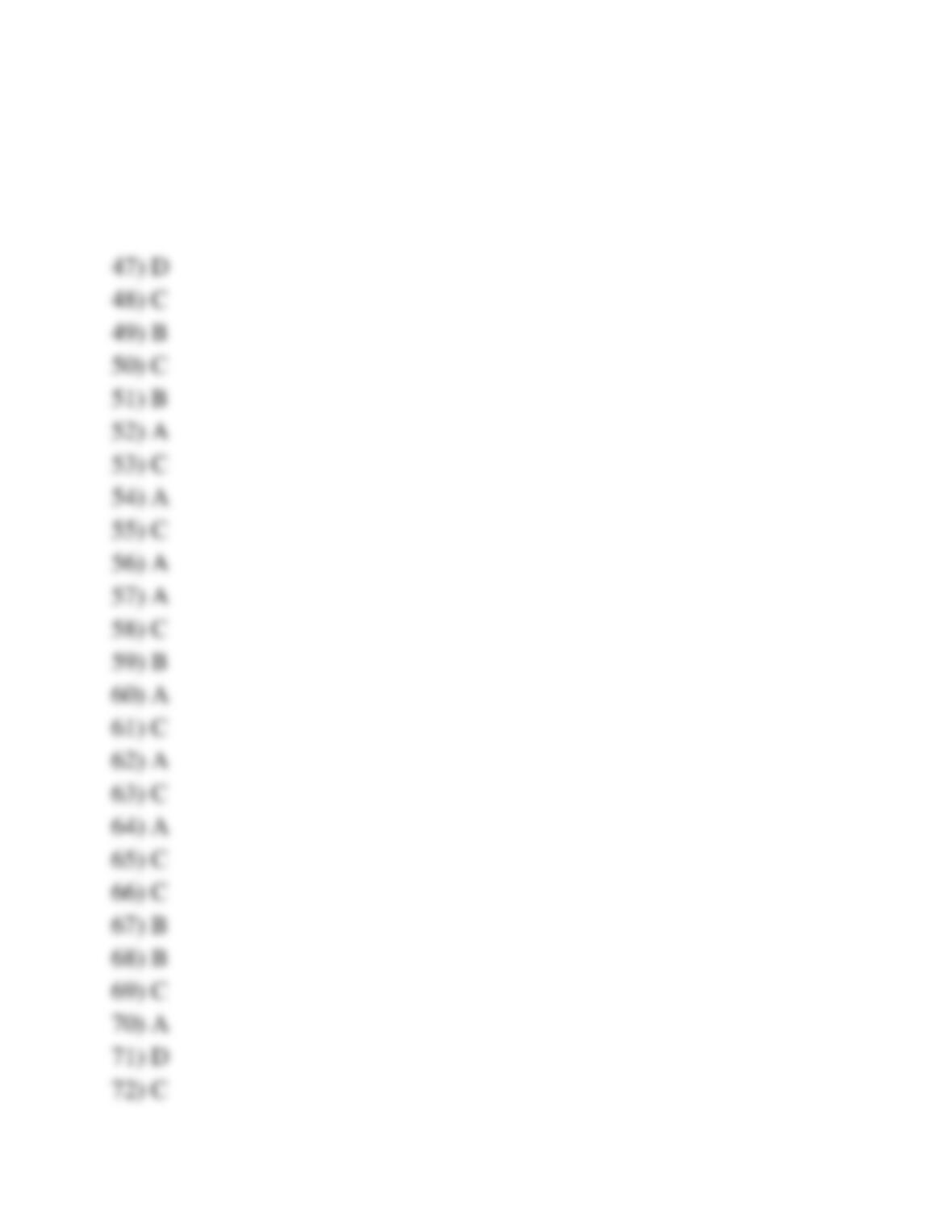
Version 1 189
Answer Key
Test name: chapter 14
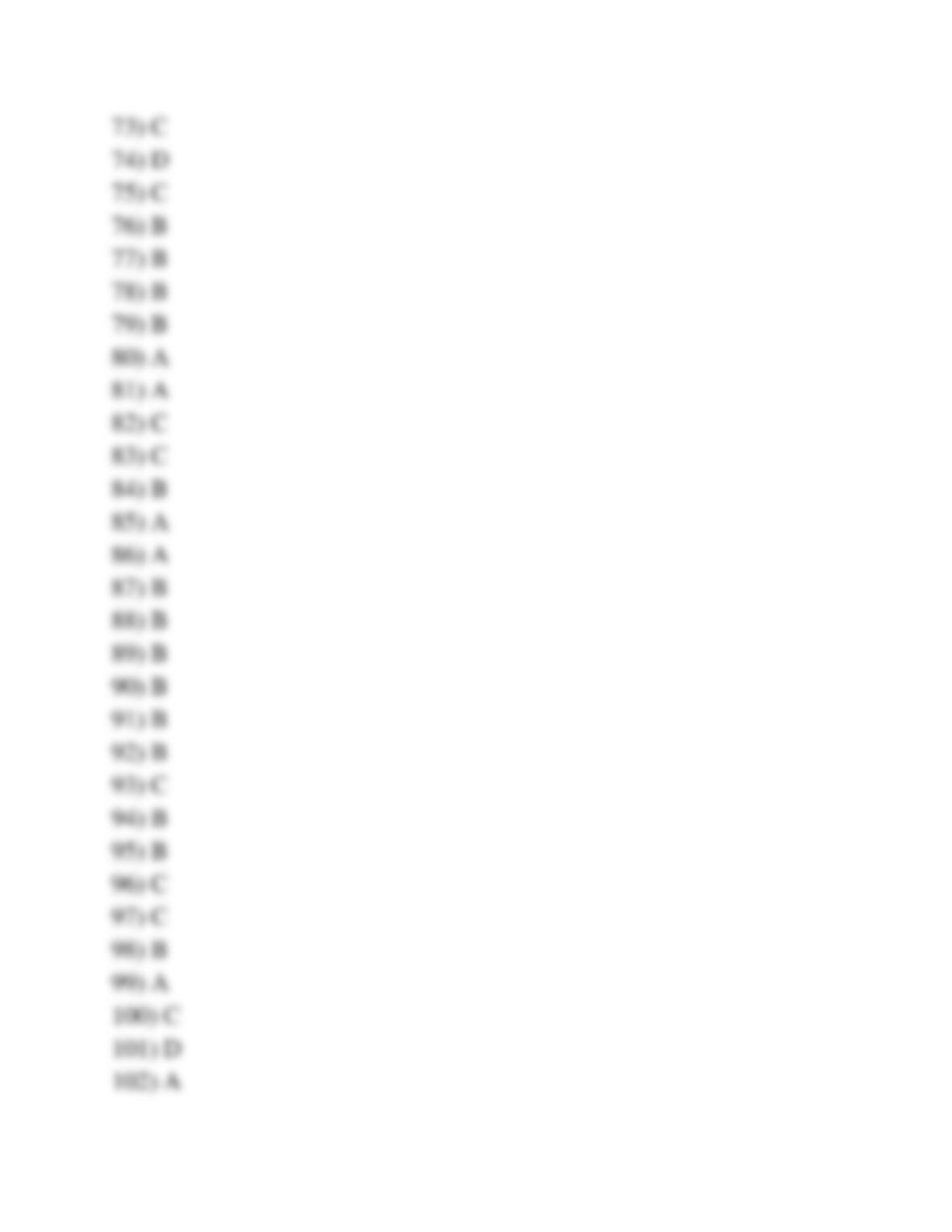
Version 1 190
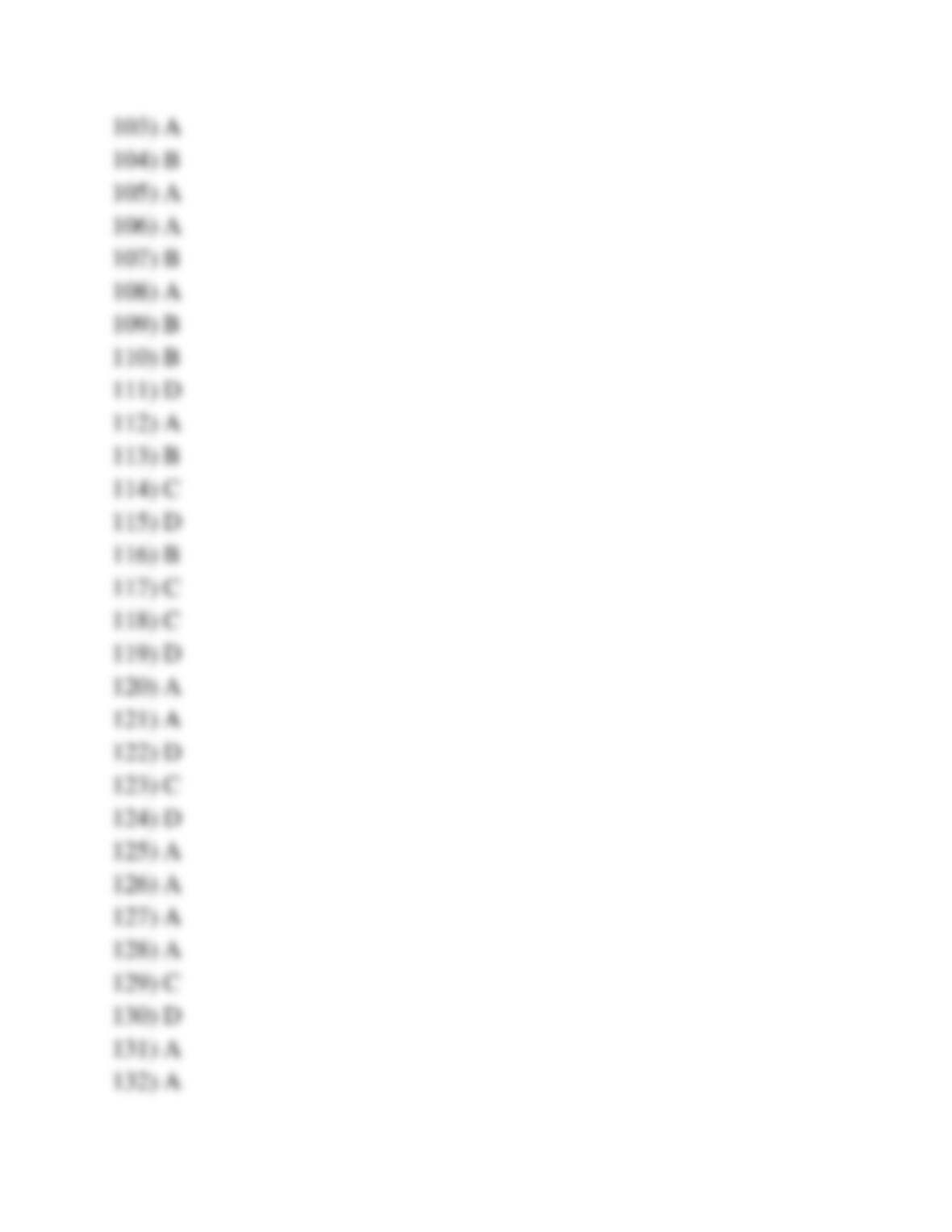
Version 1 191
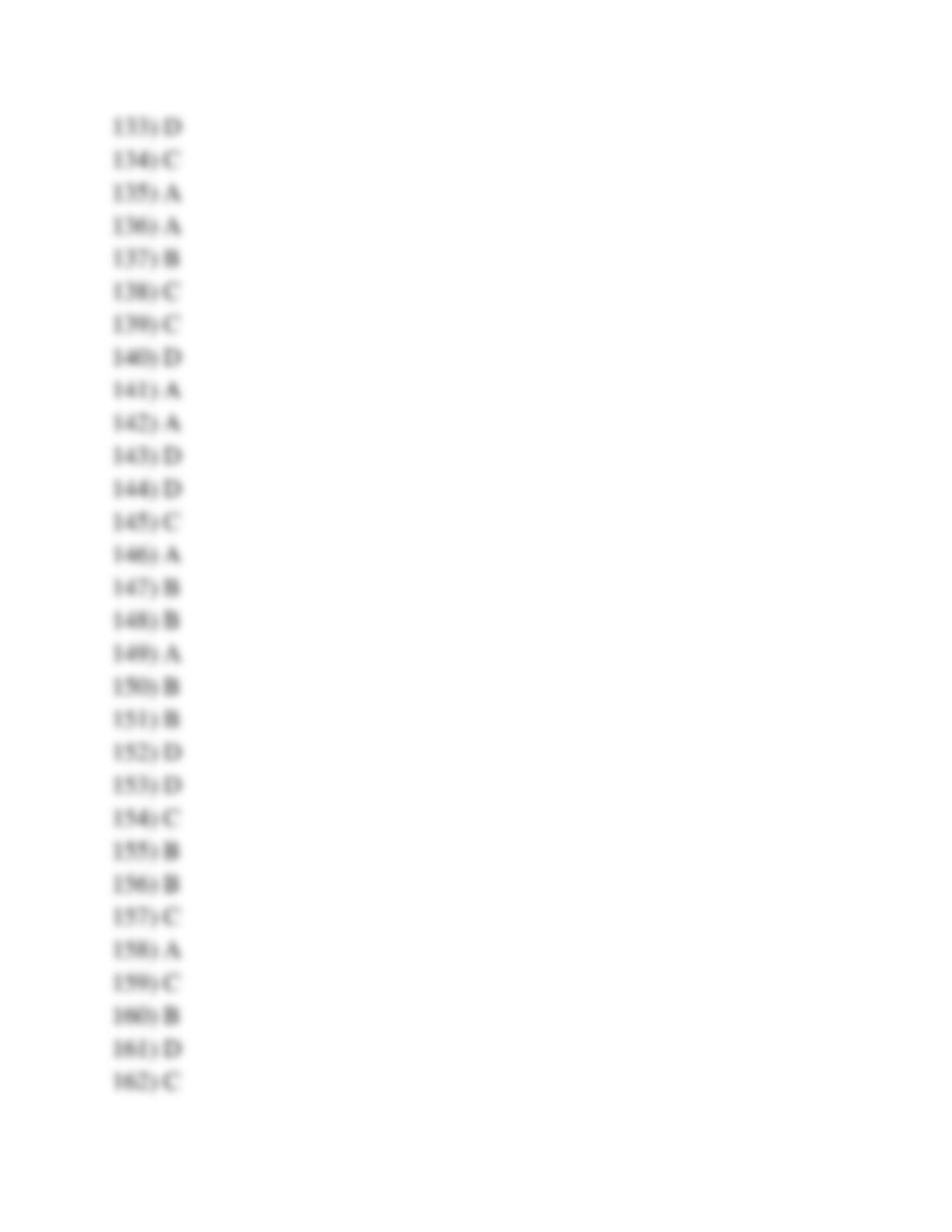
Version 1 192
Version 1 193
Version 1 194
Version 1 195
Version 1 196
Version 1 197
Version 1 198
Version 1 199
Version 1 200