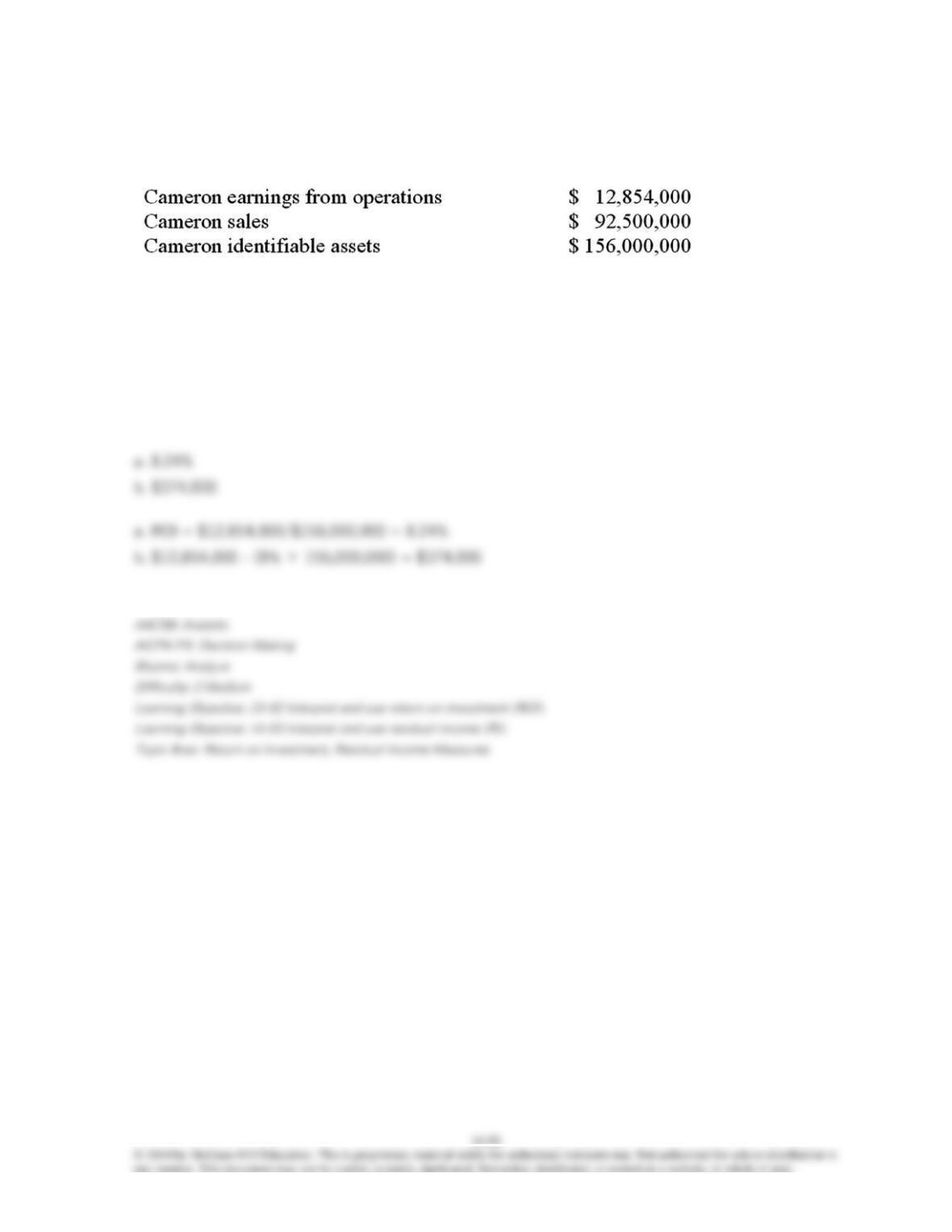
104. The following information is available about the Cameron Division of Spooner Company.
Spooner requires a return of 8% from all divisions.
Required: (use four decimal places in you calculation)
a. Compute the ROI for the Cameron Division.
b. Compute the residual income for the Cameron Division.
14–82
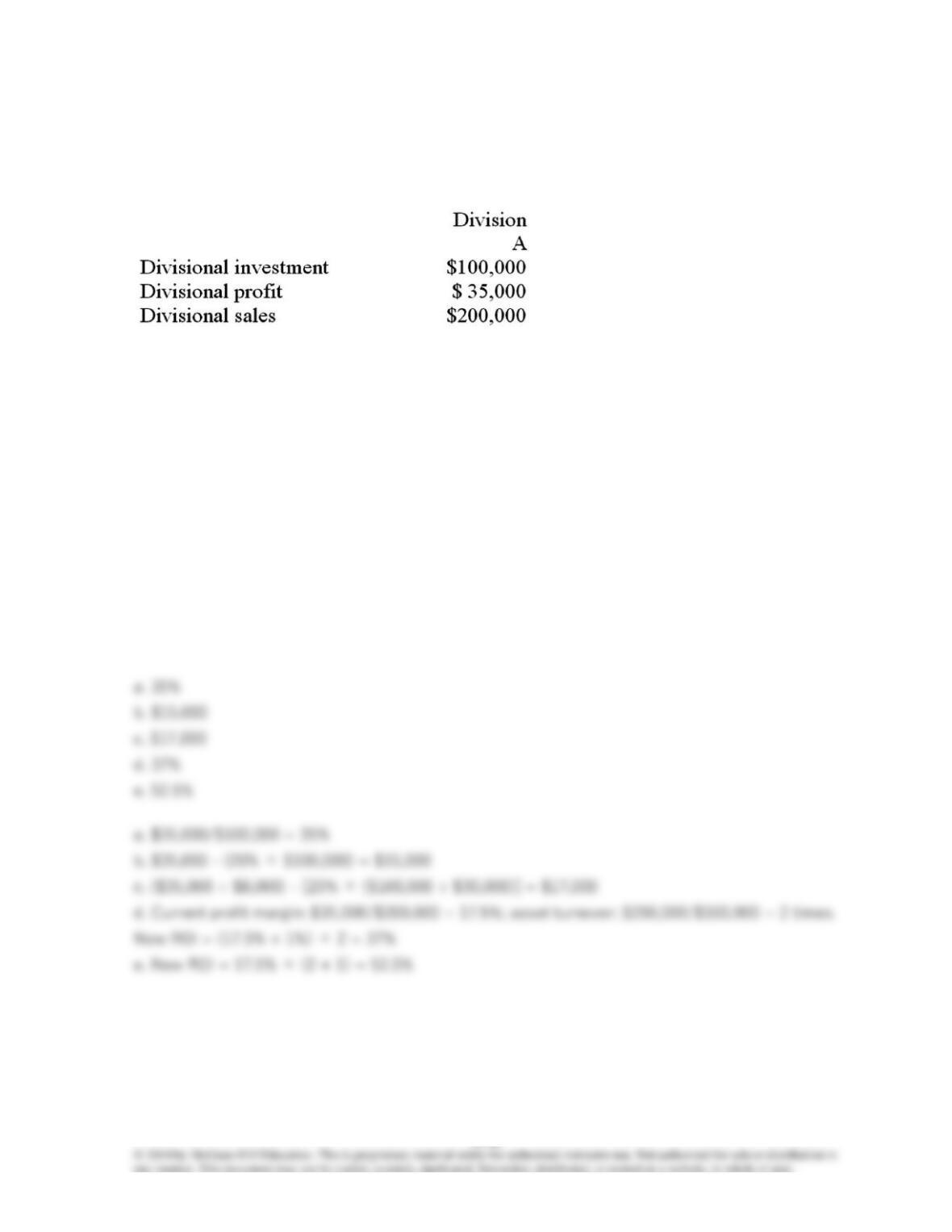
105. The following information is available about the status and operations for Division A of
Simplex Company, which has a minimum required ROI of 20%.
Answer each item independently of
the others.
Required:
a. Compute the ROI for Division A.
b. Compute the residual income for Division A.
c. Division A could increase its profit by $8,000 by increasing its investment by $30,000. Compute
its total residual income.
d. Division A could increase its profit margin ratio by one percentage point (for example: from 12%
to 13%), without increasing total sales or investment. Compute its new ROI.
e. Division A could reduce its investment so that its asset turnover increased by one time, while
holding total sales and profit constant. Compute its new ROI.
14–83
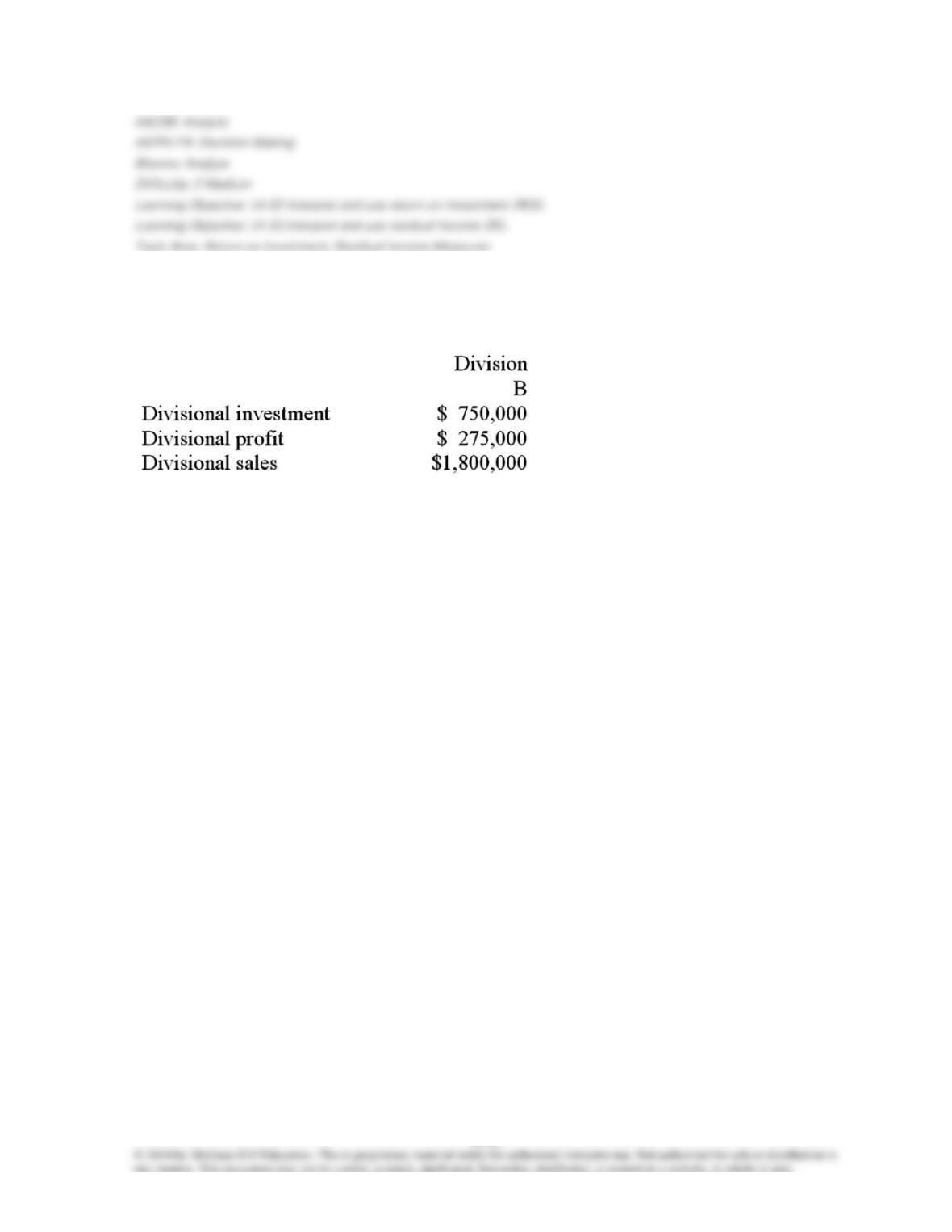
106. The following information is available about the status and operations for Division B of
Simplex Company, which has a minimum required ROI of 20%.
Answer each item independently of
the others.
Required:
a. Compute the ROI for Division B.
b. Compute the residual income for Division B.
c. Division B could increase its profit by $10,000 by increasing its investment by $40,000. Compute
its total residual income.
d. Division B could increase its return on sales by one percentage point (for example: from 10% to
11%), without increasing total sales or investment. Compute its new ROI.
e. Division B could reduce its investment so that its asset turnover increased by one time, while
holding total sales and profit constant. Compute its new ROI.
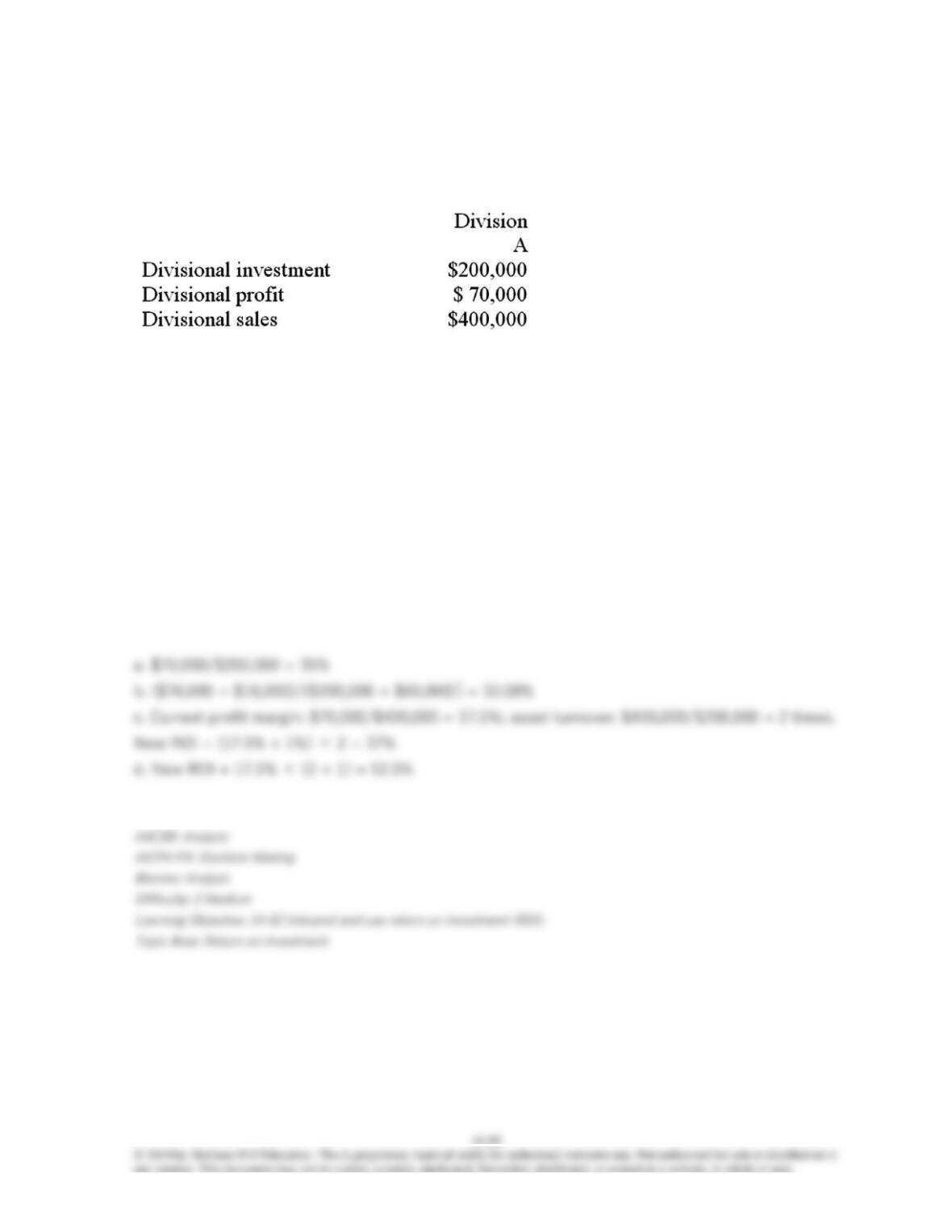
107. The following information is available about the status and operations for Division A of
Anderson Company, which has a minimum required ROI of 20%.
Answer each item independently
of the others.
Required:
a. Compute the ROI for Division A.
b. Division A could increase its profit by $16,000 by increasing its investment by $60,000. Compute
its new ROI.
c. Division A could increase its profit margin ratio by one percentage point (for example: from 12%
to 13%), without increasing total sales or investment. Compute its new ROI.
d. Division A could reduce its investment so that its asset turnover increased by one time, while
holding total sales and profit constant. Compute its new ROI.
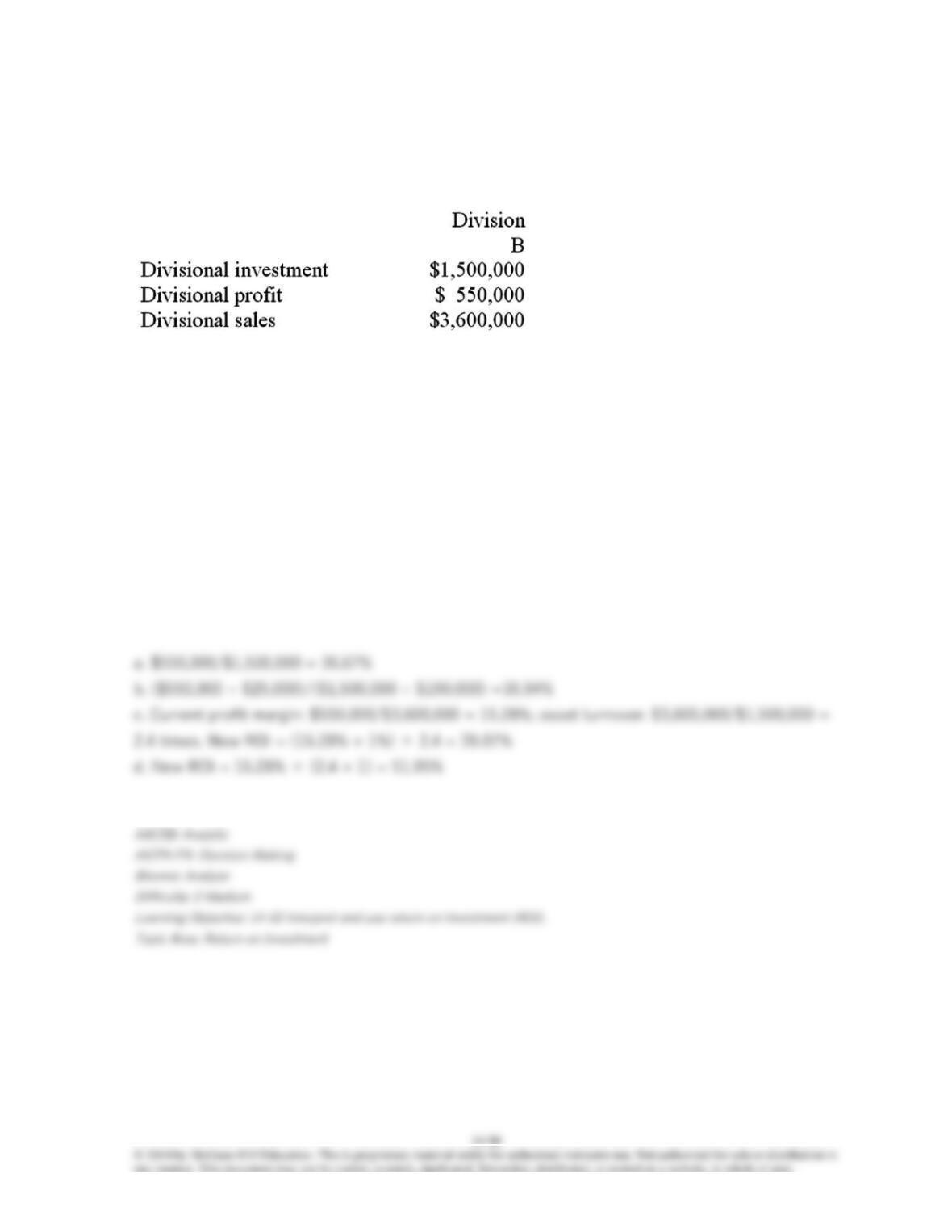
108. The following information is available about the status and operations for Division B of
Bentley Company, which has a minimum required ROI of 20%.
Answer each item independently of
the others.
Required:
a. Compute the ROI for Division B.
b. Division B could increase its profit by $25,000 by increasing its investment by $100,000.
Compute its new ROI.
c. Division B could increase its profit margin ratio by one percentage point (for example: from 13%
to 14%), without increasing total sales or investment. Compute its new ROI.
d. Division B could reduce its investment so that its asset turnover increased by one time, while
holding total sales and profit constant. Compute its new ROI.
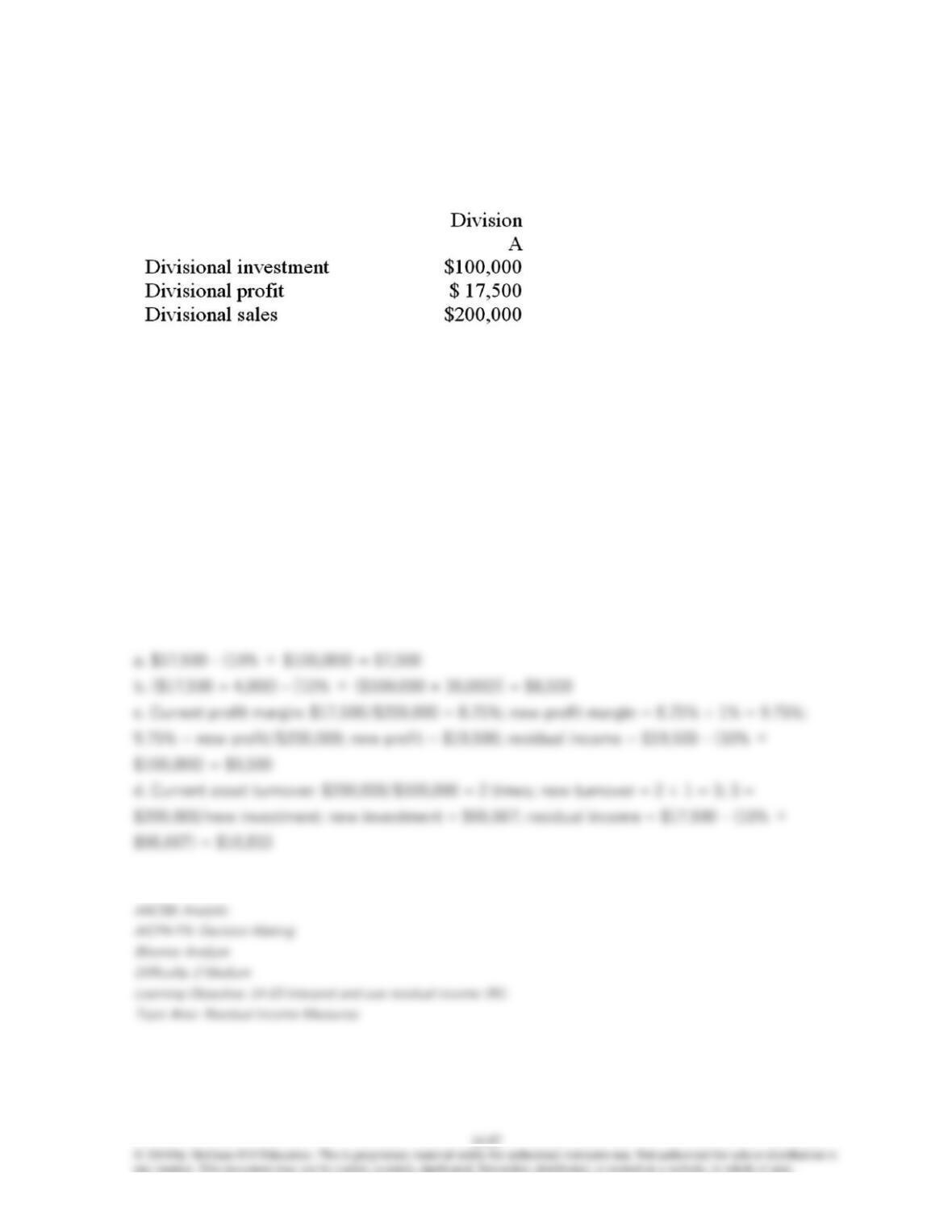
109. The following information is available about the status and operations for Division A of
Duplex Company, which has a minimum required ROI of 10%.
Answer each item independently of
the others.
Required:
a. Compute the residual income for Division A.
b. Division A could increase its profit by $4,000 by increasing its investment by $30,000. Compute
its new residual income.
c. Division A could increase its profit margin ratio by one percentage point (for example: from 12%
to 13%), without increasing total sales or investment. Compute its new residual income.
d. Division A could reduce its investment so that its asset turnover increased by one time, while
holding total sales and profit constant. Compute its new residual income.
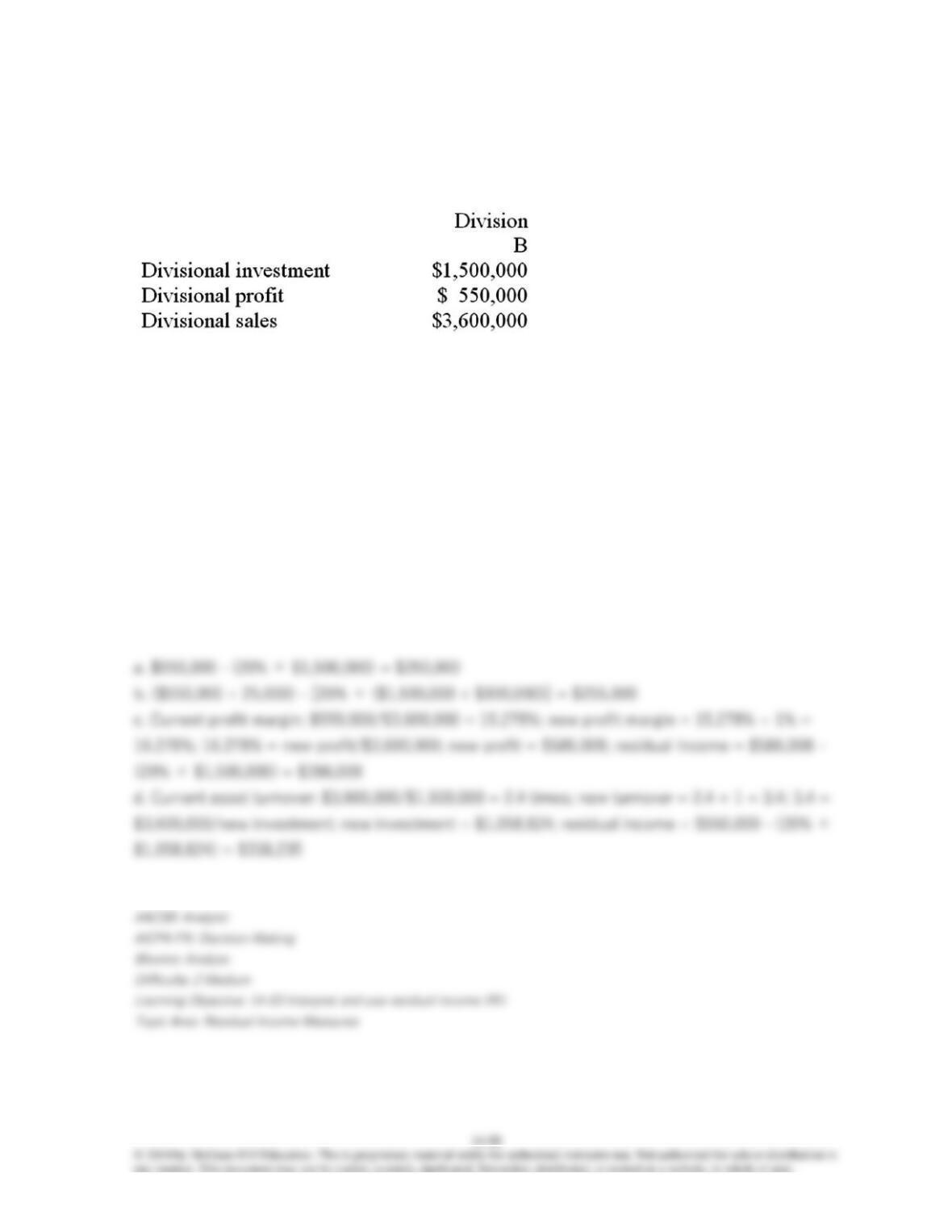
110. The following information is available about the status and operations for Division B of
Bentley Company, which has a minimum required ROI of 20%.
Answer each item independently of
the others.
Required:
a. Compute the residual income for Division B.
b. Division B could increase its profit by $25,000 by increasing its investment by $100,000.
Compute its new residual income.
c. Division B could increase its profit margin ratio by one percentage point (for example: from 13%
to 14%), without increasing total sales or investment. Compute its new residual income.
d. Division B could reduce its investment so that its asset turnover increased by one time, while
holding total sales and profit constant. Compute its new residual income.
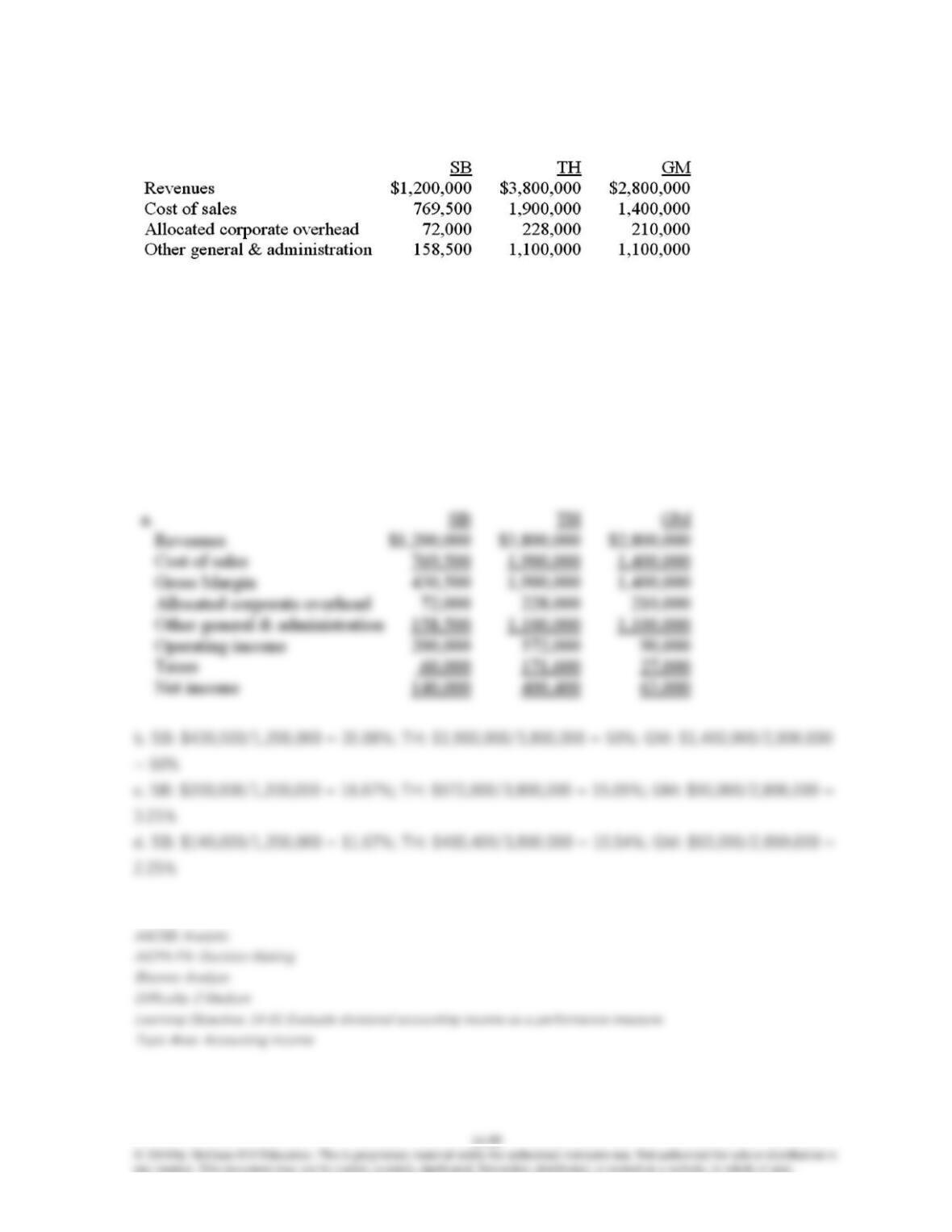
111. Bayside Wholesaling has the following data for its three divisions for the year:
Required:
a. Compute divisional operating income for each of the divisions. Assume taxes are 30%.
b. Calculate the gross margin ratio for each division.
c. Calculate the operating margin ratio for each division.
d. Calculate the profit margin ratio for each division.
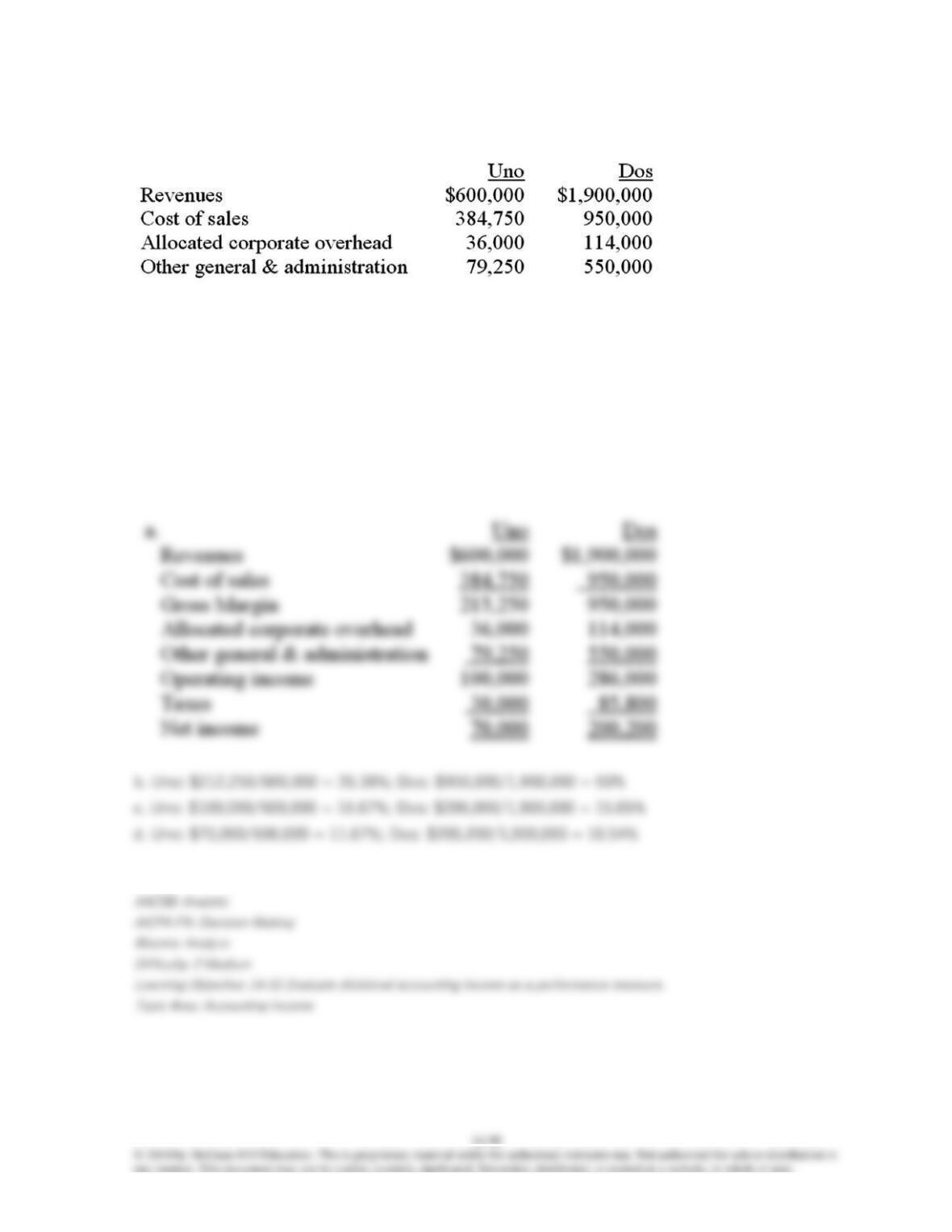
112. La Casa Retailing has the following data for its two divisions for the year:
Required:
a. Compute divisional operating income for each of the divisions. Assume taxes are 30%.
b. Calculate the gross margin ratio for each division.
c. Calculate the operating margin ratio for each division.
d. Calculate the profit margin ratio for each division.
14–91
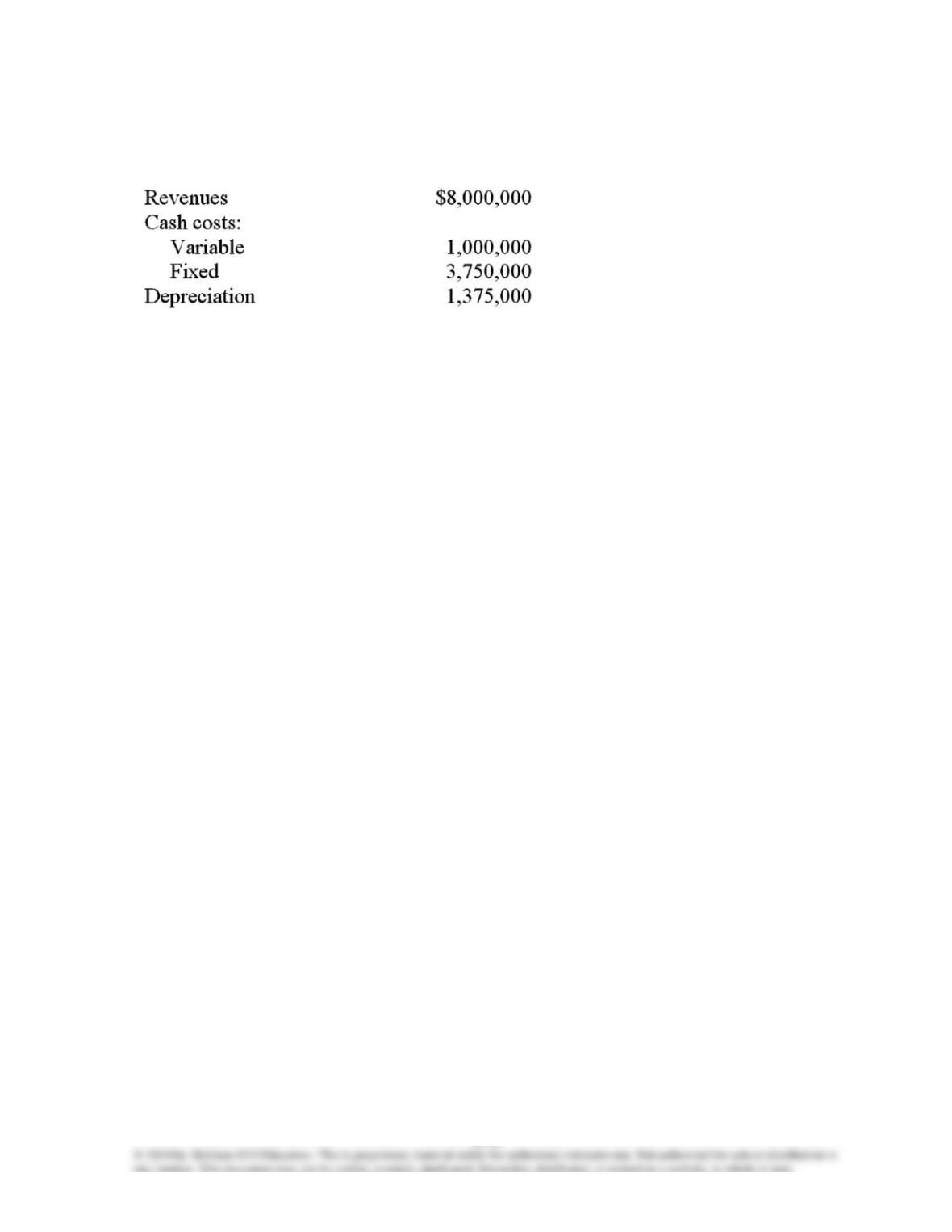
113. You are the manager of an operating division of a manufacturing company. Your division
has $4,500,000 in assets, and your budgeted income statement for the current year follows:
Your company uses a performance evaluation and bonus plan, which is based on return on
investment (ROI) computed with end–of-year gross asset balances.
In October, you discover that you can purchase a new machine for $3,250,000, which will enable
you to expand the output of your division and save costs. The machine would have a salvage value
of $250,000 and would be depreciated over 3-years using the straight-line method. It will increase
output by 10% while reducing cash fixed costs by 5%. If you accept the machine, it will be installed
in late December, but no depreciation will be taken on the new machine this year.
If you do buy this machine, you will have to dispose of the machine you are now using, which you
just purchased last January. That machine cost you $2,500,000 but has no salvage value. $750,000
of the depreciation on the income statement is depreciation for this machine. In the ROI
calculations, the company includes any gains or losses for equipment disposal in income for the
year. You may safely ignore all taxes for this analysis.
Required:
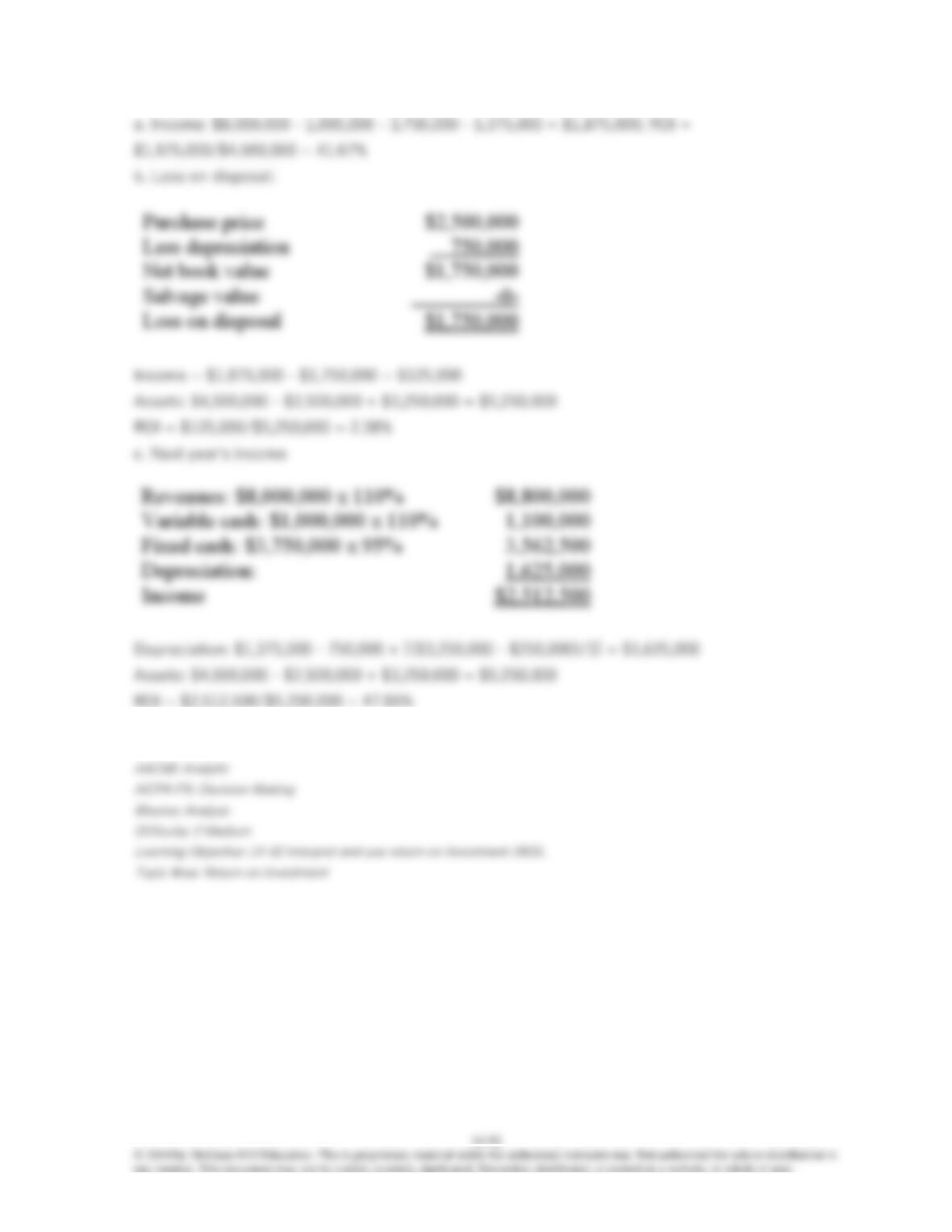
a. What is your division’s ROI this year if you do not acquire the new machine?
b. What is your division’s ROI this year if you do acquire the new machine?
c. What is your division’s expected ROI next year if the machine is acquired and meets
expectations?
14–93
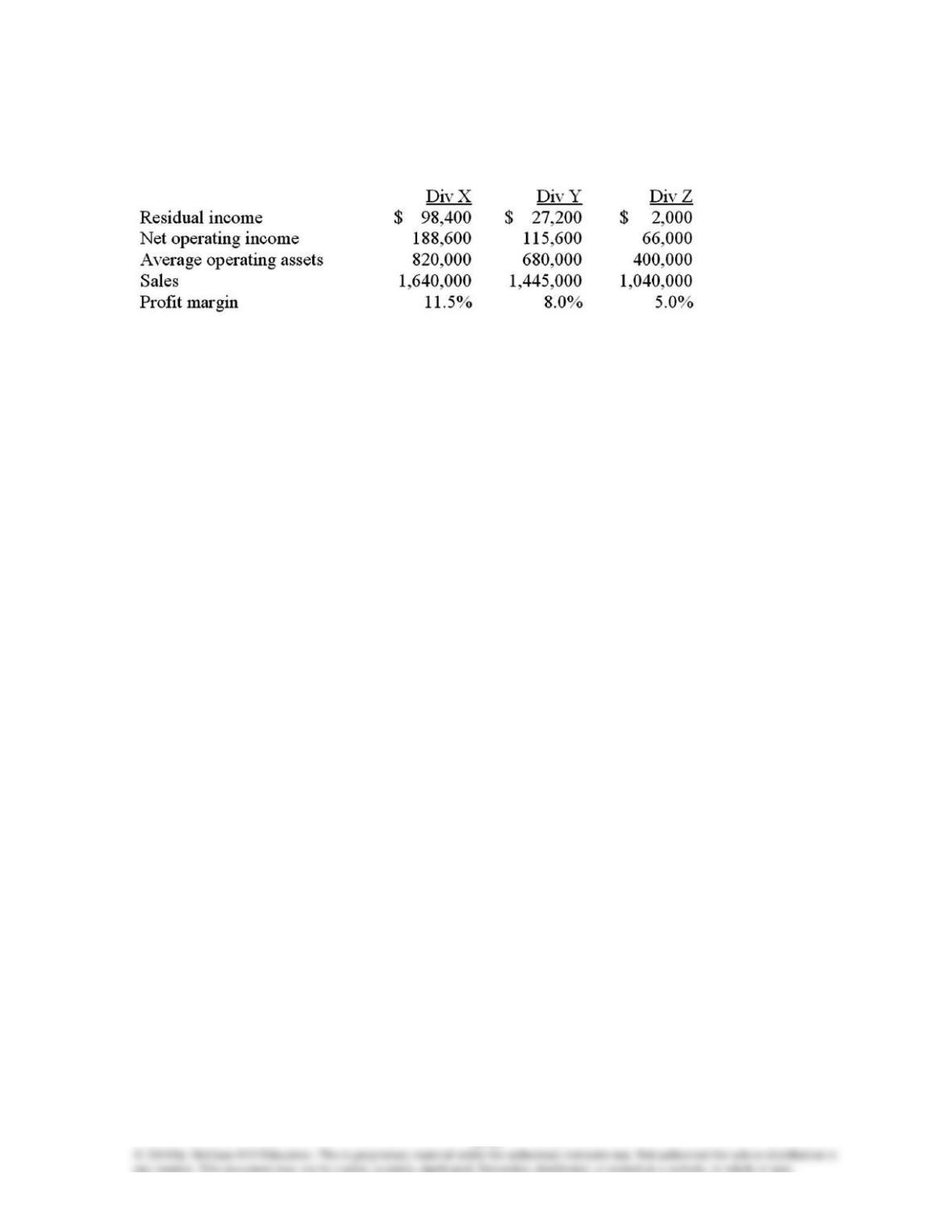
114. The XYZ Manufacturing Company has three divisions: X Division, Y Division, and Z
Division. Operating results for the three divisions for last year were as follows:
Corporate headquarters is offering an investment opportunity to each of the divisions. The
opportunity will yield an operating income of $35,000, based on an average operating investment
of $246,000.
Required:
a. If the divisions are being evaluated using return on investment (ROI), what will be the decision
(accept or reject) of each division regarding this opportunity? Support your answer with the
appropriate calculations.
b. If the divisions are being evaluated using residual income, what will be the decision (accept or
reject) of each division regarding this opportunity? Support your answer with the appropriate
calculations.
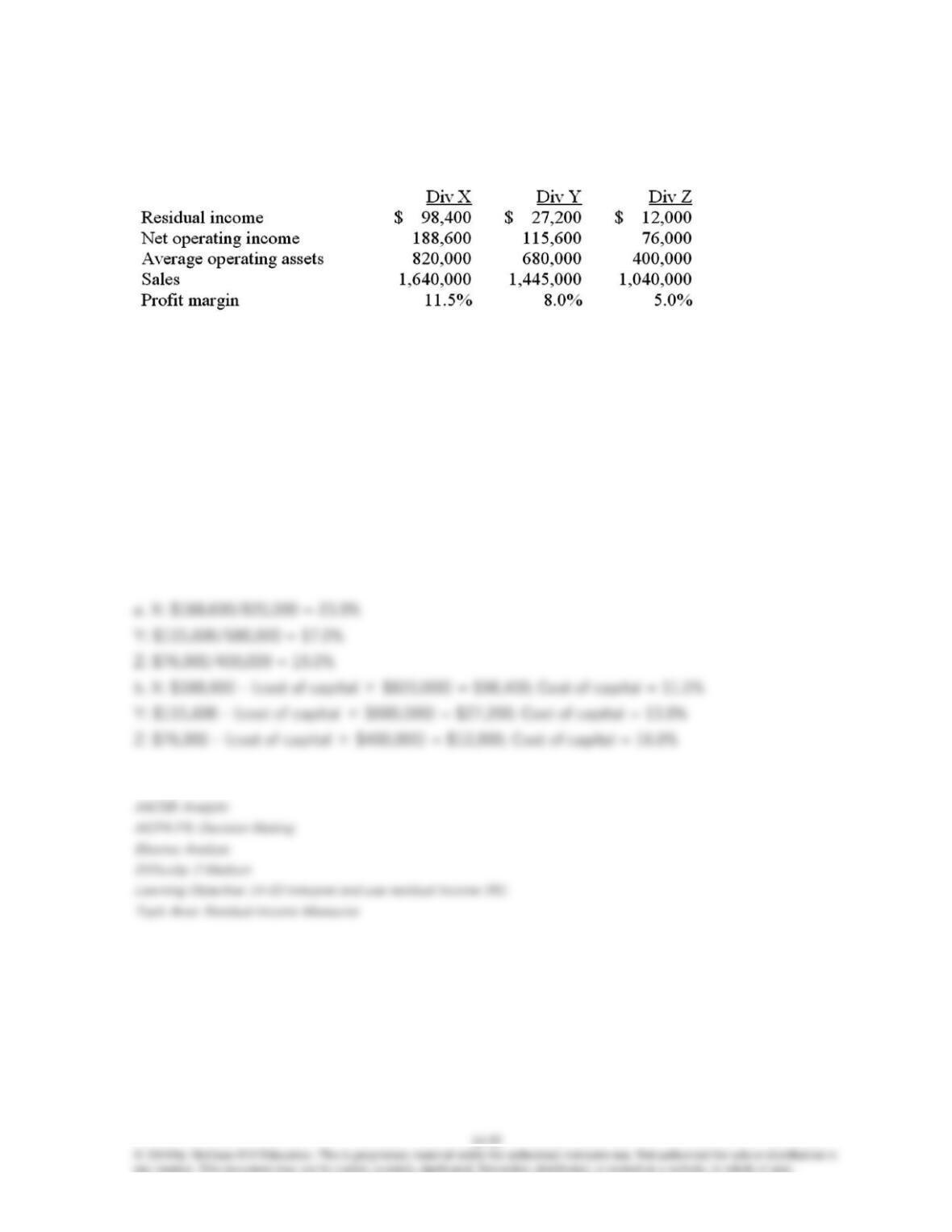
115. The XYZ Manufacturing Company has three divisions: X Division, Y Division, and Z
Division. Operating results for the three divisions for last year were as follows:
Corporate headquarters is offering an investment opportunity to each of the divisions. The
opportunity will yield an operating income of $35,000, based on an average operating investment
of $246,000.
Required:
a. What is the ROI for each of the three divisions?
b. What is the cost of capital for each of the three divisions?
116. The Platypus Division of the Geneva Corporation just started operations. It purchased
depreciable assets costing $2,500,000 with an expected life of five years, after which the assets
can be salvaged for $400,000. Depreciation is computed for the financial statements on a straight–
line basis, using the salvage value. Annual cash operating flows are $1,300,000.
Required:
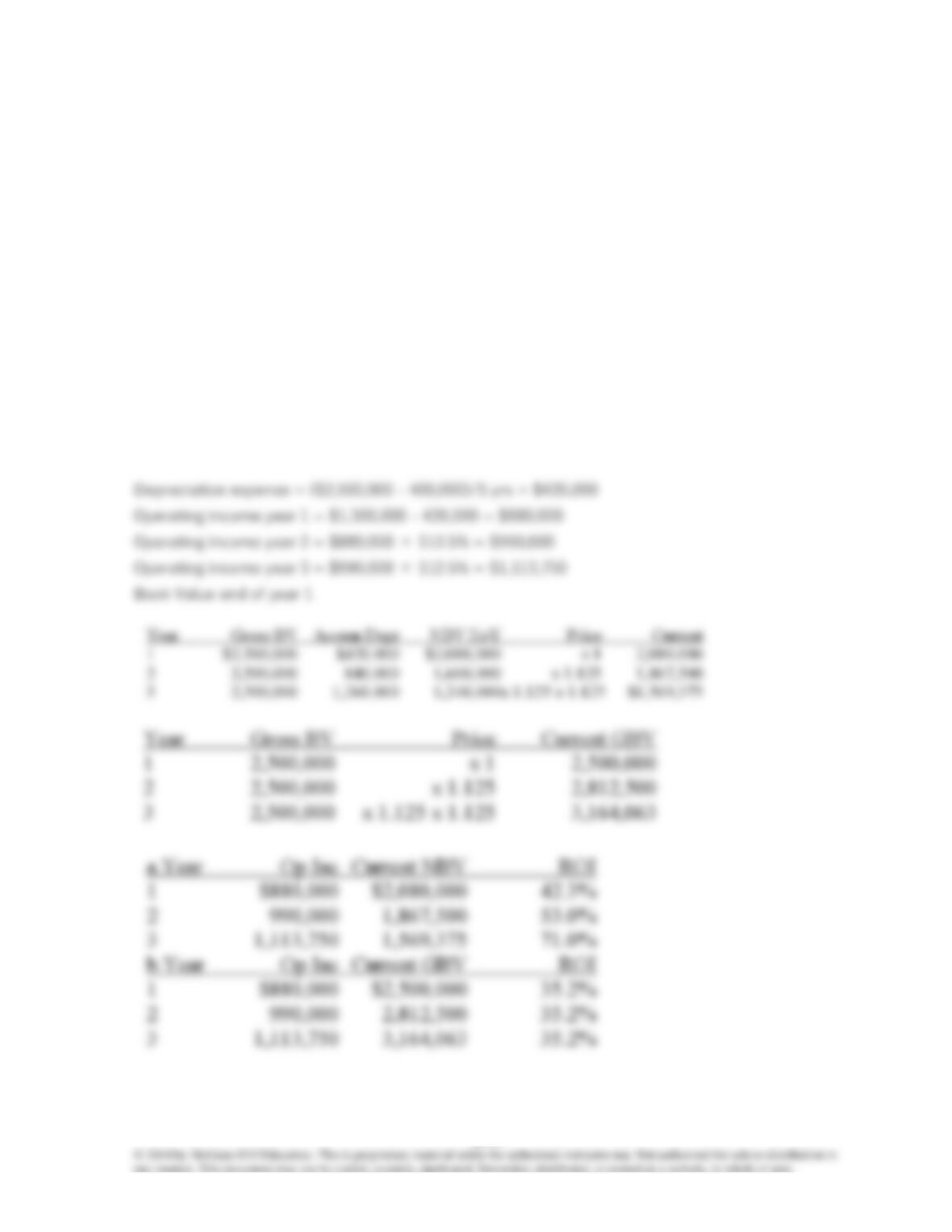
a. Compute the division’s return on investment (ROI) for each year, using beginning of the year
asset values, historical costs, and net book values.
b. Compute the division’s return on investment (ROI) for each year, using end of the year asset
values, historical costs, and net book values.
14–97
117. The Platypus Division of the Geneva Corporation just started operations. It purchased
depreciable assets costing $2,500,000 with an expected life of five years, after which the assets
can be salvaged for $400,000. Depreciation is computed for the financial statements on a straight–
line basis, using the salvage value. Annual cash operating flows are $1,300,000 for year 1. Assume
that all cash flows and asset prices increase by 12.5% per year.
Required:
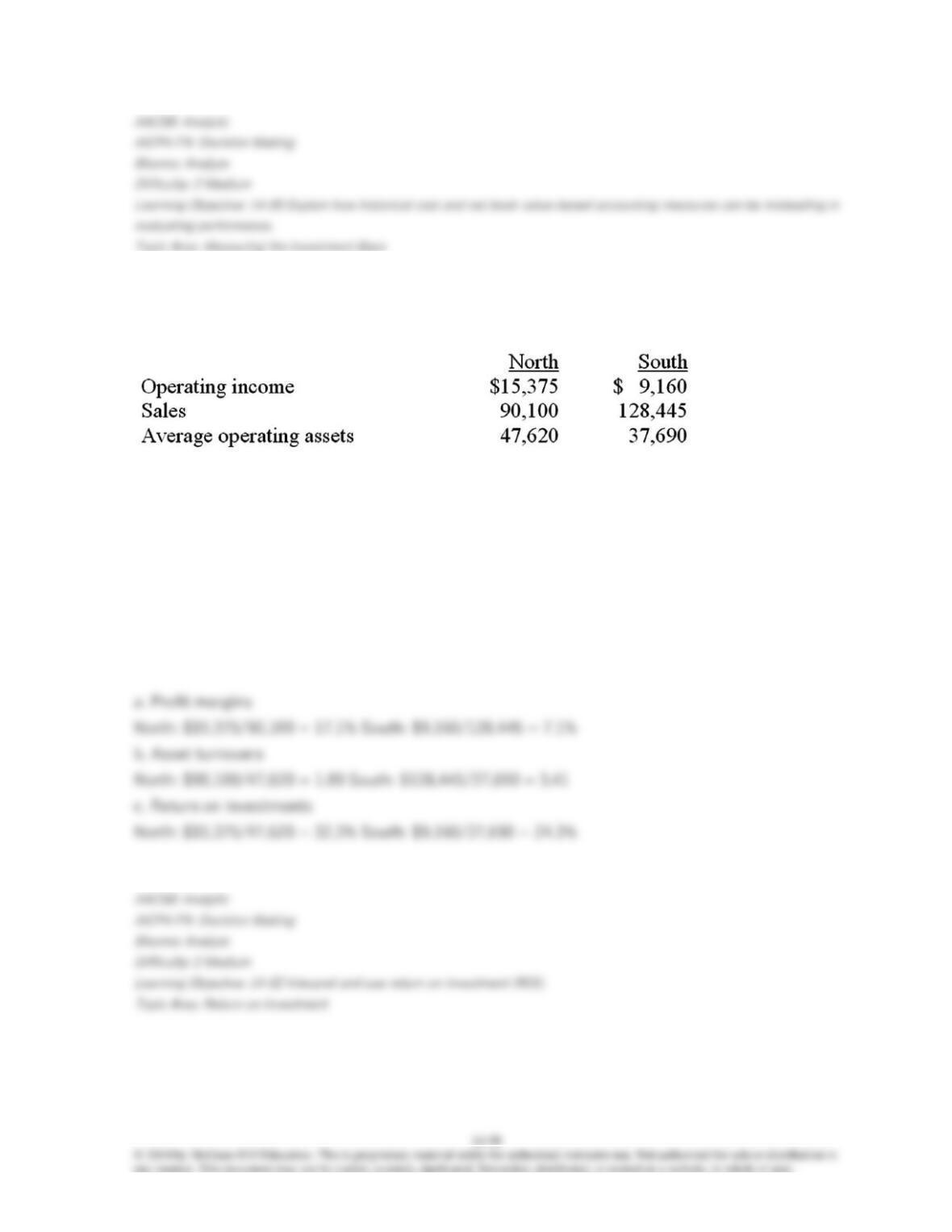
a. Compute the division’s ROI for the first three years, using end of the year asset values, current
costs, and net book values.
b. Compute the division’s ROI for the first three years, using end of the year asset values, current
costs, and gross book values.
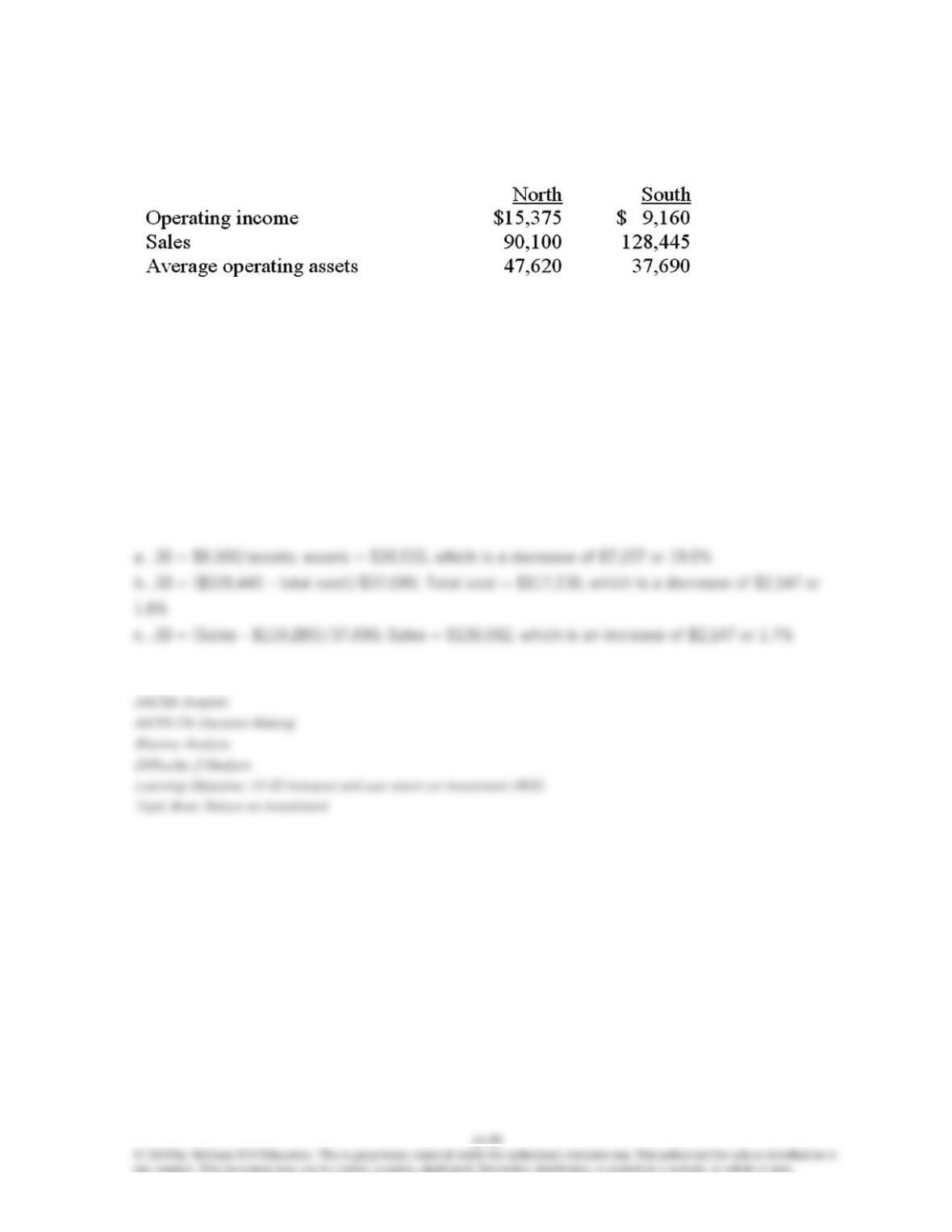
118. The Alaskan Company has two operating divisions: North and South. The following
information was collected from its financial statements.
Required:
Compute the following ratios for each division:
a. Profit margin
b. Asset turnover
c. Return on investment (ROI)
119. The Alaskan Company has two operating divisions: North and South. The following
information was collected from its financial statements.
Required:
The South Division has a goal to increase its ROI to 30% by the end of next year. Compute the
increase (decrease) required in each of the following items in order to achieve this goal.
a. Operating assets
b. Total costs
c. Sales
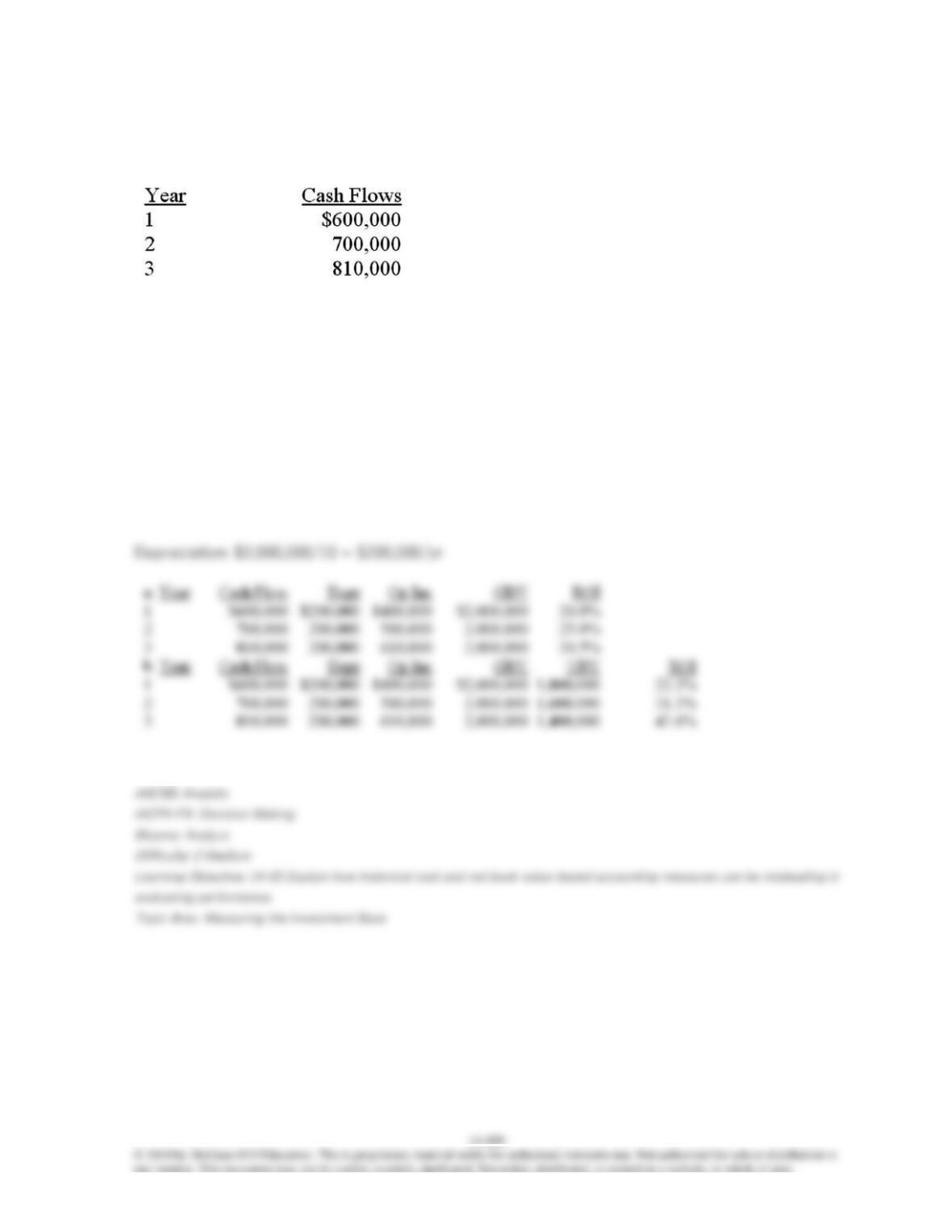
120. Three years ago, one division of the Quantum Enterprise Company purchased depreciable
assets costing $2,000,000. The cash flows from these assets for the past three years have been:
Quantum used the straight-line depreciation method; the estimated useful life is 10-years with no
salvage value. For return on investment (ROI) calculations, Quantum uses end–of-year balances.
Required:
a. What was the ROI for each year using historical cost and gross book value?
b. What was the ROI for each year using historical cost and net book value?