Chapter 14 – Analyzing Financial Statements
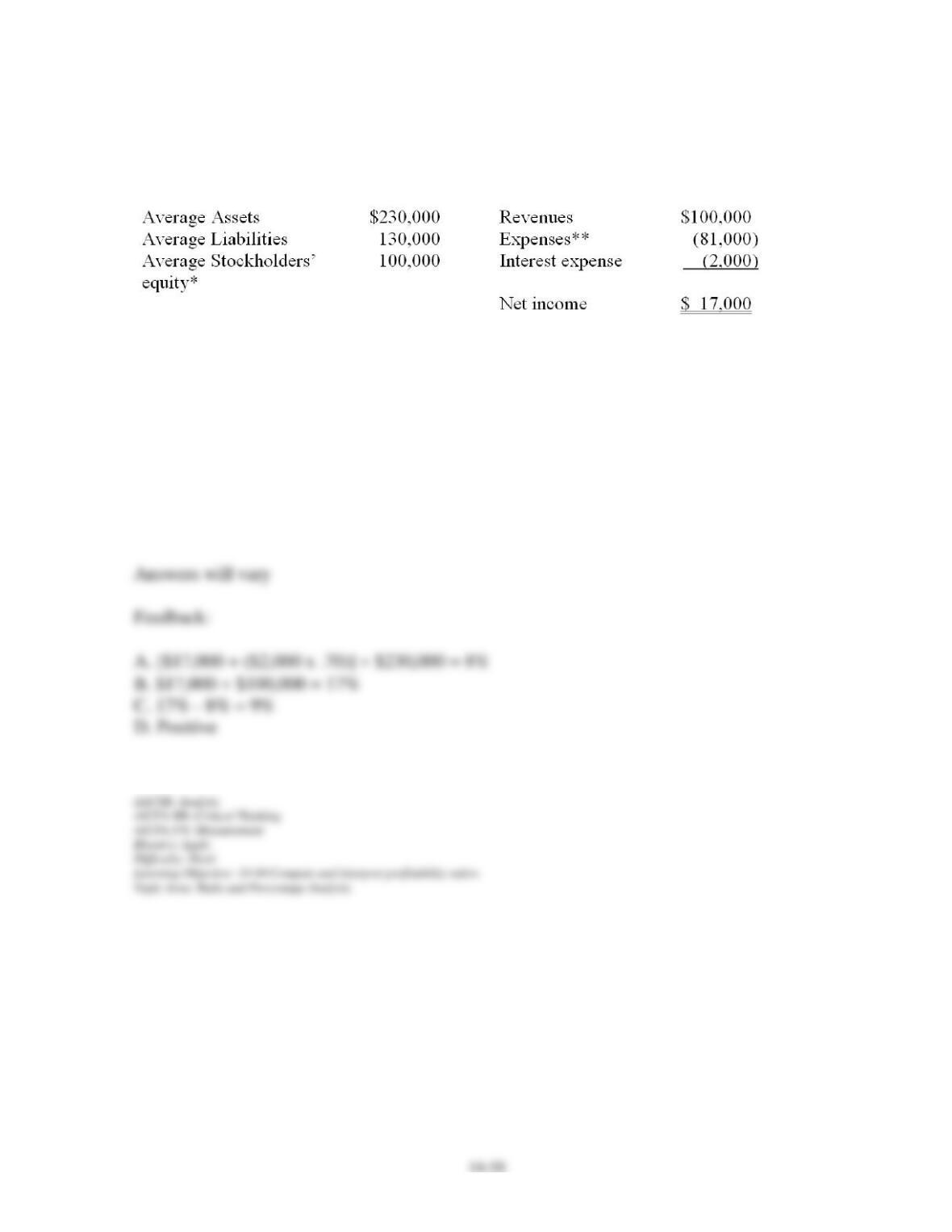
105. The records of Washington Company showed the following:
*10,000 shares outstanding; current market price, $30
**Including income tax; income tax rate, 30%
Calculate each of the following ratios:
A. Return on assets
B. Return on equity
C. Financial leverage percentage
D. Is the financial leverage percentage positive or negative?
Chapter 14 – Analyzing Financial Statements
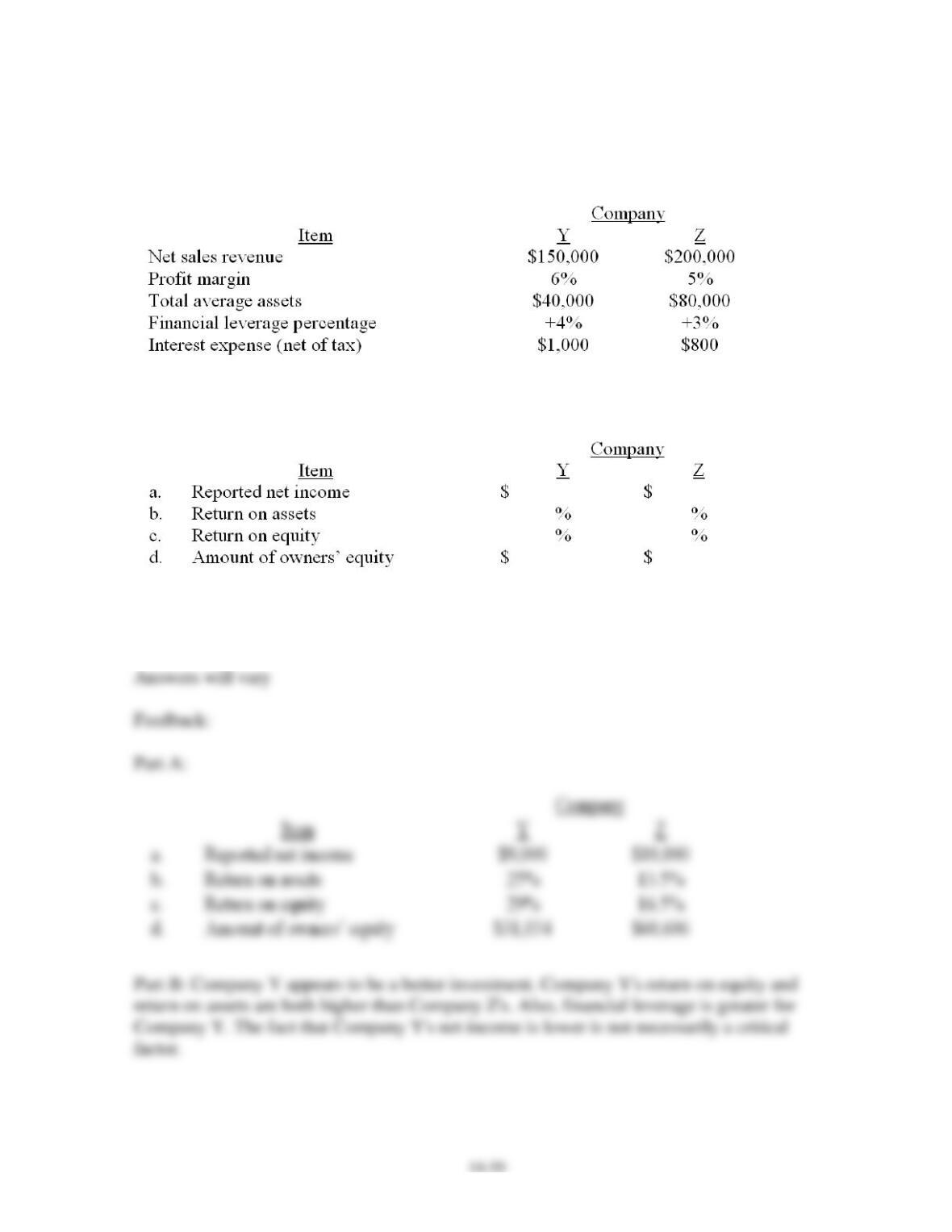
106. The 2010 financial statements of Companies Y and Z showed the following:
Part A: For each company, calculate the items listed in the following tabulation.
Part B: Assuming both Company Y and Company Z are in the same industry, which company
(Y or Z) appears to be the better investment and why?
Chapter 14 – Analyzing Financial Statements
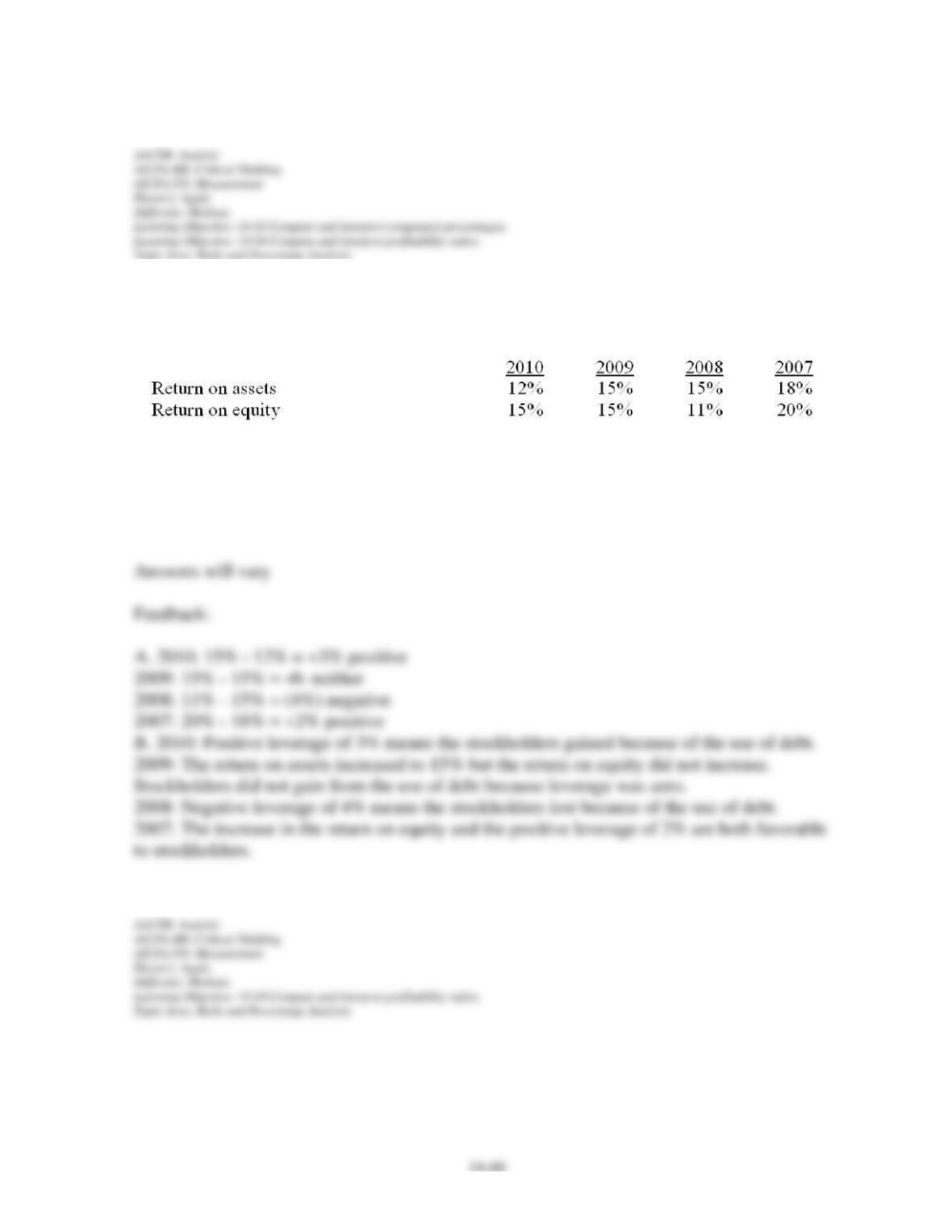
107. The following return on investment ratios were computed for Steven Company:
Requirements:
A. Compute financial leverage percentage for each year.
B. Explain briefly the stockholders’ advantage or disadvantage for each year.
Chapter 14 – Analyzing Financial Statements
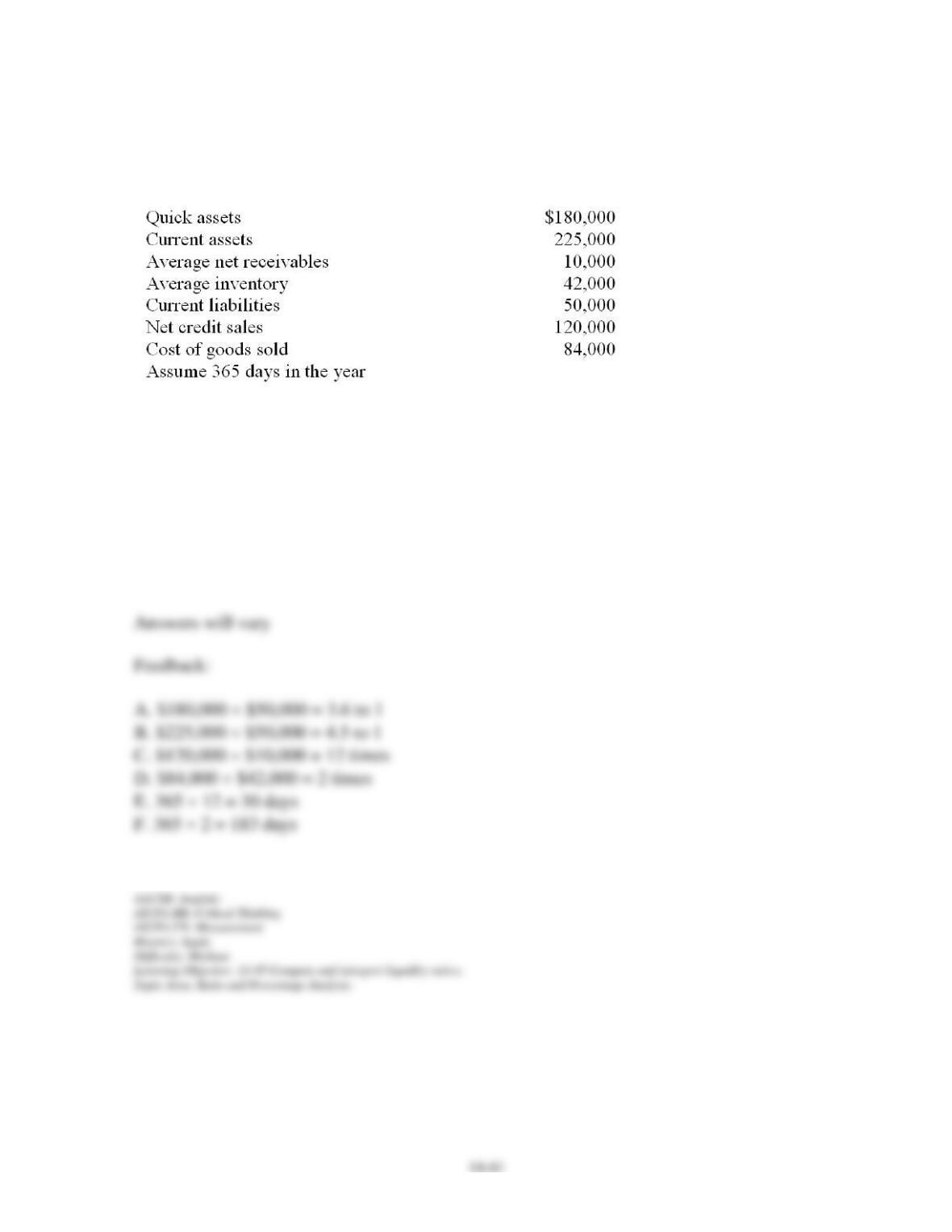
108. The following data were shown in the records of Victoria Company at the end of 2010:
Calculate each of the following ratios:
A. Quick ratio
B. Current ratio
C. Receivable turnover ratio
D. Inventory turnover ratio
E. Average age of receivables
F. Average days’ supply in inventory
Chapter 14 – Analyzing Financial Statements
109. The following data were available for Holiday Company:
Sales revenue, $225,000 (including $75,000 cash sales)
Cost of goods sold, $175,000
Average balance in inventory, $20,000
Average balance in accounts receivable, $20,000
Assume 365 days in the year
Calculate each of the following ratios:
A. Inventory turnover ratio
B. Average days’ supply in inventory
C. Receivable turnover ratio
D. Average age of receivables
Chapter 14 – Analyzing Financial Statements
110. Compete Corporation reported a quick ratio of 1.75, current assets of $50,000 and a
current ratio of 2.
Requirements:
A. Calculate the total amount of quick assets.
B. What is another name for the quick ratio?
C. Describe what type of assets are considered quick assets and give some examples.
D. How does the quick ratio compare to the current ratio?
Chapter 14 – Analyzing Financial Statements
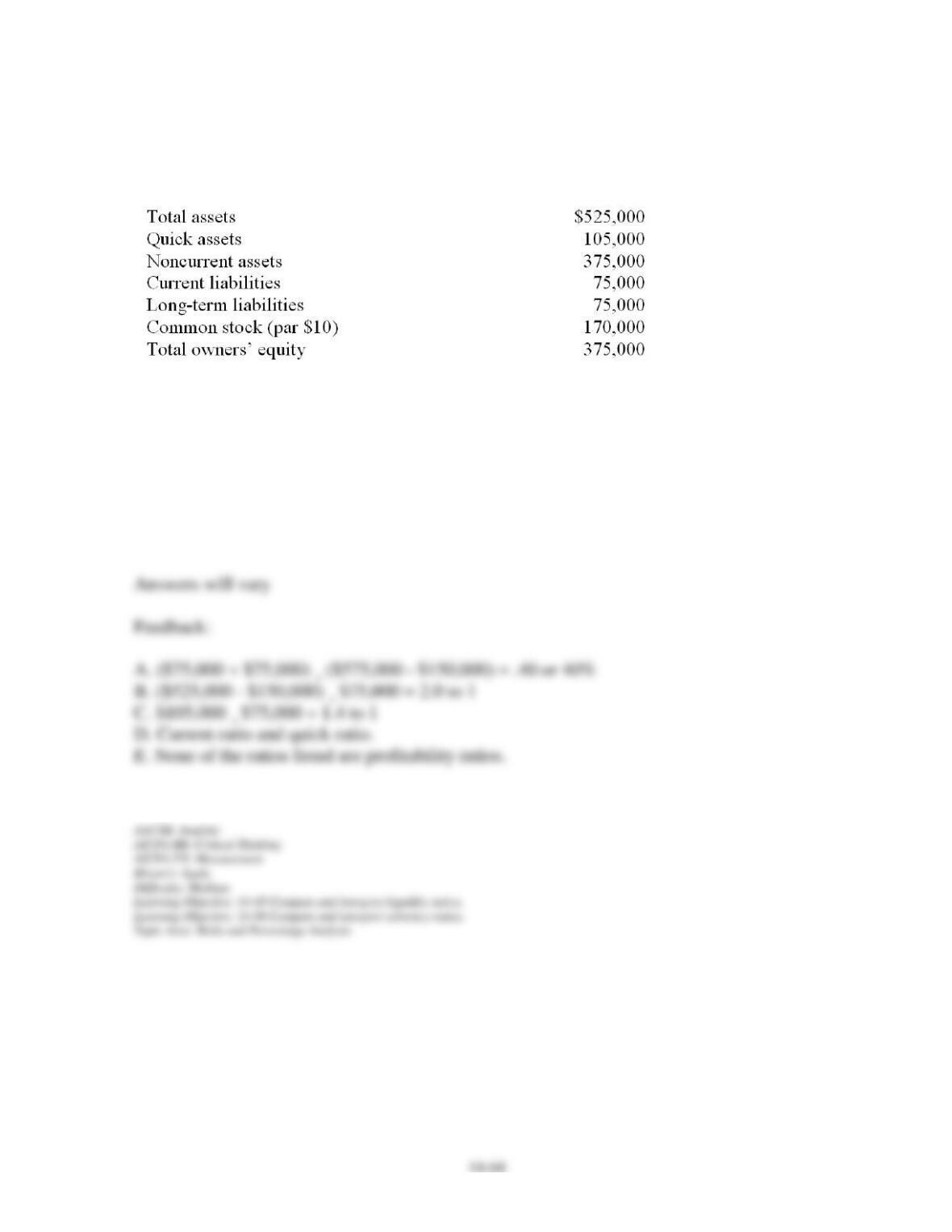
111. The following data were reported by Universe Company at year-end:
Calculate each of the following ratios:
A. Debt-to-equity
B. Current ratio
C. Quick ratio
D. Which, if any, of the above are liquidity ratios?
E. Which, if any, of the above are profitability ratios?
Chapter 14 – Analyzing Financial Statements
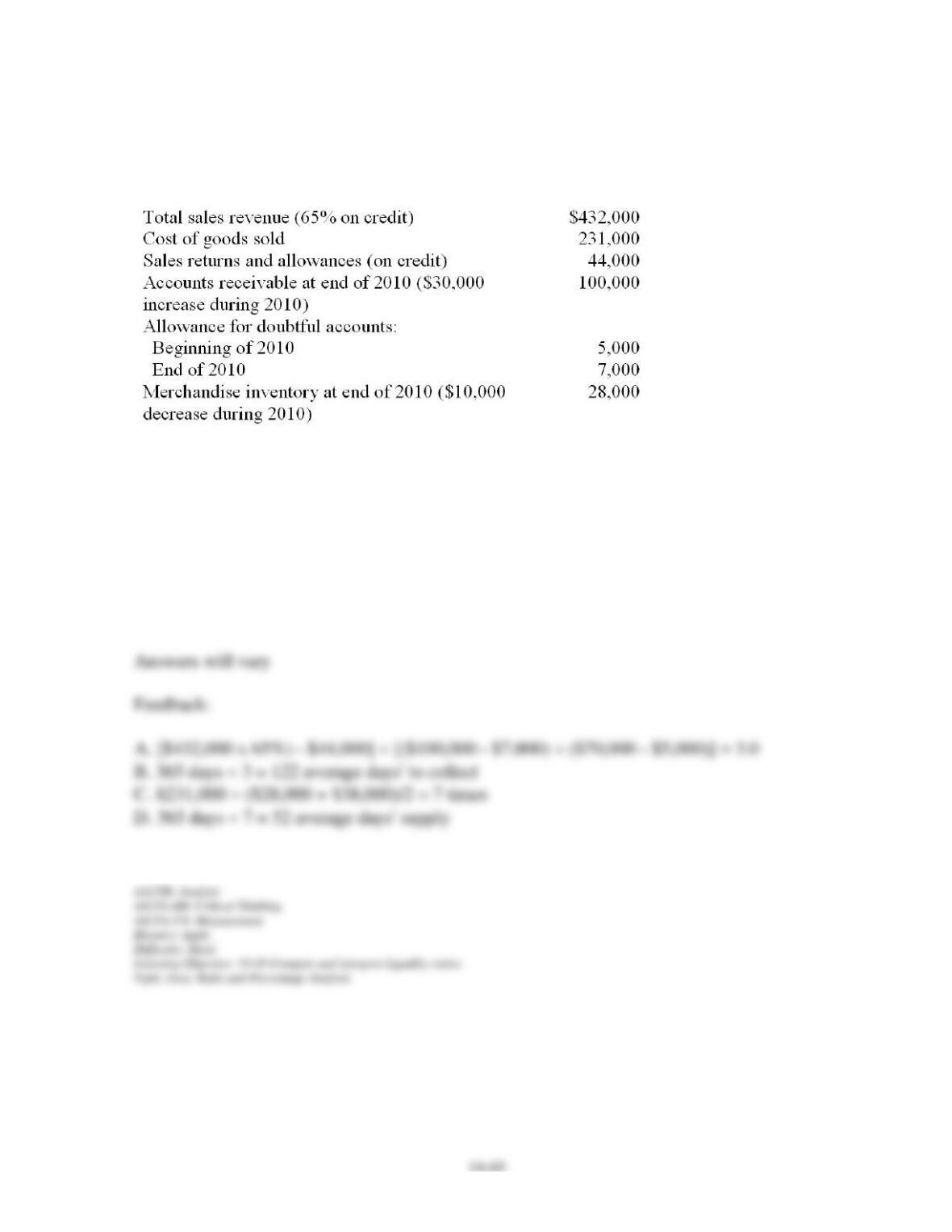
112. Walkers World Company gathered the following information for 2010:
Assume 365 days in the year.
Calculate each of the following ratios:
A. Receivable turnover ratio
B. Average number of days to collect
C. Inventory turnover ratio
D. Average number of days’ supply of inventory
Chapter 14 – Analyzing Financial Statements
14–66
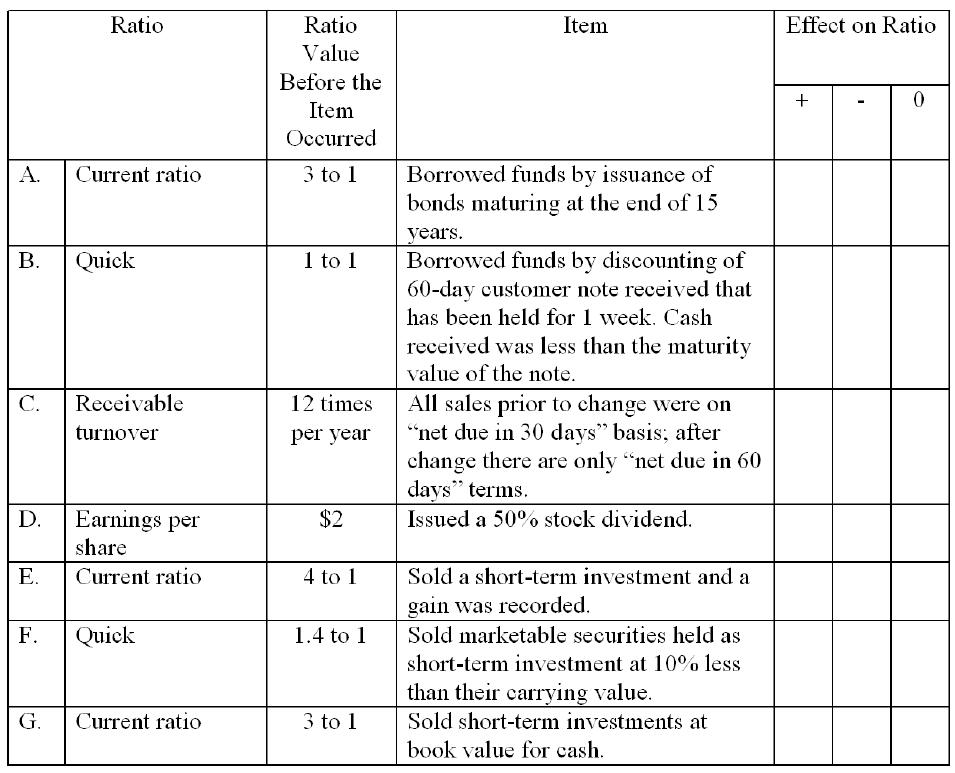
113. Indicate the effect of each item on the ratios given below in the following manner: if an
item would cause an increase in the ratio, place a check in the + column; if a decrease place a
check in – column; and if no change, check the 0 column. Each item is independent of the
others.
Chapter 14 – Analyzing Financial Statements
Chapter 14 – Analyzing Financial Statements
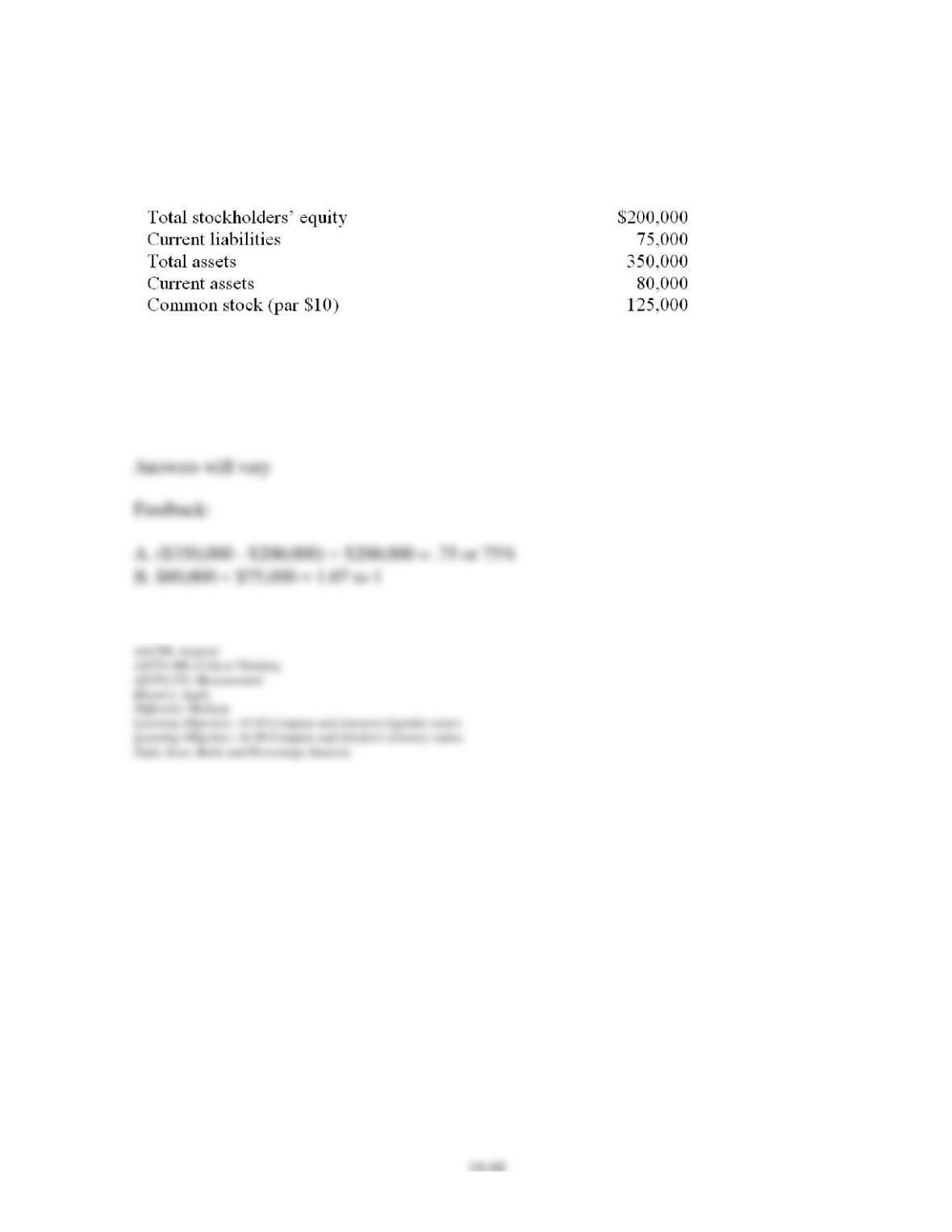
114. Longhorn Company reported the following data at year-end:
Calculate each of the following ratios:
A. Debt to equity
B. Current ratio
Chapter 14 – Analyzing Financial Statements
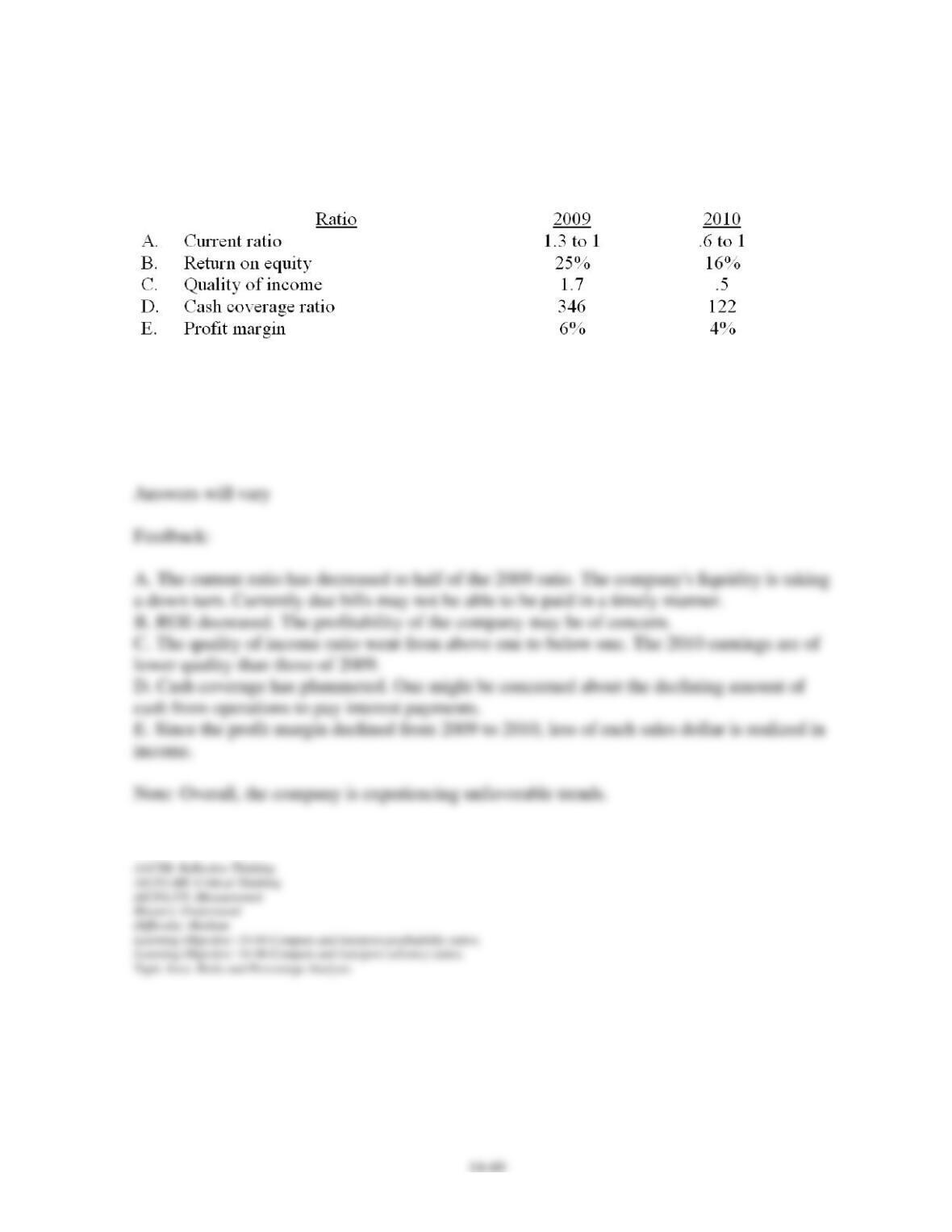
115. Carolina Company computed the following ratios for a two year period:
Required:
Comment on the trend of each of the ratios from 2009 to 2010. State concerns or possible
implications for the future of each.
Chapter 14 – Analyzing Financial Statements
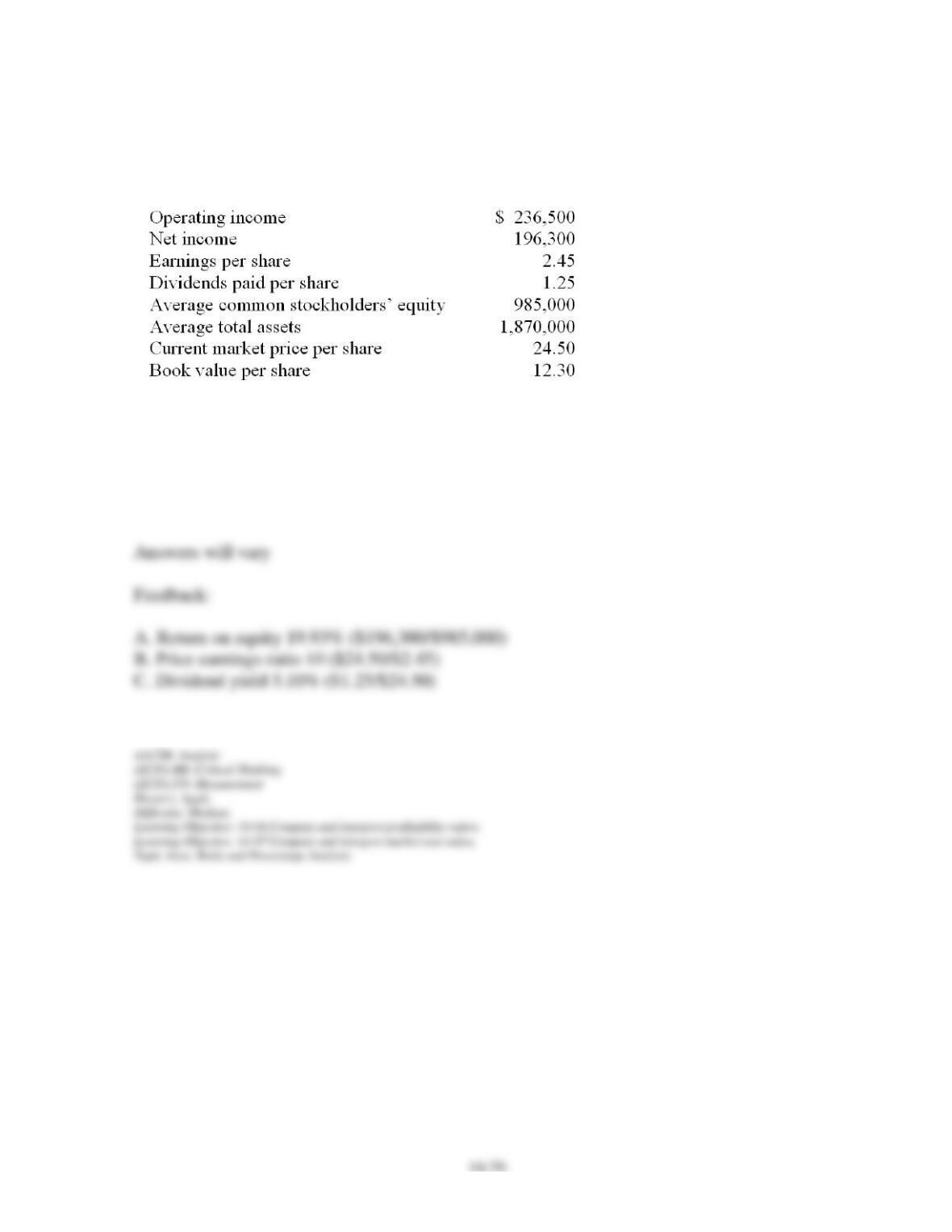
116. The following financial data are available for Murphy Company:
Calculate each of the following ratios:
A. Return on equity
B. Price/earnings ratio
C. Dividend yield
Chapter 14 – Analyzing Financial Statements
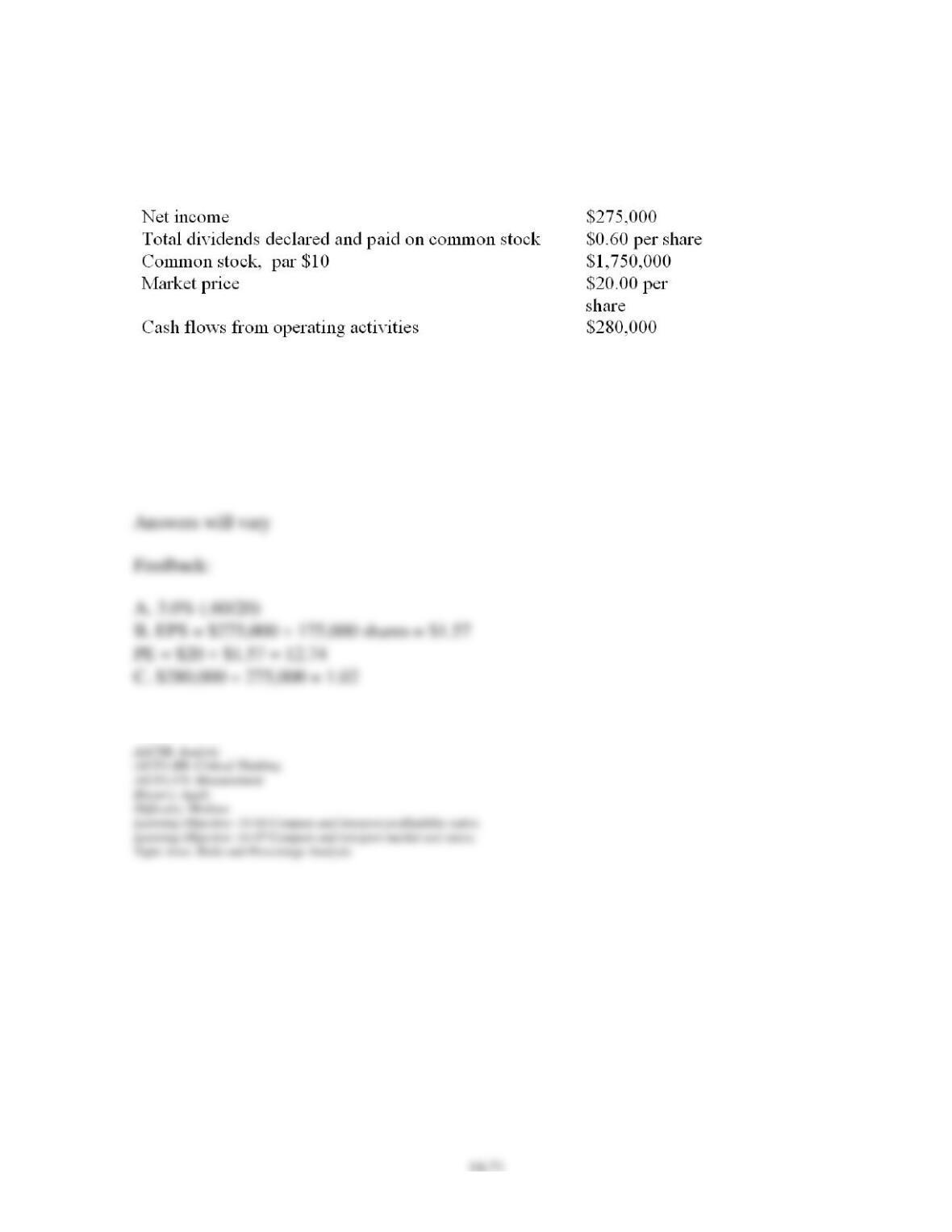
117. The following data were reported for Favre Company:
Calculate each of the following ratios:
A. Dividend yield
B. Price/earnings ratio
C. Quality of income
Chapter 14 – Analyzing Financial Statements
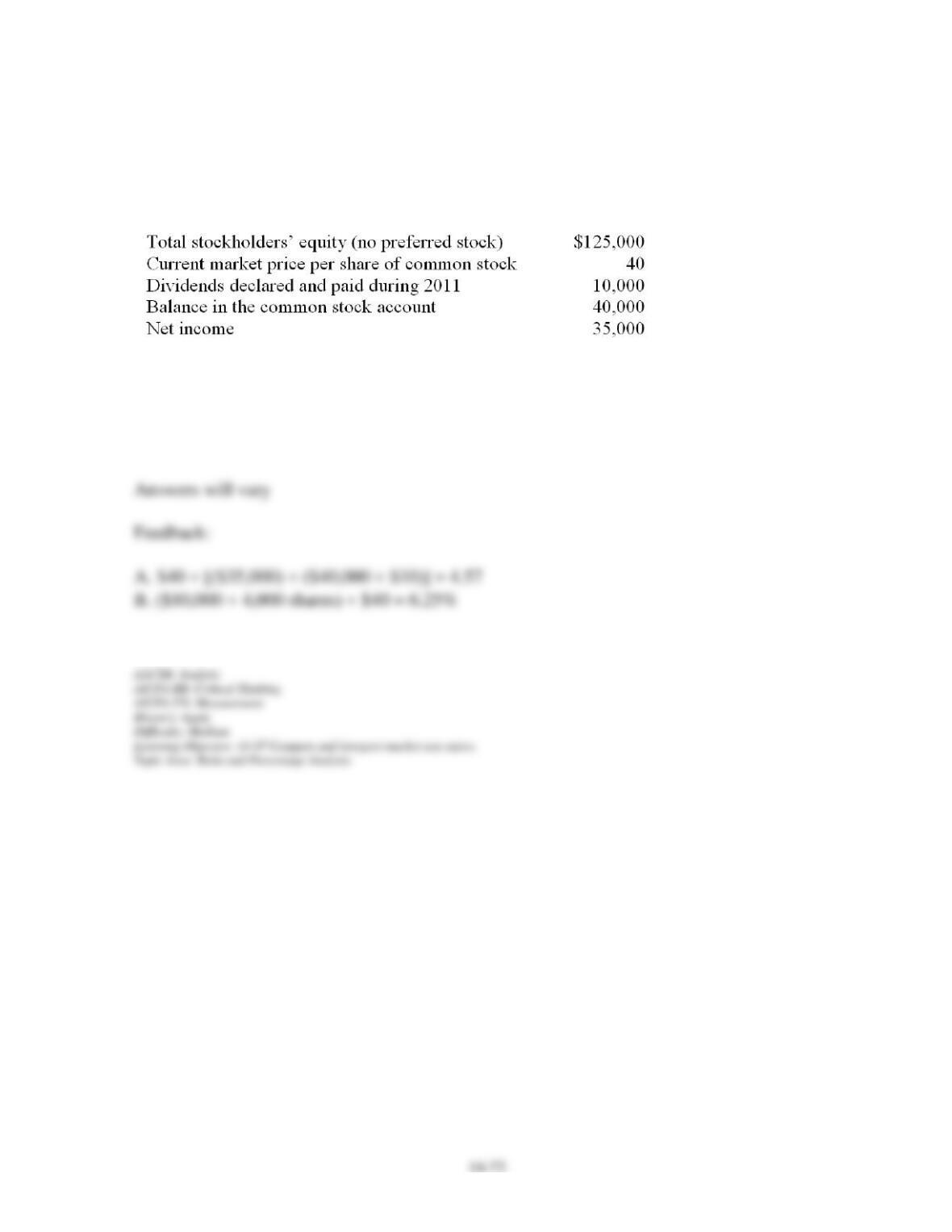
118. Polk Corporation reported the following information related to its common stock (par
$10) outstanding and net income:
Calculate each of the following ratios:
A. Price/earnings ratio
B. Dividend yield
Chapter 14 – Analyzing Financial Statements
14–73
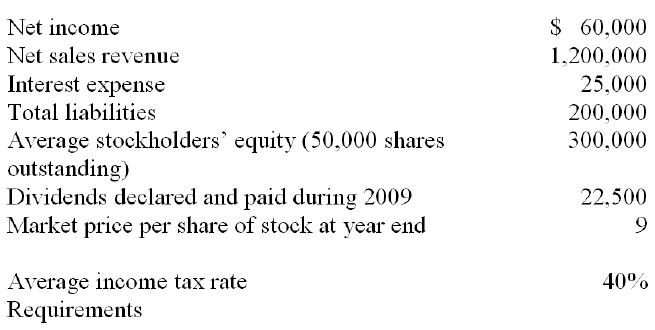
119. MNF Corporation gathered the following data at the end of the accounting period,
December 31, 2009:
Part 1: Calculate each of the following ratios:
A. Profit margin
B. Return on equity
C. Earnings per share
D. Dividend yield ratio
E. Price/earnings ratio
F. Return on assets
G. Financial leverage percentage
Part 2: Interpret the financial leverage percentage.
Chapter 14 – Analyzing Financial Statements