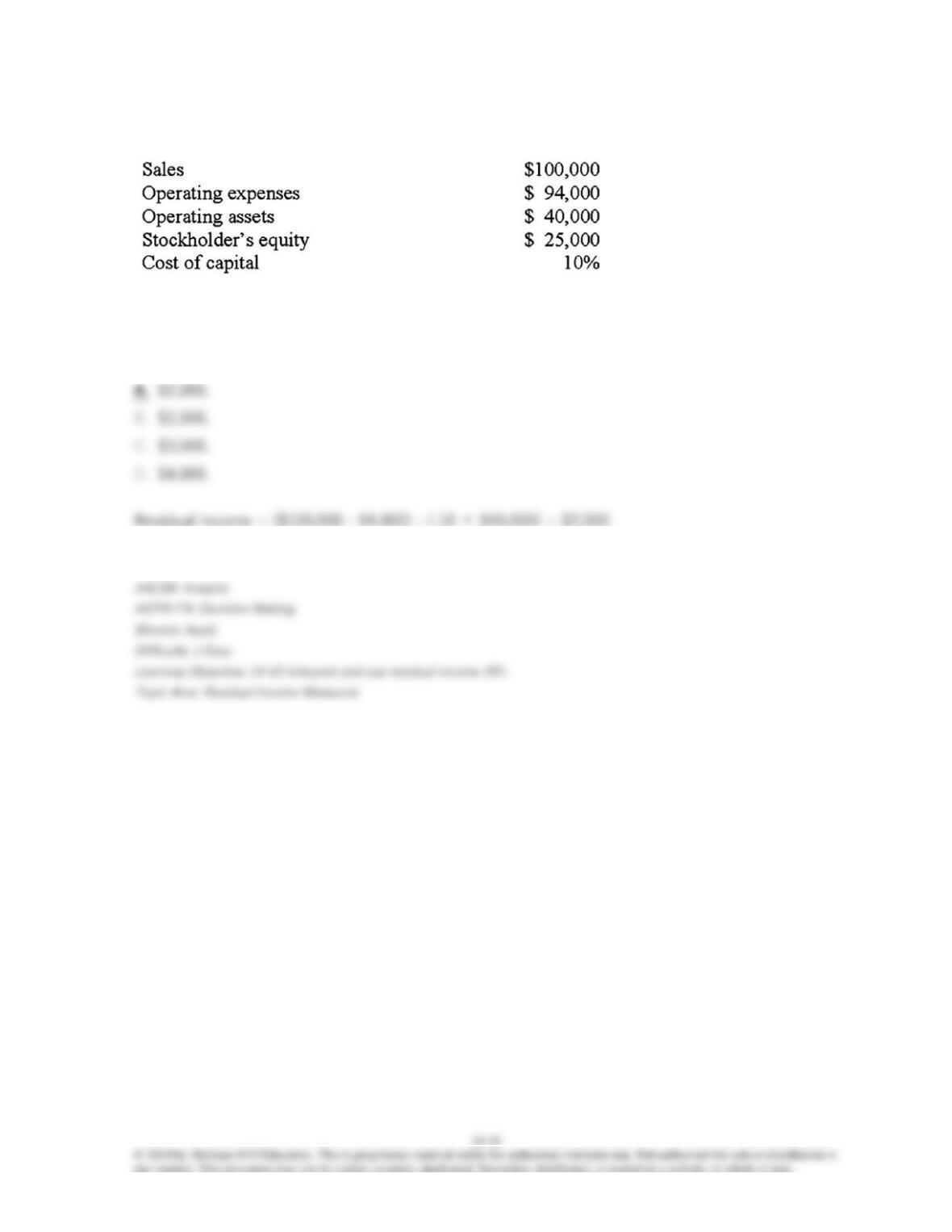
61. The following information is available for Company X:
What is Company X’s residual income?
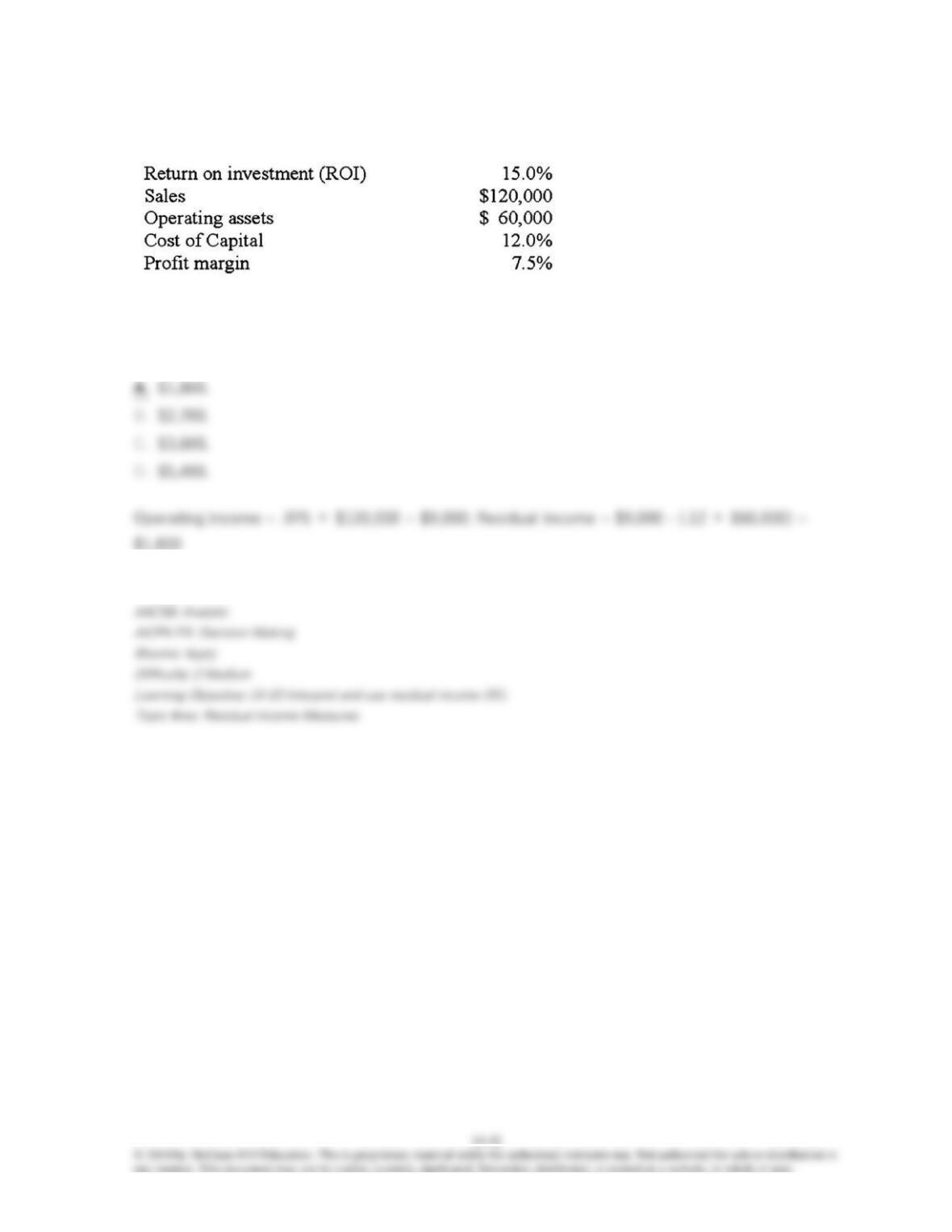
62. The following information has been gathered for the Green Division:
Compute the Green Division’s residual income.
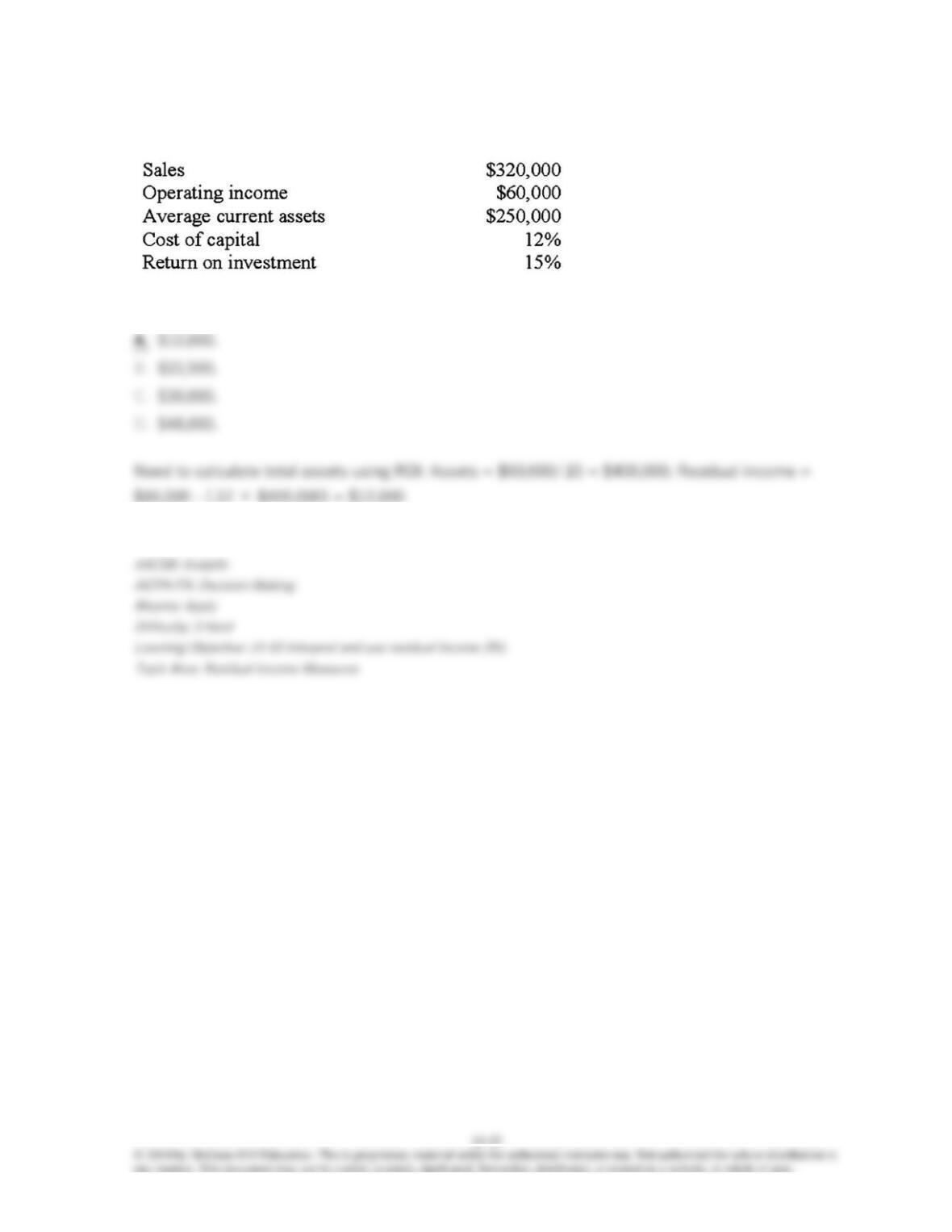
63. Use the following information to compute residual income:
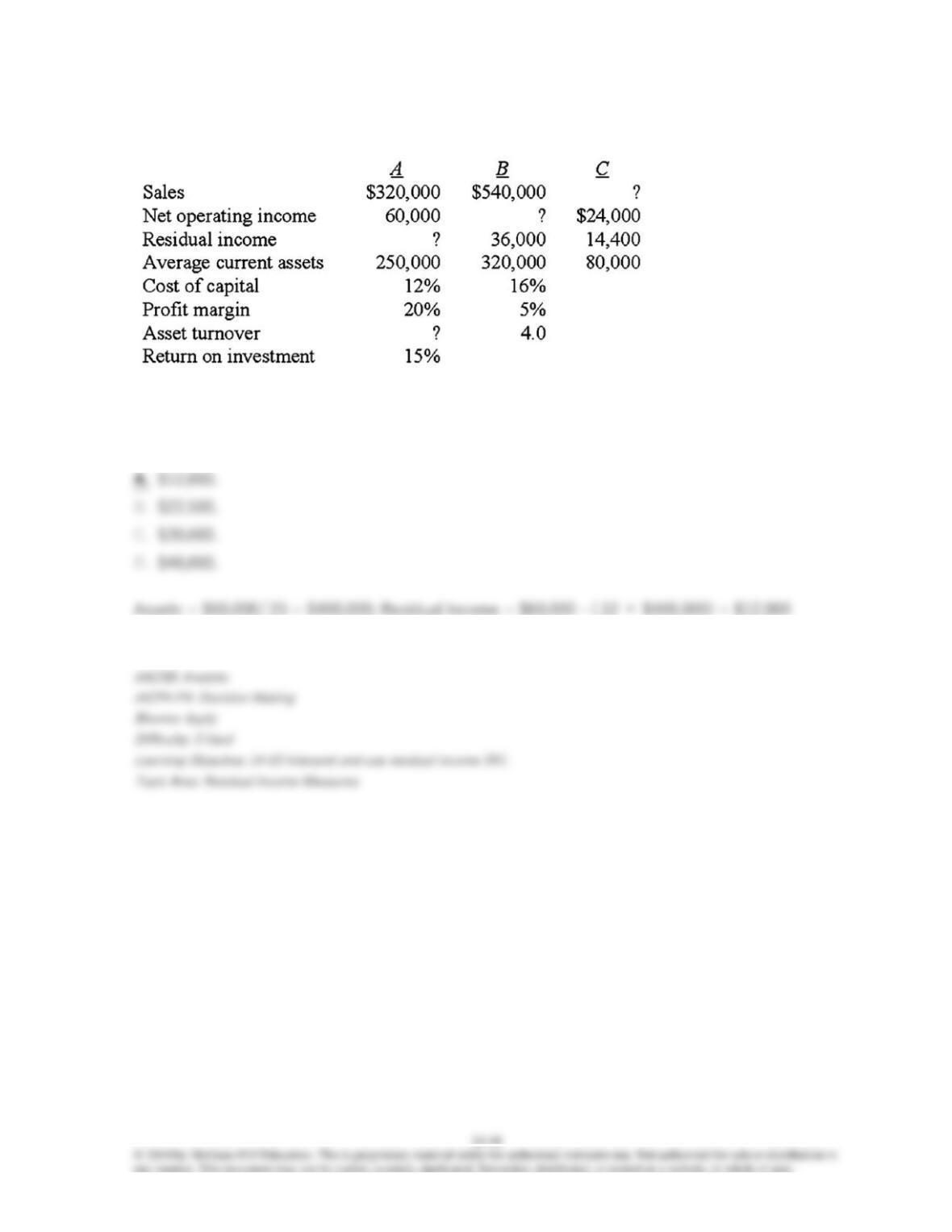
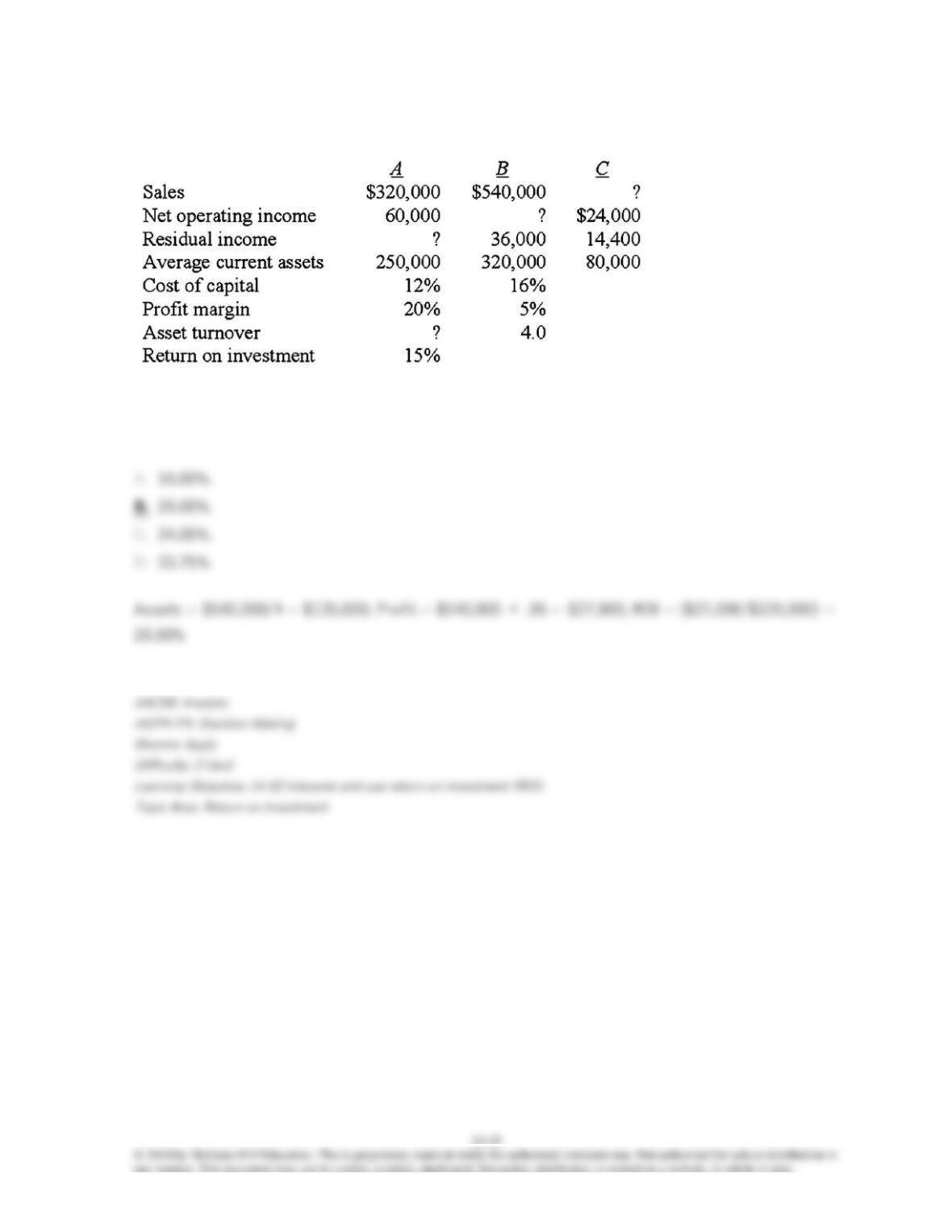
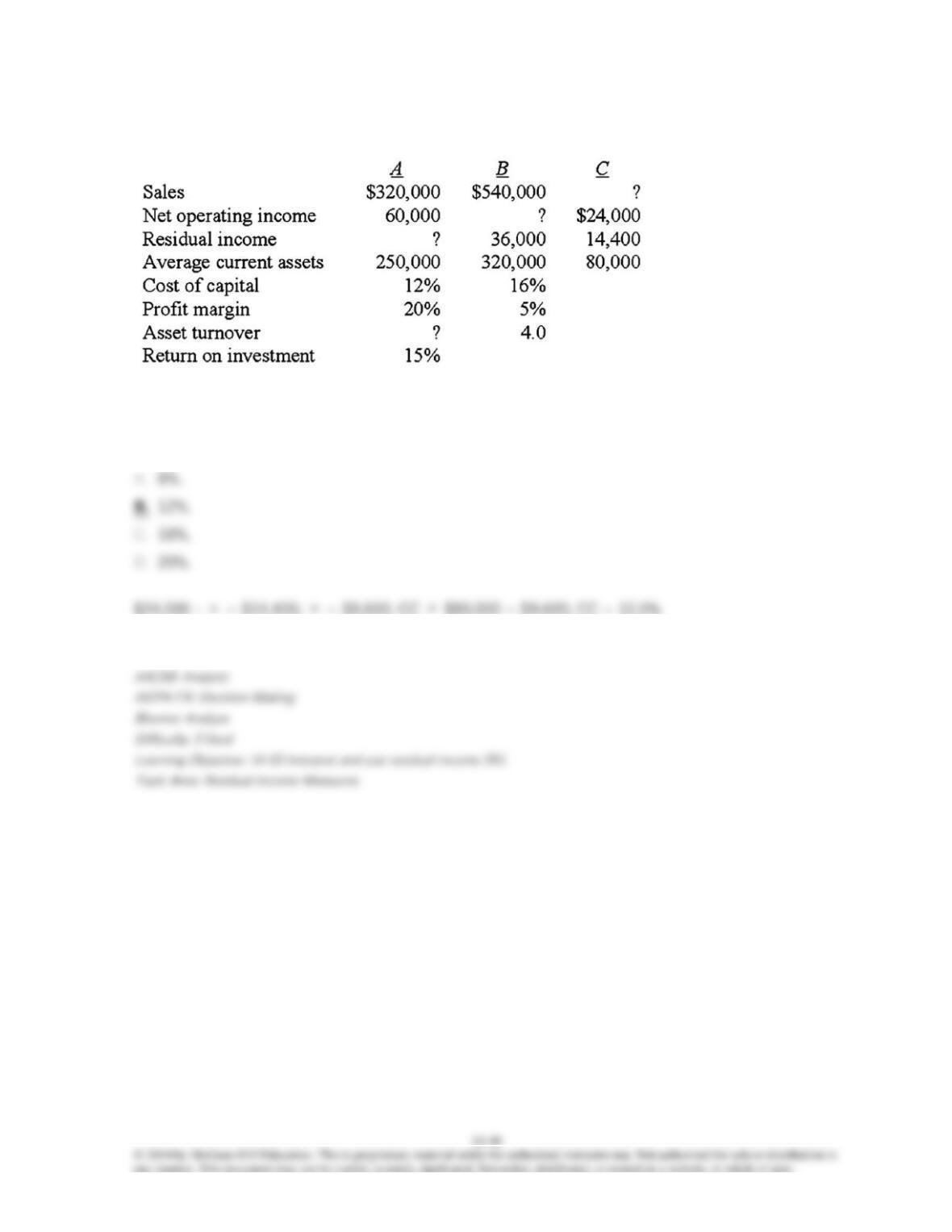
64. The ABC Company has three divisions: A Division, B Division, and C Division.
What was A Division’s residual income last year?
65. The ABC Company has three divisions: A Division, B Division, and C Division.
What was B Division’s return on investment (ROI) last year?
66. The ABC Company has three divisions: A Division, B Division, and C Division.
What was C Division’s cost of capital last year?
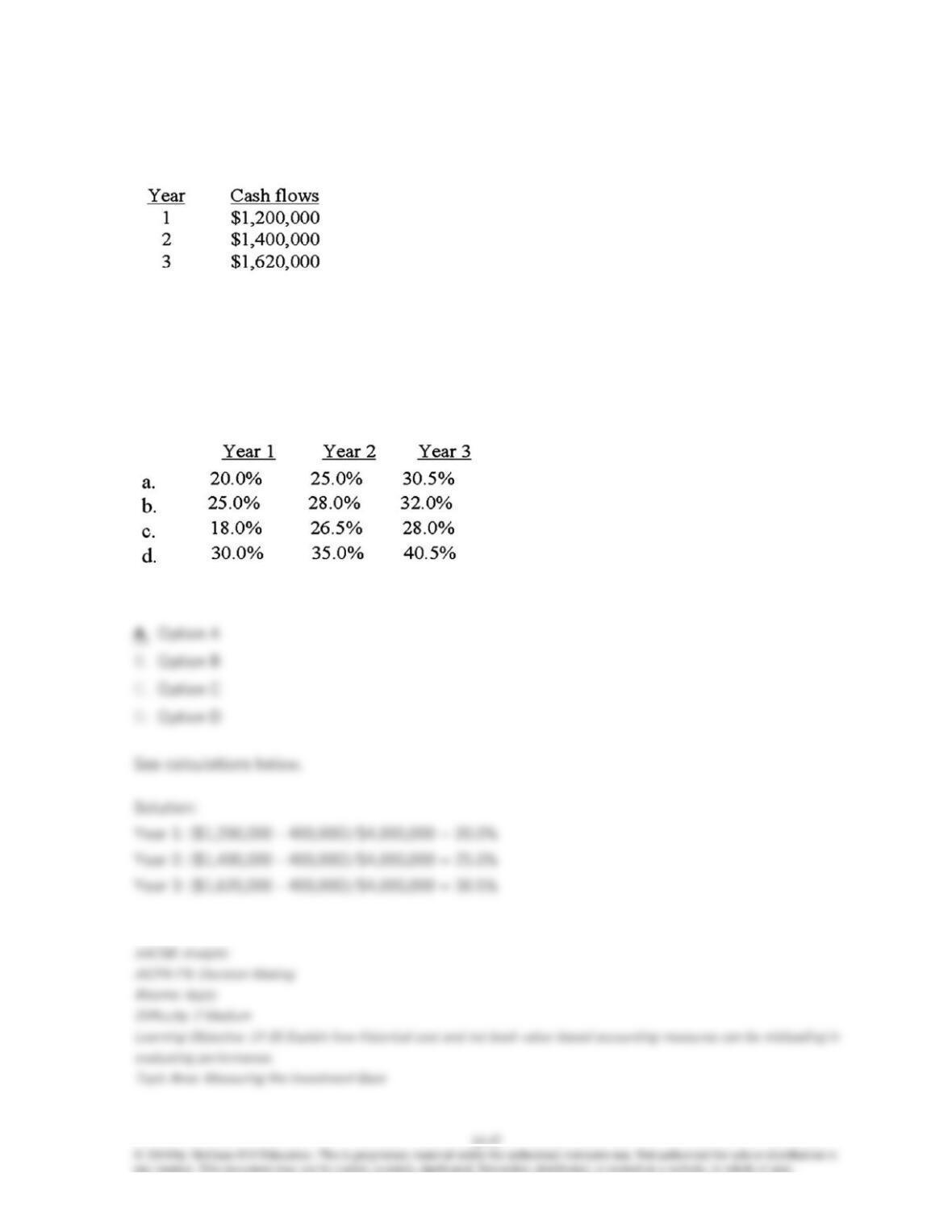
67. One division of the RST Enterprise Company has depreciable assets costing $4,000,000.
The cash flows from these assets for the past three years have been:
The current (i.e., replacement) costs of these assets were expected to increase 25% each year.
RST used the straight-line depreciation method; the estimated useful life is 10-years with no
salvage value. For return on investment (ROI) calculations, RST uses end–of-year balances.
What is the ROI using historical cost and gross book value?
14–48
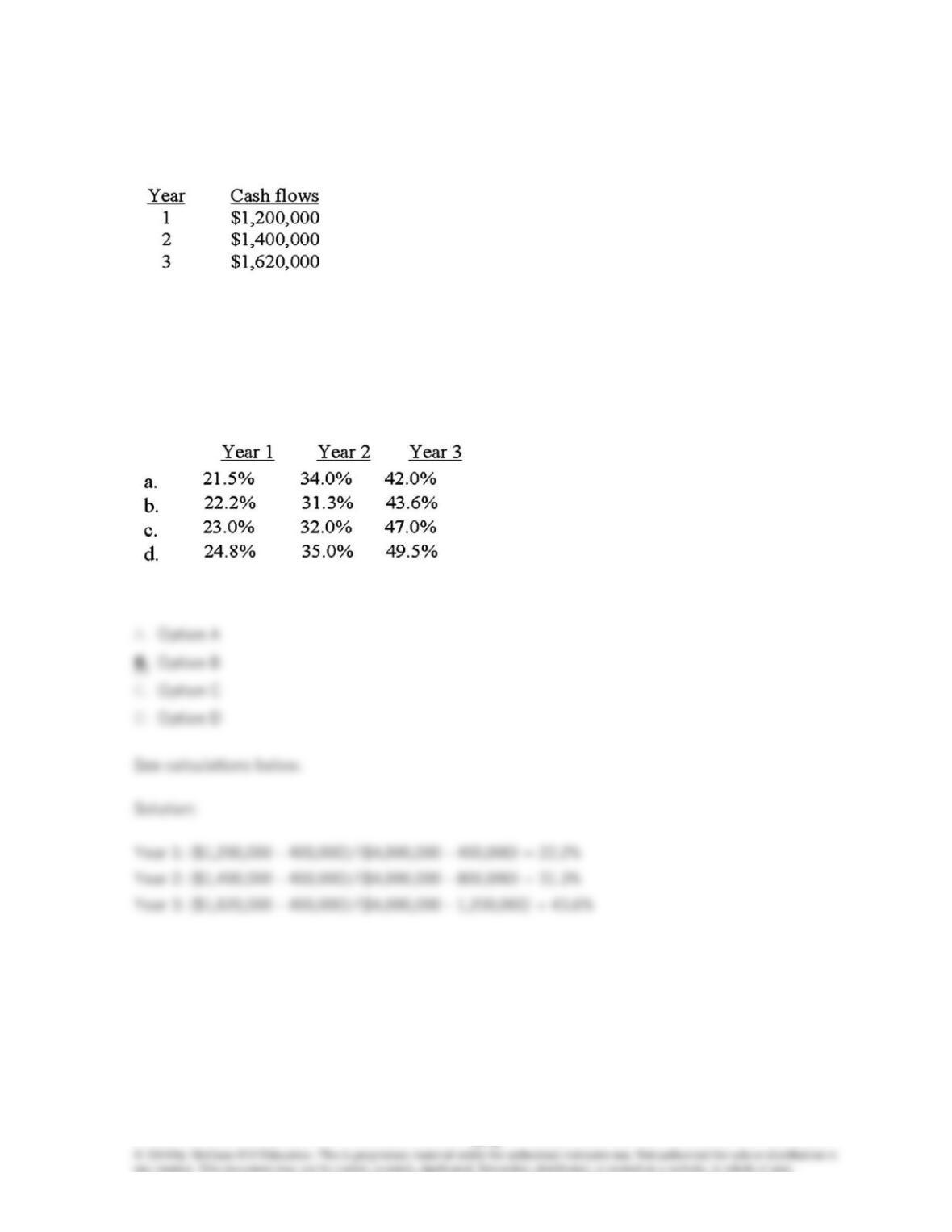
68. One division of the RST Enterprise Company has depreciable assets costing $4,000,000.
The cash flows from these assets for the past three years have been:
The current (i.e., replacement) costs of these assets were expected to increase 25% each year.
RST used the straight-line depreciation method; the estimated useful life is 10-years with no
salvage value. For return on investment (ROI) calculations, RST uses end–of-year balances.
What is the ROI using historical cost and net book value?
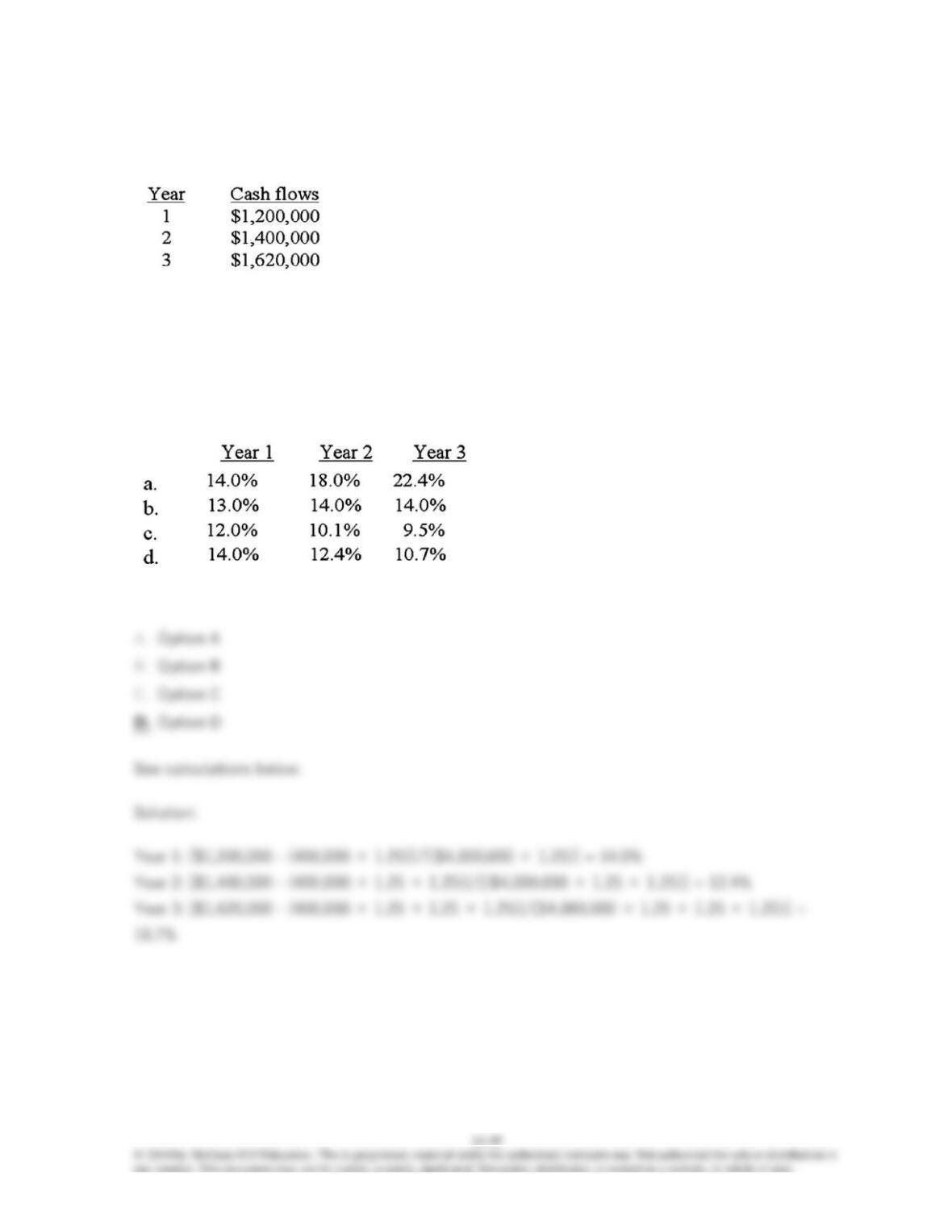
69. One division of the RST Enterprise Company has depreciable assets costing $4,000,000.
The cash flows from these assets for the past three years have been:
The current (i.e., replacement) costs of these assets were expected to increase 25% each year.
RST used the straight-line depreciation method; the estimated useful life is 10-years with no
salvage value. For return on investment (ROI) calculations, RST uses end–of-year balances.
What is the ROI using current costs and gross book value?
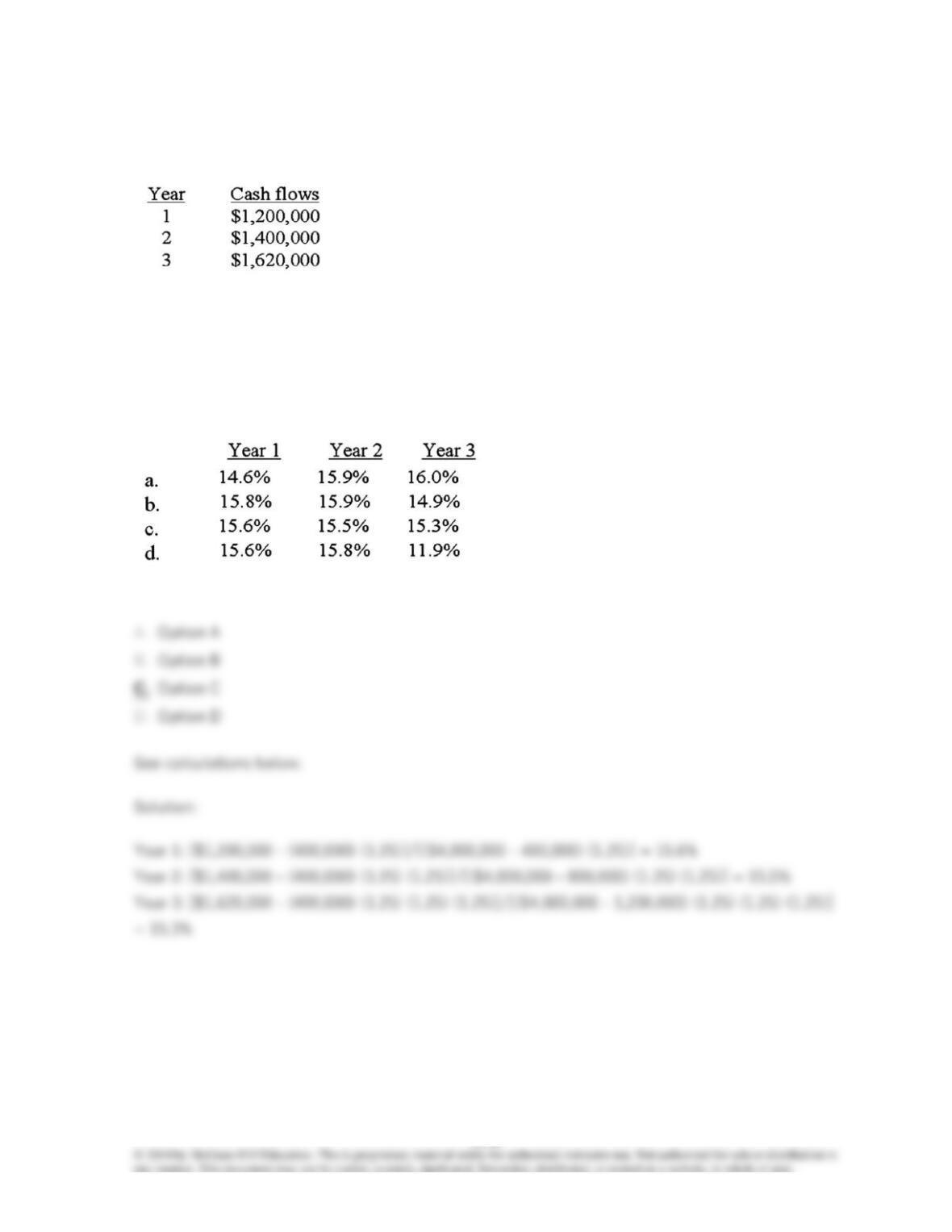
14–50
70. One division of the RST Enterprise Company has depreciable assets costing $4,000,000.
The cash flows from these assets for the past three years have been:
The current (i.e., replacement) costs of these assets were expected to increase 25% each year.
RST used the straight-line depreciation method; the estimated useful life is 10-years with no
salvage value. For return on investment (ROI) calculations, RST uses end–of-year balances.
What is the ROI using current costs and net book value?
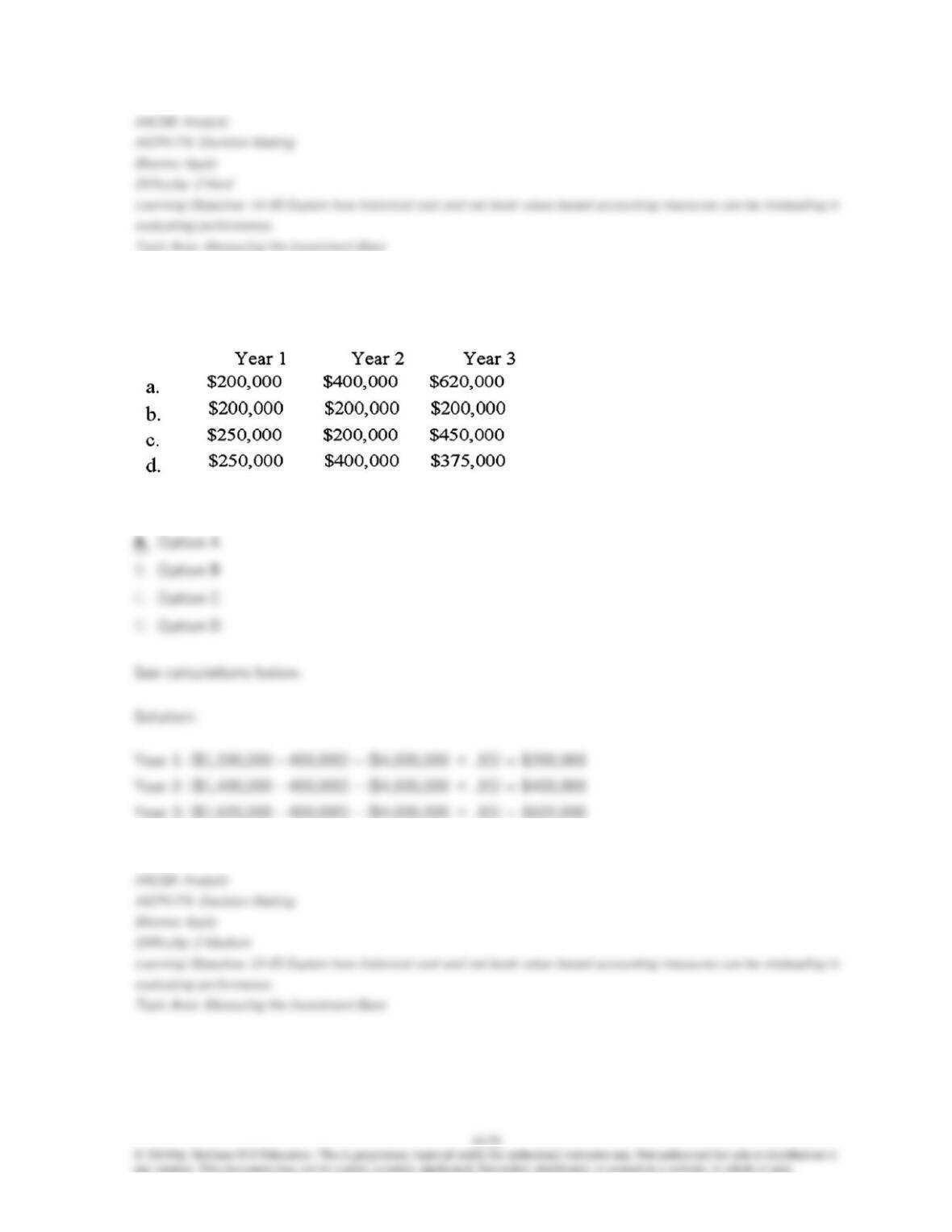
71. What is the residual income for each year, assuming the cost of capital is 15% and RST
uses historical costs and gross book values to compute residual income?
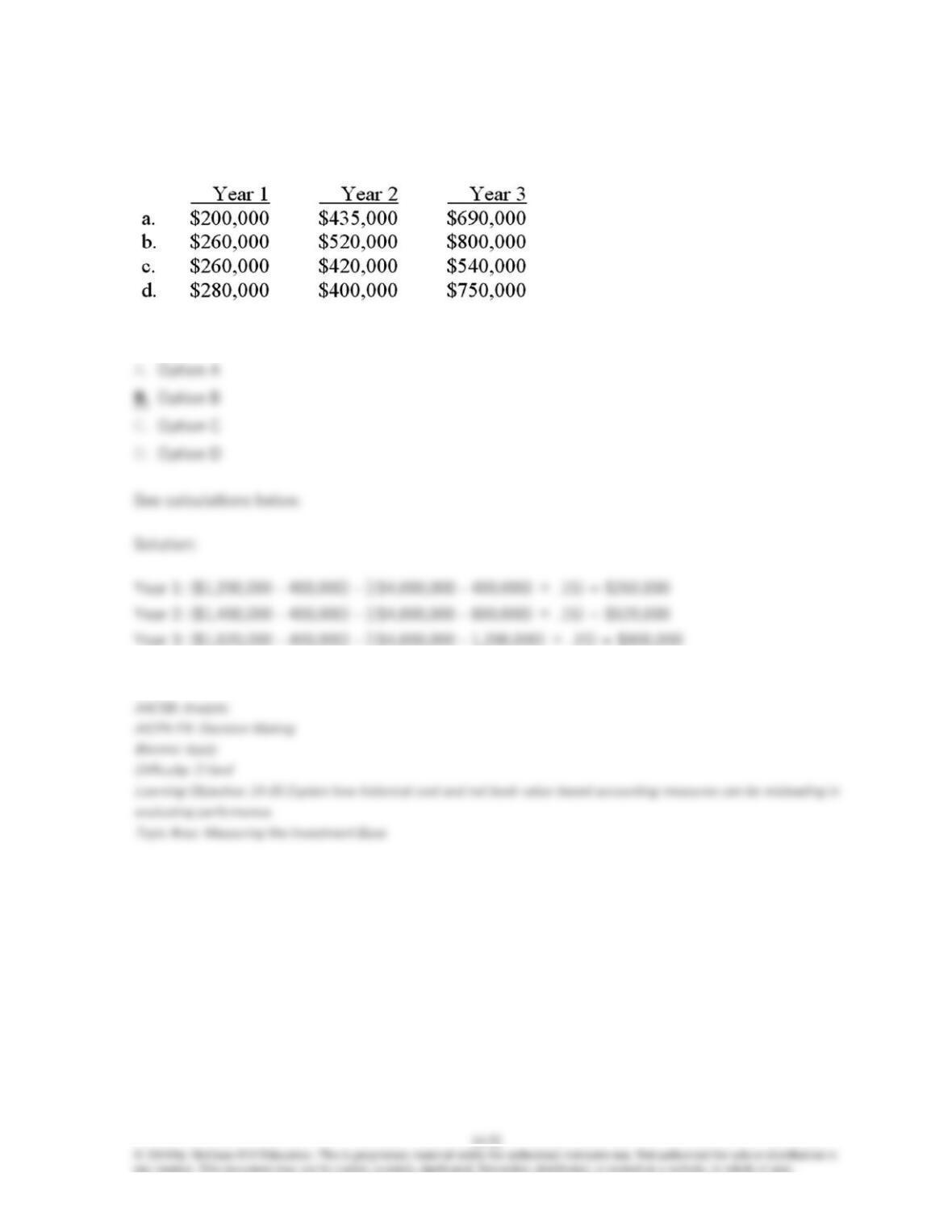
72. What is the residual income for each year, assuming the cost of capital is 15% and RST
uses historical costs and net book values to compute residual income?
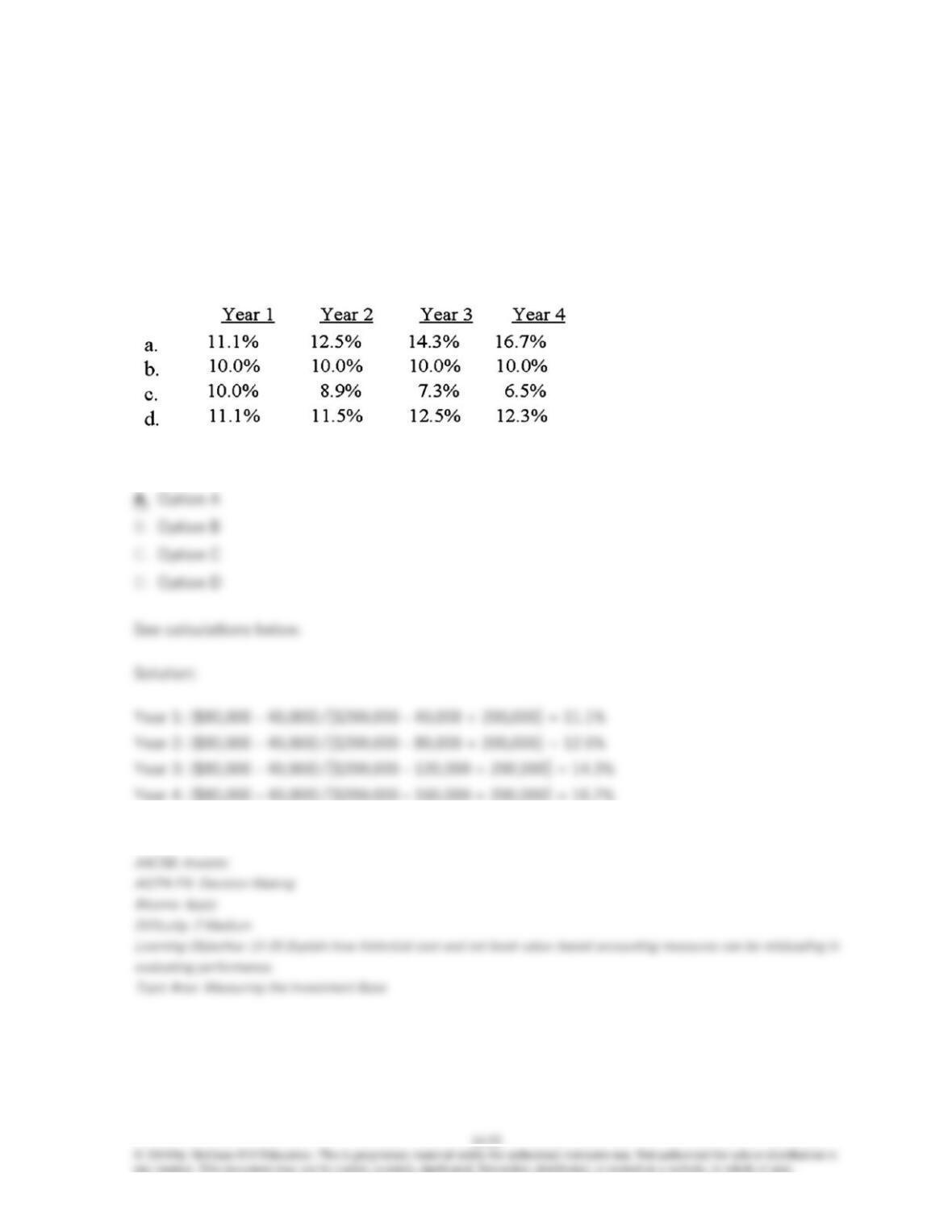
73. A company purchased assets costing $200,000 which will be depreciated over 5-years
using straight-line depreciation and no salvage value. The company also purchased land and other
assets, which are not depreciable at a cost of $200,000. It is estimated that in 5-years, the value
of these assets will be unchanged. Assume that annual cash profits are $80,000 and, for return on
investment (ROI) calculations, the company uses end–of-year asset values.
What is the ROI for each year using net book value?
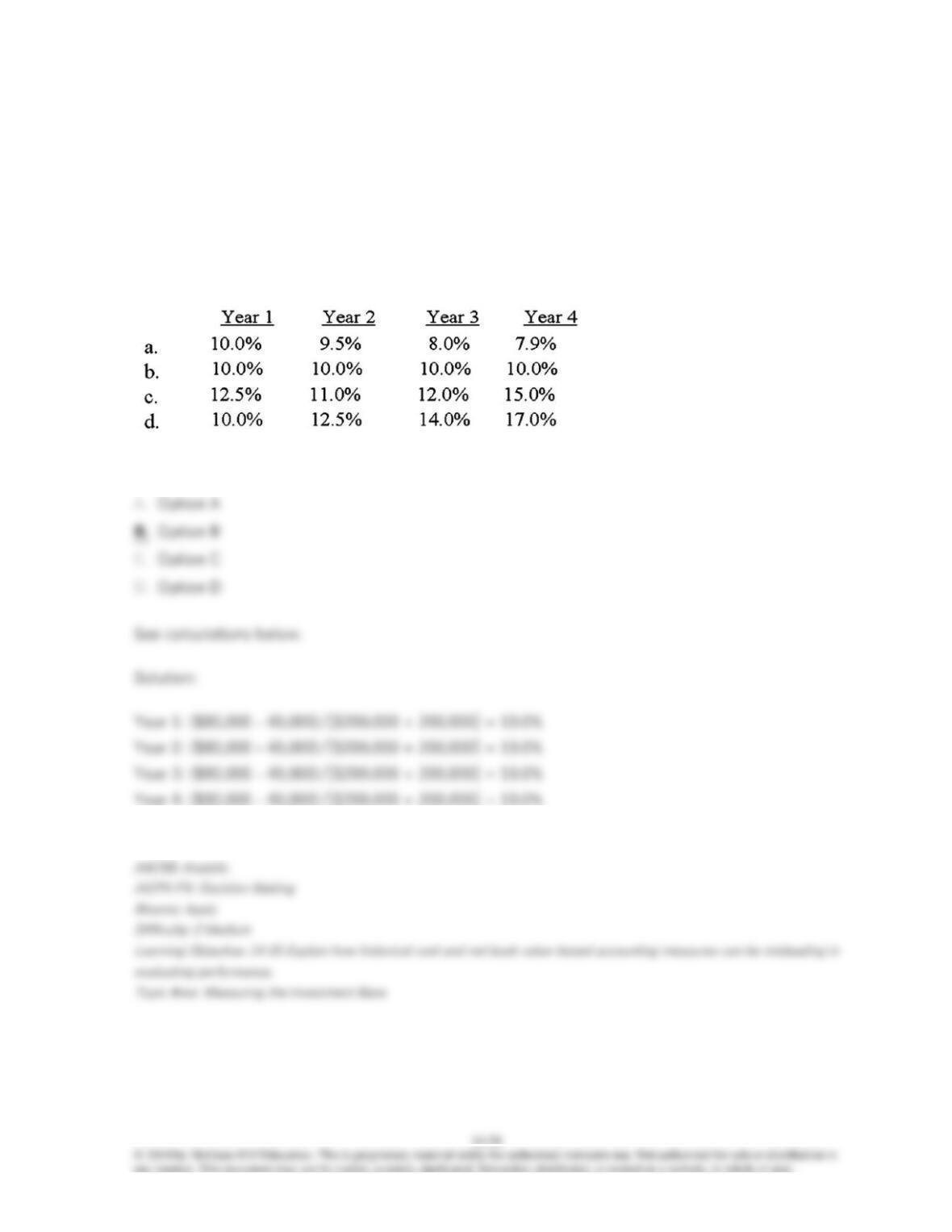
74. A company purchased assets costing $200,000 which will be depreciated over 5-years
using straight-line depreciation and no salvage value. The company also purchased land and other
assets, which are not depreciable at a cost of $200,000. It is estimated that in 5–years, the value
of these assets will be unchanged. Assume that annual cash profits are $80,000 and, for return on
investment (ROI) calculations, the company uses end–of-year asset values.
What is the ROI for each year using gross book value?
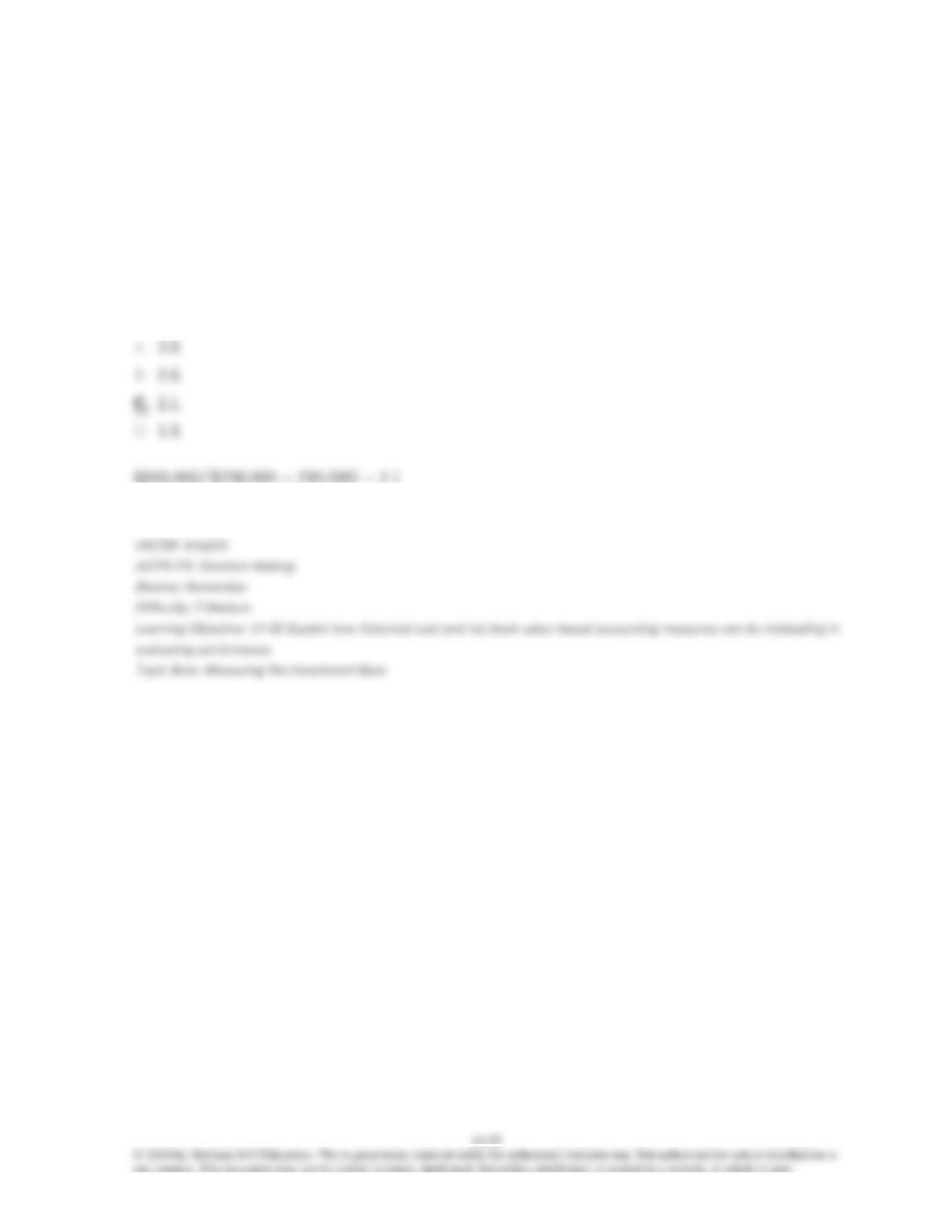
75. A company purchased assets costing $200,000 which will be depreciated over 5-years
using straight-line depreciation and no salvage value. The company also purchased land and other
assets, which are not depreciable at a cost of $200,000. It is estimated that in 5-years, the value
of these assets will be unchanged. Assume that annual cash profits are $80,000 and, for return on
investment (ROI) calculations, the company uses end–of-year asset values.
If sales each year average $840,000, what will be the asset turnover using gross book value?
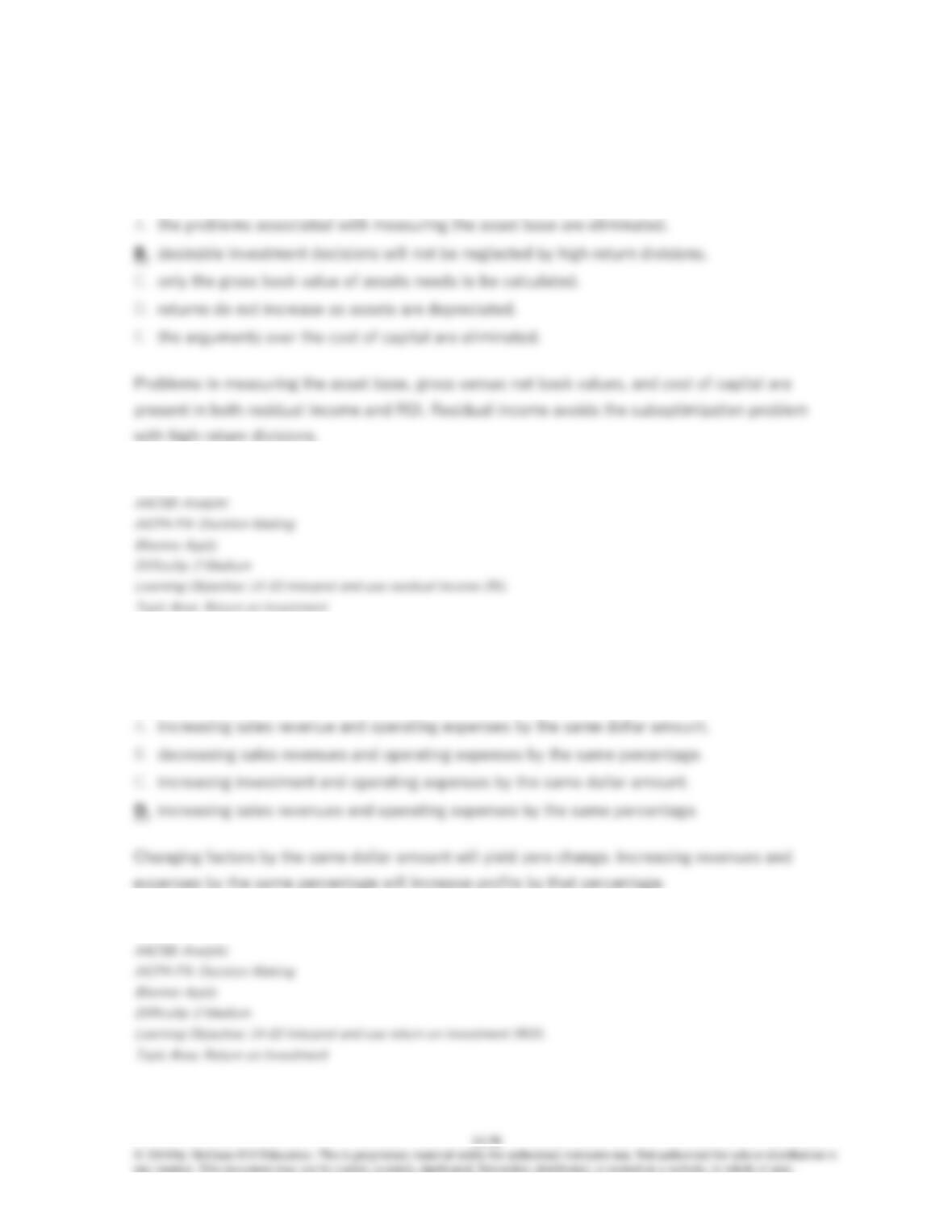
76. Residual income is a better measure for performance evaluation of an investment center
manager than return on investment (ROI) because: (CMA adapted)
77. A firm earning a profit can increase its return on investment by: (CMA adapted)
78. Which one of the following items would most likely
not
be incorporated into the
calculation of a division’s investment base when using the residual income approach for
performance measurement and evaluation? (CMA adapted)
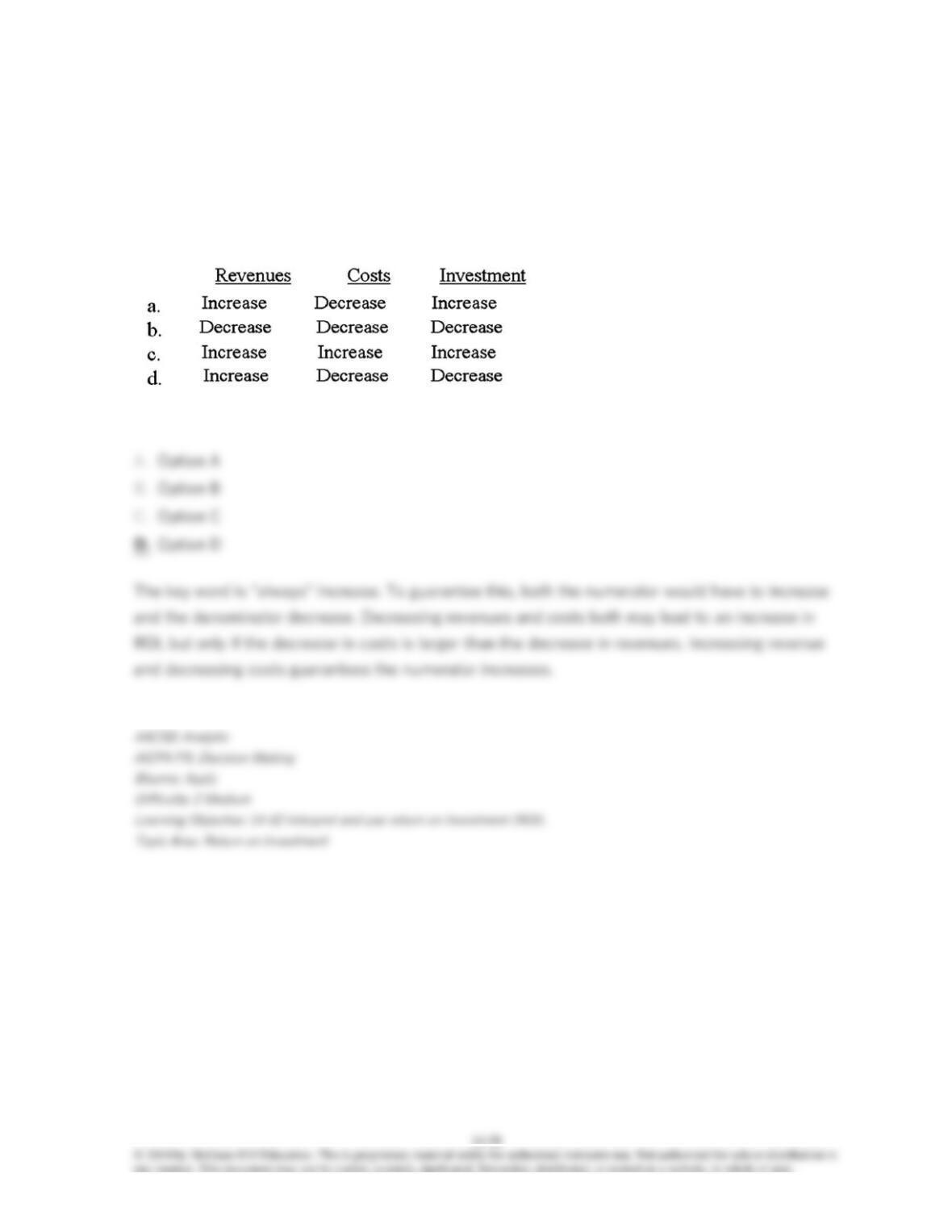
79. Return on investment (ROI) is a very popular measure employed to evaluate the
performance of corporate segments because it incorporates all of the major ingredients of
profitability (revenue, cost, investment) into a single measure. Under which one of the following
combinations of actions regarding a segment’s revenues, costs, and investment would a
segment’s ROI always increase? (CIA adapted)
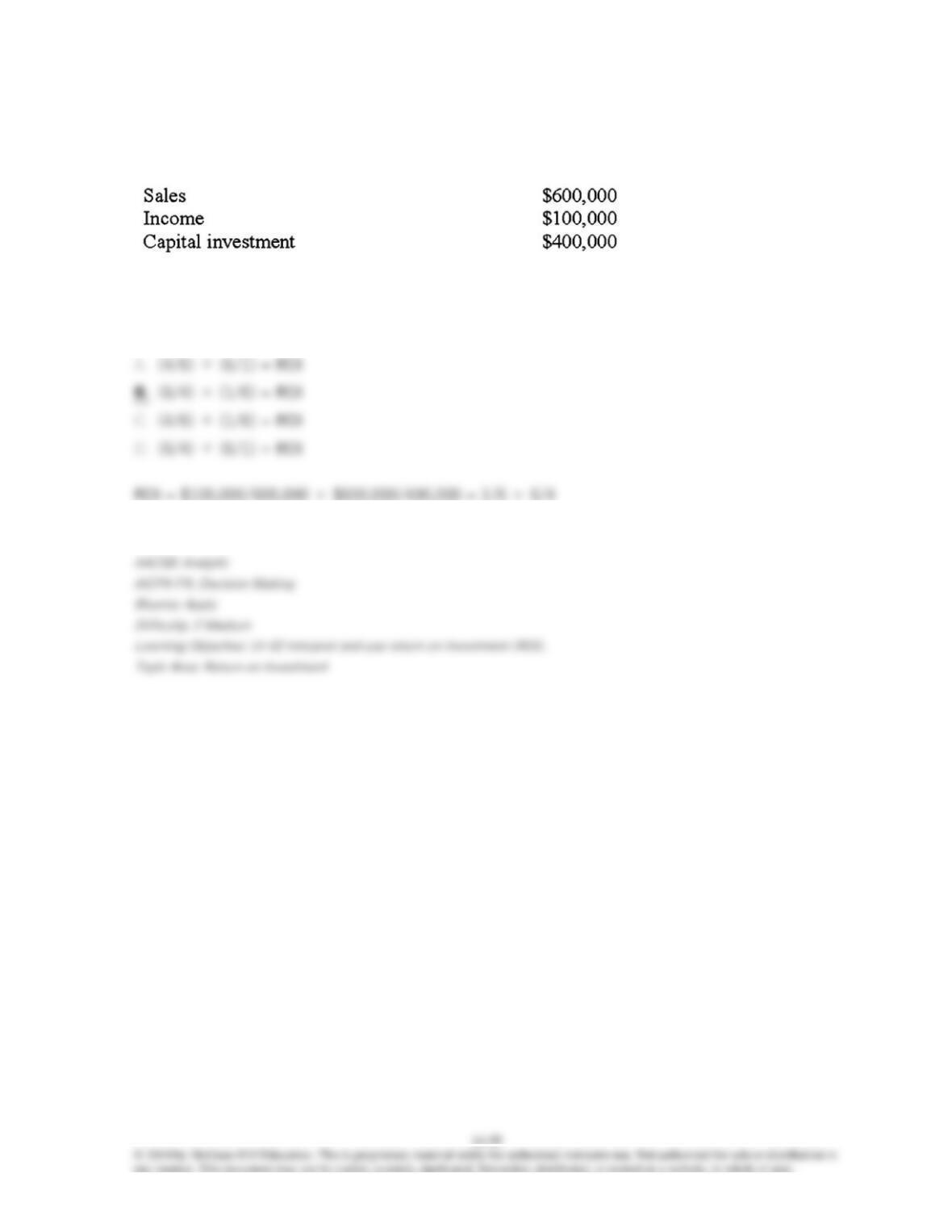
80. The following information pertains to Bala Co. for the year ended December 31: (CPA
adapted)
Which of the following equations should be used to compute Bala’s return on investment (ROI)?
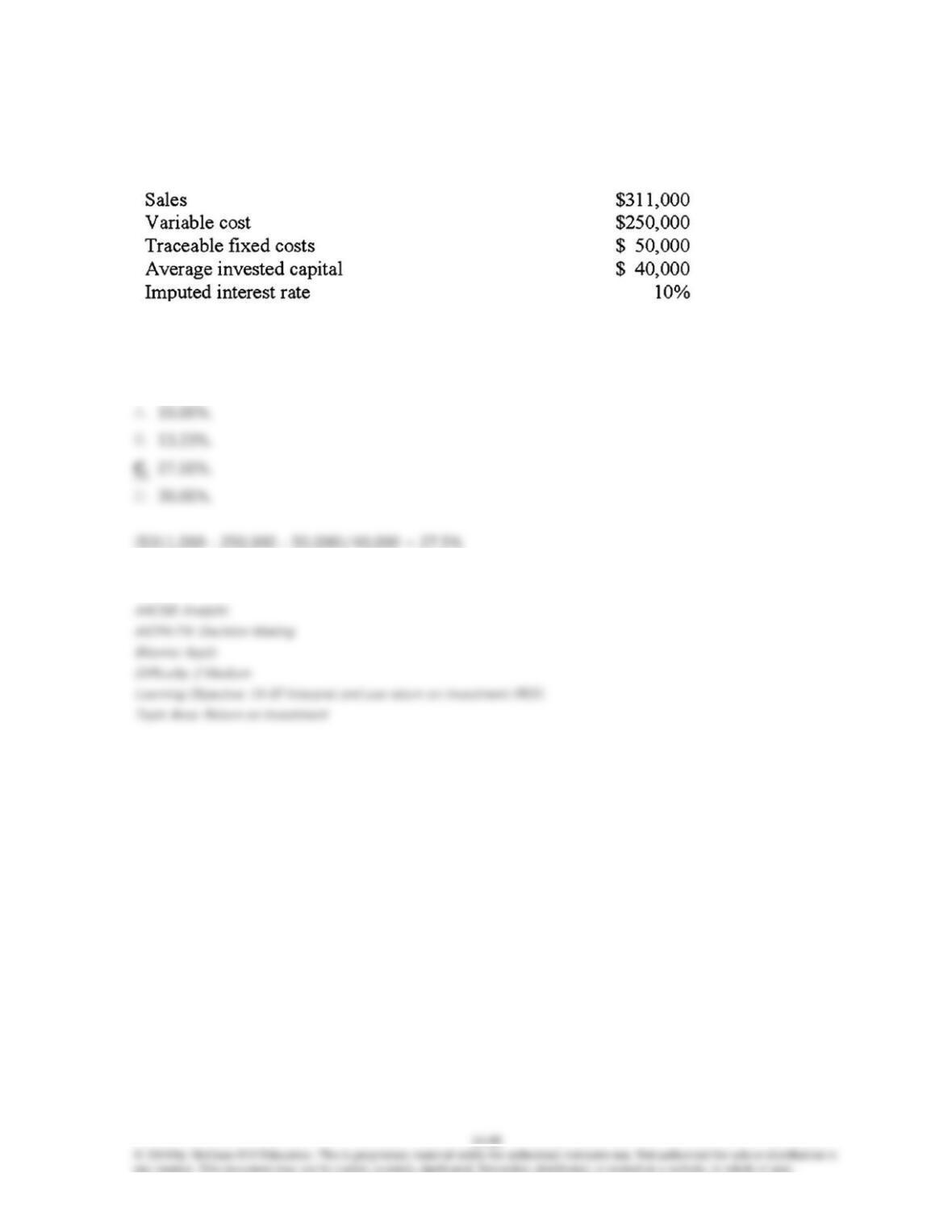
81. The following information pertains to Quest Co.’s Gold Division for the current year: (CPA
adapted)
Quest’s return on investment was: