74) The income tax expense in year 3 is:
A) $15,000
B) $6,000
C) $3,000
D) $9,000
75) The net present value of the entire project is closest to:
See separate Exhibit 13B-1, to determine the appropriate discount factor(s) using the tables
provided.
A) $14,590
B) $50,380
C) $70,000
D) $27,310
Correll Corporation is considering a capital budgeting project that would require investing
$240,000 in equipment with an expected life of 4 years and zero salvage value. Annual
incremental sales would be $570,000 and annual incremental cash operating expenses would be
$420,000. The project would also require a one-time renovation cost of $40,000 in year 3. The
company’s income tax rate is 30% and its after-tax discount rate is 15%. The company uses
straight-line depreciation. Assume cash flows occur at the end of the year except for the initial
investments. The company takes income taxes into account in its capital budgeting.
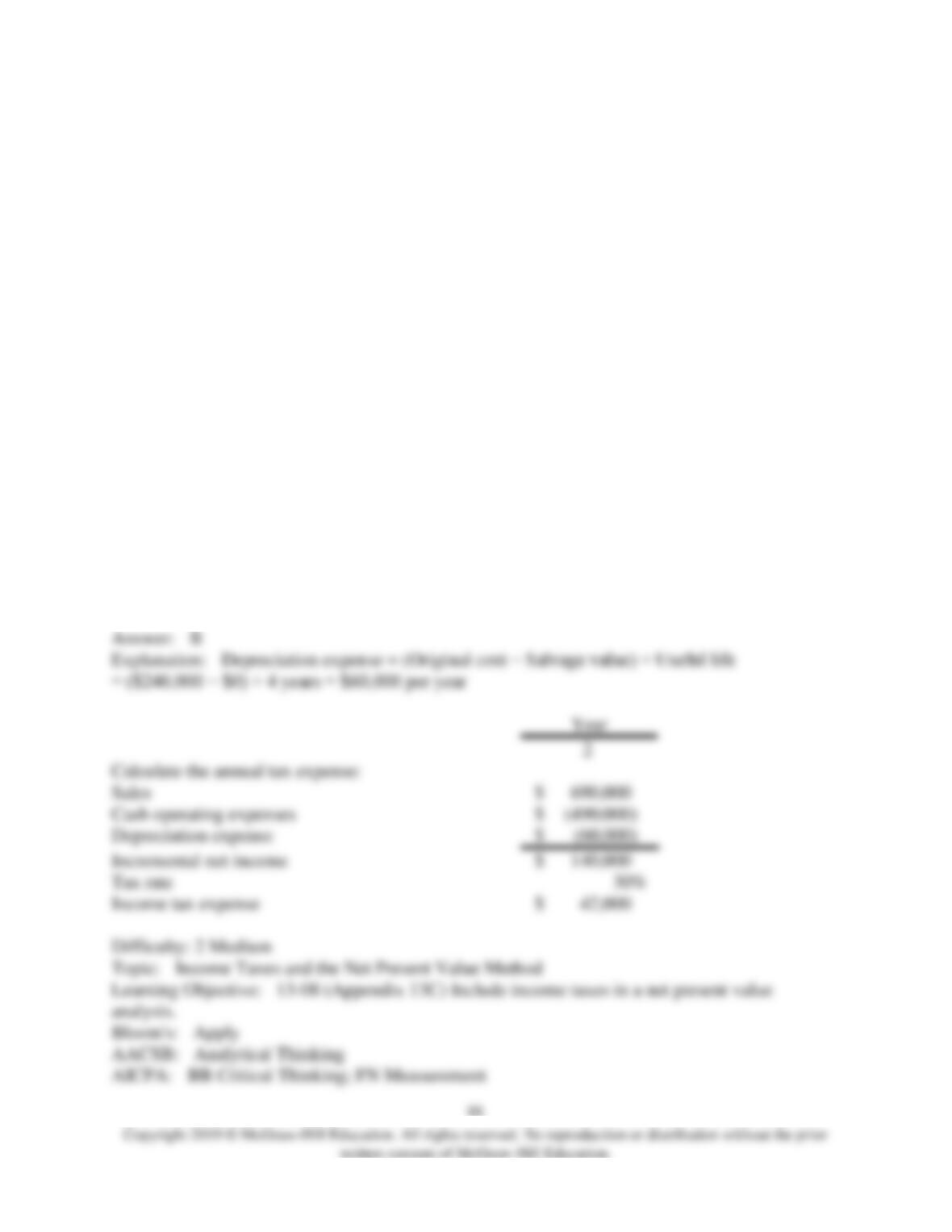
76) The income tax expense in year 2 is:
A) $27,000
B) $15,000
C) $45,000
D) $12,000
77) The income tax expense in year 3 is:
A) $27,000
B) $15,000
C) $12,000
D) $45,000
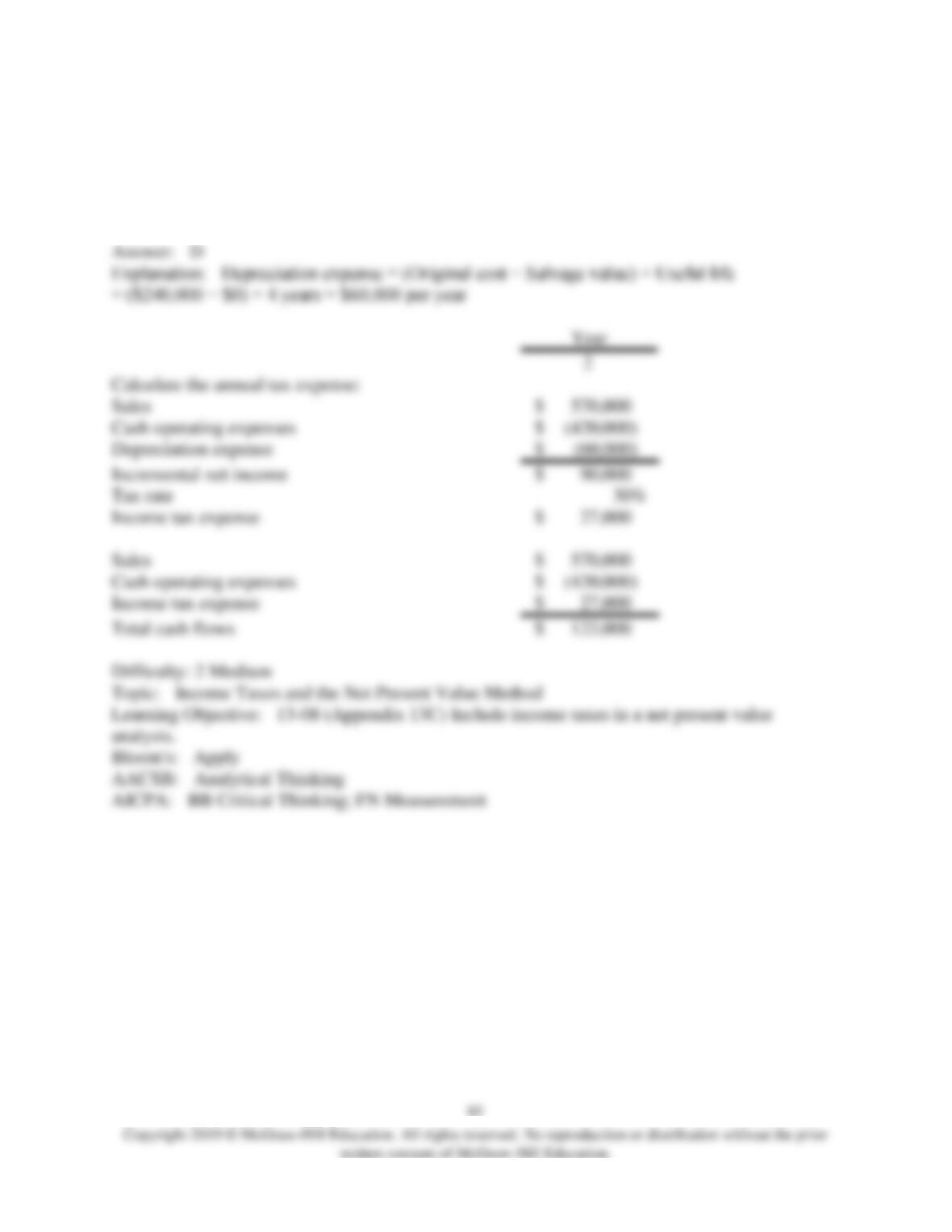
78) The total cash flow net of income taxes in year 2 is:
A) $95,000
B) $90,000
C) $150,000
D) $123,000
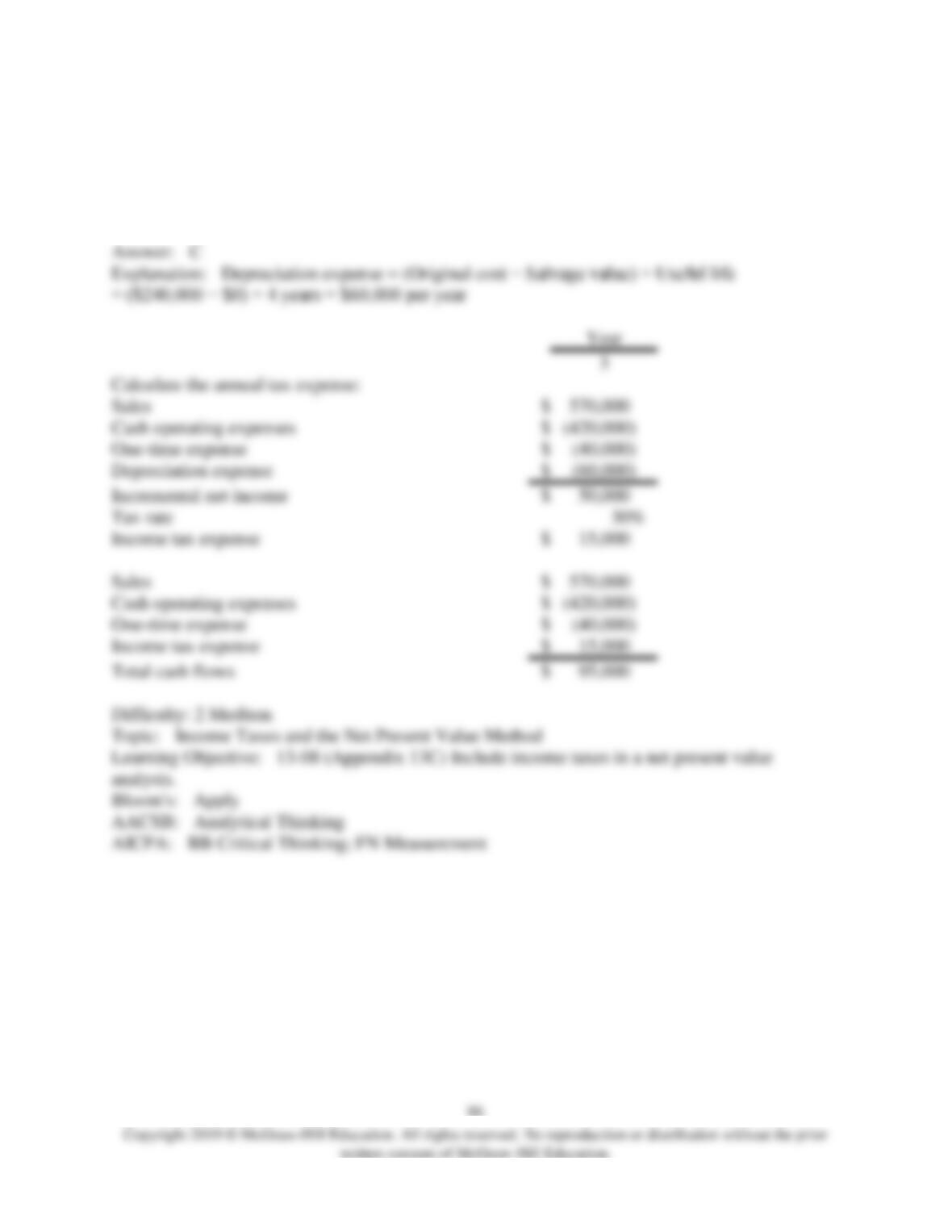
79) The total cash flow net of income taxes in year 3 is:
A) $83,000
B) $123,000
C) $95,000
D) $110,000
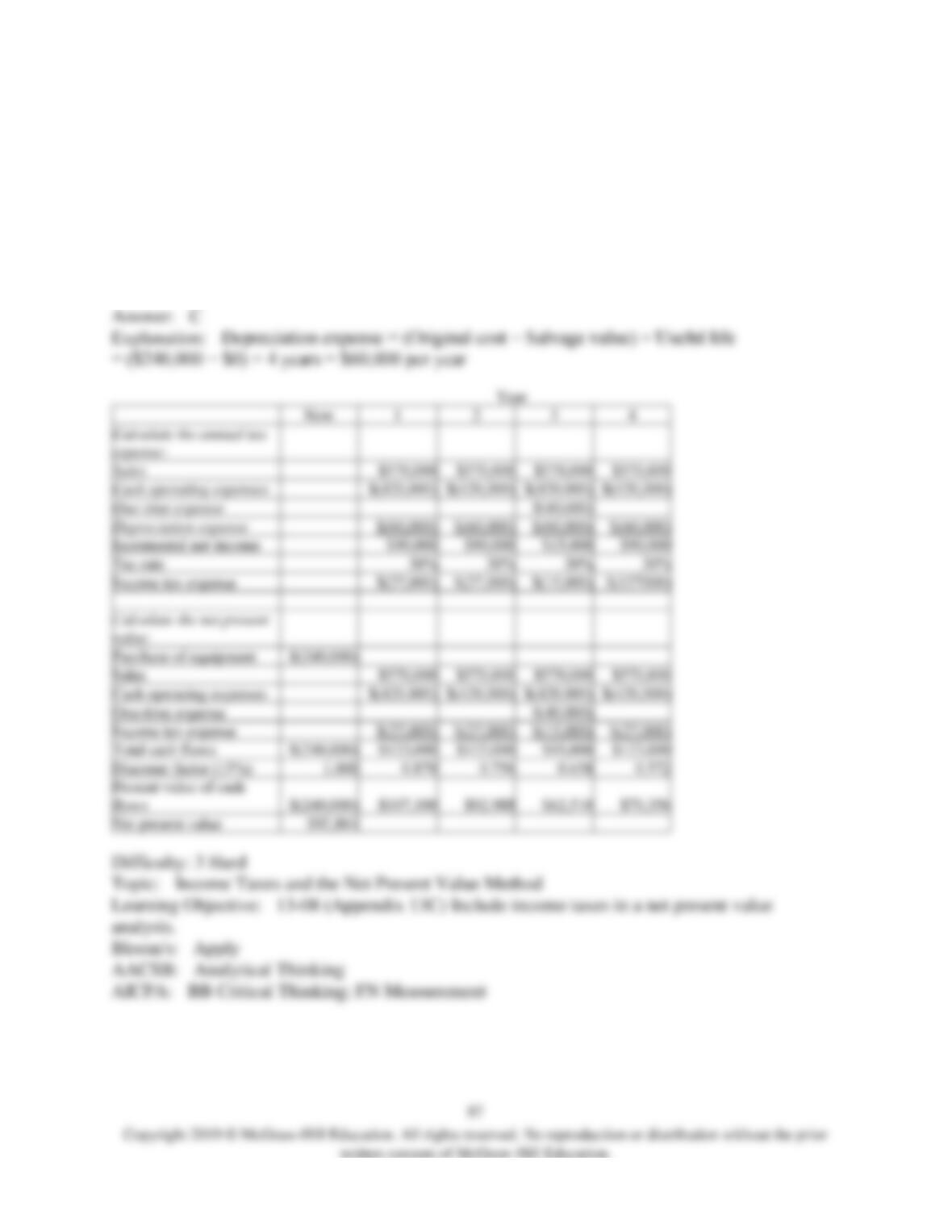
80) The net present value of the entire project is closest to:
See separate Exhibit 13B-1, to determine the appropriate discount factor(s) using the tables
provided.
A) $224,000
B) $162,080
C) $92,864
D) $332,864
Lafromboise Corporation has provided the following information concerning a capital budgeting
project:
After-tax discount rate
6
%
Tax rate
30
%
Expected life of the project
4
Investment required in equipment
$
240,000
Salvage value of equipment
$
0
Working capital requirement
$
10,000
Annual sales
$
690,000
Annual cash operating expenses
$
490,000
One-time renovation expense in year 3
$
100,000
The working capital would be required immediately and would be released for use elsewhere at
the end of the project. The company uses straight-line depreciation on all equipment. Assume
cash flows occur at the end of the year except for the initial investments. The company takes
income taxes into account in its capital budgeting.
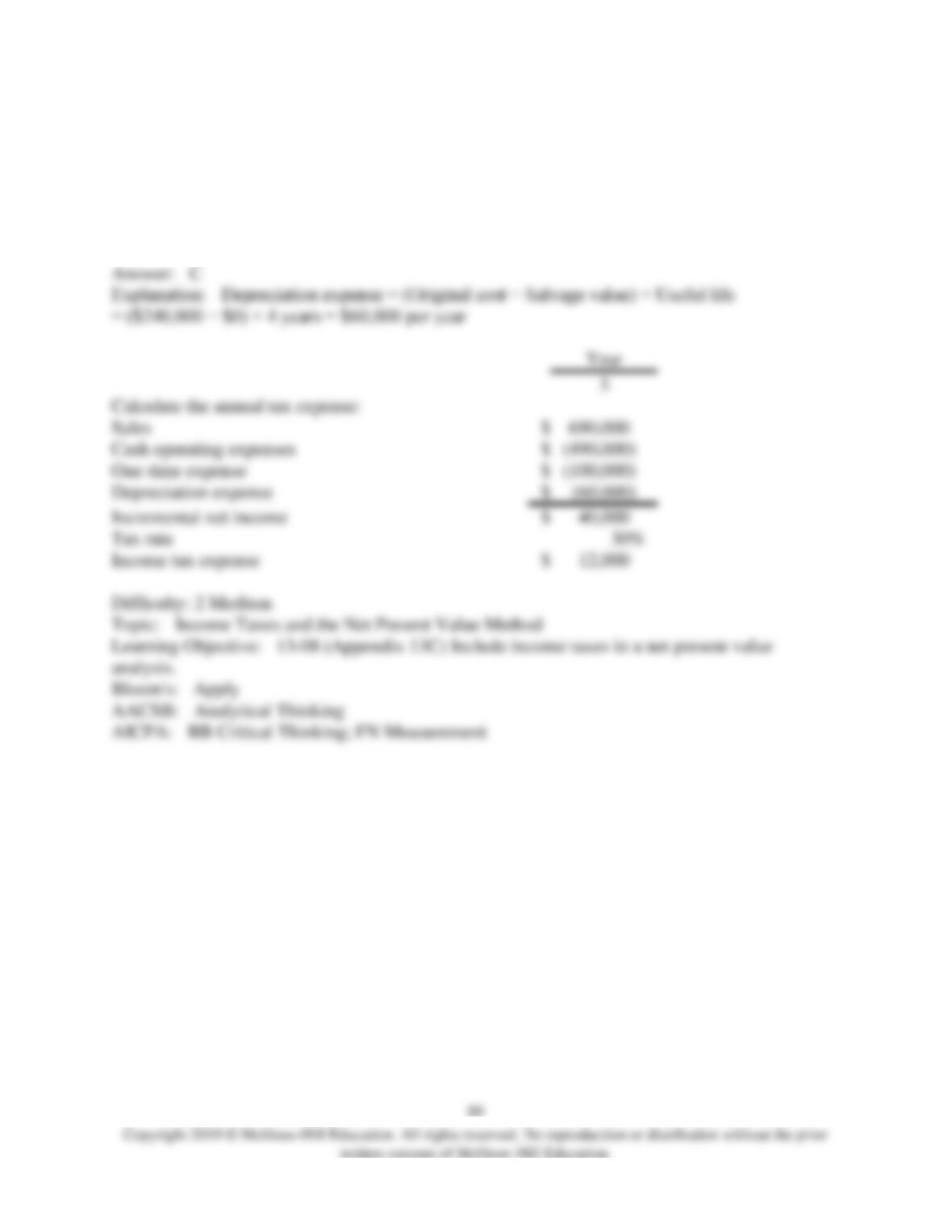
81) The income tax expense in year 2 is:
A) $12,000
B) $42,000
C) $30,000
D) $60,000
Calculate the annual tax expense:
Sales
$
Cash operating expenses
$
)
Depreciation expense
$
)
Incremental net income
$
Tax rate
%
Income tax expense
$
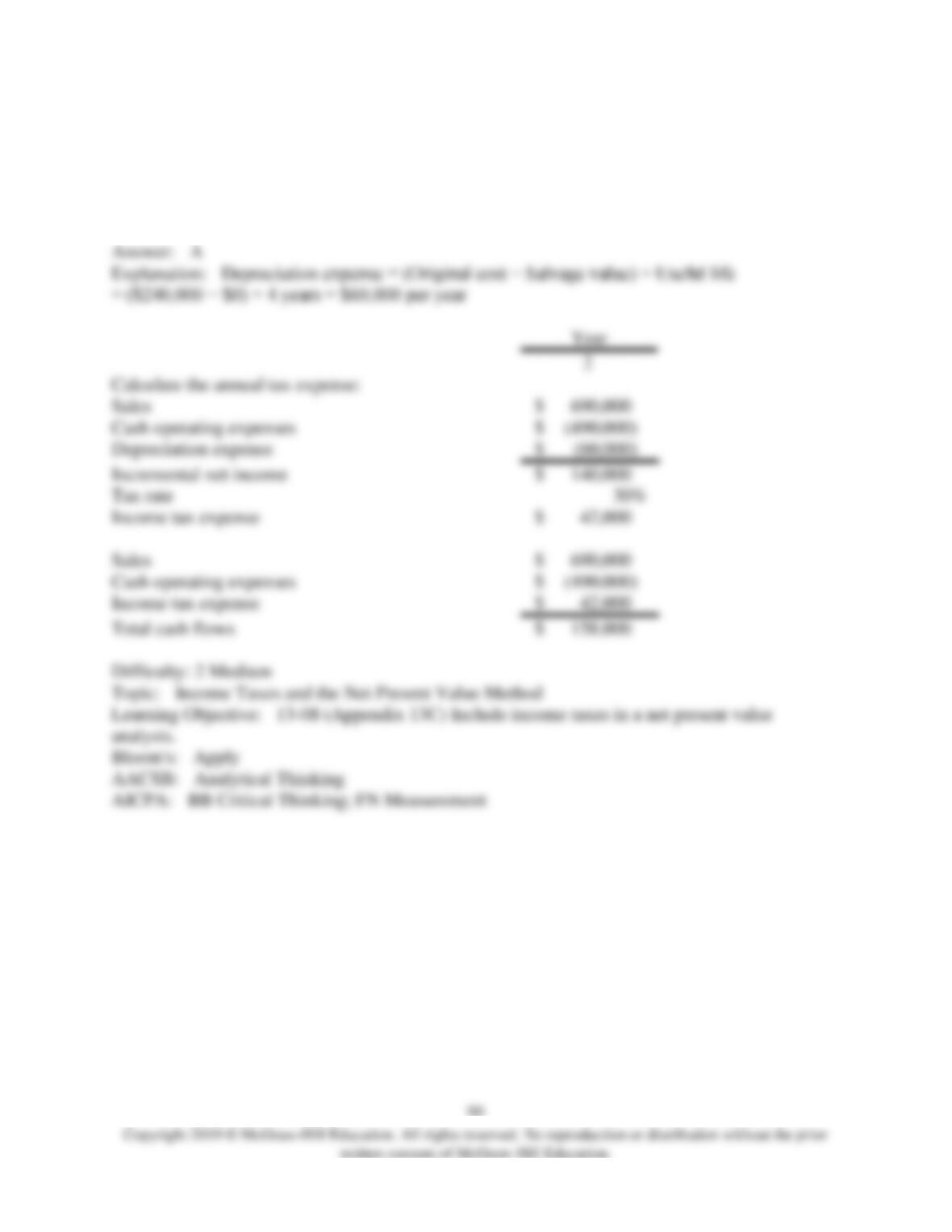
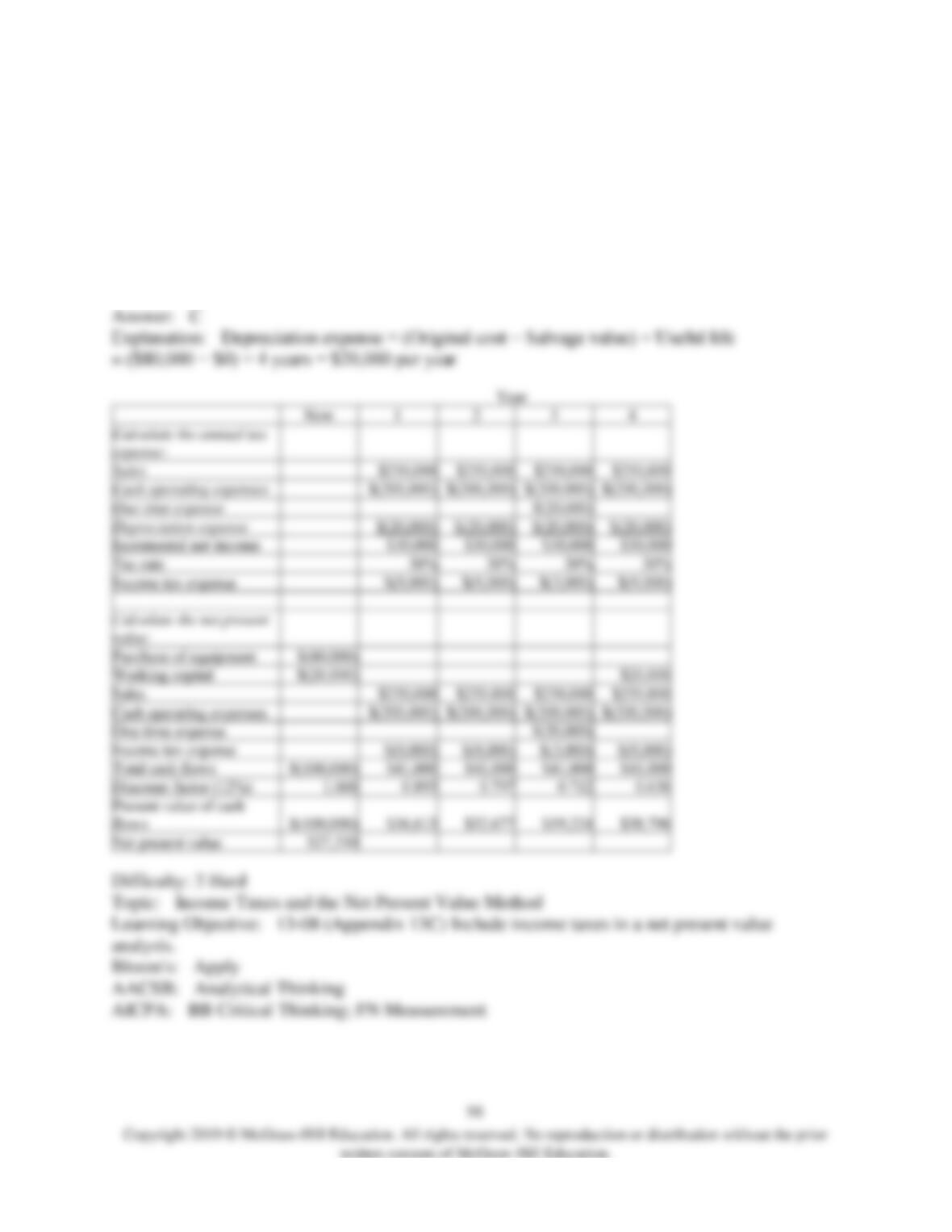
82) The income tax expense in year 3 is:
A) $42,000
B) $30,000
C) $12,000
D) $60,000
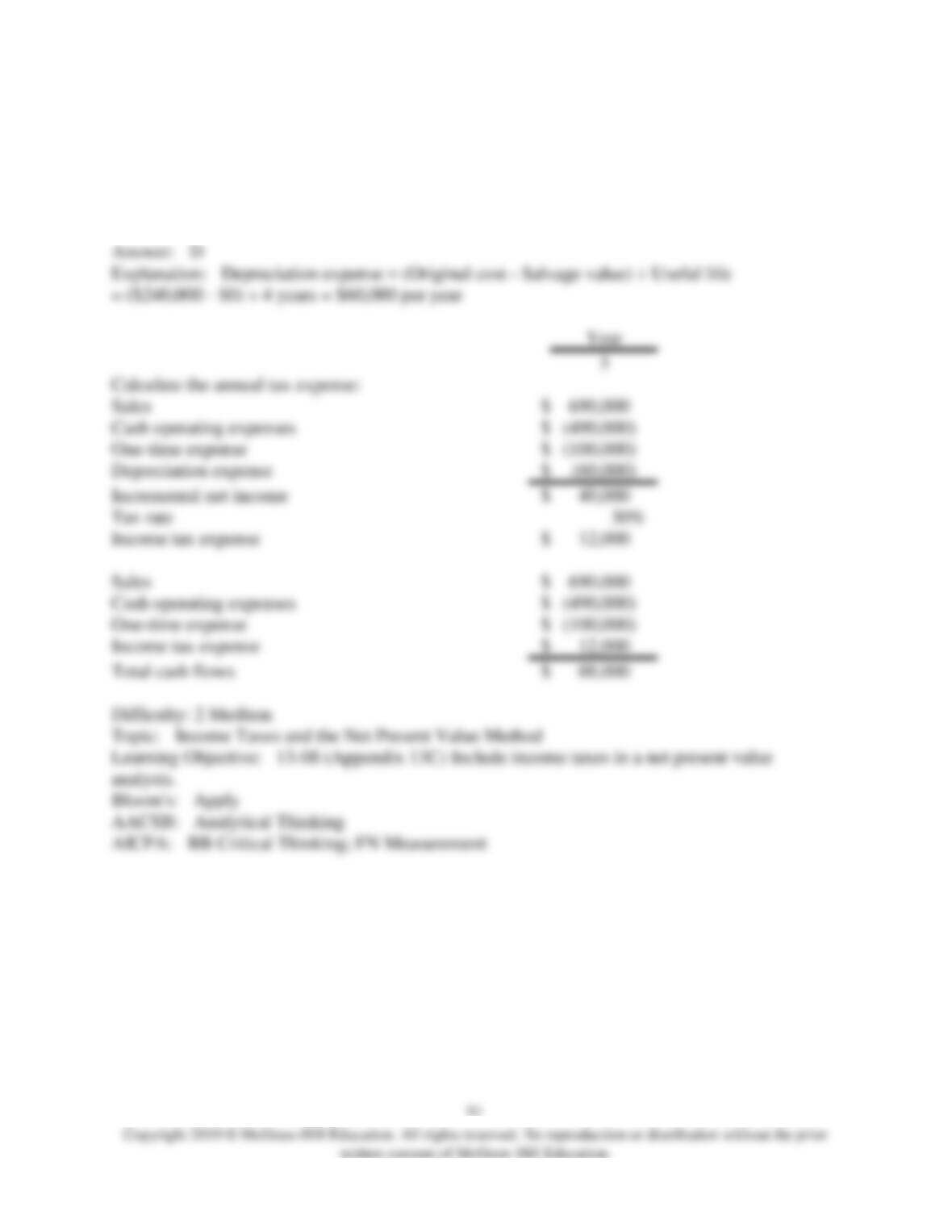
83) The total cash flow net of income taxes in year 2 is:
A) $158,000
B) $200,000
C) $140,000
D) $88,000
84) The total cash flow net of income taxes in year 3 is:
A) $58,000
B) $158,000
C) $100,000
D) $88,000
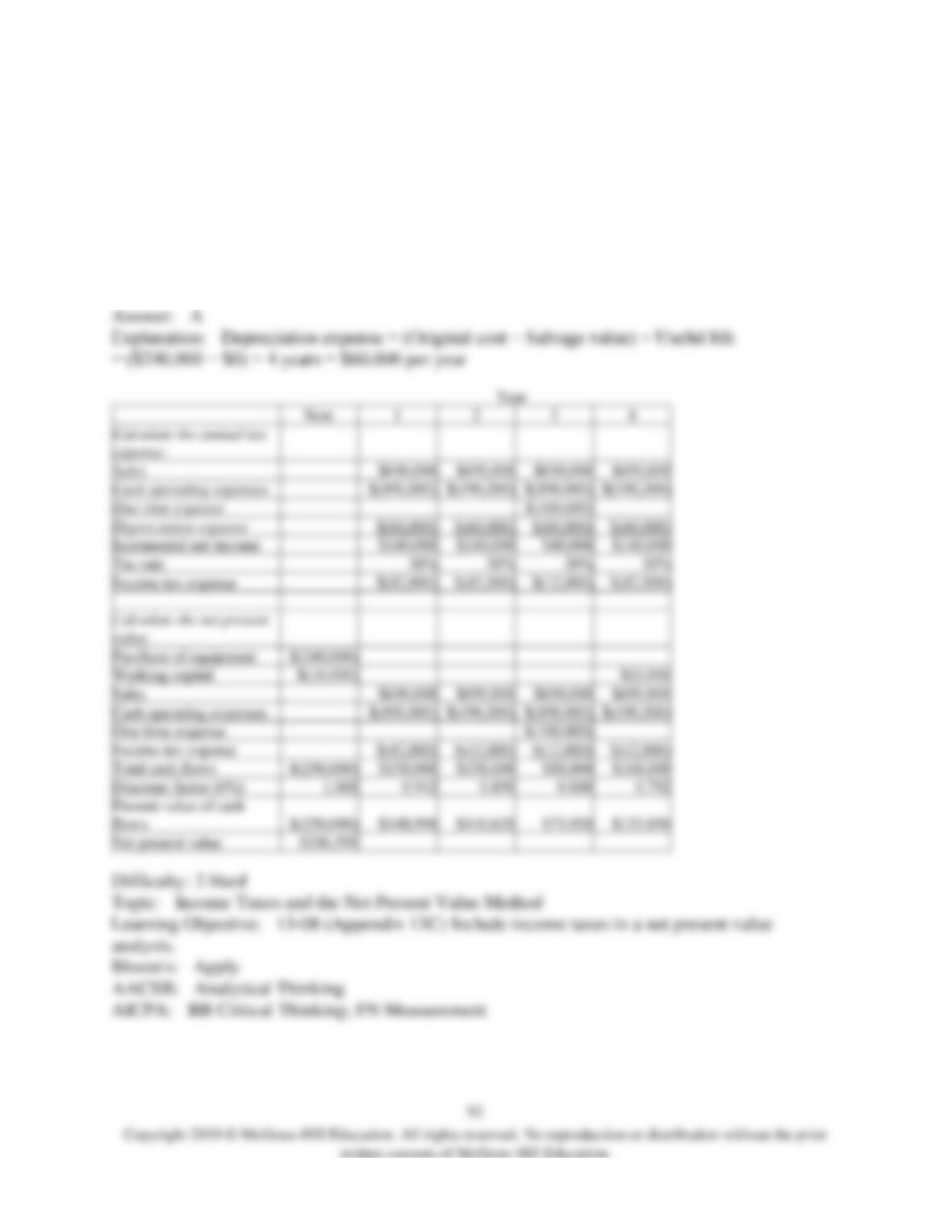
85) The net present value of the entire project is closest to:
See separate Exhibit 13B-1, to determine the appropriate discount factor(s) using the tables
provided.
A) $246,590
B) $238,670
C) $322,000
D) $366,920
Marbry Corporation has provided the following information concerning a capital budgeting
project:
After-tax discount rate
9
%
Tax rate
35
%
Expected life of the project
4
Investment required in equipment
$
160,000
Salvage value of equipment
$
0
Annual sales
$
460,000
Annual cash operating expenses
$
340,000
One-time renovation expense in year 3
$
60,000
The company uses straight-line depreciation on all equipment. Assume cash flows occur at the
end of the year except for the initial investments. The company takes income taxes into account
in its capital budgeting.
86) The income tax expense in year 2 is:
A) $7,000
B) $42,000
C) $28,000
D) $21,000
Calculate the annual tax expense:
Sales
$
Cash operating expenses
$
)
Depreciation expense
$
)
Incremental net income
$
Tax rate
%
Income tax expense
$
87) The income tax expense in year 3 is:
A) $42,000
B) $21,000
C) $28,000
D) $7,000
88) The net present value of the entire project is closest to:
See separate Exhibit 13B-1, to determine the appropriate discount factor(s) using the tables
provided.
A) $107,880
B) $182,360
C) $267,880
D) $169,000
Mulford Corporation has provided the following information concerning a capital budgeting
project:
Investment required in equipment
$
80,000
Expected life of the project
4
Salvage value of equipment
$
0
Annual sales
$
250,000
Annual cash operating expenses
$
200,000
Working capital requirement
$
20,000
One-time renovation expense in year 3
$
20,000
The company’s income tax rate is 30% and its after-tax discount rate is 12%. The working capital
would be required immediately and would be released for use elsewhere at the end of the project.
The company uses straight-line depreciation on all equipment. Assume cash flows occur at the
end of the year except for the initial investments. The company takes income taxes into account
in its capital budgeting.
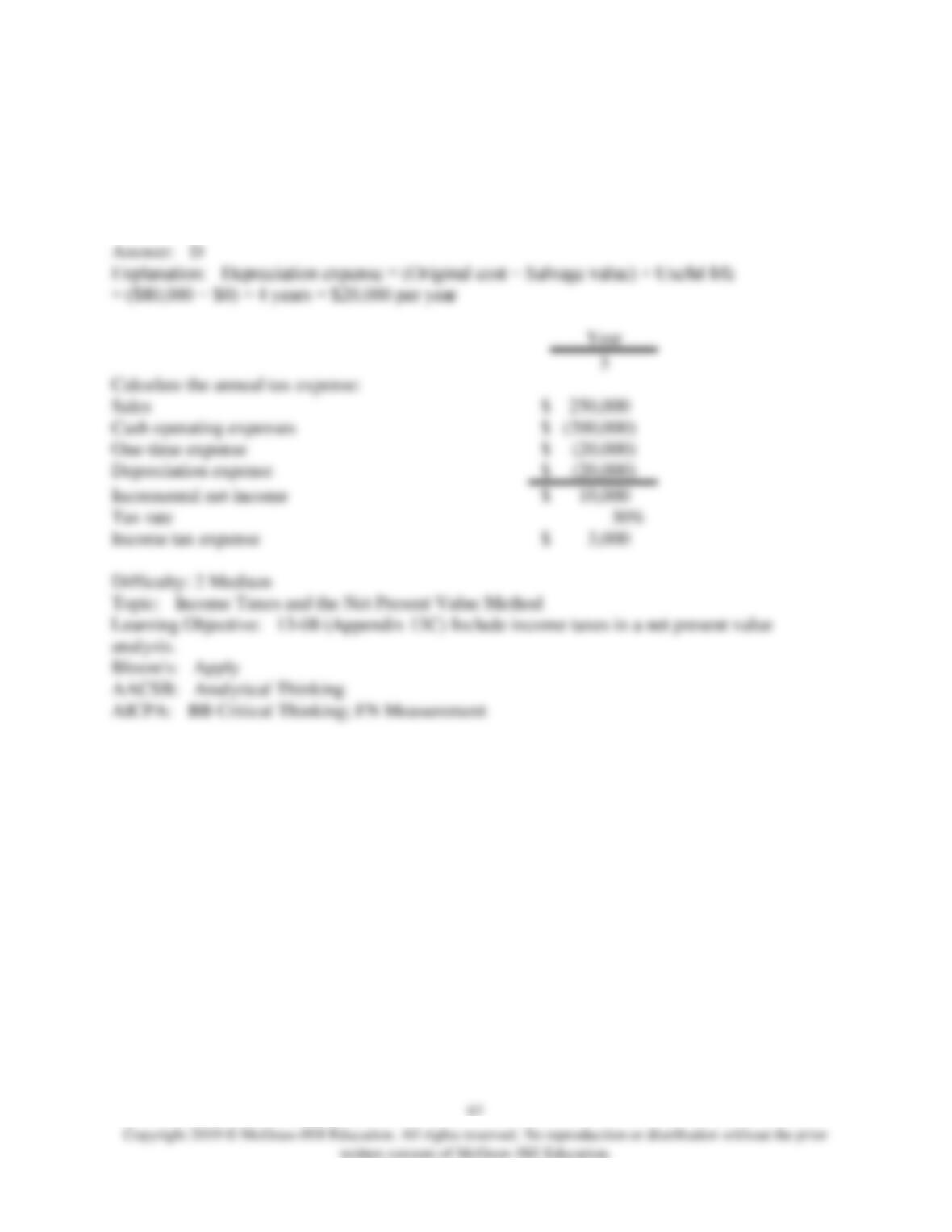
89) The income tax expense in year 2 is:
A) $6,000
B) $9,000
C) $15,000
D) $3,000
Calculate the annual tax expense:
Sales
$
Cash operating expenses
$
)
Depreciation expense
$
)
Incremental net income
$
Tax rate
%
Income tax expense
$
90) The income tax expense in year 3 is:
A) $15,000
B) $6,000
C) $9,000
D) $3,000
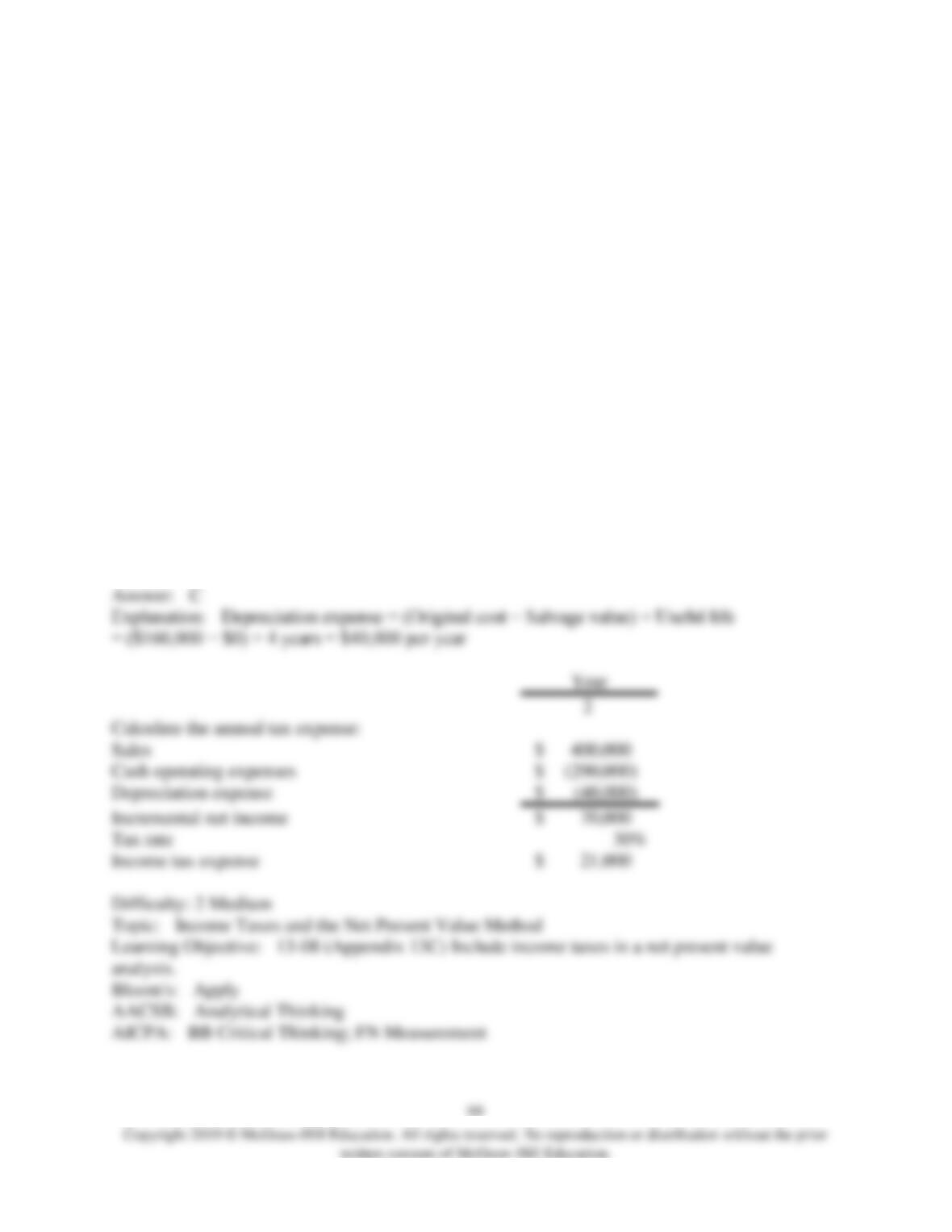
91) The net present value of the entire project is closest to:
See separate Exhibit 13B-1, to determine the appropriate discount factor(s) using the tables
provided.
A) $50,380
B) $14,590
C) $27,310
D) $70,000
Prudencio Corporation has provided the following information concerning a capital budgeting
project:
After-tax discount rate
13
%
Tax rate
30
%
Expected life of the project
4
Investment required in equipment
$
160,000
Salvage value of equipment
$
0
Annual sales
$
400,000
Annual cash operating expenses
$
290,000
One-time renovation expense in year 3
$
40,000
The company uses straight-line depreciation on all equipment. Assume cash flows occur at the
end of the year except for the initial investments. The company takes income taxes into account
in its capital budgeting.
92) The income tax expense in year 2 is:
A) $12,000
B) $33,000
C) $21,000
D) $9,000
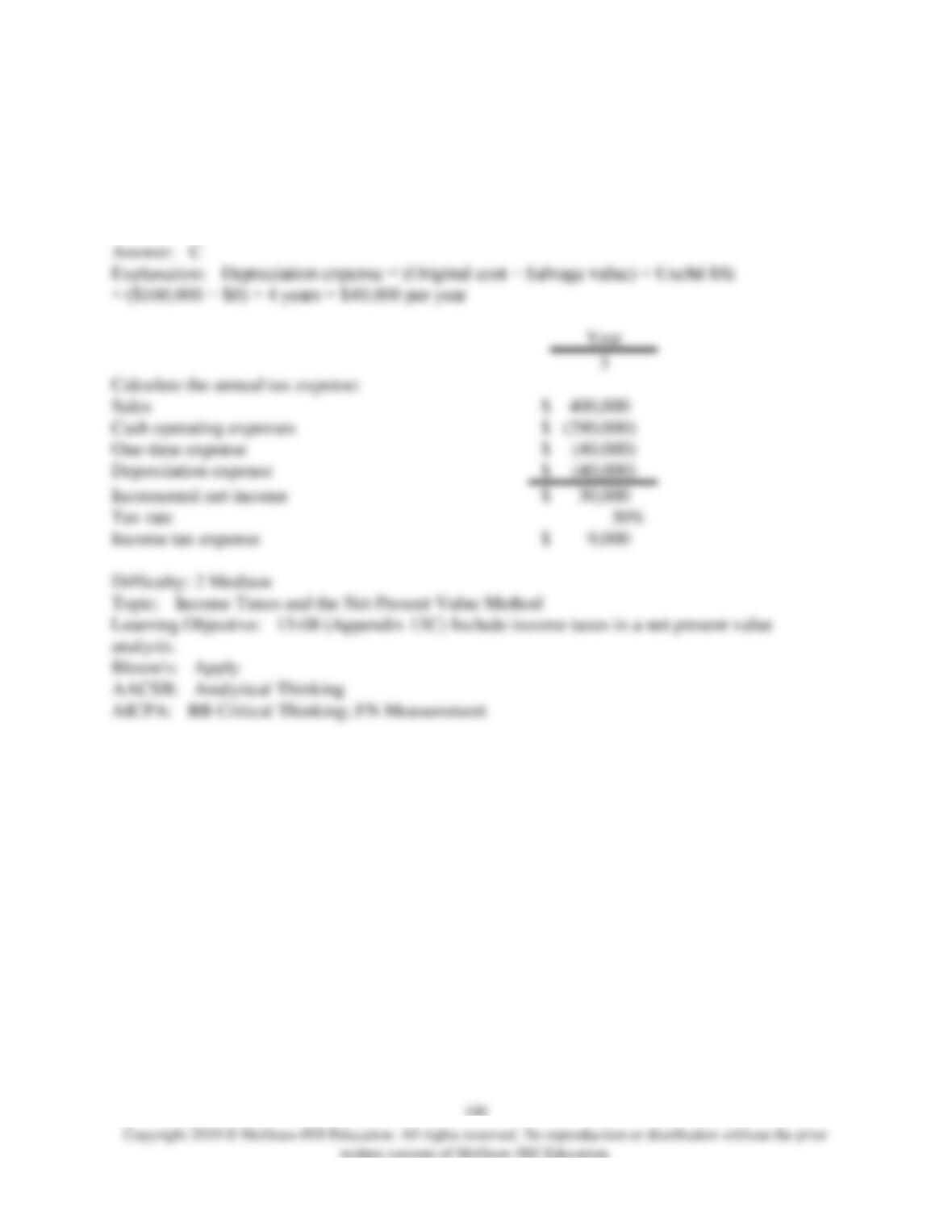
Calculate the annual tax expense:
Sales
$
Cash operating expenses
$
)
Depreciation expense
$
)
Incremental net income
$
Tax rate
%
Income tax expense
$
93) The income tax expense in year 3 is:
A) $21,000
B) $12,000
C) $9,000
D) $33,000