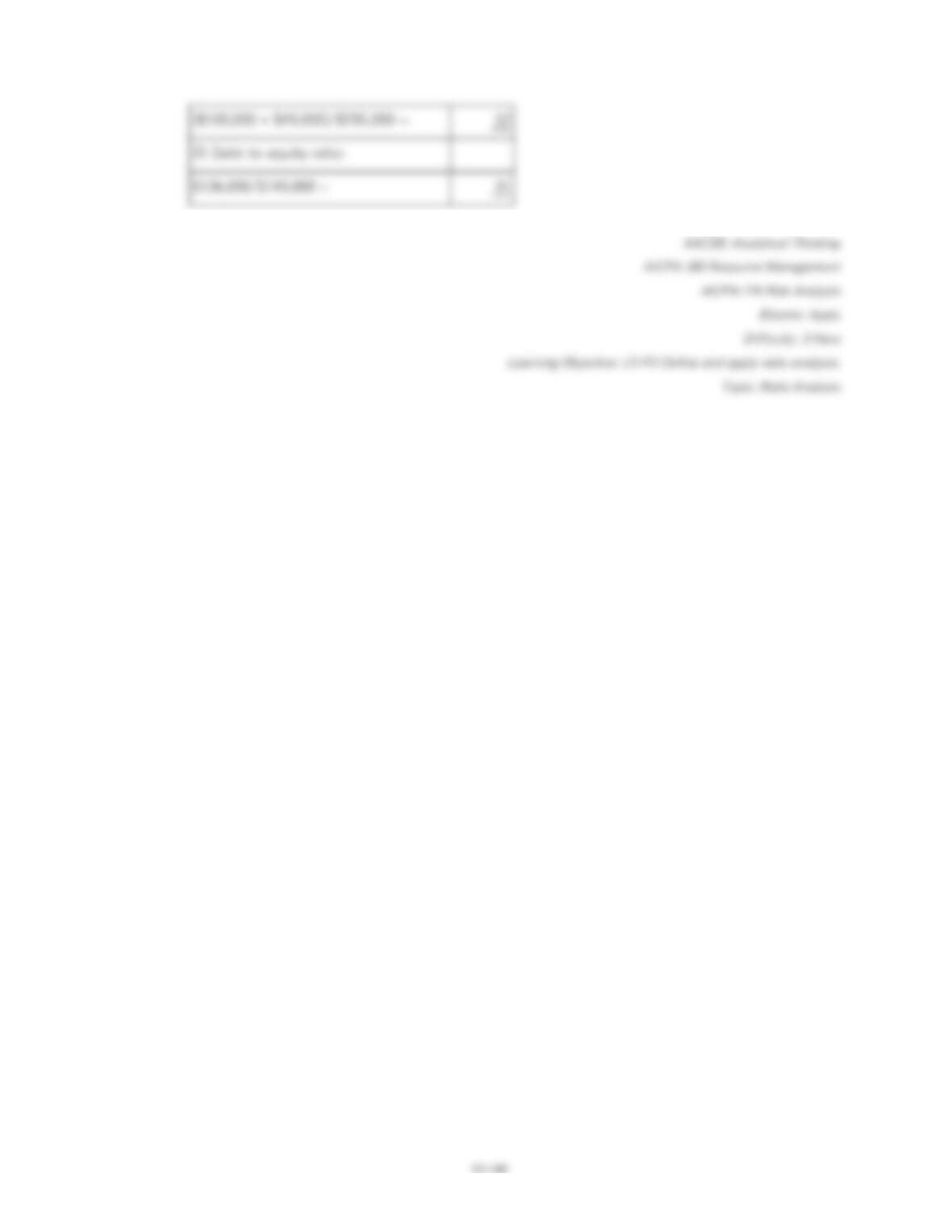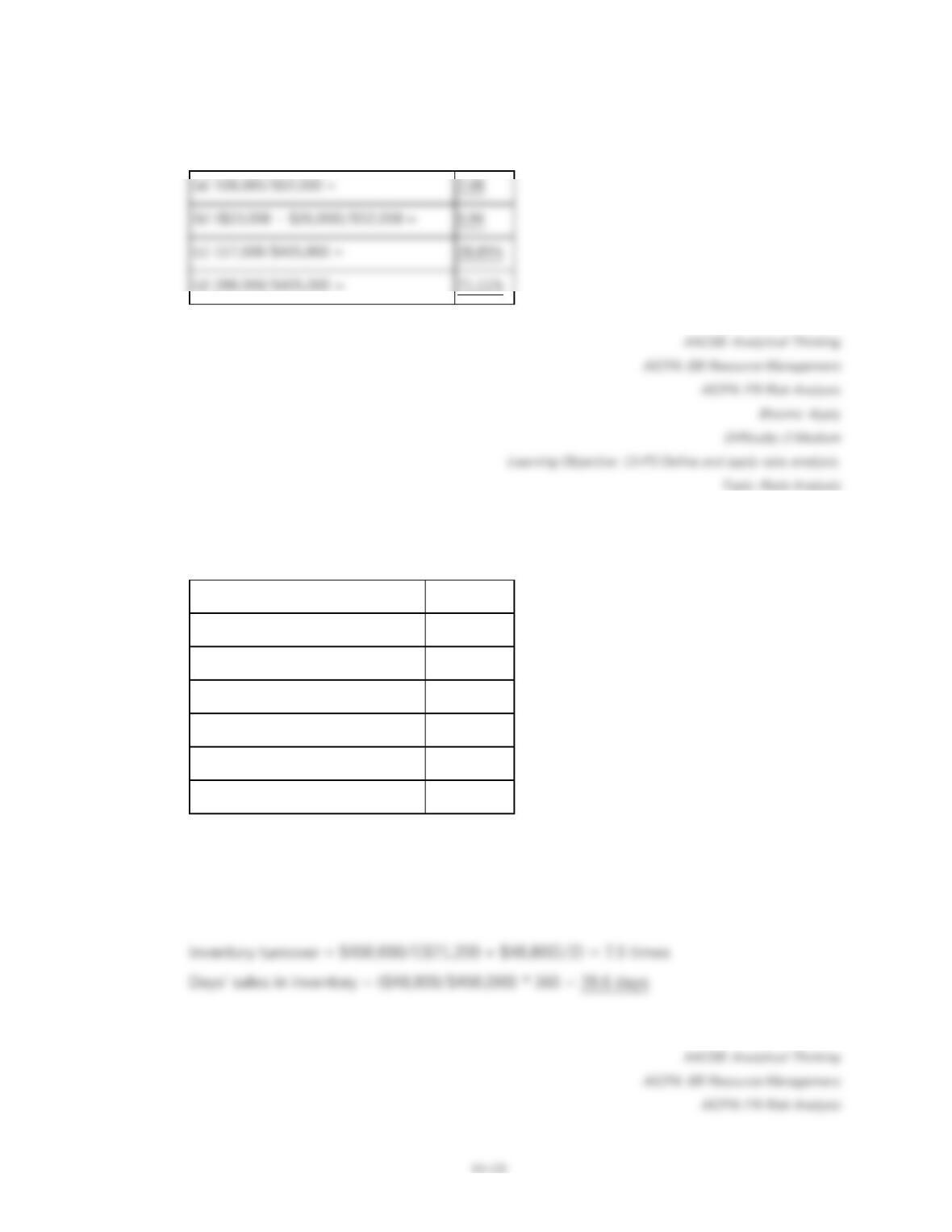
(a) 108,000/$52,000 =
(b) ($23,000 + $26,000)/$52,000 =
(c) 117,000/$405,000 =
186.
The following information is available for the Starr Corporation:
Net Sales
$750,000
Cost of goods sold
450,000
Gross profit
300,000
Operating income
85,000
Net income
42,000
Inventory, beginning-year
71,200
Inventory, end-of–year
48,800
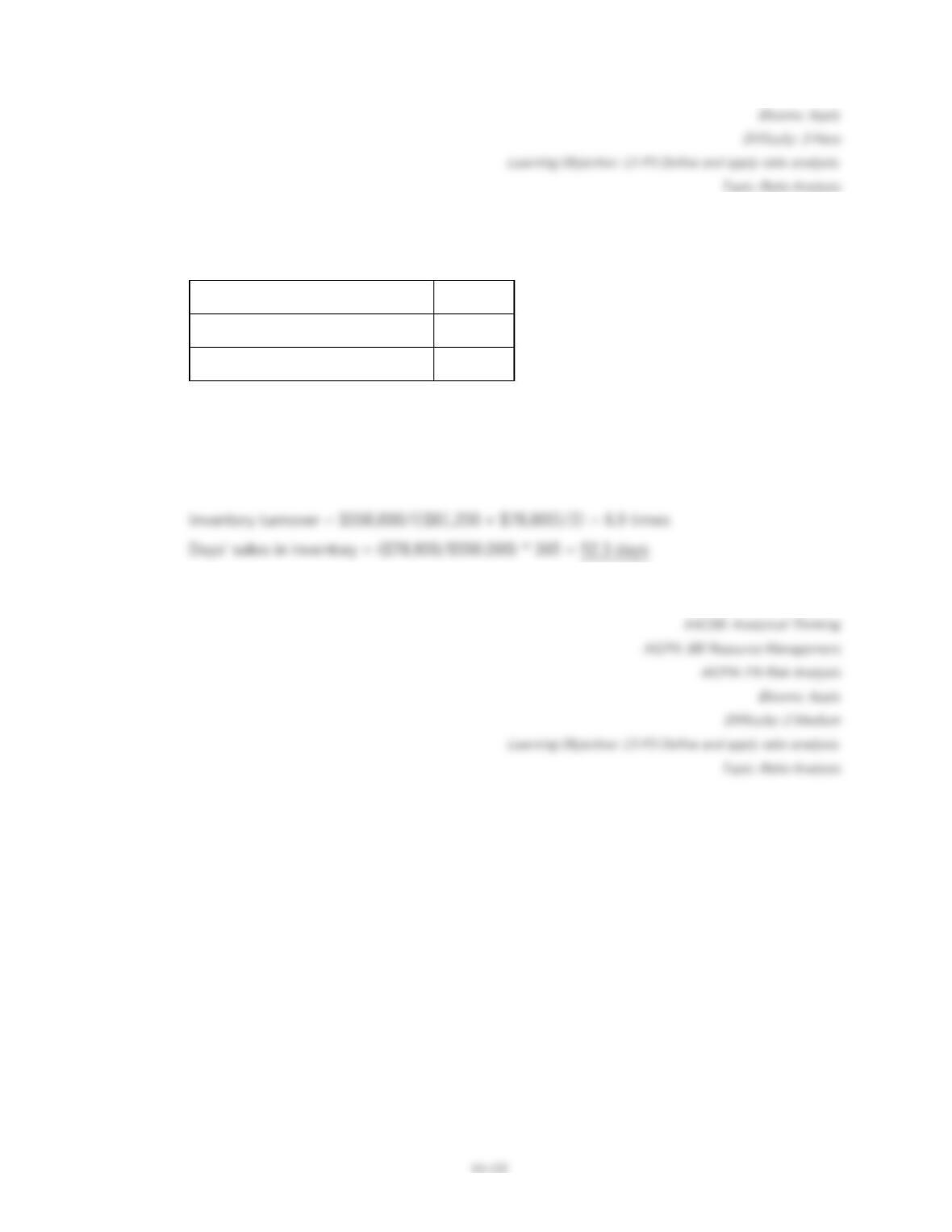
Calculate the company’s inventory turnover and its days’ sales in inventory.
187.
The following information is available for the Marr Corporation:
Cost of goods sold
550,000
Inventory, beginning-year
81,200
Inventory, end-of–year
78,800
Calculate the company’s inventory turnover and its days’ sales in inventory.
188.
The following information is available for the Marr Corporation:
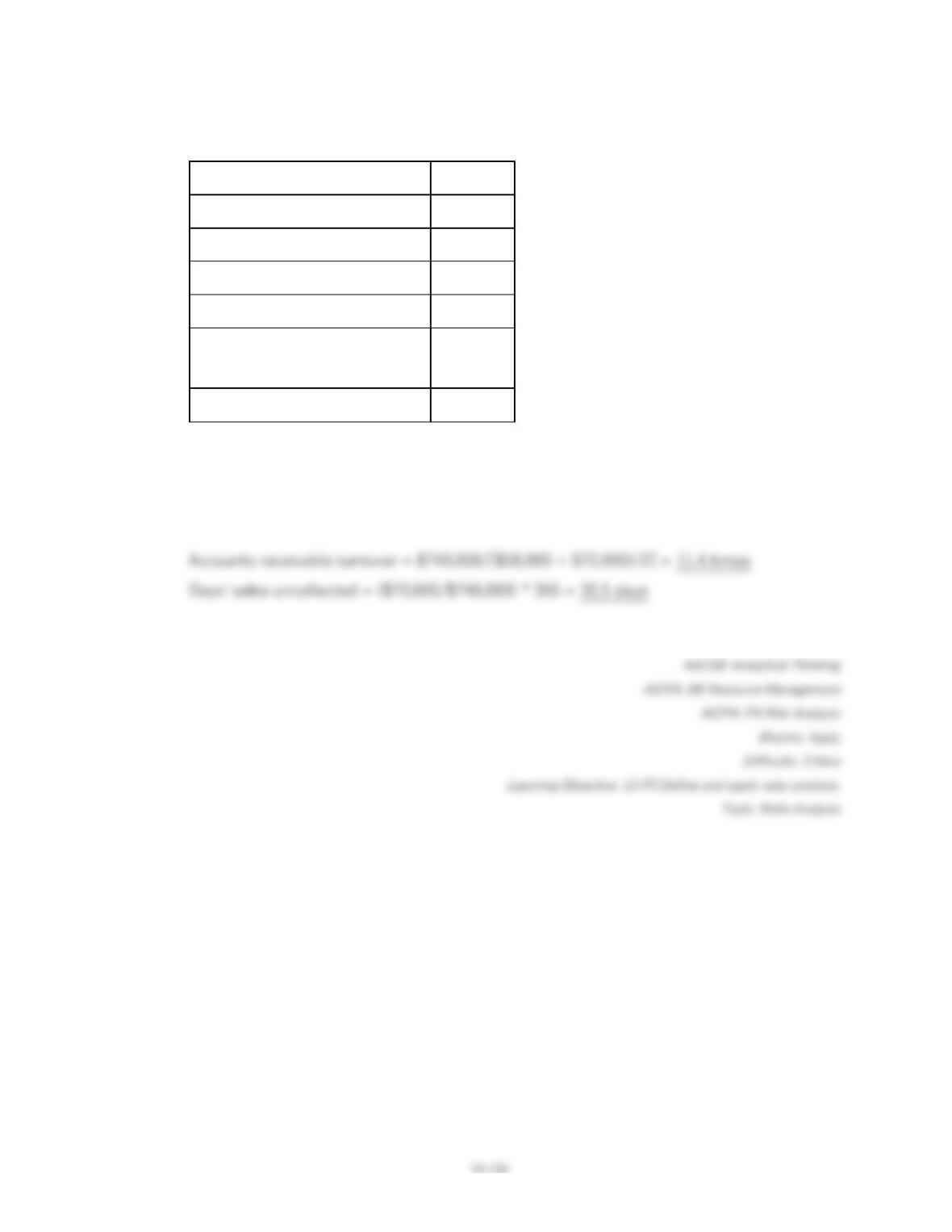
Net Sales
$970,000
Accounts Receivable, beginning-year
42,700
Accounts Receivable, end-of–year
46,100
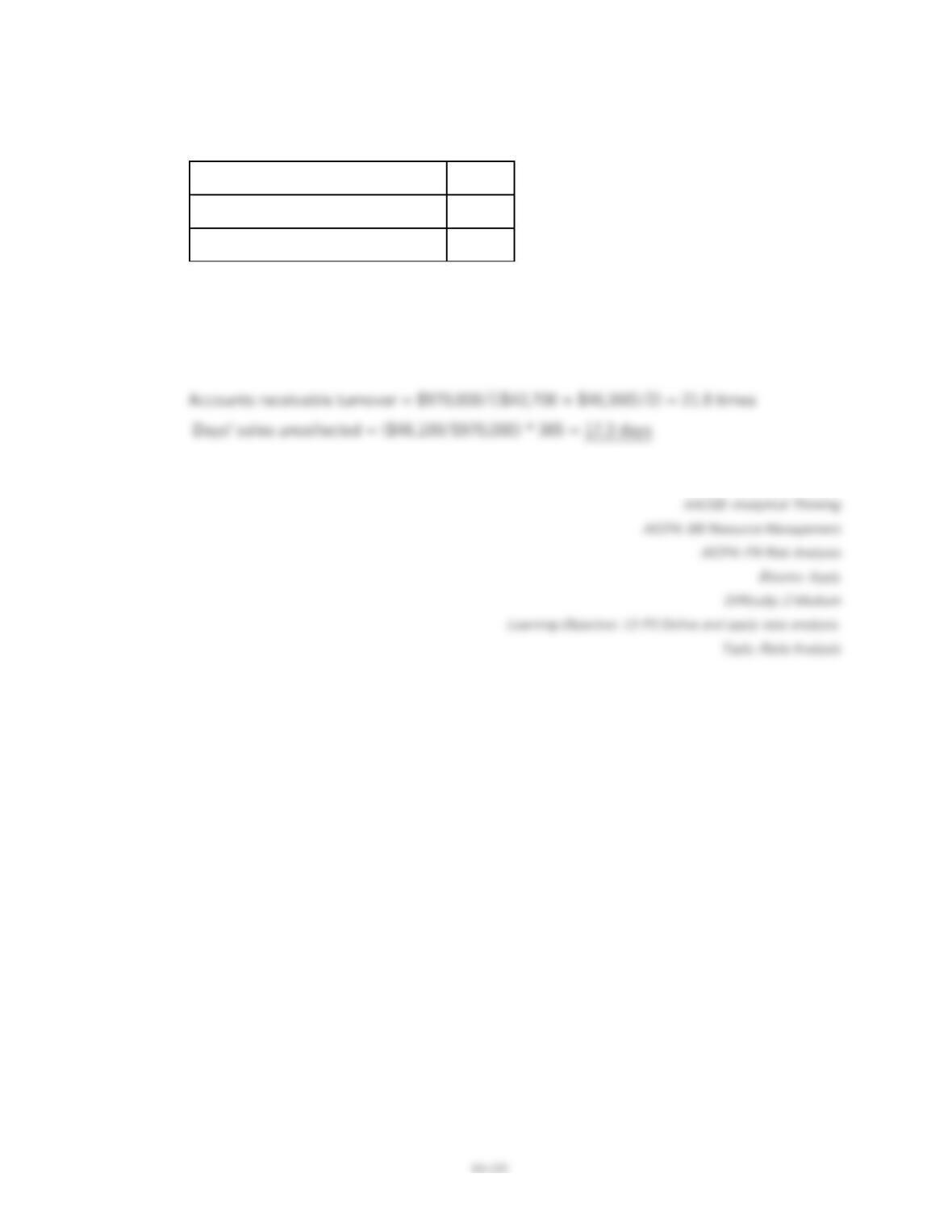
Calculate the company’s accounts receivable turnover and its days’ sales uncollected.
189.
The following current year information is available from a manufacturing company:
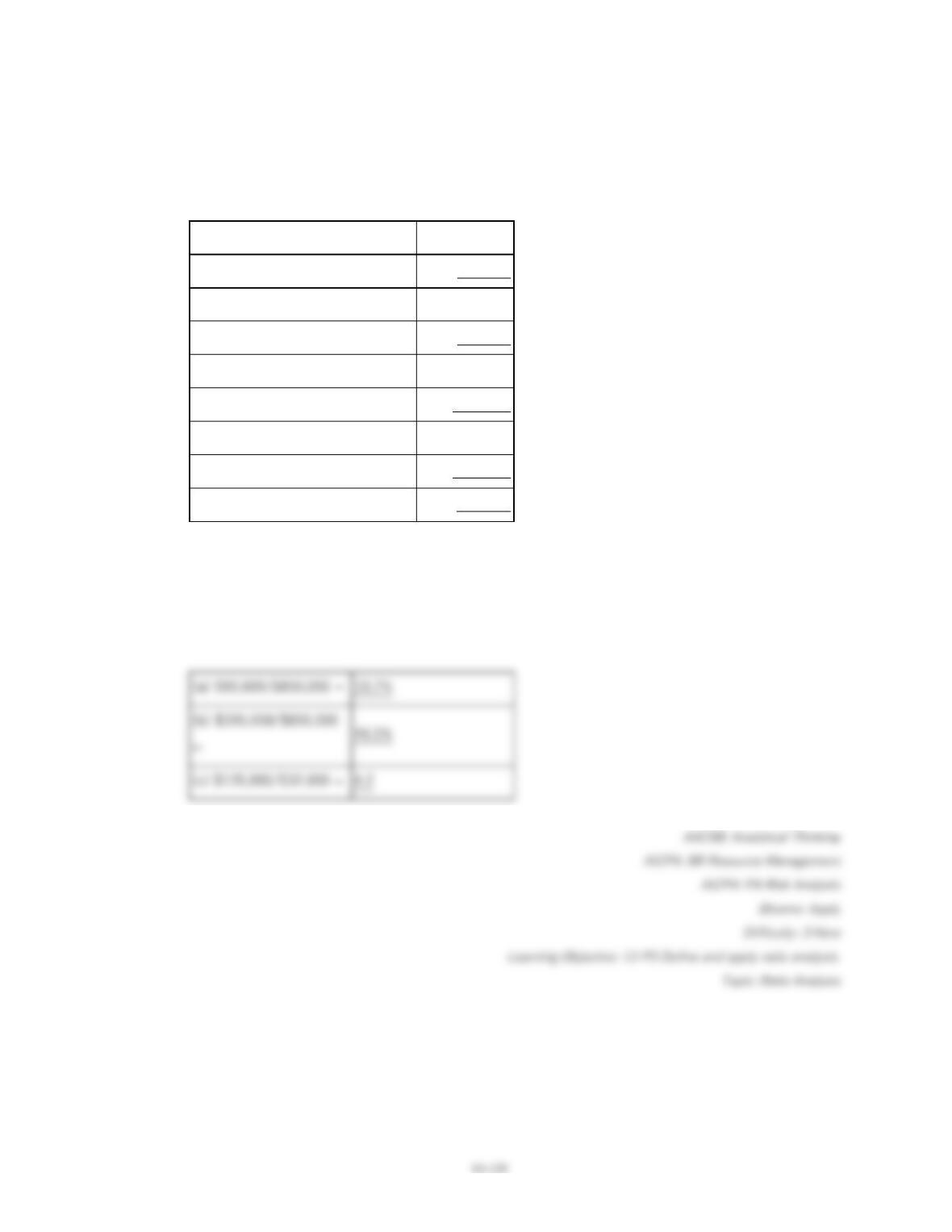
Sales
$740,000
Gross profit on sales
276,000
Operating income
64,000
Income before taxes
44,000
Net income
33,600
Accounts Receivable, beginning-
year
58,000
Accounts Receivable, end-of–year
72,000
Calculate the company’s accounts receivable turnover and its days’ sales uncollected.
190.
Information from a manufacturing company’s current year income statement follows.
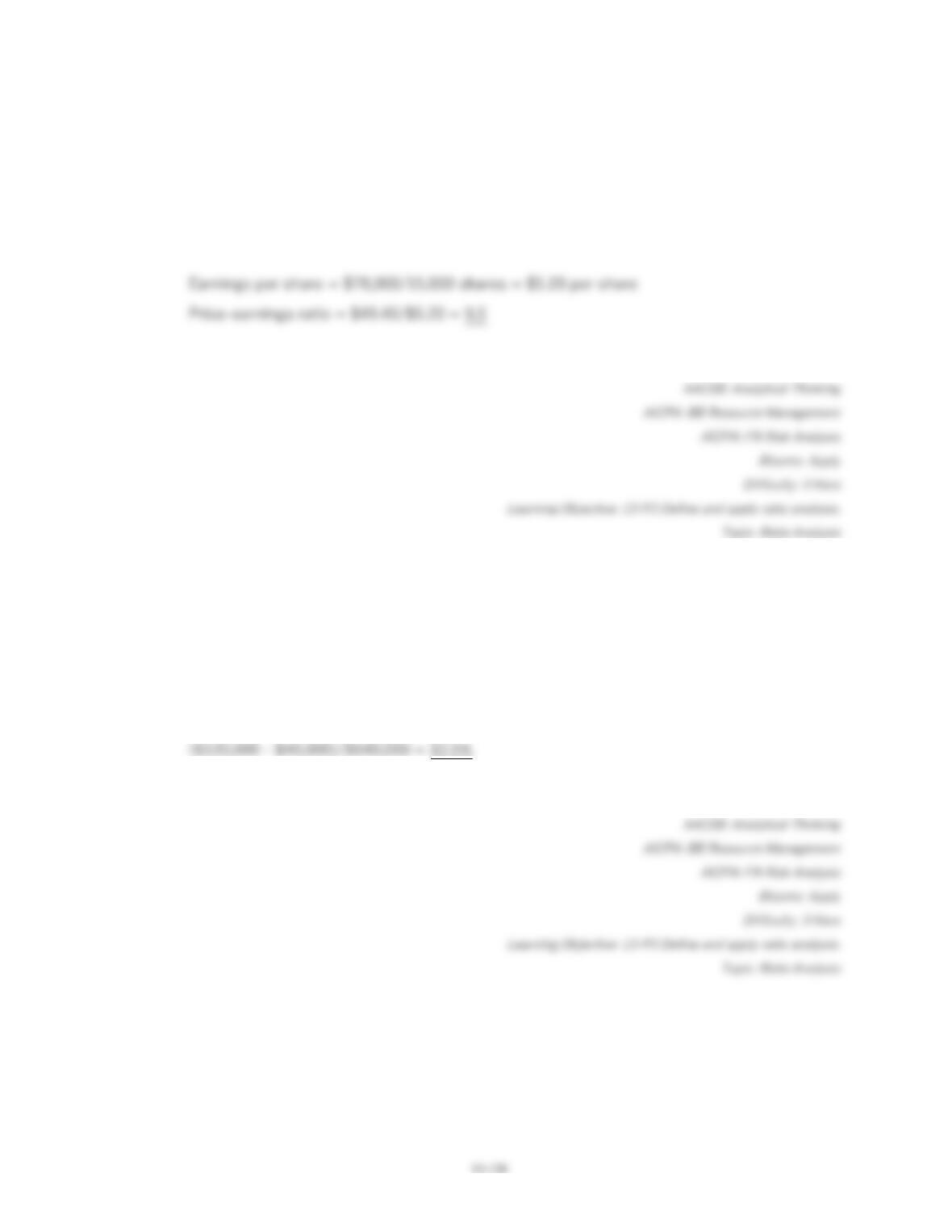
Calculate the company’s (a) profit margin ratio, (b) gross margin ratio, and (c) times
interest earned.
Sales
$850,000
Cost of goods sold
455,000
Gross profit
$395,000
Operating expenses
260,000
Operating income
$135,000
Interest expense
32,000
Income before taxes
$103,000
Income taxes expense
12,400
Net income
$90,600
(a) $90,600/$850,000 =
(c) $135,000/$32,000 =
191.
A company reported net income of $78,000 and had 15,000 common shares outstanding
throughout the current year. At year-end, the price per share of the company’s stock was
$49.40. What is the company’s year-end price-earnings ratio?
192.
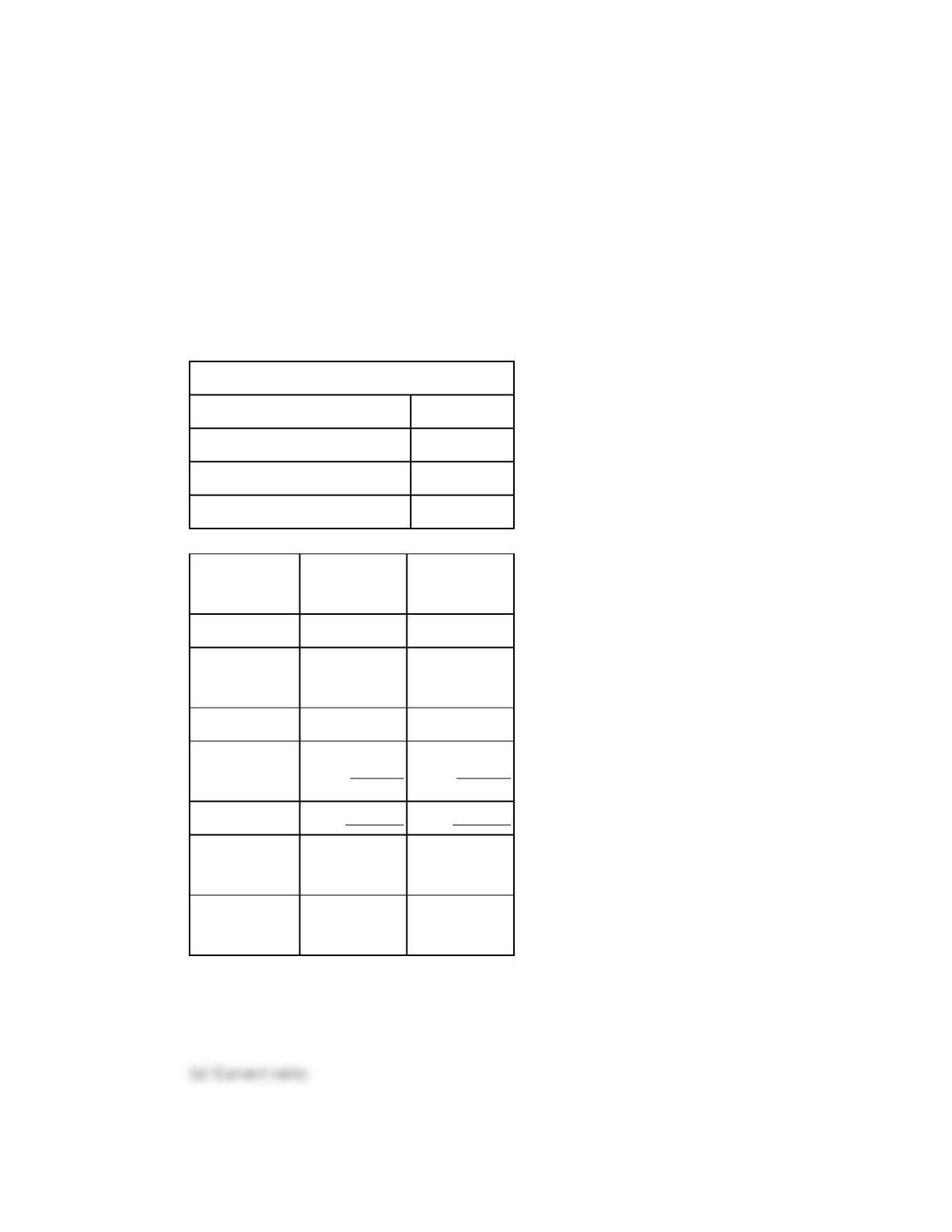
A company paid cash dividends on its preferred stock of $40,000 in the current year when
its net income was $120,000 and its average common stockholders’ equity was $640,000.
What is the company’s return on common stockholders’ equity?
13-127
193.
Use the financial data shown below to calculate the following ratios for the current year:
(a) Current ratio.
(b) Acid-test ratio.
(c) Accounts receivable turnover.
(d) Days’ sales uncollected.
(e) Inventory turnover.
(f) Days’ sales in inventory.
Income statement data
Sales (all on credit)
$650,000
Cost of goods sold
425,000
Income before taxes
78,000
Net income
54,600
Ending
Balances
Beginning
Balances
Cash
$19,500
$15,000
Accounts
receivable (net)
65,000
60,000
Inventory
71,500
64,500
Plant and
equipment (net)
195,000
183,900
Total assets
$351,000
$323,400
Current
liabilities
$62,400
$52,700
Long-term
notes payable
97,500
100,000
13-129
194.
A company’s calendar-year financial data are shown below. The company had total assets
of $339,000 and total equity of $144,400 for the prior year. No additional shares of
common stock were issued during the year. The December 31 market price per share is
$49.50. Cash dividends of $19,500 were paid during the year. Calculate the following ratios
for the company:
(a) profit margin ratio
(b) gross margin ratio
(c) return on total assets
(d) return on common stockholders’ equity
(e) book value per common share
(f) basic earnings per share
(g) price earnings ratio
(h) dividend yield.
Net sales
$650,000
Cost of goods sold
422,500
Gross profit
$227,500
Operating expenses
140,500
Operating income
$87,000
Interest expense
9,100
Income before taxes
$77,900
Income taxes
23,400
Net income
$54,500
Ending
Balances
Cash
$19,500
Accounts receivable (net)
65,000
Inventory
71,500
Plant assets (net)
195,000
Total assets
$351,000
Current liabilities
$74,100
Long-term notes payable
97,500
Common stock, $5 par value
65,000
Retained earnings
114,400
Total liabilities and equity
$351,000
(a) $54,500/$650,000 =
(b) $227,500/$650,000 =
(c) $54,500/[($351,000 + $339,000)/2] =
(d) $54,500/[($179,400 + $144,400)/2] =
(e) $179,400/($65,000/$5) =
(f) $54,500/($65,000/$5) =
(h) ($19,500/13,000)/$49.50 =
13-131
195.
A company’s calendar-year financial data are shown below. The company had total assets
of $339,000 and total equity of $144,400 for the prior year. No additional shares of
common stock were issued during the year. The December 31 market price per share is
$49.50. Cash dividends of $19,500 were paid during the year. Calculate the following ratios
for the company:
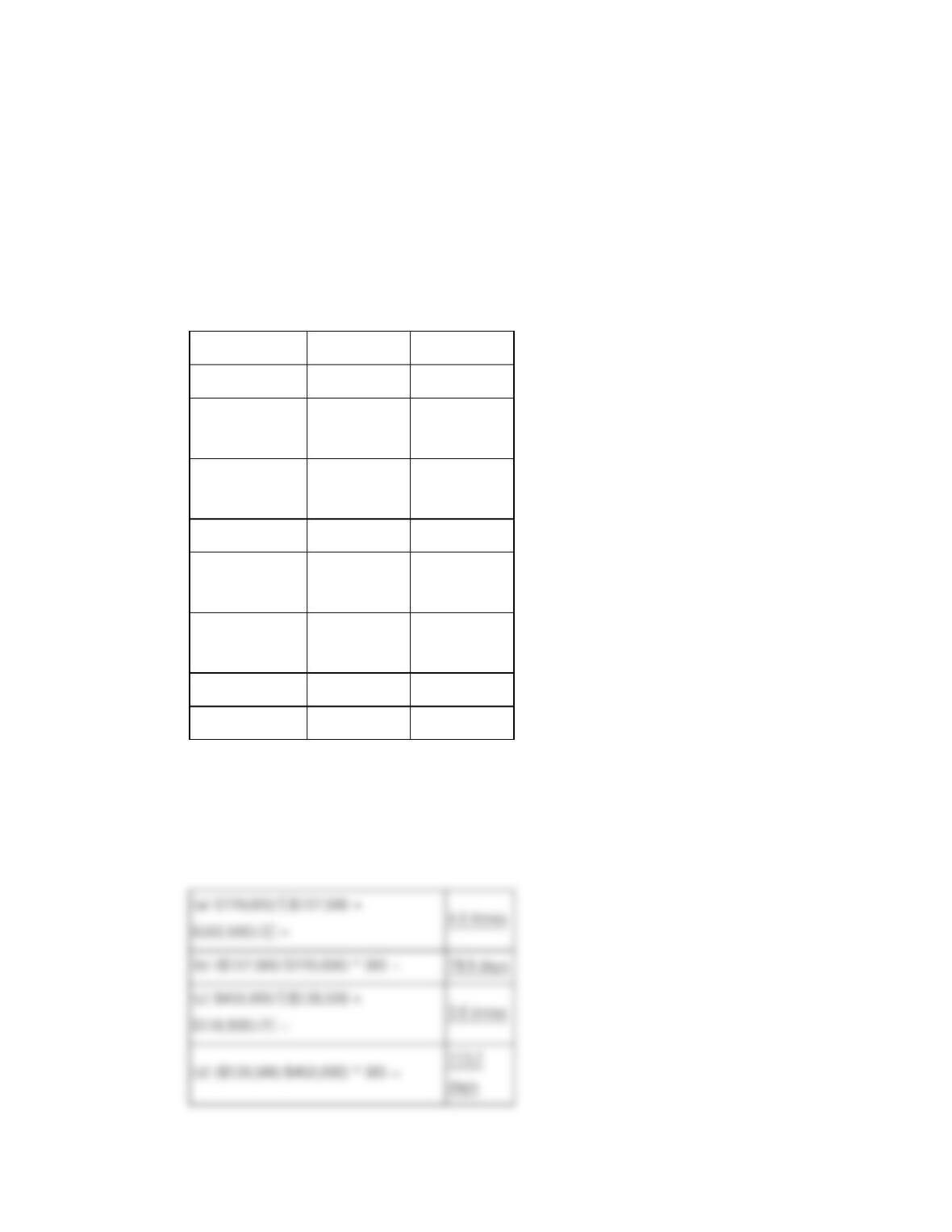
(a) debt ratio
(b) equity ratio
(c) debt-to-equity ratio
(d) times interest earned
(e) total asset turnover
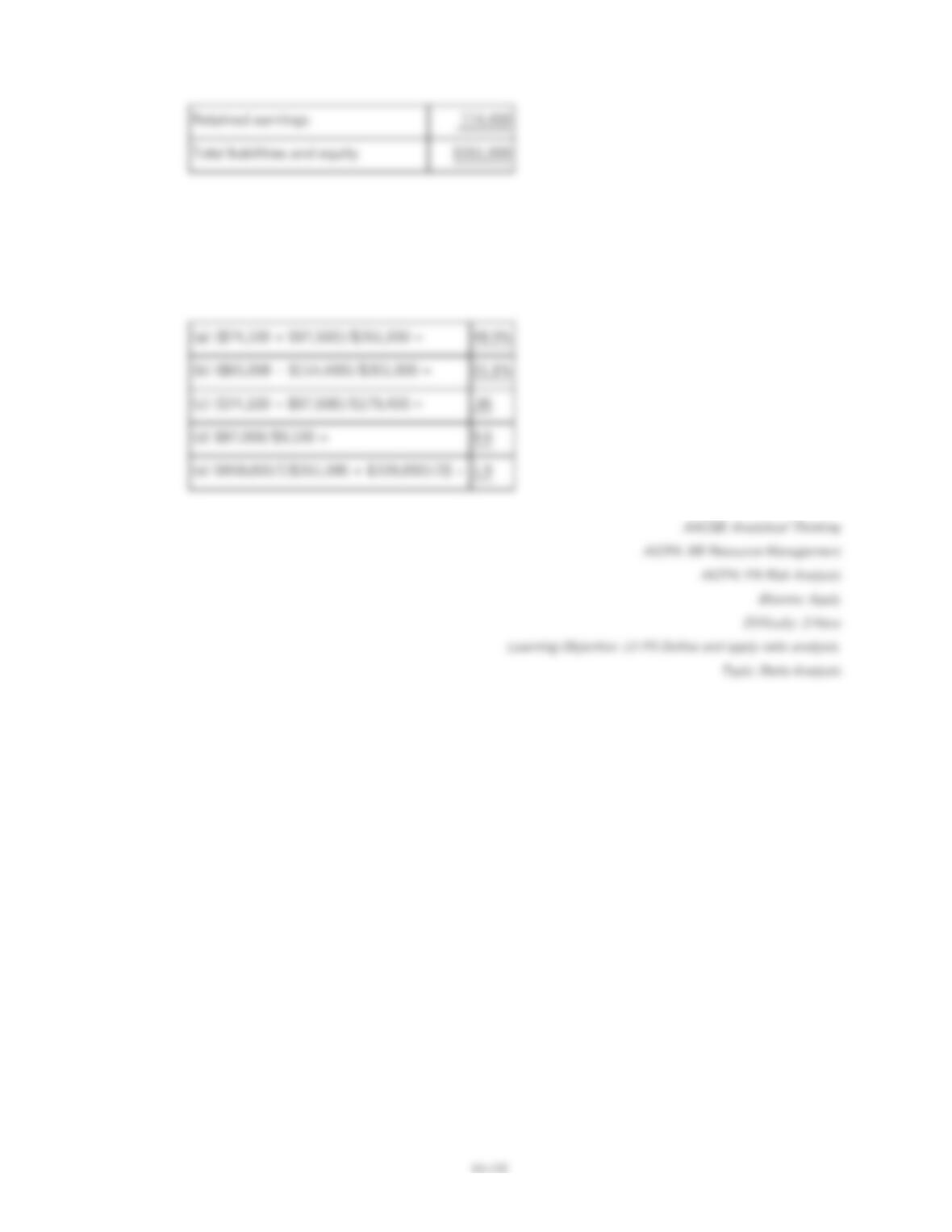
Net sales
$650,000
Cost of goods sold
422,500
Gross profit
$227,500
Operating expenses
140,500
Operating income
$87,000
Interest expense
9,100
Income before taxes
$77,900
Income taxes
23,400
Net income
$54,500
Accounts receivable (net)
Plant assets (net)
Total assets
Current liabilities
Long-term notes payable
13-133
196.
Comparative calendar-year financial data for a company are shown below. Calculate the
following ratios for the company for 2017:
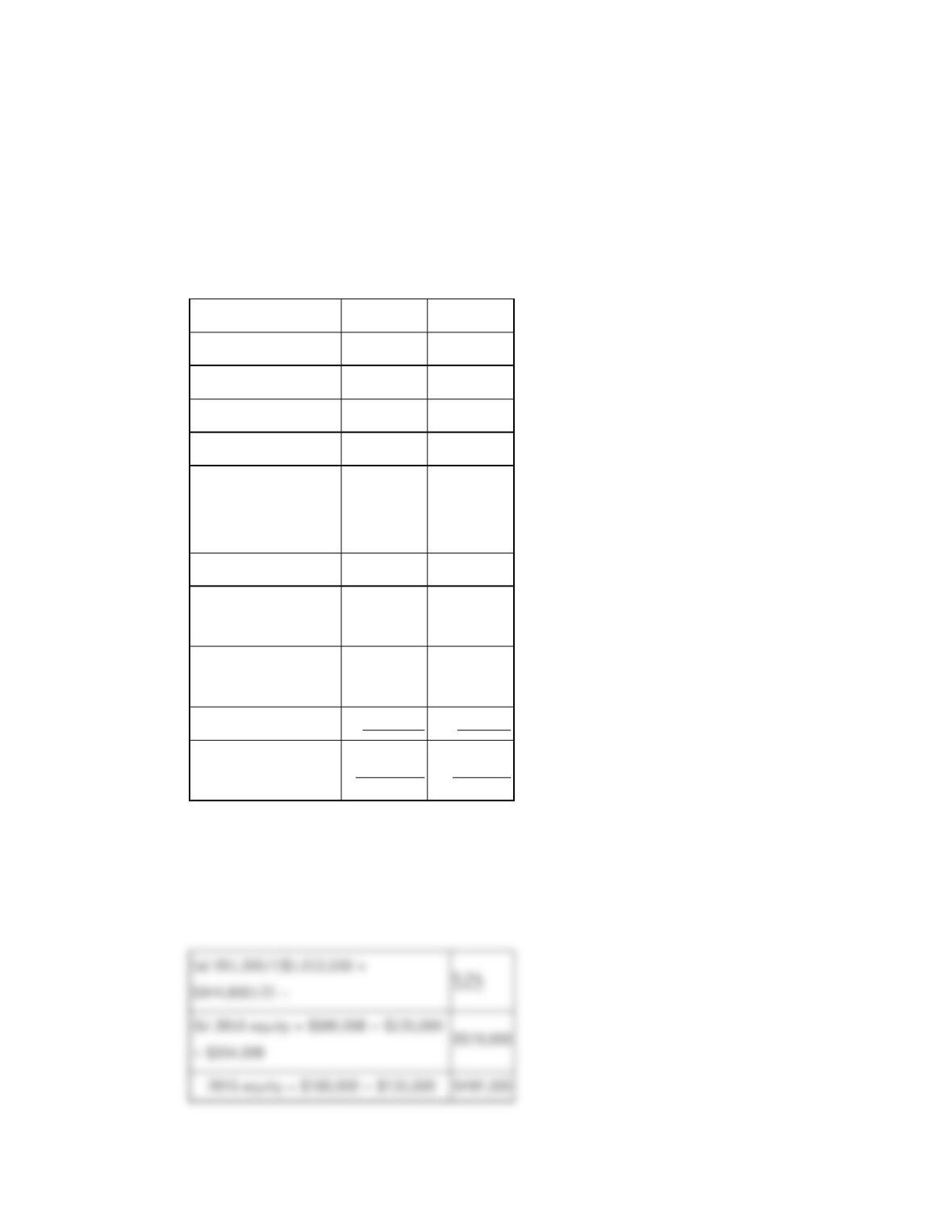
(a) accounts receivable turnover
(b) day’s sales uncollected
(c) inventory turnover
(d) days’ sales in inventory
2017
2016
Sales
$720,000
$607,500
Cost of goods
sold
450,000
382,700
Operating
expenses
168,500
134,900
Net income
51,200
51,700
December 31,
2017
December 31,
2016
Accounts
receivable (net)
$157,500
$162,500
Inventory
139,500
110,500
Total assets
1,012,500
944,800
4.5 times
(b) ($157,500/$720,000) * 365 =
79.9 days
(c) $450,000/[($139,500 +
3.6 times
13-134
197.
Comparative calendar year financial data for a company are shown below. Calculate the
following ratios for 2017:
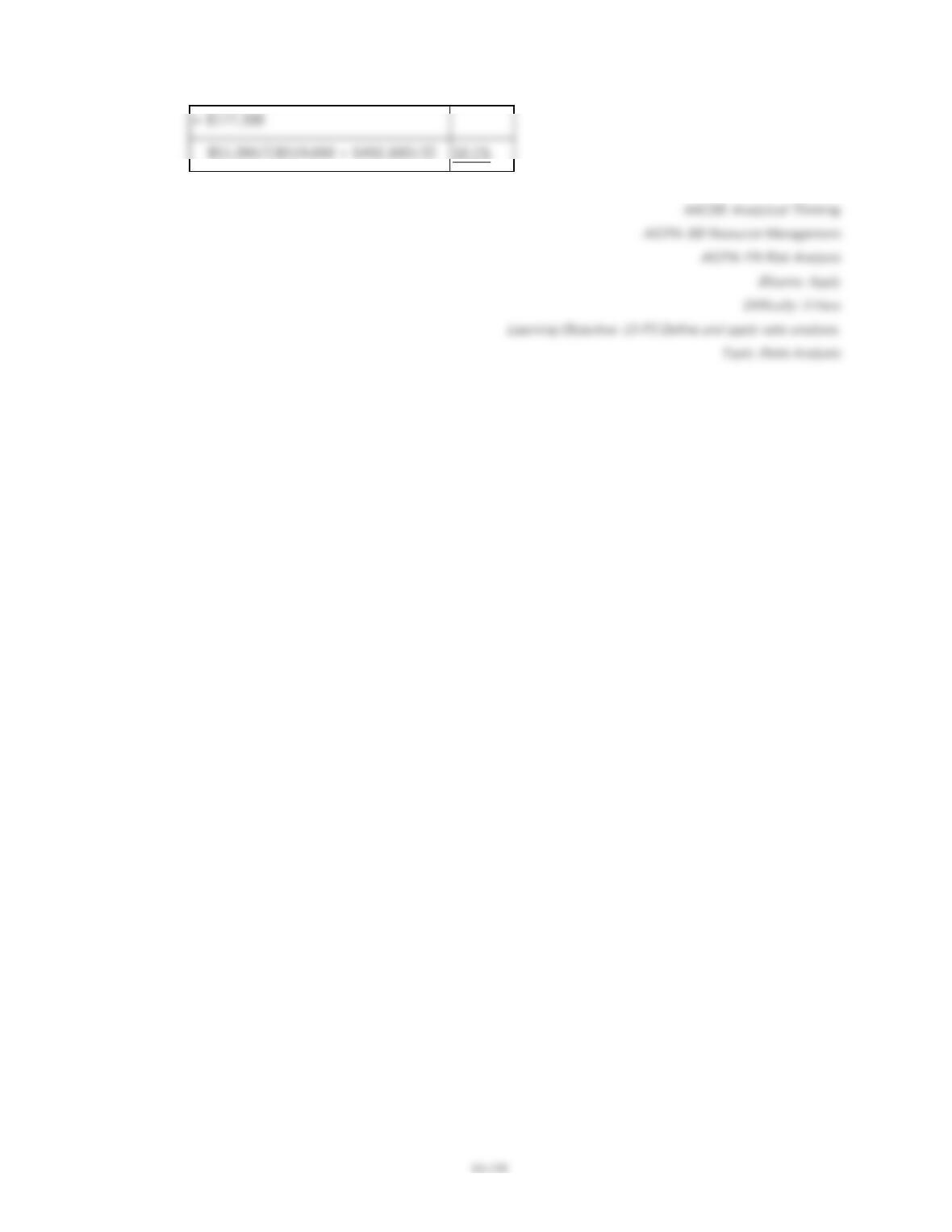
(a) return on total assets
(b) return on common stockholders’ equity.
2017
2016
Sales
$720,000
$607,500
Gross profit
270,000
224,800
Income before taxes
79,200
78,700
Net income
51,200
51,700
December
31,
2017
December
31,
2016
Liabilities
$493,500
$452,500
Common stock ($12
par)
180,000
180,000
Contributed capital in
excess of par
135,000
135,000
Retained earnings
204,000
177,300
Total liabilities and
equity
$1,012,500
$944,800
(a) $51,200/(($1,012,500 +
$944,800)/2) =
13-136
198.
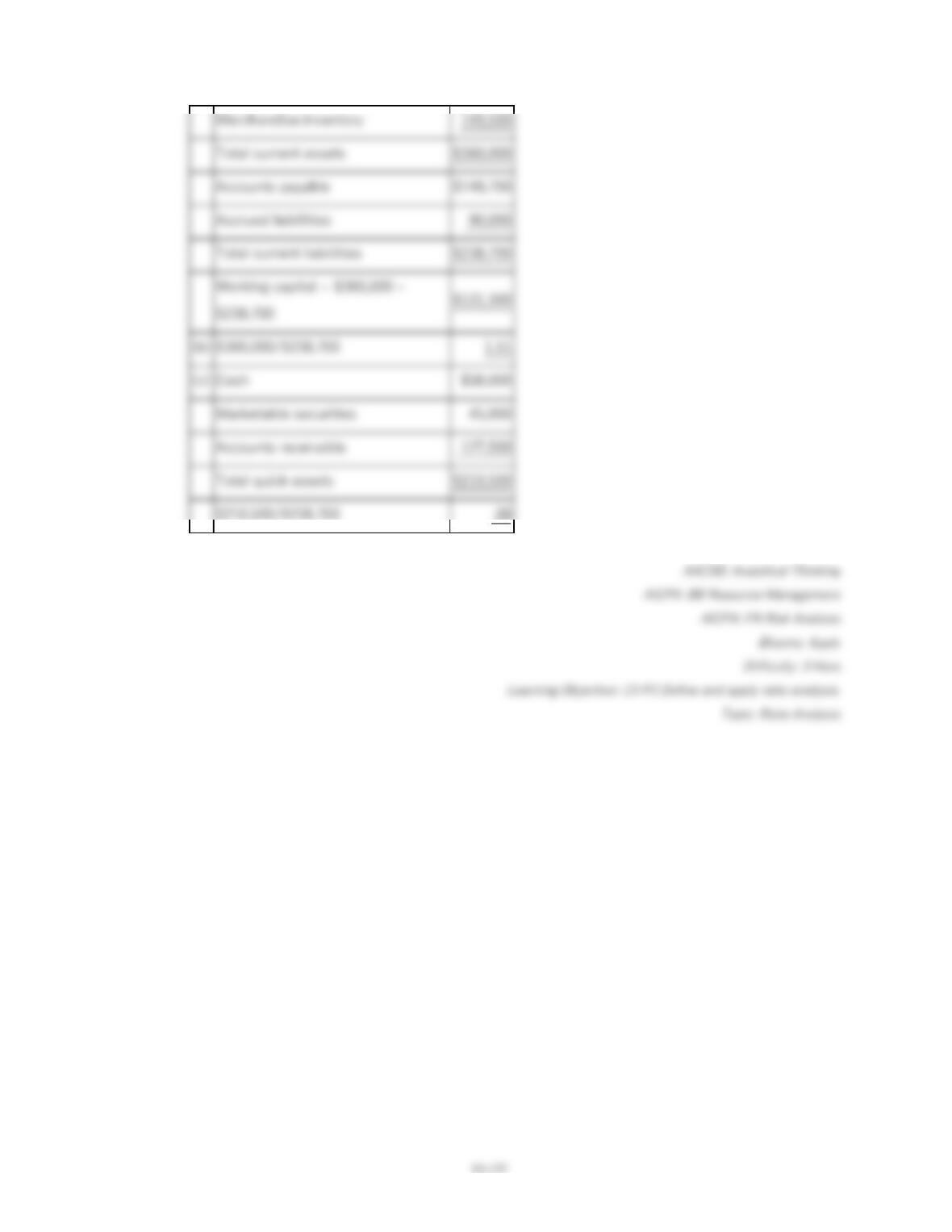
The current year-end balance sheet data for a company are shown below. Calculate the
company’s:
(a) working capital
(b) current ratio
(c) acid-test ratio.
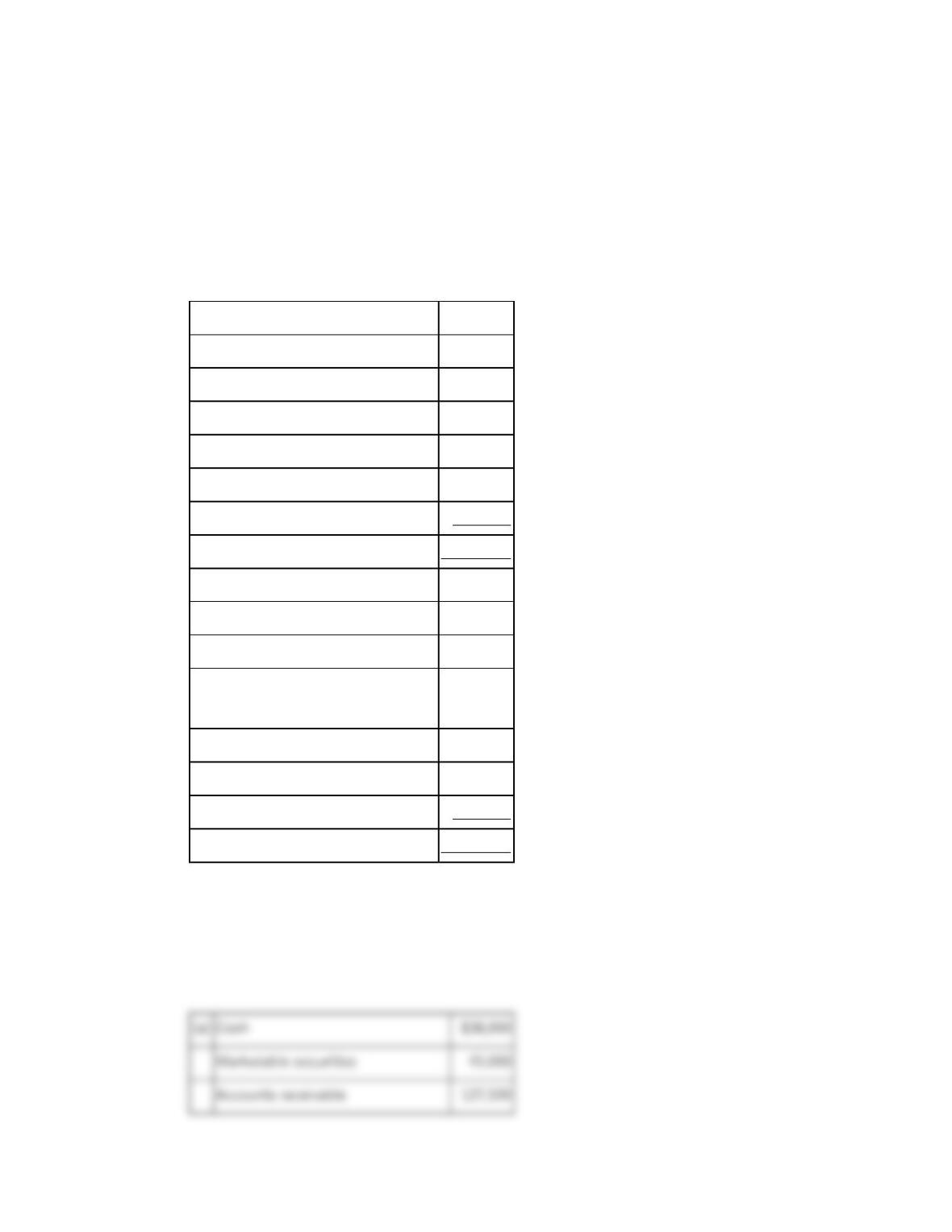
Assets:
Cash
$38,000
Marketable securities
45,000
Accounts receivable (net)
127,500
Merchandise inventory
149,500
Long-term investments
135,000
Plant assets (net)
517,500
Total assets
$1,012,500
Liabilities and equity:
Accounts payable
$148,700
Accrued liabilities
90,000
Notes payable (secured by plant
assets)
254,800
Common stock ($12 par)
180,000
Contributed capital in excess of par
135,000
Retained earnings
204,000
Total liabilities and equity
$1,012,500
(a)
Cash
13-138
199.
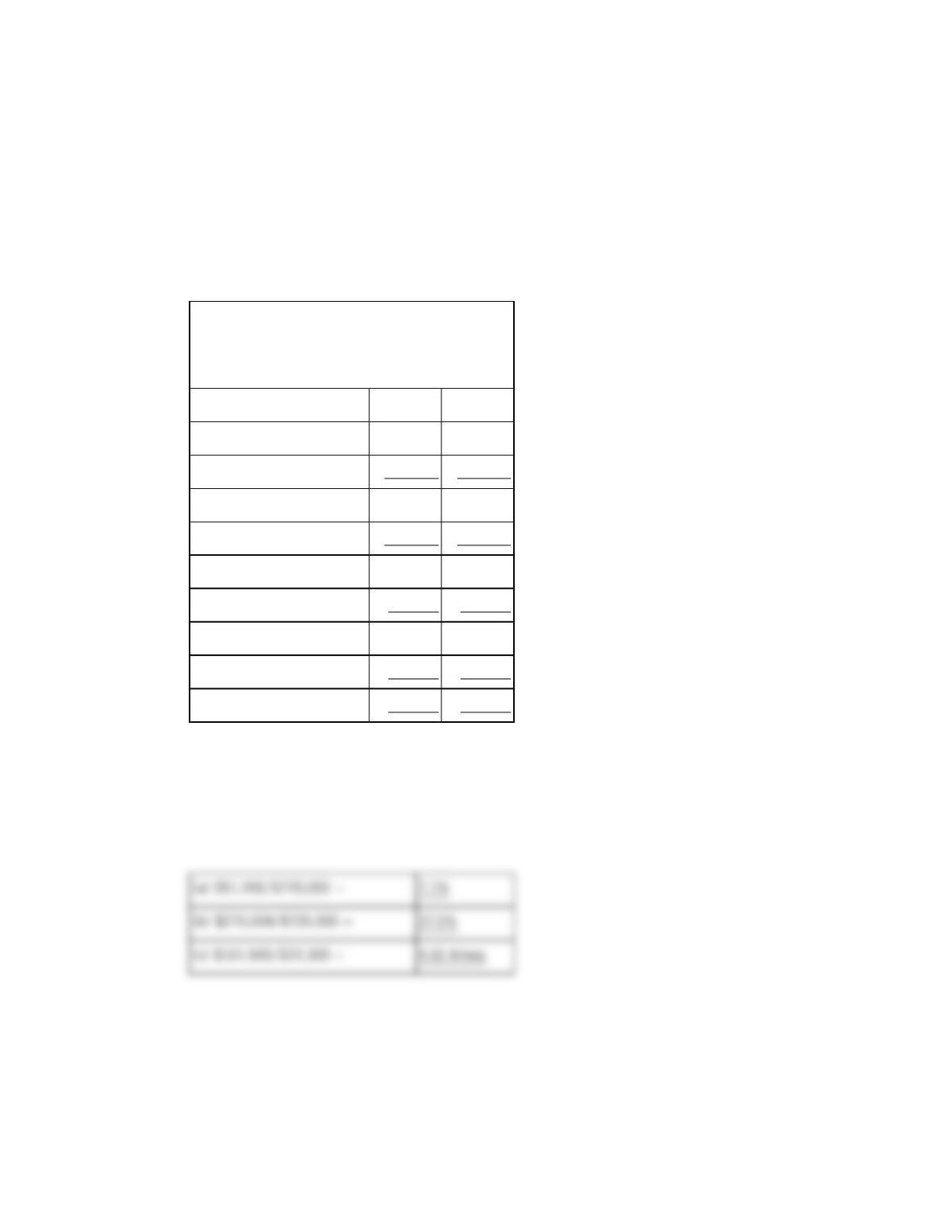
The comparative income statements for Silverlight Company are shown below. Calculate
the following ratios for 2017:
(a) profit margin
(b) gross margin
(c) times interest earned.
Silverlight Company
Income Statements
For Years Ended December 31
2017
2016
Net sales
$720,000
$607,500
Cost of goods sold
450,000
382,700
Gross profit
$270,000
$224,800
Operating expense
168,500
134,900
Income from operations
$101,500
$89,900
Interest expense
22,300
11,200
Income before taxes
$79,200
$78,700
Income taxes
28,000
27,000
Net income
$51,200
$51,700
200.
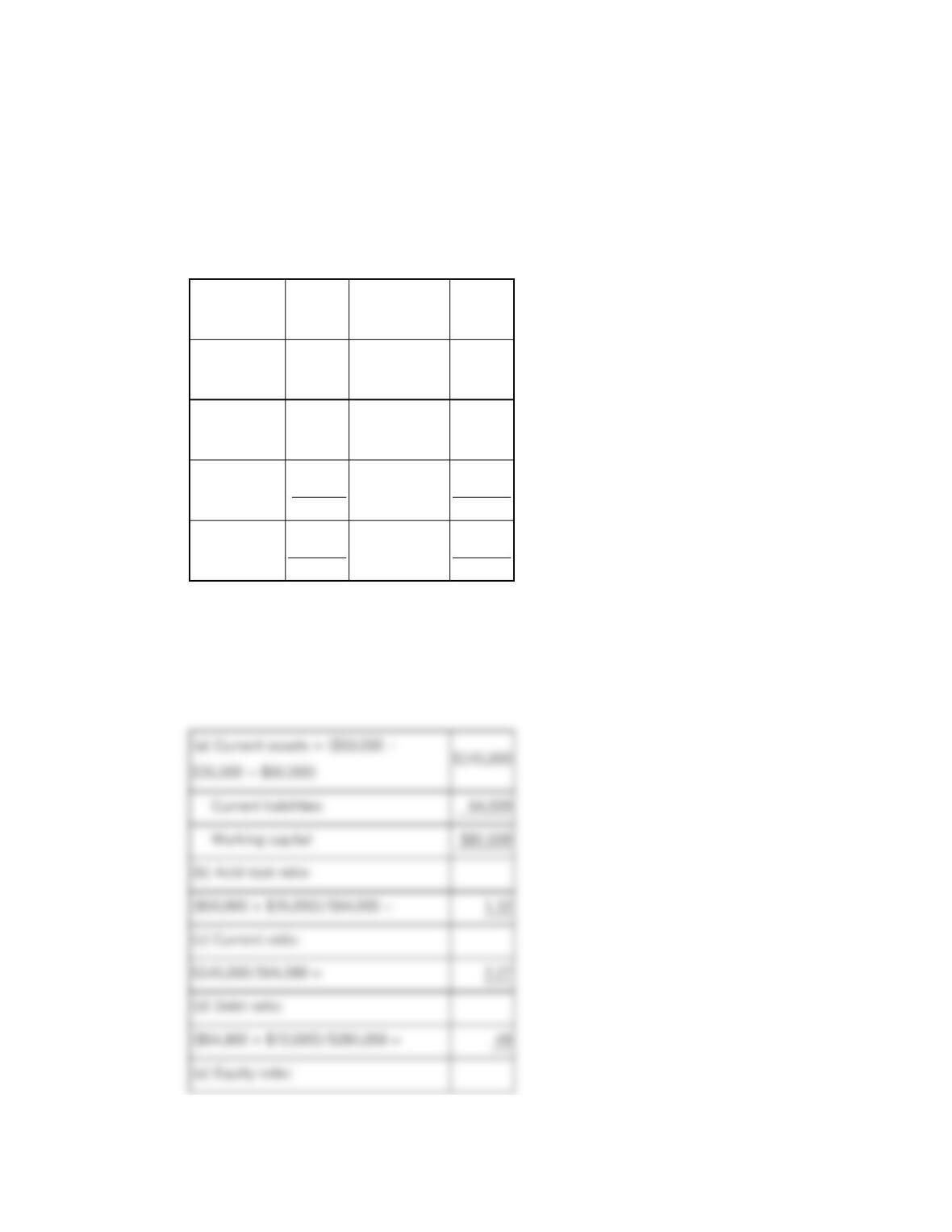
A corporation reports the following year-end balance sheet data. Calculate the following
ratios:
(a) working capital
(a) $51,200/$720,000 =
(b) $270,000/$720,000 =
(c) $101,500/$22,300 =
4.55 times
13-139
(b) acid-test ratio
(c) current ratio
(d) debt ratio
(e) equity ratio
(f) debt-to-equity ratio
Cash
$50,000
Current
liabilities
$64,000
Accounts
receivable
35,000
Long-term
liabilities
72,000
Inventory
60,000
Common
stock
100,000
Equipment
140,000
Retained
earnings
49,000
Total assets
$285,000
Total liabilities
and equity
$285,000
(a) Current assets = ($50,000 +
$145,000