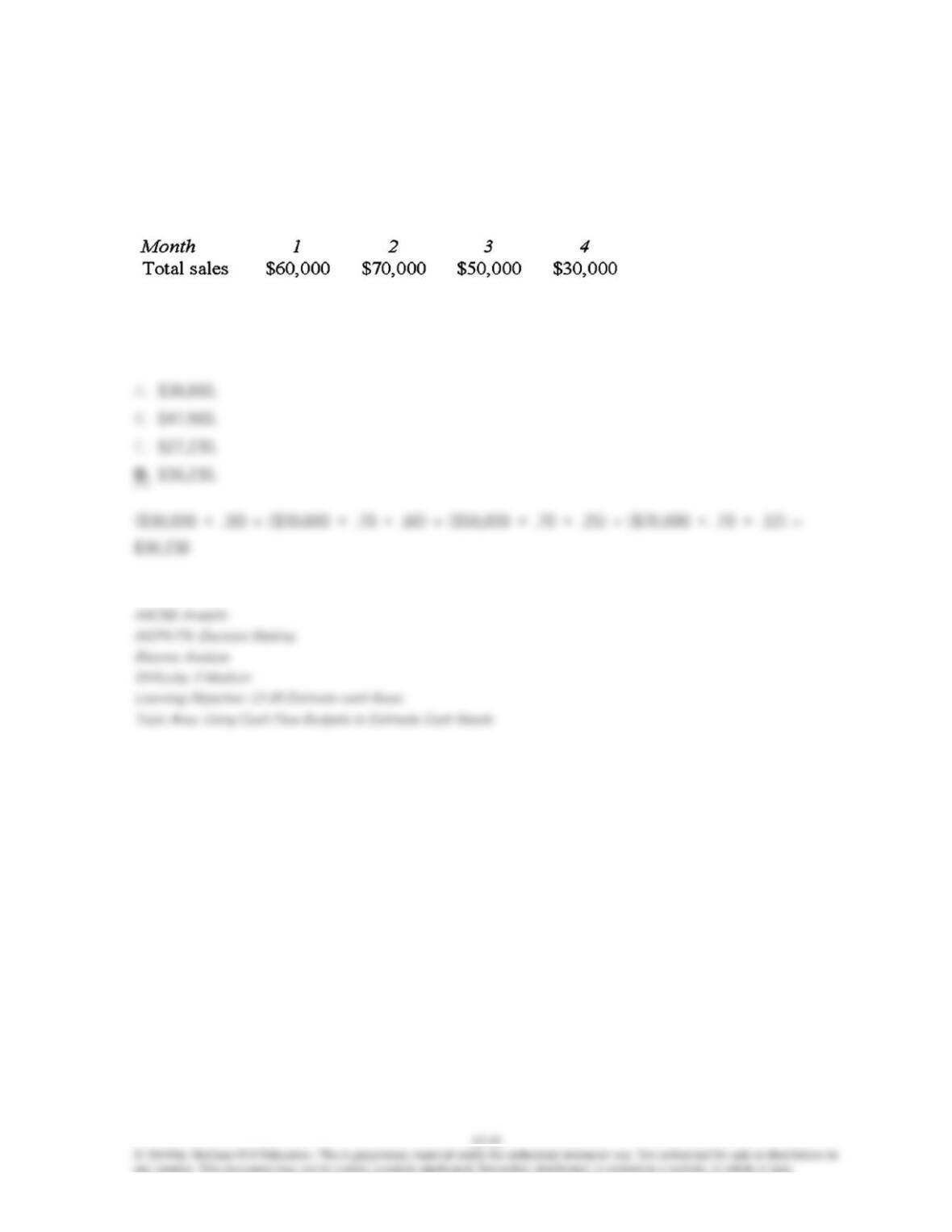
61. Pardee Company makes 30% of its sales for cash and 70% on account. 60% of the account
sales are collected in the month of sale, 25% in the month following sale, and 12% in the second
month following sale. The remainder is uncollectible. The following information has been gathered
for the current year:
Total cash receipts in Month 4 will be:
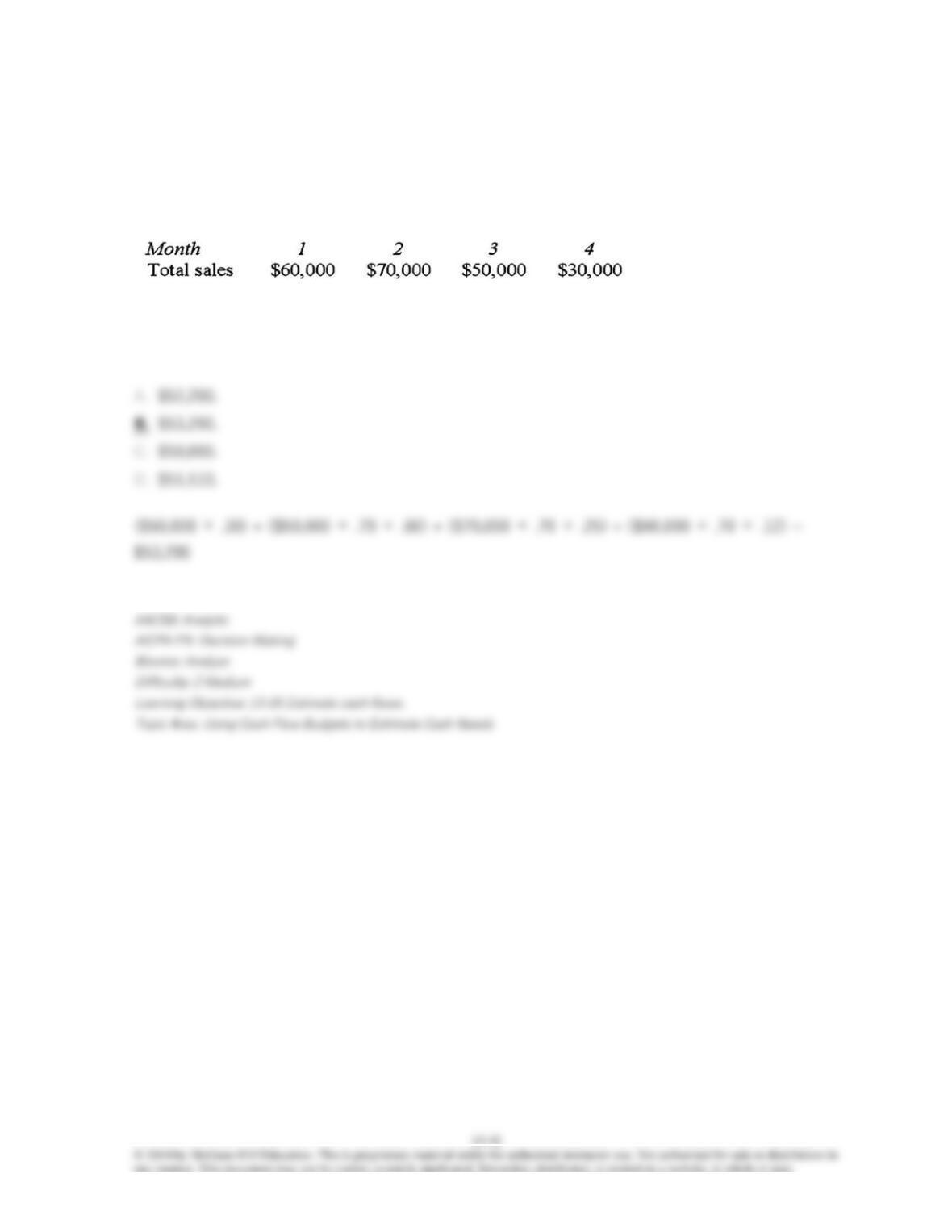
62. Pardee Company makes 30% of its sales for cash and 70% on account. 60% of the account
sales are collected in the month of sale, 25% in the month following sale, and 12% in the second
month following sale. The remainder is uncollectible. The following information has been gathered
for Pardee’s first year of operations:
Total cash receipts in Month 3 will be:
63. Rizzo Corporation had 17,000 units of brake calipers on hand at the end of 2012. The
company’s inventory policy was to maintain an ending inventory equal to 15% of the current year’s
sales. During 2012, Rizzo sold 210,000 units of calipers. How many units did Rizzo purchase in
2012?
64. The Richburn Manufacturing Company increased its merchandise inventory by $17,000
over the year. The company also granted its customers more liberal credit terms which increased
the accounts receivable by $37,500. Sales were $975,000 and the accounts payable decreased by
$27,500. The gross profit on sales is 45%. Marketing and administrative expenses were $145,000;
this included depreciation expense of $4,000. What were the cash disbursements for the year?
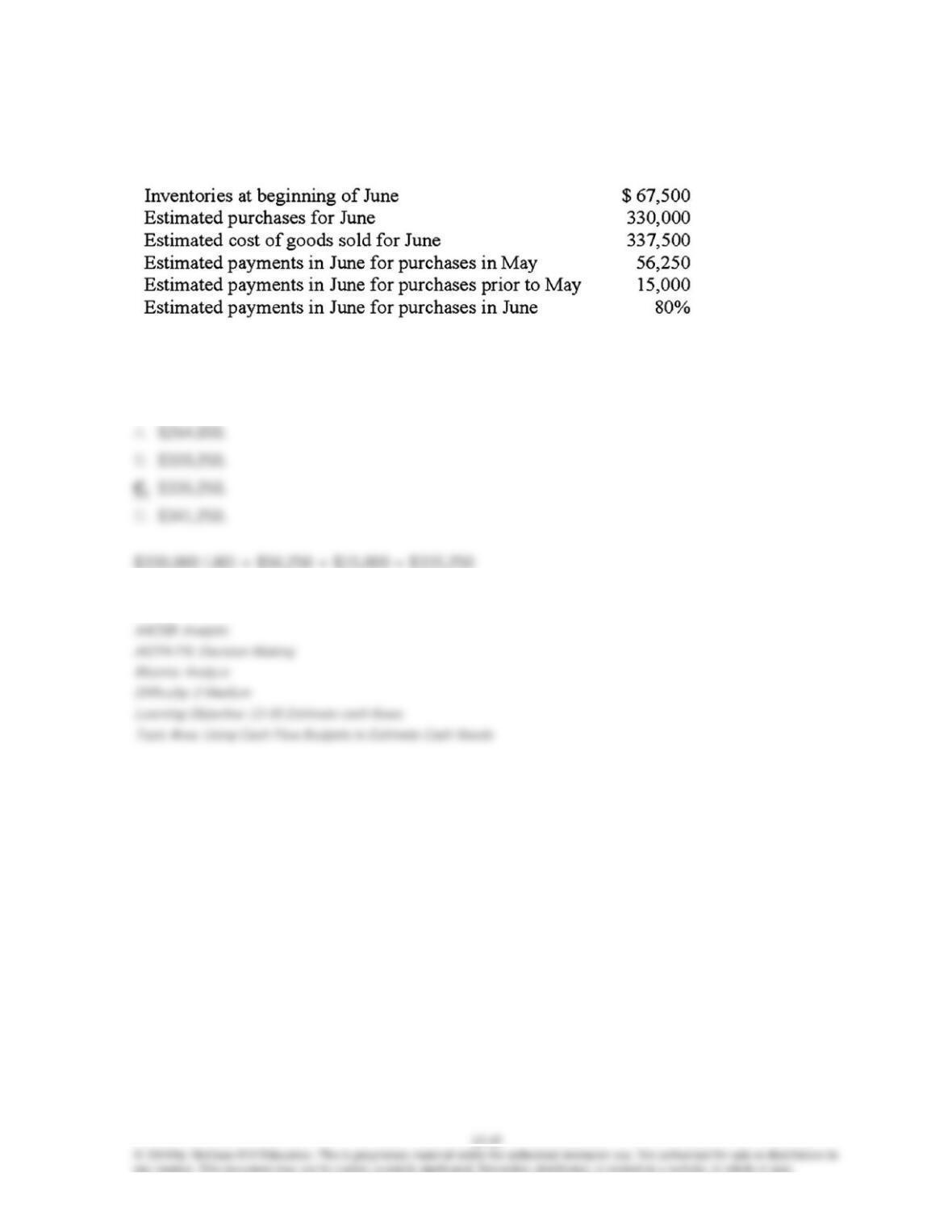
65. The Jack Company is preparing its cash budget for the month of June. The following
information is available concerning its inventories:
What are the estimated cash disbursements for inventories in June?
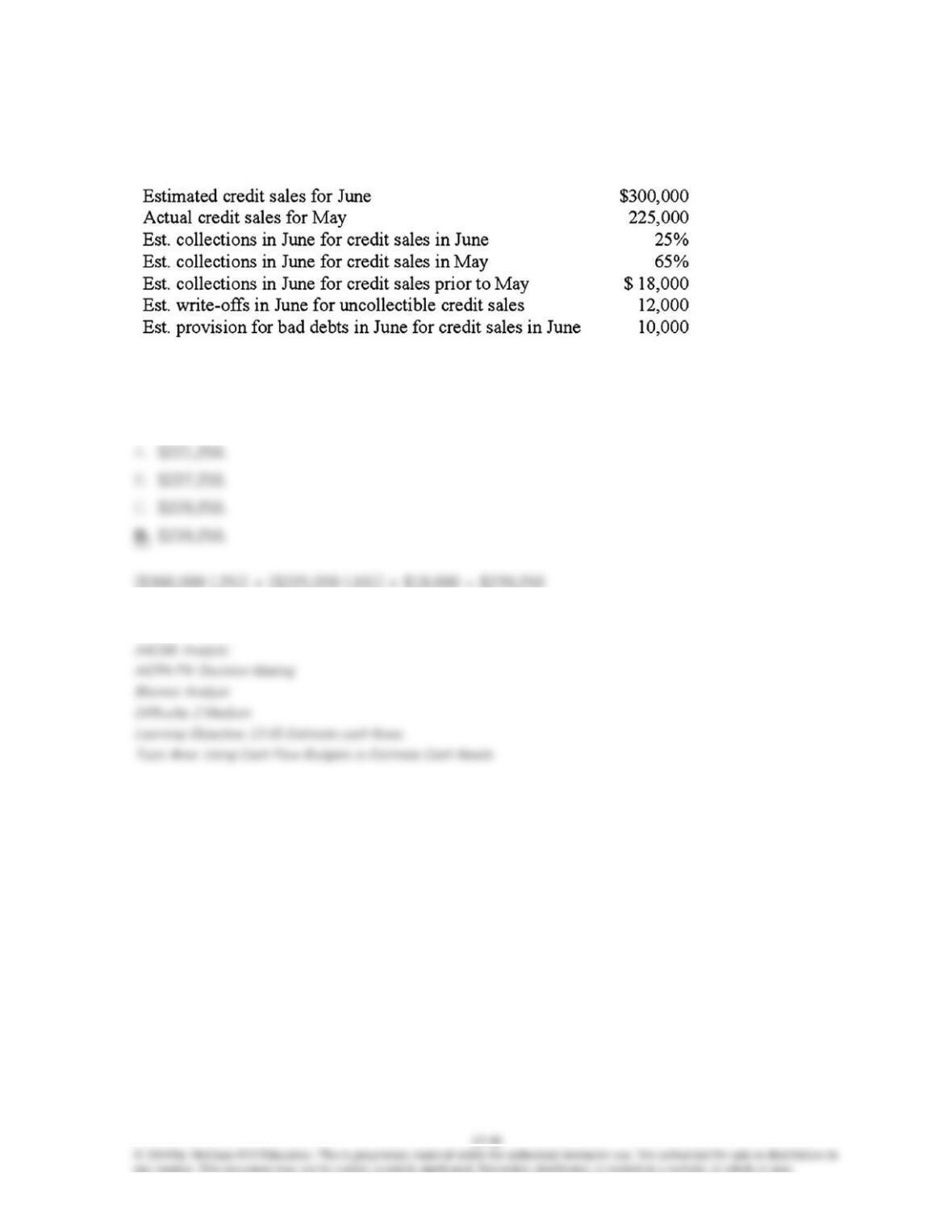
66. The Smart Company is preparing its cash budget for the month of June. The following
information is available concerning its accounts receivable:
What are the estimated cash receipts from accounts receivable collections in June?
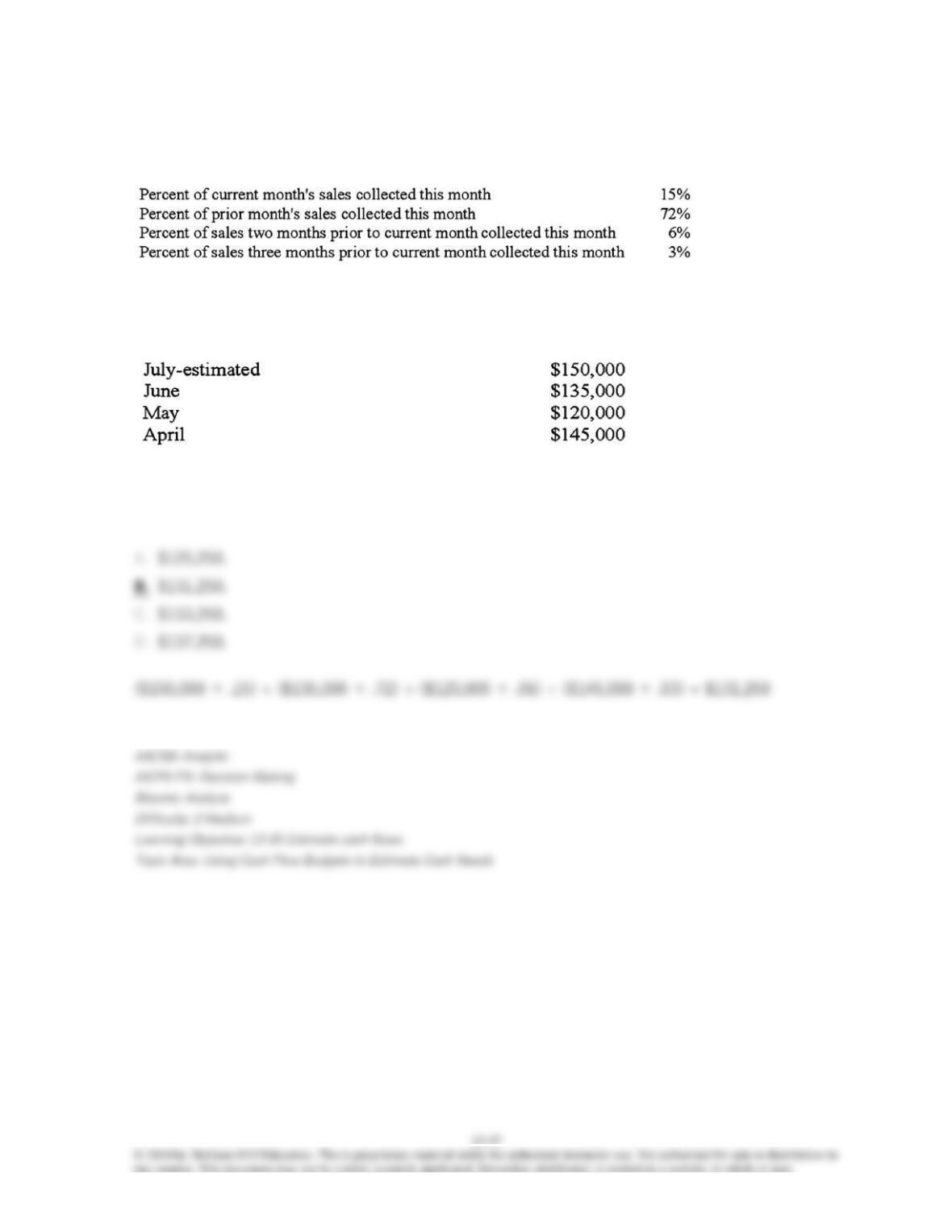
67. The Sport Company is preparing a cash budget for the month of July. The following
information on accounts receivable collections is available from Sport’s past collection experience:
The remaining 4% are not collected and are written off as bad debts.
Credit sales to date are as follows:
What are the estimated collections in July?
13–48
68. T. Jackson Retail seeks your assistance to develop cash and other budget information for
May, June, and July. At April 30, the company had cash of $5,500, accounts receivable of $437,000,
inventories of $309,400, and accounts payable of $133,055. The budget is to be based on the
following assumptions:
SALES:
Each month’s sales are billed on the last day of the month. Customers are allowed a 3% discount
if payment is made within 10 days after the billing date. Receivables are recorded in the accounts
at their gross amounts (not net of discounts). 55% of the billings are collected within the discount
period; 30% are collected by the end of the month; 9% are collected by the end of the second
month; and 6% turn out to be uncollectible.
PURCHASES:
60% of all purchases of merchandise and the marketing, general, and administrative expenses are
paid in the month purchased and the remainder in the following month. The number of units in
each month’s ending inventory is equal to 125% of the next month’s units of sales. The cost of
each unit of inventory is $30. Marketing, general, and administrative expenses, of which $3,000 is
depreciation, are equal to 15% of the current month’s sales.
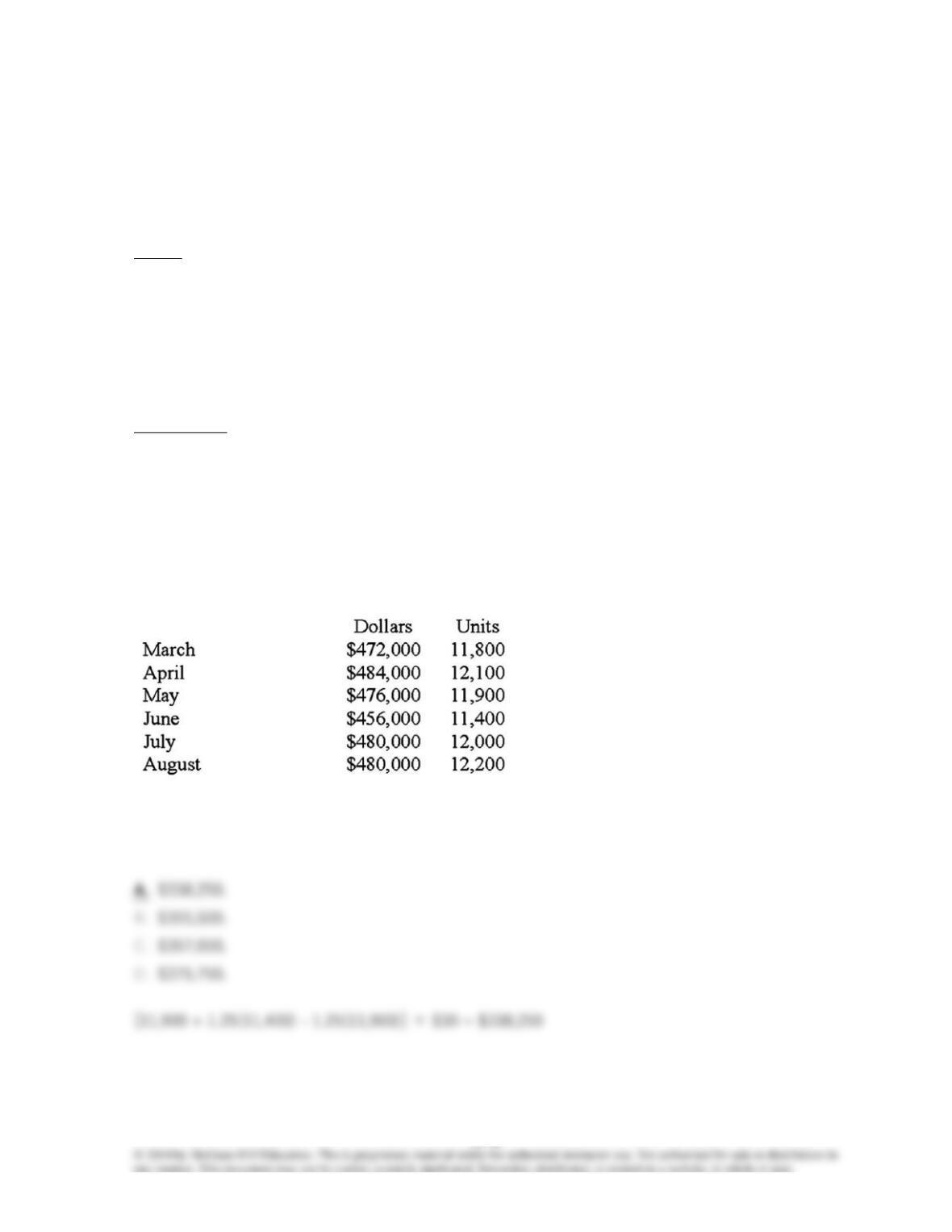
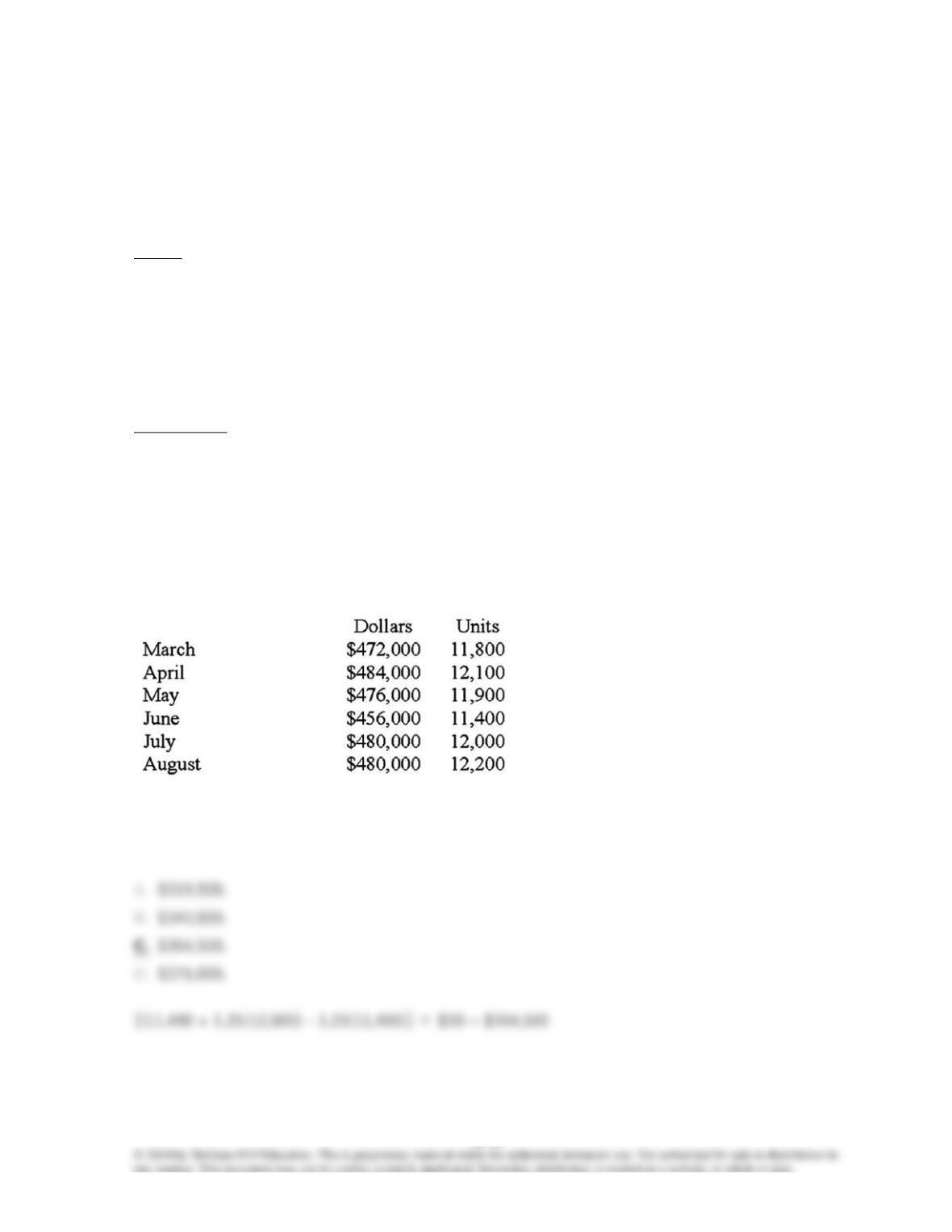
Actual and projected sales are as shown below:
What are the budgeted merchandise purchases (in dollars) for May?
13–49
69. T. Jackson Retail seeks your assistance to develop cash and other budget information for
May, June, and July. At April 30, the company had cash of $5,500, accounts receivable of $437,000,
inventories of $309,400, and accounts payable of $133,055. The budget is to be based on the
following assumptions:
SALES:
Each month’s sales are billed on the last day of the month. Customers are allowed a 3% discount
if payment is made within 10 days after the billing date. Receivables are recorded in the accounts
at their gross amounts (not net of discounts). 55% of the billings are collected within the discount
period; 30% are collected by the end of the month; 9% are collected by the end of the second
month; and 6% turn out to be uncollectible.
PURCHASES:
60% of all purchases of merchandise and the marketing, general, and administrative expenses are
paid in the month purchased and the remainder in the following month. The number of units in
each month’s ending inventory is equal to 125% of the next month’s units of sales. The cost of
each unit of inventory is $30. Marketing, general, and administrative expenses, of which $3,000 is
depreciation, are equal to 15% of the current month’s sales.
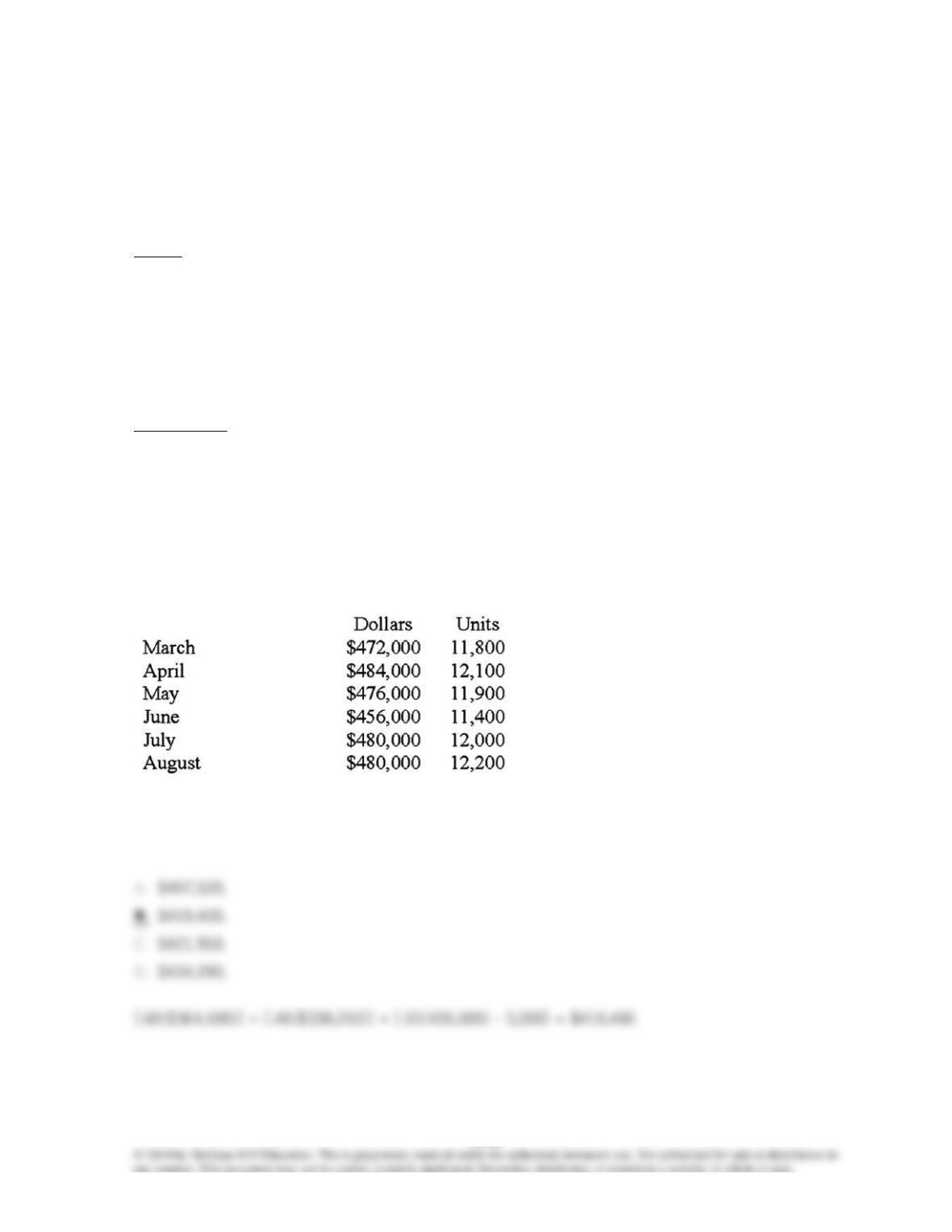
Actual and projected sales are as shown below:
What are the budgeted merchandise purchases (in dollars) for June?
13–50
70. T. Jackson Retail seeks your assistance to develop cash and other budget information for
May, June, and July. At April 30, the company had cash of $5,500, accounts receivable of $437,000,
inventories of $309,400, and accounts payable of $133,055. The budget is to be based on the
following assumptions:
SALES:
Each month’s sales are billed on the last day of the month. Customers are allowed a 3% discount
if payment is made within 10 days after the billing date. Receivables are recorded in the accounts
at their gross amounts (not net of discounts). 55% of the billings are collected within the discount
period; 30% are collected by the end of the month; 9% are collected by the end of the second
month; and 6% turn out to be uncollectible.
PURCHASES:
60% of all purchases of merchandise and the marketing, general, and administrative expenses are
paid in the month purchased and the remainder in the following month. The number of units in
each month’s ending inventory is equal to 125% of the next month’s units of sales. The cost of
each unit of inventory is $30. Marketing, general, and administrative expenses, of which $3,000 is
depreciation, are equal to 15% of the current month’s sales.
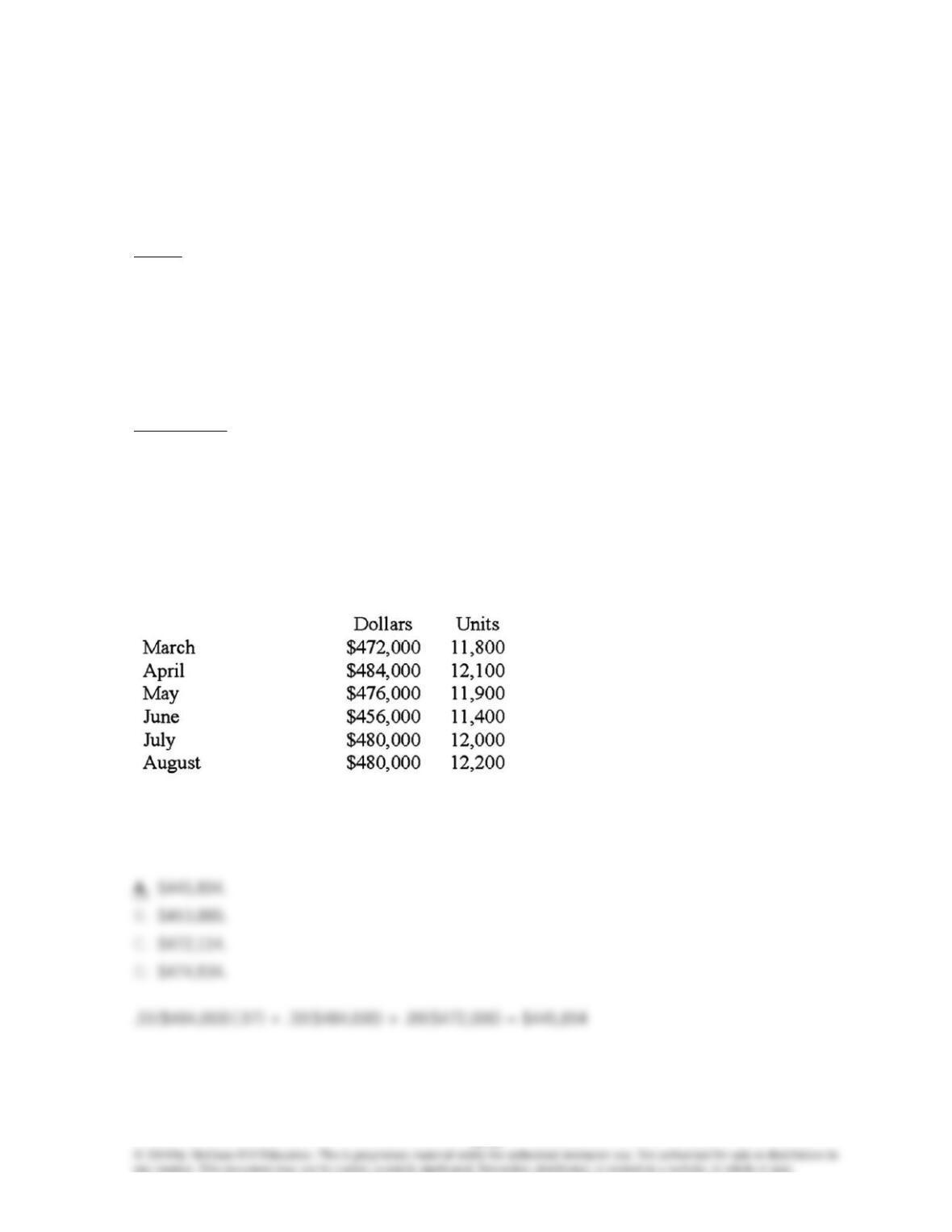
Actual and projected sales are as shown below:
What are the budgeted cash disbursements during the month of June?
13–51
71. T. Jackson Retail seeks your assistance to develop cash and other budget information for
May, June, and July. At April 30, the company had cash of $5,500, accounts receivable of $437,000,
inventories of $309,400, and accounts payable of $133,055. The budget is to be based on the
following assumptions:
SALES:
Each month’s sales are billed on the last day of the month. Customers are allowed a 3% discount
if payment is made within 10 days after the billing date. Receivables are recorded in the accounts
at their gross amounts (not net of discounts). 55% of the billings are collected within the discount
period; 30% are collected by the end of the month; 9% are collected by the end of the second
month; and 6% turn out to be uncollectible.
PURCHASES:
60% of all purchases of merchandise and the marketing, general, and administrative expenses are
paid in the month purchased and the remainder in the following month. The number of units in
each month’s ending inventory is equal to 125% of the next month’s units of sales. The cost of
each unit of inventory is $30. Marketing, general, and administrative expenses, of which $3,000 is
depreciation, are equal to 15% of the current month’s sales.
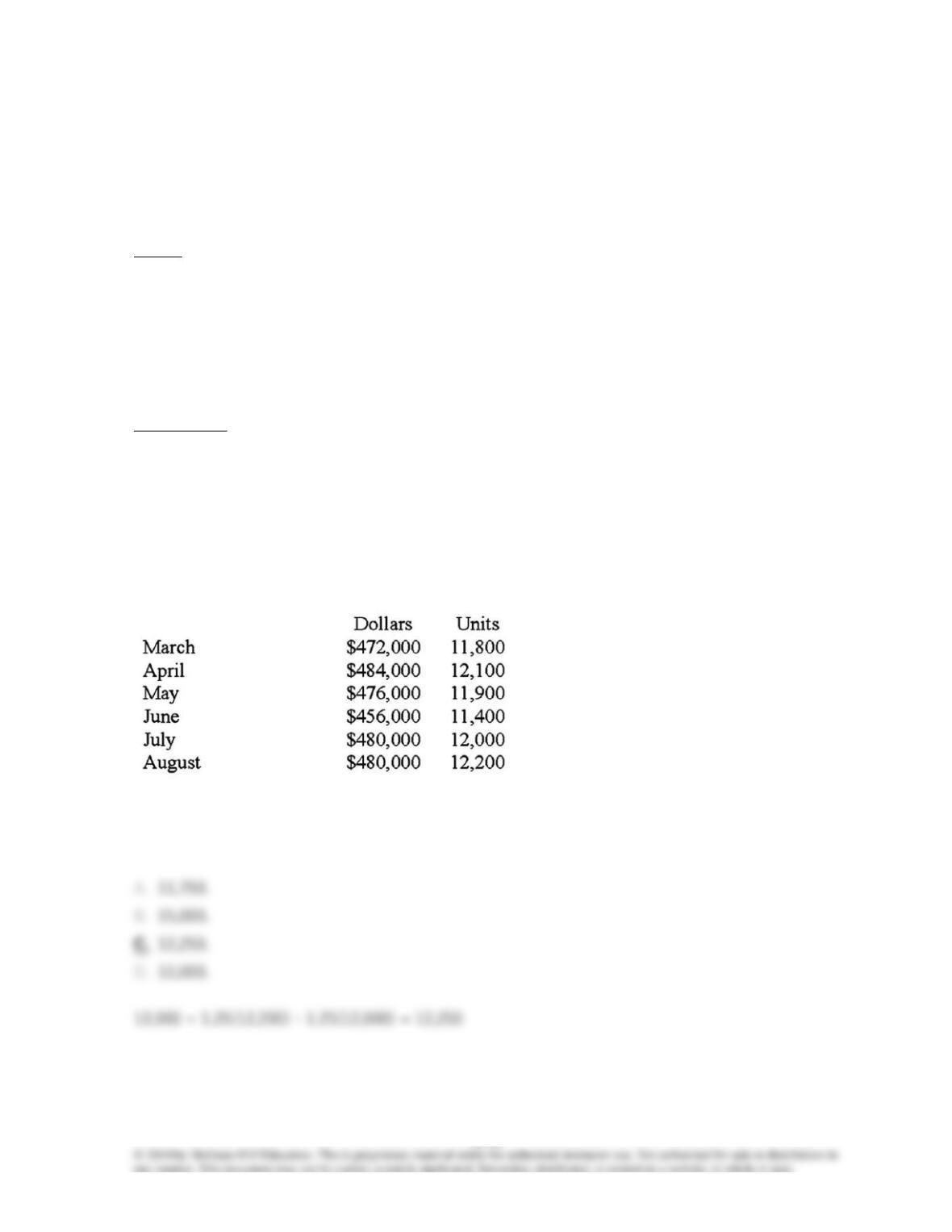
Actual and projected sales are as shown below:
What are the budgeted cash collections during the month of May?
13–52
72. T. Jackson Retail seeks your assistance to develop cash and other budget information for
May, June, and July. At April 30, the company had cash of $5,500, accounts receivable of $437,000,
inventories of $309,400, and accounts payable of $133,055. The budget is to be based on the
following assumptions:
SALES:
Each month’s sales are billed on the last day of the month. Customers are allowed a 3% discount
if payment is made within 10 days after the billing date. Receivables are recorded in the accounts
at their gross amounts (not net of discounts). 55% of the billings are collected within the discount
period; 30% are collected by the end of the month; 9% are collected by the end of the second
month; and 6% turn out to be uncollectible.
PURCHASES:
60% of all purchases of merchandise and the marketing, general, and administrative expenses are
paid in the month purchased and the remainder in the following month. The number of units in
each month’s ending inventory is equal to 125% of the next month’s units of sales. The cost of
each unit of inventory is $30. Marketing, general, and administrative expenses, of which $3,000 is
depreciation, are equal to 15% of the current month’s sales.
Actual and projected sales are as shown below:
What are the budgeted number of inventory units that need to be purchased in July?
73. The major objectives of any budget system are to: (CIA adapted)
74. Which of the following represents the correct order in which the indicated budget
documents for a manufacturing company would be prepared?
75. The master budget process usually begins with the: (CMA adapted)
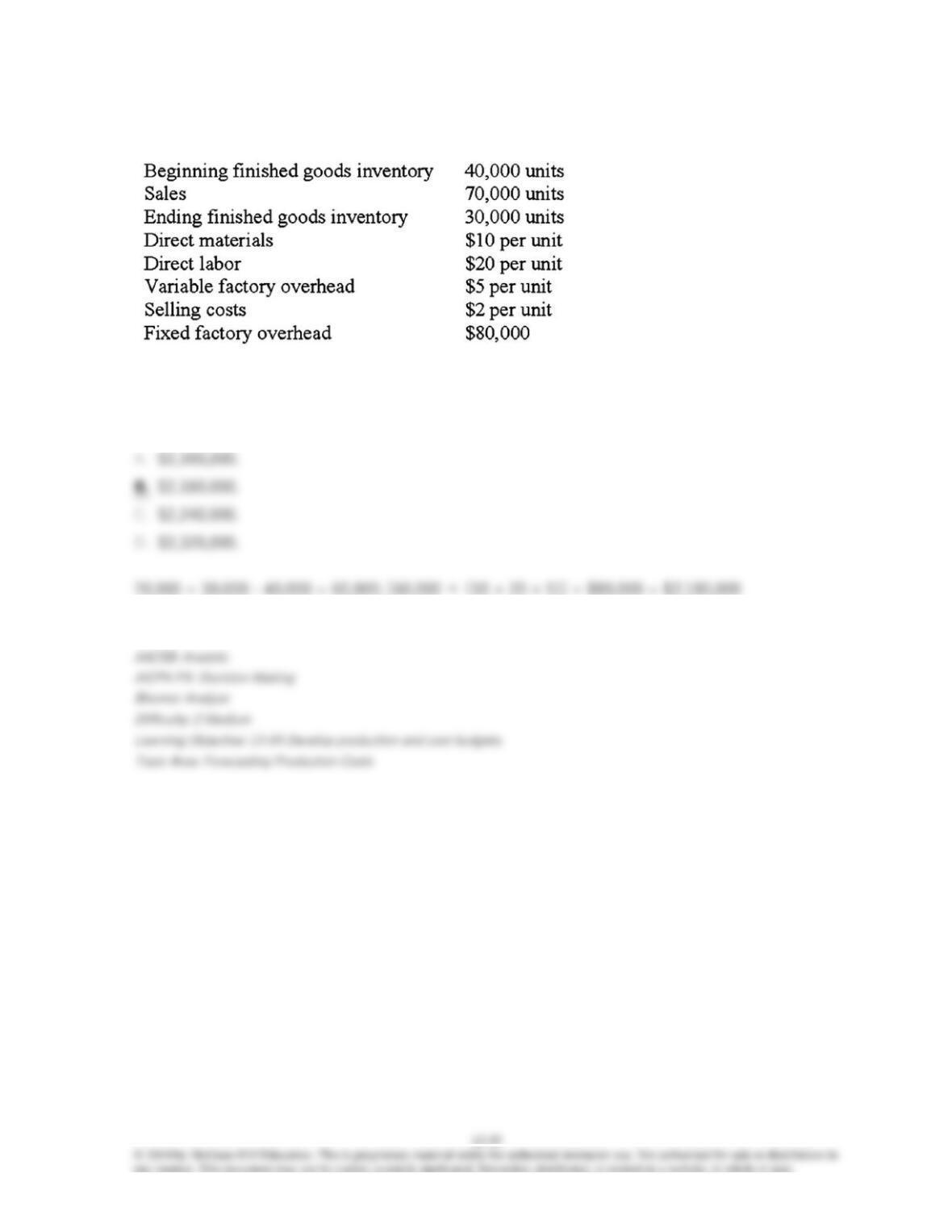
76. A company has the following annual budget data:
What are total budgeted production costs for the year? (CIA adapted)
77. Selana Company’s total costs of operating five sales offices last year were $500,000, of
which $70,000 represented fixed costs. Selana has determined that total costs are significantly
influenced by the number of sales offices operated. Last year’s costs and number of sales offices
can be used as the basis for predicting annual costs. What would be the budgeted cost for the
coming year if Selana were to operate seven sales offices? (CPA adapted)
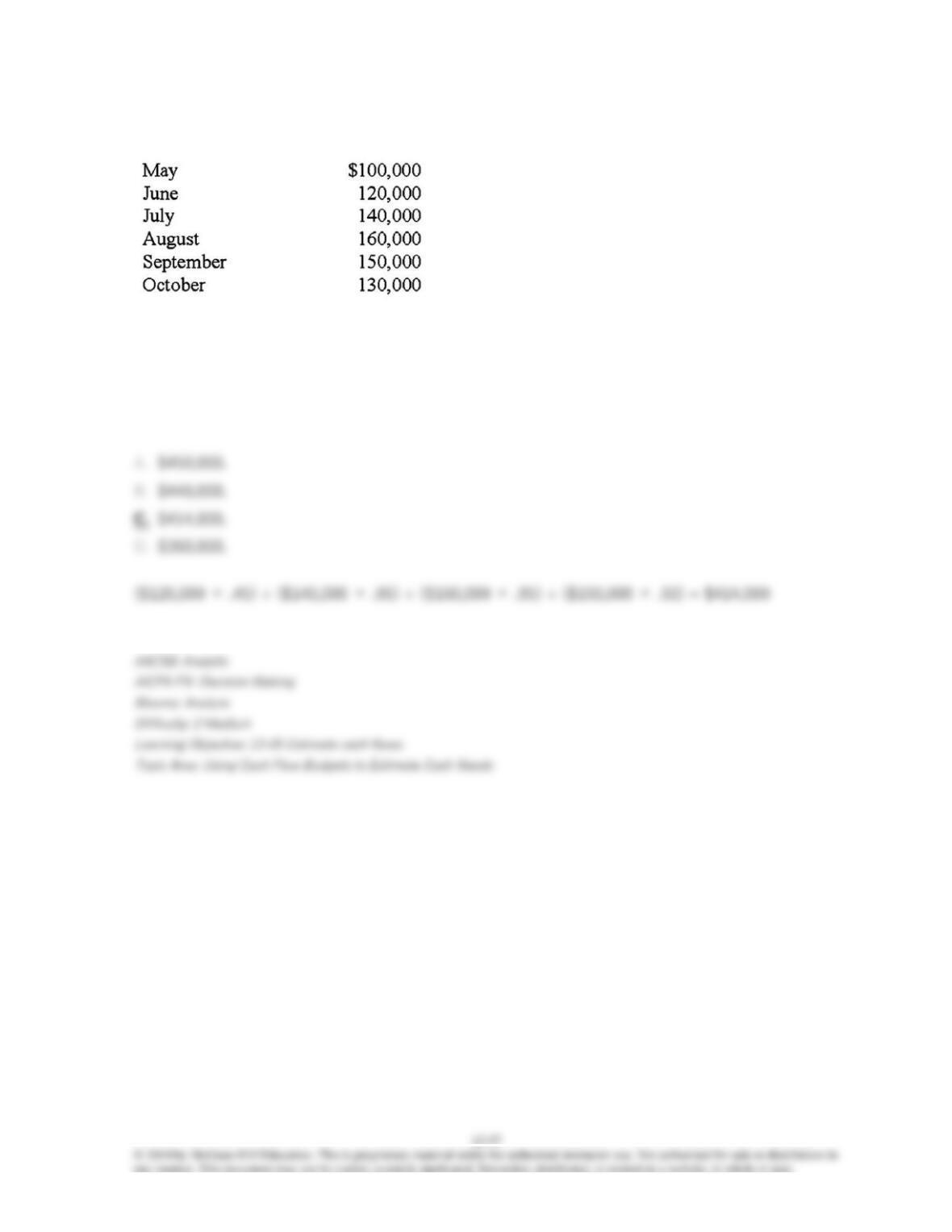
78. Brown Company has developed the following sales projections for the calendar year:
Normal cash collection experience has been that 50% of sales is collected during the month of
sale and 45% in the month following the sale. The remaining 5% of sales are never collected.
Brown’s budgeted cash collections for the third calendar quarter are: (CMA adapted)
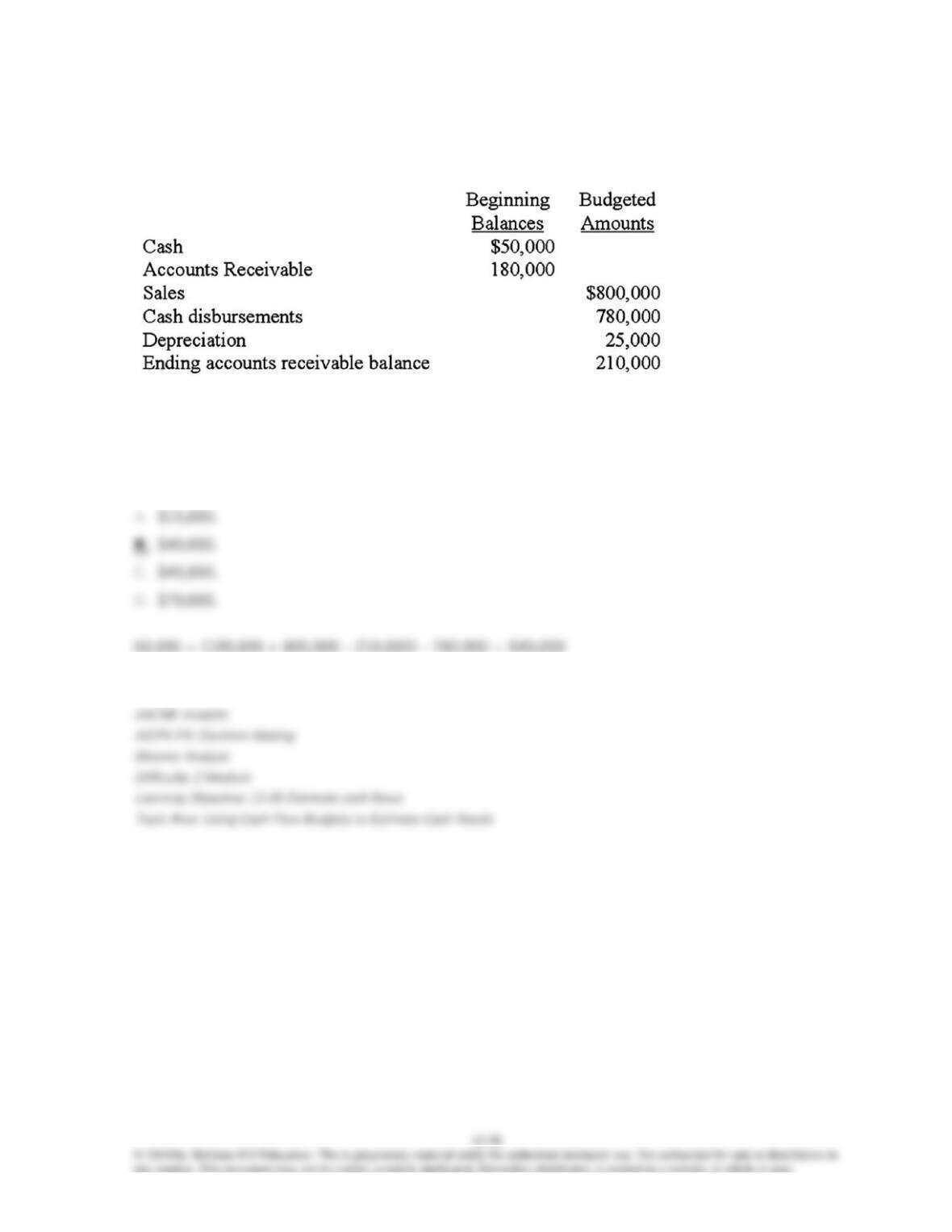
79. A company is preparing its cash budget for the coming month. All sales are on account.
Given the following:
What is the expected cash balance of the company at the end of the coming month? (CIA
adapted)
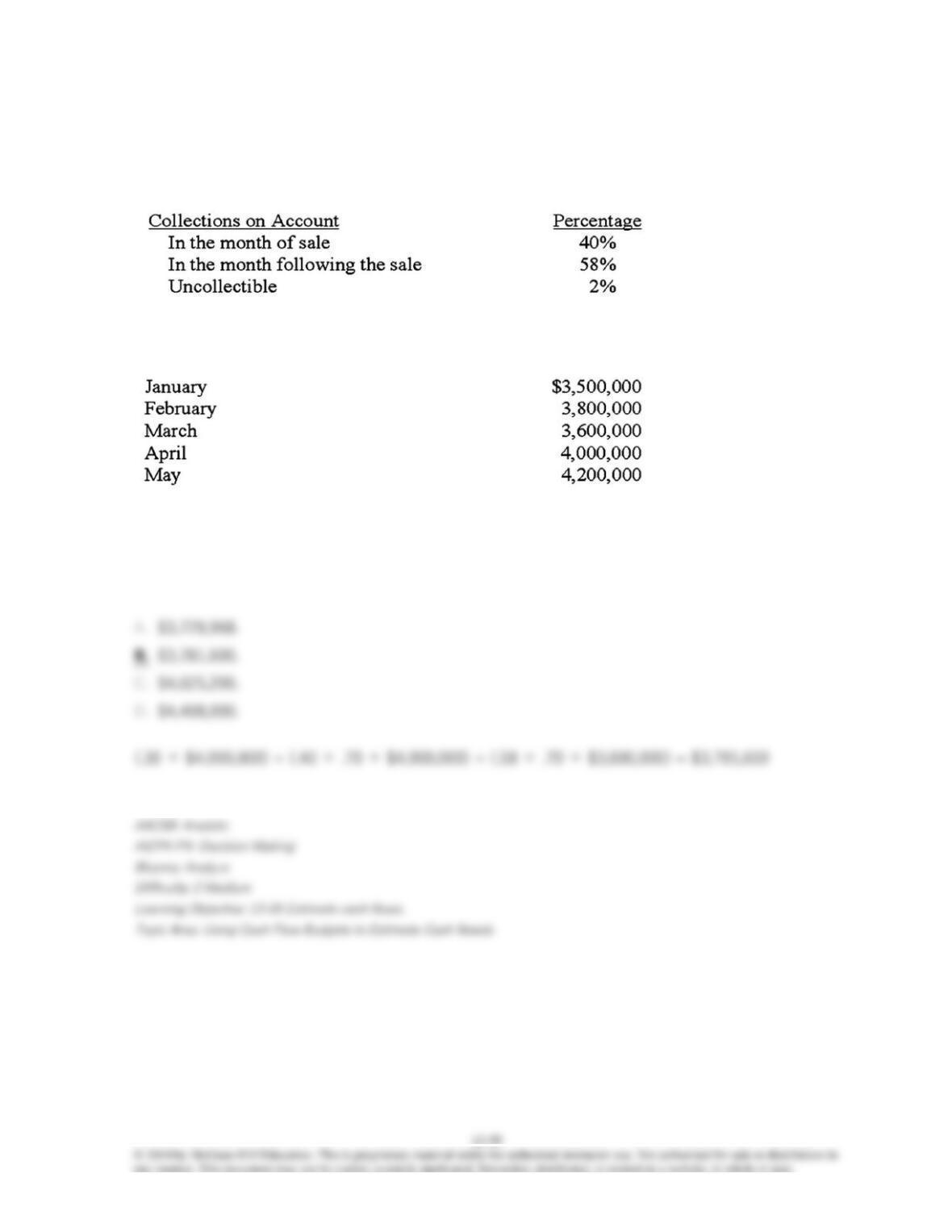
80. A company is formulating its plans for the coming year, including the preparation of its
cash budget. Historically, the company’s sales are 30% cash. The remaining sales are on credit
with the following collection pattern:
Sales for the first 5 months of the coming year are forecast as follows:
For the month of April, the total cash receipts from sales and collections on account would be:
(CIA adapted)
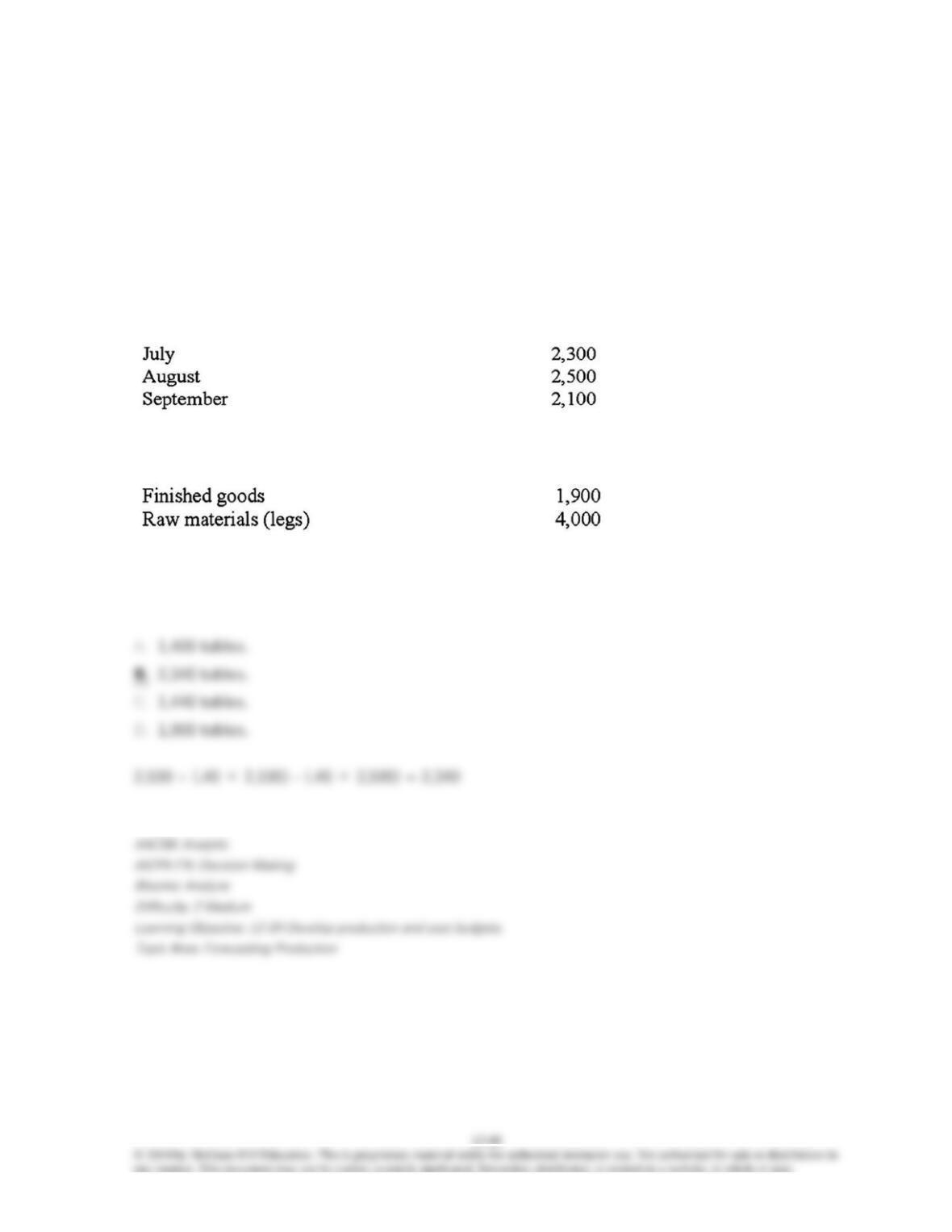
81. Lynndorf Corporation is a manufacturer of tables sold to schools, restaurants, hotels, and
other institutions. The table tops are manufactured by Lynndorf, but the table legs are purchased
from an outside supplier. The Assembly Department takes a manufactured table top and attaches
the four purchased table legs. It takes 20 minutes of labor to assemble a table. The company
follows a policy of producing enough tables to insure that 40% of next month’s sales are in the
finished goods inventory. Lynndorf also purchases sufficient raw materials (legs) to insure that
raw materials (legs) inventory is 60% of the following month’s scheduled production needs.
Lynndorf’s sales budget in units for the next quarter is as follows: (CMA adapted)
Lynndorf’s ending inventories in units for June 30 are:
The number of tables to be produced during August is: