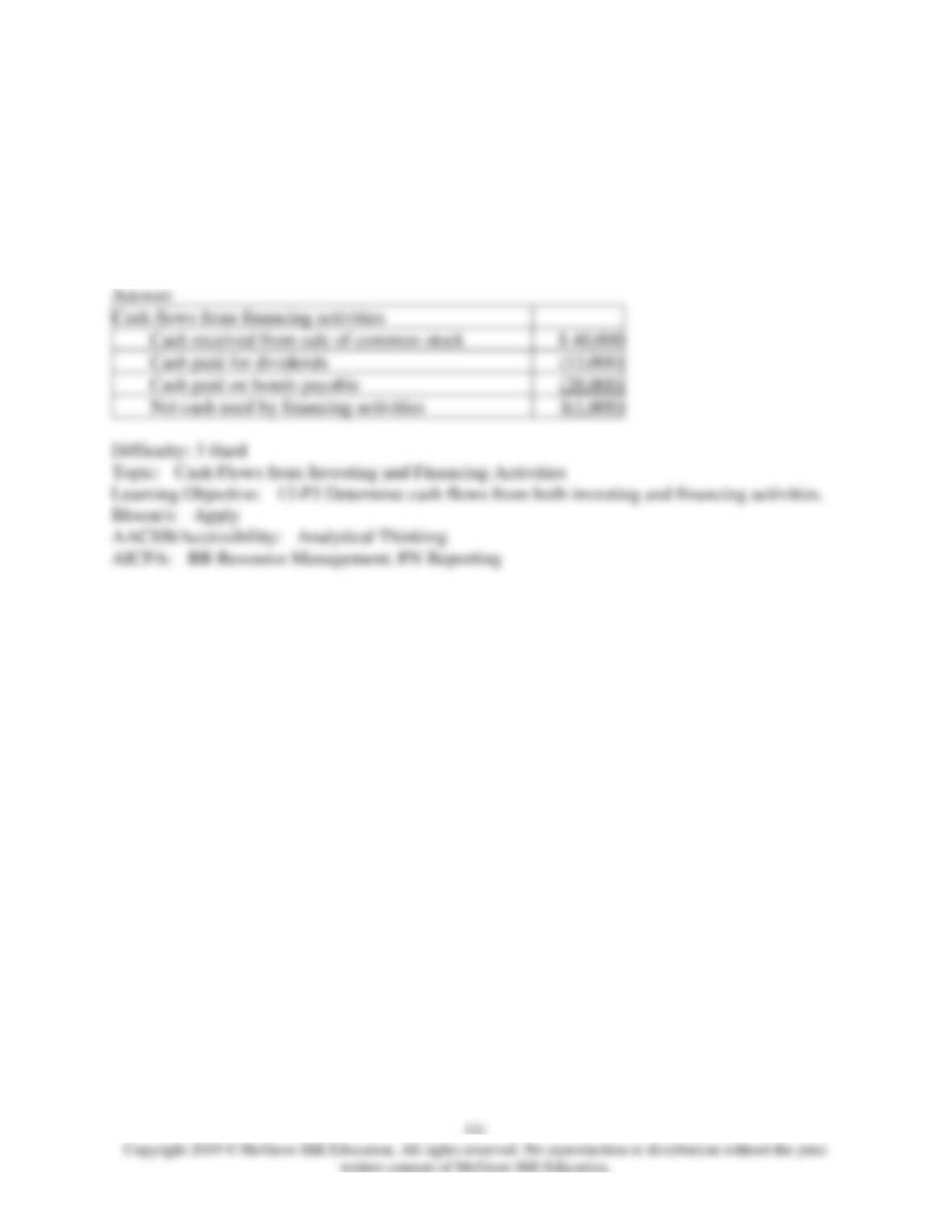
202) Use the following information to calculate the net cash provided or used by financing
activities for the Hulu Corporation:
(a) Net income, $10,000
(b) Sold common stock for $40,000 cash
(c) Paid cash dividend of $13,000
(d) Paid bond payable, $28,000
(e) Purchased equipment for $12,000 cash

122
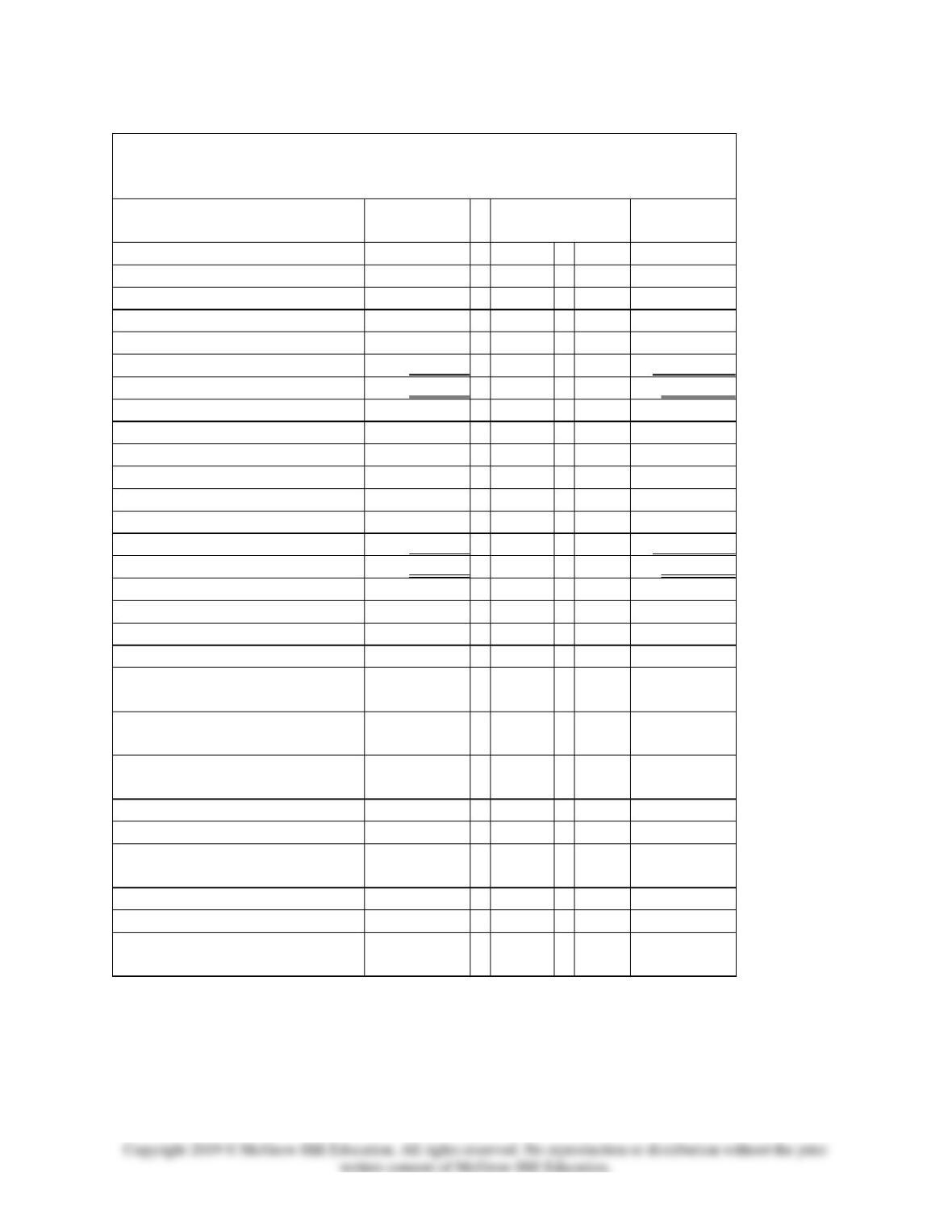
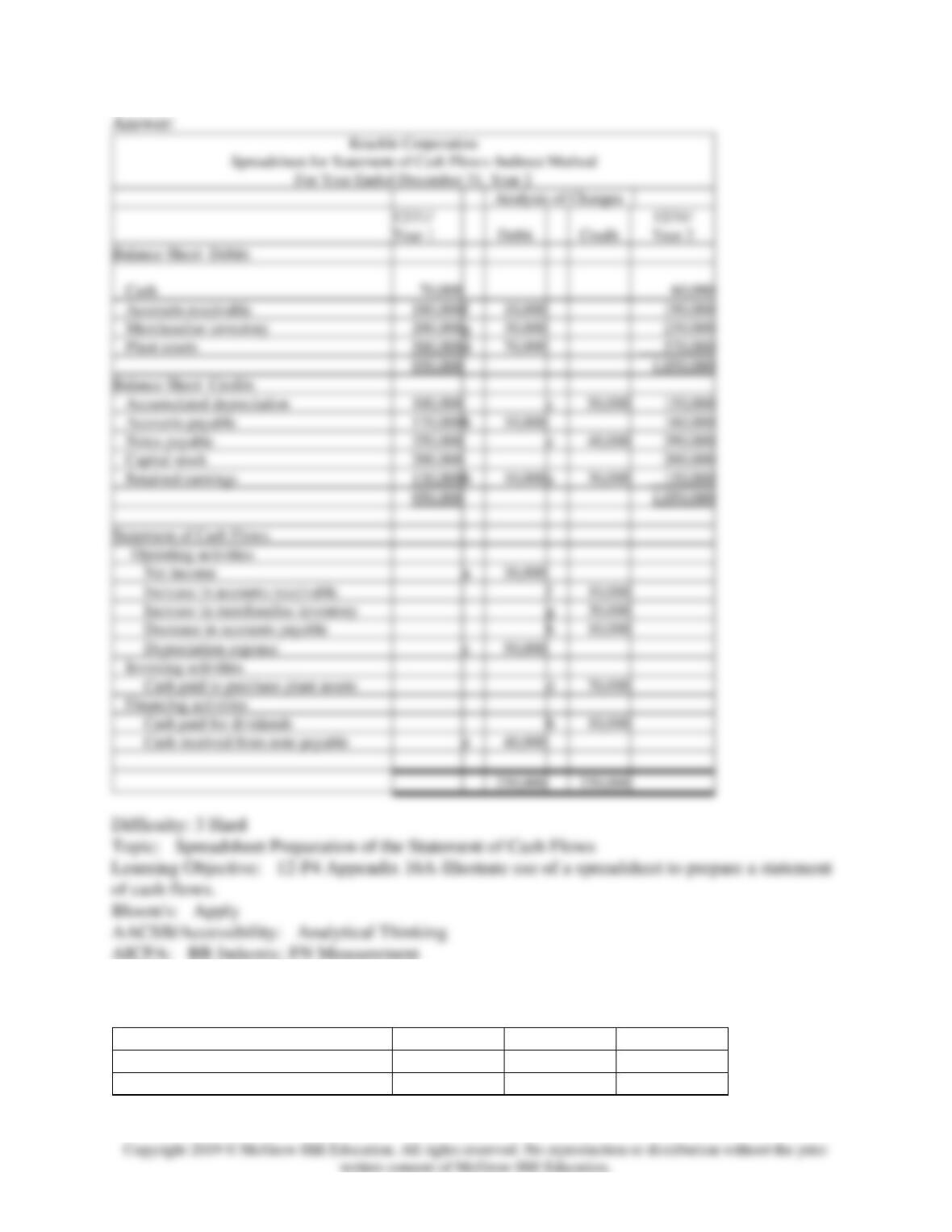
203) Based on the information provided below for Krackle Corp., complete the following
worksheet to be used to prepare the statement of cash flows using the indirect method.
(a) Net income for the year was $30,000.
(b) Dividends of $10,000 were declared and paid.
(c) Krackle’s only noncash expense was depreciation which totaled $50,000.
(d) The company purchased plant assets for $70,000.
(e) Notes payable in the amount of $40,000 were issued during the year for cash.
123
Krackle Corporation
Spreadsheet for Statement of Cash Flows–Indirect Method
For Year Ended December 31, Year 2
Analysis of
Changes
12/31/Year 1
Debit
Credit
12/31/Year 2
Balance Sheet–Debits
Cash
70,000
60,000
Accounts receivable
180,000
190,000
Merchandise inventory
200,000
230,000
Plant assets
500,000
570,000
950,000
1,050,000
Balance Sheet–Credits
Accumulated depreciation
100,000
150,000
Accounts payable
170,000
160,000
Notes payable
350,000
390,000
Capital stock
200,000
200,000
Retained earnings
130,000
150,000
950,000
1,050,000
Statement of Cash Flows
Operating activities
Net income
Increase in accounts
receivable
Increase in merchandise
inventory
Decrease in accounts
payable
Depreciation expense
Investing activities
Cash paid to purchase plant
assets
Financing activities
Cash paid for dividends
Cash received from note
payable
124
204) The following selected account balances are taken from a merchandising company’s
records:
Dec. 31
Dec. 31,
For Year 2
Year 2
Year 1
Merchandise inventory
$ 15,600
$ 21,200
Accounts receivable
42,000
36,000
Accounts payable
32,400
27,400
Salaries payable
4,400
3,000
Total assets
234,000
286,000
Sales
$312,000
Cost of goods sold
165,600
Salaries expense
48,000
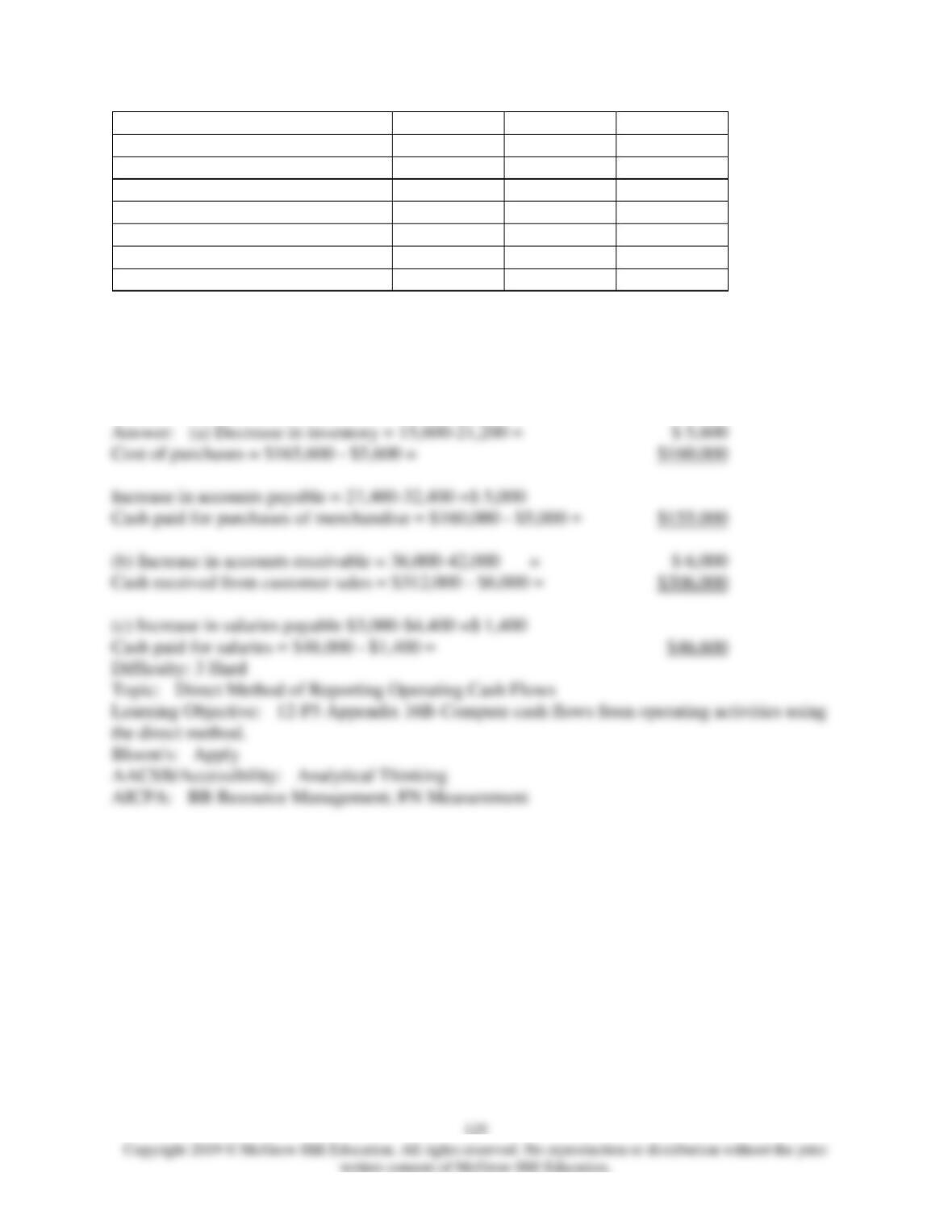
(a) Calculate the cash payments made during Year 2 for merchandise. Assume all of the
company’s accounts payable balances result from merchandise purchases.
(b) Calculate the cash receipts from customer sales during Year 2.
(c) Calculate the cash payments for salaries during Year 2.
126
205) Use the following calendar-year information to prepare Adam Company’s statement of cash
flows using the direct method.
Cash paid to purchase machinery
$ 124,000
Cash paid for merchandise inventory
220,000
Cash paid for operating expenses
280,000
Cash paid for interest
4,000
Cash received for interest
10,000
Cash proceeds from sale of land
100,000
Cash balance at beginning of year
15,000
Cash balance at end of year
77,000
Cash borrowed on a short-term note
25,000
Cash dividends paid
24,000
Cash received from stock issuance
57,000
Cash collections from customers
522,000
128
206) For each of the following separate cases, use the information provided to calculate the
missing cash inflow or cash outflow using the direct method.
(a)
Accounts receivable balances:
Beginning of year
$ 60,000
End of year
57,000
Sales revenue (all on credit)
375,000
Cash received from customers
$_______
(b)
Accounts payable balances:
Beginning of year
$ 42,000
End of year
45,000
Merchandise inventory balances:
Beginning of year
50,000
End of year
47,500
Cost of goods sold
250,000
Cash paid for merchandise inventory
$_ _____
(c)
Interest payable balances:
Beginning of year
$ 7,500
End of year
9,200
Interest expense
35,000
Cash paid for interest
$__ ____
130
207) For each of the following separate cases, use the information provided to calculate the
missing cash inflow or cash outflow using the direct method.
(a)
Accounts receivable balances:
Beginning of year
$ 60,000
End of year
63,000
Sales revenue (all on credit)
395,000
Cash received from customers
$______
(b)
Accounts payable balances:
Beginning of year
$ 42,000
End of year
31,000
Merchandise inventory balances:
Beginning of year
50,000
End of year
52,500
Cost of goods sold
250,000
Cash paid for merchandise inventory
$ ______
(c)
Interest payable balances:
Beginning of year
$ 7,500
End of year
8,200
Interest expense
31,000
Cash paid for interest
$ ______
132
208) Use the following information about the calendar-year cash flows of Park Company to
prepare a statement of cash flows (direct method) and a schedule of noncash investing and
financing activities.
Cash and cash equivalents, beginning-year balance
$ 18,000
Cash and cash equivalents, year-end balance
78,750
Cash payments for merchandise inventory
75,750
Cash paid for store equipment
15,750
Cash borrowed on three-month note payable
22,500
Cash dividends paid
12,000
Cash paid for salaries
39,000
Cash payments for other operating expenses
48,000
Building purchased and financed by long-term note payable
78,000
Cash received from customers
220,500
Cash interest received
8,250
134
209) For each of the following independent cases, use the information provided to calculate the
missing cash inflow or cash outflow using the direct method.
(a.)
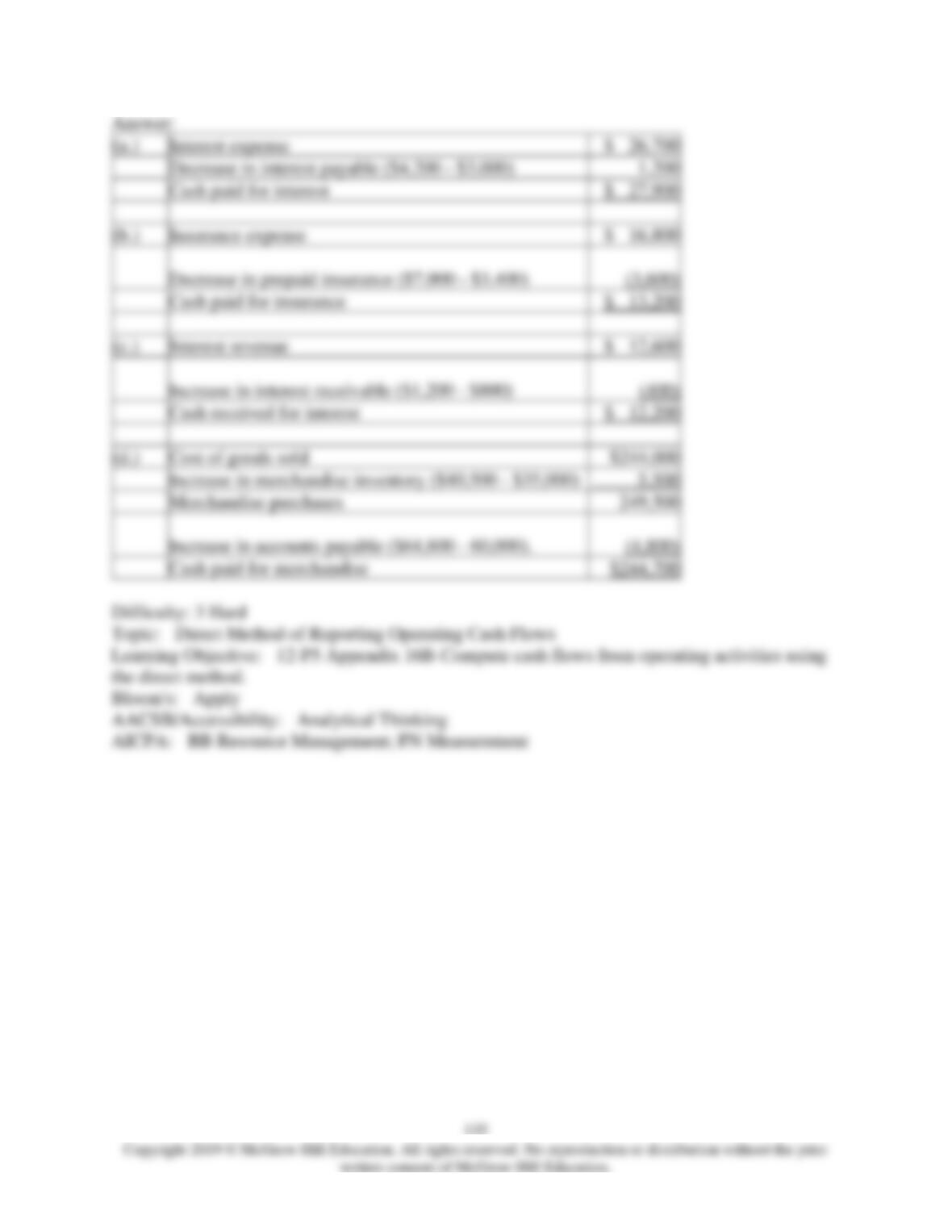
Interest payable, beginning-year
$
4,200
Interest expense
26,700
Interest payable, year-end
3,000
Cash paid for interest
$
(b.)
Prepaid insurance, beginning-year
$
7,000
Insurance expense
16,800
Prepaid insurance, year-end
3,400
Cash paid for insurance
$
(c.)
Interest receivable, beginning-year
$
800
Interest revenue
12,600
Interest receivable, year-end
1,200
Cash received for interest
$
(d.)
Accounts payable, beginning-year
$
60,000
Cost of goods sold
244,000
Merchandise inventory, beginning-year
35,000
Merchandise inventory, year-end
40,500
Accounts payable, year-end
64,800
Cash paid for merchandise
$
210) Use the information provided below to calculate the cash paid for interest for the period.
Interest payable, beginning-year
$ 4,200
Interest expense
26,700
Interest payable, year-end
3,000
Cash paid for interest
$
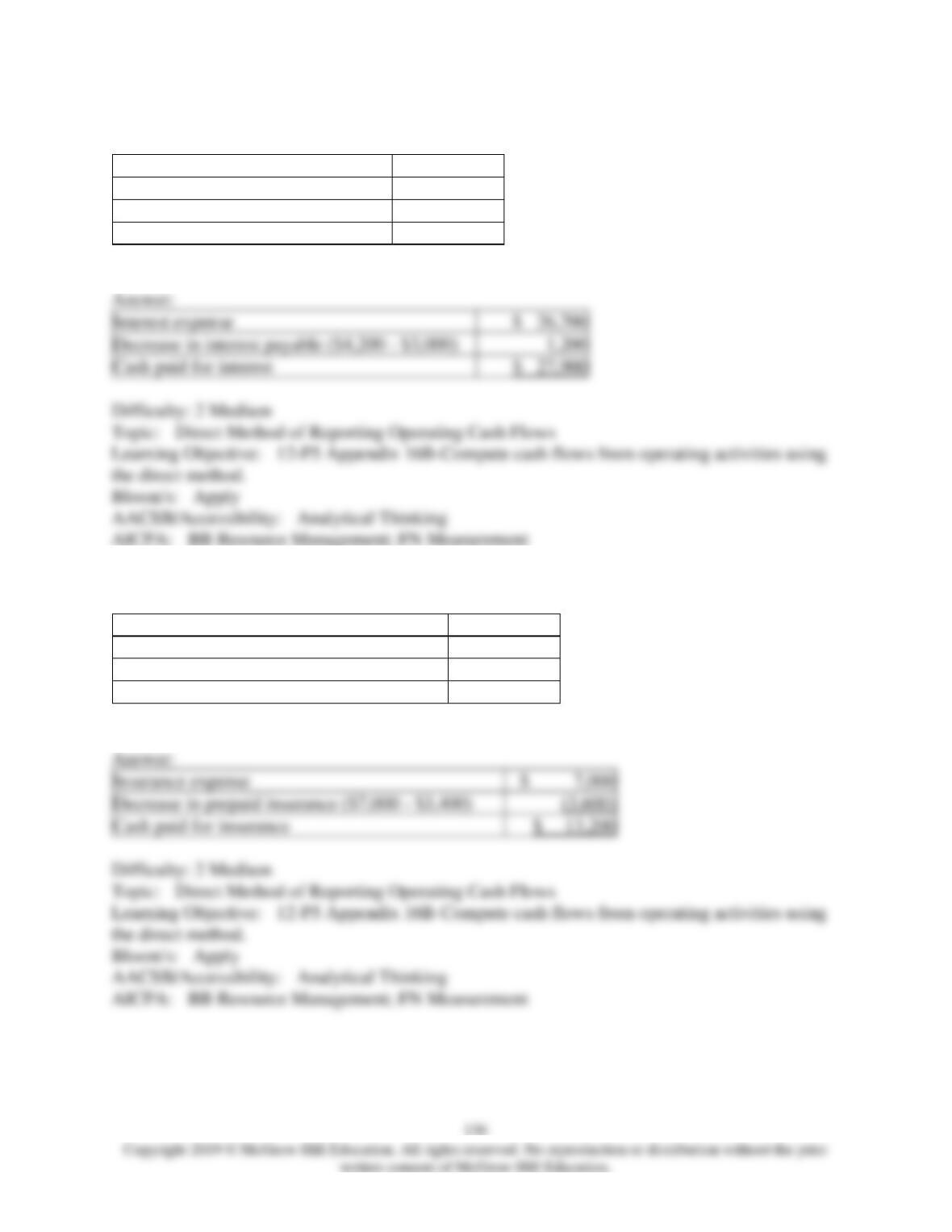
Interest expense
Decrease in interest payable ($4,200 – $3,000)
Cash paid for interest
211) Use the information provided to calculate the cash paid for insurance for the period
Prepaid insurance, beginning-year
$ 7,000
Insurance expense
16,800
Prepaid insurance, year-end
3,400
Cash paid for insurance
$
Insurance expense
Decrease in prepaid insurance ($7,000 – $3,400)
Cash paid for insurance
137
212) Use the information provided to calculate the missing cash received for interest for the
period.
Interest receivable, beginning-year
$ 800
Interest revenue
12,600
Interest receivable, year-end
1,200
Cash received for interest
$
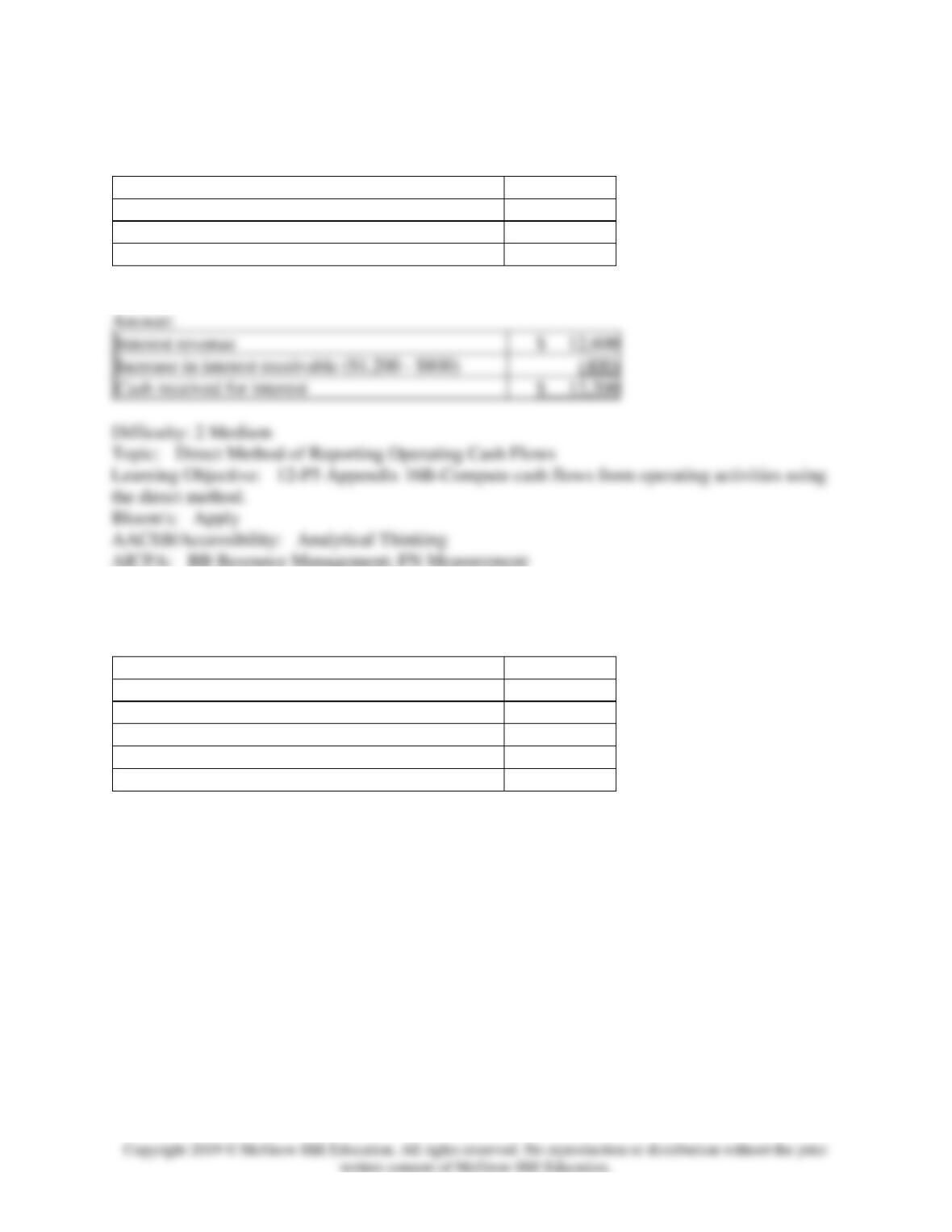
Interest revenue
Increase in interest receivable ($1,200 – $800)
Cash received for interest
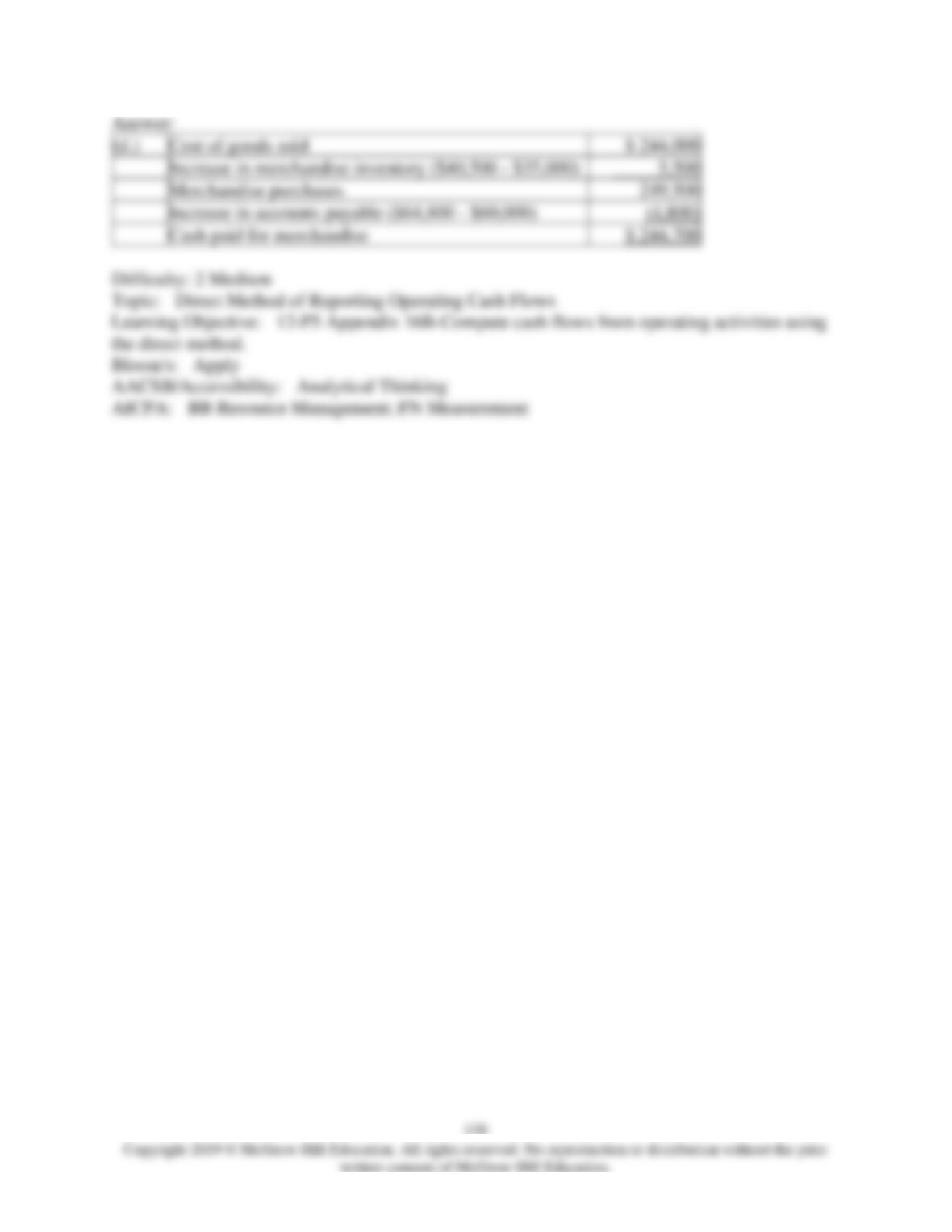
213) Use the information provided to calculate the missing cash paid for merchandise for the
period.
Accounts payable, beginning-year
$ 60,000
Cost of goods sold
244,000
Merchandise inventory, beginning-year
35,000
Merchandise inventory, year-end
40,500
Accounts payable, year-end
64,800
Cash paid for merchandise
$
139
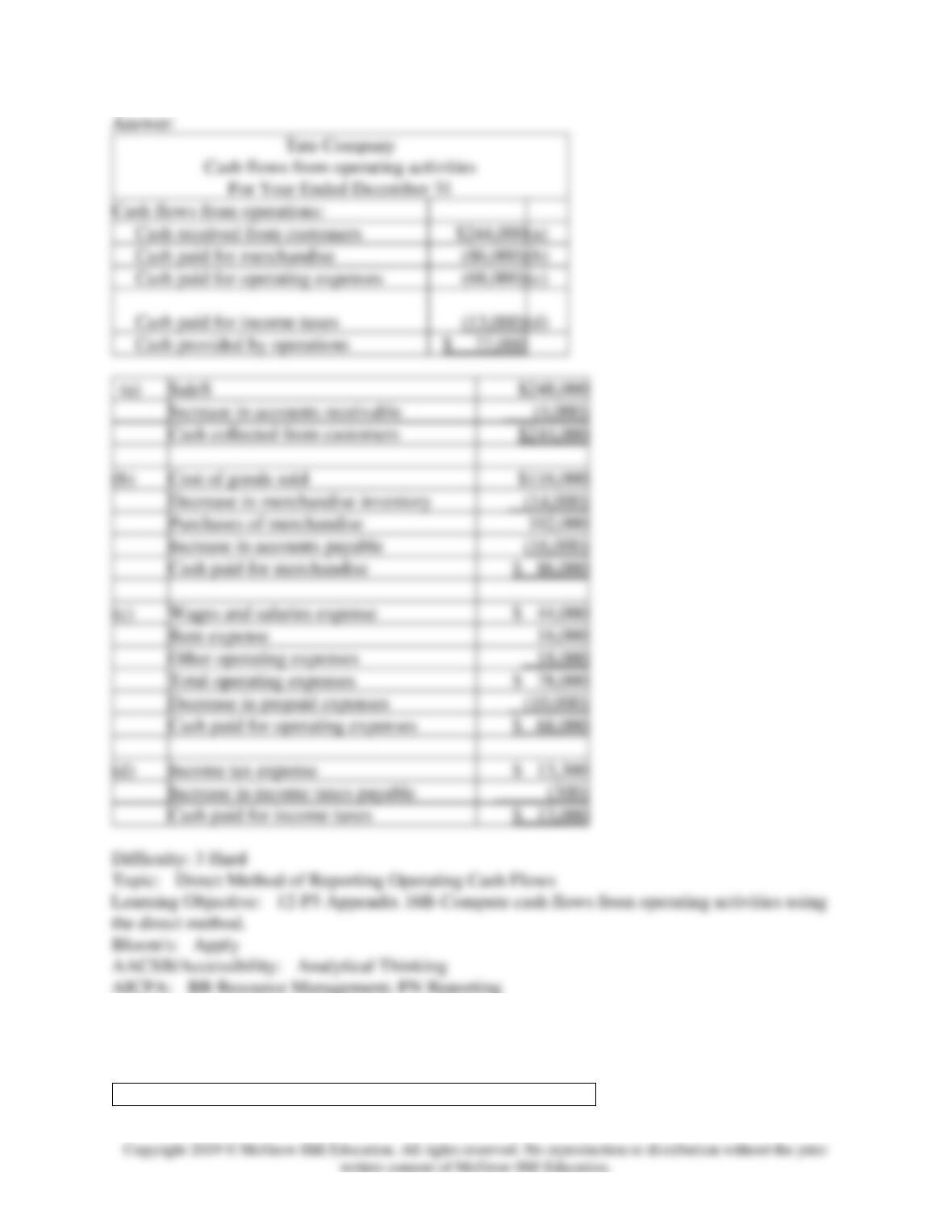
214) Tate Company’s current year income statement and changes in selected balance sheet
accounts are given below. Calculate the company’s net cash provided or used by operating
activities using the direct method.
Tate Company
Income Statement
For Year Ended December 31
Sales
$248,000
Cost of goods sold
116,000
Gross profit
$132,000
Operating expenses:
Wages and salaries expense
$44,000
Rent expense
16,000
Depreciation expense
30,000
Amortization expense
12,000
Other expenses
18,000
120,000
Income from operations
$ 12,000
Gain on sale of equipment
26,000
Income before taxes
$ 38,000
Income tax expense
13,300
Net Income
$ 24,700
The company also experienced the following during the current year:
Increase in accounts receivable
$ 4,000
Increase in accounts payable (all accounts
payable transactions are for inventory)
16,000
Increase in income taxes payable
300
Decrease in prepaid expenses
10,000
Decrease in merchandise inventory
14,000
Decrease in long-term notes payable
20,000
140
215) Based on the information in the following income statement and balance sheet for Monterey
Corporation, determine the cash flows from operating activities using the direct method.
Monterey Corporation