CHAPTER 12
CAPITAL BUDGETING AND
THE INVESTMENT DECISION
TRUE OR FALSE QUESTIONS
(Correct answers indicated by T for True and F for False answers)
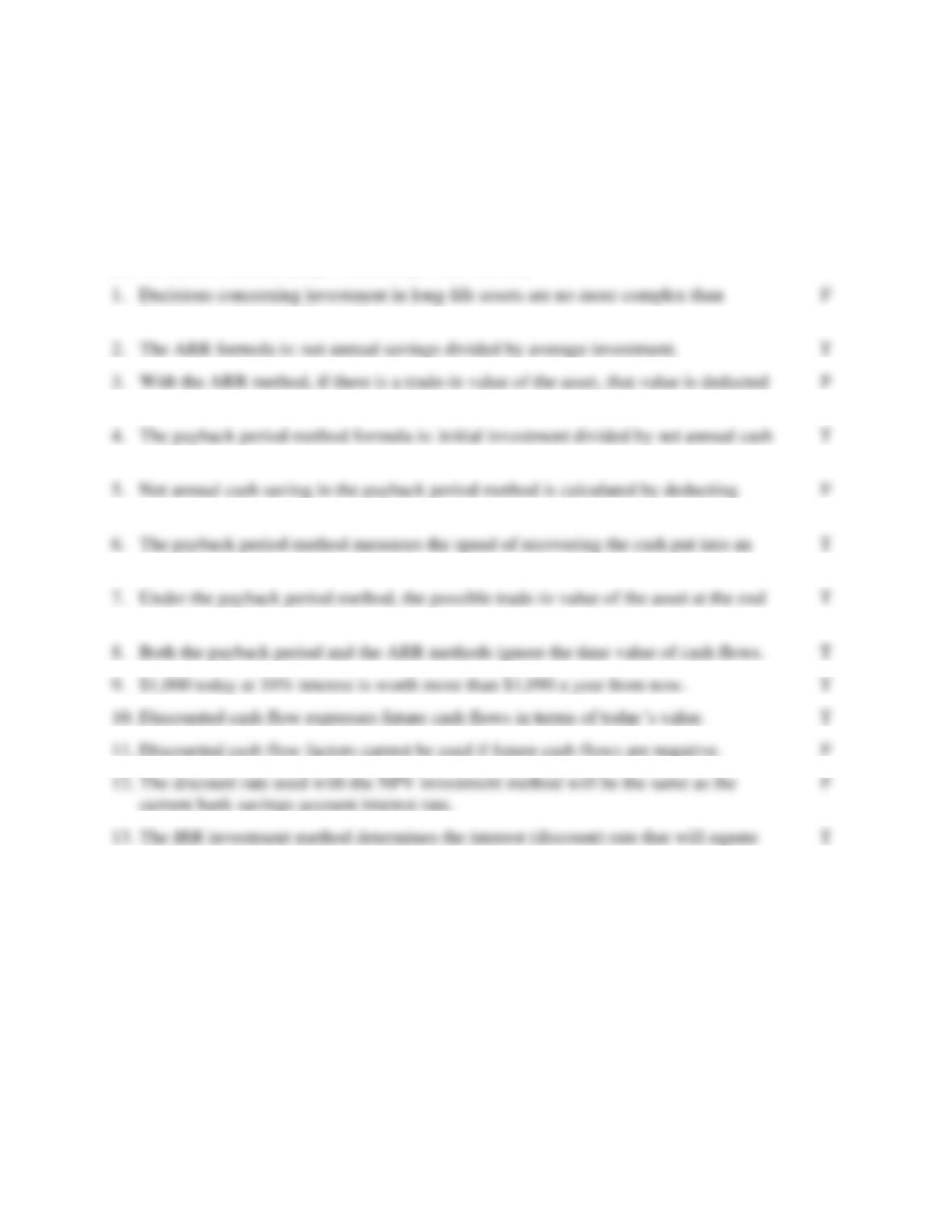
decisions concerning day-to-day matters.
from initial investment (before dividing by two) to arrive at average investment.
savings.
depreciation from net annual savings.
investment.
of its useful life is ignored.
current bank savings account interest rate.
total discounted cash inflows with the initial investment.
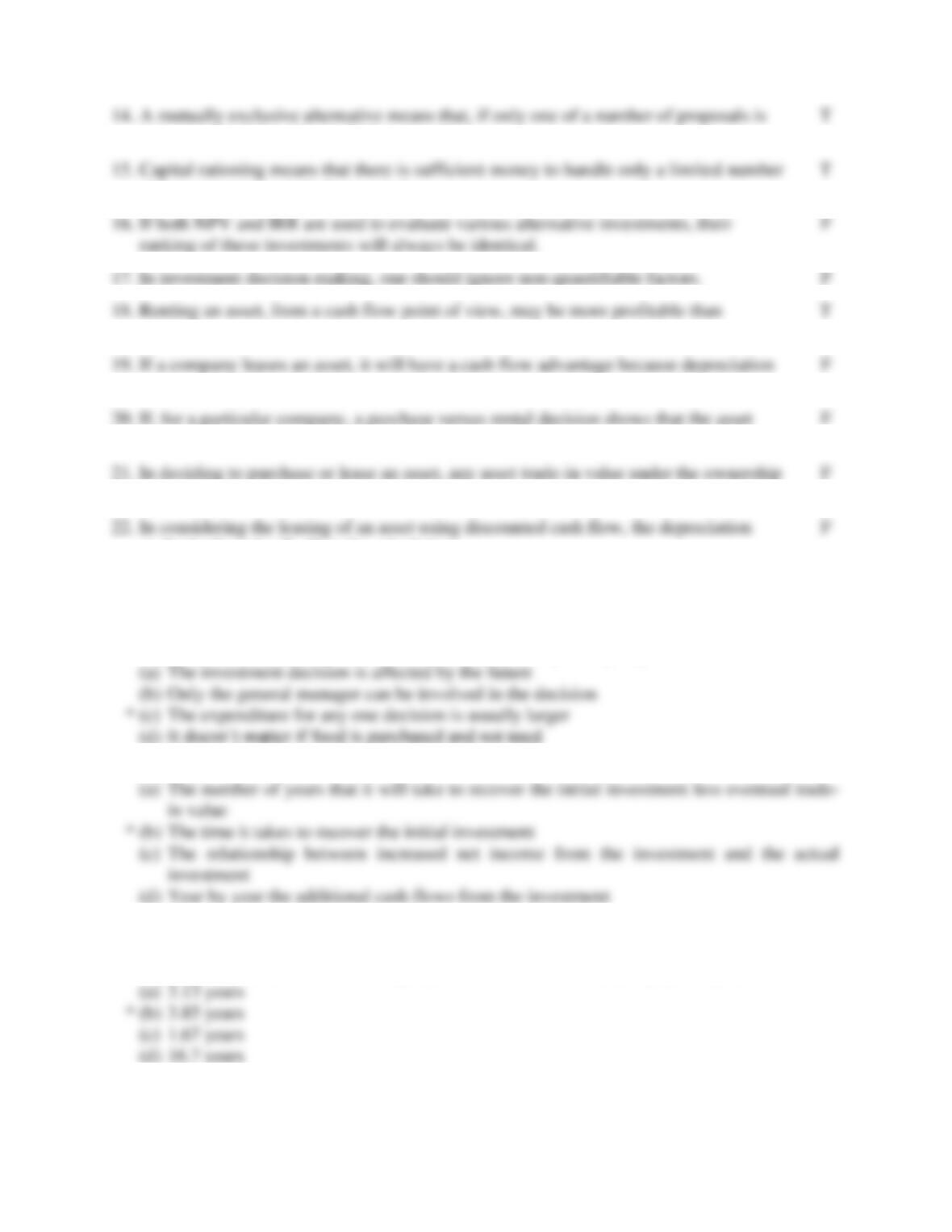
to be accepted, the others will be rejected.
of investments in any budget period.
ranking of these investments will always be identical.
purchasing.
can be deducted and produces savings on income tax.
should be purchased, then all future similar decisions should dictate purchase.
option can be ignored.
method selected will affect the calculations.
MULTIPLE CHOICE QUESTIONS
(Correct answer indicated by asterisk)
1. Decisions about investing in fixed assets differ from day-to-day expense decisions because:
2. The payback period investment method shows:
3. If an equipment investment was $10,000 with a 5-year life using straight-line depreciation
and provided additional annual sales revenue of $3,500 and expenses (excluding
depreciation) of $300, and the company is in a 50% tax bracket, the payback period is:
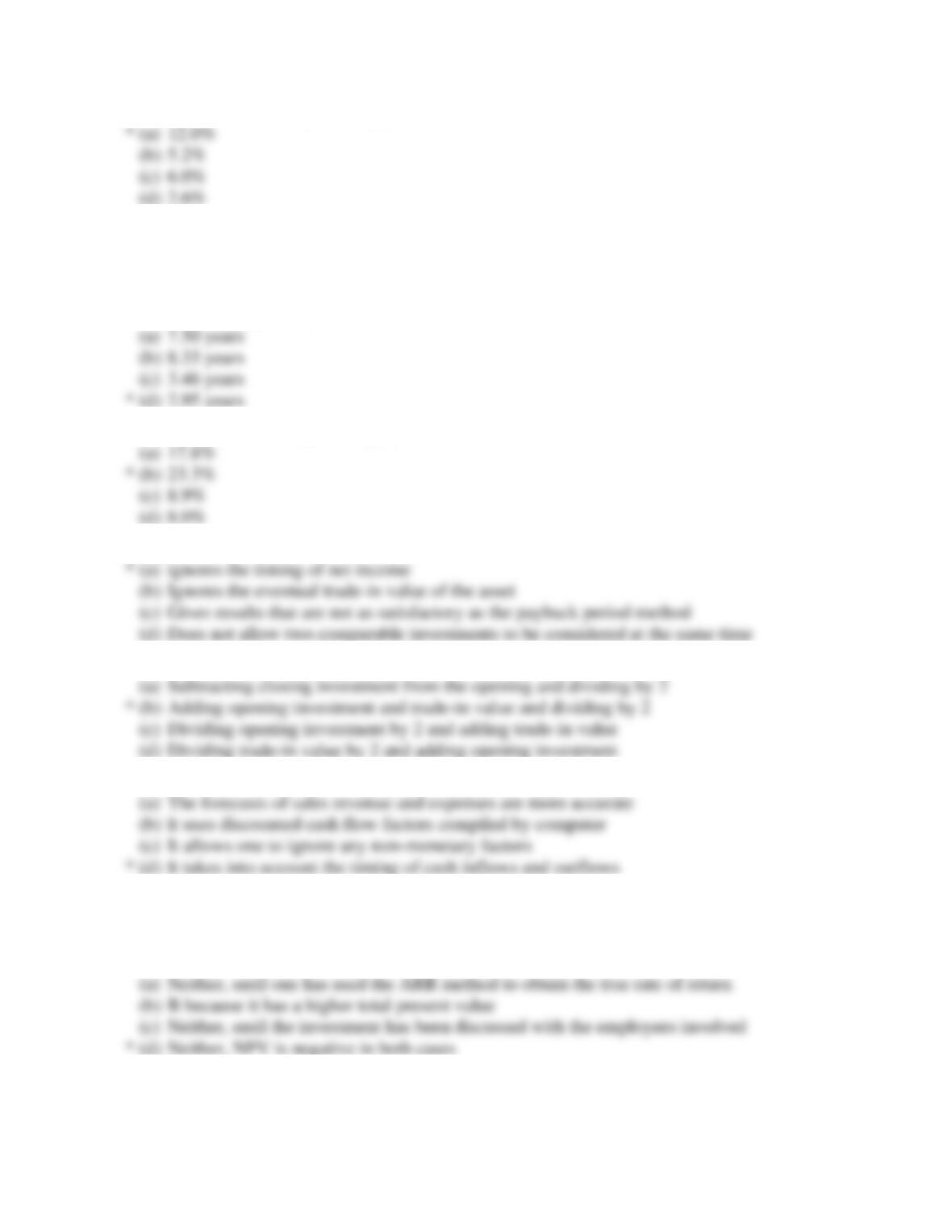
4. Given the facts in the preceding question, the ARR is:
5. A Company is trading in a fully depreciated old asset for a new one. Cost of the new asset is
$5,000 with a 5-year life and straight-line depreciation will be used. The company receives a
$500 allowance for the asset traded in. Additional sales revenue from the investment will be
$2,100 and expenses of $400 (excluding depreciation). The company is in a 25% tax
bracket. The payback period is:
6. Given the facts in the preceding question, the ARR is:
7. One of the criticisms of the ARR method is that it:
8. Average investment for the ARR method is calculated by:
9. The NPV method has an advantage over the payback period and ARR methods because:
10. Two alternative $15,000 investments are being considered. A 10% discount rate is used
because the company never invests at a lower rate than this. The NPV of Alternative A
shows a total present value of $12,400 and Alternative B a total present value of $12,800.
Given this information one should select:
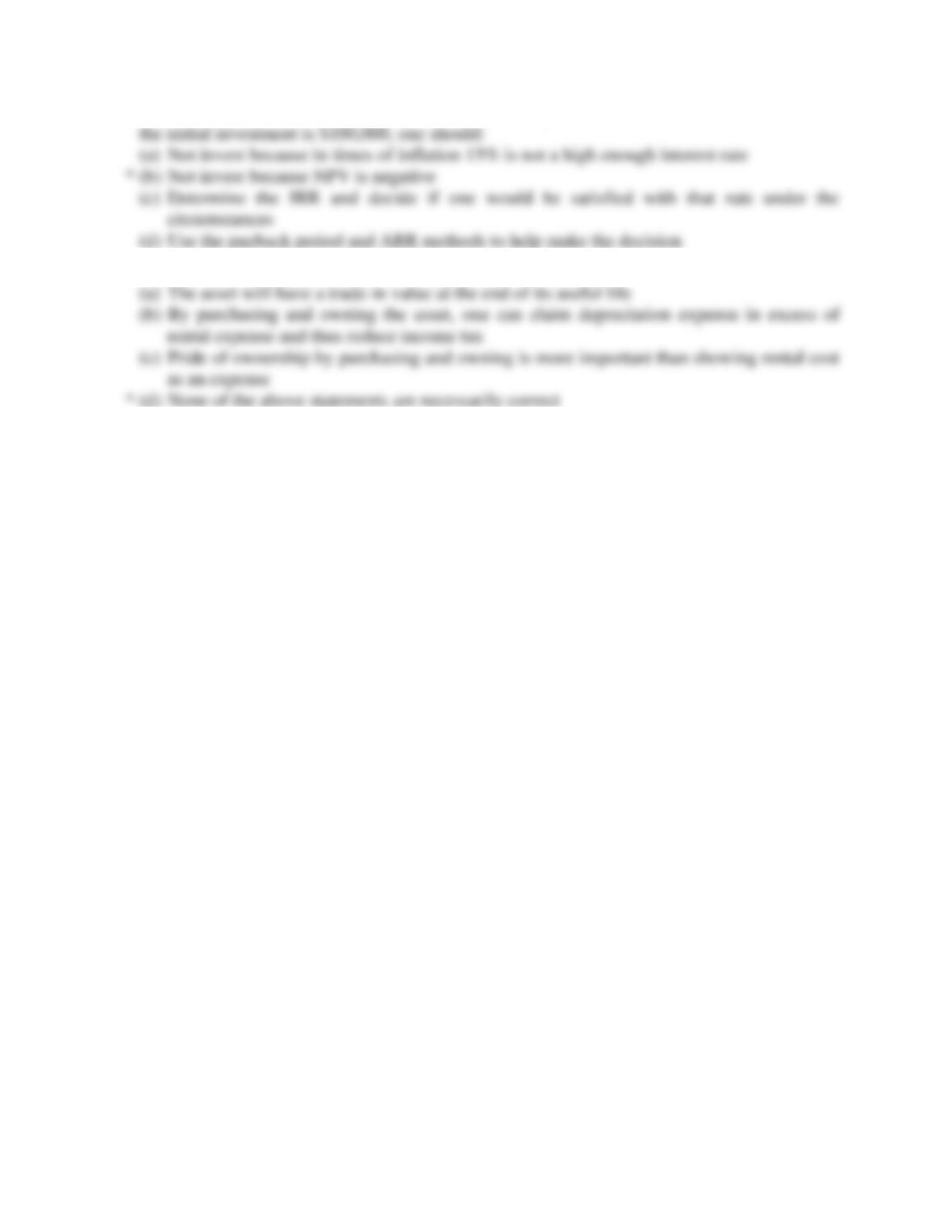
11. If the total present value of a 5-year investment using NPV and a 15% rate is $82,300, and
12. Purchasing is always preferable to leasing an asset because: