191) Explain the use of a spreadsheet in the preparation of the statement of cash flows.
192) Explain how the cash flows from operating activities section of the statement of cash flows
is prepared using the direct method.
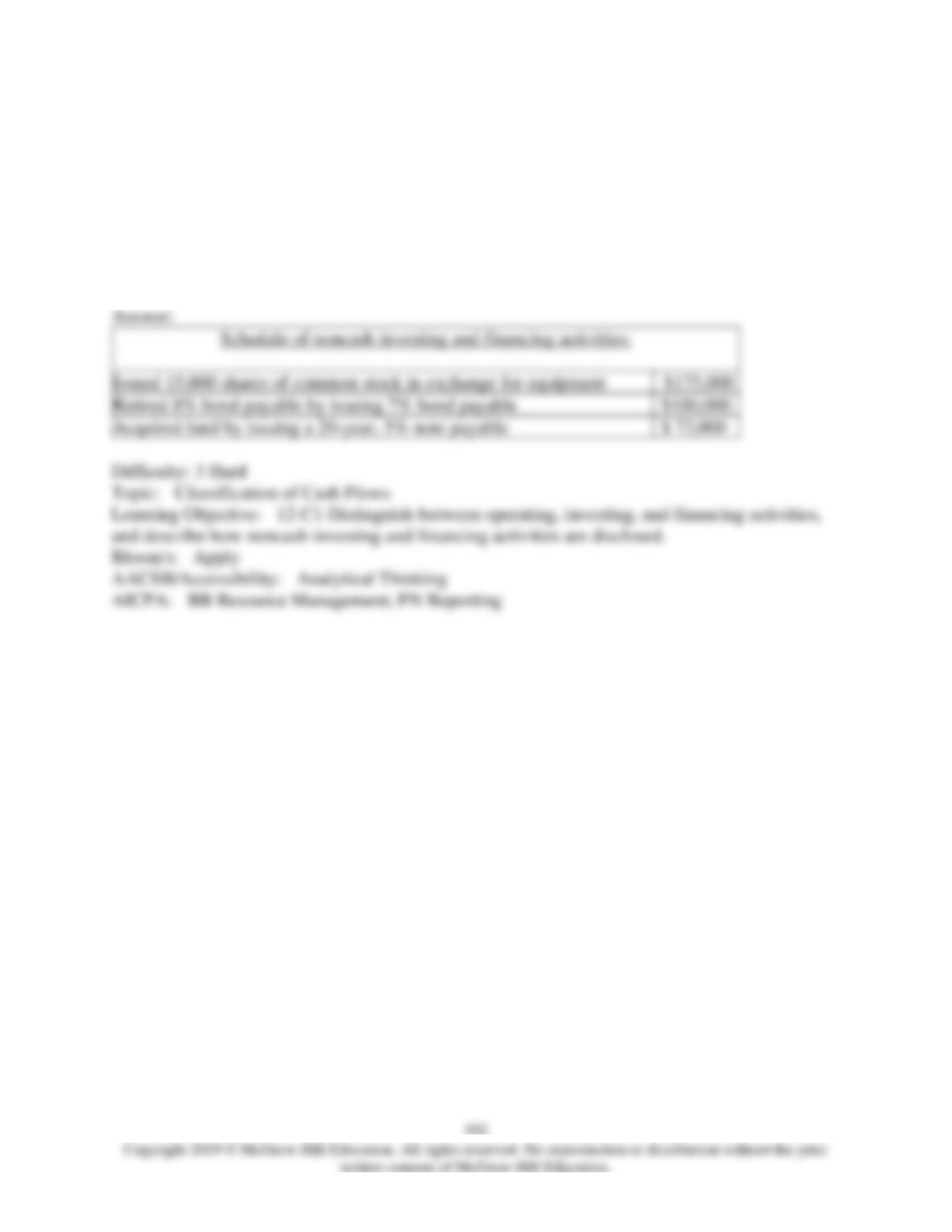
193) Use the following company information to prepare a schedule of significant noncash
investing and financing activities:
(a) Sold a building with a book value of $300,000 for $225,000 cash and sold land with a book
value of $40,000 for $65,000 cash.
(b) Issued 15,000 shares of $10 par value common stock in exchange for equipment with a
market value of $175,000.
(c) Retired a $100,000, 8% bond by issuing another $100,000, 7% bond issue.
(d) Acquired land by issuing a twenty-year, 5%, $73,000 note payable.
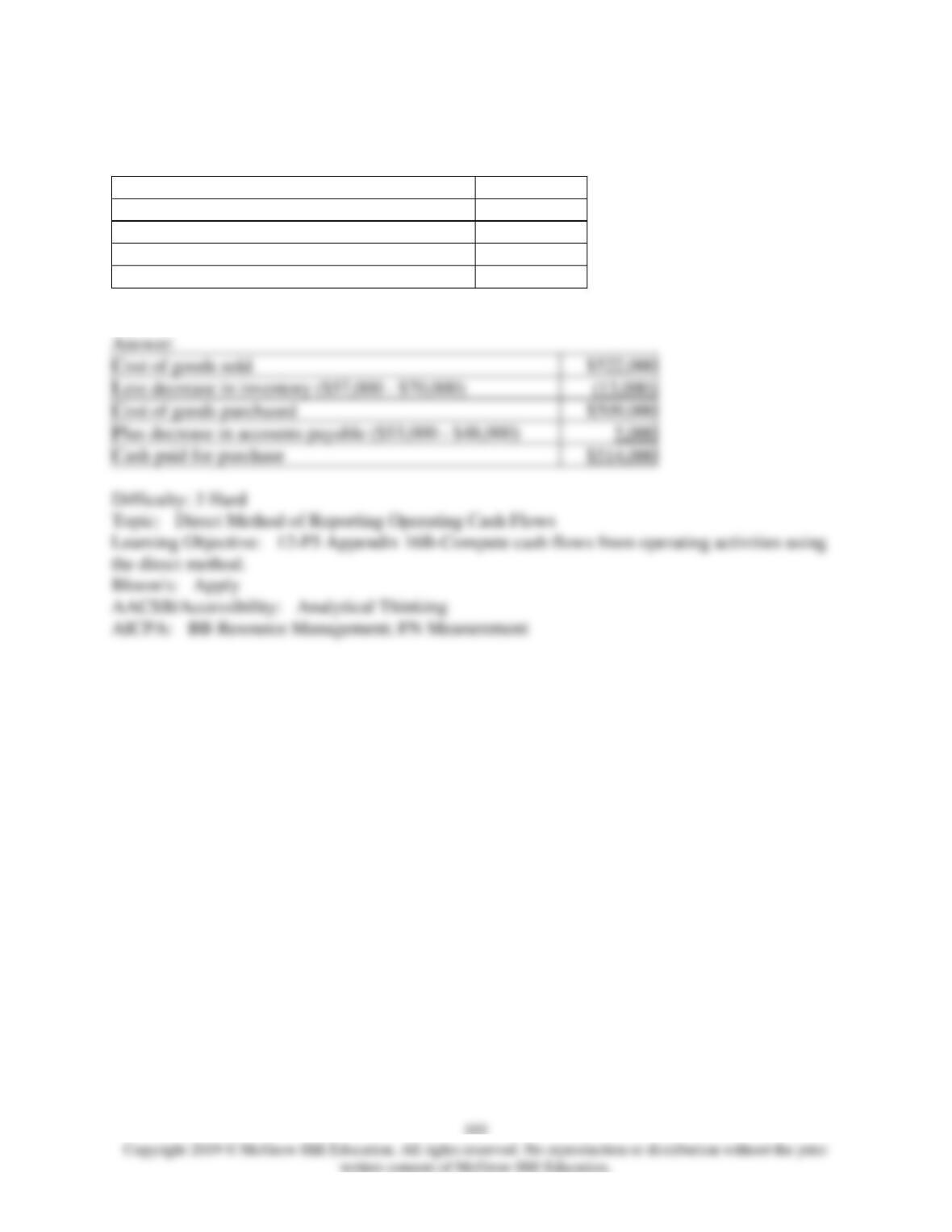
194) Based on the following information provided about a company’s operations, calculate its
cost of goods purchased and its cash paid for merchandise.
Cost of goods sold
$522,000
Merchandise inventory, beginning year
70,000
Accounts payable, beginning year
53,000
Merchandise inventory, end-of-year
57,000
Accounts payable, end-of-year
48,000
Cost of goods sold
Less decrease in inventory ($57,000 – $70,000)
Cost of goods purchased
Plus decrease in accounts payable ($53,000 – $48,000)
Cash paid for purchase
104
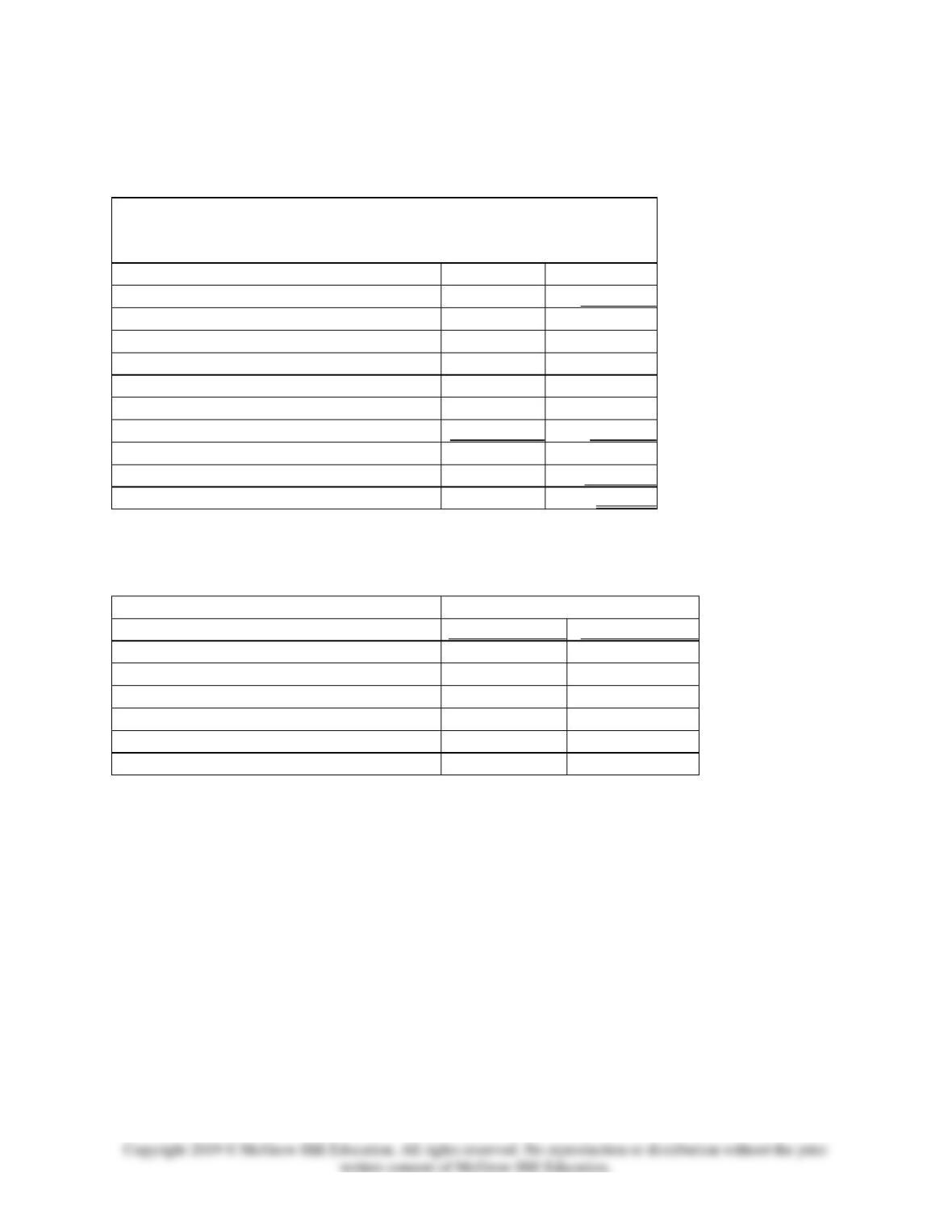
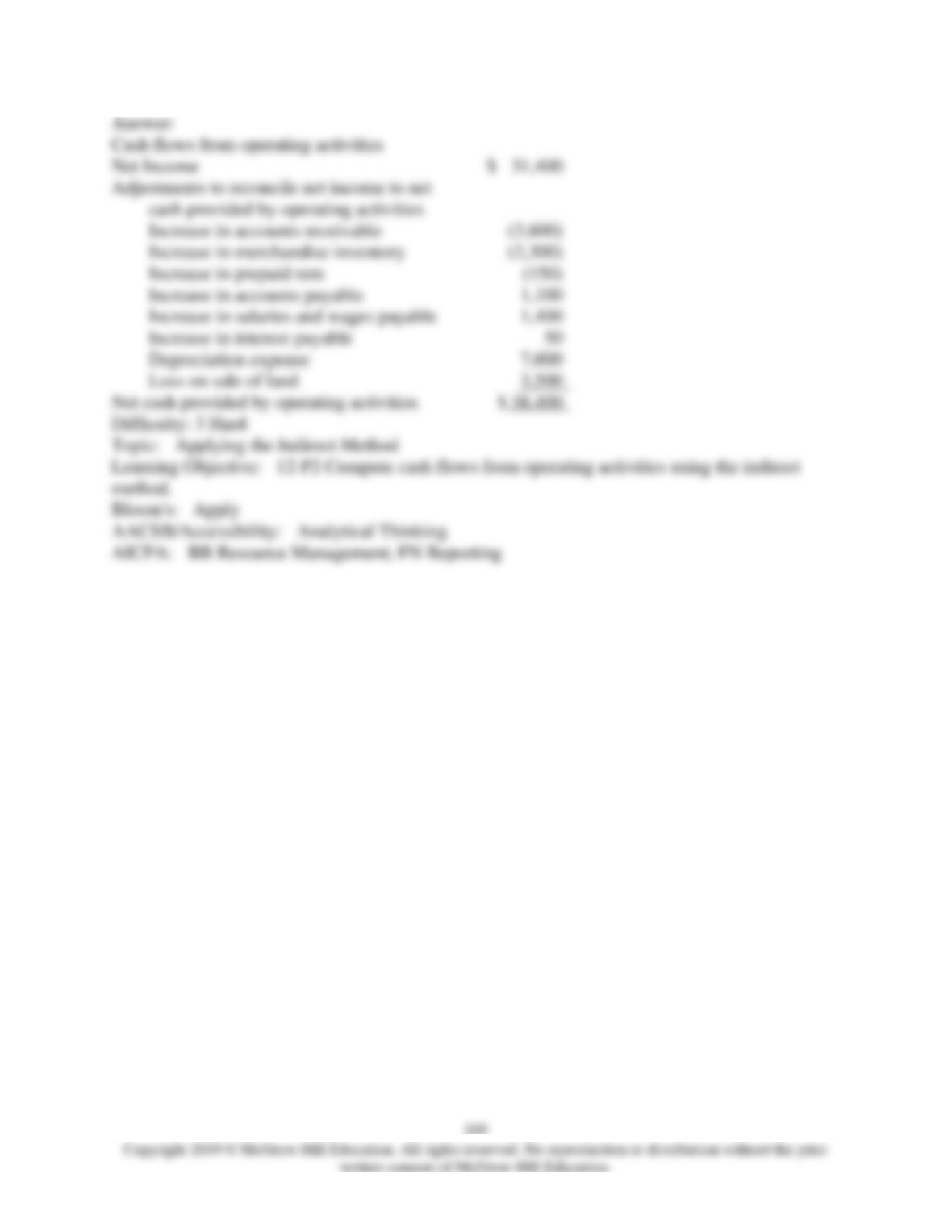
195) Use the following income statement and information about selected current assets and
current liabilities to calculate the net cash provided or used by operating activities using the
indirect method.
PULLMAN COMPANY
Income Statement
For Year Ended December 31, Year 2
Sales
$180,000
Cost of goods sold
104,000
Gross profit from sales
$ 76,000
Operating expenses:
Salaries and wages expense
$25,000
Depreciation expense
7,000
Rent expense
7,200
Interest expense
1,900
41,100
Income from operations
$ 34,900
Loss on sale of land
3,500
Net income
$31,400
Selected beginning and ending balances of current asset and current liability accounts, all of
which relate to operating activities, are as follows:
Balance
Dec. 31, Year 2
Dec. 31, Year 1
Accounts receivable
$27,600
$24,000
Merchandise inventory
22,300
20,000
Prepaid rent
550
400
Accounts payable
27,100
26,000
Salaries and wages payable
10,400
9,000
Interest payable
300
250
106
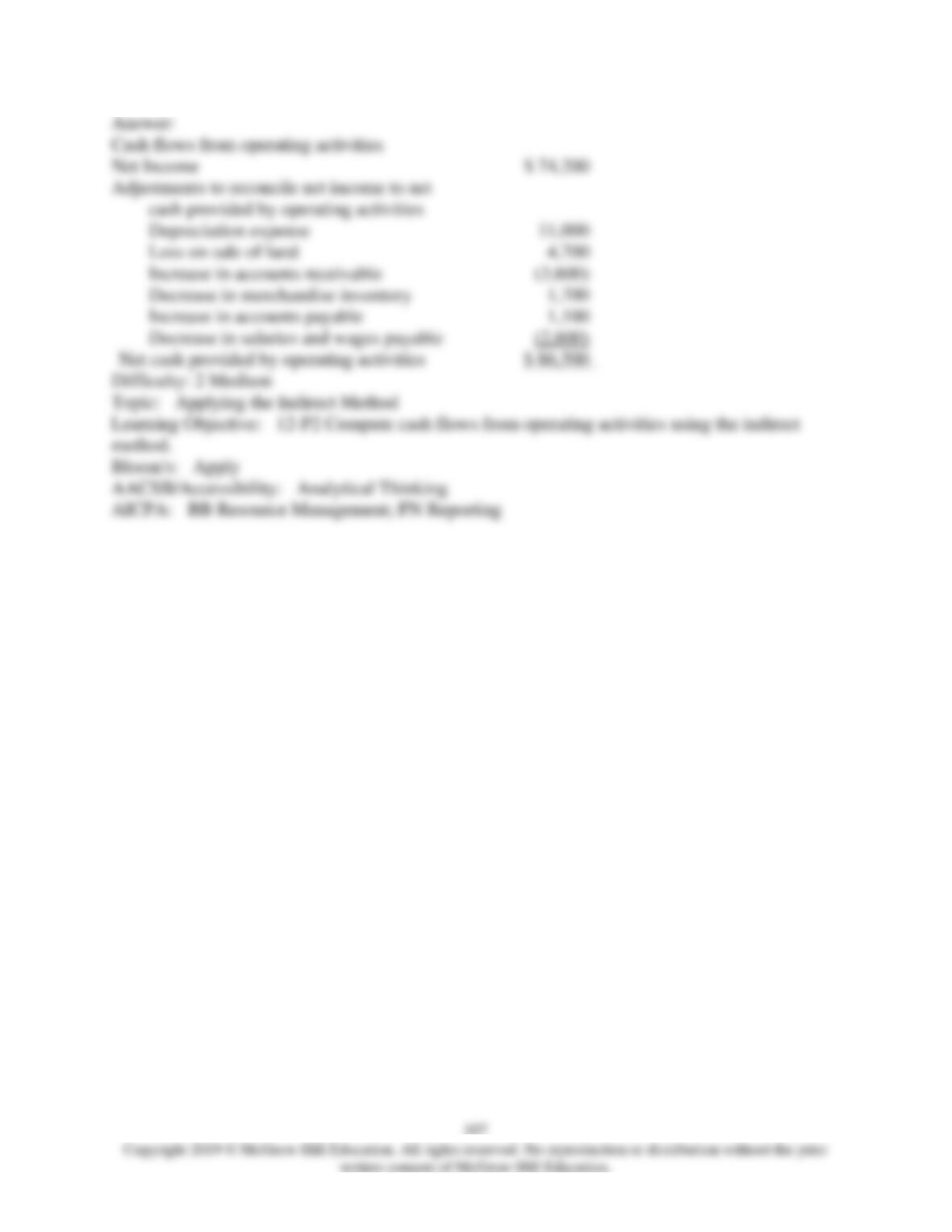
196) Use the following income statement and information about selected current assets and
current liabilities for Kimberline Industries to calculate the net cash provided or used by
operating activities using the indirect method.
KIMBERLINE INDUSTRIES
Income Statement
For Year Ended December 31
Sales
$280,000
Cost of goods sold
124,000
Gross profit from sales
$156,000
Operating expenses:
Salaries and wages expense
$35,000
Depreciation expense
11,000
Rent expense
27,200
Interest expense
3,900
77,100
Income from operations
$78,900
Loss on sale of land
4,700
Net income
$74,200
Increases and decreases of current asset and current liability accounts, all of which relate to
operating activities, are as follows:
Change
Accounts receivable increase
$3,600
Merchandise inventory decrease
1,700
Accounts payable increase
1,100
Salaries and wages payable decrease
2,600
108
197) Based on the following income statement and balance sheet for Bankowski Corporation,
determine the cash flows from operating activities using the indirect method.
Bankowski Corporation
Income Statement
For Year Ended December 31, Year 2
Sales
$504,000
Cost of goods sold
$327,600
Depreciation expense
33,000
Other operating expenses
125,500
(486,100)
Other gains (losses):
Gain on sale of equipment
5,200
Income before taxes
$ 23,100
Income tax expense
(4,800
Net income
$ 18,300
109
Bankowski Corporation
Balance Sheets
At December 31
Assets
Year 2
Year 1
Cash
$ 62,650
$ 55,800
Accounts receivable
21,000
29,000
Inventory
58,000
52,100
Equipment
240,000
222,000
Accumulated depreciation
(97,000)
( 96,000)
Total assets
$284,650
$262,900
Liabilities:
Accounts payable
$ 28,400
$ 23,700
Income taxes payable
1,050
1,200
Total liabilities
$ 29,450
$ 24,900
Equity:
Common stock
$106,000
$ 106,000
Paid-in Capital in excess of par value
18,000
18,000
Retained earnings
131,200
114,000
Total equity
$255,200
$ 238,000
Total liabilities and equity
$284,650
$ 262,900
111
198) Rowan, Inc.’s, income statement is shown below. Based on this income statement and the
other information provided, calculate the net cash provided by operations using the indirect
method.
Rowan, Inc.
Income Statement
For Year Ended December 31
Sales
$248,000
Cost of goods sold
116,000
Gross profit
$132,000
Operating expenses
Wages and salaries expense
$ 44,000
Rent expense
16,000
Depreciation expense
30,000
Other operating expenses
18,000
108,000
Income from operations
$ 24,000
Gain on sale of equipment
26,000
Income before income taxes
$ 50,000
Income taxes expense
17,500
Net income
$ 32,500
Additional information:
Increase in accounts receivable
$ 4,000
Increase in accounts payable
16,000
Increase in income taxes payable
300
Decrease in prepaid expenses
10,000
Decrease in merchandise inventory
14,000
113
199) The following information is available for the Aarons Corporation:
Aarons Corporation
Balance Sheets
At December 31
Year 2
Year 1
Assets:
Cash
$ 24,640
$ 23,040
Accounts receivable
32,180
29,400
Merchandise inventory
73,125
61,710
Long-term investments
55,900
56,400
Equipment
175,500
145,500
Accumulated depreciation
(33,550)
(31,200)
Total assets
$327,795
$284,850
Liabilities:
Accounts payable
$ 65,000
$ 40,380
Income taxes payable
10,725
10,200
Bonds payable
48,750
66,000
Total liabilities
$124,475
$116,580
Equity:
Common stock
117,000
96,000
Paid-in capital in excess of par
13,000
9,000
Retained earnings
73,320
63,270
Total equity
$203,320
$168,270
Total liabilities and equity
$327,795
$284,850
114
Aarons Corporation
Income Statement
For Year Ended December 31, Year 2
Sales
$240,000
Cost of goods sold
$80,900
Depreciation expense
29,400
Other operating expenses
48,000
Interest expense
2,000
(160,300)
Other gains (losses):
Loss on sale of equipment
(8,400)
Income before taxes
71,300
Income taxes expense
27,650
Net income
$ 43,650
Additional information:
(1) There was no gain or loss on the sales of the long-term investments, nor on the bonds retired.
(2) Old equipment with an original cost of $37,550 was sold for $2,100 cash.
(3) New equipment was purchased for $67,550 cash.
(4) Cash dividends of $33,600 were paid.
(5) Additional shares of stock were issued for cash.
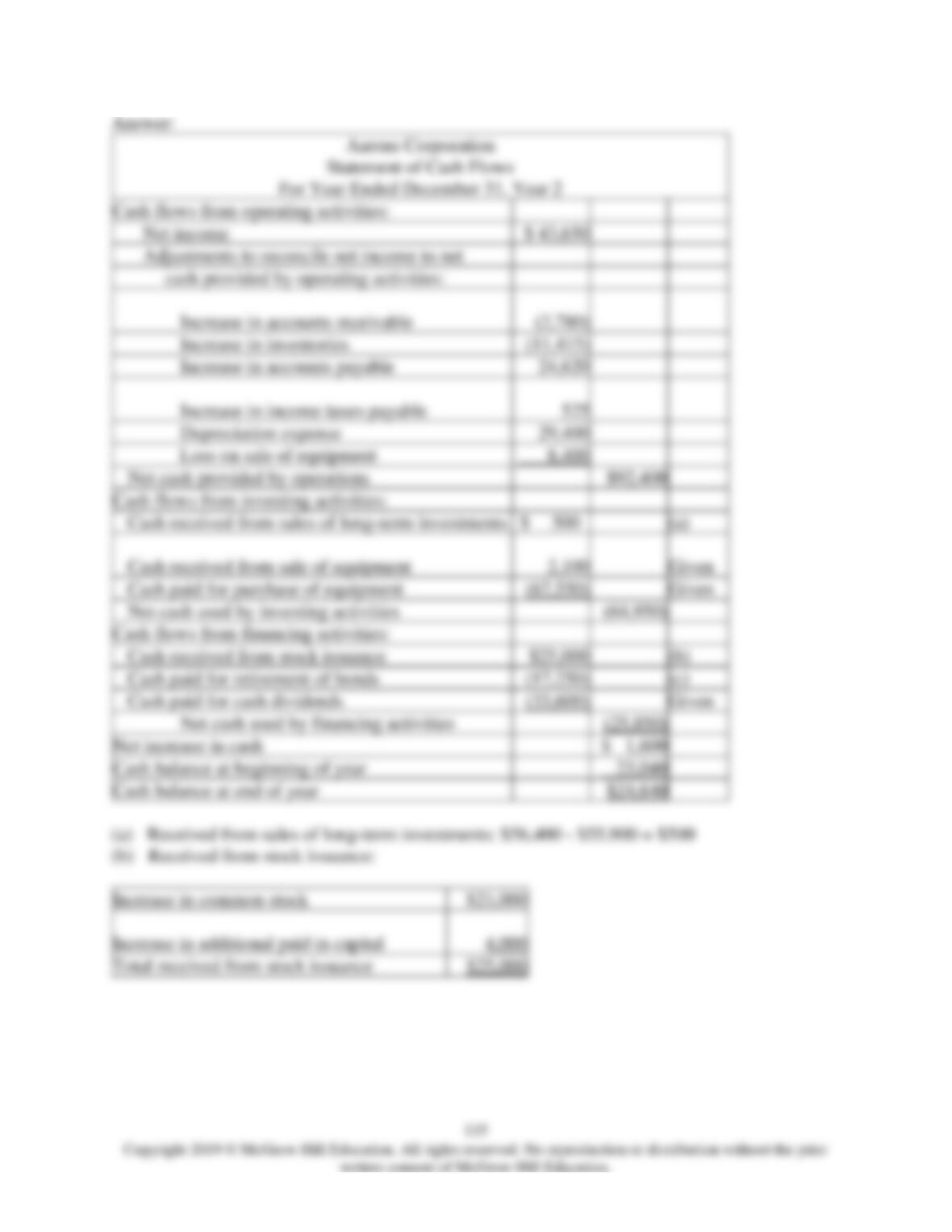
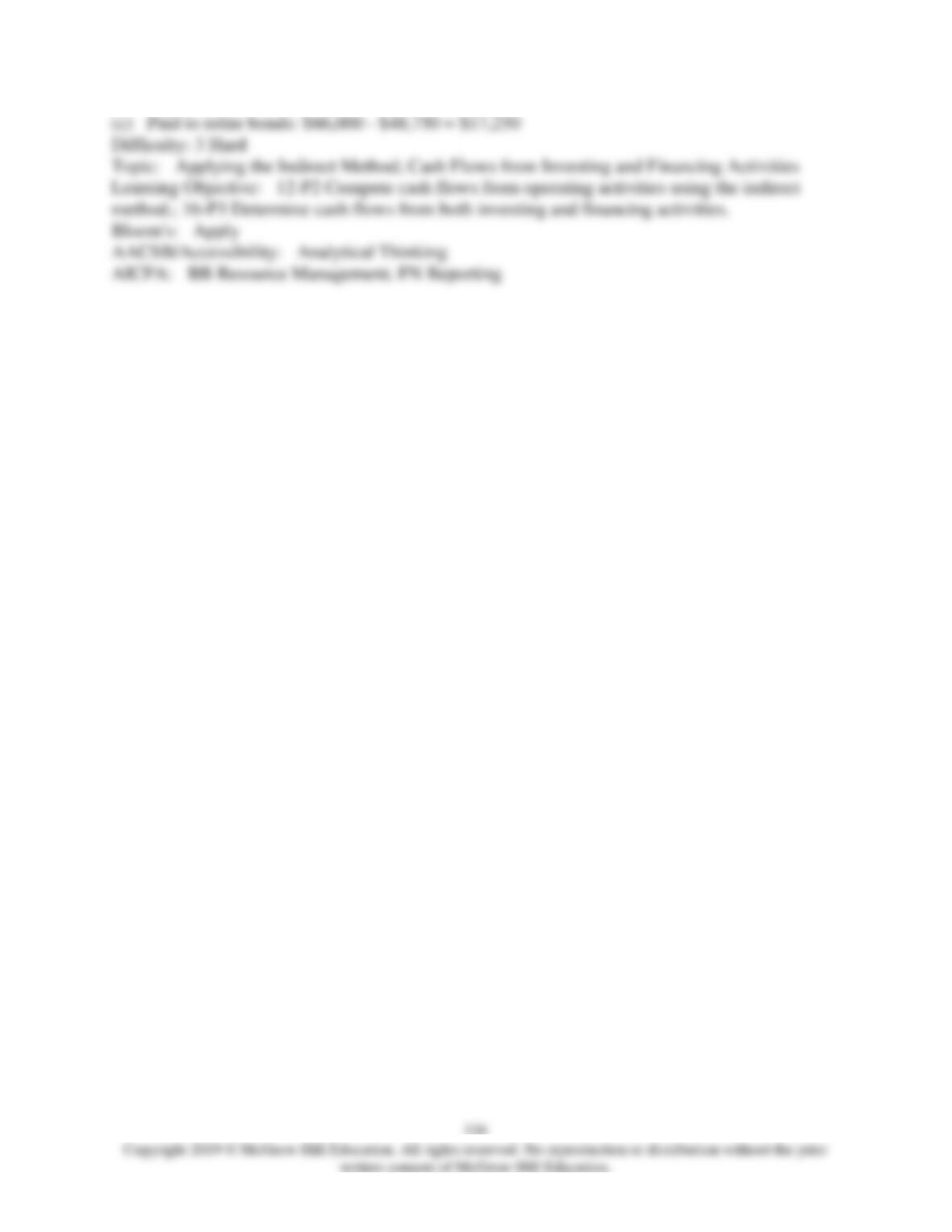
Prepare a complete statement of cash flows for Year 2 using the indirect method.
117
200) The following information is available for the Brookstone Company:
Brookstone Company
Balance Sheets
At December 31
Year 2
Year 1
Assets:
Cash
$ 29,568
$ 27,648
Accounts receivable
38,616
35,280
Merchandise inventory
87,750
74,052
Long-term investments
67,080
67,680
Machinery
210,600
174,600
Accumulated depreciation
(40,260)
(37,440)
Total assets
$393,354
$341,820
Liabilities:
Accounts payable
$ 78,000
$ 48,456
Income taxes payable
12,870
12,240
Bonds payable
58,500
79,200
Total liabilities
$149,370
$139,896
Equity:
Common stock
140,400
115,200
Paid-in capital in excess of par
15,600
10,800
Retained earnings
87,984
75,924
Total equity
$243,984
$201,924
Total liabilities and equity
$393,354
$341,820
118
Brookstone Company
Income Statement
For Year Ended December 31, Year 2
Sales
$288,000
Cost of goods sold
$ 97,080
Depreciation expense
35,280
Other operating expenses
57,600
Interest expense
2,400
(192,360)
Other gains (losses):
Loss on sale of equipment
(10,080)
Income before taxes
85,560
Income taxes expense
33,180
Net income
$ 52,380
Additional information:
(1) There was no gain or loss on the sales of the long-term investments, nor on the bonds retired.
(2) Old machinery with an original cost of $45,060 was sold for $2,520 cash.
(3) New machinery was purchased for $81,060 cash.
(4) Cash dividends of $40,320 were paid.
(5) Additional shares of stock were issued for cash.
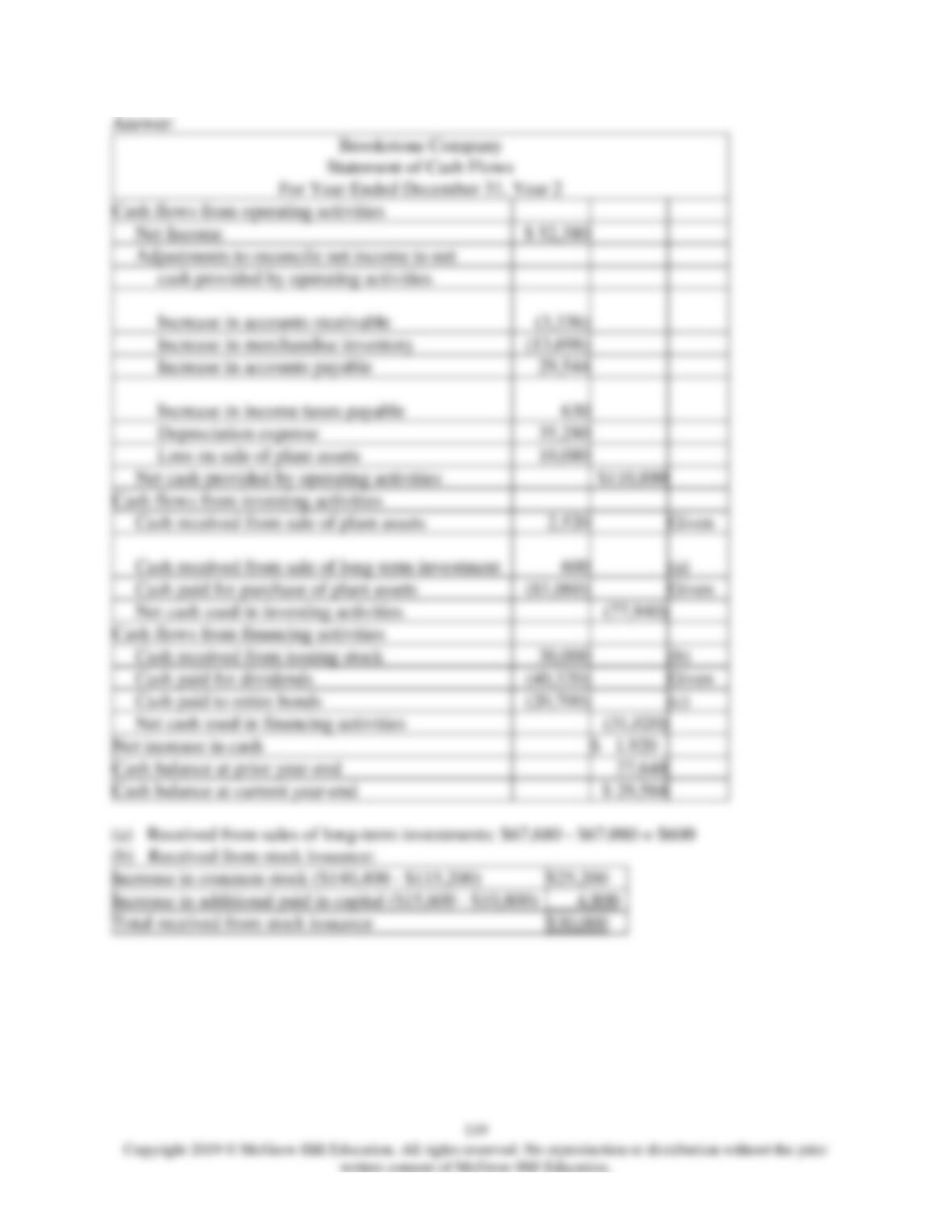
Prepare a complete statement of cash flows for Year 2 using the indirect method.
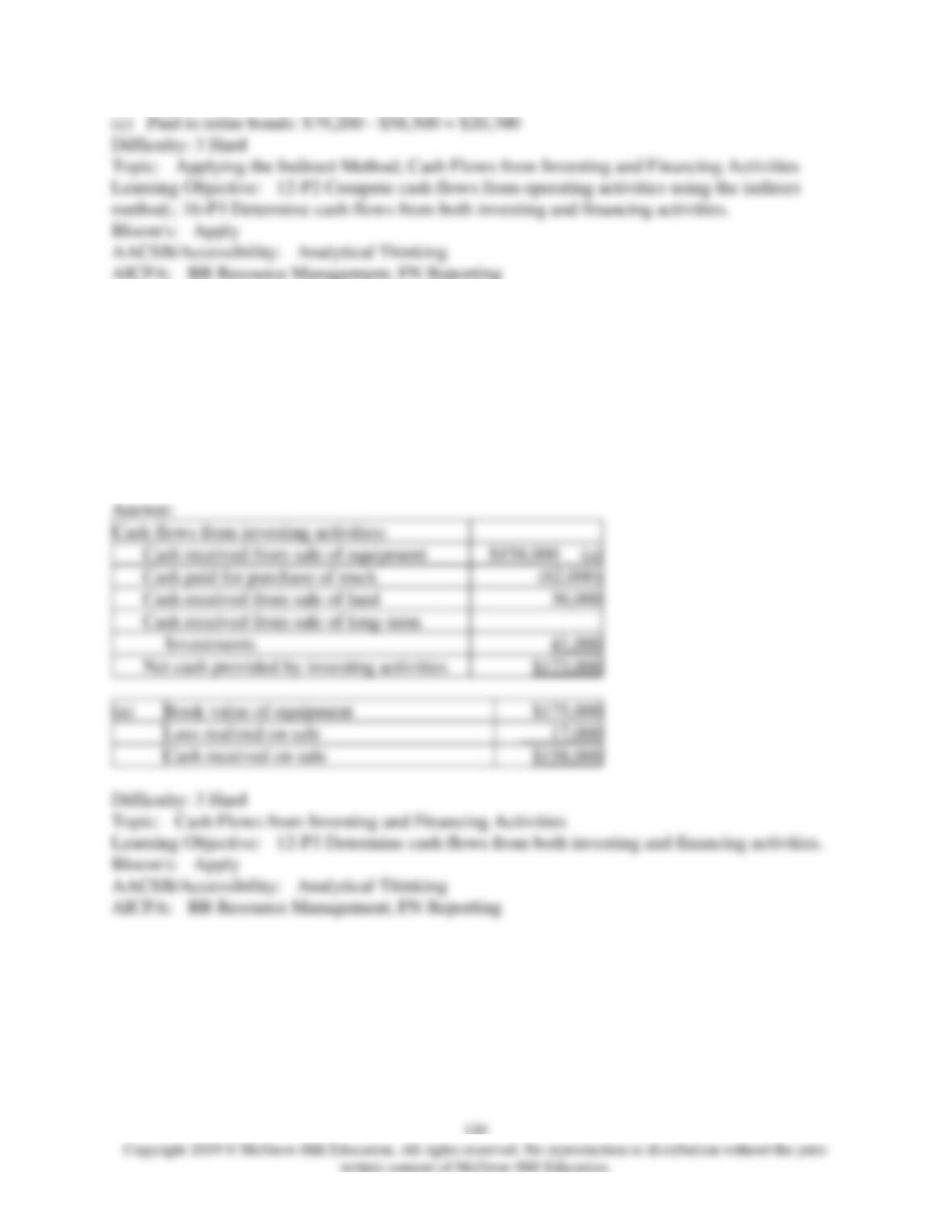
201) Use the following company information to calculate net cash provided or used by investing
activities:
(a) Equipment with a book value of $175,000 and an original cost of $300,000 was sold at a loss
of $17,000.
(b) Paid $62,000 cash for a new truck.
(c) Sold land costing $32,000 for $36,000 cash, realizing a $4,000 gain.
(d) Purchased treasury stock for $61,000 cash.
(e) Long-term investments in stock are sold for $41,000 cash, realizing a gain of $3,500.