Chapter 12 – Reporting and Interpreting Investments in Other Corporations
12–54
Chapter 12 – Reporting and Interpreting Investments in Other Corporations
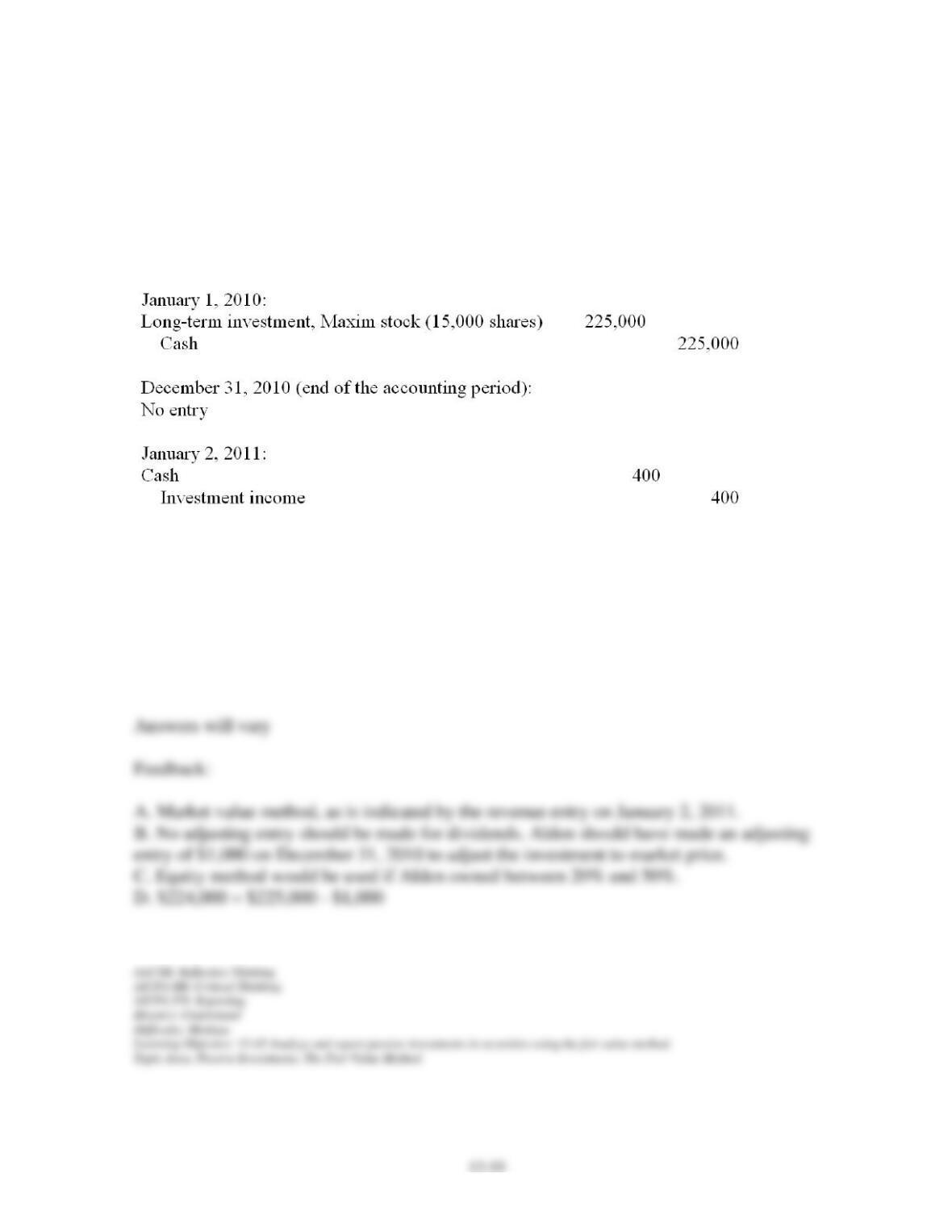
98. On January 1, 2010, Alden Company acquired 15,000 shares of the nonvoting common
stock of Maxim Corporation as a long-term investment. Maxim reported a 2010 net income of
$35,000. On January 2, 2011, Maxim declared and paid a $10,000 cash dividend. The market
value of the Maxim stock held by Alden on December 31, 2010, was $224,000. Alden
Company has recorded only the following journal entries:
Based on the above information, answer the following questions:
A. What method did Alden use to account for the investment?
B. Did Alden fail to make an adjusting entry on December 31, 2010?
C. What condition, if changed, would require that the equity method be used?
D. Assuming the market value method is used; calculate the valuation of the net investment
on January 3, 2011.
Chapter 12 – Reporting and Interpreting Investments in Other Corporations
99. Orleans Corporation purchased 1,000,000 shares of Creole Corporation’s common stock
which constitutes 10% of Creole’s voting stock on June 30, 2010 for $42 per share. Orleans’
intent is to keep these shares beyond the current year. On December 20, 2010, Creole paid a
$4,000,000 cash dividend. On December 31, 2010, Creole’s stock was trading at $45 per share
and their reported 2010 net income was $52 million.
A. Record the transaction to record the acquisition of Creole Corporation on June 30, 2010.
B. Record the transaction for the dividend received by Orleans on December 20, 2010.
C. Record any year-end entries needed by Orleans Corporation.
Chapter 12 – Reporting and Interpreting Investments in Other Corporations
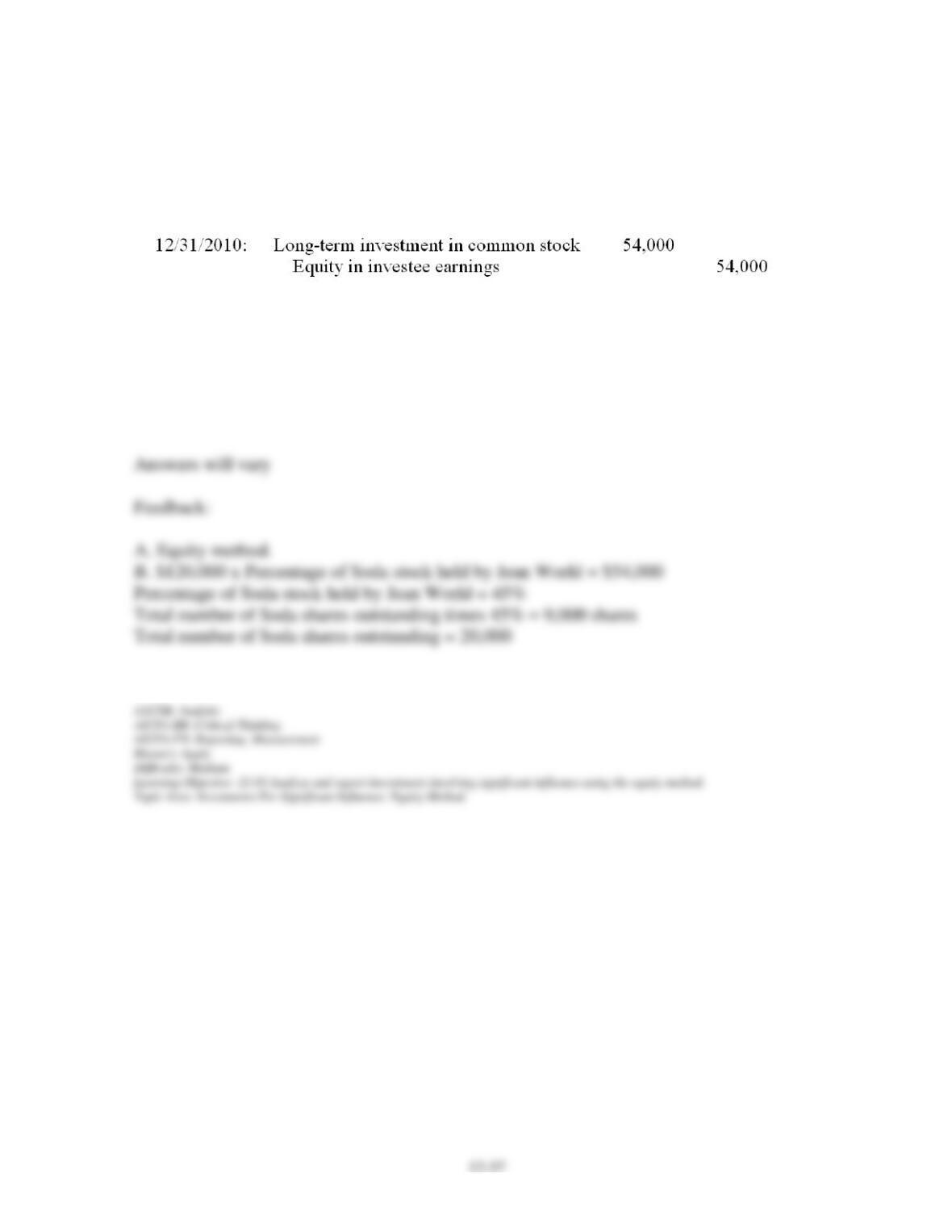
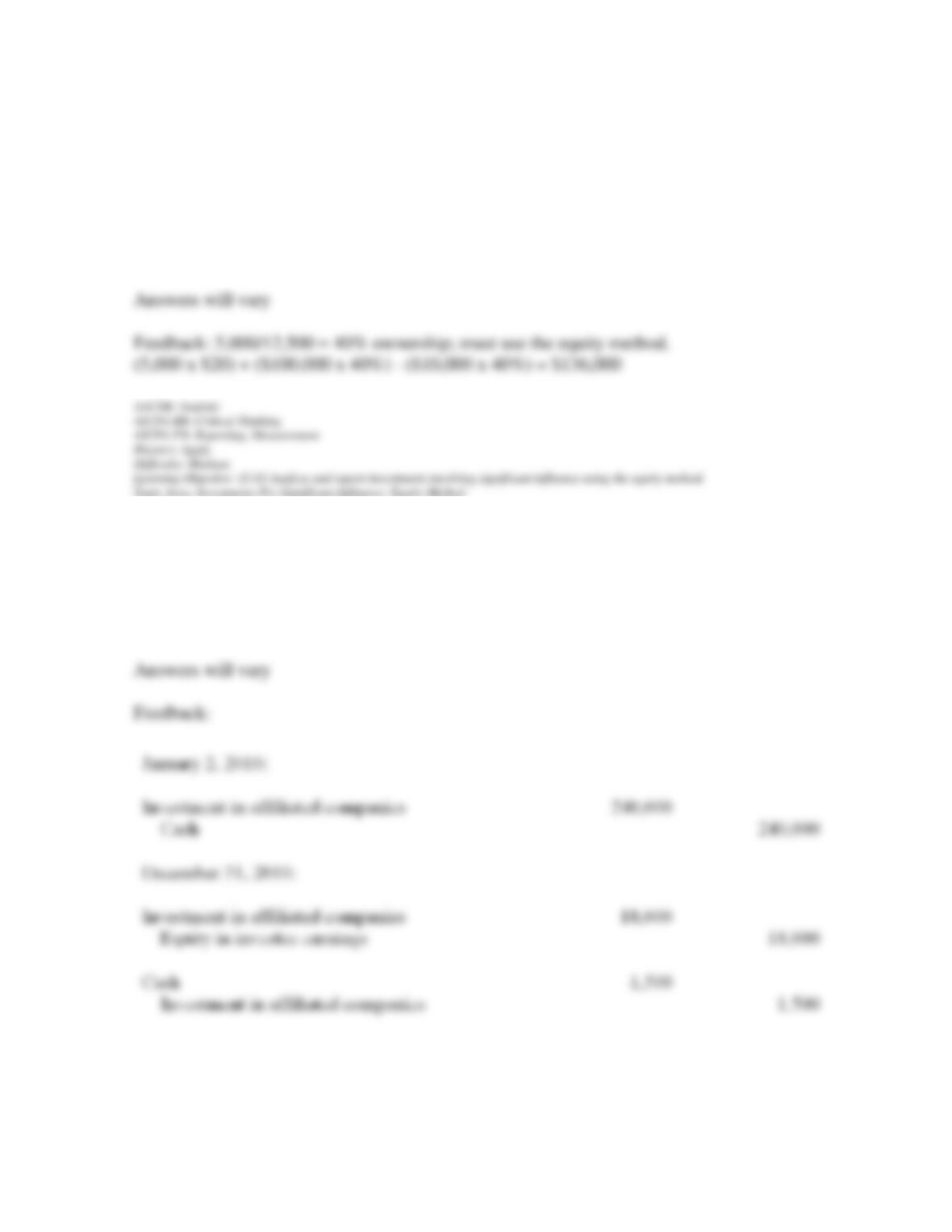
100. On December 31, 2010, Jean World Corporation recorded the following journal entry
relating to its investment in 9,000 shares of common stock of Soda Corporation.
At the end of 2010, Soda Corporation reported net income of $120,000. Earlier in the year,
Soda declared and paid dividends of $18,000.
A. What method is being used to account for this investment?
B. What is the total number of shares outstanding of Soda’s common stock?
Chapter 12 – Reporting and Interpreting Investments in Other Corporations
12–58
101. As a long-term investment, Martha Company purchased 5,000 of the 12,500 outstanding
voting shares of Stewart Corporation at $20 per share on January 1, 2010. At the end of 2010,
Stewart reported net income of $100,000 and declared and paid dividends of $10,000. The
market price of the Stewart stock at the end of 2010 was $23 per share. Calculate the net
balance in Martha’s investment account at the end of 2010.
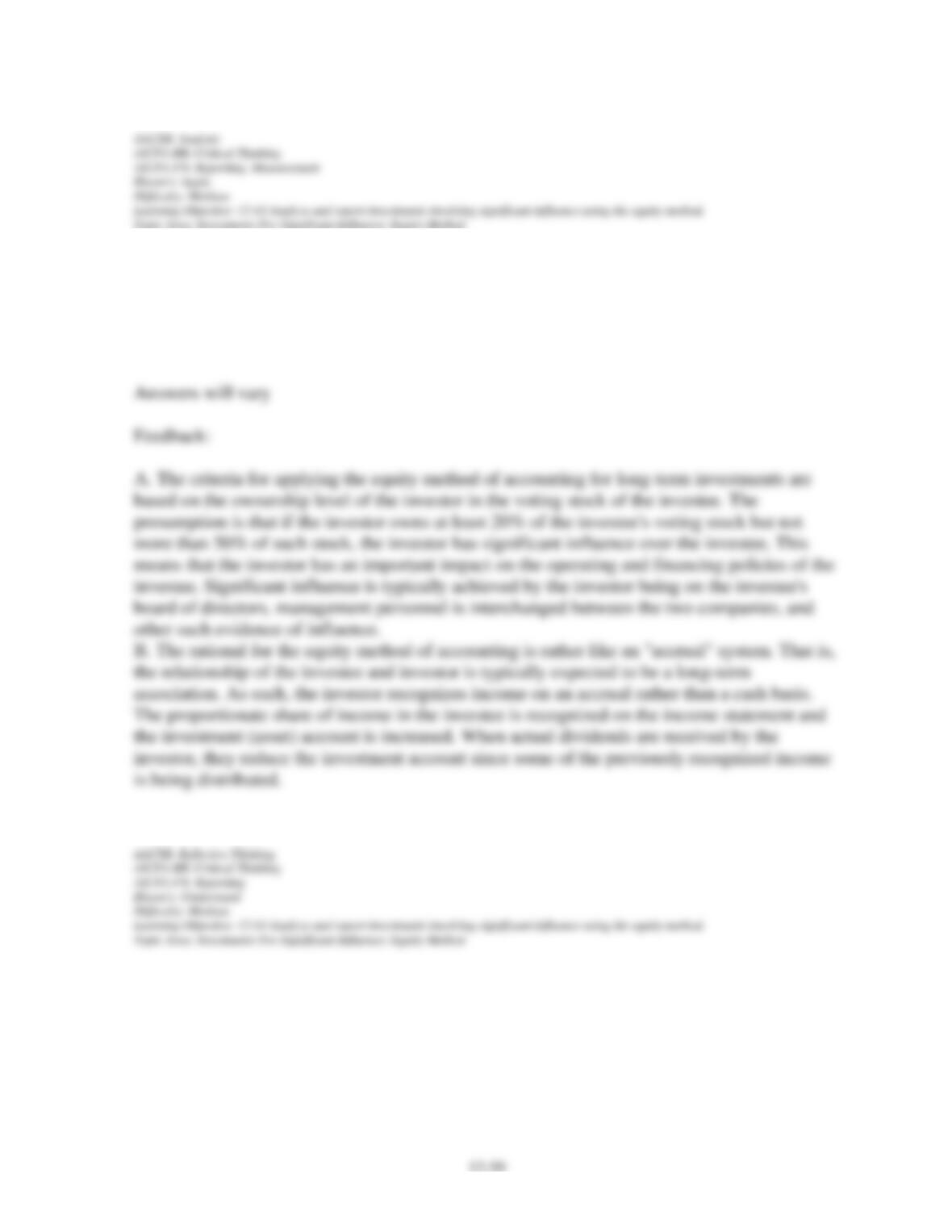
102. Donald Corporation purchased 3,000 shares of the outstanding common voting stock of
Apprentice Corporation on January 2, 2010, for $80 per share. At the date of purchase
Apprentice Corporation had outstanding 10,000 shares of common stock (par $50). During
2010, Apprentice reported net income of $60,000 and declared and paid a $5,000 cash
dividend. The December 31, 2010, market value of Apprentice’s stock was $84. Prepare the
journal entries required for Donald Corporation on January 2, 2010 and December 31, 2010.
Chapter 12 – Reporting and Interpreting Investments in Other Corporations
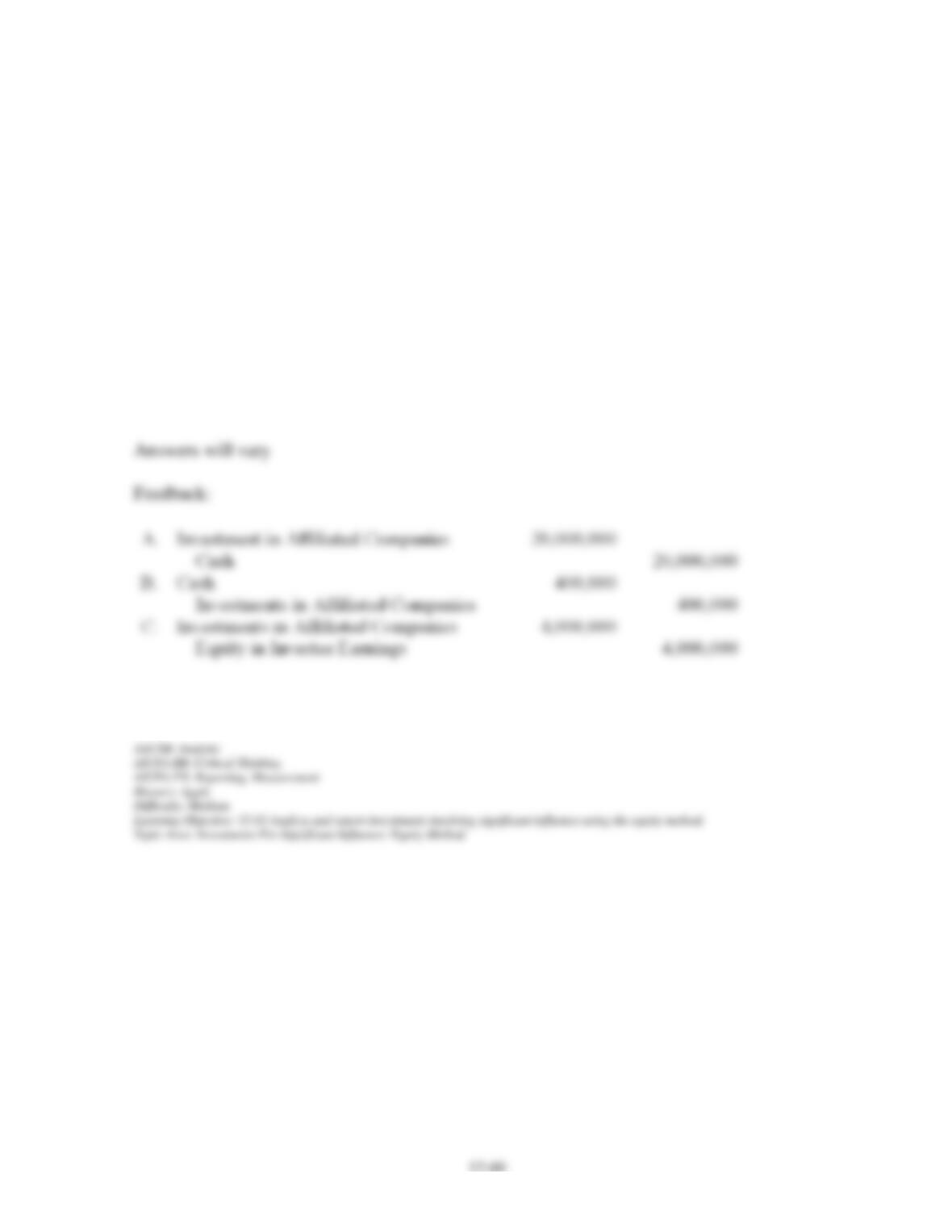
103. A. Discuss the criteria for applying the equity method of accounting for long-term
investments.
B. Discuss the rationale for the equity method procedures of accounting for long-term
investments.
Chapter 12 – Reporting and Interpreting Investments in Other Corporations
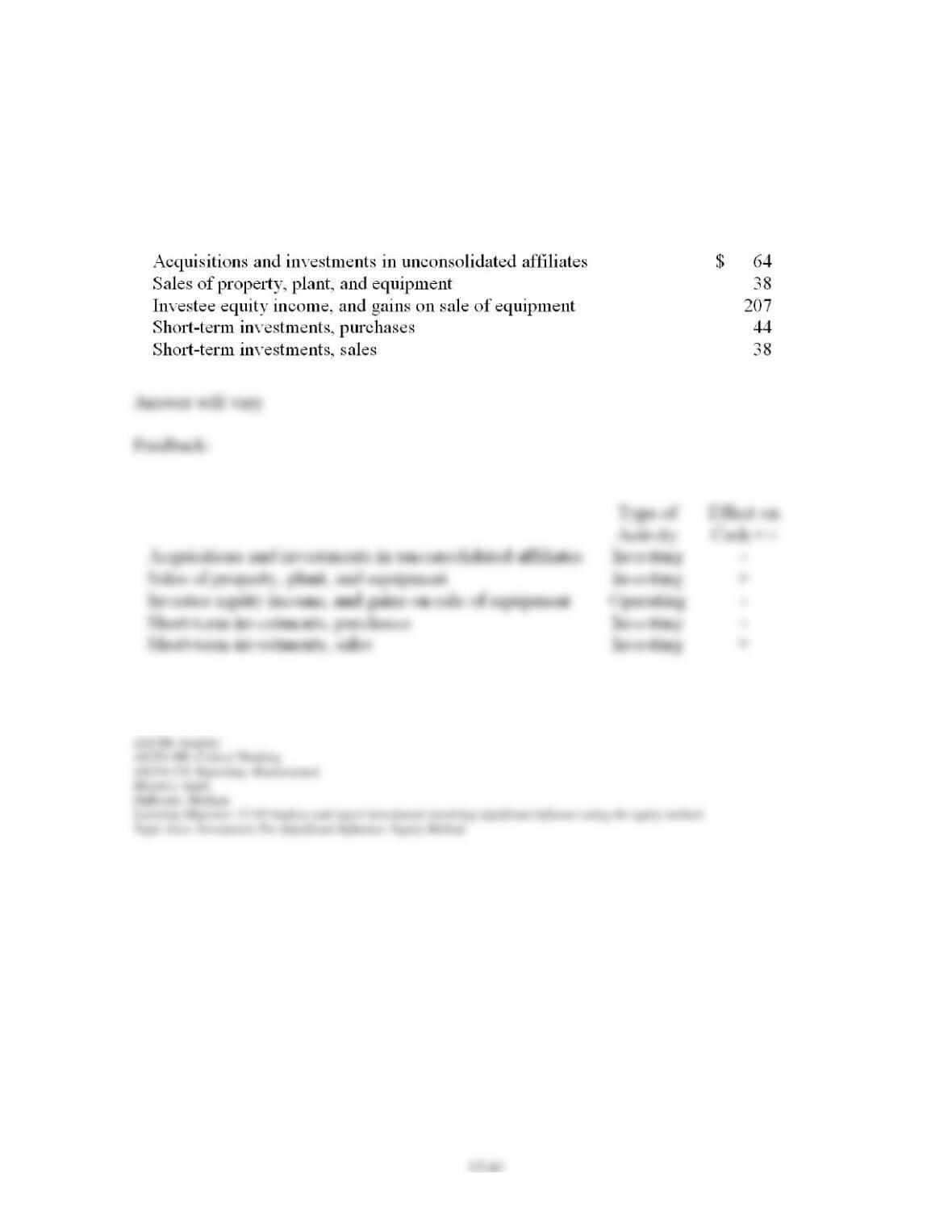
104. Kudos Corporation bought a 40% interest in the voting stock of Nutribar Corporation’s
$1 par value common stock for $20 million (2 million shares at a $10 market price) on March
31, 2010. On December 12, 2010, Nutribar declared and paid a $1 million cash dividend and
reported net income for the year ended 2010 of $10 million. On December 31, 2010,
Nutribar’s stock was trading at $11.50 per share.
Requirements:
A. Record the journal entry on Kudos’ book for the acquisition of Nutribar on March 31,
2010.
B. Record the cash dividend received by Kudos on December 12, 2010.
C. Record any end of year entries needed on Kudos’ books.
Chapter 12 – Reporting and Interpreting Investments in Other Corporations
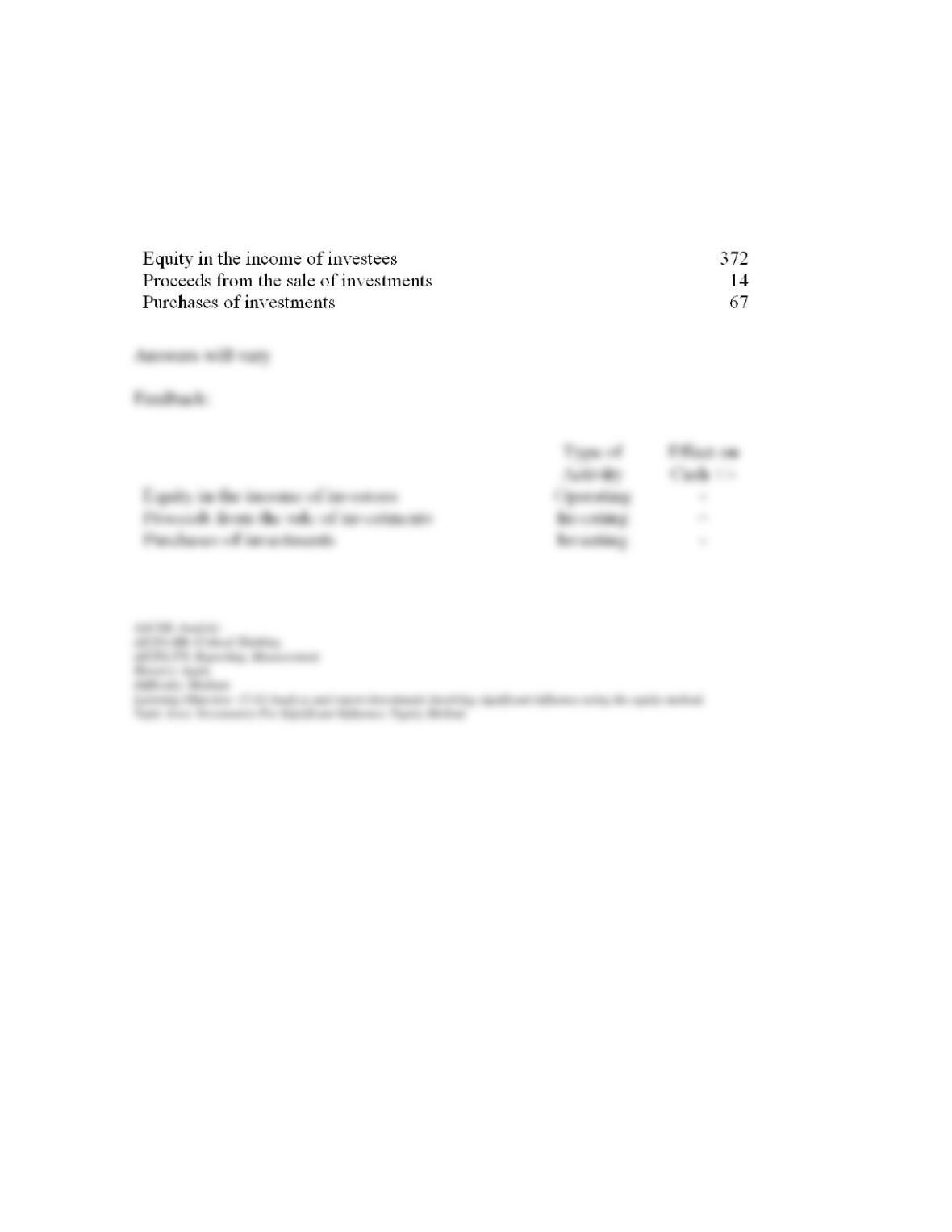
105. During 2010, the following items were reported on ShoeCo’s statement of cash flows in
millions of dollars. For each item, identify the type of activity it is (operating, investing,
financing) and the effect it would have on cash flows statement (added or deducted).
Chapter 12 – Reporting and Interpreting Investments in Other Corporations
12–62
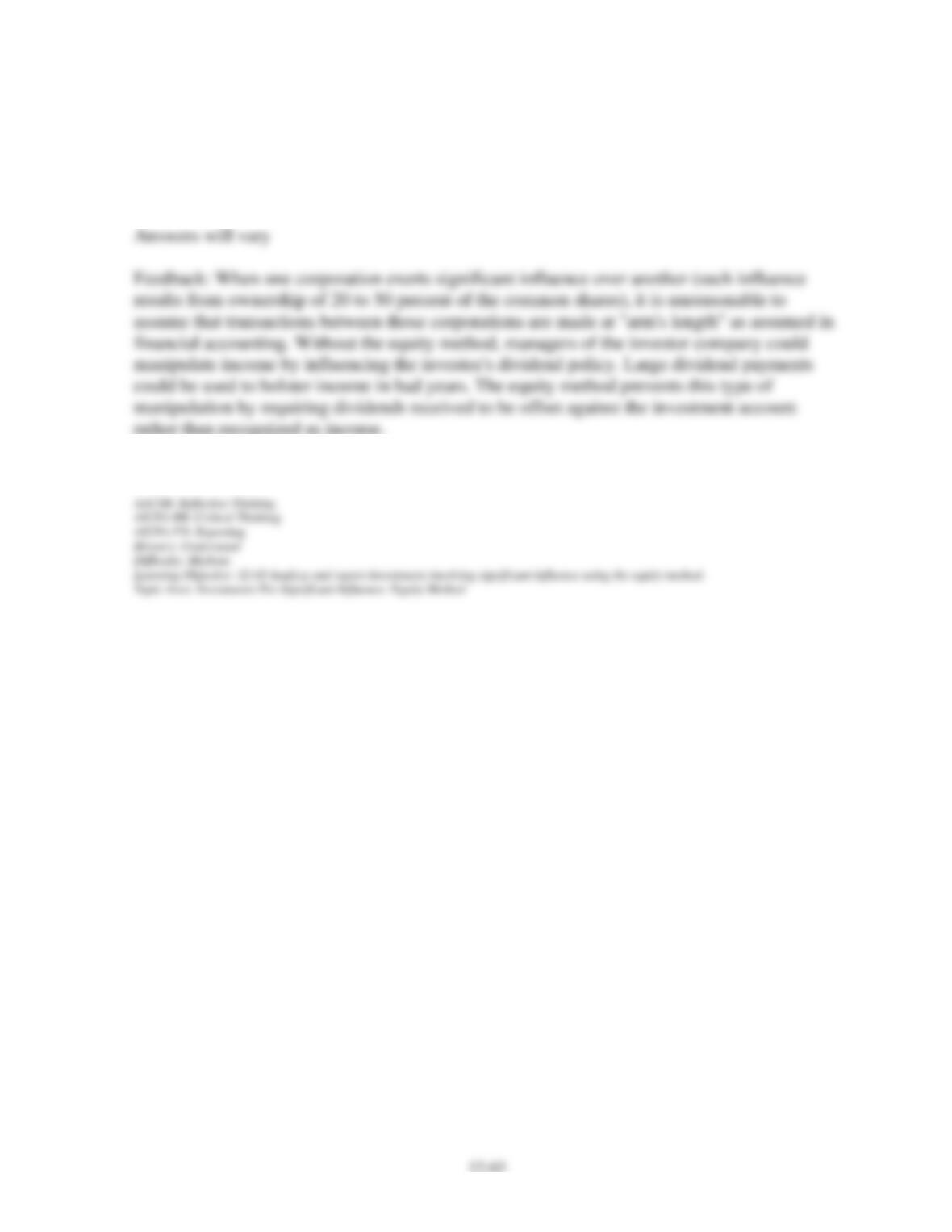
106. During 2010, the following items were reported on The Mickey Company’s statement of
cash flows in millions of dollars. For each item, identify the type of activity it is (operating,
investing, financing) and the effect it would have on cash flows (added or deducted).
Chapter 12 – Reporting and Interpreting Investments in Other Corporations
107. Discuss how the equity method prevents managers of the investor corporation from
manipulating income related to dividends from the investee.
Chapter 12 – Reporting and Interpreting Investments in Other Corporations
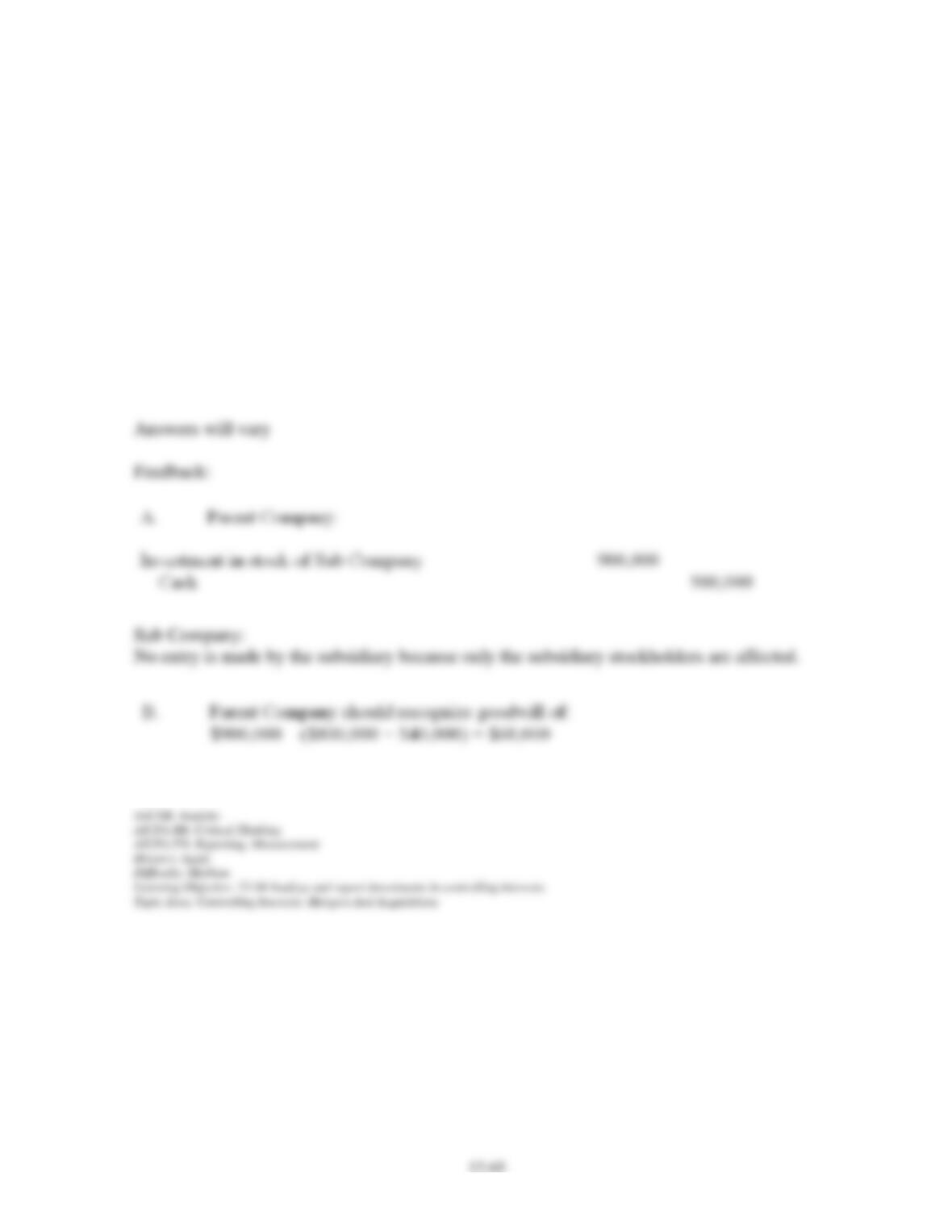
108. On January 1, 2010, Fall Corporation purchased 100% of the outstanding voting shares
of Foliage Corporation for $600,000. The book and market values of Foliage’s assets and
liabilities as of January 1, 2010 are listed below:
Calculate the amount of goodwill that should be recognized.
Chapter 12 – Reporting and Interpreting Investments in Other Corporations
109. On January 2, 2010, Parent Company purchased 100% of Sub Company’s stock for
$900,000 cash. At this date, the book value of Sub Company’s net assets (i.e., assets less
liabilities) was $800,000 which included property, plant and equipment that have a book value
of $400,000 and a market value of $440,000.
Requirements:
A. Prepare the journal entry that would appear on the books of each company at the
acquisition date.
B. How much goodwill should Parent Company recognize on the consolidated financial
statements at the date of acquisition?
Chapter 12 – Reporting and Interpreting Investments in Other Corporations
110. Describe the difference in the calculation of the realized gain or loss on the sale of an
investment when the trading security classification is used relative to use of the available-for-
sale classification.