
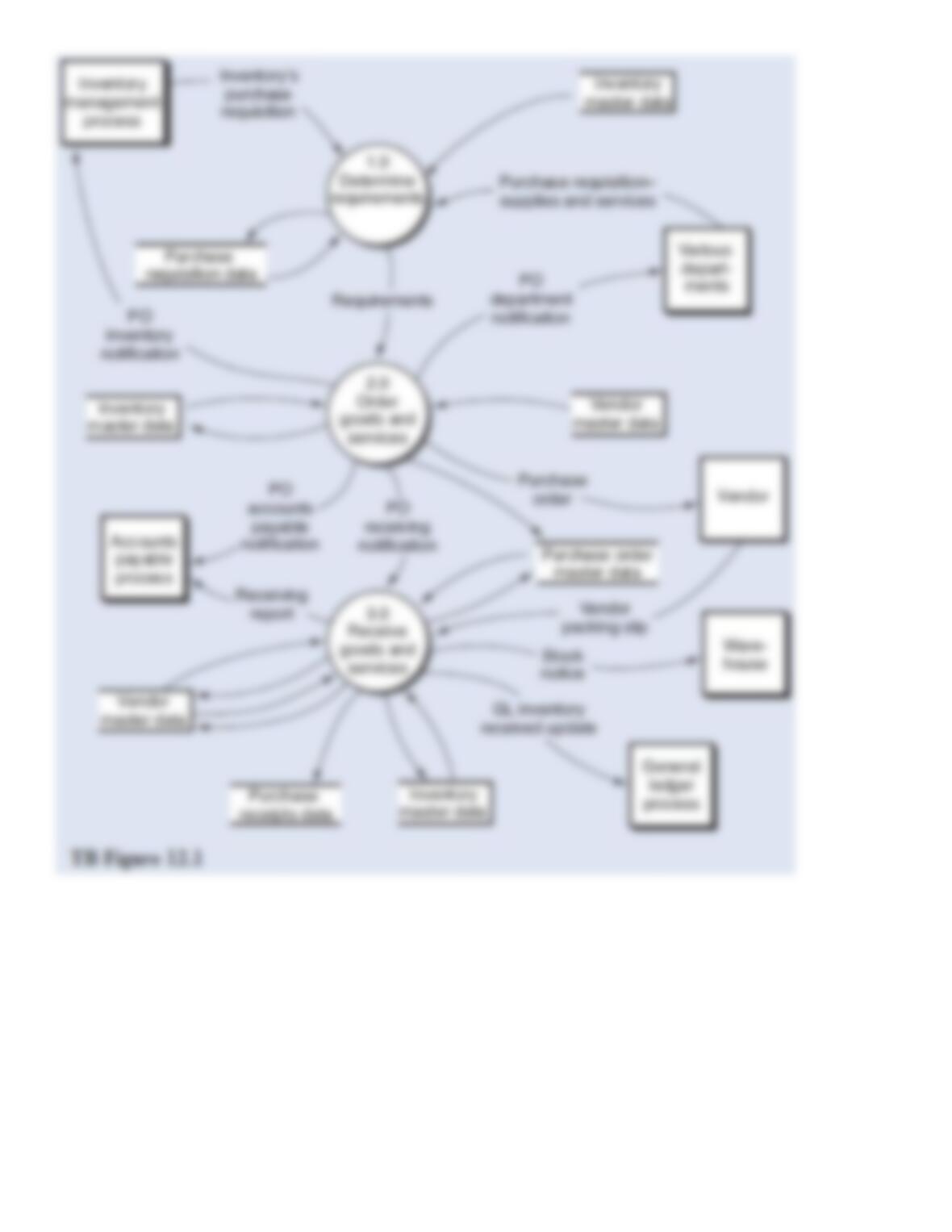
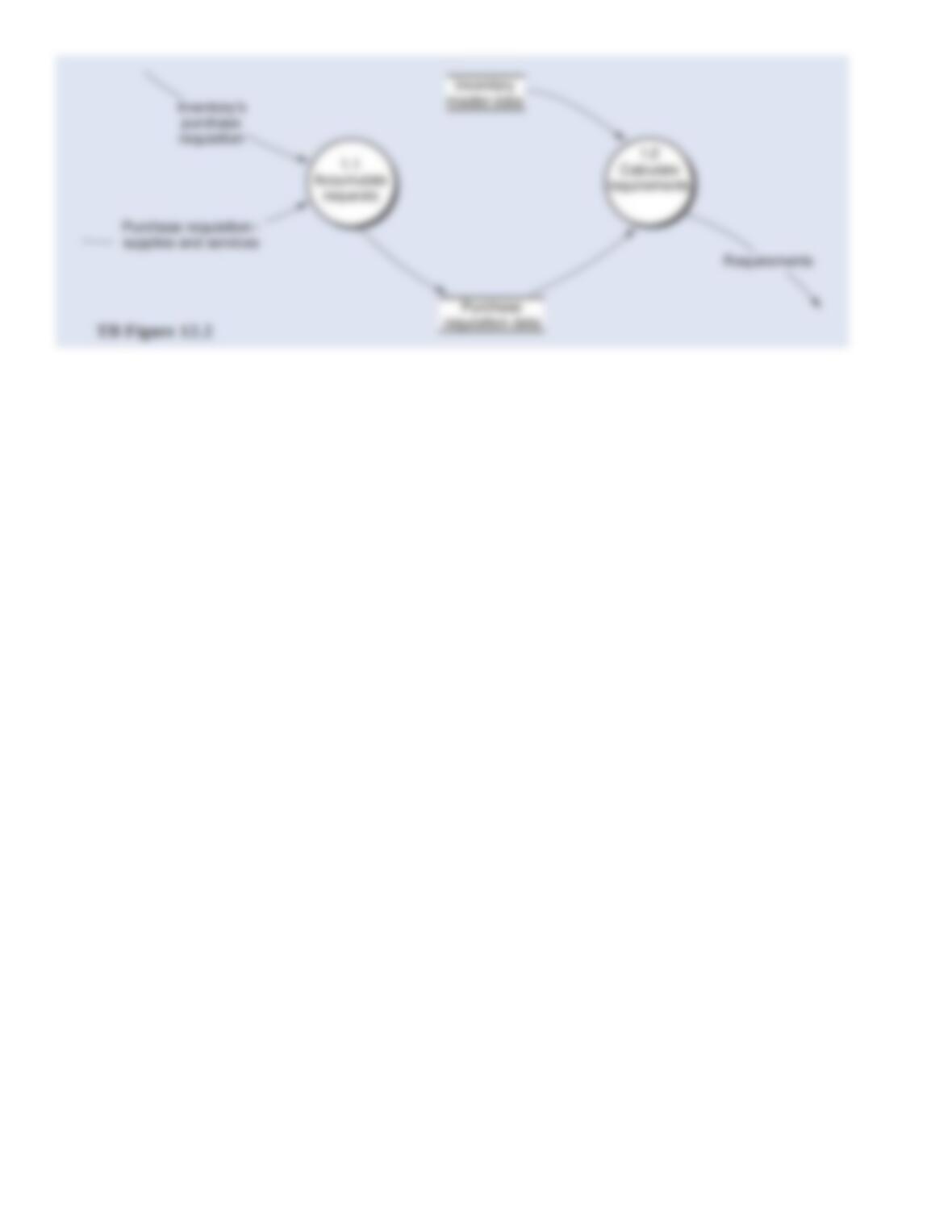
134. Below is a narrative of the “Determine Requirements” portion (bubble 1.0) of the purchasing process
described in Chapter 12.
Narrative Description
Bubble 1.1 receives and stores the requests received from the inventory-management process (inventory’s
purchase requisition) and various departments (purchase requisition¾goods and services).
At predetermined intervals, bubble 1.2 accesses the accumulated requests held in the purchase requisition data;
sorts the requests, perhaps by vendor or product type; and combines that data with the inventory master data to
determine what purchases need to be made.
Required:
From the DFD (TB Figure 12.1) and the narrative description above, explode bubble 1.0 into a lower-level
diagram showing the details of that process.

135. Below is a narrative of the “Order goods and services” portion (bubble 2.0) of the purchasing process
described in Chapter 12.
Narrative Description
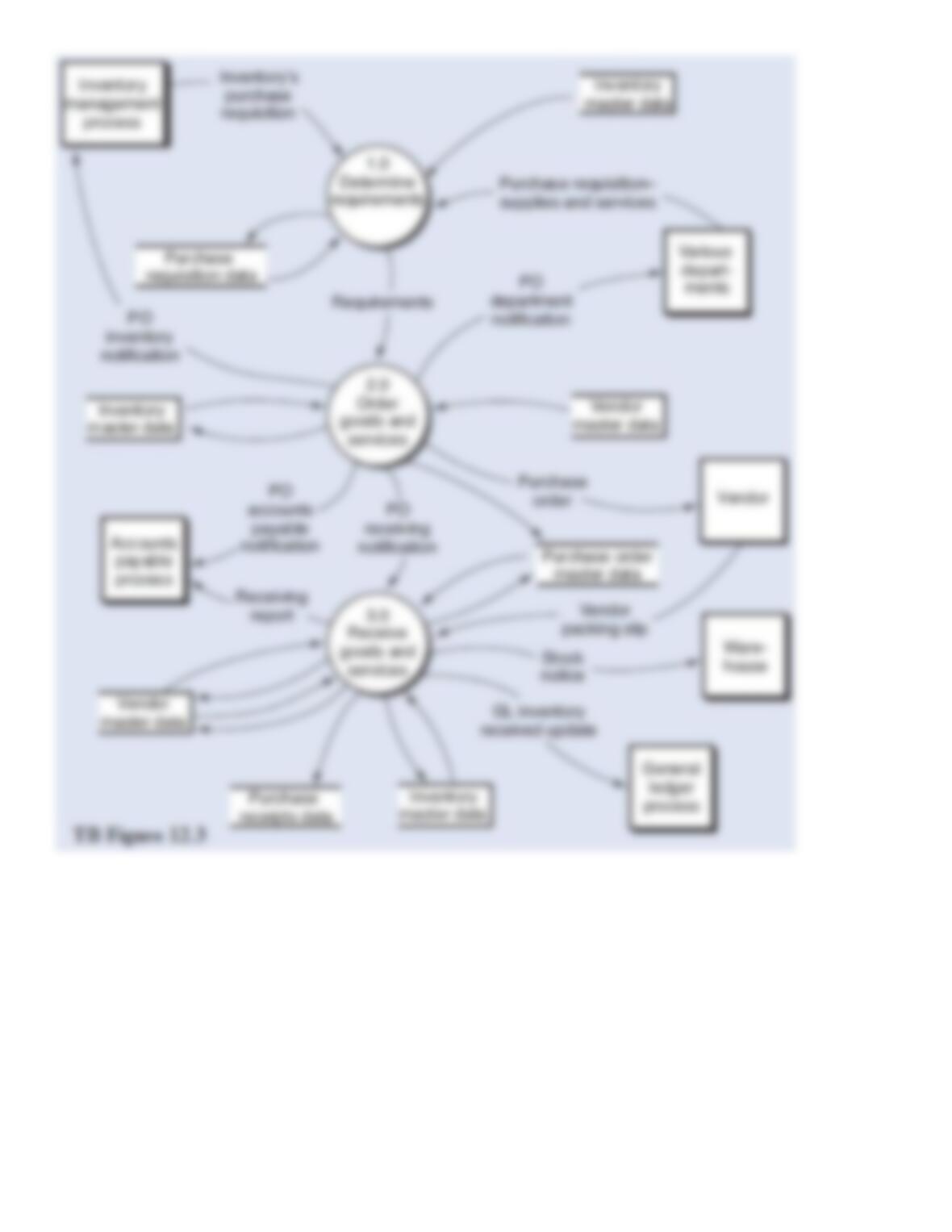
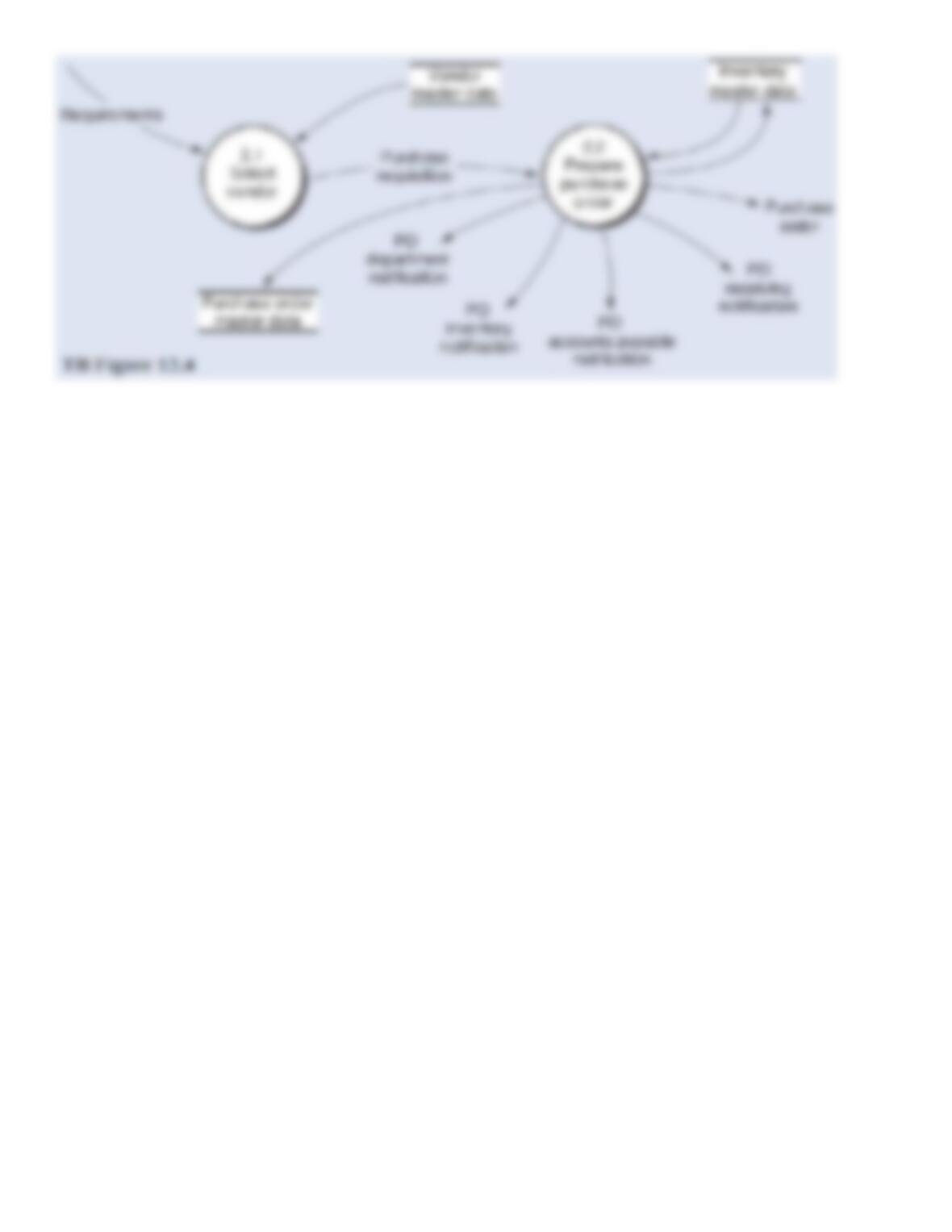
The first process involves vendor selection (bubble 2.1). A buyer generally consults the vendor master data to
identify potential suppliers that have been approved for use by the organization and then evaluates each
prospective vendor for a particular purchase.
After the vendor has been selected, the buyer prepares a purchase order (PO). Process bubble 2.2 of depicts the
process of preparing a PO. The “purchase order” data flowing out of process 2.2 is sent to the vendor. At the
same time, the inventory master data is updated to reflect the goods on order. A record of the purchase is stored
on the PO master data, and PO information is distributed to several
departments, including the requesting department, the inventory management process, accounts payable
process, and receiving.
Required:
From the DFD (TB Figure 12.3) and the narrative description above, explode bubble 2.0 into a lower-level
diagram showing the details of that process.
136. Below is a narrative describing the “Receive goods and services” portion (bubble 3.0) of the purchasing
process described in Chapter 12.
Narrative Description
The vendor packing slip, which accompanies the purchased inventory from the vendor and identifies the
shipment, triggers the receiving process. As indicated by bubble 3.1 of the figure, goods arriving at the
receiving department are inspected and counted, and these data are matched against the vendor packing slip and
the “PO receiving notification” (i.e., the blind copy of the PO). Nonconforming goods are denoted by the reject
stub out of process 3.1. Notation of rejected goods is added to the vendor service record in the vendor master
data. After the count and condition of the goods has been obtained, process 3.1 completes the receiving report
by noting the quantity received. Once annotated with the quantity received, the PO receiving notification
becomes a receiving report, which is the document used to record merchandise receipts.
Process 3.2 compares the receiving report data to the information stored in the PO master data¾a process that
often is automatically completed by the information system. Bubble 3.2 also reflects the following activities:
·
Data about vendor compliance with the order terms are added to the vendor service record on the vendor master data.
·
The receiving report data is stored as a copy of the receiving report document or electronically.
·
Receiving report data is sent to the accounts payable process.
·
A copy of the receiving report is sent to the warehouse (i.e., “Stock notice”) with the goods.
·
The inventory master data are updated to reflect the additional inventory on hand.
·
The cost of the inventory received is relayed to the general ledger process (see the data flow “GL inventory received update”).
·
Finally, the PO master data are updated to reflect the receipt of the goods.
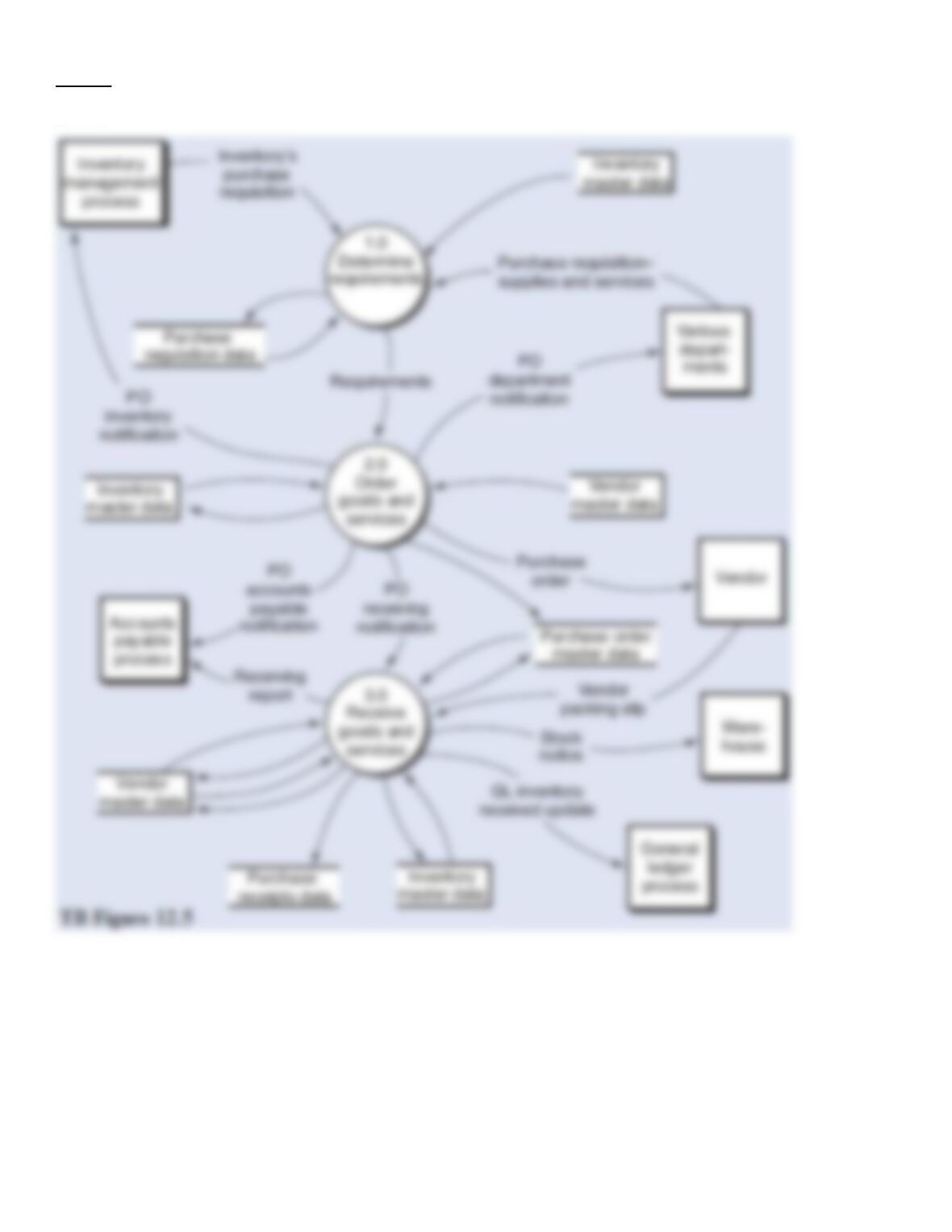
Required:
From the DFD (TB Figure 12.5) and the narrative description above, explode bubble 3.0 into a lower-level diagram showing the details of that
process.
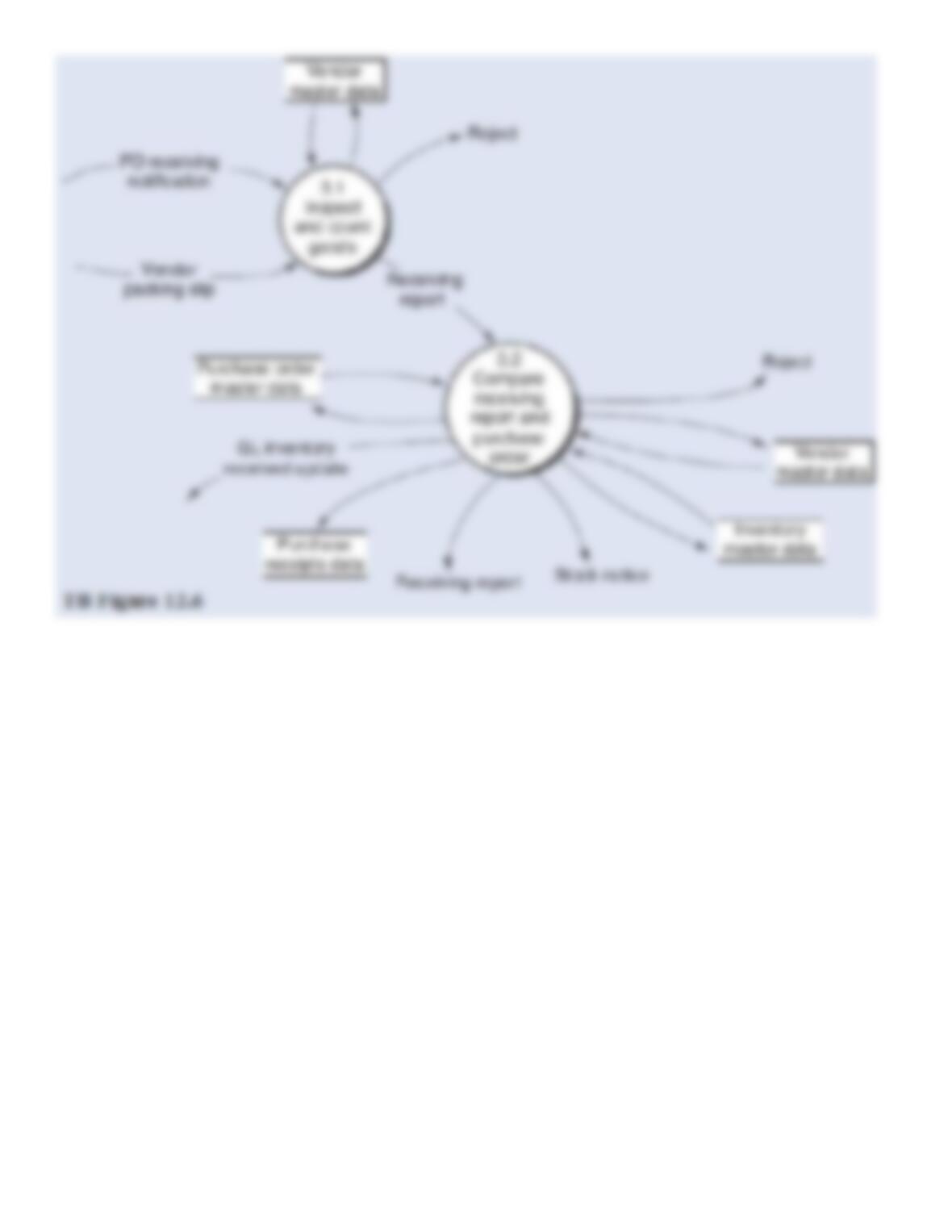
137. Below is a narrative describing the “Receive goods and services” portion (bubble 3.0) of the purchasing
process described in Chapter 12.
Narrative Description
The vendor packing slip, which accompanies the purchased inventory from the vendor and identifies the
shipment, triggers the receiving process. As indicated by bubble 3.1 of the figure, goods arriving at the
receiving department are inspected and counted, and these data are matched against the vendor packing slip and
the “PO receiving notification” (i.e., the blind copy of the PO). Nonconforming goods are denoted by the reject
stub out of process 3.1. Notation of rejected goods is added to the vendor service record in the vendor master
data. After the count and condition of the goods has been obtained, process 3.1 completes the receiving report
by noting the quantity received. Once annotated with the quantity received, the PO receiving notification
becomes a receiving report, which is the document used to record merchandise receipts.
Process 3.2 compares the receiving report data to the information stored in the PO master data¾a process that
often is automatically completed by the information system. Bubble 3.2 also reflects the following activities:
·
Data about vendor compliance with the order terms are added to the vendor service record on the vendor master data.
·
The receiving report data is stored as a copy of the receiving report document or electronically.
·
Receiving report data is sent to the accounts payable process.
·
A copy of the receiving report is sent to the warehouse (i.e., “Stock notice”) with the goods.
·
The inventory master data are updated to reflect the additional inventory on hand.
·
The cost of the inventory received is relayed to the general ledger process (see the data flow “GL inventory received update”).
·
Finally, the PO master data are updated to reflect the receipt of the goods.
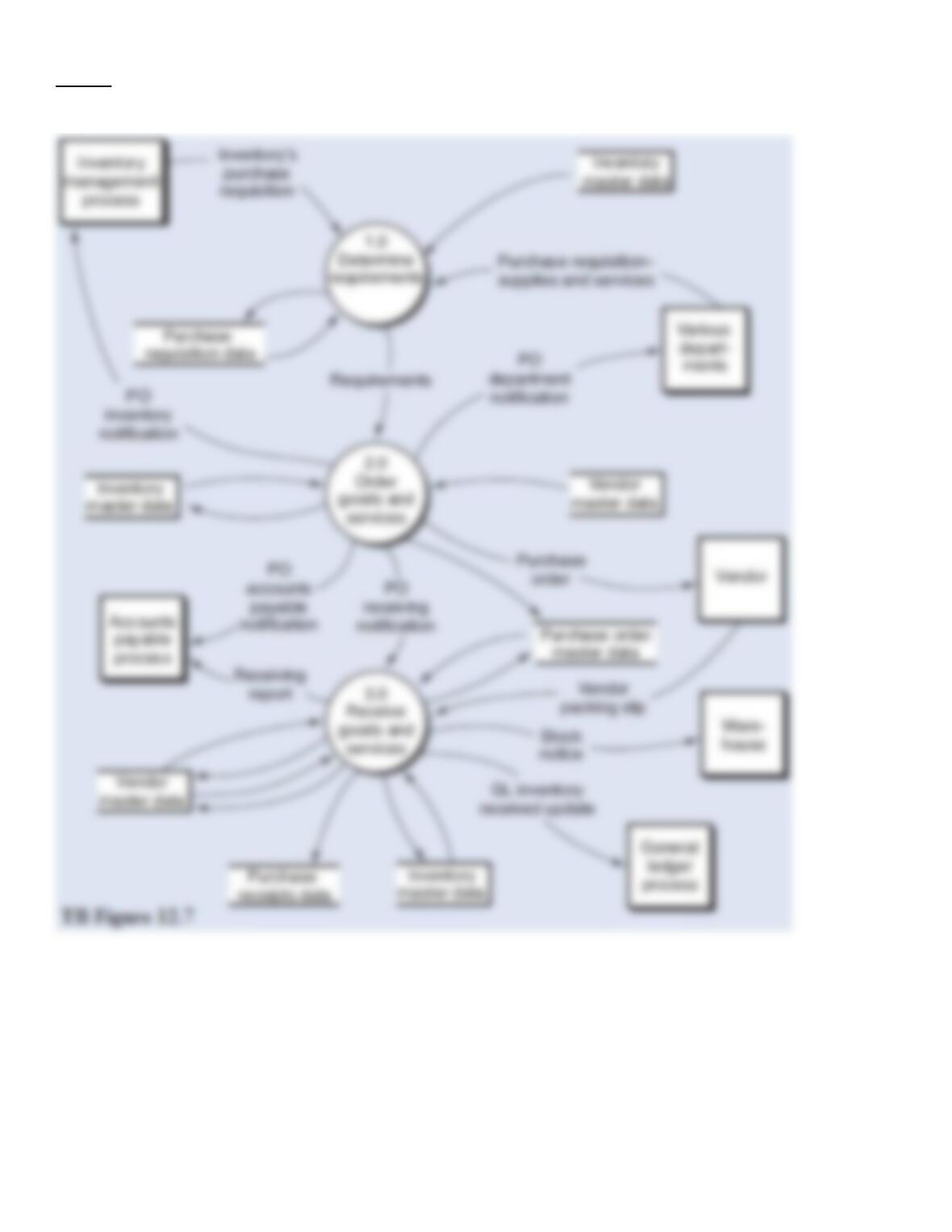
Required:
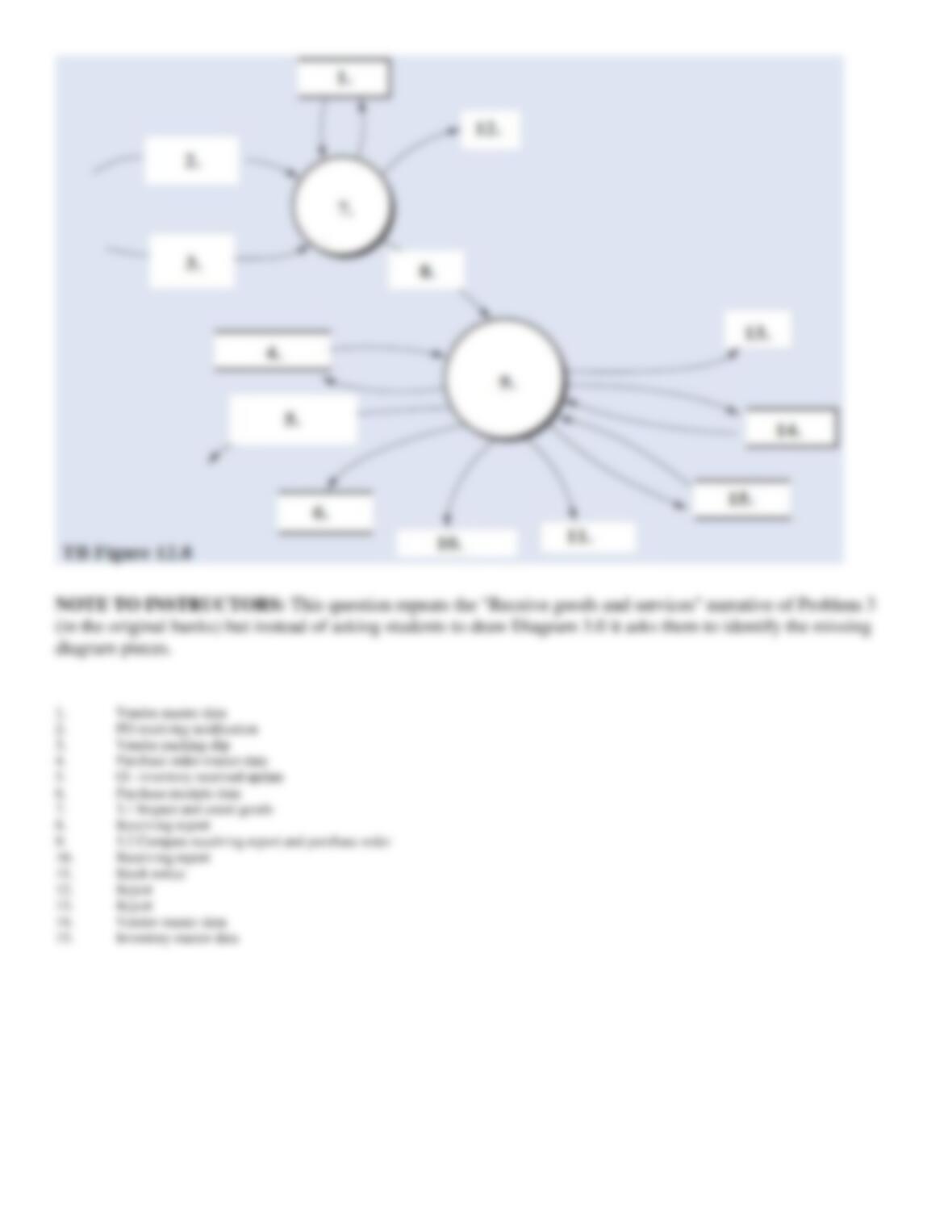
Using the DFD in TB Figure 12.7 and the narrative description above, identify the words that belong in items 1 to 15 of Diagram 3.0 (TB Figure
12.8).

138. TB Figure 12.9 is the control matrix for the purchasing process presented in Chapter 12 with certain items
omitted. In the matrix, each omission is indicated by a square. Jumbled lists of the omitted items are as follows:
Omitted
from
Control
Goals
Columns
1.
Inventory and vendor and purchase order master data
2.
Ensure security of resources
3.
Vendor packing slip inputs
4.
Purchase order and inventory master data
5.
Purchase order inputs (i.e., requisitions)
6.
Ensure effectiveness of operations
7.
Ensure efficient employment of resources (i.e., people, computers)
8.
Inventory master data
Omitted
Control
Plans
9.
Approve purchase order
10.
Use authorized vendor data
11.
Compare vendors for favorable price, terms, quality and product availability
12.
Automated data entry
13.
Independent authorization to record receipt
14.
Approve purchase requisition
15.
Count goods and compare to vendor packing slip