1. Which of the following is not a common type of comparison in accounting?
2. When using vertical analysis, we express income statement accounts as a percentage of:
3. When using vertical analysis, we express balance sheet accounts as a percentage of:
4. Which of the following is an example of vertical analysis?
5. Comparing operating expenses as a percentage of sales is an example of:
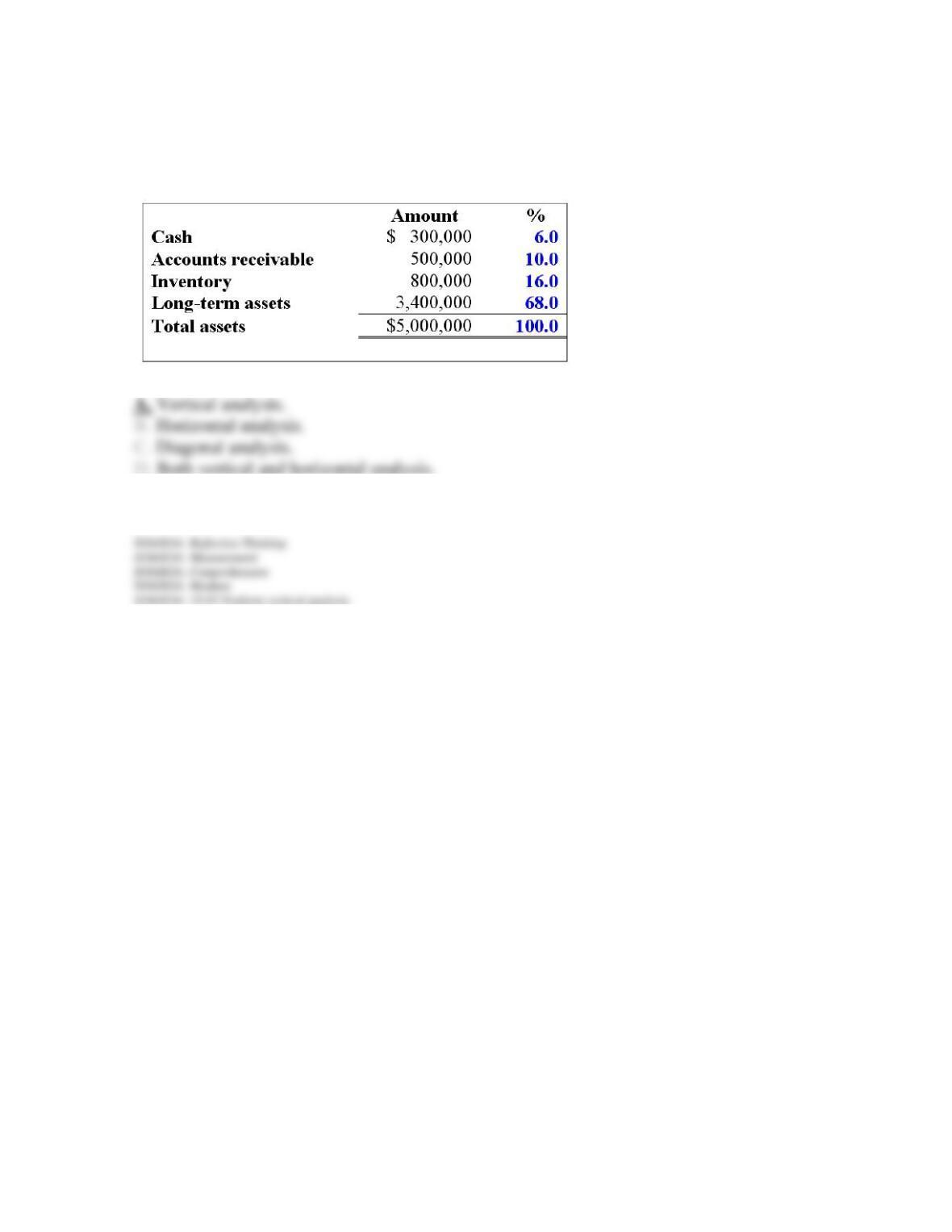
6. The following is an example of:
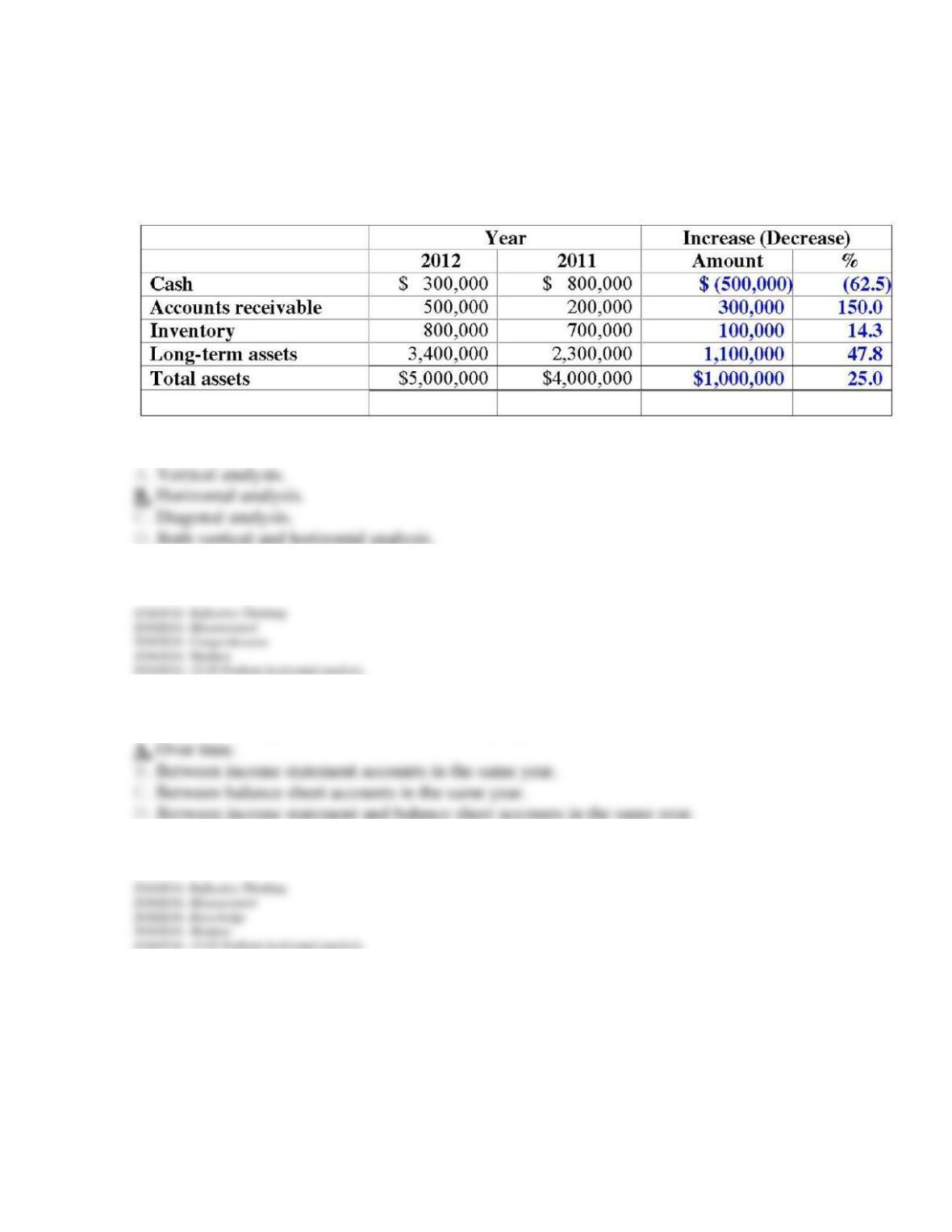
7. The following is an example of:
8. Horizontal analysis examines trends in a company:
9. Which of the following is an example of horizontal analysis?
10. Which of the following is an example of horizontal analysis?
11. Comparing changes in net income for one company over time is an example of:
12. Which of the following is correct?
13. Which of the following ratios is most useful in evaluating liquidity?
14. Which of the following ratios is most useful in evaluating solvency?
15. Which of the following is a sign that a company can quickly turn its receivables into
cash?
16. Which of the following is a sign that a company cannot quickly turn its receivables into
cash?
17. Which of the following is a negative sign that a company is not selling its inventory
quickly?
18. Which of the following is a positive sign that a company is selling its inventory quickly?
19. The current ratio is calculated as:
20. The acid-test ratio is most similar to the:
21. The acid-test ratio is:
22. Which of the following is not a solvency ratio?
23. When a company pays a bill from a plumber for previous services on account:
24. Assuming a current ratio of 1.0, how will the purchase of inventory with cash affect the
ratio?
25. Assuming an acid-test ratio of 1.0, how will the purchase of inventory with cash affect the
ratio?
26. Assuming a current ratio of 1.0 and an acid-test ratio of 0.75, how will the purchase of
inventory with cash affect each ratio?
27. When a company sells land for cash and makes a $25,000 gain:
28. Assume a company’s current ratio and acid-test ratio are less than 1.0 before it purchases
inventory on credit. When it makes the purchase:
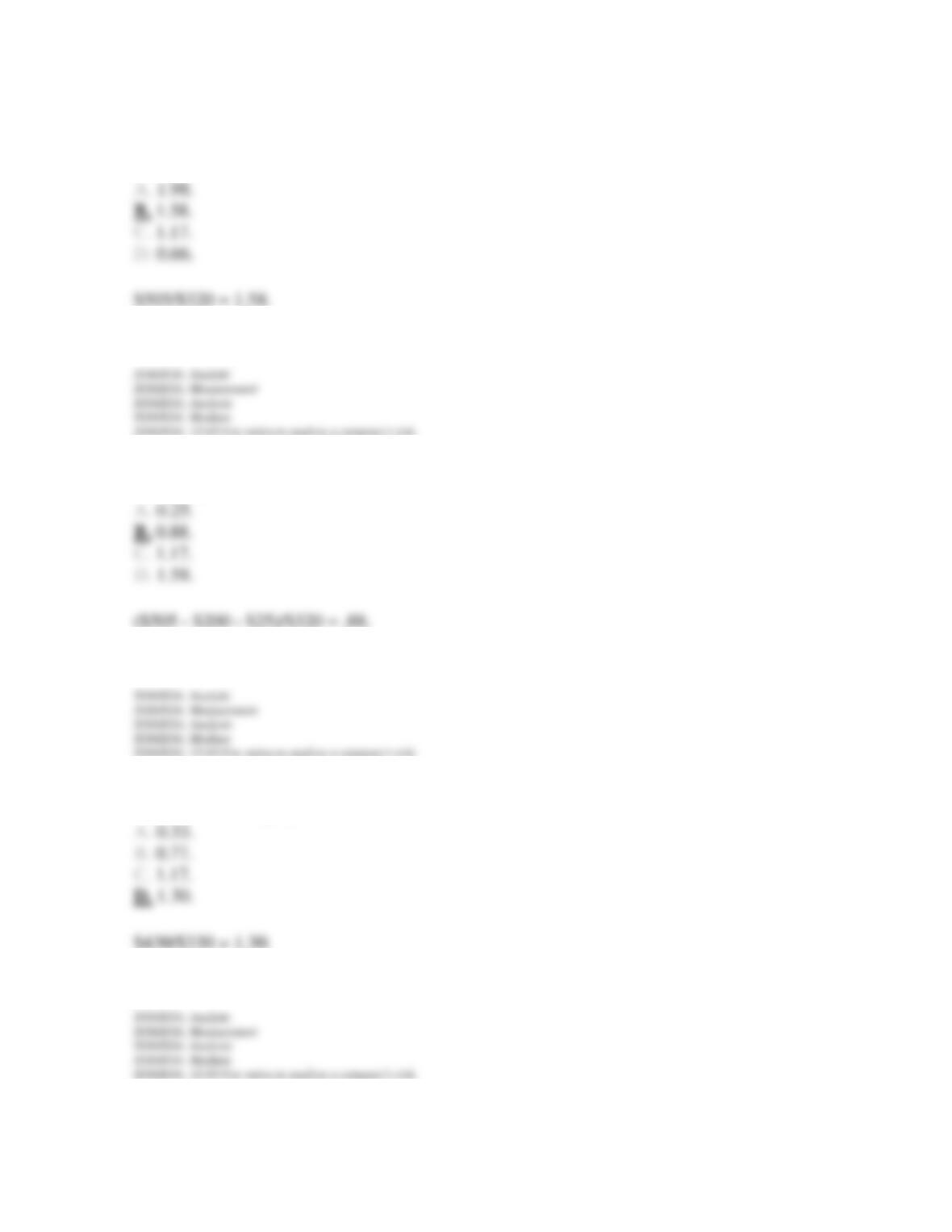
29. The current ratio is:
30. The acid-test ratio is:
31. The debt to equity ratio is:
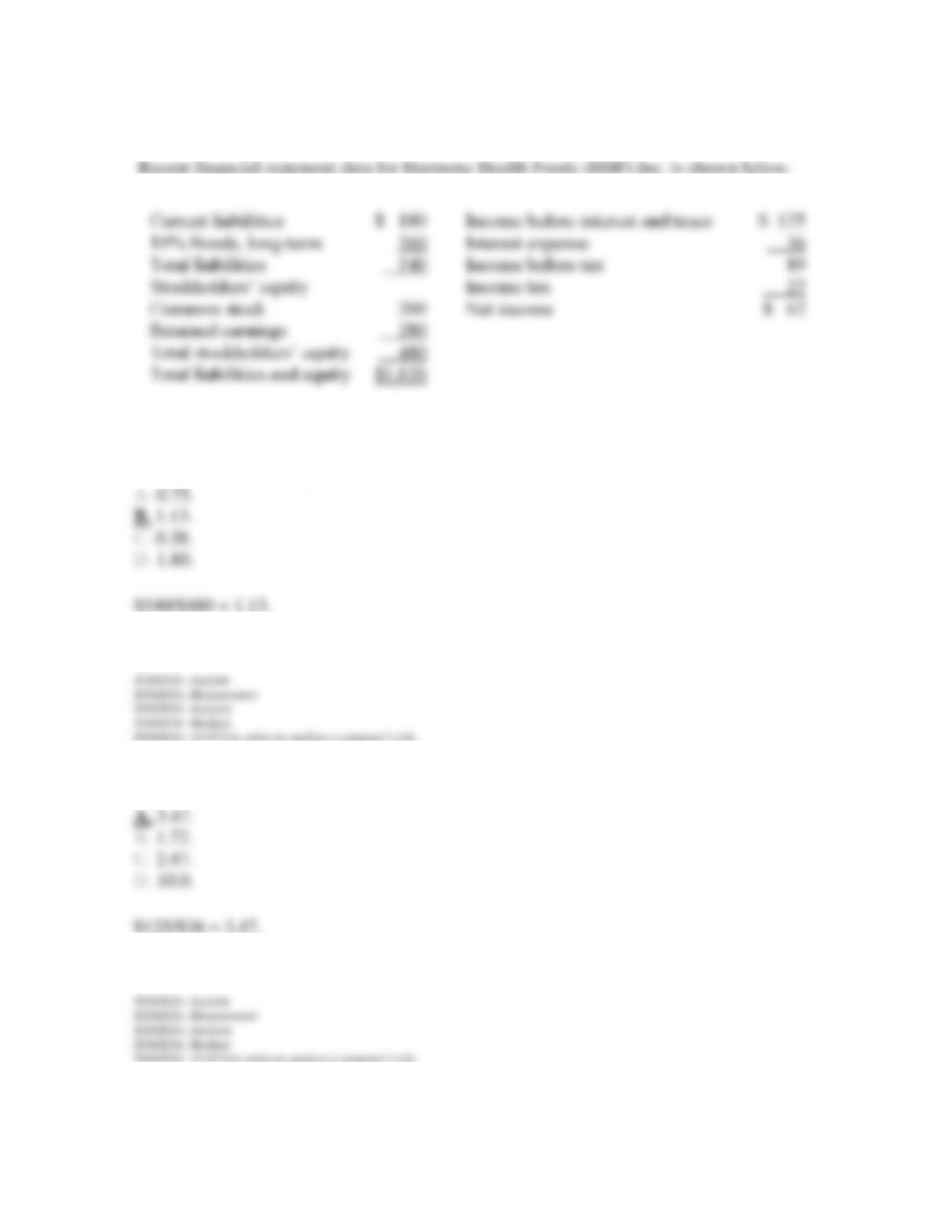
32. HHF’s debt to equity ratio is:
33. HHF’s times interest earned ratio is:
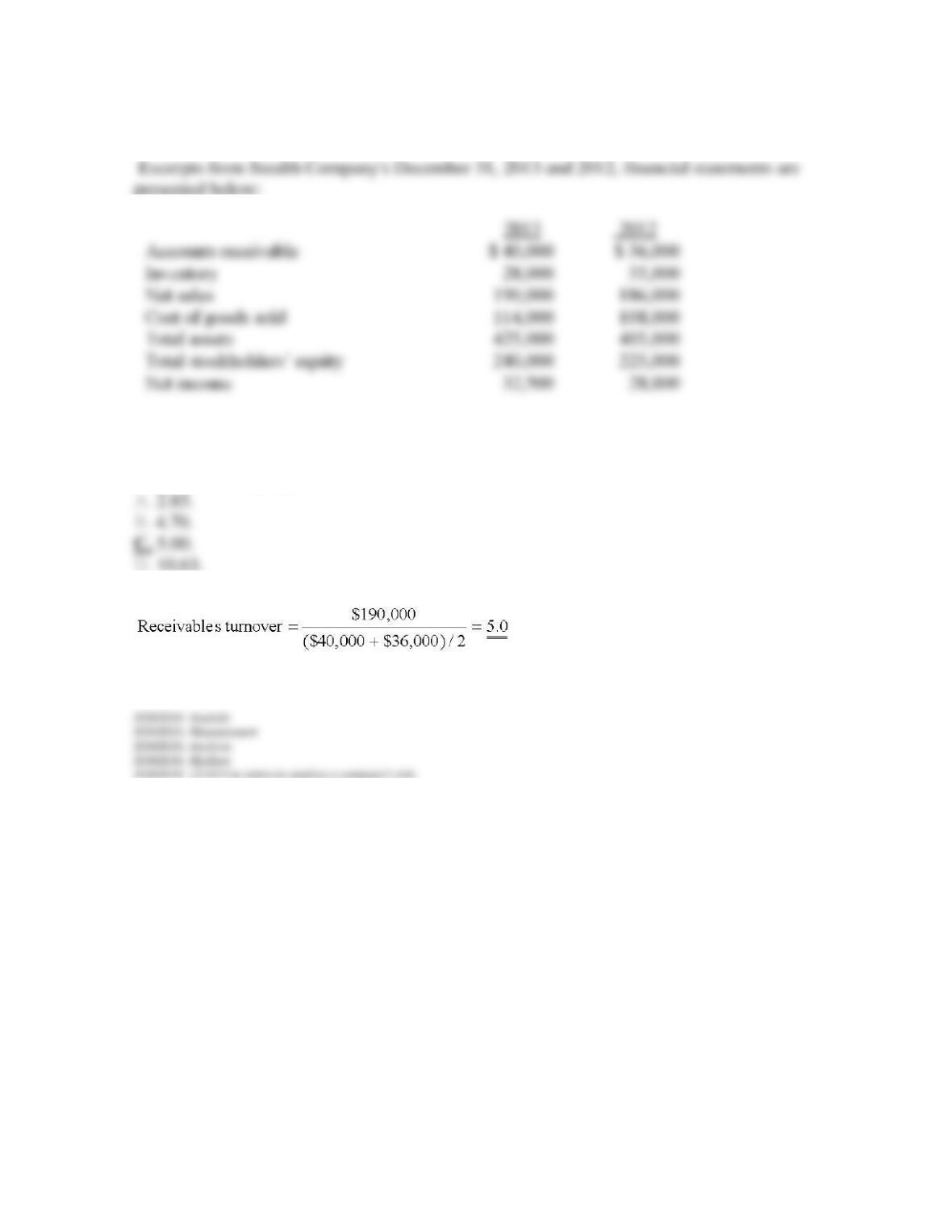
34. Stealth Company’s 2013 receivables turnover ratio is:
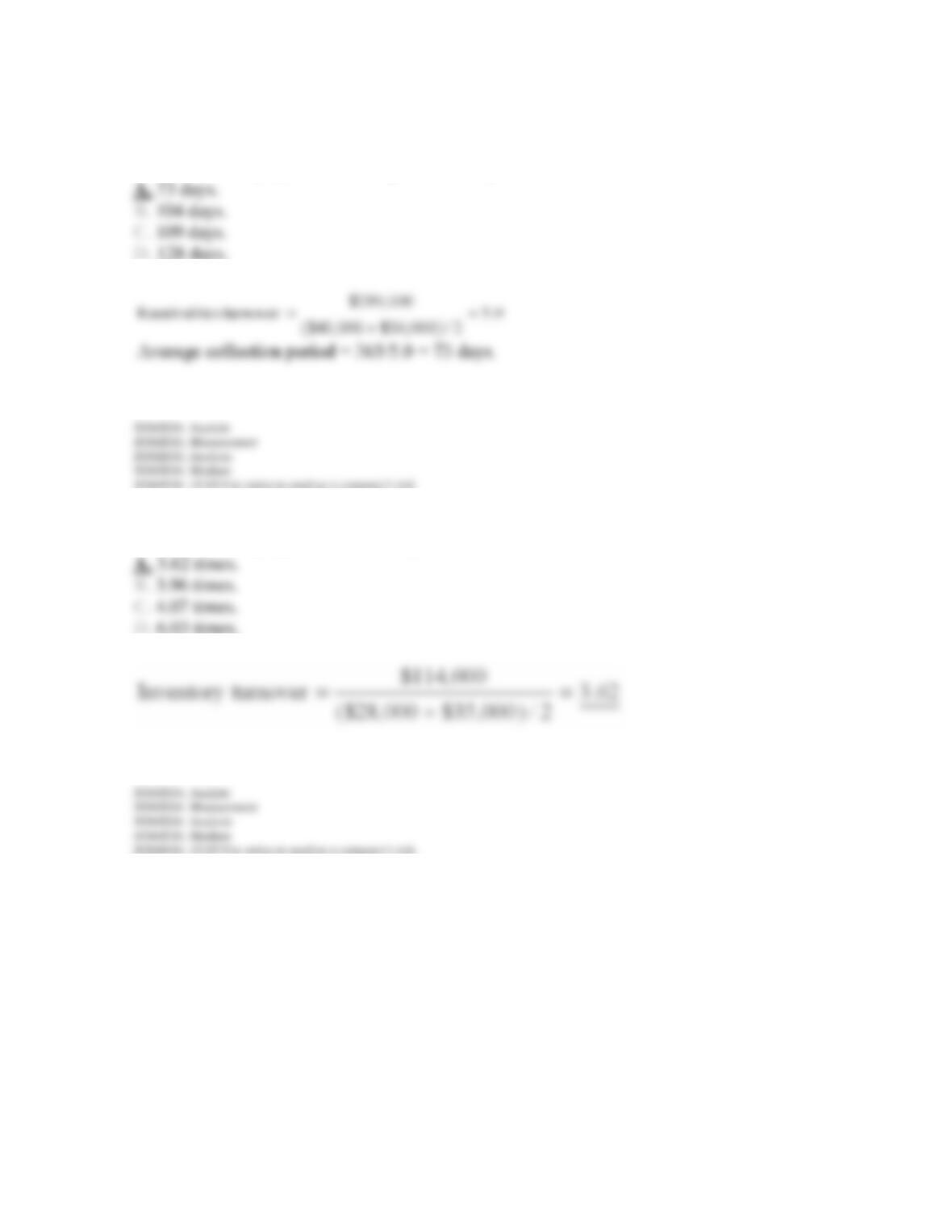
35. Stealth Company’s 2013 average collection period is:
36. Stealth Company’s 2013 inventory turnover is:
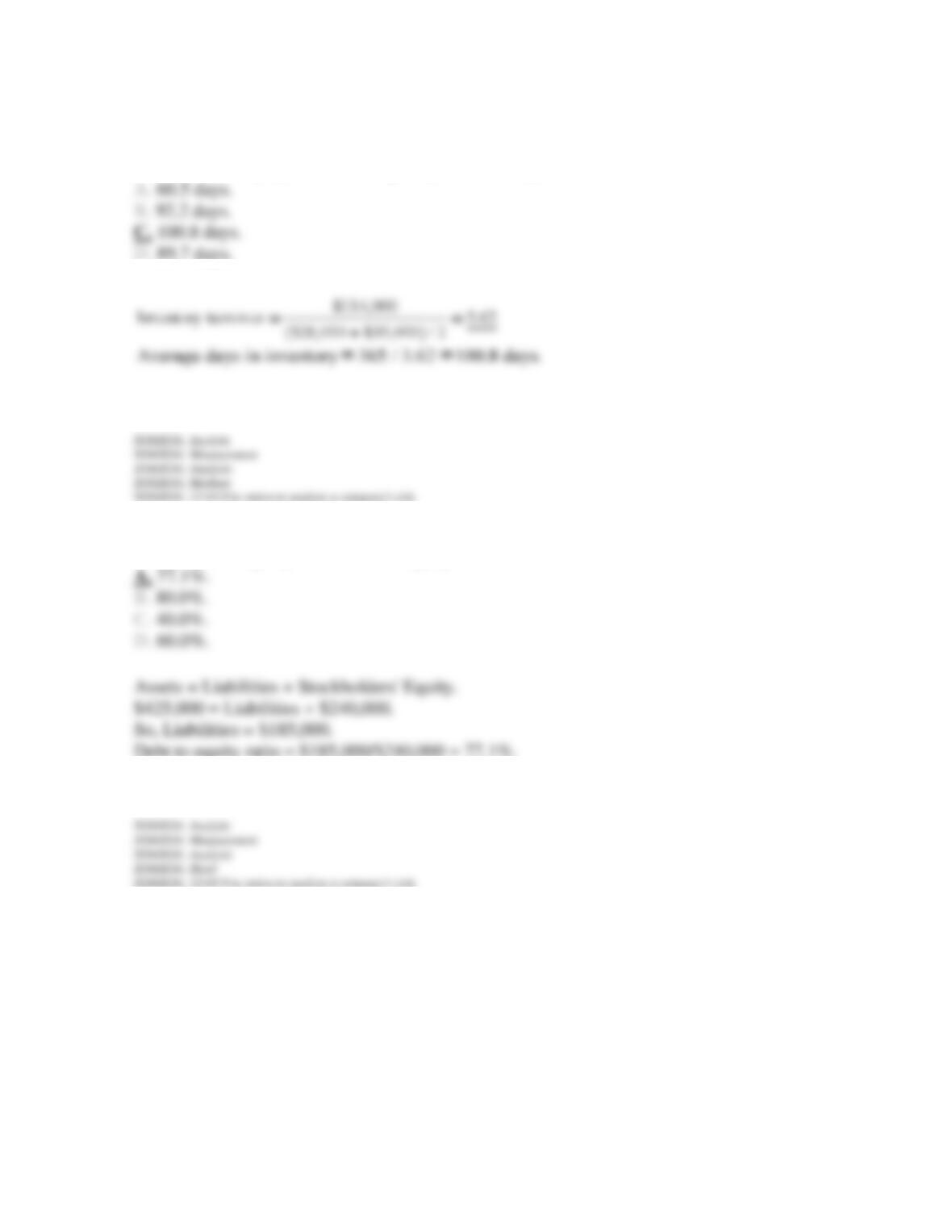
37. Stealth Company’s 2013 average days in inventory is:
38. Stealth Company’s 2013 debt to equity ratio is:
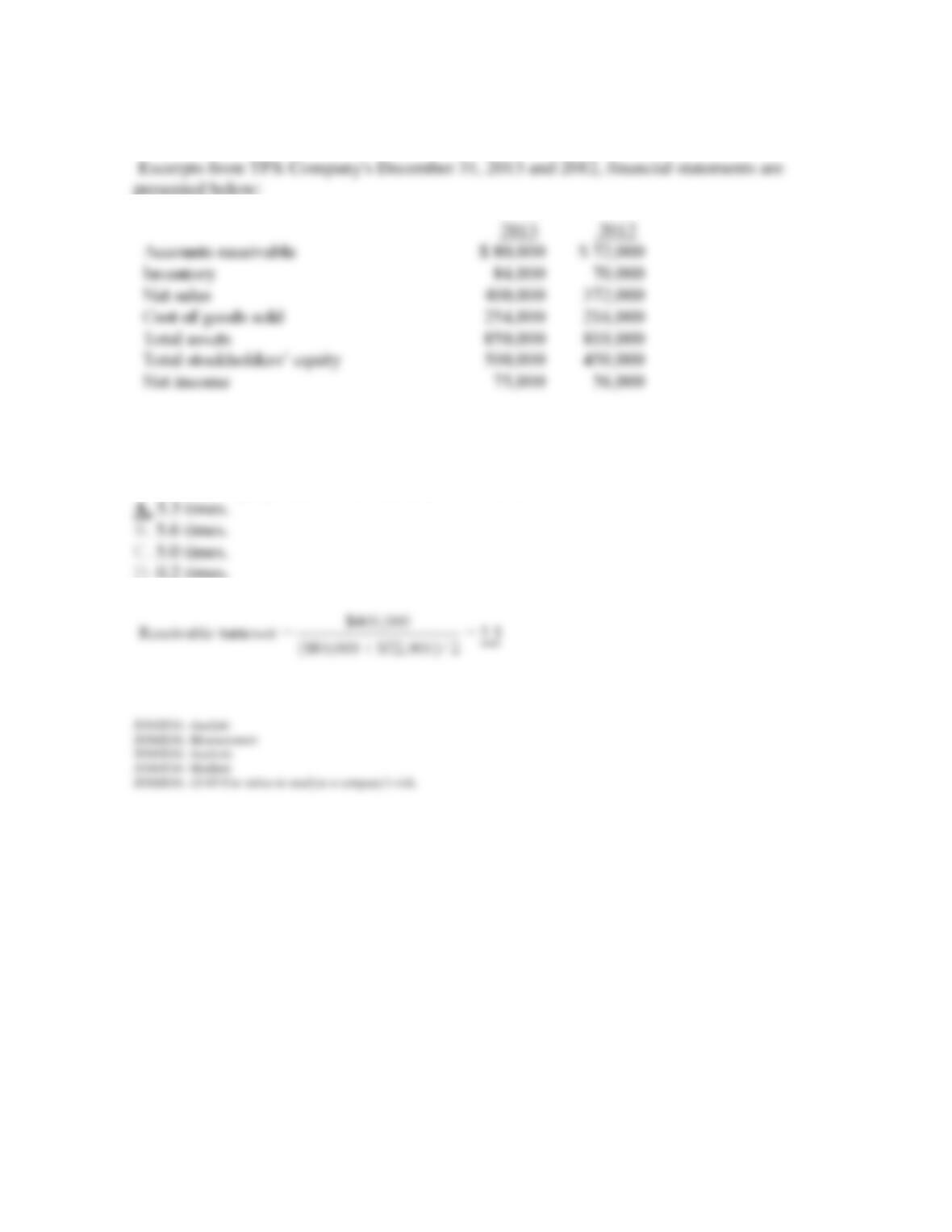
39. TPX Company’s 2013 receivables turnover ratio is:
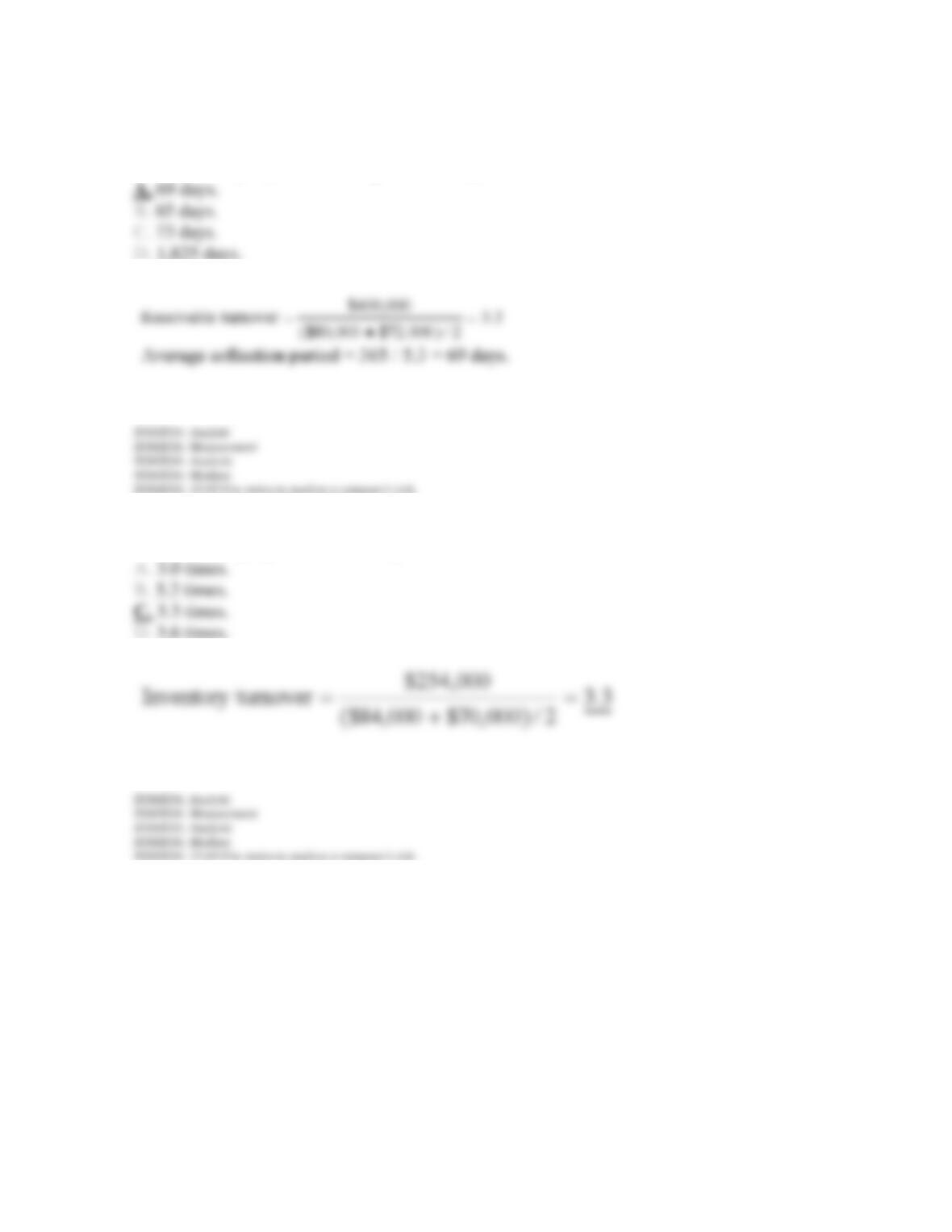
40. TPX Company’s 2013 average collection period is:
41. TPX Company’s 2013 inventory turnover is:
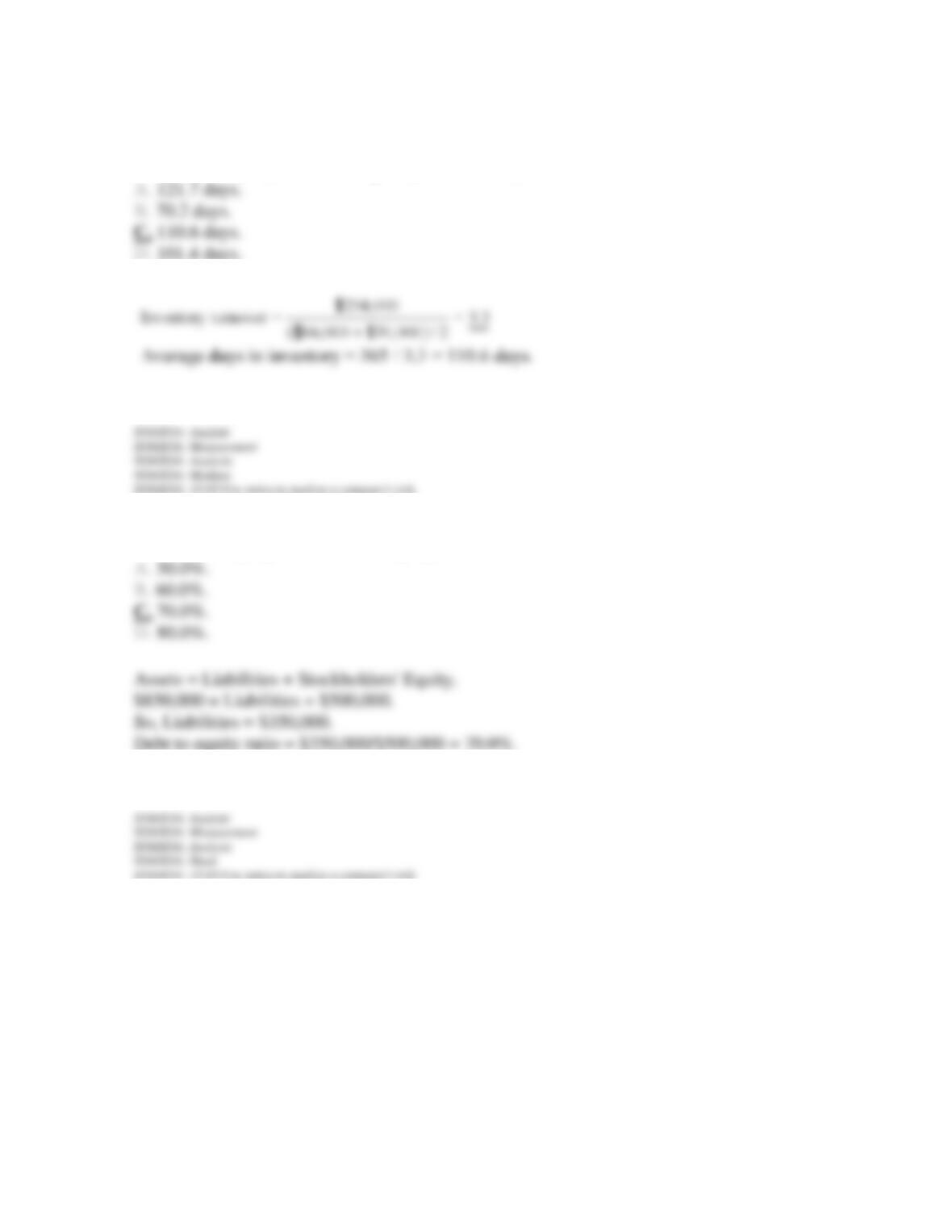
42. TPX Company’s 2013 average days in inventory is:
43. TPX Company’s 2013 debt to equity ratio is:
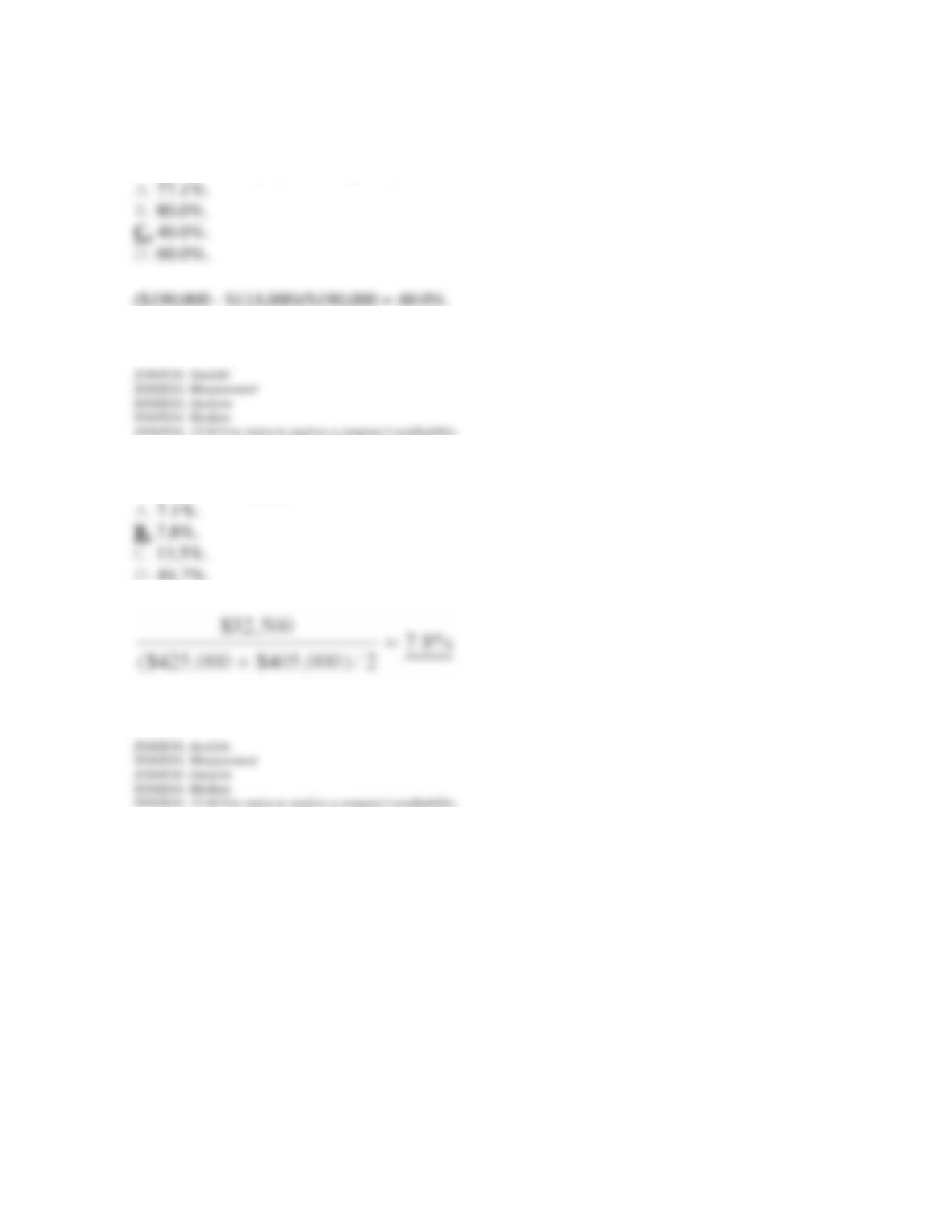
44. Stealth Company’s 2013 gross profit ratio is:
45. Stealth Company’s 2013 return on assets is: