21 Banzai
a) Control objectives
The control objectives for the Salaries system would be as follows:
(b) Risks
The risks present in the Salaries system are:
(c) Tests of control
The tests of control that I would perform are:
(d) Substantive tests
The substantive tests that I would perform are as follows:
22. Greenfumb is a company which operates a chain of garden centres specialising in the retailing
of high quality garden products and the provision of landscaping services. Following information
from one of the employees, it was discovered that the financial controller had used company
cheques and bank transfers to pay for goods and services for his own use. Although the amounts
involved were immaterial in the context of the financial statements, it transpired that this had been
going on for several years.
The managing director is considering whether the company’s auditors were negligent. He has
requested that your firm undertakes a detailed independent review of Greenfumb’s purchase and
payments system in order to establish any shortcomings in its policies and procedures, so that
they can be rectified.
Required:
(a) Distinguish between the responsibilities of the management and the statutory auditor of a
limited company for the prevention and the detection of fraud and outline how these
responsibilities are discharged.
Answer
Responsibilities
(b) Prepare a list of questions in respect of internal control procedures, answers to which would
establish whether there are any shortcomings in Greenfumb’s purchase and payments
system.
Answer
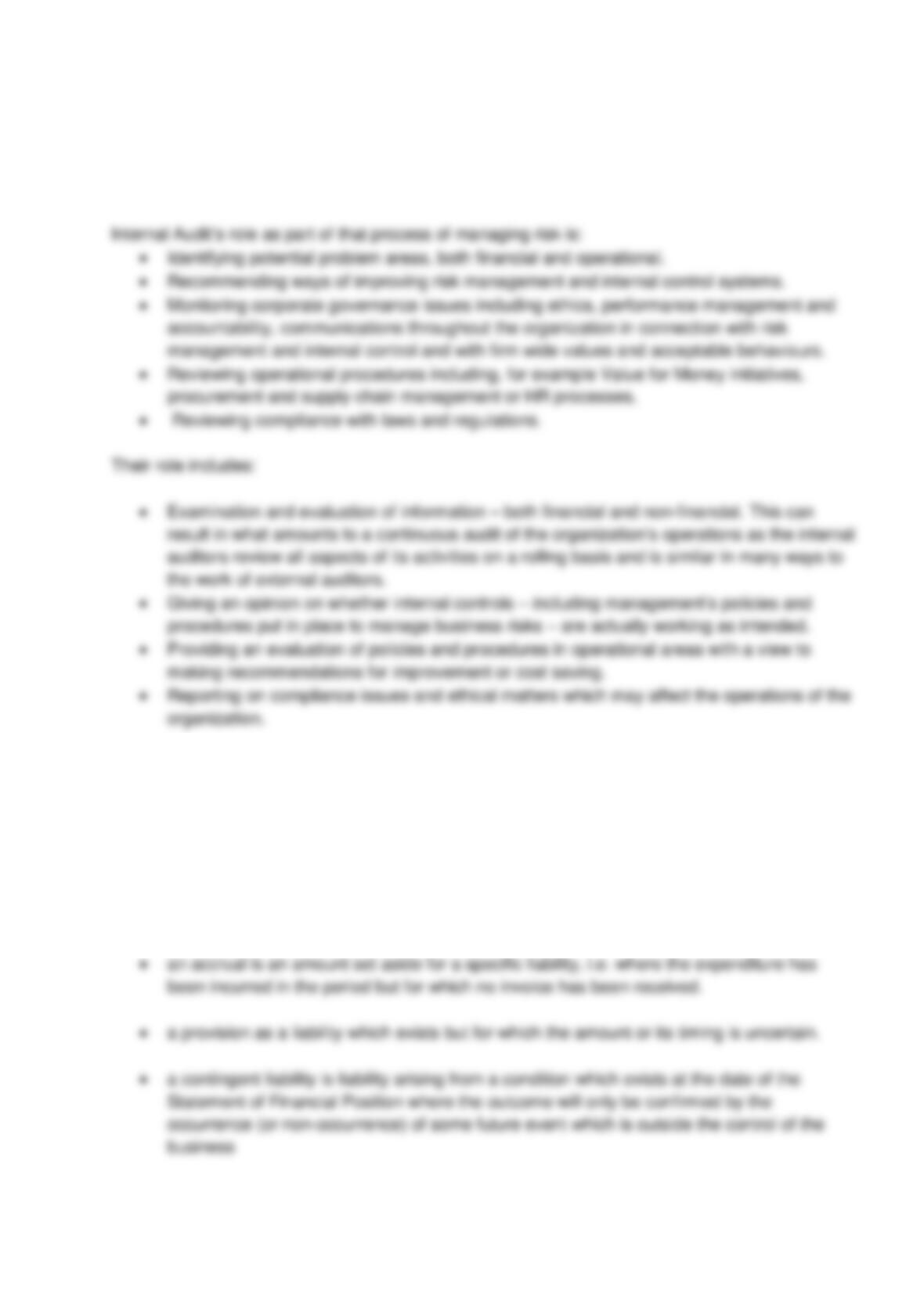
23. Identify the role of internal audit in managing risk. Set out what the role of internal audit is in
the risk management process
Answer
24 Explain the differences between
• an accrual
• a provision
• a contingent liability
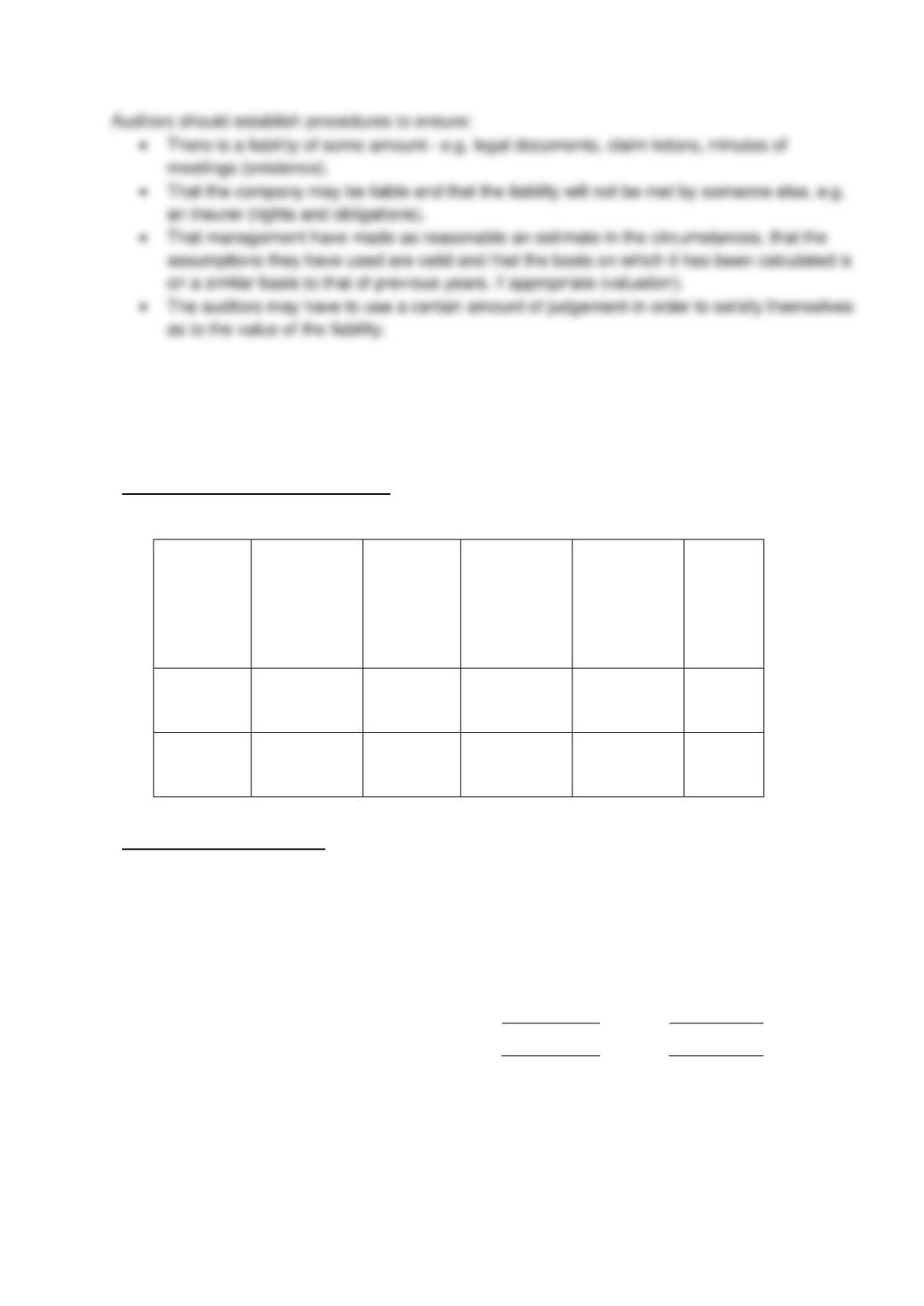
Explain the audit objectives, including the assertions to be validated, in the audit of provisions and
how an auditor might approach the process of evidence gathering.
Answer
25 You are the audit senior of Wellington Ltd for the year end 31 December 2X11, in charge of
trade receivables. You are about to start your year end work and have been given the following
extracts by your audit manager for you to consider as part of your planning and analytical review
stage.
Receivables ledger (ageing extract)
Current
0-30 days
£’000
30–60 days
£’000
60–90 days
£’000
>90 days
£’000
Total
£’000
2X11
2,671
1,068
1,068
535
5,342
2X10
1,984
1,190
595
198
3,967
Income statement (extract)
2X11
£’000
2X10
£’000
Turnover
35,451
36,200
Cost of sales
(28,715)
(27,874)
Gross profit
6,736
8,326
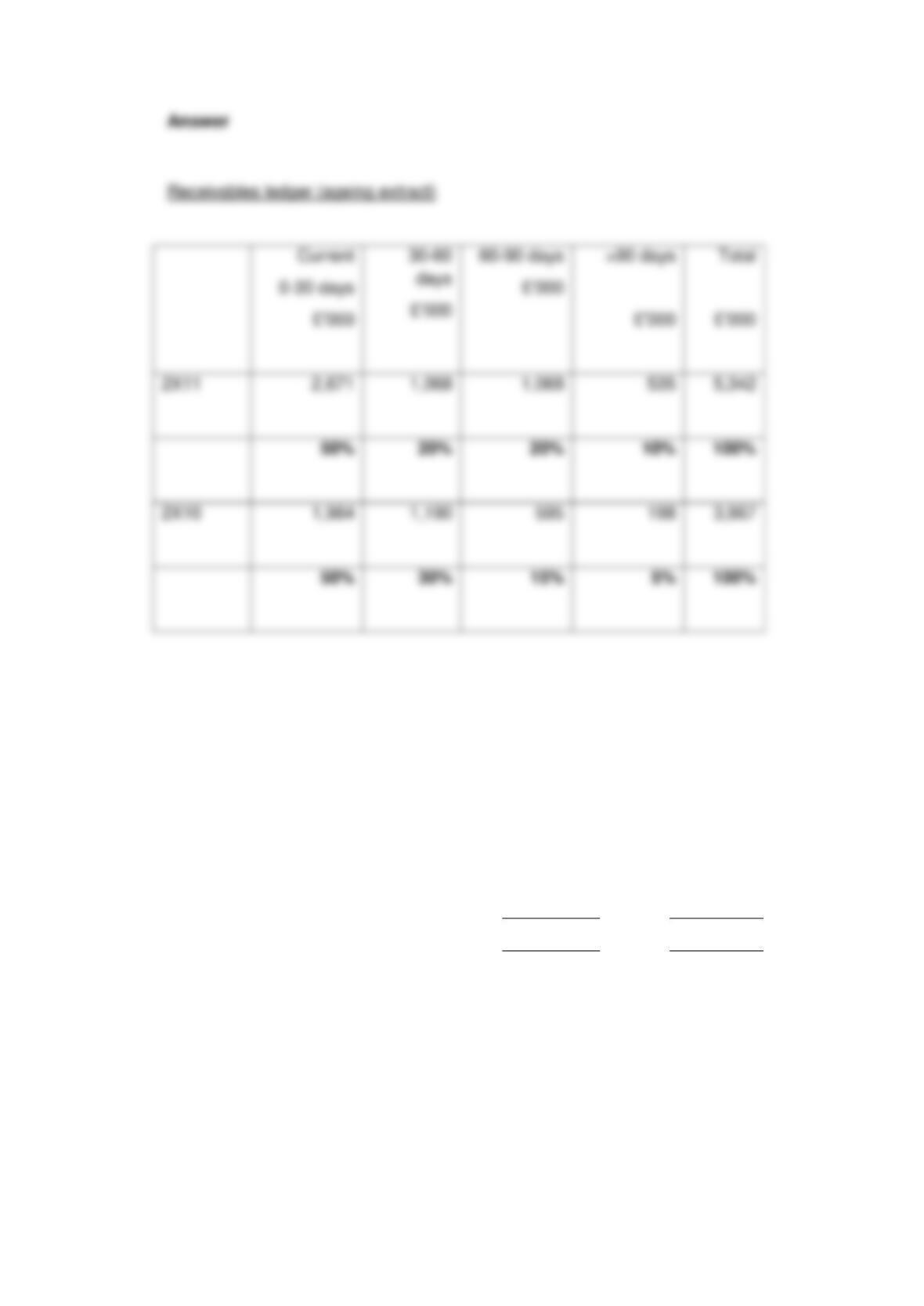
(a) Calculate ratios or percentages that will help your analysis of the sales and trade
receivables position for the two years.
Income statement (extract)
2X11
£’000
2X10
£’000
Turnover
35,451
36,200
Cost of sales
(28,715)
(27,874)
Gross profit
6,736
8,326
GP %
Debtor days
19%
55 days
23%
40 days
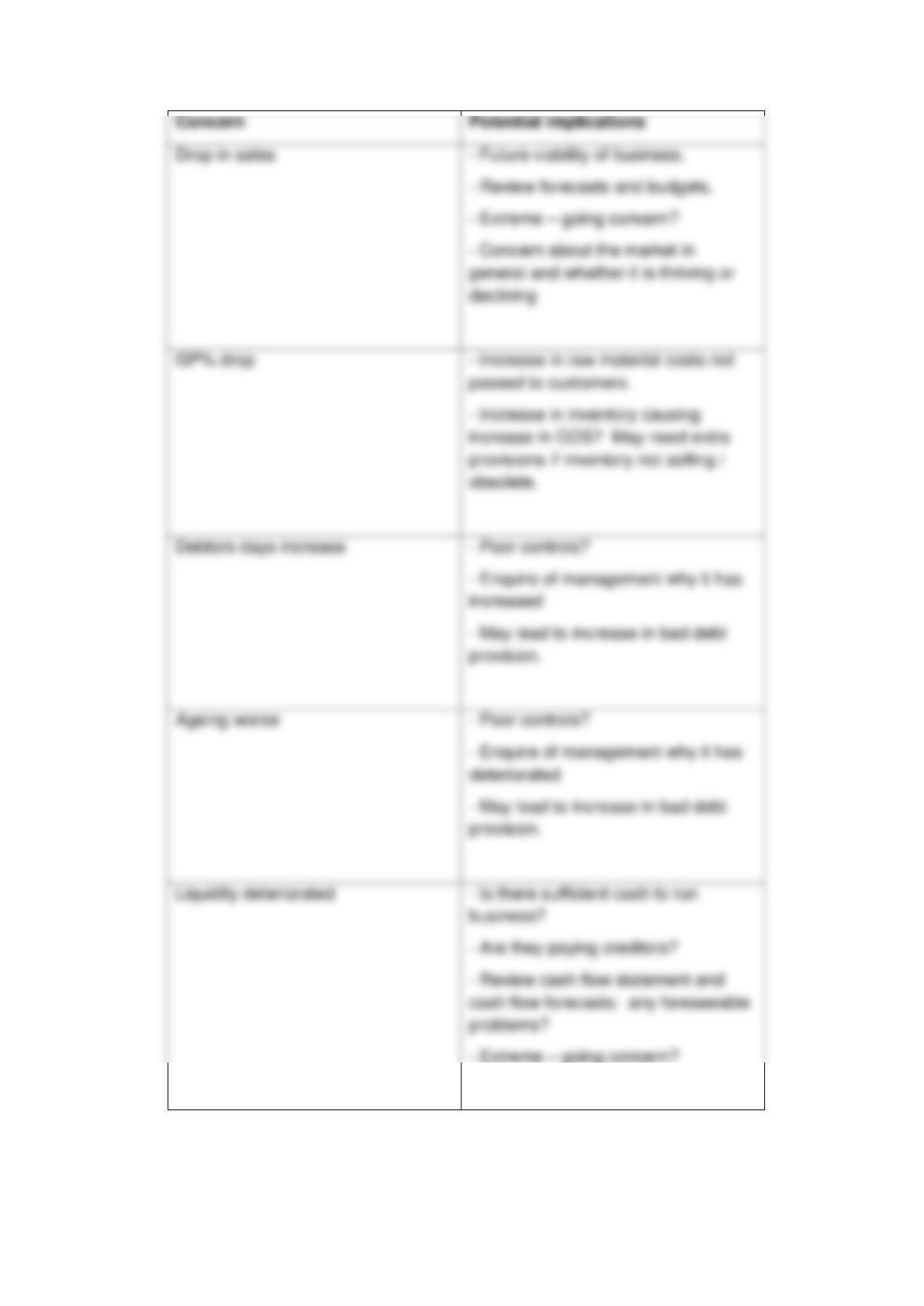
(b) Explain some of the concerns you have following your initial analysis (in part a) and the
resulting potential implications for your audit.
Answer
(c) You sent out a receivables circularisation on the year end balances. Describe the process
you would have gone through to do this.
Answer
(d) Some of the debtors have not responded to your circularisation. List the procedures you
would now follow for these balances.
Answer
26 Explain what is meant by the following terms:
(i) audit risk
(ii) inherent risk
(iii) control risk
(iv) detection risk
27. Based on the information above explain the additional problems the auditors face when
considering the use of audit software at Hung Lo Ltd. For each problem, explain how it might be
resolved.
Answer
Cost
28. You are the audit manager in charge of the audit of Gorilla plc. You are about to brief junior
members of the audit team prior to the audit of the Statement of Financial Position. Write some
notes in preparation for your meeting with the audit juniors to explain the assertions in relation to
current assets and what each of the assertions means.
Answer
29 Explain the basic principles of risk based auditing. Set out five examples each of
• Strategic risks
• Operational risks
Answer
30. Set out the audit objectives for the audit of a purchases and expenses system including the
relevant assertions
Answer