149.
Corporations may buy back their own stock for any of the following reasons except to:
150.
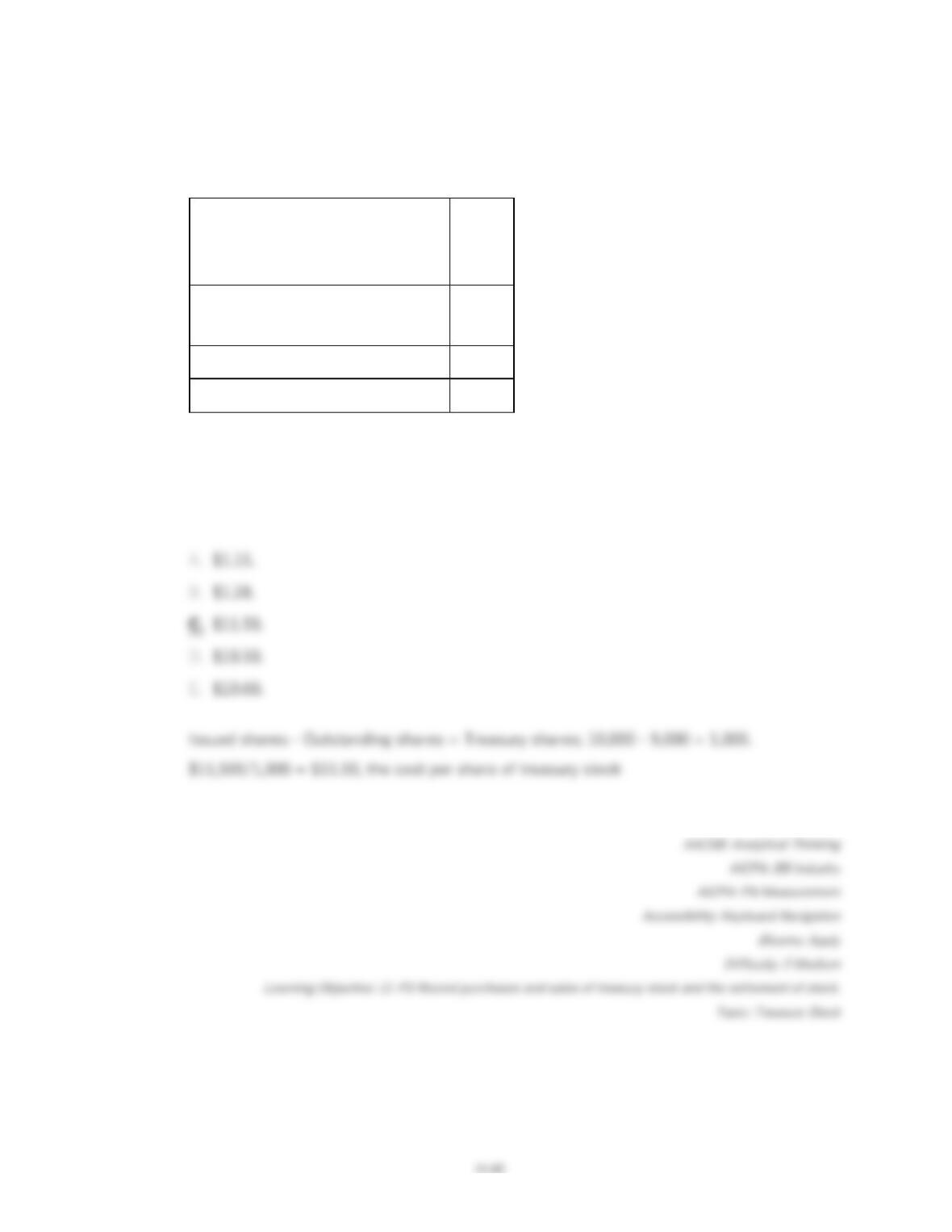
The following data has been collected about Keller Company’s stockholders’ equity
accounts:
Common stock $10 par value 20,000
shares authorized and 10,000 shares
issued, 9,000 shares outstanding
$100,000
Paid-in capital in excess of par value,
common stock
50,000
Retained earnings
25,000
Treasury stock
11,500
Assuming the treasury shares were all purchased at the same price, the cost per share of
the treasury stock is:
151.
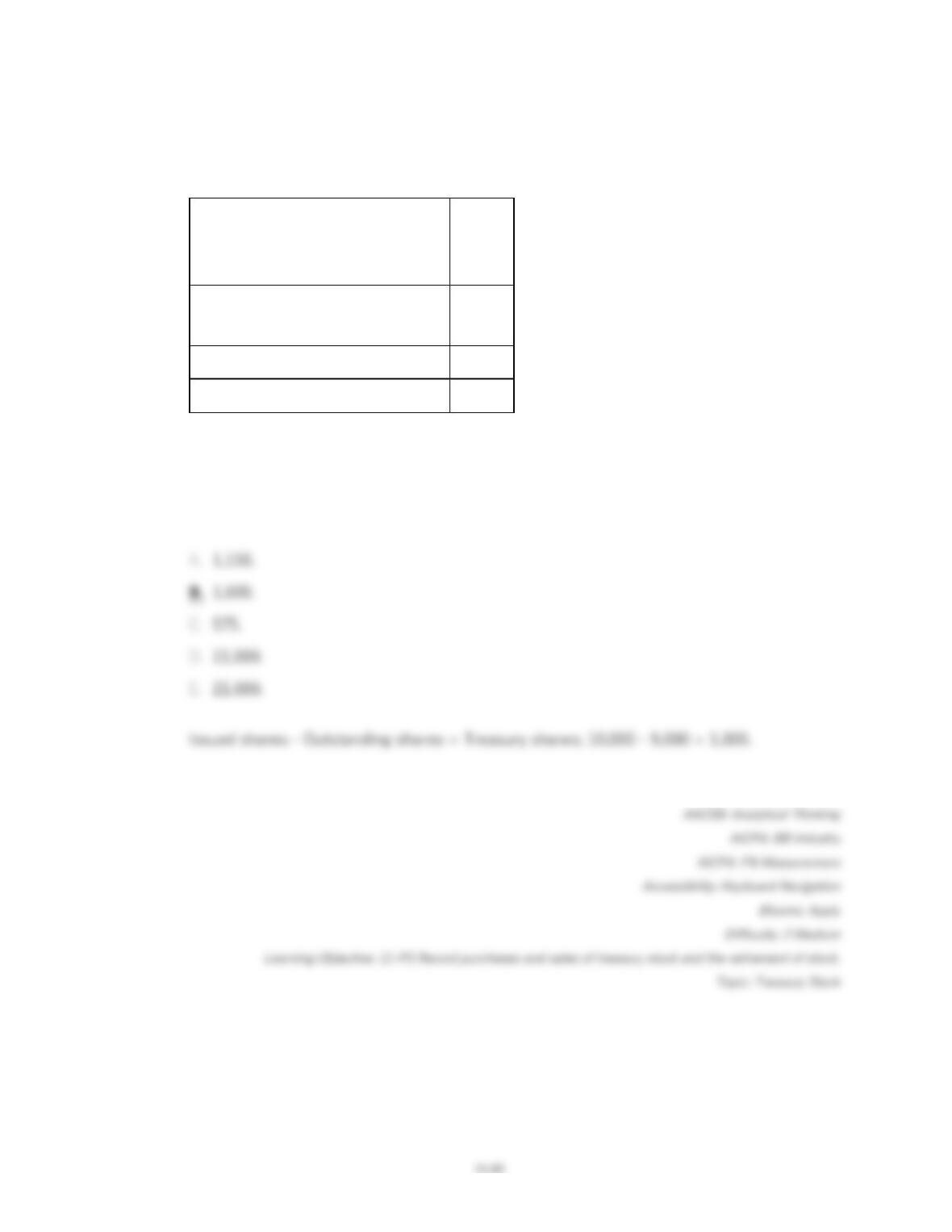
The following data has been collected about Keller Company’s stockholders’ equity
accounts:
Common stock $10 par value 20,000
shares authorized and 10,000 shares
issued, 9,000 shares outstanding
$100,000
Paid-in capital in excess of par value,
common stock
50,000
Retained earnings
25,000
Treasury stock
11,500
Assuming the treasury shares were all purchased at the same price, the number of shares
of treasury stock is:
152.
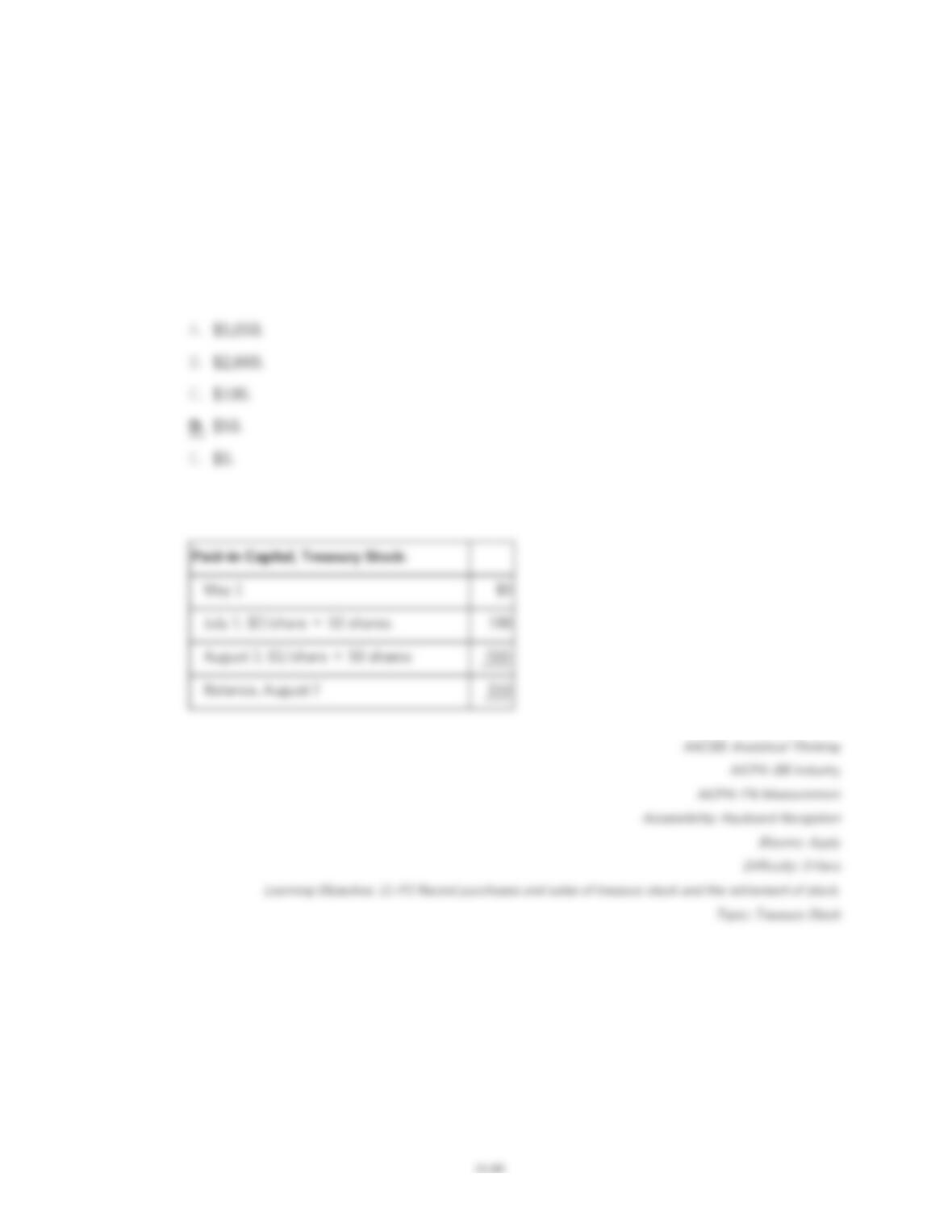
Prior to June 30, a company has never had any treasury stock transactions. A company
repurchased 100 shares of its common stock on June 30 for $40 per share. On July 20, it
reissued 50 of these shares at $46 per share. On August 1, it reissued 20 of the shares at
$38 per share. What is the balance in the Treasury Stock account on August 2?
153.
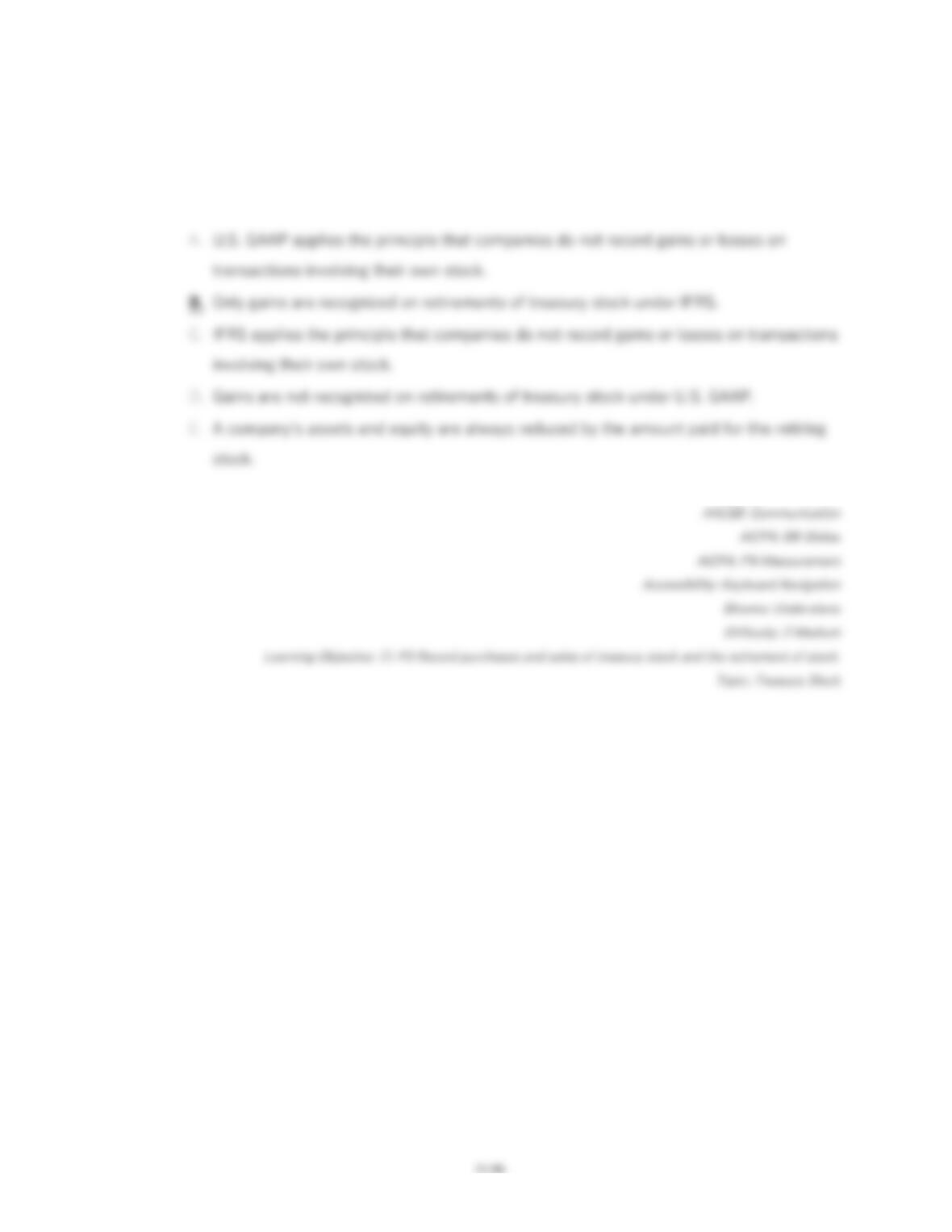
Prior to May 1, Fortune Company has never had any treasury stock transactions. A
company repurchased 100 shares of its common stock on May 1 for $5,000. On July 1, it
reissued 50 of these shares at $52 per share. On August 1, it reissued the remaining
treasury shares at $49 per share. What is the balance in the Paid-in Capital, Treasury
Stock account on August 2?
154.
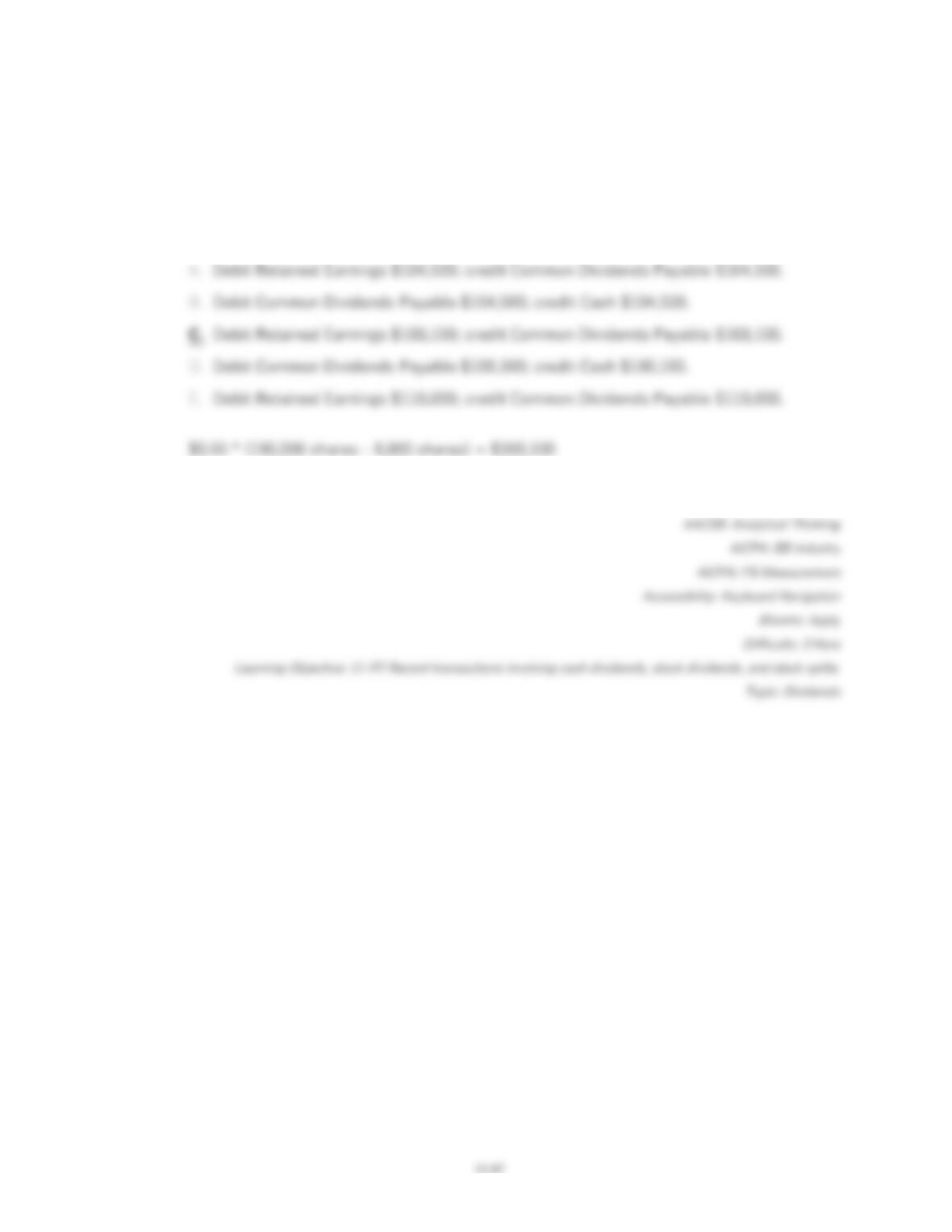
All of the following regarding accounting for Treasury Stock under U.S. GAAP and IRFS is
true
except
:
155.
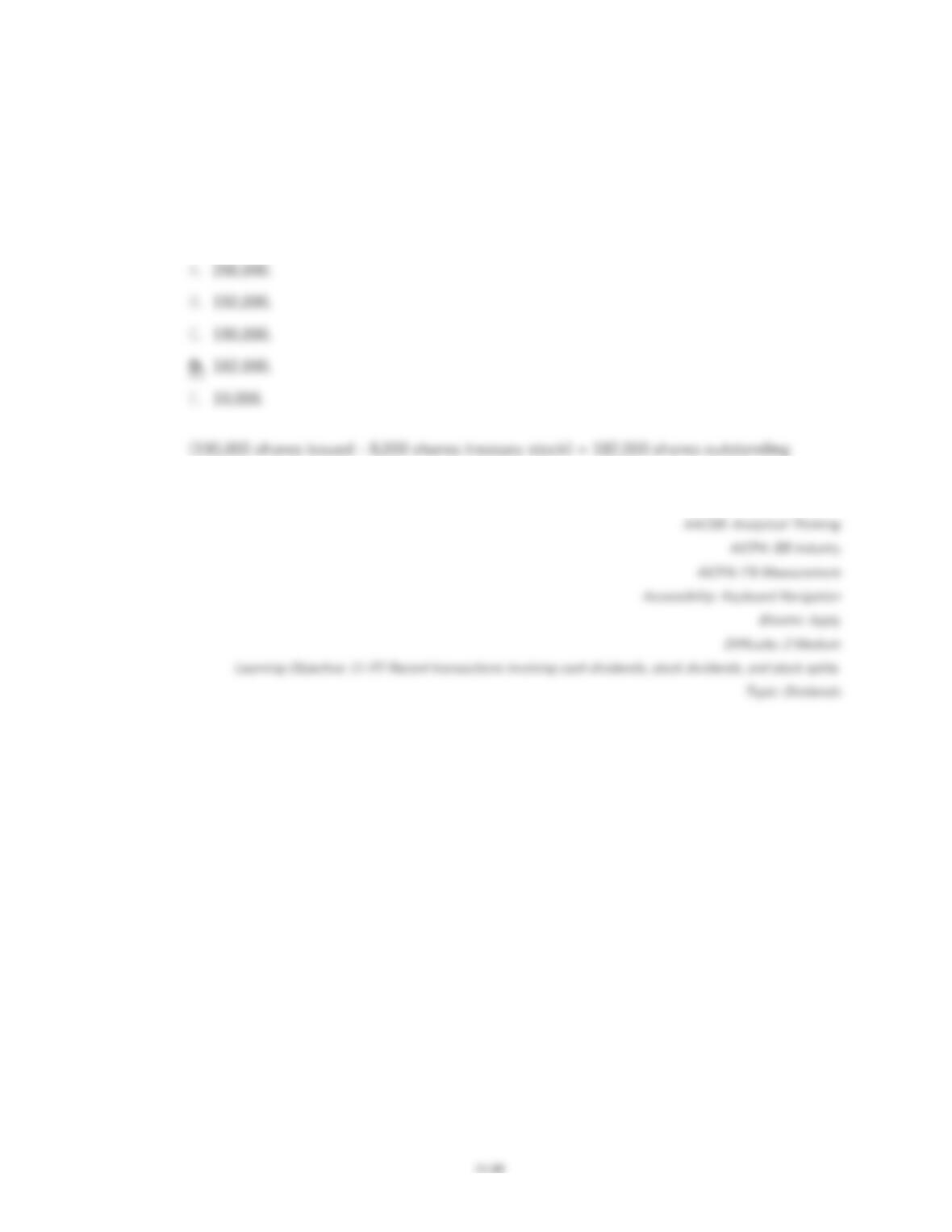
Fetzer Company declared a $0.55 per share cash dividend. The company has 200,000
shares authorized, 190,000 shares issued, and 8,000 shares in treasury stock. The journal
entry to record the dividend declaration is:
156.
Fetzer Company declared a $0.55 per share cash dividend. The company has 200,000
shares authorized, 190,000 shares issued, and 8,000 shares in treasury stock. The number
of shares to which the dividend applies is:
157.
West Company declared a $0.50 per share cash dividend. The company has 190,000
shares issued, and 10,000 shares in treasury stock. The journal entry to record the
dividend declaration is:
158.
West Company declared a $0.50 per share cash dividend. The company has 190,000
shares issued, and 10,000 shares in treasury stock. The journal entry to record the
payment of the dividend is:
159.
Fetzer Company declared a $0.55 per share cash dividend. The company has 200,000
shares authorized, 190,000 shares issued, and 8,000 shares in treasury stock. The journal
entry to record the payment of the dividend is:
160.
Fargo Company’s outstanding stock consists of 400 shares of noncumulative 5% preferred
stock with a $10 par value and 3,000 shares of common stock with a $1 par value. During
the first three years of operation, the corporation declared and paid the following total
cash dividends.
Year
Dividend Declared
2016
$20,000
2017
$6,000
2018
$32,000
The amount of dividends paid to preferred and common shareholders in 2016 is:
161.
Halverstein Company’s outstanding stock consists of 7,000 shares of cumulative 5%
preferred stock with a $10 par value and 3,000 shares of common stock with a $1 par
value. During the first three years of operation, the corporation declared and paid the
following total cash dividends.
Year
Dividend Declared
2016
$0
2017
$6,000
2018
$32,000
The amount of dividends paid to preferred and common shareholders in 2017 is:
162.
Halverstein Company’s outstanding stock consists of 7,000 shares of cumulative 5%
preferred stock with a $10 par value and 3,000 shares of common stock with a $1 par
value. During the first three years of operation, the corporation declared and paid the
following total cash dividends.
Year
Dividend Declared
2016
$0
2017
$6,000
2018
$32,000
The amount of dividends paid to preferred and common shareholders in 2018 is:
163.
Prior to June 30, a company has never had any treasury stock transactions. A company
repurchased 100 shares of its $1 par common stock on June 30 for $40 per share. On July
20, it reissued 50 of these shares at $46 per share. On August 1, it reissued 20 of the
shares at $38 per share. What is the journal entry necessary to record the repurchase of
stock on June 30 using the cost method?
164.
Prior to June 30, a company has never had any treasury stock transactions. A company
repurchased 100 shares of its $1 par common stock on June 30 for $40 per share. On July
20, it reissued 50 of these shares at $46 per share. On August 1, it reissued 20 of the
shares at $38 per share. What is the journal entry necessary to record the reissuance of
treasury stock on July 20 using the cost method?
165.
Prior to June 30, a company has never had any treasury stock transactions. A company
repurchased 100 shares of its $1 par common stock on June 30 for $40 per share. On July
20, it reissued 50 of these shares at $46 per share. On August 1, it reissued 20 of the
shares at $38 per share. What is the journal entry necessary to record the reissuance of
treasury stock on August 1 using the cost method?
166.
A corporation issued 2,500 shares of its no par common stock at a cash price of $11 per
share. The entry to record this transaction would be:
167.
A corporation issued 5,000 shares of its no par common stock having a $1 stated value per
share. The issue price was $10 per share. The entry to record this transaction would be:
168.
A corporation issued 5,000 shares of its $1 par value stock at $16 per share. The entry to
record this transaction would be:
169.
In the current year, Jacksonville Company has discovered a material prior-period error in
its calculation of income. The company had incorrectly debited an asset costing $120,000
to an expense account. The related income tax expense was $42,000. This error should be
reported on the current year Statement of Retained Earnings as a(n):