11-120
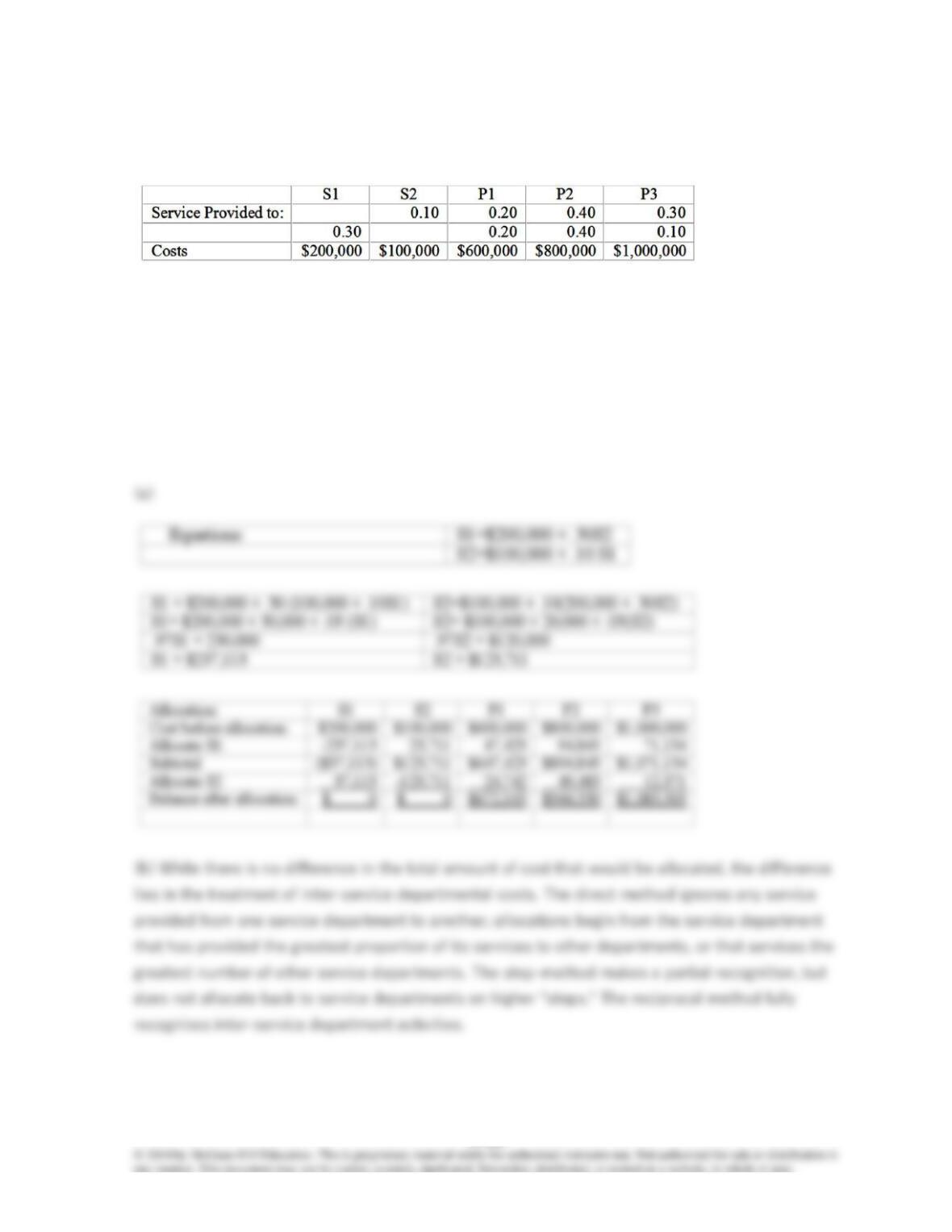
141. Bruce Consulting has two service departments: S1 and S2 and three production
departments: P1, P2, and P3. Data for a recent month follow:
Required:
(a) Determine the allocations to the production departments when the reciprocal method is used.
(b) Briefly describe why the reciprocal method is theoretically preferable to other methods of
allocation.
11-121
142. Goldberg and Rogal Consultants is a large, international consulting organization. The
company provides consulting services in the computer and Internet areas. The company also has
several divisions that provide manufacturing of various computer parts. The company has five
divisions which are all profit centers. Each division includes allocated corporate costs in its annual
budget. The budget for the coming year for the Building and Grounds Service department is
$6,000,000. Included in this budget is the maintenance of all corporate buildings, depreciation,
cleaning, insurance, and all other facility-related maintenance costs. The company uses a
weighted method of allocating facility costs based on the type of space maintained by each
division. Space ranges from manufacturing warehouses, which are least expensive to maintain, to
computer mainframe space, which requires specialized temperature controls, air conditioning, and
maintenance. The company has decided to use a weighting system assigning the following
relative weights to each type of space: 1 for warehouse, 3 for office, and 5 for computer space.
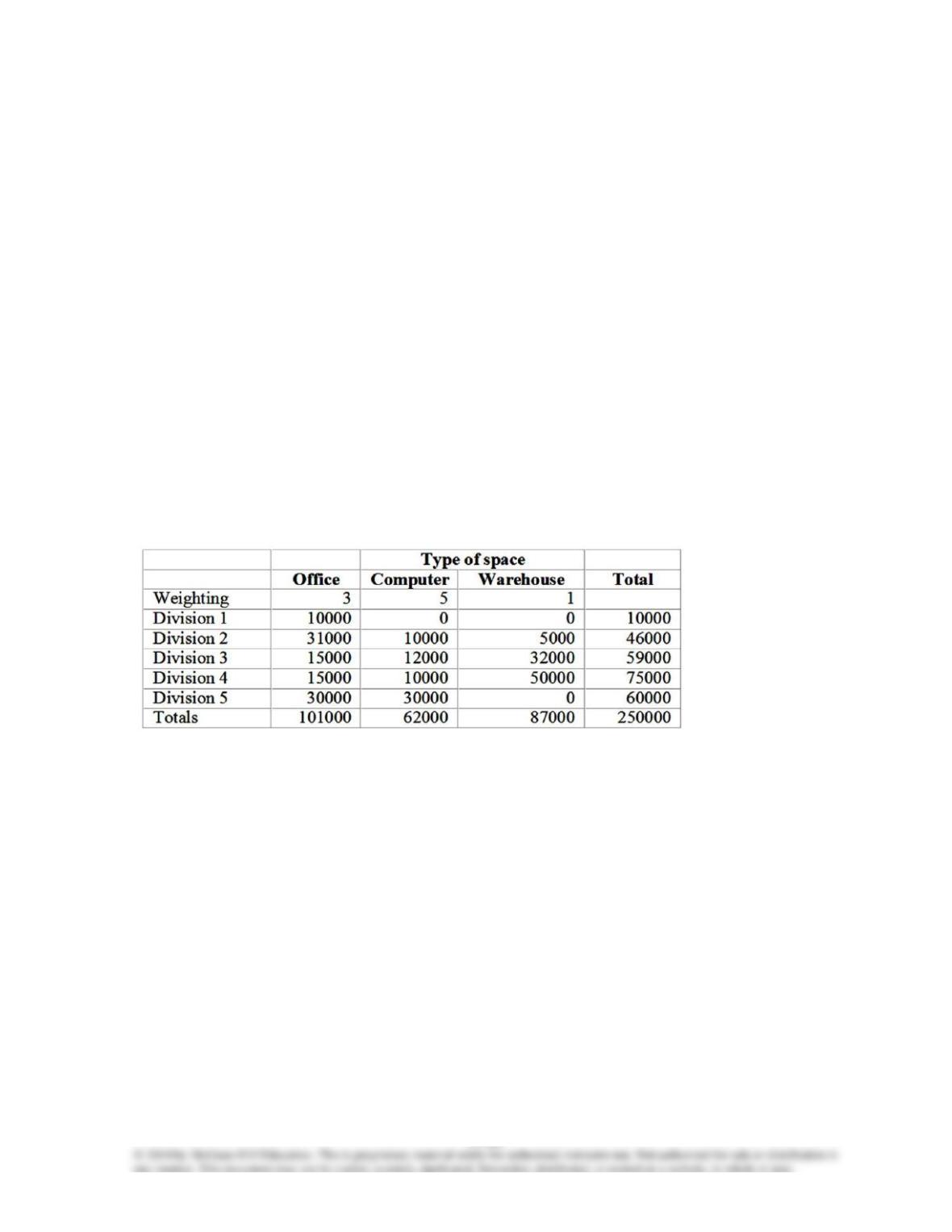
Below, find data relating to the five divisions and the square footage of each type of space.
Currently, Division 5, the Internet consulting division, is the largest in sales volume and profits for
the company, which has been growing at the rate of 20% per year, while divisions 3 and 4 have
been struggling due to declining margins on technology products.
Required:
(a) As director of corporate budgeting, you are required to send to each division its facility
allocation for the coming year. Prepare a schedule showing how the budget of $6,000,000 will be
allocated to each division.
(b) Describe potential motivational problems brought on by these allocations. (Based on an actual
company)

11-123
143. Barletta Corporation has one service department and three producing departments. The
budget for the following year allocates the service department costs to the producing departments
based on the number of employees in each department. Currently, the budget for the service
department is $2,400,000 and the number of employees in each department is as follows:
Department 1: 100
Department 2: 50
Department 3: 150
During the year, due to sudden expanded growth, Department 2 has had to add 50 new
employees; however the service department costs have not increased due to budget constraints.
Required:
(a) What were the expected service department allocations at the beginning of the year to each
production department?
(b) What will be the actual allocations based on the number of employees each department has at
year end?
(c) Comment on the reasonableness of the situation. What are the potential causes of any
problems created by this allocation method?
11-125
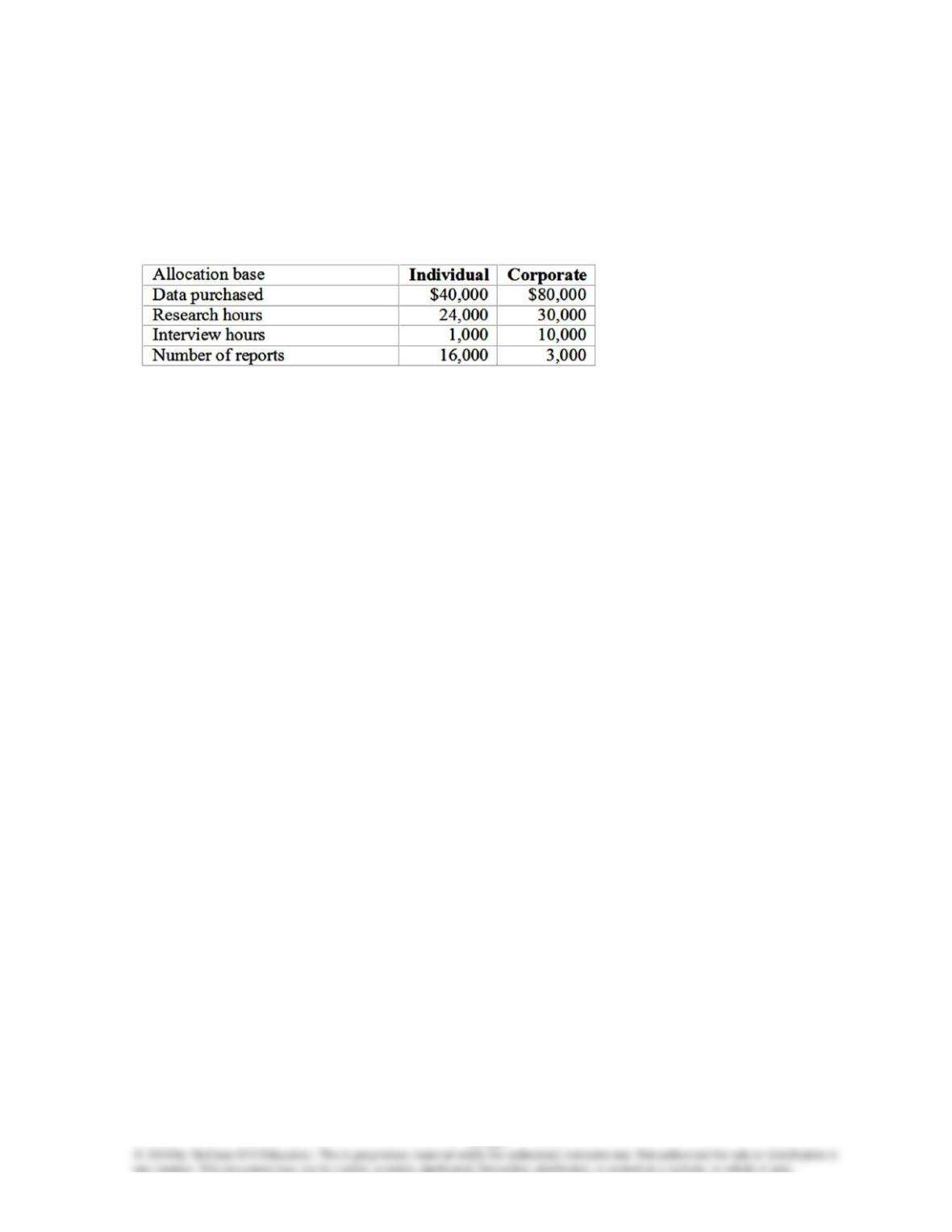
144. Quick Credit Checks produces two styles of credit reports: personal and corporate. The
difference between the two is the amount of background information and data collection required.
The corporate report uses more skilled personnel because additional checking and data are
required. The relevant figures for the year just completed follow: Total support service costs to be
allocated are $3,200,000.
Required:
(a) Which method would be preferred by each manager? Which method would be least preferred?
(b) Provide arguments that each manager would make for his/her preferred method. How would
each manager argue against his/her least preferred method?
11-127
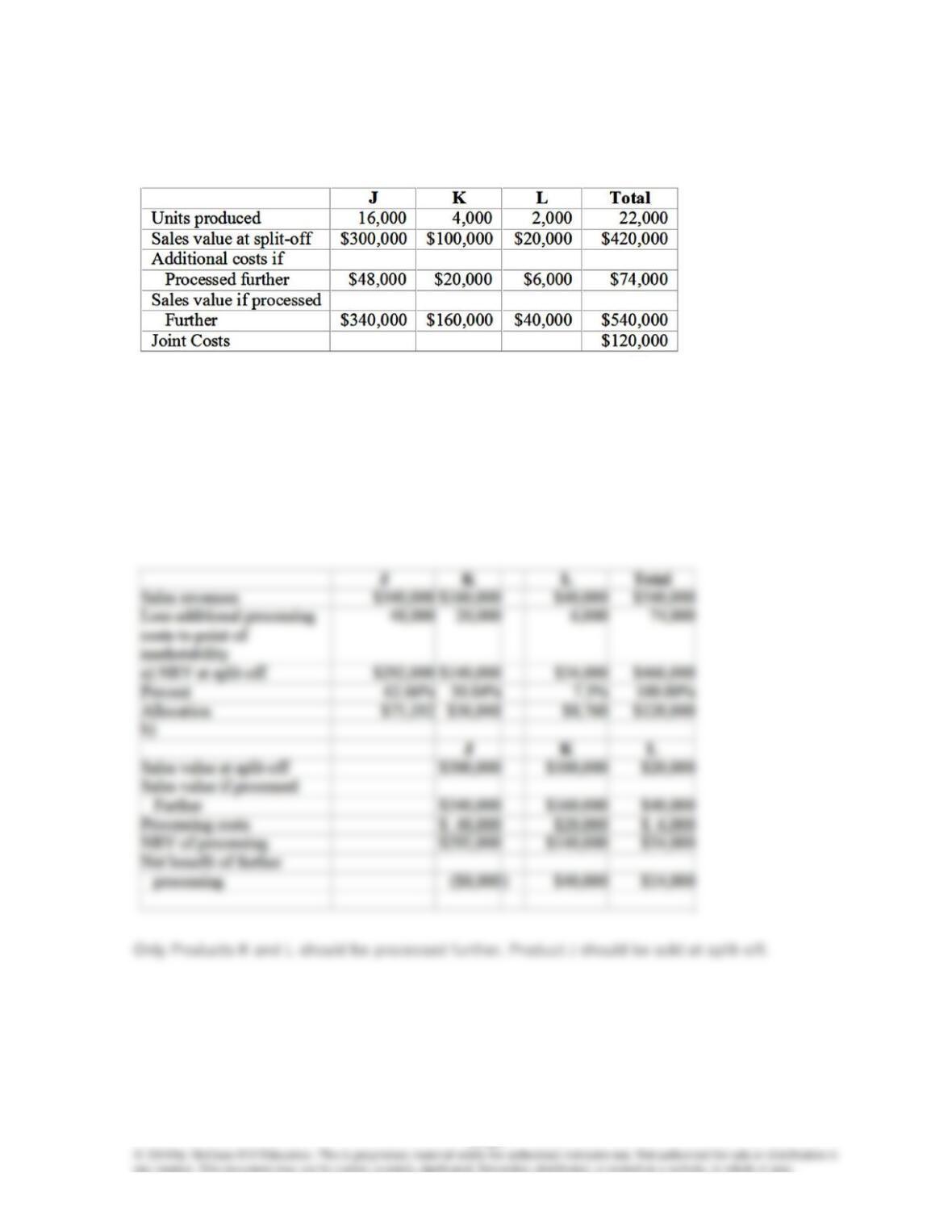
145. Richards Manufacturing Corporation manufactures three products in a joint process.
Additional information is as follows:
Required:
(a) Allocate the joint costs to the three products using the net realizable value method.
(b) Determine which products should be sold at split-off and which products should be processed
further.

11-128
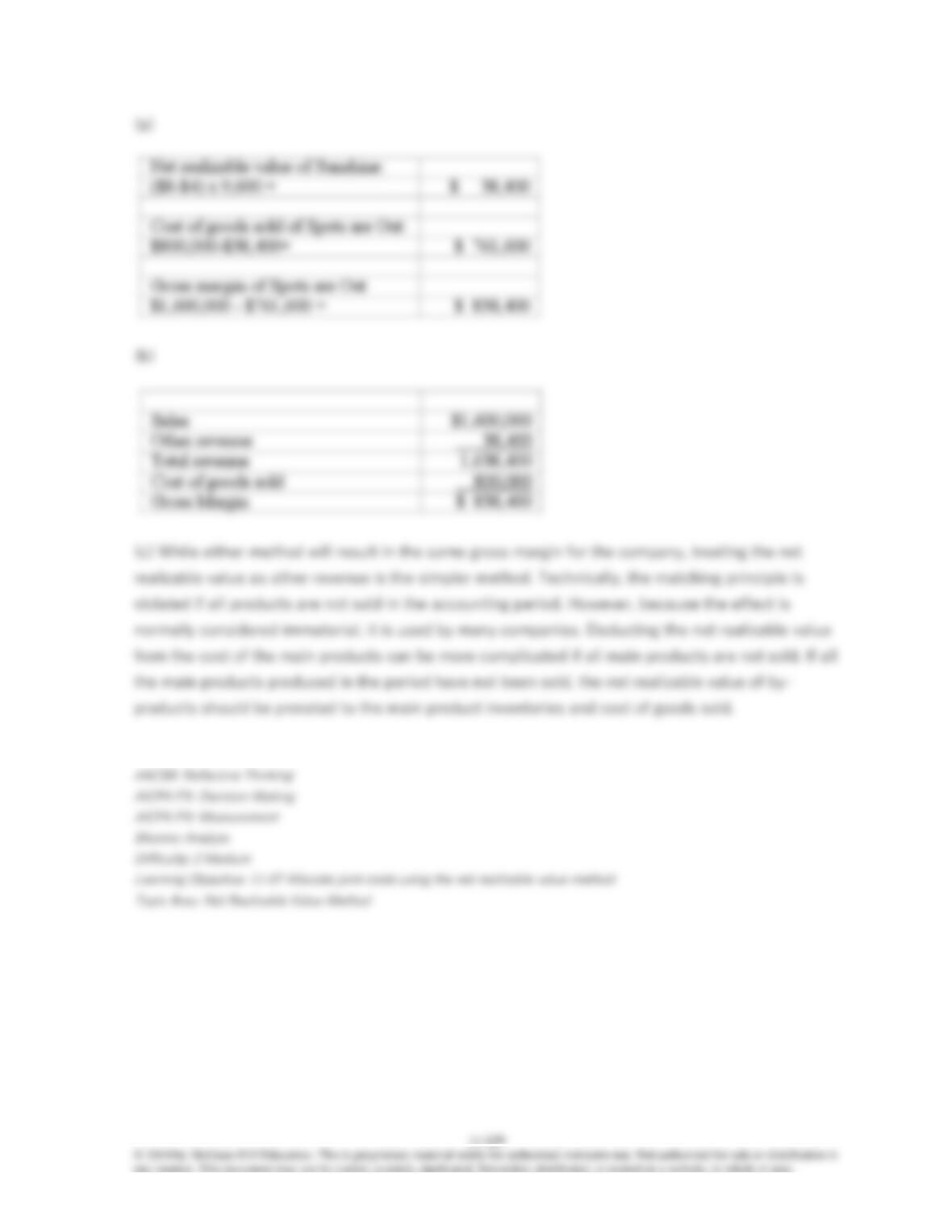
146. Colbert Corporation produces a product called Spots are Out, which gives rise to a by–
product called Sunshine. The only costs associated with Sunshine are additional processing costs
of $4 for each unit. Colbert accounts for Sunshine’s sales first by deducting its separable costs
from its sales and then by deducting this net amount from the cost of sales of Spots are Out. This
year, 9,600 units of Sunshine were produced. They were all sold for $8 each. Company operating
expenses were $250,000 for the year. Sales revenue and cost of goods sold for Spots are Out were
$1,600,000 and $800,000 respectively. (CPA adapted)
Required:
(a) Calculate the company’s gross margin under the current accounting method.
(b) Assume the company changes its accounting method and accounts for the byproduct’s net
realizable value as “other revenue.” Calculate the gross margin under the new method.
(c) Under what circumstances would method a or b be preferred?

11-130
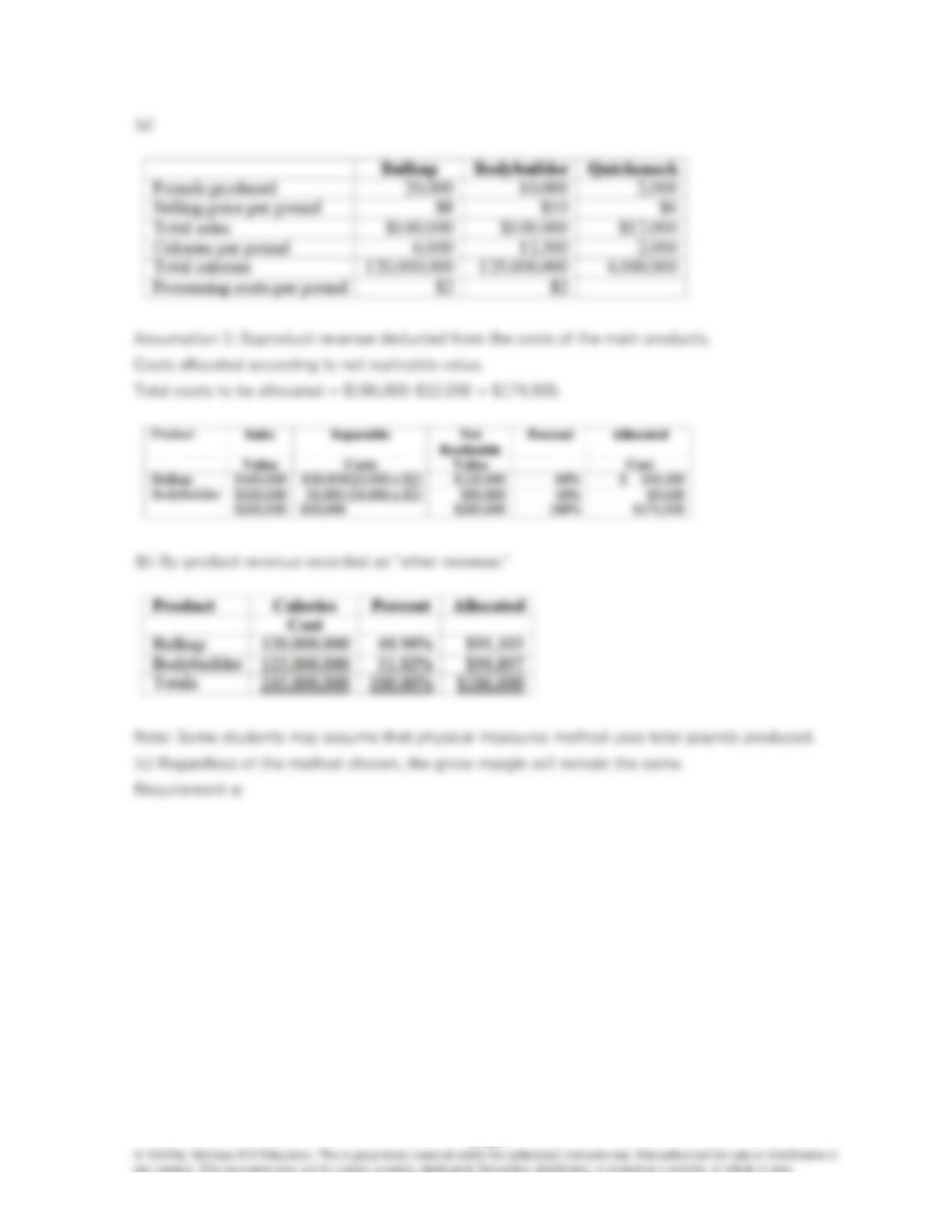
147. Summerfield Foods produces three supplemental food products simultaneously through a
refining process costing $186,000. The joint products, Bulkup and Bodybuilder, have a final selling
price of $8 per pound and $10 per pound, respectively, after additional processing costs of $2 per
pound for each product incurred after the split-off point. Quicksnack, a by-product, is sold at the
split-off point for $6 per pound. The production of Bulkup results in 20,000 pounds with a caloric
value of 6,000 calories per pound. The production of Bodybuilder, which is very high in
carbohydrates, has a caloric value of 12,500 calories per pound. 10,000 pounds of Bodybuilder are
produced. Quicksnack has a caloric value of 2,000 calories a pound and 2,000 pounds are
produced. (CMA adapted)
Required:
(a) Allocate the joint product costs using the net-realizable-value method, assuming that
Quicksnack is accounted for as a by-product, with its net realizable value deducted from the cost
of the main products.
(b) Allocate the joint product costs using the physical measures method, assuming that
Quicksnack is accounted for as a by-product, with its sales revenue accounted for as “other
revenue.”
(c) Compute Summerfield Food’s gross margin under requirements a and b.
11-131
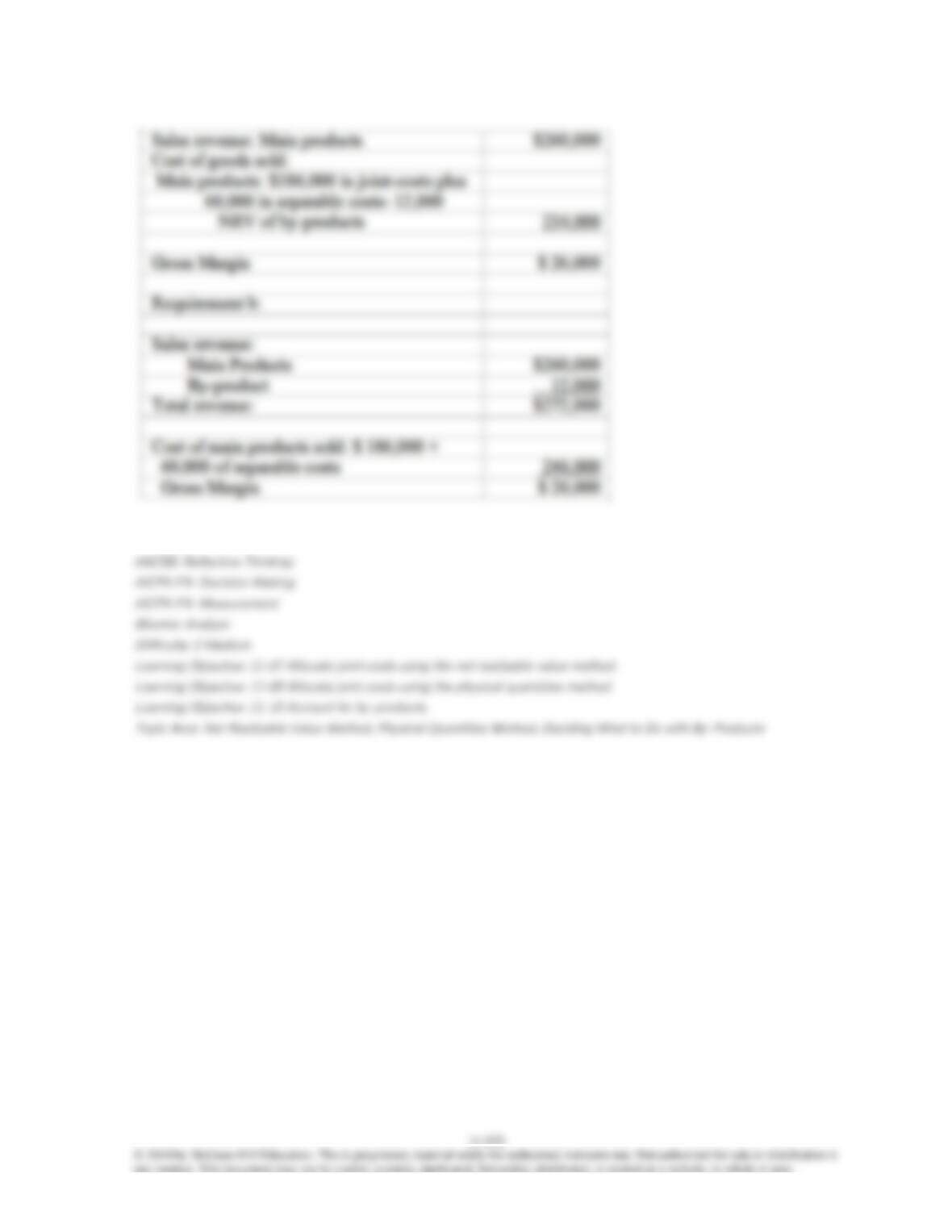
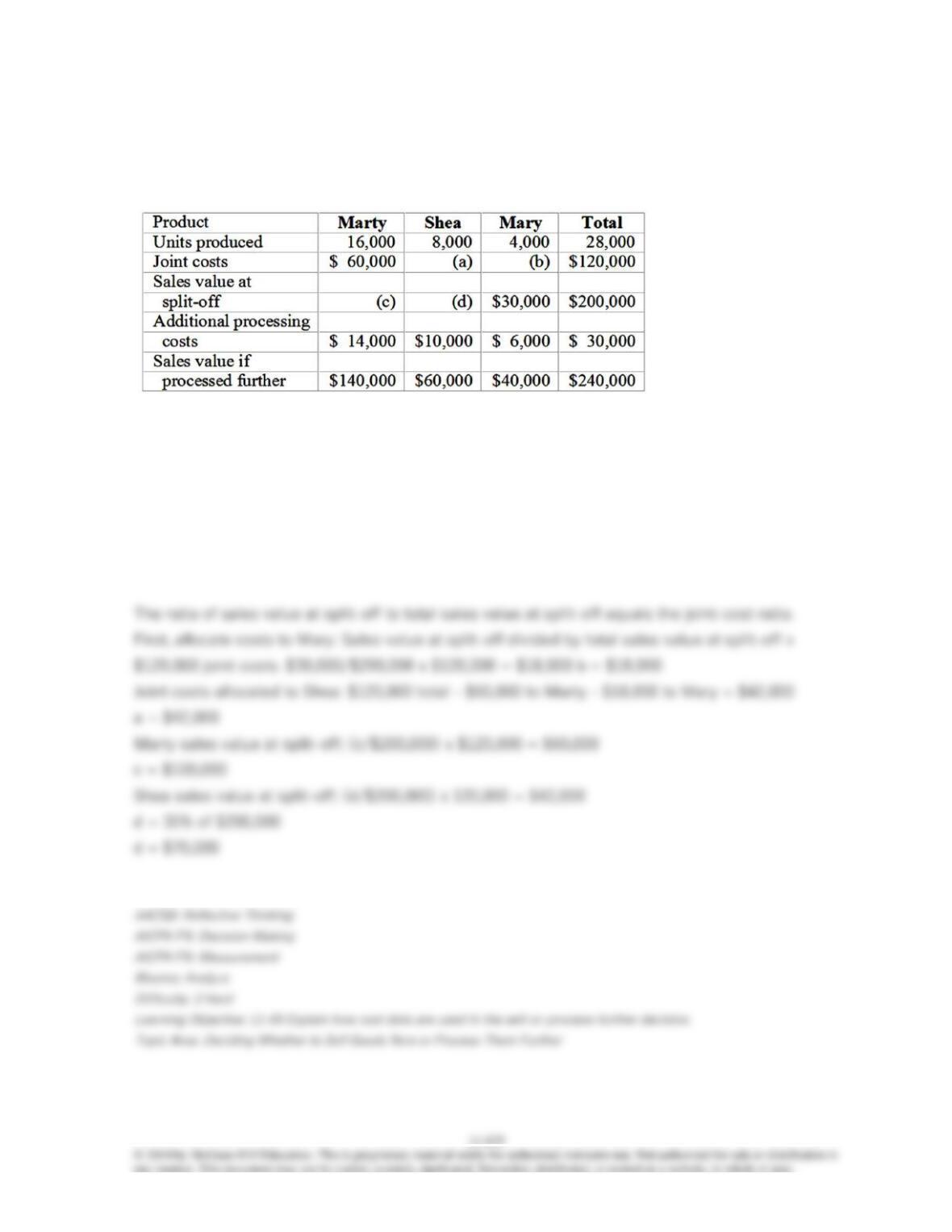
148. Covehead Corporation produces three products from a joint process: Marty, Shea, and
Mary. Each product can be processed further and sold for more. Data on the processes are as
follows:
The amount of joint costs for Marty is the amount that has been allocated.
Required:
Determine the values for the lettered spaces. (CPA adapted)
11-134
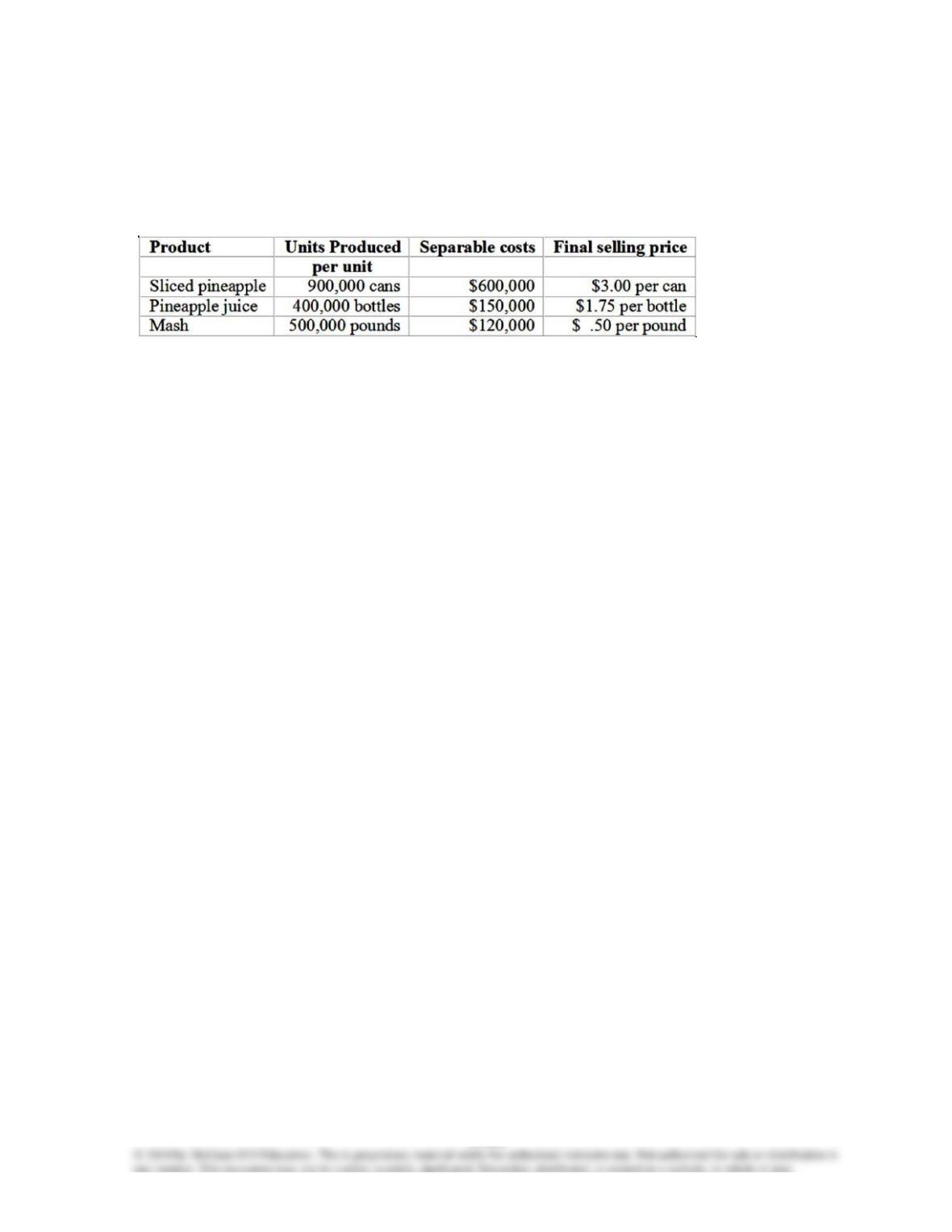
149. Peters Pineapples is a pineapple grower. After cultivating, fertilizing, growing, and picking
pineapples, the company sells whole pineapples to food processors. The company is considering
adding a processing line where sliced pineapples and pineapple juice, along with a “mash” used
for animal feed will be the final products. Projected information about the costs follows:
Joint product costs of cultivating, fertilizing and picking pineapples total $1,000,000.
Required:
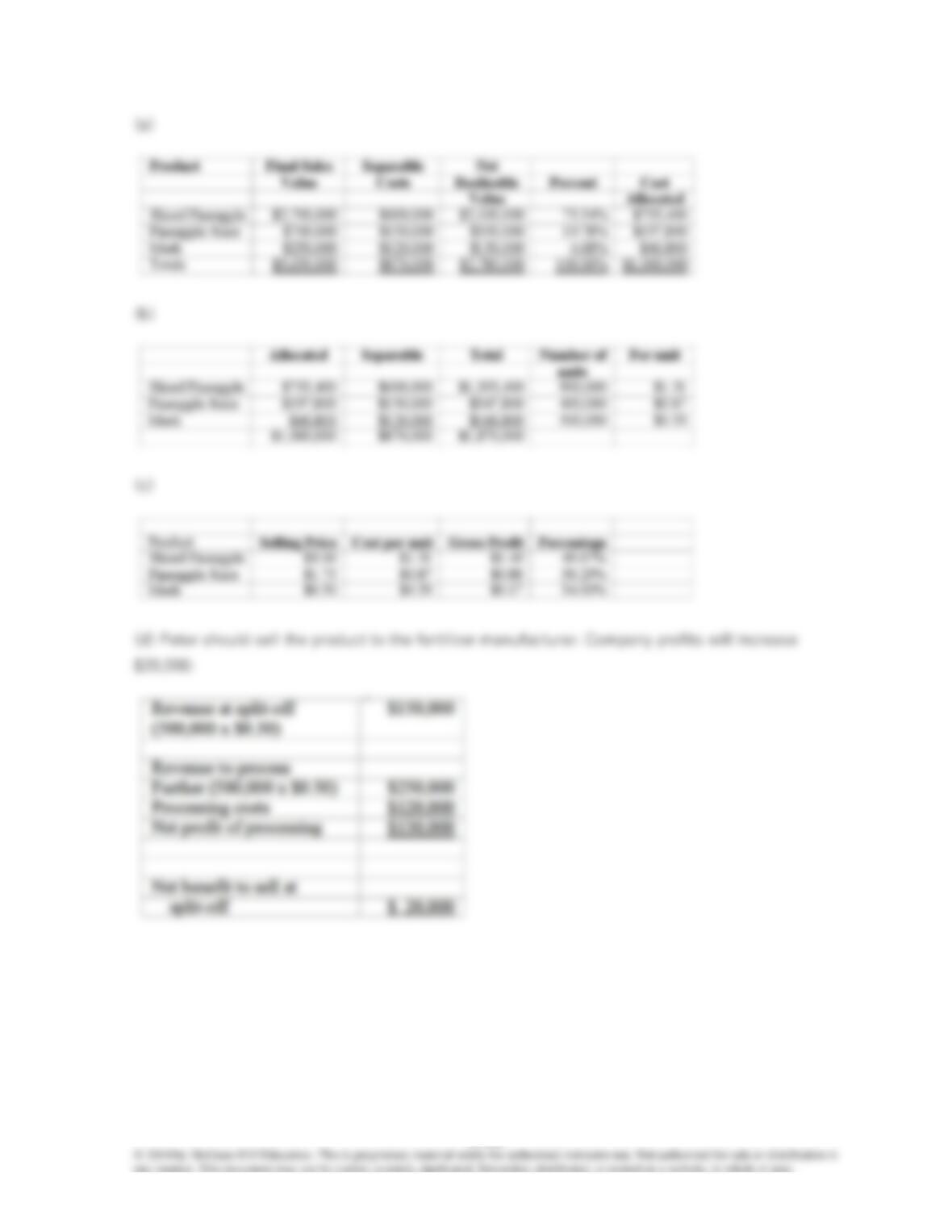
(a) Determine the amount of separable costs allocated to each product using the net realizable
value method.
(b) Determine the final cost per unit for each product.
(c) Determine the gross margin for each product.
(d) A fertilizer manufacturer approaches Peter Good, the President of the company, and asks to
buy the rinds and other excess materials currently used to produce Mash. He would be willing to
pay $0.30 per pound for these materials. What advice would you give Peter?
11-135
11-136
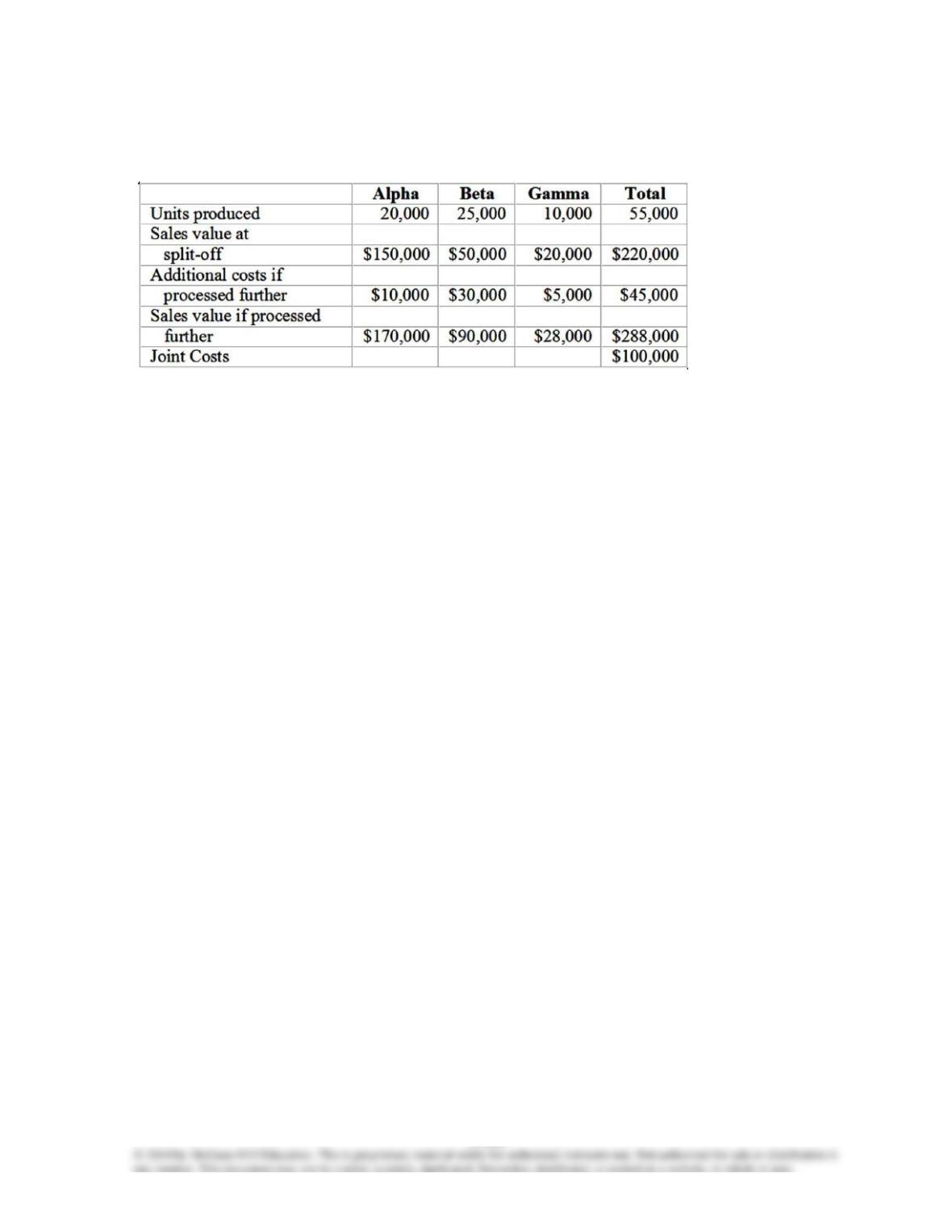
150. Jarvis Manufacturing produces three products in a joint operation. Information regarding
the products appears below:
Required:
(a) Allocate the joint costs using the relative sales value at split-off method.
(b) Allocate the joint costs using the constant gross margin percentage method.