11-101
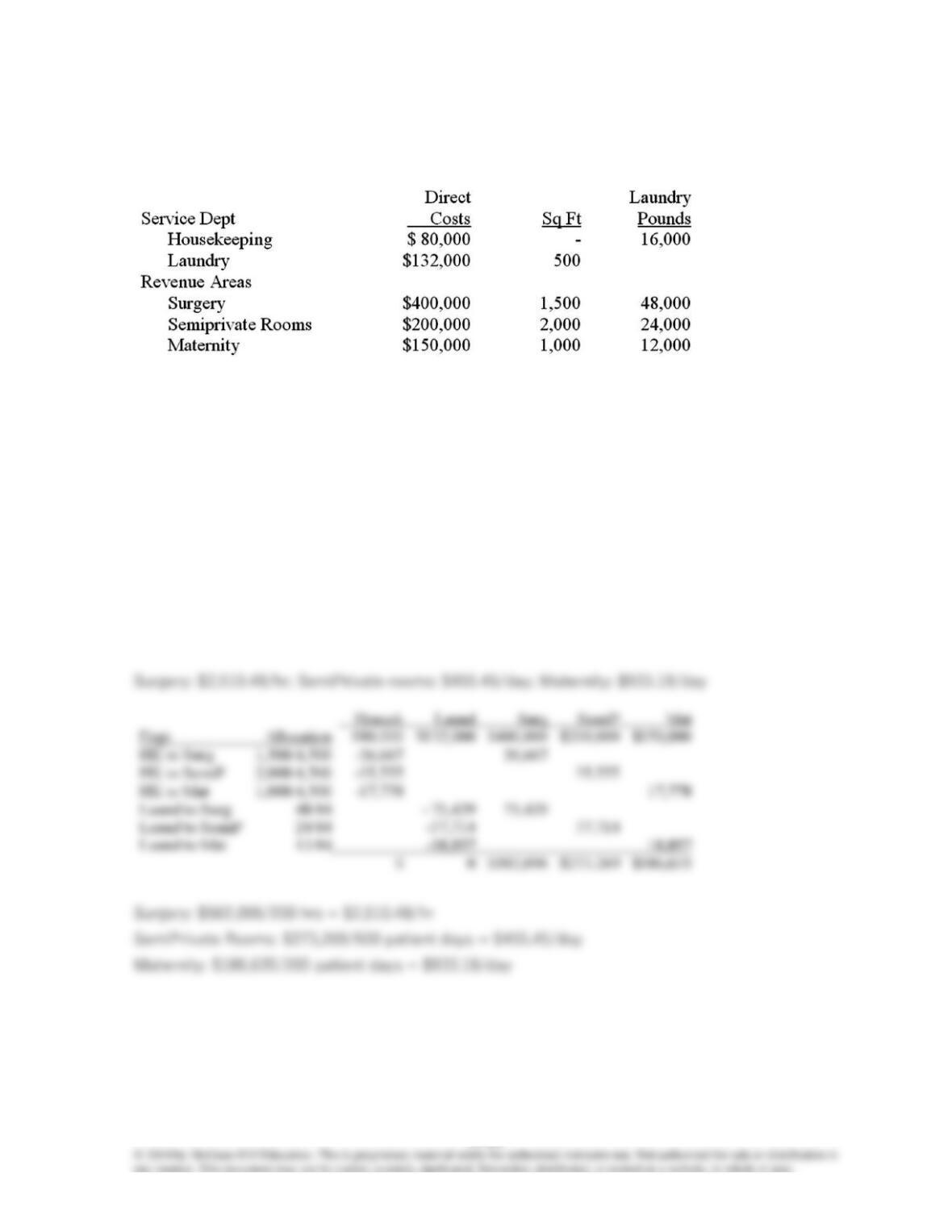
123. Smalltown Hospital is a small hospital with two service departments and three revenue
areas:
The hospital wants to allocate the service department costs to the revenue areas. Housekeeping
is allocated based on square footage; Laundry is allocated based on pounds of laundry. The
normal capacity for Surgery is 200 hours per month; normal capacity for semiprivate rooms is 600
patient days; and normal capacity for maternity is 200 patient days.
Required:
Determine the overhead rate for the three revenue areas. Allocate the service department costs to
the revenue areas using the direct method.
11-102
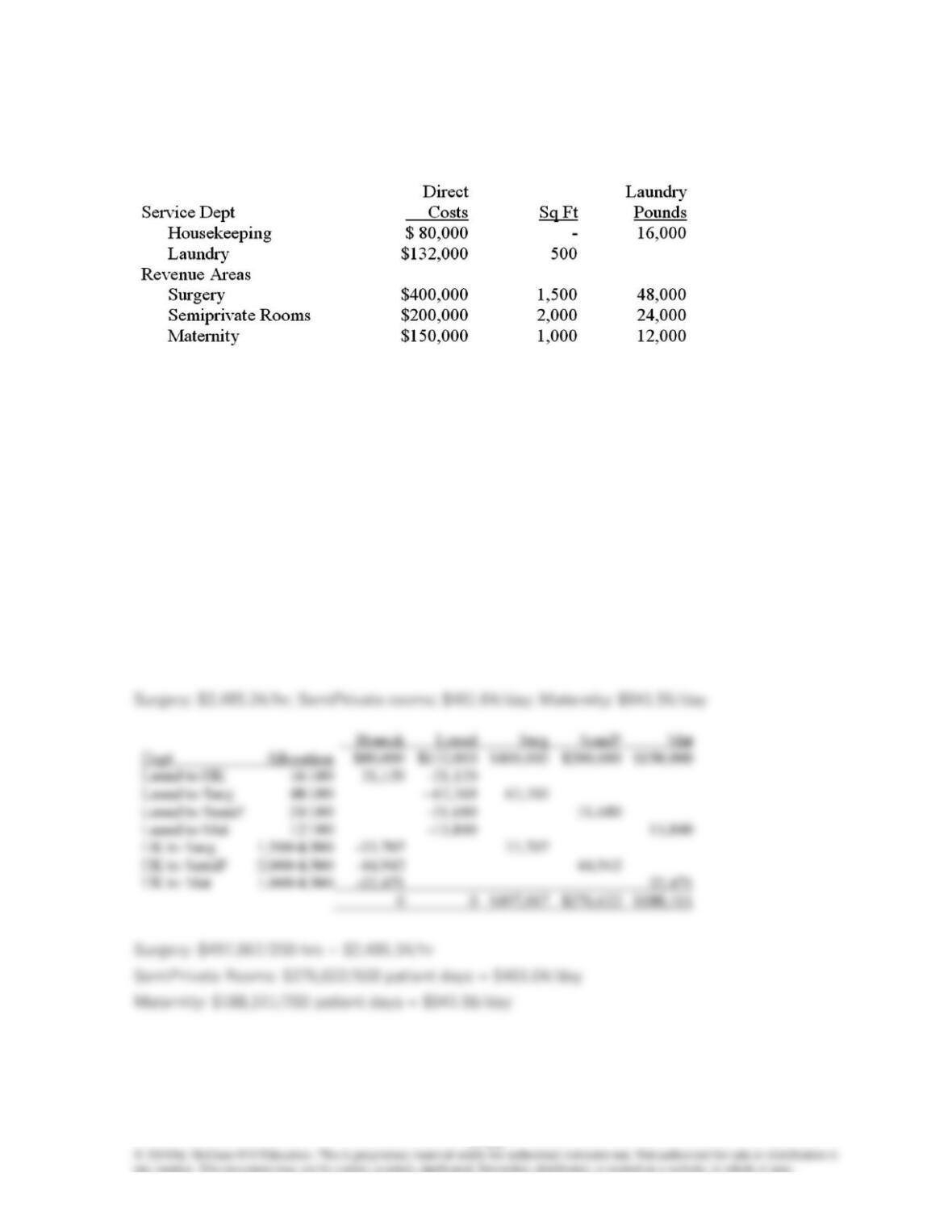
124. Smalltown Hospital is a small hospital with two service departments and three revenue
areas:
The hospital wants to allocate the service department costs to the revenue areas. Housekeeping
is allocated based on square footage; Laundry is allocated based on pounds of laundry. The
normal capacity for Surgery is 200 hours per month; normal capacity for semiprivate rooms is 600
patient days; and normal capacity for maternity is 200 patient days.
Required:
Determine the overhead rate for the three revenue areas. Allocate the service department costs to
the revenue areas using the step method. Allocate the service department with the largest dollar
value first.
11-103
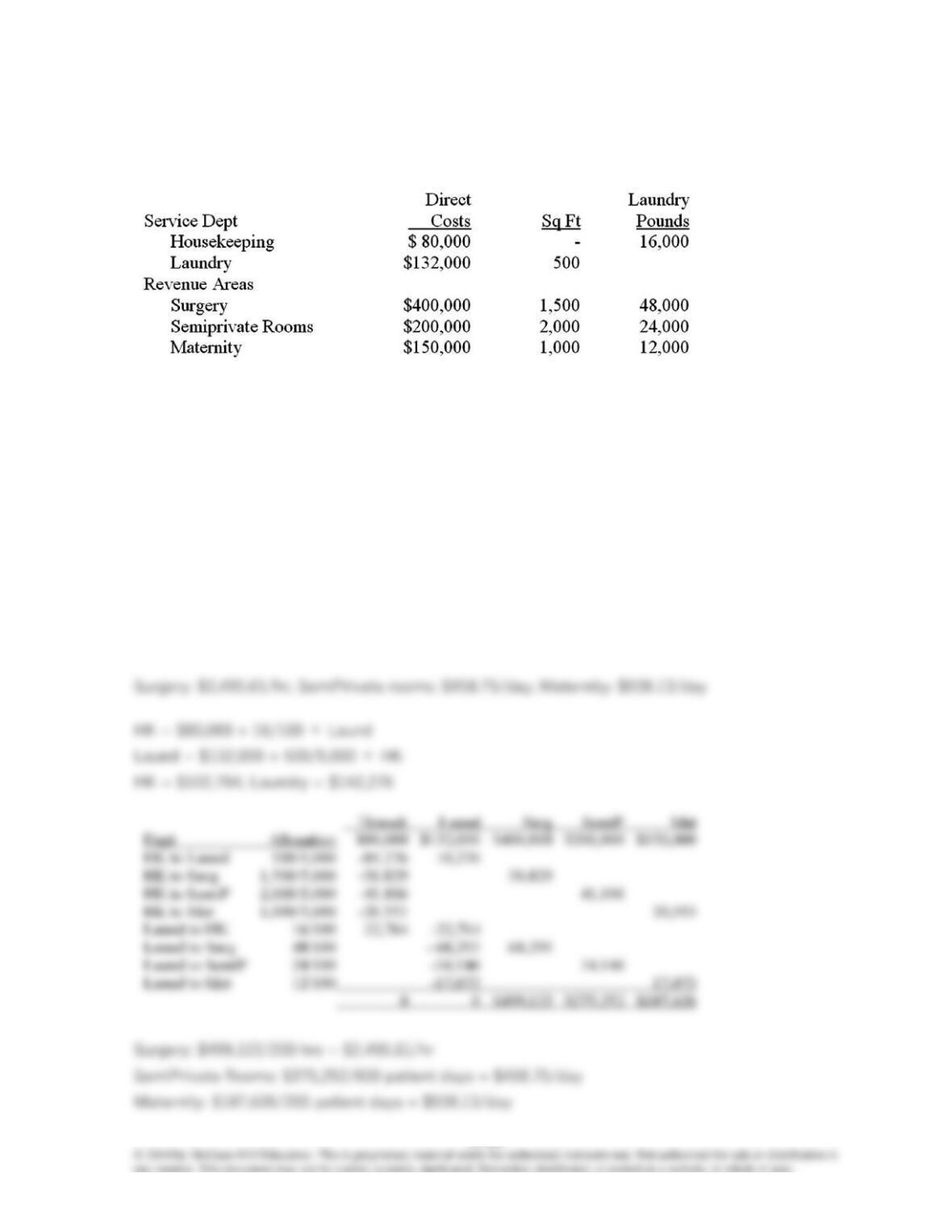
125. Smalltown Hospital is a small hospital with two service departments and three revenue
areas:
The hospital wants to allocate the service department costs to the revenue areas. Housekeeping
is allocated based on square footage; Laundry is allocated based on pounds of laundry. The
normal capacity for Surgery is 200 hours per month; normal capacity for semiprivate rooms is 600
patient days; and normal capacity for maternity is 200 patient days.
Required:
Determine the overhead rate for the three revenue areas. Allocate the service department costs to
the revenue areas using the reciprocal method.
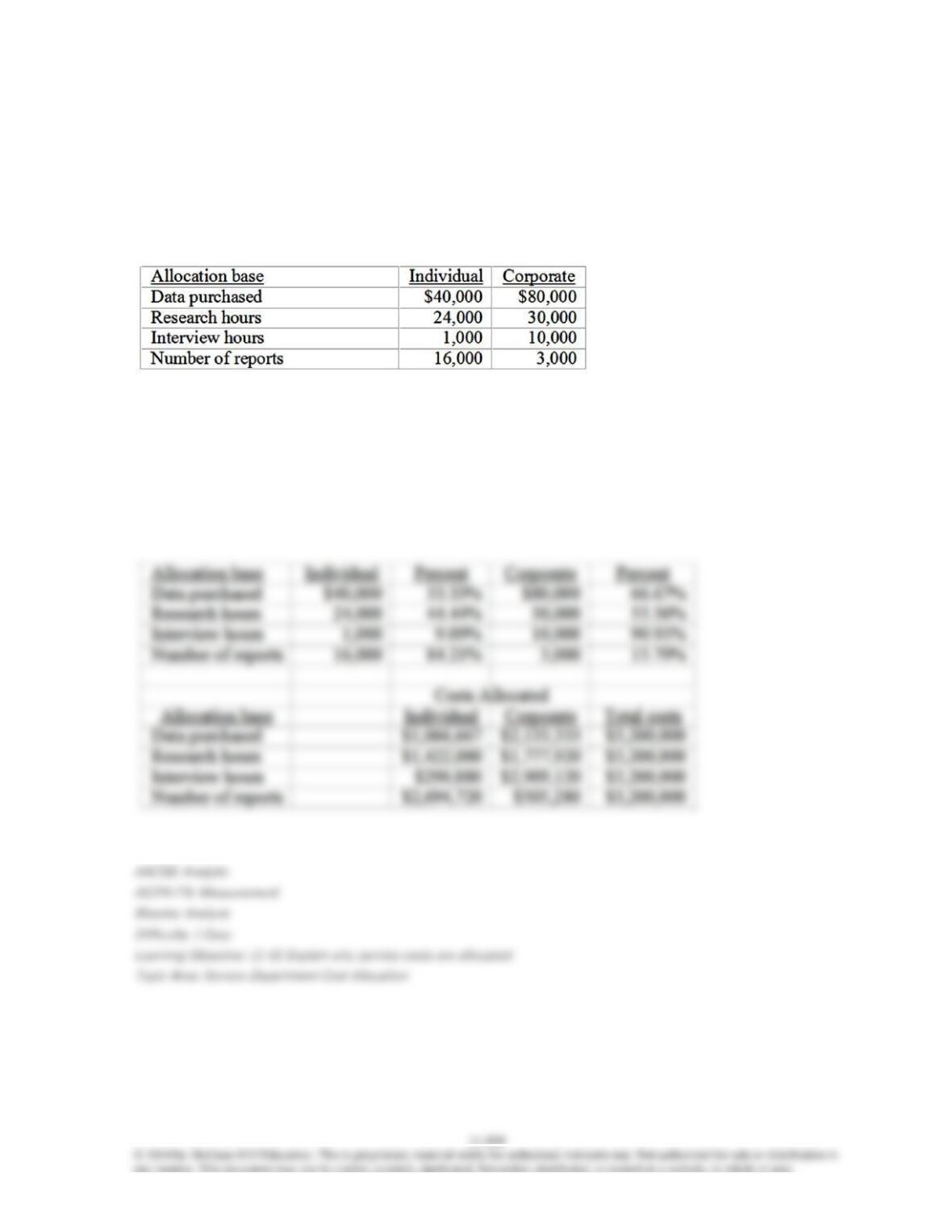
126. Island Credit Checks Company produces two styles of credit reports: Individual and
Corporate. The difference between the two is the amount of background information and data
collection required. The Corporate report uses more skilled personnel because additional checking
and data are required. The relevant figures for the year just completed follow. Total support
service costs to be allocated are $3,200,000.
Required:
For each of the four potential allocation bases, determine the amount of support-service cost
allocated to each type of report. Round all percentages to two decimal places.
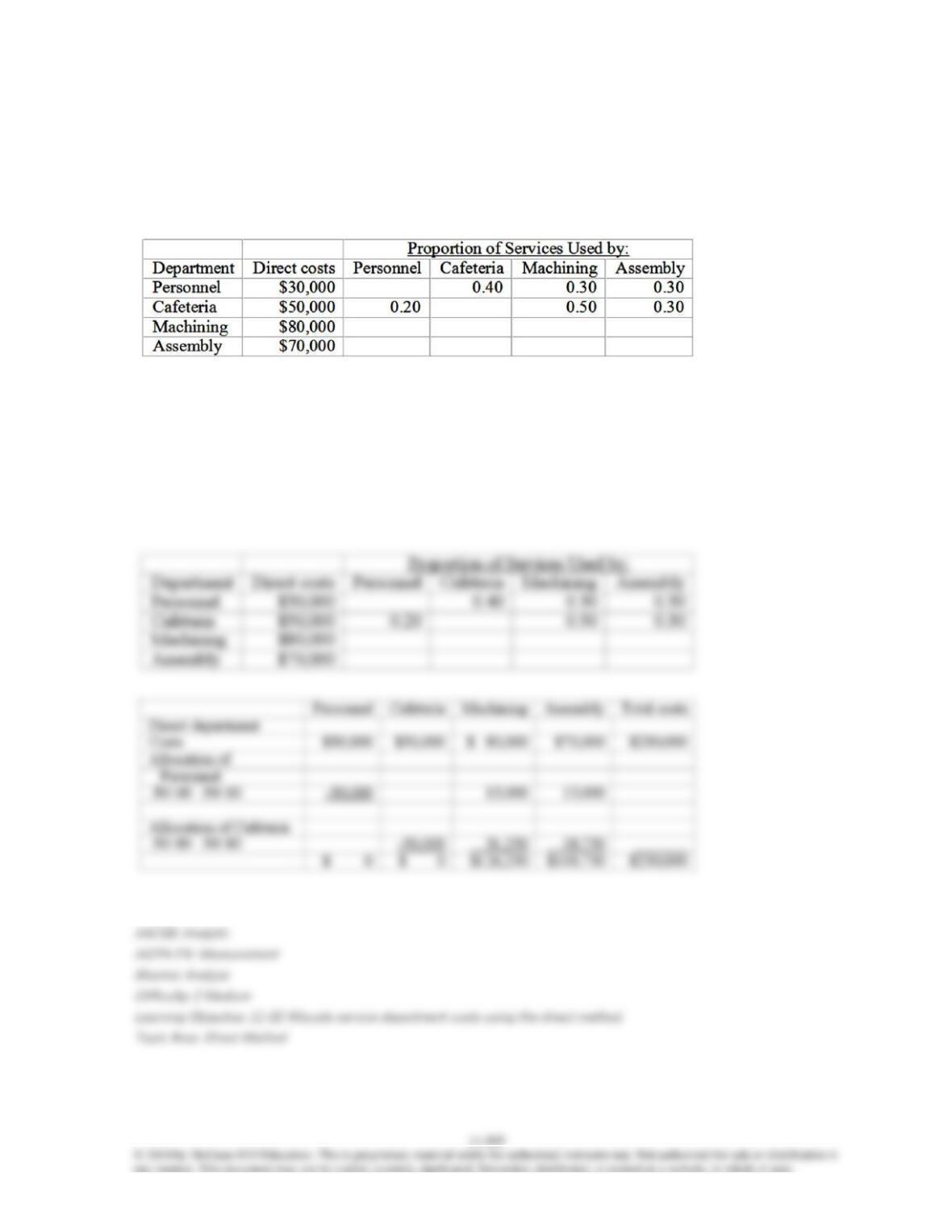
127. New London Corporation has two production Departments: Assembly and Machining and
two service departments: Personnel and Cafeteria. Direct costs for each department and the
proportion of service costs used by the various departments for the month of July, 2012 are as
follows:
Required:
Compute the allocation of service department costs to producing departments for July, 2012 using
the direct-method.
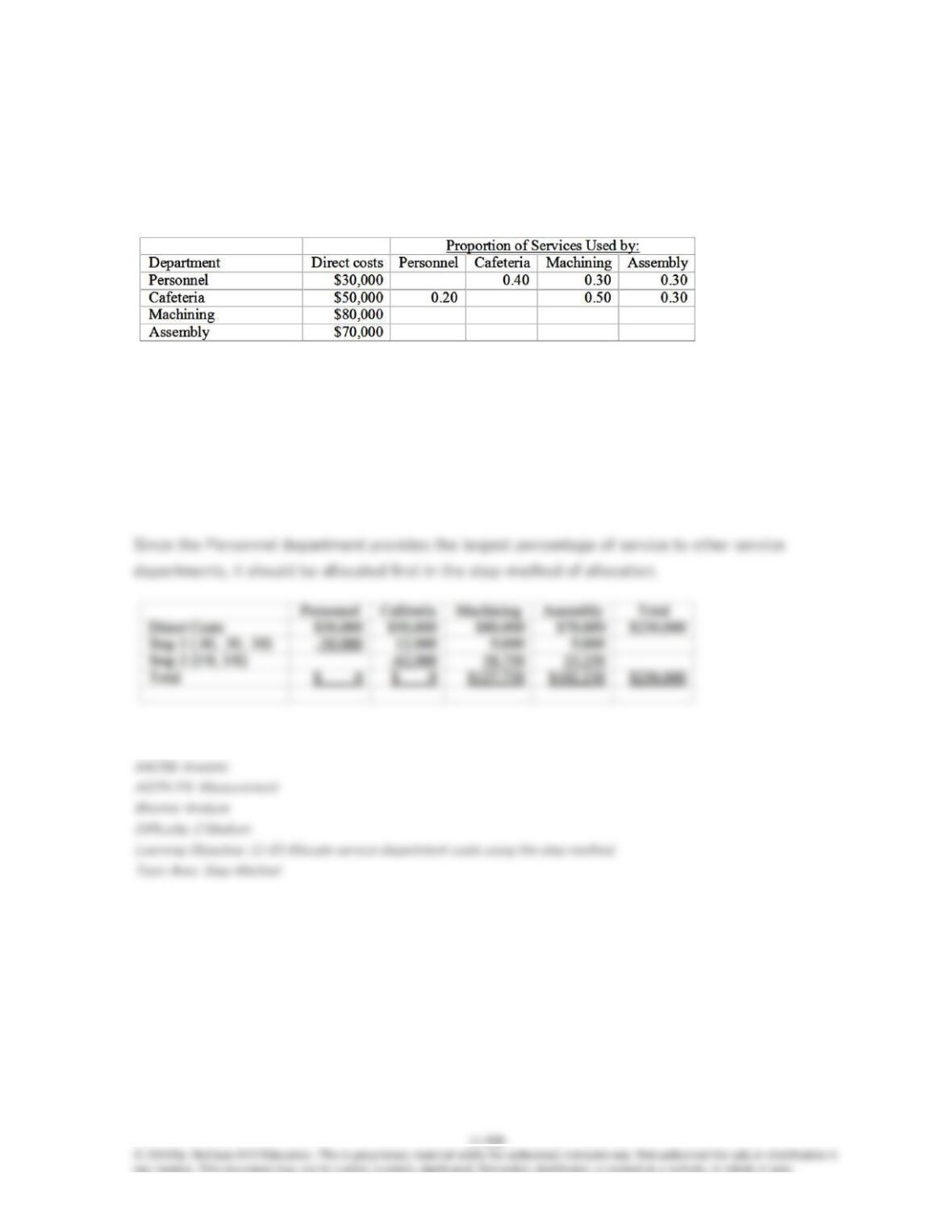
128. Tulis Corporation has two production Departments: Assembly and Machining and two
service departments: Personnel and Cafeteria. Direct costs for each department and the
proportion of service costs used by the various departments for the month of July, 2012 are as
follows:
Required:
Compute the allocation of service department costs to producing departments for July, 2012 using
the step-method.
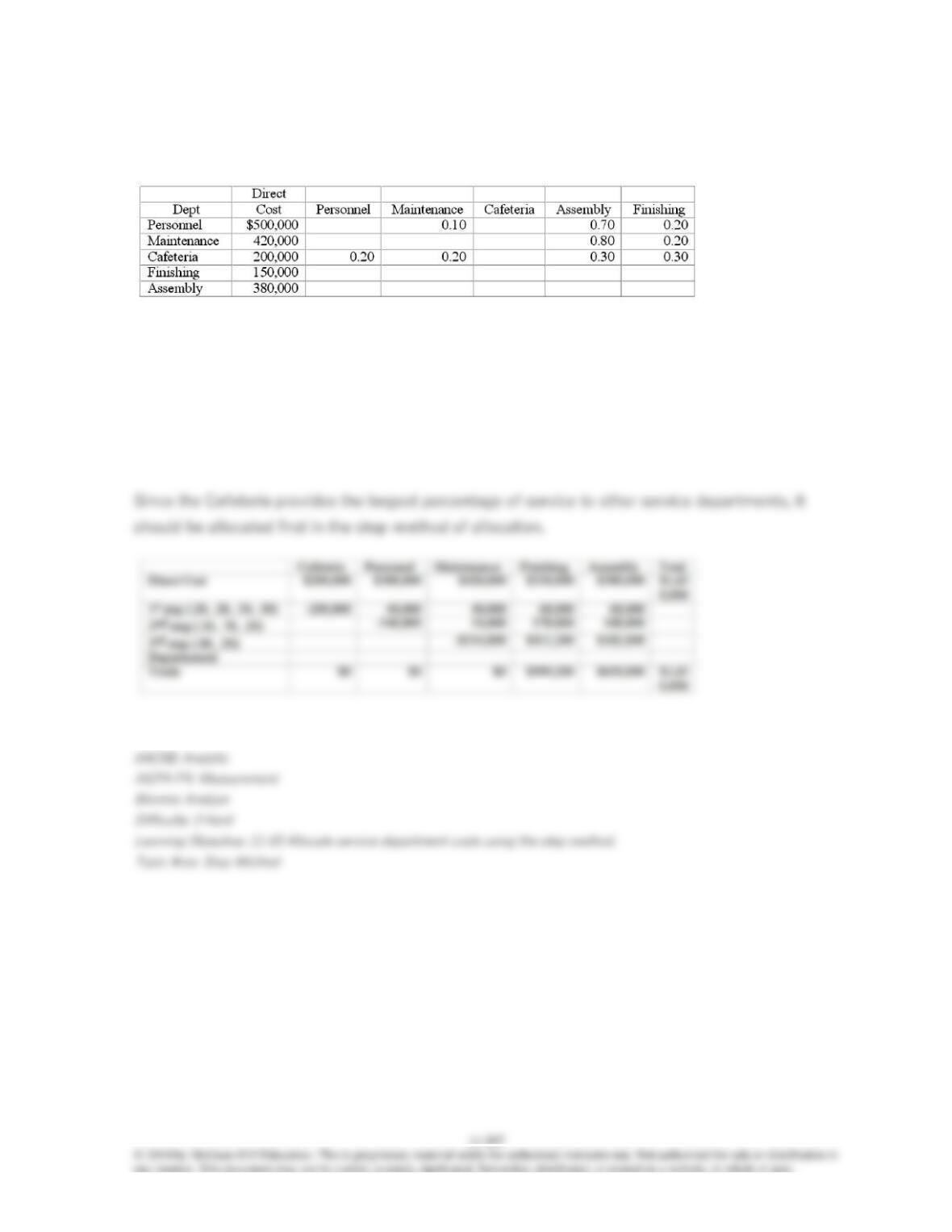
129. Amherst Corporation has two production departments, Assembly and Finishing and three
Service Departments, Personnel, Maintenance, and Cafeteria. Data relevant to Amherst are:
Required:
Allocate the service department costs of Amherst Corporation using the step-method of cost
allocation.
11-108
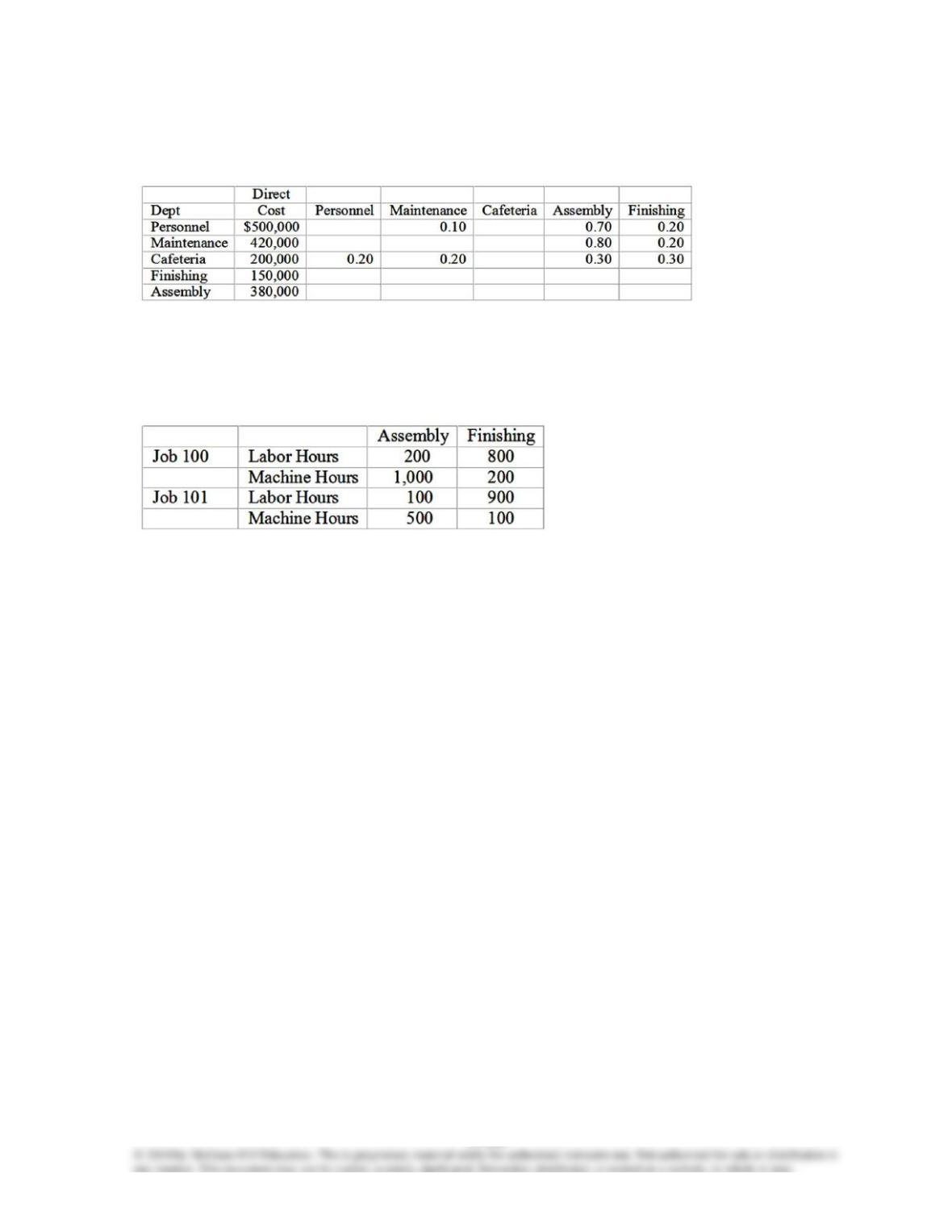
130. Rogers Corporation has two production departments, Assembly and Finishing and three
service departments, Personnel, Maintenance, and Cafeteria. Data relevant to Rogers are:
Assembly and Finishing work on two jobs during the month: Job 100 and 101. Costs are allocated
to jobs based on machine hours in assembly and labor hours in Finishing. The machine and labor
hours worked in each department are as follows:
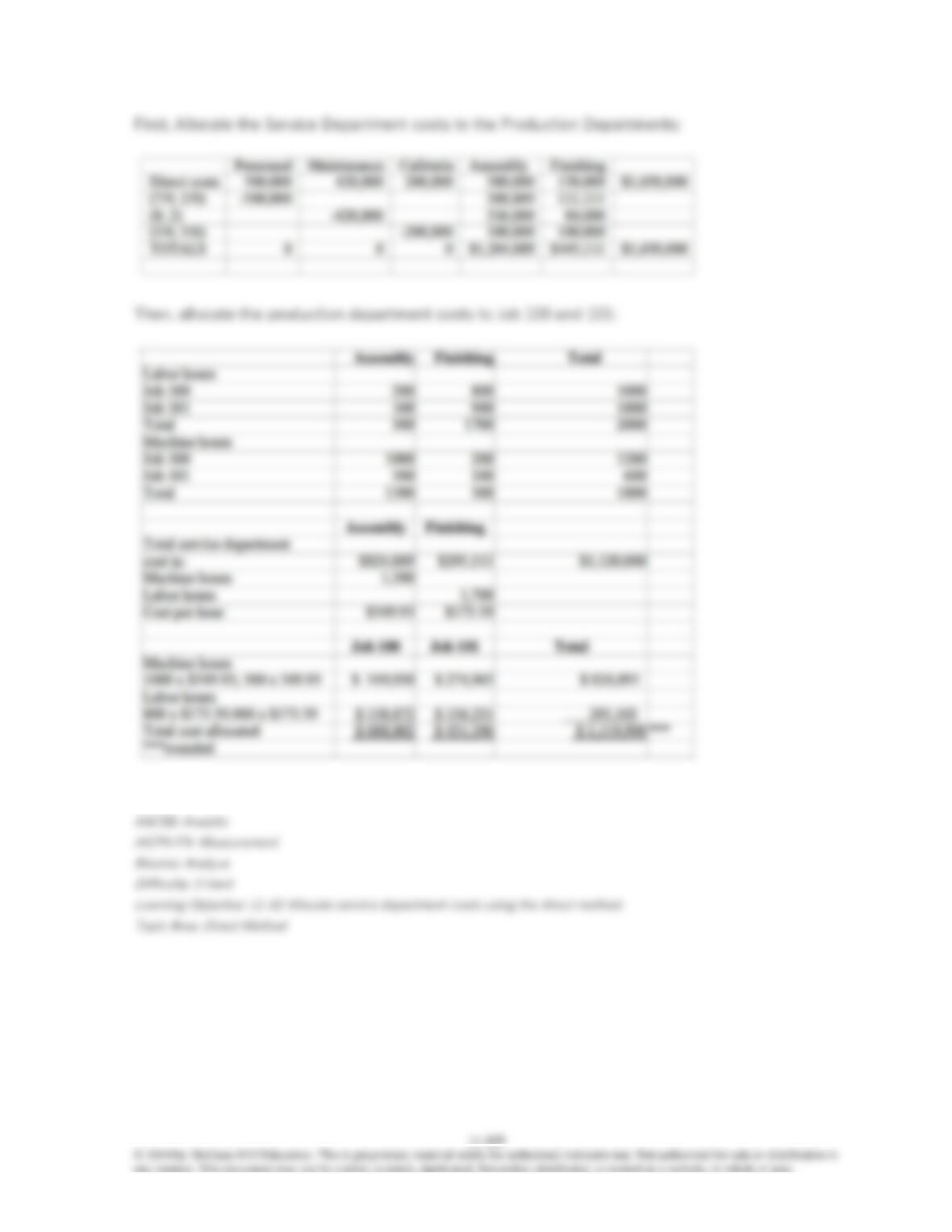
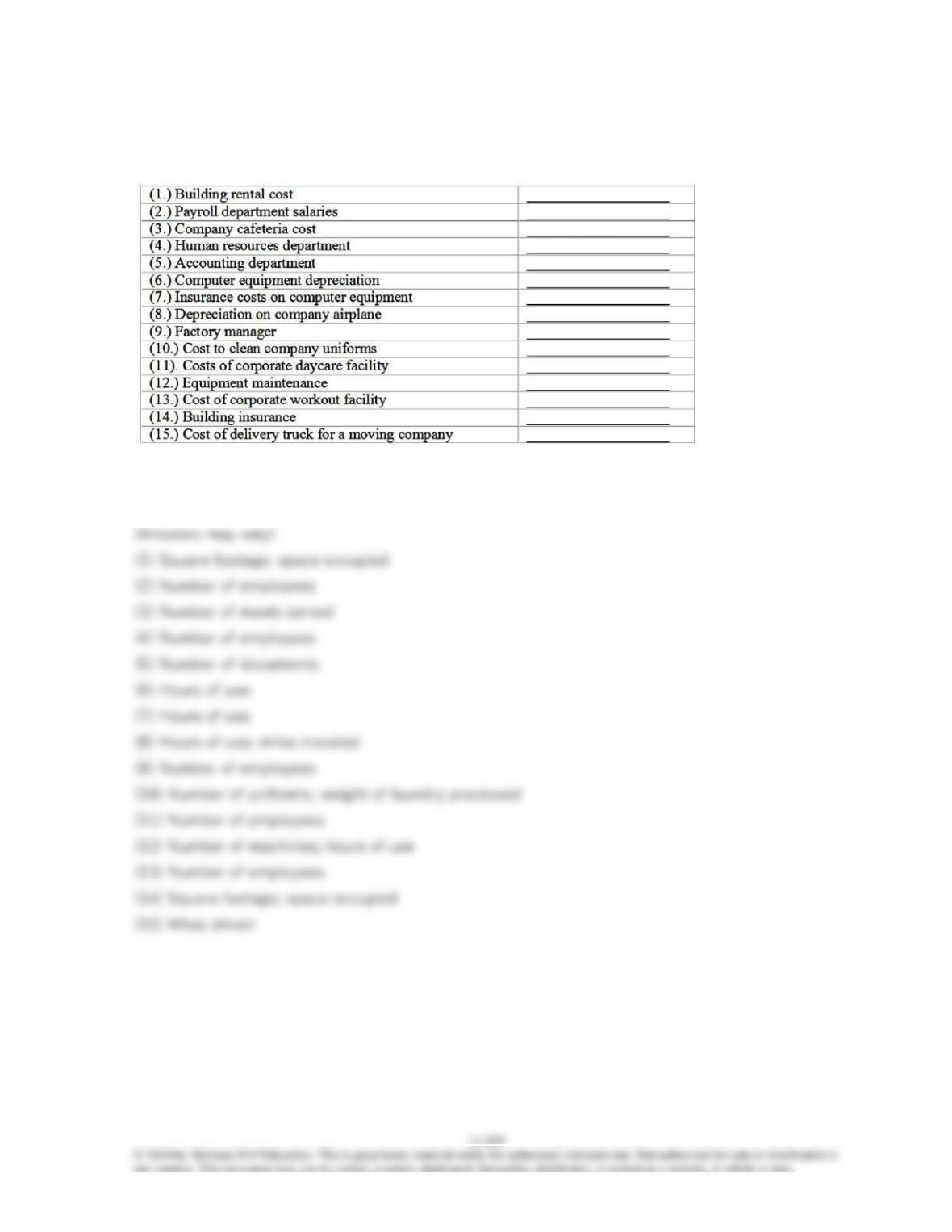
Required:
Determine the amount of service department costs to be allocated to Jobs 100 and 101. Rogers
allocates service department costs to production departments using the direct-method of
allocation.
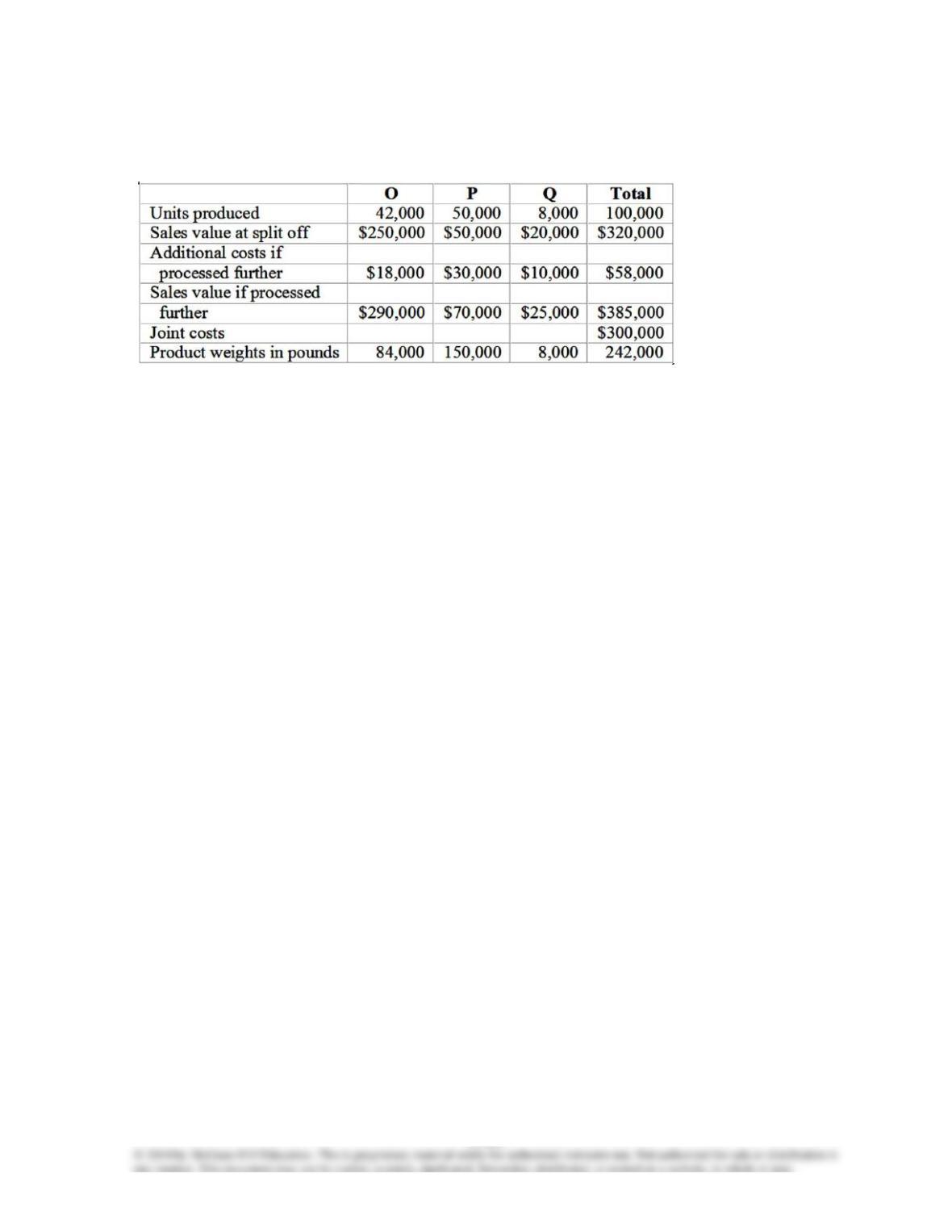
131. For each of the support service costs listed below, name an appropriate cost allocation
base:
11-111
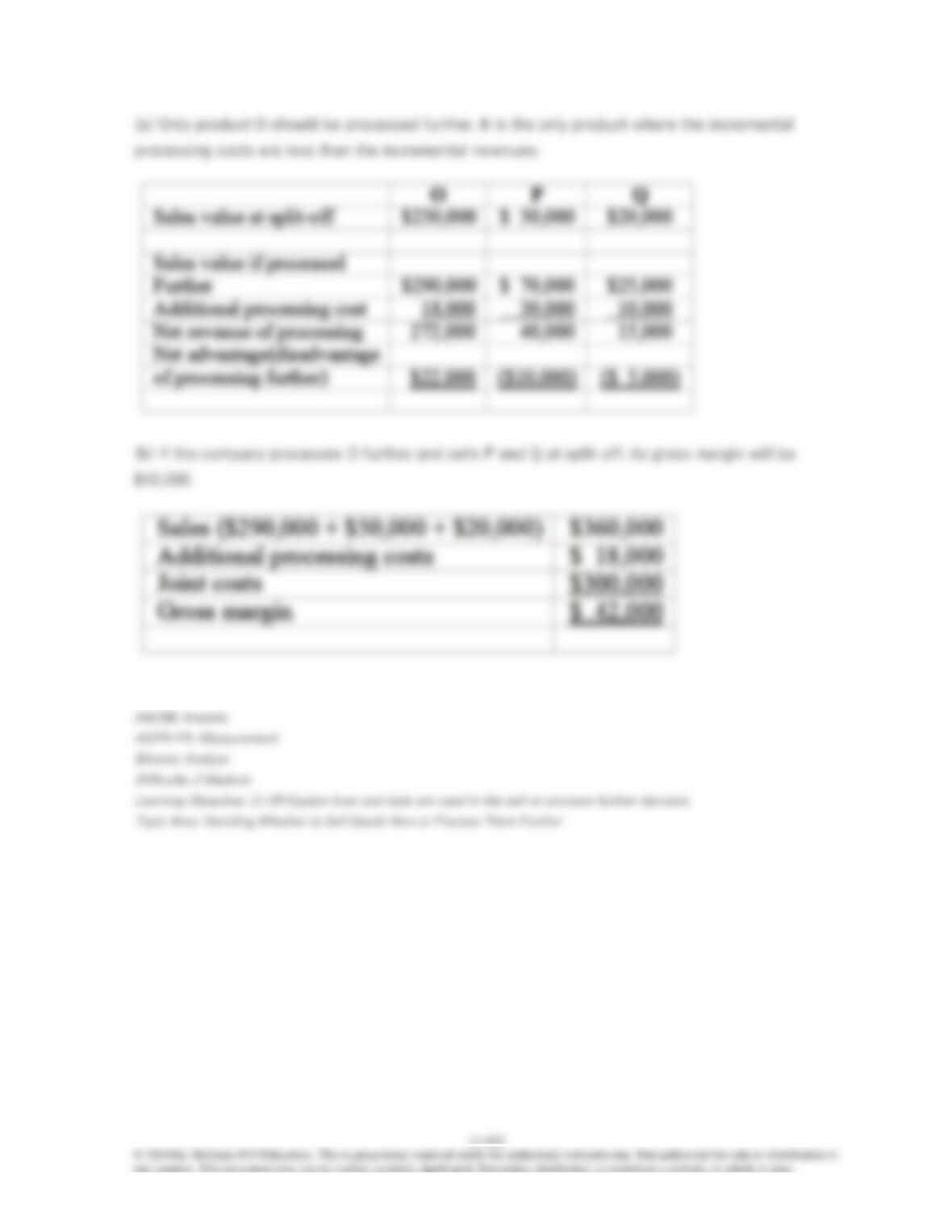
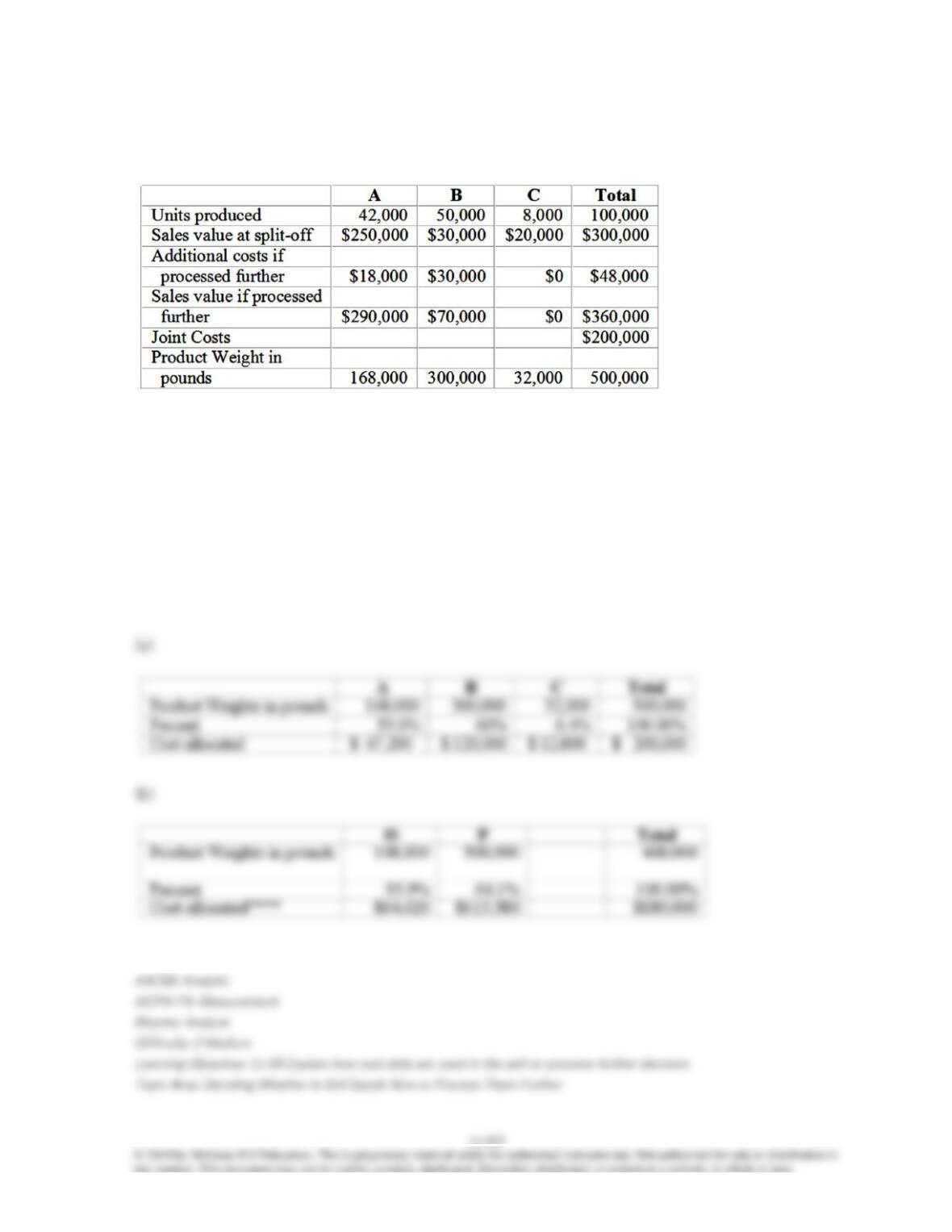
132. Reading Corporation produces three products in a joint process.
Additional information is as follows:
Required:
(a) Determine which products should be sold at split-off and which should be processed further.
(b) Assuming the company makes decisions that are in its best interests for overall profitability,
what would be the company’s gross margin?
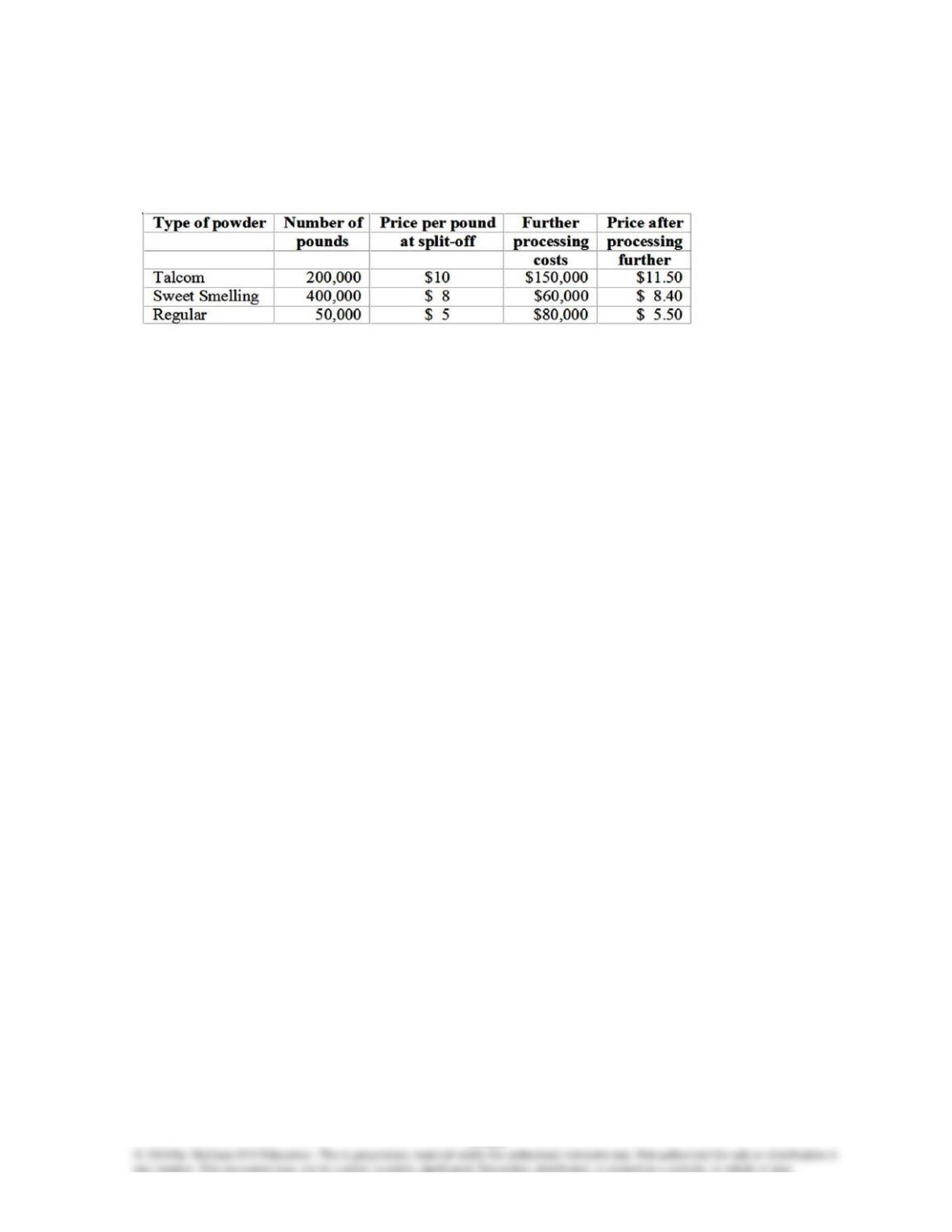
133. Bancroft Manufacturing produces three products in a joint process. Products A and B
were processed further. Additional information is as follows:
Required:
(a) Allocate the joint costs, assuming that all products are joint products and joint-costs are
allocated using the physical-measures method.
(b) Allocate the joint costs using the physical-measures method, assuming that product Q is
considered a by-product, whose sales value is deducted from the total joint costs.
11-114
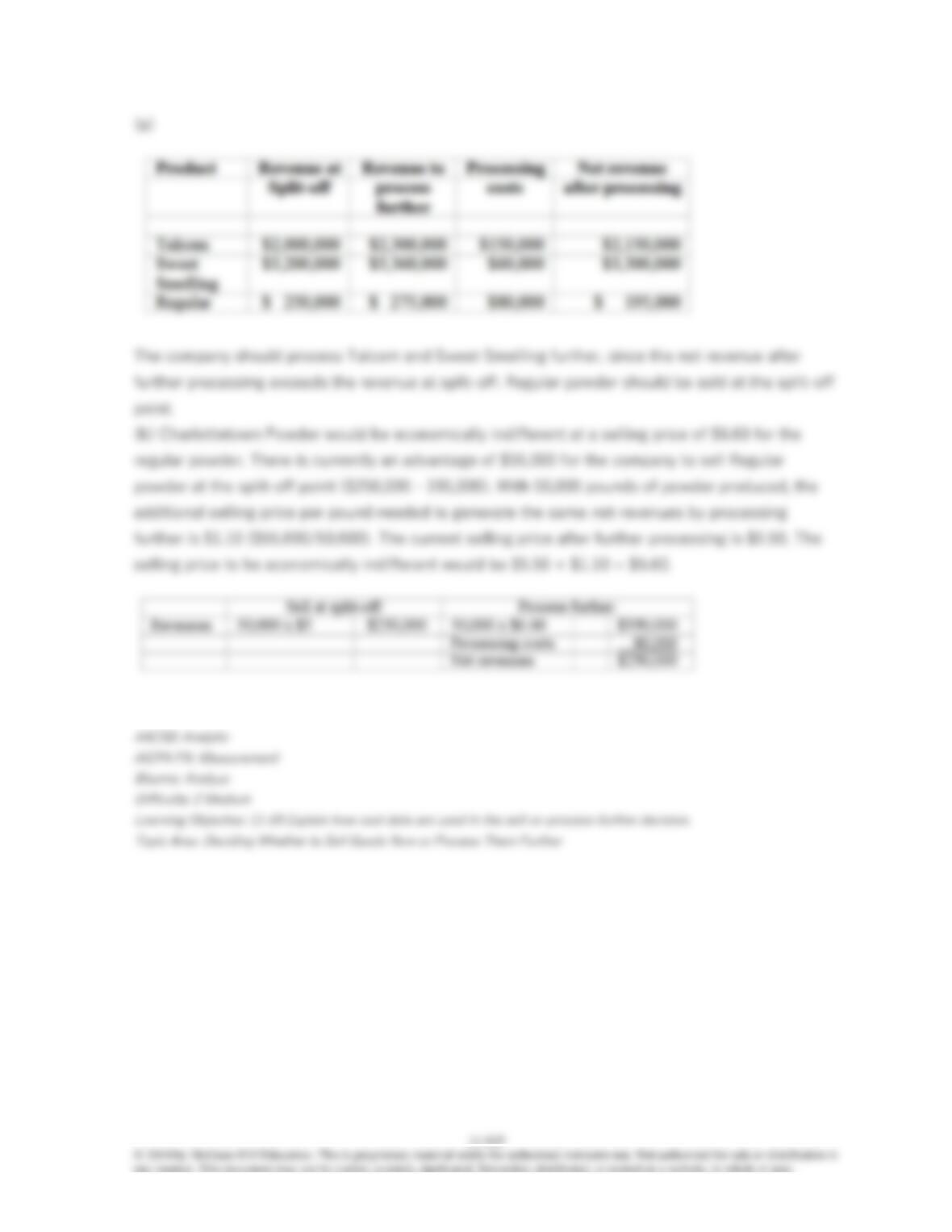
134. Charlottetown Powder Company produces powder in batches. Each powder can be sold in
its current condition or processed further and specialized for high priced department stores. Data
concerning the various products appear below. Joint processing costs are $200,000.
Required:
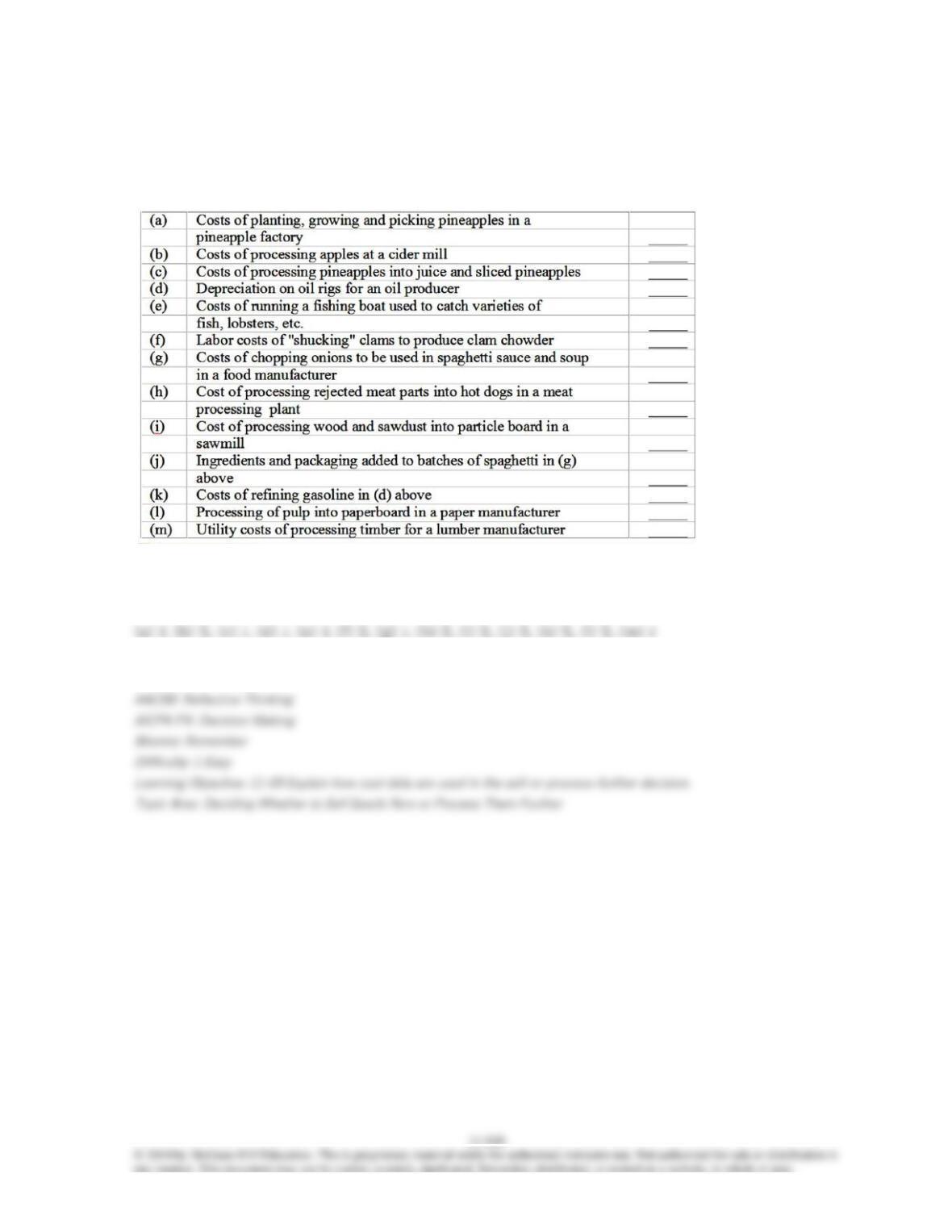
(a) Determine which products should be sold at split-off and which should be processed further.
(b) Charlottetown Powder is approached by the Brudnelle Department Store chain. Brudnelle
would like Charlottetown Powder to process regular powder into a special powder for its
cosmetics department. At what price per pound would Charlottetown Powder be economically
indifferent between selling the powder at the split-off point and processing it further for
Brudnelle?
135. Indicate whether the following costs would be treated as joint-product costs or costs
incurred after the split-off point. Use J for joint product costs and S for costs incurred after the
split-off point.
136. Describe the difference between the direct method of service department allocation, the
step method, and the reciprocal method.
137. Why does the sequence in which service departments are allocated make a difference
when using the step method but not when using the reciprocal method?
138. Which of the three service department allocation methods should be used for decision
making? Explain your reasoning.
139. Explain the difference between the net realizable value method for joint cost allocation
and the netback (or workback) method.
140. Describe two methods of accounting for by-products. What effects do these methods have
on the allocation of the joint cost to the main products?