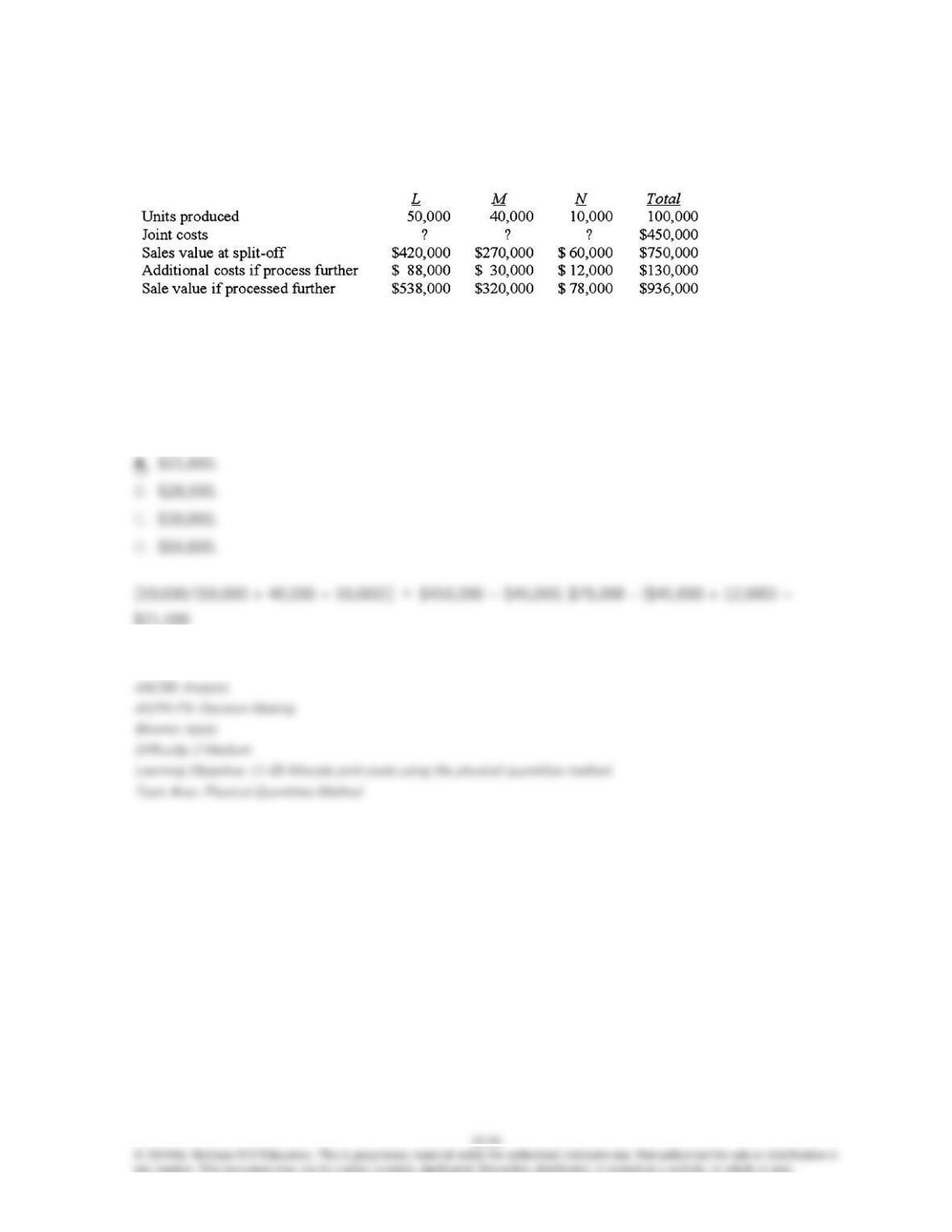
80. Anchorage Company manufactures three main products, L, M, and N, from a joint process.
Additional information for June production activity follows:
Assuming that the 10,000 units of N were processed further and sold for $78,000, what was
Anchorage’s gross profit from this sale? Assume the physical quantities method of allocation is
used.
81. The Freed Company produces three products, X, Y, and Z from a single raw material input.
Product Y can be sold at the split-off point for total revenues of $50,000 or it can be processed
further at a total cost of $16,000 and then sold for $68,000. Product Y:
82. There are several methods for allocating service department costs to production
departments. The method which recognizes service provided by one service department to
another but does not recognize reciprocal interdepartmental service is called: (CMA adapted)
83. Because this allocation method recognizes that service departments often provide each
other with inter-departmental service, it is theoretically considered to be the most accurate
method for allocating service department costs to production departments. This method is: (CMA
adapted)
84. For the purposes of allocating joint costs to joint products, the sales price at the point of
sale, reduced by the cost to complete after split-off, is assumed to be equal to the: (CPA
adapted)
85. In joint product costing and analysis, which one of the following costs is relevant when
deciding the point at which a product should be sold in order to maximize profits? (CMA adapted)
86. Which of the following is not a reason to justify the allocation of support services?
87. Which of the following is not a benefit of cost allocation?
88. Allocation of factory service department costs to the production departments is necessary
to:
89. Which of the following statements is false regarding the use of multiple cost pools?
90. Which of the following statements is true regarding the use of multiple cost-pools?
91. Which of the following would be an appropriate cost-allocation base for allocating the cost
of the company cafeteria?
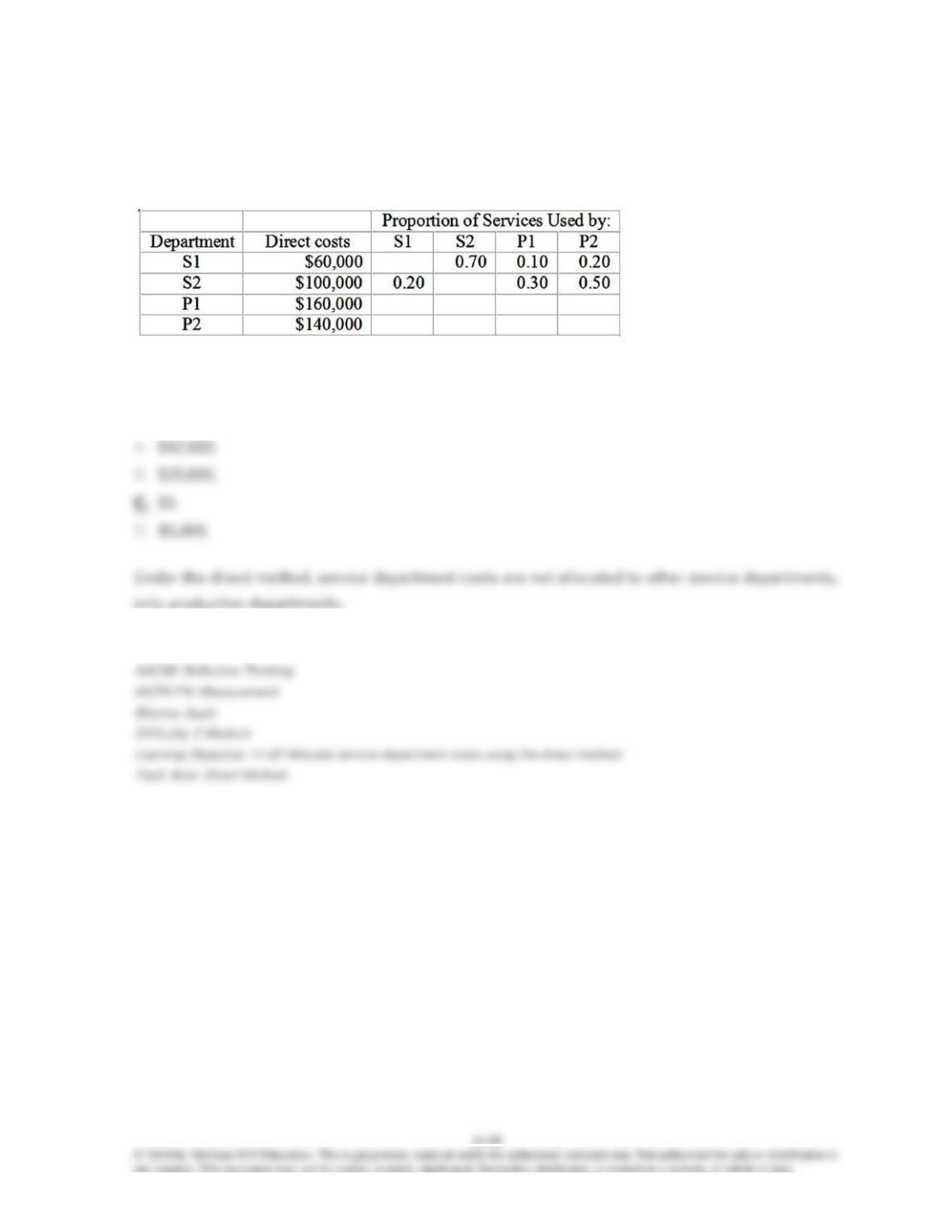
92. Brandeis Corporation has two production Departments: P1 and P2 and two service
departments: S1 and S2. Direct costs for each department and the proportion of service costs
used by the various departments for the month of July are as follows:
Under the direct-method of cost allocation, the amount of S1 costs allocated to the S2 would be:
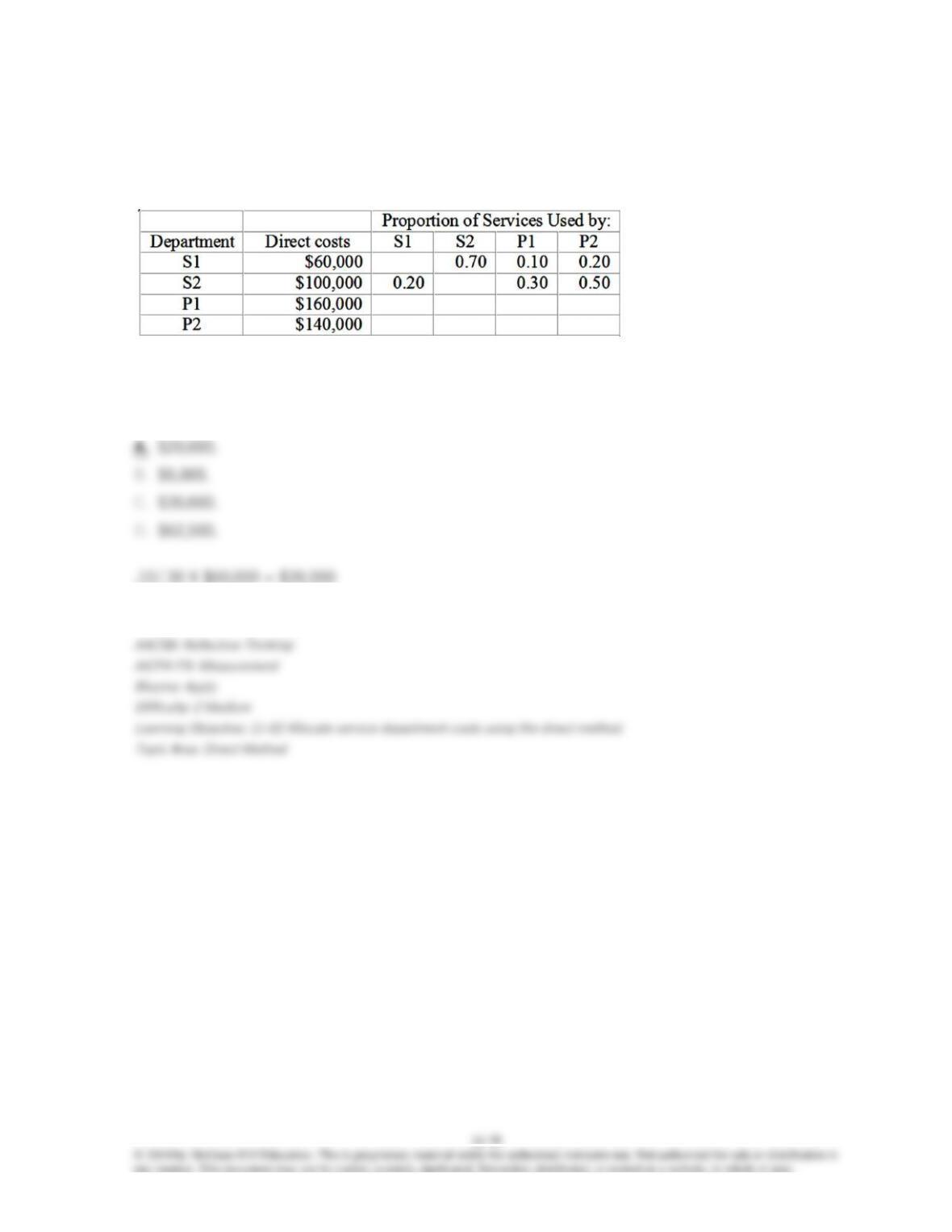
93. Brandeis Corporation has two production Departments: P1 and P2 and two service
departments: S1 and S2. Direct costs for each department and the proportion of service costs
used by the various departments for the month of July are as follows:
Under the direct-method of cost allocation, the amount of S1 costs allocated to P1 would be:
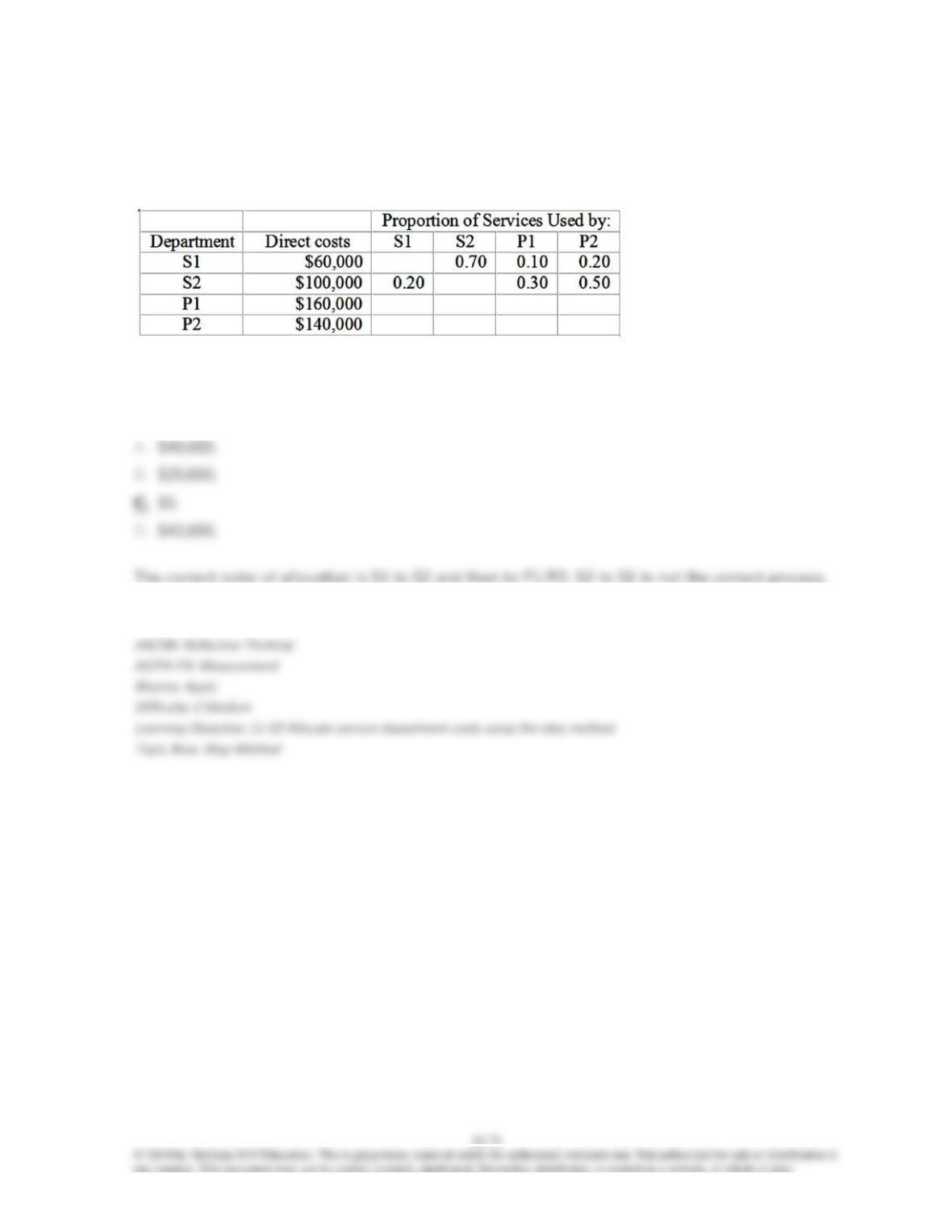
94. Brandeis Corporation has two production Departments: P1 and P2 and two service
departments: S1 and S2. Direct costs for each department and the proportion of service costs
used by the various departments for the month of July are as follows:
Under the step-method of cost allocation, the amount of S2 costs allocated to S1 would be:
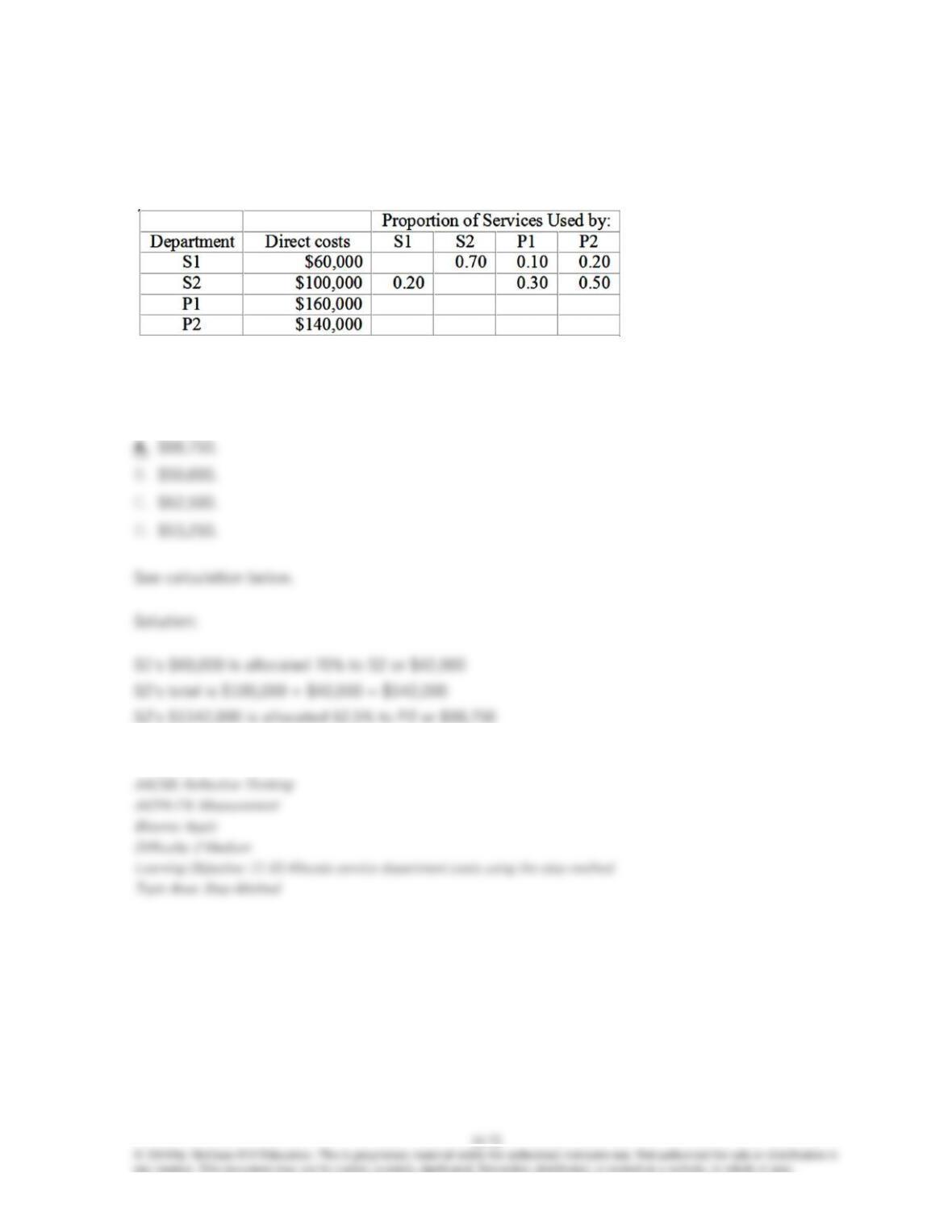
95. Brandeis Corporation has two production Departments: P1 and P2 and two service
departments: S1 and S2. Direct costs for each department and the proportion of service costs
used by the various departments for the month of July are as follows:
Under the step-method of cost allocation, the amount of costs allocated from S2 to P2 would be:
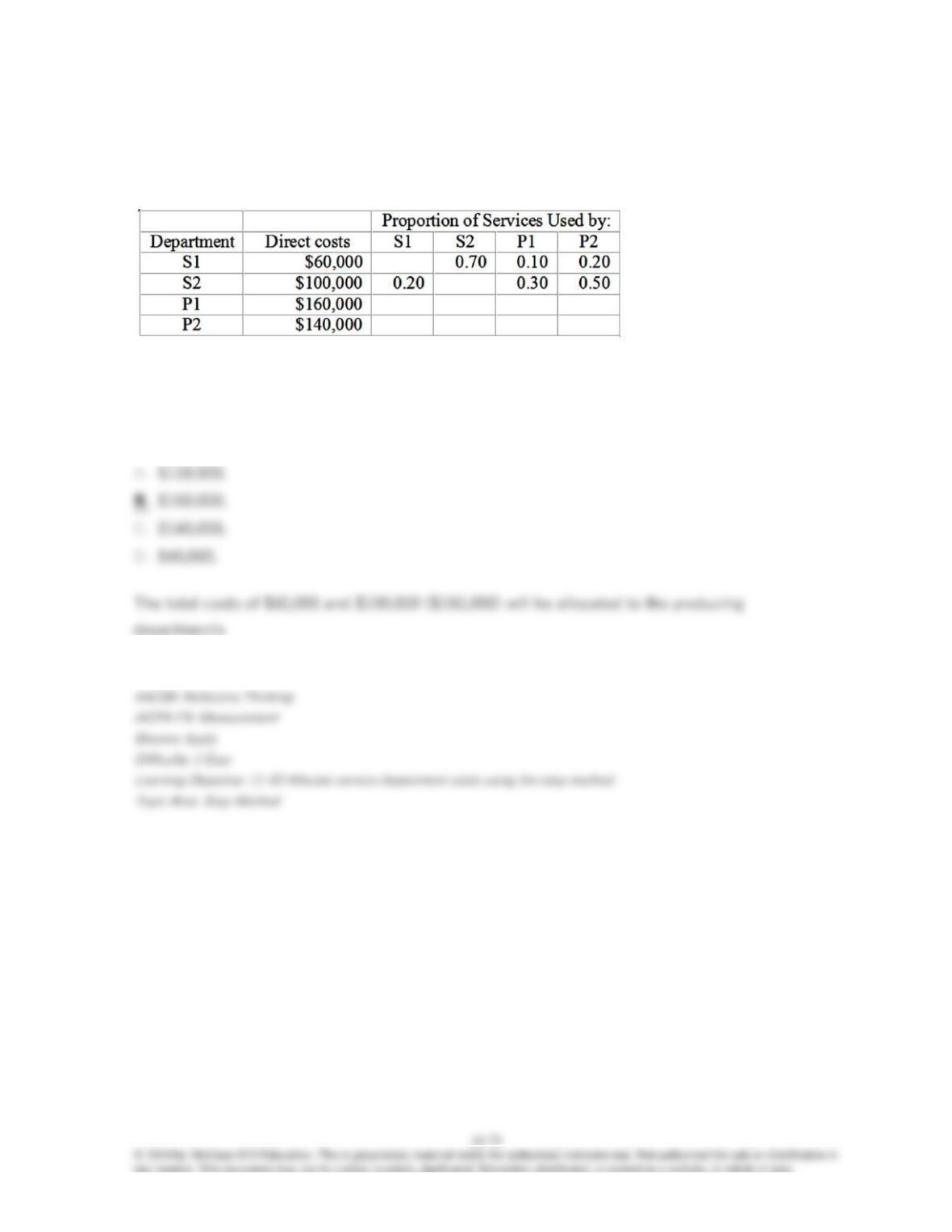
96. Brandeis Corporation has two production Departments: P1 and P2 and two service
departments: S1 and S2. Direct costs for each department and the proportion of service costs
used by the various departments for the month of July are as follows:
Under the step-method of allocation, the total amount of service costs allocated to producing
departments would be:
97. Which of the following statements regarding accounting for by-products is true?
98. Which of the following is not a step needed to maximize the profits from joint products?
99. Which of the following statements about maximizing the profit of joint product processes
is true?
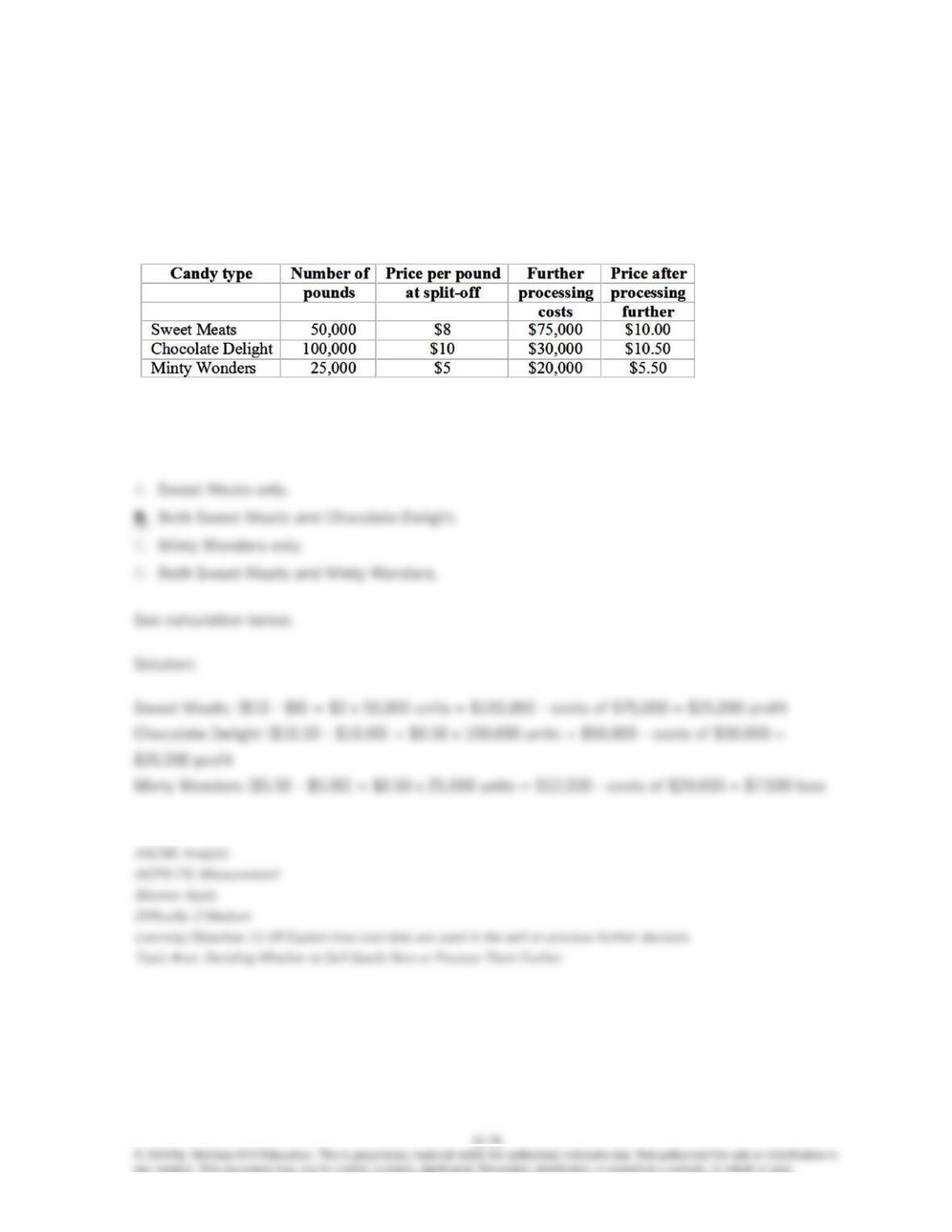
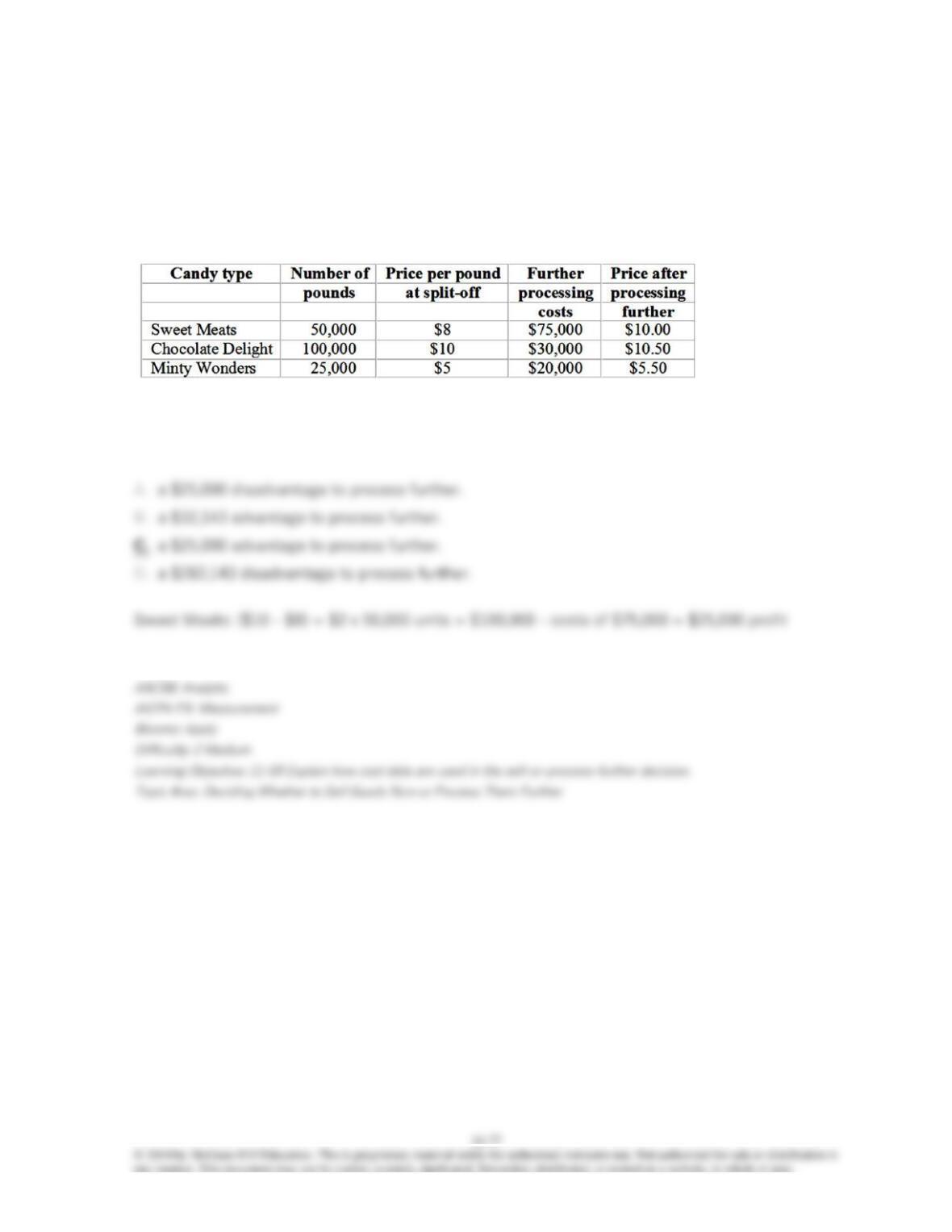
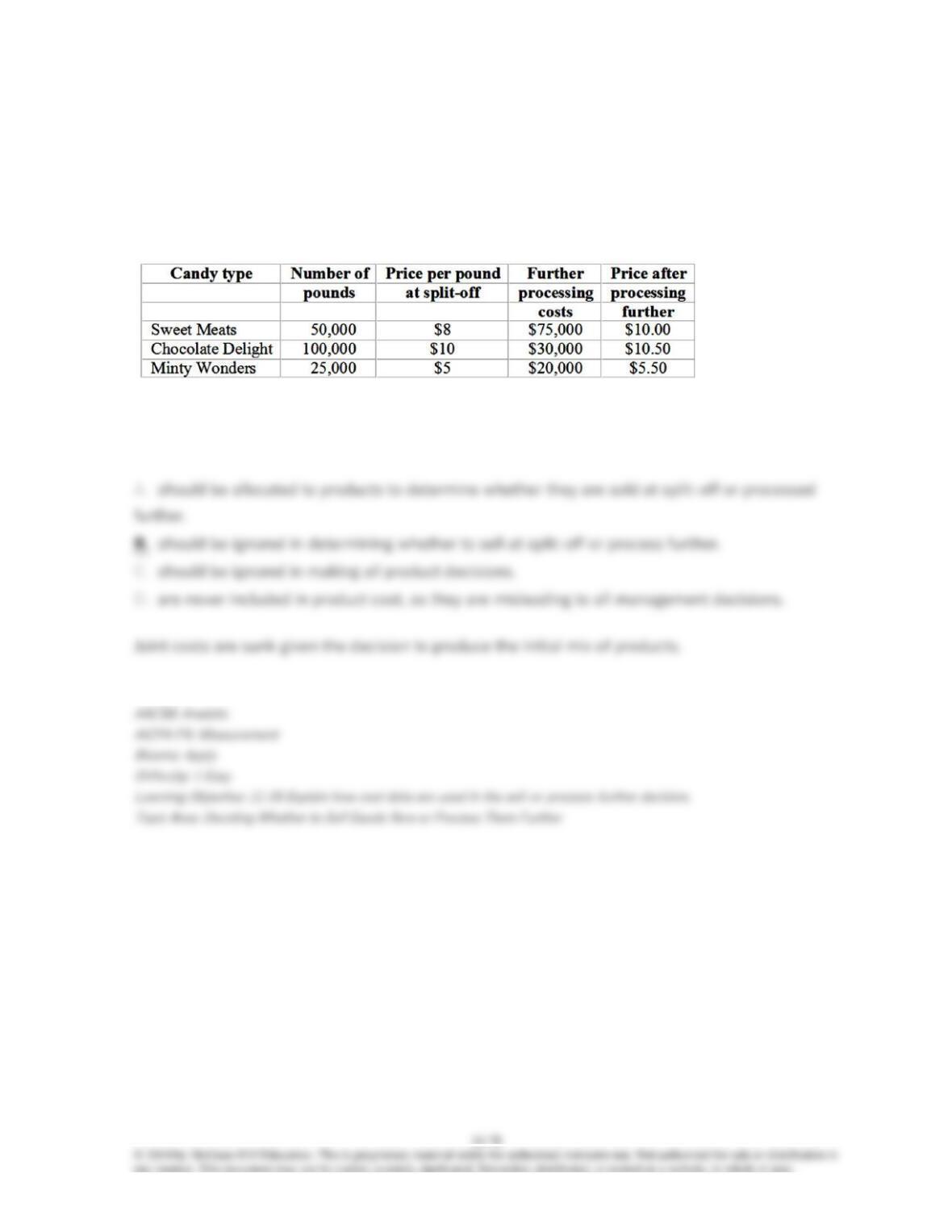
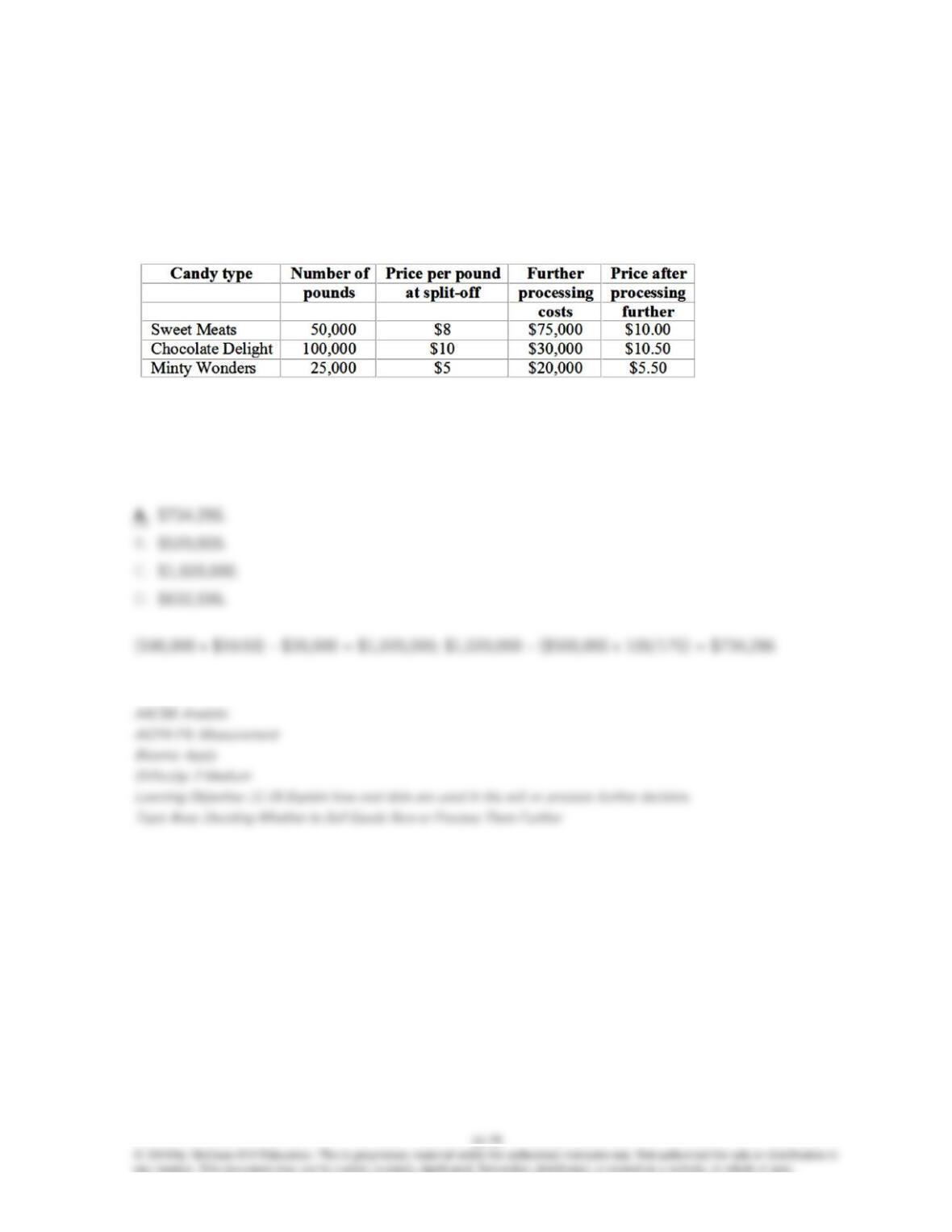
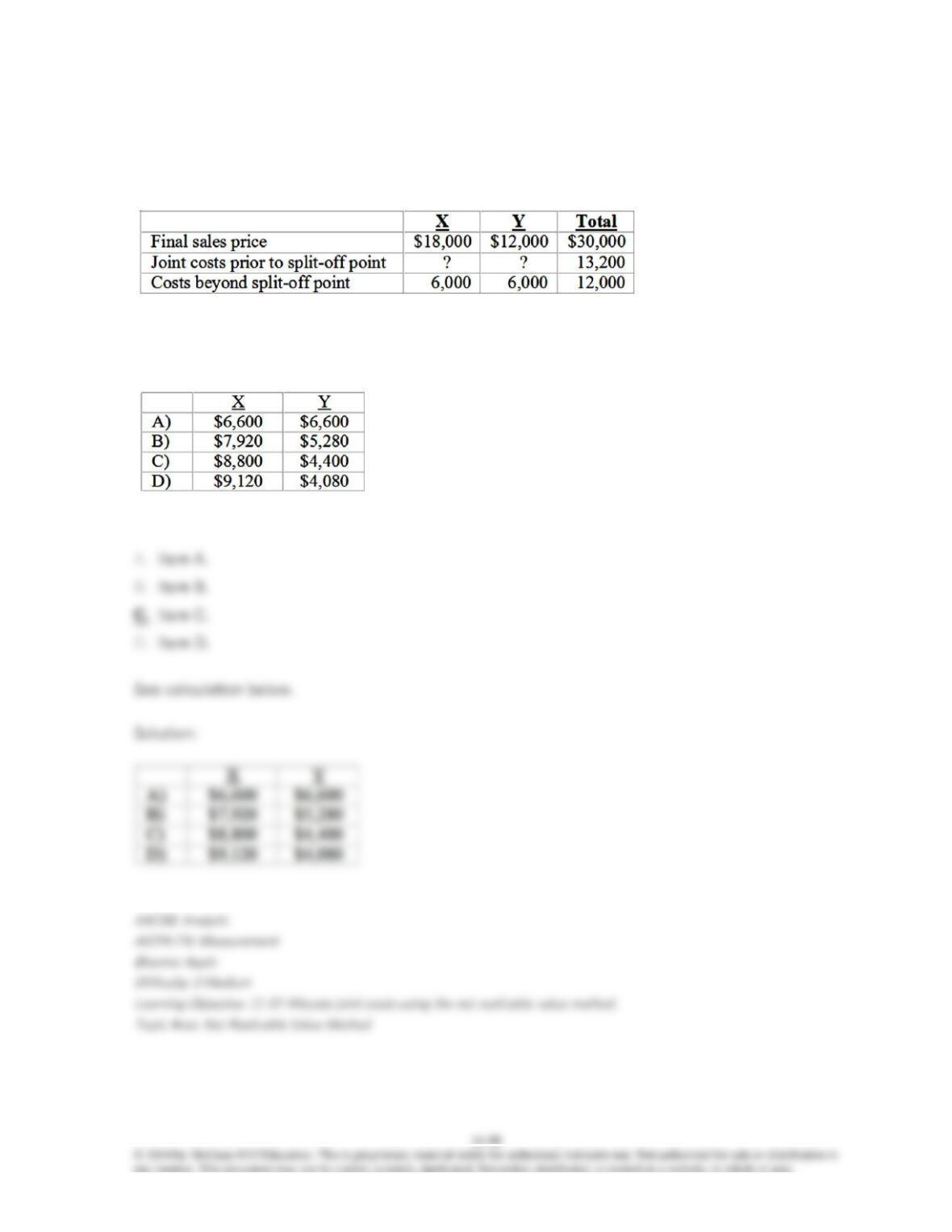
100. Great Sweets Candy Company produces various types of candies. Several candies could
be sold at the split-off point or processed further and sold in a different form after further
processing. The candies are produced in a joint processing operation with $500,000 of joint
processing costs monthly, which are allocated based on pounds produced. Information concerning
this process for a recent month appears below:
Based on the information presented, which of the products should be processed further?
101. Great Sweets Candy Company produces various types of candies. Several candies could
be sold at the split-off point or processed further and sold in a different form after further
processing. The candies are produced in a joint processing operation with $500,000 of joint
processing costs monthly, which are allocated based on pounds produced. Information concerning
this process for a recent month appears below:
The net advantage (disadvantage) of processing Sweet Meats further is:
102. Great Sweets Candy Company produces various types of candies. Several candies could
be sold at the split-off point or processed further and sold in a different form after further
processing. The candies are produced in a joint processing operation with $500,000 of joint
processing costs monthly, which are allocated based on pounds produced. Information concerning
this process for a recent month appears below:
The joint processing costs in this operation:
103. Great Sweets Candy Company produces various types of candies. Several candies could
be sold at the split-off point or processed further and sold in a different form after further
processing. The candies are produced in a joint processing operation with $500,000 of joint
processing costs monthly, which are allocated based on pounds produced. Information concerning
this process for a recent month appears below:
If Chocolate Delight is processed further, the gross profit margin that will appear in a product line
income statement for Chocolate Delight would be:
104. Whitney Smith Company makes two products: X and Y. They are initially processed from
the same raw material and then, after split-off, further processed separately. Additional
information is as follows:
What are the joint costs allocated to products X and Y assuming Whitney Smith uses the net–
realizable-value approach?