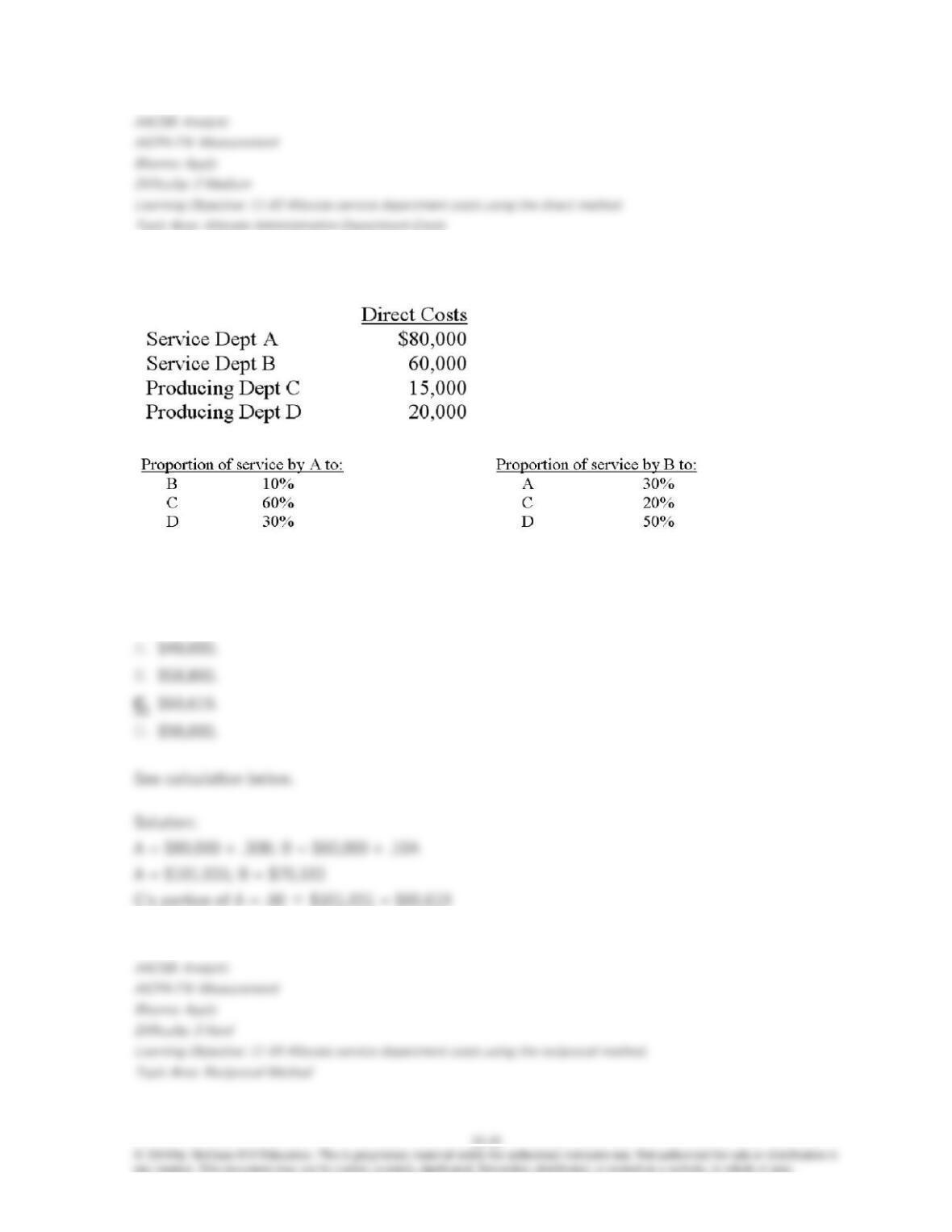
60. The following information relates to Ray Corporation for the past accounting period.
Using the simultaneous solution method, Department A’s cost allocated to Department C is:
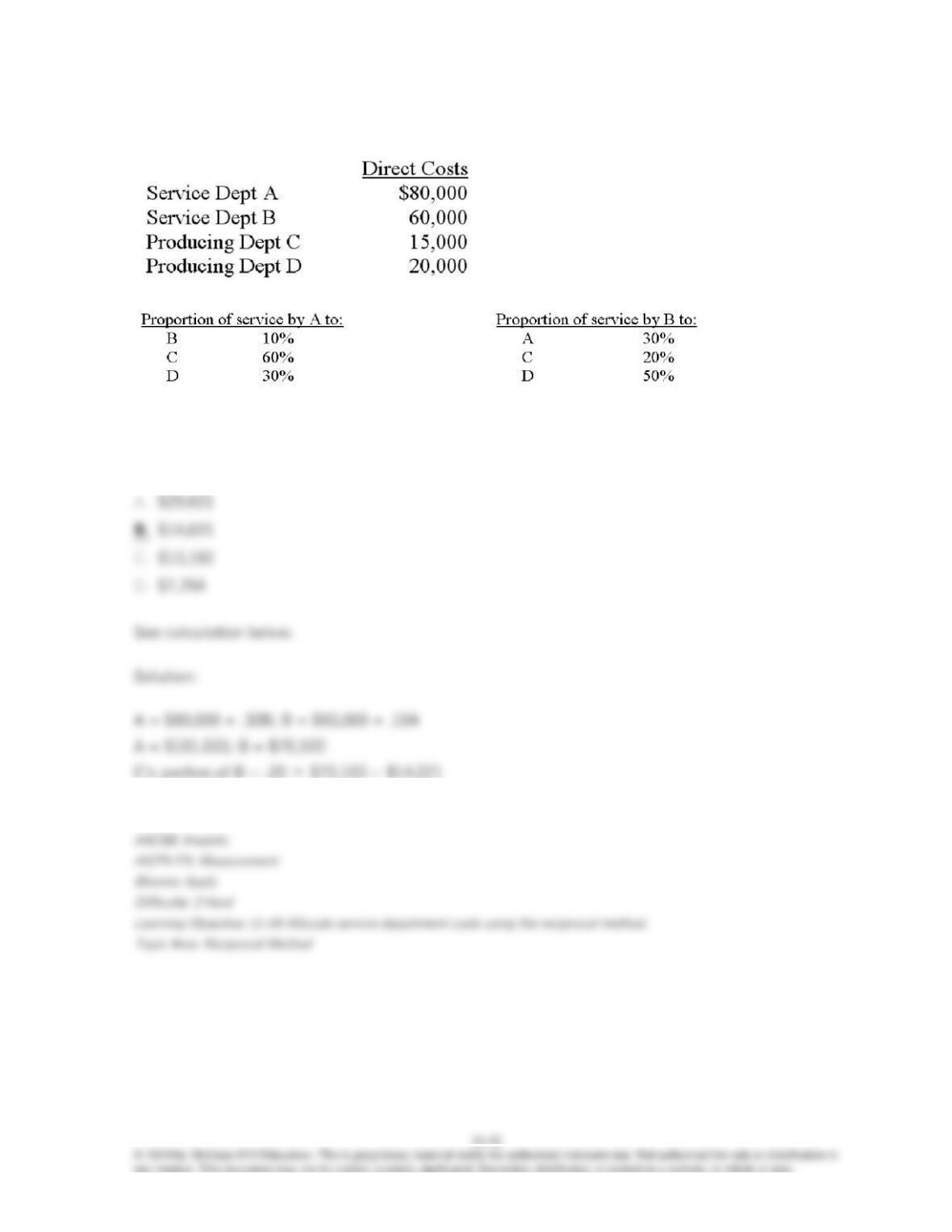
61. The following information relates to Ray Corporation for the past accounting period.
Using the simultaneous solution method, Department B’s cost allocated to Department C is
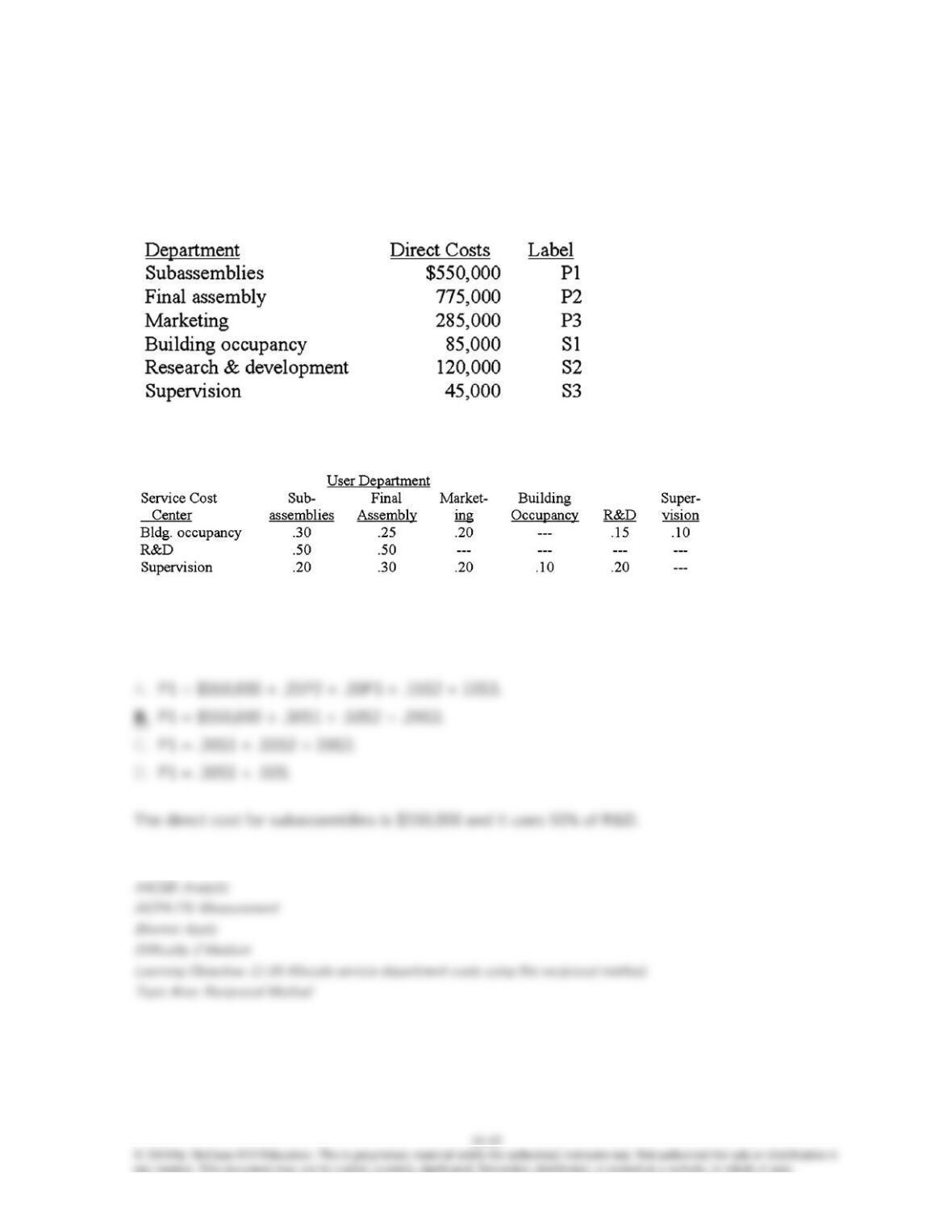
62. The following set up is a system of simultaneous linear equations to allocate costs using
the reciprocal method. Matrix algebra is not required.
The following costs were incurred in three operating departments and three service departments
in Reality Company.
Use of services by other departments is as follows.
The equation for department P1 (subassemblies) is:
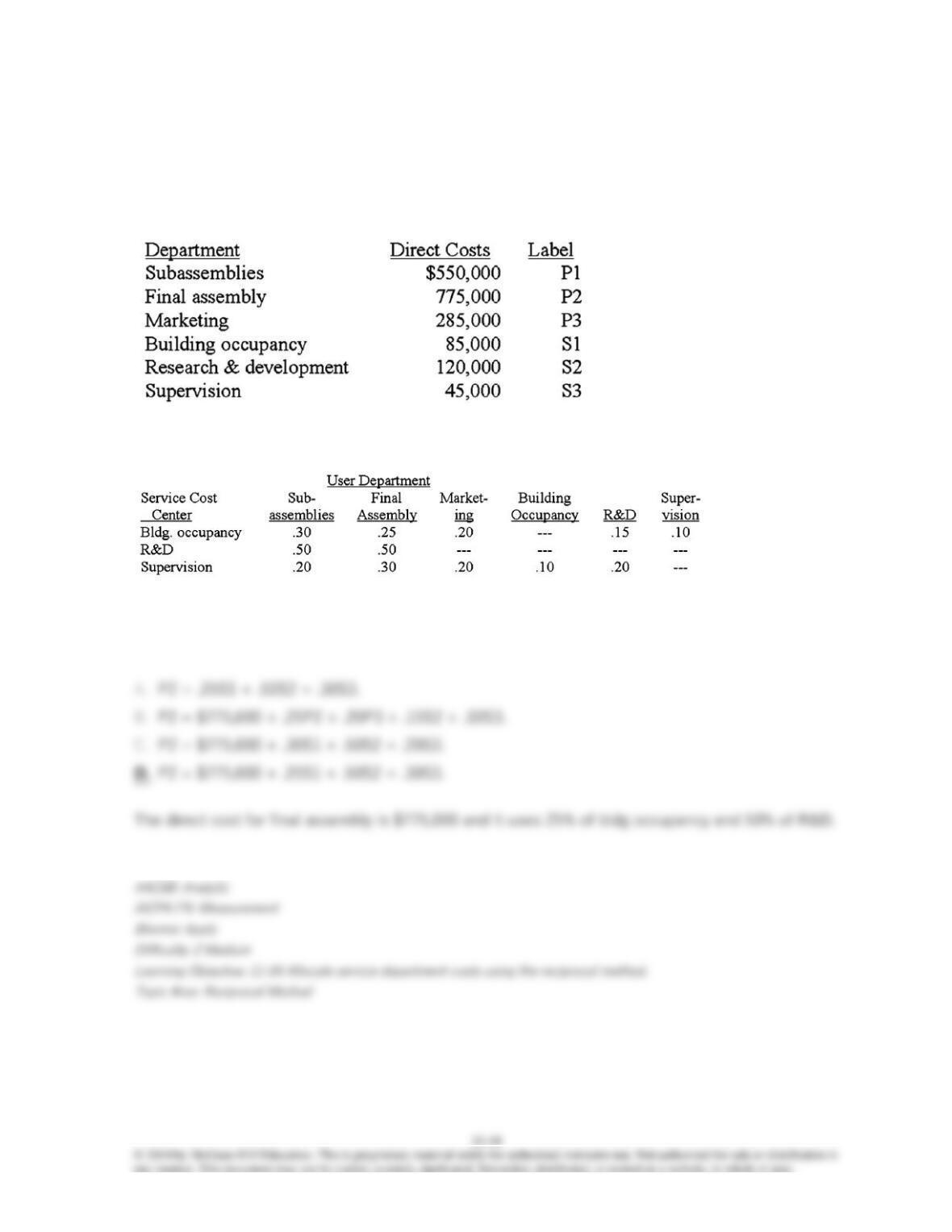
63. The following set up is a system of simultaneous linear equations to allocate costs using
the reciprocal method. Matrix algebra is not required.
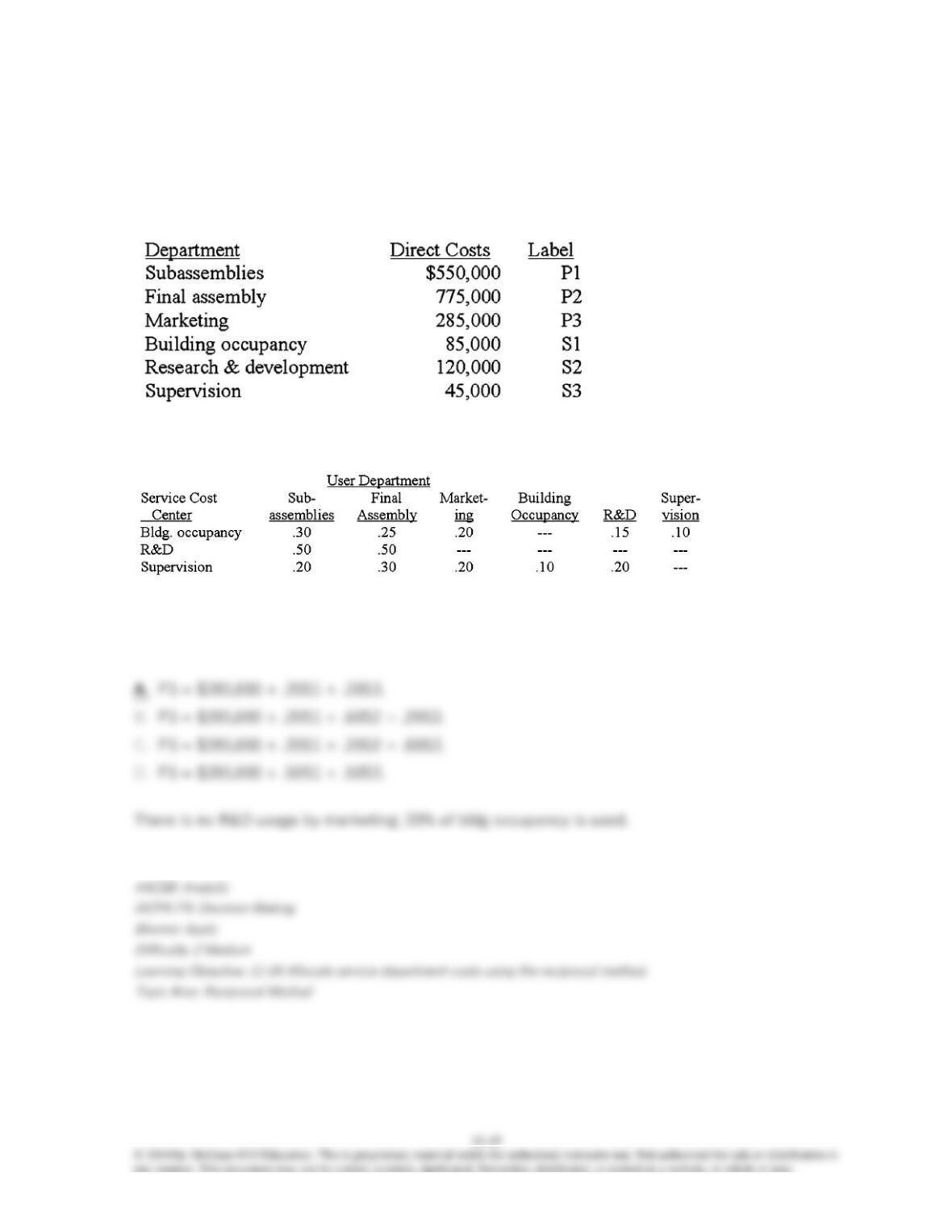
The following costs were incurred in three operating departments and three service departments
in Reality Company.
Use of services by other departments is as follows.
The equation for department P2 (final assembly) is:
64. The following set up is a system of simultaneous linear equations to allocate costs using
the reciprocal method. Matrix algebra is not required.
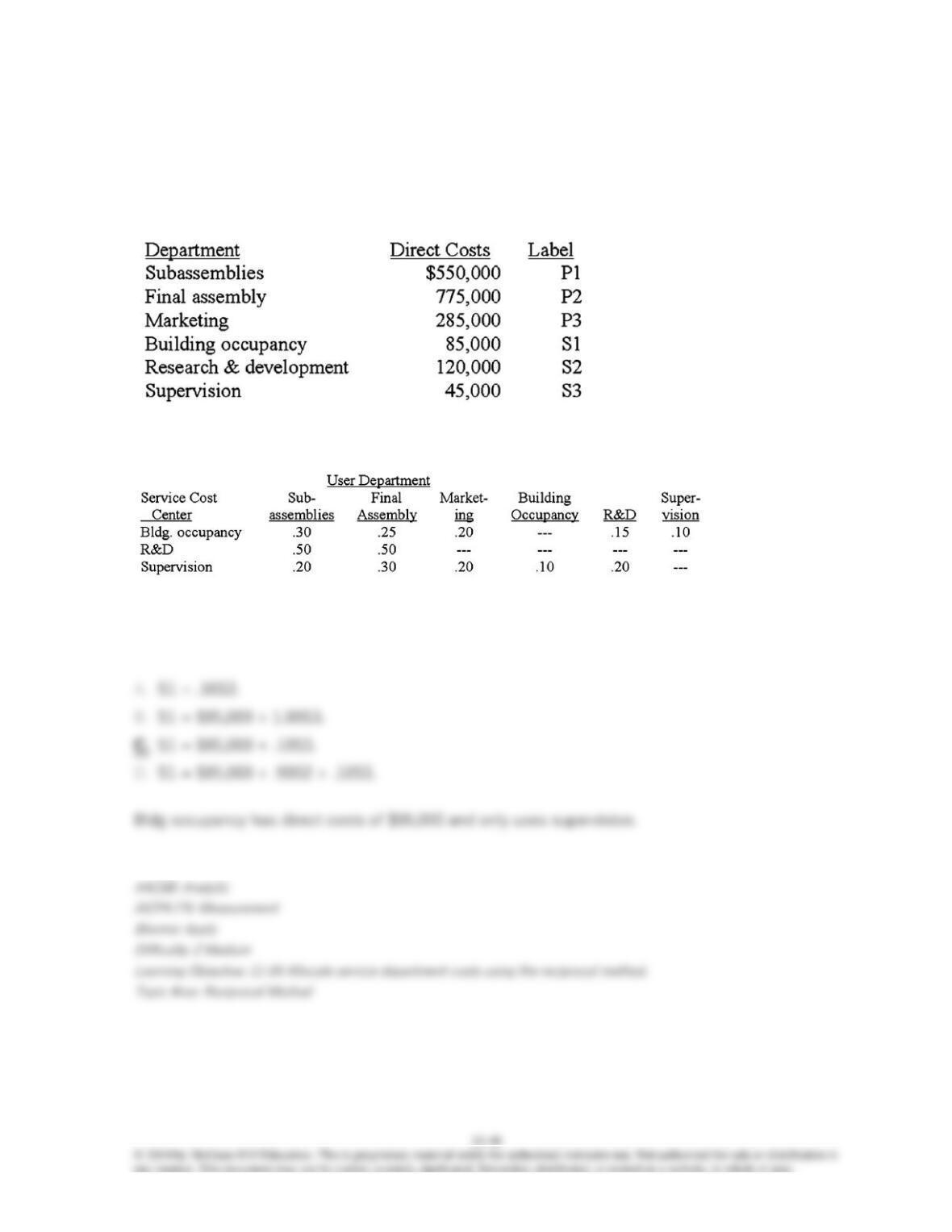
The following costs were incurred in three operating departments and three service departments
in Reality Company.
Use of services by other departments is as follows.
The equation for department P3 (marketing) is:
65. The following set up is a system of simultaneous linear equations to allocate costs using
the reciprocal method. Matrix algebra is not required.
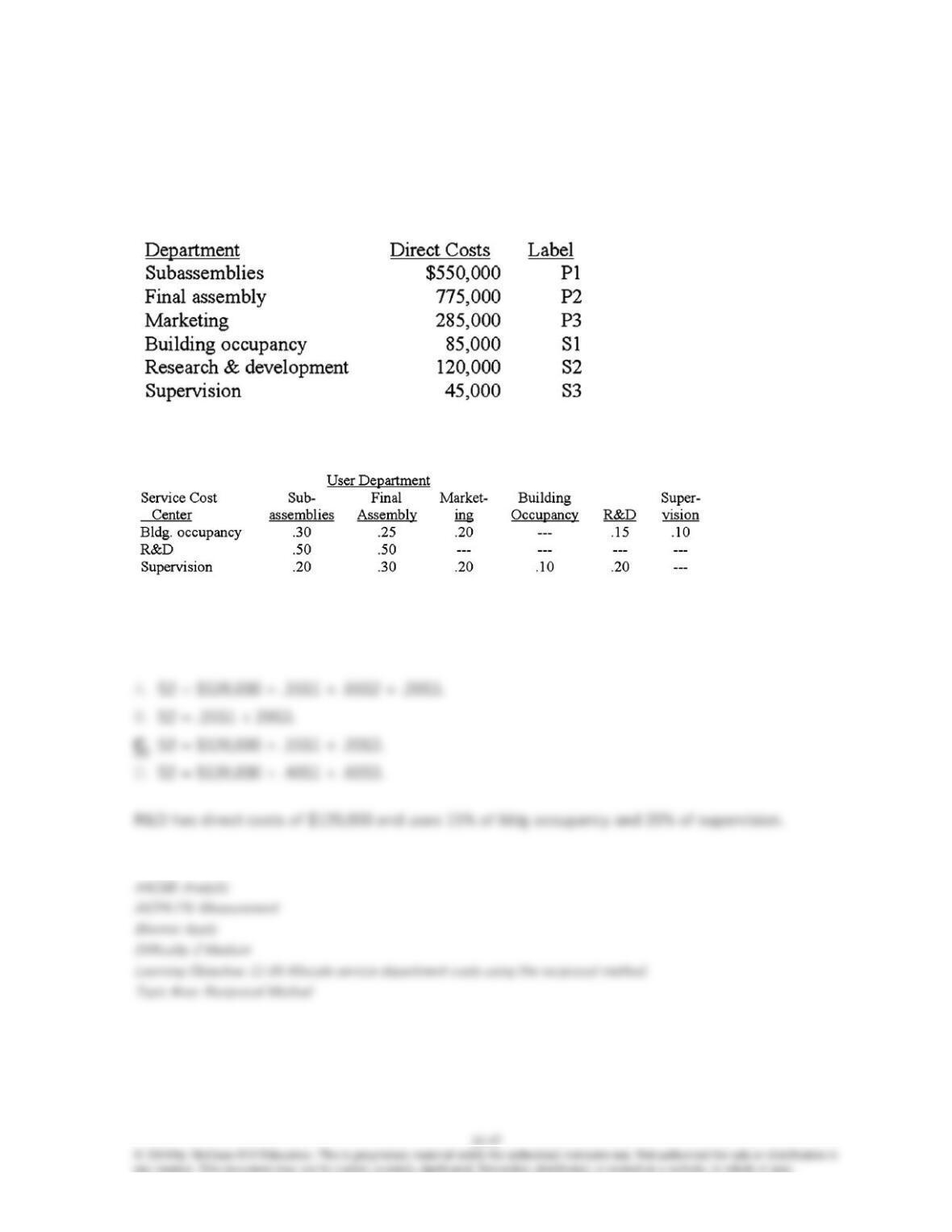
The following costs were incurred in three operating departments and three service departments
in Reality Company.
Use of services by other departments is as follows.
The equation for department S1 (building occupancy) is:
66. The following set up is a system of simultaneous linear equations to allocate costs using
the reciprocal method. Matrix algebra is not required.
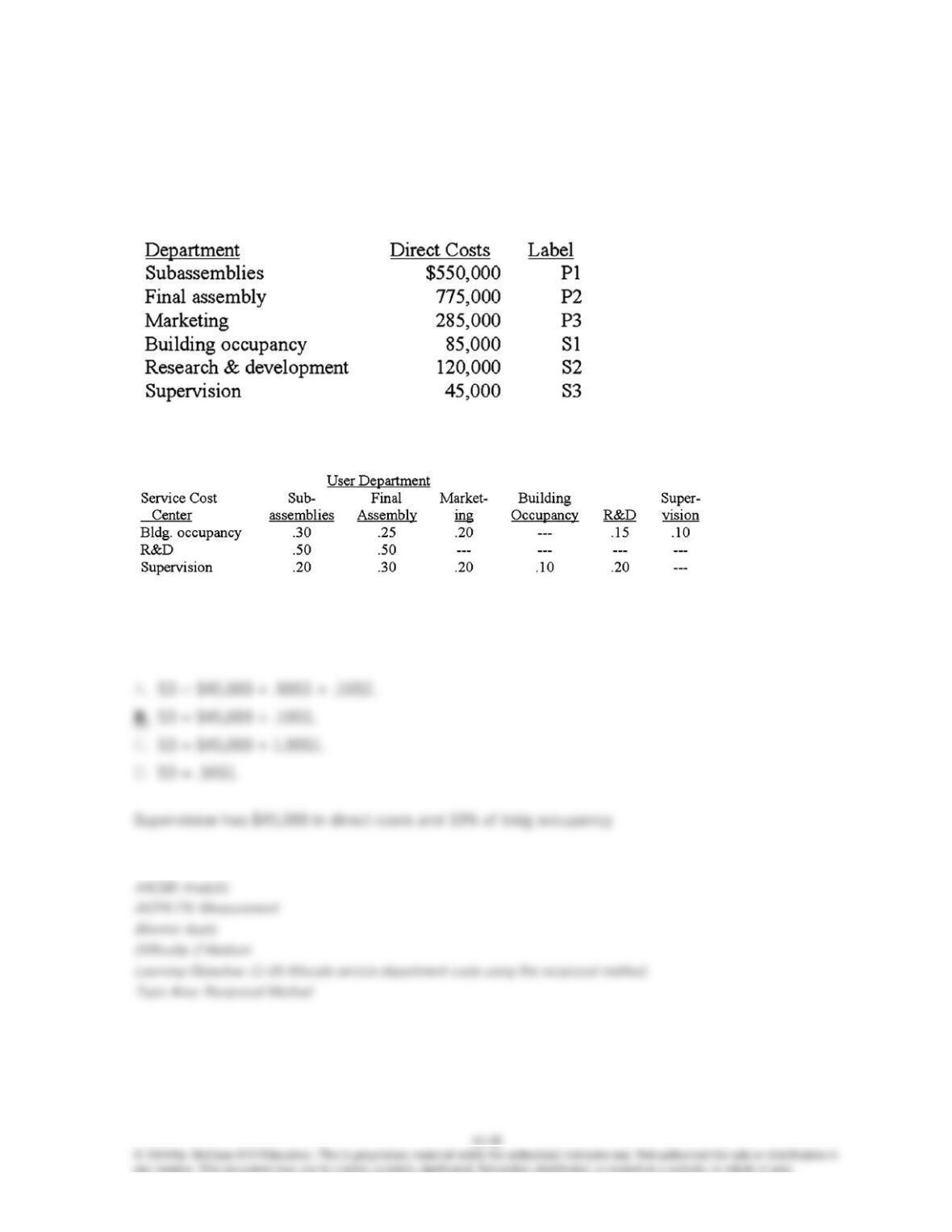
The following costs were incurred in three operating departments and three service departments
in Reality Company.
Use of services by other departments is as follows.
The equation for department S2 (research and development) is:
67. The following set up is a system of simultaneous linear equations to allocate costs using
the reciprocal method. Matrix algebra is not required.
The following costs were incurred in three operating departments and three service departments
in Reality Company.
Use of services by other departments is as follows.
The equation for department S3 (supervision) is:
68. Products X, Y, and Z are produced from the same process at a cost of $5,200. Five
thousand pounds of raw material yields 1,500 X, 2,500 Y, and 1,000 Z. Selling prices are: X $2 per
unit, Y $4 per unit, Z valueless. The ending inventory of X is 50 units. What is the value of the
ending inventory if joint costs are allocated using net realizable value?
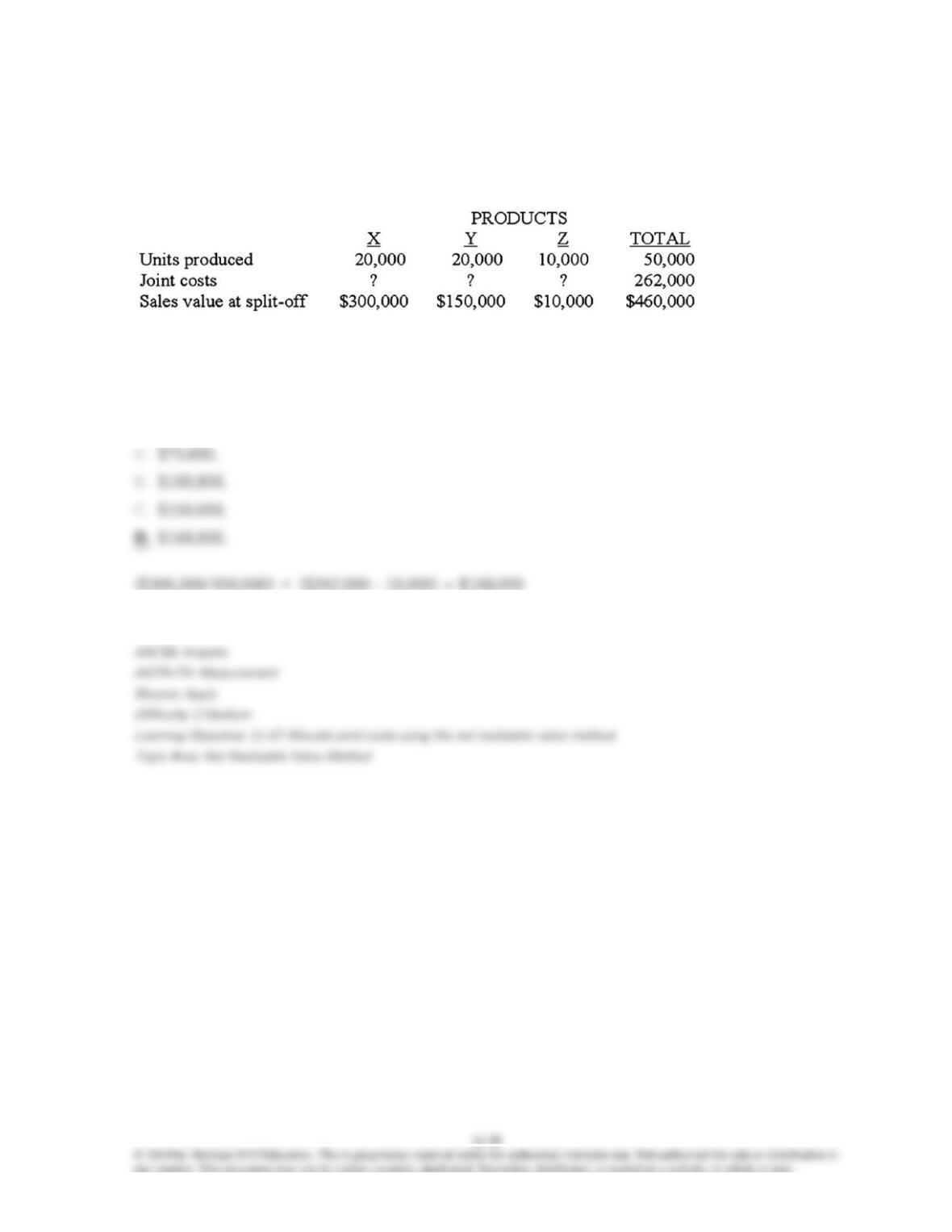
69. Lite Co. manufactures products X and Y from a joint process that also yields a by-product,
Z. Revenue from sales of Z is treated as a reduction of joint costs. Additional information is as
follows:
Joint costs were allocated using the net realizable value method at the split-off point. The joint
costs allocated to product X were
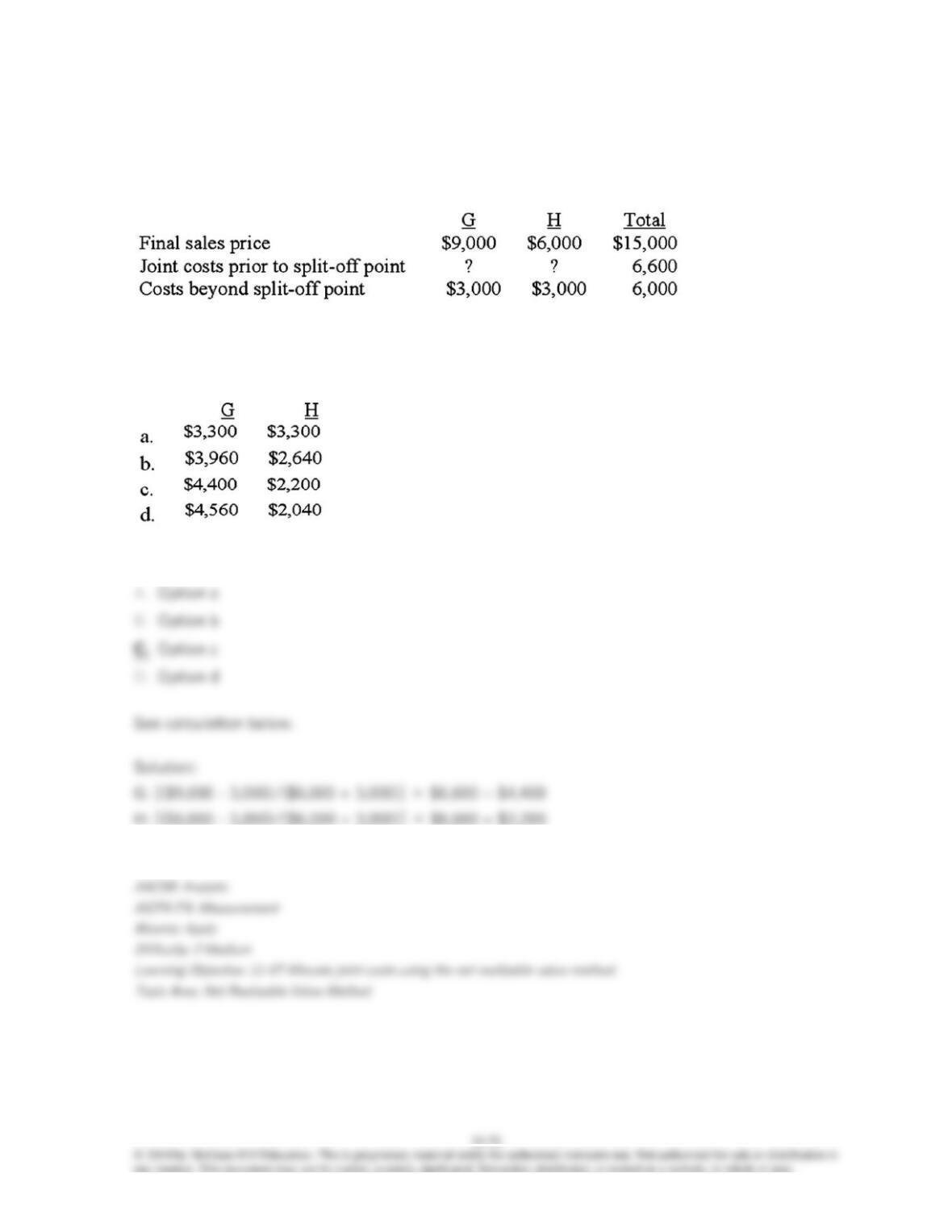
70. Great Falls Company makes two products, G and H. They are initially processed from the
same raw material and then, after split-off, further processed separately. Additional information is
as follows:
What are the joint costs allocated to products G and H assuming Great Falls uses the estimated
net realizable value approach?
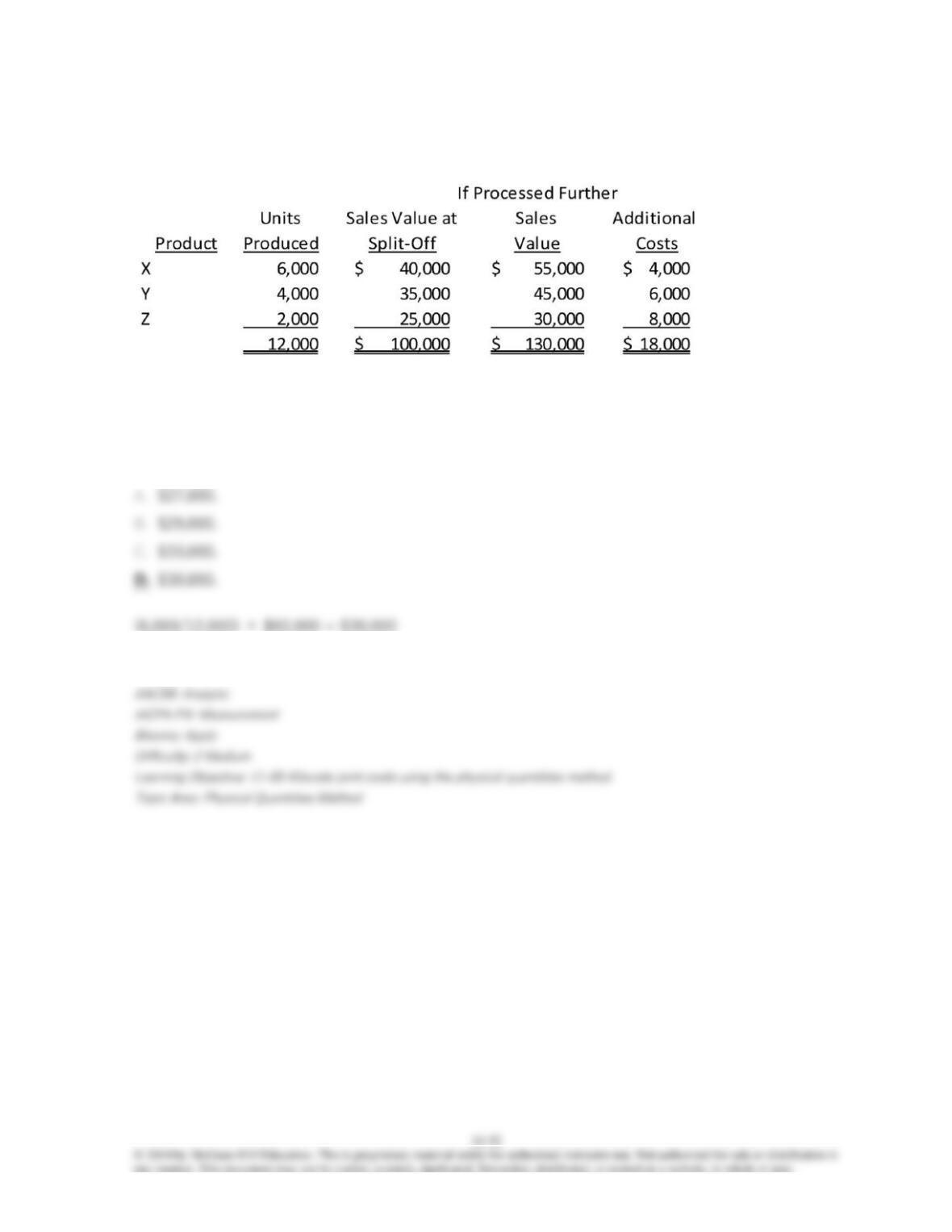
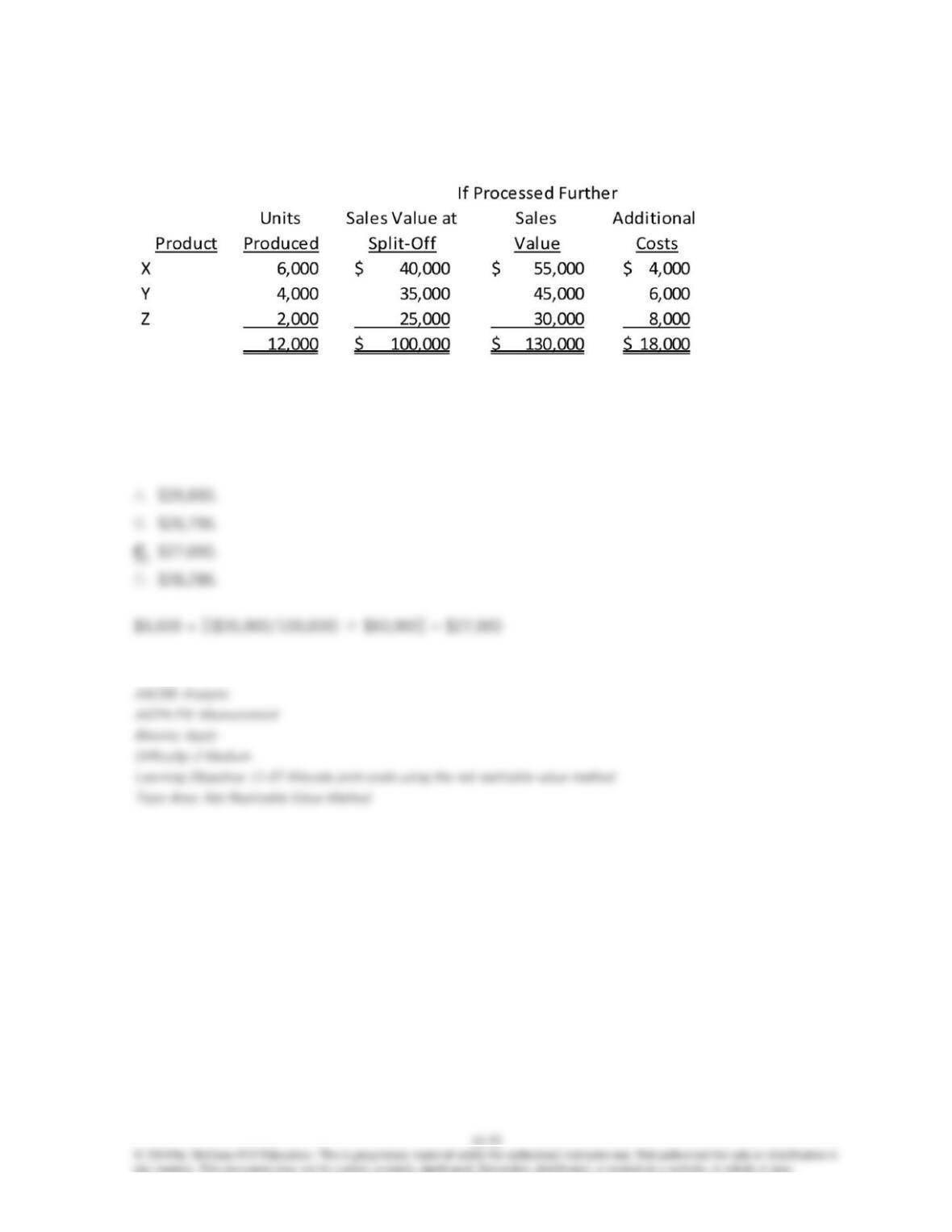
71. Vreeland, Inc., manufactures products X, Y, and Z from a common process. Joint costs
were $60,000. Additional information is as follows:
Assuming that joint production costs are allocated using the physical quantities method (units
produced), what were the costs allocated to Product X?
72. Vreeland, Inc., manufactures products X, Y, and Z from a common process. Joint costs
were $60,000. Additional information is as follows:
Assuming that joint product costs are allocated using the net realizable value method, what were
the total costs assigned to Product Y?
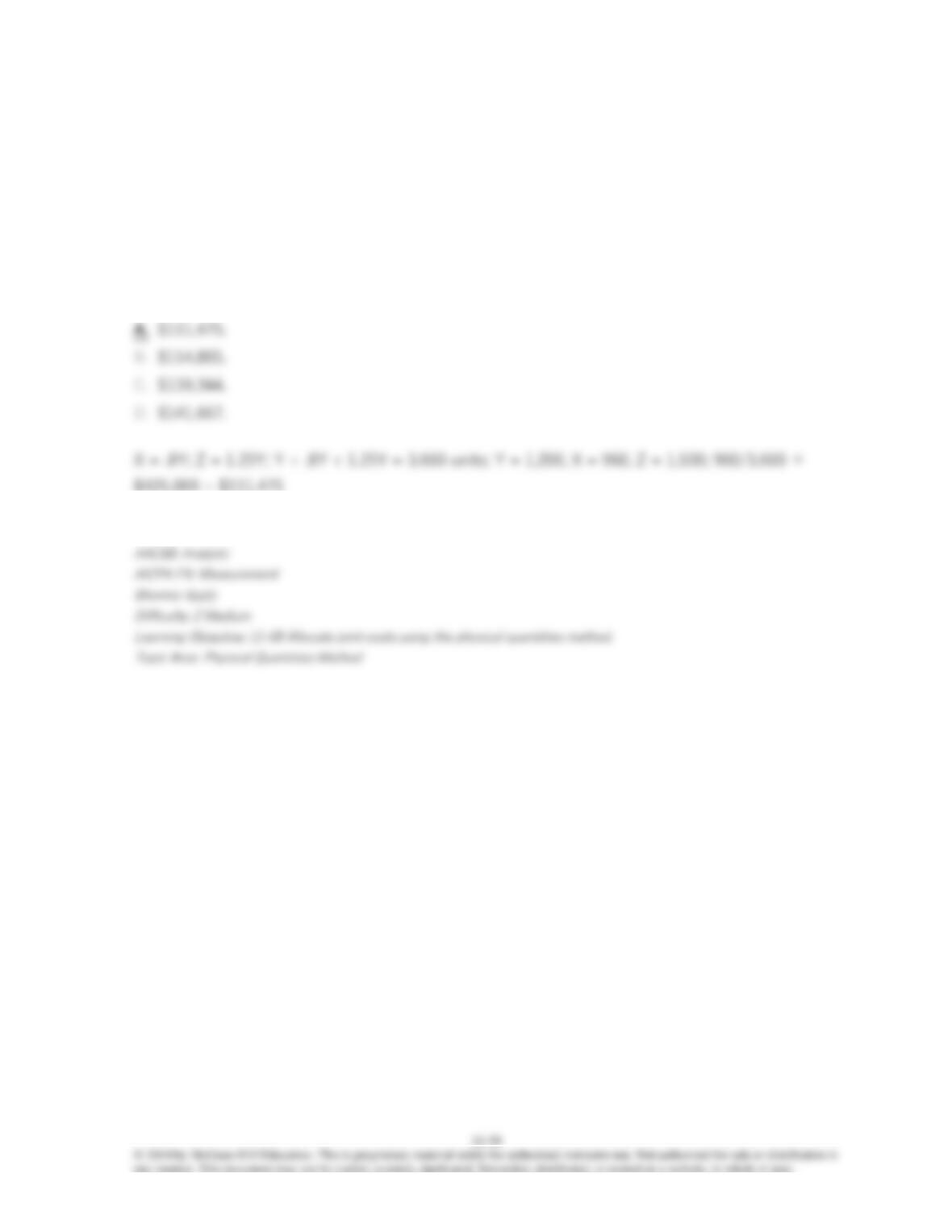
73. Raymer Corporation produced 3,660 units, consisting of three separate products, in a joint
process for the year. The market for these products was so unstable that it was not practical to
estimate the selling price of the products. A cost of $425,000 was incurred in the joint process.
Product X’s production was 80% of product Y’s while product Z’s production was 125% of product
Y’s. What is the amount of the joint cost allocable to product X assuming Raymer uses the
physical quantities method of allocation?
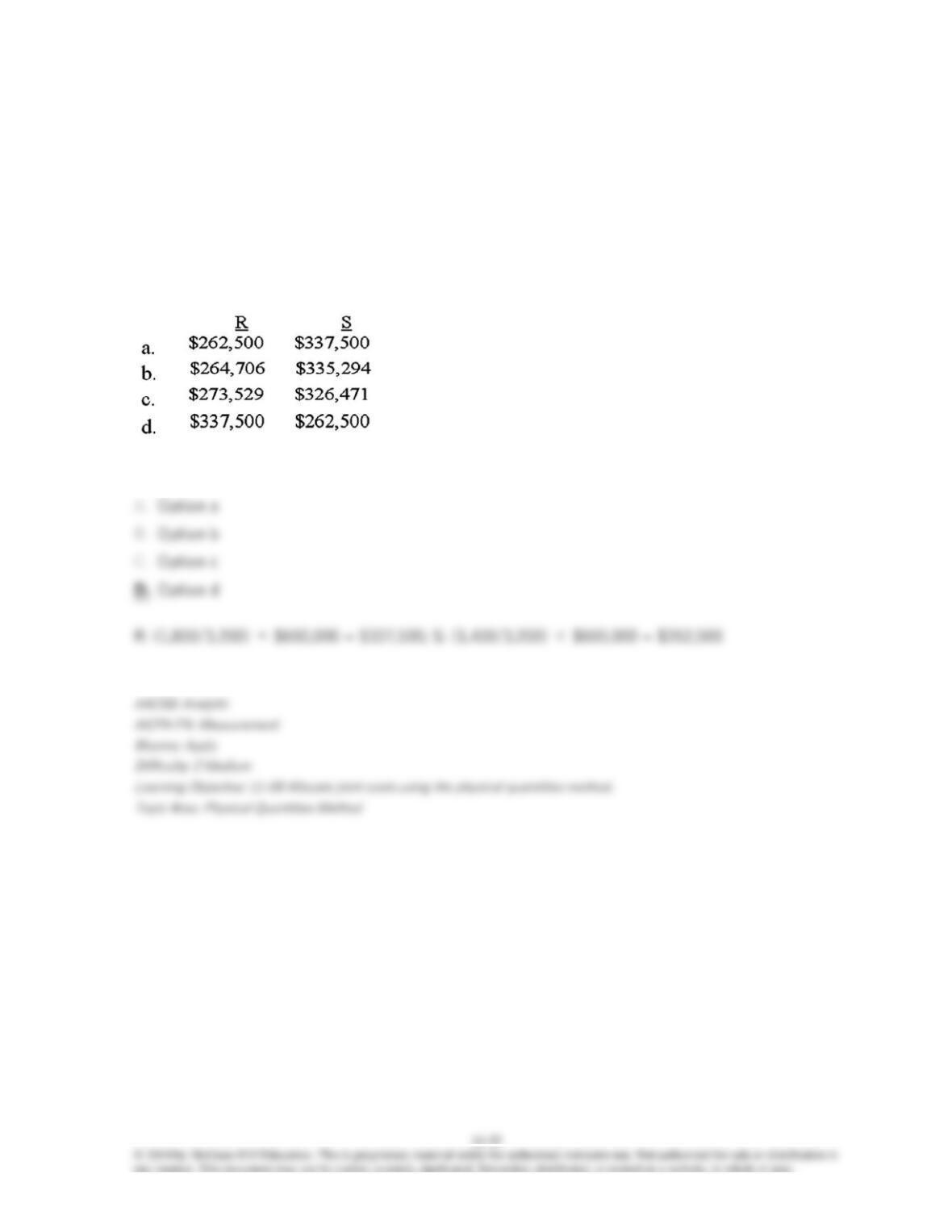
74. Zebra Manufacturing Company incurred a joint cost of $600,000 in the production of R and
S in a joint process. Presently, 1,800 of R and 1,400 of S are being produced each month.
Management plans to decrease R’s production by 300 units in order to increase the production of
S by 500 units. Additionally, this change will require minor modifications, which will add $20,000 to
the joint cost. This cost is entirely attributable to product S. What is the amount of the joint costs
allocable to R and S before changes to existing production assuming Zebra allocates their joint
costs according to the proportion of S and R produced?
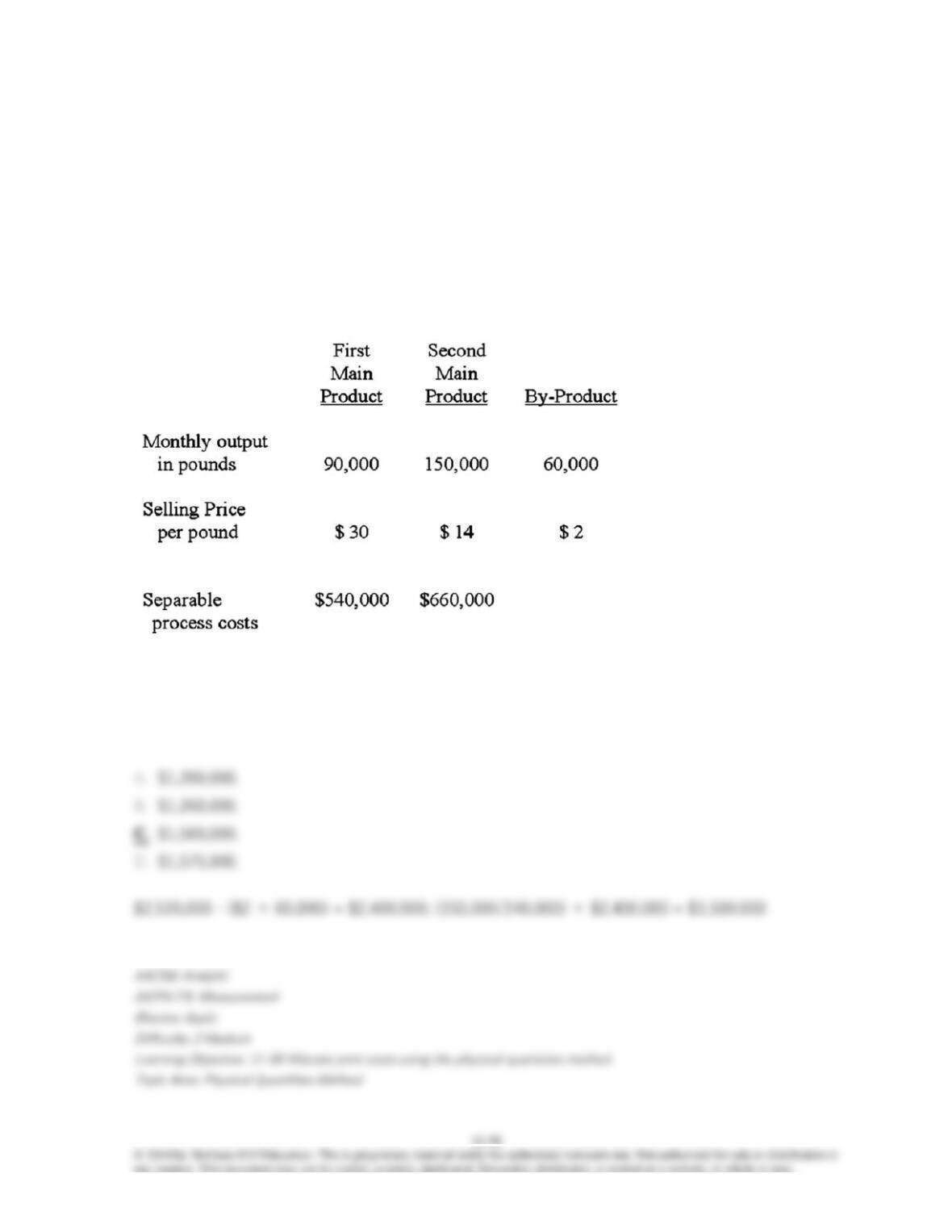
75. Lankip Company produces two main products and a by-product out of a joint process. The
ratio of output quantities to input quantities of direct material used in the joint process remains
consistent from month to month. Lankip has employed the physical-volume method to allocate
joint production costs to the two main products. The net realizable value of the by-product is used
to reduce the joint production costs before the joint costs are allocated to the main products.
Data regarding Lankip’s operations for the current month are presented in the chart below. During
the month, Lankip incurred joint production costs of $2,520,000. The main products are not
marketable at the split-off point and, thus, have to be processed further.
The amount of joint production cost that Lankip would allocate to the Second Main Product by
using the physical quantities method to allocate joint production costs would be:
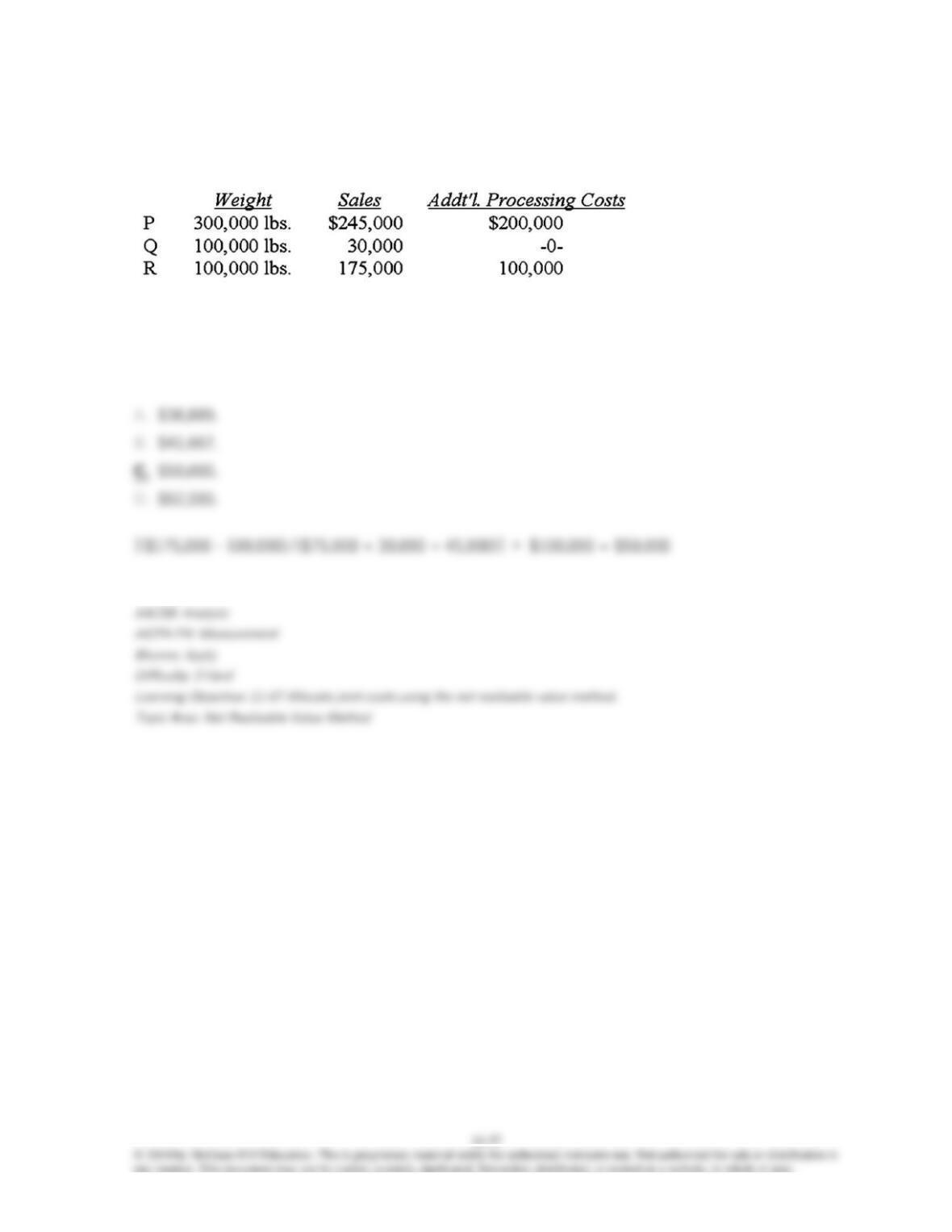
76. The Moody Company produced three joint products at a joint cost of $100,000. Two of
these products were processed further. Production and sales were:
If the estimated net realizable value method is used and product Q is accounted for as a main
product, how much of the joint costs would be allocated to product R?
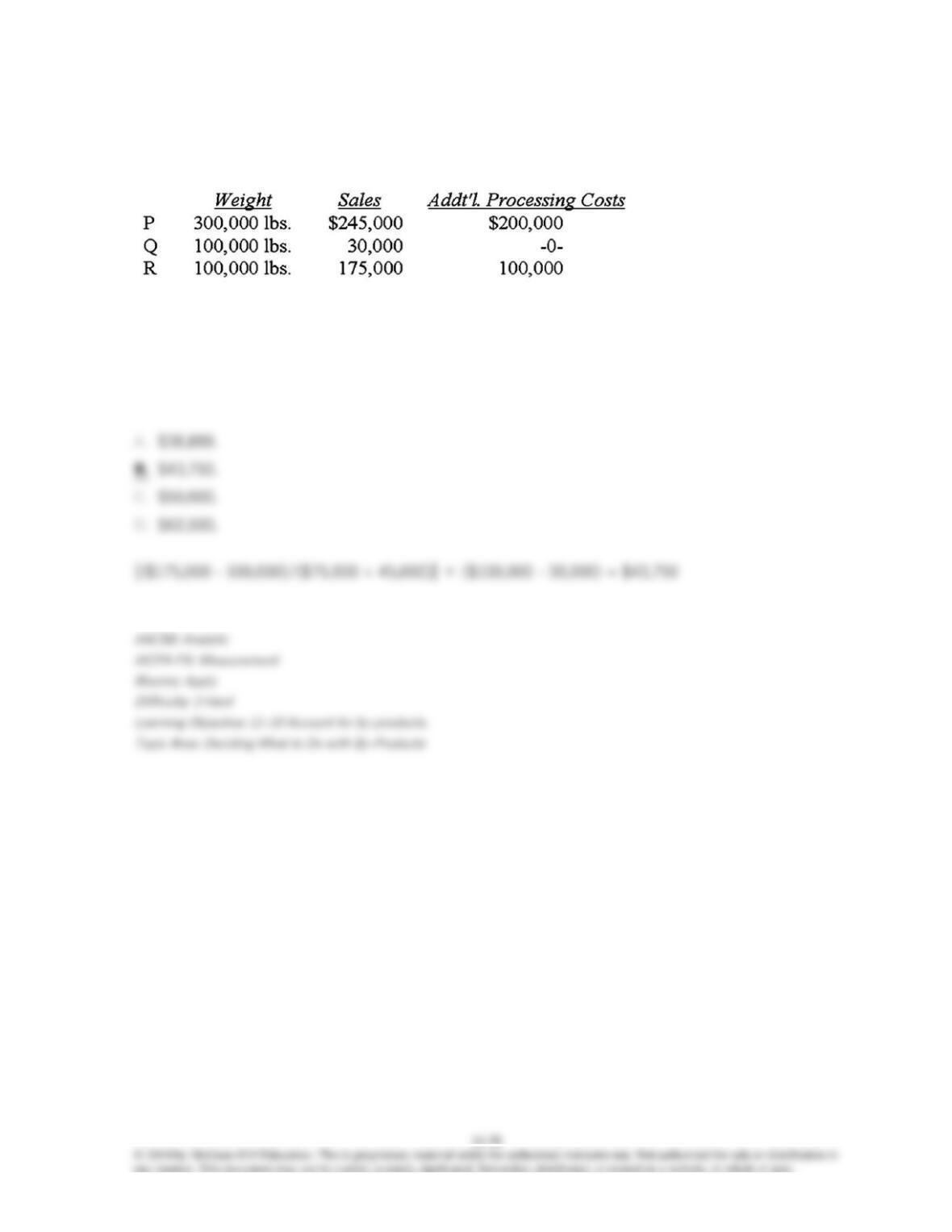
77. The Moody Company produced three joint products at a joint cost of $100,000. Two of
these products were processed further. Production and sales were:
Assume Q is a by-product and Moody uses the cost reduction method of accounting for by–
product cost. If estimated net realizable value is used, how much of the joint costs would be
allocated to product R?
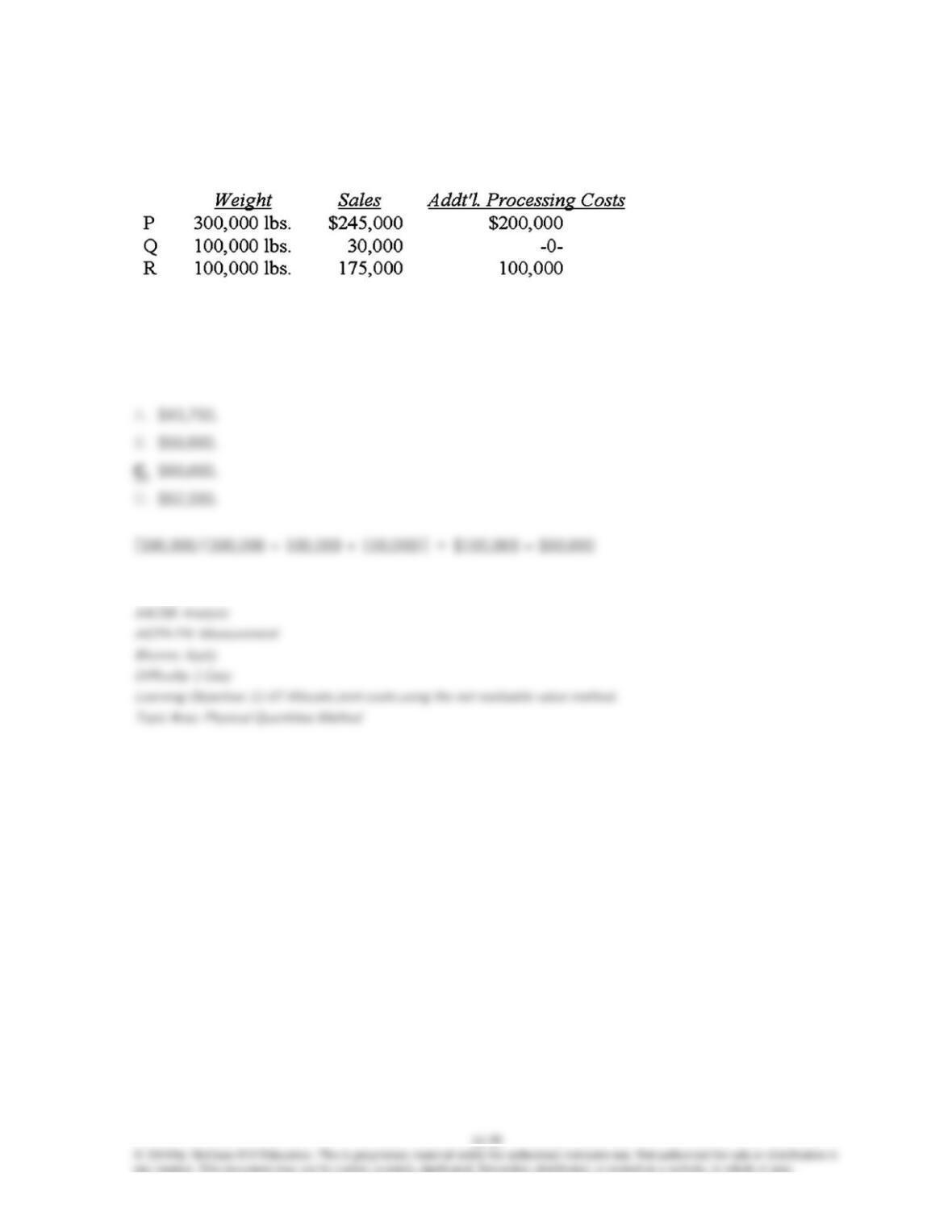
78. The Moody Company produced three joint products at a joint cost of $100,000. Two of
these products were processed further. Production and sales were:
If joint costs are allocated based on relative weight of the outputs and all products are main
products, how much of the joint costs would be allocated to product P?
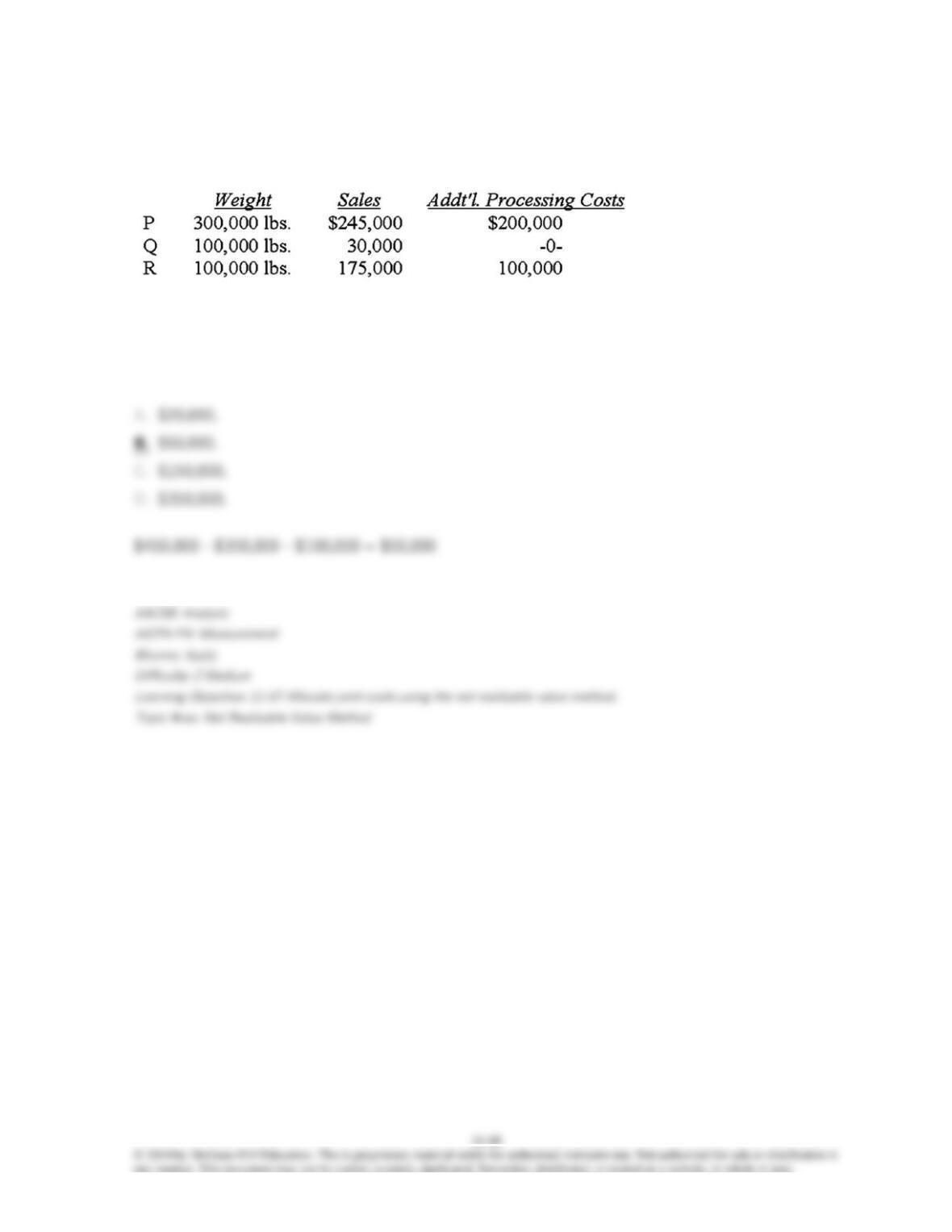
79. The Moody Company produced three joint products at a joint cost of $100,000. Two of
these products were processed further. Production and sales were:
What is the net income of Moody Company if the estimated net realizable value method of joint
cost allocation is used?