
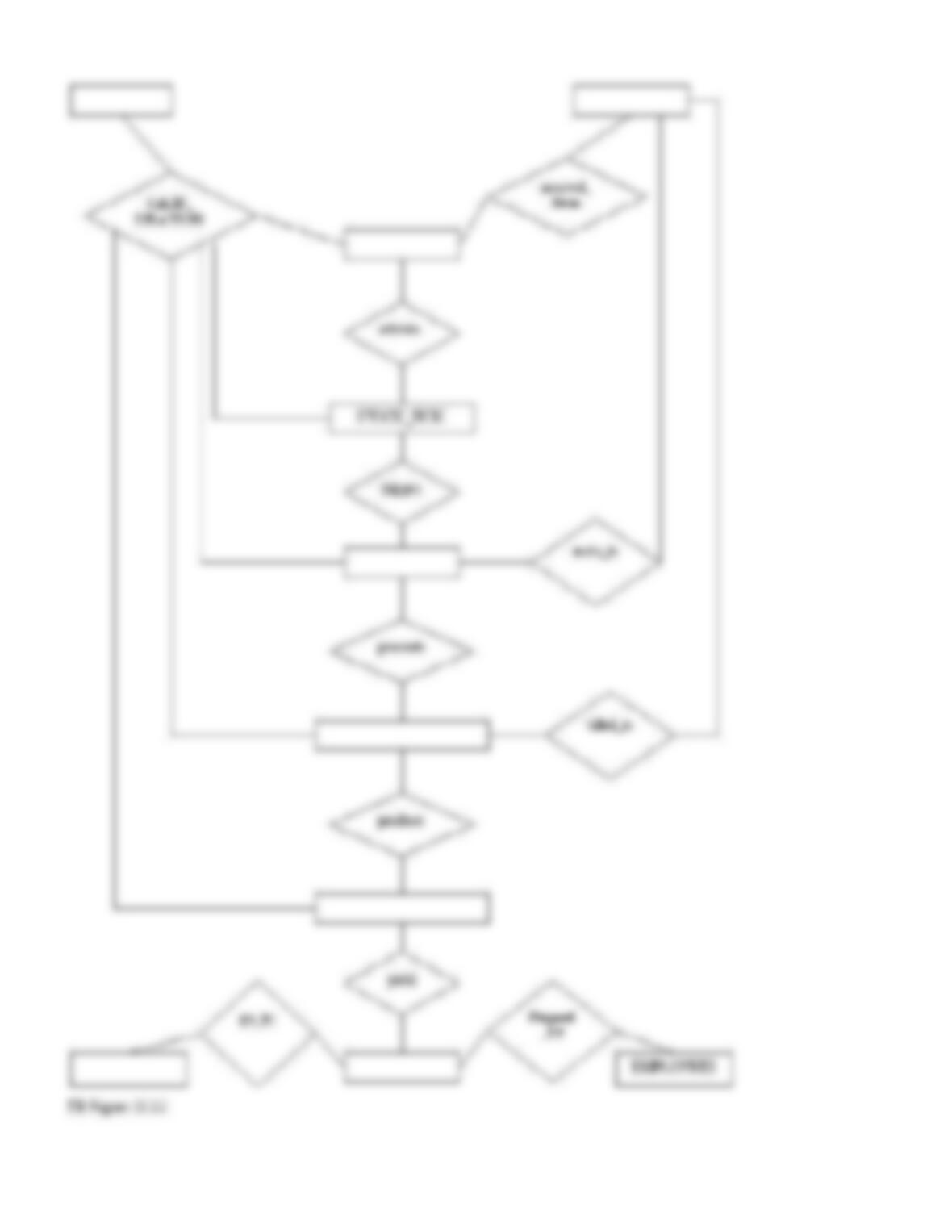
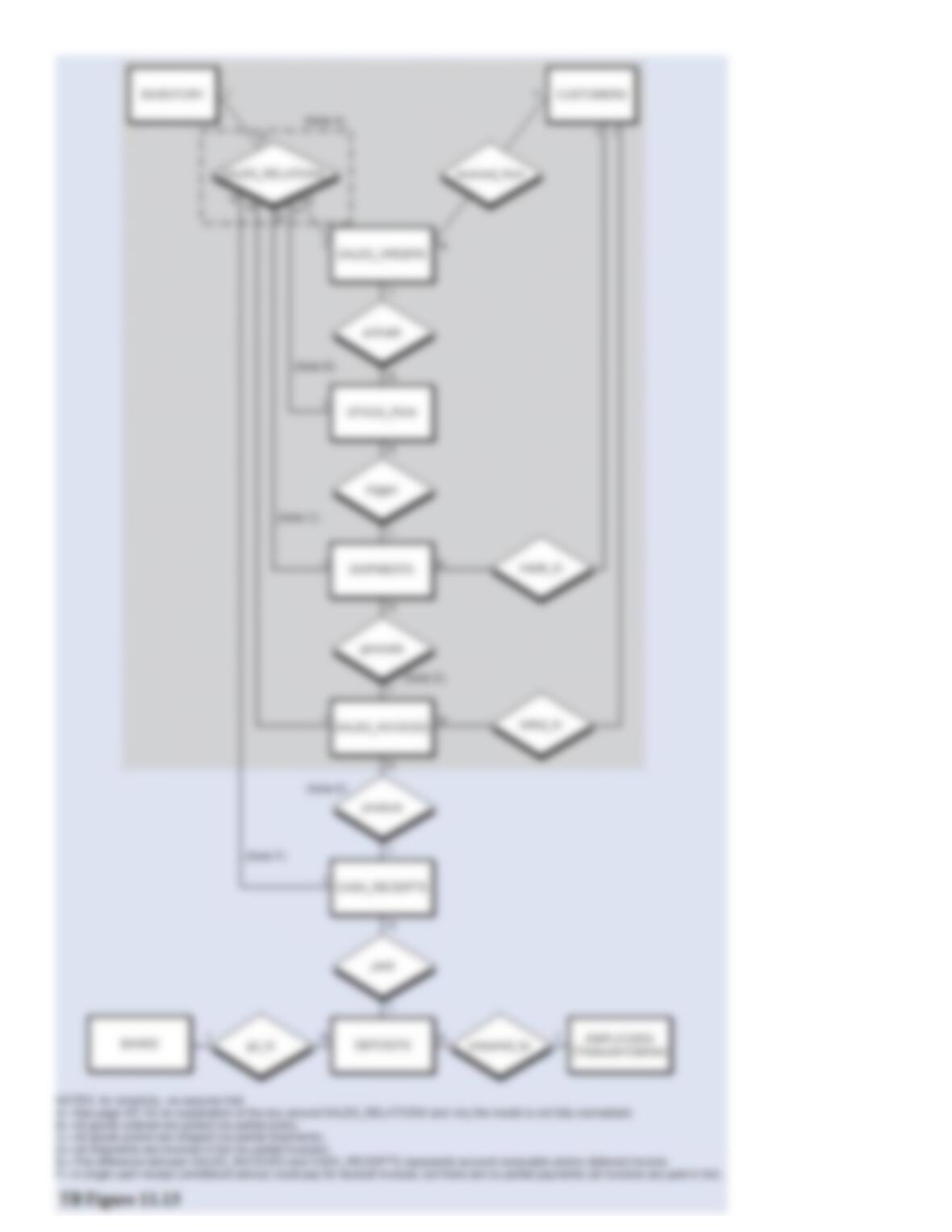
133. The E-R diagram below represents a B/AR/CR process but with the names of certain entities, and
relationship cardinalities removed from the diagram. In alphabetic order, the names omitted are:
·
BANKS
·
CASH_RECEIPTS
·
CUSTOMERS
·
DEPOSITS
·
INVENTORY
·
SALES_INVOICES
·
SALES_ORDERS
·
SHIPMENTS
Required:
Complete The E-R Diagram (TB Figure 11.12) by:
a.
Inserting the names from the above lists into the boxes where they belong.
b.
Inserting a 1 or an M or an N where necessary to indicate whether the cardinality of the relationship is: one–to-one (1:1), one-to-many
(1:M), or many-to-many (M:N).

134. The following is a list of 10 control plans:
A.
Independent billing authorization
F.
Immediately endorse incoming checks
B.
Review shipped not billed sales orders (tickler file)
G.
Document design
C.
One-for-one checking of deposit slip and checks
H.
Prenumbered documents
D.
Compare input shipping notice to sales order master data
I.
Turnaround documents
E.
Monitor open accounts receivable
J.
Immediately separate checks and remittance advices
Required:
Listed below are ten statements describing either the achievement of a control goal (i.e., a system success) or a system deficiency (i.e., a system
failure). On the answer line to the left of each description, insert the capital letter from the list above of the best control plan to achieve the desired
goal or to address the system deficiency described. A letter should be used only once.
1.
Helps to ensure that all shipments are billed in a timely manner.
2.
This feature can be used to help prevent duplicate document numbers from entering the system to ensure input validity.
3.
Helps to ensure the validity of shipping notices.
4.
Ensures efficient employment of resources and remittance advice input accuracy.
5.
Helps optimize cash flows, solve billing and cash receipts processing problems, and ensure that the organization
complies with compensating balance requirements of loan agreements with its bank.
6.
Helps to ensure the security of resources (prevent fraudulent appropriation)
7.
Helps ensure remittance advice input validity, completeness and accuracy.
8.
Ensures that the items and quantities shipped are the same as the items and quantities on the sales order.
9.
Should have precluded a field salesman from omitting the sales terms from the sales order, thereby causing the order to
be rejected by the computer data entry personnel.
10.
Reduces opportunities for lapping.
1.
B
6.
F
2.
H
7.
C
3.
A
8.
D
4.
I
9.
G
5.
E
10.
J

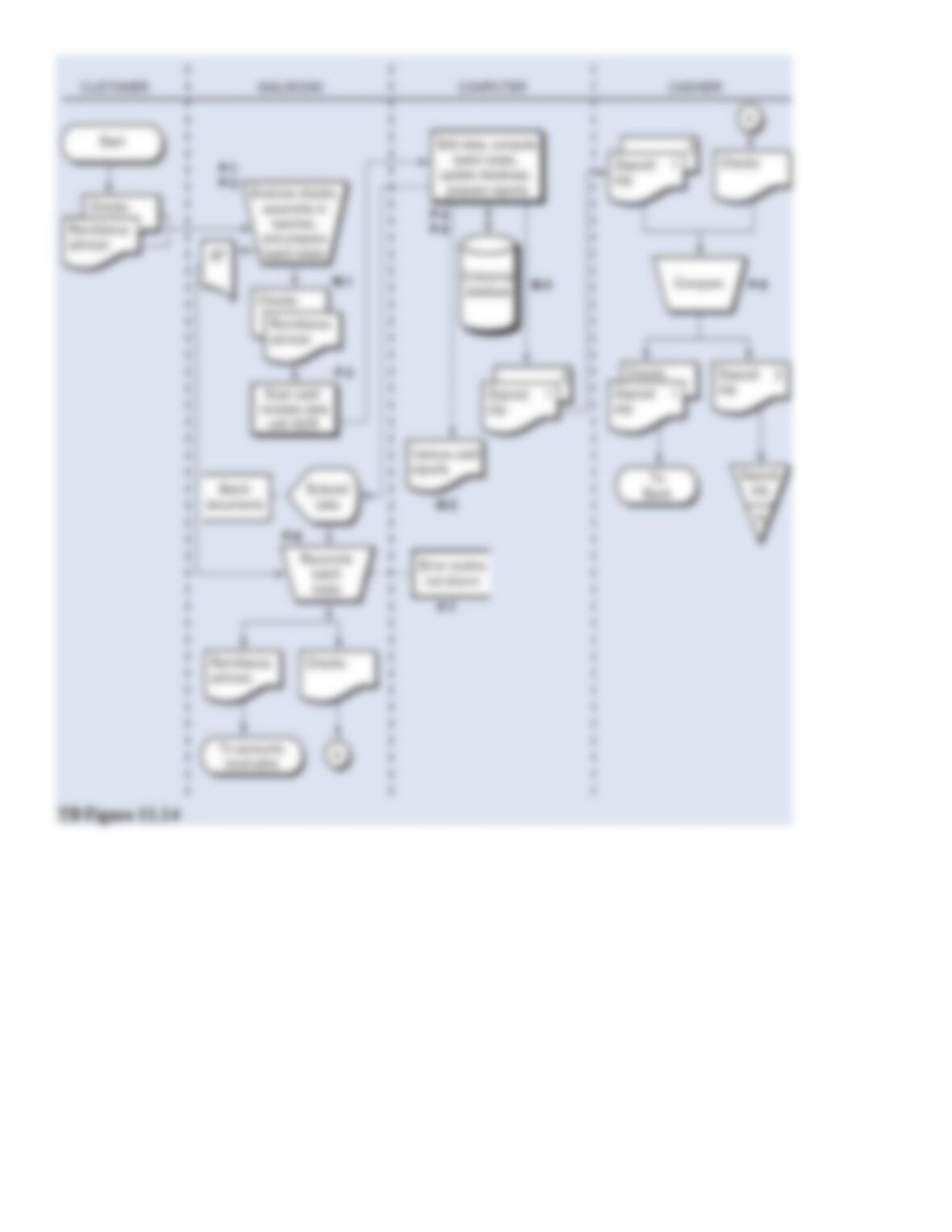
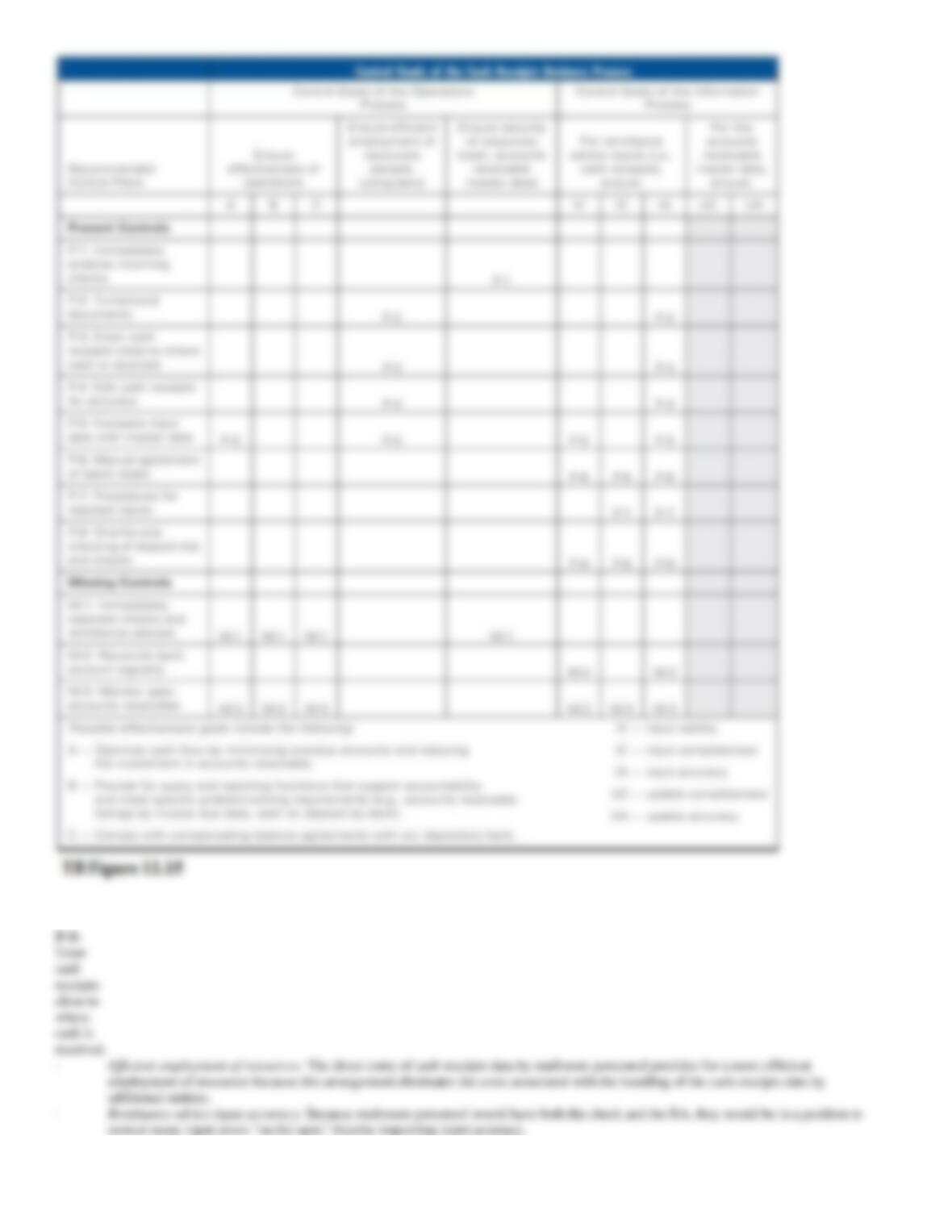
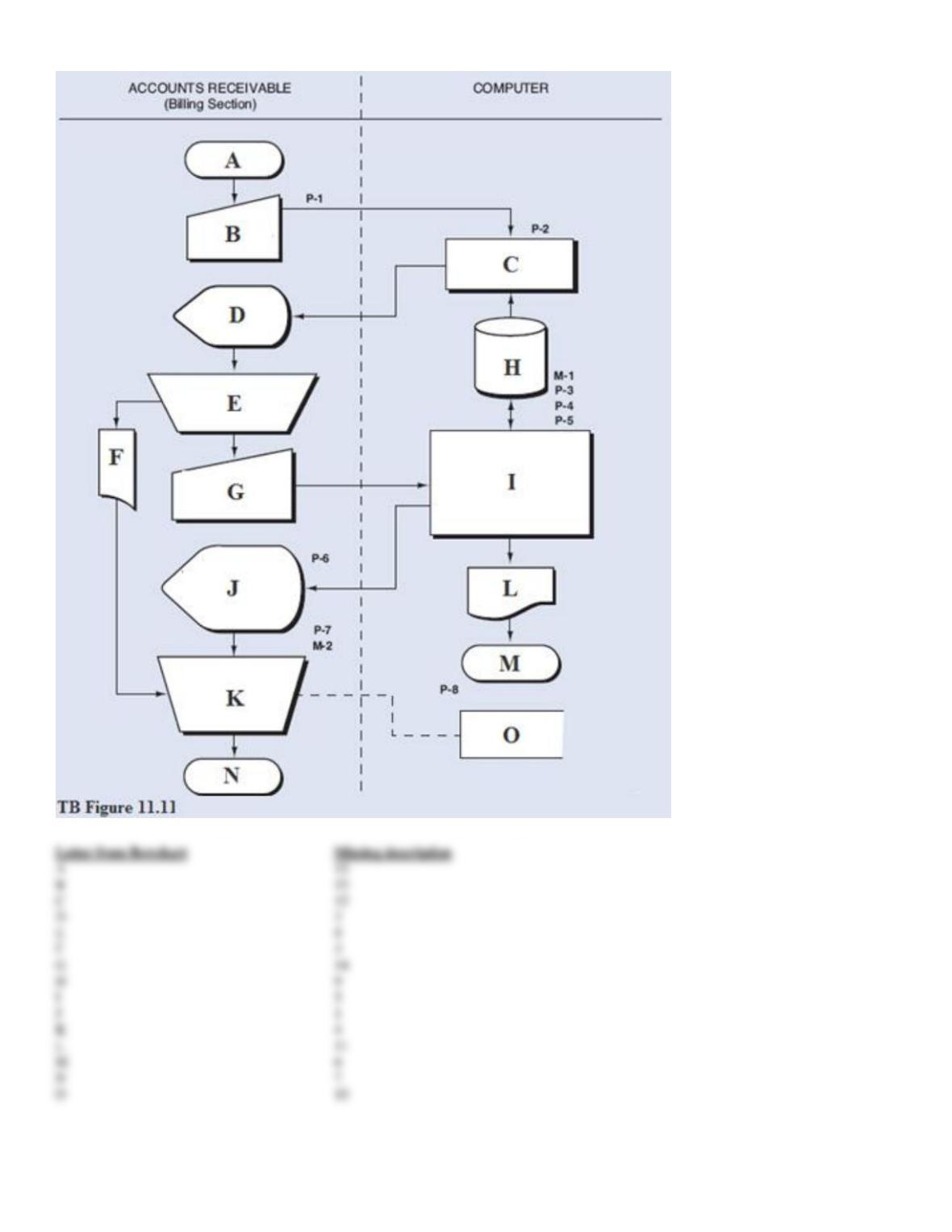
135. The following narrative describes a cash receipts process. The annotated systems flowchart for this cash
receipts process is TB Figure 11.14 and the related control matrix is Figure TB 11.15.
Narrative Description
TB Figure 11.14 presents a physical description of the cash receipts process in which customer payments are
received by mail. The source documents include checks and RAs. Each day, the process begins with mailroom
clerks opening the mail. Immediately, the clerks endorse all checks. They assemble RAs (stubs from the
customer invoice¾i.e., turnaround documents) in batches and prepare batch totals. The cash receipts
data¾batch total and remittance details¾are then entered into the computer system via a scanner with OCR.
The computer edits the data as the data are entered and computes batch totals. The batched RAs are sent to the
accounts receivable department for filing, and the checks are transferred to the cashier. The editing process
verifies the correctness of the entered data, including customer number and so forth. By matching the input cash
receipts data to the open invoice data that reside on the accounts receivable master data in the enterprise
database, the process also verifies that the customer account number, invoice number, and amount due are
correct and that any cash discounts taken by the customer are legitimate (i.e., they have been authorized). After
the data have passed all the control checks, the cash receipts event data, accounts receivable master data, and
general ledger data are updated in the enterprise database. Also, the computer generates various cash reports and
prepares the deposit slip. The deposit slip is transferred to the cashier. The cashier compares the checks and the
deposit slip; if they agree, all documents are sent to the bank.
Required:
Using the format shown for control plan P-3, write descriptions for control plans P-1, P-2, P-5, M-1 and M-3.