Catherman Corporation manufactures one product. It does not maintain any beginning or ending
inventories. The company uses a standard cost system in which inventories are recorded at their
standard costs and any variances are closed directly to Cost of Goods Sold.
During the year, the company produced and sold 32,400 units at a price of $42.30 per unit. Its
standard cost per unit produced is $36.90 and its selling and administrative expenses totaled
$102,000. The company does not have any variable manufacturing overhead costs and it recorded
the following variances during the year:
Materials price variance
$
62,000
U
Materials quantity variance
$
900
U
Labor rate variance
$
30,210
U
Labor efficiency variance
$
8,000
U
Fixed manufacturing overhead budget variance
$
16,900
F
Fixed manufacturing overhead volume variance
$
17,400
F
102) When the company closes its standard cost variances, the Cost of Goods Sold will increase
(decrease) by:
A) $34,300
B) ($34,300)
C) $66,810
D) ($66,810)
Materials price variance
$
U
Materials quantity variance
$
U
Labor rate variance
$
U
Labor efficiency variance
$
U
Fixed manufacturing overhead budget variance
$
F
Fixed manufacturing overhead volume variance
$
F
Total variance
$
U
103) The adjusted Cost of Goods Sold after closing all of the variances to Cost of Goods Sold will
be closest to:
A) $1,128,750
B) $1,262,370
C) $1,195,560
D) $1,303,710
104) The net operating income for the year is closest to:
A) $107,269
B) $6,150
C) $89,348
D) $72,960
104
Alvino Corporation manufactures one product. It does not maintain any beginning or ending Work
in Process inventories. The company uses a standard cost system in which inventories are recorded
at their standard costs and any variances are closed directly to Cost of Goods Sold. There is no
variable manufacturing overhead.
The standard cost card for the company’s only product is as follows:
Inputs
Standard
Quantity
or Hours
Standard Price or
Rate
Standard
Cost
Direct materials
1.1
kilos
$
8.50
per kilos
$
9.35
Direct labor
0.70
hours
$
20.00
per hour
14.00
Fixed manufacturing overhead
0.70
hours
$
5.00
per hour
3.05
Total standard cost per unit
$
26.85
The standard fixed manufacturing overhead rate was based on budgeted fixed manufacturing
overhead of $70,000 and budgeted activity of 14,000 hours.
During the year, the company completed the following transactions:
a. Purchased 32,200 kilos of raw material at a price of $7.80 per kilo. The materials price
variance was $22,540F
b. Used 30,480 kilos of the raw material to produce 27,800 units of work in process. The
materials quantity variance was $850F
c. Assigned direct labor costs to work in process. The direct labor workers (who were paid in
cash) worked 18,260 hours at an average cost of $20.50 per hour. The direct labor rate variance
was $9,130U. The labor efficiency variance was $24,000F.
d. Applied fixed overhead to the 27,800 units in work in process inventory using the
predetermined overhead rate multiplied by the number of direct labor-hours allowed. Actual fixed
overhead costs for the year were $59,500. Of this total, $22,500 related to items such as insurance,
utilities, and indirect labor salaries that were all paid in cash and $82,000 related to depreciation of
manufacturing equipment. The fixed manufacturing overhead budget variance was $10,500F. The
fixed manufacturing overhead volume variance was $27,300F
e. Completed and transferred 27,800 units from work in process to finished goods.
f. Sold (for cash) 29,000 units to customers at a price of $31.90 per unit.
g. Transferred the standard cost associated with the 29,000 units sold from finished goods to cost
of goods sold.
h. Paid $101,000 of selling and administrative expenses.
i. Closed all standard cost variances to cost of goods sold.
105
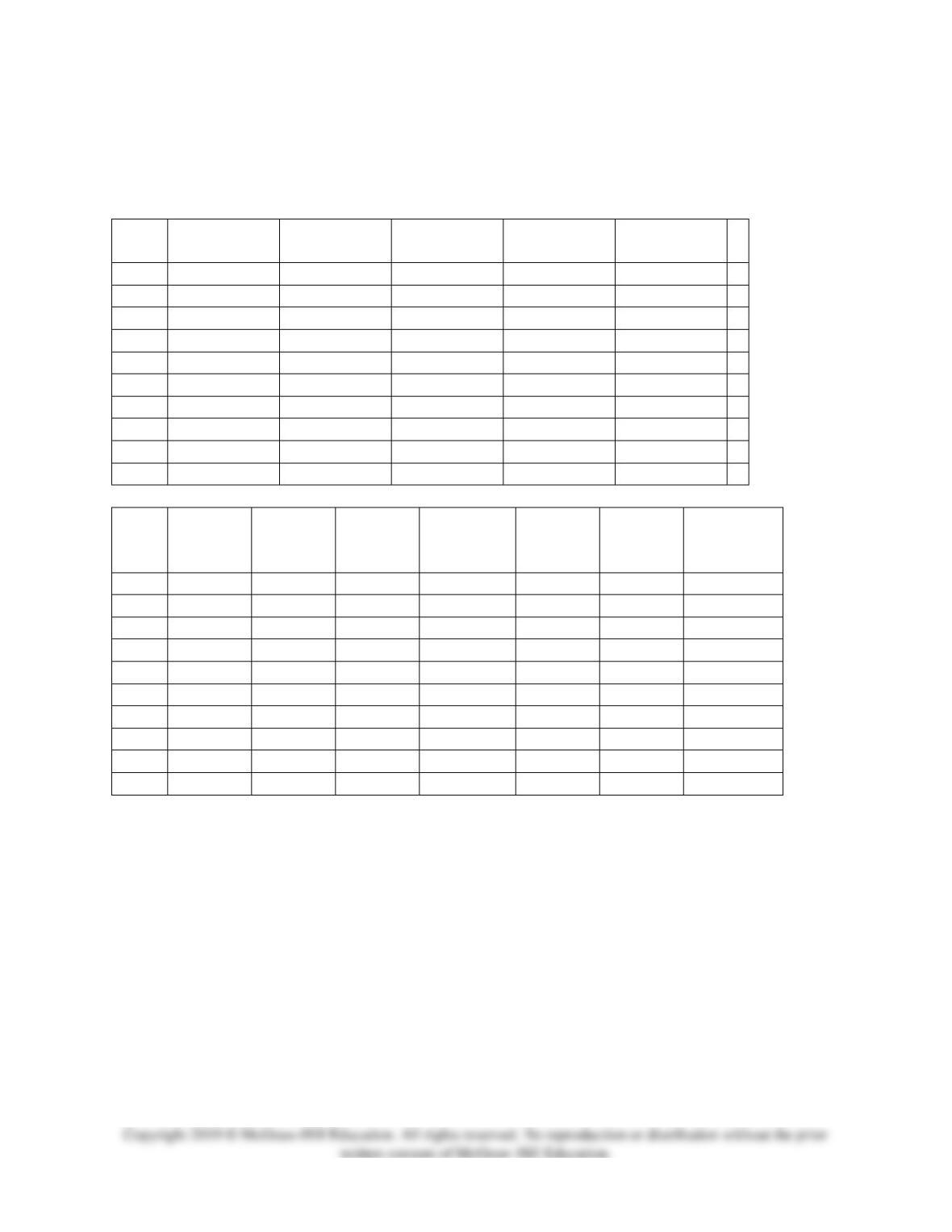
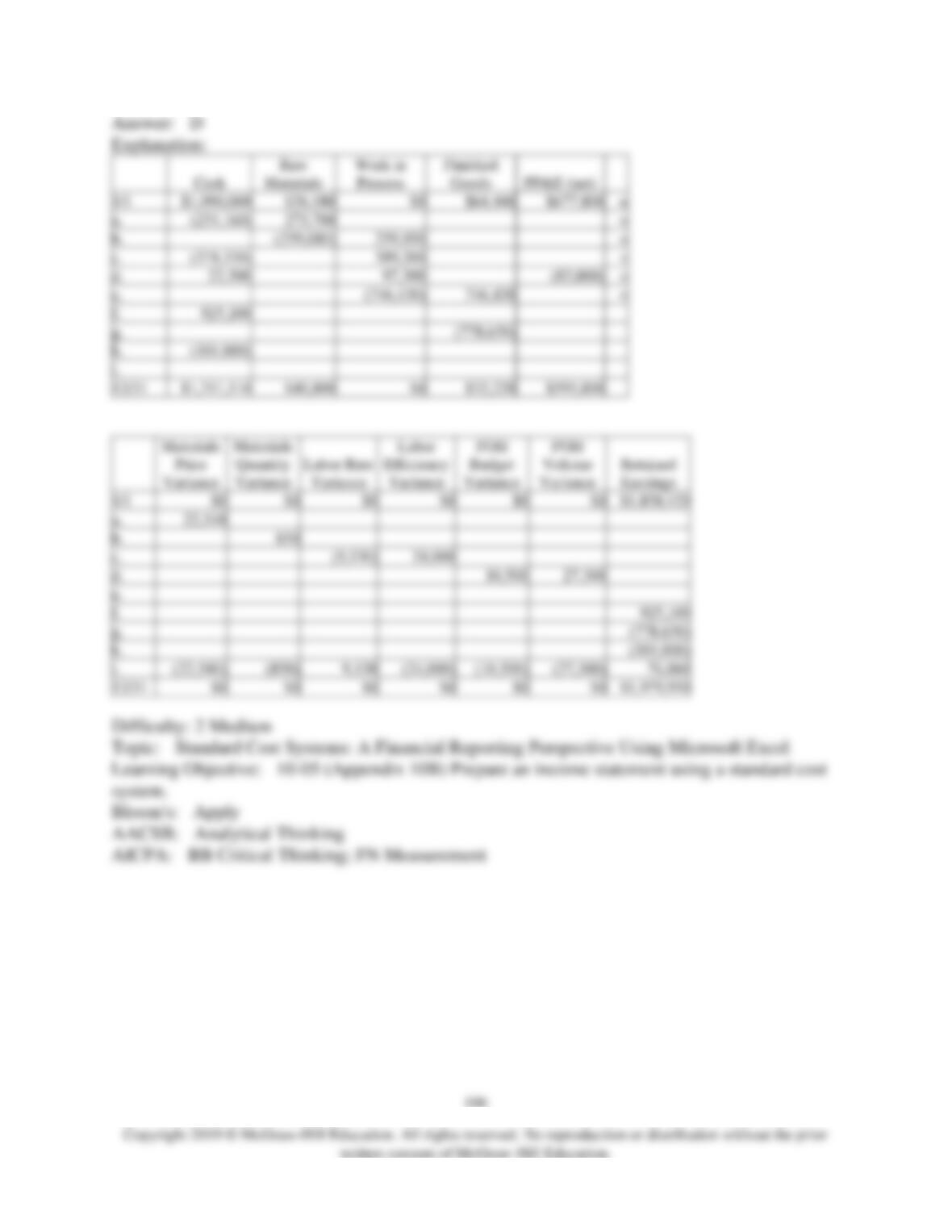
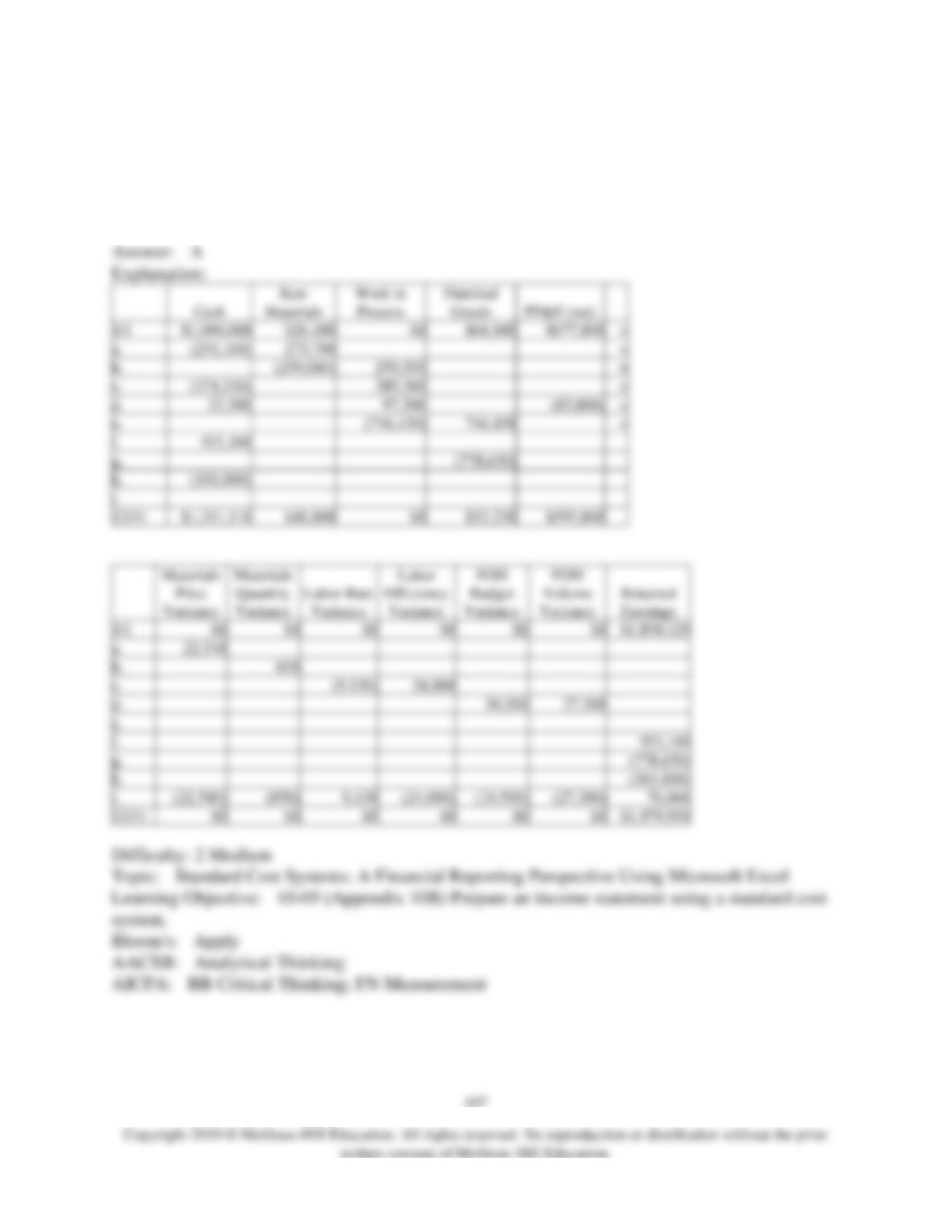
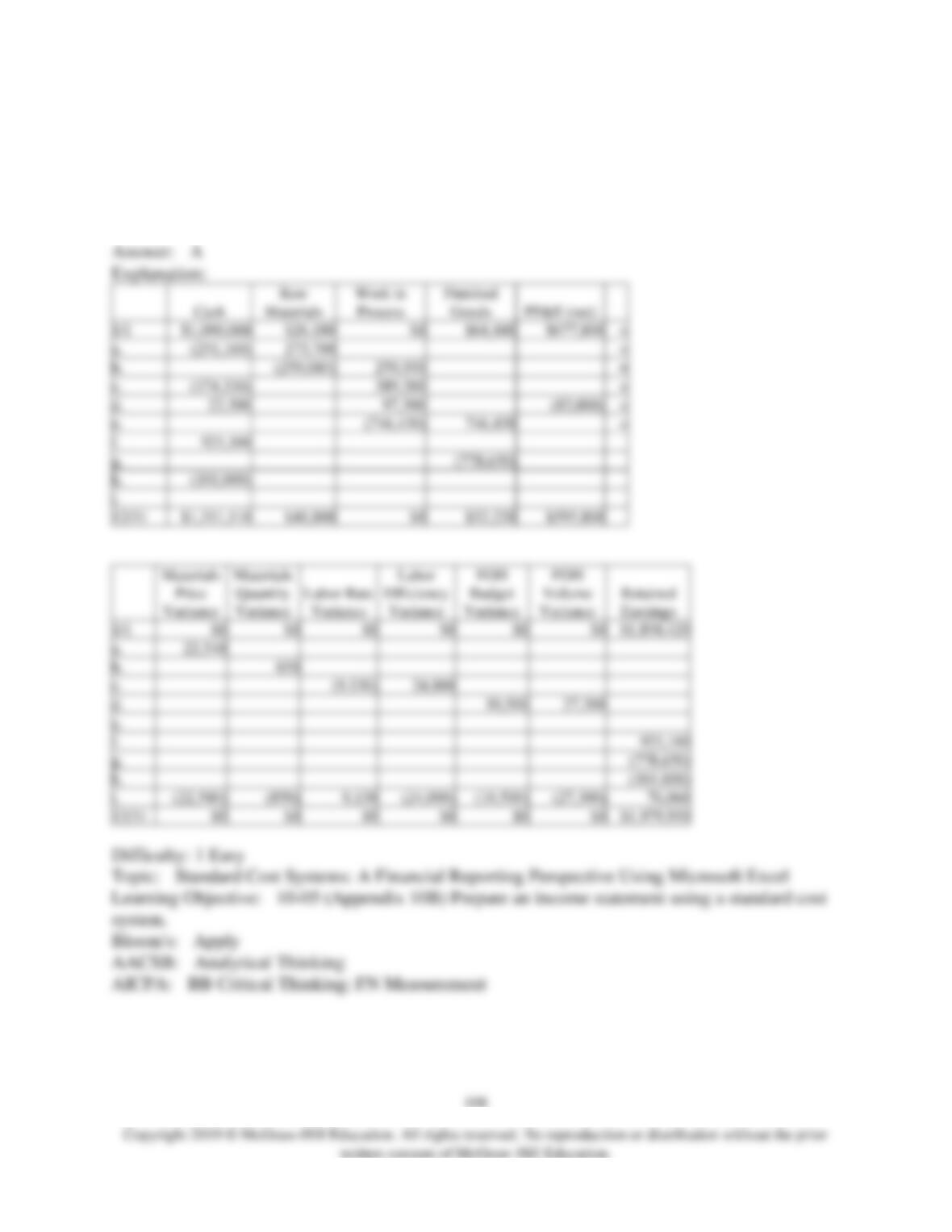
To answer the following questions, you will need to record transactions a through i in the
worksheet below. This worksheet is similar to the worksheets in your text except that it has been
split into two parts to fit on the page. PP&E (net) stands for Property, Plant, and Equipment net of
depreciation.
Cash
Raw Materials
Work in
Process
Finished
Goods
PP&E (net)
1/1
$1,090,000
$26,180
$0
$64,440
$677,800
=
a.
=
b.
=
c.
=
d.
=
e.
=
f.
g.
h.
i.
Materials
Price
Variance
Materials
Quantity
Variance
Labor Rate
Variance
Labor
Efficiency
Variance
FOH
Budget
Variance
FOH
Volume
Variance
Retained
Earnings
1/1
$0
$0
$0
$0
$0
$0
$1,858,420
a.
b.
c.
d.
e.
f.
g.
h.
i.
105) The ending balance in the Cash account will be closest to:
A) $1,288,570
B) $1,412,110
C) $221,110
D) $1,311,110
106) The ending balance in the Raw Materials account will be closest to:
A) $40,800
B) $285,260
C) $299,880
D) $11,560
107) The ending balance in the Work in Process account will be closest to:
A) $0
B) $259,930
C) $649,130
D) $746,430
108) The ending balance in the Finished Goods account will be closest to:
A) $32,220
B) $810,870
C) $96,660
D) $804,830
109) The ending balance in the PP&E (net) account will be closest to:
A) $700,300
B) $580,500
C) $677,800
D) $595,800
110) The ending balance in the Retained Earnings account at the end of the year is closest to:
A) $1,934,480
B) $1,979,930
C) $1,903,870
D) $1,736,910
112
Alberts Corporation manufactures one product. It does not maintain any beginning or ending
Work in Process inventories. The company uses a standard cost system in which inventories are
recorded at their standard costs. The standard cost card for the company’s only product is as
follows:
Inputs
Standard
Quantity
or Hours
Standard Price or
Rate
Standard
Cost
Direct materials
2.0
liters
$
9.50
per liters
$
19.00
Direct labor
0.80
hours
$
20.00
per hour
16.00
Fixed manufacturing overhead
0.80
hours
$
12.00
per hour
9.60
Total standard cost per unit
$
44.60
The standard fixed manufacturing overhead rate was based on budgeted fixed manufacturing
overhead of $240,000 and budgeted activity of 20,000 hours.
During the year, the company applied fixed overhead to the 15,200 units in work in process
inventory using the predetermined overhead rate multiplied by the number of direct labor-hours
allowed. Actual fixed overhead costs for the year were $223,700. Of this total, $147,700 related to
items such as insurance, utilities, and indirect labor salaries that were all paid in cash and $76,000
related to depreciation of manufacturing equipment.
Assume that all transactions are recorded on the below worksheet, which is similar to the
worksheet shown in your text except that it has been divided into two parts so that it fits on one
page. The beginning balances in each of the accounts have been given. PP&E (net) stands for
Property, Plant, and Equipment net of depreciation.
Cash
Raw Materials
Work in
Process
Finished
Goods
PP&E (net)
1/1
$1,010,000
$38,000
$0
$80,280
$530,200
=
Materials
Price
Variance
Materials
Quantity
Variance
Labor Rate
Variance
Labor
Efficiency
Variance
FOH
Budget
Variance
FOH
Volume
Variance
Retained
Earnings
1/1
$0
$0
$0
$0
$0
$0
$1,658,480
111)
When the fixed manufacturing overhead cost is recorded, which of the following entries will be
made?
A) ($16,300) in the FOH Volume Variance column
B) $16,300 in the FOH Volume Variance column
C) ($16,300) in the FOH Budget Variance column
D) $16,300 in the FOH Budget Variance column
112) When applying fixed manufacturing overhead to production, the Work in Process inventory
account will increase (decrease) by:
A) ($147,700)
B) ($145,920)
C) $147,700
D) $145,920
113) When the fixed manufacturing overhead cost is recorded, which of the following entries will
be made?
A) $94,080 in the FOH Volume Variance column
B) ($94,080) in the FOH Budget Variance column
C) $94,080 in the FOH Budget Variance column
D) ($94,080) in the FOH Volume Variance column
Woodhead Inc. manufactures one product. It does not maintain any beginning or ending
inventories. The company uses a standard cost system in which inventories are recorded at their
standard costs and any variances are closed directly to Cost of Goods Sold. Its standard cost per
unit produced is $37.45. During the year, the company produced and sold 24,400 units at a price of
$47.40 per unit and its selling and administrative expenses totaled $92,000. The company does not
have any variable manufacturing overhead costs. It recorded the following variances during the
year:
Materials price variance
$
8,760
F
Materials quantity variance
$
550
U
Labor rate variance
$
27,885
U
Labor efficiency variance
$
17,200
F
Fixed manufacturing overhead budget variance
$
17,400
F
Fixed manufacturing overhead volume variance
$
18,900
F
114) When the company closes its standard cost variances, the Cost of Goods Sold will increase
(decrease) by:
A) ($36,300)
B) $33,825
C) ($33,825)
D) $36,300
Materials price variance
$
F
Materials quantity variance
$
U
Labor rate variance
$
U
Labor efficiency variance
$
F
Fixed manufacturing overhead budget variance
$
F
Fixed manufacturing overhead volume variance
$
F
Total variance
$
F
115) The adjusted Cost of Goods Sold after closing all of the variances to Cost of Goods Sold will
be closest to:
A) $913,780
B) $1,190,385
C) $947,605
D) $879,955
116) The net operating income for the year is closest to:
A) $259,859
B) $184,605
C) $151,026
D) $150,780

118
117) Arellanes Corporation manufactures one product. It does not maintain any beginning or
ending Work in Process inventories. The company uses a standard cost system in which
inventories are recorded at their standard costs and any variances are closed directly to Cost of
Goods Sold. There is no variable manufacturing overhead. The company’s balance sheet at the
beginning of the year was as follows:
Arellanes Corporation
Balance Sheet
January 1
Assets
Cash
$1,070,000
Raw materials inventory
21,060
Finished goods inventory
65,520
Property, plant, and equipment (net)
697,200
Total assets
$1,853,780
Liabilities and Equity
Retained earnings
$1,853,780
Total liabilities and equity
$1,853,780
The standard cost card for the company’s only product is as follows:
Inputs
Standard
Quantity
or Hours
Standard Price
or Rate
Standard
Cost
Direct materials
2.7
kilos
$6.50
per kilo
$17.55
Direct labor
0.90
hours
$21.50
per hour
19.35
Fixed manufacturing overhead
0.90
hours
$11.00
per hour
9.90
Total standard cost per unit
$46.80
The standard fixed manufacturing overhead rate was based on budgeted fixed manufacturing
overhead of $198,000 and budgeted activity of 18,000 hours.

119
During the year, the company completed the following transactions:
a. Purchased 75,900 kilos of raw material at a price of $6.40 per kilo.
b. Used 68,680 kilos of the raw material to produce 25,400 units of work in process.
c. Assigned direct labor costs to work in process. The direct labor workers (who were paid in cash)
worked 24,160 hours at an average cost of $19.80 per hour.
d. Applied fixed overhead to the 25,400 units in work in process inventory using the predetermined
overhead rate multiplied by the number of direct labor-hours allowed. Actual fixed overhead costs
for the year were $187,400. Of this total, $95,400 related to items such as insurance, utilities, and
indirect labor salaries that were all paid in cash and $92,000 related to depreciation of
manufacturing equipment.
e. Transferred 25,400 units from work in process to finished goods.
f. Sold for cash 24,200 units to customers at a price of $52.80 per unit.
g. Completed and transferred the standard cost associated with the 24,200 units sold from finished
goods to cost of goods sold.
h. Paid $121,000 of selling and administrative expenses.
i. Closed all standard cost variances to cost of goods sold.
120
Required:
1. Compute all direct materials, direct labor, and fixed overhead variances for the year.
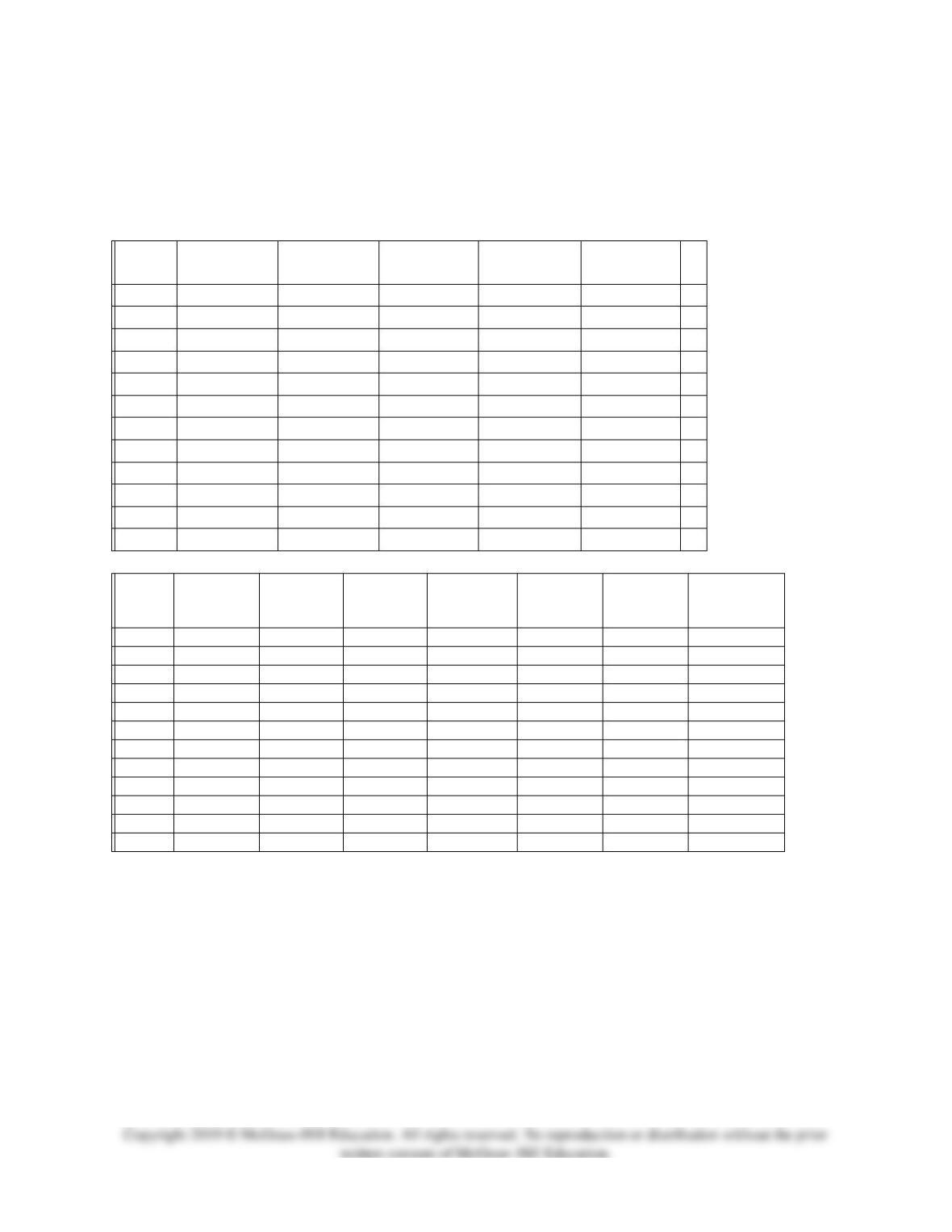
2. Enter the beginning balances and record the above transactions in the worksheet that appears
below. Because of the width of the worksheet, it is in two parts. In your text, these two parts would
be joined side-by-side to make one very wide worksheet.
Cash
Raw
Materials
Work in
Process
Finished
Goods
PP&E (net)
=
1/1
=
a.
=
b.
=
c.
=
d.
=
e.
=
f.
=
g.
=
h.
=
i.
=
12/31
=
=
Materials
Price
Variance
Materials
Quantity
Variance
Labor Rate
Variance
Labor
Efficiency
Variance
FOH Budget
Variance
FOH Volume
Variance
Retained
Earnings
1/1
a.
b.
c.
d.
e.
f.
g.
h.
i.
12/31
3. Determine the ending balance (e.g., 12/31 balance) in each account.
4. Prepare an income statement for the year.