b.
A long-term debt secured by real property.
c.
Bonds that are issued in the name of the bondholder.
d.
The method of bond amortization that uses a constant interest rate each period to amortize
the bond premium or discount.
e.
Bonds that do not require periodic interest payments but instead promise to pay a fixed
amount at the maturity date.
f.
The excess of the face value over the issue price of a bond.
g.
A contract that requires a company to pay benefits to its employees after they retire.
h.
The excess of the issue price over the face value of a bond.
i.
A liability or an asset that results from using different methods to calculate income taxes
on the income statement and income tax liability on the income tax return.
j.
The method of bond amortization that equalizes amortization of a bond discount or
premium for each interest period over the life of the bond.
1. Mortgage
2. Pension plan
3. Deferred income taxes
4. Bond
5. Discount
6. Premium
7. Registered bonds
8. Zero coupon bonds
9. Straight-line method
10. Effective-interest method
PROBLEM
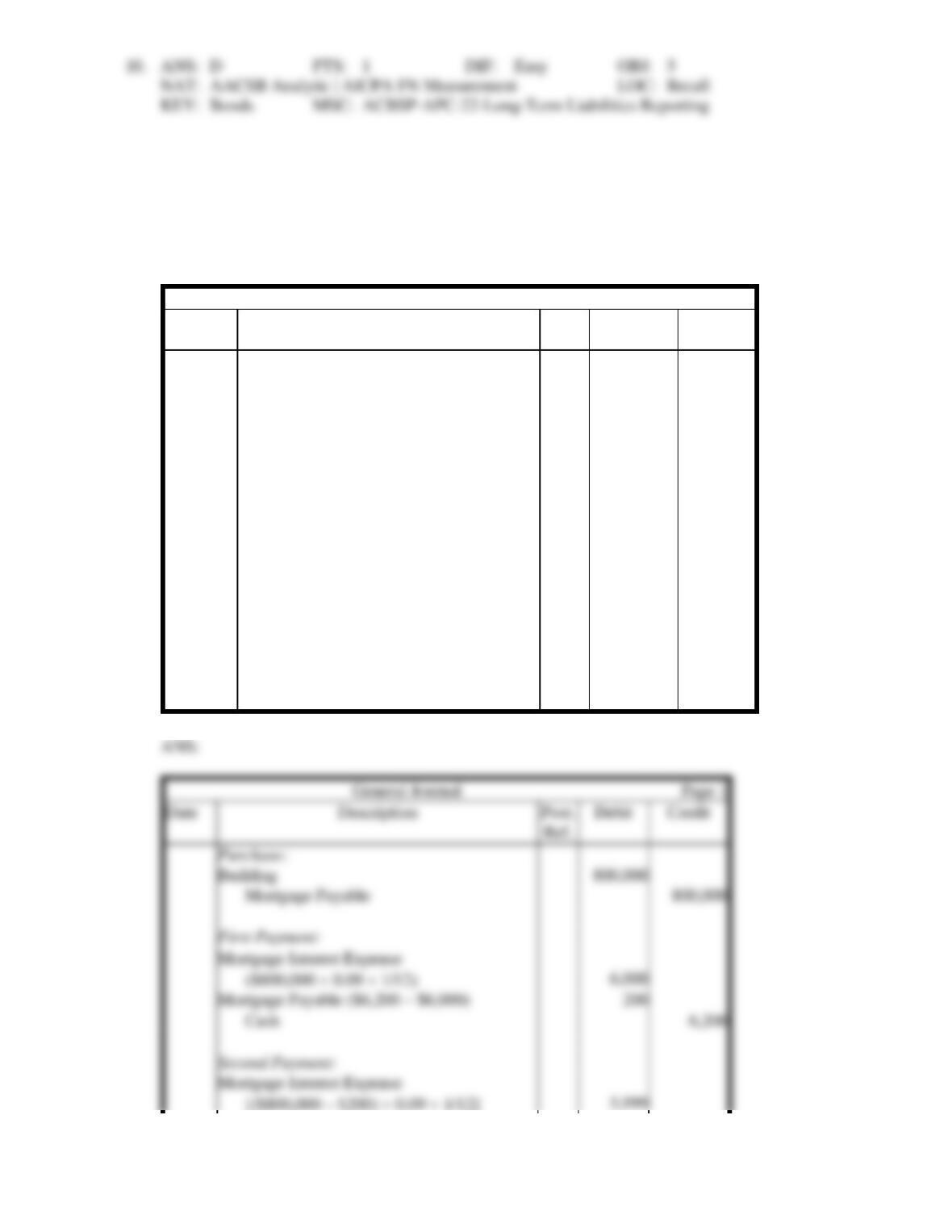
1. Alby Corporation purchased a warehouse by signing a long-term $800,000 mortgage with monthly
payments of $6,200. The mortgage carries an interest rate of 9 percent. Prepare entries in journal form
without explanations to record the purchase and the first two monthly payments. Round answers to the
nearest dollar.
General Journal
Page 1
Date
Description
Post.
Ref.
Debit
Credit
($800,000 0.09 1/12)
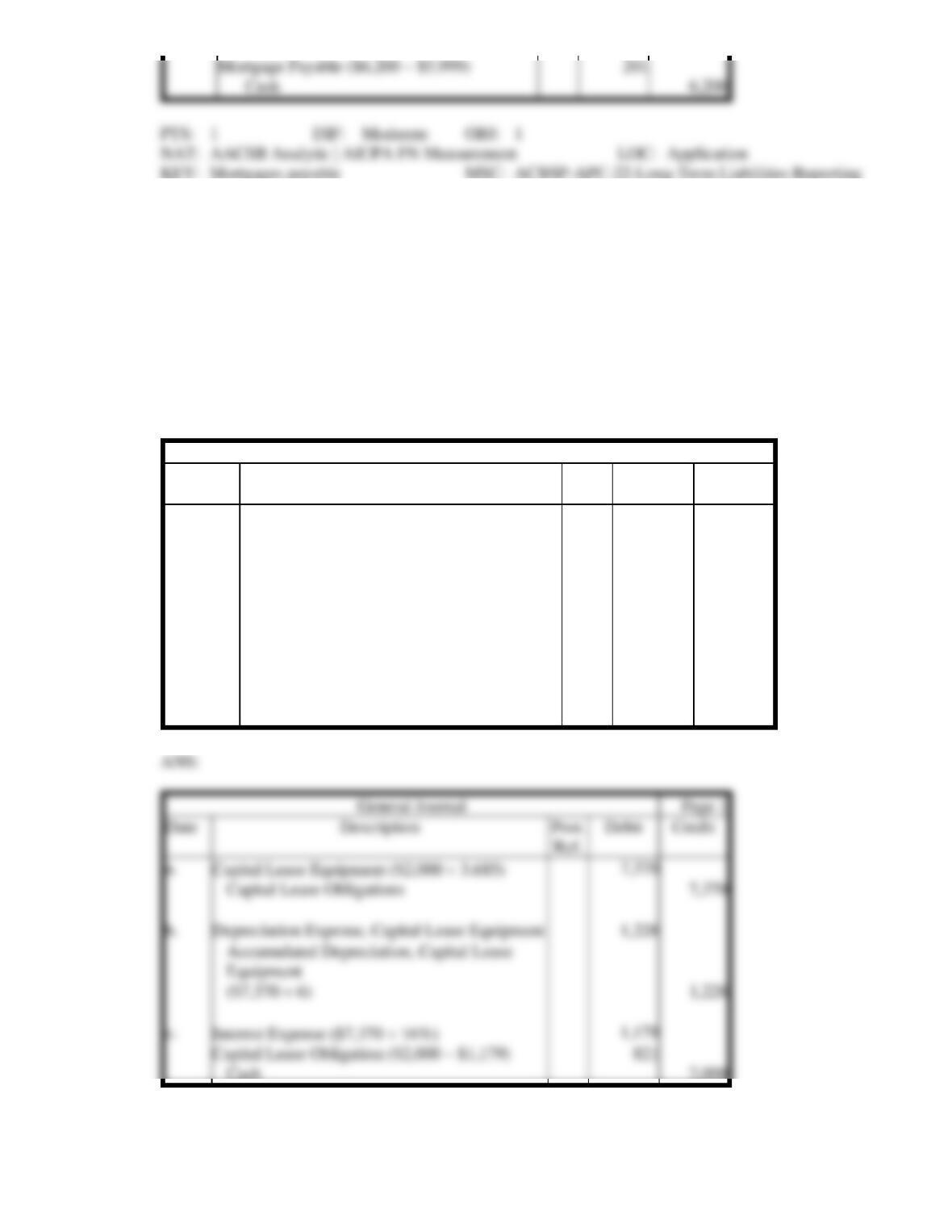
2. Dennis Corporation entered into a long-term lease for a piece of equipment. The lease term calls for an
annual payment of $2,000 for six years, which approximates the useful life of the equipment. Assume
a discount factor of 16 percent. (Note: Present value of a single sum factor at six years and 16% is
0.410; present value of an annuity factor at six years and 16% is 3.685.) Round answers to the nearest
dollar.
a. Prepare the entry without explanation to record the leased equipment.
b. Prepare the entry without explanation to record annual depreciation, assuming the straight-line
method and no residual value.
c. Prepare the entry without explanation to record the first annual payment of $2,000, after the
company has had the equipment for one year.
General Journal
Page 1
Date
Description
Post.
Ref.
Debit
Credit
Capital Lease Equipment ($2,000 3.685)
3. For each of the following descriptions, provide the name of the item that is being described.
a. A security representing money that a corporation borrows from the investing public.
b. Bonds that are issued on the basis of a corporation’s general credit.
c. The fixed rate of interest paid to bondholders based on the face value of the bonds.
d. The excess of the face value of the bond over the issue price of the bond.
e. The total value of bonds issued at one time.
f. Bonds that all mature at the same time.
g. The excess of the issue price of the bond over the face value of the bond.
h. A contract that defines the rights, privileges, and limitations of the bondholders.
i. Bonds that carry a pledge of certain corporate assets as a guarantee of repayment.
j. The rate of interest paid in the market based on bonds of similar risk.
k. Bonds that mature on different dates.
l. Bonds that are issued in the names of the bondholders.
m. Bonds that are not registered with the organization.
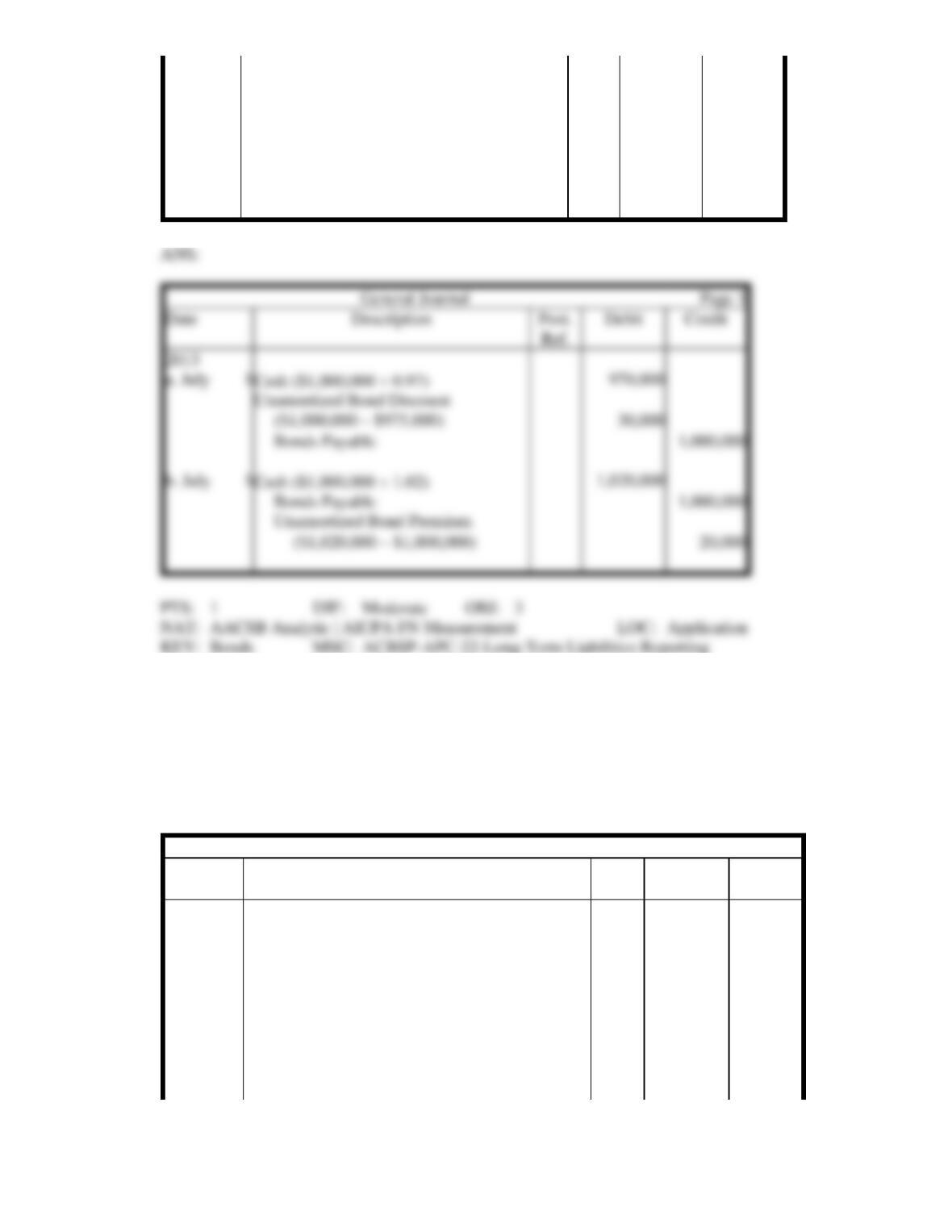
4. On July 1, 2013, Gallatin Corporation issued bonds with a face value of $1,000,000. The bonds carry a
face interest rate of 10 percent that is payable each July 1 and January 1.
a. Prepare the entry in journal form without explanation for the issuance assuming the bonds are issued
at 97.
b. Prepare the entry in journal form without explanation for the issuance assuming the bonds are issued
at 102.
General Journal
Page 1
Date
Description
Post.
Ref.
Debit
Credit
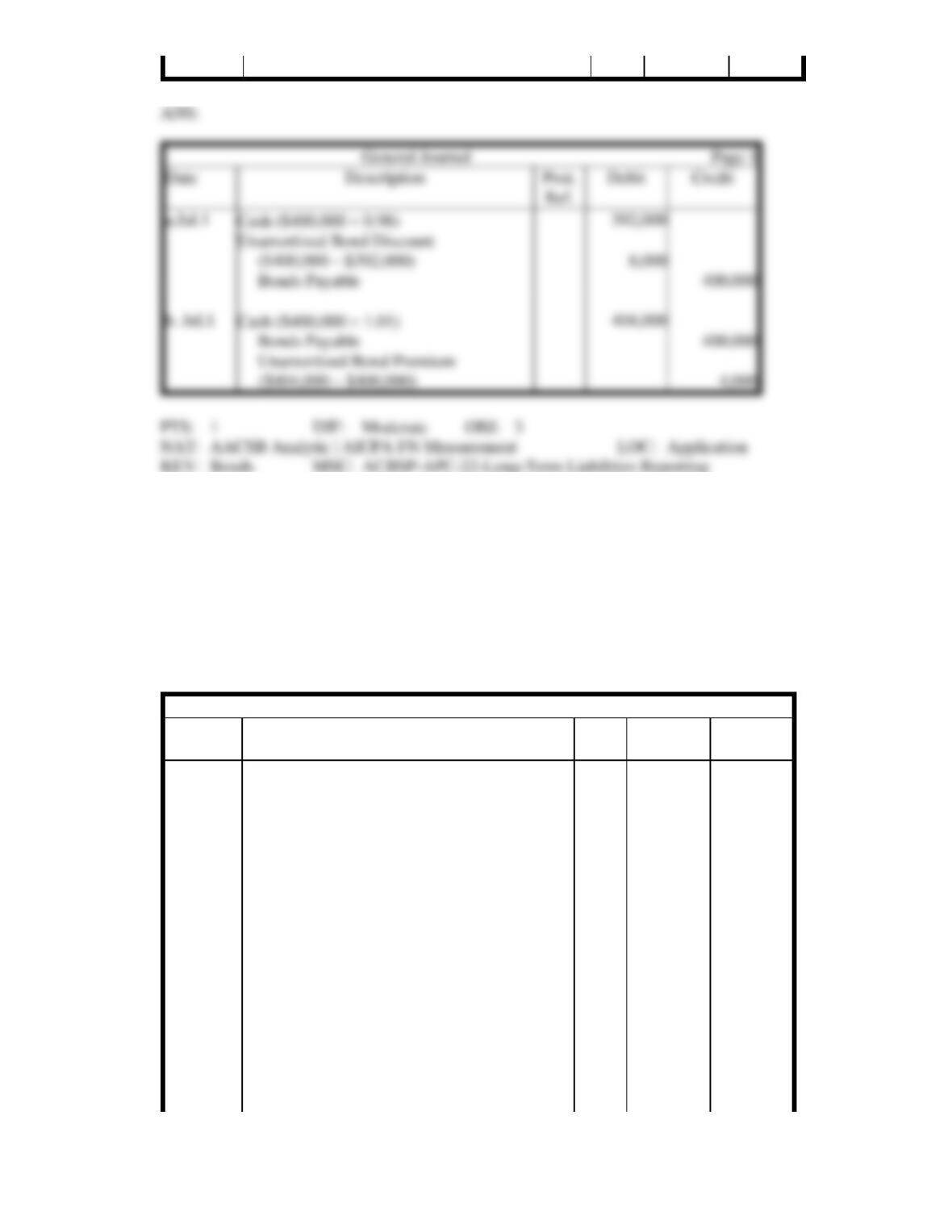
5. On July 1, 2013, Aloha Corporation issued bonds with a face value of $400,000. The bonds carry a
face interest rate of 8 percent that is payable each July 1 and January 1.
a. Prepare the entry in journal form without explanation for the issuance of the bonds assuming the
bonds are issued at 98.
b. Prepare the entry in journal form without explanation for the issuance of the bonds assuming the
bonds are issued at 101.
General Journal
Page 1
Date
Description
Post.
Ref.
Debit
Credit
Cash ($1,000,000 0.97)
($1,000,000 – $975,000)
Cash ($1,000,000 1.02)
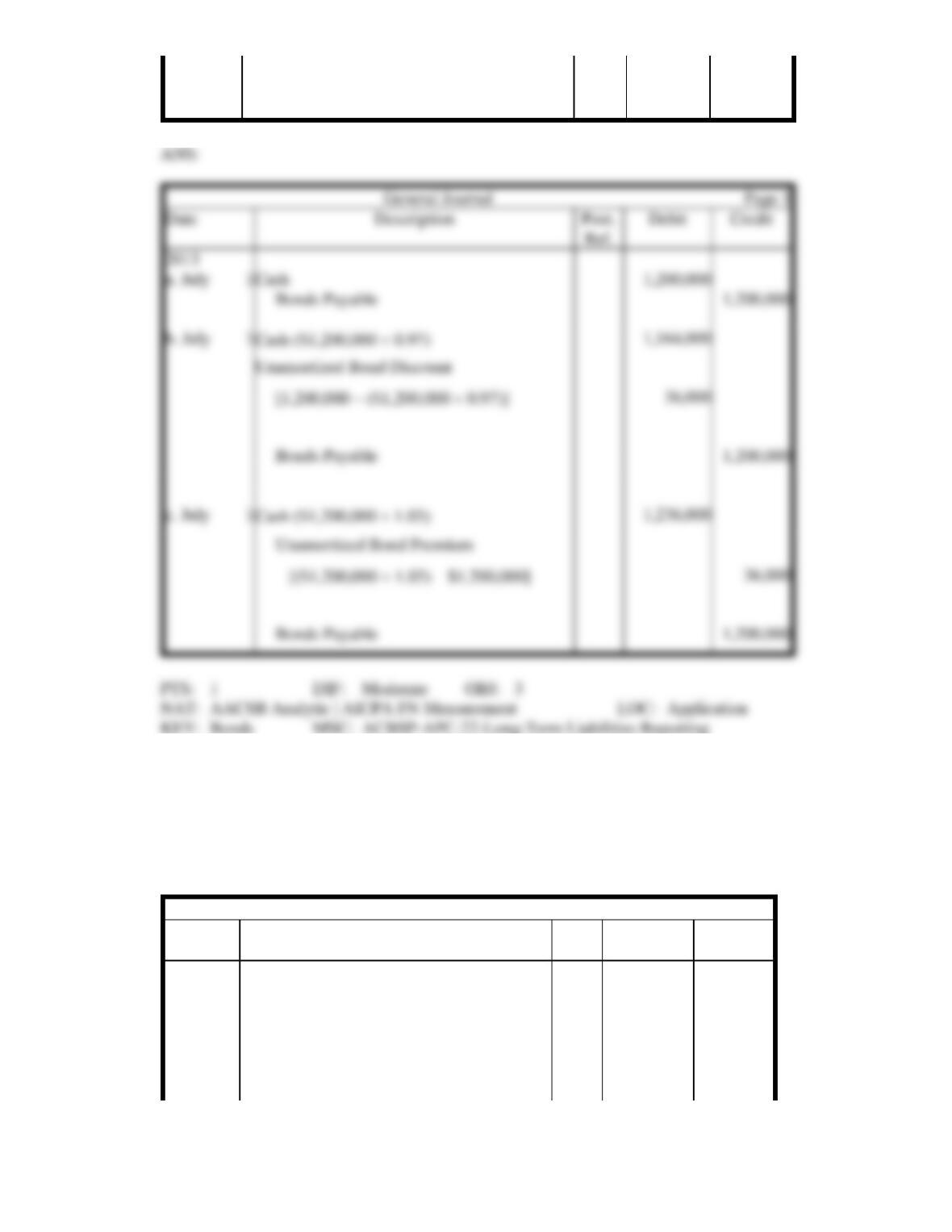
6. On July 1, 2013, Owsley Corporation issued bonds with a face value of $1,200,000. The bonds carry a
face interest rate of 8 percent that is payable each July 1 and January 1.
a. Prepare an entry in journal form without explanations to record the issuance assuming the bonds are
issued at 100.
b. Prepare an entry in journal form without explanations to record the issuance assuming the bonds are
issued at 97.
c. Prepare an entry in journal form without explanations to record the issuance assuming the bonds are
issued at 103.
General Journal
Page 1
Date
Description
Post.
Ref.
Debit
Credit
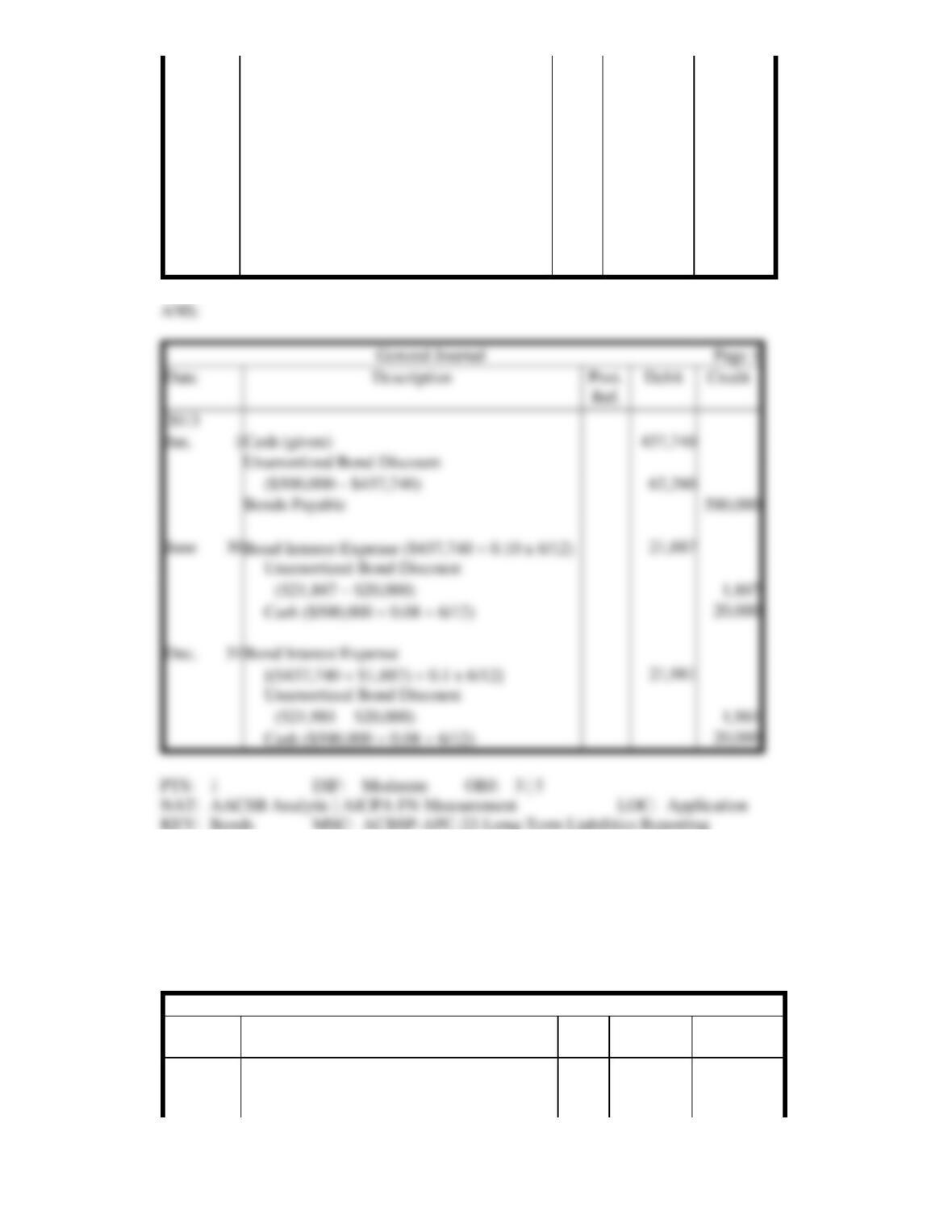
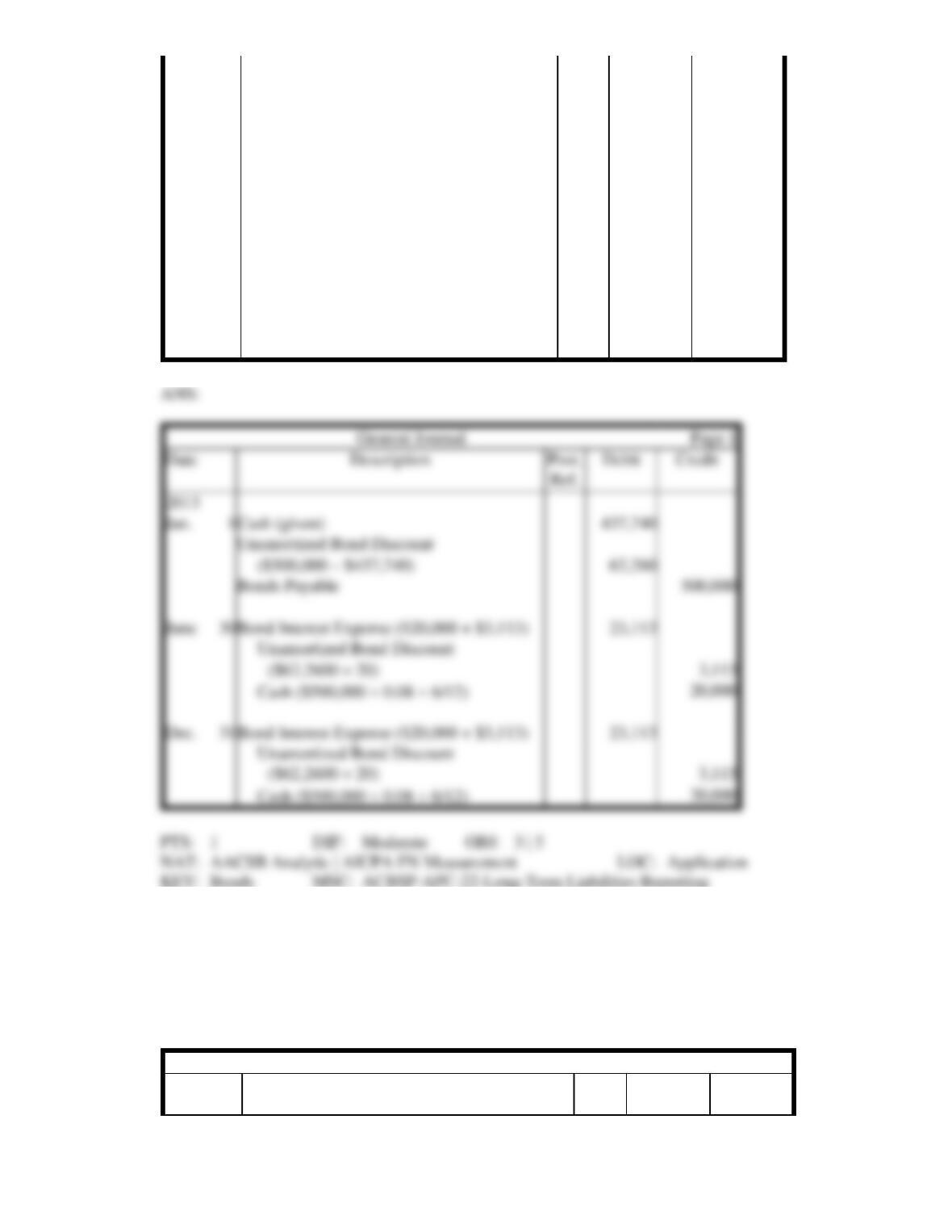
7. On January 1, 2013, Lurline Corporation issued ten-year, 8 percent bonds with a face value of
$500,000. The semi-annual interest dates are June 30 and December 31. The bonds were issued for
$437,740 to yield an effective annual rate of 10 percent. The accounting year ends on December 31.
Prepare entries in journal form without explanations to record the bond issue on January 1, 2013, and
the payments of interest and amortization of discount on June 30 and December 31, 2013. Use the
effective interest method of amortization. Round answers to the nearest dollar.
General Journal
Page 1
Date
Description
Post.
Ref.
Debit
Credit
Date
Credit
Bonds Payable
8. On January 2, 2013, Boyd Corporation issued ten-year, 8 percent bonds with a face value of $500,000.
The semi-annual interest dates are June 30 and December 31. The bonds were issued for $437,740 to
yield a market interest rate of 10 percent. The accounting year ends on December 31. Prepare entries in
journal form without explanations to record the bond issue on January 2, 2013, and the payments of
interest and amortization of discount on June 30 and December 31, 2013. Use the straight-line method
of amortization. Round answers to the nearest dollar.
General Journal
Page 1
Date
Description
Post.
Ref.
Debit
Credit
Bond Interest Expense ($437,740 0.10 x 6/12)
[($437,740 + $1,887) 0.1 x 6/12]
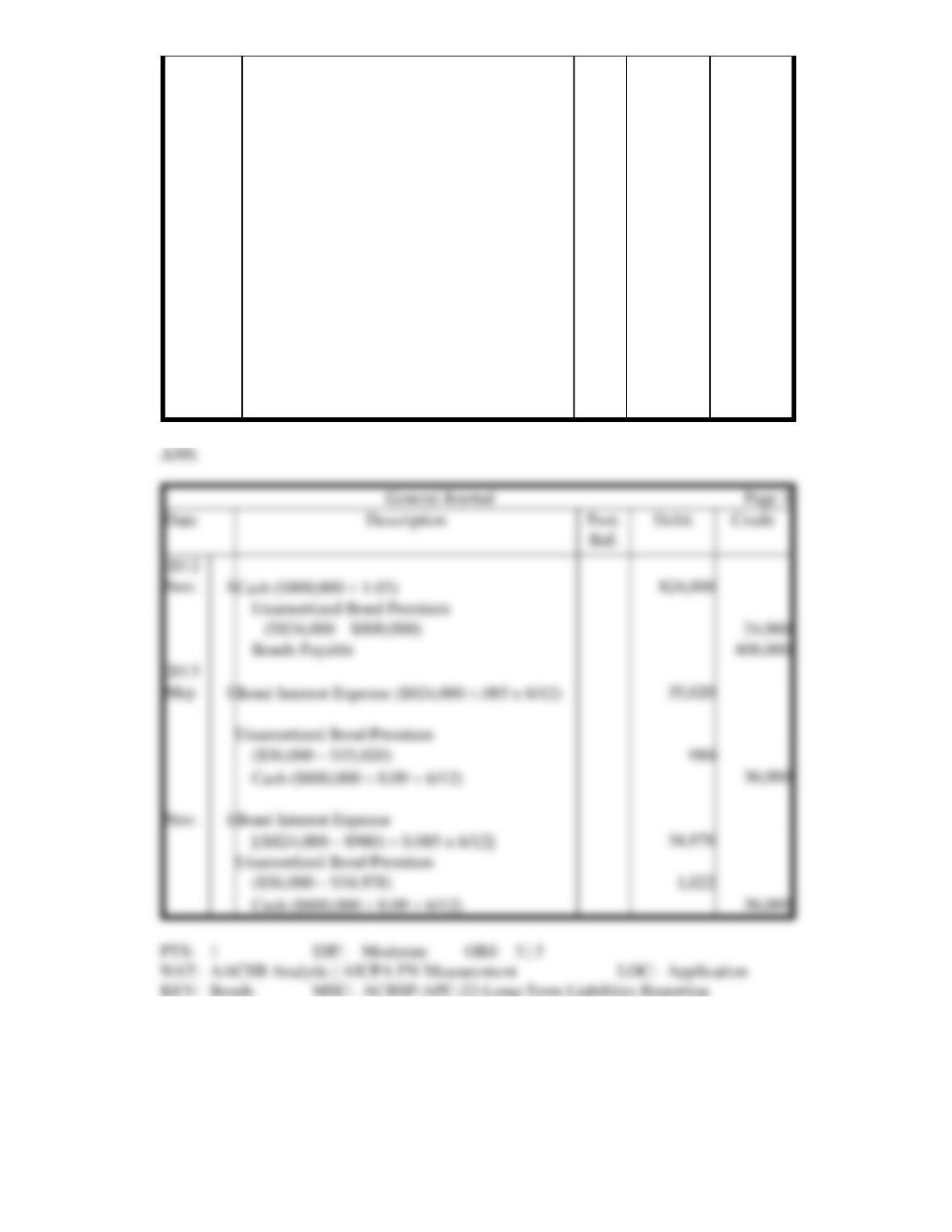
9. On November 1, 2012, Fields Corporation issued $800,000 worth of ten-year, 9 percent bonds. The
semi-annual interest dates are November 1 and May 1. Because the market interest rate of similar
investments was 8.5 percent, the bonds were issued at a price of 103. Ignoring year-end accruals,
prepare entries in journal form without explanations to record the bond issue on November 1, 2012,
and the payments of interest and amortization of premium on May 1 and November 1, 2013. Use the
effective interest method of amortization. Round answers to the nearest dollar.
General Journal
Page 1
Date
Description
Post.
Ref.
Debit
Credit
Cash ($500,000 0.08 6/12)
10. Strathern Corporation issued ten-year term bonds dated January 1, 2012, with a face value of
$800,000. The face interest rate is 10 percent, and interest is payable semi-annually on June 30 and
December 31. The bonds were issued for $708,400 to yield an effective annual rate of 12 percent. Use
the effective interest method of amortization. Round answers to the nearest dollar.
Cash ($800,000 0.09 6/12)
Cash ($800,000 0.09 6/12)
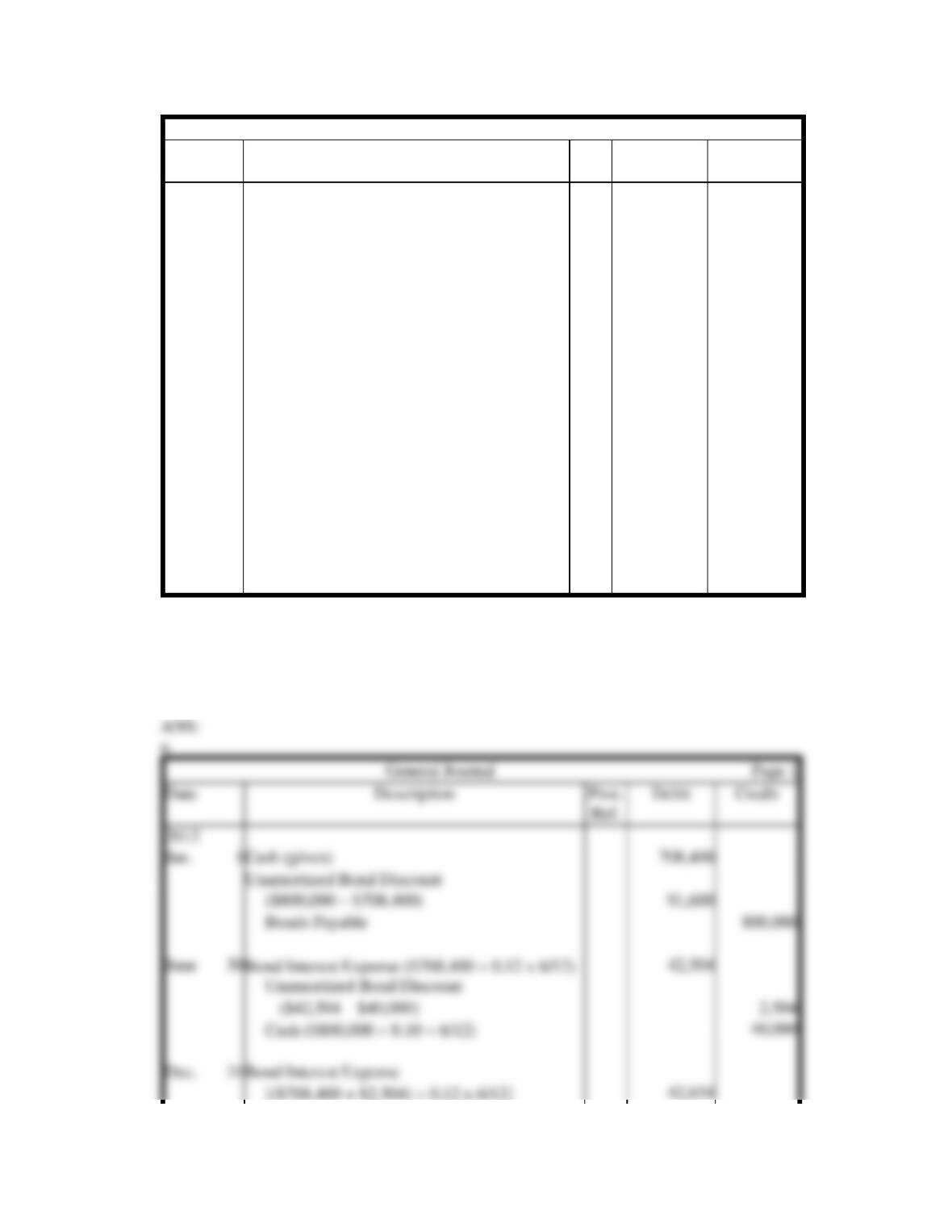
a. Prepare entries in journal form without explanations to record the bond issue on January 1, 2012,
and the payments of interest and amortization on June 30 and December 31, 2012.
General Journal
Page 1
Date
Description
Post.
Ref.
Debit
Credit
b. Calculate the total amount to be reported as Bond Interest Expense on the income statement for the
year ended 2013.
c. Calculate the carrying value of the bonds on December 31, 2013.
11. A notice appeared in the Grant Street Times stating that Dollar Savings Association of Texas was
issuing $2.9 billion in zero coupon bonds. “The Bonds do not pay interest periodically. The only
scheduled payment to the holder of a Bond will be the amount at maturity,” the ad read. The details of
two components of the issue were as follows: $500,000,000 Bonds due December 12, 2017, at 3.254;
$500,000,000 Bonds due December 12, 2027, at 1.380; plus accrued amortization, if any, of the
original issue discount from December 12, 1987, to date of delivery.
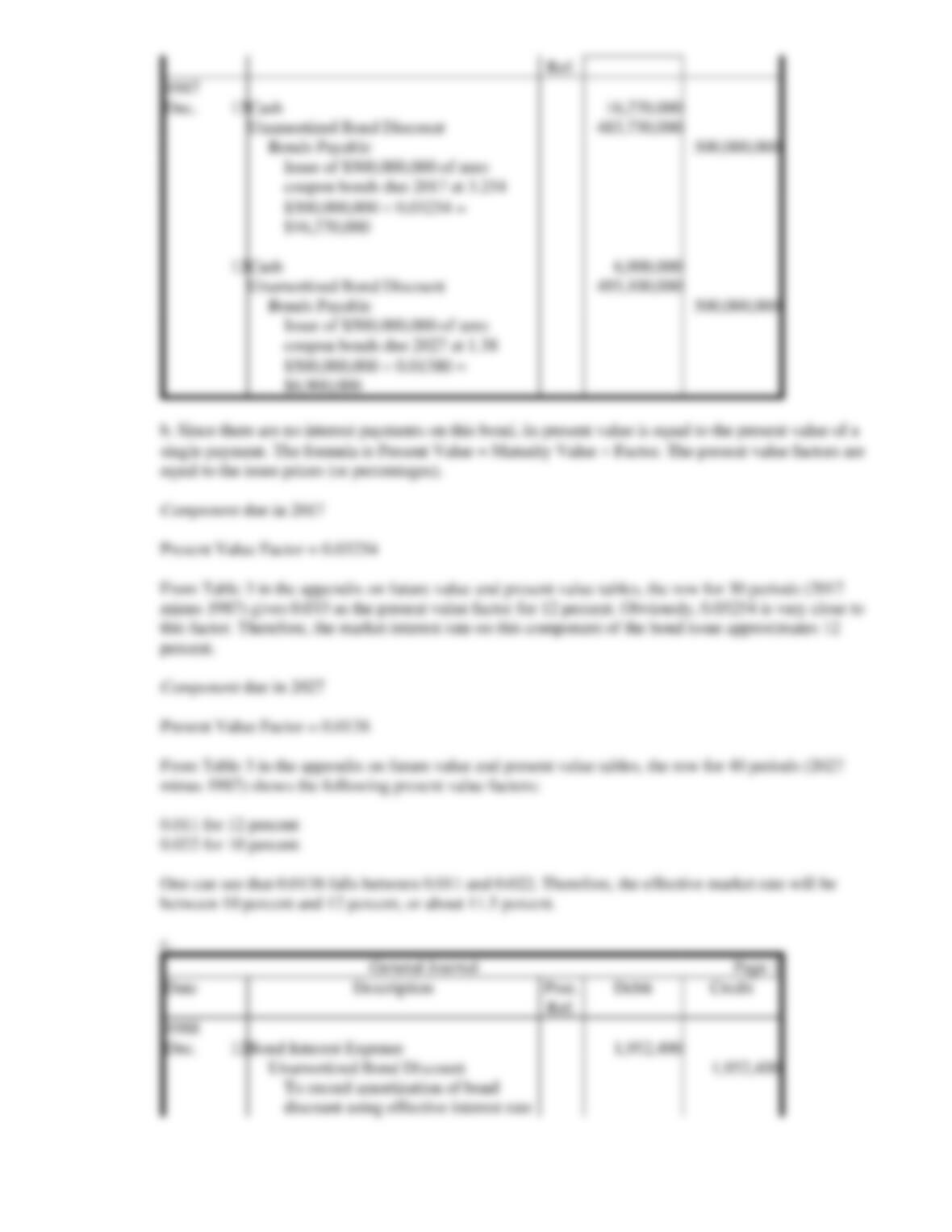
a. Assuming all the bonds were issued on December 12, 1987, prepare entries in journal form to record
each component shown above.
General Journal
Page 1
Date
Description
Post.
Ref.
Debit
Credit
b. Determine the approximate market interest rate on each of the two components of the bond issue.
Assume that interest is compounded annually. Use Table 3 in the appendix on future value and present
value tables.
c. Prepare entries in journal form to record bond interest expense for each of the first two years
(December 12, 1988 and 1989) on the component of the bond due in 2017 (ignore effects of fiscal year
ends). What advantages or disadvantages are there to Dollar in issuing zero coupon bonds?
General Journal
Page 1
Date
Description
Post.
Ref.
Debit
Credit
12. On December 31, 2012, the balance sheet of Gamma Corporation reported bonds outstanding with a
face value of $2,000,000 and a related unamortized premium of $60,000. Interest is payable
semiannually on January 1 and July 1.
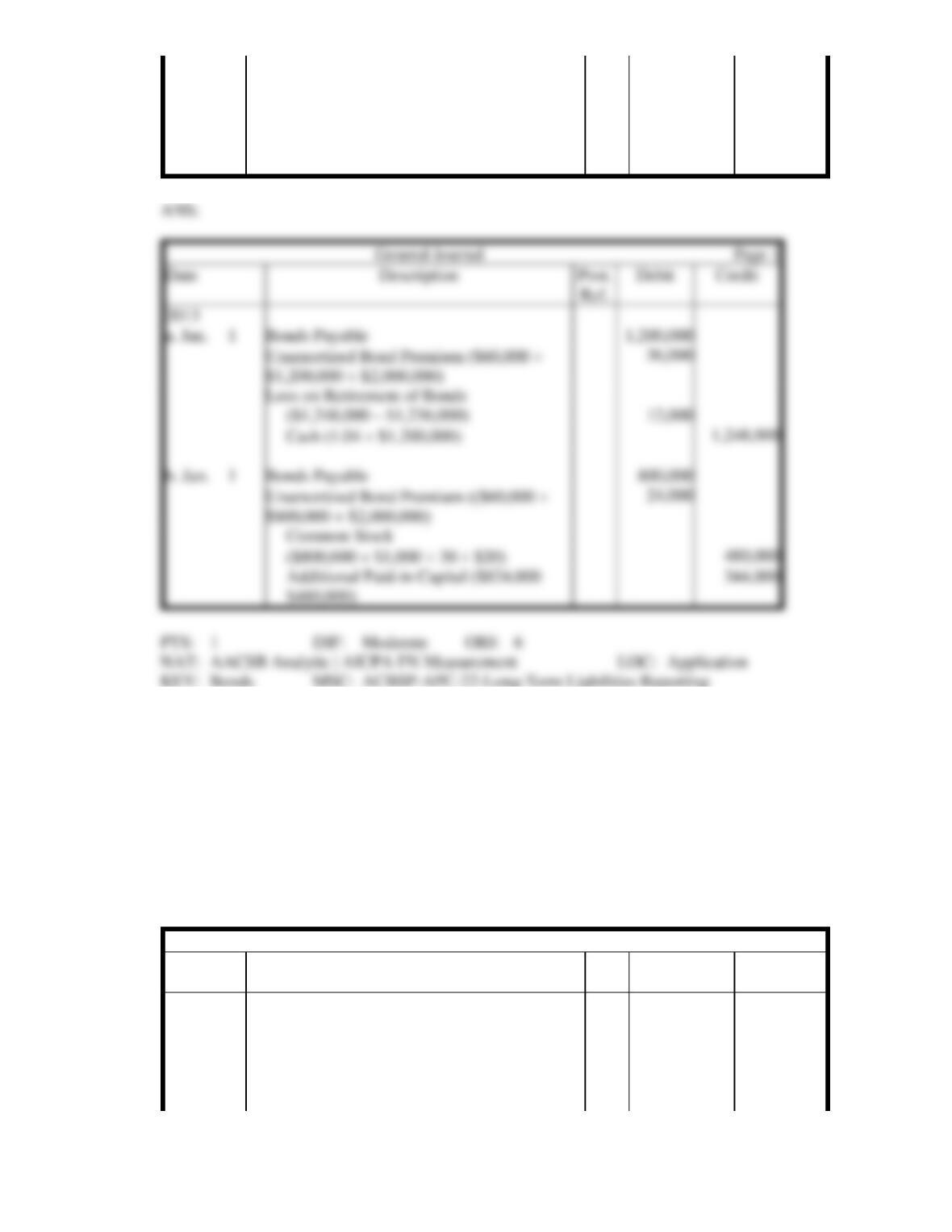
a. Prepare an entry in journal form without explanations to record the retirement of bonds with a face
value of $1,200,000 on January 1, 2013, assuming the bonds were redeemed at a call price of 104.
b. Prepare an entry in journal form without explanation on January 1, 2013, to record the conversion of
bonds with a face value of $800,000 into common stock. Each $1,000 bond is convertible into 30
shares of $20 par value common stock.
General Journal
Page 1
Date
Description
Post.
Ref.
Debit
Credit
$16,270,000 0.12
Bond Interest Expense
Unamortized Bond Discount
($16,270,000 + $1,952,400) 0.12
13. On December 31, 2012, the balance sheet of L and H Corporation reported bonds outstanding with a
face value of $1,000,000 and a related unamortized premium of $50,000. Interest is payable
semiannually on January 1 and July 1.
a. Prepare an entry in journal form without explanations to record the retirement of bonds with a face
value of $600,000 on January 1, 2013, assuming the bonds were redeemed at a call price of 103.
b. Prepare an entry in journal form without explanation on January 1, 2013, to record the conversion of
bonds with a face value of $400,000 into common stock. Each $1,000 bond is convertible into 25
shares of $10 par value common stock.
General Journal
Page 1
Date
Description
Post.
Ref.
Debit
Credit
Page 1
Date
Post.
Ref.
a. Jan.
1
Bonds Payable
Unamortized Bond Premium ($60,000
Loss on Retirement of Bonds
($1,248,000 – $1,236,000)
Cash (1.04 $1,200,000)
b. Jan.
1
Bonds Payable
Unamortized Bond Premium (($60,000
Common Stock
($800,000 ÷ $1,000 30 $20)
Additional Paid-in Capital ($824,000 –
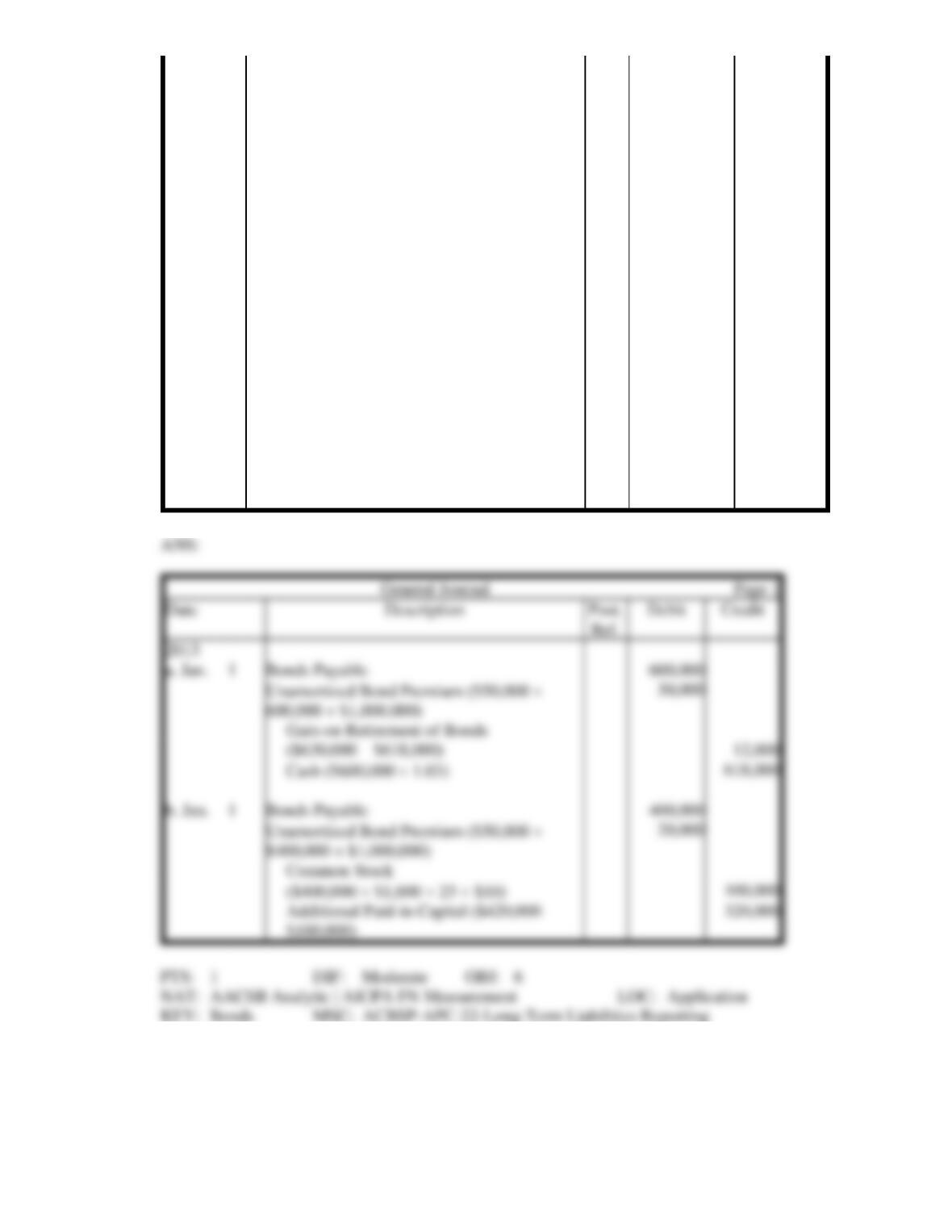
a. Jan.
1
Bonds Payable
Gain on Retirement of Bonds
($630,000 – $618,000)
Cash ($600,000 1.03)
b. Jan.
1
Bonds Payable
Common Stock
($400,000 ÷ $1,000 25 $10)