190.
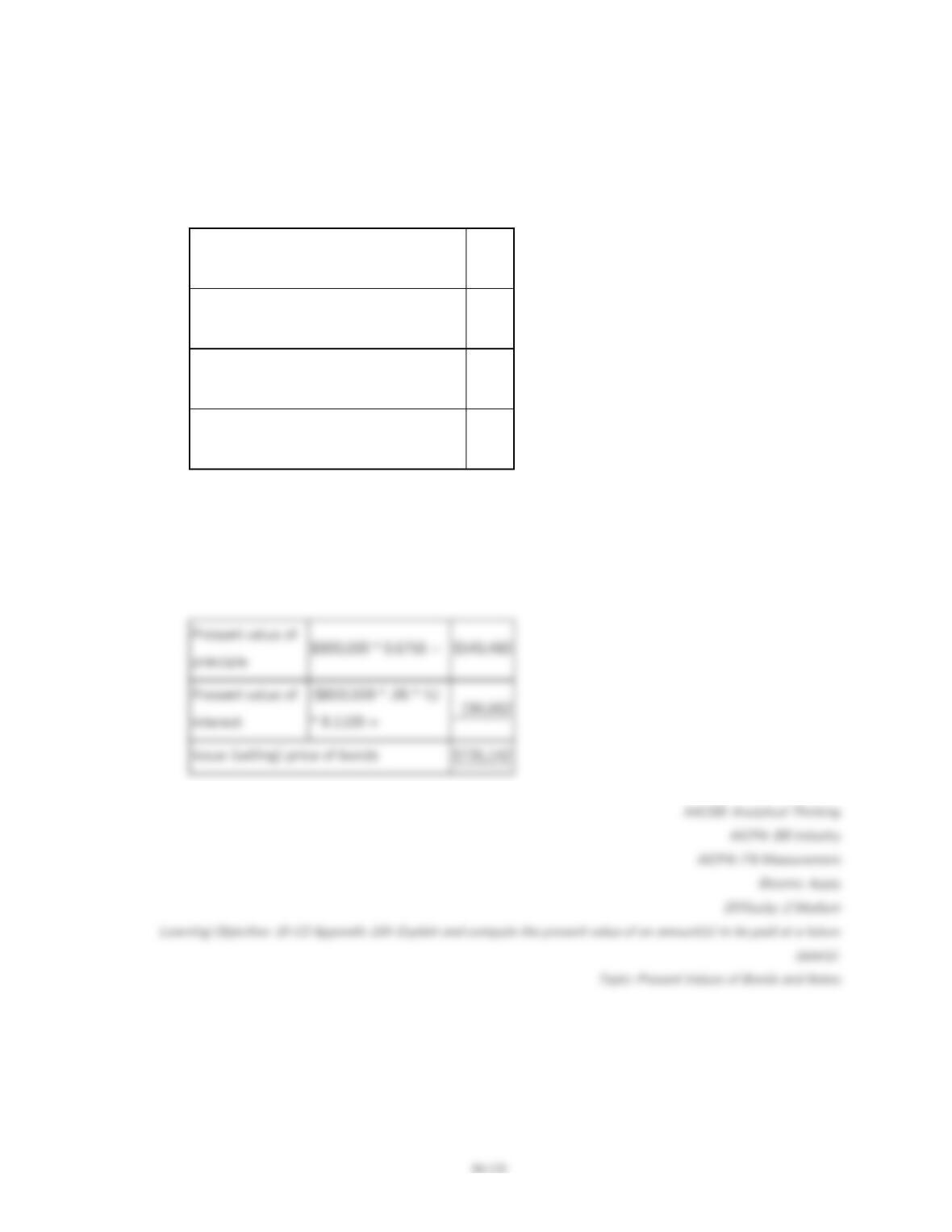
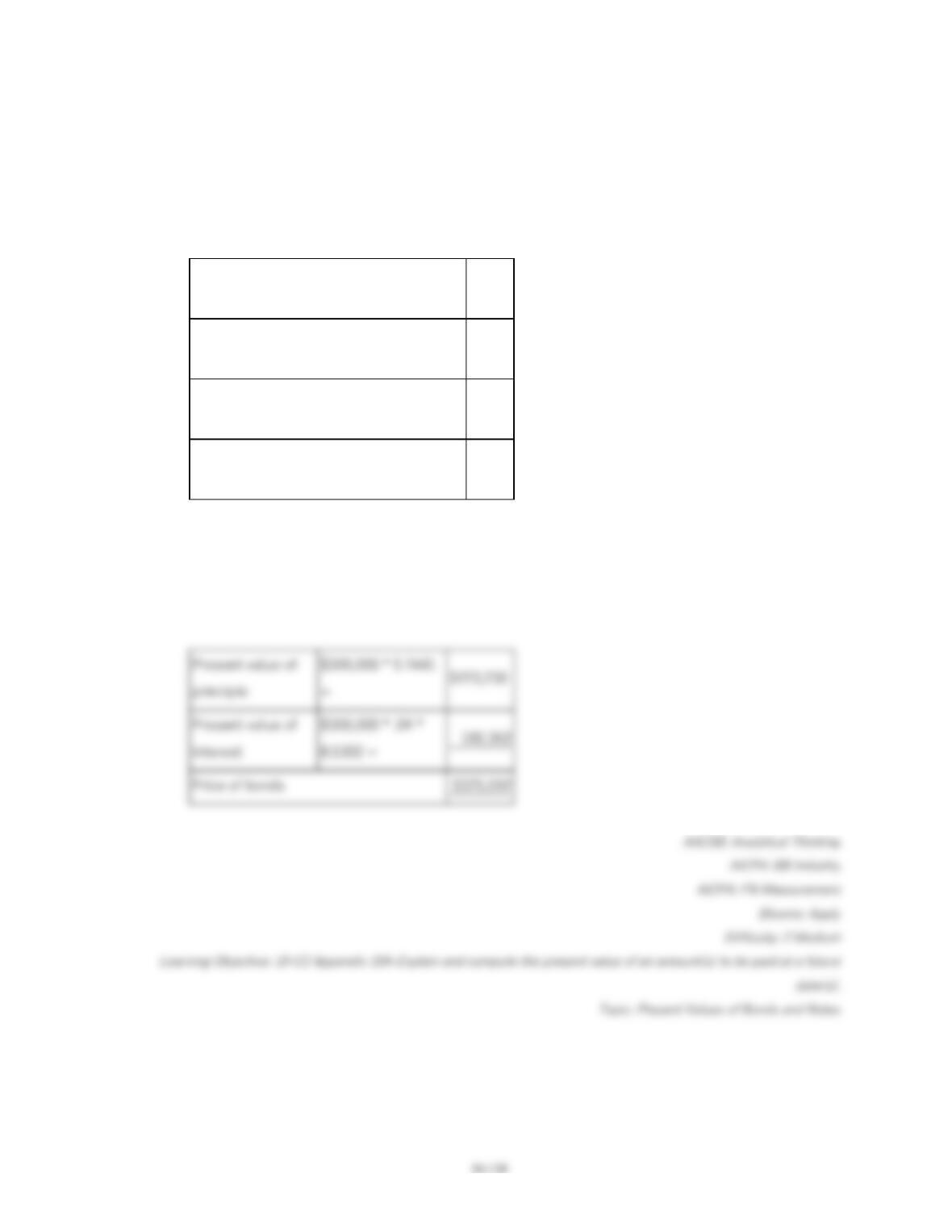
A company issues 6%, 5 year bonds with a par value of $800,000 and semiannual interest
payments. On the issue date, the annual market rate of interest is 8%. Compute the issue
(selling) price of the bonds. The following information is taken from present value tables:
Present value of an annuity for 10 periods
at 3%
8.5302
Present value of an annuity for 10 periods
at 4%
8.1109
Present value of 1 due in 10 periods at
3%
0.7441
Present value of 1 due in 10 periods at
4%
0.6756
$540,480
Present value of
191.
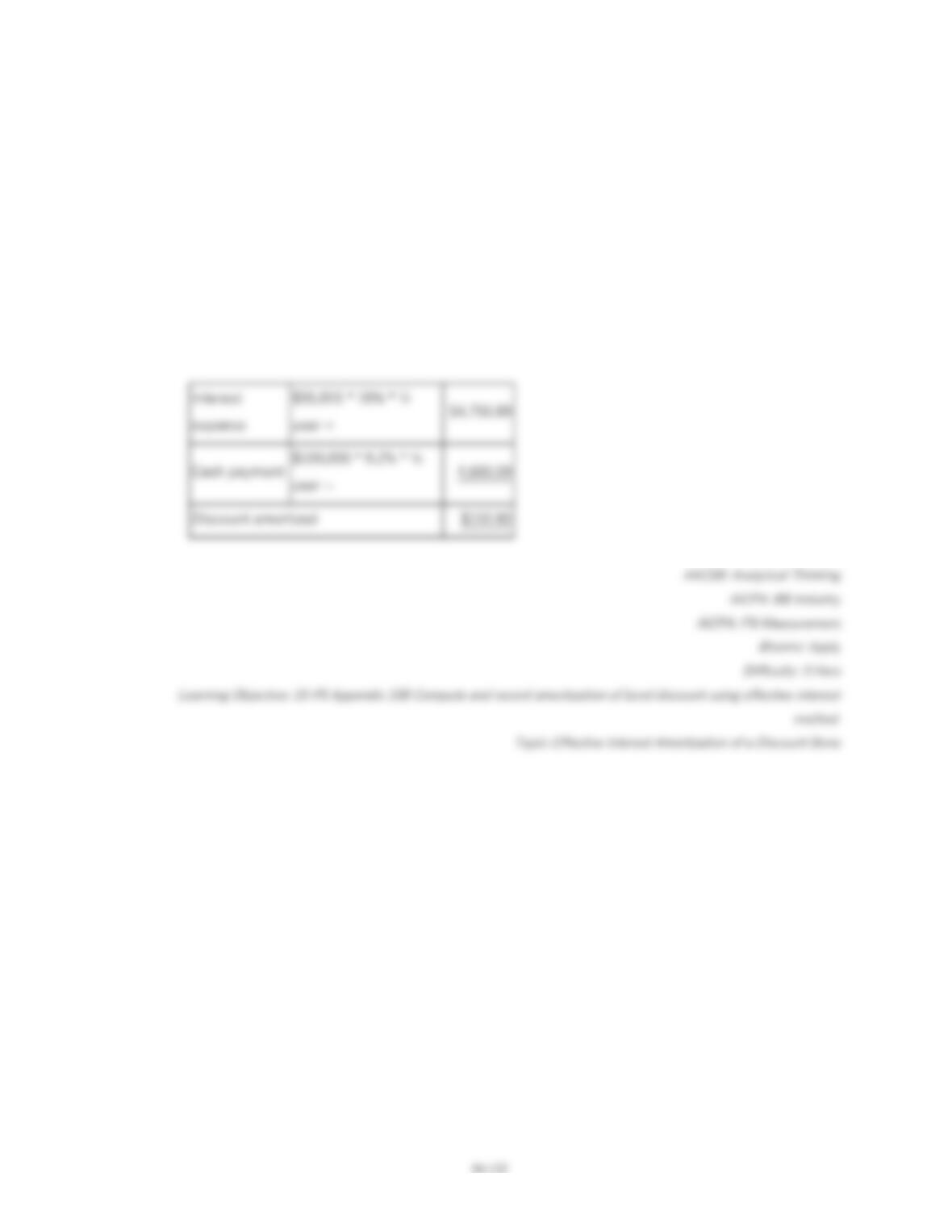
A company issued 9.2%, 10-year bonds with a par value of $100,000. Interest is paid
semiannually. The annual market interest rate on the issue date was 10%, and the issuer
received $95,016 cash for the bonds. The issuer uses the effective interest method for
amortization. On the first semiannual interest date, what amount of discount should the
issuer amortize?
10-123
192.
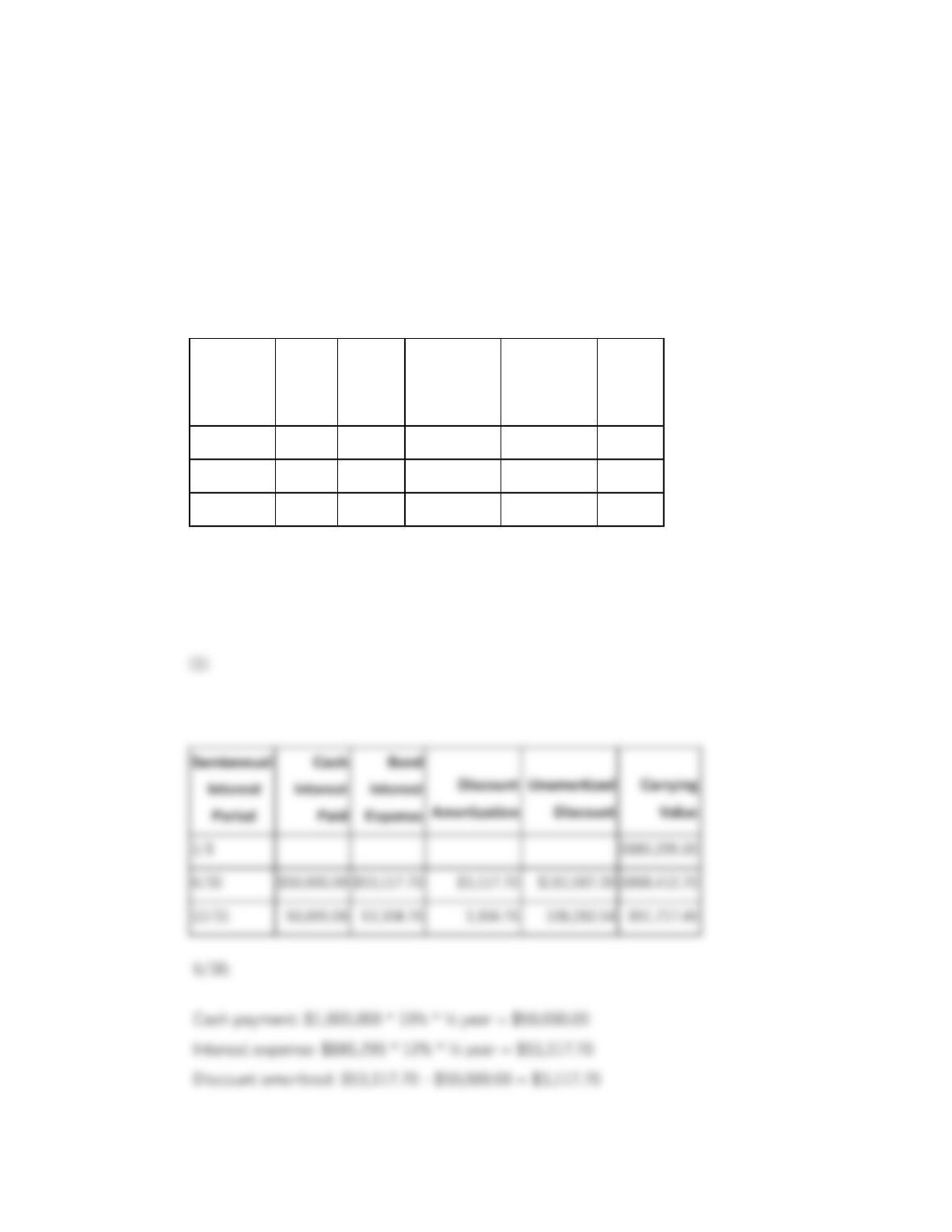
A company issued 10%, 10-year bonds with a par value of $1,000,000 on January 1, at a
selling price of $885,295 when the annual market interest rate was 12%. The company
uses the effective interest amortization method. Interest is paid semiannually each June
30 and December 31.
(1) Prepare an amortization table for the first two payment periods using the format
shown below:
Semiannual
Interest
Period
Cash
Interest
Paid
Bond
Interest
Expense
Discount
Amortization
Unamortized
Discount
Carrying
Value
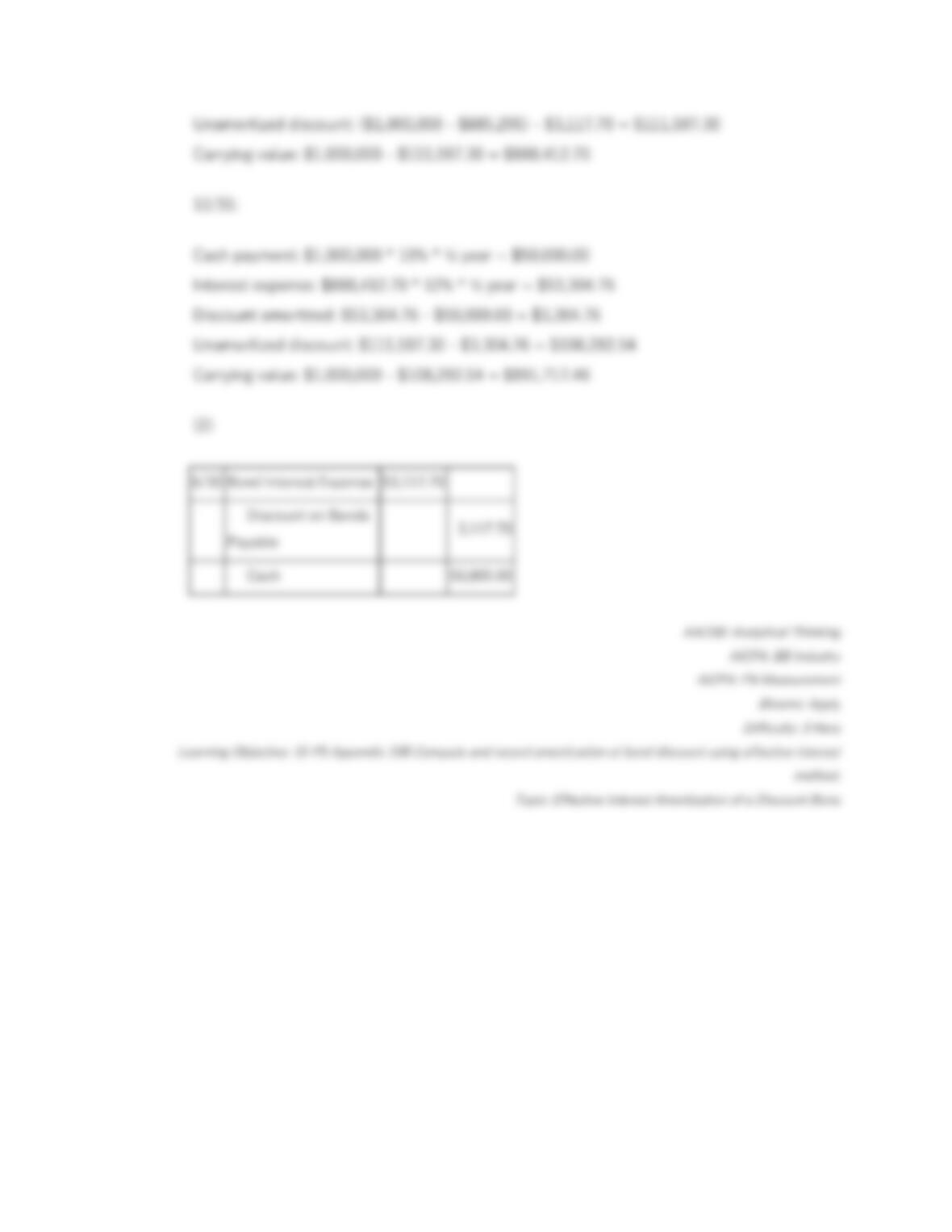
(2) Prepare the journal entry to record the first semiannual interest payment.
10-124
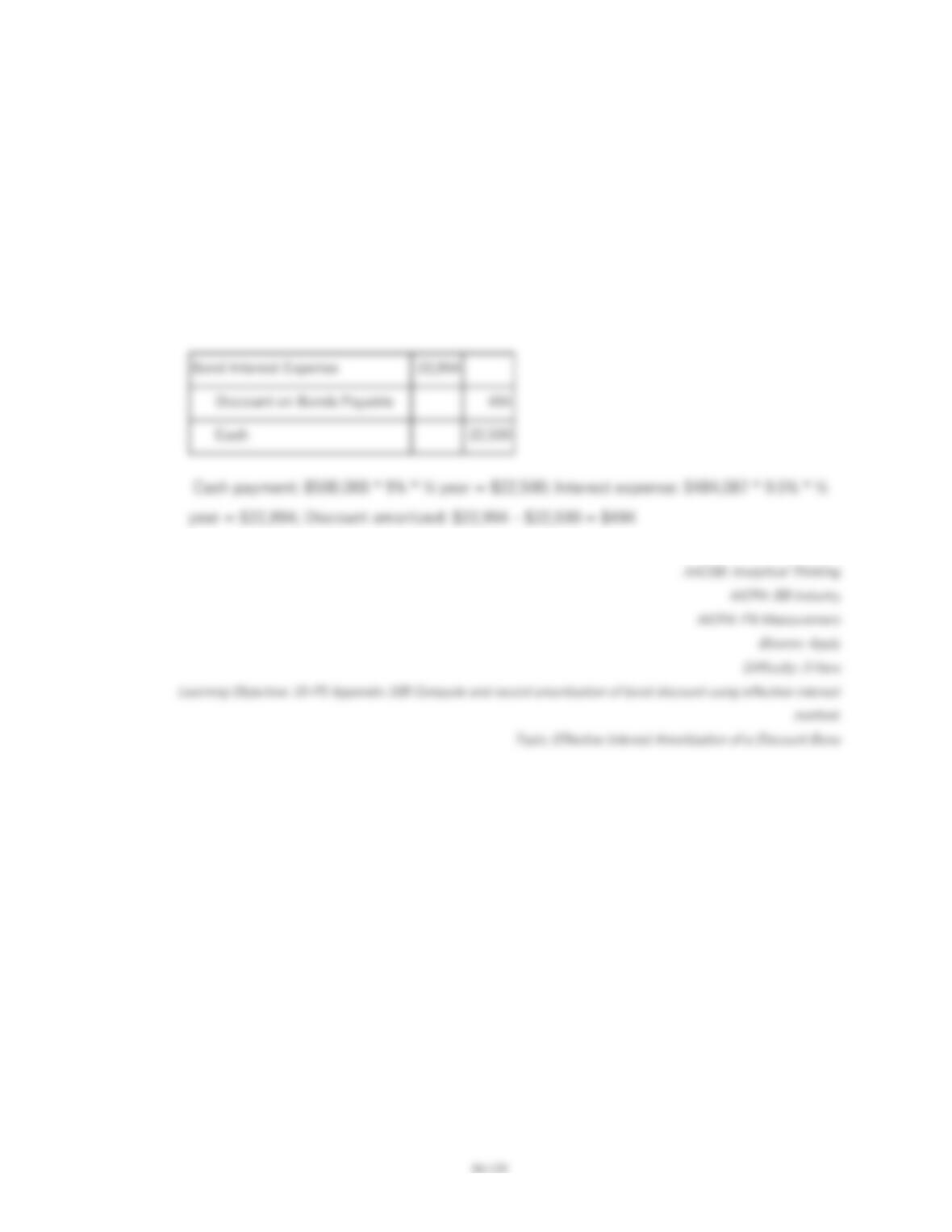
193.
A company issued 10-year, 9% bonds with a par value of $500,000 when the market rate
was 9.5%. The company received $484,087 in cash proceeds. Using the effective interest
method, prepare the issuer’s journal entry to record the first semiannual interest payment
including the amortization of any bond discount or premium.
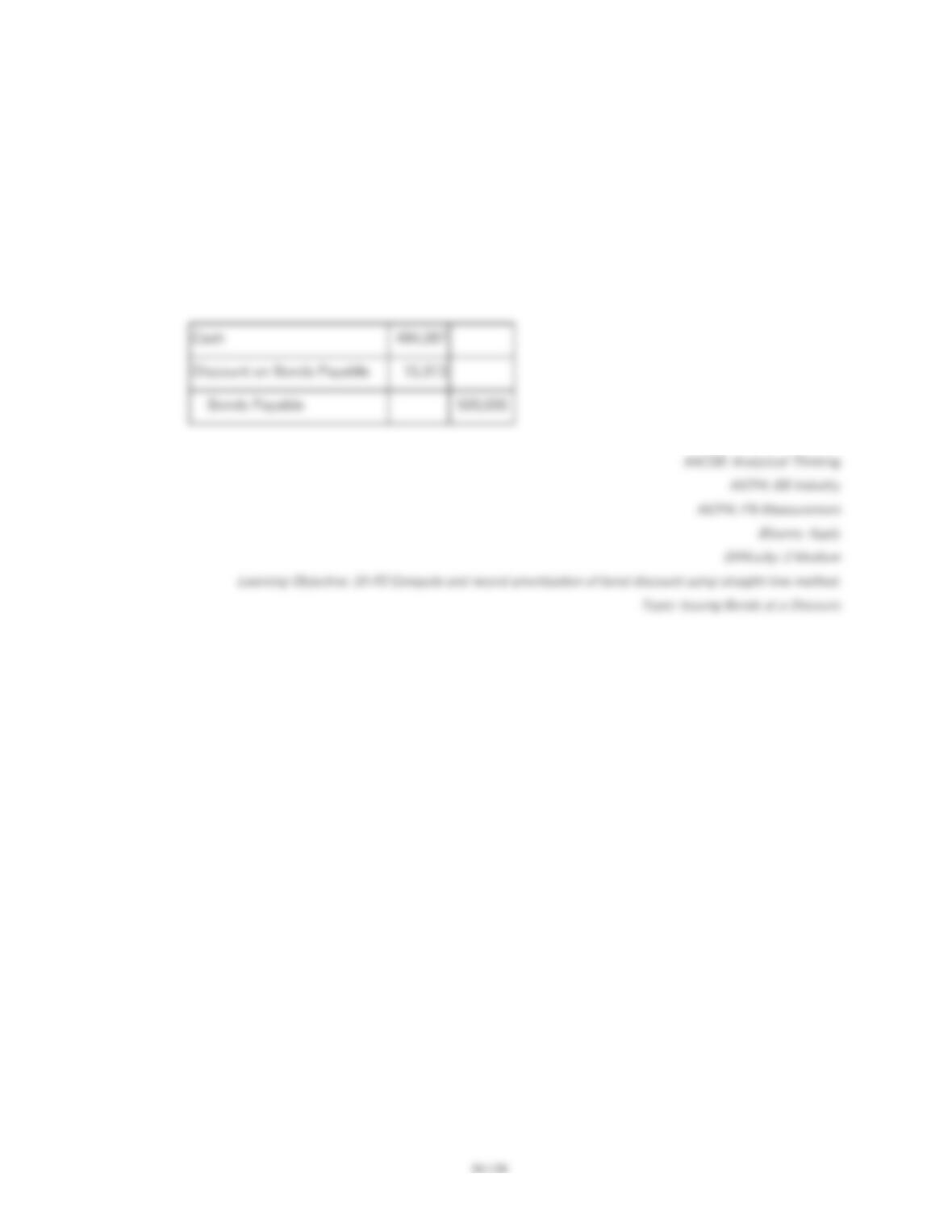
194.
A company issued 10-year, 9% bonds with a par value of $500,000 when the market rate
was 9.5%. The company received $484,087 in cash proceeds. Prepare the issuer’s journal
entry to record the issuance of the bond.
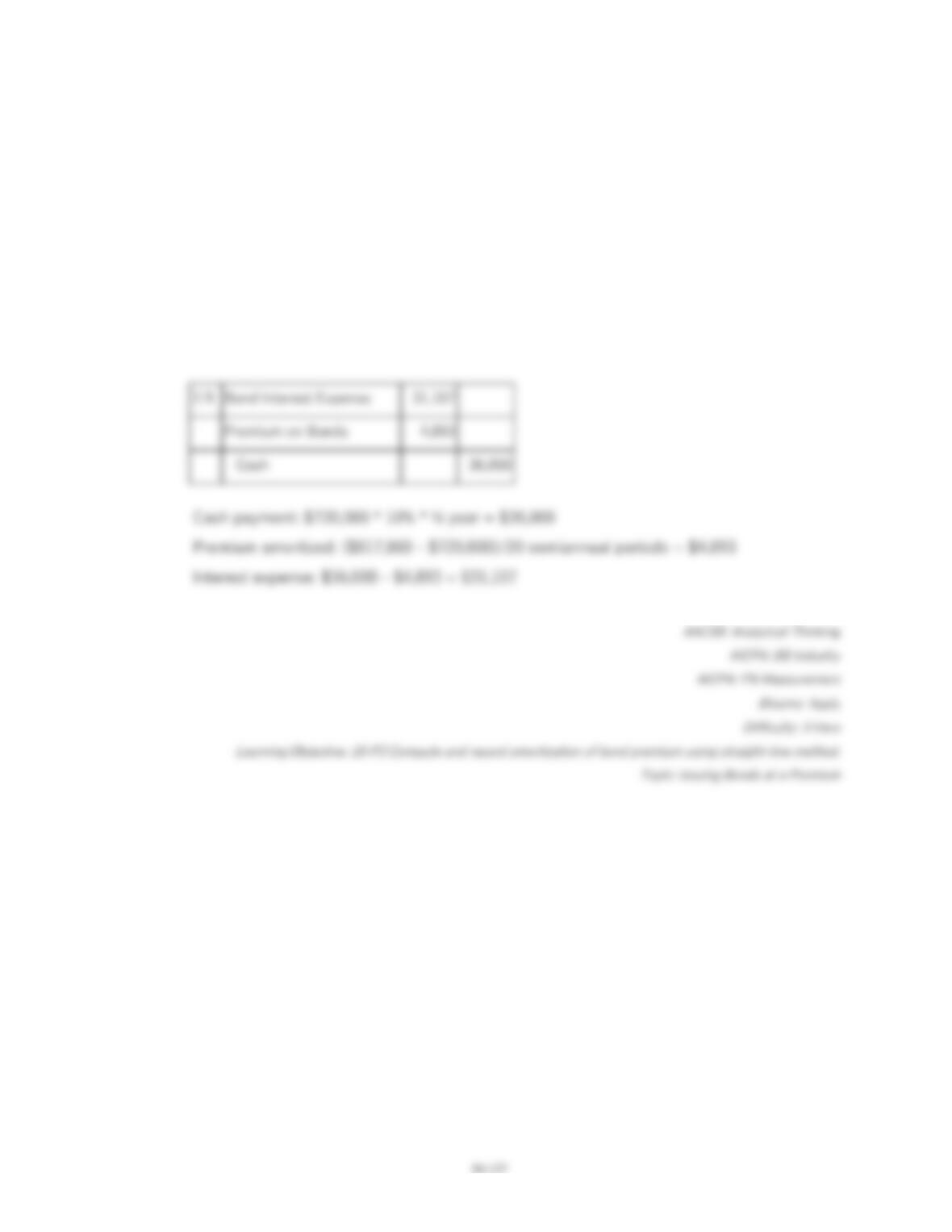
195.
On January 1, a company issued 10%, 10-year bonds payable with a par value of $720,000.
The bonds pay interest on July 1 and January 1. The bonds were issued for $817,860 cash,
which provided the holders an annual yield of 8%. Prepare the journal entry to record the
first semiannual interest payment, assuming it uses the straight-line method of
amortization.
196.
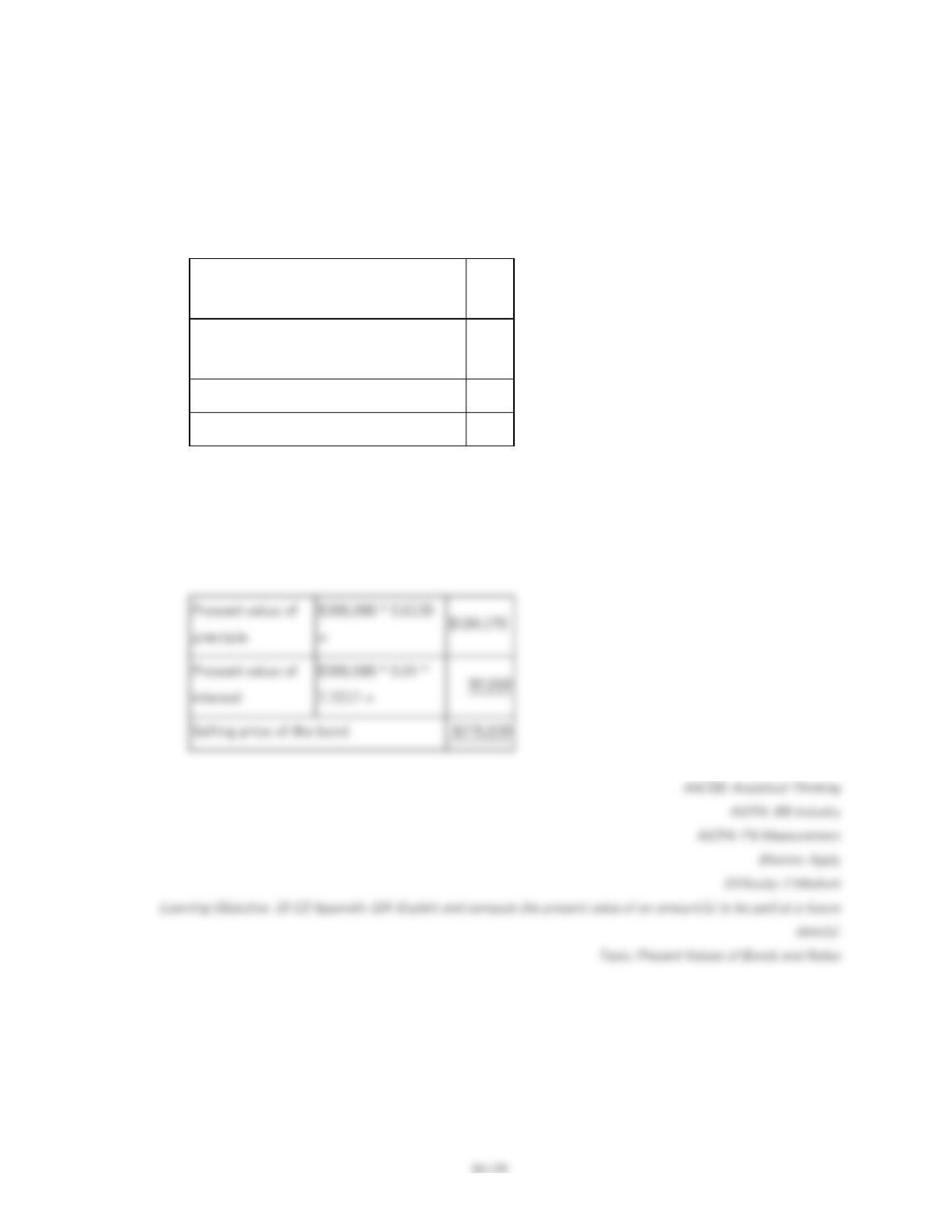
On January 1, a company issues 8%, 5 year, $300,000 bonds that pay interest semiannually
each June 30 and December 31. On the issue date, the annual market rate of interest is
6%. Compute the price of the bonds on their issue date. The following information is taken
from present value tables:
Present value of an annuity for 10 periods
at 3%
8.5302
Present value of an annuity for 10 periods
at 4%
8.1109
Present value of 1 due in 10 periods at
3%
0.7441
Present value of 1 due in 10 periods at
4%
0.6756
Present value of
$223,230
Present value of
$300,000 * .04 *
197.
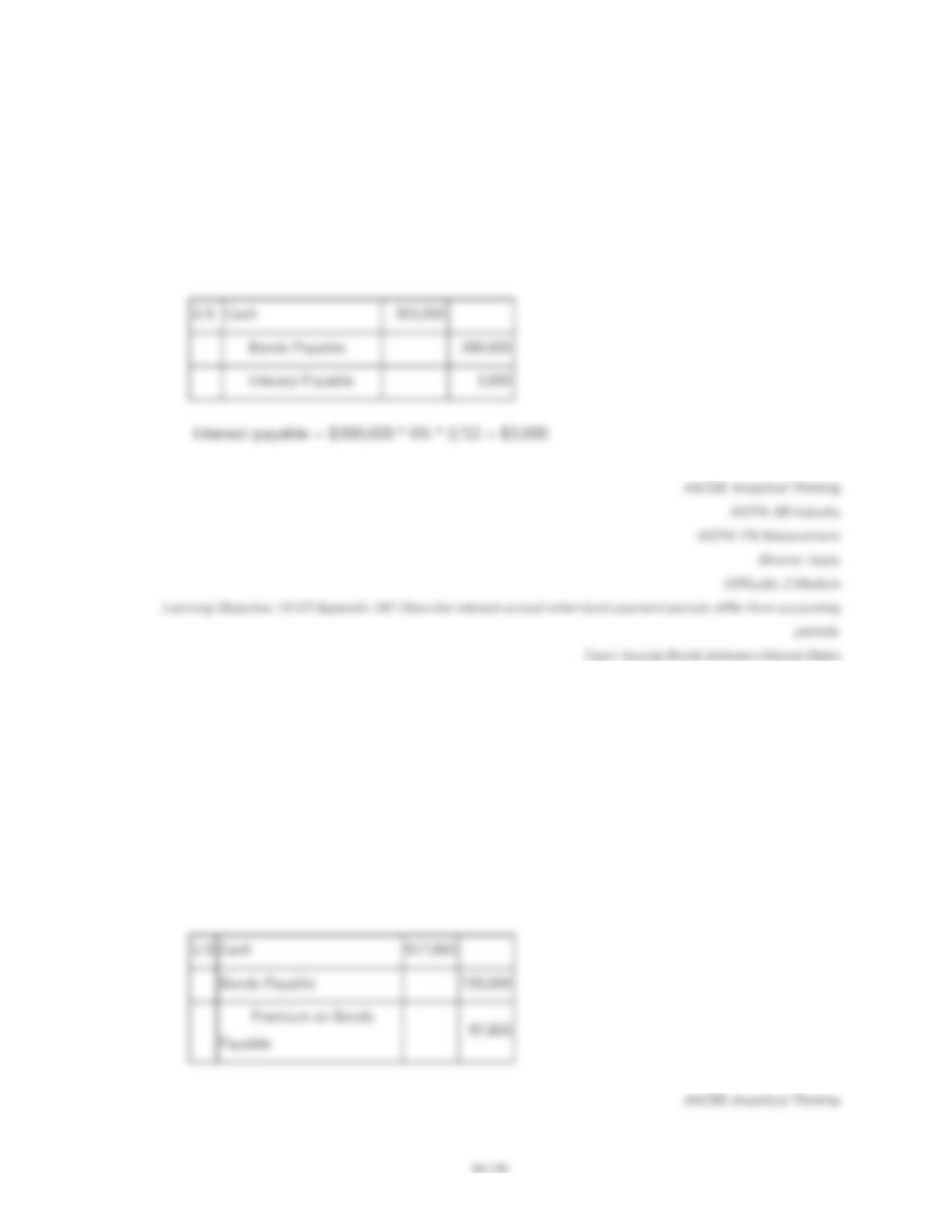
On January 1, a company issues 8%, 5 year, $300,000 bonds that pay interest semiannually
each June 30 and December 31. On the issue date, the annual market rate of interest for
the bonds is 10%. Compute the price of the bonds on their issue date. The following
information is taken from present value tables:
Present value of an annuity for 10 periods
at 4%
8.1109
Present value of an annuity for 10 periods
at 5%
7.7217
Present value of 1 for 10 periods at 4%
0.6756
Present value of 1 for 10 periods at 5%
0.6139
Present value of
$300,000 * 0.04 *
Selling price of the bond
198.
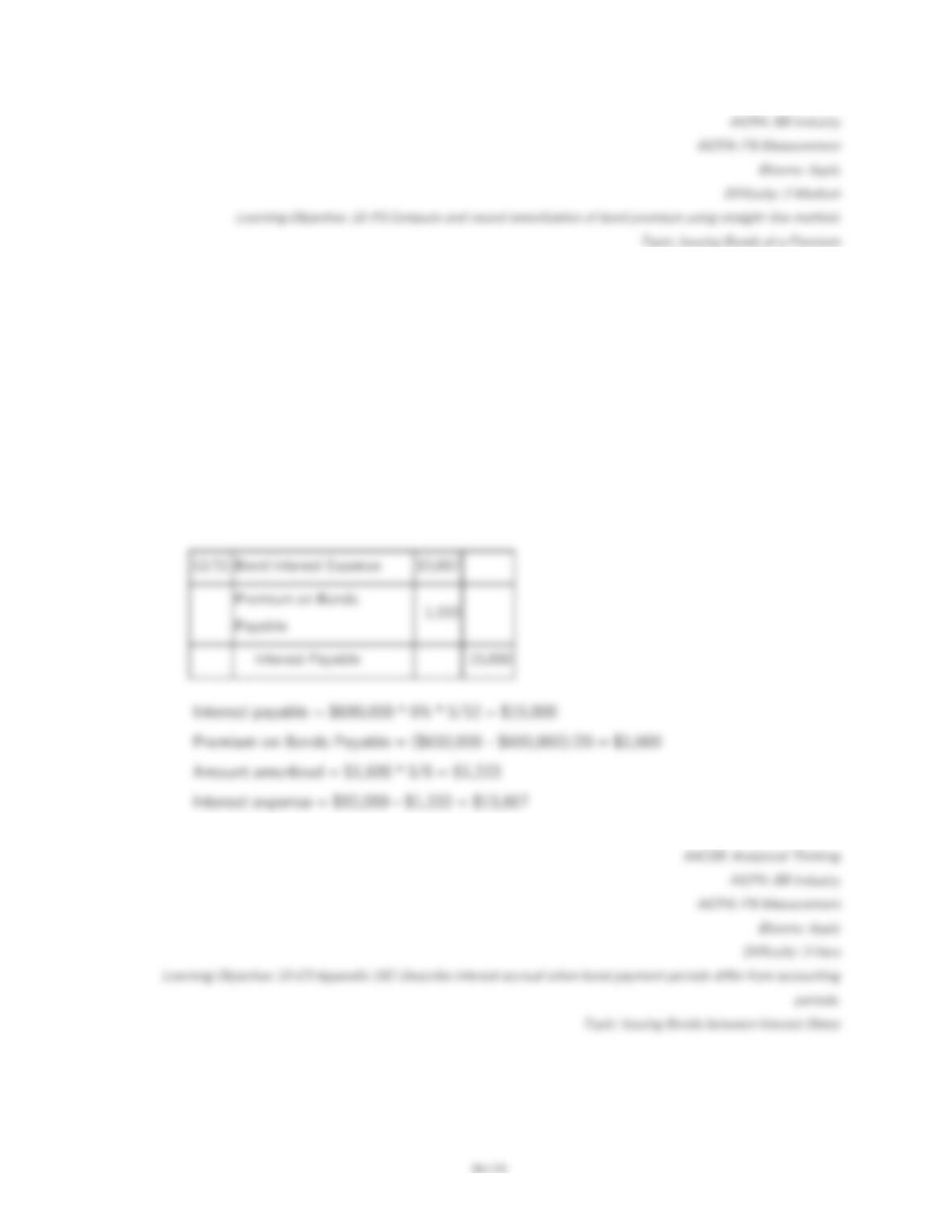
On March 1, a company issues 6%, 10 year $300,000 par value bonds that pay semiannual
interest each June 30 and December 31. The bonds sell at par value plus interest accrued
since January 1. Prepare the general journal entry to record the issuance of the bonds on
March 1.
199.
On January 1, a company issued 10%, 10-year bonds payable with a par value of $720,000.
The bonds pay interest on July 1 and January 1. The bonds were issued for $817,860 cash,
which provided the holders an annual yield of 8%. Prepare the journal entry to record the
issuance of the bond.
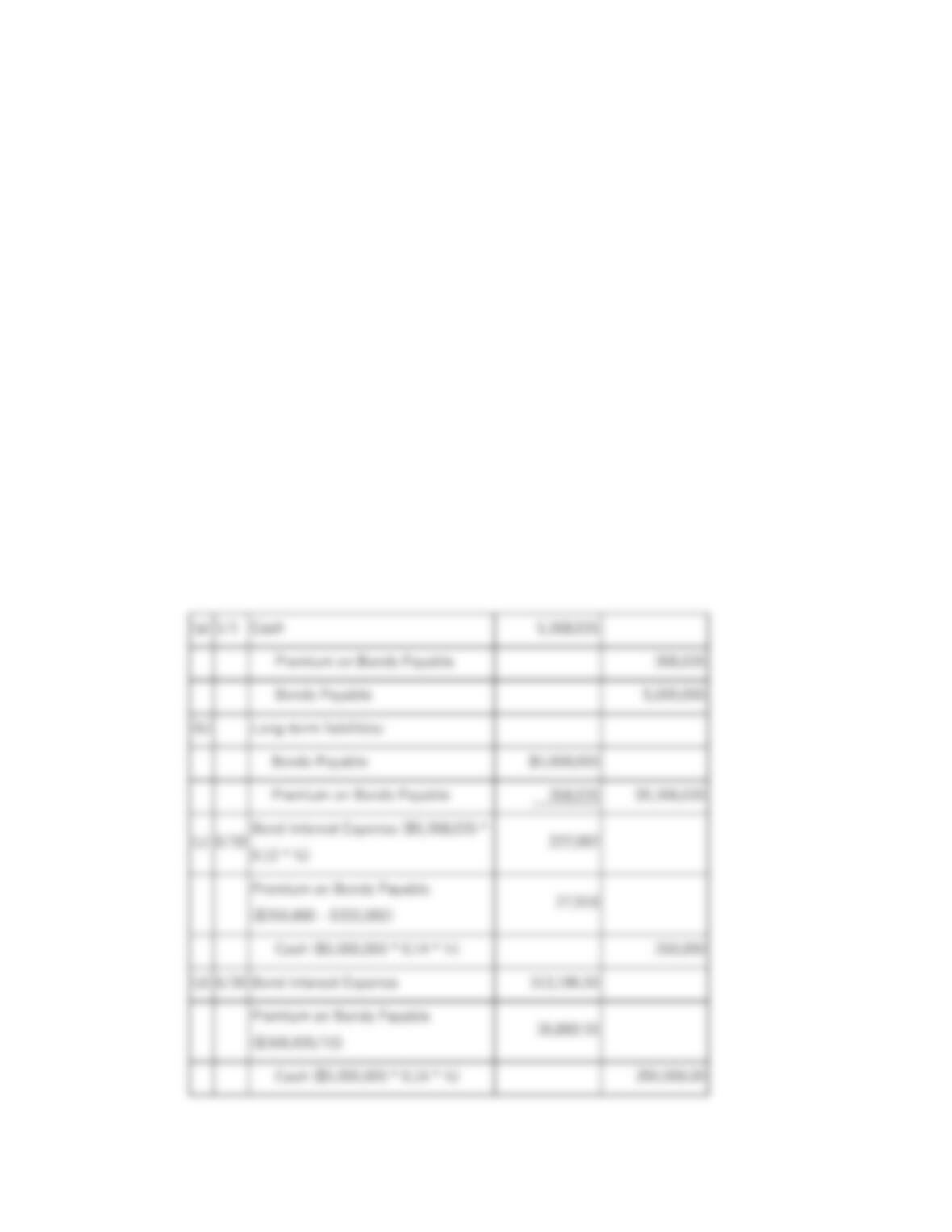
200.
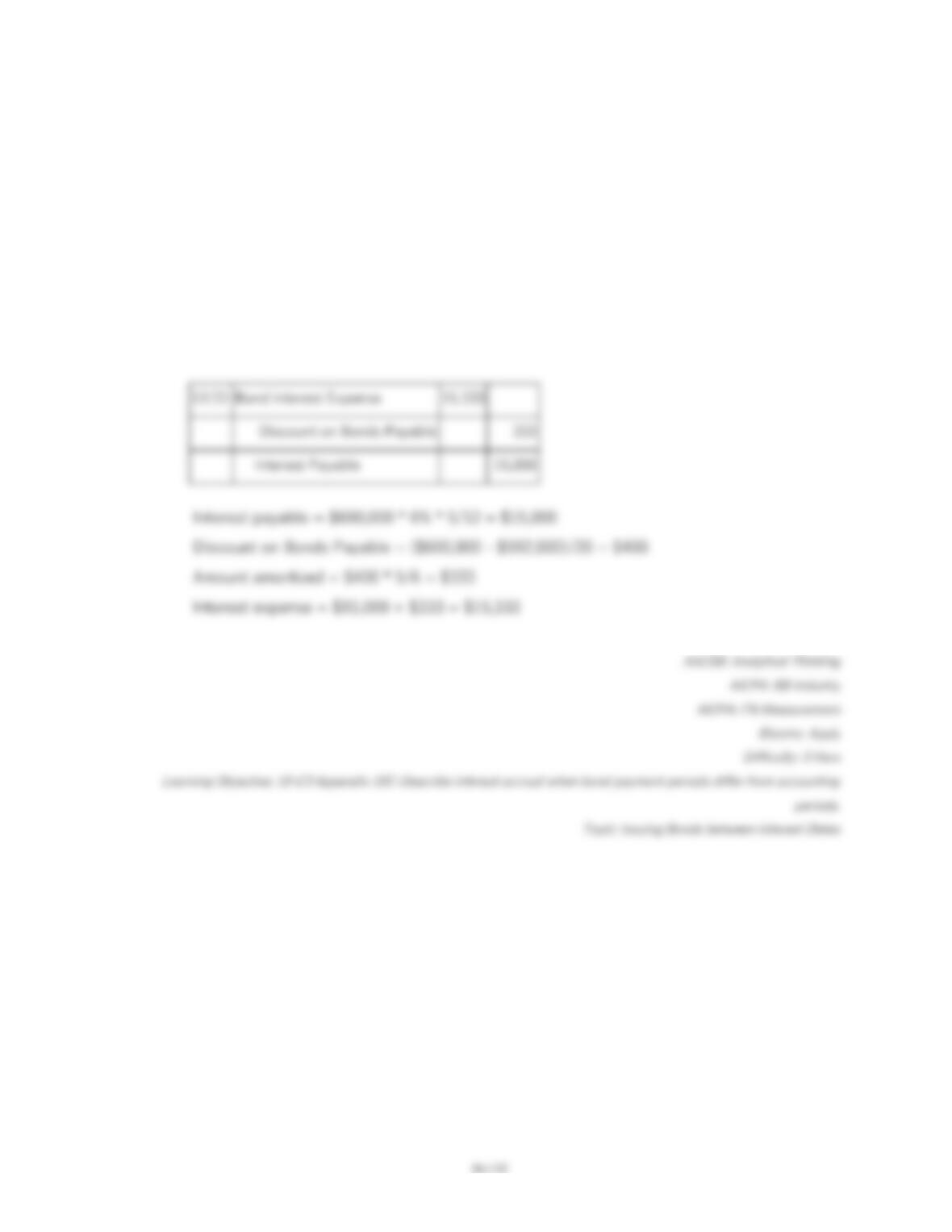
On August 1, a company issues 6%, 10 year, $600,000 par value bonds that pay interest
semiannually each February 1 and August 1. The bonds sold at $632,000. The company
uses the straight-line method of amortizing bond premiums. The company’s year-end is
December 31. Prepare the general journal entry to record the interest accrued at
December 31.
201.
On August 1, a company issues 6%, 10 year, $600,000 par value bonds that pay interest
semiannually each February 1 and August 1. The bonds sold at $592,000. The company
uses the straight-line method of amortizing bond discounts. The company’s year-end is
December 31. Prepare the general journal entry to record the interest accrued at
December 31.
10-133
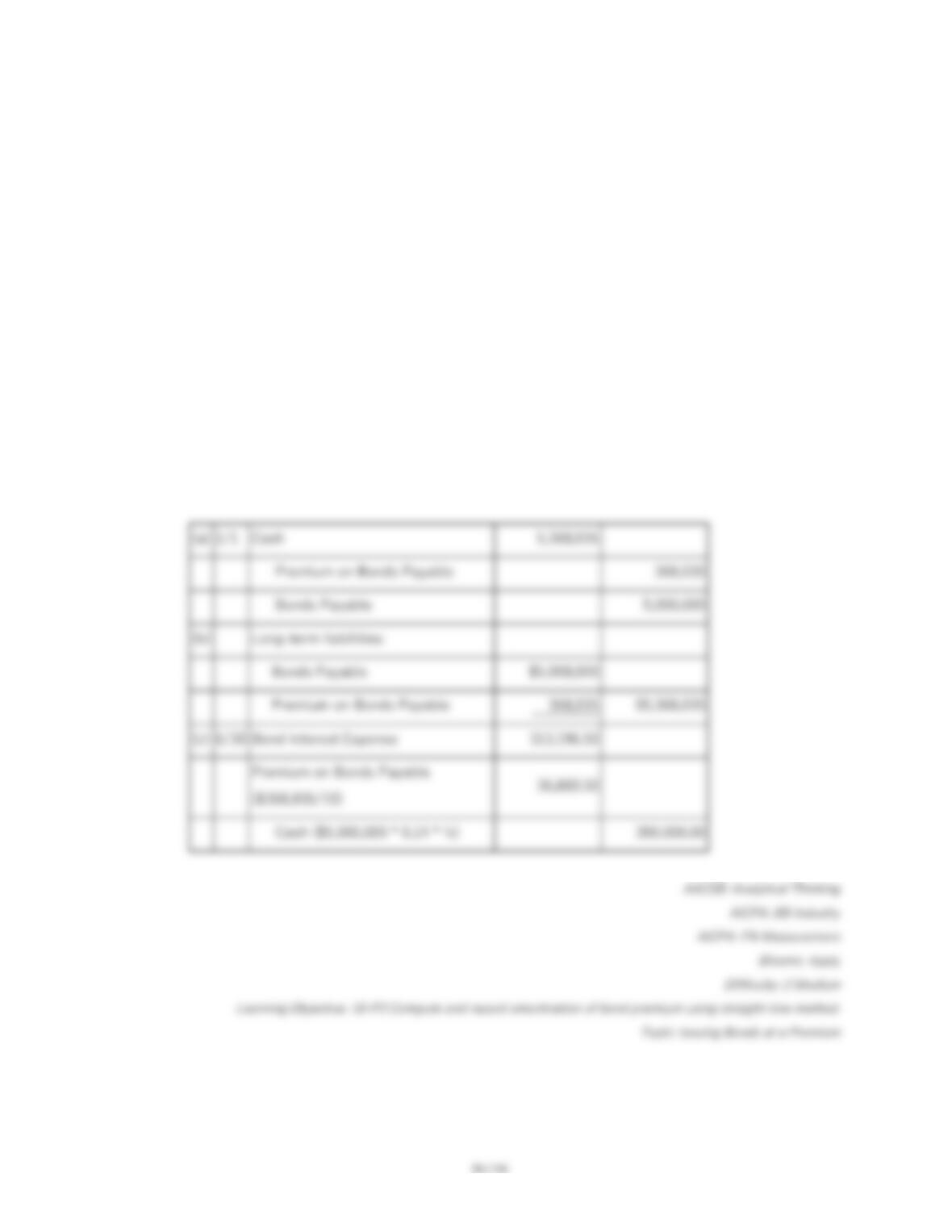
202.
Strider Corporation issued 14%, 5-year bonds with a par value of $5,000,000 on January 1,
Year 1. Interest is to be paid semiannually on each June 30 and December 31. The bonds
are issued at $5,368,035 cash when the market rate for this bond is 12%.
(a) Prepare the general journal entry to record the issuance of the bonds on January 1,
year 1.
(b) Show how the bonds would be reported on Strider’s balance sheet at January 1, Year 1.
(c) Assume that Strider uses the effective interest method of amortization of any discount
or premium on bonds. Prepare the general journal entry to record the first semiannual
interest payment on June 30, Year 1.
(d) Assume instead that Strider uses the straight-line method of amortization of any
discount or premium on bonds. Prepare the general journal entry to record the first
semiannual interest payment on June 30, Year 1.
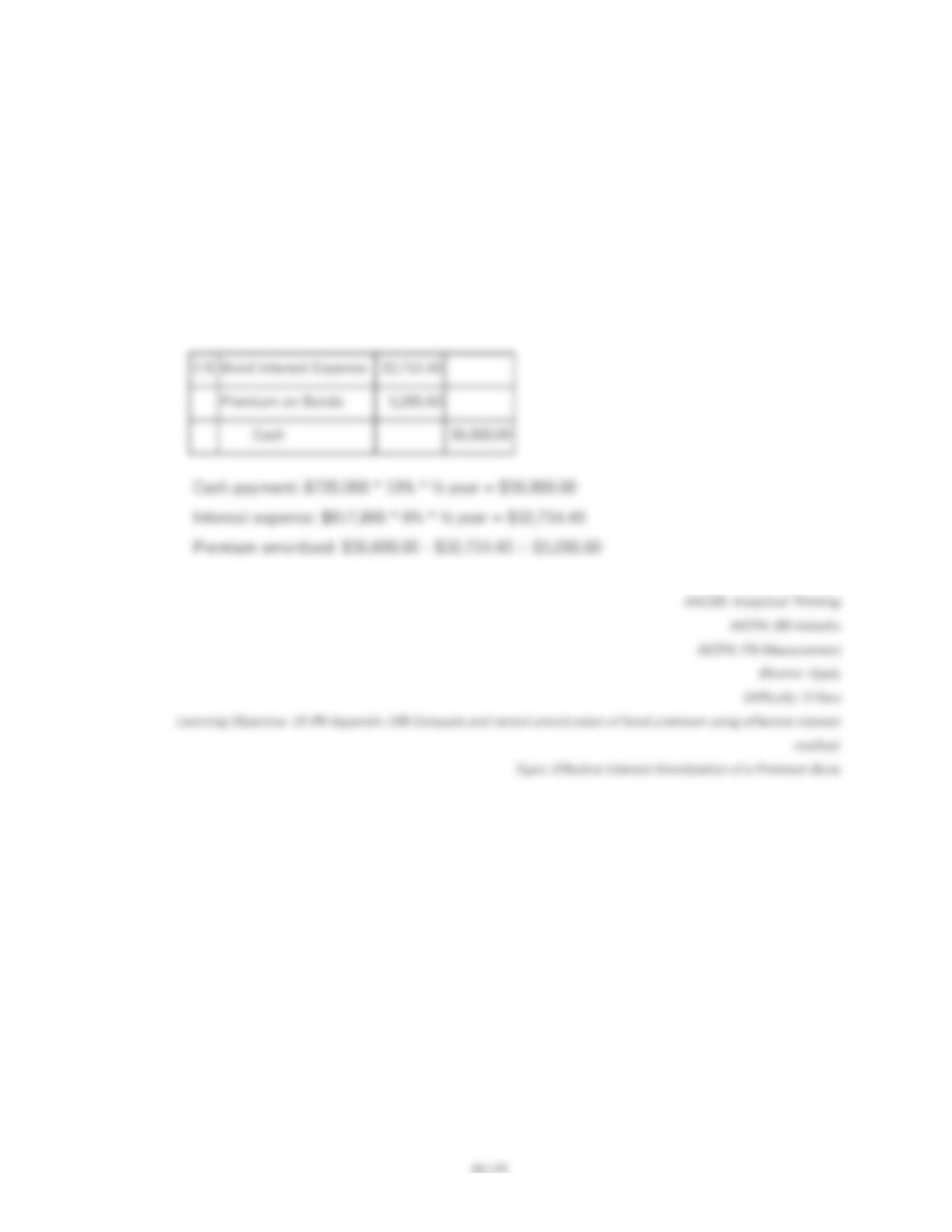
203.
Strider Corporation issued 14%, 5-year bonds with a par value of $5,000,000 on January 1,
Year 1. Interest is to be paid semiannually on each June 30 and December 31. The bonds
are issued at $5,368,035 cash when the market rate for this bond is 12%.
(a) Prepare the general journal entry to record the issuance of the bonds on January 1,
year 1.
(b) Show how the bonds would be reported on Strider’s balance sheet at January 1, Year 1.
(c) Assume that Strider uses the straight-line method of amortization of any discount or
premium on bonds. Prepare the general journal entry to record the first semiannual
interest payment on June 30, Year 1.
204.
On January 1, a company issued 10%, 10-year bonds with a par value of $720,000. The
bonds pay interest each July 1 and January 1. The bonds were sold for $817,860 cash,
based on an annual market rate of 8%. Prepare the issuer’s journal entry to record the first
semiannual interest payment assuming the effective interest method is used.
10-136
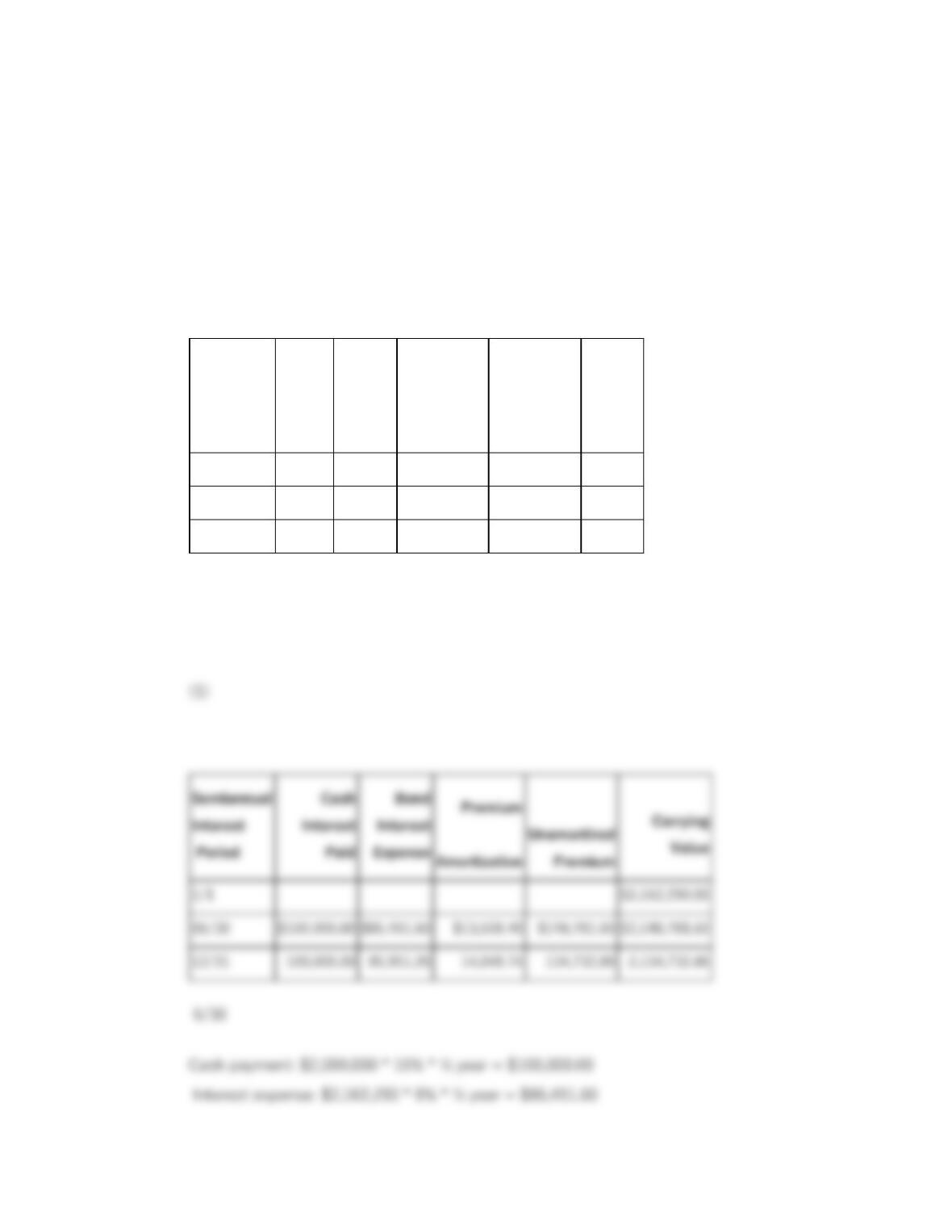
205.
A company issued 10%, 5-year bonds with a par value of $2,000,000, on January 1. Interest
is to be paid semiannually each June 30 and December 31. The bonds were sold at
$2,162,290 based on an annual market rate of 8%. The company uses the effective interest
method of amortization.
(1) Prepare an amortization table for the first two semiannual payment periods using the
format shown below.
Semiannual
Interest
Period
Cash
Interest
Paid
Bond
Interest
Expense
Premium
Amortization
Unamortized
Premium
Carrying
Value
(2) Prepare the journal entry to record the first semiannual interest payment.