Required:
For each of the costs identified below, indicate the type of account in which the cost should be recorded by placing the appropriate letter in the space
provided.
____
1.
The legal fees associated with the acquisition of land.
____
2.
The cost of replacing the engine in a truck when the cost of the old engine is not known.
____
3.
The cost of replacing an oil furnace with an electric furnace.
____
4.
The cost of a new addition to a warehouse that will be used to store inventory.
____
5.
The cost of renovating a recently purchased ten-year-old office building.
____
6.
The materials and labor costs incurred in testing a new piece of equipment.
____
7.
The costs of tuning, lubricating, and tire rotation on a fleet of delivery trucks.
____
8.
The additional costs in the construction of a building due to a small fire that occurred during the construction period.
68. During 2010, the Tinsle Company completed the following transactions related to its property, plant, and
equipment accounts:
a.
On March 18, Tinsle paid $480,000 for land, buildings, and equipment in a lump-sum purchase. An appraisal that cost Tinsle $10,000
revealed fair market values of $200,000 for the land, $150,000 for the buildings, and $150,000 for the equipment.
b.
On August 11, Tinsle issued 20,000 shares of its $10 par value common stock in exchange for some equipment. The equipment’s fair
market value is estimated at $360,000 by an outside appraisal. On the date of the exchange, the stock was being actively traded at $17
per share on a major stock exchange.
Required:
Prepare the necessary journal entry to properly record each transaction.
Land [($200,000/$500,000) ´ $490,000]
196,000
Building [($150,000/$500,000) ´ $490,000]
147,000
Equipment [($150,000/$500,000) ´ $490,000]
147,000
Cash
490,000
b.
Equipment (20,000 ´ $17)
340,000
Common Stock, $10 par
200,000
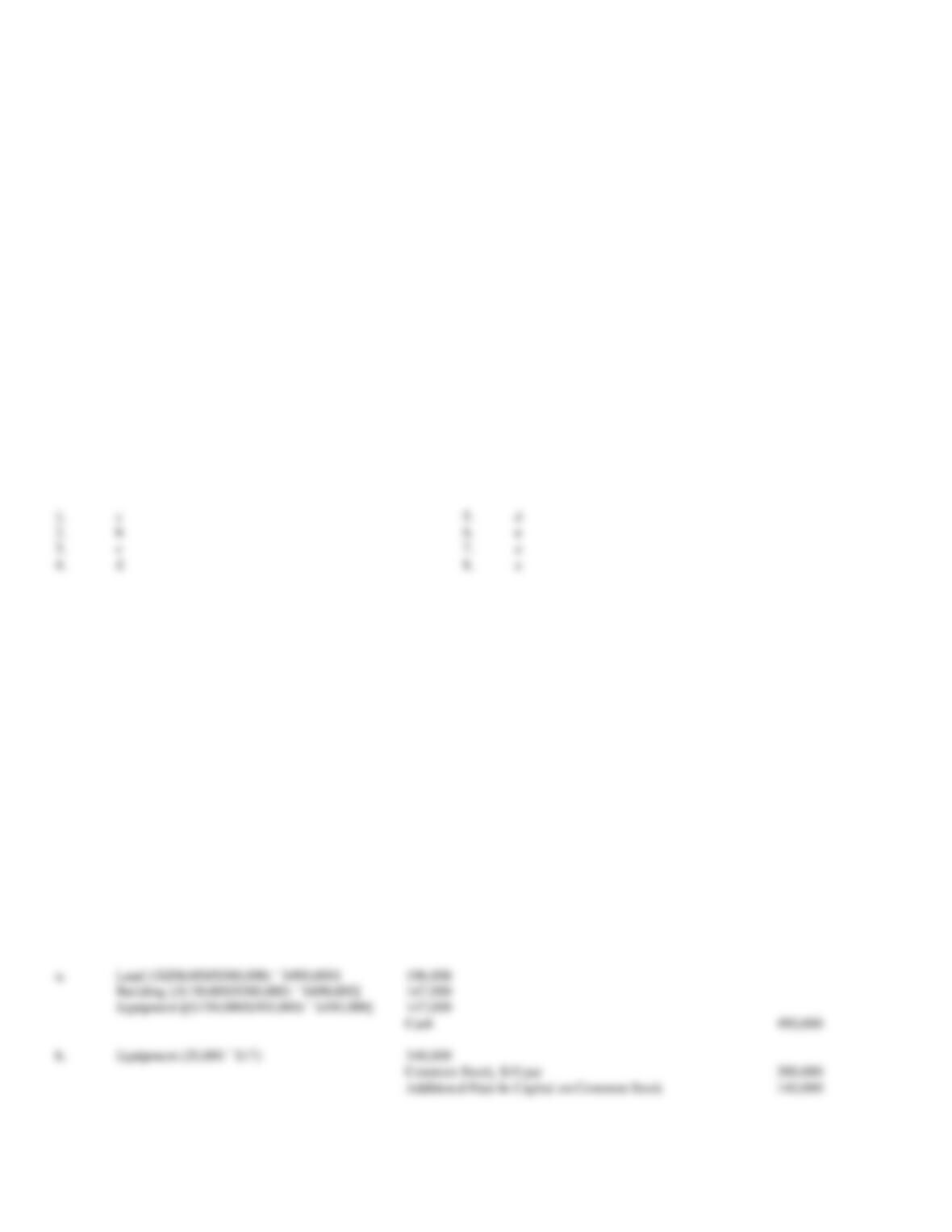
1.
c
5.
d
2.
b
6.
e
3.
e
7.
a
4.
d
8.
a
69. During 2010, Redford Company acquired a new piece of equipment for its manufacturing process. In order
to purchase the equipment, Redford made a down payment of $50,000 and issued a $200,000 five-year, 7%
note. The annual payment of principal and interest was to be $48,778. The market rate of interest for obligations
of this kind is 12%. The present value factor for an ordinary annuity of 5 years at 12% is 3.604776.
Required:
a.
Prepare the journal entry to record the acquisition.
b.
Assume that the equipment had an established cash price of $220,000. Prepare the journal entry to record the transaction under this
additional assumption.
70. Several expenditures are listed below:
Yes
No
a.
Landscaping
______
______
b.
Compensation for injury to construction worker
______
______
c.
Cost of overhaul before initial use
______
______
d.
Cost of tearing down a building on newly acquired land
______
______
e.
Land held as a plant site for future use
______
______
f.
Fully depreciated assets still being used
______
______
g.
Leasehold improvements
______
______
h.
Deposits on machinery not yet received
______
______
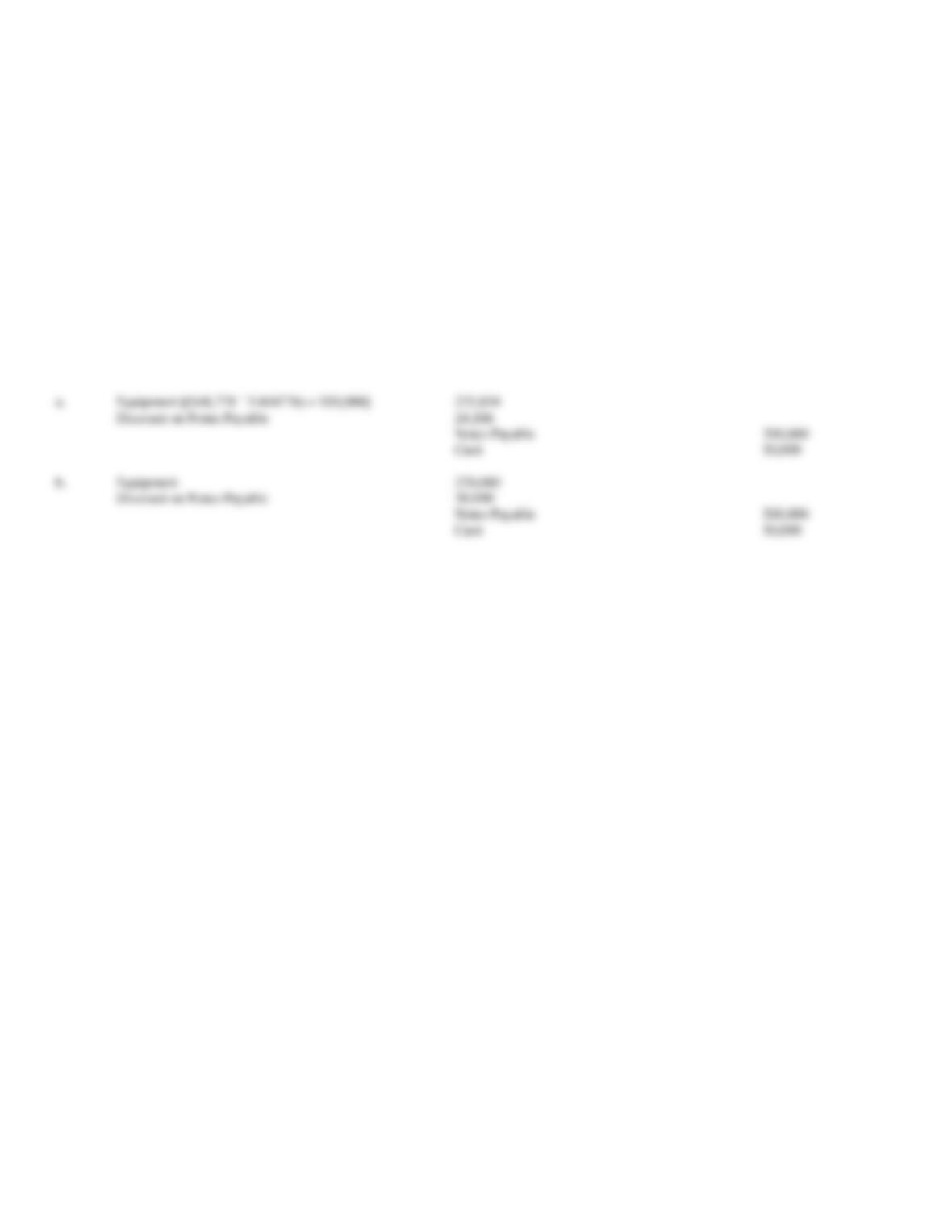
Equipment [($48,778 ´ 3.604776) + $50,000]
225,834
Discount on Notes Payable
24,166
Notes Payable
200,000
Cash
50,000
b.
Equipment
220,000
Discount on Notes Payable
30,000
Notes Payable
200,000
Cash
50,000

Required:
Indicate whether or not each expenditure would be included in the cost of property, plant, and equipment.
71. Several expenditures are listed below:
Land
Building
Equipment
Other
a.
Construction costs on building
______
X
______
______
b.
Compensation for injury to
construction worker
______
______
______
______
c.
Equipment purchased for
building excavation
______
______
______
______
d.
Interest on construction loan
______
______
______
______
e.
Equipment testing costs
______
______
______
______
f.
Costs of tearing down a
building on newly acquired
land
______
______
______
______
g.
Delinquent property taxes on
acquired property
______
______
______
______
h.
Cost of major overhaul
______
______
______
______
i.
Title search fees
______
______
______
______
Yes
a.
X
b
X
X
d.
X
e
X
X
g.
X
h
X
Required:
If the expenditure would be capitalized to land, buildings, equipment, or other, so indicate with an “X.” An example is given.
72. Smith Delivery Services bought a truck by paying $44,000 cash down and signing a $148,000
non-interest-bearing note due in five years for the balance. Current interest rates were 8%. Actuarial
information for five periods at 8% follows:
Amount of 1
1.469
Present value of 1
0.680
Amount of annuity of 1
5.867
Present value of annuity of 1
3.993
Required:
Compute the amount that should be charged to the asset account.
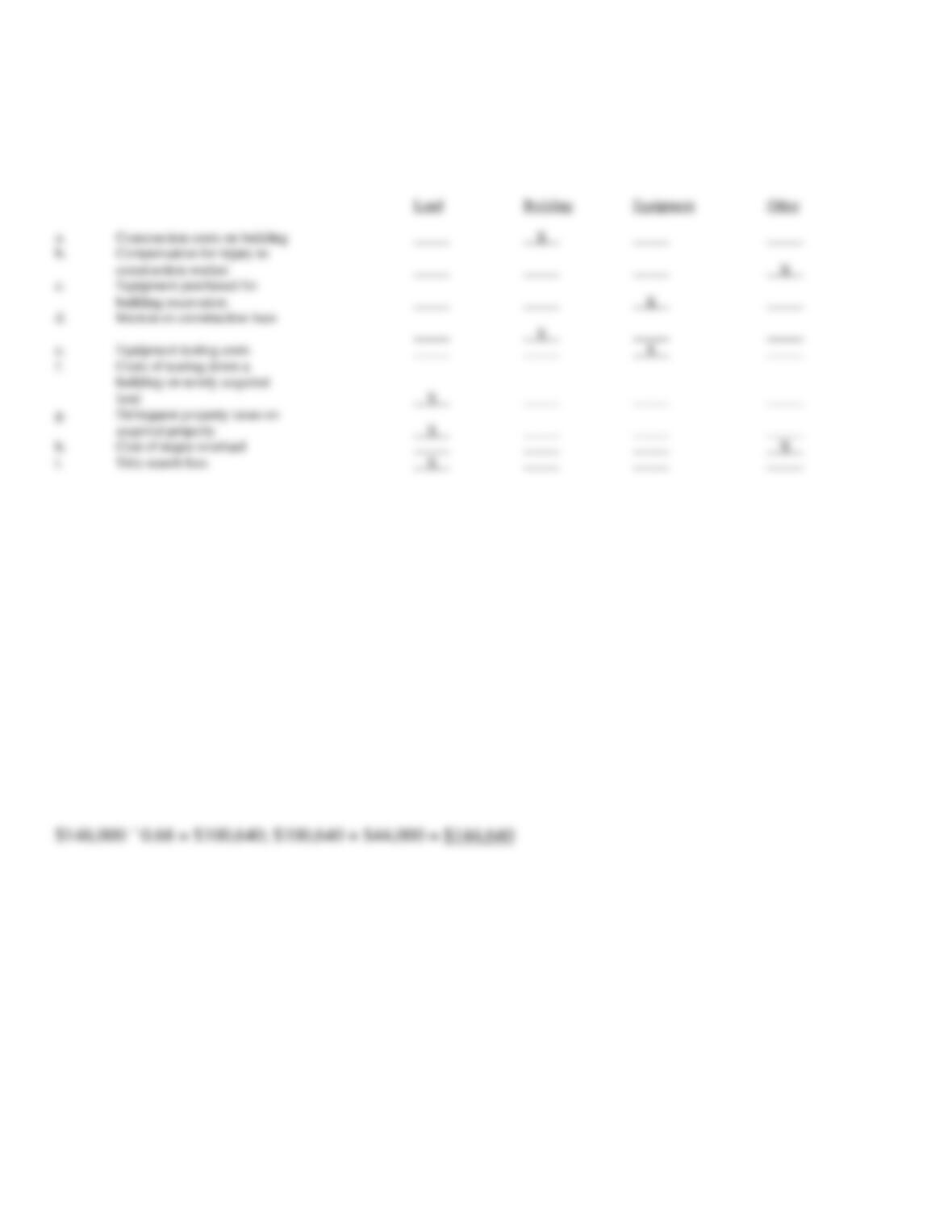
Land
Building
Equipment
Other
Construction costs on building
_____
X
_____
_____
Equipment testing costs
_____
_____
X
_____
Cost of major overhaul
_____
_____
_____
X
Title search fees
X
_____
_____
_____
73. Mirror Corp. has agreed to expand its operations by opening a manufacturing plant in Burns, Texas. In
return, Burns will donate an abandoned building and the 5 acres on which it sits to Mirror. The land originally
cost $1,000,000 and the building $3,000,000. The building’s current book value is $380,000, and current
appraisals are: land $6,000,000 and building $2,600,000. Mirror has also agreed to provide 100 jobs for the next
5 years to Burns’ city residents. Mirror estimates that the wages to these residents will amount to $4,000,000.
Required:
Prepare the journal entry to record this acquisition on Mirror’s books.
74. On August 1, Silver Company exchanged a machine for a similar machine owned by Wrangler Company
and also received $7,000 cash from Wrangler Company. Silver’s machine had an original cost of $70,000,
accumulated depreciation to date of $34,500, and a fair market value of $60,000. Wrangler’s machine had a
book value of $45,000 and a fair value of $53,000.
Required:
Prepare the necessary journal entry by Silver Company to record this transaction assuming
a.
Silver will use the newly acquired machine in the same manner as the old one.
b.
Silver’s use of the new machine will be substantially different from the old one.
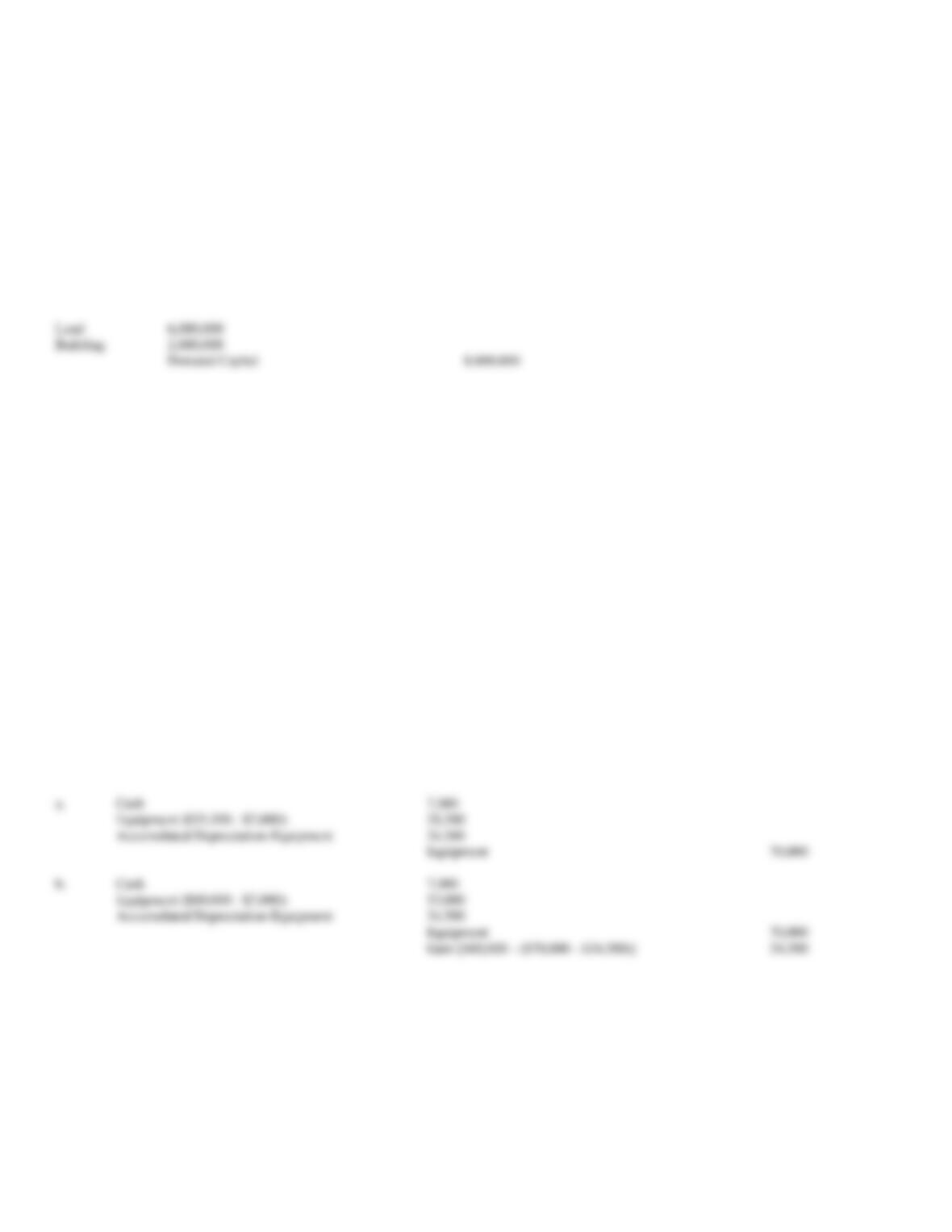
Cash
7,000
Equipment ($35,500 – $7,000)
28,500
Accumulated Depreciation-Equipment
34,500
Equipment
70,000
b.
Cash
7,000
Equipment ($60,000 – $7,000)
53,000
Accumulated Depreciation-Equipment
34,500
Equipment
70,000
Gain [$60,000 – ($70,000 – $34,500)]
24,500
Land
6,000,000
Building
2,600,000
Donated Capital
8,600,000
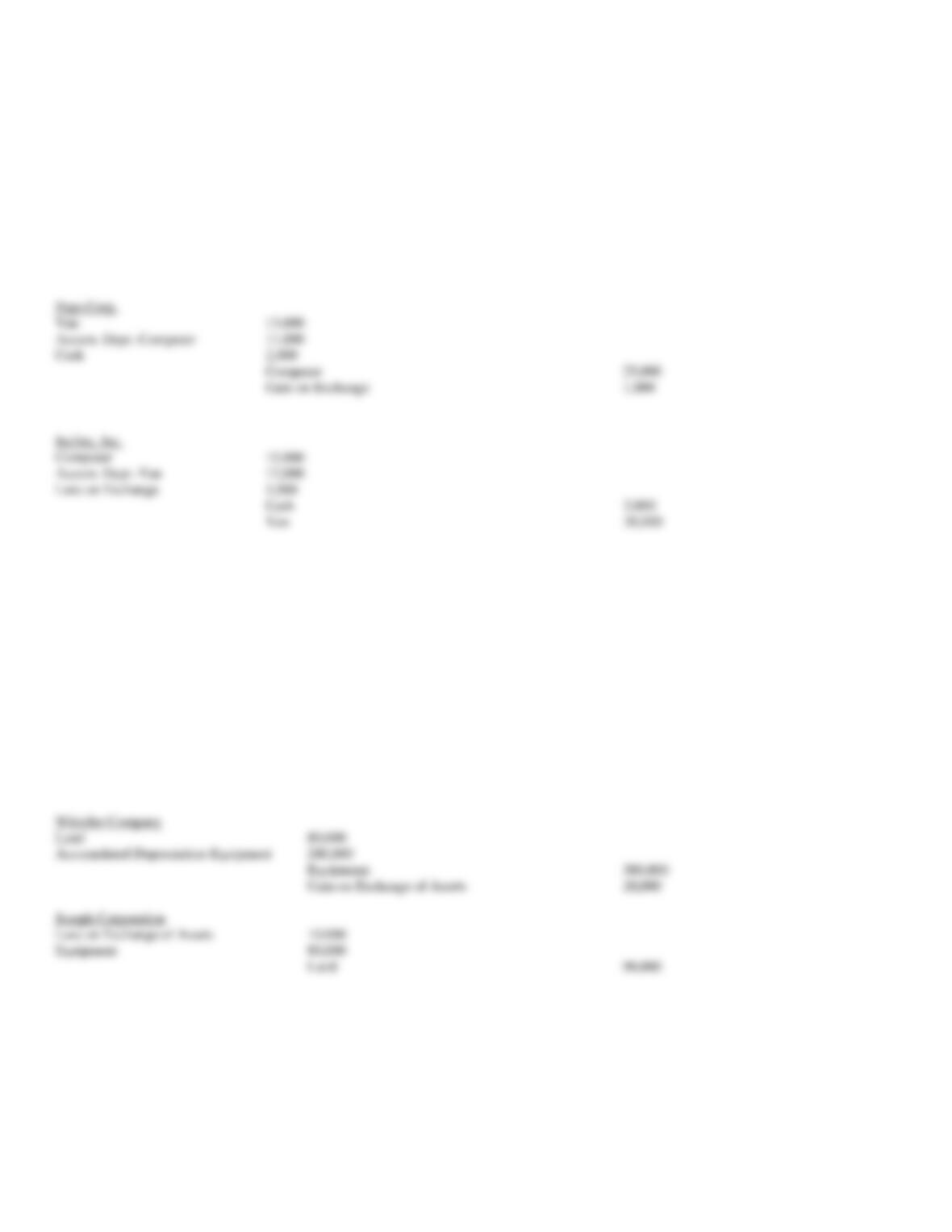
75. Pops Corp. has agreed to exchange an old computer system for a van from Incline, Inc. In addition, Incline
will pay Pops $2,000. The computer originally cost Pops $25,000 and its current book value is $14,000. The
van’s original cost was $30,000 and its accumulated depreciation is $12,000. The appraised value of the
computer is $15,000, and the appraised value of the van is $13,000.
Required:
Prepare the journal entries to record the exchange on both companies’ books.
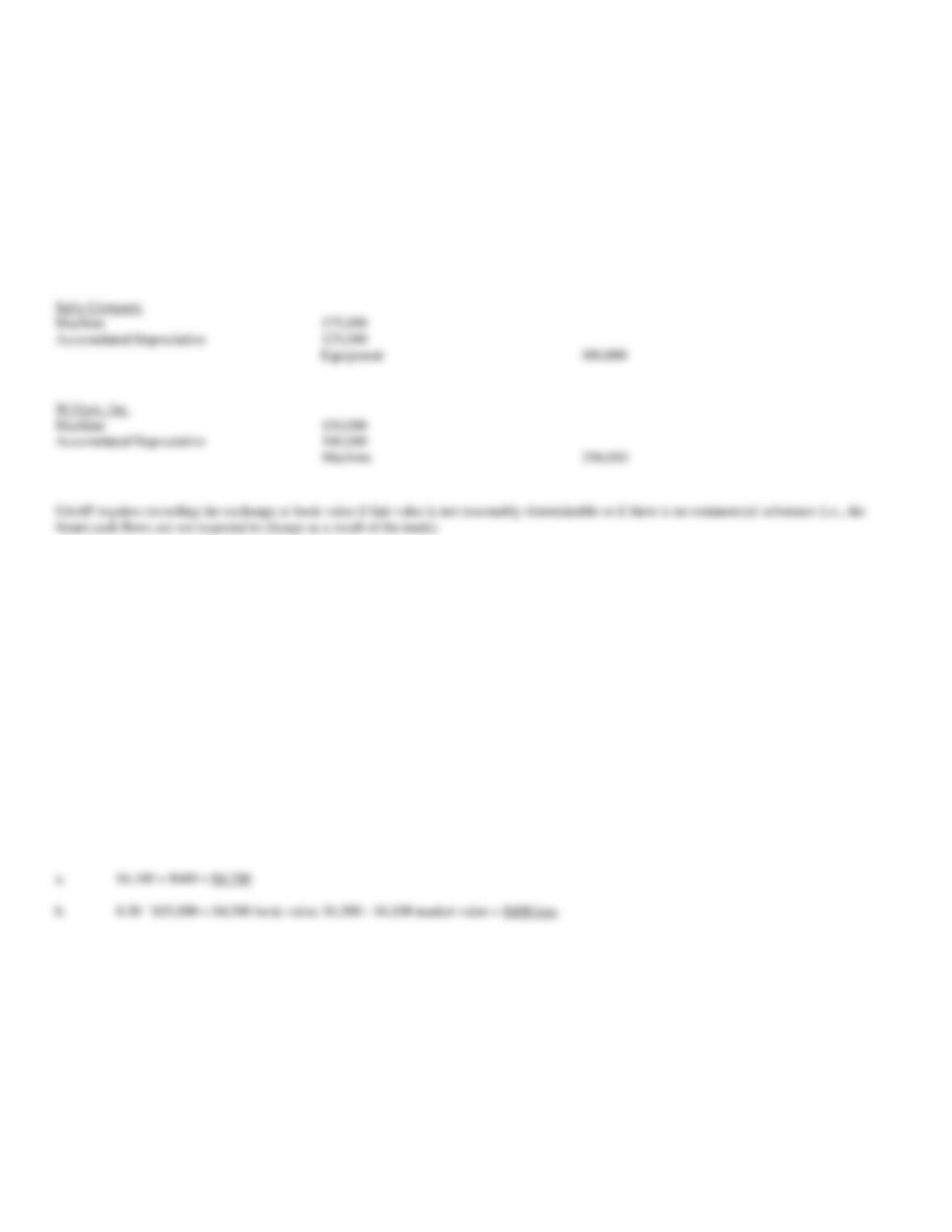
76. Whistler Company exchanged a piece of equipment with a cost of $300,000 and accumulated depreciation
of $240,000 for land owned by Joseph Corporation. No cash was exchanged. Joseph’s land had an original cost
of $90,000. At the date of exchange, both assets had a fair market value of $80,000.
Required:
Prepare the journal entry that each company should record.
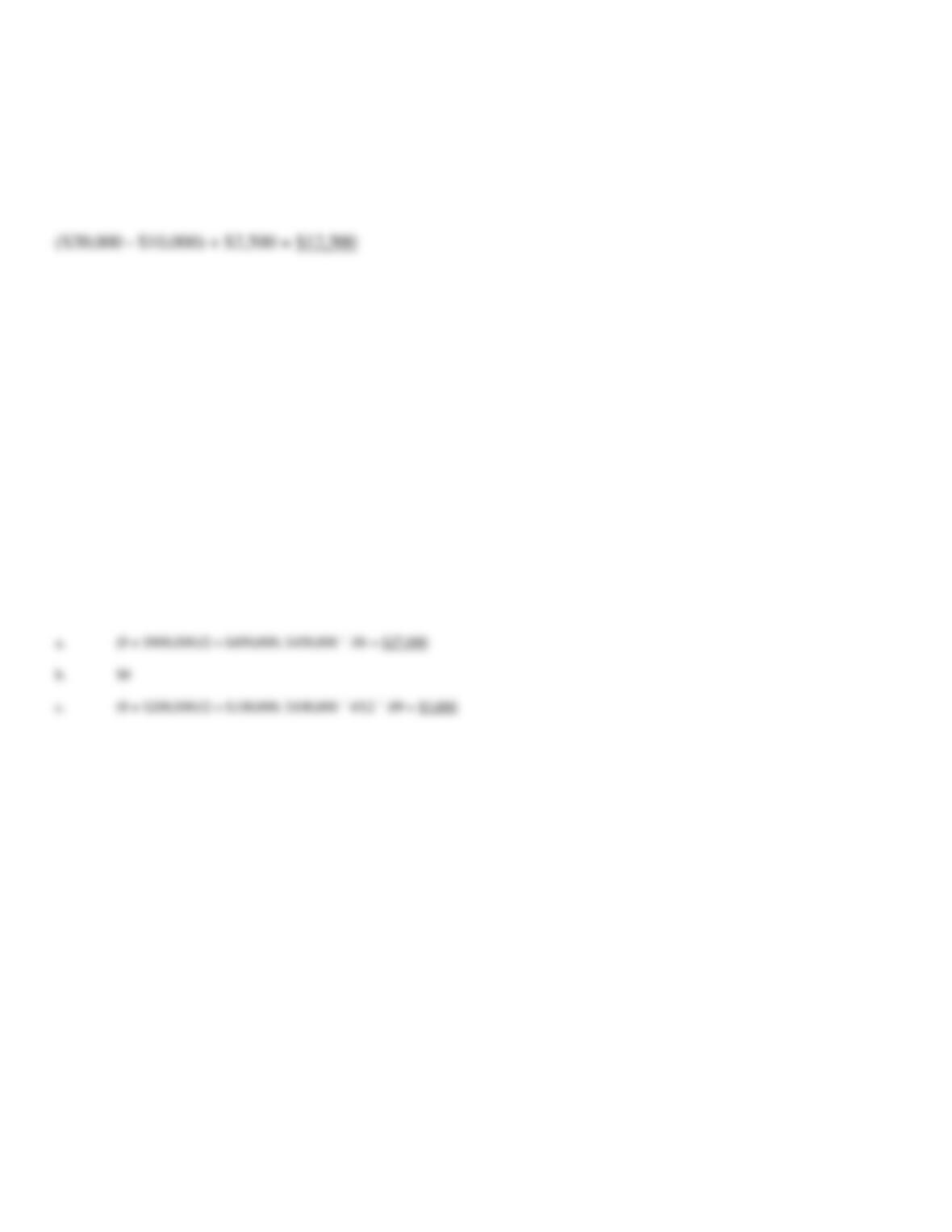
77. Sally Company is exchanging a unique machine for a similar machine from William, Inc. Sally’s equipment
originally cost $300,000 and has a book value of $175,000. William’s machine cost $250,000 and has a book
value of $150,000. No cash will be exchanged, and the two machines will continue to perform the same
functions for each company.
Required:
Prepare the journal entry for each company.
78. Ralph Company exchanged a machine for some land. The machine had cost $15,000, was 70% depreciated,
and could be sold for $4,100. Calvin paid $600 in addition to giving up the machine.
Required:
a.
Compute the amount at which the land should be recorded.
b.
Assume, instead, that Ralph exchanged the machine for a new, more efficient machine with a fair value of $4,700, while still paying
$600 as before. Compute the gain or loss that would be recorded on the sale of the old machine by Ralph.
a.
$4,100 + $600 = $4,700
0.30 ´ $15,000 = $4,500 book value; $4,500 – $4,100 market value = $400 loss
Sally Company
Machine
175,000
Accumulated Depreciation
125,000
William, Inc.
Machine
150,000
Machine
250,000
79. Mark Company exchanged a worn-out tractor that had cost $20,000 and was half depreciated for a new
tractor with a fair value of $12,000. Mark paid an additional $2,500 cash. The transaction lacked commercial
substance.
Required:
Compute the amount at which Mark should record the new tractor.
80. Assuming that the effects of interest capitalization are material, calculate the amount of interest costs to be
capitalized by Marcus Corporation in 2010 in relation to the following events:
a.
On January 1, Marcus began construction for a new storage building for its own use. Expenditures incurred evenly throughout the year
totaled $900,000. Marcus borrowed $1,000,000 specifically for construction of the storage building at an annual interest rate of 6%.
b.
Inventories costing $200,000 were routinely manufactured during the year. Marcus borrowed $200,000 at 8% to finance
inventory-related costs.
c.
On September 1, Marcus began construction of a custom-designed machine to the specifications of a customer. As of December 31,
$200,000 of materials, labor, and overhead have been assigned to the machine. Those costs were incurred evenly throughout the period
September 1 through December 31. To finance construction, $230,000 was borrowed at a 9% interest rate.
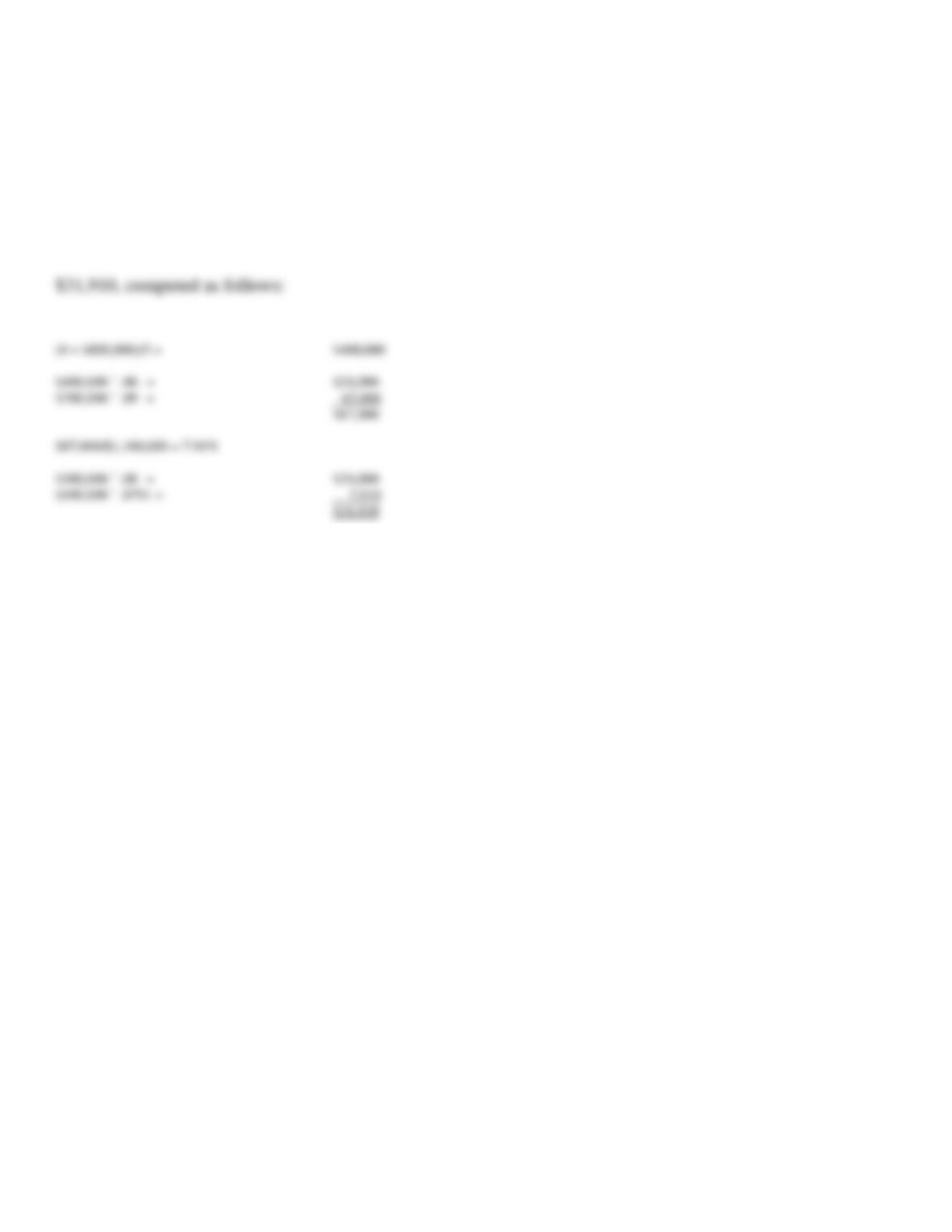
81. On January 3, 2010, Mercury Company began self-constructing an asset that qualified for interest
capitalization. On January 5, Mercury borrowed $300,000 on an 8% construction loan. In addition, Mercury had
$400,000 of 6% notes payable and $700,000 of 9% bonds payable outstanding. By December 31, expenditures
(occurring evenly throughout the year) of $800,000 had been made on the asset. Investment of unused funds
during the year yielded $1,200 of interest revenue.
Required:
Compute the amount of interest that should be capitalized during 2010.
82. Cooper, Inc. is constructing a building that qualifies for interest capitalization. The following information is
available:
Capitalization period: January 1, 2010-December 31, 2011 Expenditures on project (incurred evenly):
2010
$20,000
2011
$60,000
Amounts borrowed and outstanding (all debt incurred January 1, 2010):
$10,000
at 10% (specifically for the construction project)
$18,000
at 12% (general debt)
$30,000
at 14% (general debt)
Required:
a.
Compute the amount of interest that should be capitalized in 2010 and 2011. (Round interest rates to the nearest hundredths, e.g.,
07.62%.)
b.
Assume that in 2010 unused borrowed funds were invested and earned interest revenue amounting to $600. How much interest should
be capitalized to the asset account in 2011?
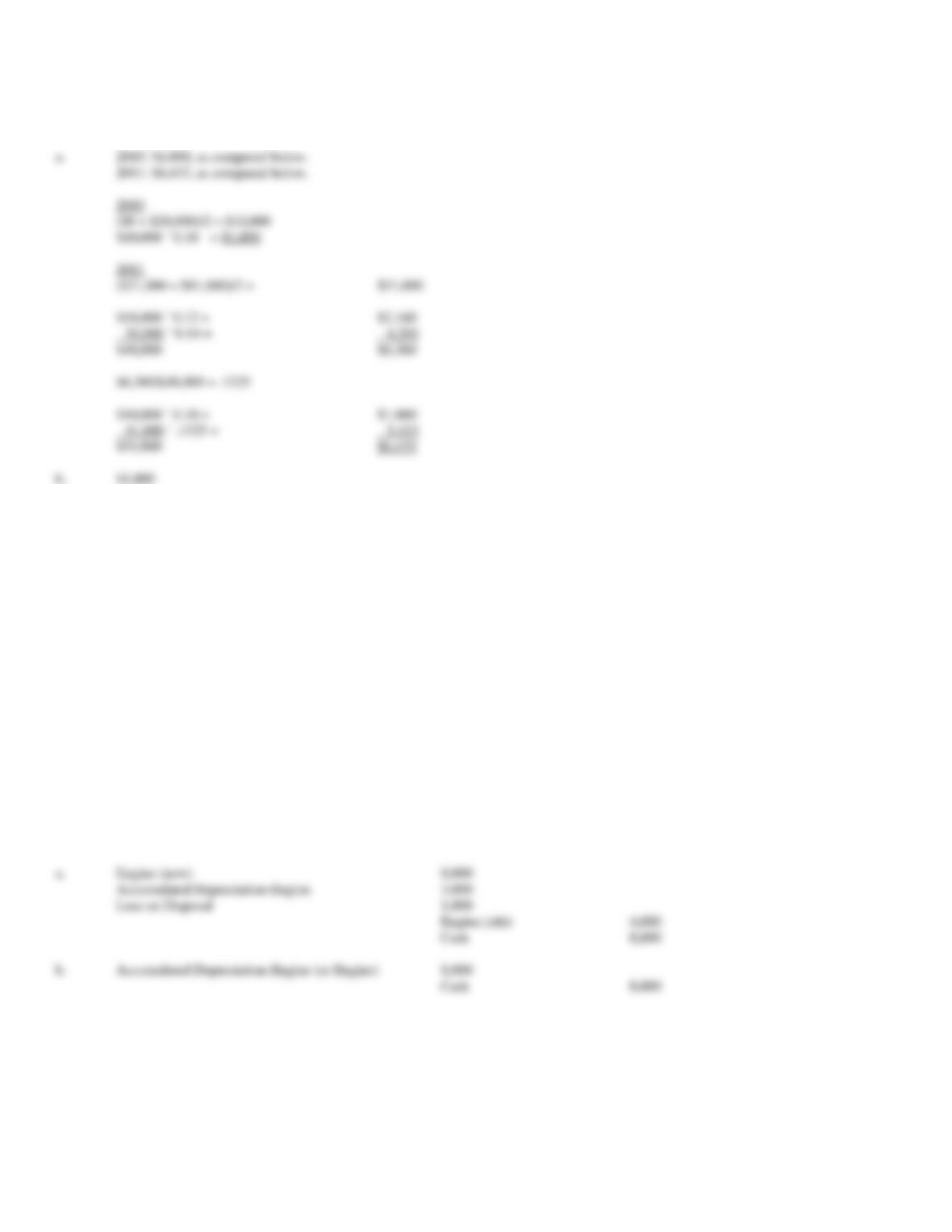
(0 + $800,000)/2 =
$400,000
$400,000 ´ .06 =
$24,000
$700,000 ´ .09 =
63,000
$87,000
$87,000/$1,100,000 = 7.91%
$300,000 ´ .08 =
$24,000
$100,000 ´ .0791 =
7,910
$31,910
83. The Heavy Equipment Company decided to replace a gasoline engine with a diesel engine in one of its
cranes. The new engine cost $8,000, which Heavy paid in cash. The old engine is discarded at no cost to Heavy
Equipment.
Required:
a.
Prepare the required journal entry for Heavy Equipment Company, assuming the old gasoline engine is carried on the books at a cost of
$4,000 with accumulated depreciation of $3,000.
b.
Prepare the required journal entry for Heavy Equipment Company, assuming the book value of the old engine is not known.
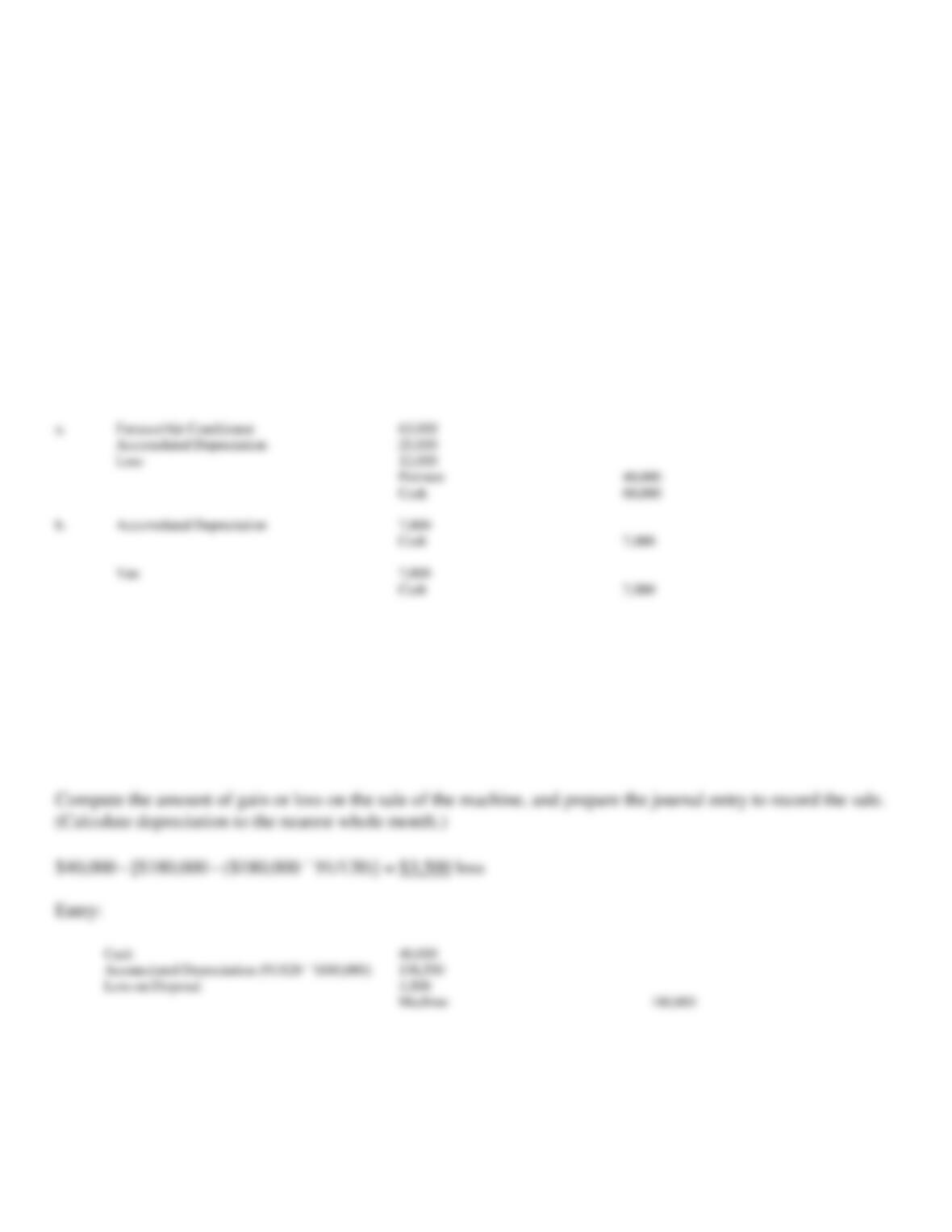
Engine (new)
8,000
Cash
8,000
30,000 ´ 0.14 =
4,200
84. Robertson Company is making significant improvements to some of its assets, as follows.
1.
It is replacing the old furnace that cost $40,000 and has a $15,000 book value with a new furnace/air conditioner combination.
Robertson spent $60,000 in cash and was given a $3,000 trade-in on the old furnace.
2.
The delivery van is being updated with a new $7,000 engine that will increase the useful life of the van by 2 years. The van originally
cost $35,000 and has accumulated depreciation of $25,000.
Required:
a.
Record the appropriate journal entry for replacing the furnace.
b.
When recording the transaction associated with the van there is a choice between two methods. Provide the journal entries for each
method.
85. On May 1, 2010, Argus Manufacturing Co. acquired a machine for $180,000. The machine was depreciated
monthly using the straight-line method with an estimated life of ten years and no salvage value. On December
1, 2017, the machine was sold for $40,000.
Required:
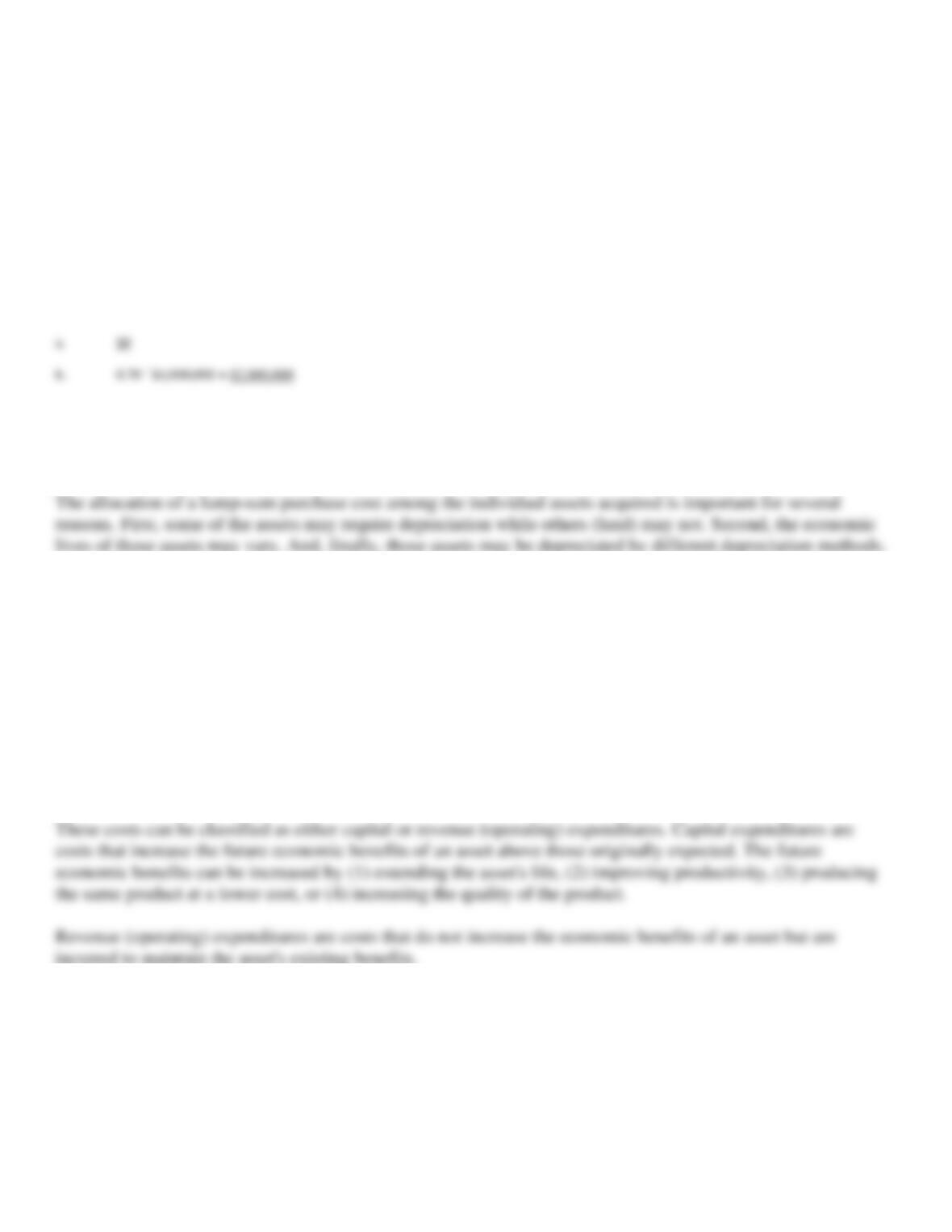
Cash
40,000
Accumulated Depreciation (91/120 ´ $180,000)
136,500
Loss on Disposal
3,500
a.
Furnace/Air Conditioner
63,000
Loss
12,000
Furnace
40,000
Cash
60,000
Accumulated Depreciation
7,000
Cash
7,000
Cash
7,000
86. In 2010, Hart Co. invested $4,000,000 in oil well exploration activities. Seventy percent of the drilling was
successful and resulted in commercial quantities of oil being found.
Required:
a.
Indicate the amount of drilling expense Hart Co. would recognize in 2010 if the full-cost method is in use.
b.
Indicate the cost that would be reported on the balance sheet as oil and gas properties if the successful-efforts method is in use.
87. Why is it important to allocate a lump-sum purchase amount among the individual assets acquired?
88. Costs that are incurred after acquiring a piece of property, plant, or equipment are for a variety of reasons,
ranging from routine repairs to major overhauls and improvements. The accountant’s problem is to determine
how these costs should be recorded.
Required:
Identify the two categories of expenditures in which these costs can be classified, and explain how the
accountant determines which classification is appropriate.
a.
$0
b.
0.70 ´ $4,000,000 = $2,800,000
89. List and describe four specific examples of start-up costs. Discuss the GAAP rules for recording start-up
costs.
Examples of start up costs include:
Costs associated with organizing a new entity:
Legal fees associated with startup
Preparation of a charter
Preparation of by-laws
Costs of preparing and copying minutes of organizational meetings
Organization meeting costs
Original stock certificates
Costs associated with opening a new facility:
Permits to operate the business
Costs of hiring and training new employees
Pre-opening advertising
Costs associated with introducing a new product line or service:
Costs of hiring/retraining new employees
Costs associated with conducting business in a new territory:
Costs of hiring/relocating employees
Pre-opening advertising
Costs associated with commencing a new operation in an existing
facility:
Costs associated with reorganizing the facility
Costs associated with hiring/retraining
Under current GAAP, companies must expense such costs as incurred.
90. Current GAAP describes three exceptions to the general rule of using fair value when exchanging
nonmonetary assets.
Required:
List the three exceptions and provide an example of each.
1.
Neither the fair value of the asset received or given up is reasonably determinable.
Example: A unique or one-of-a-kind productive asset is involved.
2.
The transaction is an exchange of inventory to facilitate sales to a third party.
Example: Company A exchanges inventory with Company B so Company A can sell the new inventory to Company C.
3.
The transaction lacks commercial substance such that the future cash flows of the company are not expected to change significantly.
Example: Company A exchanges equipment with a book value of $30,000 for a new truck costing $50,000 that will not significantly
improve production, so the cash flow won’t significantly change.
91. Discuss when the interest capitalization period begins and ends for assets constructed for a company’s own
use.
92. Describe the IFRS treatment of increases in the market value of property, plant, and equipment held during
the year. Compare that treatment to U.S. GAAP requirements.