206.
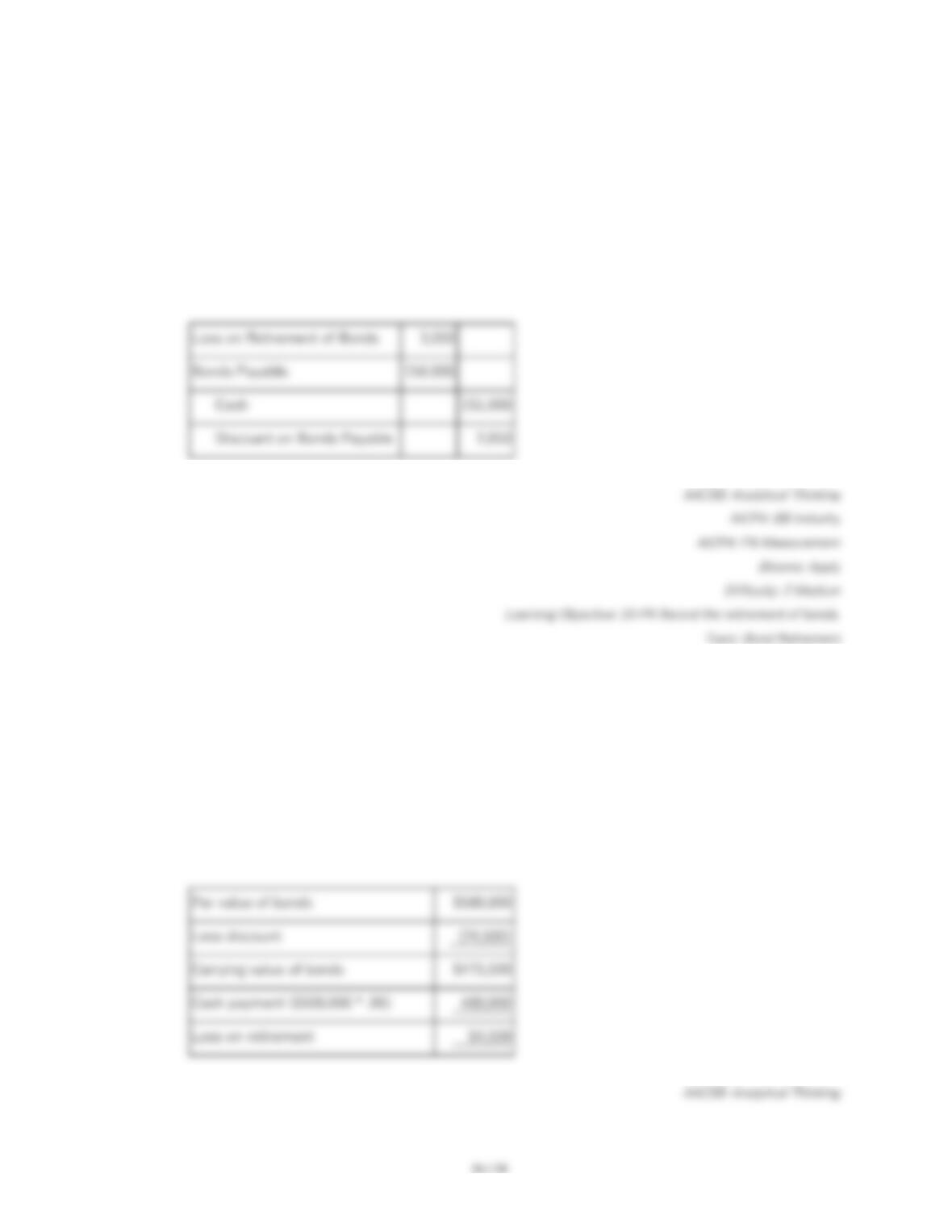
A company holds $150,000 par value of bonds with a carrying value of $147,950. The
company calls the bonds at $151,000. Prepare the journal entry to record the retirement of
the bonds.
207.
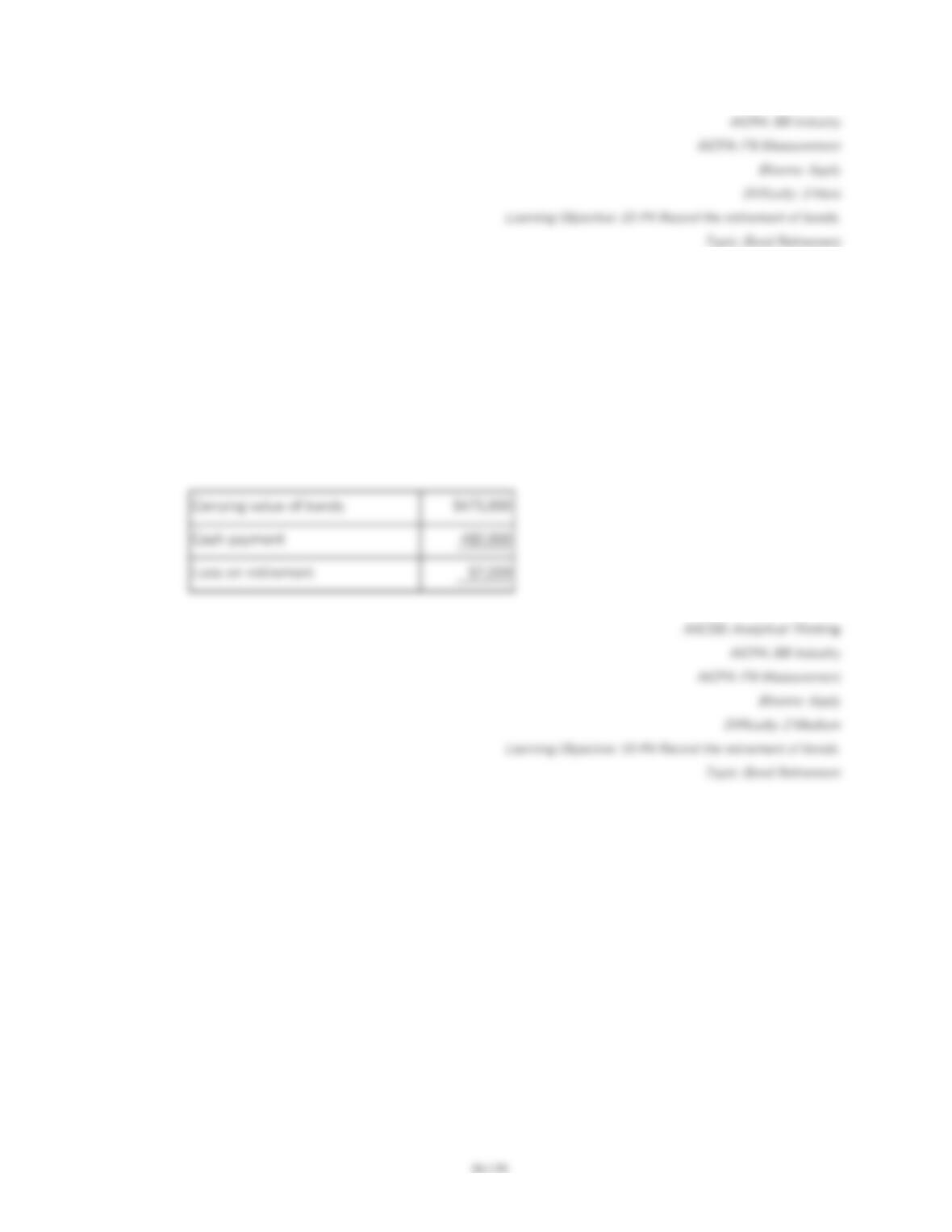
A company has 10%, 20-year bonds outstanding with a par value of $500,000. The
company calls the bonds at 96 when the unamortized discount is $24,500. Calculate the
gain or loss on the retirement of these bonds.
208.
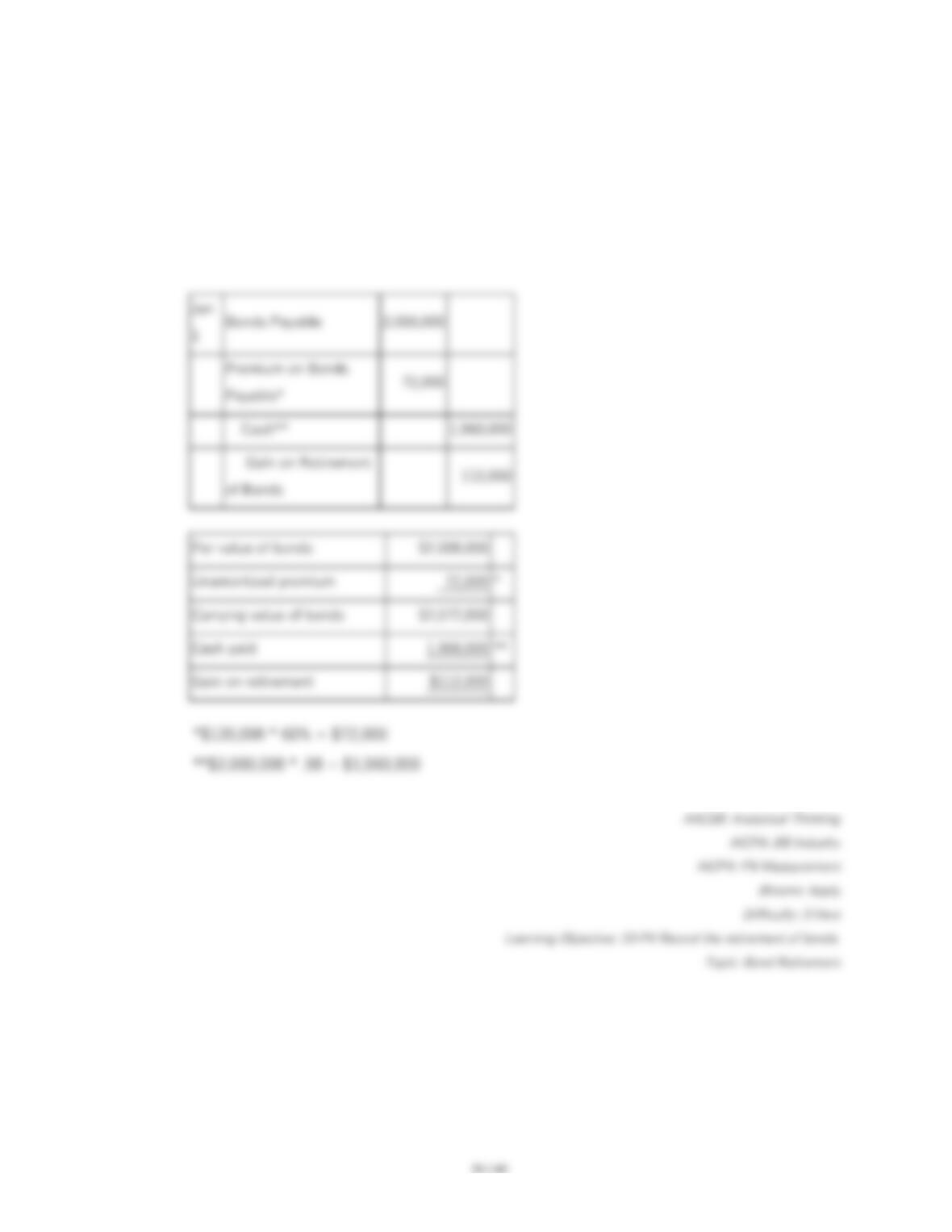
Mandarin Company has 9%, 20-year bonds outstanding with a par value of $500,000 and a
carrying value of $475,000. The company calls the bonds at $482,000. Calculate the gain or
loss on the retirement of these bonds.
209.
A company previously issued $2,000,000, 10% bonds, receiving a $120,000 premium. On
the current year’s interest date, after the bond interest was paid and after 40% of the total
premium had been amortized, the company purchased the entire bond issue on the open
market at 98 and retired it. Prepare the journal entry to record the retirement of these
bonds.
210.
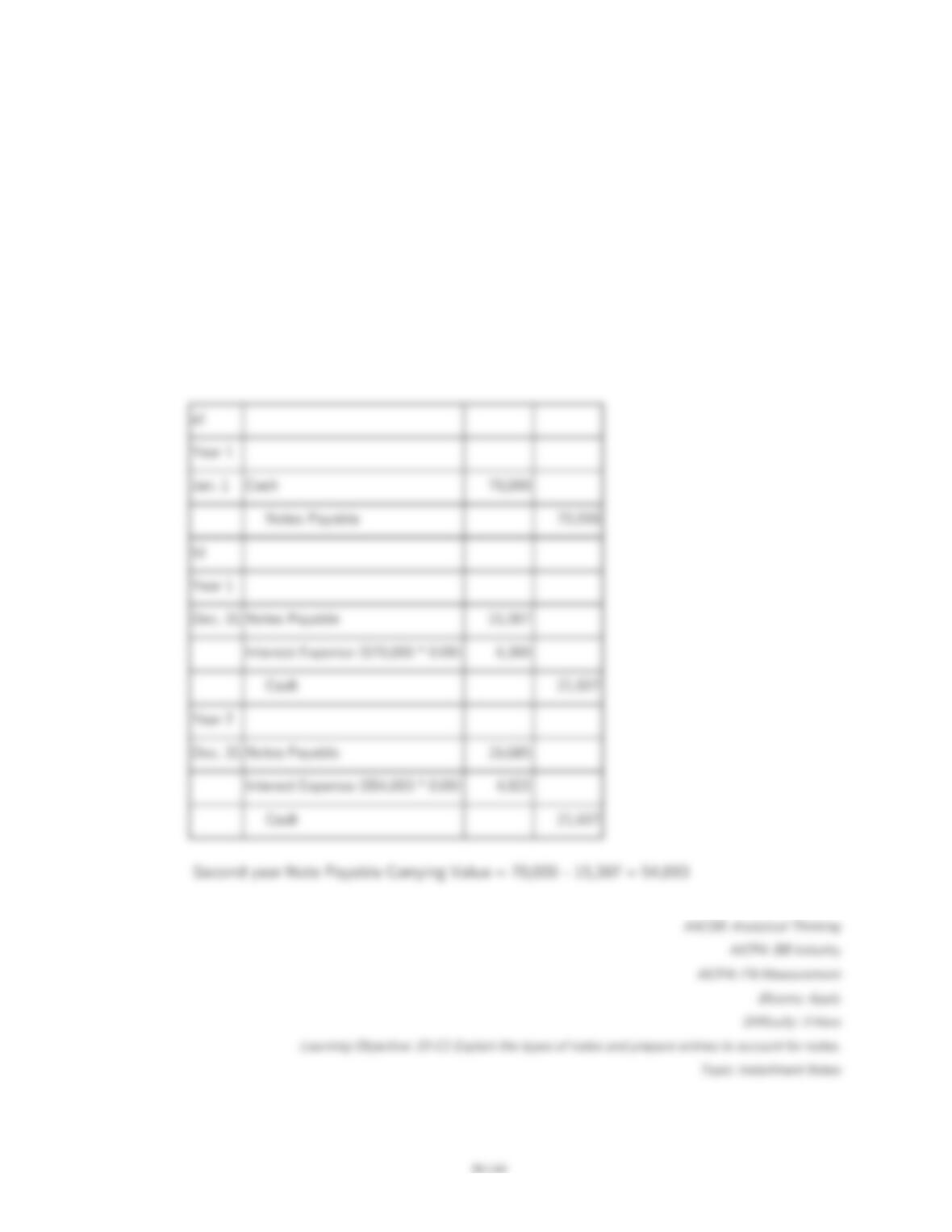
On January 1, Year 1 a company borrowed $70,000 cash by signing a 9% installment note
that is to be repaid with 4 annual year-end payments of $21,607, the first of which is due
on December 31, Year 1.
(a) Prepare the company’s journal entry to record the note’s issuance.
(b) Prepare the journal entries to record the first and second installment payments.
211.
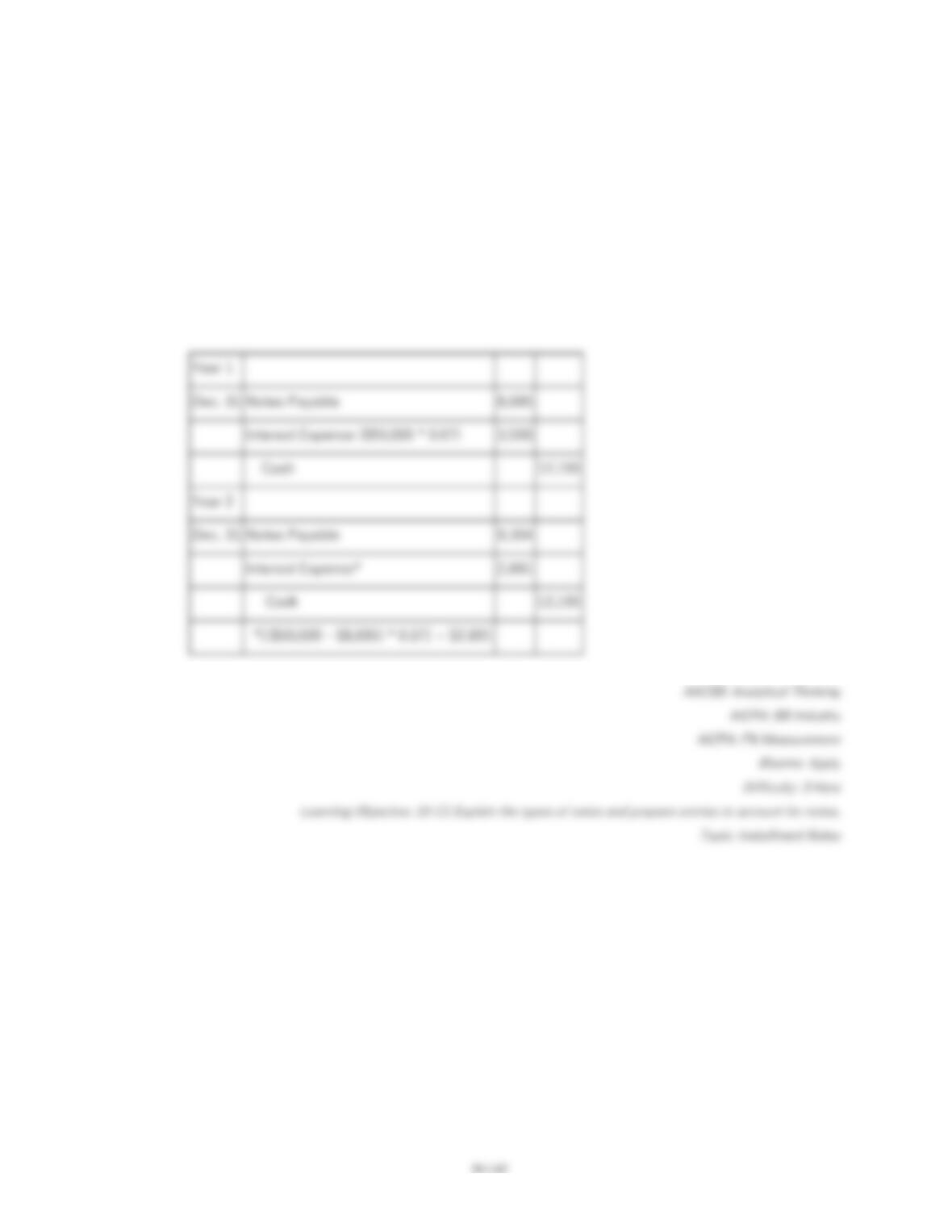
On January 1, a company borrowed $50,000 cash by signing a 7% installment note that is
to be repaid in 5 annual end-of-year payments of $12,195. The first payment is due on
December 31. Prepare the journal entries to record the first and second installment
payments.
212.
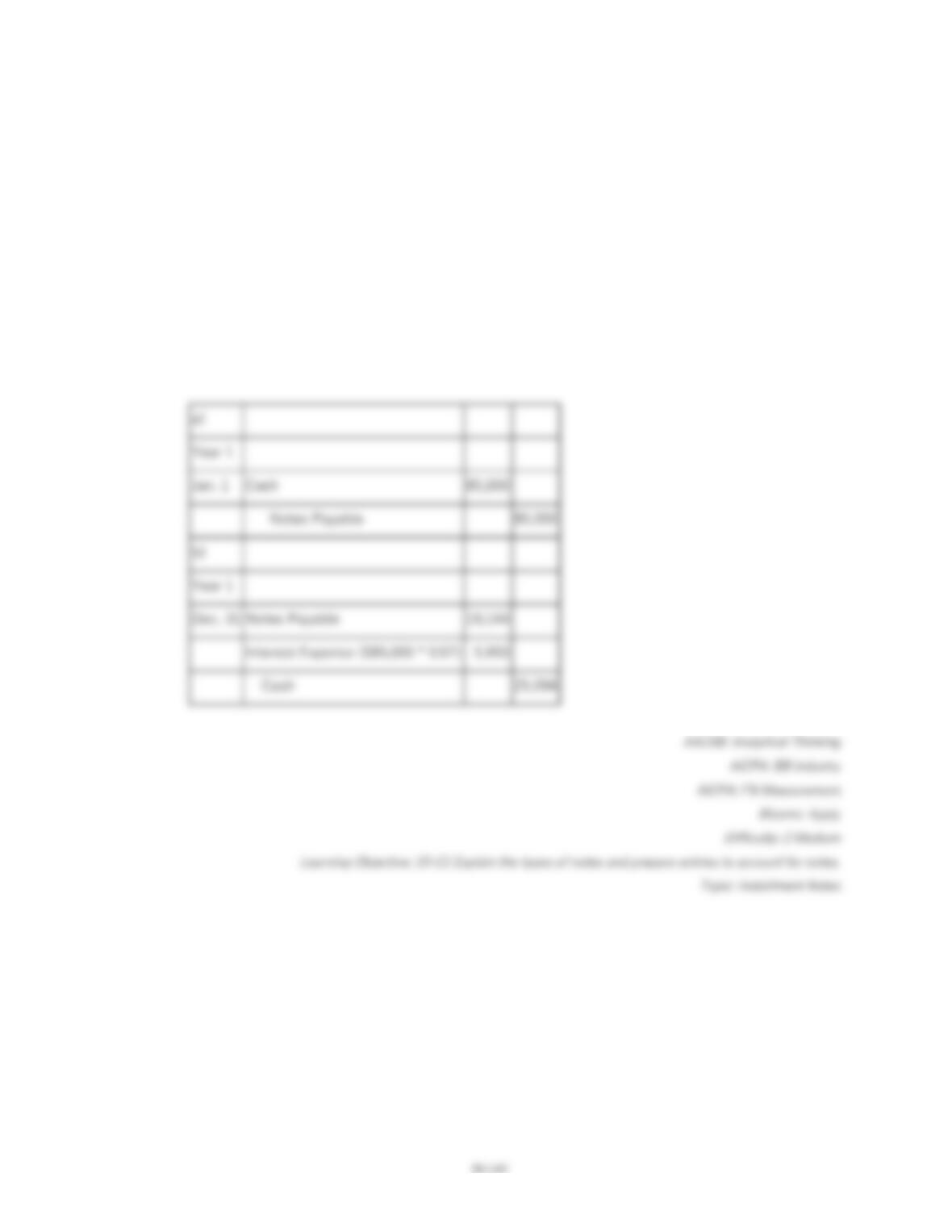
On January 1, Year 1 Cleaver Company borrowed $85,000 cash by signing a 7% installment
note that is to be repaid with 4 annual year-end payments of $25,094, the first of which is
due on December 31, Year 1.
(a) Prepare the company’s journal entry to record the note’s issuance.
(b) Prepare the journal entries to record the first installment payment.
10-144
213.
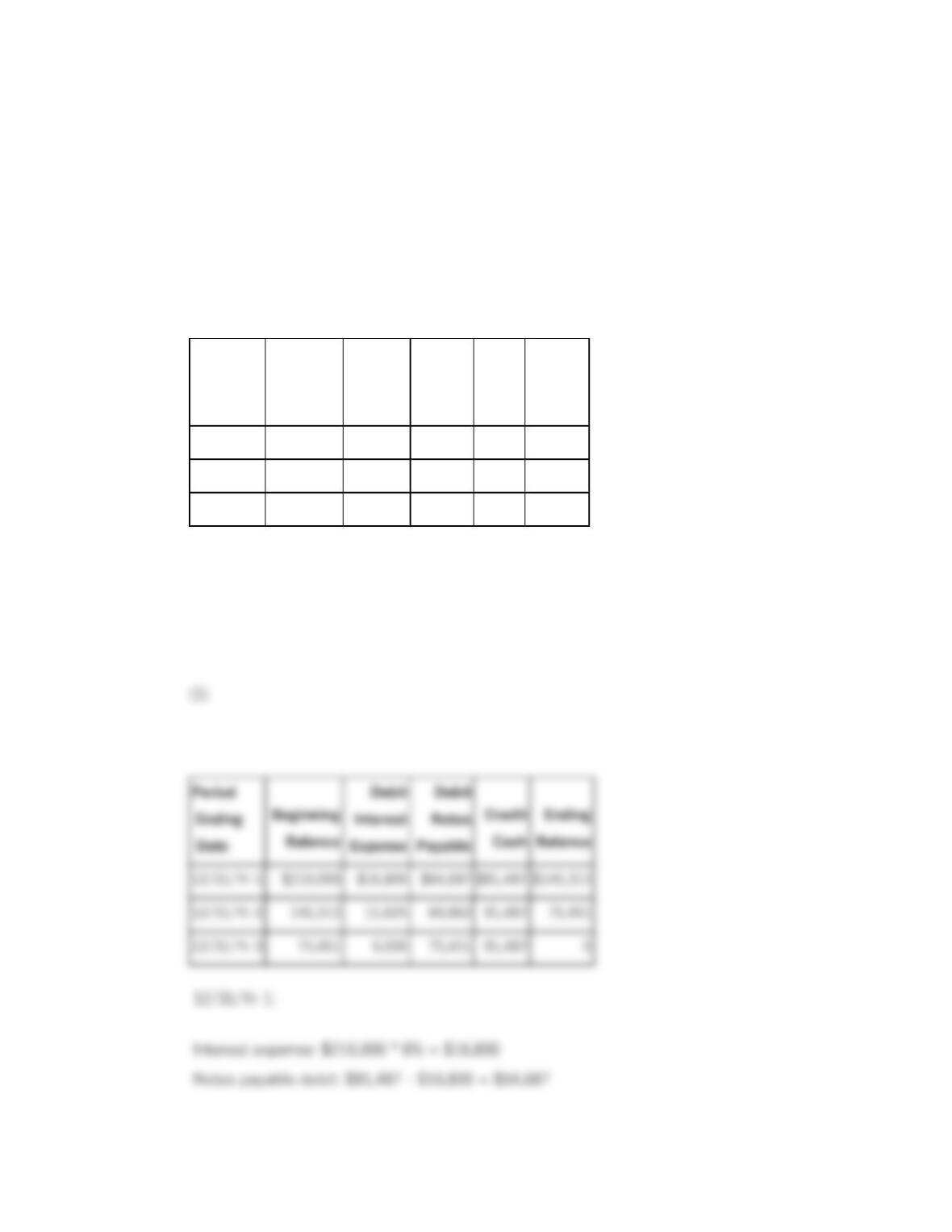
A company purchased two new delivery vans for a total of $250,000 on January 1, Year 1.
The company paid $40,000 cash and signed a $210,000, 3-year, 8% note for the remaining
balance. The note is to be paid in three annual end–of-year payments of $81,487 each,
with the first payment on December 31, Year 1. Each payment includes interest on the
unpaid balance plus principal.
(1) Prepare a note amortization table using the format below:
Period
Ending
Date
Beginning
Balance
Debit
Interest
Expense
Debit
Notes
Payable
Credit
Cash
Ending
Balance
12/31/Yr 1
12/31/Yr 2
12/31/Yr 3
(2) Prepare the journal entries to record the purchase of the vans on January 1, Year 1
and the second annual installment payment on December 31, Year 2.
12/31/Yr 1
12/31/Yr 2
12/31/Yr 3
Fill in the Blank Questions
214.
_______________ bonds have specific assets of the issuing company pledged as collateral.
215.
______________ bonds are bonds that are scheduled for maturity on one specified date.
216.
_______________ bonds are bonds that mature at more than one date, often in a series, and
thus are usually repaid over a number of periods.
217.
____________________ bonds reduce a bondholder’s risk by requiring the issuer to create a
fund of assets set aside as specified amounts and dates to repay the bonds.
218.
Bonds payable to whoever holds them are called _________________ bonds.
219.
_____________________ bonds can be exchanged for a fixed number of shares of the
issuing corporation’s common stock.
220.
___________________ bonds have an option exercisable by the issuer to retire them at a
stated dollar amount prior to maturity.
221.
The legal document identifying the rights and obligations of both the bondholders and the
issuer is called the ____________________________________.
222.
An ________________________________ is an obligation requiring a series of payments to
the lender.
223.
When applying equal total payments to a note, with each payment the amount applied to
the note principal ____________ while the interest expense for the note _____________.
224.
The ____________ concept is the idea that cash paid (or received) in the future has less
value now than the same amount of cash paid (or received) today.
225.
An _______________ is a series of equal payments at equal time intervals.
226.
A _______________________ is a contractual agreement between an employer and its
employees for the employer to provide benefits (payments) to employees after they
retire.
227.
_________________________ leases are short–term or cancelable leases in which the lessor
retains the risks and rewards of ownership.
228.
____________________ leases are long-term or noncancelable leases by which the lessor
transfers substantially all risks and rewards of ownership to the lessee.
229.
Return on equity increases when the expected rate of return from the acquired assets is
__________________ than the rate of interest on the bonds used to finance the asset
acquisition.
230.
Bonds issued in the names and addresses of their holders are ________________ bonds.
231.
The ______________ ratio is used to assess the risk of a company’s financing structure.
232.
The rate of interest that borrowers are willing to pay and lenders are willing to accept for a
particular bond and its risk level is the ____________________ of interest.
233.
The _________________________ method of amortizing a bond discount allocates an equal
portion of the total bond interest expense to each interest period.