119.
If an issuer sells bonds at a date other than an interest payment date:
120.
A company issues 9% bonds with a par value of $100,000 at par on April 1, which is 4
months after the most recent interest date. The cash received for accrued interest on April
1 by the bond issuer is:
121.
A company issues 9% bonds with a par value of $100,000 at par on April 1, which is 4
months after the most recent interest date. The journal entry to record the bond issue
includes a:
122.
A company issues 9% bonds with a par value of $100,000 at par on April 1. The bonds pay
interest semi-annually on January 1 and July 1. The cash paid on July 1 to the bond
holder(s) is:
123.
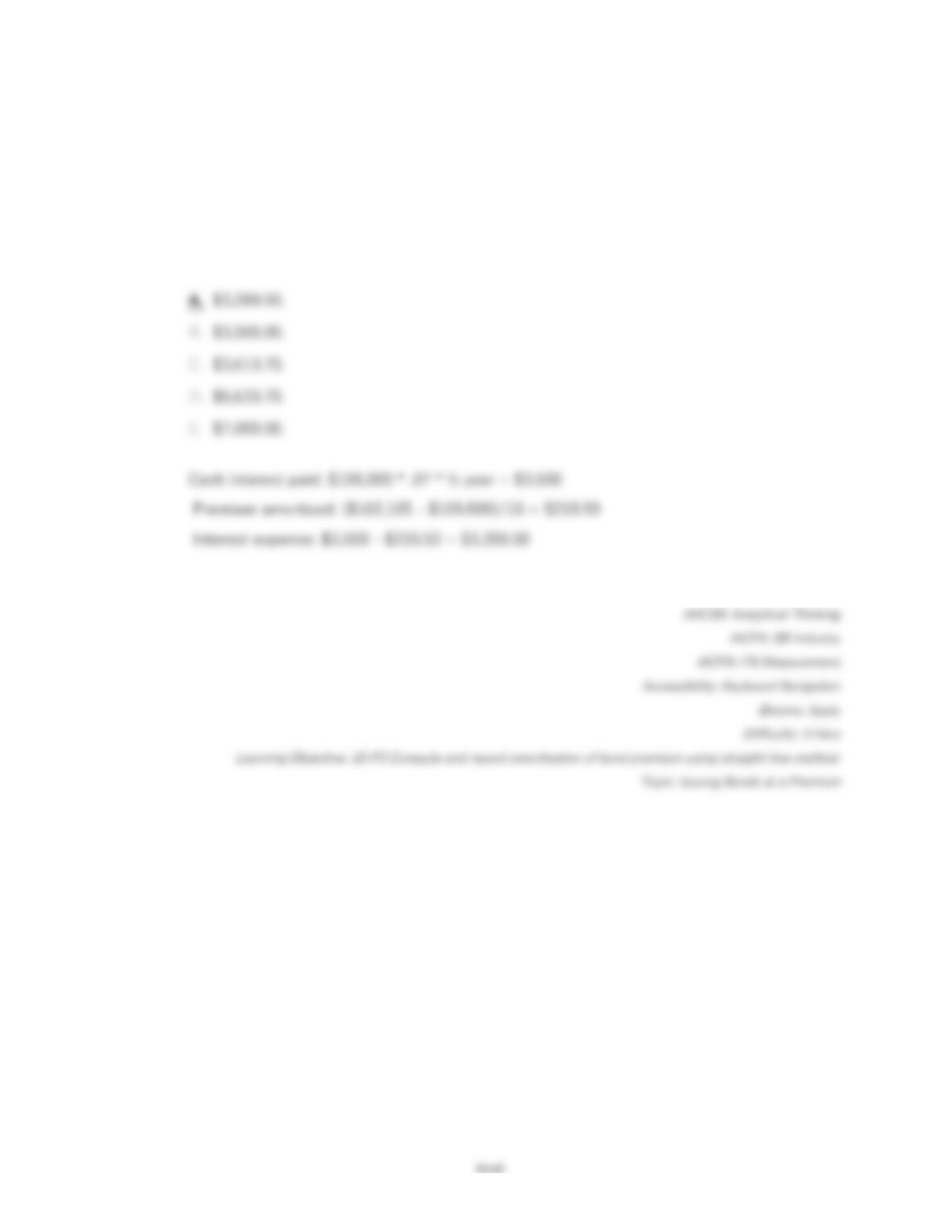
A company issued 5-year, 7% bonds with a par value of $100,000. The market rate when
the bonds were issued was 6.5%. The company received $102,105 cash for the bonds.
Using the straight-line method, the amount of recorded interest expense for the first
semiannual interest period is:
124.
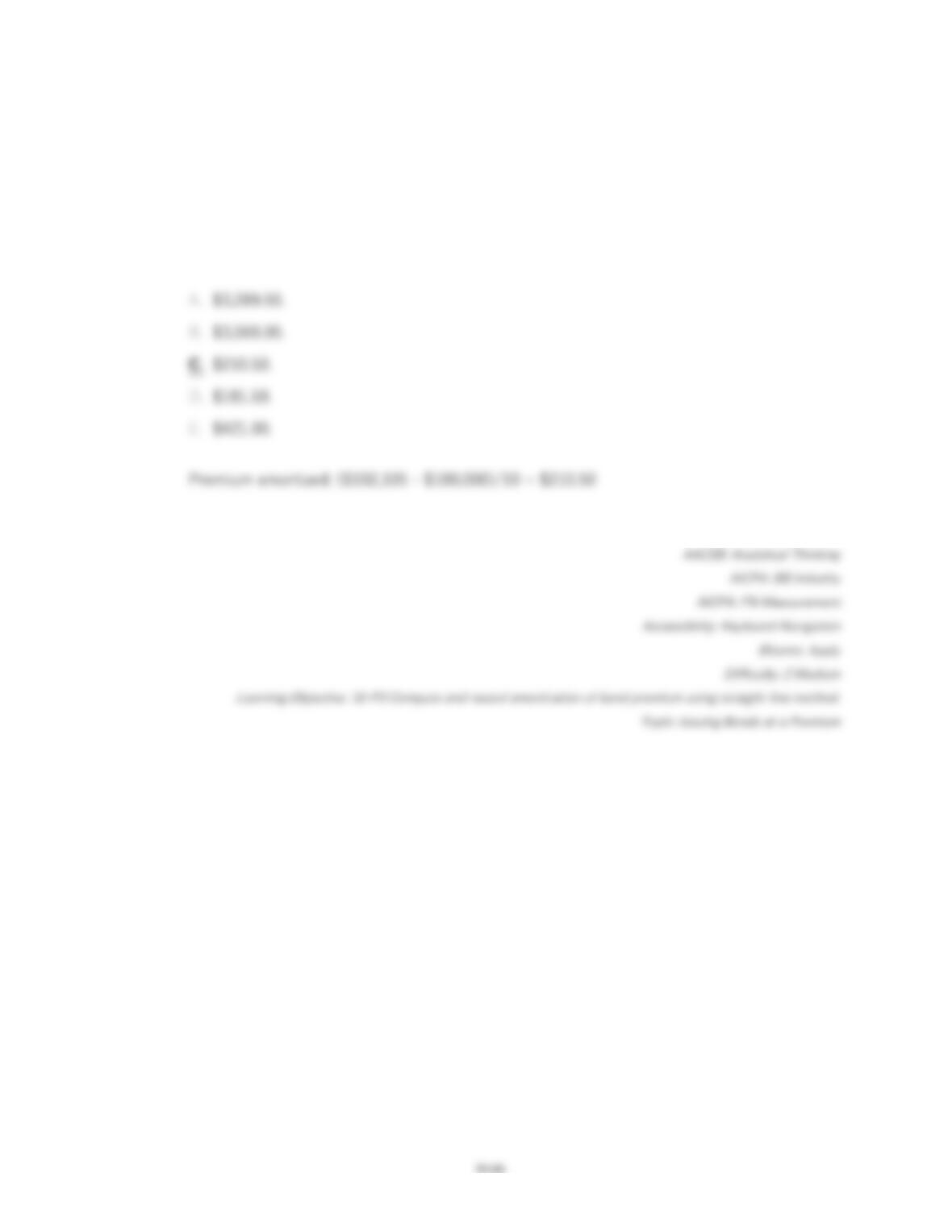
A company issued 5-year, 7% bonds with a par value of $100,000. The market rate when
the bonds were issued was 6.5%. The company received $102,105 cash for the bonds.
Using the straight-line method, the amount of premium amortization per semi-annual
interest period is:
125.
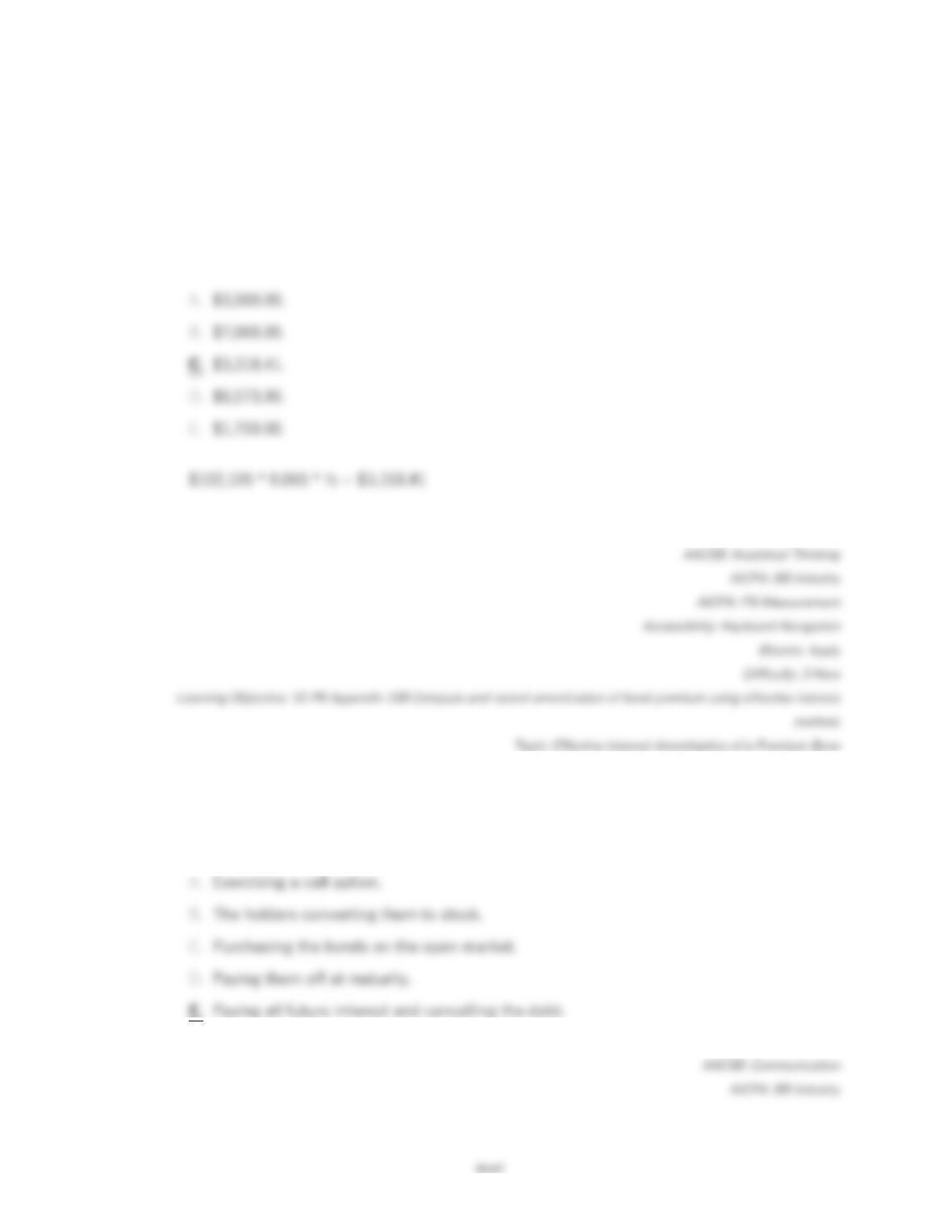
A company issued 5-year, 7% bonds with a par value of $100,000. The market rate when
the bonds were issued was 6.5%. The company received $102,105 cash for the bonds.
Using the effective interest method, the amount of recorded interest expense for the first
semiannual interest period is:
126.
A company may retire bonds by all but which of the following means?
127.
Bonds that give the issuer an option of retiring them before they mature are:
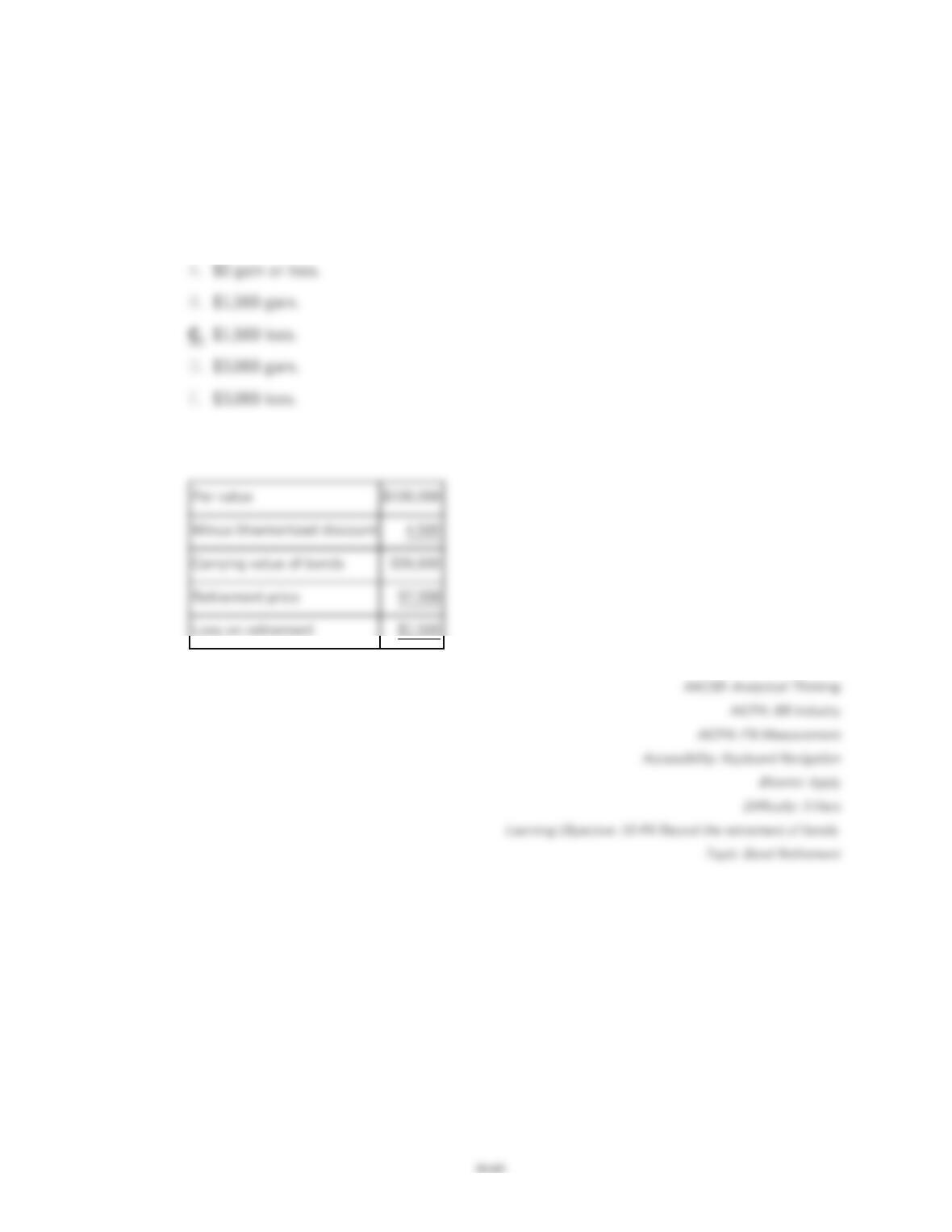
128.
A company has bonds outstanding with a par value of $100,000. The unamortized discount
on these bonds is $4,500. The company retired these bonds by buying them on the open
market at 97. What is the gain or loss on this retirement?
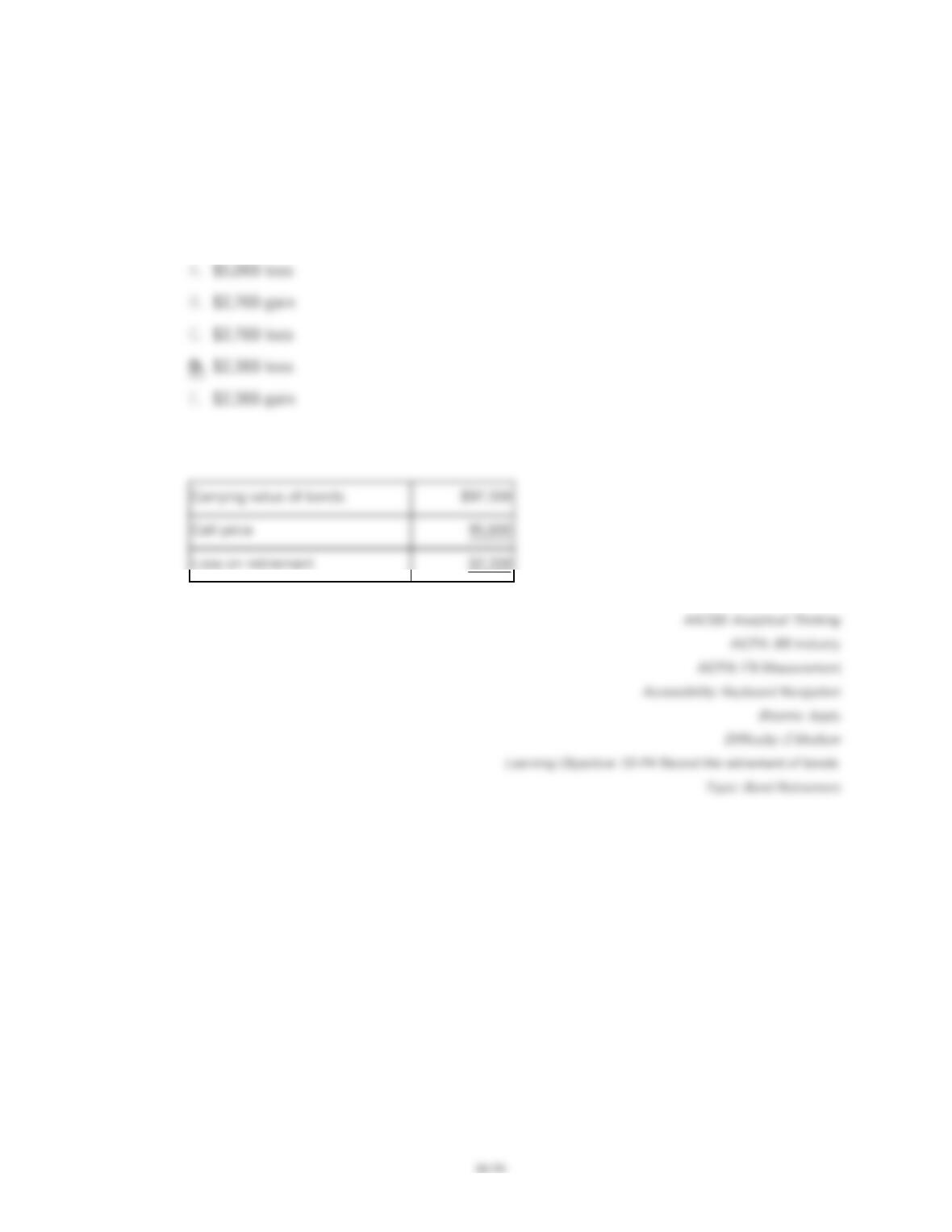
129.
Clabber Company has bonds outstanding with a par value of $100,000 and a carrying value
of $97,300. If the company calls these bonds at a price of $95,000, the gain or loss on
retirement is:
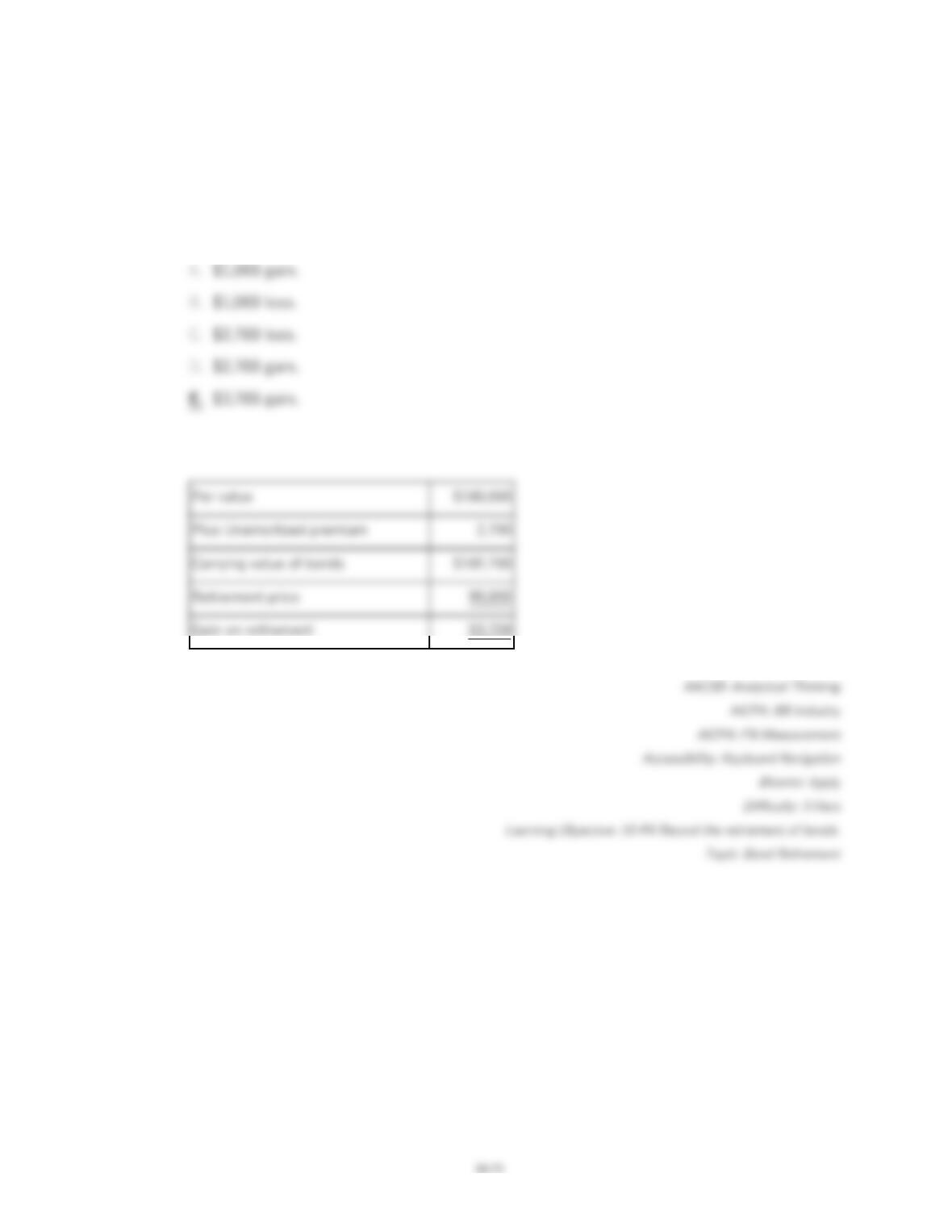
130.
A company has bonds outstanding with a par value of $100,000. The unamortized premium
on these bonds is $2,700. If the company retired these bonds at a call price of 99, the gain
or loss on this retirement is:
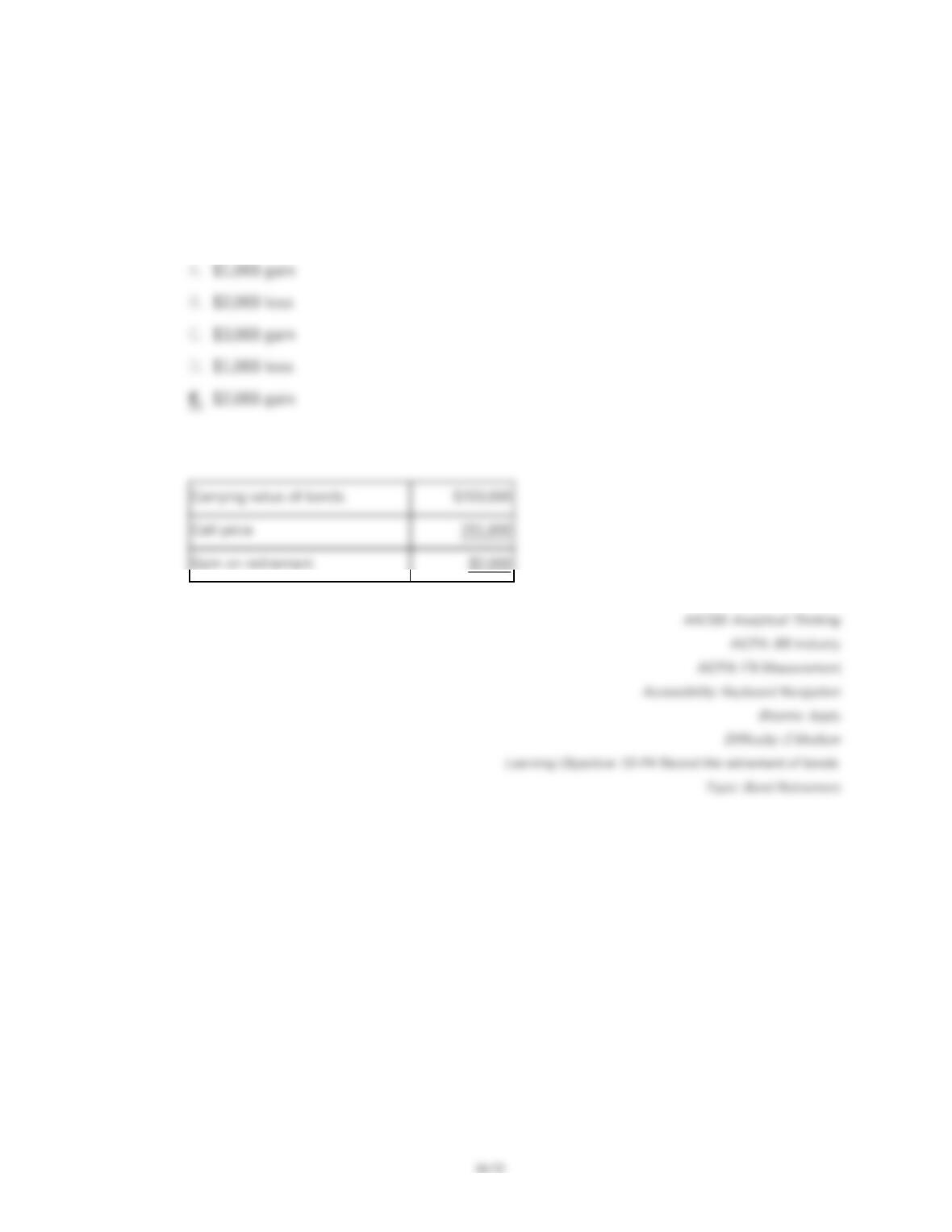
131.
Chang Industries has bonds outstanding with a par value of $200,000 and a carrying value
of $203,000. If the company calls these bonds at a price of $201,000, the gain or loss on
retirement is:
132.
A company retires its bonds at 105. The face value is $100,000 and the carrying value of
the bonds at the retirement date is $103,745. The issuer’s journal entry to record the
retirement will include a:
133.
A corporation issued 8% bonds with a par value of $1,000,000 at $1,020,000. On the
interest date 5 years later, after the bond interest was paid and after 40% of the premium
had been amortized, the corporation purchased the entire issue on the open market at 99
and retired it. The gain or loss on this retirement is:
134.
On August 1, a $30,000, 6%, 3-year installment note payable is issued by a company. The
note requires equal payments of principal plus accrued interest each year on July 31. The
present value of an annuity factor for 3 years at 6% is 2.6730. The payment each July 31
will be:
135.
On July 1, Shady Creek Resort borrowed $250,000 cash by signing a 10-year, 8%
installment note requiring equal payments each June 30 of $37,258. What is the
appropriate journal entry to record the issuance of the note?
136.
On July 1, Shady Creek Resort borrowed $250,000 cash by signing a 10-year, 8%
installment note requiring equal payments each June 30 of $37,258. What amount of
interest expense will be included in the first annual payment?
137.
On July 1, Shady Creek Resort borrowed $250,000 cash by signing a 10-year, 8%
installment note requiring equal payments each June 30 of $37,258. What amount of
principle will be included in the first annual payment?
138.
A corporation borrowed $125,000 cash by signing a 5-year, 9% installment note requiring
equal annual payments each December 31 of $32,136. What journal entry would the issuer
record for the first payment?
139.
On January 1, Year 1, Stratton Company borrowed $100,000 on a 10-year, 7% installment
note payable. The terms of the note require Stratton to pay 10 equal payments of $14,238
each December 31 for 10 years. The required general journal entry to record the first
payment on the note on December 31, Year 1 is:
140.
On January 1, a company issues bonds dated January 1 with a par value of $300,000. The
bonds mature in 5 years. The contract rate is 9%, and interest is paid semiannually on
June 30 and December 31. The market rate is 8% and the bonds are sold for $312,177. The
journal entry to record the issuance of the bond is: