10-101
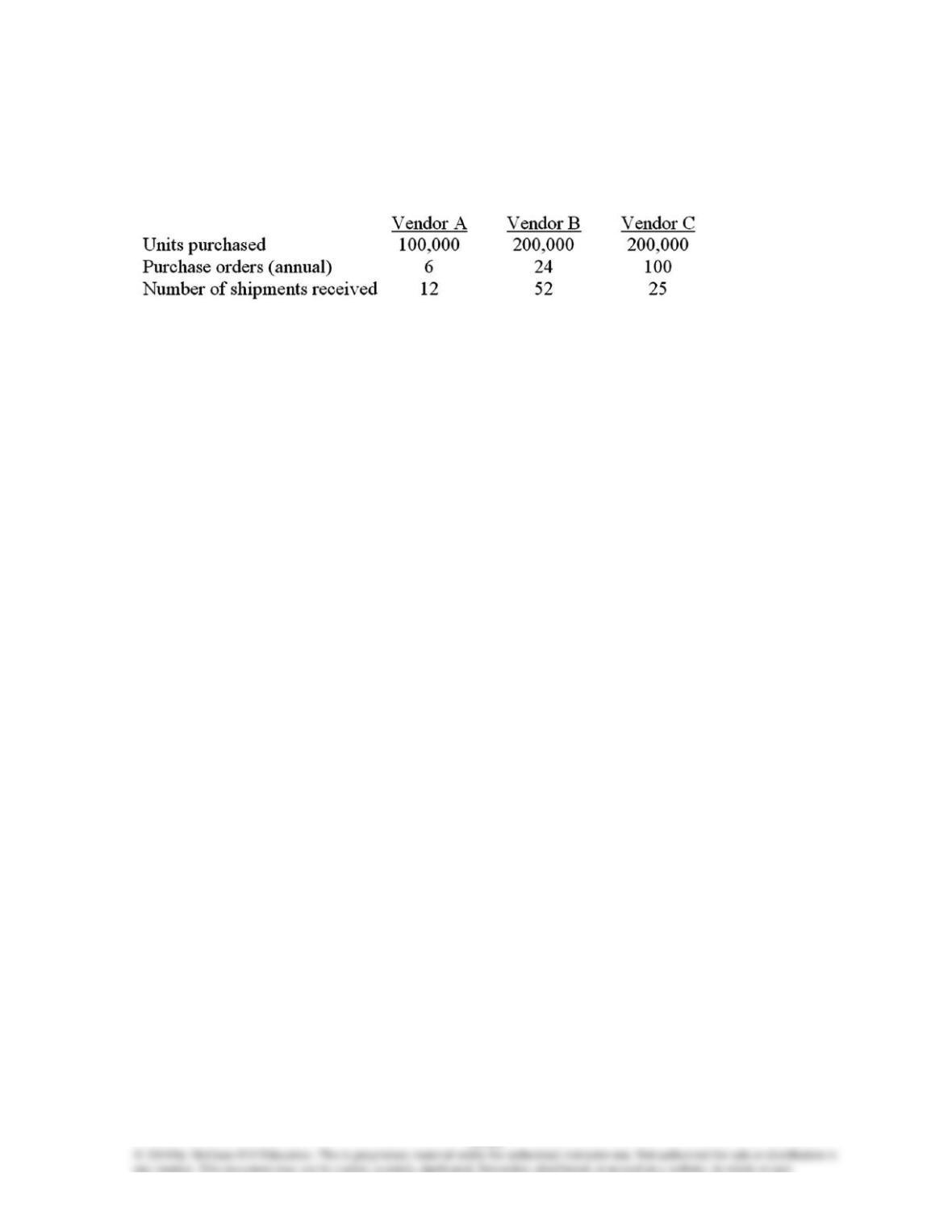
117. Rogers Company is preparing its annual profit plan. As part of its analysis of the cost of its
purchasing activity, management estimates that the $125,000 for purchasing support should be
assigned to the individual vendors from the information given as follows:
Required:
a. Prepare a schedule to allocate the purchasing costs to the three vendors, assuming Rogers
uses units purchased to compute activity-based costs.
b. Prepare a schedule to allocate the purchasing costs to the three vendors, assuming Rogers
uses purchases orders to compute activity-based costs.
c. Prepare a schedule to allocate the purchasing costs to the three vendors, assuming Rogers
uses number of shipments to compute activity-based costs.
10-103
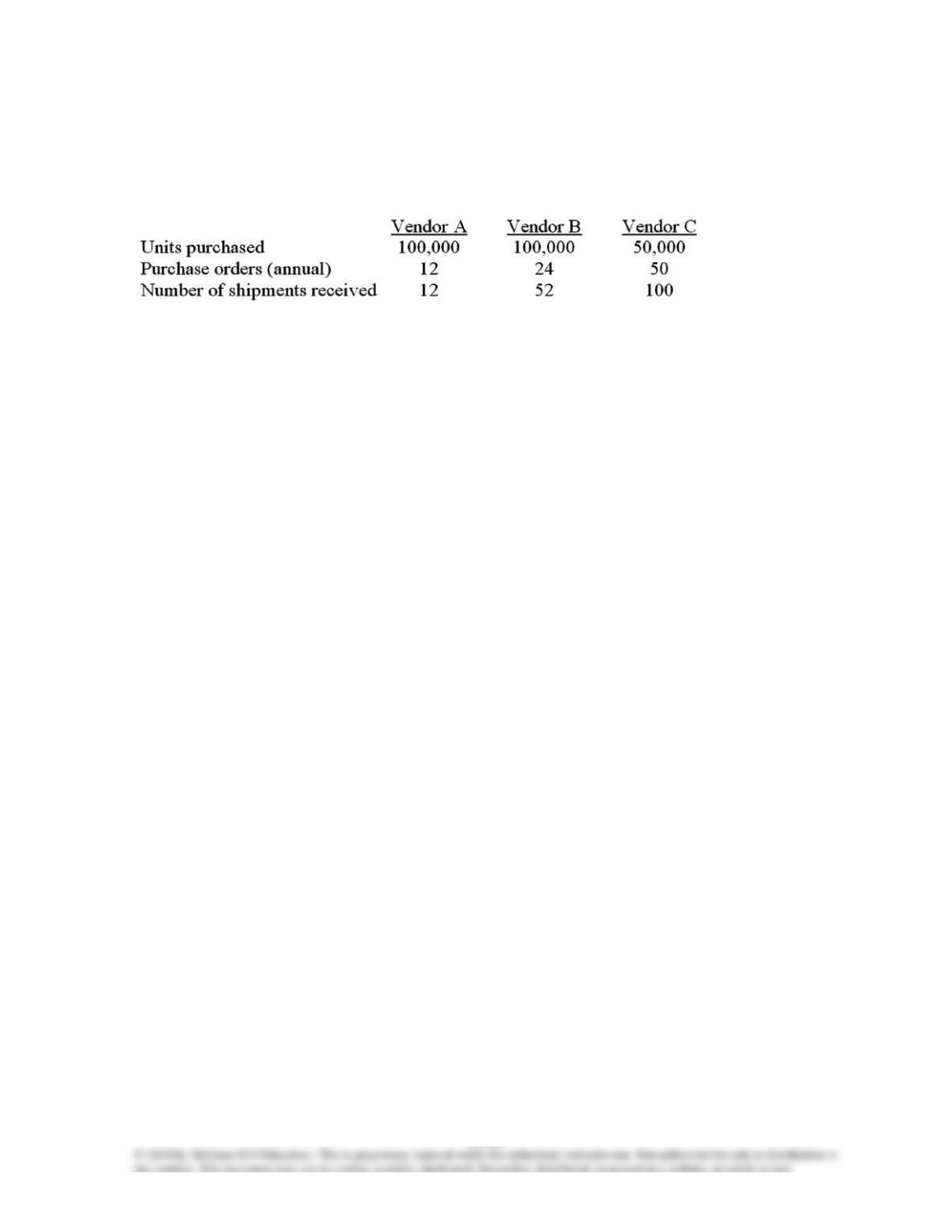
118. Maple Lake Company is preparing its annual profit plan. As part of its analysis of the cost
of its purchasing activity, management estimates that the $250,000 for purchasing support should
be assigned to the individual vendors from the information given as follows:
Required:
a. Prepare a schedule to allocate the purchasing costs to the three vendors, assuming Maple Lake
uses units purchased to compute activity-based costs.
b. Prepare a schedule to allocate the purchasing costs to the three vendors, assuming Maple Lake
uses purchases orders to compute activity-based costs.
c. Prepare a schedule to allocate the purchasing costs to the three vendors, assuming Maple Lake
uses number of shipments to compute activity-based costs.
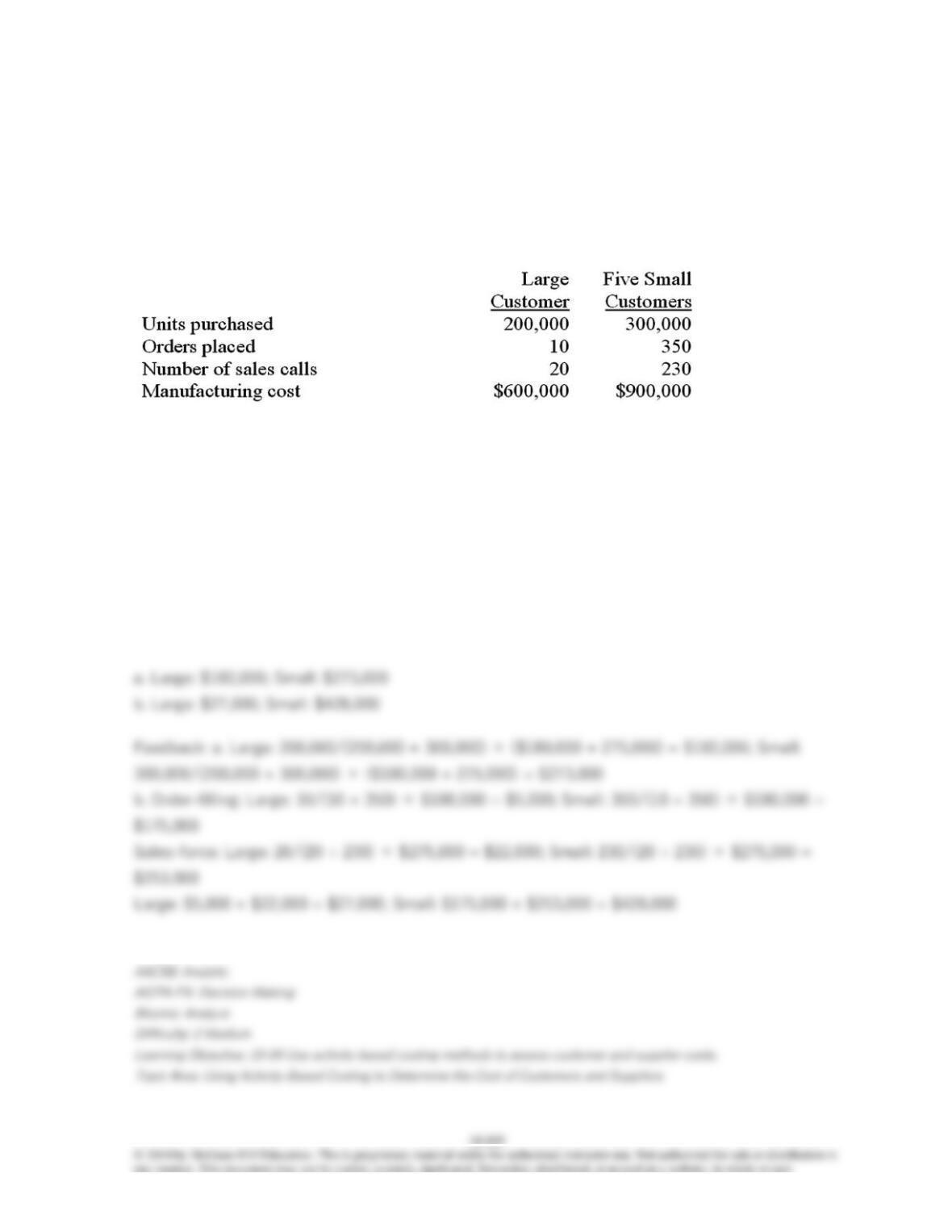
119. Elk Creek Company produces precision components. Elk Creek has six customers, one
accounts for 40 percent of the sales, with the remaining five accounting for the rest of the sales.
The five smaller customers purchase components in roughly equal quantities. Orders placed by
the smaller customers are about the same size. Data concerning Elk Creek’s customer activity
follow:
Order-filling costs for Elk Creek Company total $180,000, and sales-force costs are $275,000.
Required:
a. Allocate the order-filling and sales force costs to the customers based on sales volume.
b. Allocate the order-filling and sales force costs to the customers using an activity-based costing
approach.
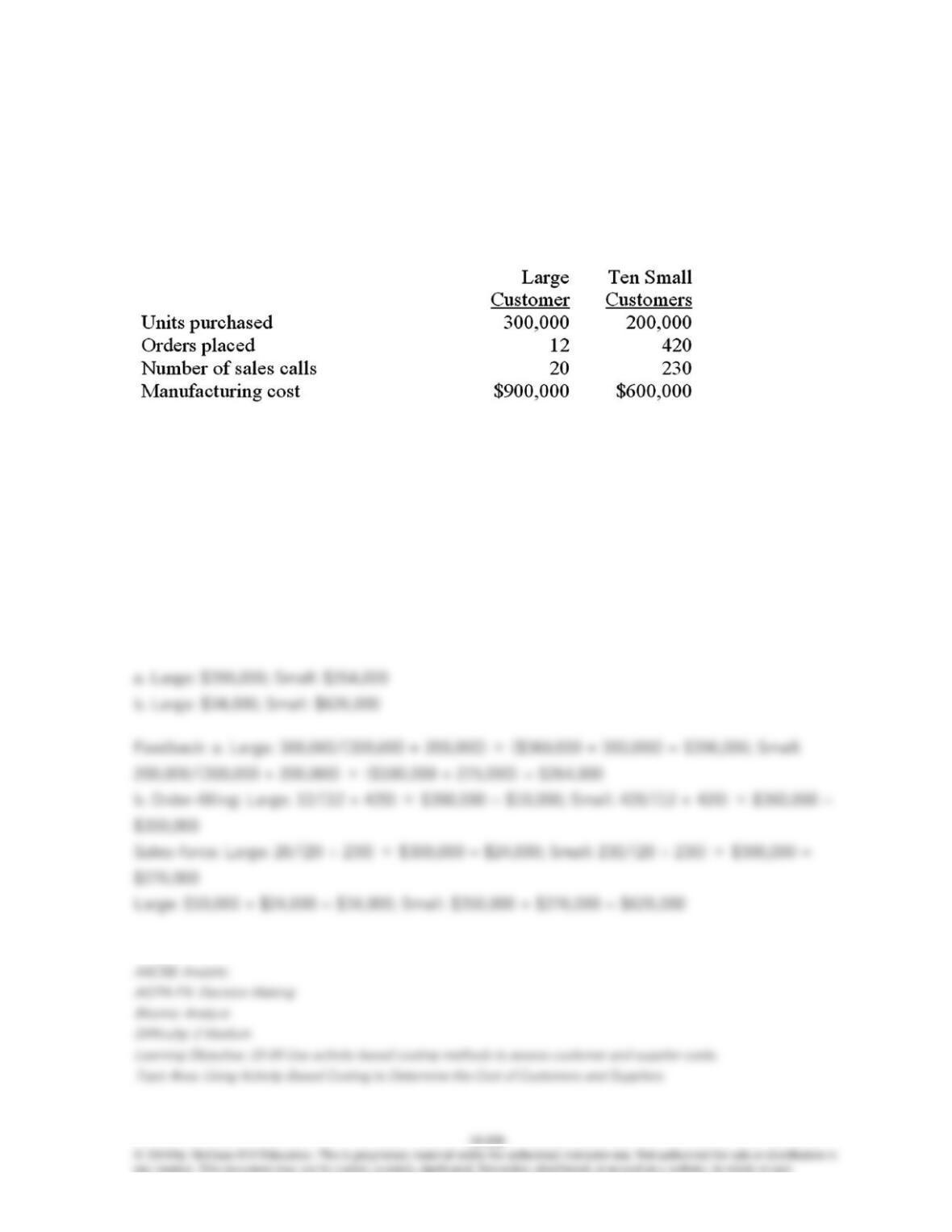
120. Redmond Company produces precision components. Redmond has 11 customers, one
accounts for 60 percent of the sales, with the remaining ten accounting for the rest of the sales.
The ten smaller customers purchase components in roughly equal quantities. Orders placed by
the smaller customers are about the same size. Data concerning Redmond’s customer activity
follow:
Order-filling costs for Redmond Company total $360,000, and sales-force costs are $300,000.
Required:
a. Allocate the order-filling and sales force costs to the customers based on sales volume.
b. Allocate the order-filling and sales force costs to the customers using an activity-based costing
approach.
10-107
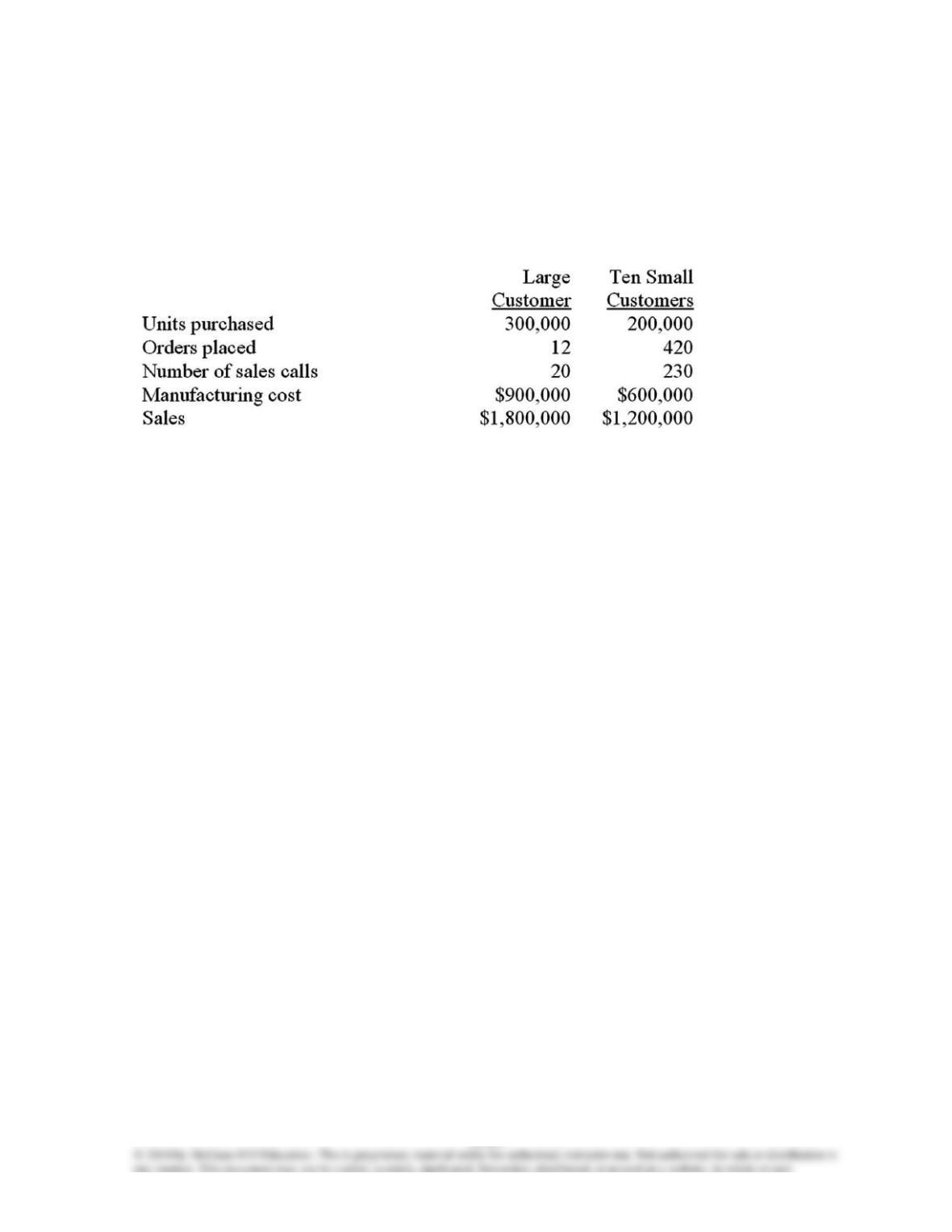
121. Redmond Company produces precision components. Redmond has 11 customers, one
accounts for 60 percent of the sales, with the remaining ten accounting for the rest of the sales.
The ten smaller customers purchase components in roughly equal quantities. Orders placed by
the smaller customers are about the same size. Data concerning Redmond’s customer activity
follow:
Order-filling costs for Redmond Company total $360,000, and sales-force costs are $300,000.
Required:
a. Determine the profitability of each of the two classes of customers (large and small). Allocate
the order-filling and sales force costs to the customers based on sales volume.
b. Determine the profitability of each of the two classes of customers (large and small). Allocate
the order-filling and sales force costs to the customers using an activity–based costing approach?
10-109
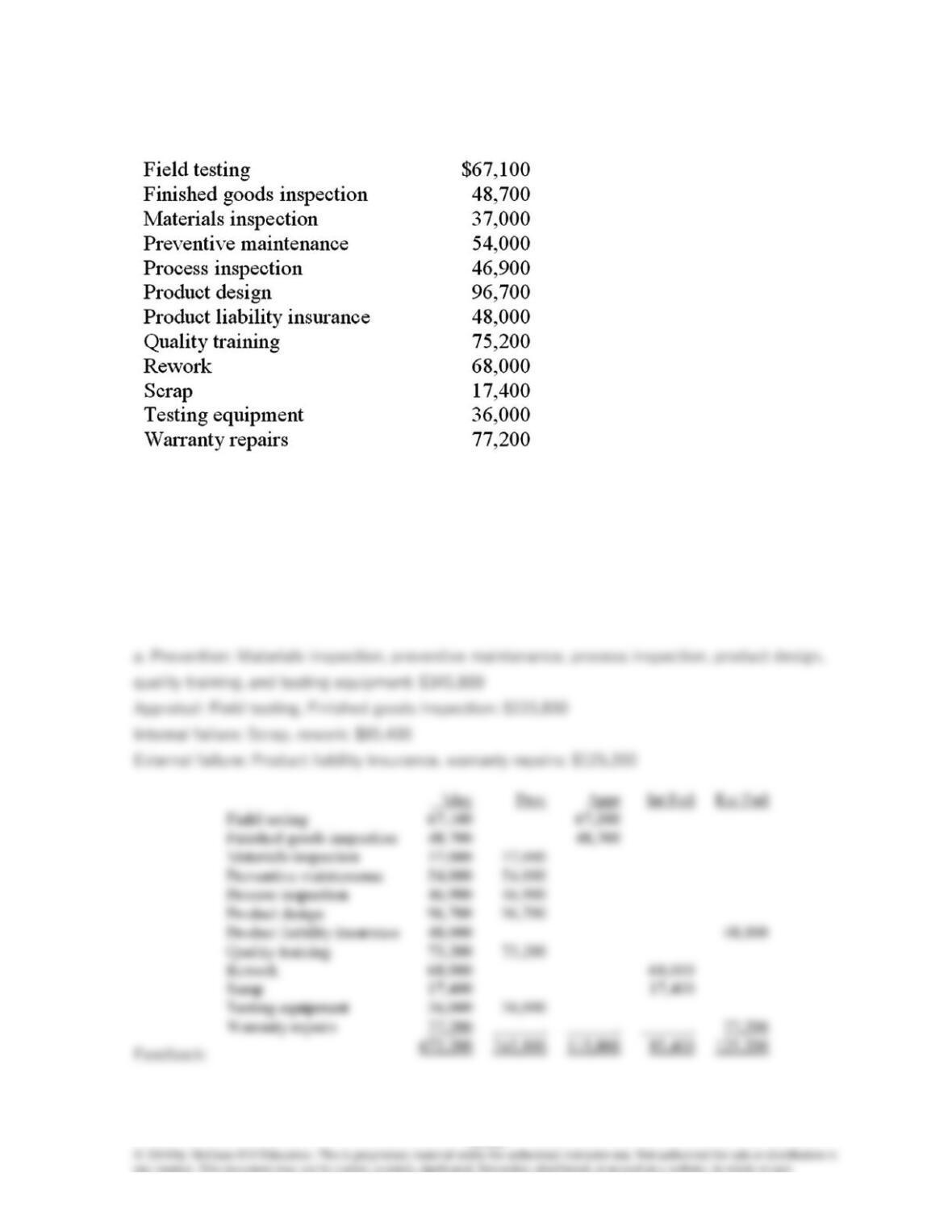
122. The following represents the financial information of Tool-Box Corporation, a
manufacturer of testing equipment:
Required:
a. Classify these items into prevention, appraisal, internal failure, or external failure costs.
Determine the total cost of each category.
10-110
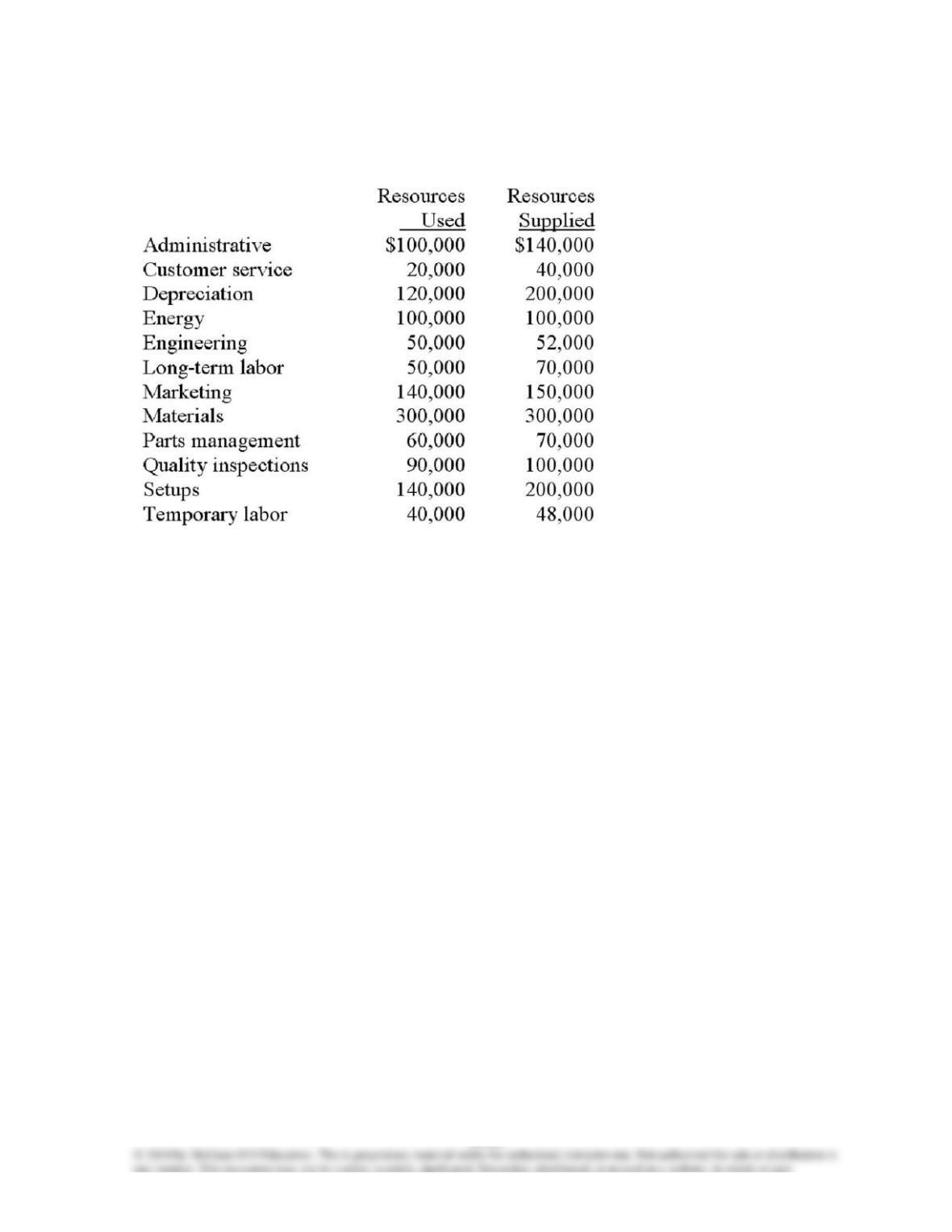
123. The following represents quality cost data for Banbury Corporation:
Required:
a. Classify these items into prevention, appraisal, internal failure, or external failure costs.
Determine the total cost of each category.
10-111
124. Larsmont Corporation manufactures electric trolling motors. Sales for the month totaled
$1,700,000. Information regarding resources for the month follows:
Required:
a. Prepare a traditional income statement.
b. Prepare an activity-based income statement.
10-113
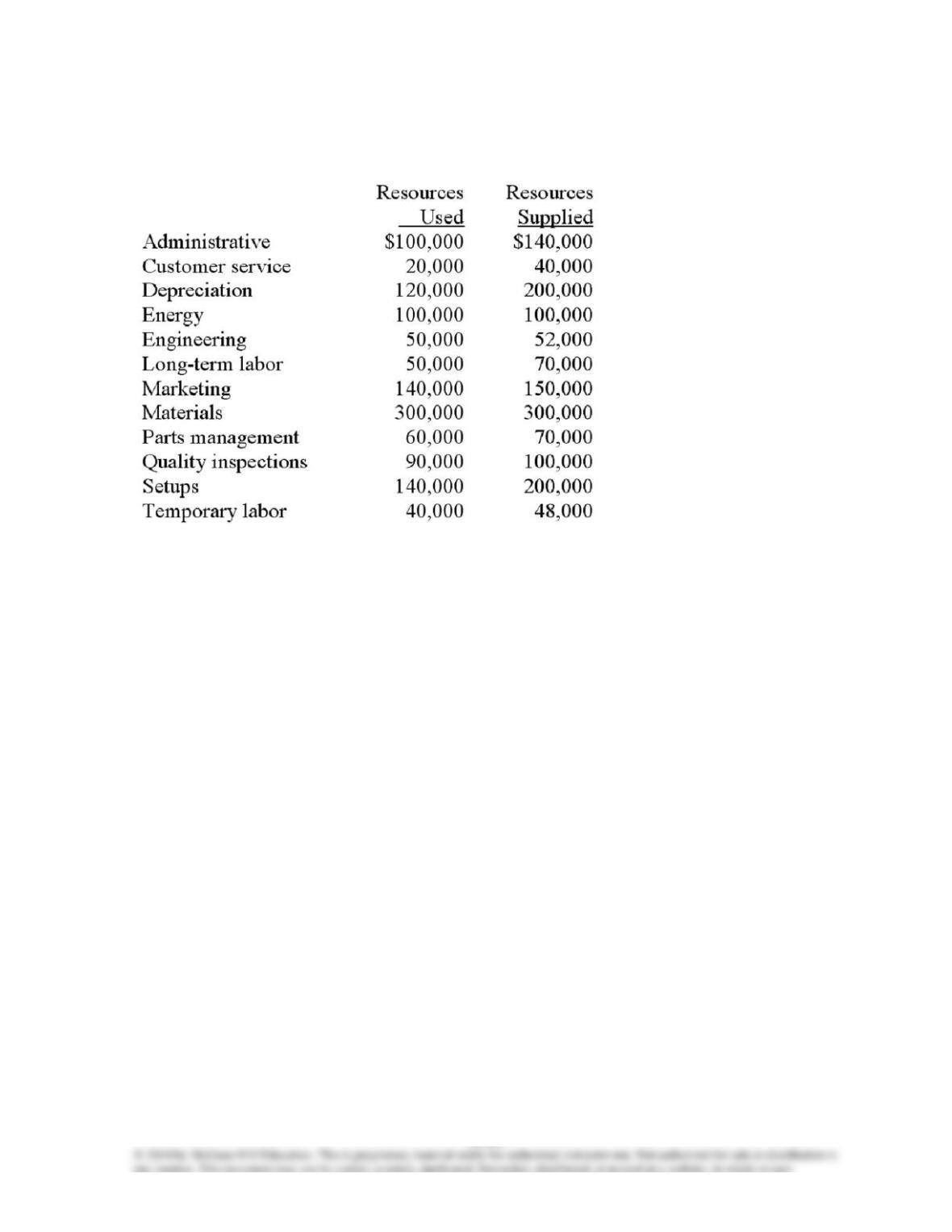
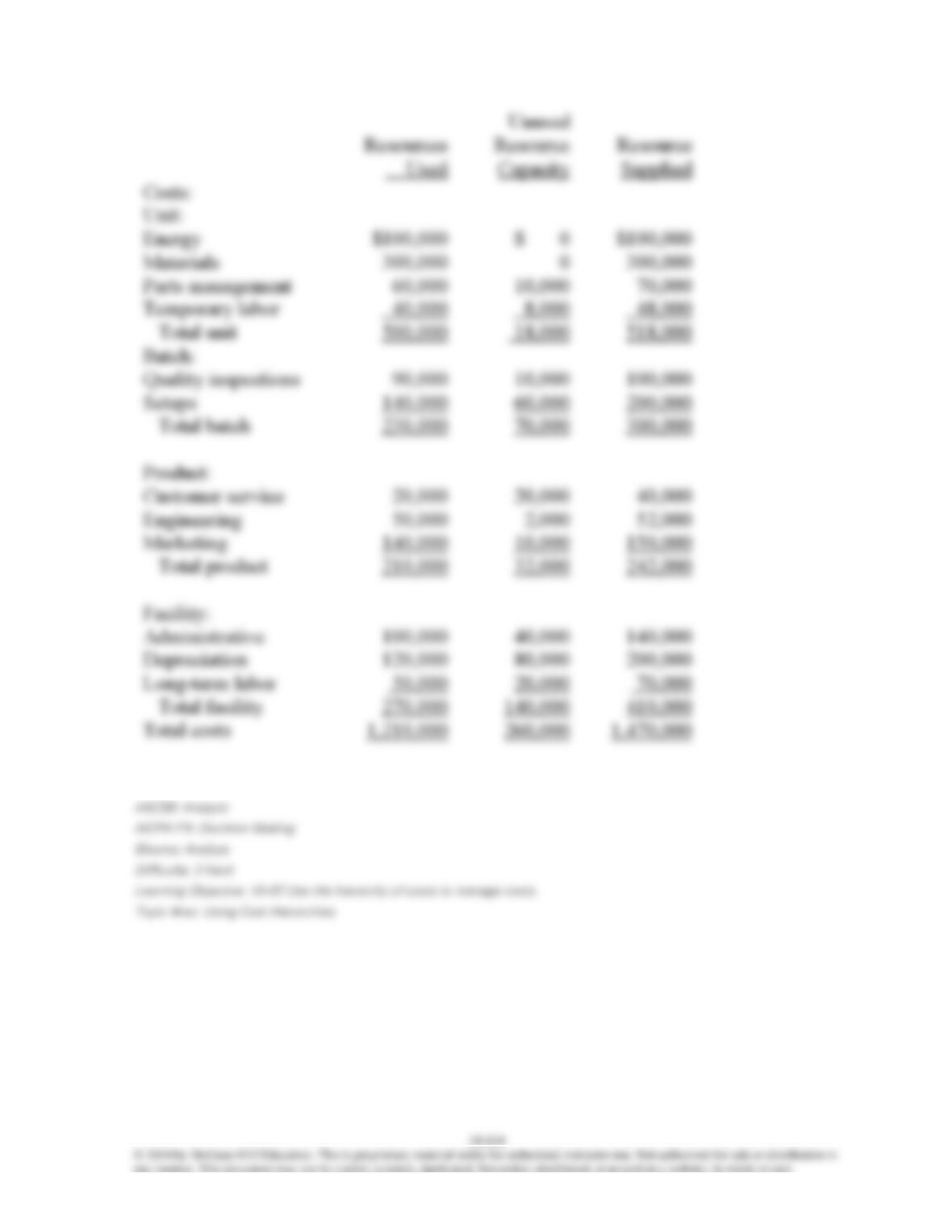
125. Carr Valley Corporation manufactures electric scooters. Information regarding resources
for the month follows:
Required:
a. Prepare an analysis of the unused resource capacity for the month.
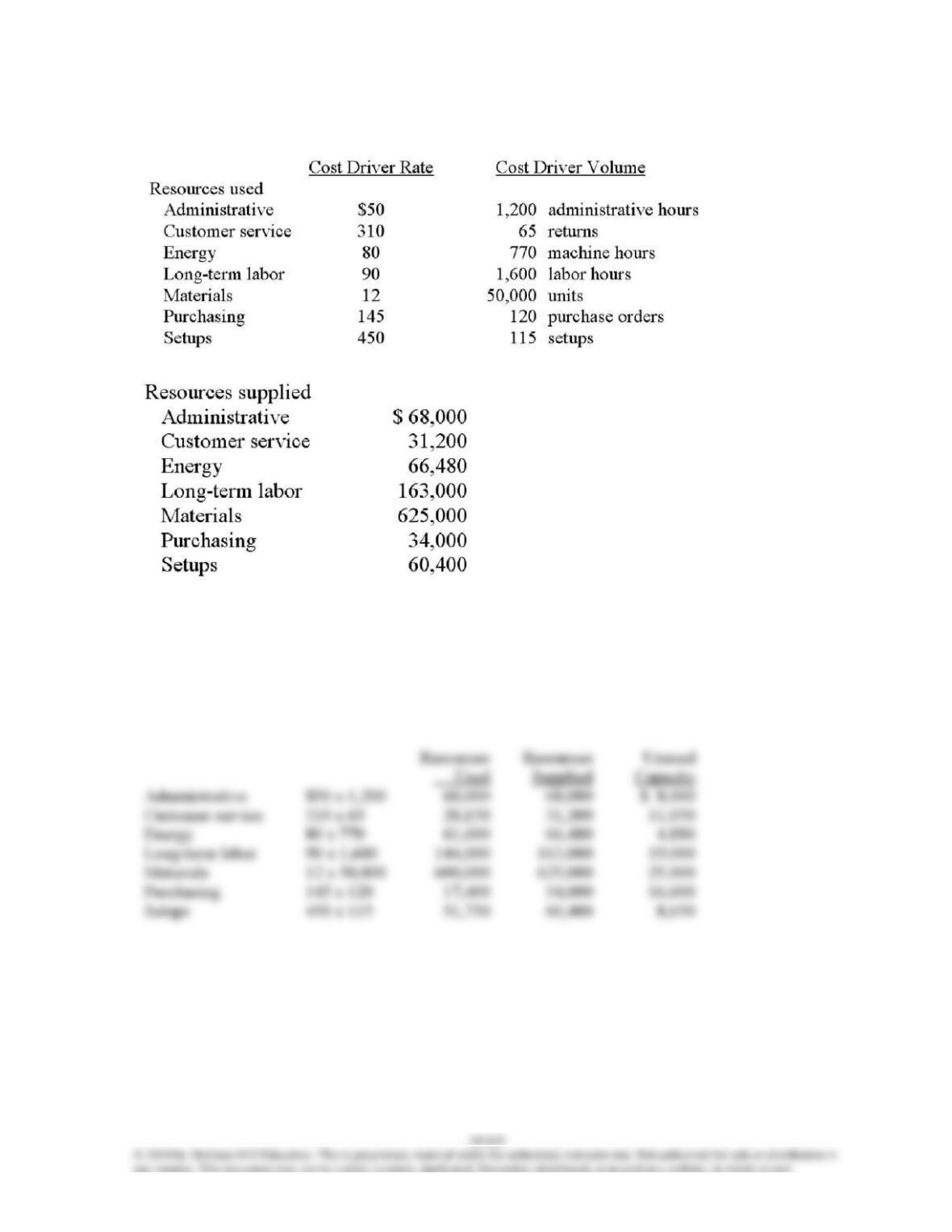
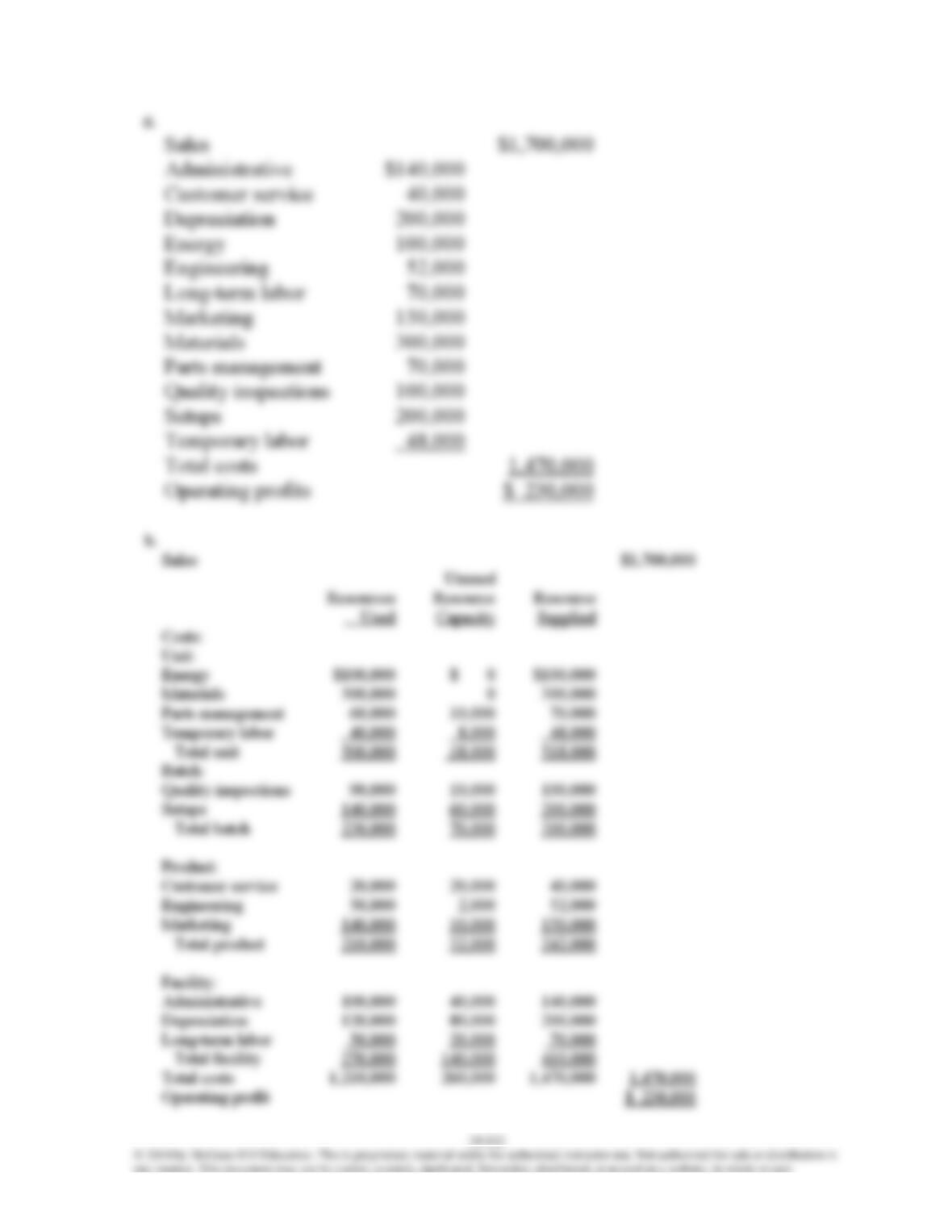
126. Uinta Supply provides the following information about resources:
Required:
Compute the unused resource capacity for each preceding item.
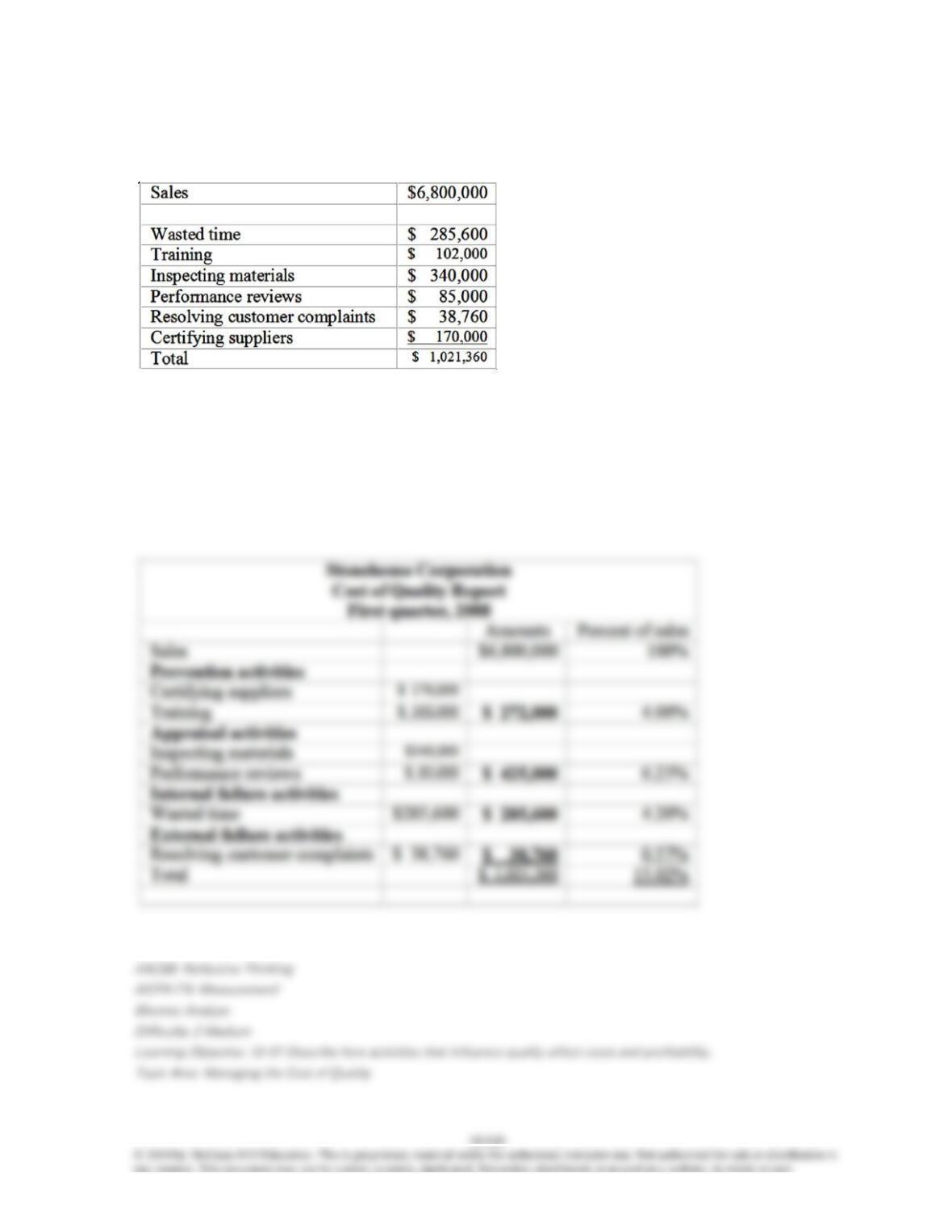
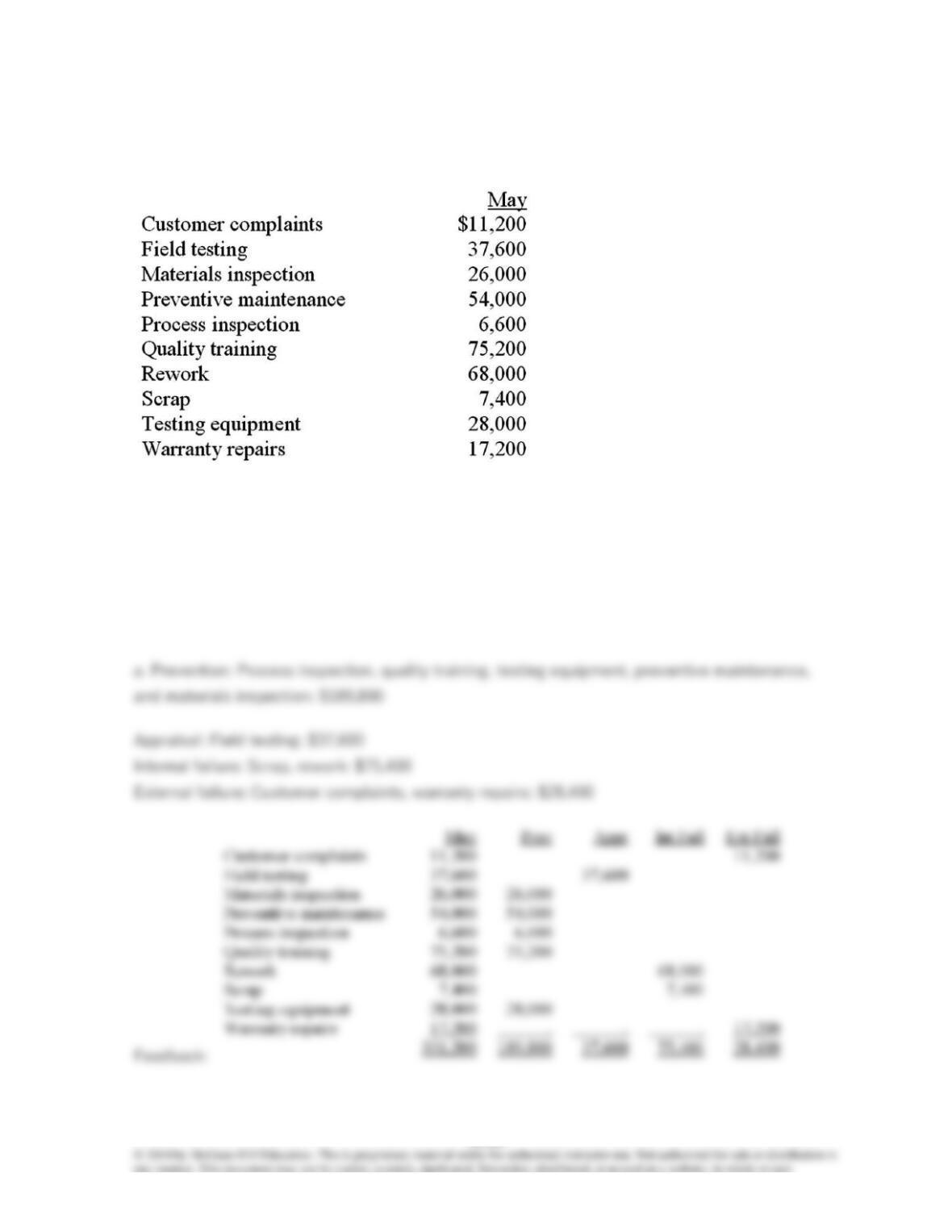
127. Stonehouse Corporation developed the following information regarding quality for the first
quarter of the year 2008:
Required:
Prepare a cost of quality report sorting costs by quality activity and expressing in relevant
percentage terms.
128. Identify each of the following as Prevention Activities (P), Appraisal Activities (A), Internal
Failure Activities (I) or External Failure Activities (E):
(1) Field Testing
(2) Statistical process control
(3) Sampling at the end of process
(4) Disposing of scrap
(5) Quality evaluations
(6) Retesting
(7) Settling product liability
(8) Resolving customer complaints
(9) Lost sales
(10) Restoring reputation
10-118
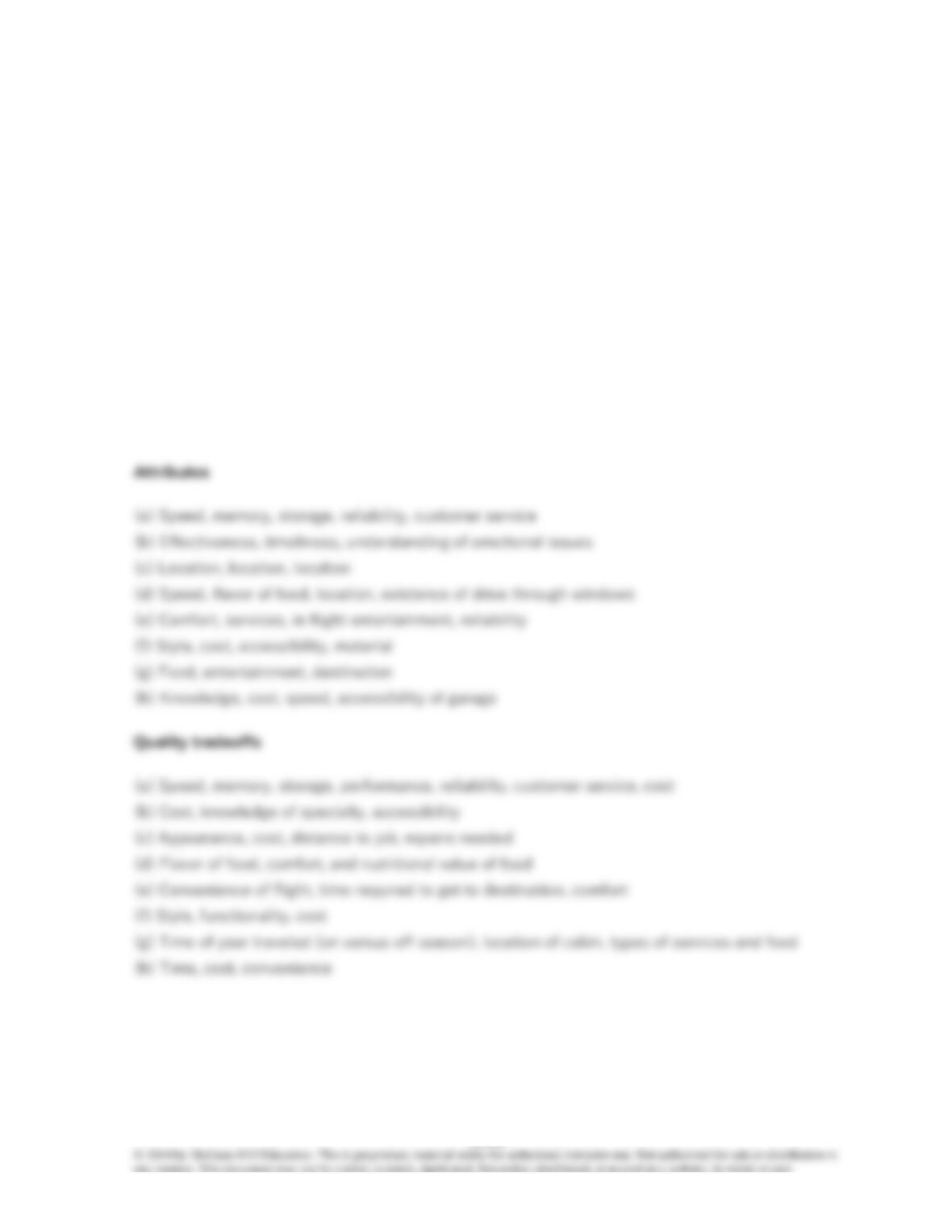
129. For each of the following products or services, indicate the most important customer
quality attributes and the most important customer quality tradeoffs.
(a) Personal computer
(b) Legal representation in divorce court
(c) New home purchase
(d) Meals in a fast food restaurant
(e) Airline travel
(f) Prom dress
(g) Cruise ship vacation
(h) Auto repair
10-119
130. Old Vine Vineyard produces premium wine. Its success in the industry is due to its quality,
although all of its customers, wine shops and specialty grocery stores, are very cost conscious and
negotiate for price cuts on all large orders. Noting that the wine industry is becoming increasingly
competitive, Old Vine is looking for a way to meet the challenge. It is negotiating with Eastern
Seasons, a regional specialty grocery store, to purchase a large order of wine. Old Vine is currently
producing at under-capacity and would like to keep its production facilities, gaining better
economies of scale by increasing production. Eastern Seasons has agreed to a large order but
only at a price of $39 per bottle. The special order can be purchased in one batch with available
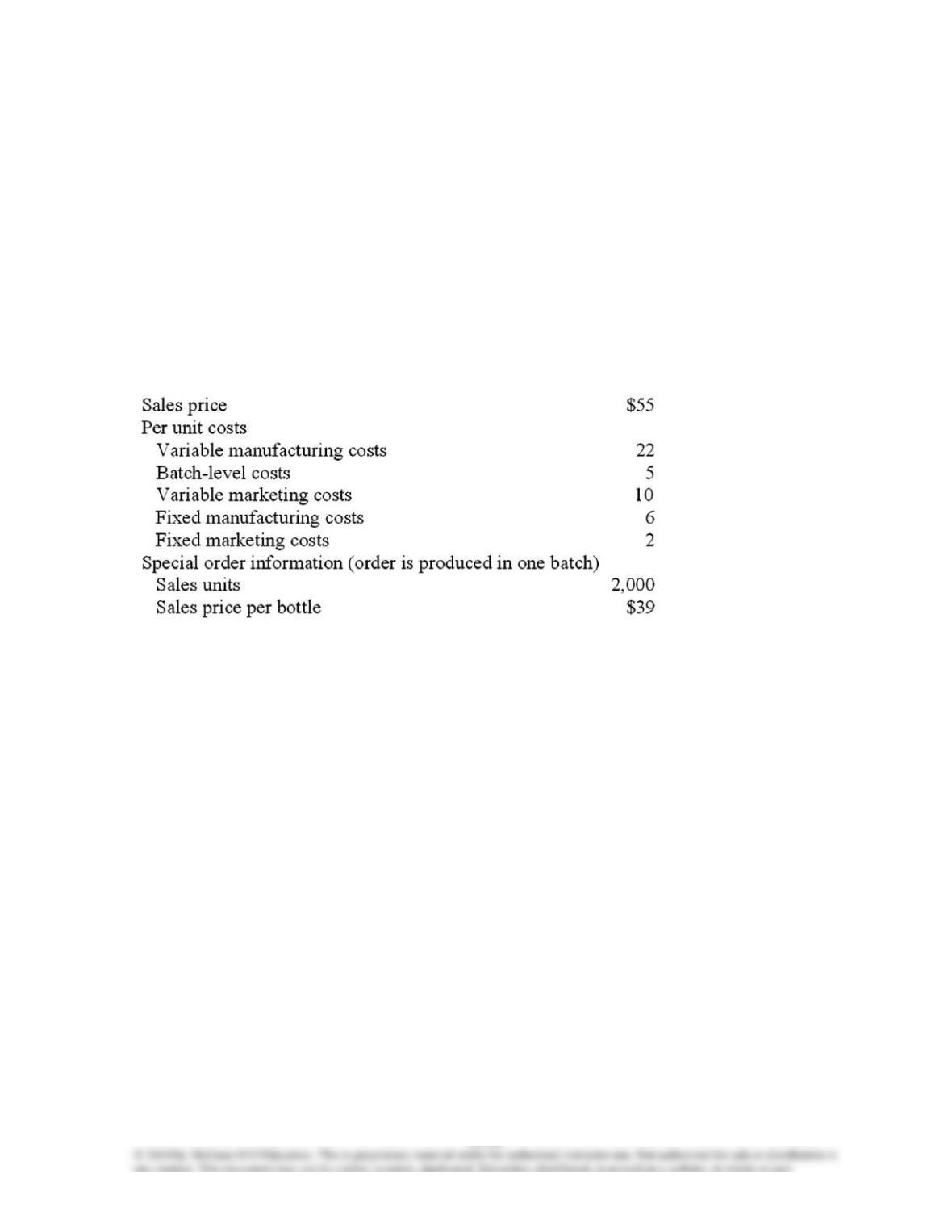
capacity. Old Vine prepared these data: Next month’s operating information (per unit, for 10,000
bottles, made in 10 batches of 1,000 each)
No variable marketing costs are associated with this order, but Old Vine has spent $2,500 during
the past two months trying to get Eastern Seasons to purchase the special order.
Required:
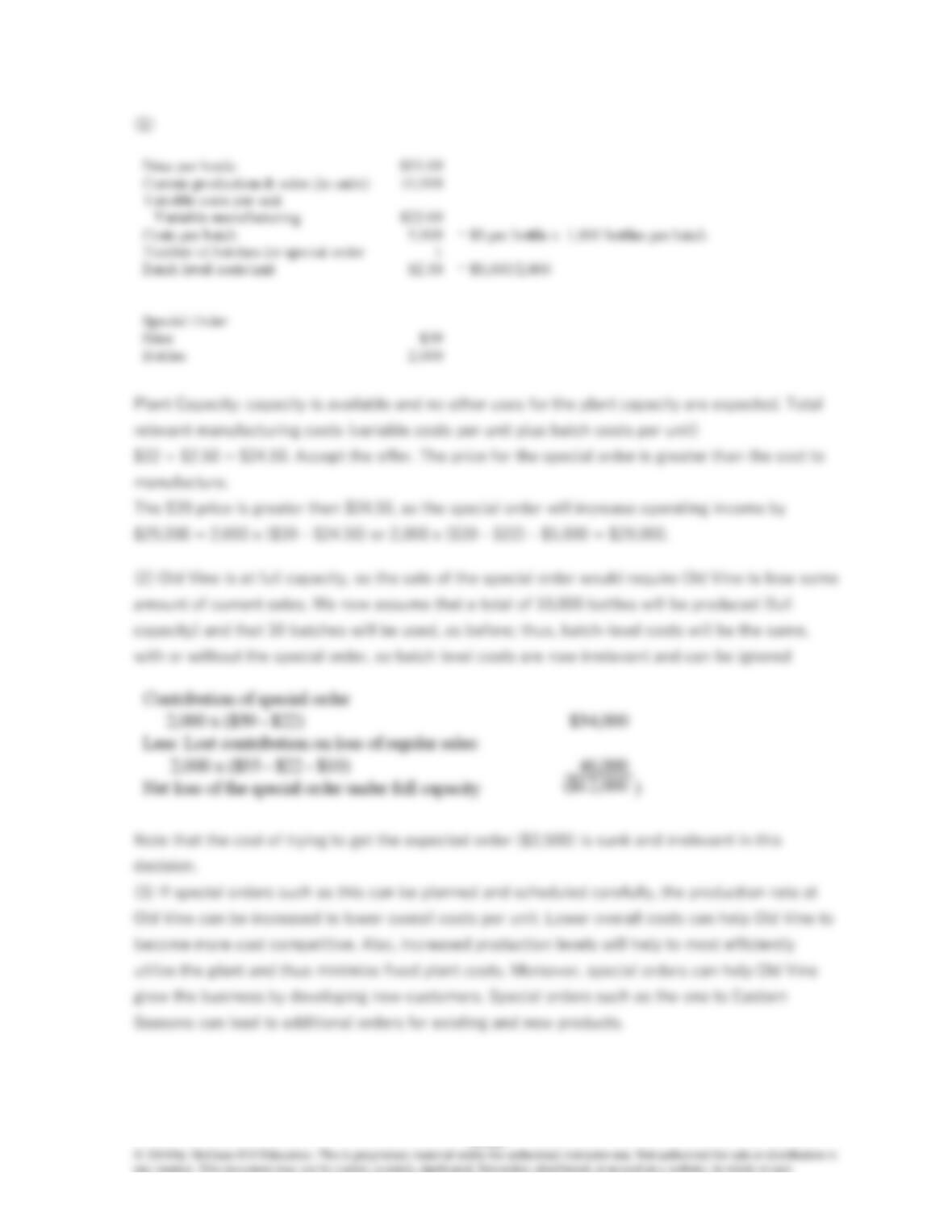
(1) How much will the special order change Old Vine’s total operating income?
(2) How much would the special order change Old Vine’s total operating income if Old Vine is
operating at full capacity and would lose the sale of the 2,000 bottles to regular customers?
(3) How might the special order fit into Old Vine’s competitive strategy?
10-120