Chapter 10 – Reporting and Interpreting Bonds
10–41
87. Which of the following is correct when using the effective-interest method of amortizing
the discount on bonds payable?
‘88. When a bond payable is issued at a premium, subsequent amortization of the
premium does which of the following?
Chapter 10 – Reporting and Interpreting Bonds
89. If a bond is issued at 101, the stated rate of interest was
90. If a bond is issued at 98, the stated rate of interest was
Chapter 10 – Reporting and Interpreting Bonds
91. Which of the following statements regarding the debt to equity ratio is correct?
92. On July 1, 2011, immediately after recording interest payments, Salsa, Inc. retired one
fifth of its $500,000 of bonds payable for $97,500. The bonds were originally issued at par
value in 2006. Which of the following statements is correct?
Chapter 10 – Reporting and Interpreting Bonds
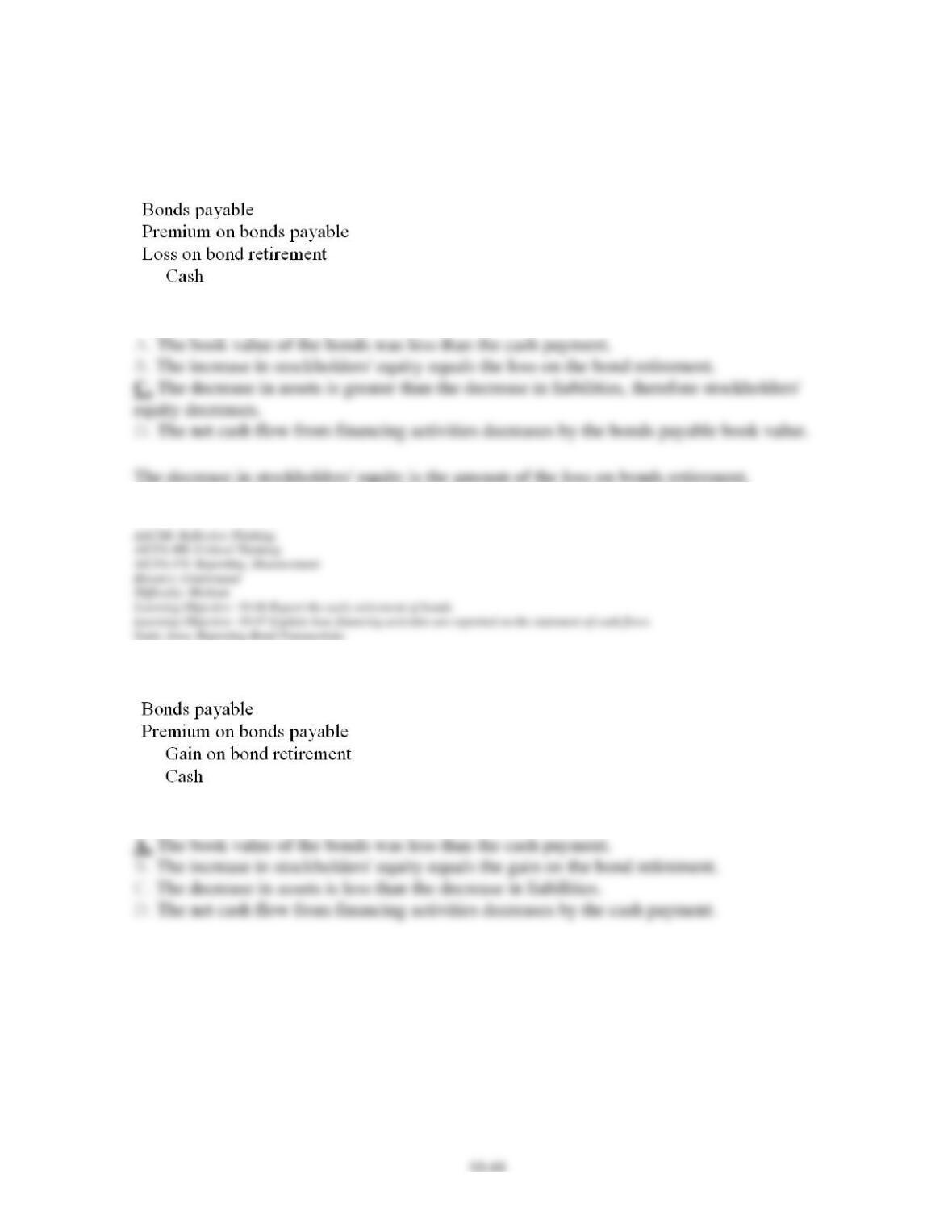
93. A company prepared the following journal entry:
Which of the following statements is correct?
94. A company prepared the following journal entry:
Which of the following statements is incorrect?
Chapter 10 – Reporting and Interpreting Bonds
95. On March 31, 2010, Bundy Corporation retired $10,000,000 of bonds which have an
unamortized premium of $500,000, by repurchasing them for $9,850,000. How much was the
gain or loss on the retirement of the bonds?
Chapter 10 – Reporting and Interpreting Bonds
96. A corporation retired $500,000 of bonds which have an unamortized discount of $10,000,
by repurchasing them for $500,000. How much was the gain or loss on the retirement of the
bonds?
97. A corporation retired $900,000 of bonds which have an unamortized discount of $30,000,
by repurchasing them for $920,000. How much was the gain or loss on the retirement of the
bonds?
Chapter 10 – Reporting and Interpreting Bonds
98. A corporation retired $200,000 of bonds which have an unamortized premium of $8,000,
by repurchasing them for $210,000. How much was the gain or loss on the retirement of the
bonds?
99. Which of the following statements is correct?
Chapter 10 – Reporting and Interpreting Bonds
10–48
100. Which of the following statements is incorrect?
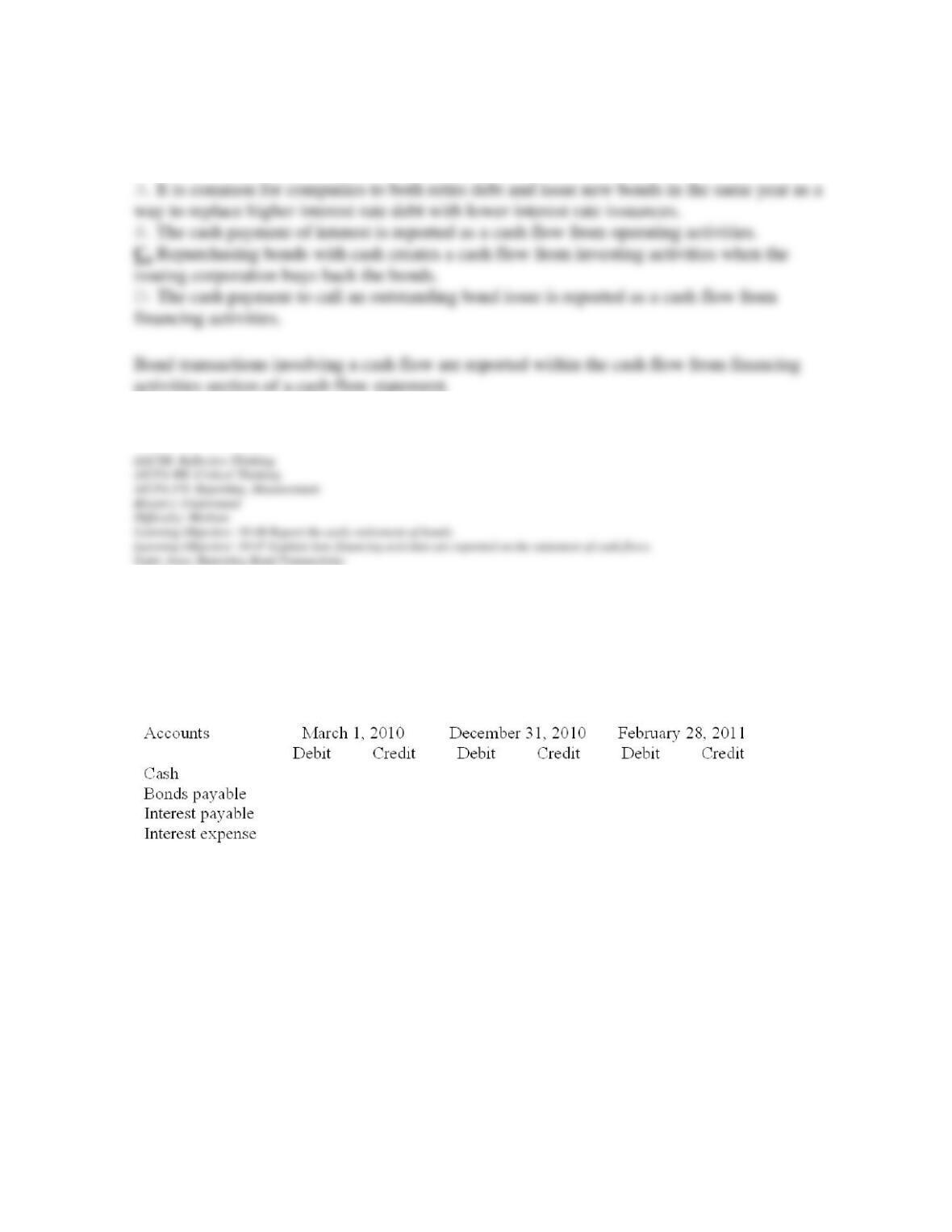
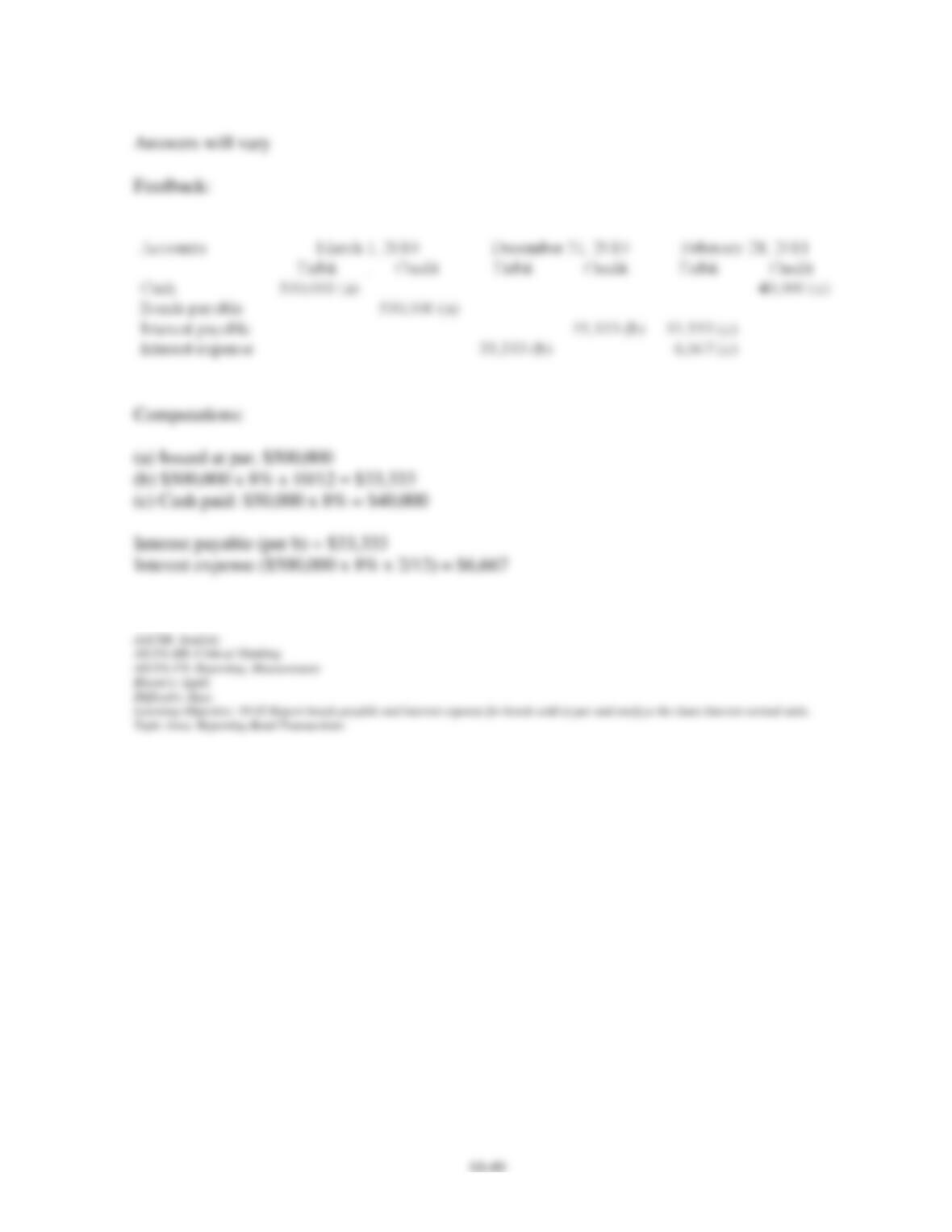
101. On March 1, 2010, Halbur Corporation, issued $500,000 of 8%, five-year bonds at par.
The bonds were dated March 1, 2010, and the first annual interest payment will be on
February 28, 2011. The accounting period ends December 31. Assuming no adjusting entries
have been made during the year.
Complete the journal entry grid for each of the following dates (round to the nearest dollar):
Chapter 10 – Reporting and Interpreting Bonds
Chapter 10 – Reporting and Interpreting Bonds
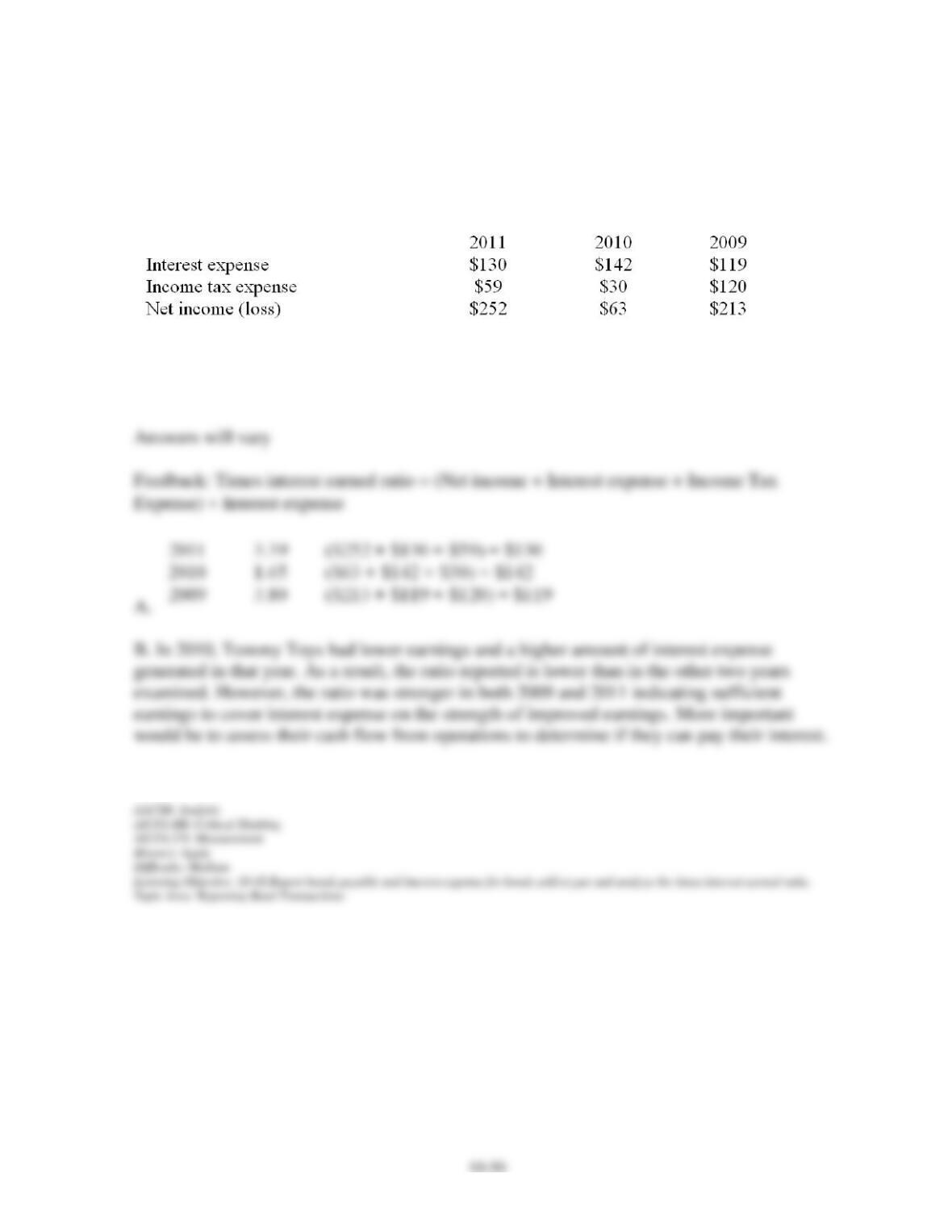
102. The following information was taken from the income statement of Tommy Toys for the
years 2009 through 2011 (in millions):
A. Compute Tommy Toys times interest earned ratio for all three years:
B. Briefly interpret their times interest earned ratio for the three years.
Chapter 10 – Reporting and Interpreting Bonds
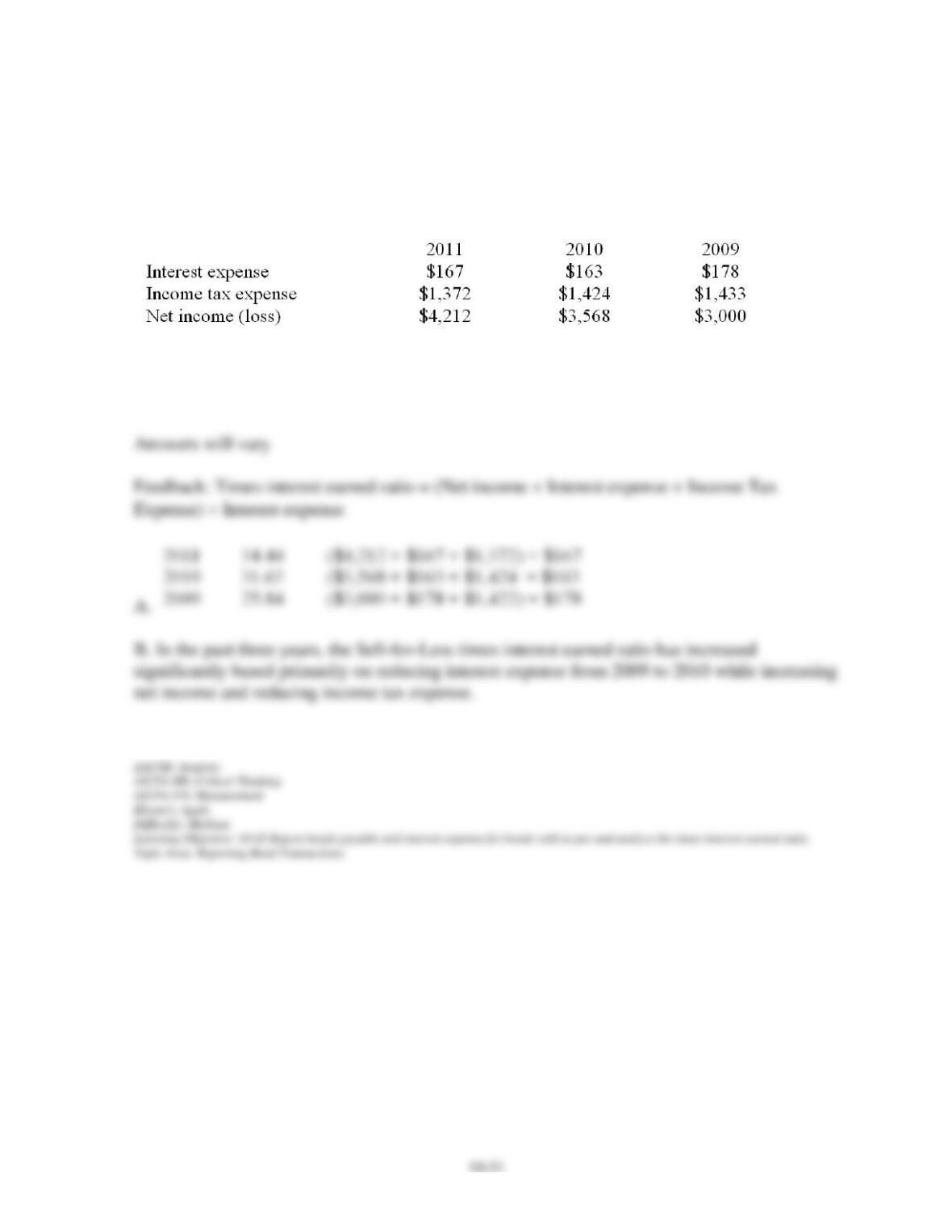
103. The following information is available for Sell-for-Less for the years 2009 – 2011(in
millions):
A. Compute the Sell-for-Less times interest earned ratio for 2011, 2010 and 2009.
B. Briefly interpret their times interest earned ratio for the three years.
Chapter 10 – Reporting and Interpreting Bonds
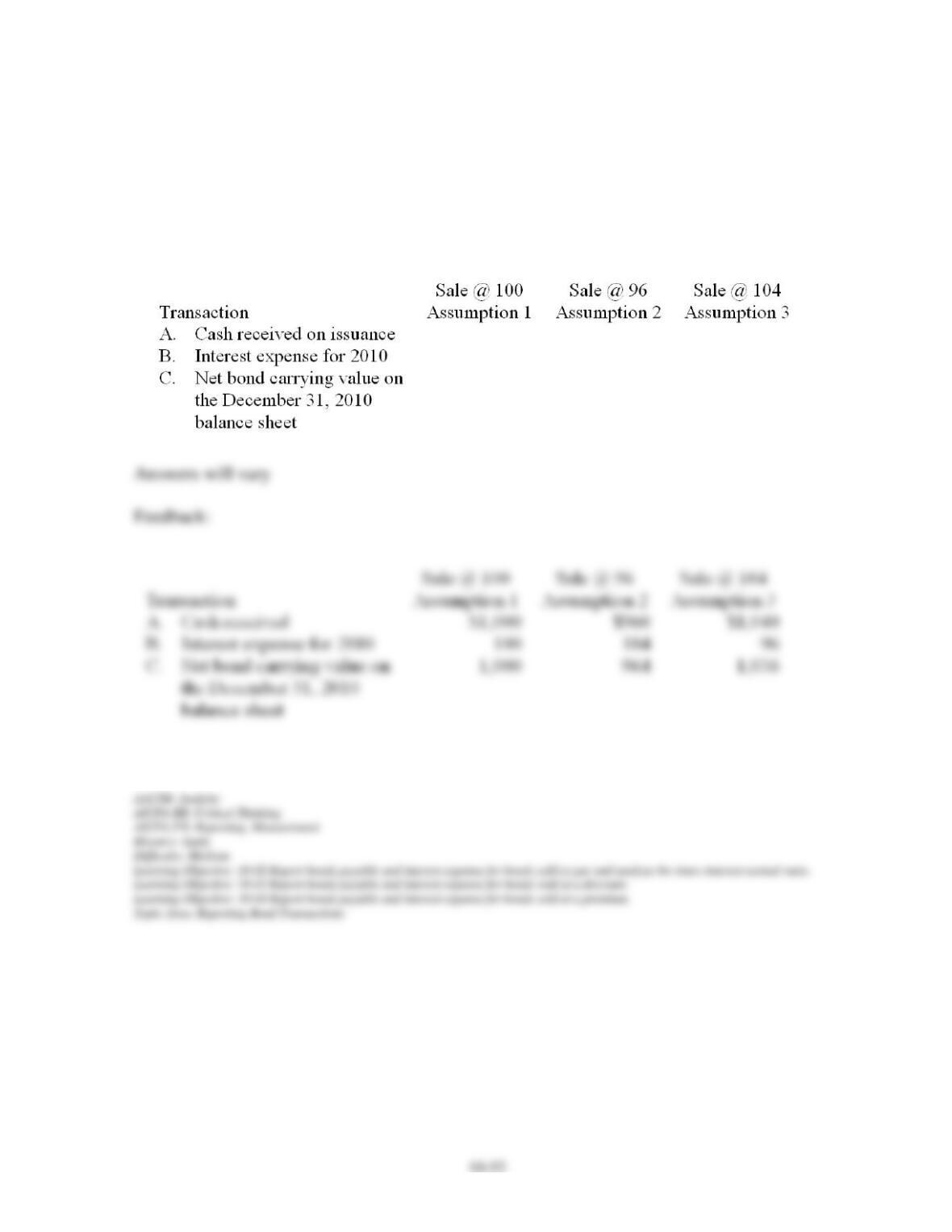
104. On January 1, 2010, Clintwood Corporation issued a $1,000, ten-year, 10% bond payable
(interest payable each December 31). For the three assumptions below, complete the
following schedule if the fiscal year end is December 31, and straight-line amortization is
used:
Chapter 10 – Reporting and Interpreting Bonds
10–53
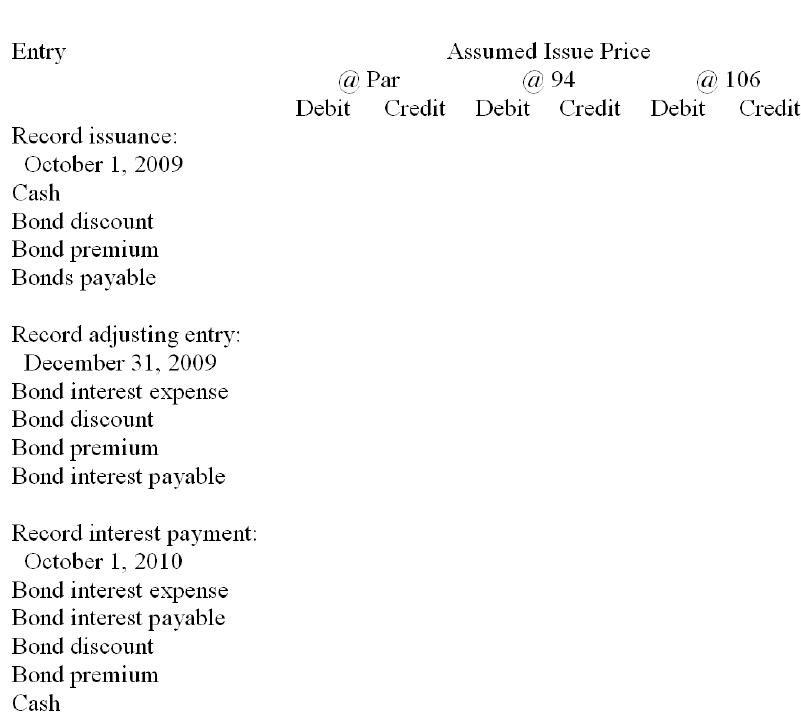
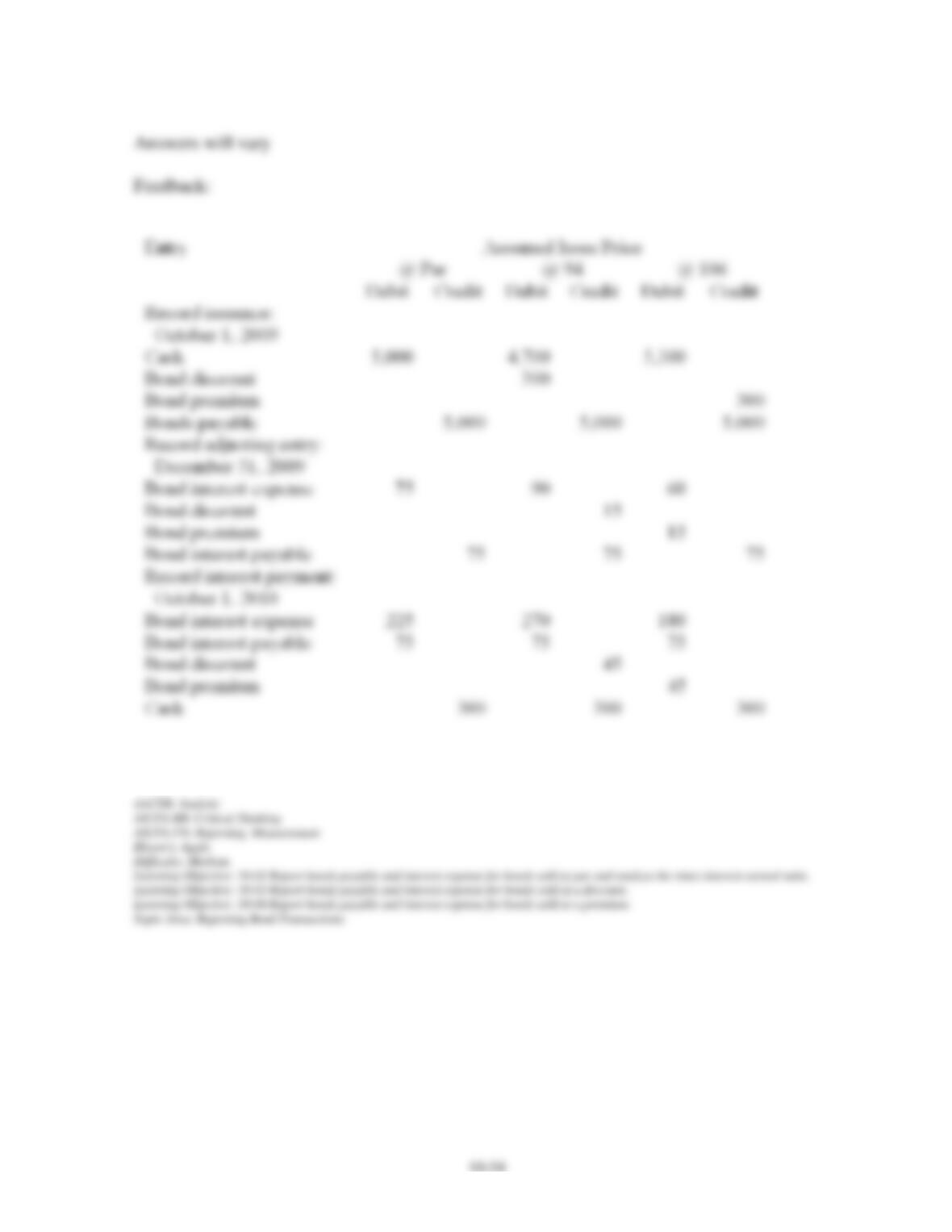
105. On October 1, 2009, Jack Company issued a $5,000, 6%, bond payable. The interest is
payable annually each September 30 and the bond matures in five years. The annual
accounting period for the company ends December 31. Complete the following entries at the
date specified under three different assumptions as to the issue price. Use straight-line
amortization. Assume no adjusting entries have been made during the year.
Chapter 10 – Reporting and Interpreting Bonds

Chapter 10 – Reporting and Interpreting Bonds
106. Ridgetop Company issued the following ten-year bonds on January 1, 2009: $100,000
maturity value, 5% interest payable annually on each December 31. The bonds were dated
January 1, 2009 and the accounting period ends December 31. The bonds were issued for
$98,000.
Requirements:
A. Calculate the following (assume straight-line amortization):
1. Cash inflow at date of issuance
Cash outflow under the 10 year period:
2. Principal
3. Interest
4. Total interest expense
5. Stated interest rate
6. Interest expense for 2010
Balance Sheet at December 31, 2010:
7. Bonds payable
8. Unamortized amount
9. Net book value of bonds
B. Assuming instead that the accounting period ends on June 30, give the adjusting entry
related to interest expense for 2009. No adjusting entries have been made during the year.