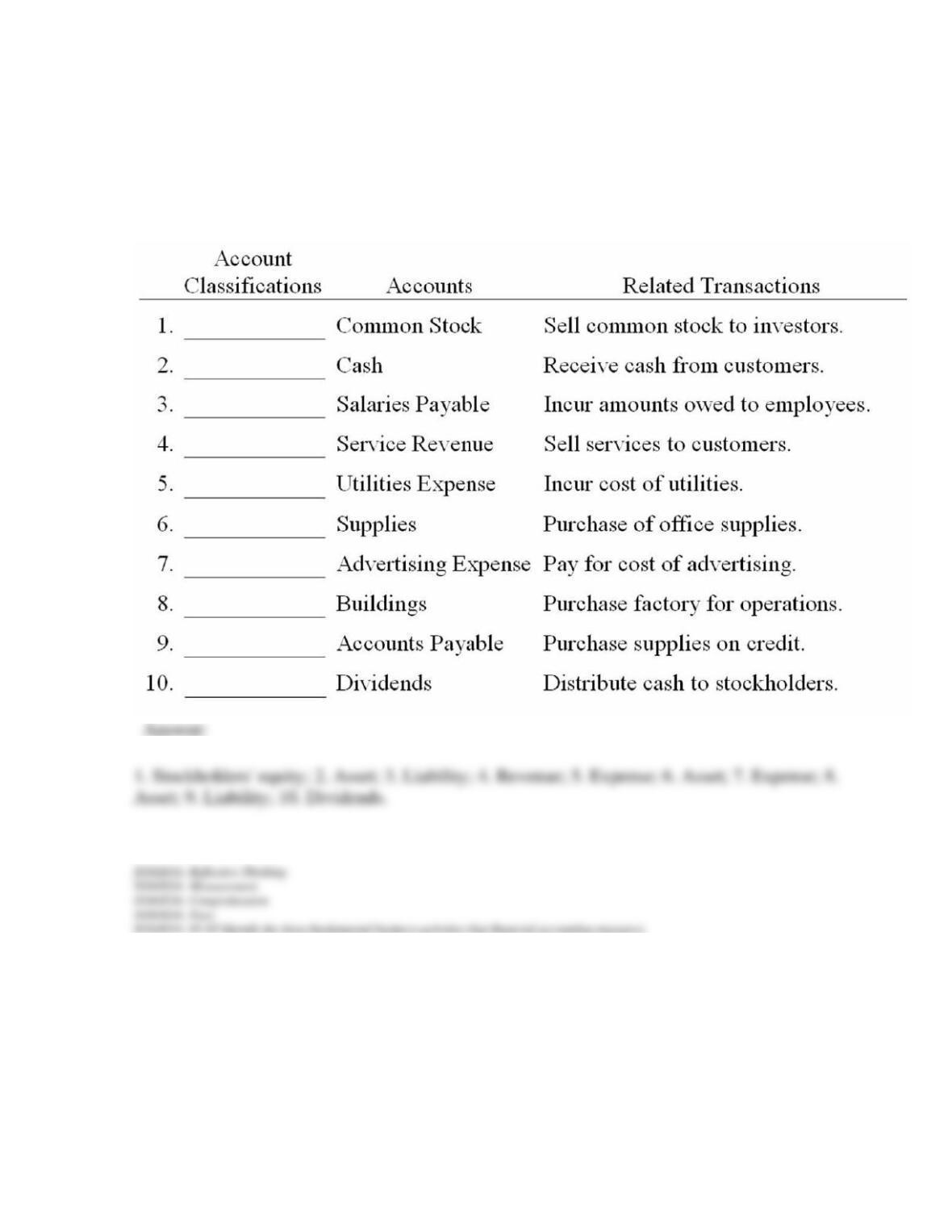
156. Account classifications include assets, liabilities, stockholders’ equity, dividends,
revenues, and expenses. Indicate the account classification for each account name.
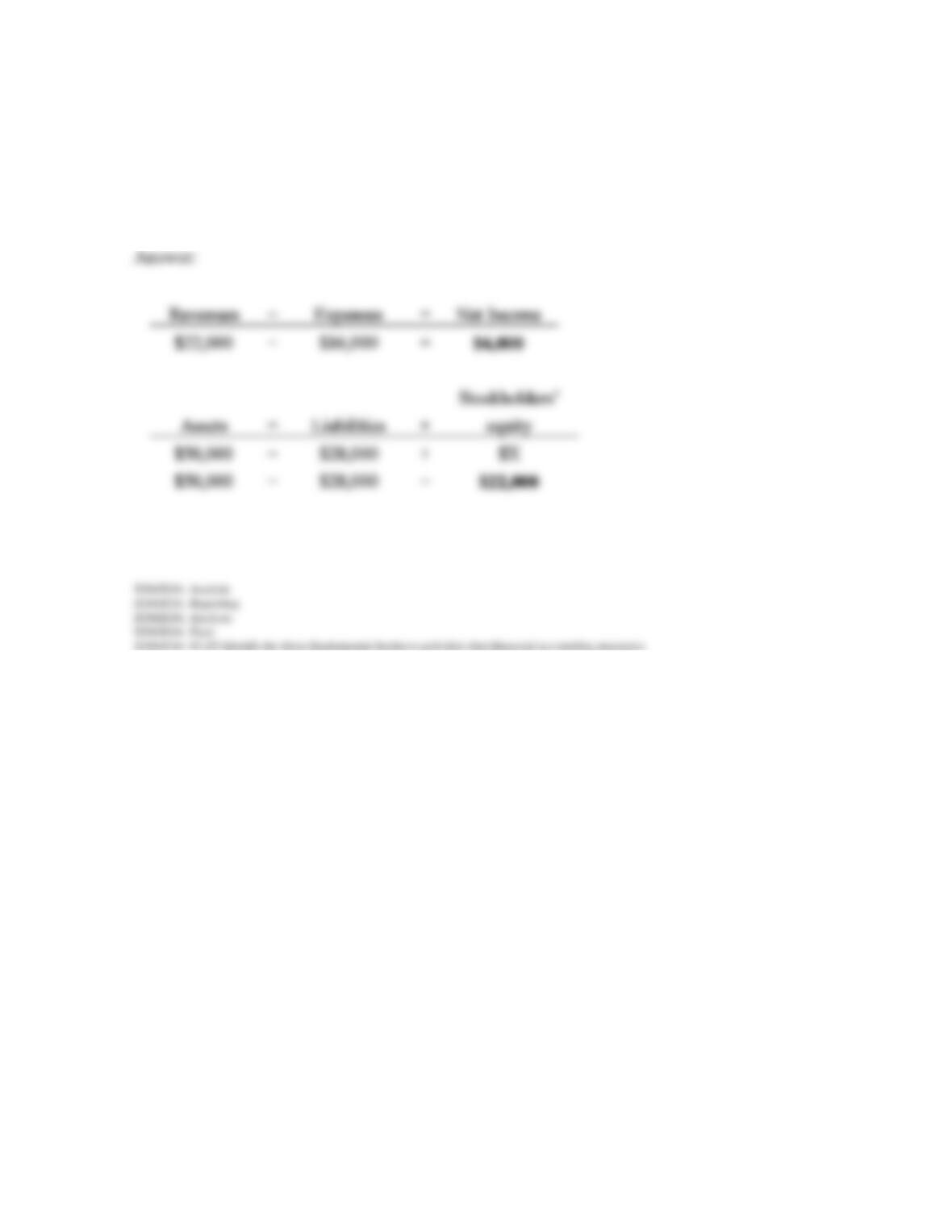
157. At the end of the current period, Maltese, Inc. reports the following amounts: Assets =
$50,000; Liabilities = $28,000; Dividends = $4,000; Revenues = $22,000; Expenses =
$16,000. Calculate net income and stockholders’ equity at the end of the period.
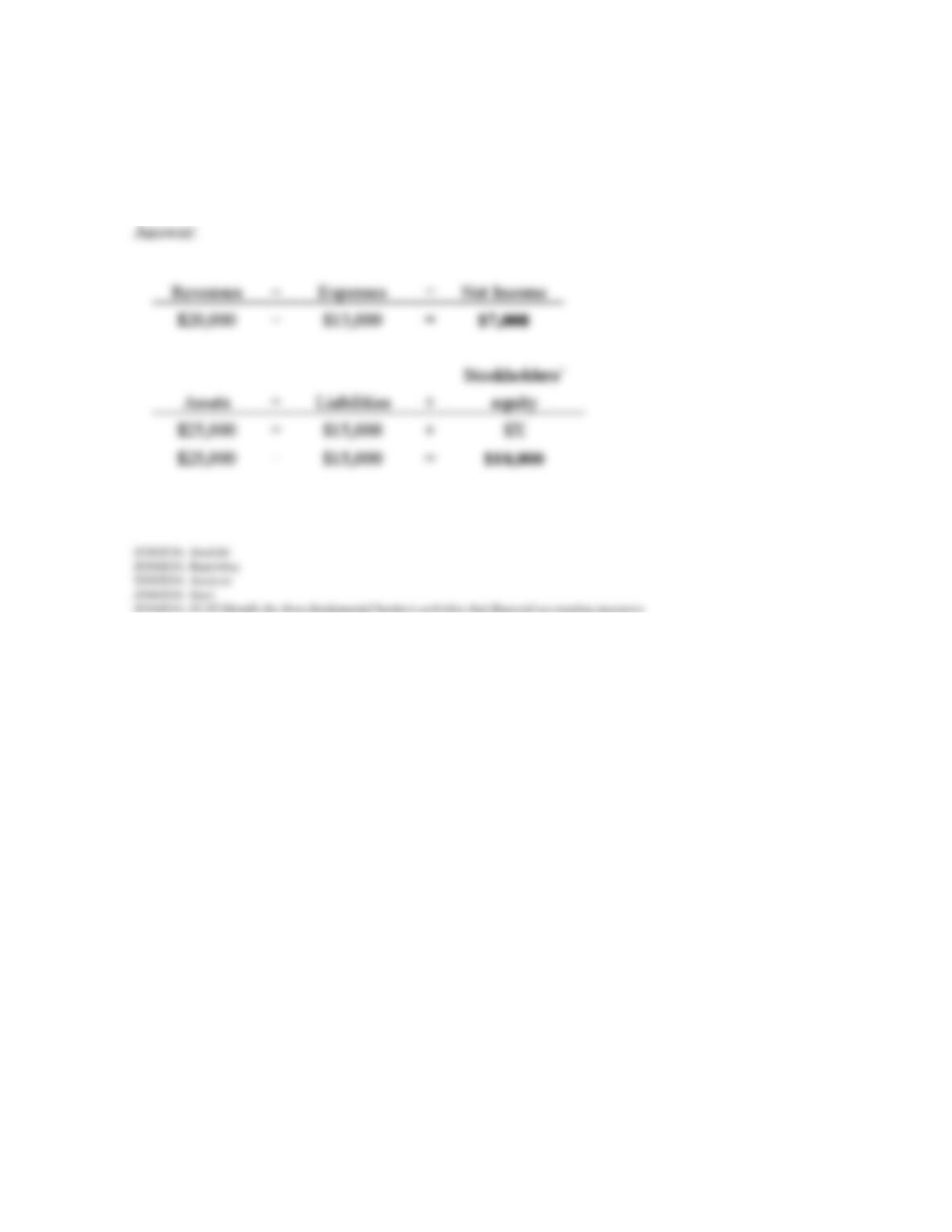
158. At the end of the current period, Rogers Company reports the following amounts: Assets
= $25,000; Liabilities = $15,000; Dividends = $3,000; Revenues = $20,000; Expenses =
$13,000. Calculate net income and stockholders’ equity at the end of the period.
159. Describe the three fundamental business activities that accountants measure. What
account classifications are typically associated with each type of business activity?
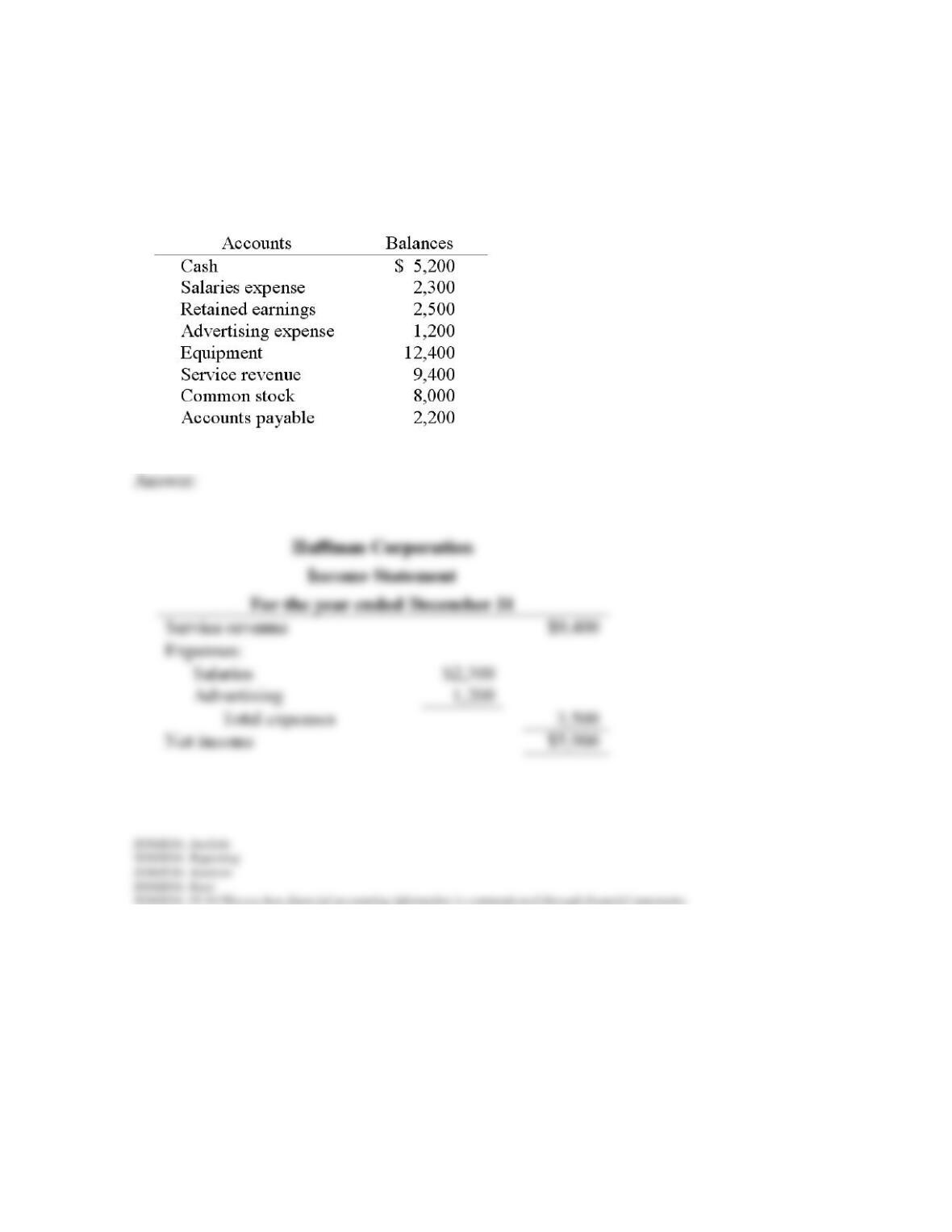
160. Below are the account balances for Huffman Corporation at the end of December. Use
only the appropriate accounts to prepare an income statement.
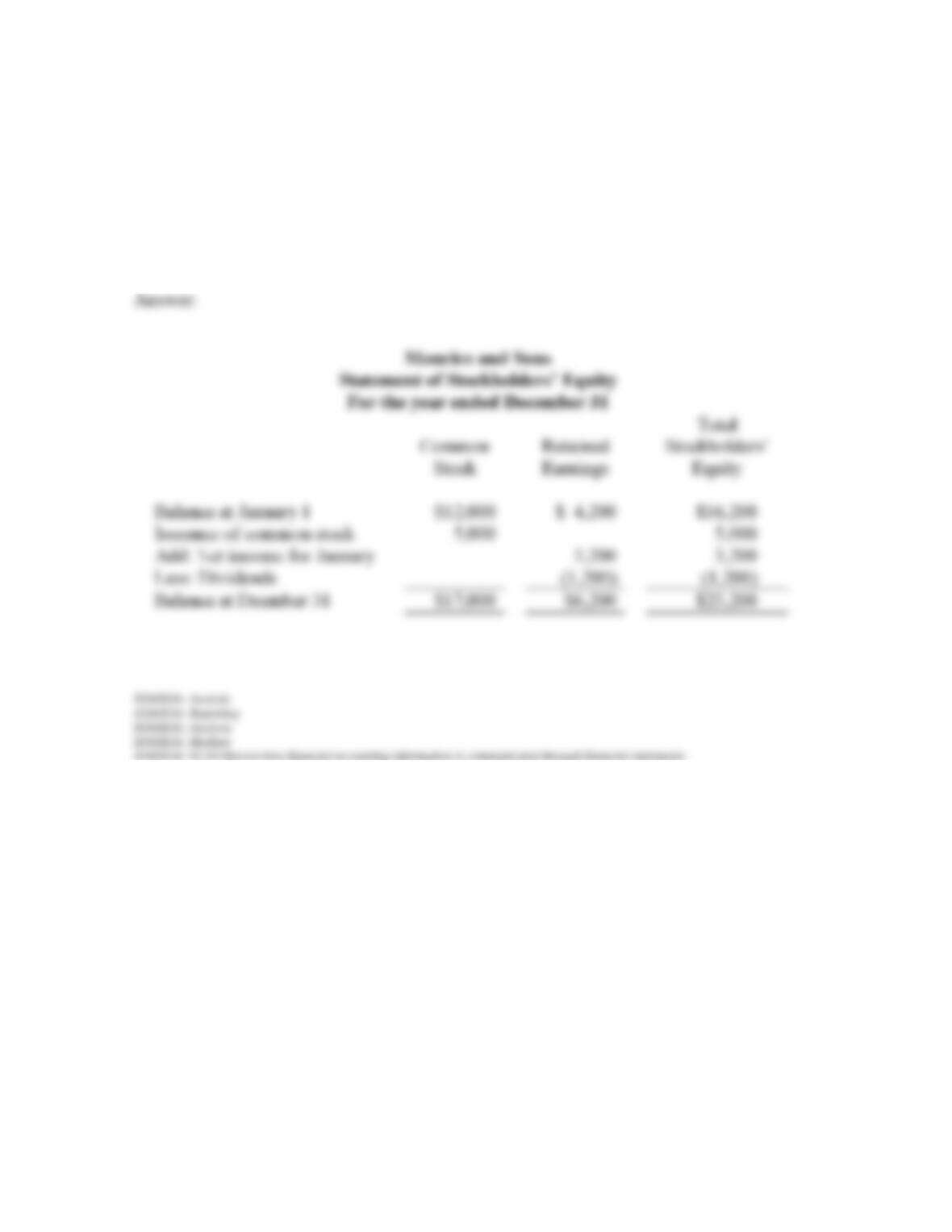
161. At the beginning of the year (January 1), Maurice and Sons has $12,000 of common
stock outstanding and retained earnings of $4,200. During the year, the company reports net
income of $3,200 and pays dividends of $1,200. In addition, the company issues additional
common stock for $5,000. Prepare the statement of stockholders’ equity at the end of the year
(December 31).
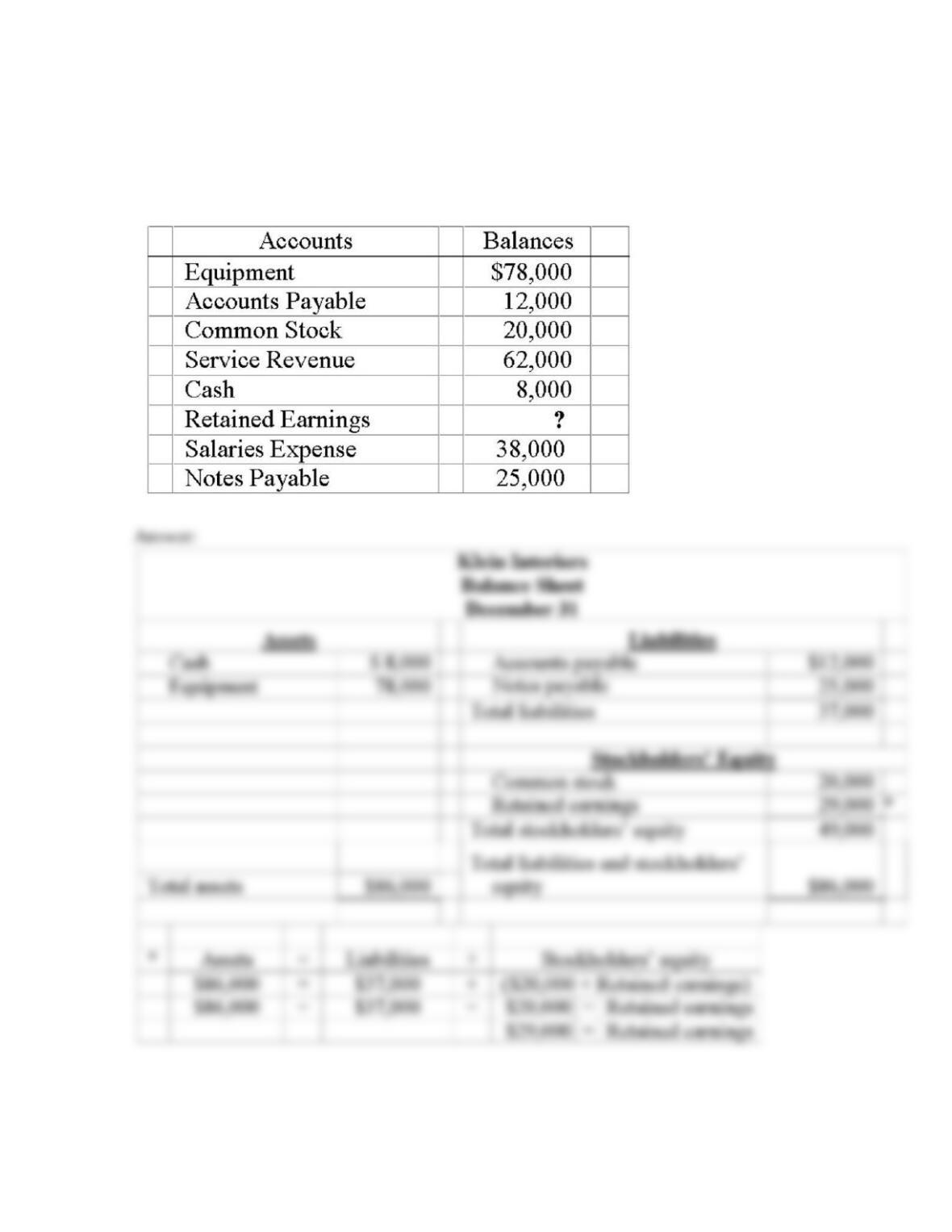
162. Klein Interiors has the following account balances at the end of the year. Use only the
appropriate accounts to prepare a balance sheet.

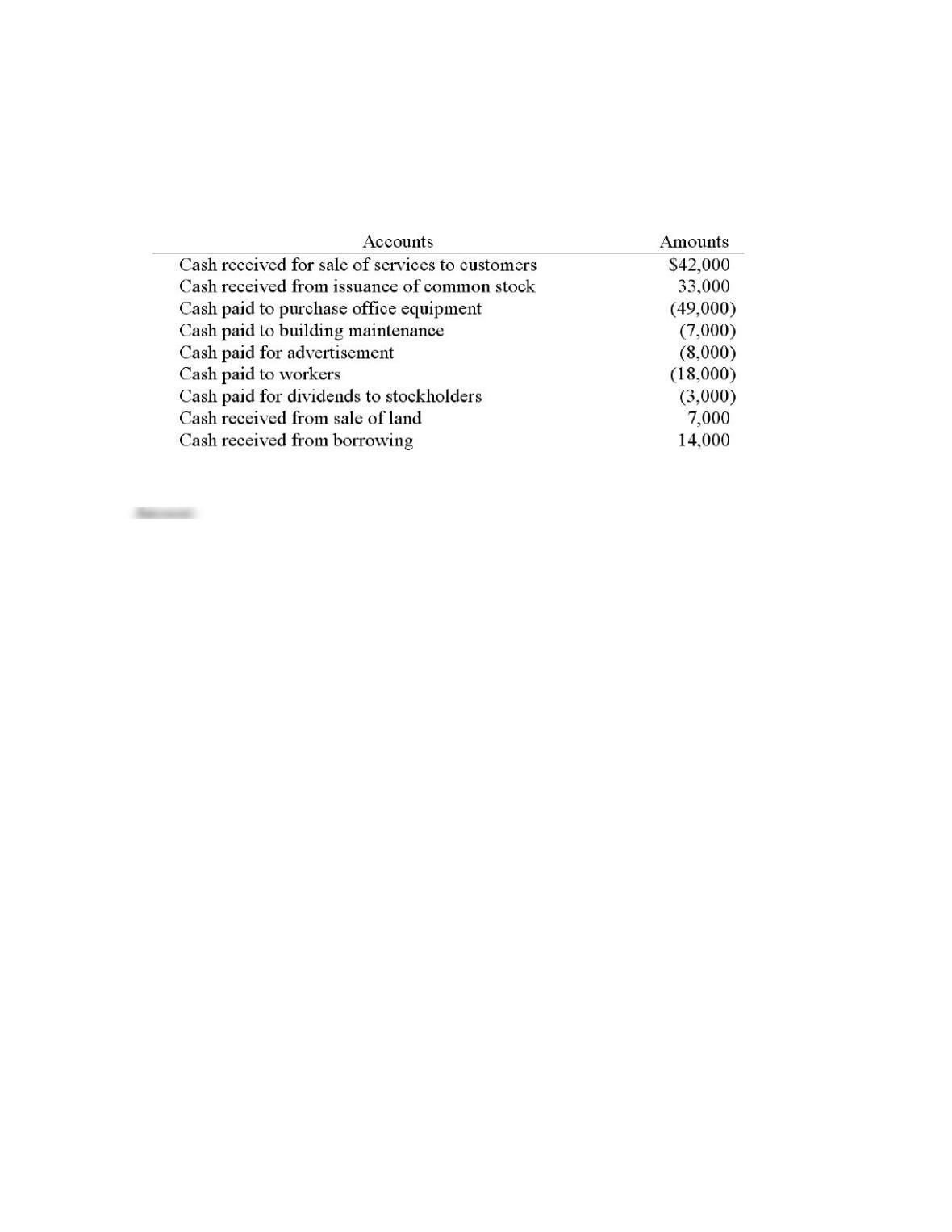
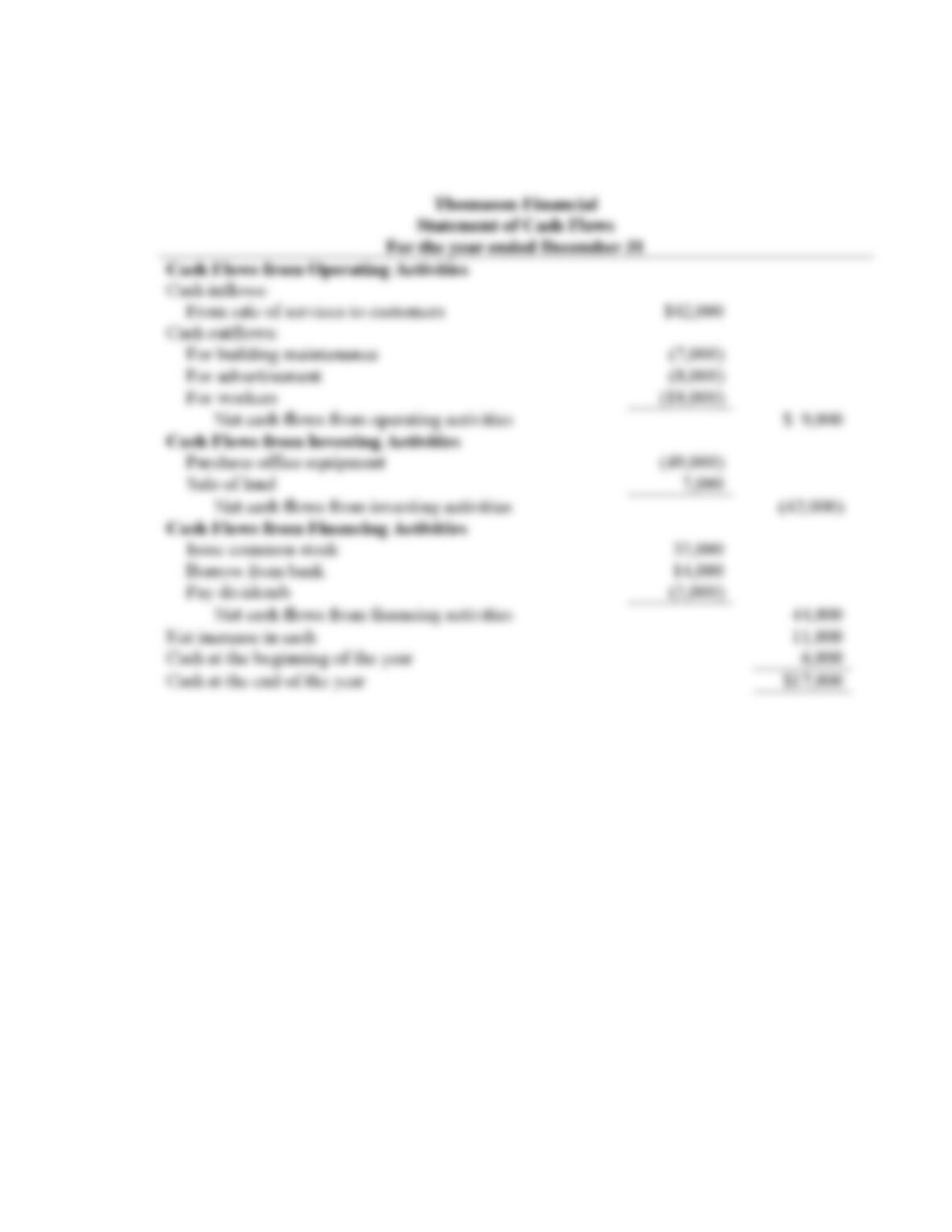
163. Thomason Financial has the following cash transactions for the year. Assume cash at the
beginning of the period is $6,000. Prepare a statement of cash flows.

164. Each of the following independent situations represents amounts shown on the four basic
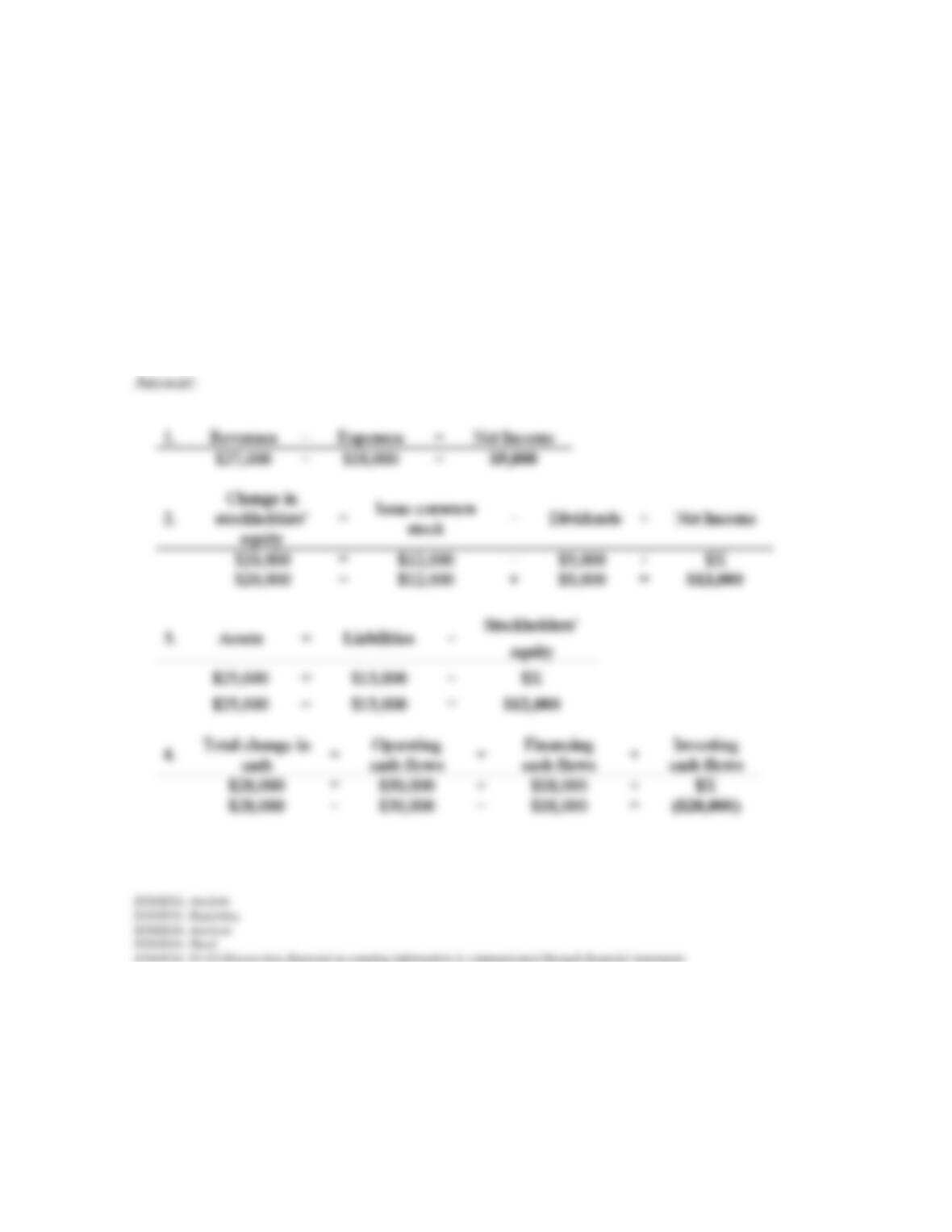
financial statements. Fill in the missing blanks using your knowledge of amounts that appear
on the financial statements.
1. Revenues = $27,000; Expenses = $18,000; Net income = ____.
2. Increase in stockholders’ equity = $20,000; Issuance of common stock = $12,000;
Dividends = $5,000; Net income = ____.
3. Assets = $25,000; Liabilities = $13,000; Stockholders’ equity = ____.
4. Total change in cash = +$28,000; Net operating cash flows = +$30,000; Net financing cash
flows = +$18,000; Net investing cash flows = ____.
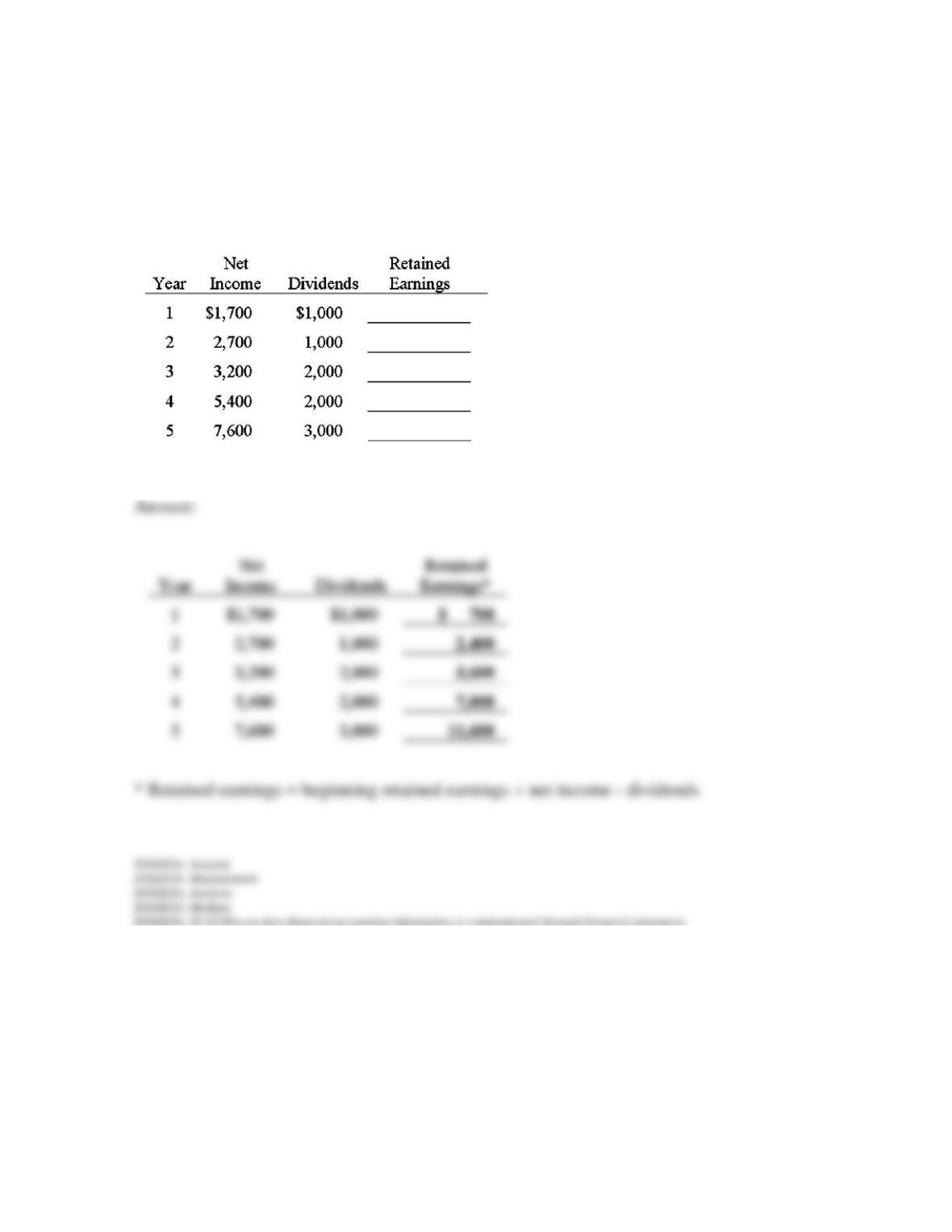
165. During its first five years of operations, Della Manufacturing reports net income and
pays dividends as follows. Calculate the balance of retained earnings at the end of each year.
Note that retained earnings will always equal $0 at the beginning of year 1.

166. Below is information related to retained earnings for five independent situations.
Calculate the answer to each.
1. A company reports an increase in retained earnings of $3,200 and net income of $4,800.
What is the amount of dividends?
2. A company reports beginning retained earnings of $1,800, net income of $1,200, and $200
dividends. What is the amount of ending retained earnings?
3. A company reports an increase in retained earnings of $2,500 and dividends of $1,500.
What is the amount of net income?
4. A company reports ending retained earnings of $2,700, net income of $900, and dividends
of $500. What is the amount of beginning retained earnings?
5. A company reports an increase in retained earnings of $500 and net income of $1,200.
What is the amount of dividends?