1.4-39 The balance sheet contains the:
A) amount of net income or net loss.
B) beginning balance in retained earnings.
C) ending balance in retained earnings.
D) amount of cash dividends paid to shareholders.
1.4-40 Which of the following is a component of shareholders’ equity?
A) Retained earnings
B) Notes payable
C) Cash
D) Fixed assets
1.4-41 Which financial statement must be prepared before the others?
A) Statement of Cash Flows
B) Income Statement
C) Balance Sheet
D) Statement of Changes in Equity
1.4-42 Assets are generally classified as:
A) producing assets and consumable assets.
B) current assets and producing assets.
C) current assets and long-term assets.
D) long-term assets and consumable assets.
1.4-43 Current assets are assets expected to be converted to cash, sold, or consumed within the next:
A) 12 months or within the business’s normal operating cycle if longer than a year.
B) 12 months or within the business’s normal operating cycle if less than a year.
C) 6 months.
D) 24 months.
1.4-44 Notes receivable due in 60 days would be classified as a:
A) current liability on the Balance Sheet.
B) current asset on the Balance Sheet.
C) non-current asset on the Balance Sheet.
D) non-current liability on the Balance Sheet.
1.4-45 Equipment would appear on the:
A) Balance Sheet with the non-current assets.
B) Income Statement with the revenues.
C) Income Statement with the operating expenses.
D) Balance Sheet with the current assets.
1.4-46 Accumulated depreciation is normally associated with which asset on the Balance Sheet?
A) Inventory
B) Accounts receivable
C) Land
D) Property, plant and equipment
1.4-47 Accounts receivable would appear on the:
A) Balance Sheet with the current liabilities.
B) Balance Sheet with the current assets.
C) Income Statement with the revenues.
D) Statement of Changes in Equity with the net income.
1.4-48 Notes payable (due in 60 days) would appear as a:
A) current liability on the Balance Sheet.
B) current asset on the Balance Sheet.
C) non-current asset on the Balance Sheet.
D) non-current liability on the Balance Sheet.
1.4-49 Income taxes owed to the federal government would be classified as a(n):
A) expense on the Income Statement.
B) financing activity on the Statement of Cash Flows.
C) current asset on the Balance Sheet.
D) current liability on the Balance Sheet.
1.4-50 Liabilities are divided into two categories—
A) current and payable.
B) current and future.
C) accounts payable and non-current.
D) current and non-current.
1.4-51 In relation to the cash flow statement, purchases and sales of long-term assets are examples of:
A) investing activities.
B) accrual activities.
C) financing activities.
D) operating activities.
1.4-52 Shareholders’ equity decreases as a result of:
A) owner investments.
B) a net loss during the period.
C) a net income during the period.
D) both A and C.
1.4-53 The Statement of Cash Flows is divided into which three categories?
A) Operating, investing, and financing activities
B) Planning, executing, and evaluating activities
C) Increasing, decreasing, and non-cash activities
D) Developing, producing, and marketing activities
1.4-54 What is the proper order for the categories of the statement of cash flows?
A) Financing activities, investing activities, and operating activities
B) Operating activities, investing activities, and financing activities
C) Operating activities, financing activities, and investing activities
D) Investing activities, financing activities, and operating activities
1.4-55 Where would cash received from the sale of shares appear on the statement of cash flows?
A) In the operating activity section
B) In the non-cash financing activity section
C) In the investing activity section
D) In the financing activity section
1.4-56 The main source of cash from its main business comes from:
A) current assets on the balance sheet.
B) operating activities on the statement of cash flows.
C) financing activities on the statement of cash flows.
D) investing activities on the statement of cash flows.
1.4-57 How would the issuance of shares for cash be classified on the Statement of Cash Flows?
A) As an investing activity
B) As a financing activity
C) As an operating activity
D) As a current asset on the balance sheet
1.4-58 How would cash collected from customers appear on the Statement of Cash Flows?
A) As an operating activity
B) As a financing activity
C) As an investing activity
D) Under the indirect method
1.4-59 Which of the following is NOT an asset?
A) Inventory
B) Accounts payable
C) Accounts receivable
D) Cash
1.4-60 Examples of liabilities include:
A) accounts payable and accounts receivable.
B) accounts payable and land.
C) investments and owners’ equity.
D) accounts payable and long-term debt.
1.4-61 The two main components of shareholders’ equity are:
A) retained earnings and paid-in capital.
B) assets and liabilities.
C) paid-in capital and assets.
D) net income and retained earnings.
1.4-62 The amount that shareholders have invested in a corporation is called:
A) retained earnings.
B) investment.
C) revenue.
D) paid-in capital.
1.4-63 The major types of transactions that affect retained earnings are:
A) paid-in capital and ordinary shares.
B) assets and liabilities.
C) revenues, expenses, and dividends.
D) revenues and liabilities.
1.4-64 Payables are classified as:
A) increases in earnings.
B) decreases in earnings.
C) liabilities.
D) assets.
1.4-65 A corporation’s paid-in capital includes:
A) revenues and expenses.
B) assets and liabilities.
C) capital from shareholders.
D) net income.
1.4-66 Receivables are classified as:
A) increases in earnings.
B) decreases in earnings.
C) liabilities.
D) assets.
1.5-1 The ethical factor recognizes that while certain actions might be both economically profitable and legal,
they may still not be right.
1.5-2 Retained earnings appears on which of the following financial statements?
A) Statement of Changes in Equity, Statement of Cash Flows, and Balance Sheet, but not the Income
Statement
B) Statement of Changes in Equity, Statement of Cash Flows, and Income Statement, but not the
Balance Sheet
C) Statement of Changes in Equity and Statement of Cash Flows, but not the Income Statement or
Balance Sheet
D) Statement of Changes in Equity and Balance Sheet, but not the Income Statement or Statement of
Cash Flows
1.5-3 An investor who wished to answer the question, “Can the company sell its products?” should investigate
the:
A) operating activities section of the cash flow statement.
B) current and projected inventory levels.
C) sales revenue trends and projected sales.
D) net income for the current period and projected net income for the next period.
1.5-4 An investor who wished to answer the question, “Can the company pay its current liabilities?” should
investigate:
A) the financing activities section of the cash flow statement.
B) the current assets and current liabilities on the balance sheet.
C) the sales revenue trend.
D) none of the above.
1.5-5 Generally, three factors influence business and accounting decisions—
A) operating, investing, and financing activities.
B) assets, liabilities, and equity.
C) economic, legal, and ethical.
D) revenues, expenses, and dividends.
1.5-6 Which of the following questions should be asked in making an ethical analysis?
A) Which option results in treating others as I would want to be treated?
B) Which options are the most honest, open, and truthful?
C) Which options create the greatest good for the greatest number of stakeholders?
D) All of the above questions should be considered.
1.5-7 The decision framework for making ethical judgments does NOT consider the following question?
A) What is the issue?
B) What are the alternatives?
C) What alternative maximizes profit?
D) Who are the stakeholders?
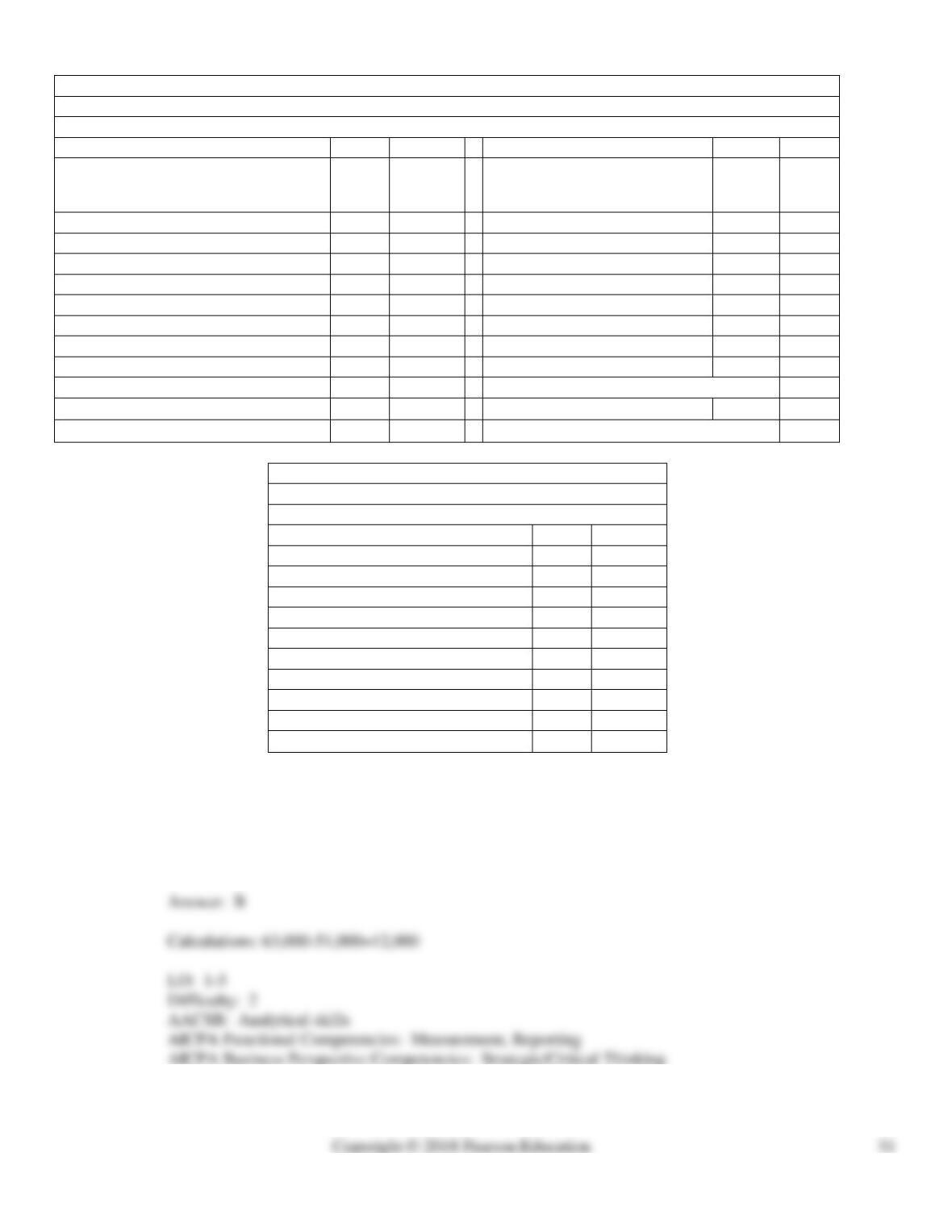
1.5-8 Use the following Balance Sheet and Income Statement to answer the question.
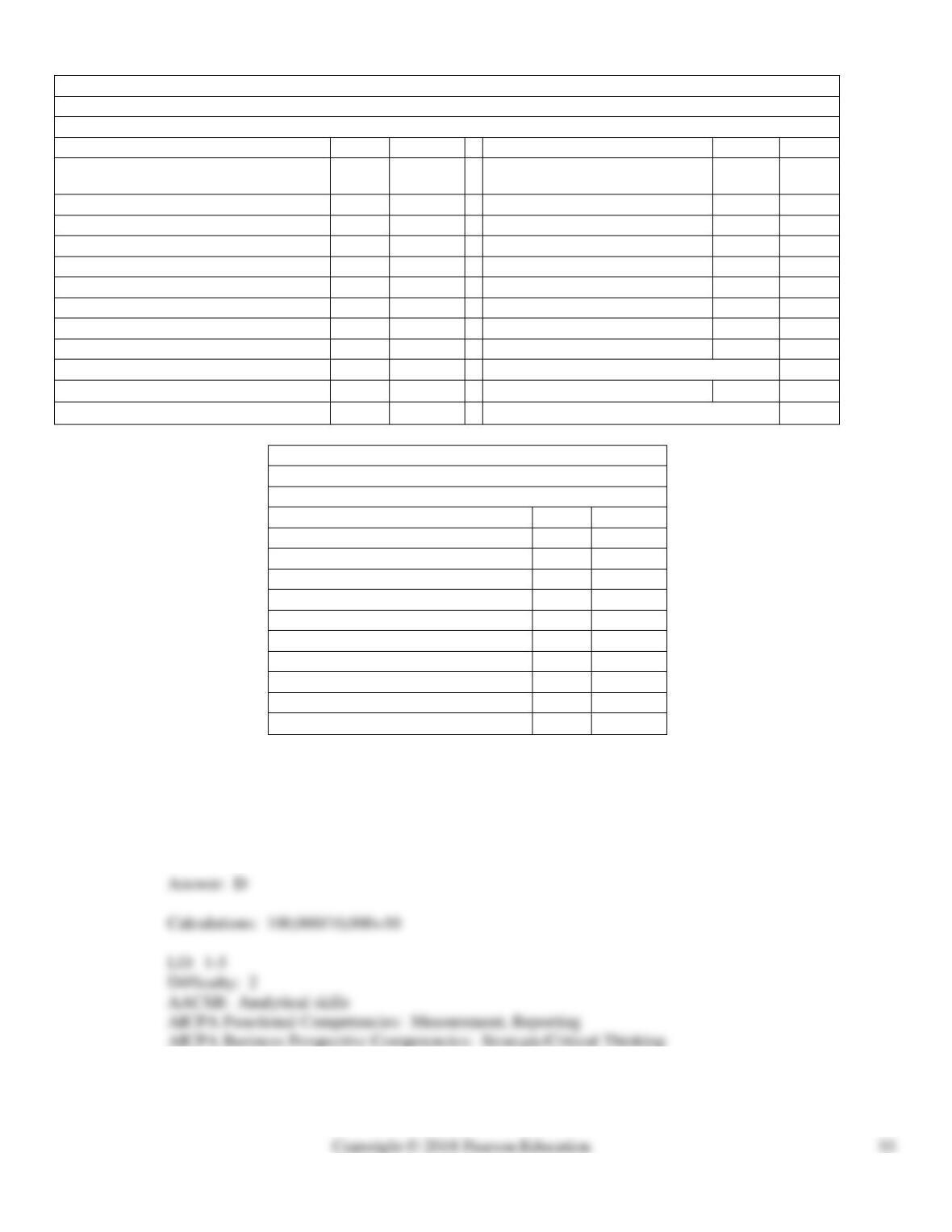
Jane Austin Bookstore
Balance Sheet
December 31, 20X6
Assets
Liabilities and Shareholders’
Equity
Cash and equivalents
$5,000
Accounts payable
$10,000
Accounts receivable
12,000
Taxes payable
4,500
Inventory
25,000
Other liabilities
2,500
Prepaid expenses
3,000
Mortgage payable
60,000
Land
54,000
Total liabilities
77,000
Building
63,000
Accumulated depreciation—Building
????
51,000
Capital
30,000
Trucks
20,000
Retained earnings
???
Accumulated depreciation—Trucks
18,000
2,000
Total shareholders’ equity
???
Total Assets
$152,000
Total Liabilities and
Shareholders’ Equity
????
Jane Austin Bookstore
Income Statement
For the Year Ended December 31, 20X6
Book sales
$100,000
Cost of goods sold
???
Gross profit
???
Operating expenses:
Selling and administrative expenses
14,000
Depreciation expenses
8,000
Total operating expenses
22,000
Income from operations
13,000
Income tax (35%) expense
4,550
Net income
$8,450
What is the Accumulated Depreciation for Buildings on December 31, 20X6?
A) $20,000
B) $12,000
C) $ 8,000
D) $30,000
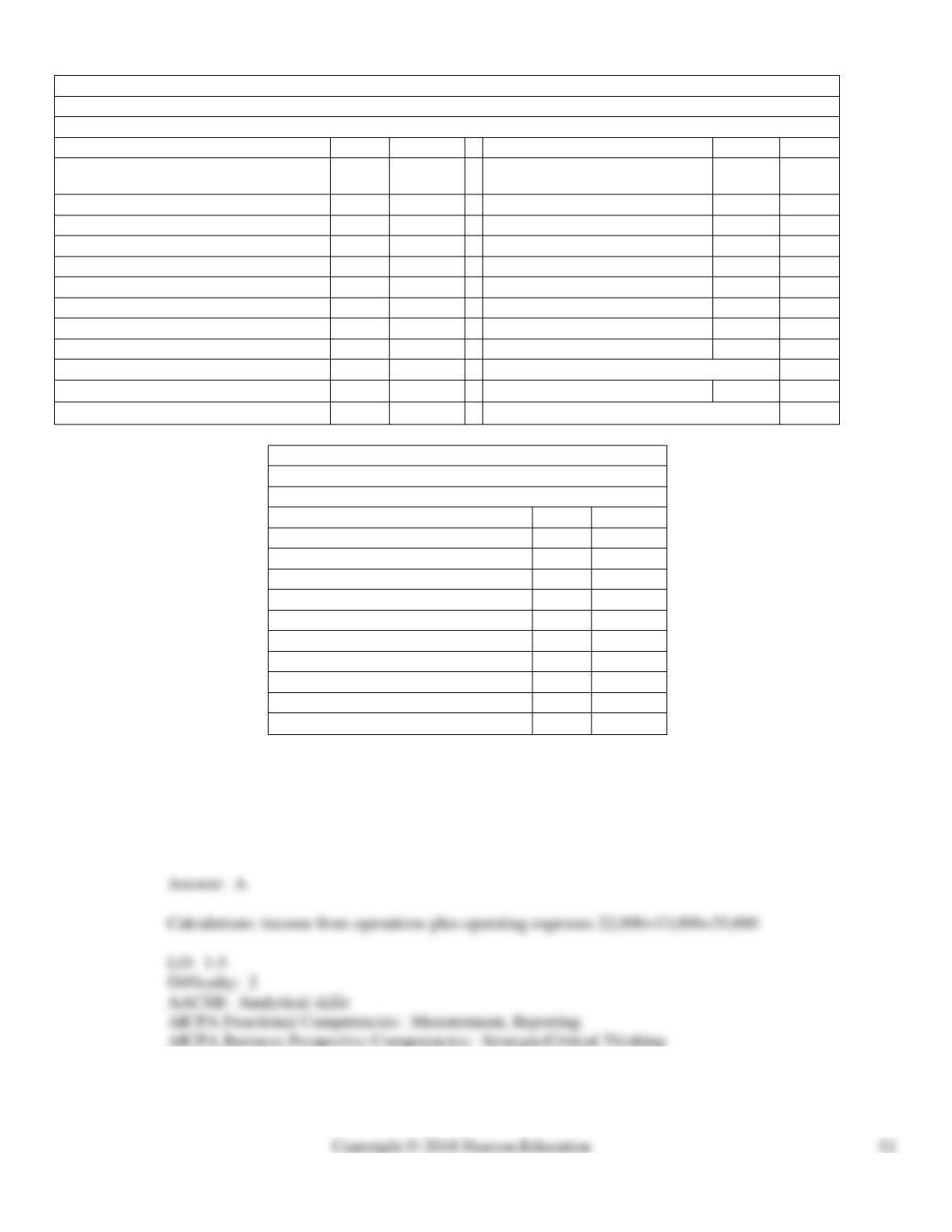
1.5-9 Use the following Balance Sheet and Income Statement to answer the question.
Jane Austin Bookstore
Balance Sheet
December 31, 20X6
Assets
Liabilities and Shareholders’
Equity
Cash and equivalents
$5,000
Accounts payable
$10,000
Accounts receivable
12,000
Taxes payable
4,500
Inventory
25,000
Other liabilities
2,500
Prepaid expenses
3,000
Mortgage payable
60,000
Land
54,000
Total liabilities
77,000
Building
63,000
Accumulated depreciation—Building
????
51,000
Capital
30,000
Trucks
20,000
Retained earnings
???
Accumulated depreciation—Trucks
18,000
2,000
Total shareholders’ equity
???
Total Assets
$152,000
Total Liabilities and
Shareholders’ Equity
????
Jane Austin Bookstore
Income Statement
For the Year ended December 31, 20X6
Book sales
$100,000
Cost of goods sold
???
Gross profit
???
Operating expenses:
Selling and administrative expenses
14,000
Depreciation expense
8,000
Total operating expenses
22,000
Income from operations
13,000
Income tax (35%) expense
4,550
Net income
$8,450
What is the Gross Profit for the period ended December 31, 20X6?
A) $35,000
B) $13,000
C) $22,000
D) $ 7,000
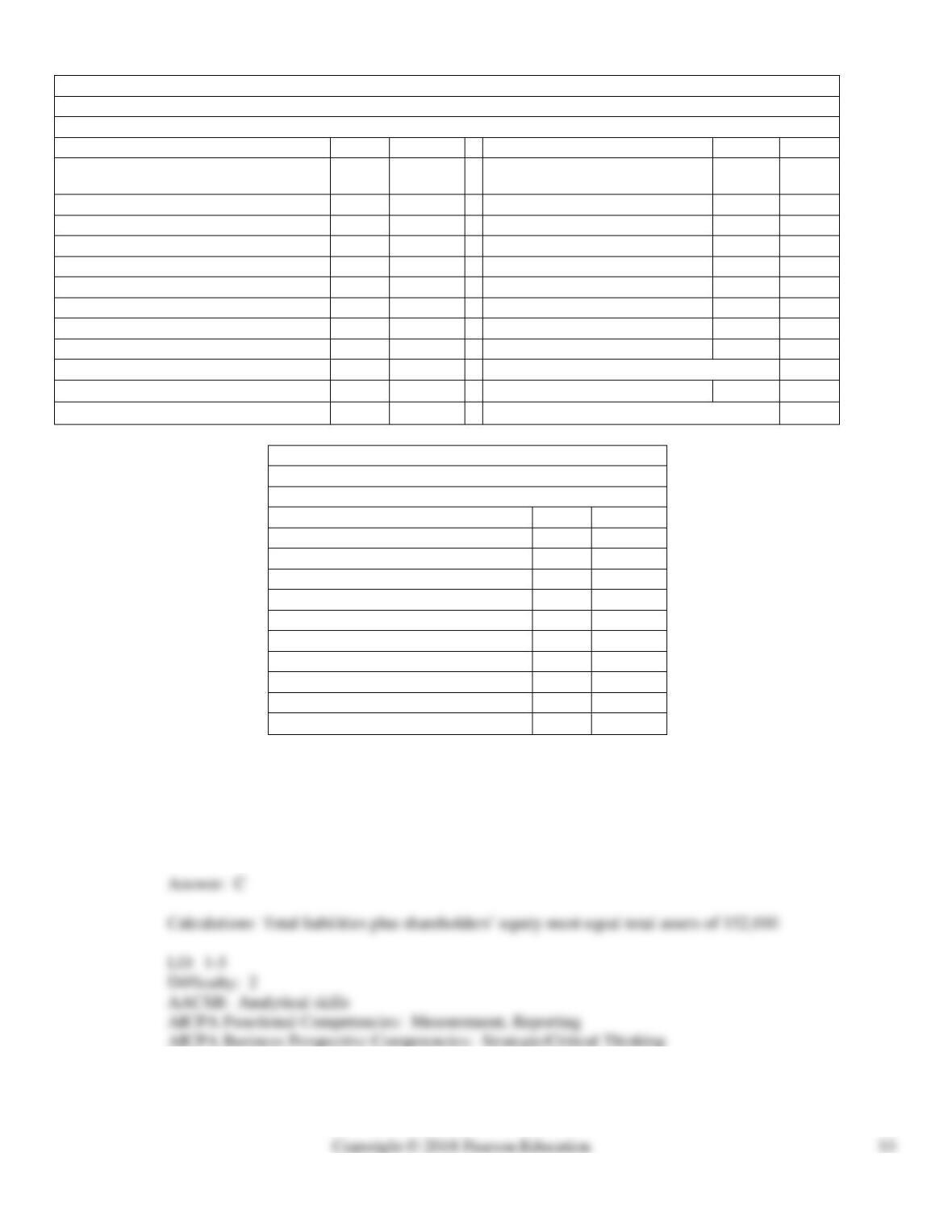
1.5-10 Use the following Balance Sheet and Income Statement to answer the question.
Jane Austin Bookstore
Balance Sheet
December 31, 20X6
Assets
Liabilities and Shareholders’
Equity
Cash and equivalents
$5,000
Accounts payable
$10,000
Accounts receivable
12,000
Taxes payable
4,500
Inventory
25,000
Other liabilities
2,500
Prepaid expenses
3,000
Mortgage payable
60,000
Land
54,000
Total liabilities
77,000
Building
63,000
Accumulated depreciation—Building
????
51,000
Capital
30,000
Trucks
20,000
Retained earnings
???
Accumulated depreciation—Trucks
18,000
2,000
Total shareholders’ equity
???
Total Assets
$152,000
Total Liabilities and
Shareholders’ Equity
????
Jane Austin Bookstore
Income Statement
For the Year Ended December 31, 20X6
Book sales
$100,000
Cost of goods sold
???
Gross profit
???
Operating expenses:
Selling and administrative expenses
14,000
Depreciation expense
8,000
Total operating expenses
22,000
Income from operations
13,000
Income tax (35%) expense
4,550
Net income
$8,450
What are Total Liabilities and Shareholders’ Equity as of December 31, 20X6?
A) $ 77,000
B) $150,000
C) $152,000
D) $ 75,000
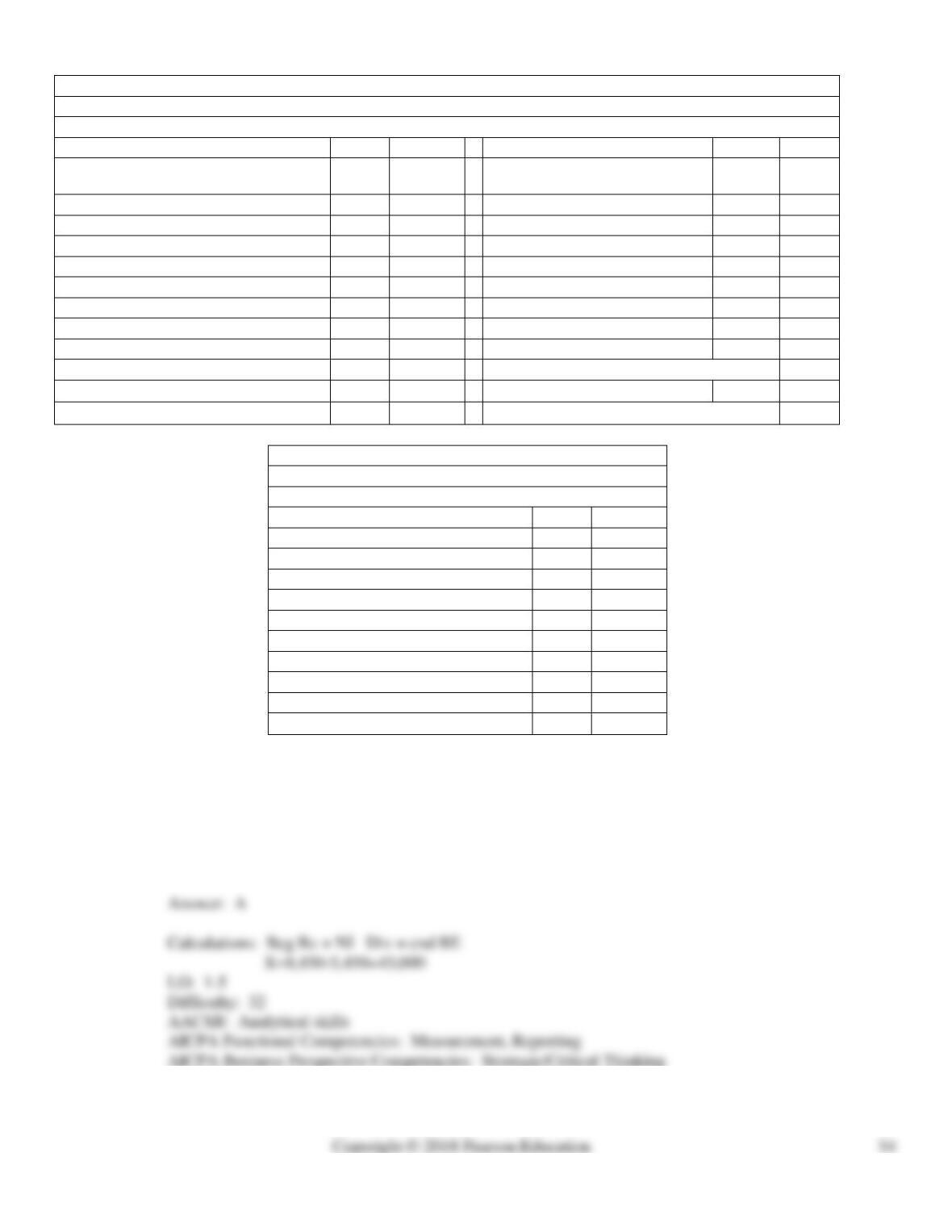
1.5-11 Use the following Balance Sheet and Income Statement to answer the question.
Jane Austin Bookstore
Balance Sheet
December 31, 20X6
Assets
Liabilities and Shareholders’
Equity
Cash and equivalents
$5,000
Accounts payable
$10,000
Accounts receivable
12,000
Taxes payable
4,500
Inventory
25,000
Other liabilities
2,500
Prepaid expenses
3,000
Mortgage payable
60,000
Land
54,000
Total liabilities
77,000
Building
63,000
Accumulated depreciation—Building
????
51,000
Capital
30,000
Trucks
20,000
Retained earnings
???
Accumulated depreciation—Trucks
18,000
2,000
Total shareholders’ equity
???
Total Assets
$152,000
Total Liabilities and
Shareholders’ Equity
????
Jane Austin Bookstore
Income Statement
For the Year Ended December 31, 20X6
Book sales
$100,000
Cost of goods sold
???
Gross profit
???
Operating expenses:
Selling and Administrative expenses
14,000
Depreciation expense
8,000
Total Operating expenses
22,000
Income from operations
13,000
Income tax (35%) expense
4,550
Net income
$8,450
If Jane Austin Bookstore paid $5,450 in dividends for 20X6, what was the balance in Retained Earnings
on December 31, 2009?
A) $42,000
B) $58,900
C) $48,000
D) $45,000
1.5-12 Use the following Balance Sheet and Income Statement to answer the question.
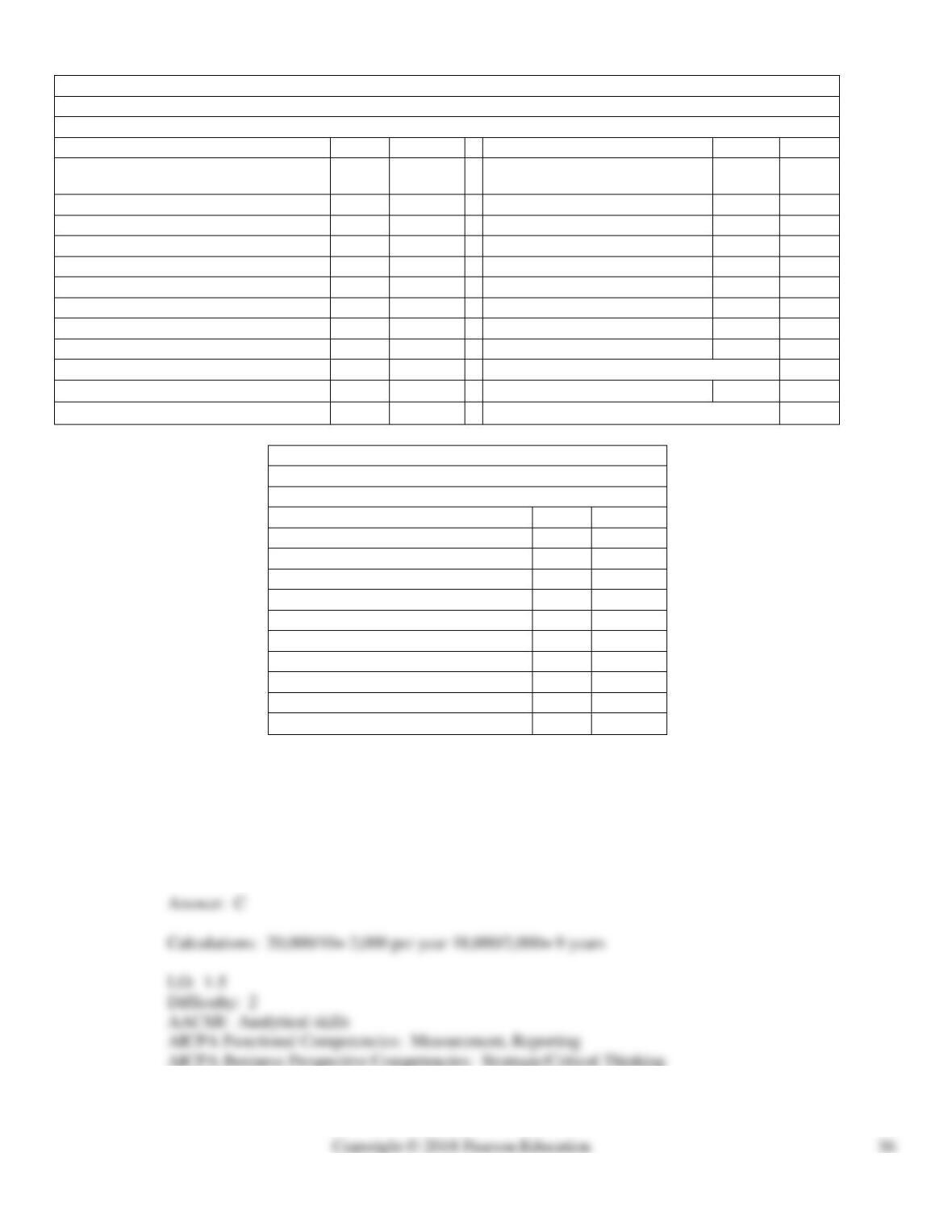
Jane Austin Bookstore
Balance Sheet
December 31, 20X6
Assets
Liabilities and Shareholders’
Equity
Cash and equivalents
$5,000
Accounts payable
$10,000
Accounts receivable
12,000
Taxes payable
4,500
Inventory
25,000
Other liabilities
2,500
Prepaid expenses
3,000
Mortgage payable
60,000
Land
54,000
Total liabilities
77,000
Building
63,000
Accumulated depreciation—Building
????
51,000
Capital
30,000
Trucks
20,000
Retained earnings
???
Accumulated depreciation—Trucks
18,000
2,000
Total shareholders’ equity
???
Total Assets
$152,000
Total Liabilities and
Shareholders’ Equity
????
Jane Austin Bookstore
Income Statement
For the Year Ended December 31, 20X6
Book sales
$100,000
Cost of goods sold
???
Gross profit
???
Operating expenses:
Selling and administrative expenses
14,000
Depreciation expense
8,000
Total operating expenses
22,000
Income from operations
13,000
Income tax (35%) expense
4,550
Net income
$8,450
If Jane Austin Bookstore sold 10,000 books during 20X6, what is the average selling price per book?
A) $7.25
B) $ 6.50
C) $3.50
D) $10.00
1.5-13 Use the following Balance Sheet and Income Statement to answer the question.
Jane Austin Bookstore
Balance Sheet
December 31, 20X6
Assets
Liabilities and Shareholders’
Equity
Cash and equivalents
$5,000
Accounts payable
$10,000
Accounts receivable
12,000
Taxes payable
4,500
Inventory
25,000
Other liabilities
2,500
Prepaid expenses
3,000
Mortgage payable
60,000
Land
54,000
Total liabilities
77,000
Building
63,000
Accumulated depreciation—Building
????
51,000
Capital
30,000
Trucks
20,000
Retained earnings
???
Accumulated depreciation—Trucks
18,000
2,000
Total shareholders’ equity
???
Total Assets
$152,000
Total Liabilities and
Shareholders’ Equity
????
Jane Austin Bookstore
Income Statement
For the Year Ended December 31, 20X6
Book sales
$100,000
Cost of goods sold
???
Gross profit
???
Operating expenses:
Selling and administrative expenses
14,000
Depreciation expense
8,000
Total operating expenses
22,000
Income from operations
13,000
Income tax (35%) expense
4,550
Net income
$8,450
If trucks are depreciated over ten years with no residual value, how many years has Jane Austin
Bookstore had this truck?
A) 1 year
B) 6 years
C) 9 years
D) 8 years