You paid $10,000 to buy 1% of the stock in a corporation that has now gone bankrupt.
The company owes $10 million dollars to creditors. As a result of the bankruptcy, you
will lose $100,000.
Answer:
Which of the following isTRUE about accrual basis accounting and cash basis
accounting?
A. Net Income is generally larger under accrual basis accounting than cash basis
accounting.
B. GAAP does not require accrual basis accounting be used for external reports.
C. Accrual basis accounting and cash basis accounting will always produce the same
amount of net income.
D. Accrual basis accounting provides a better measure of operating performance than
does cash basis accounting
Answer:
The choice of an inventory costing method usually has no impact on gross profit or cost
of goods sold.
Answer:
Your company buys 500 pairs of socks at $3 each (including other purchasing costs
such as transportation) and sells them for $5 each.
Use the information above to answer the following question. Which of the following
statements isTRUE?
A. The sales revenue is $1,000.
B. The gross profit is $1,000.
C. The cost of goods sold is $1,000.
D. The net income is $1,000.
Answer:

Which of the following statements isTRUE?
A. GAAP classifies dividends paid as a financing activity, but IFRS allows them to be
classified as either an operating or financing activity.
B. GAAP allows interest paid to be classified as either an operating or financing
activity, but IFRS requires that it be classified as a financing activity.
C. GAAP classifies dividends received as an investing activity, but IFRS allows them to
be classified as either an operating or investing activity.
D. GAAP classifies interest received as either an operating or investing activity, but
IFRS requires it to be classified as an investing activity.
Answer:
A company has a net cash inflow from operating activities of $789,000, a net cash

outflow of $50,000 from investing activities and a net cash inflow of $100,000 from
financing activities. The company paid $124,000 in interest, $186,500 in income taxes,
and $200,000 in dividends. Which of the following statements about the statement of
cash flows is notTRUE?
A. Dividends of $200,000 will be reported as a cash outflow in the cash flow from
investing activities section.
B. Supplemental disclosures required for a company using the indirect method include
the amount of interest and the amount of income taxes paid.
C. The statement of cash flows will show a net increase to cash and cash equivalents of
$839,000.
D. If the direct method is used, the $124,000 of interest paid and the $186,500 of
income taxes paid will be reported in the cash flows from operating activities.
Answer:
Which of the following statements regarding methods of accounting for bad debts
isTRUE?
A. When the allowance method is used, the journal entry to write-off an uncollectible
account does not change the amount reported as net accounts receivable on the balance
sheet.
B. The two methods of accounting for bad debts that are acceptable under GAAP are
the allowance method and the direct write-off method.
C. When the allowance method is used, if actual results differ from the estimates, the
prior year financial statements must be corrected.
D. When the allowance method is used, bad debt expense is equal to the write-offs that
occurred during the period.
Answer:
GAAP does not allow cash basis accounting to be used in external financial reports.
Answer:
Which of the following is notTRUE?
A. Assets = Liabilities + Stockholders’ Equity

B. Liabilities = Assets – Stockholders’ Equity
C. Stockholders’ Equity + Liabilities – Assets = 0
D. Liabilities – Stockholders’ Equity = Assets
Answer:
Which of the following statements about financial accounting isTRUE?
A. Produces reports for external users.
B. Produces reports for internal users.
C. Produces reports that are used by employees.
D. Produces reports that are used to determine how the company finances its growth.
Answer:
Which of the following statements regarding ratios isTRUE?
A. All other things being equal, a lower debt-to-assets ratio indicates a riskier financing
strategy.
B. A lower asset turnover ratio is a favorable indicator of how efficiently a company is
utilizing its resources.
C. The net profit margin ratio cannot be used to indicate how well a company is
controlling its expenses.
D. Ratios can be used to compare companies of different sizes.
Answer:
A company owes $200,000 on a bank loan. It will be reported as Notes Payable.
Answer:
Which of the following statements regarding bond terminology isTRUE?
A. The face value of a bond is what it is currently worth in the market.
B. The stated interest rate is expressed as an annual interest rate even if the bonds pay
semiannual interest payments.
C. The stated rate of interest always presents the amount that investors are willing to
pay for the bond on the issue date.
D. The carrying value of the bond is always equal to the face value of the bond.
Answer:
Intangible assets are usually amortized using the straight-line method, with no residual
value.
Answer:
Which of the following statements is notTRUE?
A. An “A” rating is the best credit rating a company can earn.
B. Credit ratings below BB are called “junk.”
C. A credit rating agency indicates a company’s ability to pay its debts on a timely basis.
D. Moody’s, Fitch, and Standard and Poor’s are the names of credit rating agencies.
Answer:
Under IFRS, which of the following is notTRUE?
A. The income statement is called the earnings statement.
B. The balance sheet is called the statement of financial position.
C. The statement of stockholders’ equity is called the statement of shareholders’ equity.
D. The cash flow statement is called the cash flow statement.
Answer:

Which of the following statements is notTRUE?
A. At the end of an asset’s life, its book value should equal its residual value.
B. At the end of an asset’s life, the accumulated depreciation should equal the
depreciable cost.
C. At the end of an assets life, the book value would equal zero if there is no residual
value.
D. Assets area not to be depreciated below residual value, except under the
double-declining balance method.
Answer:
Which of the following statements about stock dividends isTRUE?
A. Stock dividends are reported on the income statement.
B. Stock dividends are reported on the Statement of Stockholders’ Equity.
C. Stock dividends increase total stockholders’ equity.
D. Stock dividends decrease total stockholders’ equity.
Answer:
Which of the following statements regarding preparation of the statement of cash flows
isTRUE?
A. GAAP currently allows the indirect method only.
B. IFRS currently allows the direct method only.
C. The IASB and the FASB are considering requiring the direct method.
D. The IASB and the FASB are considering requiring the indirect method.
Answer:
A company has outstanding 10 million shares of $2 par common stock and 1 million
shares of $4 par preferred stock. The preferred stock has an 8% dividend rate. The
company declares $300,000 in total dividends for the year. Which of the following
isTRUE if the preferred stockholders have a cumulative dividend preference?
A. Preferred stockholders will receive the entire $300,000, and they must also be paid
$20,000 before the end of the current accounting period. Common stockholders will
receive nothing.
B. Preferred stockholders will receive $24,000 (8% of the total dividends). Common
stockholders will receive the remaining $276,000.
C. Preferred stockholders will receive the entire $300,000, and they must also be paid
$20,000 sometime in the future before common stockholders will receive anything.
D. Preferred stockholders will receive the entire $300,000, but will receive nothing
more relating to this dividend declaration. Common stockholders will receive nothing.
Answer:
Which of the following statements is notTRUE?
A. Bonds and promissory notes are two ways a company can borrow the funds
necessary to finance its activities.
B. Both bonds payable and notes payable are initially recorded with a journal entry that
debits cash and credits the relevant liability account.
C. The journal entry that records interest owed on bonds and notes includes a debit to
interest expense and a credit to interest payable.
D. Bonds payable and notes payable are always non-current liability accounts.
Answer:
Which of the following is notTRUE of a cash shortage/overage?
A. It has a debit balance if there is a shortage.
B. It is reported on the balance sheet.
C. It is classified as a non-operating expense or revenue.
D. If the recorded cash exceeds the cash counted, a shortage exists.
Answer:
If revenues are not growing faster than expenses, then Net income will decrease.
Answer:
Which of the following statements regarding bond discounts or premiums isTRUE?
A. A discount on a bond reduces the amount that the issuer has to repay to the lenders.
B. A premium on a bond increases the interest expense of the loan to the issuer.
C. A premium on a bond increases the amount that the issuer has to repay to the lenders.
D. A discount on a bond increases the interest expense of the loan to the issuer.
Answer:

Which of the following statements isTRUE?
A. The change in cash = the change in noncash assets.
B. The change in cash = the change in liabilities + the change in stockholders’ equity.
C. The change in cash = the change in liabilities + the change in stockholders’ equity –
the change in noncash assets.
D. The change in cash = the change in liabilities + the change in stockholders’ equity +
the change in noncash assets.
Answer:
Which of the following statements about extending credit is notTRUE?
A. It is common for companies to sell on account to other companies.
B. Some companies extend credit to individual consumers.
C. Bad debts arise from credit sales to individual consumers, but not from credit sales to
other companies.
D. When credit is available, customers often buy more products and services.
Answer:
Which one of the following statements regarding the debit/credit processing of revenues
and expenses isTRUE?
A. Debits reduce expenses.
B. The total credits recorded in revenue accounts must equal the total debits recorded in
expense accounts.
C. Across all revenue accounts, the total value of all debits must equal the total value of
all credits.
D. Credits increase revenues.
Answer:
Under the indirect method, changes in current assets are used in determining cash flows
from operating activities and changes in current liabilities are used in determining cash
flows from financing activities.
Answer:
Which of the following statements regarding comparisons made in managing inventory
is notTRUE?
A. In making comparisons of financial statements, it is desirable to compare data
calculated using the same inventory costing methods.
B. The inventory turnover ratio and days to sell measure will be affected by the cost
flow assumptions used, which causes problems for financial statements users.
C. Inventory turnover and days to sell are often affected by changes in the economic
climate.
D. The inventory turnover and days to sell ratios are consistent among companies in
different industries.
Answer:
Dividends in arrears are reported as liabilities on the balance sheet.
Answer:
Callable bonds can be converted to stock.
Answer:
Which of the following statements regarding the effects of a business decision on a
financial ratio isTRUE?
A. If a company is expanding its facilities, its fixed asset turnover ratio is likely to fall
temporarily.
B. If a company extends its payment period for customers, its accounts receivable ratio
is likely to rise.
C. If a company eases its credit granting policies, its days to collect ratio is likely to
fall.
D. If a company builds up inventories, its days to sell ratio is likely to fall.
Answer:
The Sarbanes-Oxley Act (SOX) requires top management of companies to sign a report
certifying that the financial statements are free of error.
Answer:
Which of the following statements isTRUE?
A. Amortization of intangible assets is always recorded in a contra asset account.
B. Items in a company’s inventory that are not expected to be sold in the next year are
considered long-lived assets.
C. All long-lived intangible assets must be amortized over a period of 40 years or less.
D. Intangible assets with unlimited or indefinite lives are not amortized.
Answer:
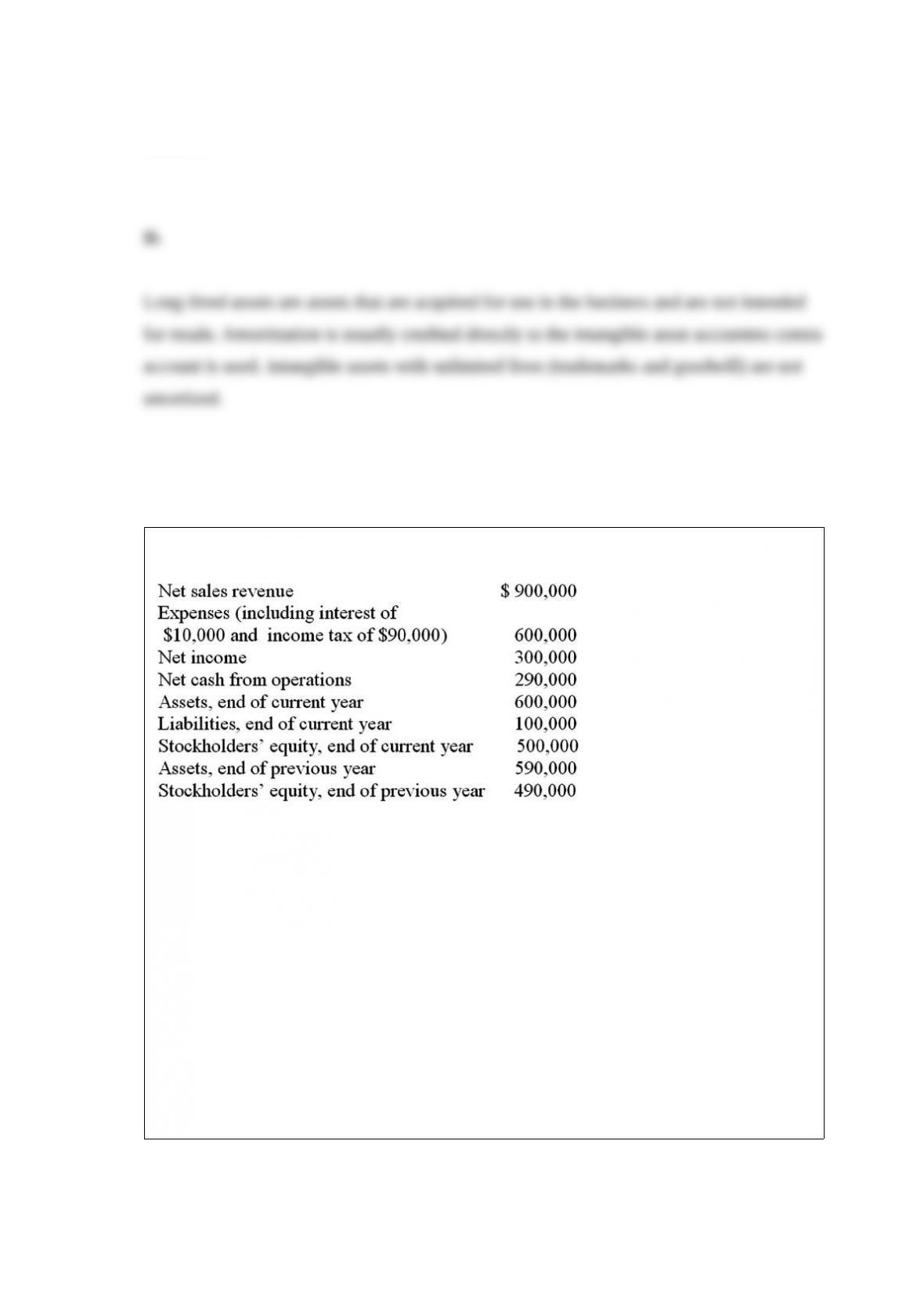
The following information is taken from the financial statements of B. Darin Company:
In addition, there was an average of 40,000 shares of common stock outstanding and
the current market price of the stock is $15 per share.
Use the information above to answer the following question. Which of the following is
closest to the company’s return on equity (ROE) ratio for the current year?
A. 60.61%
B. 151%
C. 50.42%
D. 80.81%

Answer:
Which of the following is not a profitability ratio?
A. Return on equity (ROE).
B. Earnings per share.
C. Asset turnover.
D. Days to sell.
Answer:
DigDug Corporation had outstanding checks totaling $5,400 on its June bank
reconciliation. In July, DigDug issued checks totaling $38,900. The July bank statement
shows that $26,300 in checks cleared the bank in July. The amount of outstanding
checks on DigDug’s July bank reconciliation should be:
A. $12,600.
B. $18,000.
C. $5,400.
D. $7,200.
Answer:
The amount of assets at the end of the year is
A. $105,000.
B. $108,000.
C. $104,000.
D. $107,000.
Answer:
A 1-year, $15,000, 12 percent note is signed on April 1. If the note is repaid on
September 1 of the same year, how much interest expense is incurred?
A. $1,800
B. $900
C. $750
D. $600
Answer:
Interest on an obligation is recorded
A. as time passes.
B. when goods are purchased on account.
C. at maturity.
D. when a bank loan is obtained.
Answer:
As of December 31, Frappa Company has a balance of $5,000 in accounts receivable.
Of this amount, $500 is past due and the remainder is not yet due. Frappa has a credit
balance of $45 in the allowance for doubtful accounts. Frappa Company estimates its
bad debt losses using the aging of receivables method, with estimated bad debt loss
rates equal to 1% of accounts not yet due and 10% of past due accounts. How would the
required adjusting journal entry be recorded in the Allowance for Doubtful Accounts?
A. $95 (credit).
B. $55 (credit).
C. $50 (credit).
D. $45 (debit).
Answer:
Which of the following statements regarding asset impairment is correct?
A. Asset impairment losses appear on a company’s income statement every year.
B. When a company records an asset impairment loss, it will increase net income for
that period.
C. Impairment occurs when an asset’s book value is less than its current value.
D. Asset impairment losses are reported on the income statement as an operating
expense.
Answer:

The right of current stockholders to purchase additional shares of newly issued stock in
order to maintain the same percentage ownership is called:
A. liquidation.
B. preemptive rights.
C. cumulative preference.
D. voting rights.
Answer:
Melody’s Piano School operations for the month of May are summarized in the
following three transactions:
– Provided $500 of instruction to students.
– Of the $500 of instruction provided in May, $400 is collected in cash, and an
additional $300 is collected for lessons provided in April.
– Paid April’s piano rental bill of $100. Received May’s bill of $150 but did not pay.
What is Melody’s Net Income for May using the accrual basis of accounting?
A. $400
B. $300
C. $350
D. $600
Answer:
Recording an adjusting journal entry to recognize depreciation would cause which of
the following?
A. An increase in liabilities and expenses, and a decrease in stockholders’ equity.
B. A decrease in assets and stockholders’ equity, and an increase in expenses.
C. A decrease in assets, an increase in liabilities, and an increase in expenses.
D. An increase in assets, an increase in liabilities, and a decrease in expenses.
Answer:
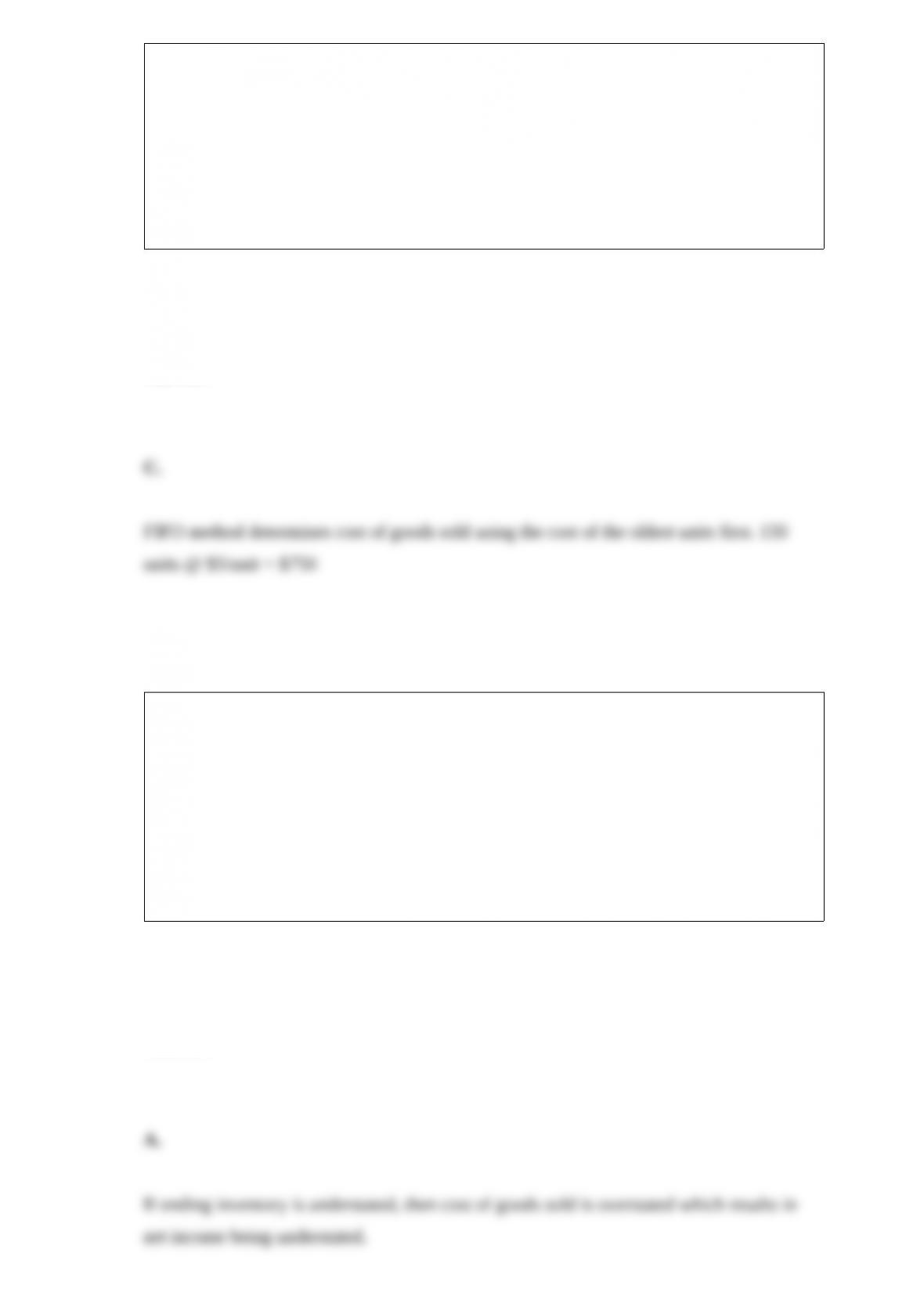
The Acme Corporation buys 300 units of merchandise in January at $5 each. In
February, Acme buys 500 units at $4 each and in March it buys 200 units at $6 each.
Acme sells 150 units during this quarter. What is the cost of goods sold under the FIFO
method?
A. $600
B. $934
C. $750
D. $900
Answer:
An understatement of the ending inventory balance will cause:
A. Cost of goods sold to be overstated and net income to be understated.
B. Cost of goods sold to be overstated and net income to be overstated.
C. Cost of goods sold to be understated and net income to be overstated.
D. Cost of goods sold to be overstated and net income to be correct.
Answer:
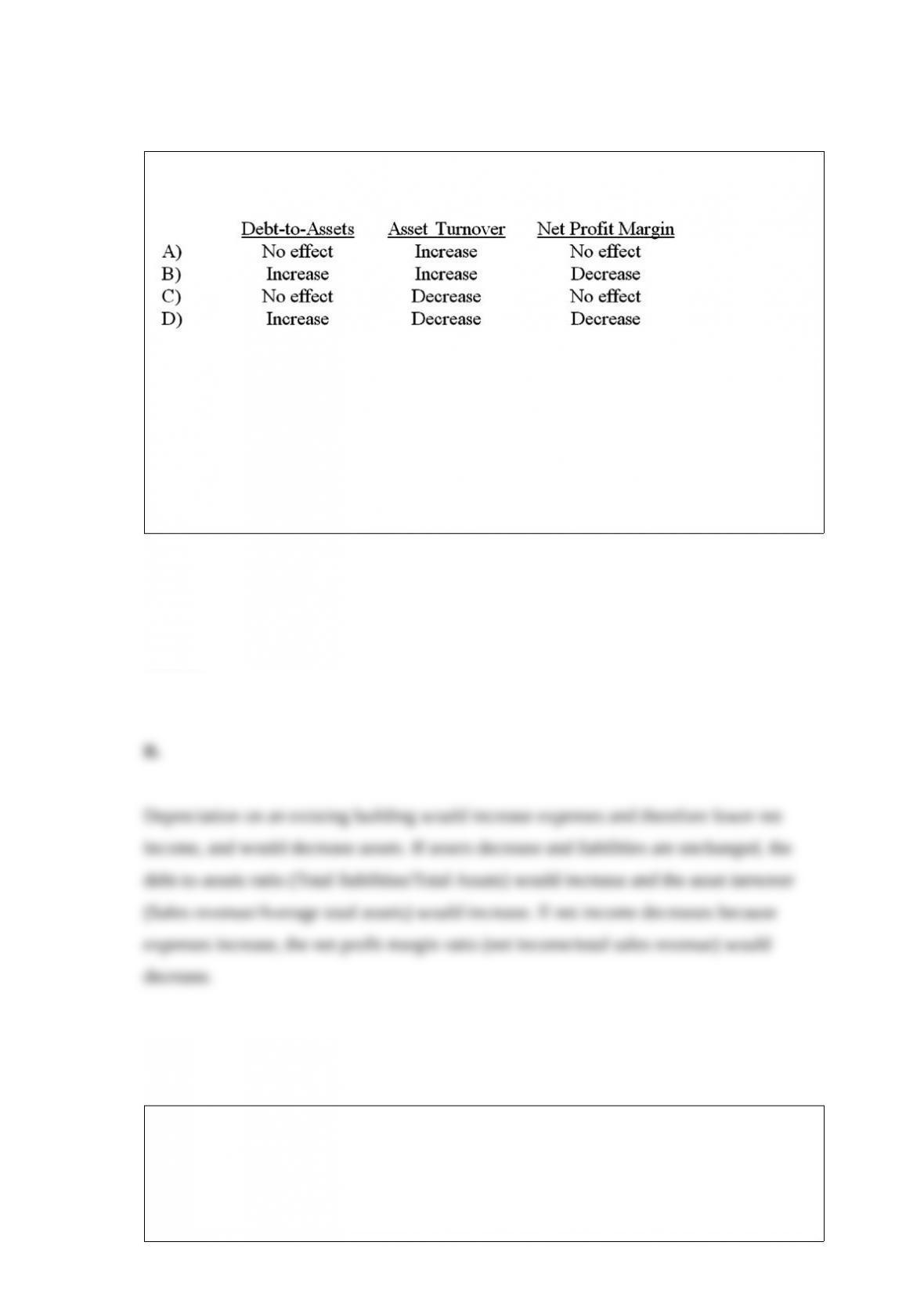
Which of the following accurately describes how recording depreciation for an existing
building would affect the ratios indicated?
A. Option A
B. Option B
C. Option C
D. Option D
Answer:
Internal users of financial data include:
A. investors.
B. creditors.
C. management.
D. regulatory authorities.
Answer:
Bonds that are backed with a pledge of the company’s assets are called:
A. debenture bonds.
B. convertible bonds.
C. secured bonds.
D. registered bonds.
Answer:
Assume a company uses the indirect method to prepare its statement of cash flows. If
inventory decreases and unearned revenue increases during an accounting period, what
does the company do with the changes in these accounts to calculate cash flows from
operating activities?
A. Both are added to net income.
B. The change in inventory is added to net income; the change in unearned revenue is
subtracted.
C. Both are subtracted from net income.
D. The change in unearned revenue is added to net income; the change in inventory is
subtracted.
Answer:
Which of the following measures would assist in assessing the liquidity of a company?
A. Return on equity.
B. Fixed asset turnover ratio.
C. Receivables turnover ratio.
D. Times interest earned ratio.
Answer:
A company has total revenue of $560,000 and total expenses of $330,000. If the
company overstates sales by $10,000, how would the net profit margin be affected?
A. Net profit margin would be overstated.
B. Net profit margin would be understated.
C. Net profit margin would be unaffected.
D. Net profit margin cannot be computed because overstating sales is unethical.
Answer:
Which of the following errors would most likely lead to an overstatement of net income
in the current year?
A. Recording revenue when the cash is collected next year although it is earned in the
current year.
B. Recording an expense when paid next year although it is incurred this year.
C. Failing to adjust the Unearned Rent Revenue account for the portion of rent earned
this year.
D. Recording revenue earned in the current year when cash is collected this year.
Answer:
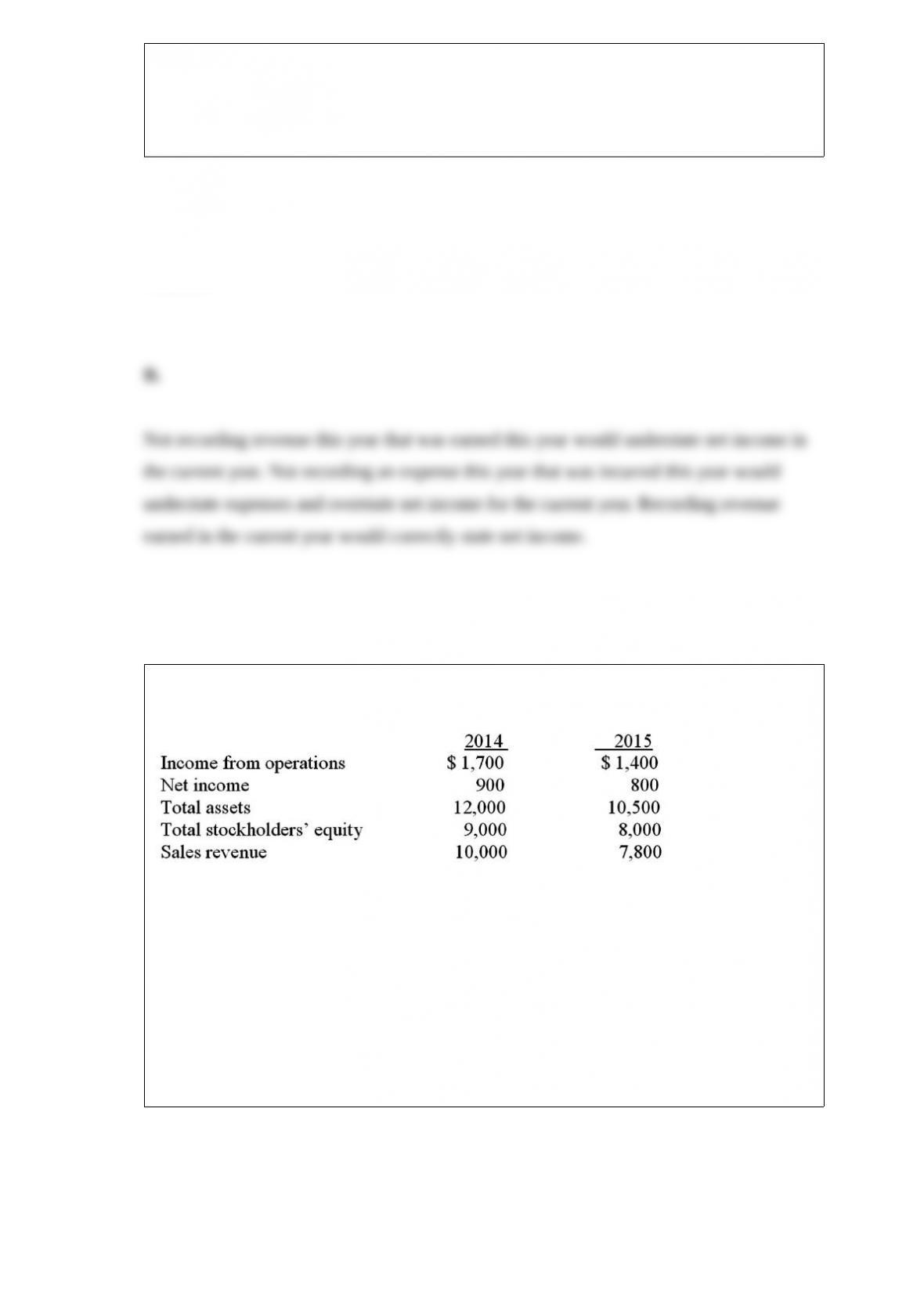
A company had total assets of $10,900 at the start of the year 2014. The following
additional information has been taken from the records:
The asset turnover for 2015 is closest to:
A. 0.071
B. 0.743
C. 0.693
D. 0.124
Answer:
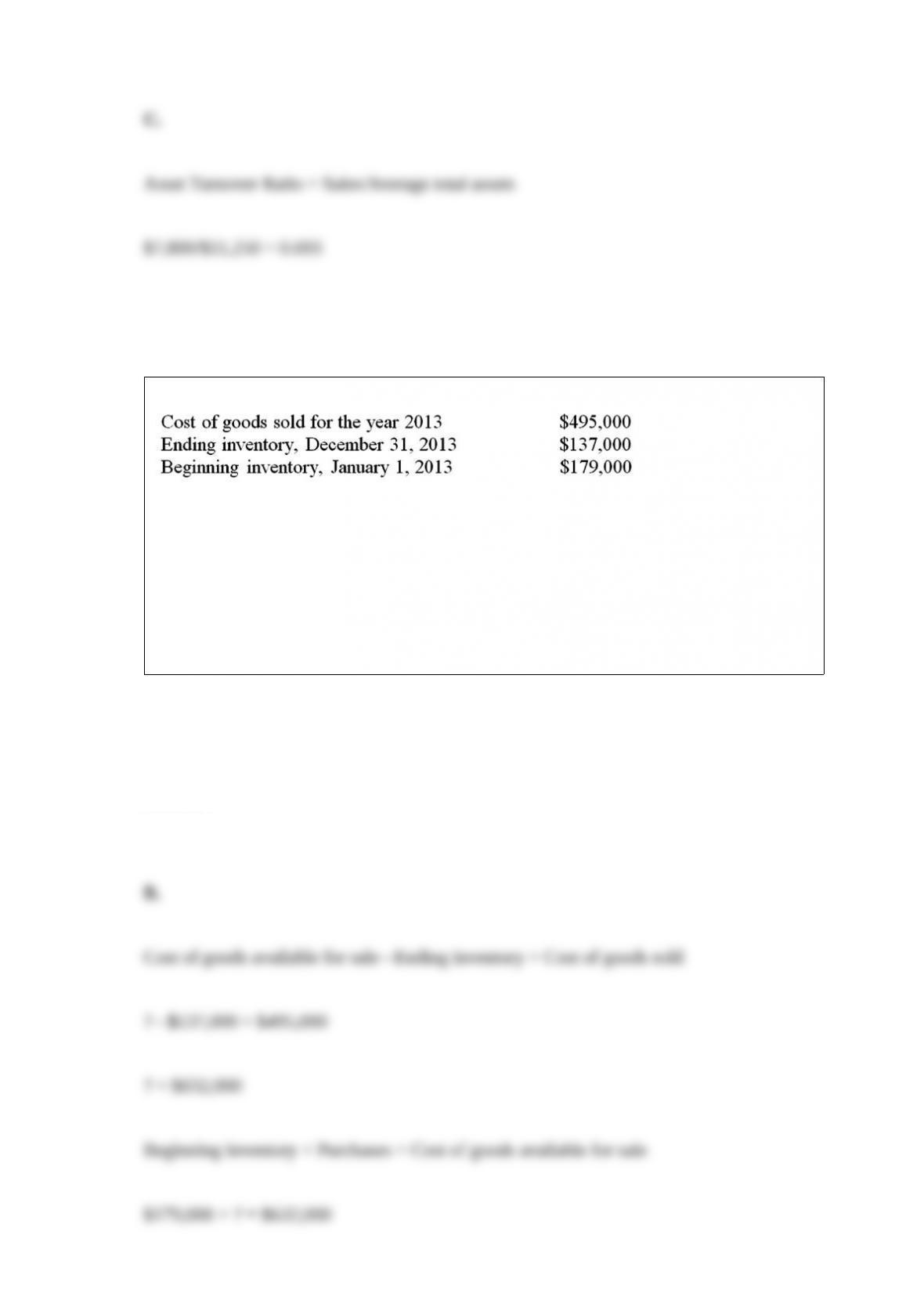
Use the following information to determine the amount of purchases for the period.
A. $632,000
B. $453,000
C. $316,000
D. $674,000
Answer:
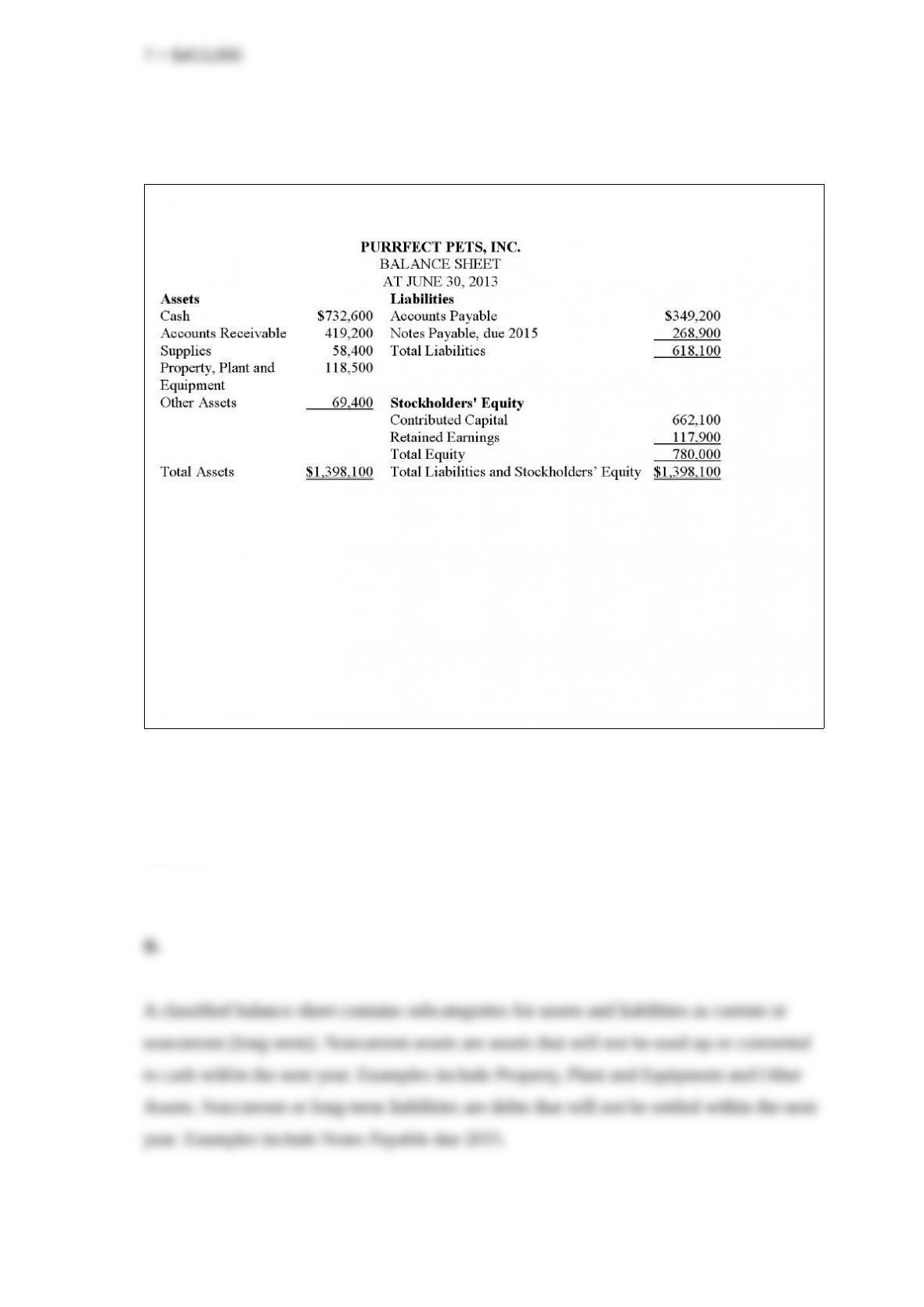
Which line items on the balance sheet would be classified as long term?
A. Cash; Supplies; Accounts Payable.
B. Property, Plant and Equipment; Notes Payable; Other Assets.
C. Supplies; Property, Plant and Equipment; Notes Payable.
D. Accounts Receivable; Property, Plant and Equipment; Other Assets
Answer:
When you identify interest received from the bank in performing a bank reconciliation,
you must:
A. add the amount of interest to the balance per bank.
B. deduct the amount of interest from the balance per books.
C. add the amount of interest to the balance per books.
D. deduct the amount of interest from the balance per bank.
Answer:
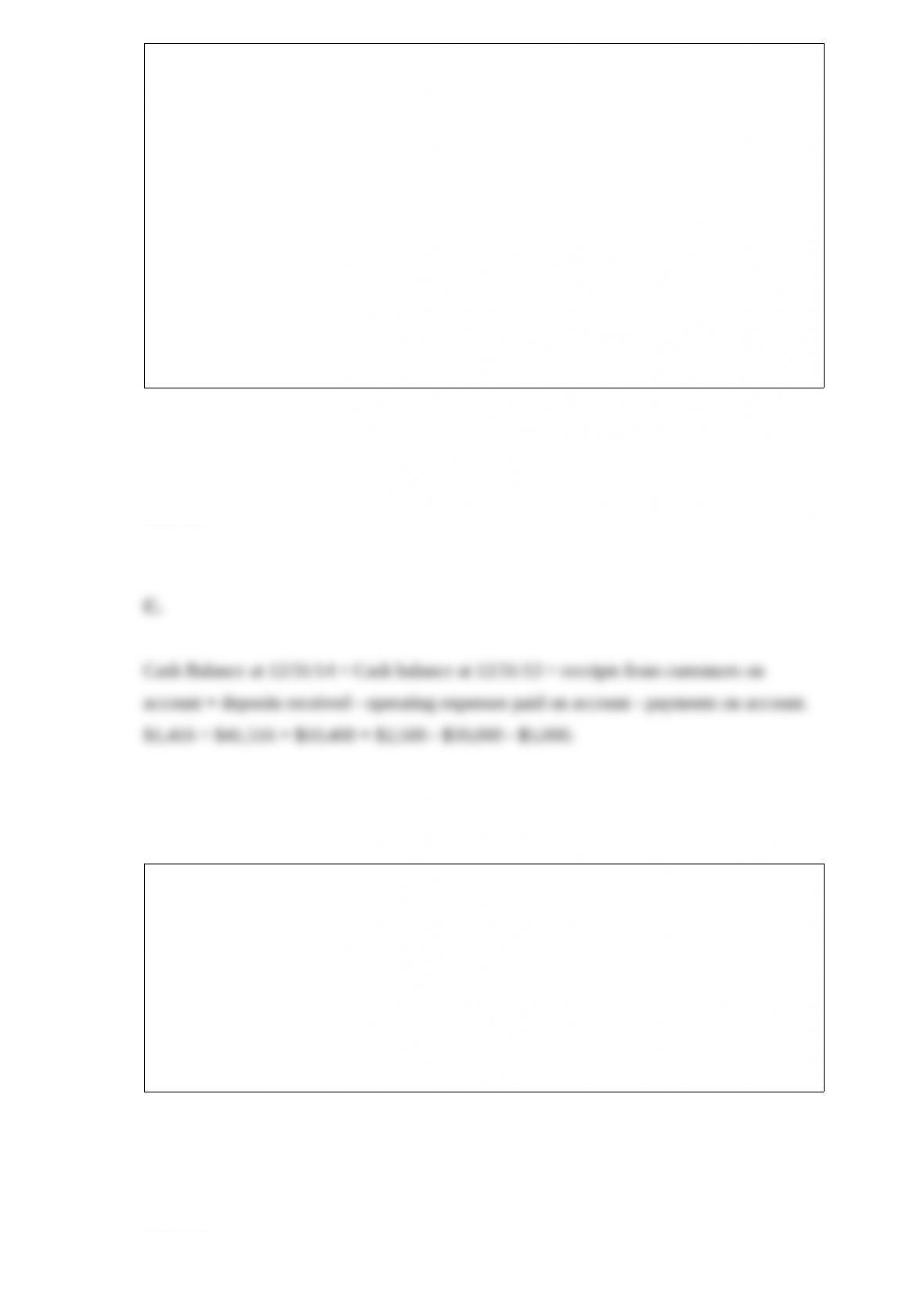
The following accounts are taken from the December 31, 2013, financial statements of
A to Z Advertising Company:
The following activities occurred in 2014:
1. Billed customers for advertising services rendered, $55,000.
2. Received cash from customers in payment of their accounts, $10,400.
3. Incurred $45,000 of operating expenses of which $39,000 was paid in cash and
$6,000 was on account and unpaid as of the end of the year.
4. Paid suppliers $5,000 on the accounts payable.
5. Received deposits from customers of $2,500 for advertising services to be performed
in 2015.
What is the balance in the Cash account at December 31, 2014?
A. $46,116
B. $41,516
C. $1,416
D. $46,916
Answer:
When a company records depreciation it debits:
A. liabilities and credits expenses.
B. expenses and credits cash.
C. expenses and credits a contra-asset account.
D. long-lived assets and credits expenses.
Answer:
If wages expense is $450,000 and the beginning and ending balances of wages payable
are $18,000 and $16,500, respectively, the cash paid to employees is:
A. $450,000
B. $433,500
C. $448,500
D. $451,500
Answer:
The first year of operations for a company was 2013. The net income for the year 2013
was $20,000 and dividends of $12,000 were paid. In 2014, the company reported net
income of $34,000 and paid dividends of $5,000. At the end of 2013, the company had
total assets of $150,000, and at the end of 2014, total assets were $240,000.
What was the amount of retained earnings at the end of 2013?
A. $20,000.
B. $8,000.
C. $150,000.
D. $155,000.
Answer:
Your company uses the percentage of credit sales method for calculating bad debt
expense. If your company has $216,000 in total sales, of which $178,000 are on credit,
and its historical bad debt loss is 6% of credit sales, bad debt expense is:
A. $12,960.
B. $10,680.
C. $38,000.
D. $11,000
Answer:
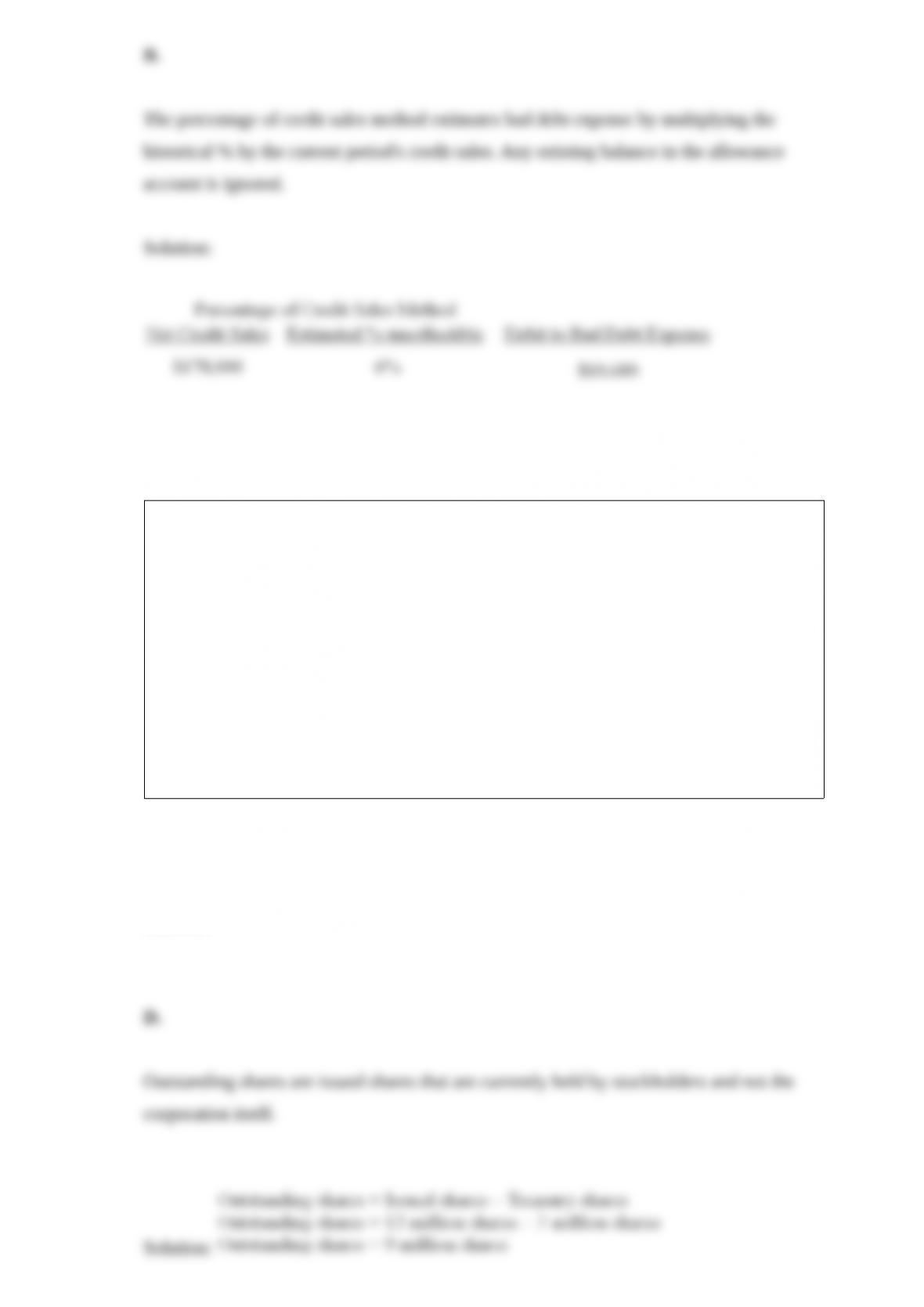
A corporate charter specifies that the company may sell up to 20 million shares of
stock. The company sells 12 million shares to investors and later buys back 3 million
shares. The current number of outstanding shares after these transactions have been
accounted for is:
A. 8 million shares.
B. 20 million shares.
C. 10 million shares.
D. 9 million shares.
Answer:

In January 2013, a new consulting firm recorded the following transactions:
1. Issued stock to investors for $20,000 cash.
2. Purchased $5,000 of equipment, paying 20% in cash and giving a promissory note
for the balance.
3. Received $9,000 in cash for consulting services performed in January.
4. Bought $1,500 of supplies on account; all of the supplies were used in January.
5. Provided consulting services for clients and billed them $16,000.
6. Paid $750 toward the supplies purchased in #4.
7. Paid $3,000 to employees for work performed in January.
8. Received a bill for rent and utilities for January of $3,400.
What is the amount of total revenue to be reported on the Income Statement for the
month of January?
A. $45,000
B. $9,000
C. $29,000
D. $25,000
Answer:
The T-account approach
A. may be used with the direct method.
B. creates one big T-account for cash that replaces separate schedules to show all the
changes in the cash account.
C. shows cash provided as credits and cash used as debits.
D. does not determine the change in each balance sheet account.
Answer:
The net cash flow from operating activities is an inflow of $37,042, the net cash flow
from investing activities is an outflow of $16,831, and the net cash flow from financing
activities is an outflow of $26,397. If the beginning cash account balance is $11,283,
what is the ending cash account balance?
A. $5,097
B. ($6,186)
C. $38,759
D. $27,476
Answer:

Your company pays back $2 million on a loan it had received earlier from a bank.
A. Assets decrease by $2 million, liabilities and stockholders’ equity are both
unchanged.
B. Assets decrease by $2 million, liabilities decrease by $2 million, stockholders’ equity
is unchanged.
C. Assets decrease by $2 million and liabilities increase by $2 million.
D. Assets decrease by $2 million, liabilities are unchanged, stockholders’ equity
decreases by $2 million.
Answer: