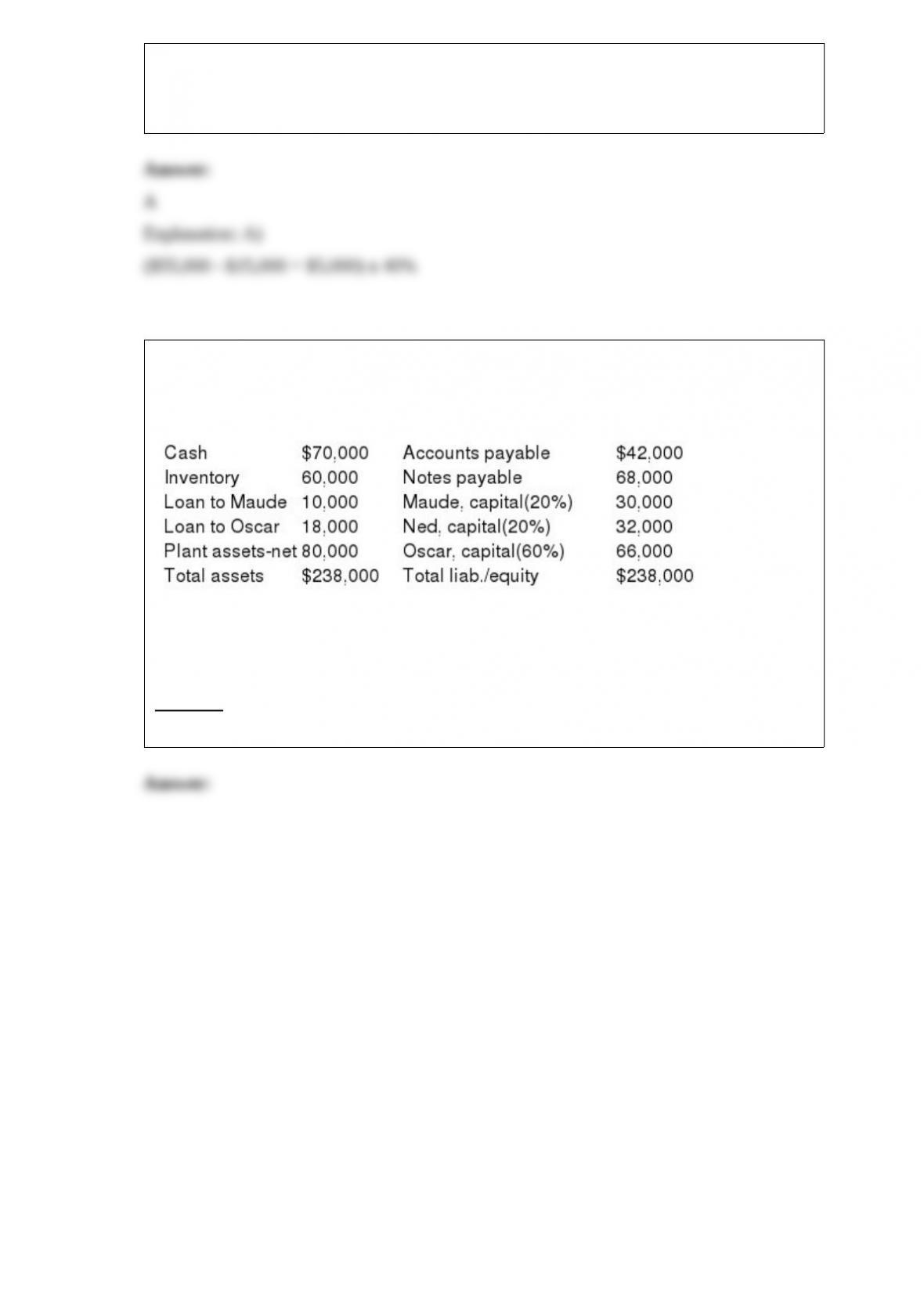
On January 1, 2012, Shrimp Corporation purchased a delivery truck with an expected
useful life of five years, and a salvage value of $8,000. On January 1, 2014, Shrimp
sold the truck to Pacet Corporation. Pacet assumed the same salvage value and
remaining life of three years used by Shrimp. Straight-line depreciation is used by both
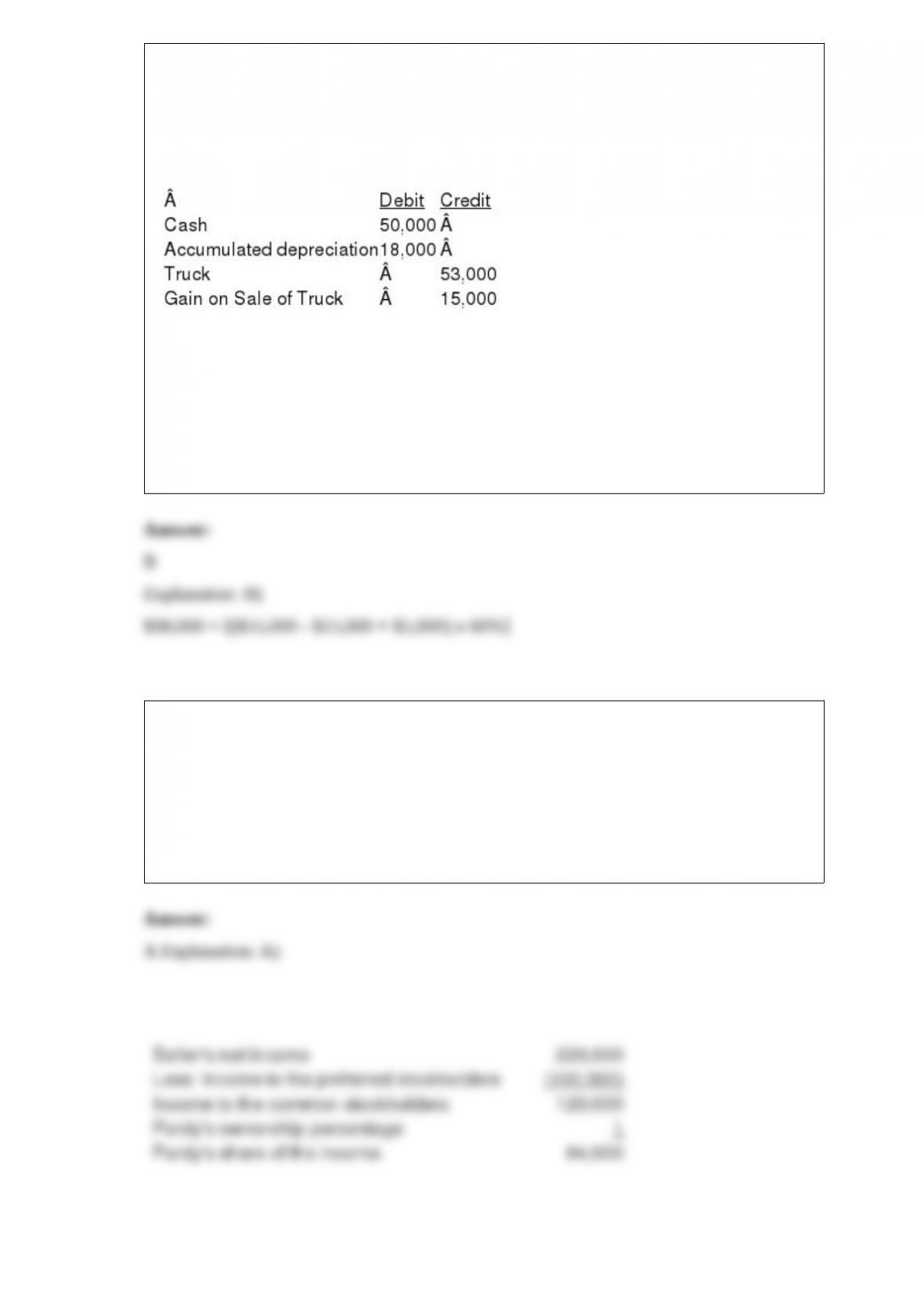
companies. On January 1, 2014, Shrimp recorded the following journal entry:
Pacet holds 60% of Shrimp. Shrimp reported net income of $55,000 in 2014 and Pacet’s
separate net income (excludes interest in Shrimp) for 2014 was $98,000.
Controlling interest share in consolidated net income for 2014 was
A) $121,000.
B) $125,000.
C) $131,000.
D) $143,000.
Assume Salter’s net income for 2014 is $220,000. No dividends are declared or paid in
2014. What is the change in Pardy’s Investment in Salter for the year ending December
31, 2014?
A) $ 84,000
B) $119,000
C) $154,000
D) $189,000
In reference to the FASB disclosure requirements about a business combination in the
period in which the combination occurs, which of the following is correct?
A) Firms are not required to disclose the name of the acquired company.
B) Firms are not required to disclose the business purpose for a combination.
C) Firms are required to disclose the nature, terms and fair value of consideration
transferred in a business combination.
D) All of the above are correct.
For internal decision-making purposes, Falcon Corporation identifies its industry
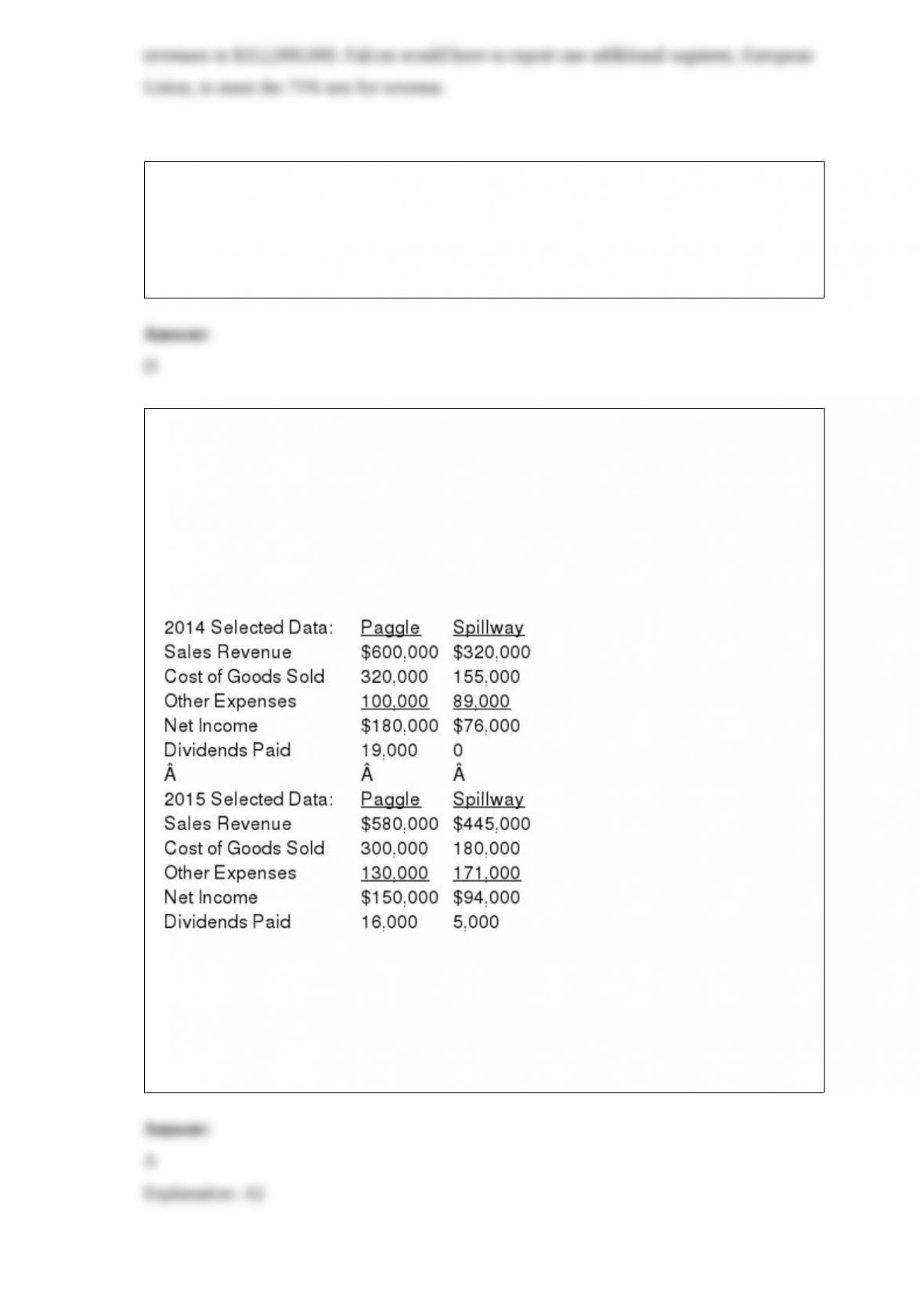
segments by geographical area. For 2014, the total revenues of each segment are
provided below. There are no intersegment revenues.
Required:
1. Which operating segments will be considered reporting segments based on the
revenue test?
2. What is the test value for determining whether a sufficient number of segments are
reported?
3. What will be the minimum number of segments that must be reported?
Under the current GAAP, Goodwill arising from a business combination is
A) charged to Retained Earnings after the acquisition is completed.
B) amortized over 40 years or its useful life, whichever is longer.
C) amortized over 40 years or its useful life, whichever is shorter.
D) never amortized.
Paggle Corporation owns 80% of Spillway Inc.’s common stock that was purchased at
its underlying book value. At the time of purchase, the book value and fair value of
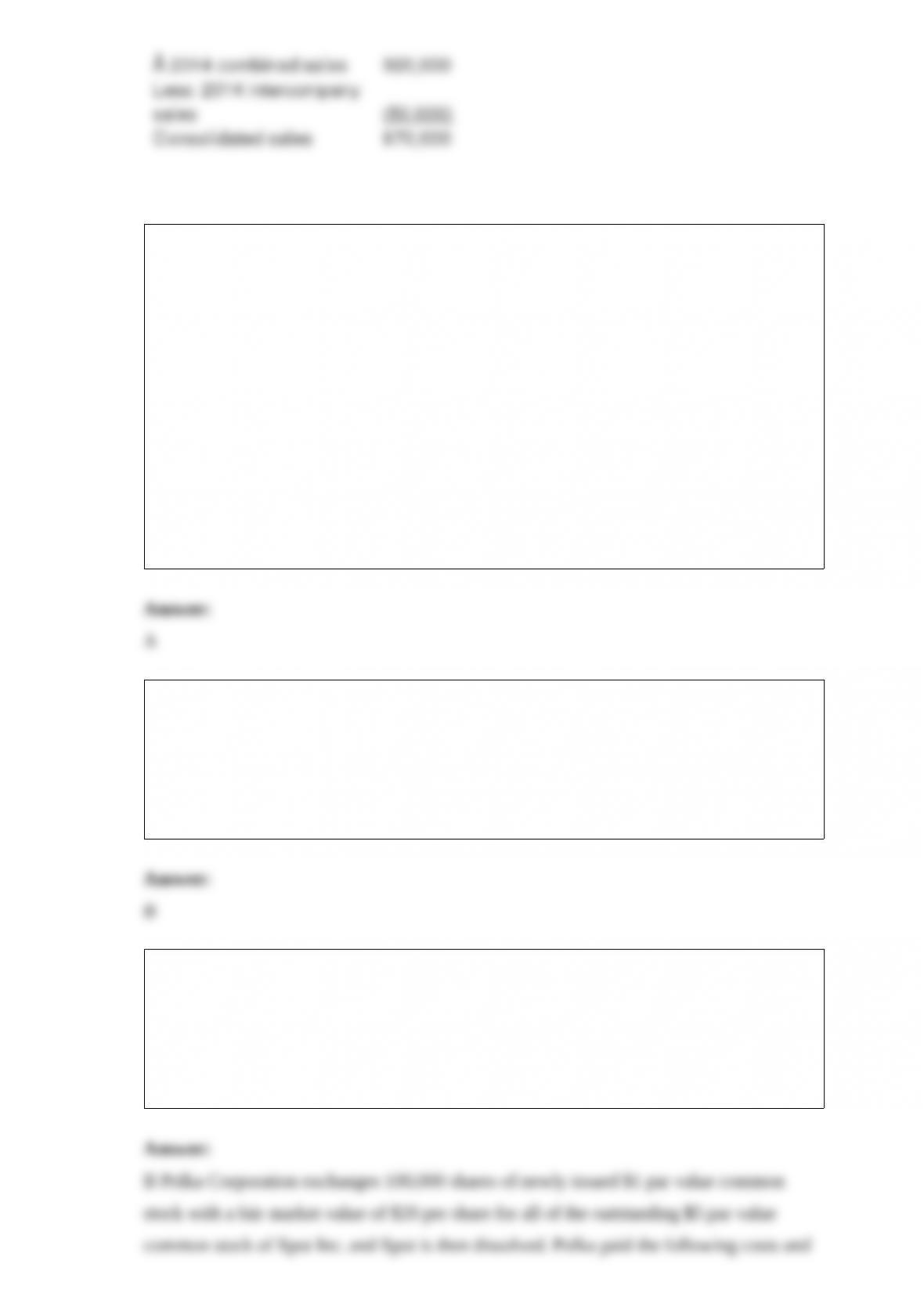
Spillway’s net assets were equal. The two companies report the following information
for 2014 and 2015.
During 2014, one company sold inventory to the other company for $50,000 which cost
the transferor $40,000. As of the end of 2014, 30% of the inventory was unsold. In
2015, the remaining inventory was resold outside the consolidated entity.
If the sale referred to above was a downstream sale, the total sales revenue reported in
the consolidated income statement for 2014 would be
A) $870,000.
B) $880,000.
C) $920,000.
D) $970,000.
Under the provisions of FASB Statement No. 141R, in a business combination, when
the fair value of identifiable net assets acquired exceeds the investment cost, which of
the following statements is correct?
A) A gain from a bargain purchase is recognized for the amount that the fair value of
the identifiable net assets acquired exceeds the acquisition price.
B) The difference is allocated first to reduce proportionately (according to market
value) non-current assets, then to non-monetary current assets, and any negative
remainder is classified as a deferred credit.
C) The difference is allocated first to reduce proportionately (according to market
value) non-current assets, and any negative remainder is classified as an extraordinary
gain.
D) The difference is allocated first to reduce proportionately (according to market
value) non-current, depreciable assets to zero, and any negative remainder is classified
as a deferred credit.
Historically, much of the controversy concerning accounting requirements for business
combinations involved the ________ method.
A) purchase
B) pooling of interests
C) equity
D) acquisition
With respect to goodwill, an impairment
A) will be amortized over the remaining useful life.
B) is a two-step process which first compares book value to fair value at the business
reporting unit level.
C) is a one-step process considering the entire firm.
D) occurs when asset values are adjusted to fair value in a purchase.
If SOS sold the additional shares directly to Great, Great’s Investment in SOS account
after the sale would be
A) $1,350,000.
B) $1,395,000.
C) $1,425,000.
D) $1,500,000.
When considering an acquisition, which of the following is NOT a method by which
one company may gain control of another company?
A) Purchase of the majority of outstanding voting stock of the acquired company.
B) Purchase of all assets and liabilities of another company.
C) Purchase all the outstanding voting stock of the acquired company.
D) All of the above methods result in a company gaining control over another company.
Anthony Company declared and paid $20,000 of dividends during 2014. The schedule
of dividends follows:
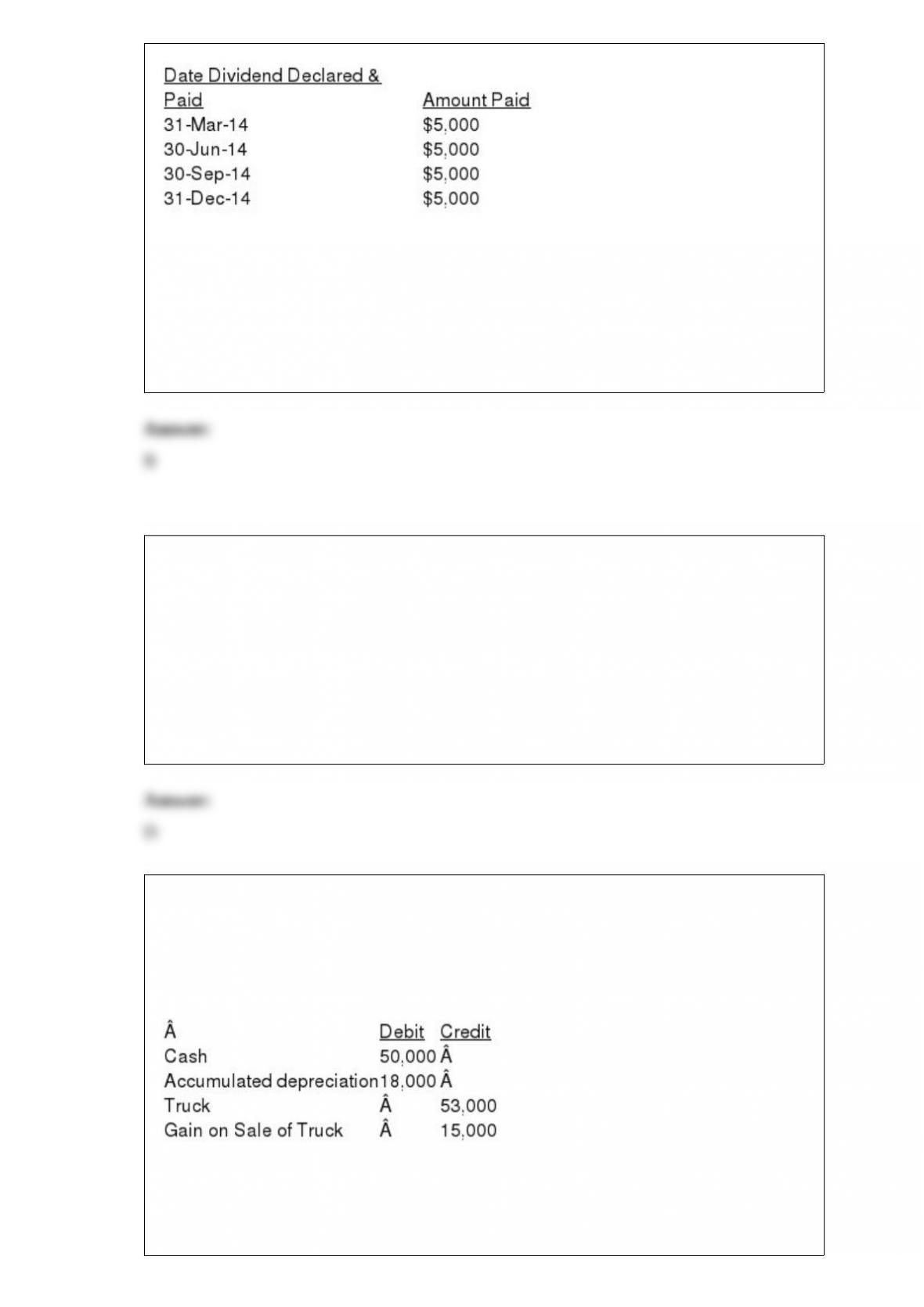
Anthony Company was acquired on June 1, 2014 by Google Company. Google
acquired 100 percent of Anthony Company. Both companies have a December 31 fiscal
year end. What is the amount of preacquisition dividends in 2014?
A) 0
B) $5,000
C) $10,000
D) $15,000
The town of Mayberry receives a gift of $500,000 in bonds. The contributor instructs
that the principal should remain intact, but the annual interest income of $50,000 can be
used for the maintenance of the zoo animals.
Governments must record a liability for uncollected taxes instead of revenues for
uncollected taxes if the taxes are going to be collected
A) 30 days after the fiscal year end.
B) 45 days after the fiscal year end.
C) 60 days after the fiscal year end.
D) 75 days after the fiscal year end.
On January 1, 2012, Shrimp Corporation purchased a delivery truck with an expected
useful life of five years, and a salvage value of $8,000. On January 1, 2014, Shrimp
sold the truck to Pacet Corporation. Pacet assumed the same salvage value and
remaining life of three years used by Shrimp. Straight-line depreciation is used by both
companies. On January 1, 2014, Shrimp recorded the following journal entry:
Pacet holds 60% of Shrimp. Shrimp reported net income of $55,000 in 2014 and Pacet’s
separate net income (excludes interest in Shrimp) for 2014 was $98,000.
The noncontrolling interest share for 2014 was
A) $18,000.
B) $22,000.
C) $23,000.
D) $27,000.
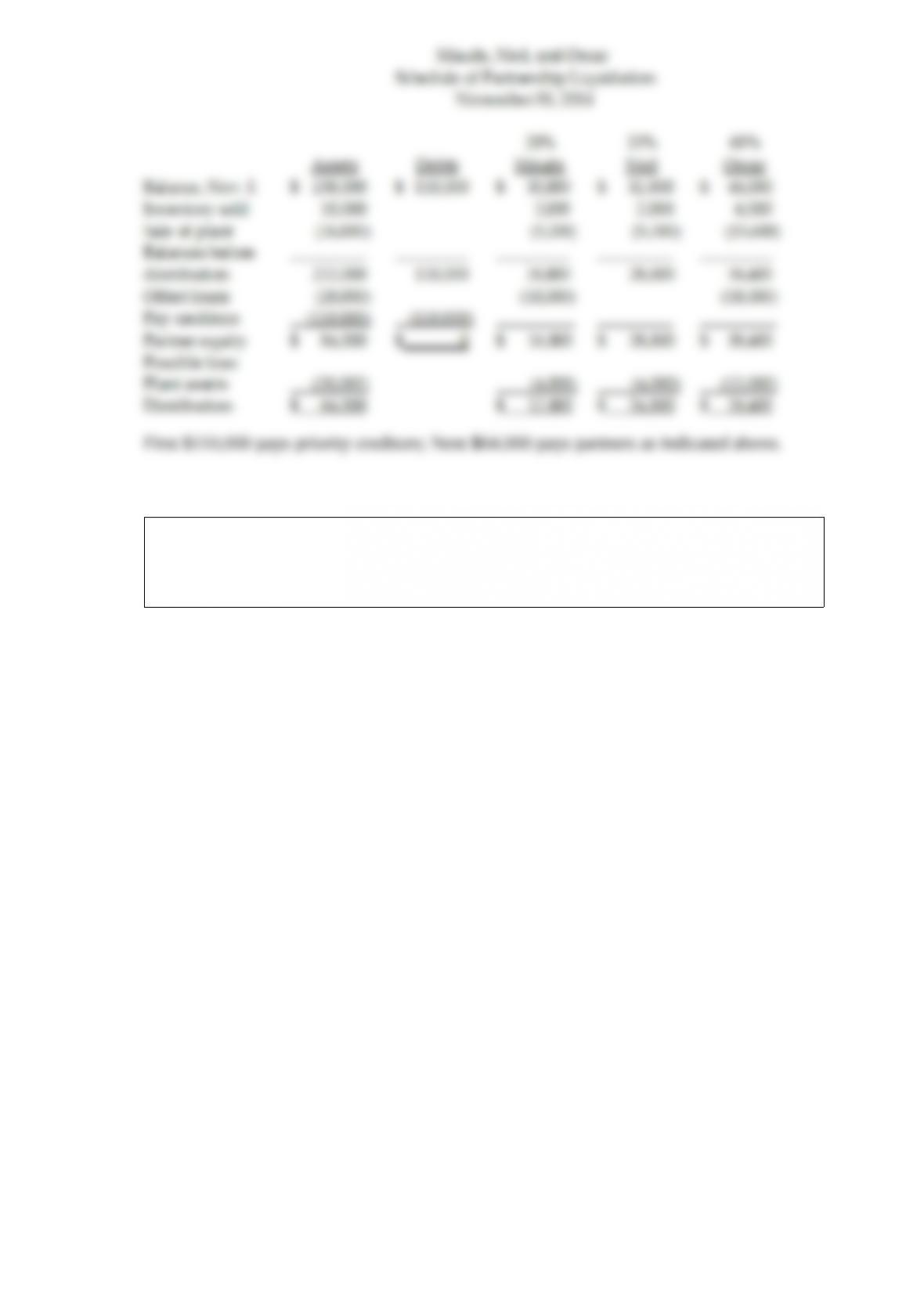
The balance sheet of the Maude, Ned, and Oscar partnership on November 1, 2014
(before commencement of partnership liquidation) was as follows:
Liquidation events in November were as follows:
– All the inventory was sold for $10,000 above book value;
– Plant assets with a book value of $60,000 were sold for $34,000.
Required:
Determine how the available cash on November 30, 2014 should be distributed.
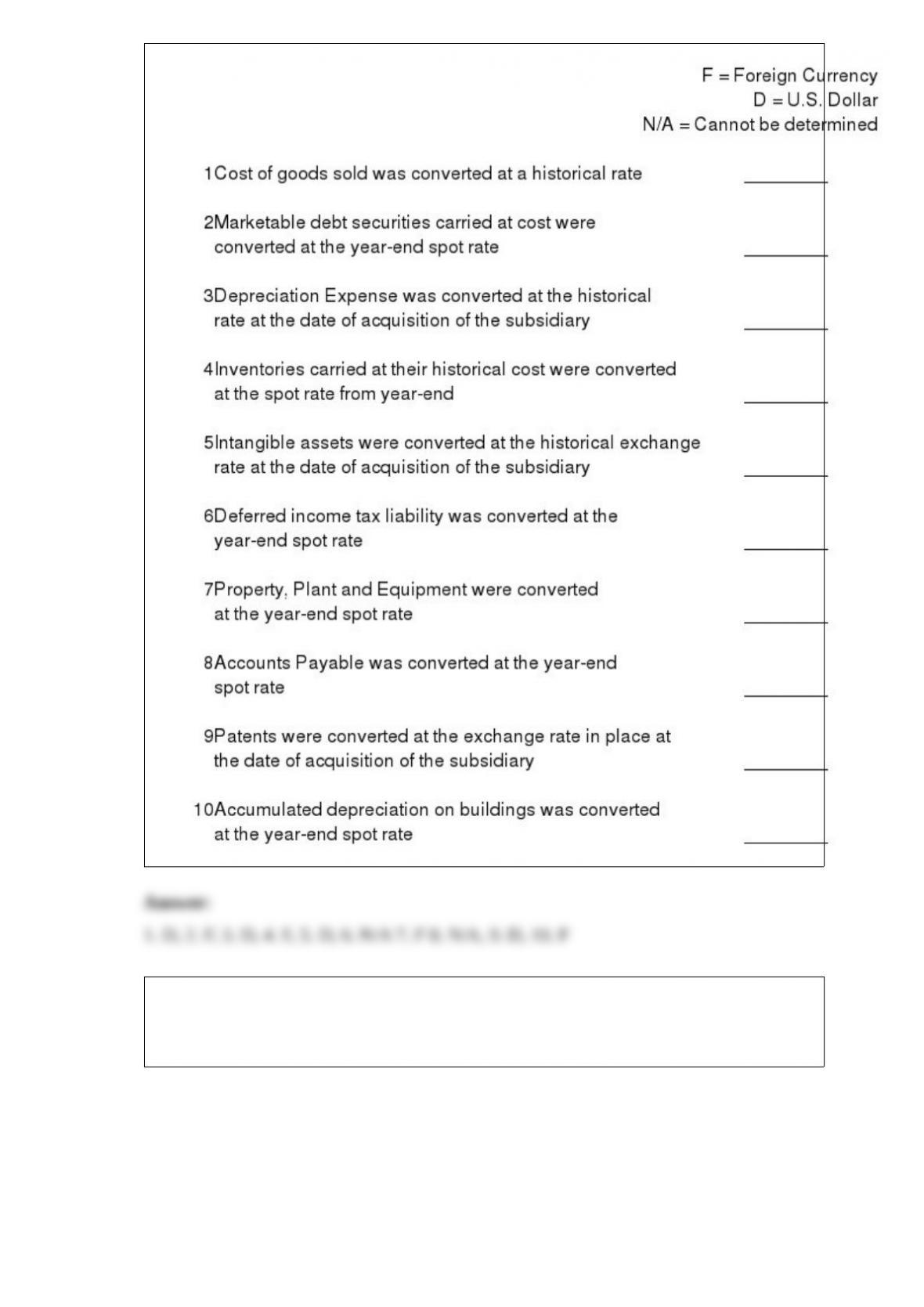
Each of the following accounts has been converted to U.S. dollars from a foreign
subsidiary’s financial statements. Based on the information given, determine if the U.S.
dollar or a foreign currency is the functional currency of the subsidiary.
Jeale Corporation is preparing its interim financial statements for the third quarter of
calendar 2014. The following information was provided for the preparation of the
statements:
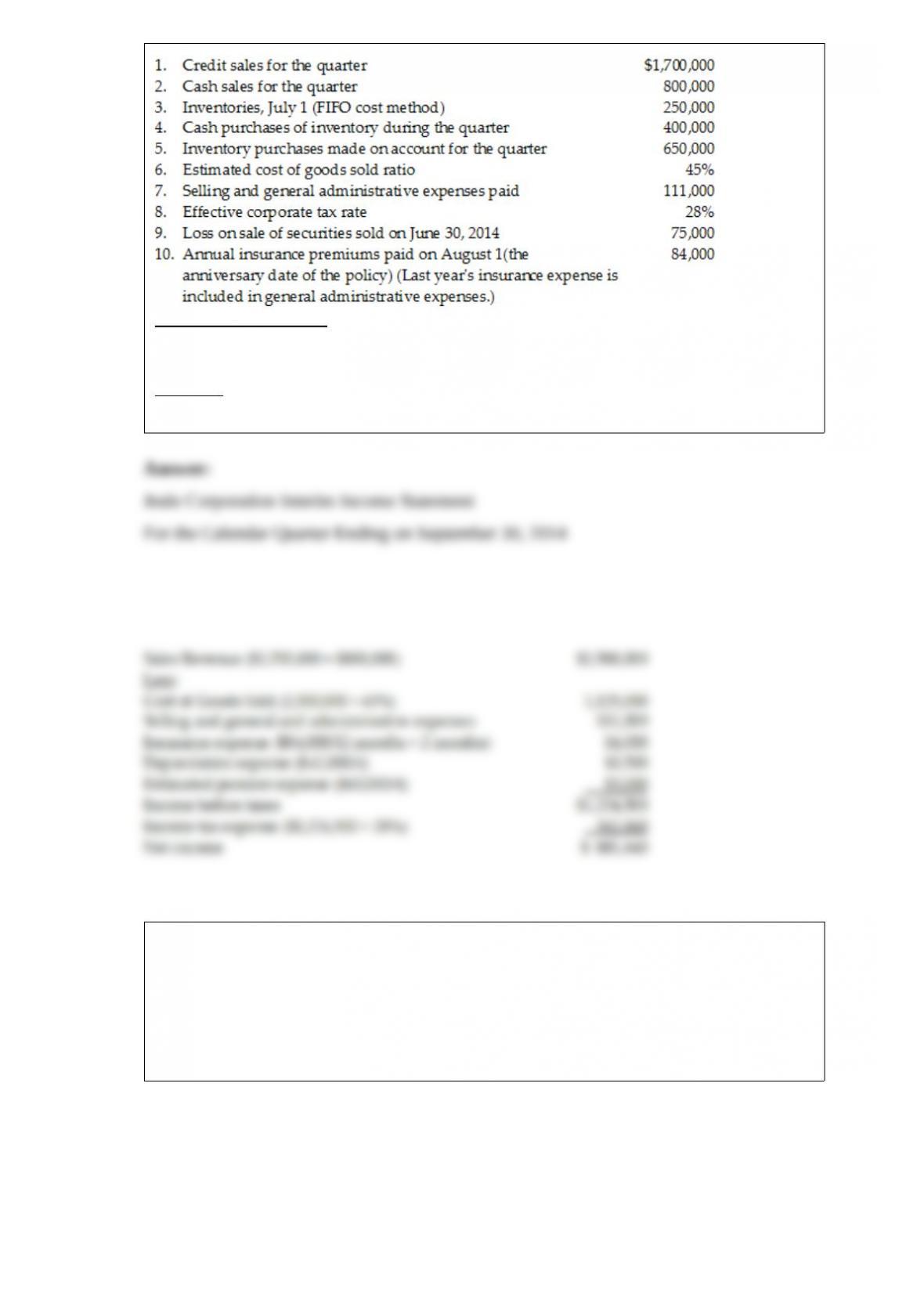
Additional information:
At the end of the year, Jeale accrues its annual pension and depreciation expenses which
amount to $60,000 and $42,000, respectively.
Required:
Prepare Jeale’s interim income statement for the third quarter of calendar year 2014.
The partners of Nelatyna Manufacturing have decided to dissolve their partnership as of
the end of 2013. The partnership is going to liquidate during the first several months of
2014. The four partners of Nell, Ann, Tyler and Nadine, share profits and losses 35%,
30%, 25%, and 10%, respectively. The partnership trial balance at December 31, 2013
is as follows:
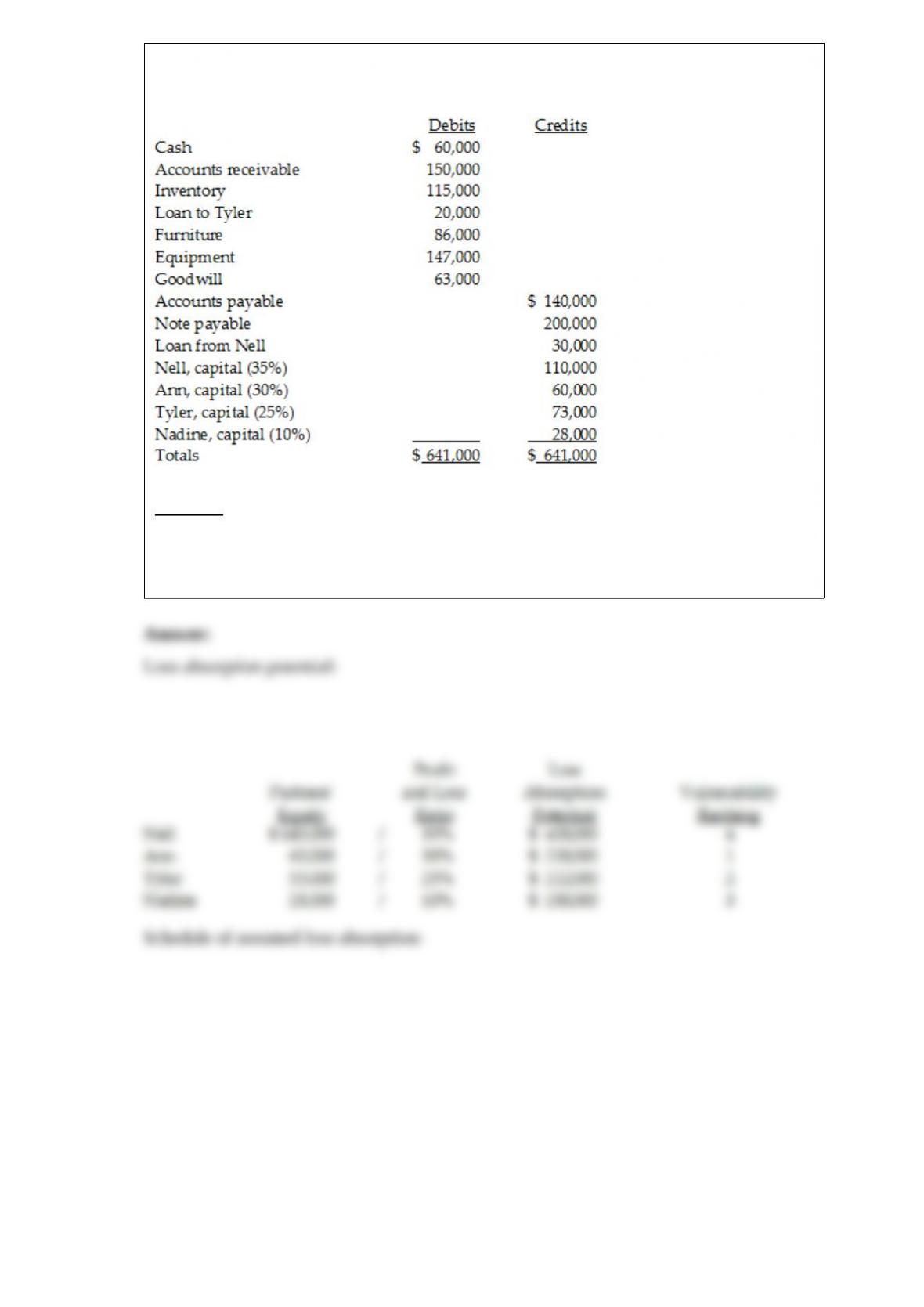
Required:
Prepare a cash distribution plan for January 1, 2014, showing how cash installments
will be distributed among the partners as it becomes available. Prepare vulnerability
rankings for the partners and a schedule of assumed loss absorption.
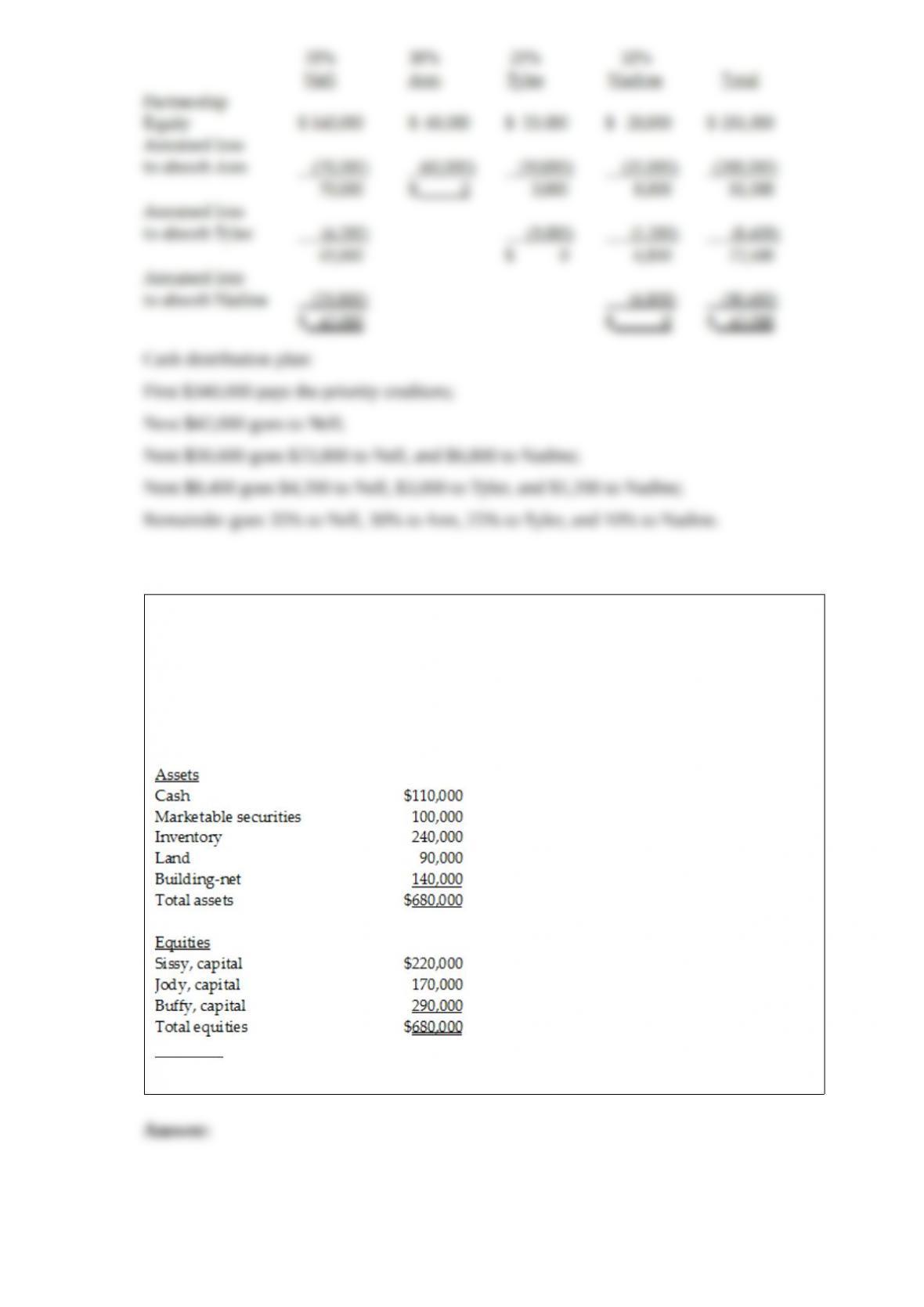
A summary balance sheet for the Sissy, Jody, and Buffy partnership on December 31,
2014 is shown below. Partners Sissy, Jody, and Buffy allocate profit and loss in their
respective ratios of 3:4:6. The partnership agreed to pay Buffy $360,000 for her
partnership interest upon her retirement from the partnership on January 1, 2015. Any
payments exceeding Buffy’s capital balance are treated as a bonus from partners Sissy
and Jody.
Required:
Prepare the journal entry to reflect Buffy’s retirement.