Administrative functions are not included in the value chain because they are implicitly
included in every business function.
Answer:
The predetermined overhead rate is computed by dividing the estimated activity of the
allocation base into the estimated manufacturing overhead costs.
Answer:
The equivalent unit concept refers to the actual amount of work during the period
stated in terms of the work required to complete an equal number of whole units.
Answer:
At the end of the accounting period, manufacturing overhead costs are applied to
uncompleted jobs using the same predetermined overhead rate that is used to apply
manufacturing overhead costs to completed jobs.
Answer:
The degree of completion associated with prior department costs is always 100%.
Answer:
A problem with ratio-based measures is that managers can make decisions that improve
divisional income but lower total organizational income.
Answer:
Variances are the difference between actual results and budgeted results.
Answer:
Job costing requires more detailed recordkeeping than process costing.
Answer:
Two important characteristics to consider when deciding how many variances to
review are how large the variance is and the extent to which the variance can be
managed.
Answer:
In general, decreasing (or eliminating) the resources committed to nonvalue-added
activities will decrease customer response time.
Answer:
Target costs equal the difference between the target selling price and the desired profit
margin.
Answer:
A business model is a description of how different levels and employees in the
organization must perform for the organization to achieve its goals and objectives.
Answer:
The selection of an appropriate cost allocation base is more important for single-stage
cost allocation systems than for two-stage cost allocation systems.
Answer:
The engineering method of determining cost behavior is particularly useful for totally
new activities or products.
Answer:
Actual costing does not use a predetermined overhead rate to apply manufacturing
overhead costs to jobs completed during the period.
Answer:
A flexible budget adjusts the static budget to reflect the actual activity level achieved
during the period.
Answer:
With the reciprocal method, the total service department costs less the direct costs of
the service department equals the cost allocated to the service department.
Answer:
The JK Manufacturing Company sells two products, J and K. J has a higher
contribution margin ratio than K. If the product mix shifts towards K, the company’s
break-even point in total units (i.e., J plus K) will increase.
Answer:
In general, cost behavior results are likely to differ between the engineering method
and the account analysis method.
Answer:
The flexible and master budget amounts are the same for fixed marketing and
administrative costs.
Answer:
An organization’s operating leverage is high when it has a low proportion of variable
costs in its total costs.
Answer:
Individual managers’ beliefs and expectations are incorporated into the budgeting
process using grass roots budgeting procedures.
Answer:
The sales budget drives the rest of the budgeting process for both manufacturers and
merchandisers.
Answer:
It is possible for units in the beginning Work-in-Process Inventory to also be part of the
ending Work-in-Process Inventory.
Answer:
The sales price variance is the actual selling price per unit times the difference between
budgeted number of units and the actual number of units sold.
Answer:
Theoretical capacity is the long-run expected volume based on reasonably attainable
working conditions.
Answer:
Internal failure costs include materials wasted in the production process and correcting
products before they are sold.
Answer:
The primary objective of benchmarking is to evaluate performance of an activity,
operation, or organization relative to the performance by other companies.
Answer:
A balanced scorecard is basically a balance sheet prepared using nonfinancial
measures.
Answer:
The direct labor yield variance is unfavorable when the total hours worked during a
period are less than the total standard hours allowed for the actual number of units
produced.
Answer:
Using net book values instead of gross book values to compute return on investment
(ROI) might encourage an investment center manager to delay replacing inefficient
assets until they are fully depreciated.
Answer:
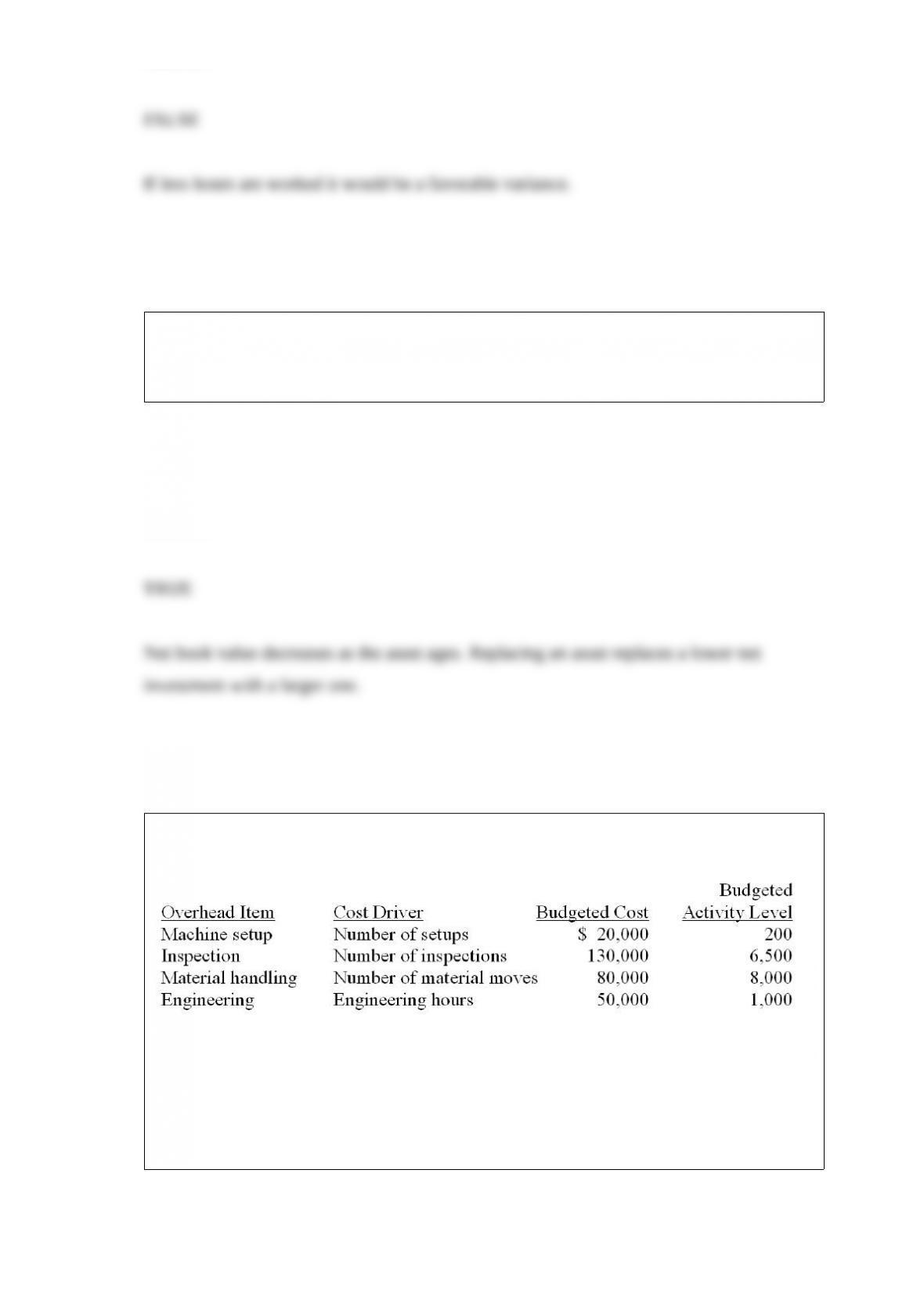
A company has identified the following overhead costs and cost drivers for the coming
year: (CIA adapted)
Budgeted direct labor cost was $100,000 and budgeted direct material cost was
$280,000. The following information was collected on three jobs that were completed
during the year:
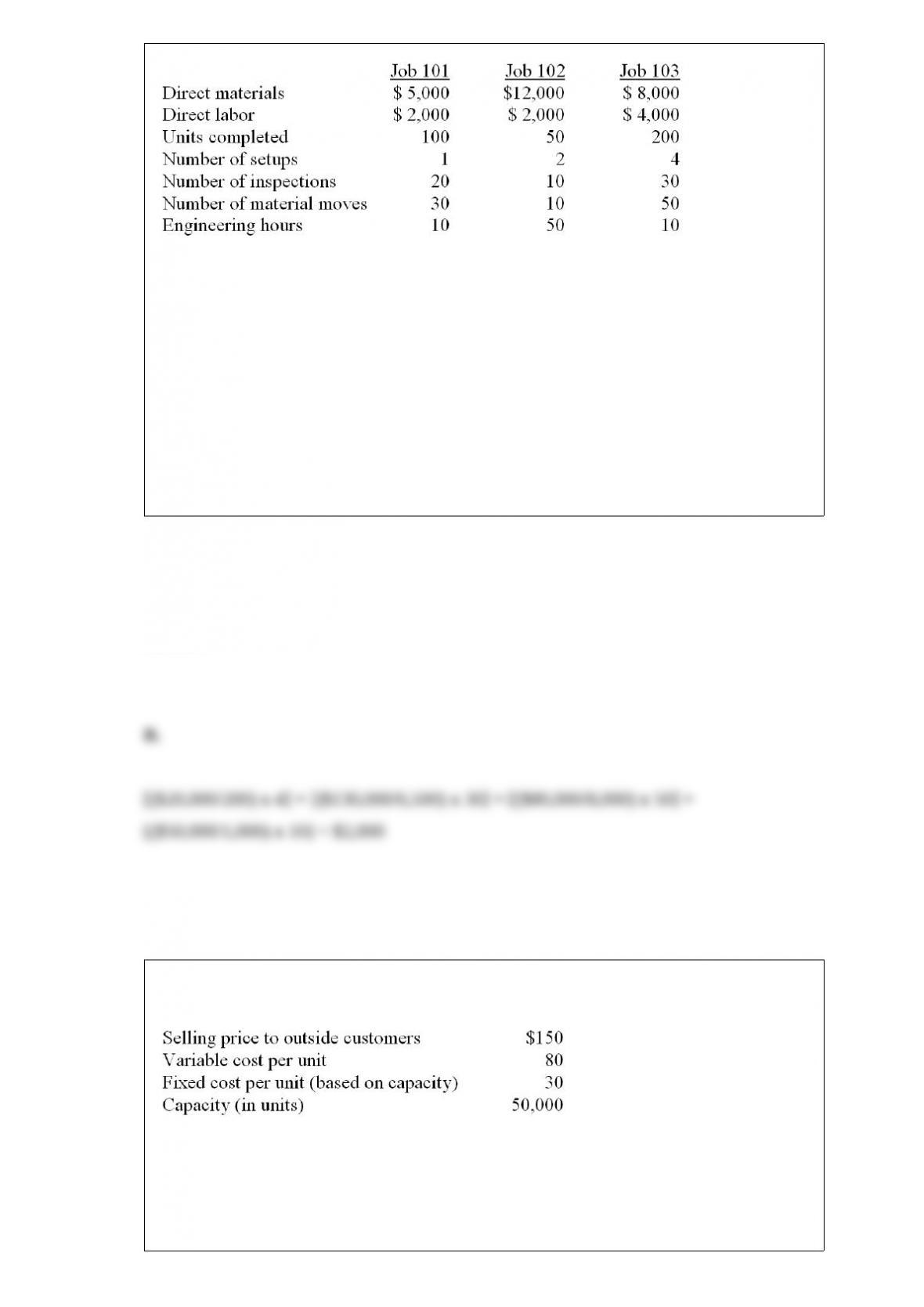
If the company uses activity-based costing (ABC), how much overhead cost should be
assigned to Job 103?
A. $1,300
B. $2,000
C. $5,000
D. $5,600
Answer:
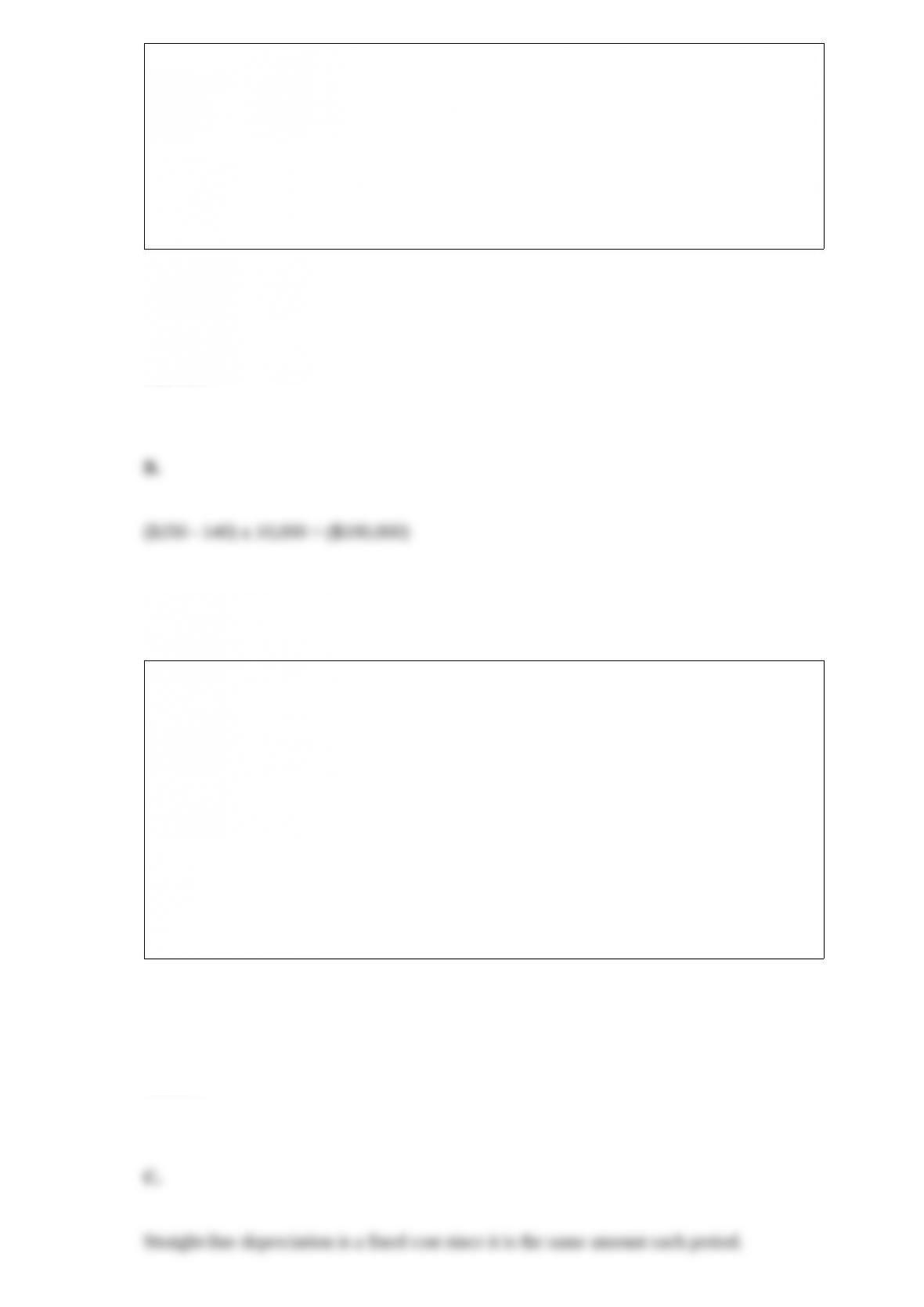
Given the following data for Division L:
Division N would like to purchase 10,000 units from Division L at a price of $125 per
unit. Division L has no excess capacity to handle Division N’s requirements. Division N
currently purchases from an outside supplier at a price of $140. If Division L accepts a
$125 price internally, the company, as a whole, will be better or worse off by
A. $600,000
B. ($100,000)
C. $115,000
D. $250,000
Answer:
In a decision analysis situation, which one of the following costs is not likely to contain
a variable cost component? (CMA adapted)
A. Labor
B. Overhead
C. Straight-line Depreciation
D. Selling
E. Material
Answer:
A master budget
A. drops the current month or quarter and adds a future month or quarter as the current
month or quarter is completed.
B. presents a statement of expectations for a period of time but does not present a firm
commitment.
C. presents the plan for only one level of activity and does not adjust to changes in the
level of activity.
D. presents the plan for a range of activity so that the plan can be adjusted for changes
in activity levels.
E. divides the activities of individual responsibility centers into a series of packages
which are ranked ordinally.
Answer:
The purpose of the flexible budget is to
A. allow management some latitude in meeting goals.
B. eliminate cyclical fluctuations in production reports by ignoring variable costs.
C. compare actual and budgeted results at virtually any level of production.
D. reduce the total time in preparing the annual budget.
Answer:
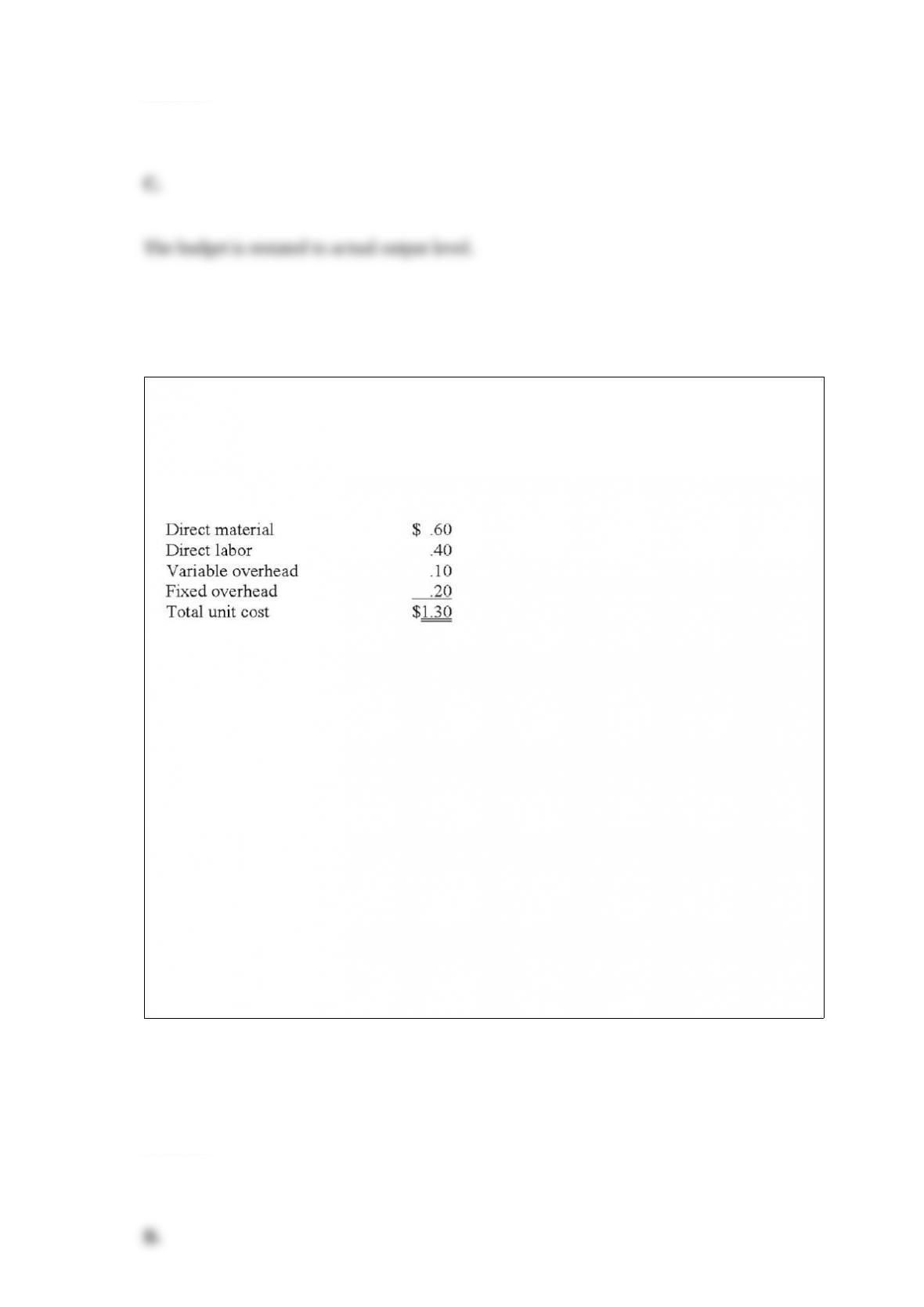
Cohasset Company currently manufactures all component parts used in the
manufacture of various hand tools. Hurley Division produces a steel handle used in
three different tools. The budget for these handles is 120,000 units with the following
unit cost.
Ironwood Division purchases 20,000 handles from Hurley Division and completes the
hand tools. An outside supplier, R & M Steel, has offered to supply 20,000 units of the
handle to Ironwood Division for $1.25 per unit. Hurley currently has idle capacity that
cannot be used.
If Cohasset would like to develop a range of transfer prices, what would be the
minimum transfer price that Hurley would be willing to accept?
A. $1.00
B. $1.10
C. $1.25
D. $1.30
Answer:
Excess direct labor wages resulting from overtime premium will be disclosed in which
type of variance? (CPA adapted)
A. Yield.
B. Quantity.
C. Labor efficiency.
D. Labor rate.
Answer:
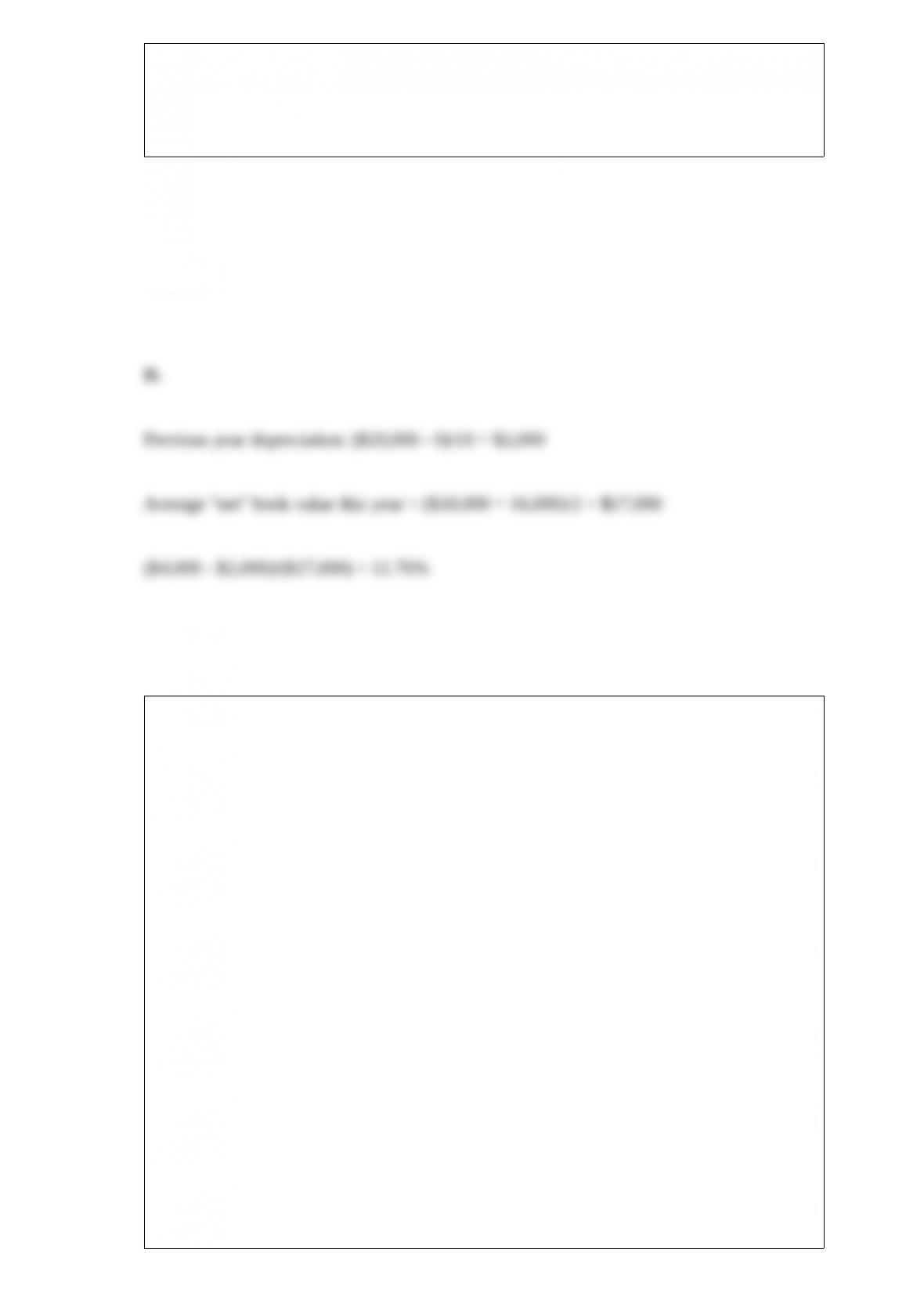
The following information was presented by Charlie Manufacturing Company for an
asset purchased at the beginning of the previous year.
What is the return on investment (ROI) assuming Charlie (a) uses the straight-line
method for depreciation and (b) average net book values to compute ROI?
A. 21.1%
B. 20.0%
C. 22.2%
D. 11.76%
Answer:
Cascade Cliffs, Inc., operates two divisions: (1) a management division that owns and
manages bulk carriers on the Great Lakes and (2) a repair division that operates a dry
dock in Cheboygan, Michigan. The repair division works on company ships, as well as
other large-hull ships.
The repair division has an estimated variable cost of $37 per labor-hour. The repair
division has a backlog of work for outside ships. They charge $70.00 per hour for labor,
which is standard for this type of work. The management division complained that it
could hire its own repair workers for $45.00 per hour, including leasing an adequate
work area.
If the repair division had idle capacity, what is the minimum transfer price that the
repair division should obtain?
A. $33.00
B. $37.00
C. $45.00
D. $70.00
E. $82.00
Answer:
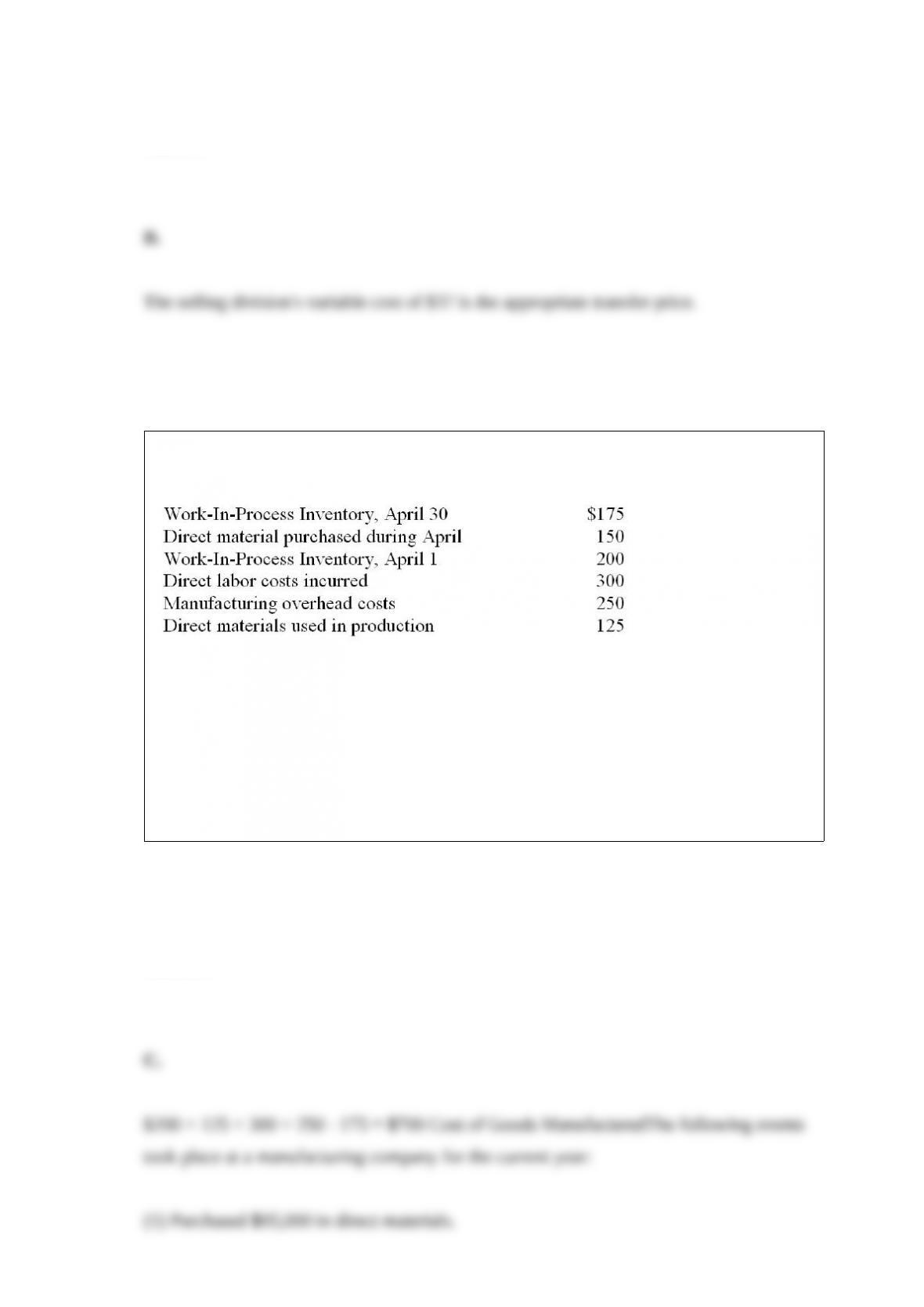
Compute the Work-in-Process transferred to the finished goods warehouse on April 30
using the following information:
A. $650
B. $675
C. $700
D. $750
Answer:
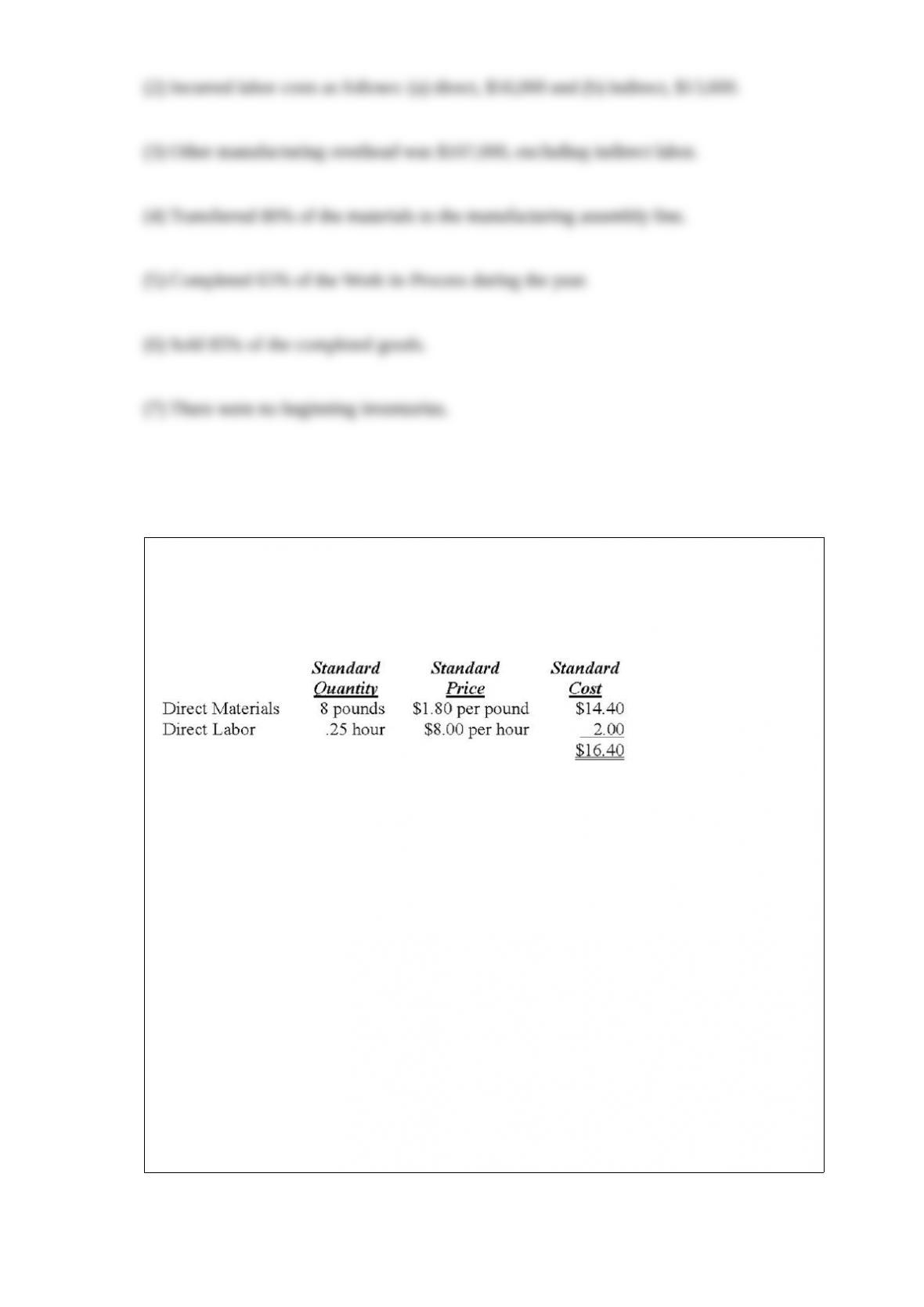
Arrow Industries employs a standard cost system in which direct materials inventory is
carried at standard cost. Arrow has established the following standards for the prime
costs of one unit of product.
During November, Arrow purchased 160,000 pounds of direct materials at a total cost
of $304,000. The total factory wages for November were $42,000, 90% of which were
for direct labor. Arrow manufactured 19,000 units of product during November using
142,500 pounds of direct materials and 5,000 direct labor hours.
What is the direct labor price (rate) variance for November?
A. $1,800
B. $1,900
C. $2,000
D. $2,090
E. $2,200
Answer:
Danner Corporation applies overhead based upon machine-hours. Budgeted factory
overhead was $375,000 and budgeted machine-hours were 12,500. Actual factory
overhead was $387,920 and actual machine-hours were 13,150.
Required:
a) Compute the overhead application rate.
b) Compute the amount of overhead applied to production.
c) Determine the amount of over- or underapplied overhead.
Answer:
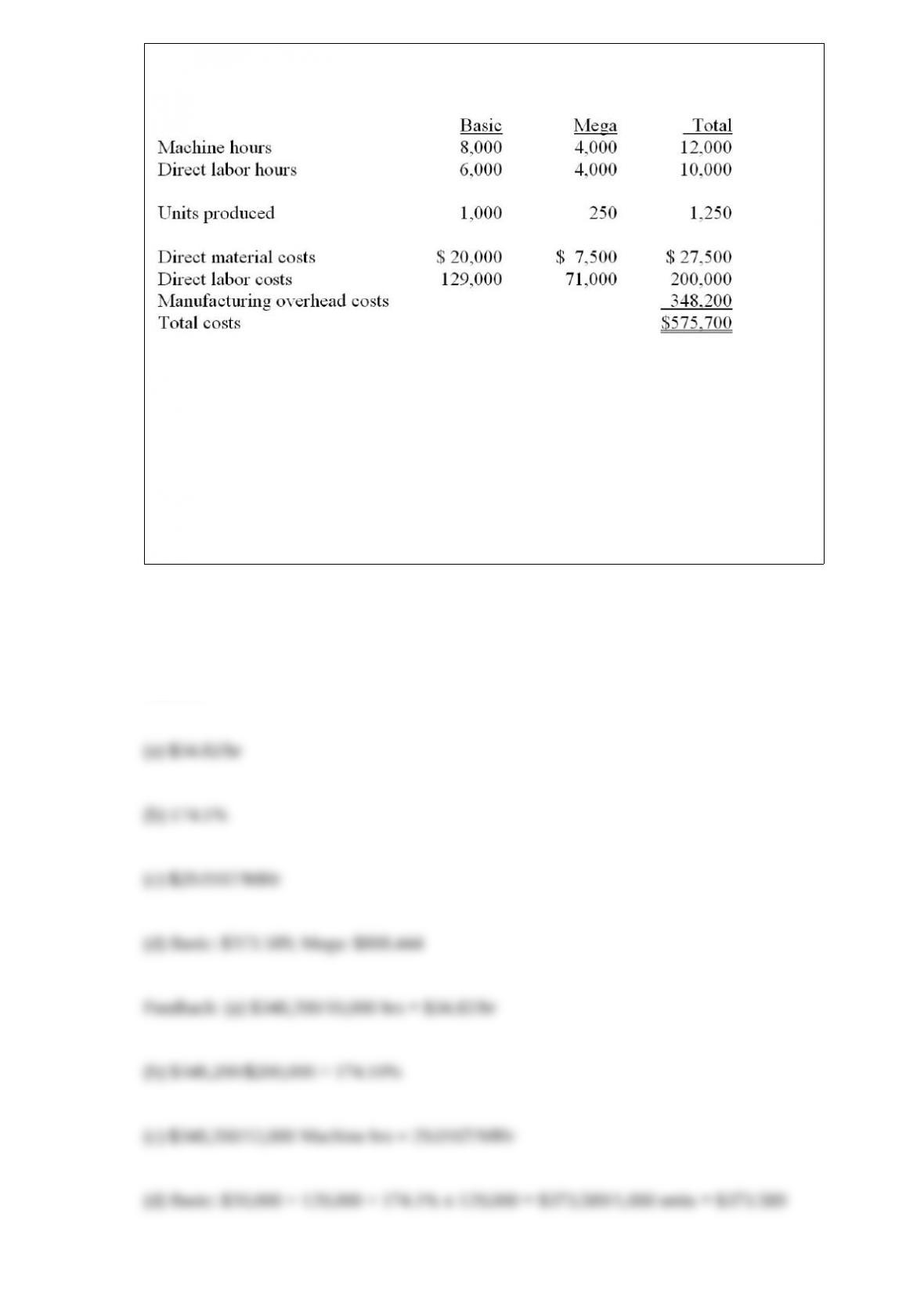
Loin Cabinetry produces two models of home shelving, the Basic and the Mega. Data
on operations and costs for November are:
Required: Compute the predetermined overhead rate, assuming Loin Cabinetry uses:
(a) Direct labor hours to allocate overhead costs.
(b) Direct labor costs to allocate overhead costs.
(c) Machine hours to allocate overhead costs.
(d) Compute the unit cost for each model using direct labor costs to allocate overhead.
Answer:
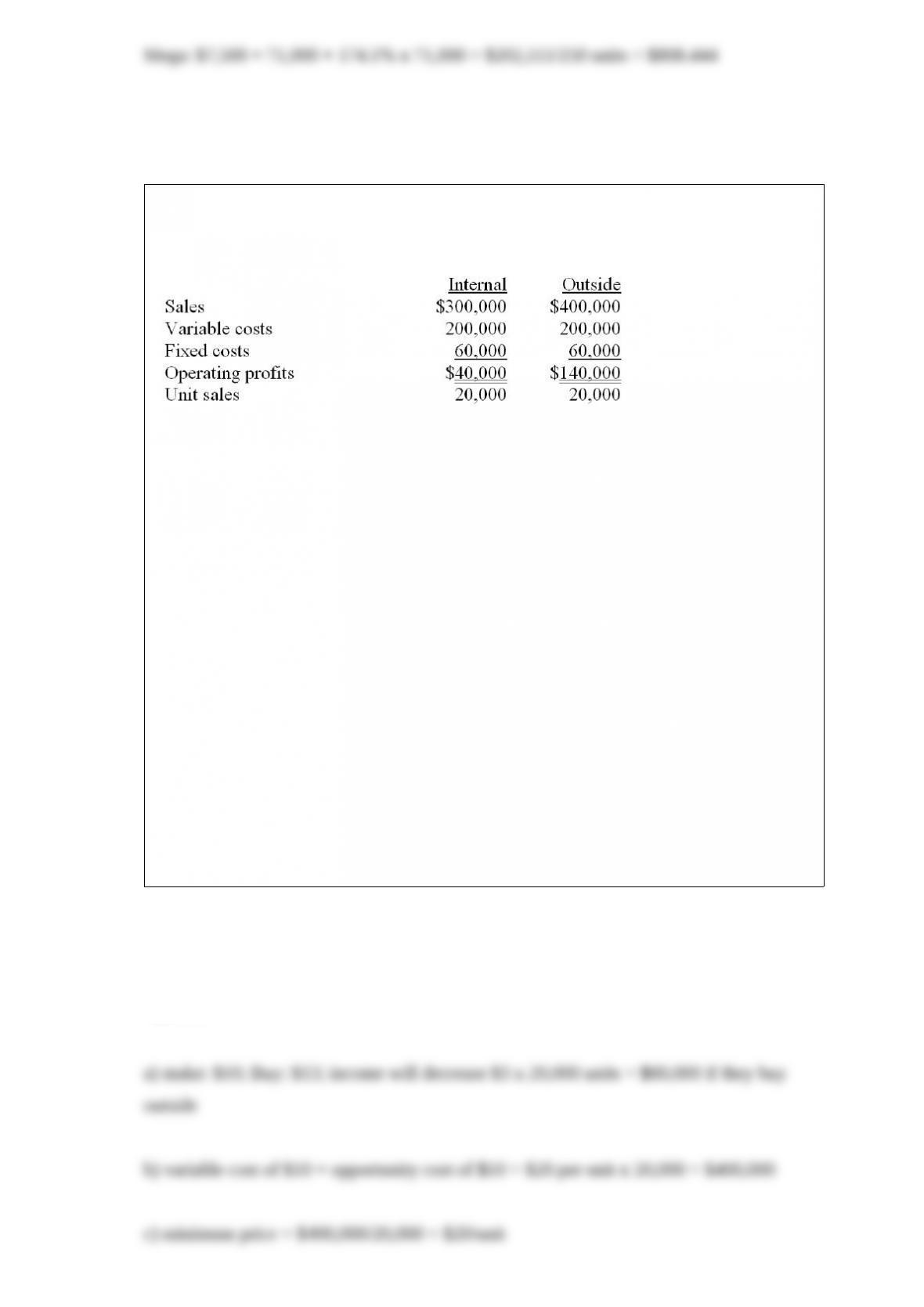
The Sutton Division of Haugen Company produces wheels for off-road sport vehicles.
One-half of Sutton’s output is sold to the Wilson Division of Haugen; the remainder is
sold to outside customers. Sutton’s estimated operating profit for the year is:
Wilson Division has an opportunity to purchase 20,000 wheels of the same quality from
an outside supplier on a continuing basis.
Required:
a) The Sutton Division cannot sell any additional products to outside customers. Should
the Haugen Company allow Wilson Division to purchase the wheels from the outside
supplier at $13.00 per unit?
b) If the Sutton Division is now operating at full capacity and can sell all its units to
outside customers at the present selling price, what is the differential cost to Haugen of
requiring that the wheels be made internally and sold to Wilson Division?
c) If the Sutton Division is now operating at full capacity and can sell all its units to
outside customers at the present selling price, what is the minimum selling price that
Sutton should accept from Wilson Division?
d) The Sutton Division cannot sell any additional products to outside customers. What
is the minimum selling price that Sutton should accept from the Wilson Division?
Answer:
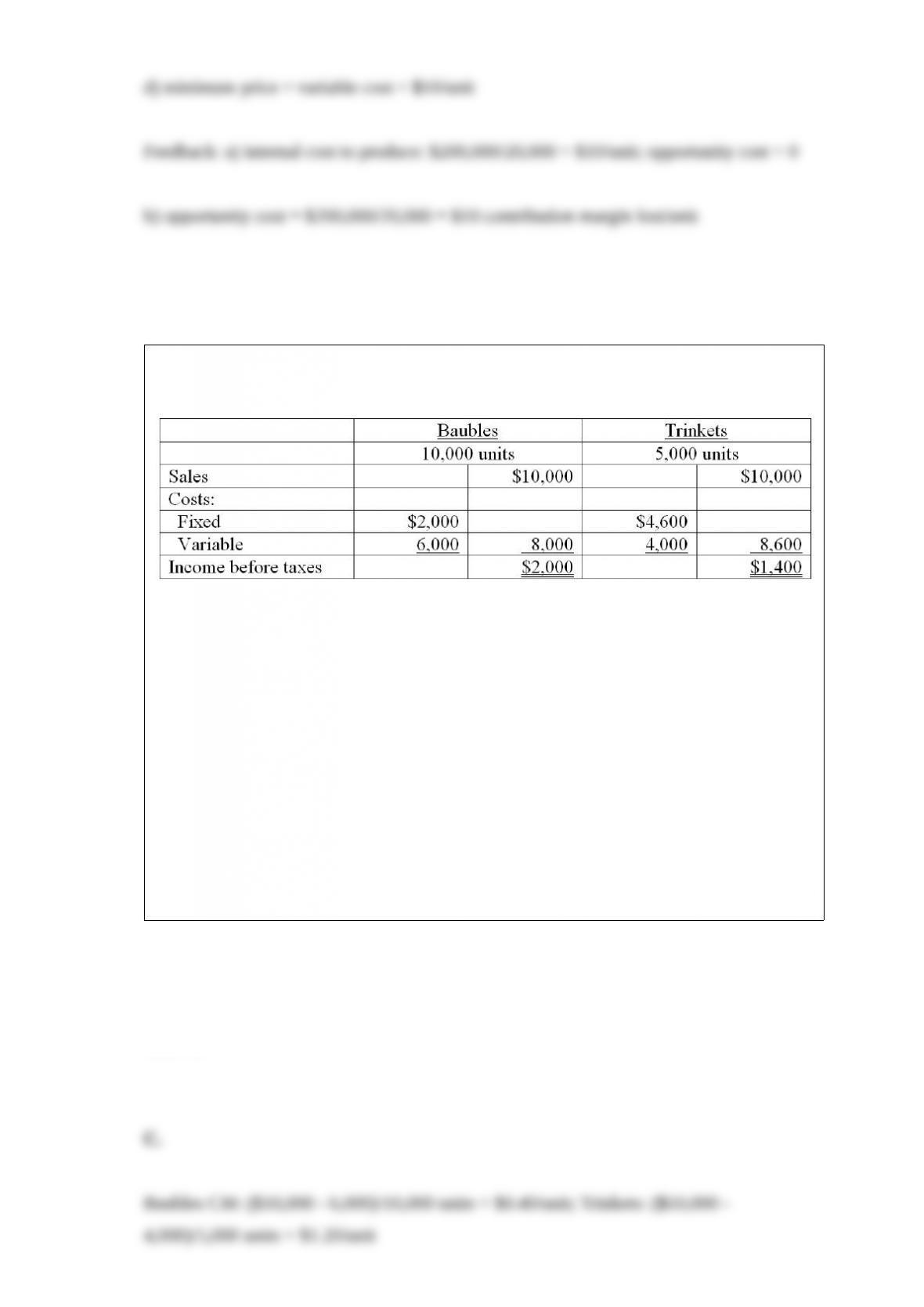
The Dooley Co. manufactures two products, Baubles and Trinkets. The following are
projections for the coming year:
How many Baubles will be sold at the break-even point, assuming that the facilities are
jointly used and the sales mix will remain constant?
A. 9,900
B. 8,800
C. 6,600
D. 5,000
E. 3,300
Answer:
The beginning Finished Goods Inventory plus the cost of goods manufactured equals
A. ending finished goods inventory.
B. cost of goods sold for the period.
C. total work-in-process during the period.
D. total cost of goods manufactured for the period.
E. cost of goods available for sale for the period.
Answer:
Which of the following statements concerning a process cost accounting system is
false?
A. The units in beginning inventory plus the units transferred out during the month
should equal the units in the ending inventory plus the units transferred in during the
month.
B. If material is used evenly throughout a process, the number of equivalent material
units will equal the number of equivalent units for the conversion (processing) costs.
C. Actual costing may be used in a process costing system to assign indirect overhead
costs to departments.
D. The units in beginning inventory plus the units transferred in during the month
should equal the units in the ending inventory plus the units transferred out during the
month.
Answer:
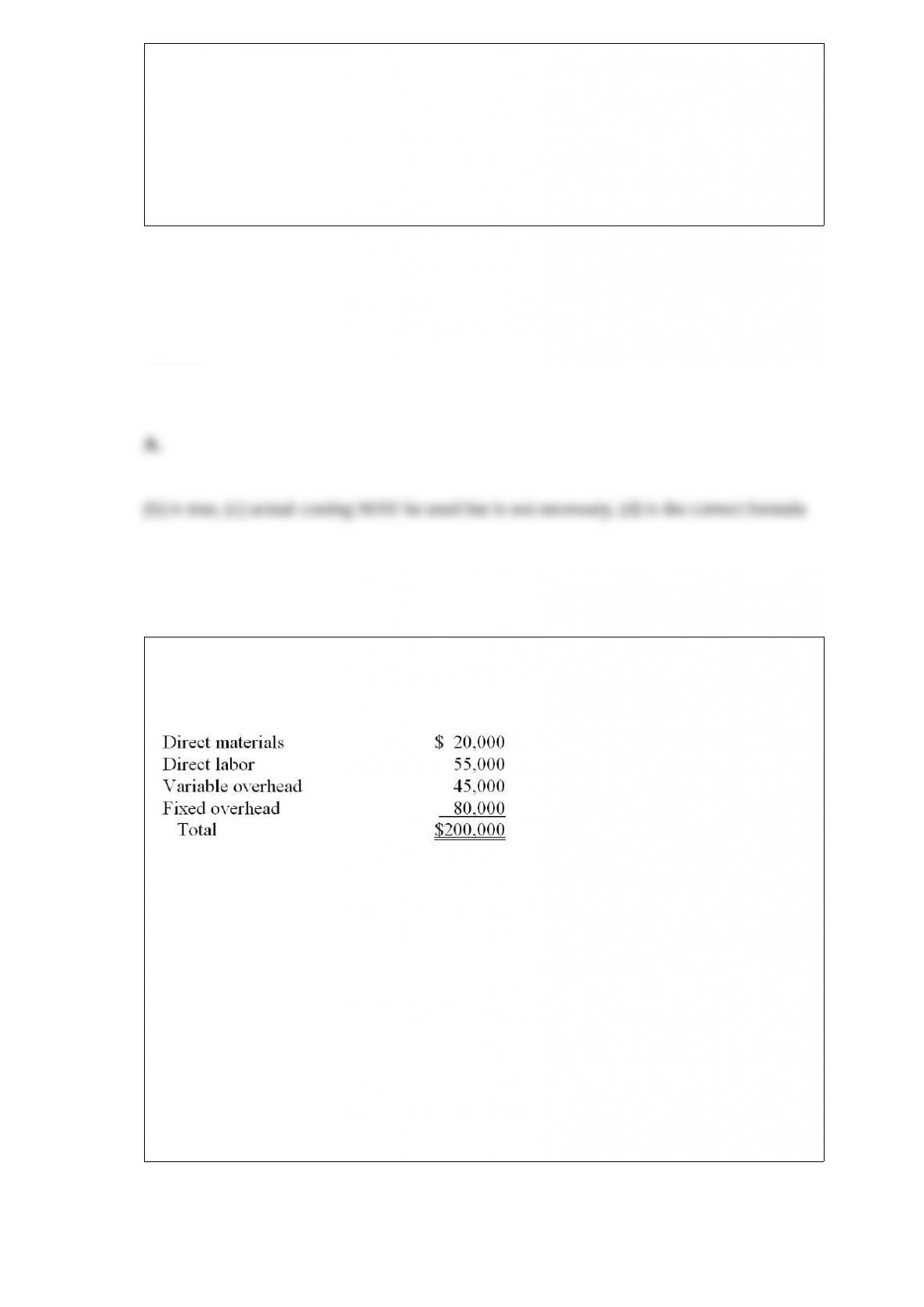
The Bremmer Company produces 5,000 units of item ZQ98 annually at a total cost of
$200,000.
The Daisy Company has offered to supply all 5,000 units of ZQ98 per year for $35 per
unit. If Bremmer accepts the offer, $8 per unit of the fixed overhead would be saved. In
addition, some of Bremmer’s leased facilities could be vacated, reducing lease payments
by $30,000 per year. What are the relevant costs for the “make” alternative?
A. $120,000
B. $175,000
C. $190,000
D. $200,000
Answer:
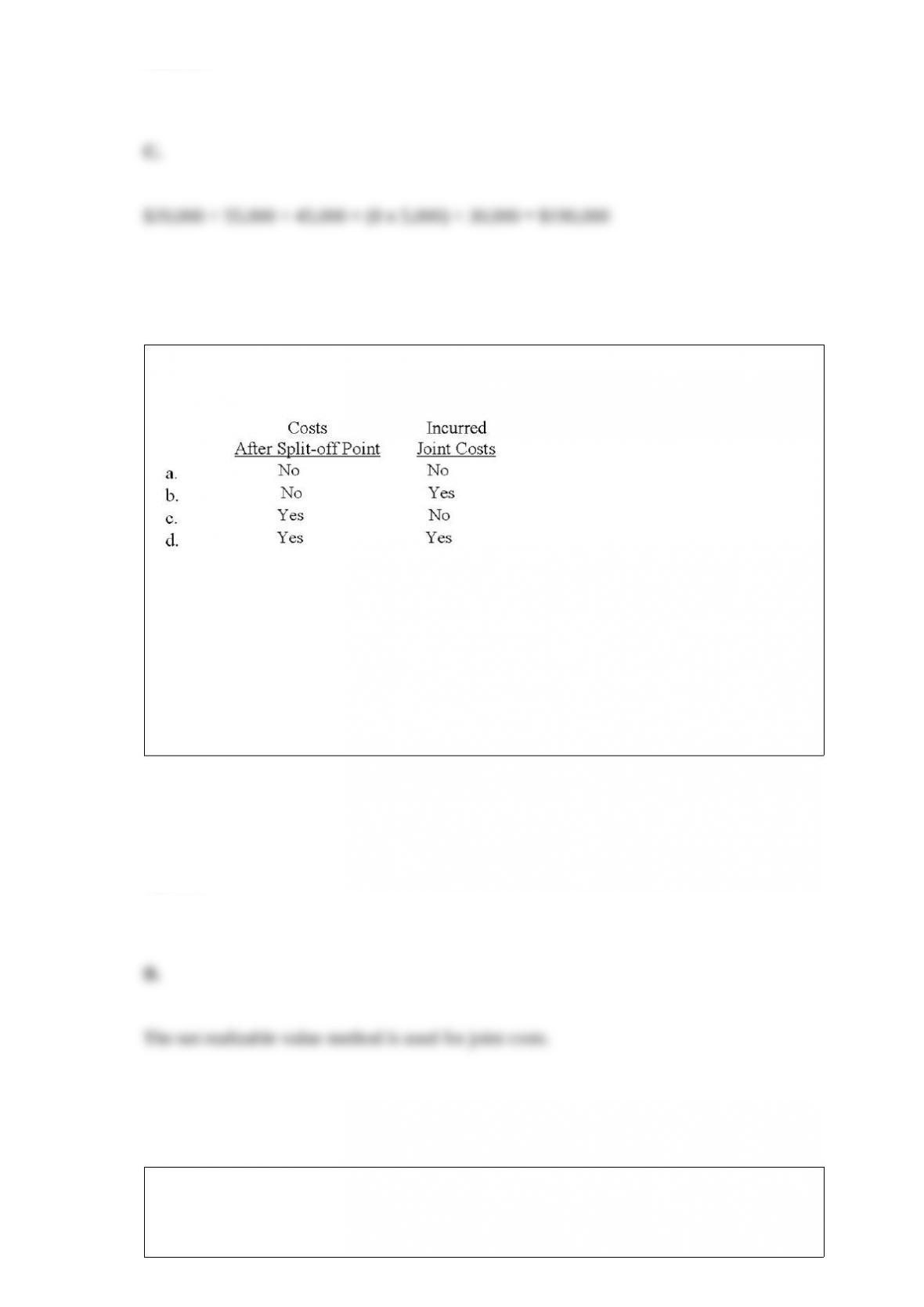
Net realizable value at the split-off point is used to allocate
A. a
B. b
C. c
D. d
Answer:
The Sport Company is preparing a cash budget for the month of July. The following
information on accounts receivable collections is available from Sport’s past collection
experience:
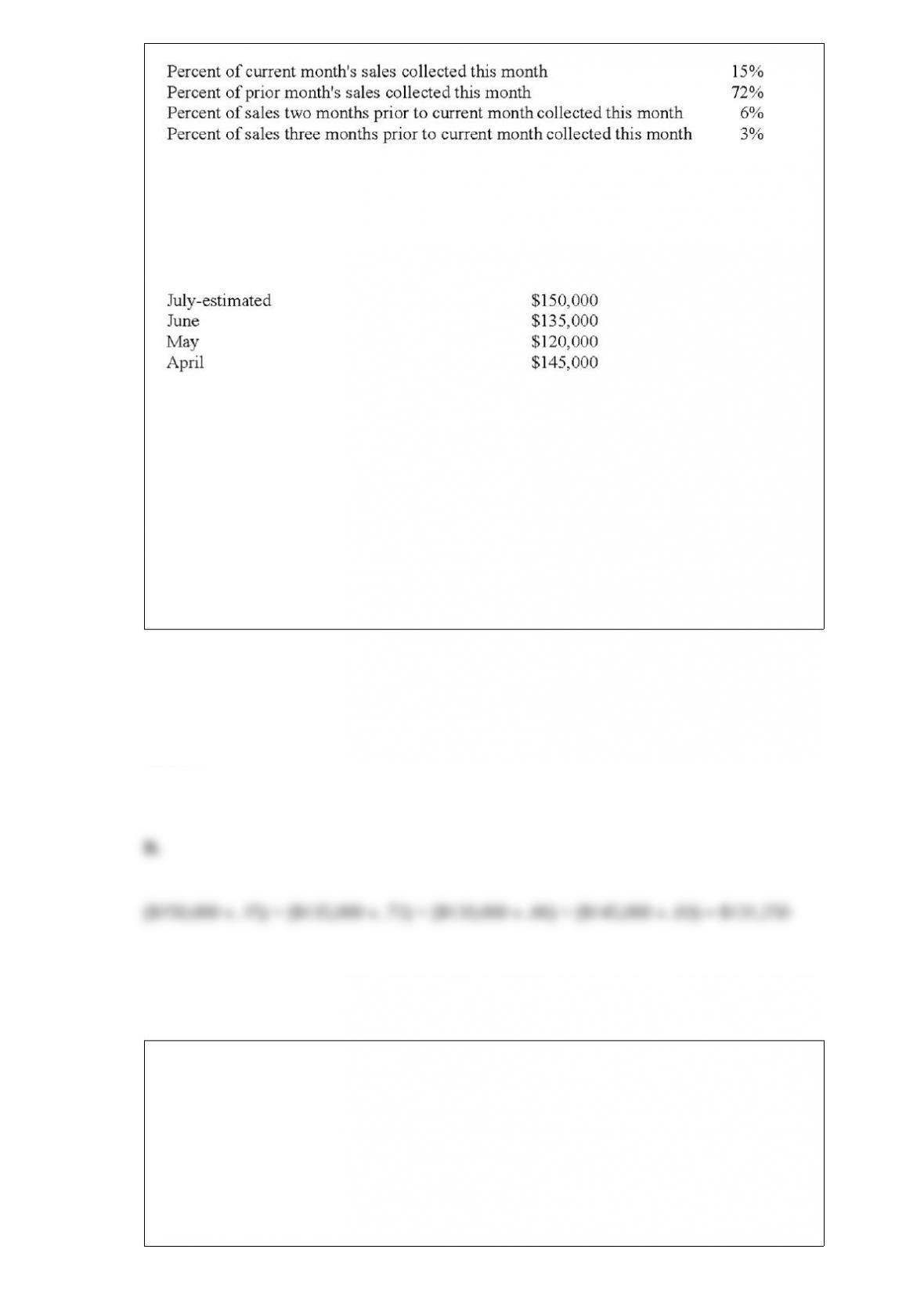
The remaining 4% are not collected and are written off as bad debts.
Credit sales to date are as follows:
What are the estimated collections in July?
A. $125,250.
B. $131,250.
C. $133,250.
D. $137,250.
Answer:
The Cost Flow Diagram for product costing includes all of the following costs except:
A. Selling expenses
B. Direct materials
C. Direct labor
D. Fixed manufacturing overhead
E. Variable manufacturing overhead
Answer:
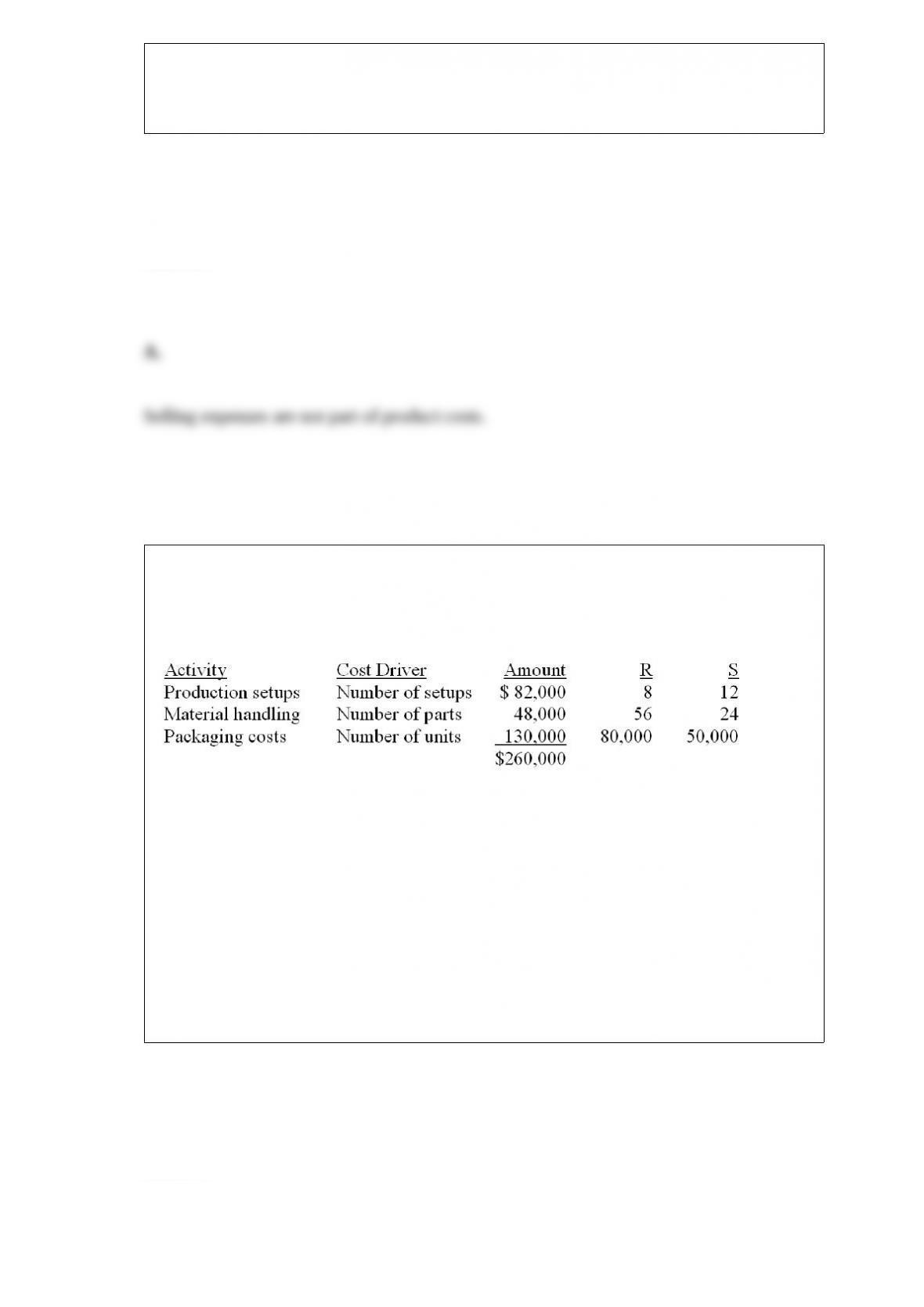
RS Company manufactures and distributes two products, R and S. Overhead costs are
currently allocated using the number of units produced as the allocation base. The
controller has recommended changing to an activity-based costing (ABC) system. She
has collected the following information:
What is the total overhead per unit allocated to Product S using activity-based costing
(ABC)?
A. $2.60
B. $2.27
C. $2.00
D. $1.83
Answer:
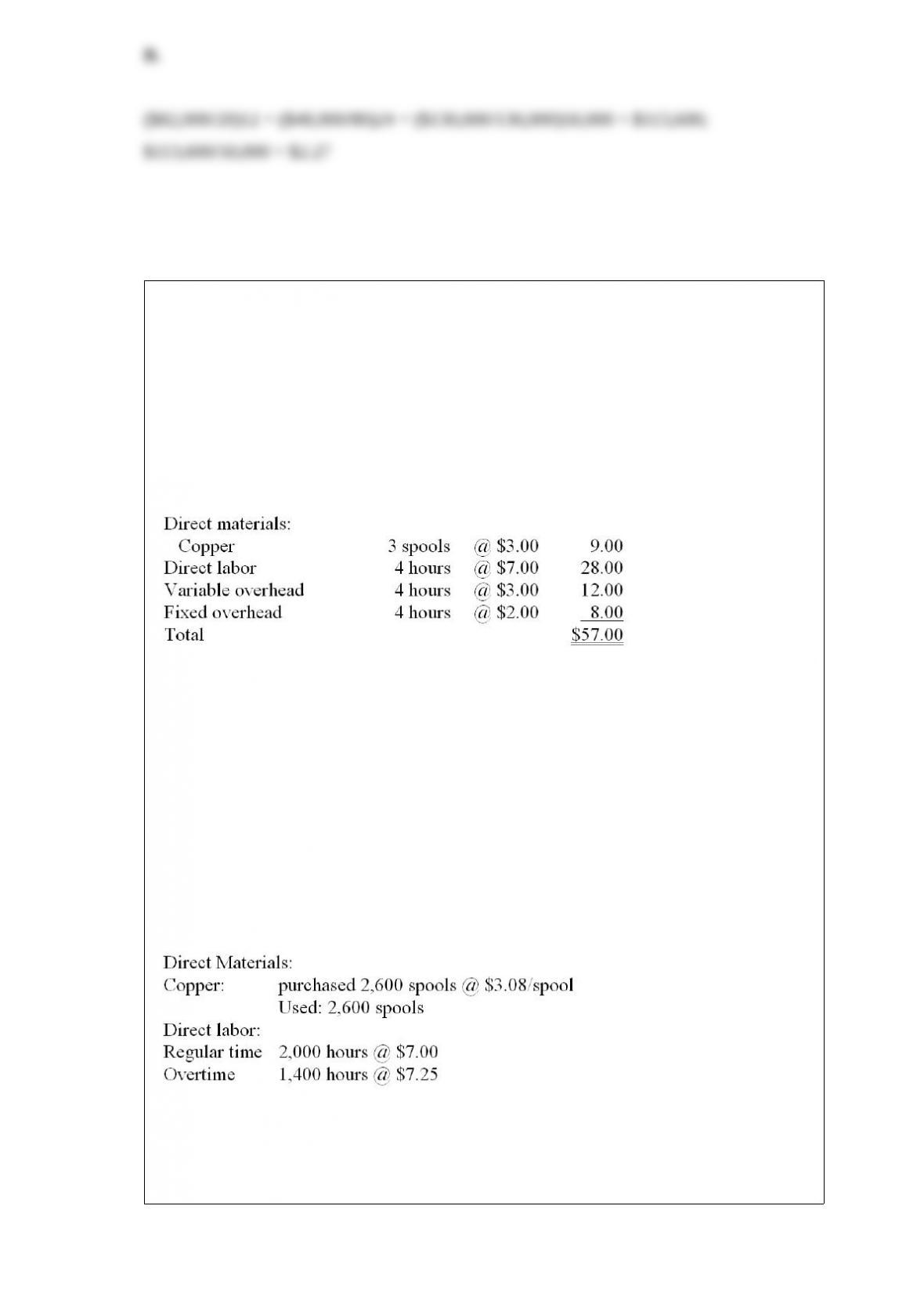
Western Company manufactures special electrical equipment and parts. Western
employs a standard cost accounting system with separate standards established for each
product.
A special transformer is manufactured in the Transformer Department. Production
volume is measured by direct labor hours in this department and a flexible budget
system is used to plan and control department overhead. Standard costs for the special
transformer are determined annually in September for the coming year. The standard
cost of a transformer was computed at $57.00 as shown below.
Overhead rates were based upon normal and expected monthly capacity, both of which
were 4,000 direct labor hours. Practical capacity for this department is 5,000 direct
labor hours per month. Variable overhead costs are expected to vary with the number of
direct labor hours actually used.
During October, 900 transformers were produced. This was below expectations because
a work stoppage occurred during contract negotiations with the labor force. Once the
contract was settled, the wage rate was increased to $7.25/hour and overtime was
scheduled in an attempt to catch up to expected production levels.
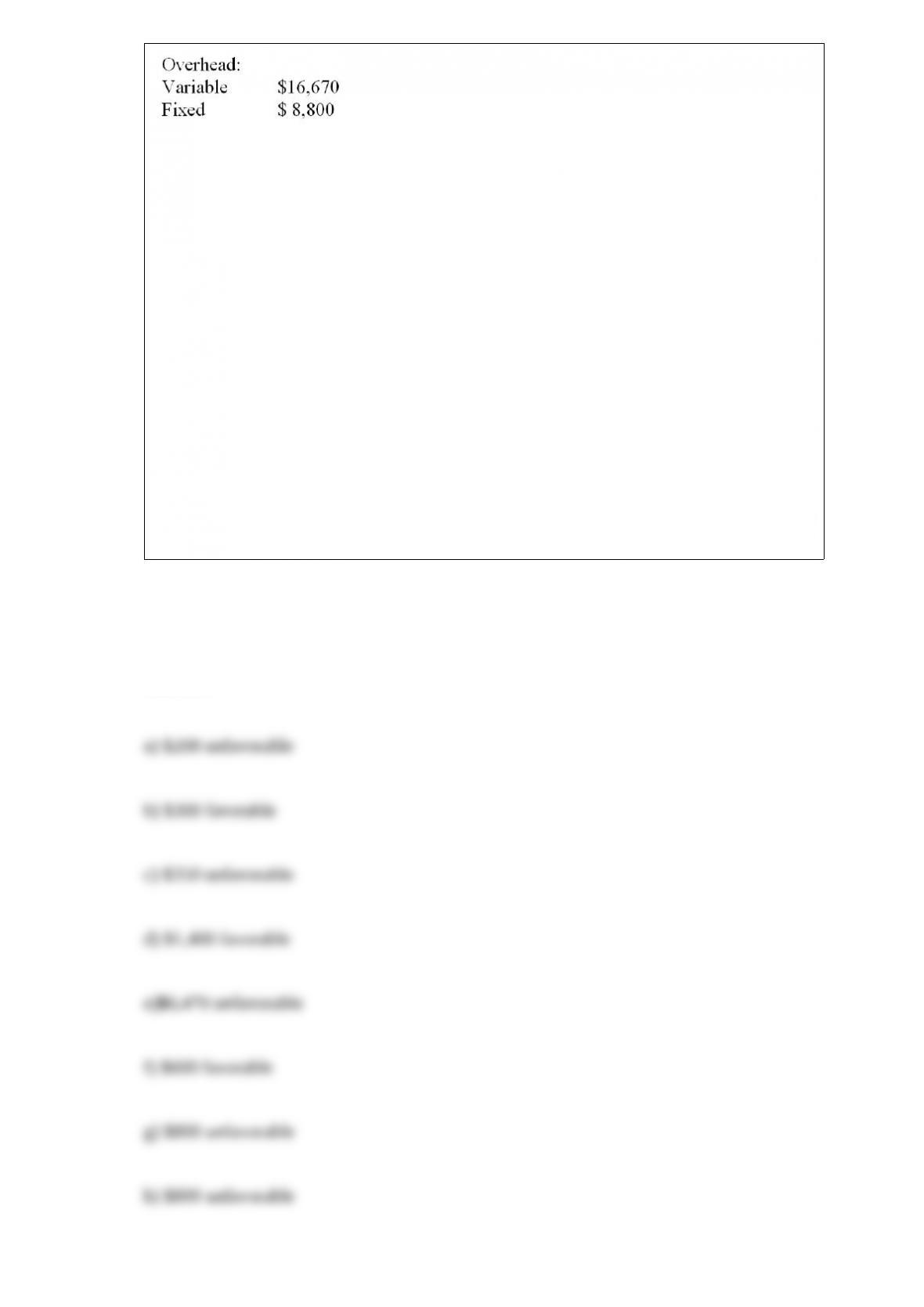
The following costs were incurred in October:
600 of the 1,400 hours were subject to overtime premium. The total overtime premium
is included in variable overhead in accordance with company accounting practices
Required: Compute each of the following variances, showing all your work. Be sure to
indicate whether the variances are favorable or unfavorable.
a) Direct materials price variance
b) Direct material efficiency (quantity) variance
c) Direct labor rate variance
d) Direct labor efficiency variance
e) Variable overhead spending variance
f) Variable overhead efficiency variance
g) Fixed overhead spending (budget) variance
h) Production volume variance
Answer:
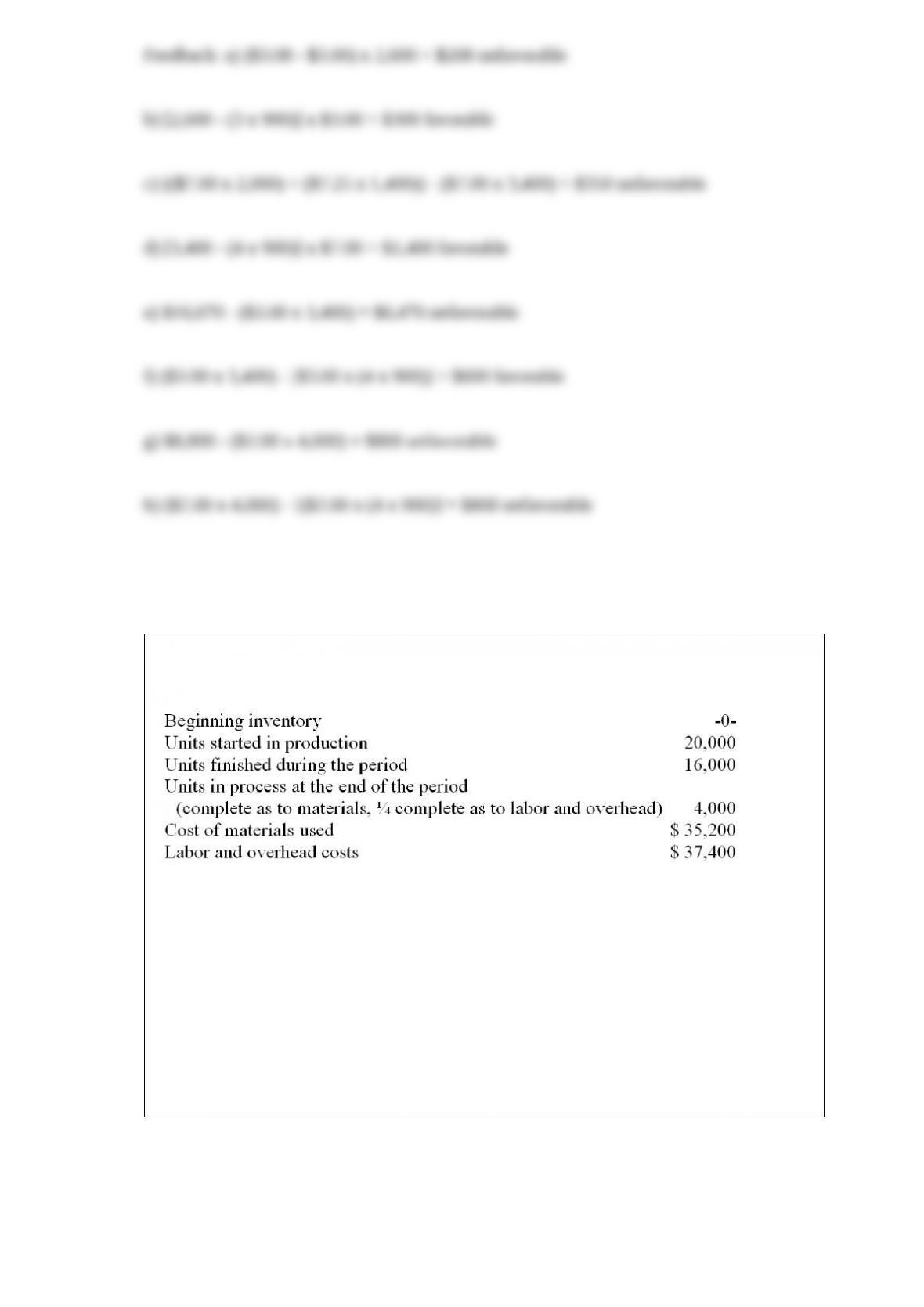
The WISCO Company uses a weighted-average process costing system. The following
data are available:
Equivalent units of production for material are
A. 16,000.
B. 17,000.
C. 19,000.
D. 20,000.
Answer:
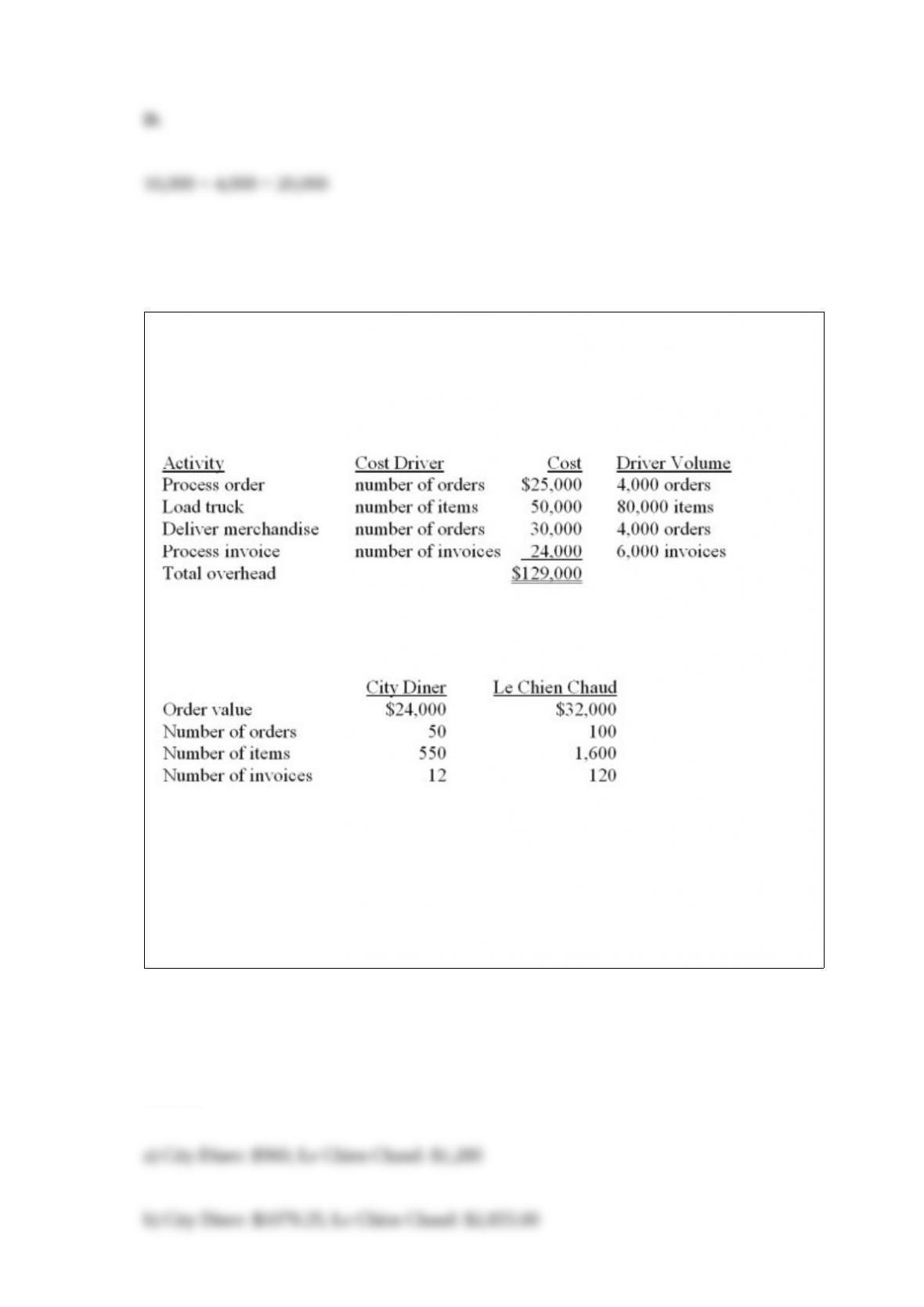
Marvin’s Kitchen Supply delivers restaurant supplies throughout the city. Marvin’s adds
4% to the order cost to cover the delivery cost. The delivery fee is meant to just cover
the cost of delivery. A consultant has analyzed the delivery service using activity-based
costing methods and identified four activities. Data on these activities are:
Two of Marvin’s customers are City Diner and Le Chien Chaud. Below are data on
orders and deliveries to these two customers:
Required:
(a) What would be the delivery charge for each customer under the current policy of 4%
of order value?
(b) What would the activity-based costing system estimate as the cost of delivering to
each customer?
Answer:
The Blade Division of Axe Company produces hardened steel blades. One-third of
Blade’s 30,000 unit output is sold to the Forestry Products Division of Axe; the
remainder is sold to outside customers. Blades’ estimated operating profit for the year
is:
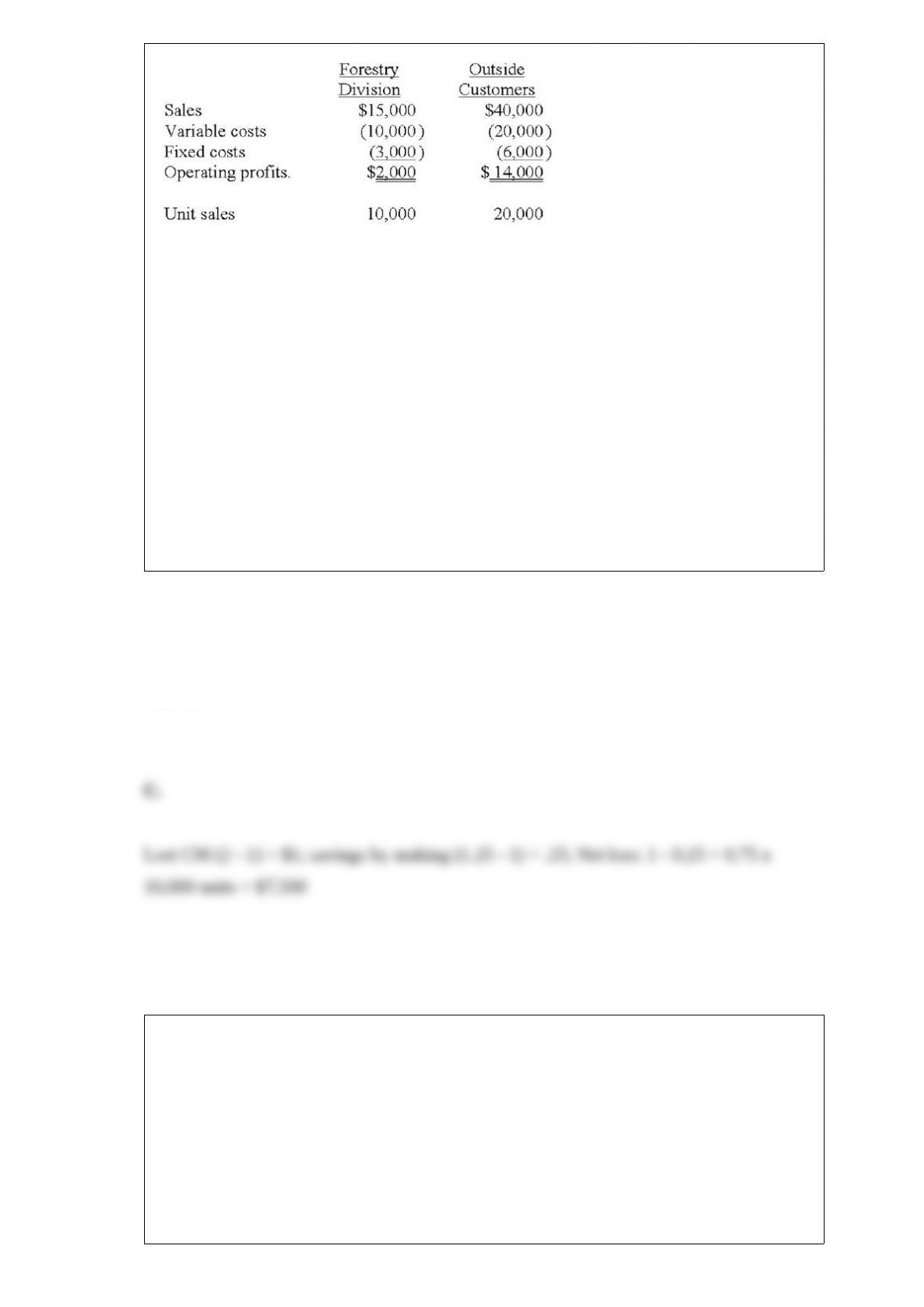
The Forestry Division has an opportunity to purchase 10,000 blades of the same quality
from an outside supplier on a continuing basis. The purchase price would be $1.25. If
the Blade Division is now operating at full capacity and can sell all its units to outside
customers at the present selling price, what is the differential cost to Axe of requiring
that the blades be made internally and sold to the Forestry Division?
A. $2,500
B. $5,000
C. $7,500
D. $10,000
Answer:
Which of the following is the least practical reason for allocating service department
costs to user departments?
A. To ascertain profitability of user departments.
B. To evaluate performance of managers and divisions.
C. To make user departments aware that services are costly.
D. To provide the best possible service to users.
Answer:
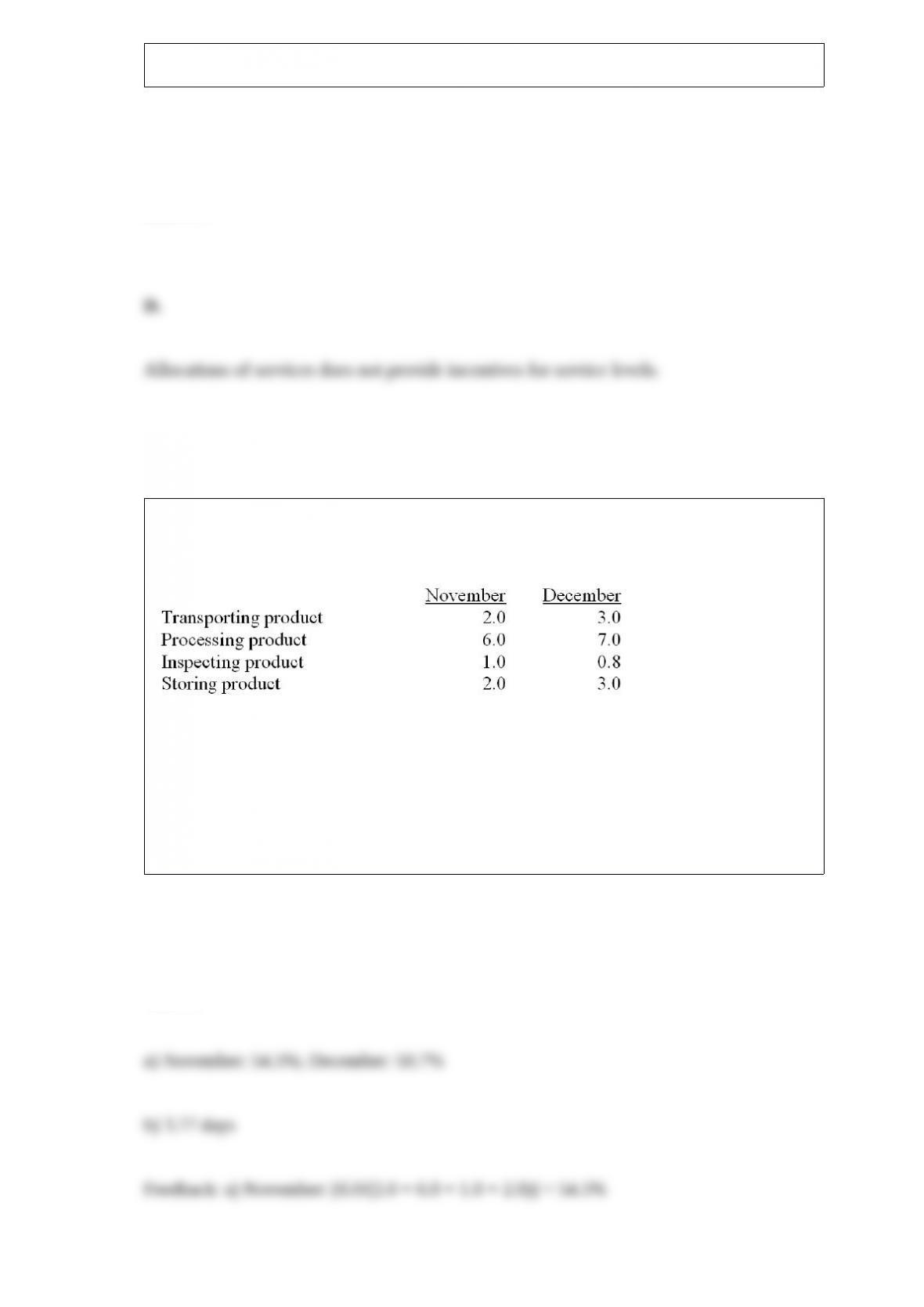
The Acme Company collected the following information (in days) for November and
December.
Required:
a) Calculate the manufacturing cycle efficiency for November and December.
b) Assume January’s processing time will be the same as December’s. If Acme’s target
for manufacturing cycle efficiency is 65%, what will January’s target for non-processing
times be?
Answer:
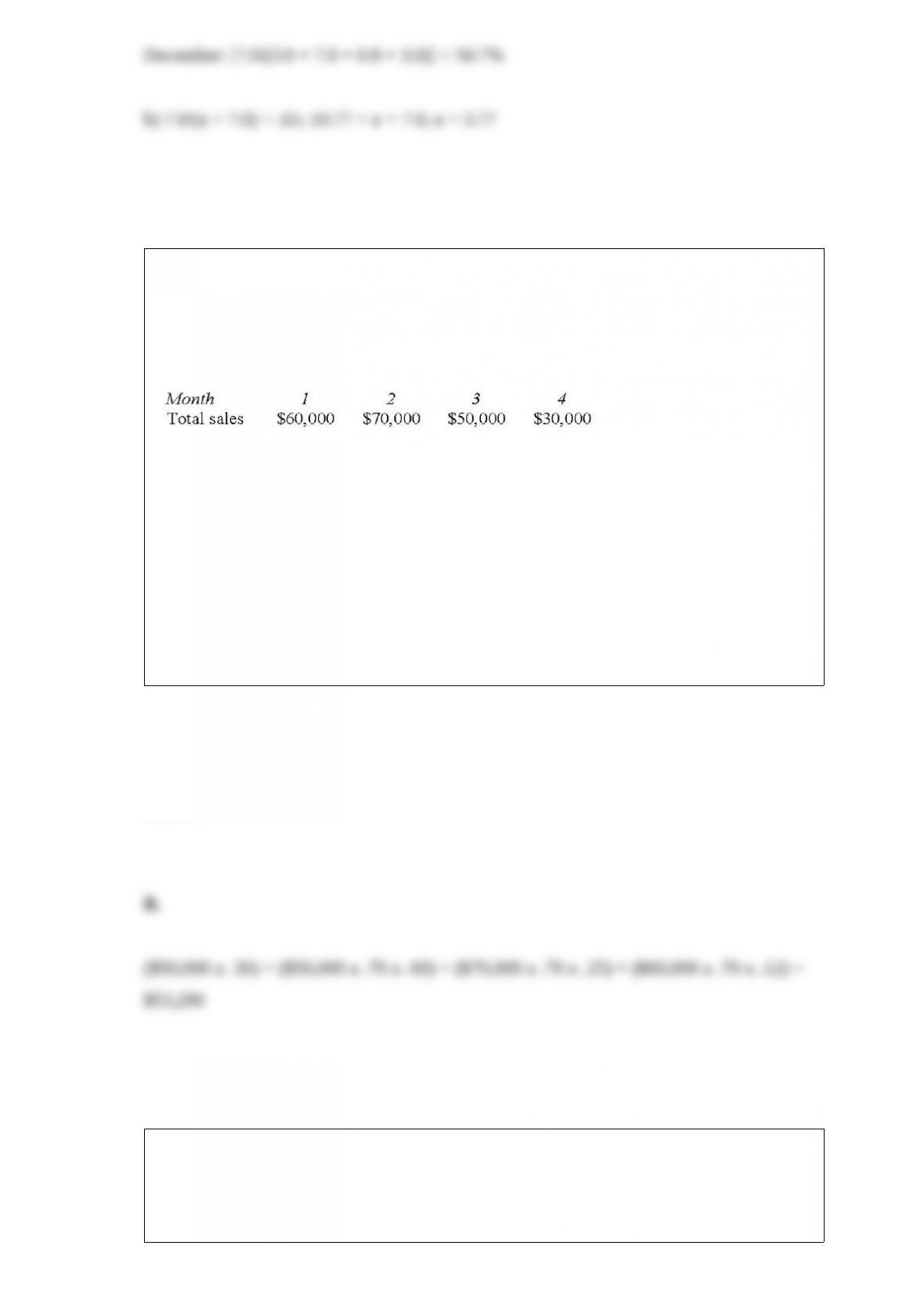
Pardee Company makes 30% of its sales for cash and 70% on account. 60% of the
account sales are collected in the month of sale, 25% in the month following sale, and
12% in the second month following sale. The remainder is uncollectible. The following
information has been gathered for Pardee’s first year of operations:
Total cash receipts in Month 3 will be
A. $52,200.
B. $53,290.
C. $50,000.
D. $51,510.
Answer:
Cost-based transfer prices that include a normal markup to the costs act as a surrogate
for
A. negotiated market prices.

B. opportunity costs.
C. differential costs.
D. market prices.
Answer:
A company purchased assets costing $200,000 which will be depreciated over 5-years
using straight-line depreciation and no salvage value. The company also purchased land
and other assets, which are not depreciable at a cost of $200,000. It is estimated that in
5-years, the value of these assets will be unchanged. Assume that annual cash profits
are $80,000 and, for return on investment (ROI) calculations, the company uses
end-of-year asset values.
If sales each year average $840,000, what will be the asset turnover using gross book
value?
A. 3.0
B. 2.6
C. 2.1
D. 1.9
Answer: