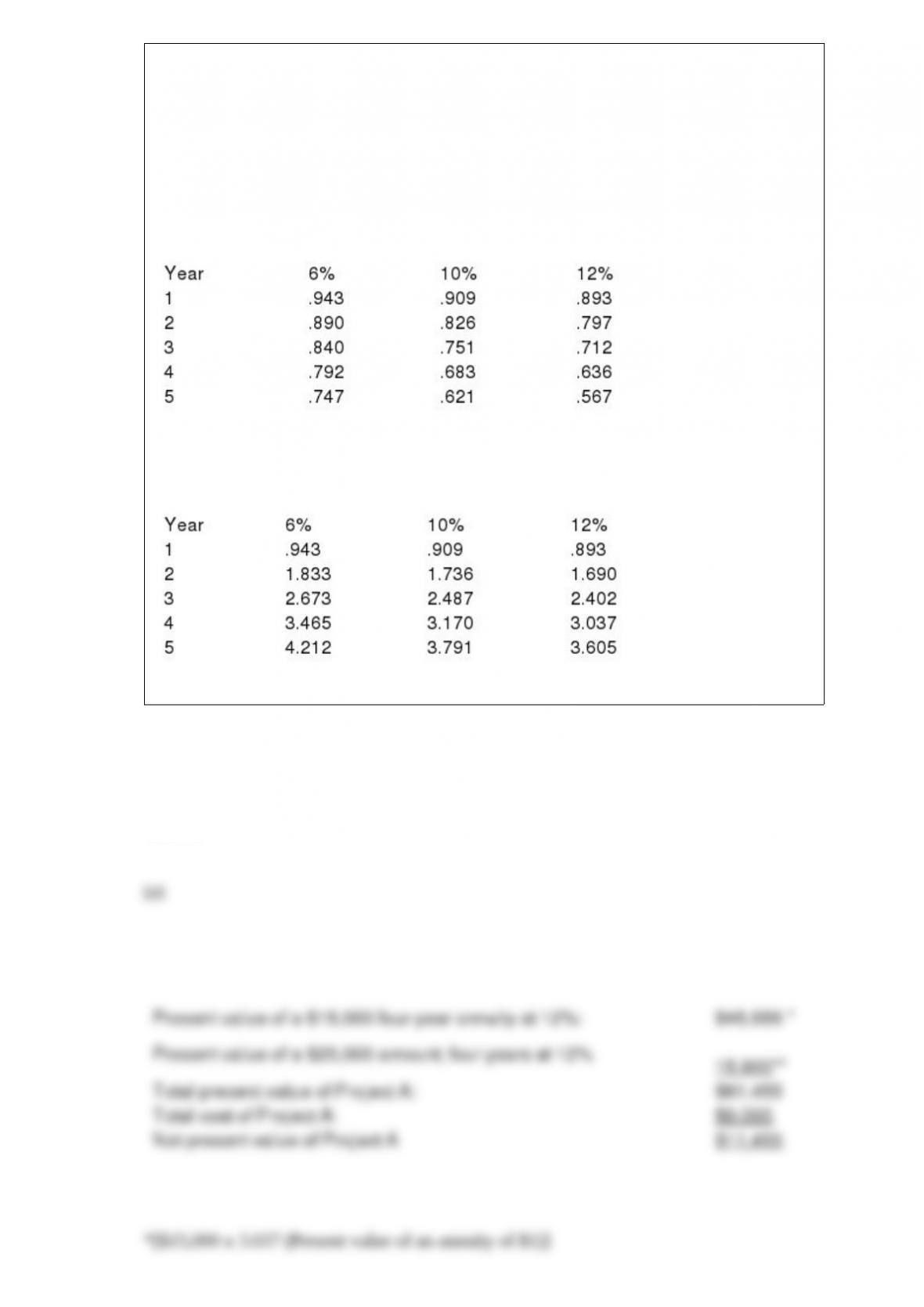
Project A requires an original investment of $50,000. The project will yield cash flows
of $15,000 per year for seven years. Project B has a calculated net present value of
$13,500 over a four year life. Project A could be sold at the end of four years for a price
of $25,000. (a) Using the proper table below determine the net present value of Project
A over a four-year life with salvage value assuming a minimum rate of return of 12%.
(b) Which project provides the greatest net present value?
Below is a table for the present value of $1 at compound interest.
Below is a table for the present value of an annuity of $1 at compound interest.
Answer:
The balanced scorecard measures financial and nonfinancial performance of a business.
The balanced scorecard measures four areas. Identify one of the following that is not
included as a performance measurement.
A.Internal Process
B.Financial
C.Innovation and Learning
D.Employees
Answer:
Expenses are recorded when
A.cash is paid for services rendered
B.a bill is received in advance of services rendered
C.assets are used in the process of earning revenue
D.none of these
Answer:
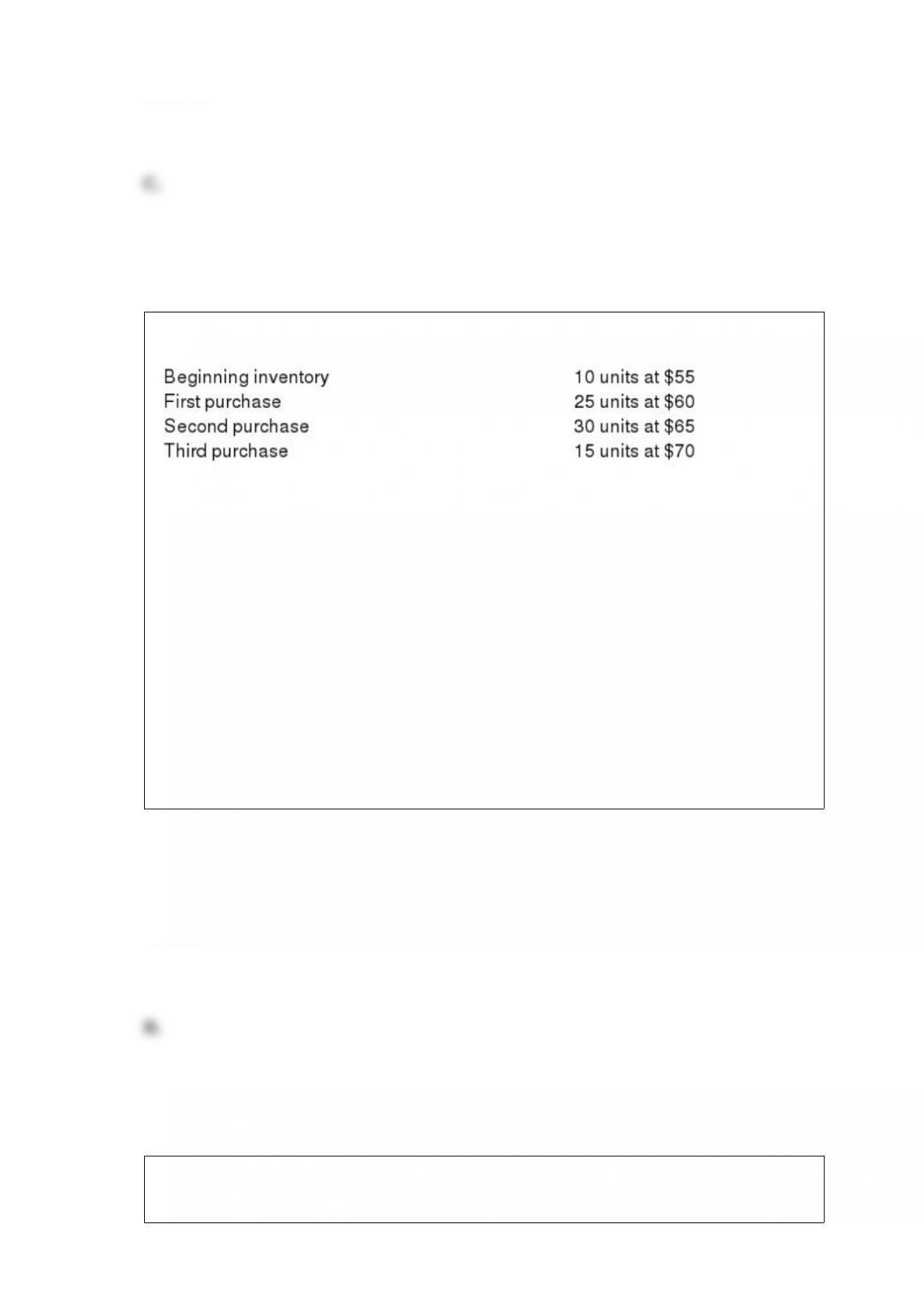
The following units of an inventory item were available for sale during the year:
The firm uses the periodic inventory system. During the year, 60 units of the item were
sold.
The value of ending inventory using average cost is:
A.$1,353
B.$1,263
C.$1,375
D.$1,150
Answer:
Gentry, sole proprietor of a hardware business, decides to form a partnership with Noel.
Gentry’s accounts are as follows:
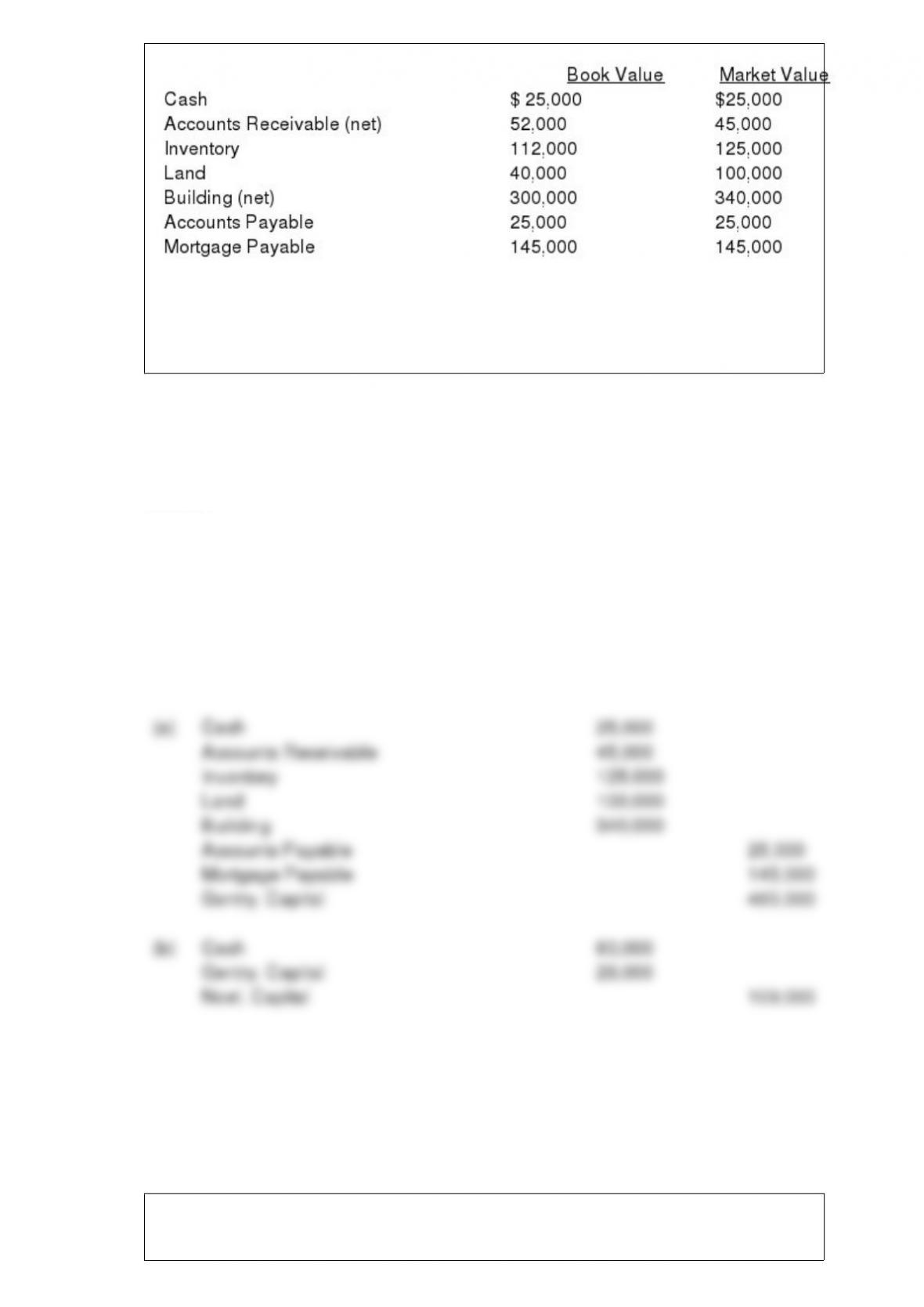
Noel agrees to contribute $80,000 for a 20% interest. Journalize the entries to record (a)
Gentry’s investment and (b) Noel’s investment.
Answer:
If the actual quantity of direct materials used in producing a commodity differs from the
standard quantity, the variance is termed a:
A.controllable variance
B.price variance
C.quantity variance
D.rate variance
Answer:
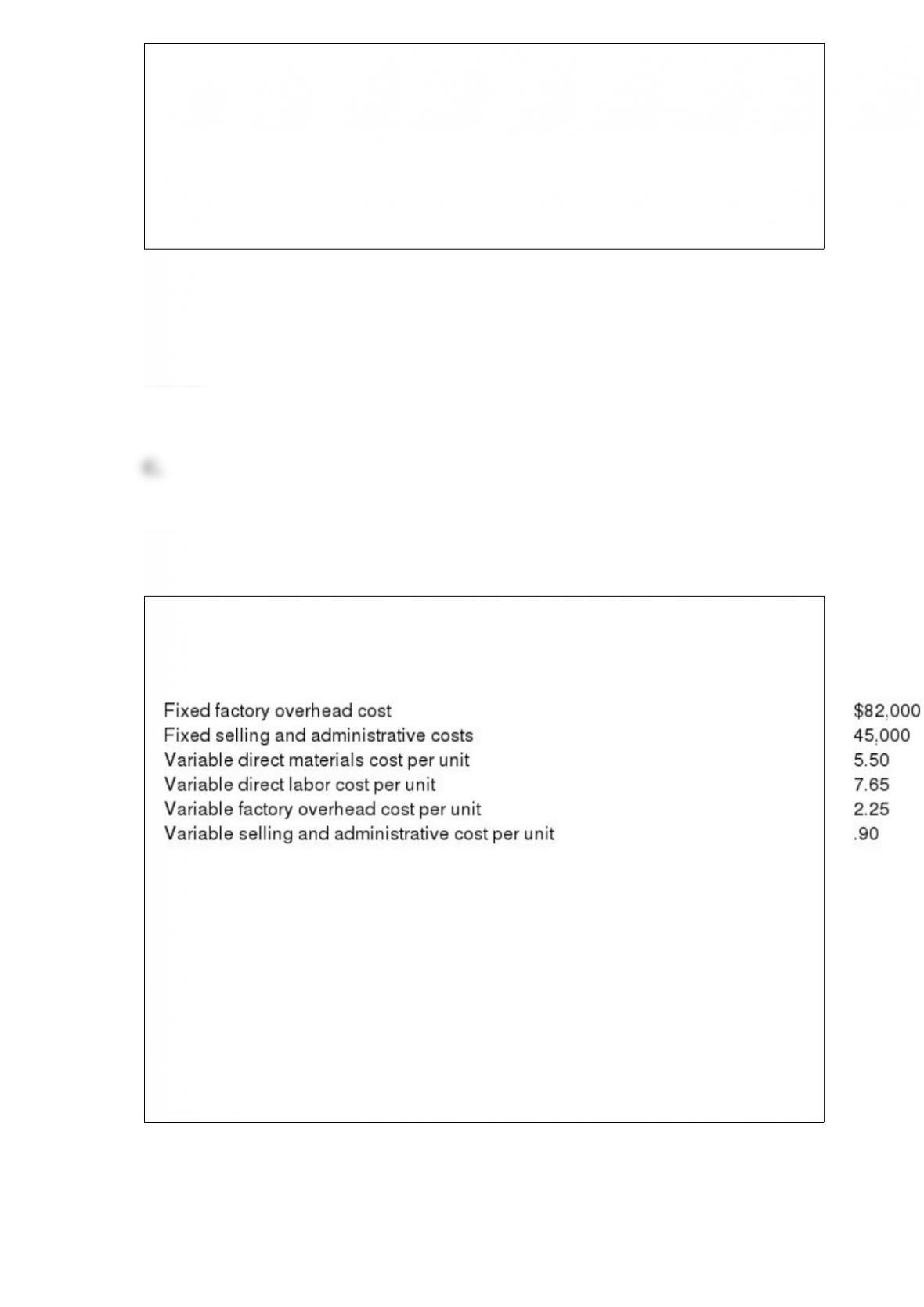
Mallard Corporation uses the product cost concept of product pricing. Below is cost
information for the production and sale of 45,000 units of its sole product. Mallard
desires a profit equal to a 12% rate of return on invested assets of $800,000.
The cost per unit for the production of the company’s product is:
A.$13.15
B.$17.22
C.$15.40
D.$15.75
Answer:
A company has a margin of safety of 25%, a contribution margin ratio of 30%, and
sales of $1,000,000.
(a) What is the break-even point?
(b) What is the operating income?
(c) If neither the relationship between variable costs and sales nor the amount of fixed
costs is expected to change in the next year, how much additional operating income can
be earned by increasing sales by $110,000?
Answer:
All of the following statements regarding the ratio of liabilities to owner’s equity are
true except:
A.A ratio of 1 indicates that liabilities equal owner’s equity.
B.Corporations can use this ratio but substitute total stockholders’ equity for total
owner’s equity.
C.The higher this ratio is, the better able a business is to withstand poor business
conditions and pay creditors.
D.The lower this ratio is, the better able a business is to withstand poor business

conditions and pay creditors.
Answer:
Control of inventory should begin as soon as the inventory is received. Which of the
following internal control steps is not done to meet this goal?
A.check the invoice to the receiving report
B.check the invoice to the purchase order
C.check the invoice with the person who specifically purchased the item
D.check the invoice extensions and totals
Answer:
When the cost method is used to account for an investment, the carrying value of the
investment is affected by
A.the dividend distributions of the investee.
B.the periodic net income of the investee.
C.the earnings and dividend distributions of the investee.
D.neither the earnings nor the dividends of the investee.
Answer:
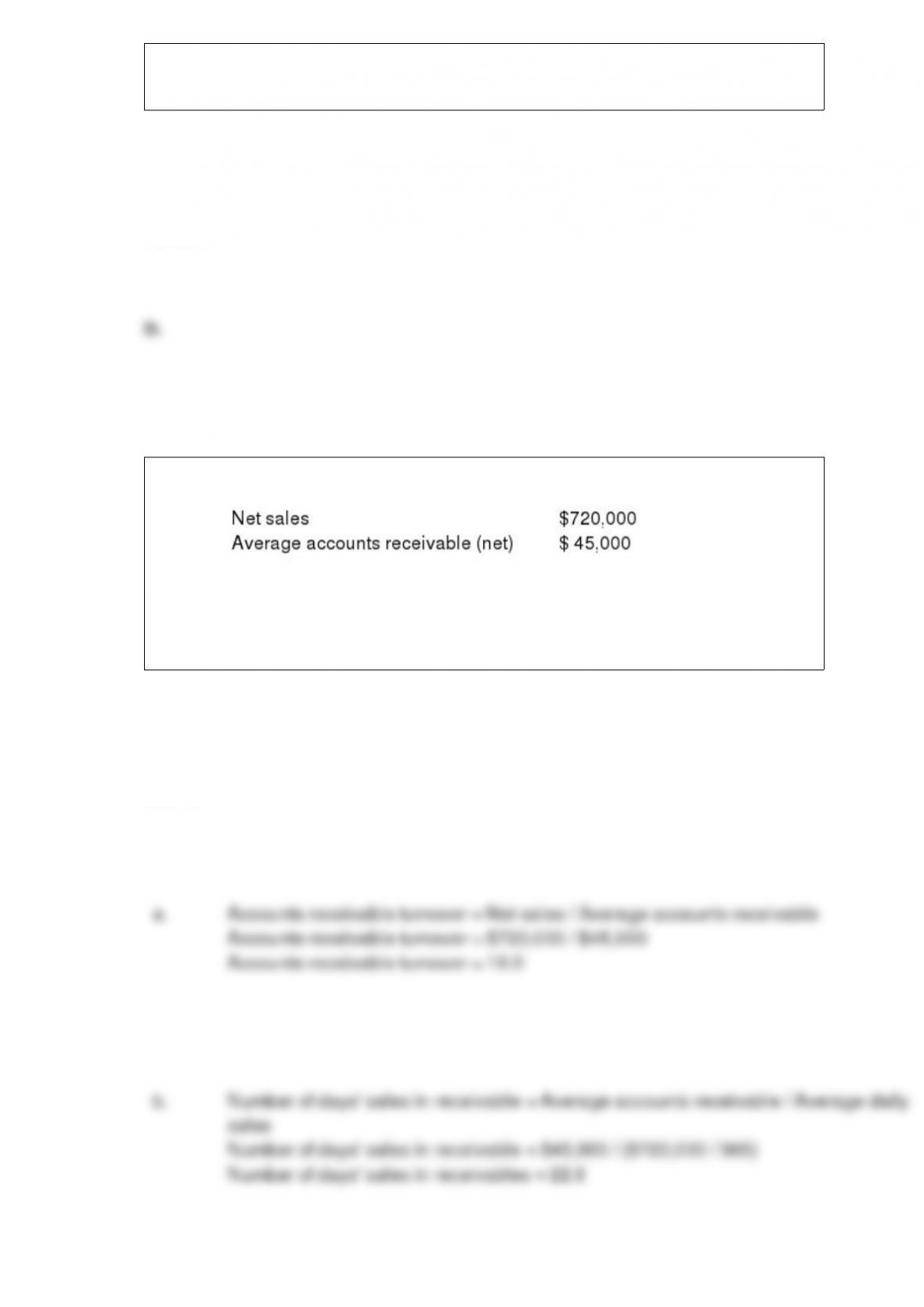
A company reports the following:
Determine the (a) accounts receivable turnover, and (b) number of days’ sales in
receivables. Round your answer to one decimal place.
Answer:
When is the adjusted trial balance prepared?
A.Before adjusting journal entries are posted
B.After adjusting journal entries are posted.
C.After the adjusting journal entries are journalized
D.Before the adjusting journal entries are journalized.
Answer:
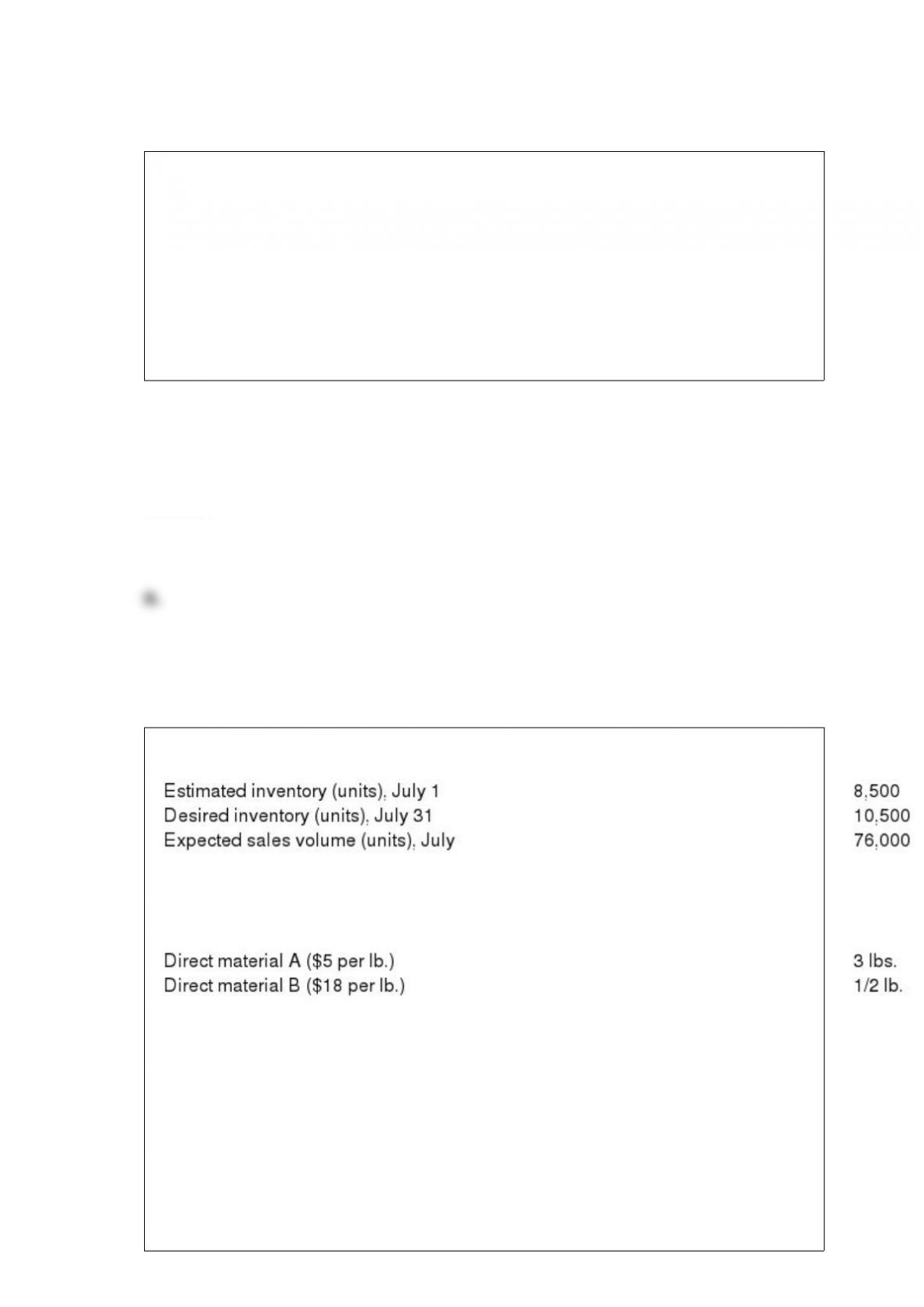
Production estimates for July are as follows:
For each unit produced, the direct materials requirements are as follows:
The total direct materials purchases of materials A and B (assuming no beginning or
ending material inventory) required for July production is:
A.$1,080,000 for A; $648,000 for B
B.$1,080,000 for A; $1,296,000 for B
C.$1,170,000 for A; $702,000 for B

D.$1,125,000 for A; $675,000 for B
Answer:
Which of the following errors, each considered individually, would cause the trial
balance totals to be unequal?
A.a transaction was not posted
B.a payment of $67 for insurance was posted as a debit of $76 to Prepaid Insurance and
a credit of $76 to Cash
C.a payment of $4,450 to a creditor was posted as a debit of $4,500 to Accounts
Payable and a credit of $450 to Accounts Receivable
D.cash received from customers on account was posted as a debit of $720 to Cash and a
credit of $720 to Accounts Payable
Answer:
The posting process will include the transfer of the following information from the
journal to the account.
A.date, amount (debit or credit)

B.date, amount (debit or credit), journal page number
C.amount (debit or credit), account number
D.date, amount (debit or credit) account number
Answer:
The cost of merchandise sold during the year was $50,000. Merchandise inventories
were $12,500 and $10,500 at the beginning and end of the year, respectively. Accounts
payable were $6,000 and $5,000 at the beginning and end of the year, respectively.
Using the direct method of reporting cash flows from operating activities, cash
payments for merchandise total
A.$49,000
B.$47,000
C.$51,000
D.$53,000
Answer:
Which one of the following is NOT a measure that management can use in evaluating
and controlling investment center performance?
A.Rate of return on investment
B.Negotiated price
C.Residual income
D.Income from operations
Answer:
The following information pertains to Carlton Company. Assume that all balance sheet
amounts represent both average and ending balance figures. Assume that all sales were
on credit.
Assets
Liabilities and Stockholders’ Equity
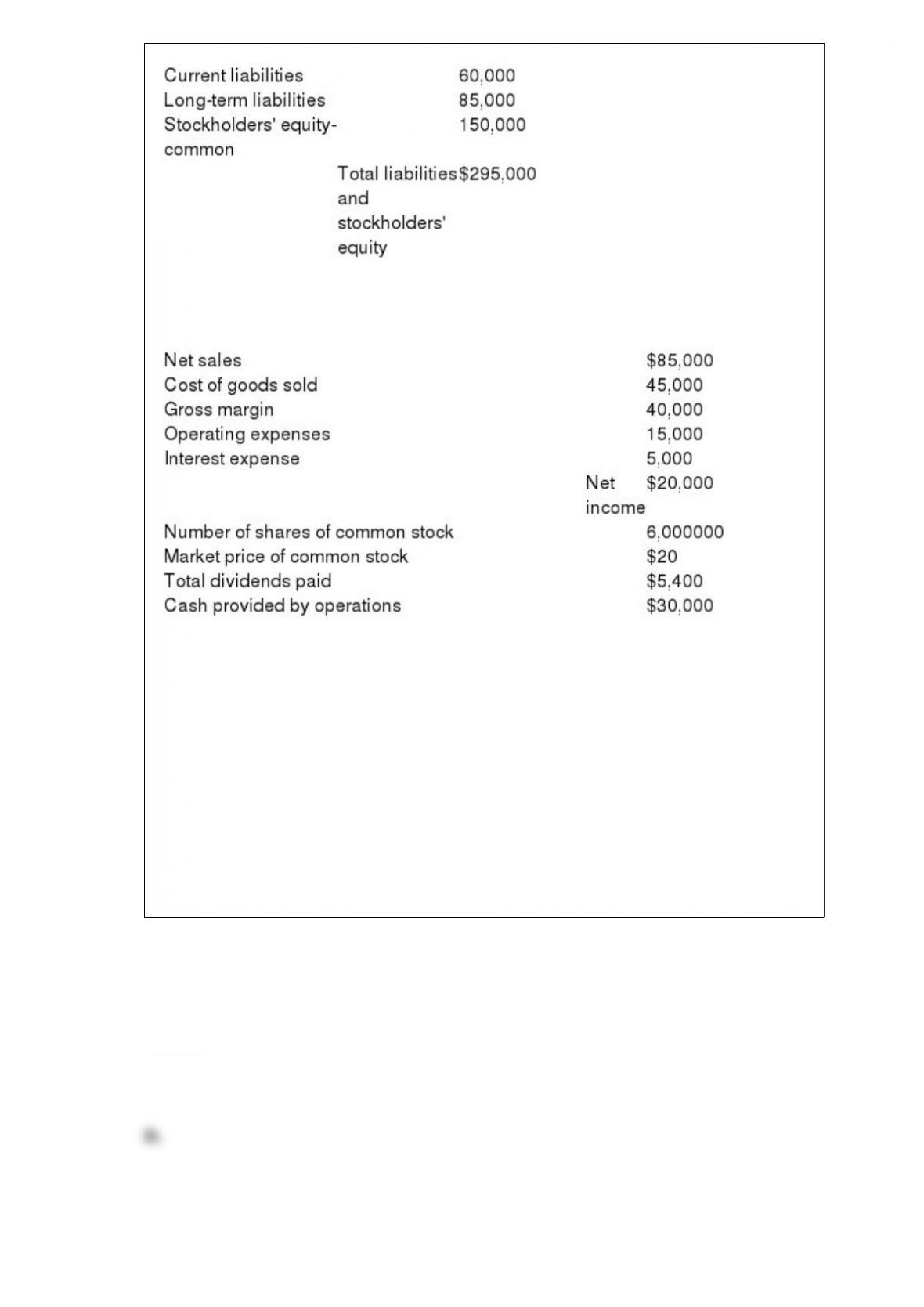
Income Statement
What is the price earnings ratio for this company? Round your answer to one decimal
point.
A.8.0 times
B.2.5 times
C.4.0 times
D.6.0 times
Answer:

A 60-day, 12% note for $7,000, dated April 15, is received from a customer on account.
The face value of the note is
A.$6,860
B.$7,140
C.$7,840
D.$7,000
Answer:
Which are the parts of the T account?
A.title, date, total
B.date, debit side, credit side
C.title, debit side, credit side
D.title, debit side, total
Answer:

If merchandise sold on account is returned to the seller, the seller may inform the
customer of the details by issuing a
A.sales invoice
B.purchase invoice
C.credit memo
D.debit memo
Answer:
Which of the following is characteristic of a general partnership?
A.The partners have co-ownership of partnership property.
B.The partnership is subject to federal income tax.
C.The partnership has an unlimited life.
D.The partners have limited liability.
Answer:
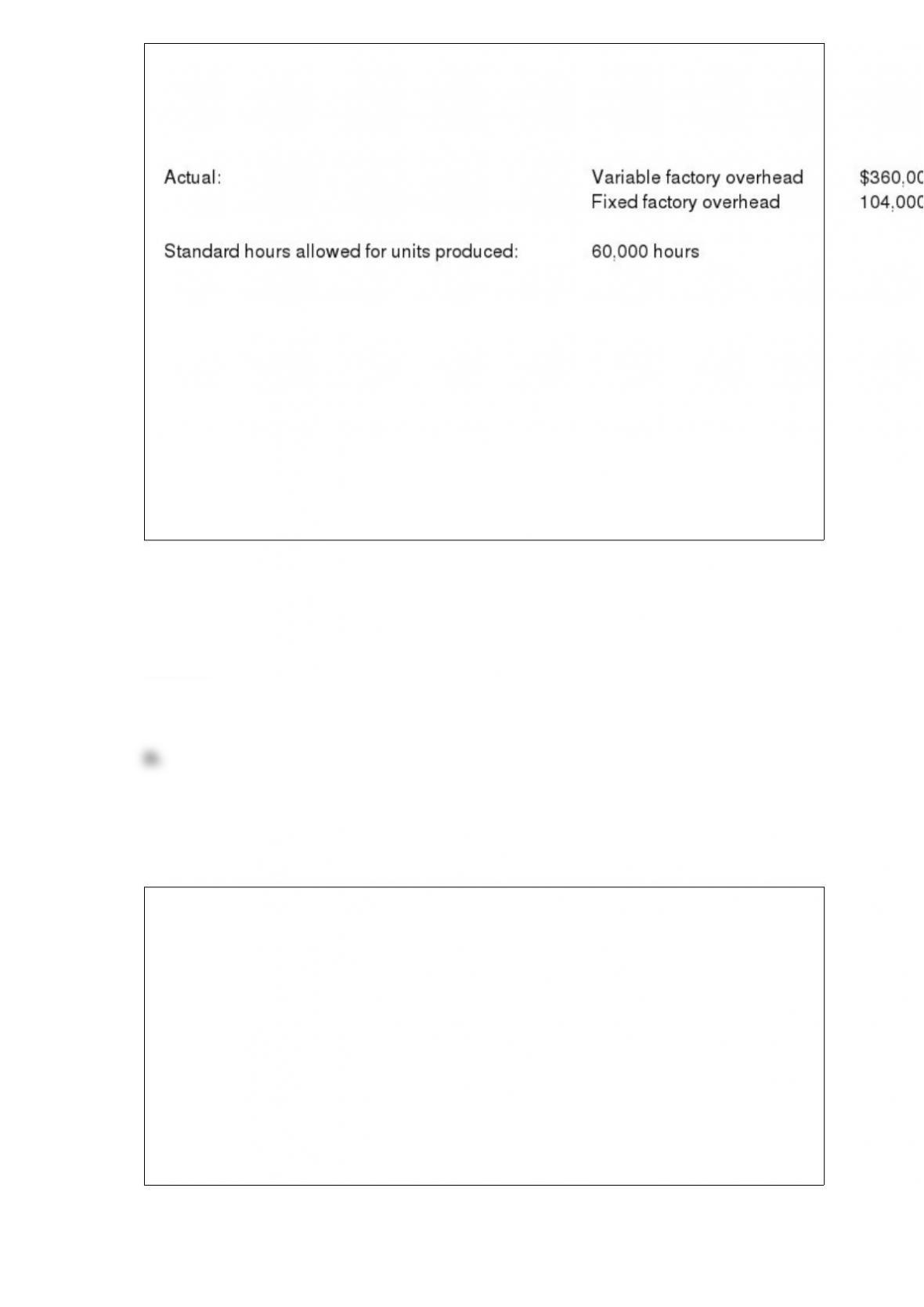
The standard factory overhead rate is $7.50 per machine hour ($6.20 for variable
factory overhead and $1.30 for fixed factory overhead) based on 100% capacity of
80,000 machine hours. The standard cost and the actual cost of factory overhead for the
production of 15,000 units during August were as follows:
What is the amount of the factory overhead volume variance?
A.$12,000 unfavorable
B.$12,000 favorable
C.$14,000 unfavorable
D.$26,000 unfavorable
Answer:
The supplies account has a balance of $2,100 at the beginning of the year and was
debited during the year for $2,300, representing the total of supplies purchased during
the year. If $400 of supplies are on hand at the end of the year, the supplies expense to
be reported on the income statement for the year is
A.$400
B.$200
C.$4,800
D.$4,000
Answer:
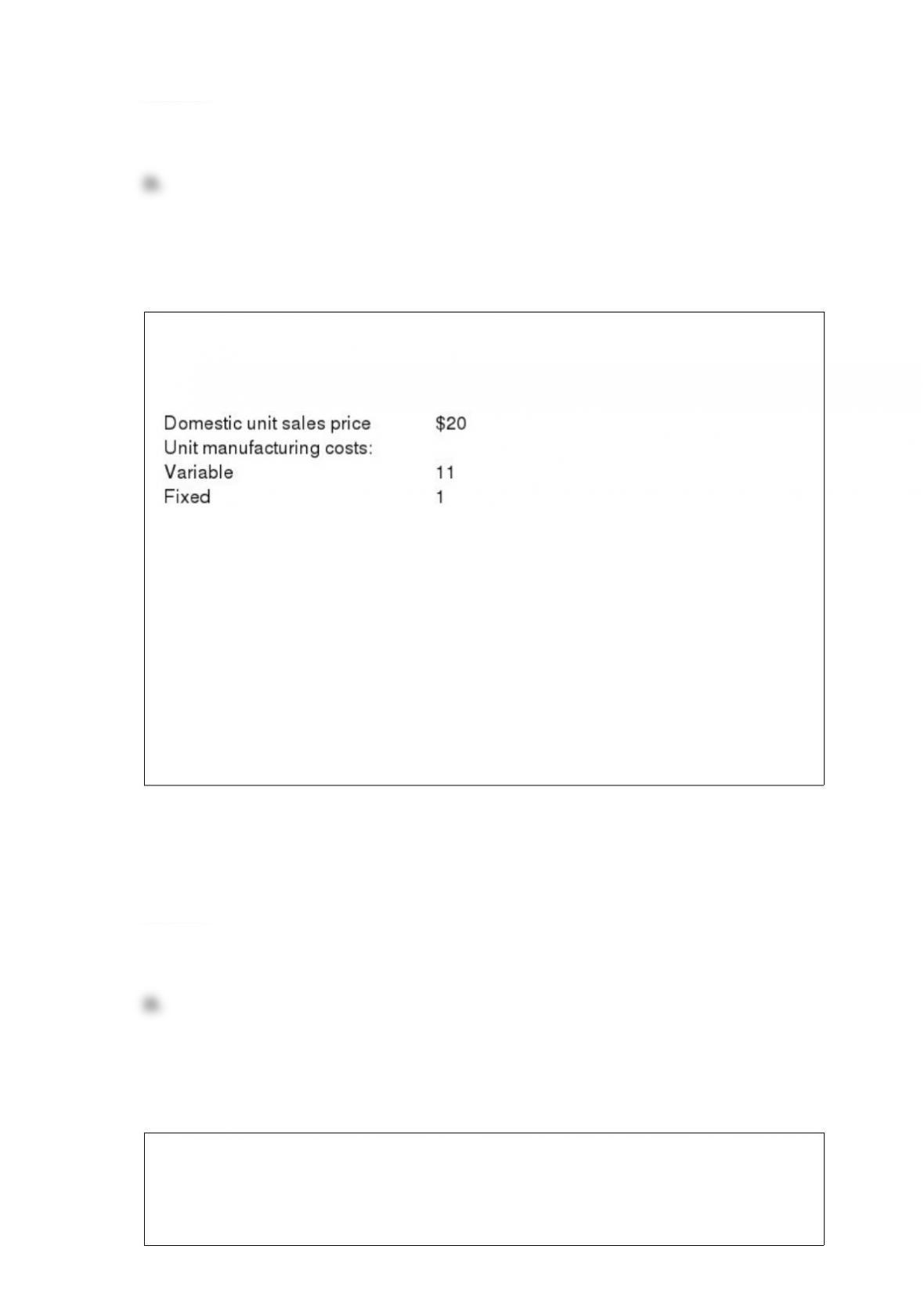
A business received an offer from an exporter for 10,000 units of product at $17.50 per
unit. The acceptance of the offer will not affect normal production or domestic sales
prices. The following data is available:
What is the differential cost from the acceptance of the offer?
A.$200,000
B.$175,000
C.$140,000
D.$110,000
Answer:
Just-in-time operations attempt to significantly reduce
A.profits.

B.inventory needed to produce products.
C.inspection time and moving time.
D.processing time.
Answer:
Which of the following is a disadvantage of a partnership when compared to a
corporation?
A.The partnership is more likely to have a net loss.
B.The partnership is easier to organize.
C.The partnership is less expensive to organize.
D.The partnership has limited life.
Answer:
Which account would normally not require an adjusting entry?
A.Wages Expense

B.Accounts Receivable
C.Accumulated Depreciation
D.Smith, Capital
Answer:
A fixed asset with a cost of $41,000 and accumulated depreciation of $36,000 is traded
for a similar asset priced at $50,000. Assuming a trade-in allowance of $4,000, the cost
basis of the new asset is
A.$54,000
B.$45,000
C.$51,000
D.$50,000
Answer:
The charter of a corporation provides for the issuance of 100,000 shares of common
stock. Assume that 40,000 shares were originally issued and 10,000 were subsequently
reacquired. What is the number of shares outstanding?

A.10,000
B.40,000
C.30,000
D.50,000
Answer:
Which of the following should be included in the acquisition cost of a piece of
equipment?
A.transportation costs
B.installation costs
C.testing costs prior to placing the equipment into production
D.all are correct
Answer:
During the end-of-period processing which of the following best describes the logical

order of this process
A.Preparation of adjustments, adjusted trial balance, financial statements
B.Preparation of Income Statement, adjusted trial balance, Balance Sheet
C.Preparation of adjusted trial balance, cross-referencing, journalizing
D.Preparation of adjustments, adjusted trial balance, posting
Answer:
A fixed asset with a cost of $41,000 and accumulated depreciation of $36,500 is traded
for a similar asset priced at $60,000. Assuming a trade-in allowance of $3,000, the
recognized loss on the trade is
A.$3,000
B.$4,500
C.$ 500
D.$1,500
Answer:

Armando Company owns 17,000 of the 70,000 shares of common stock outstanding of
Tito Company and exercises a significant influence over its operating and financial
policies. The investment should be accounted for by the
A.equity method
B.market method
C.cost or market method
D.cost method
Answer: