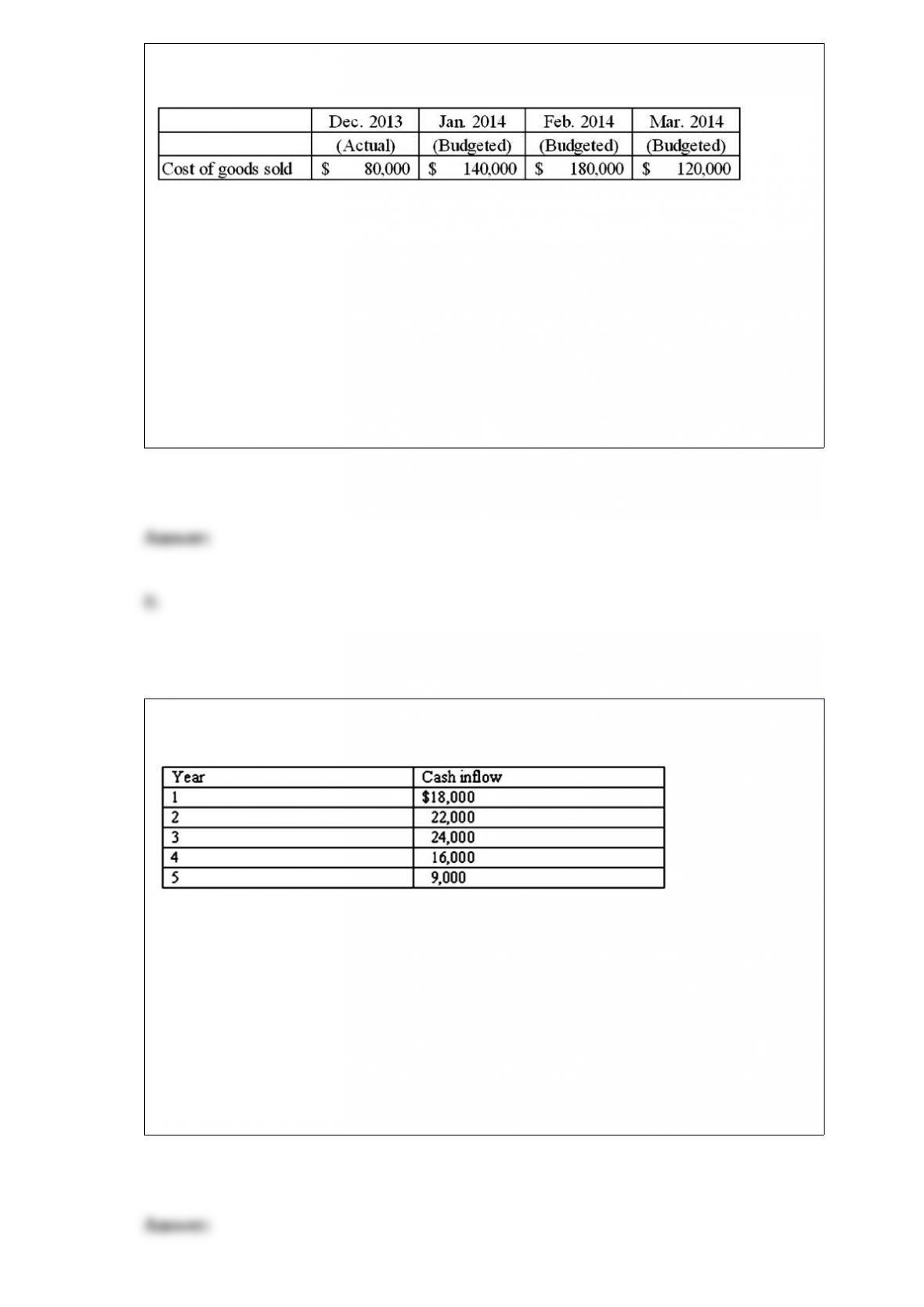
Chu Company provided the following information related to its inventory sales and
purchases for December 2013 and the first quarter of 2014:
Desired ending inventory levels are 25% of the following month’s projected cost of
goods sold. Budgeted purchases of inventory in February 2014 would be:
A. $135,000.
B. $165,000.
C. $180,000.
D. $225,000.
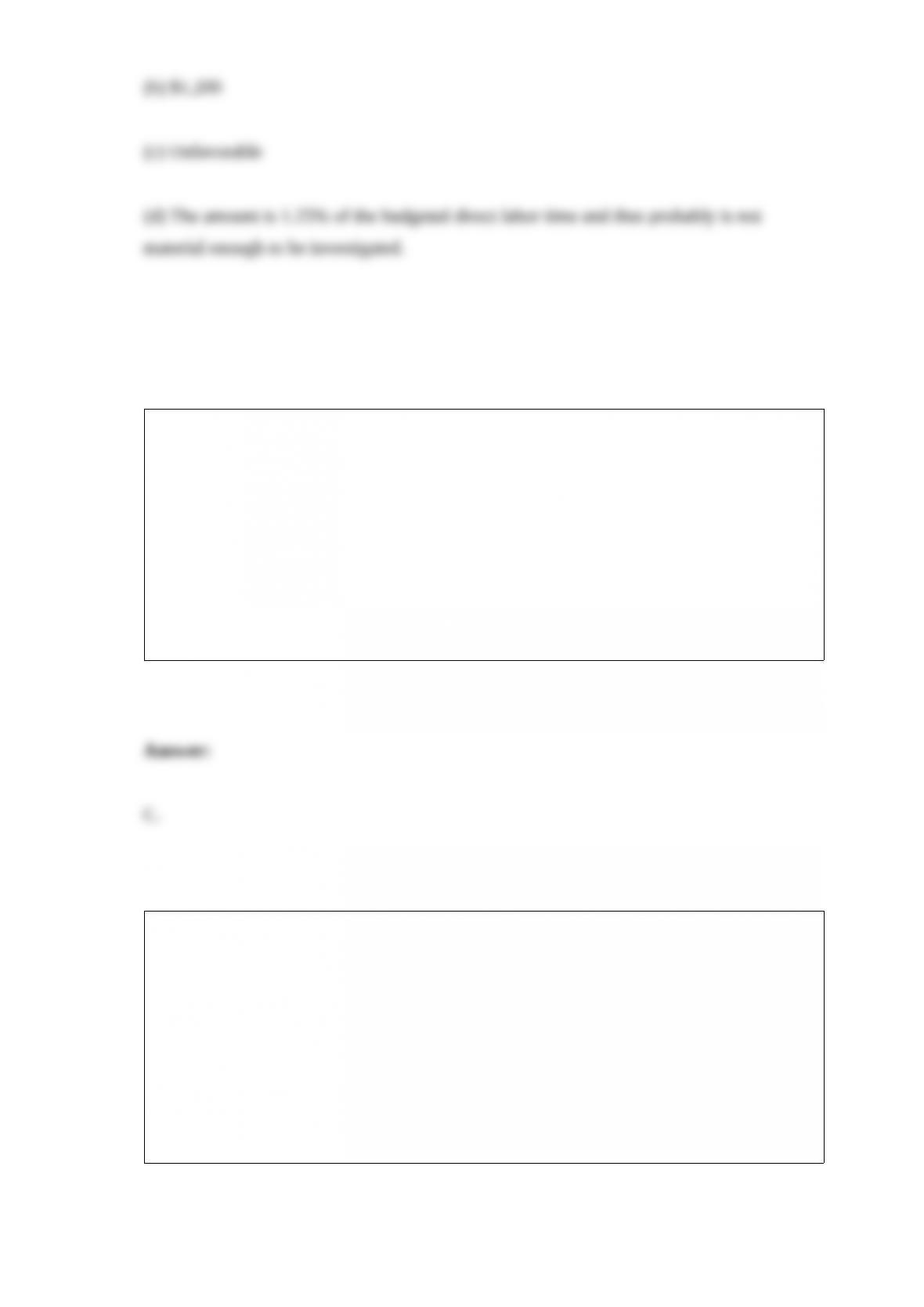
Young Corporation is considering purchasing equipment that costs $80,000 and is
expected to provide the following cash inflows over its five-year useful life:
What is the payback period of this investment project (rounded to the nearest year)?
A. 2 years
B. 4 years
C. 3 years
D. 6 years

What is the proper treatment of a loss on disposal of equipment when using the indirect
method to complete the cash flows from operating activities section?
A. Disregard the loss because it relates to an investing activity.
B. Disregard the loss because it relates to a financing activity.
C. Add the loss to net income.
D. Subtract the loss from net income.
For 2014, Cruz Company established a direct labor standard of 0.5 hour per unit at $12
per hour for one of its products. In April, Cruz produced 16,000 units and used 8,100
direct labor hours.Required:Based on this information,
(a) Which variance can you calculate?
(b) What is the dollar amount of the variance?
(c) Is the variance favorable or unfavorable?
(d) Do you consider the variance to be sufficiently material that managers should
investigate to discover the cause of the variance?
The first step in developing an ABC system is to:
A. allocate costs to activity cost pools.
B. identify the cost driver that has the best “cause and effect relationship” to the cost
pool.
C. identify essential activities and the cost of performing those activities.
D. calculate activity rates.
Select the incorrect statement about the planning process.
A. The longer the time period, the more specific the plans.
B. Planning decisions can often be sub-divided into three distinct planning phases,
short-term, intermediate-term, and long-term.
C. The nature of planning changes with the length of the time period being considered.
D. The shorter the time period, the less general the plans.
Which of the following items would not be found on a contribution format income
statement?
A. Fixed cost
B. Variable cost
C. Gross margin
D. Net income
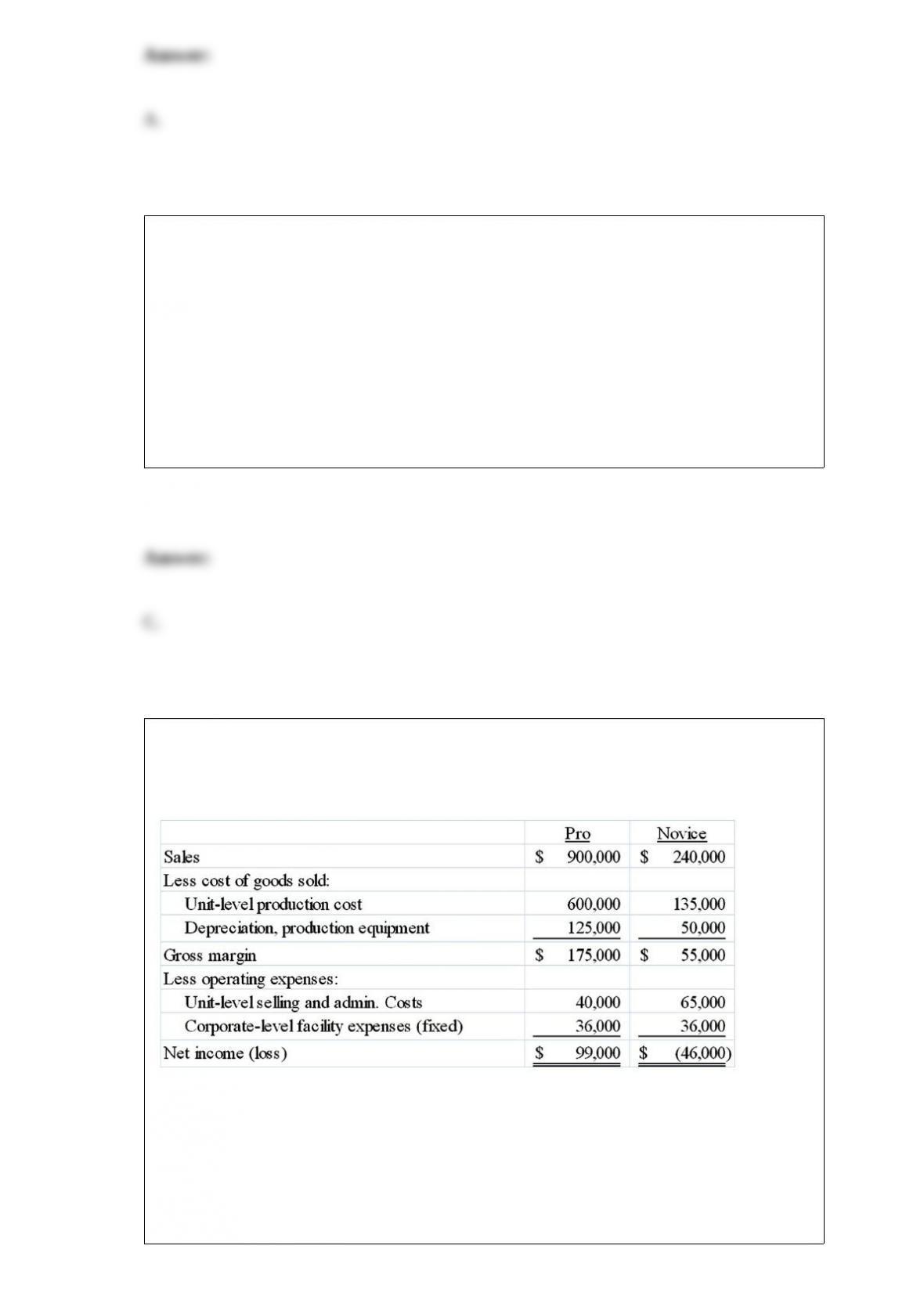
The Mansfield Company manufactures and sells two lines of fishing rods. During the
most recent accounting period, the Pro line and the Novice line sold 15,000 and 2,000
units, respectively. The company’s most recent financial statements are shown below:
Based on this information, the company should:
A. Eliminate the Novice line because it is operating at a loss.
B. Keep the Novice line because it contributes $40,000 to total profitability.
C. Keep the Novice line because it contributes $55,000 to total profitability.
D. It is impossible to determine with the given information.
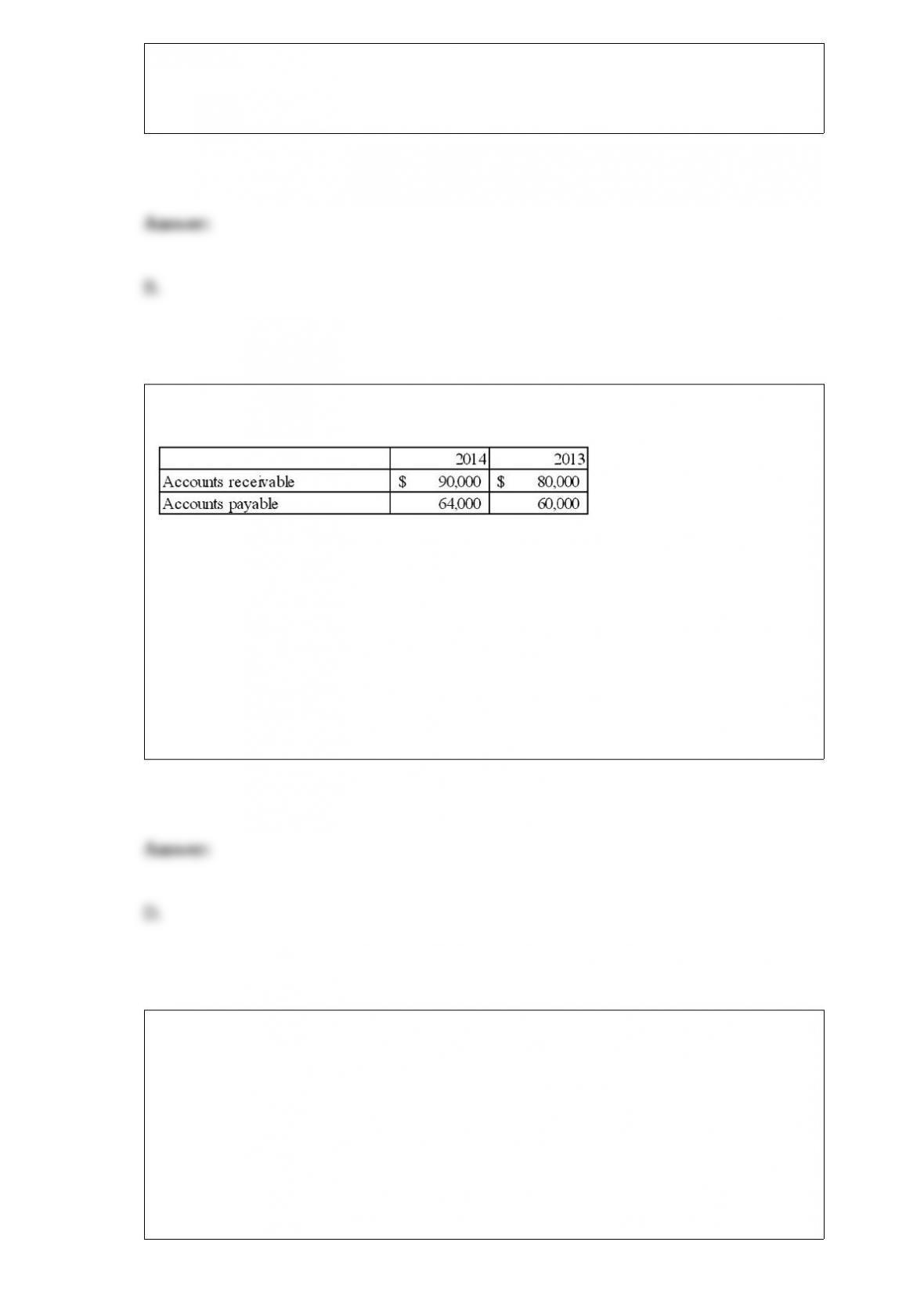
Leo Company reported sales of $200,000 in 2014. Leo’s balance sheets for 2014 and
2013 showed the following:
Based on this information, how much cash did Leo collect from sales during 2014?
A. $204,000
B. $210,000
C. $290,000
D. $190,000
Which of the following is not classified as manufacturing overhead?
A. Product delivery costs
B. Supervisory labor
C. Factory insurance
D. Production supplies
Cash outflows generated by capital investments include all of the following except:
A. annual depreciation of the capital asset.
B. initial investment in the capital asset.
C. increase in operating expenses.
D. increase in the amount of required working capital
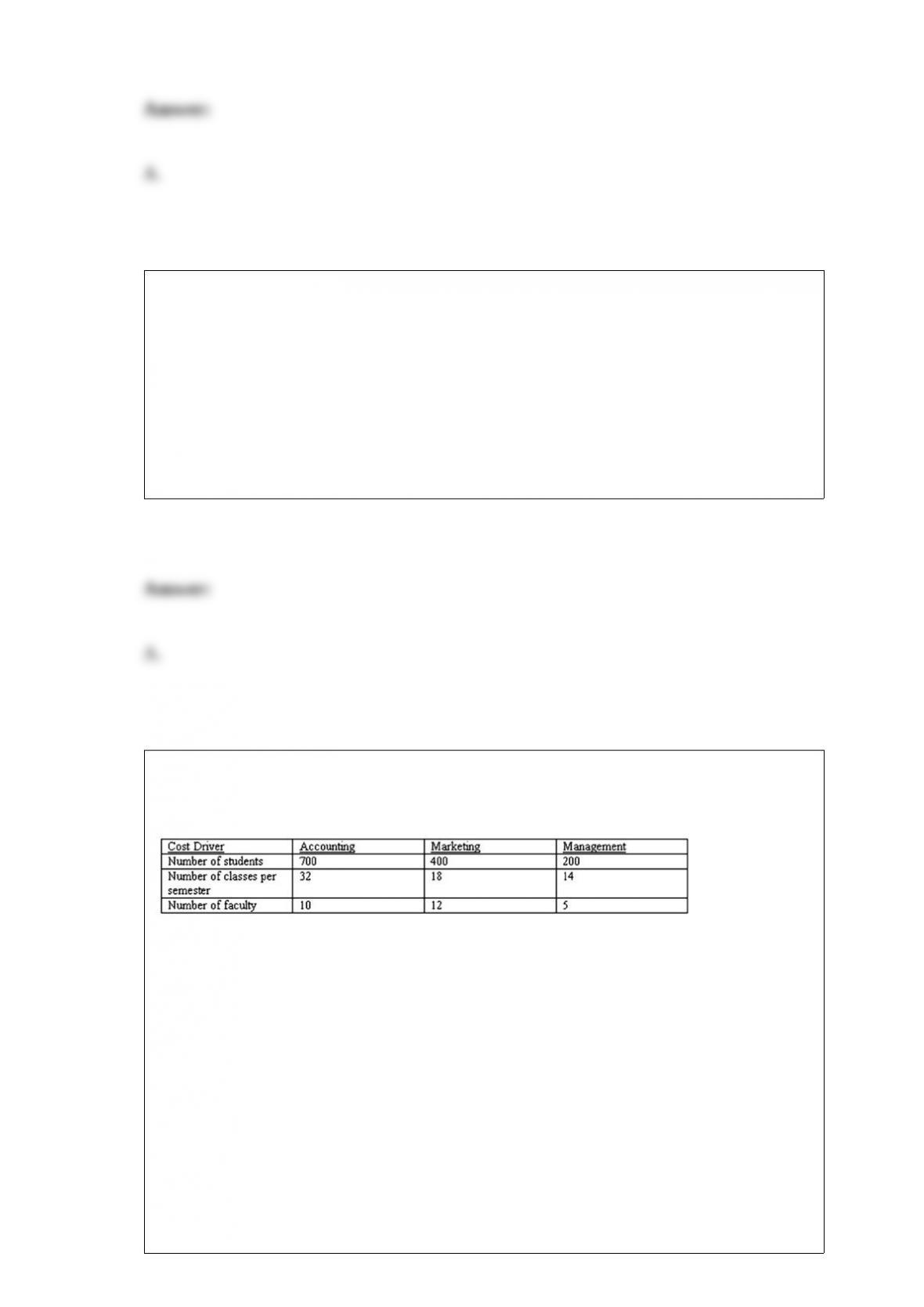
State University’s College of Business is divided into three departments, accounting,
marketing, and management. Relevant information for each department is provided
below:
The Dean of the College of Business is trying to assign funds from the operating budget
to the three departments. Assuming that the chair of each department is trying to attain
the highest funding possible for his/her department, which of the following most
accurately describes the allocation base that each chair will favor?
A. The chair of management will want to use the number of students while the chair of
marketing will prefer the number of faculty.
B. The chair of accounting and the chair of management will want to use the number of
faculty.
C. The chair of the marketing department will want to use number of students, while the
chair of the accounting department will want to use number of classes per semester.

D. The chair of the accounting department will want to use number of students while
the chair of the management department will want to use number of faculty.
The Dennis Company reported net income of $50,000 on sales of $300,000. The
company has total assets of $500,000 and total liabilities of $100,000. What is the
company’s return on equity ratio?
A. 10.0%
B. 16.7%
C. 12.5%
D. 50.0%
Jared expects to charge $60 per hour for his industrial maintenance business during the
following year. He expects to reach 50,000 hours at that price. Jared’s partner disagrees
with the estimate and expects closer to 40,000 hours.
What should Jared do when preparing the budget for the year?
A. Create a flexible budget showing a range of outcomes between 40,000 hours and
50,000 hours.
B. Create two master budgets, one at 50,000 hours and one at 40,000 hours.
C. Create only one budget at the more optimistic volume of 50,000 hours.
D. Create a volume budget based on actual performance.

Which of the following costs generally can be traced directly to units of product?
A. Indirect materials
B. Overhead costs
C. Assembly labor
D. Indirect materials and assembly labor
The following balance sheet information is provided for Santana Company for 2014:
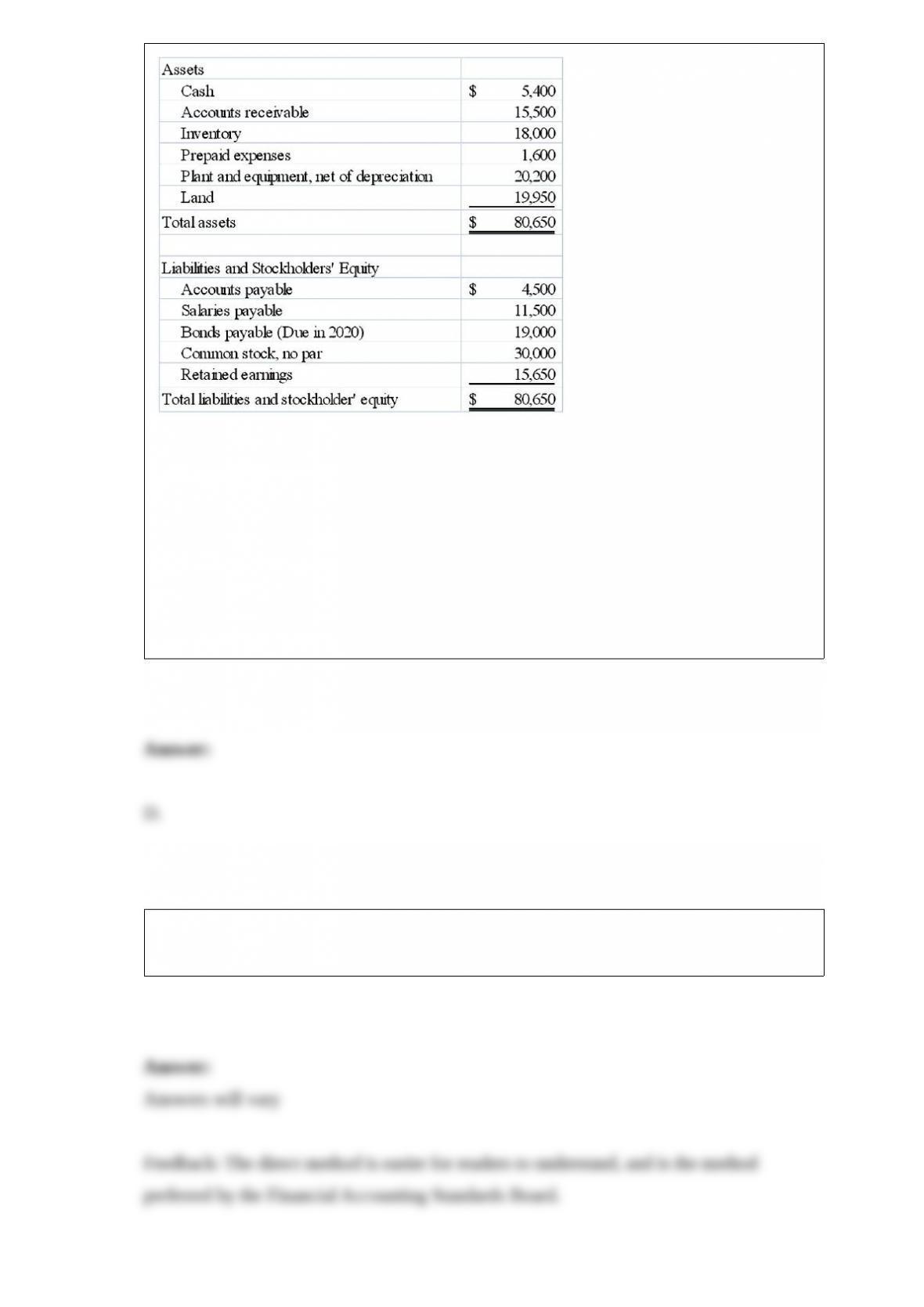
What is the company’s debt to equity ratio?
A. 42%
B. 130%
C. 43%
D. 77%
What is the major advantage of using the direct method of preparing the statement of
cash flows?
Indicate whether each of the following statements about financial statement analysis is
true or false.
The reason behind a financial statement ratio or percentage analysis result is usually
self evident and does not require further study or analysis.
In horizontal percentage analysis, an item from the financial statements is expressed as
a percentage of the same item from a previous year’s financial statements.
Horizontal analysis for several years can be done by choosing one year as a base year
and calculating increases or decreases in relation to that year.
One form of horizontal analysis is the preparation of common size financial statements.
Vertical analysis compares two or more financial statement items within the same time
period.
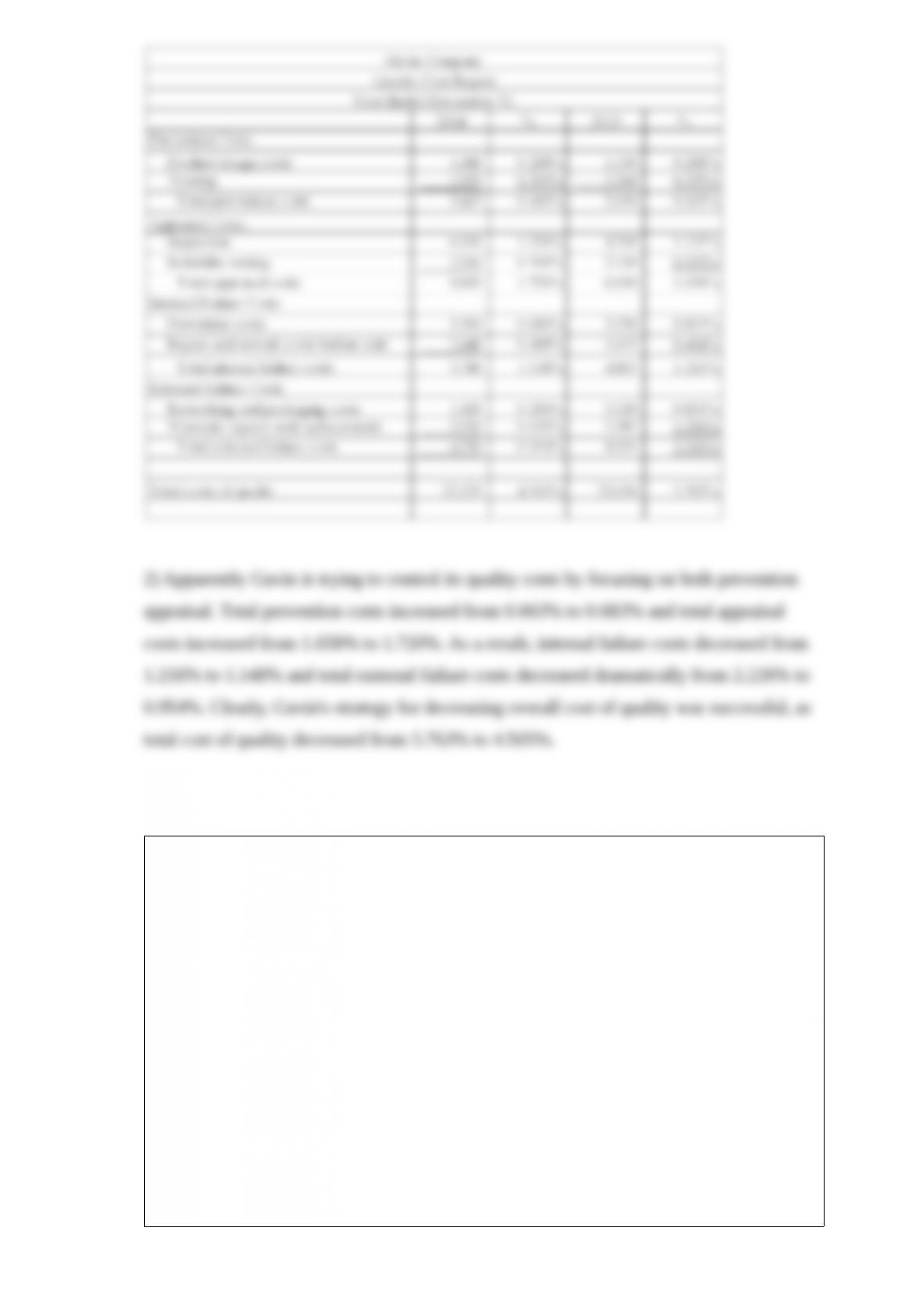
Gavin Company has asked its management accountant to prepare a cost of quality
report. Management is concerned that quality costs are too high relative to the
company’s sales. Sales in 2013 totaled $400,000, while sales in 2014 were $500,000.
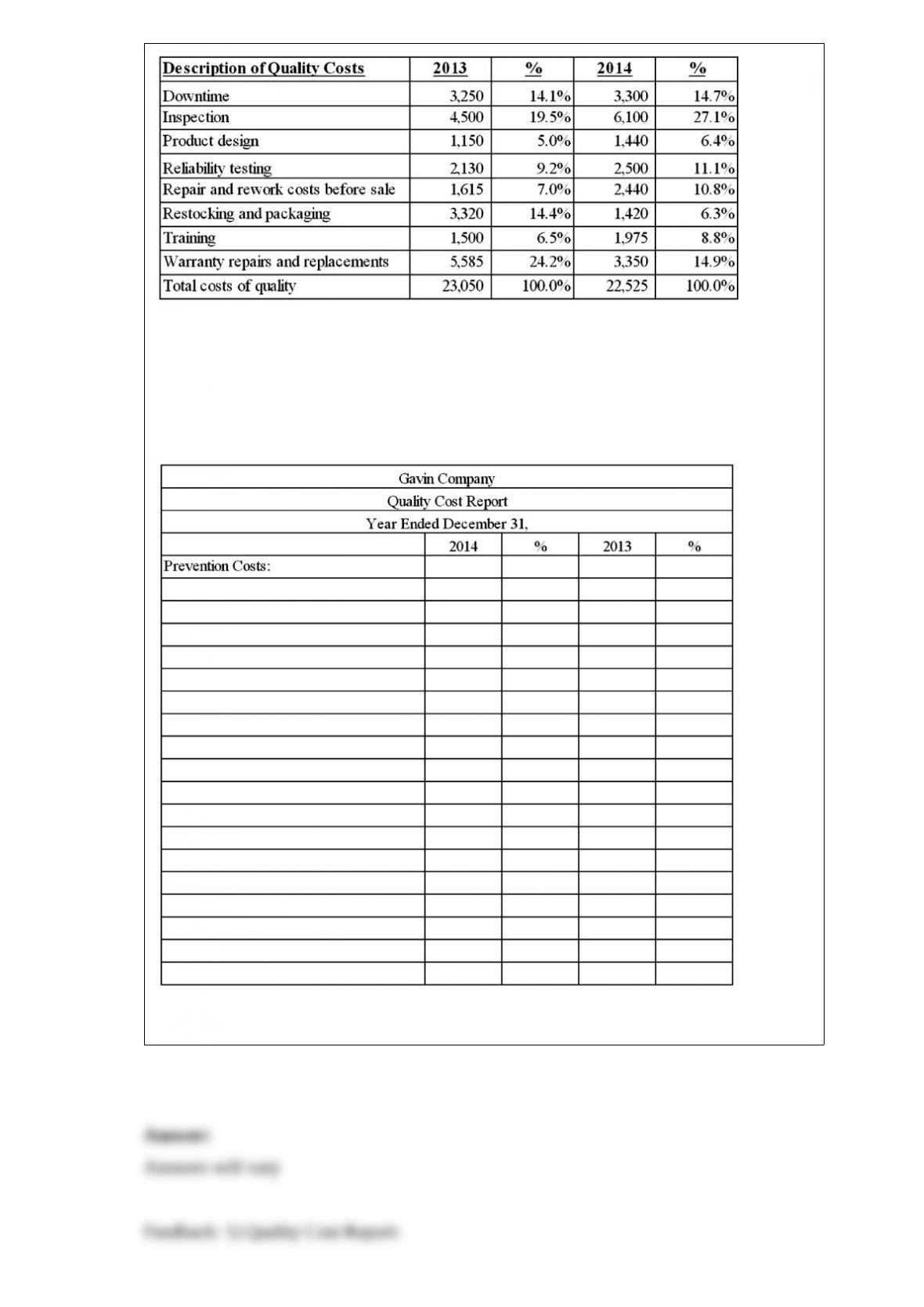
Required:1) Prepare a Quality Cost Report for Gavin Company showing its quality
costs as a percentage of sales. Organize the costs by type (prevention, appraisal, internal
failure, and external failure) and include percentages for each individual cost as well as
for the total of each category. Round your answers to three decimal places. A schedule
has been started below:
2) Evaluate Gavin Company’s strategy for reducing its total costs of quality.
Indicate whether each of the following statements about product cost systems is true or
false.
The type of product made by a manufacturer affects the type of accounting system that
it should use to calculate the costs of its products.
Hybrid costing systems are used by service businesses, but not manufacturing
companies.
A company that manufactures high-volume industrial chemicals such as sulfuric acid
would use a job-order cost system.
An automobile repair shop would use a job-order cost system to assign costs to
individual jobs.
Only process cost systems require averaging in assigning costs to products.
Compare and contrast a cost-plus pricing strategy to a target pricing strategy.