A company has an obligation to provide highly detailed information on its financial
statements.
Just in time systems can be used by both manufacturing and merchandising companies.
To avoid the appearance that a joint product is incurring losses, a company might
allocate joint costs based on relative sales value of each product at the split-off point.
Payment of cash for production department employee wages is an asset exchange
transaction.
The higher the magnitude of a company’s operating leverage, the smaller the decrease
in profit for a given percentage decrease in revenue.
Noncash investing and financing activities are not reported on the statement of cash
flows.
Pro forma financial statements are financial statements that are prepared based on
budgeted future amounts.
Pro forma financial statements are prepared at the end of the year and are used to
evaluate the performance of managers.
Solvency ratios are used to analyze the long-term debt-paying ability and the
composition of the financing structure of the firm.
The direct method shows the specific sources and uses of cash that are associated with
operating activities.
A company that incurred $1,000 in production costs reported cost of goods sold of $800
and selling costs of $100. Its ending finished goods inventory was $300.
One of the advantages of target costing is that it specifically considers the probable
market price for the product.
For a company that sells several products, different sales mixes generally give rise to
different break-even sales levels, even if overall sales volume remains unchanged.
Misclassifying a period cost as a product cost will usually correct itself in the following
period.
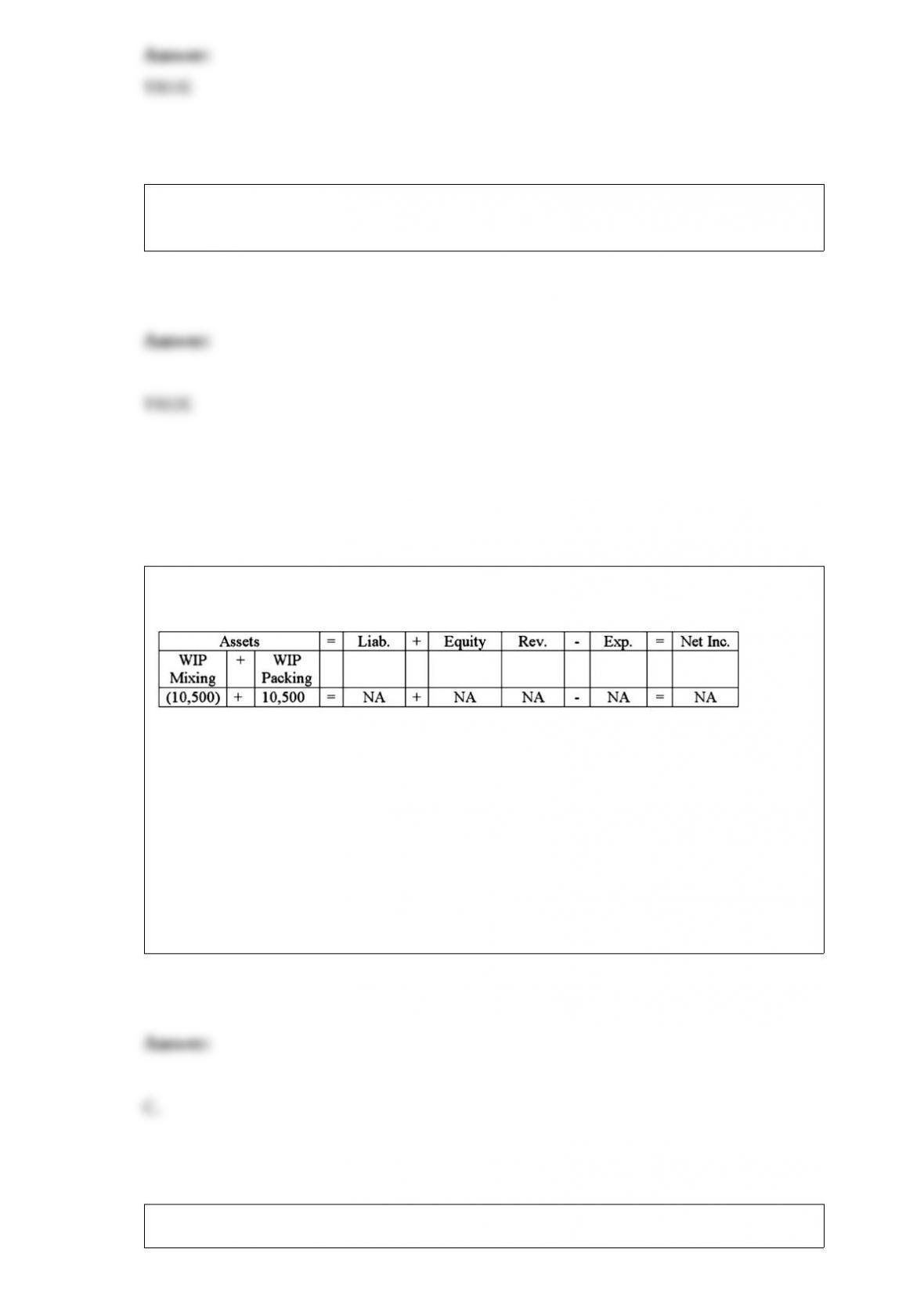
Bruce Company experienced an event that affected its financial statements as indicated
below:
What type of product costing system is being used by this company?
A. Job-order cost system
B. Hybrid cost system
C. Process cost system
D. None of these.
A laundry detergent manufacturer would most likely use:
A. Process costing.
B. Job order costing.
C. Hybrid order costing.
D. Batch order costing.
Sales commissions are an example of:
A. unit-level activities.
B. batch-level activities.
C. facility-level activities.
D. product-level activities.
The following income statements are provided for Li Company’s last two years of
operation:
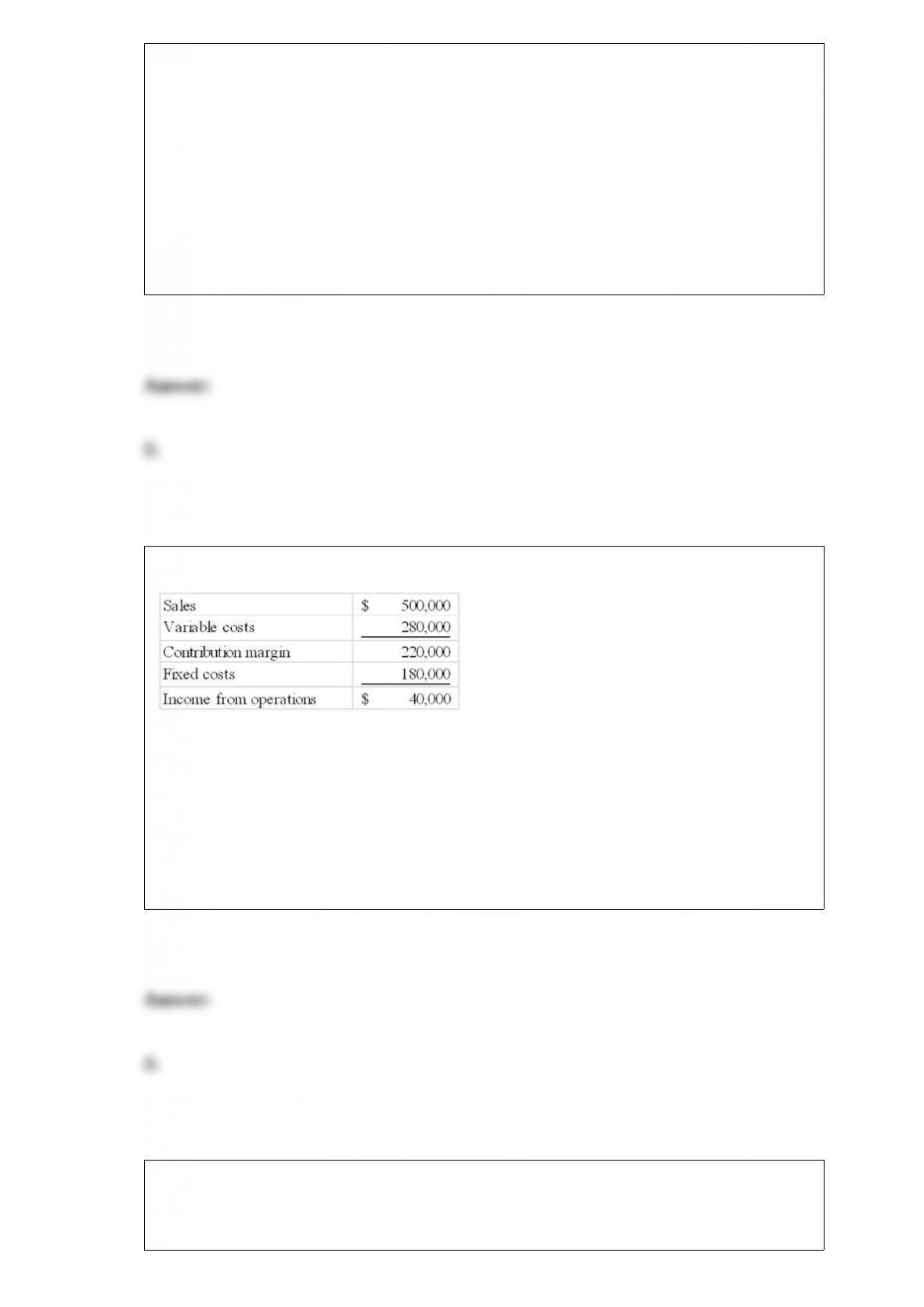
Assuming that cost behavior did not change over the two year period, what is the
company’s annual fixed general, selling, and administrative cost?
A. $6,500
B. $6,000
C. $3,000
D. $2,500
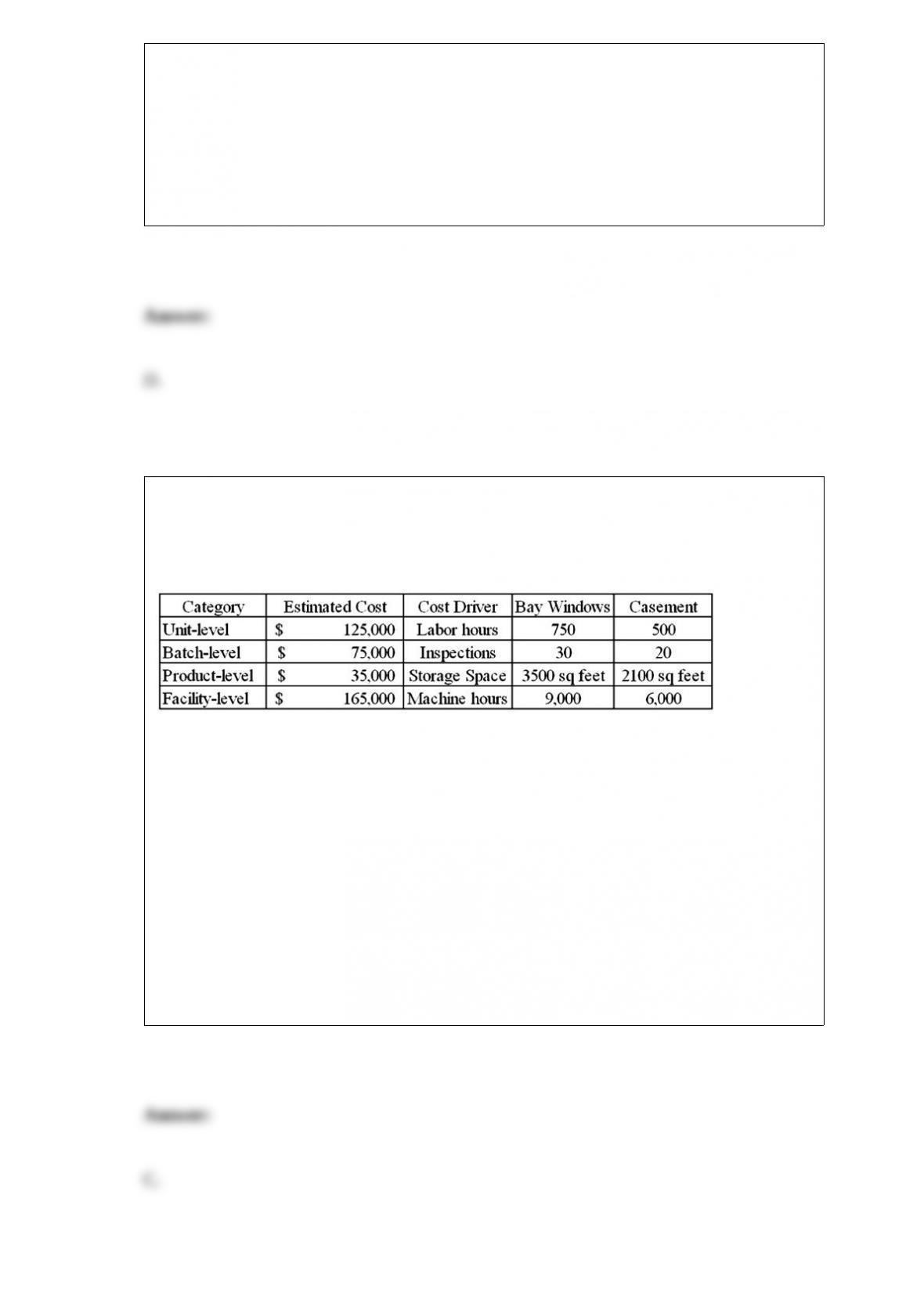
Based on the following operating data, the operating leverage is:
A. 0.18
B. 5.50
C. 1.22
D. 12.5
A company’s numerous specific budgets (sales, inventory purchases, etc.) together are
referred to as the:
A. grand plan.
B. strategic plan.
C. current budget.
D. master budget.
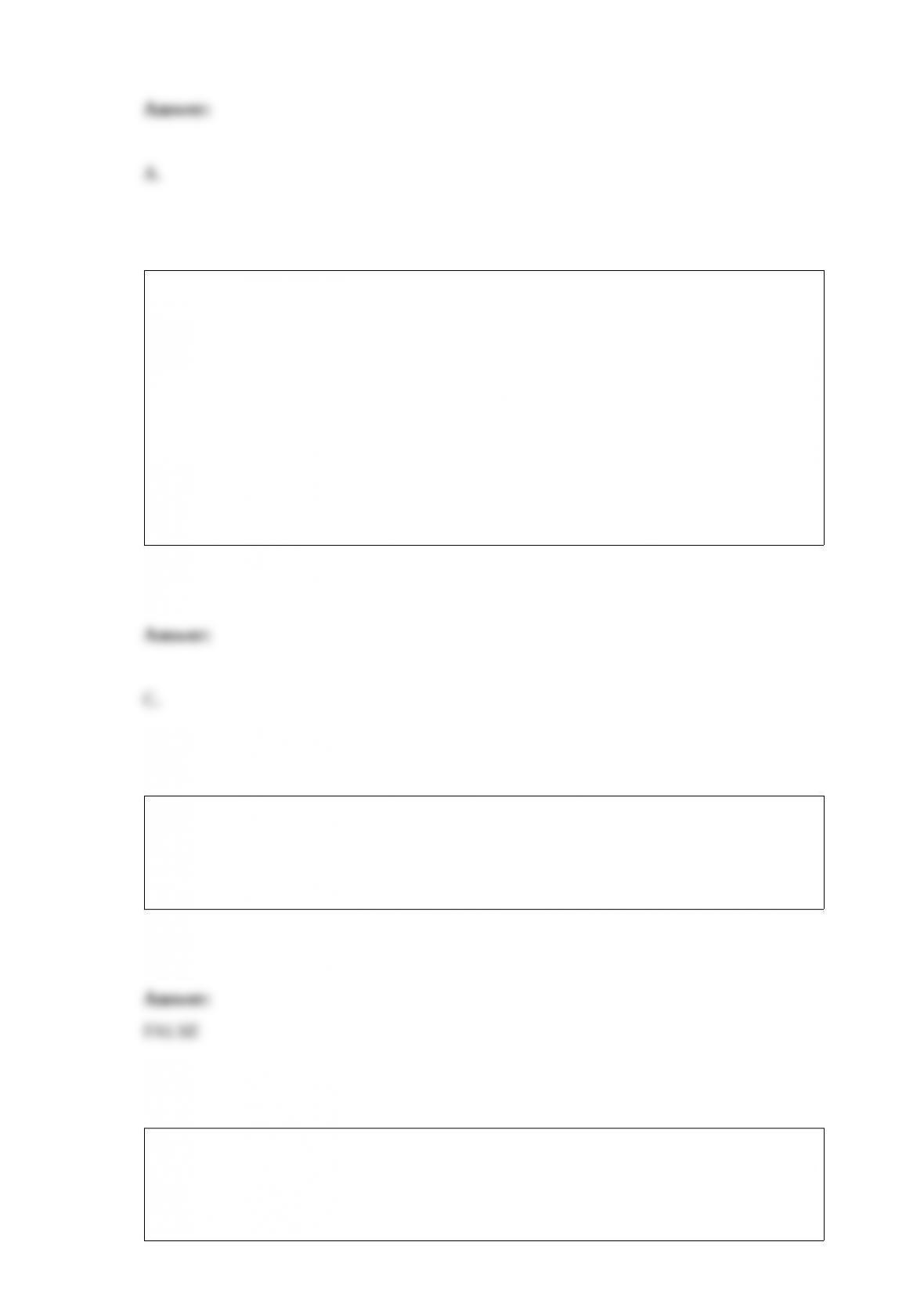
Franklin Manufacturing manufactures two models of windows, bay windows and
casement windows. Franklin uses an activity based costing system. The following
information about the activities used to product the company’s products has been
provided.
Which of the following best describes the impact of undercosting?
A. This is a goal of all companies. Undercosting all products allows for larger profit
margins.
B. Companies will use target pricing to undercost products.
C. Undercosting some products will lead to overcosting other products which may
become overpriced and lose market share.
D. Undercosting some products can lead to overcosting other products, which is
acceptable because it all balances.

Which of the following statements best explains the correct handling of depreciation on
the statement of cash flows when using the indirect method?
A. Depreciation is subtracted from net income because it causes a loss when the related
plant asset is sold.
B. Depreciation expense is a non-cash expense that was subtracted to derive the
accrual-basis net income, hence added to net income in the cash flows from operating
activities section.
C. Depreciation is subtracted in the cash flows from investing activities section because
it reduces the book value of the corresponding plant asset.
D. Depreciation adds to the company’s cash account to help pay for new equipment.
Which of the following statements is incorrect?
A. An activity-based costing system uses more cause-and-effect relationships in tracing
costs than does a traditional cost allocation system.
B. An activity-based costing system first assigns or traces costs to the departments in
which products are made.
C. The hierarchical categories into which activities are grouped are unit-level,
batch-level, product-level and facility-level activities.
D. The total amount of unit-level costs changes in proportion to the number of units of
product made.
Managing quality costs to achieve the highest level of customer satisfaction is known

as:
A. activity based management.
B. total quality management.
C. strategic management.
D. quality costs.
Carolina Company placed $26,500 of raw materials into production. The recognition of
this event will:
A. decrease net income.
B. not effect total assets.
C. increase revenue.
D. decrease cash flow from investing activities.
Costs incurred to avoid nonconforming products are:
A. prevention costs.
B. appraisal costs.
C. failure costs.
D. voluntary costs.
Ashley projects that she can get $100,000 cash per year for 5 years on a real estate
investment project. If Ashley wants to earn a rate of return of 12%, what is the
maximum that she should pay for the investment? (rounded to the nearest dollar)
A. $56,743
B. $446,429
C. $360,478
D. $560,000
Joint costs total $24,000 for a production process that yields two main products, A and
B. If joint costs are allocated to the products on the basis of their respective $20,000
and $30,000 sales values, 2/3 of the joint costs ($16,000) would be allocated to Product
A.
Cash outflows can be categorized into all of the following groups except:
A. opportunity costs associated with selecting a specific capital project.

B. outflows associated with the initial investment.
C. working capital commitments.
D. increases in operating expenses.
Southeast Manufacturing Company has identified the following cost objects:
Cost Object 1: The cost of operating the finishing department
Cost Object 2: The cost of a particular product made in June
Cost Object 3: The cost of operating the factory
With respect to these cost objects, the cost of the salary of the supervisor of the
finishing department is directly traceable to cost objects:
A. 1 and 2.
B. 2 and 3.
C. 1 and 3.
D. 1, 2, and 3.
When using the indirect method to complete the cash flows from operating activities
section, what is the proper treatment for an increase in the accounts receivable balance?
A. Add the increase to net income

B. Add the increase to cash collections from customers
C. Deduct the increase from net income
D. Add the increase to cash payments to suppliers
Capital investment decisions involve all of the following, except:
A. the acquisition of short-term operational assets.
B. projects requiring relatively long periods of time and large cash flows.
C. the acquisition of long-term operational assets.
D. none of these answers is correct.
Pierce Company’s break-even point is 12,000 units. Its product sells for $25 and has a
$10 variable cost per unit. What is the company’s total fixed cost amount?
A. $250,000
B. $180,000
C. $120,000
D. Fixed costs cannot be computed with the information provided.
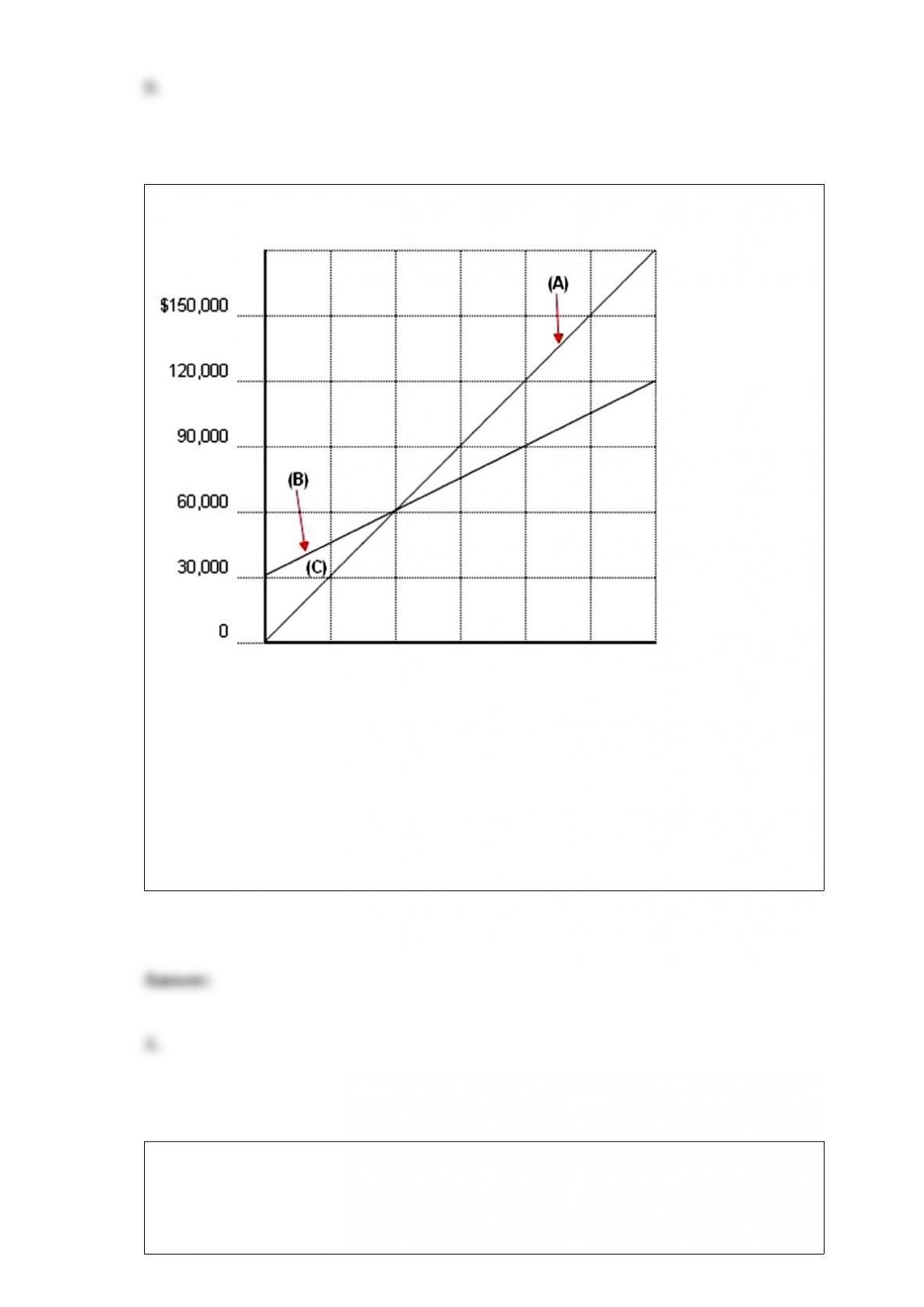
Consider the following cost-volume-profit graph:
The line designated by the letter (A) represents which of the following?
A. Total revenue
B. Total cost
C. Total fixed cost
D. None of these is correct.
Select the incorrect statement regarding the use of cost drivers in activity-based costing
systems.
A. ABC uses volume-based and activity-based cost drivers.
B. Volume-based drivers are most appropriate for costs that are affected by the number
of units produced.
C. ABC’s use of multiple cost drivers will produce less precise unit costs when a
company produces many different products that require different types and levels of
overhead costs.
D. An arbitrary cost driver must be selected when allocating facility-level activity costs.
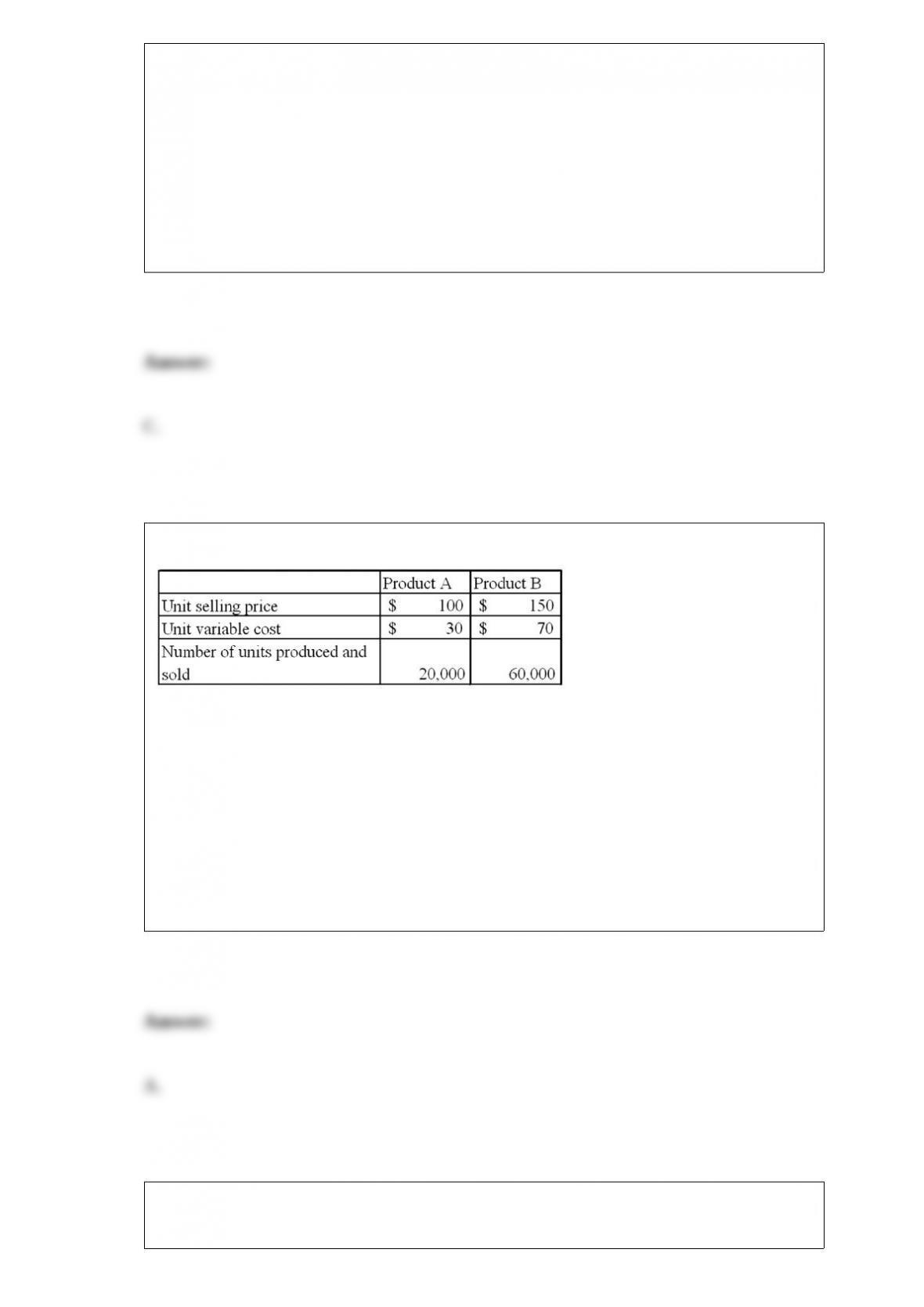
The Victor Company sells two products. The following information is provided:
What is the weighted-average contribution margin per unit?
A. $77.50
B. $80.00
C. $75.00
D. $72.50
Easton Company makes and sells scooters. Easton incurred the following costs in its
most recent fiscal year:
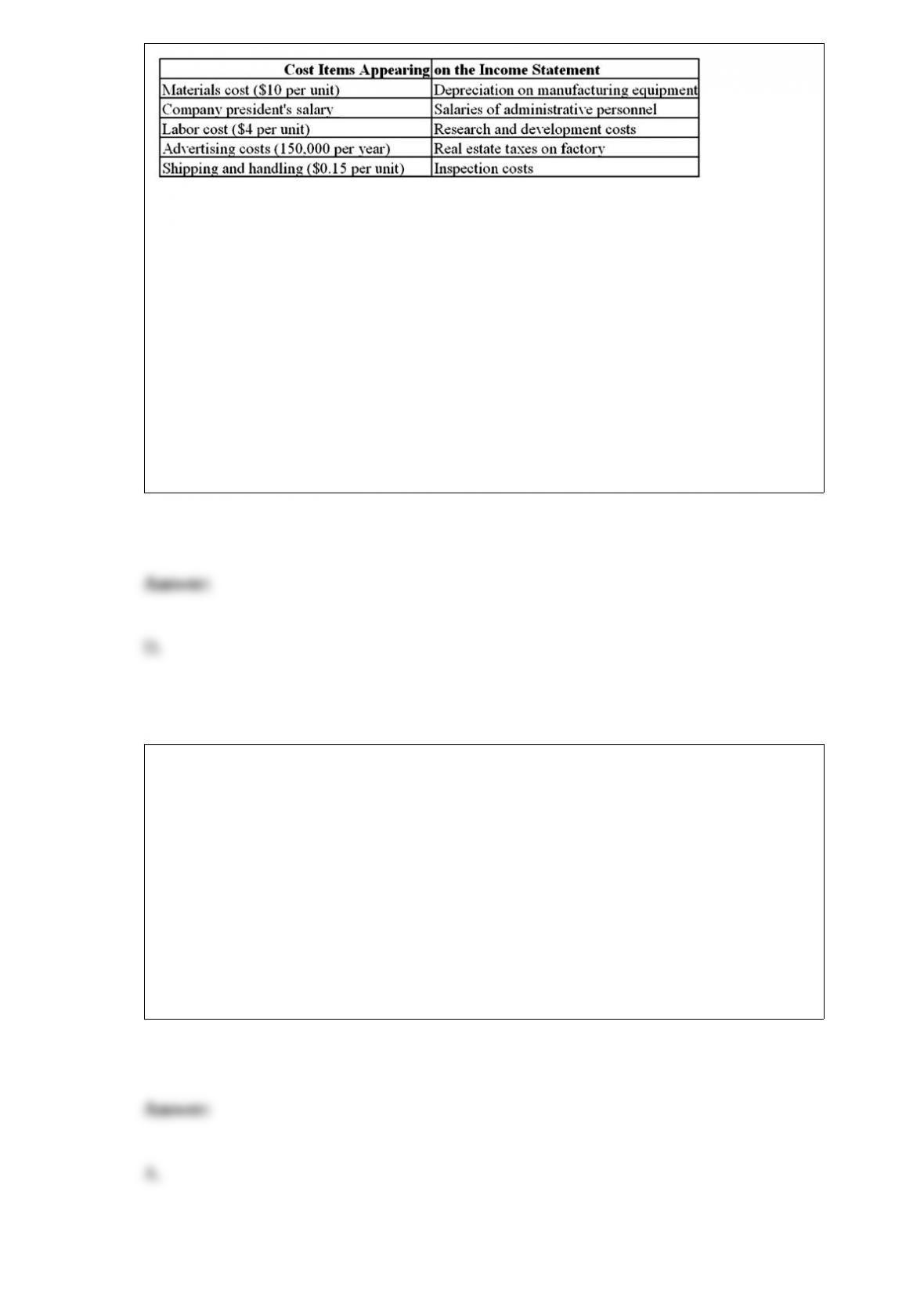
Easton can currently purchase the scooters it makes from another company. If the
company purchases the scooters, Easton would still continue to use its own logo, sales
staff, and advertising programs. Which of the following costs would be classified as a
facility-level cost?
A. Inspection costs
B. Shipping and handling
C. Materials cost
D. Company president’s salary
Blankenship Company operates a factory with two departments, X and Y. The utilities
to heat and light the manufacturing facility would most likely be allocated to
departments X and Y on the basis of:
A. Square footage occupied.
B. Machine hours.
C. Direct labor hours.
D. Units sold.
All of the following are deducted from net income when preparing the statement of
cash flows under the indirect method except:
A. an increase in accounts payable.
B. a decrease in accrued liabilities.
C. an increase in accounts receivable.
D. an increase in inventory.
Is depreciation on manufacturing equipment expensed in the period incurred? Explain
why or why not.
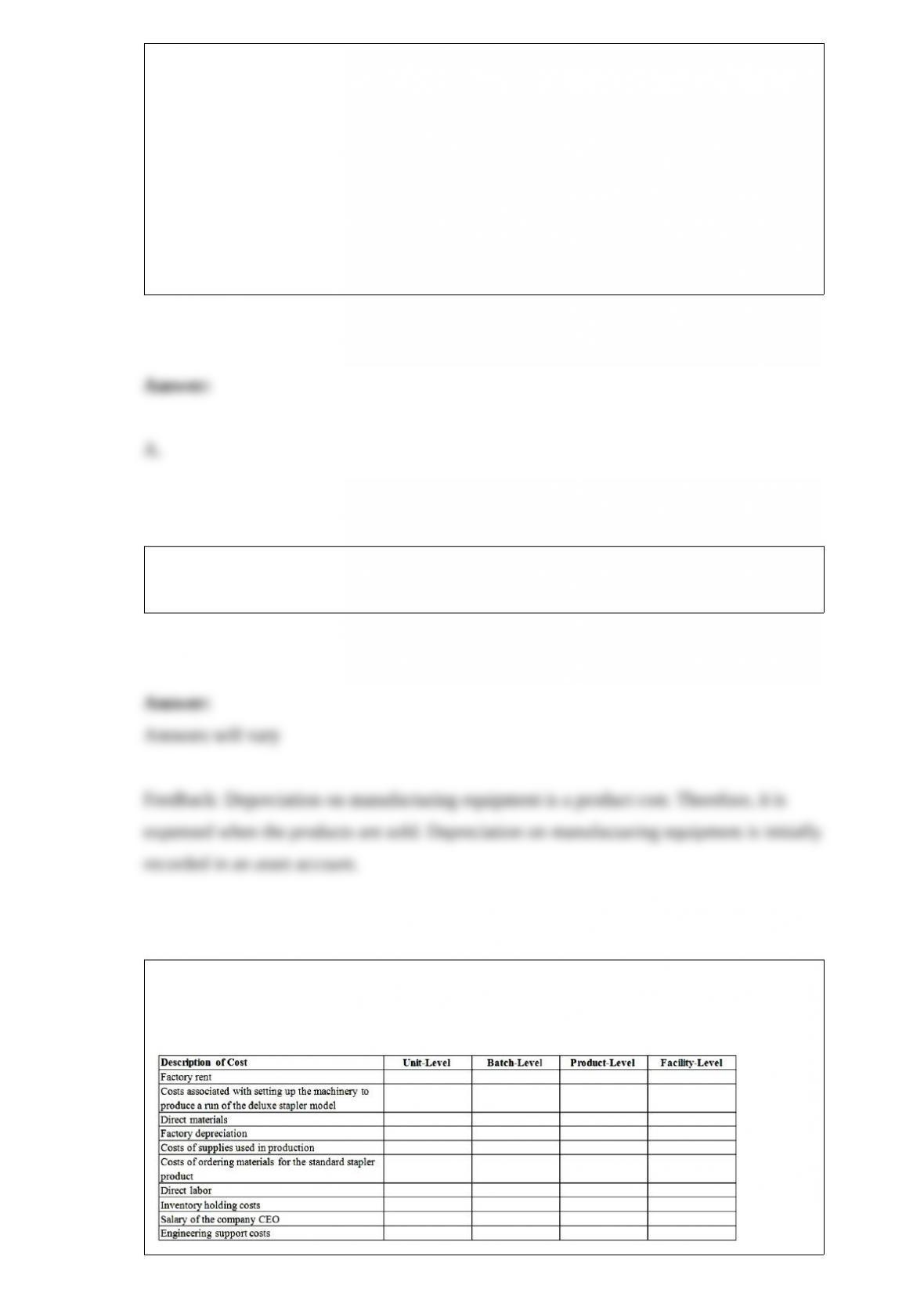
Supply Depot produces a variety of office products including two models (standard and
deluxe) of a hand-held stapler. A number of the company’s activity-related costs are
described in the following table:
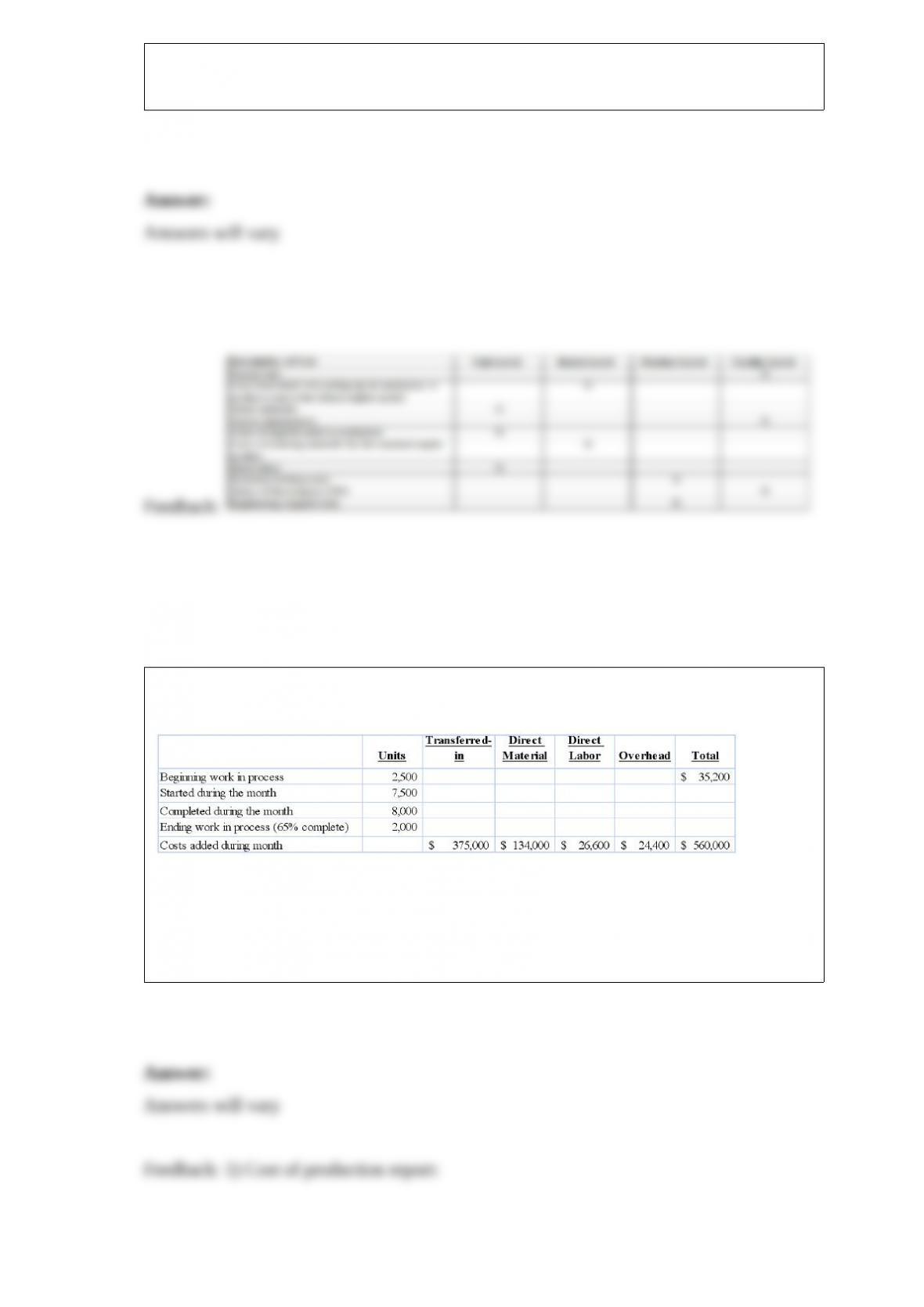
Required:Classify each of the above costs into unit, batch, product, or facility-level
cost pools.
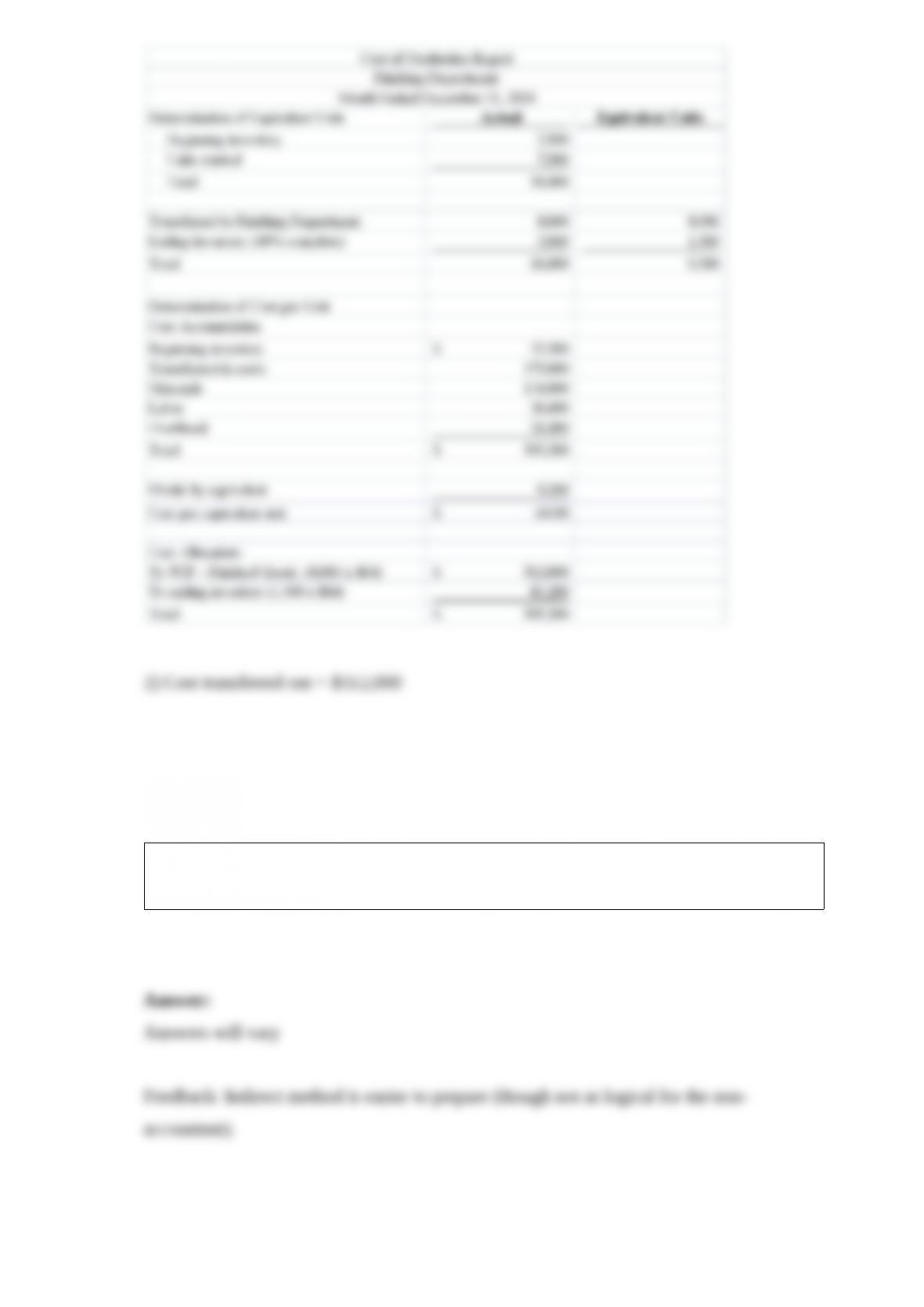
Carter Manufacturing Company has two departments, Assembly and Finishing.
Consider the following data for the Finishing Department for December 2014:
Required:
1) Prepare a cost of production report for the Finishing Department.
2) How much cost should be transferred to Finished Goods?
What is the major advantage of using the indirect method of preparing the statement of
cash flows?
How do information needs of employees change moving up the organization chart?
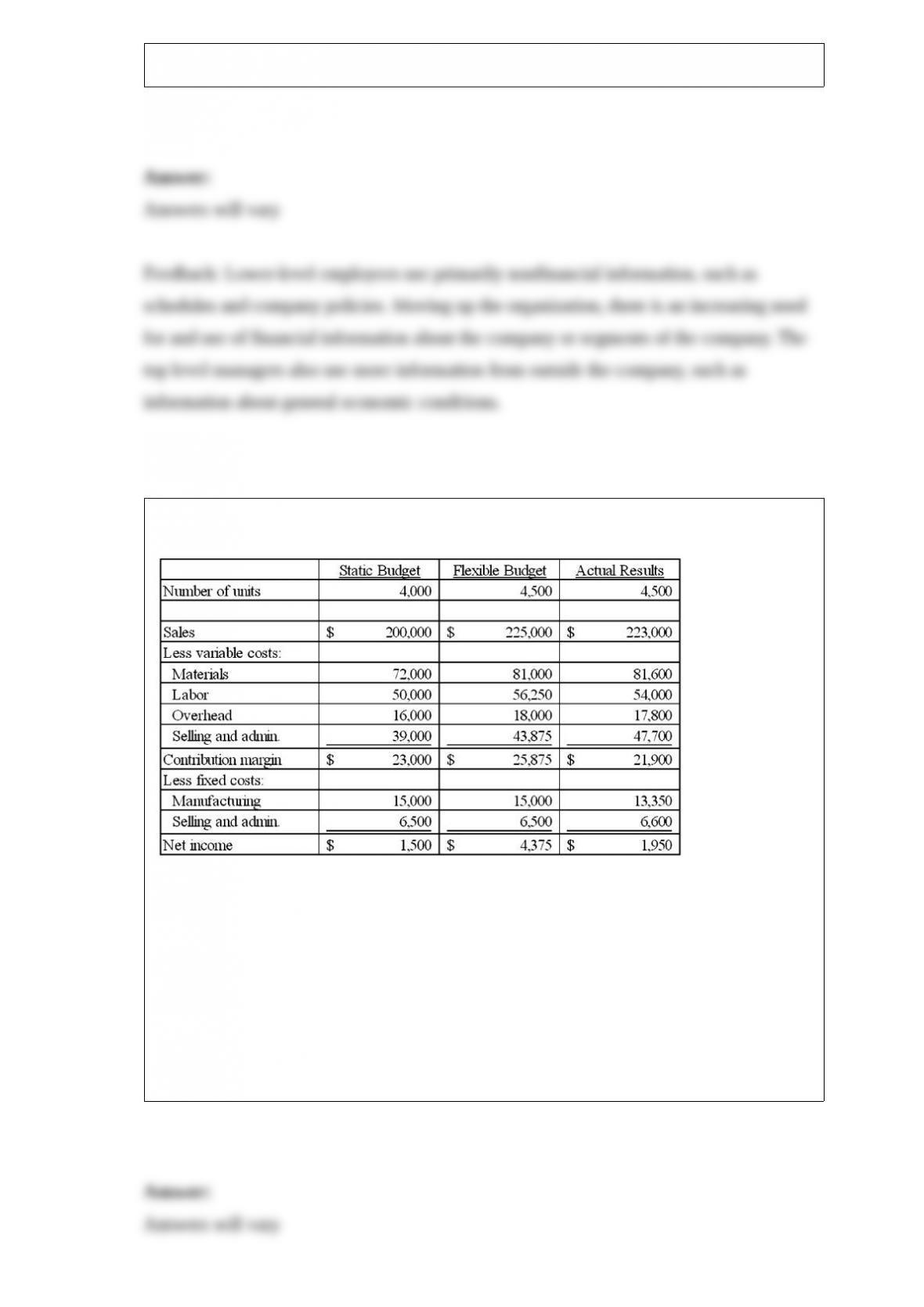
The accountant for Dalton Company prepared the following performance report:
Required:
1) Compute the sales volume variance in units.
2) Compute the percentage increase in revenue generated by the increase in activity.
3) Compute the percentage increase in budgeted profitability that resulted from the
increase in revenue. Explain this result.
4) How would differences between planned and actual volume impact companies that
use a cost plus pricing strategy?
How might a company develop sales estimates to be used in preparing a sales budget?
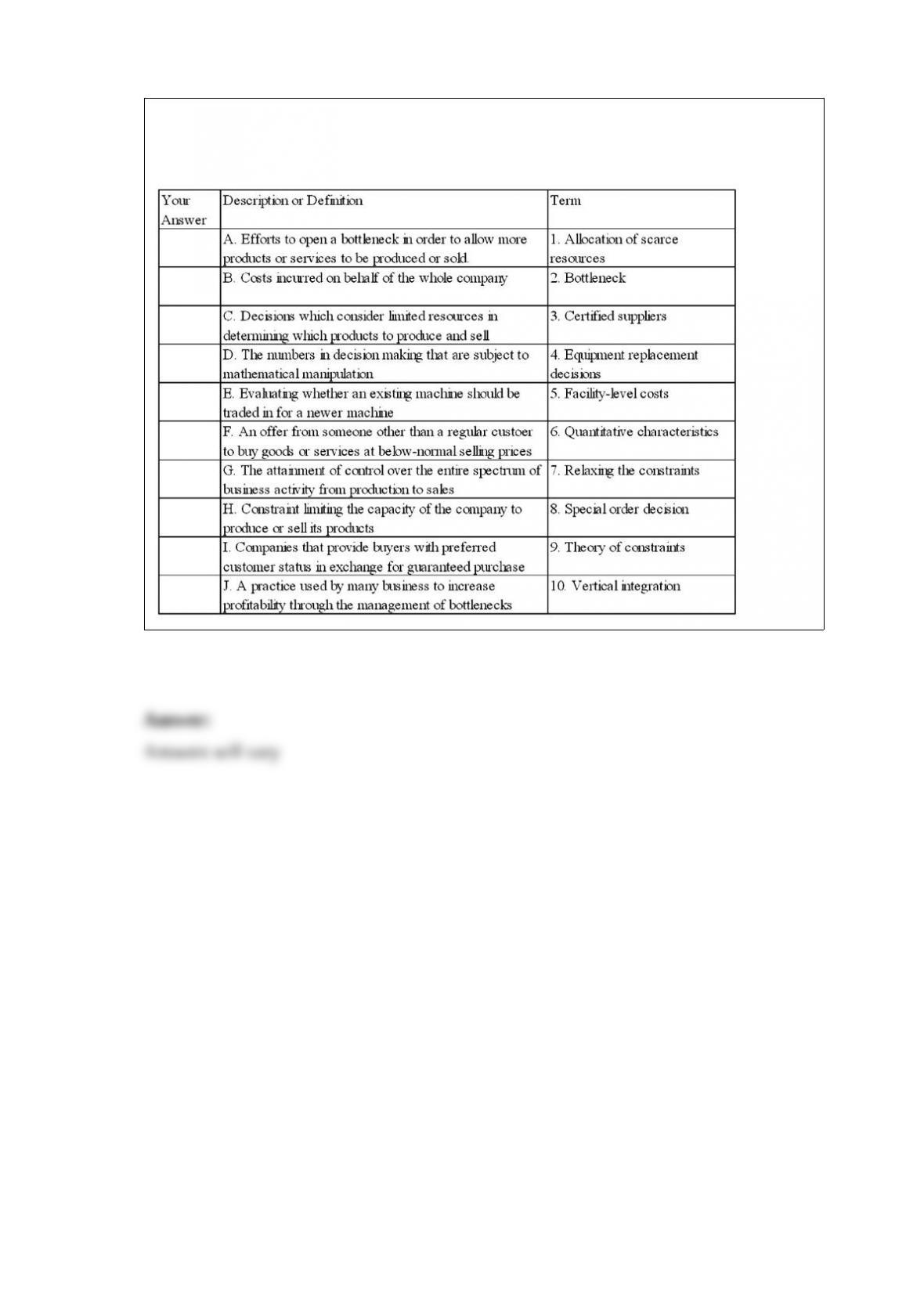
Select the term from the list provided that best matches each of the following
descriptions. Put the number of the term in the column for Your Answer.
What characteristic or feature of a service company distinguishes such a business from
a manufacturing company?