The D Company develops, manufactures, distributes, and markets branded health care
products as well as private-label vitamin products in the United States and more than 50
other countries. A disclosure note from D’s 2014 annual report is shown below:
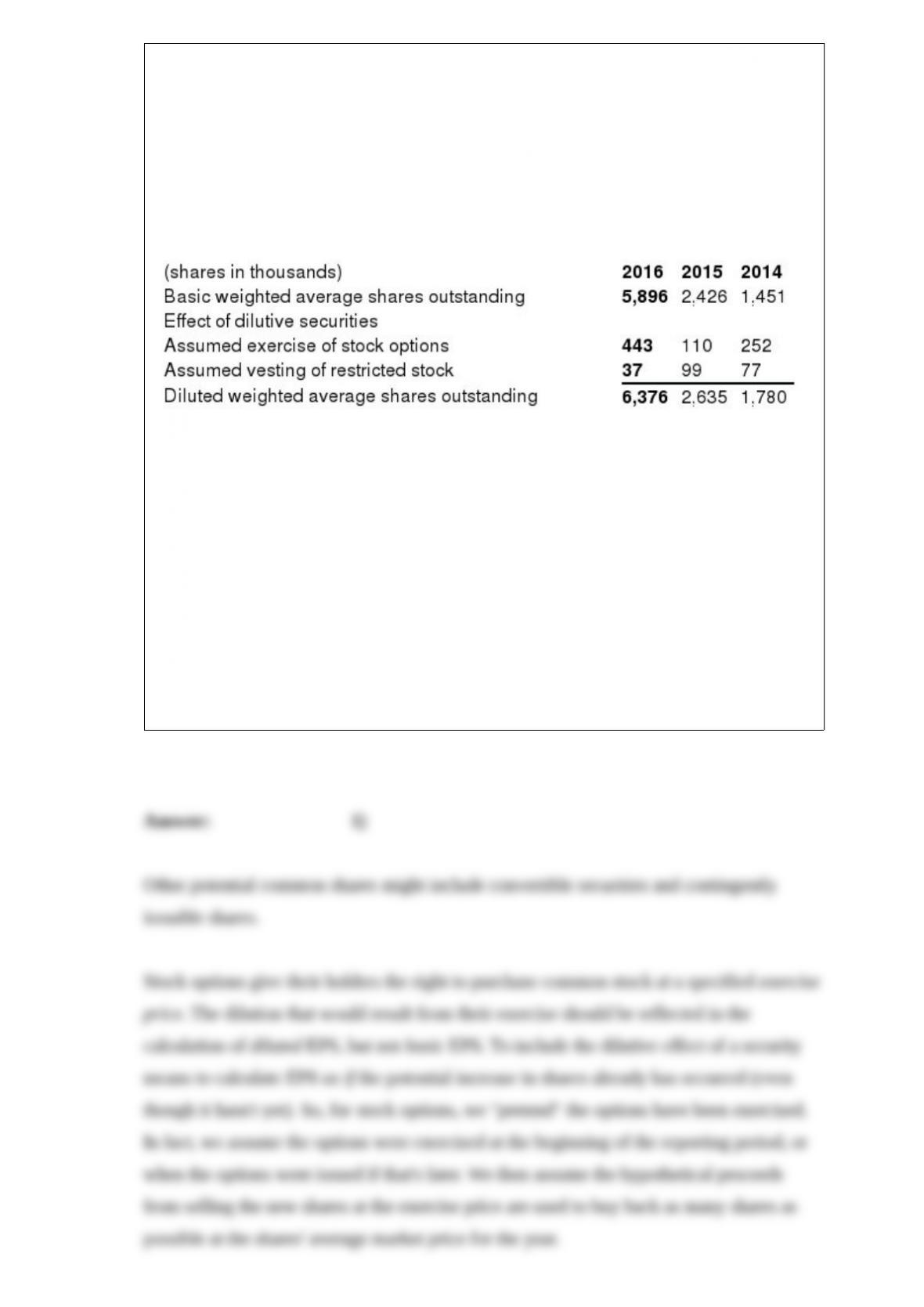
Weighted Average Shares Outstanding
The following table provides information about basic and diluted weighted average
shares outstanding:
The computations of diluted weighted average shares outstanding exclude 4 million
shares in fiscal year 2016, 2 million shares in fiscal year 2015 and 1 million shares in
fiscal year 2014 since the options were antidilutive.
Required:
1) The disclosure note shows adjustments for “assumed exercise of stock options and
assumed vesting of restricted stock.” What other adjustments might be needed? Explain
why and how these adjustments are made to the weighted-average shares outstanding.
2) The disclosure note indicates that the effect of some of the stock options were not
included because they would be antidilutive. What does that mean? Why not include
antidilutive securities?
Briefly explain what is meant by a subsequent event. Give two examples of subsequent
events.
The following table presents a summary of ratio analysis for McDonald’s and averages
for their peer group:
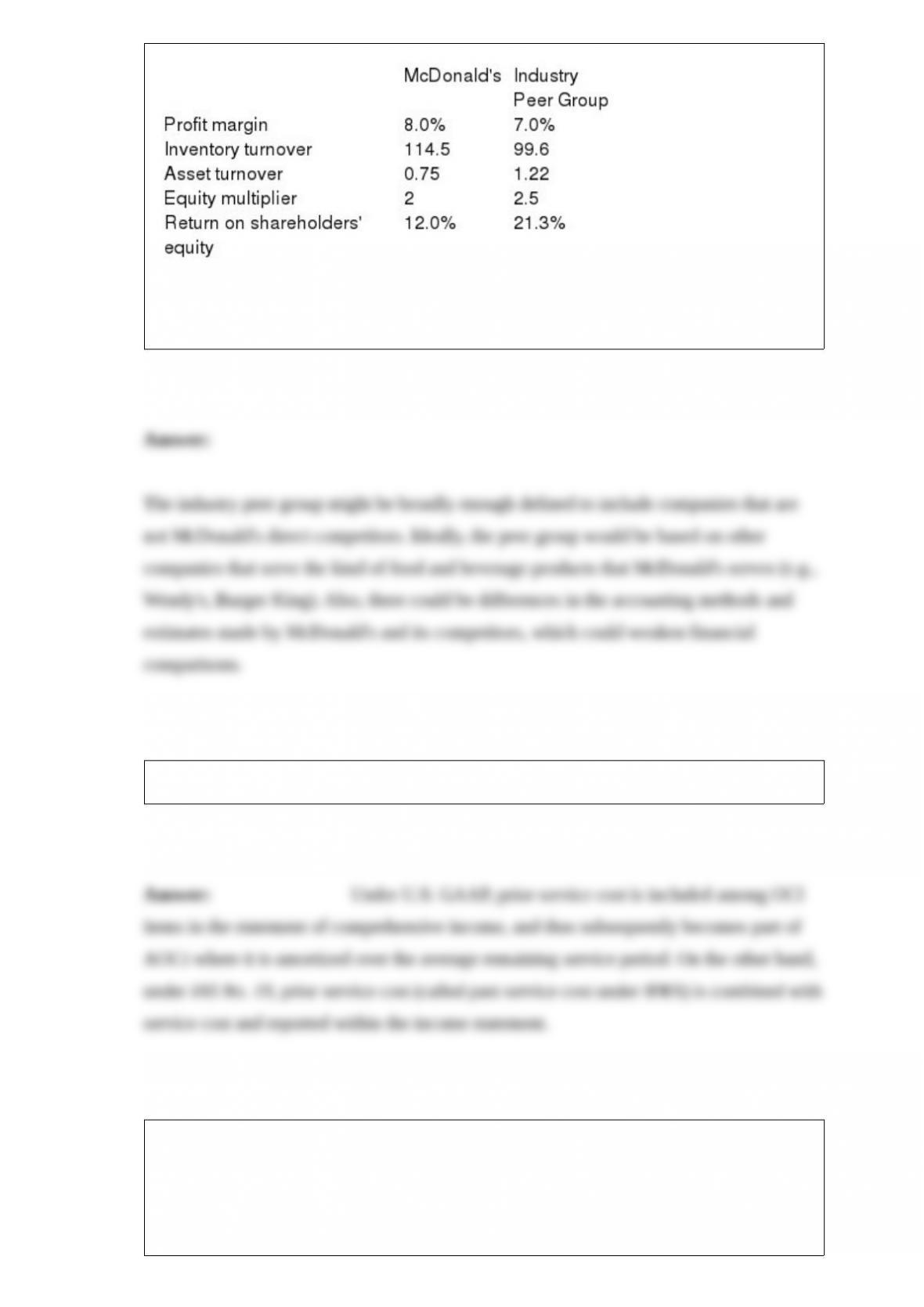
Besides size differences, what other differences between McDonald’s and its industry
peer group could limit your ability to make meaningful comparisons about the
performance of McDonald’s from the data above?
How do U.S. GAAP and IFRS differ with regard to reporting prior service costs.
Companies can have accounts receivable from ordinary trade customers and from
related parties (e.g., directors, employees or large shareholders). How does U.S. GAAP
differ from IFRS in its requirements regarding separate disclosure of trade receivables
and related-party receivables? Why might separate disclosure of related party
receivables be useful?