
In making long-term decisions about investing and financing, a firm should do which of
the following?
A.decide whether to make the investment, then decide how to raise the funds required
for the investment.
B.decide how to raise the funds required for the investment, then decide whether to
make the investment.
C.decide how to raise the funds required for the investment at the same time as deciding
whether to make the investment.
D.None of the above.
The expectancy view of motivation recommends
A.improving performance evaluation processes.
B.providing a high probability that behaving as the organization wishes will lead to
rewards.
C.creating incentive plans that include stock options.
D.both a and b above.
To make the line the “best fit” to the data, the method of least squares fits a line to the
data to minimize the sum of all the squared
A.residuals.
B.independent variables.
C.variances.
D.dependent variables.
Which of the following are rewards that come from the individual, such as the
satisfaction from studying hard, providing help to someone in need, or doing a good
job?
A.extrinsic rewards.
B.intrinsic rewards.
C.self rewards.
D.performance-based rewards.
What forms the basis for analyzing the differences between planned and actual results?
A.comparing actual results achieved with the master budget, only.
B.comparing actual results with the flexible and master budgets.
C.comparing actual results with the normal or average budget for the industry.
D.comparing actual results achieved with the actual results of the prior years.
In making capital budgeting decisions, the discounted cash flow method aids in
evaluating investments involving cash flows over time where there is a significant time
difference between cash payment and receipt. Analysts use which two discounted cash
flow methods?
A.the future value method and the internal rate of return method.
B.the net present value method and the external rate of return method.
C.the net present value method and the internal rate of return method.
D.the future value method and the external rate of return method.
Just-in-time requires the following factor(s) essential for success:
A.Purchasing quality materials
B.Smooth production flow, short customer-response times, and backlog of orders
C.Well-trained, flexible workforce committed to quality
D.All of the answers are correct.
What is the term that describes the optimal number units to order or produce to achieve
the optimal trade-off between setup (or order) costs and carrying costs?
A.total quality management.
B.flexible manufacturing practices.
C.just-in-time inventory.
D.the economic order quantity.
Short-run decisions include pricing for a special order with no long-term implications.
Typically the time horizon is
A.six months or less.
B.over six months but less than a year.
C.one to two years.
D.over two years.
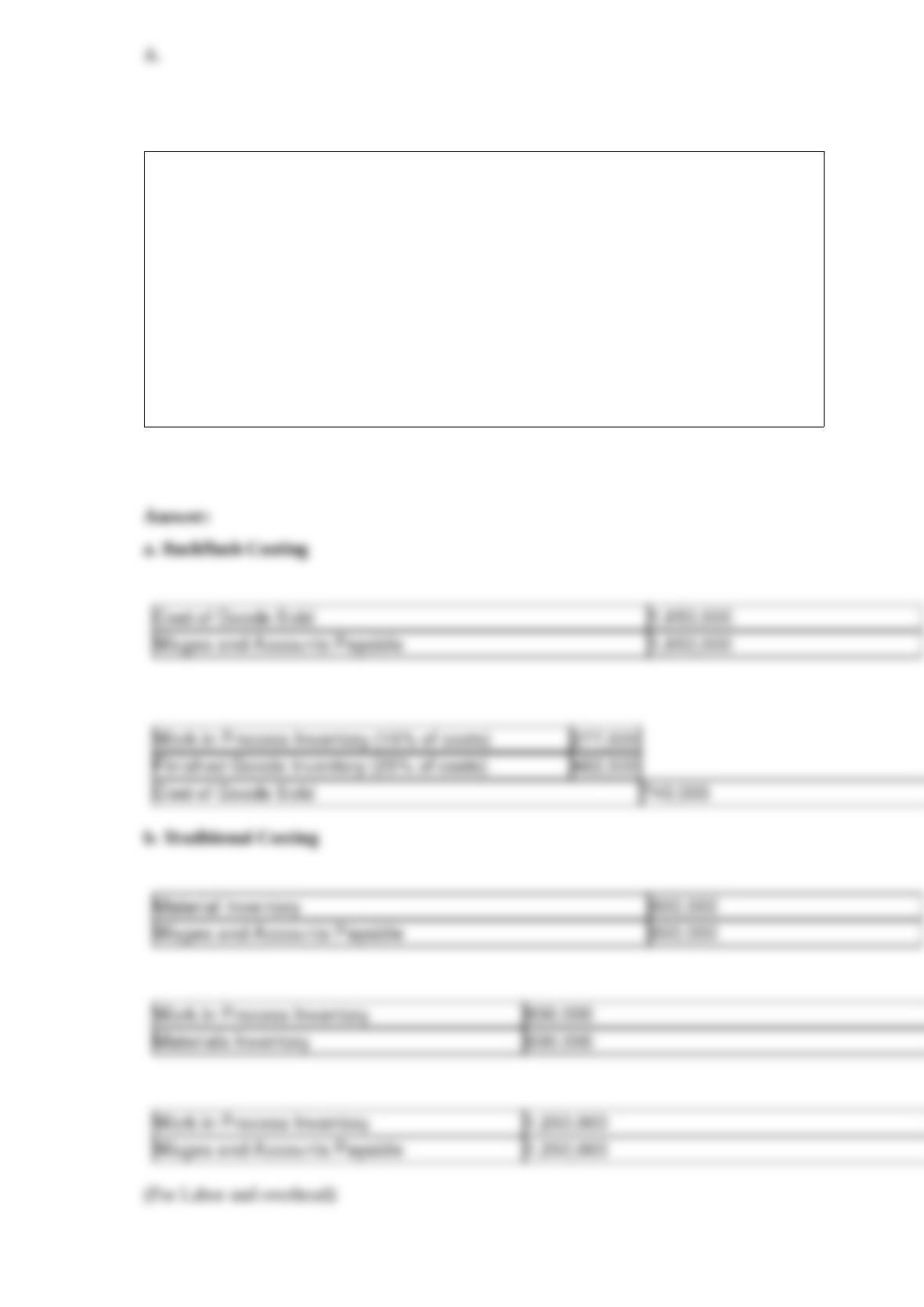
Compare just-in-time to a traditional accounting system. Clarion, Inc., produces
GPS units. The company received an order for 8,000 GPS Units. The company
purchased and used $600,000 of materials for this order. The company incurred labor
costs of $350,000 and overhead costs of $900,000. The company credits all costs to
“Wages and Accounts Payable.” The accounting period ended before the company
completed the order. The firm had 15 percent of the total costs incurred still in
Work-in-Process Inventory and 25 percent of the total costs incurred still in Finished
Goods Inventory.
Required:
a. Use journal entries to show the flow of costs using backflush costing.
b. Use journal entries to show the flow of costs using a traditional costing system.
According to the agency view, the objective of a good incentive compensation system is
to minimize agency costs by balancing the costs of controls and
A.disincentives against the risks of divergent behavior.
B.incentives against the risks of divergent behavior.
C.incentives against the cost of divergent behavior.
D.disincentives against the cost of divergent behavior.
In the short run, __________ limitations require choices among alternatives.
A.capacity
B.joint cost
C.split-off point
D.full cost
How does activity-based management treats fixed costs?
A.As costs which vary directly with volume.
B.As costs which cannot be controlled over the long-run.
C.As costs which may vary for reasons other than volume.

D.As sunk costs which have no future economic benefit.
Management’s challenge is to set transfer prices so that both the buyer and seller have
goal congruence with respect to the organization’s goals. How is this accomplished?
A.With no intervention from top management to set the transfer price for each
transaction between divisions.
B.With top management establishing transfer price policies that divisions follow.
C.With division managers not engaging in negotiation to set transfer prices among
themselves.
D.All of the answers are correct.
Which of the following would not be considered a periodic cash flow?
A.Receipts from sales.
B.Expenditures for heat, light, and electricity.
C.Income taxes paid on taxable income.
D.Initial lump-sum investment in a project.
Compare and contrast income statements prepared for managerial use and those
prepared for external reporting.
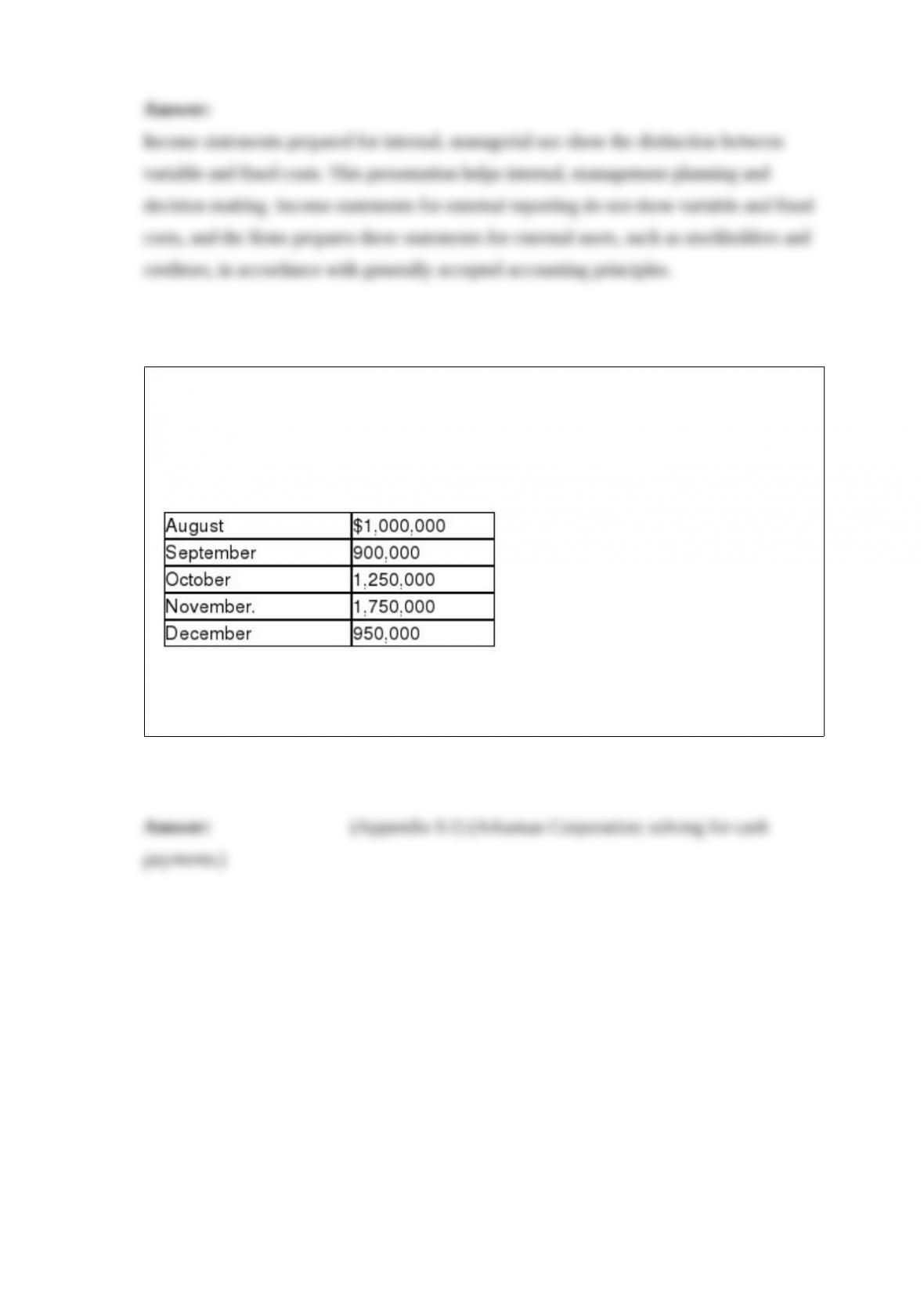
Solving for cash payments (Appendix 9.1). Arkansas Corporation purchases raw
materials on account from various suppliers. It normally pays for 70 percent of these in
the month purchased, 20 percent in the first month after purchase, and the remaining 10
percent in the second month after purchase. Raw materials purchases during the last
five months of the year are expected to be
Required:
Compute the expected amount of cash payments to suppliers for the months of October,
November, and December.
What is the theory of constraints and how is it applied?
Bowers Company is considering a new accounting policy to write-off of design and
development costs as current period expenses. Explain how this could affect managers’
incentives to incur these costs.
Leon Manufacturing Company
Leon Manufacturing Company uses a normal costing system. During the current year,
the following events took place:
Refer to Leon Manufacturing Company. Calculate the direct materials ending inventory
(there was no beginning direct materials inventory).
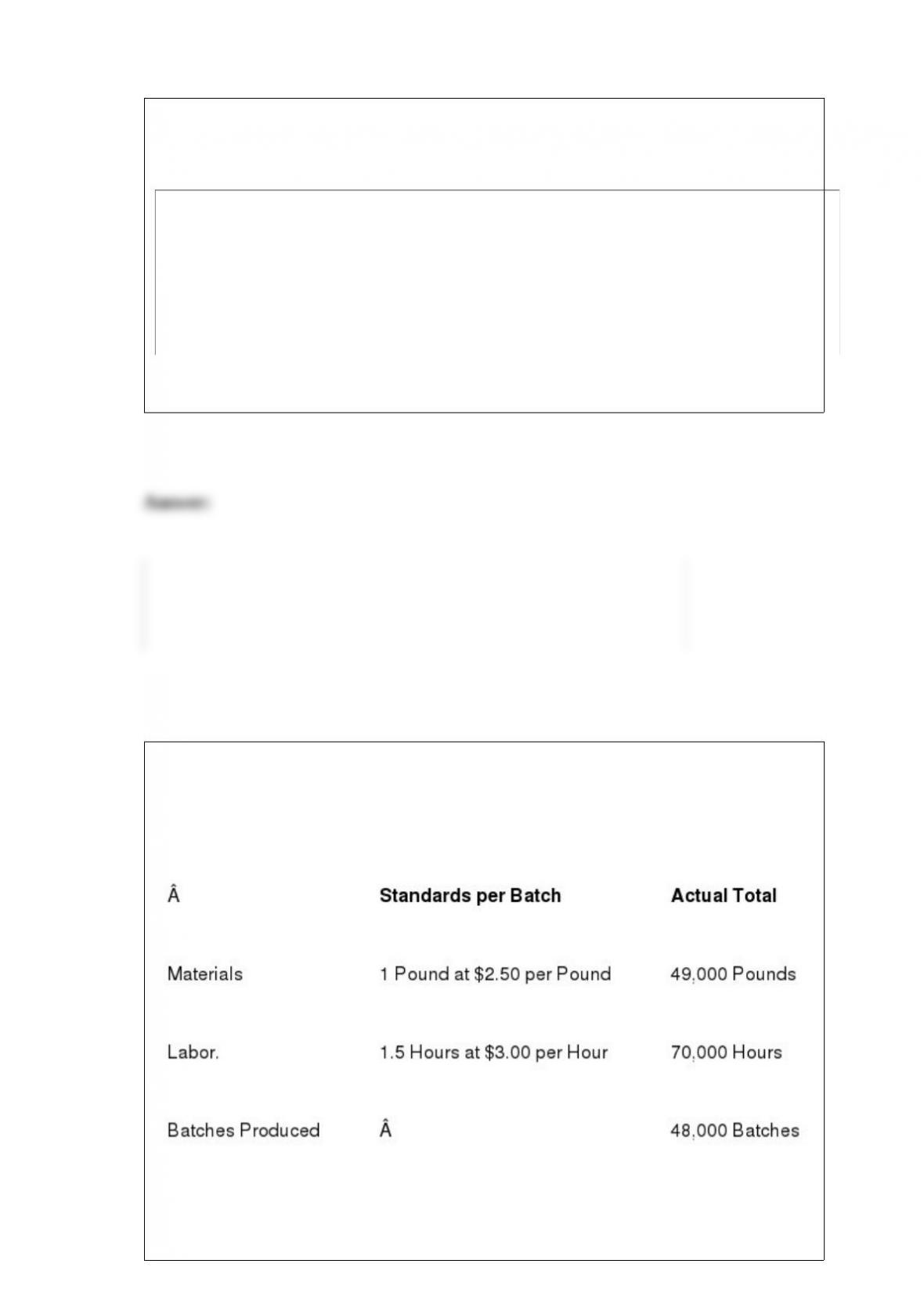
Materials and labor variances. The Sweet Tooth Chocolate Company presents the
following
data for October:
During the month, the firm purchased 49,000 pounds of materials for $127,500. Wages
earned were $214,000.
Required:
1) Compute the labor and material variances.
2)Based on the information for the company, write a short report explaining the cause
of the variances that you computed.
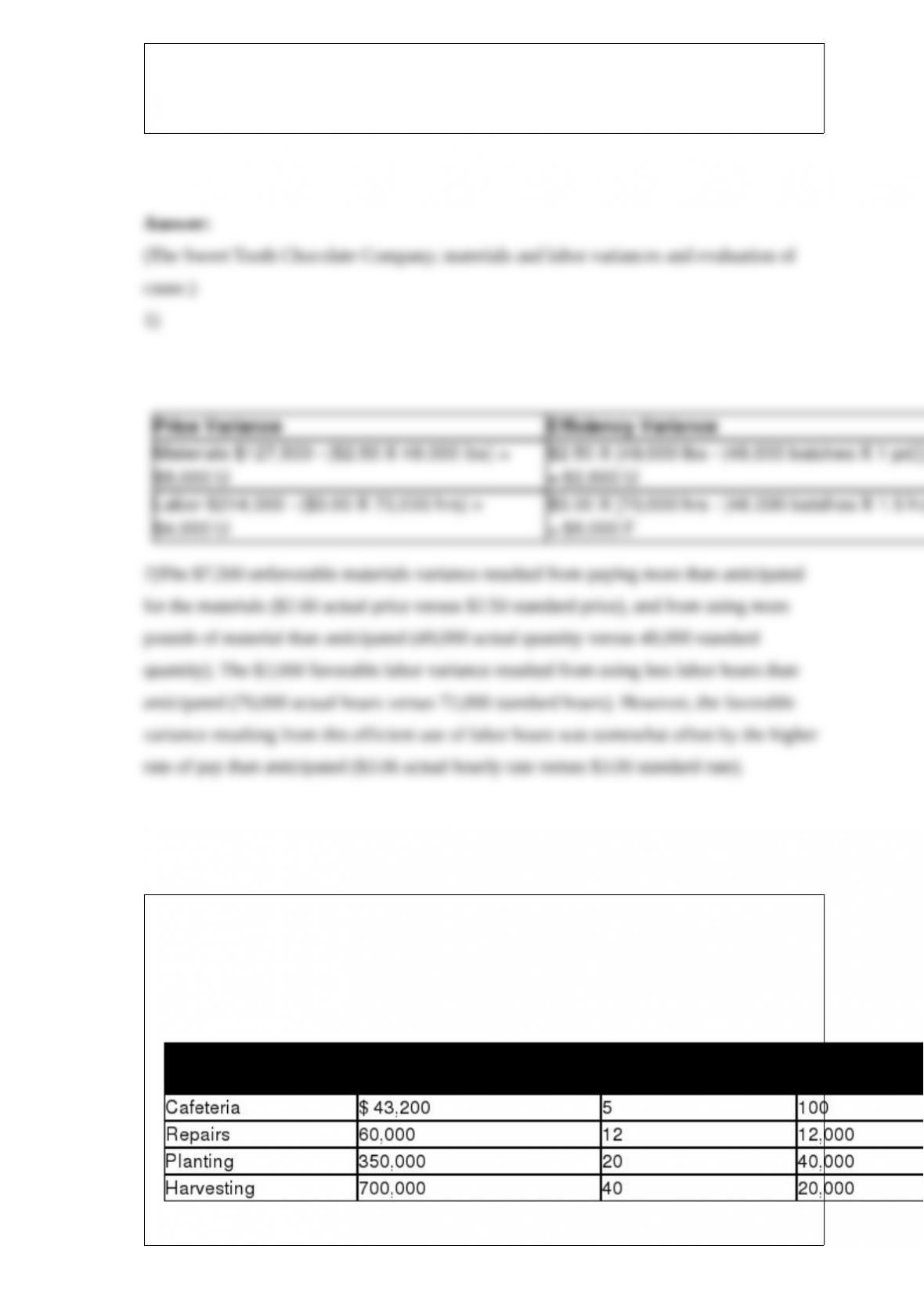
Big Farms LLC has two production departments (Planting and Harvesting) and two
service departments (Cafeteria and Repairs.) The service department’s costs must be
allocated to production departments. Management has decided to allocate the cost of the
cafeteria to other departments based upon the average number of employees and the
cost of the Repairs Department based upon the number of machine hours used.
Regardless of the allocation method used, Big Farm always starts the allocation process
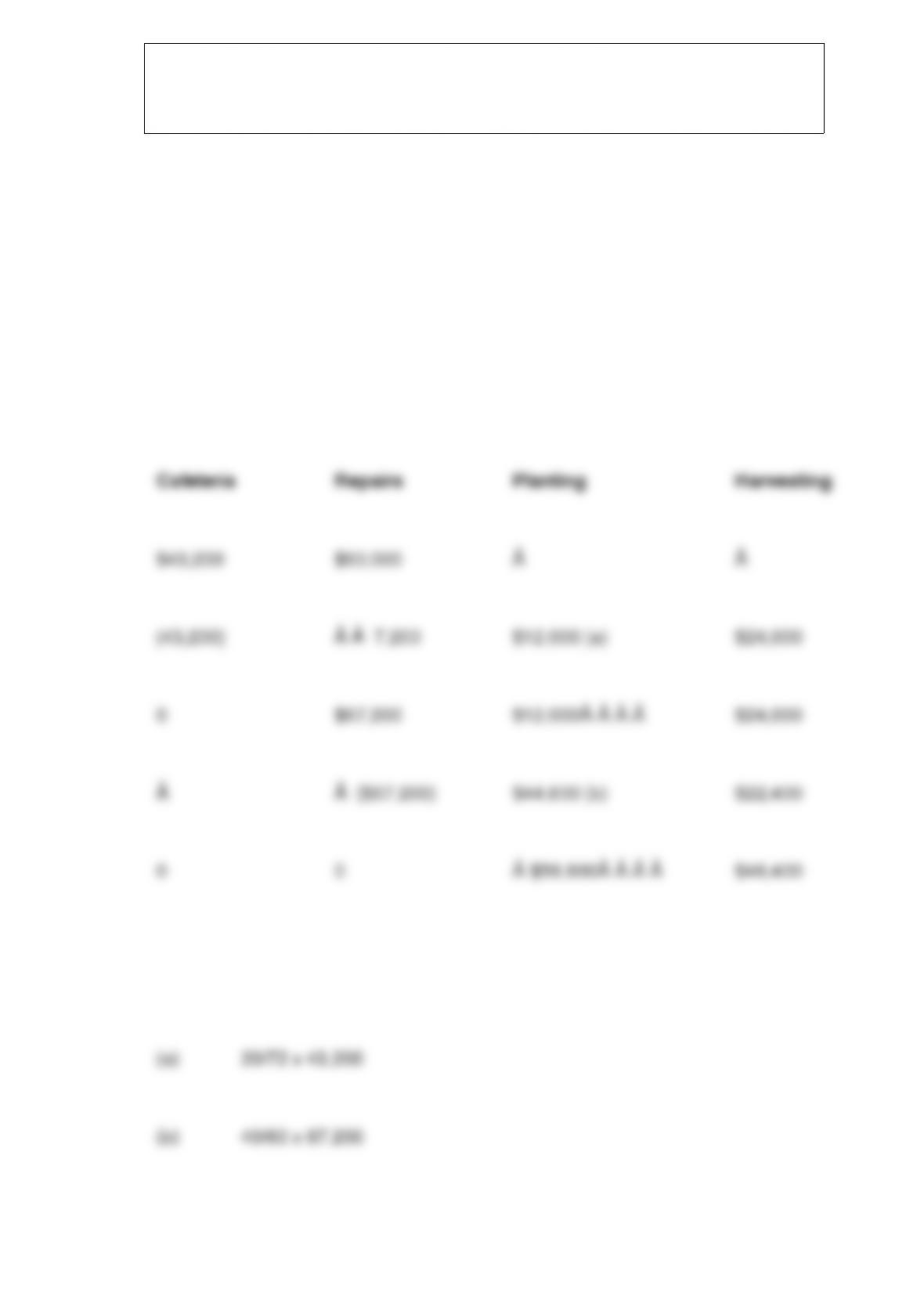
with the Cafeteria Department.
If Big Farm uses the step method, what additional overhead costs should be allocated
from the service departments to the Planting Department?