1) The internal control environment is enhanced by the hiring and retention of
competent, honest employees.
2) All merchandising businesses are organized as corporations.
3) A voucher system is an example of an internal control procedure over cash payments.
4) Opportunity cost is the amount of increase or decrease in revenue that would result
from the best available alternative to the proposed use of cash or its equivalent.
5) The manager of a profit center does not make decisions concerning the fixed assets
invested in the center.
6) Information and communication are essential elements of an organization’s internal
control.
7) The cash budget presents the expected inflow and outflow of cash for a specified
period of time.
8) Credit memorandum is issued by the seller to customers for return of damaged or
defective merchandise.
9) The process by which management allocates available investment funds among
competing capital investment proposals is termed capital rationing.
10) When someone purchases merchandise and incurs the cost of transportation, these
costs of purchasing inventory are added to the cost of the inventory.
11) If paid-in capital in excess of par–preferred stock is $80,000, preferred stock is
$500,000, paid-in capital in excess of par–common stock is $50,000, common stock is
$1,000,000, and retained earnings is $230,000, the total stockholders’ equity is
$1,860,000.
12) The excess of cash flowing in from revenues over the cash flowing out for expenses
is termed net discounted cash flow.
13) If a company has current assets totaling $56,000 and current liabilities totaling
$40,500, then the companys working capital totals $15,500.
14) Operating expenses are subtracted from fees earned for a service business and from
gross profit for a merchandising business.
15) When evaluating a proposal by use of the net present value method, if there is an
excess of the present value of future cash inflows over the amount to be invested, the
rate of return on the proposal exceeds the rate used in the analysis.
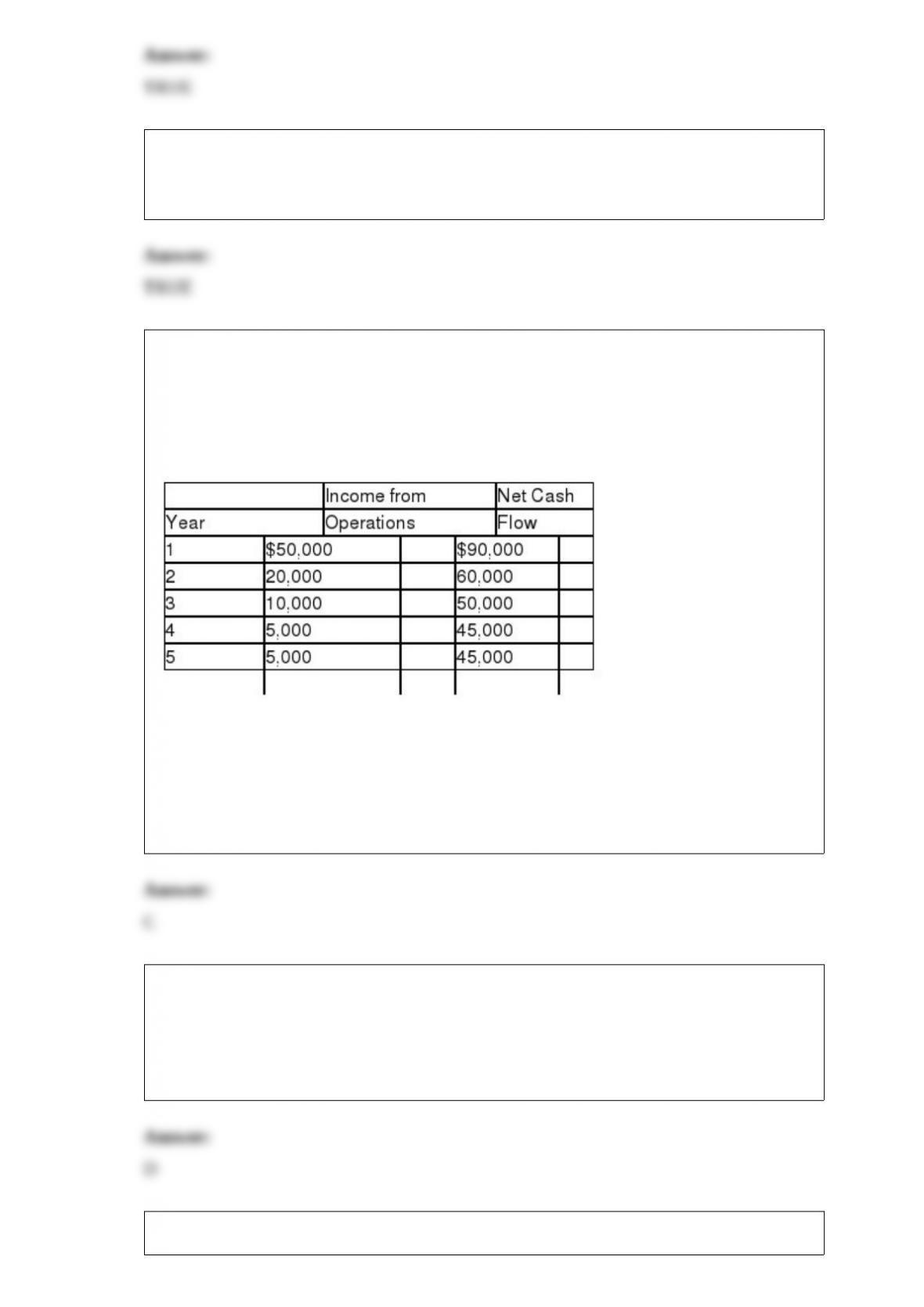
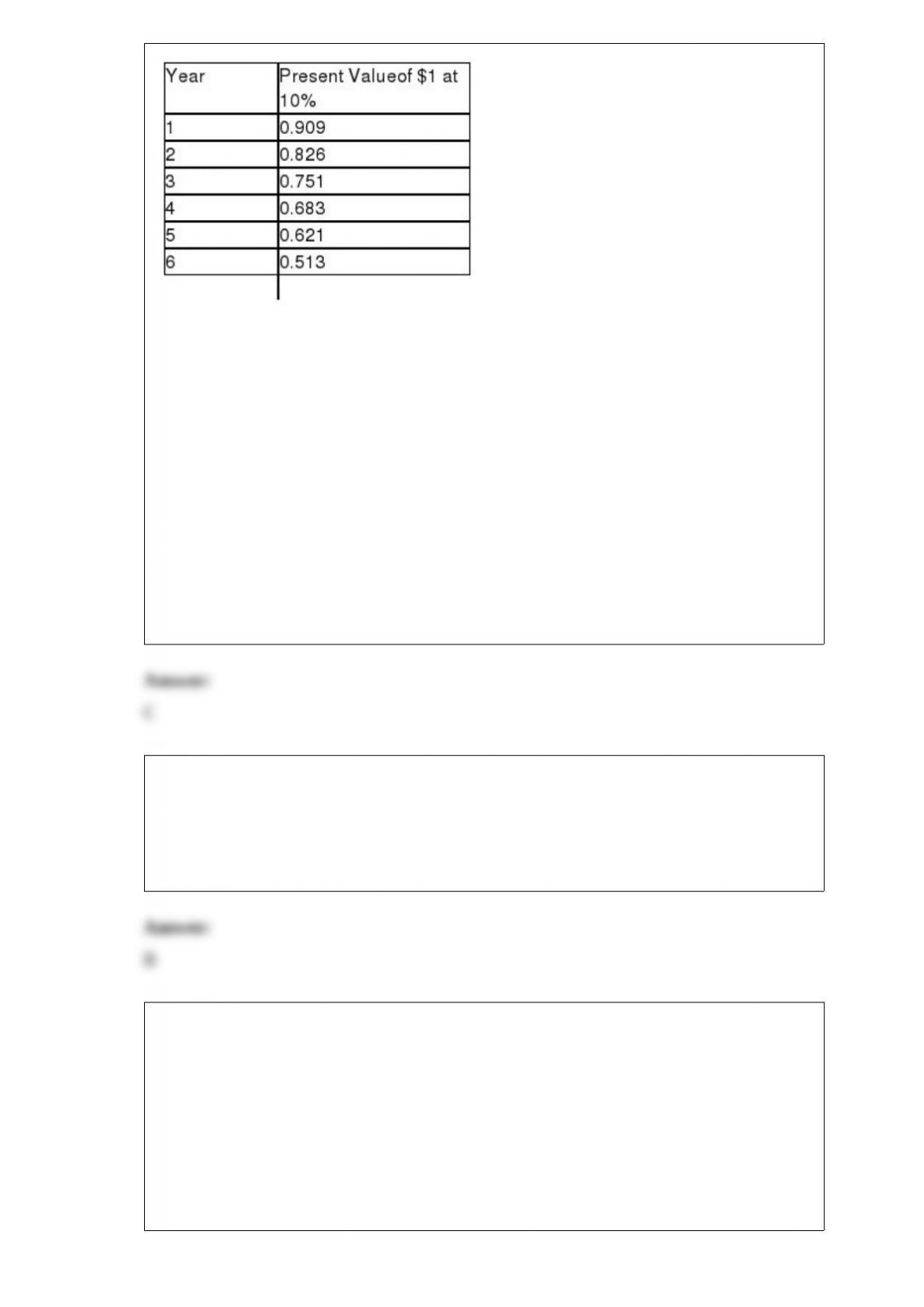
16) The management of Hence Corporation is considering the purchase of a new
machine costing $200,000. The company’s desired rate of return is 10%. The present
value factors for $1 at compound interest of 10% for 1 through 5 years are 0.909, 0.826,
0.751, 0.683, and 0.621, respectively. In addition to the foregoing information, use the
following data in determining the acceptability in this situation:
The present value index for this investment is:
A.0.88
B.1.45
C.1.14
D.0.70
17) Financing activities involve obtaining _____ to operate a business.
A.products
B.customers
C.business incentives
D.funds
18) A note receivable due in 18 months is listed on the balance sheet under the caption:
A.long-term liabilities
B.fixed assets
C.current assets
D.investments
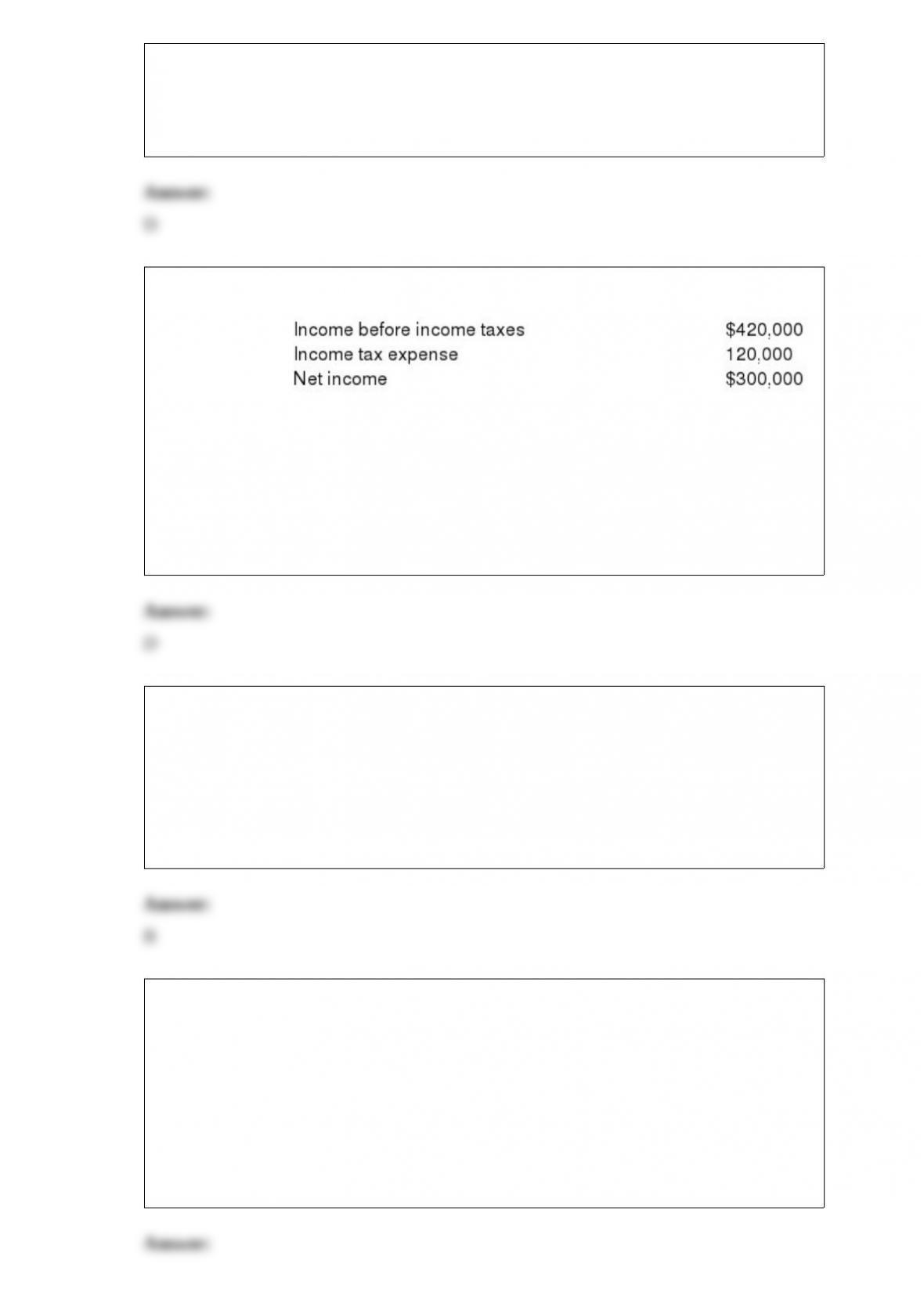
19) Thomson Company reported the following on its income statement:
An analysis of the income statement revealed that interest expense was $40,000.
Thomson Company’s number of times interest charges are earned was:
A.8 times
B.7.5 times
C.9.5 times
D.11.5 times
20) Merchandise subject to terms 1/10, n/30, FOB shipping point, is sold on account to
a customer for $20,000. The seller issued a credit memorandum for $5,000 prior to
payment. What is the amount of the cash discount allowable?
A.$160
B.$150
C.$140
D.$100
21) One issue to consider when investing in assets in foreign countries is:
A.that local currency may weaken to the dollar causing adverse effects on the
investments return
B.that the dollar may weaken to the local currency causing adverse effects on the
investments return
C.that local currency may be difficult to exchange into dollars causing problems in
receiving a return on the investment
D.that dollars may be difficult to exchange into local currency causing problems in
receiving any return on investment
22) The profit margin is the ratio of:
A.income from operations to sales
B.income from operations to invested assets
C.assets to liabilities
D.sales to invested assets
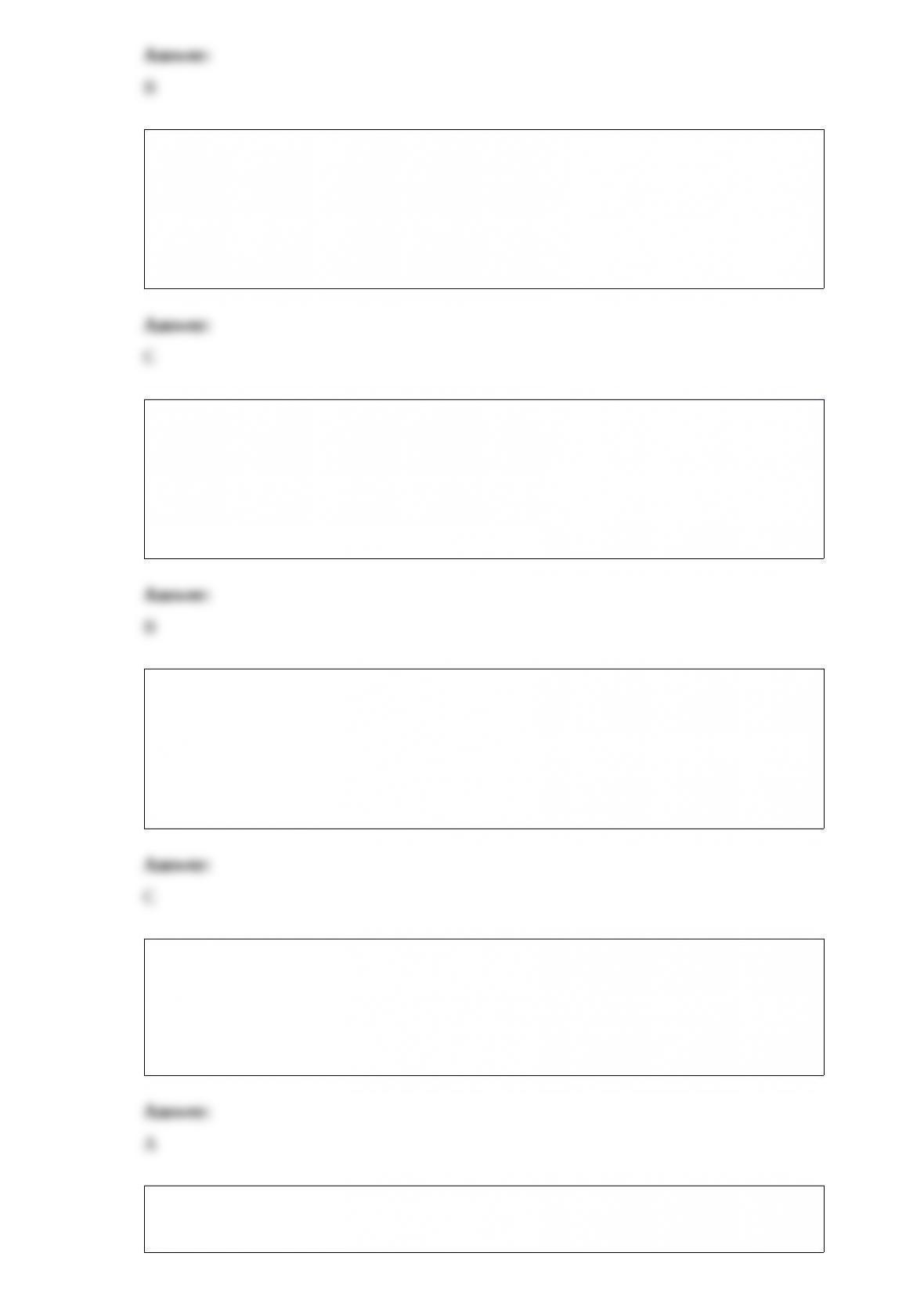
23) The standard factory overhead rate is $7.50 per machine hour ($6.20 for variable
factory overhead and $1.30 for fixed factory overhead) based on 100% capacity of
80,000 machine hours. The standard cost and the actual cost of factory overhead for the
production of 15,000 units during August were as follows:
What is the amount of the variable factory overhead controllable variance?
A.$12,000 unfavorable
B.$12,000 favorable
C.$14,000 unfavorable
D.$26,000 unfavorable
24) Which of the following elements of internal control focuses on locating weaknesses
and improving control effectiveness?
A.Control environment
B.Risk assessment
C.Control procedures
D.Monitoring
25) Blancher Corporation had $495,000 invested in assets, sales of $660,000, income
from operations amounting to $99,000, and a desired minimum rate of return of 15%.
The rate of return on investment for Blancher is:
A.16%
B.20%
C.18%
D.15%
26) Johnson, Inc. paid rent expense of $3,500 for the month of October. How are the
accounts affected due to this transaction?
A.Increase in cash $3,500 and increase in retained earnings $3,500
B.Increase in cash $3,500 and decrease in retained earnings $3,500
C.Decrease in cash $3,500 and decrease in retained earnings $3,500
D.Decrease in cash $3,500 and increase in retained earnings $3,500
27) Which of the following activity bases would be the most appropriate for gasoline
costs of a delivery service such as UPS?
A.Number of trucks employed
B.Number of miles driven
C.Number of trucks in service
D.Number of packages delivered
28) Using a perpetual inventory system, the return of merchandise purchased on
account includes a(n):
A.increase in Sales
B.increase in Merchandise Inventory
C.decrease in Merchandise Inventory
D.decrease in Sales
29) Stockholders Equity will be reduced by all of the following accounts except:
A.revenues
B.expenses
C.dividends
D.all of the above reduce Stockholders Equity
30) The process of a company selling its accounts receivable to another company is
referred as:
A.discounting
B.adjusting
C.assignment
D.factoring
31) Accompanying the bank statement was a credit memorandum for a short-term note
collected by the bank for the customer. What adjustment is required in the depositor’s
accounts?
A.Increase Notes Receivable; decrease Cash
B.Increase Cash; increase Miscellaneous Income
C.Increase Cash; decrease Notes Receivable
D.Increase Accounts Receivable; decrease Cash
32) On June 5, Glover Co. issued a $60,000, 6%, 120-day note payable to Jones Co.
How much will Glover Co. have to pay at maturity? (Assume 360 days in a year)
A.$63,600
B.$58,800
C.$60,000
D.$61,200
33) Decisions to install new equipment, replace old equipment, and purchase or
construct a new building are examples of:
A.sales mix analysis
B.variable cost analysis
C.cost-volume-profit analysis
D.capital investment analysis
34) A business is considering a cash outlay of $200,000 for the purchase of land, which
it could lease for $35,000 per year. If alternative investments are available that yield an
18% return, the opportunity cost of the purchase of the land is:
A.$35,000
B.$36,000
C.$1,000
D.$37,000
35) At the end of the fiscal year, if the balance in Factory Overhead is small, it would
normally be:
A.transferred to Work-in-Process
B.transferred to Cost of Goods Sold
C.transferred to Finished Goods
D.allocated between Work-in-Process and Finished Goods
36) Which one of the following is not a measure that management can use in evaluating
and controlling investment center performance?
A.Rate of return on investment
B.Negotiated price
C.Residual income
D.Income from operations
37) Basic analytical method in which all items are expressed only in relative terms
(percentages of a common base) and are often useful for comparing one company with
another or for comparing a company with industry averages are:
A.horizontal analysis
B.percentage statements
C.profitability analysis
D.common-sized statements
38) All amounts paid to get an asset in place and ready for use are referred to as:
A.deferred expenditures
B.revenue expenditures
C.residual value
D.cost of an asset
39) When purchases of merchandise are made for cash, under the perpetual inventory
system, the transaction:
A.increases Cash; decreases Merchandise Inventory
B.increases Merchandise Inventory; decreases Cash
C.increases Merchandise Inventory; decreases Cash Discounts
D.increases Merchandise Inventory; decreases Purchases
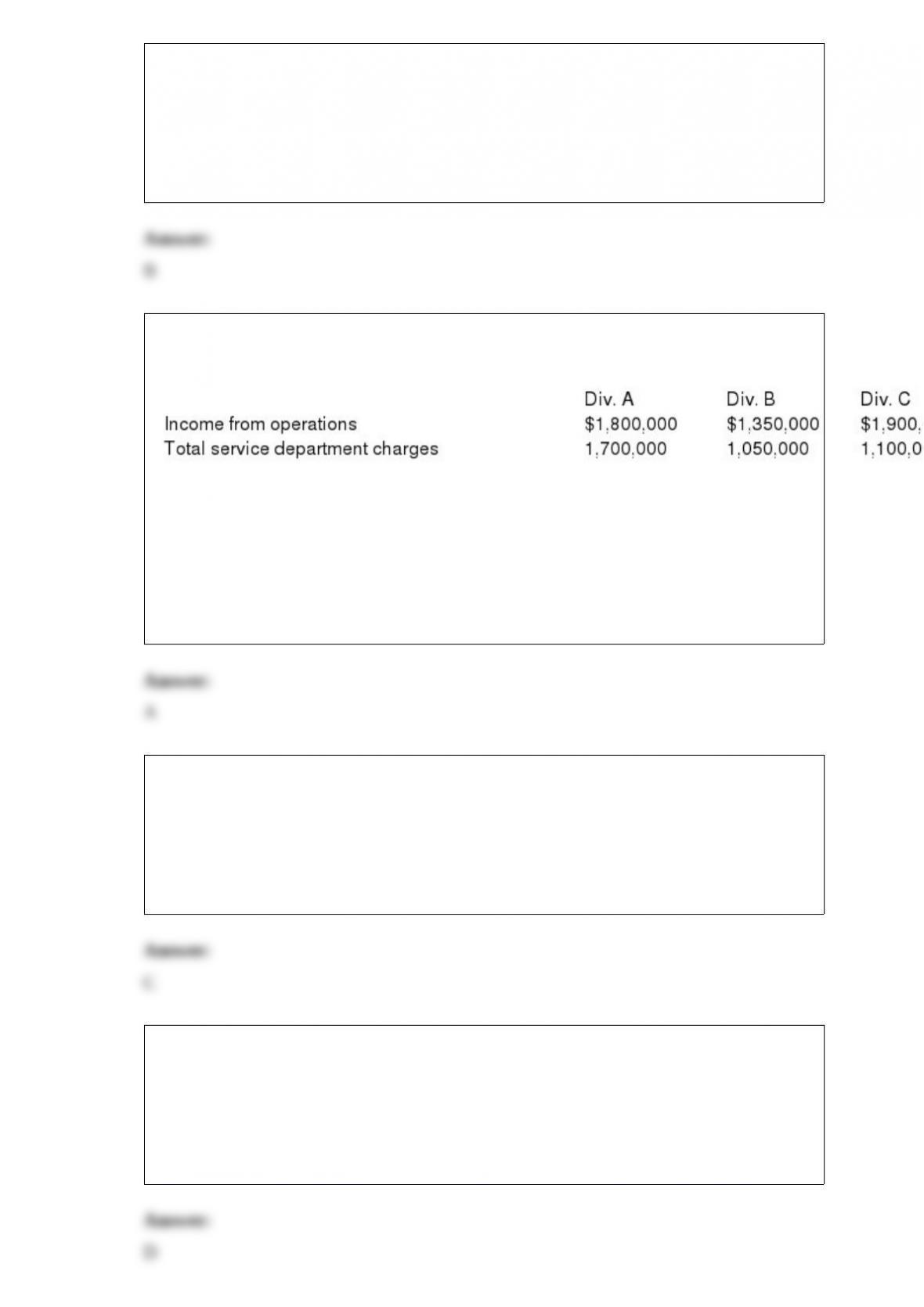
40) The following data are taken from the management accounting reports of Dancer
Co.:
If an incentive bonus is paid to the manager who achieved the highest income from
operations before service department charges, it follows that
A.division A’s manager is given the bonus
B.division B’s manager is given the bonus
C.division C’s manager is given the bonus
D.the managers of Divisions B and C divide the bonus
41) If fixed costs are $850,000 and variable costs are 60% of the sales, what is the
break-even point (in dollars)?
A.$1,416,667
B.$1,983,333
C.$2,125,000
D.$2,550,000
42) If the cost of direct materials is not a significant portion of the total product cost, it
may be classified as:
A.direct labor costs
B.selling and administrative costs
C.miscellaneous costs
D.factory overhead costs
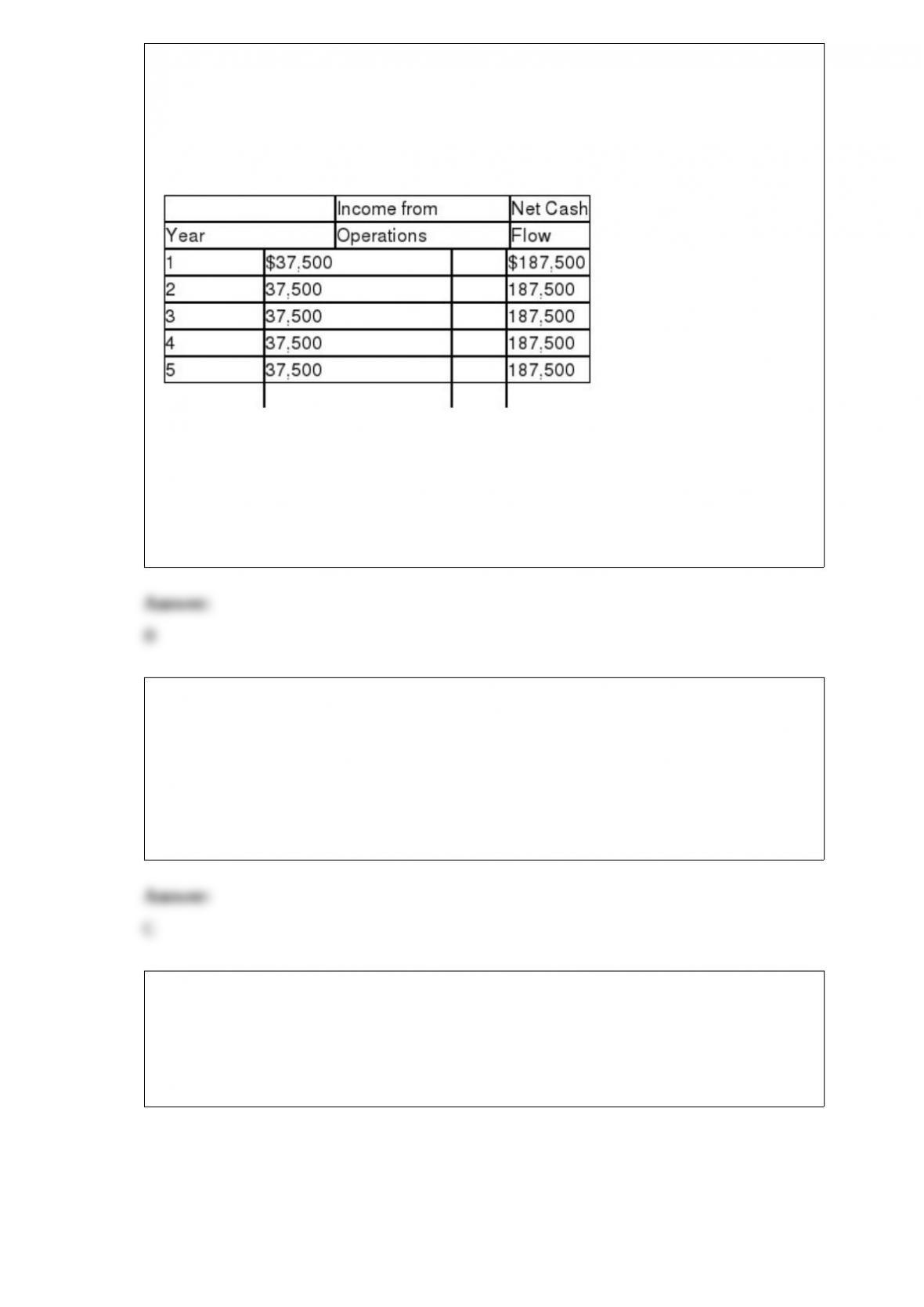
43) The management of London Corporation is considering the purchase of a new
machine costing $750,000. The company’s desired rate of return is 6%. The present
value factors for $1 at compound interest of 6% for 1 through 5 years are 0.943, 0.890,
0.840, 0.792, and 0.747, respectively. In addition to this information, use the following
data in determining the acceptability in this situation:
The average rate of return for this investment is:
A.5%
B.10%
C.25%
D.15%
44) Merchandise with an invoice price of $6,000 is purchased subject to terms of 2/10,
n/30, FOB destination. Transportation costs paid by the seller totaled $125. What is the
net cost of the merchandise?
A.$6,125
B.$6,005
C.$5,880
D.$5,755
45) Mars Corp. is choosing between two different capital investment proposals.
Machine A has a useful life of 4 years, and Machine B has a useful life of 6 years. Each
proposal requires an initial investment of $200,000, and the company desires a rate of
return of 10%. Although Machine B has a useful life of 6 years, it could be sold at the
end of 4 years for $35,000.
Machine A will generate net cash flow of $70,000 in each of the four years. Machine B
will generate $80,000 in year 1, $70,000 in year 2, $60,000 in year 3, and $40,000 per
year for the remaining 3 years of its useful life.
Which of the following statements portrays the most accurate analysis between the two
proposals?
A.Mars should invest in Machine A because the net present value of Machine A after 4
years is higher than the net present value of Machine B after 4 years
B.Mars should invest in Machine B because the net present value of Machine A after 4
years is lower and the net present value of Machine B after 6 years
C.Mars should invest in Machine B because the net present value of Machine A after 4
years is lower than the net present value of Machine B after 4 years
D.Mars should invest in Machine A because the net present value of Machine A after 4
years is higher than the net present value of Machine B after 6 years
46) A fully depreciated asset must be:
A.removed from the books
B.kept on the books until sold or discarded
C.disclosed only in the notes to the financial statements
D.recognized on the income statement as a loss
47) Machine with a useful life of 5 years and a residual value of $6,000 was purchased
on January 3, 2007, for $48,500. The machine was sold on January 5, 2012, for
$13,000.
(a) What is the book value of the machine on January 5, 2012, assuming straight-line
depreciation is used?
(b) Illustrate the effects on the accounts and the financial statements of the sale of the
machine on January 5, 2012 .
(c) Illustrate the effects on the accounts and the financial statements of the sale of the
machine if it had been sold for $18,000 instead.
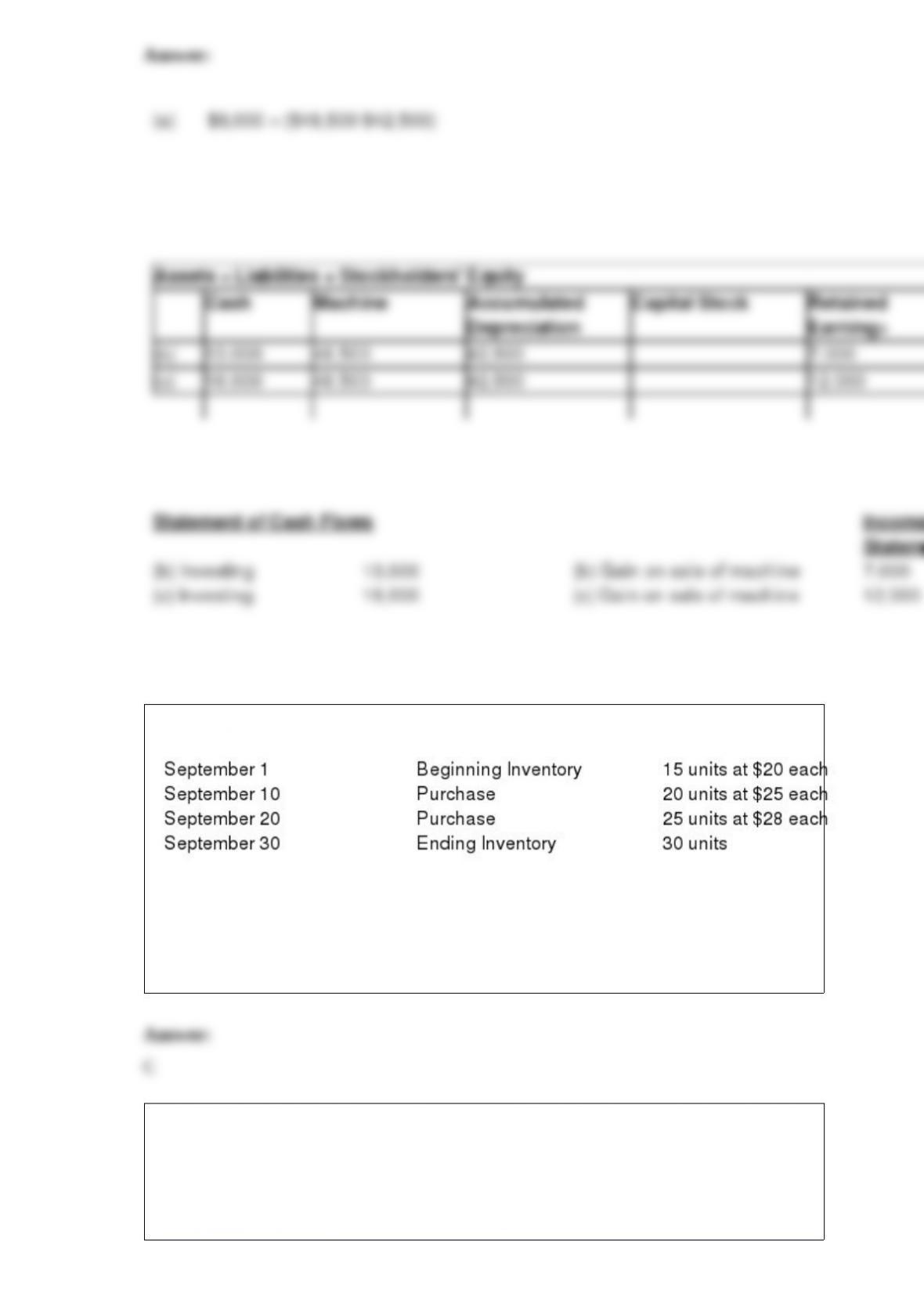
48) Use the following data to calculate cost of merchandise sold under FIFO method.
A.$825
B.$750
C.$675
D.$600
49) Payroll taxes levied against employees become liabilities:
A.on the first of the following month
B.at the time the liability for the employees wages is paid
C.when earned by the employee
D.at the end of an accounting period