The quick ratio is: A. The liquidity ratio divided by the equity ratio.
B. Current assets minus inventory divided by current liabilities minus accounts payable.
C. Current assets minus inventory and prepaid items divided by current liabilities.
D. Cash divided by accounts payable.
Answer:
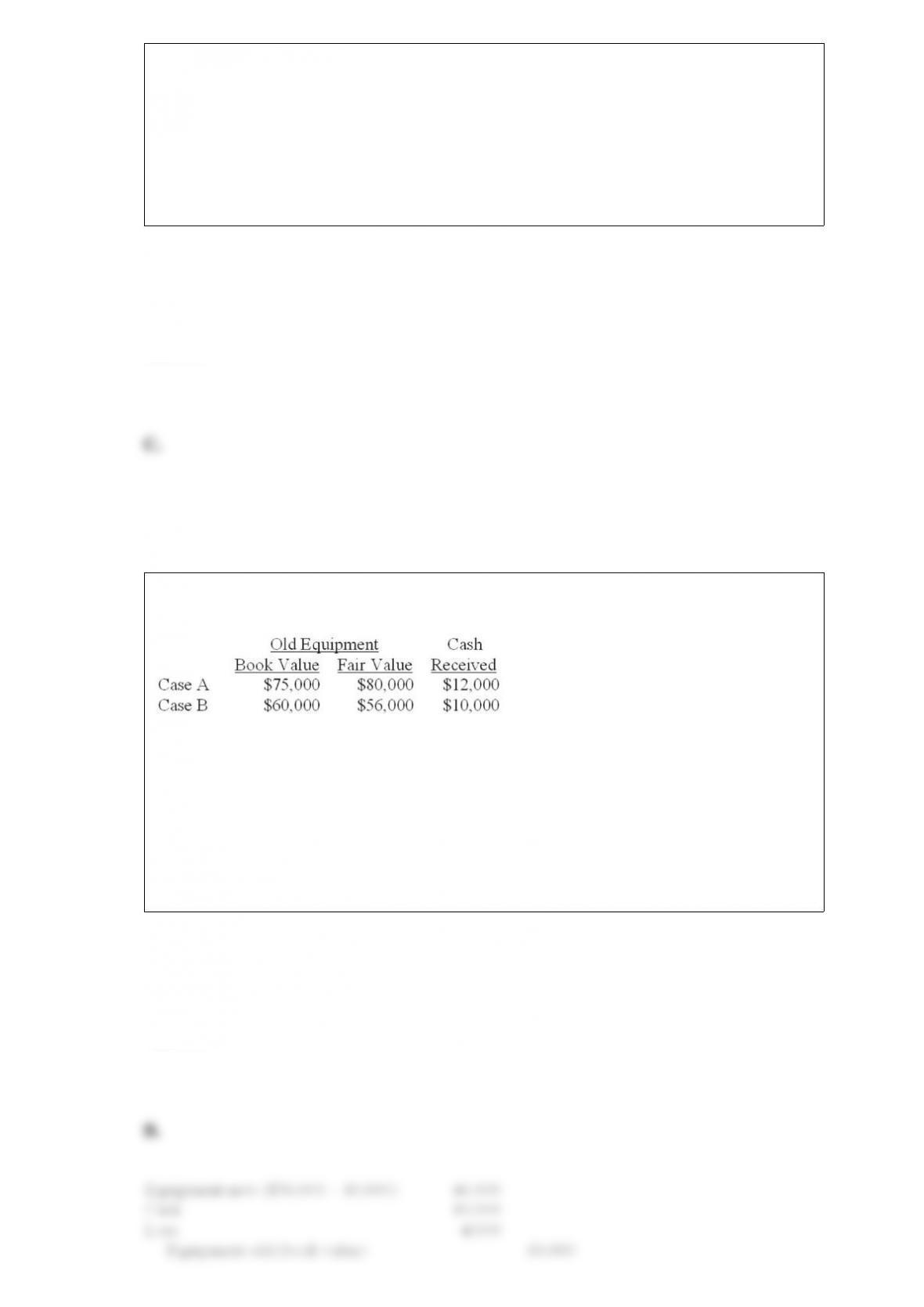
Below is information relative to an exchange of equipment by Pensacola Inc. Assume
the exchange has commercial substance.
In Case B, Pensacola would record a gain/(loss) of: A. $4,000.
B. $(4,000).
C. $(10,000).
D. None of the above is correct.
Answer:

Which of the following is reported as a financing activity in the statement of cash
flows? A. The sale of securities classified as available for sale.
B. The acquisition of stock for the purpose of retiring it.
C. The payment of interest on bonds payable.
D. The receipt of dividend revenue.
Answer:
On December 31, 2013, Wellstone Company reported net income of $70,000 and sales
of $210,000. The company also reported beginning and ending accounts receivable at
$20,000 and $25,000, respectively. Wellstone will report cash collected from customers
in its 2013 statement of cash flows (direct method) in the amount of: A. $215,000.
B. $285,000.
C. $135,000.
D. $205,000.
Answer:

If no estimates are changed and there is no net loss or gain or prior service cost, which
of the following amounts related to an unfunded postretirement benefit plan will not
increase with each additional year of service before the full eligibility date? A. Other
comprehensive income.
B. Postretirement benefit expense.
C. APBO.
D. EPBO.
Answer:
On March 31, 2013, M. Belotti purchased the right to remove gravel from an old rock
quarry. The gravel is to be sold as roadbed for highway construction. The cost of the
quarry rights was $164,000, with estimated salable rock of 20,000 tons. During 2013,
Belotti loaded and sold 4,000 tons of rock and estimated that 16,000 tons remained at
December 31, 2013. At January 1, 2014, Belotti estimated that 20,000 tons still
remained. During 2014, Belotti loaded and sold 8,000 tons.
Belotti would record depletion in 2013 of: A. $41,000.
B. $32,800.
C. $30,750.
D. $24,600.

Answer:
On April 1, 2013, BigBen Company acquired 30% of the shares of LittleTick, Inc.
BigBen paid $100,000 for the investment, which is $40,000 more than 30% of the book
value of LittleTick’s identifiable net assets. BigBen attributed $15,000 of the $40,000
difference to inventory that will be sold in the remainder of 2013, and the rest to
goodwill. LittleTick recognized a total of $20,000 of net income for 2013, and paid total
dividends for the year $10,000; these dividends were issued quarterly. BigBen’s
investment in LittleTick will affect BigBen’s 2013 net income by: A. A loss of $10,500.
B. Earnings of $4,500.
C. Earnings of $1,125.
D. Earnings of $3,450.
Answer:
Costs incurred by the lessor that are associated directly with originating a lease and are
essential to acquire that lease are called initial direct costs. Initial direct costs are
matched with the interest revenues they help generate in: A. An operating lease.
B. A capital lease.

C. A direct financing lease.
D. A sales-type lease.
Answer:
Which of the following is not a way of measuring the pension obligation? A.
Accumulated benefit obligation.
B. Vested benefit obligation.
C. Retiree benefit obligation.
D. Projected benefit obligation.
Answer:
In a perpetual average cost system: A. A new weighted-average unit cost is calculated
each time additional units are purchased.
B. The cost allocated to ending inventory is generally the same as it would be in a
periodic inventory system.
C. The moving-average unit cost is determined following each sale.
D. The average is determined by dividing the total number of units sold by the cost of
units purchased during the period.
Answer:
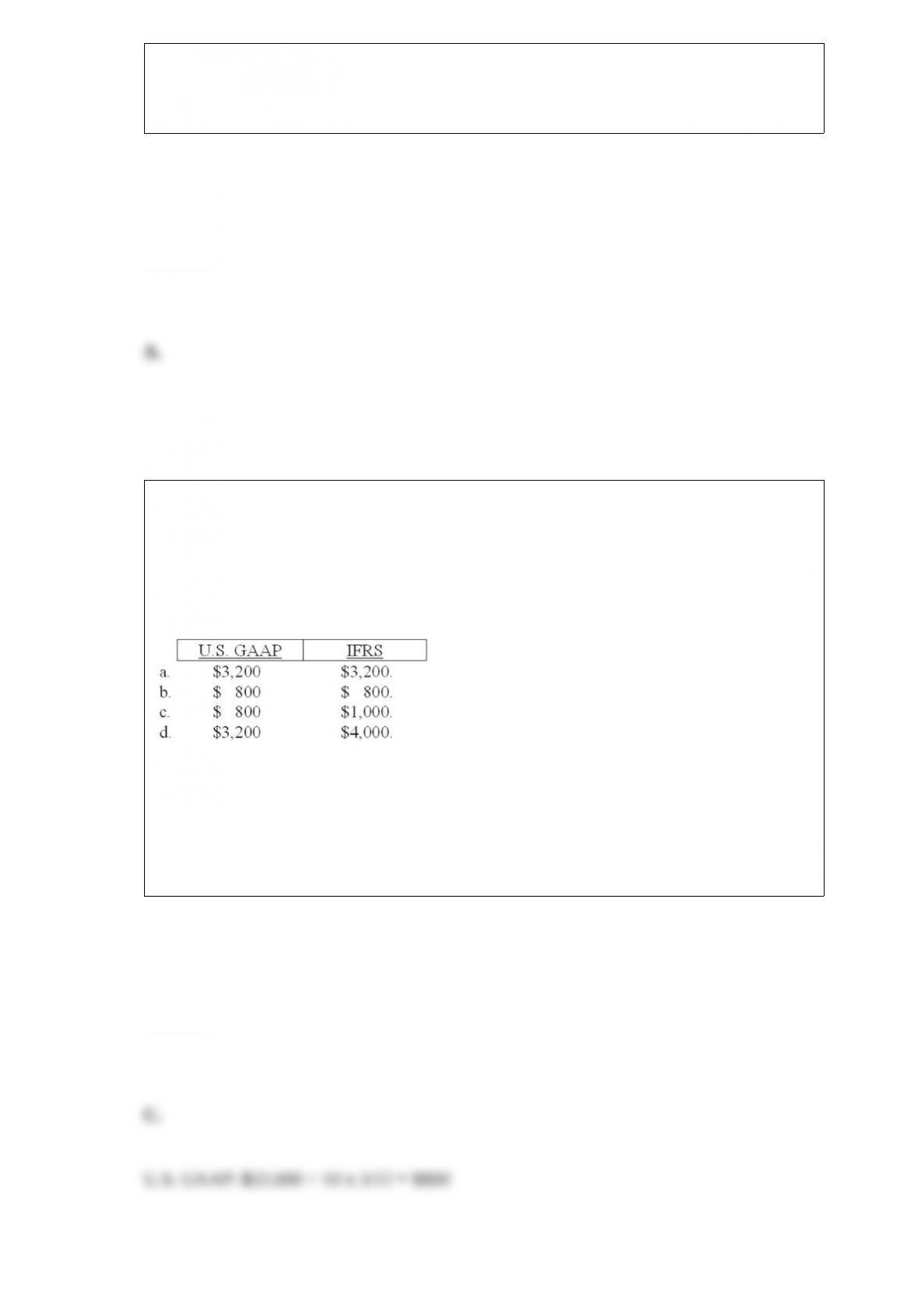
Calloway Shoes purchased a delivery truck on September 30, 2013, for $32,000. The
estimated useful life of the truck is 10 years with no residual value. After five years, the
refrigeration unit will need to be replaced. The $8,000 cost of the unit is included in the
cost of the truck. Calloway uses the straight-line depreciation method. Depreciation for
2013 under U.S. GAAP and International Financial Reporting Standards (IFRS),
respectively, is:
A. Option a
B. Option b
C. Option c
D. Option d
Answer:

Which of the following is reported as an investing activity in the statement of cash
flows? A. The receipt of dividend revenue.
B. The payment of cash dividends.
C. The payment of interest on bonds.
D. The sale of machinery.
Answer:
Kline Company refinanced current debt as long-term debt on January 5, 2014. Kline’s
fiscal year ended on December 31, 2013, and its financial statements will be issued
sometime in early March 2014. Under IFRS, how would Kline classify the debt on its
December 31, 2013, balance sheet? A. In the “mezzanine” between current and
noncurrent liabilities.
B. Kline would not classify the debt as current or noncurrent, but rather would write a
disclosure note explaining the circumstances.
C. As a noncurrent liability.
D. As a current liability.
Answer:

Which of the following increases the investment account under the equity method of
accounting? A. Decreases in the market price of the investee’s stock.
B. Dividends paid by the investee that were declared in the previous year.
C. Net loss of the investee company.
D. None of the above is correct.
Answer:
Baldwin Company had 40,000 shares of common stock outstanding on January 1, 2013.
On April 1, 2013, the company issued 20,000 shares of common stock. The company
had outstanding fully vested incentive stock options for 10,000 shares exercisable at
$10 that had not been exercised by its executives. The average market price of common
stock for the year was $12. What number of shares of stock (rounded) should be used in
computing diluted earnings per share? A. 65,000.
B. 56,667.
C. 55,000.
D. 46,667.

Answer:
Stock options, rights, and warrants are different from convertible securities in that they:
A. Typically increase cash upon exercise.
B. Usually reduce total assets upon exercise.
C. Often reduce liabilities upon exercise.
D. Normally increase retained earnings upon exercise.
Answer:
In reconciling net income to taxable income, interest earned on municipal bonds is: A.
Ignored.
B. A temporary difference.
C. A reversing difference.
D. A permanent difference.

Answer:
Which of the following would be reported as a cash outflow from investing activities?
A. Issuance of bonds.
B. Purchase of land.
C. Payment of dividends.
D. Retirement of common stock.
Answer:
Tri Fecta, a partnership, had revenues of $360,000 in its first year of operations. The
partnership has not collected on $35,000 of its sales and still owes $40,000 on $150,000
of merchandise it purchased. There was no inventory on hand at the end of the year. The
partnership paid $25,000 in salaries. The partners invested $40,000 in the business and
$25,000 was borrowed on a five-year note. The partnership paid $3,000 in interest that
was the amount owed for the year and paid $8,000 for a two-year insurance policy on
the first day of business.
Compute net income for the first year for Tri Fecta.
Answer:

How is the amortization of patents reported in a statement of cash flows that is prepared
using the indirect method? A. A decrease in cash flows from investing activities.
B. An increase in cash flows from investing activities.
C. A deduction from net income in arriving at cash flows from operations.
D. An addition to net income in arriving at cash flows from operations.
Answer:
Tiger Inc. adopted dollar-value LIFO on January 1, 2013, when the inventory value was
$360,000 and the cost index was 1.25. On December 31, 2013, the inventory was
valued at year-end cost of $395,000 and the cost index was 1.30. Tiger would report a
LIFO inventory of: A. $410,800.
B. $374,400.
C. $379,808.
D. $380,600.
Answer:

An overfunded pension plan means that the: A. PBO is less than plan assets.
B. PBO exceeds plan assets.
C. ABO is less than plan assets.
D. ABO exceeds plan assets.
Answer:
Wilson Inc. owns equipment for which it paid $70 million. At the end of 2013, it had
accumulated depreciation on the equipment of $12 million. Due to adverse economic
conditions, Wilson’s management determined that it should assess whether an
impairment loss should be recognized for the equipment. The estimated undiscounted
future cash flows to be provided by the equipment total $60 million, and the
equipment’s fair value at that point is $50 million. Under these circumstances, Wilson:
A. Would record no impairment loss on the equipment.
B. Would record an $8 million impairment loss on the equipment.

C. Would record a $20 million impairment loss on the equipment.
D. None of the above is correct.
Answer:
Blue Cab Company had 50,000 shares of common stock outstanding on January 1,
2013. On April 1, 2013, the company issued 20,000 shares of common stock. The
company had outstanding fully vested incentive stock options for 5,000 shares
exercisable at $10 that had not been exercised by its executives. The end-of-year market
price of common stock was $13 while the average price for the year was $12. The
company reported net income in the amount of $269,915 for 2013. What is the diluted
earnings per share (rounded)? A. $3.60.
B. $4.10.
C. $4.50.
D. $3.81.
Answer:

Investments in securities available for sale are reported at: A. Discounted present value.
B. Lower of cost or market.
C. Historical cost.
D. Fair value on the reporting date.
Answer:
A company should accrue a loss contingency only if the likelihood that a liability has
been incurred is:A. More likely than not and the amount of the loss is known.
B. At least reasonably possible and the amount of the loss is known.
C. At least reasonably possible and the amount of the loss can be reasonably estimated.
D. Probable and the amount of the loss can be reasonably estimated.
Answer:

A sale on account would be recorded by: A. Debiting revenue.
B. Crediting assets.
C. Crediting liabilities.
D. Debiting assets.
Answer:
A loss contingency should be accrued in a company’s financial statements only if the
likelihood that a liability has been incurred is:A. At least remotely possible and the
amount of the loss is known.
B. Reasonably possible and the amount of the loss is known.
C. Reasonably possible and the amount of the loss can be reasonably estimated.
D. Probable and the amount of the loss can be reasonably estimated.
Answer:
The following incomplete (columns have missing amounts) pension spreadsheet is for
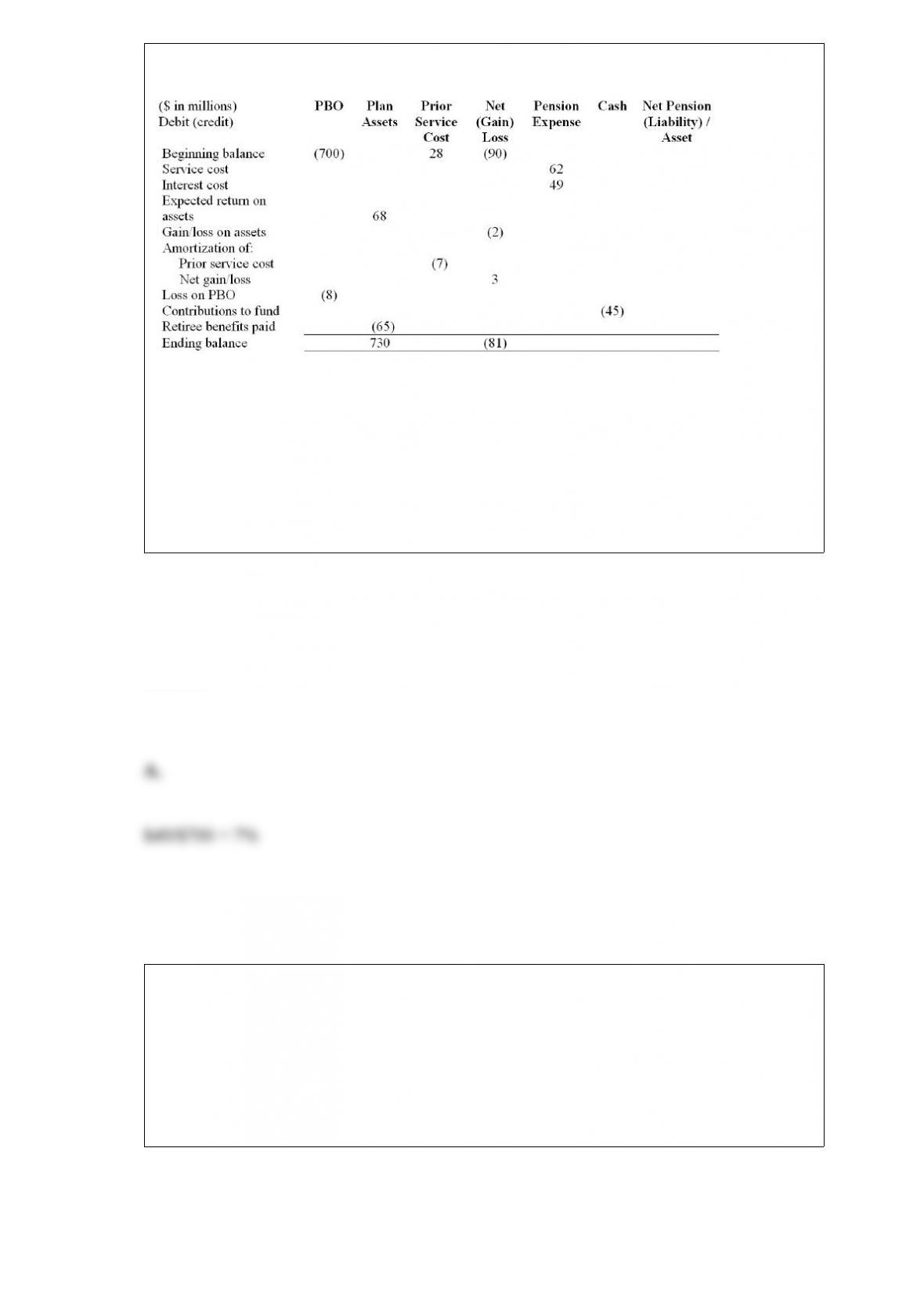
the current year for First Republic Corporation (FRC).
What was the actuary’s interest (discount) rate? A. 7%.
B. 8%.
C. 9%.
D. 10%.
Answer:
Accumulated other comprehensive income: A. is a liability.
B. might include prior service cost from pension plan amendments.
C. includes accumulated pension expense.
D. is reported in the income statement.

Answer:
Which of the following changes should be accounted for using the retrospective
approach? A. A change in the estimated life of a depreciable asset.
B. A change from straight-line to declining balance depreciation.
C. A change to the LIFO method of costing inventories.
D. A change from the completed-contract method of accounting for long-term
construction contracts.
Answer:
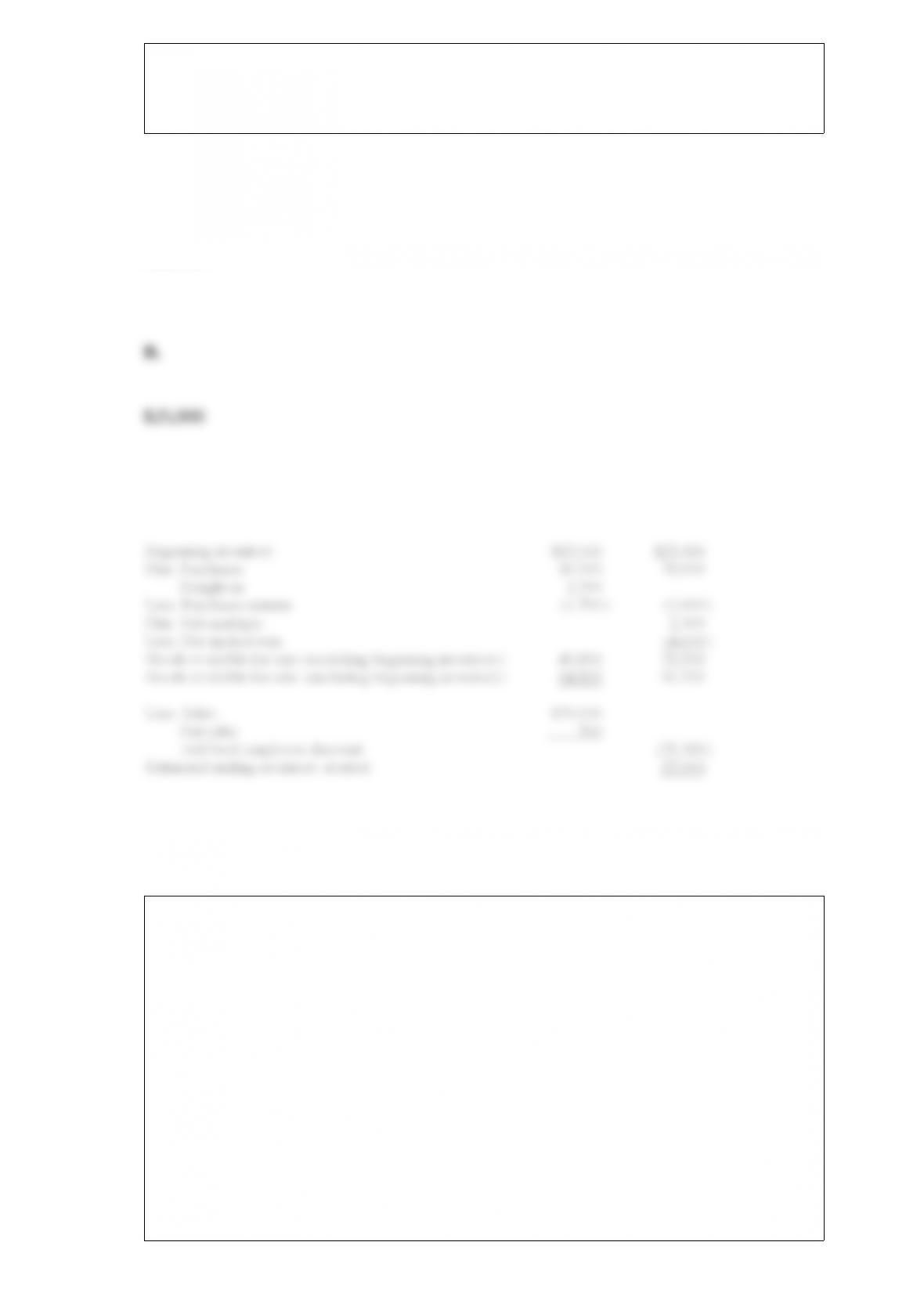
Harvey’s Junk Jewelry started business January 1, 2013, and uses the LIFO retail
method to estimate ending inventory. Listed below is data accumulated for the year
ended December 31, 2013:
The estimated ending inventory at retail is: A. $27,300.
B. $25,000.
C. $26,600.
D. $26,400.
Answer:
Listed below are five terms followed by a list of phrases that describe or characterize
each of the terms. Match each phrase with the correct term. 1) Predictive value
2) Relevance
3) Confirmatory value
4) Distribution to owners
5) Timeliness
A. Information is useful in projecting cash flow
B. Pertinent to the decision at hand.

C. Decrease in equity due to transfers to owners.
D. Information confirms expectations.
E. Information is available prior to the decision.
Answer:
The financial reporting carrying value of Boze Music’s only depreciable asset exceeded
its tax basis by $150,000 at December 31, 2013. This was a result of differences
between straight-line depreciation for financial reporting purposes and MACRS for tax
purposes. The asset was acquired earlier in the year. Boze has no other temporary
differences. The enacted tax rate is 30% for 2013 and 40% thereafter. Boze should
report the deferred tax effect of this difference in its December 31, 2013, balance sheet
as: A. A liability of $45,000.
B. A liability of $60,000.
C. An asset of $45,000.
D. An asset of $60,000.
Answer:

Which of the following would be added to net income when determining cash flows
from operating activities under the indirect method? A. A gain on the sale of land.
B. An increase in prepaid expenses.
C. A decrease in accounts payable.
D. A decrease in accounts receivable.
Answer:
Compare the concepts of basic and diluted earnings per share with respect to their
calculation.
Answer:
The following selected transactions relate to contingencies of Eastern Products Inc.,
which began operations in July 2013. Eastern’s fiscal year ends on December 31.
Financial statements are published in April
1) No customer accounts have been shown to be uncollectible as yet, but Eastern

estimates that 3% of credit sales will eventually prove uncollectible. Sales were $300
million (all credit) for 2013.
2) Eastern offers a one-year warranty against manufacturer’s defects for all its products.
Industry experience indicates that warranty costs will approximate 2% of sales. Actual
warranty expenditures were $3.5 million in 2013 and were recorded as warranty
expense when incurred.
3) In December 2013, Eastern became aware of an engineering flaw in a product that
poses a potential risk of injury. As a result, a product recall appears inevitable. This
move would likely cost the company $1.5 million.
4) In November 2013, the State of Vermont filed suit against Eastern, asking civil
penalties and injunctive relief for violations of clean water laws. Eastern reached a
settlement with state authorities to pay $4.2 million in penalties on February 3, 2014.
5) Eastern is the plaintiff in a $40 million lawsuit filed against a customer for costs and
lost profits from contracts rejected in 2013. The lawsuit is in final appeal and attorneys
advise that it is virtually certain that Eastern will be awarded $30 million.
Required:
Prepare the appropriate journal entries that should be recorded as a result of each of
these contingencies. If no journal entry is indicated, state why.
Answer:
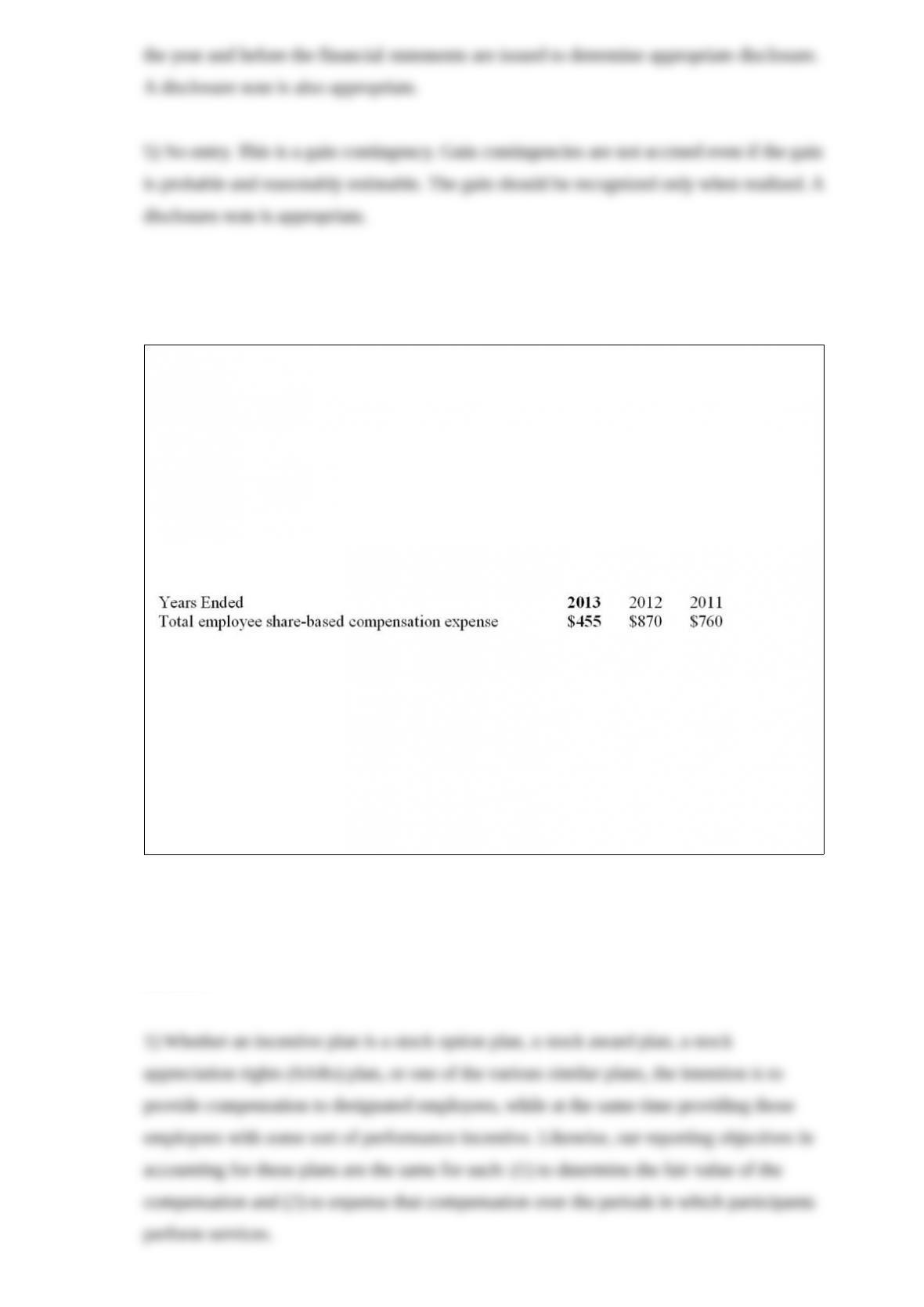
Blair Systems offers its employees a variety of share-based compensation plans
including stock options, stock appreciation rights, and restricted stock. The following is
an excerpt from a disclosure note from Blair’s 2013 financial statements:
Note 11 Employee Benefit Plans (in part)
The Company adopted SFAS 123(R) [ASC Topic 718], which requires the
measurement and recognition of compensation expense for all share-based payment
awards made to the Company’s employees and directors including employee stock
options and employee stock purchase rights, based on estimated fair values. Employee
share-based compensation expense under SFAS 124 (R) was as follows (in millions):
Required:
1) Blair’s share-based compensation includes stock options, stock appreciation rights,
and restricted stock awards. What is the general financial reporting objective when
recording compensation expense for these forms of compensation?
Blair reported share-based expense of $455 million in 2013. Without referring to
specific numbers and ignoring other forms of share-based compensation, describe how
this amount reflects the value of stock options.
Answer:
Champion Industries exchanged a dust-scrubbing piece of equipment for another
version of the same type of equipment and received $12,000 cash. The old dust
scrubber cost $76,200 and had a book value of $54,500. The new dust scrubber had a
fair value of $58,500.
Required:
Prepare the journal entry to record the exchange. Assume the exchange has commercial
substance.
Answer:
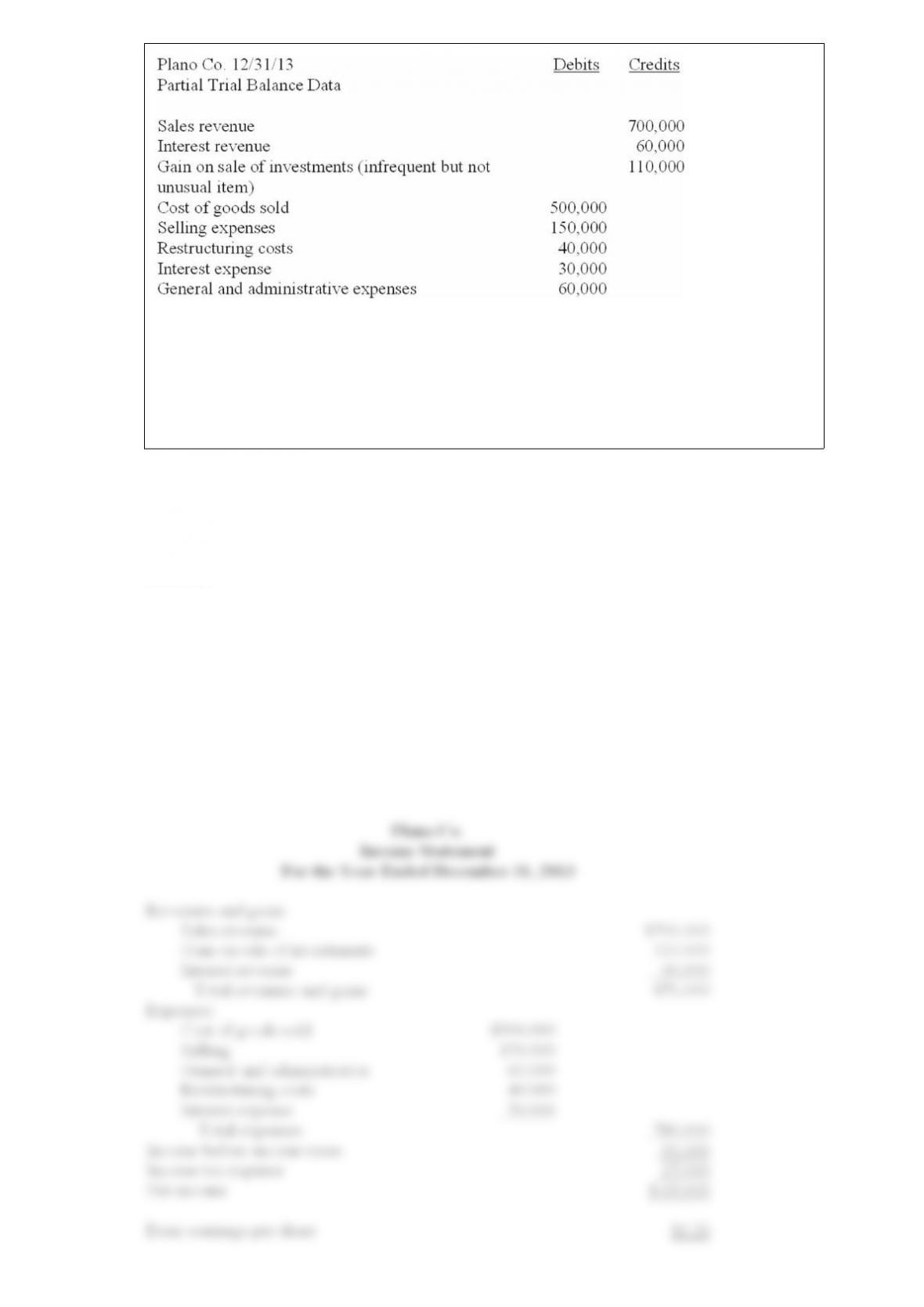
Plano had 50,000 shares of stock outstanding throughout the year. Income tax expense
has not yet been accrued. The effective tax rate is 30%.
Required:
Prepare a single-step income statement with basic earnings per share disclosure.
Answer:
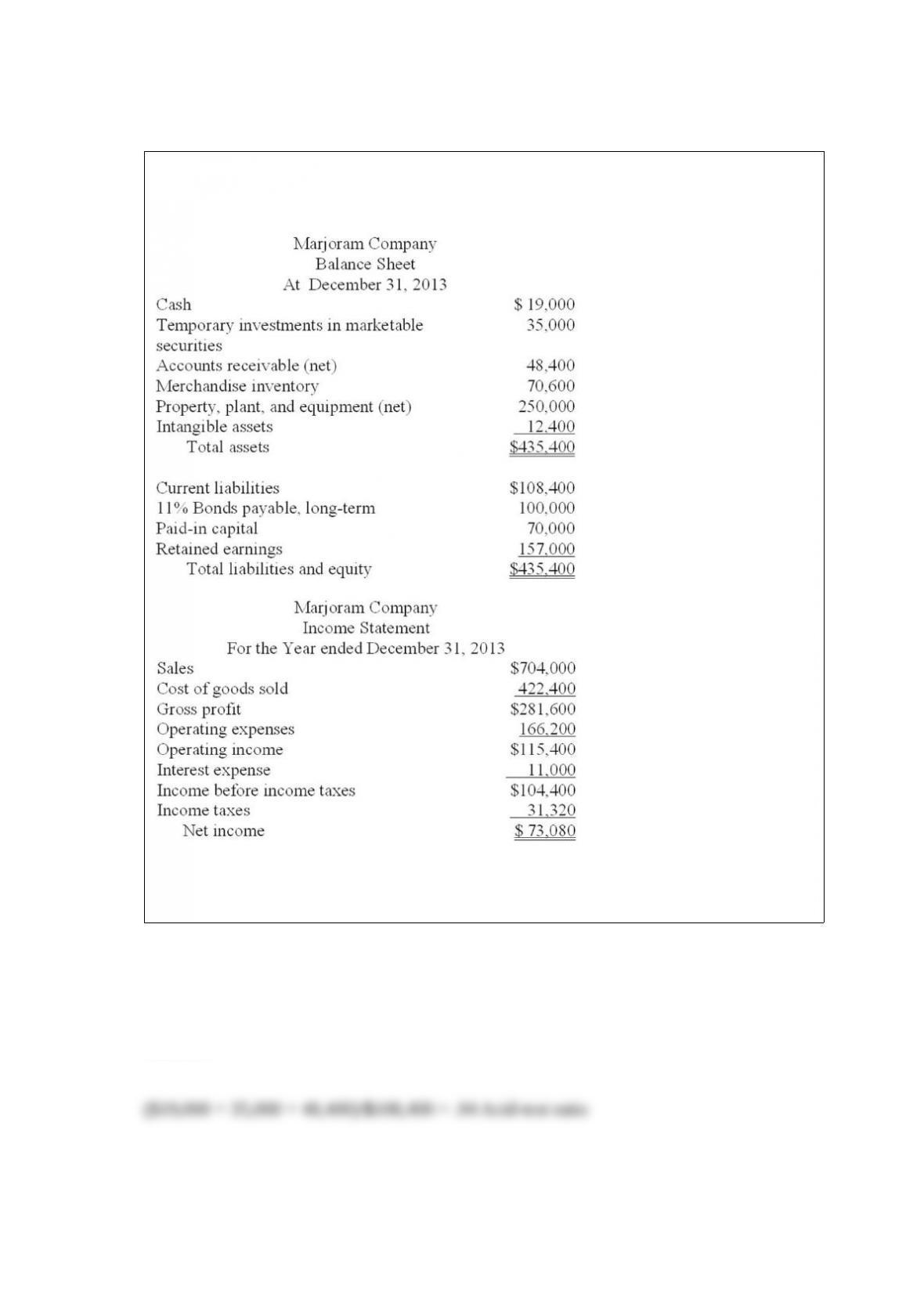
The condensed balance sheet and income statement for Marjoram Company are
presented below.
Compute the acid-test ratio for Marjoram Company. Round your answer to two decimal
places.
Answer:
Why did the loss result in a reduction in accumulated other comprehensive income?
Answer:
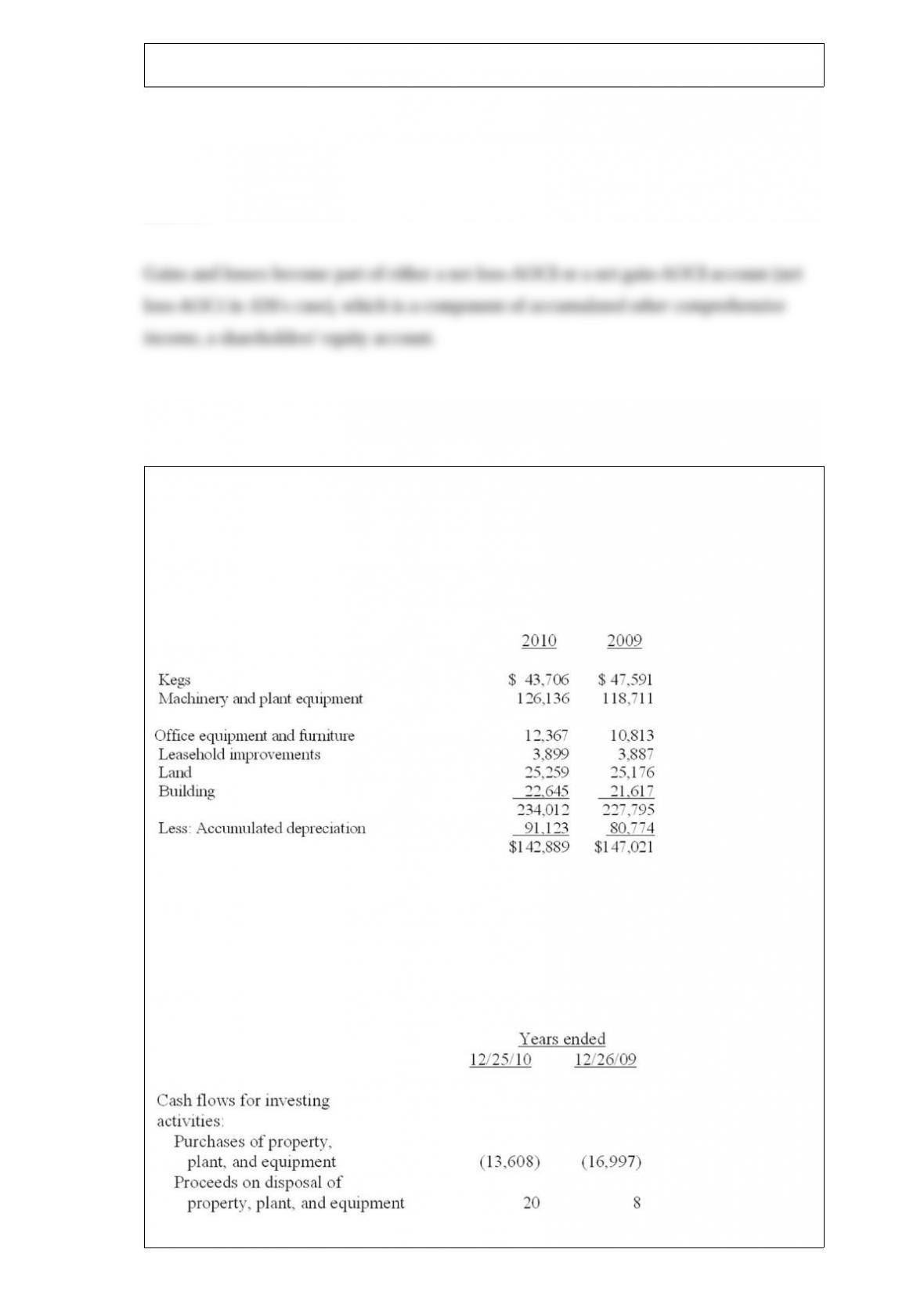
In its 2010 annual report to shareholders, Boston Beer Company, Inc. disclosed the
following in a disclosure note:
E. Property, Plant, and Equipment
Property, plant, and equipment for the years ended December 25, 2010, and December
26, 2009, consisted of the following ($ in thousands):
The Company recorded depreciation expense related to these assets of $17.3 million
and $16.8 million related to these assets for the years ended December 25, 2010, and
December 26, 2009, respectively.
Also, Boston Beer reported the following information in the annual report ($ in
thousands):
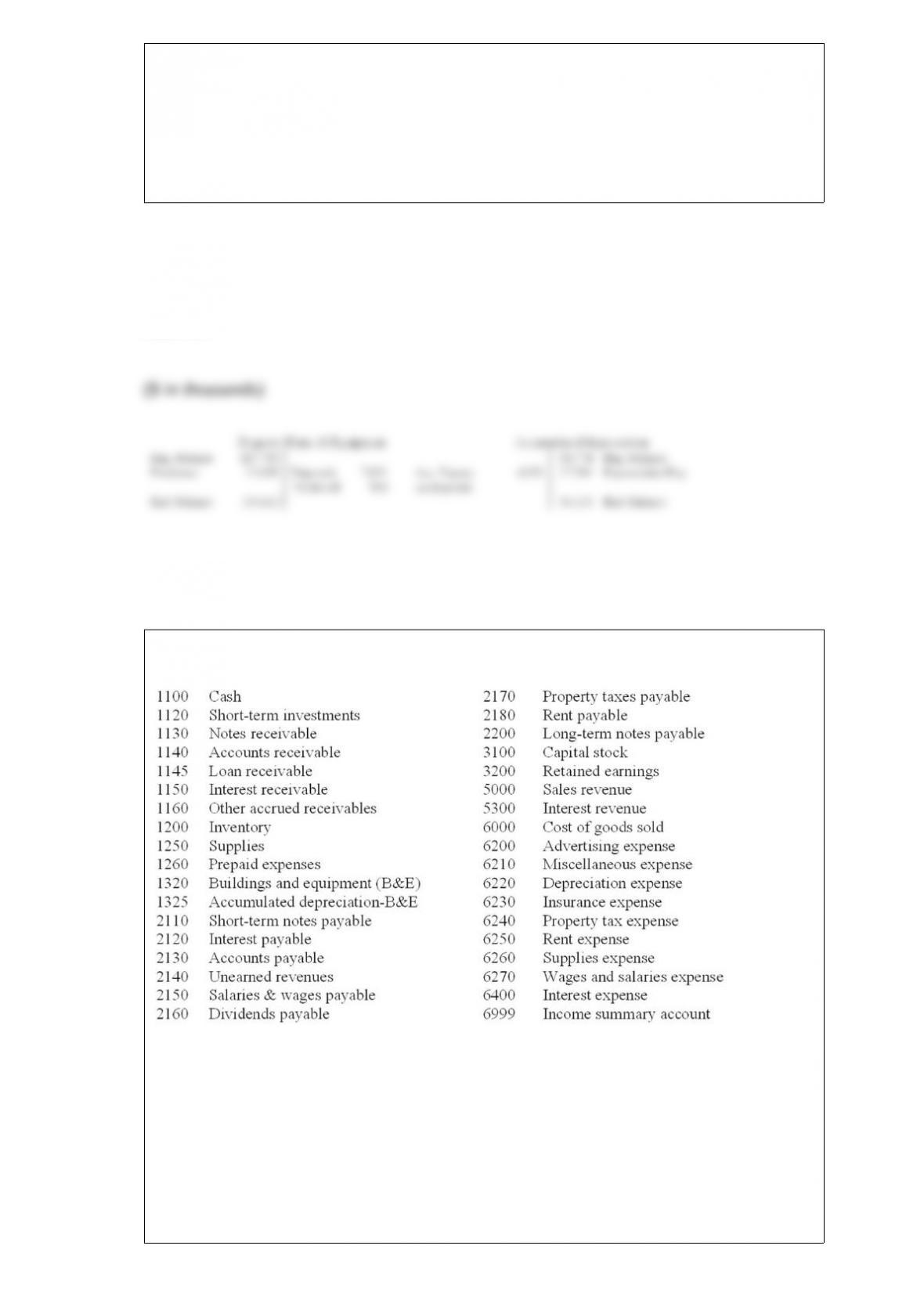
The disclosure notes also reported that the company wrote off $300 (in thousands) in
previously capitalized costs.
Use a T- account to show the balances and changes during 2010 in Boston Beer’s:
Property, Plant, and Equipment account and its Accumulated depreciationProperty,
Plant, & Equipment account.
Answer:
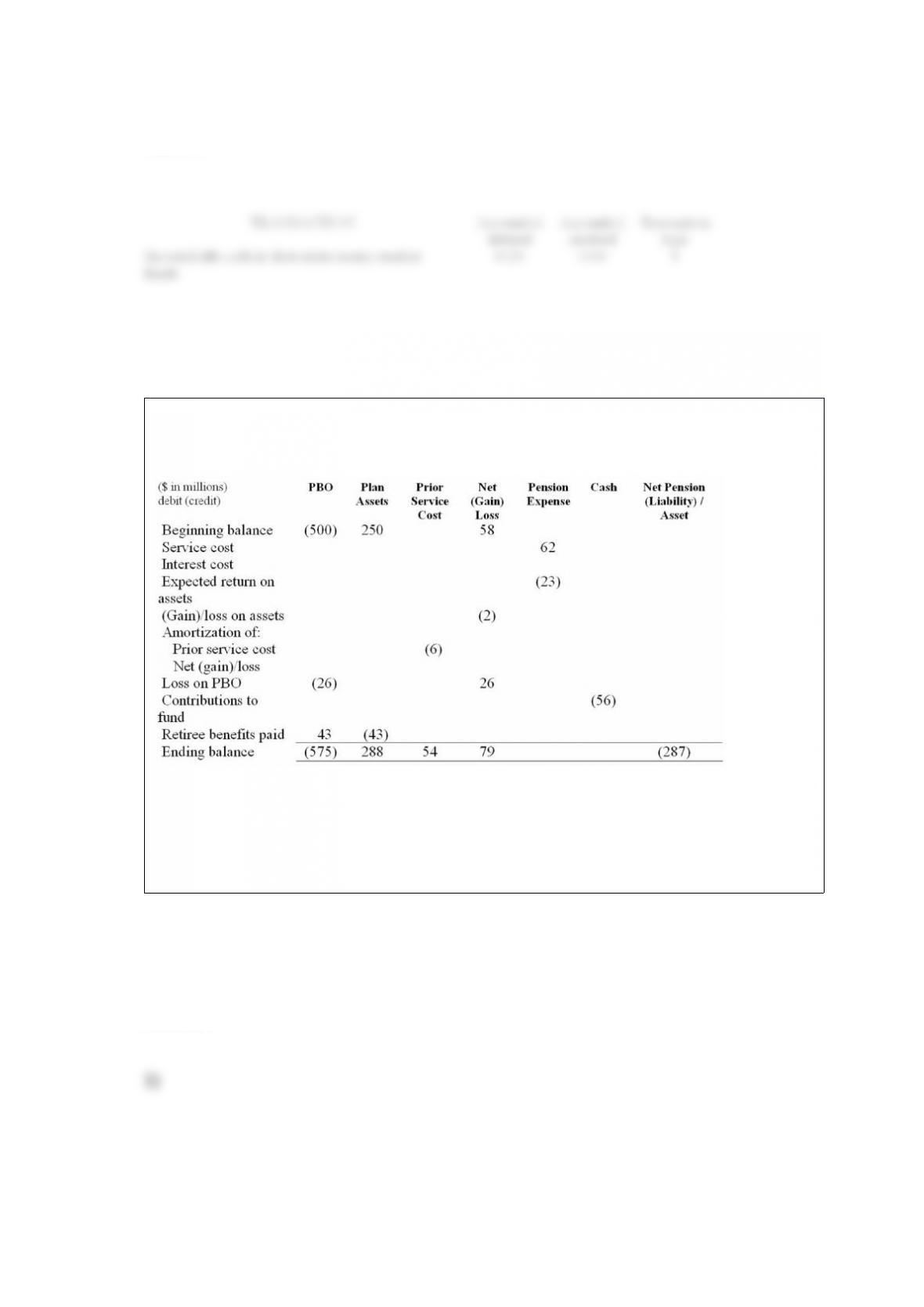
Using the chart of accounts provided, indicate by account number the account or
accounts that would be debited and credited in the following transactions and indicate
the type of transaction as: (1) an external transaction, (2) an internal transaction
recorded as an adjusting journal entry, or (3) a closing entry. The company uses a
perpetual inventory system. All prepayments are initially recorded in permanent
accounts.
Invested idle cash in short-term money market funds.
Answer:
The following is an incomplete pension spreadsheet for the current year for Desperado
Corporation.
Required:
1) Complete the pension spreadsheet.
2) Prepare the journal entry to record pension expense for the year.
Answer:
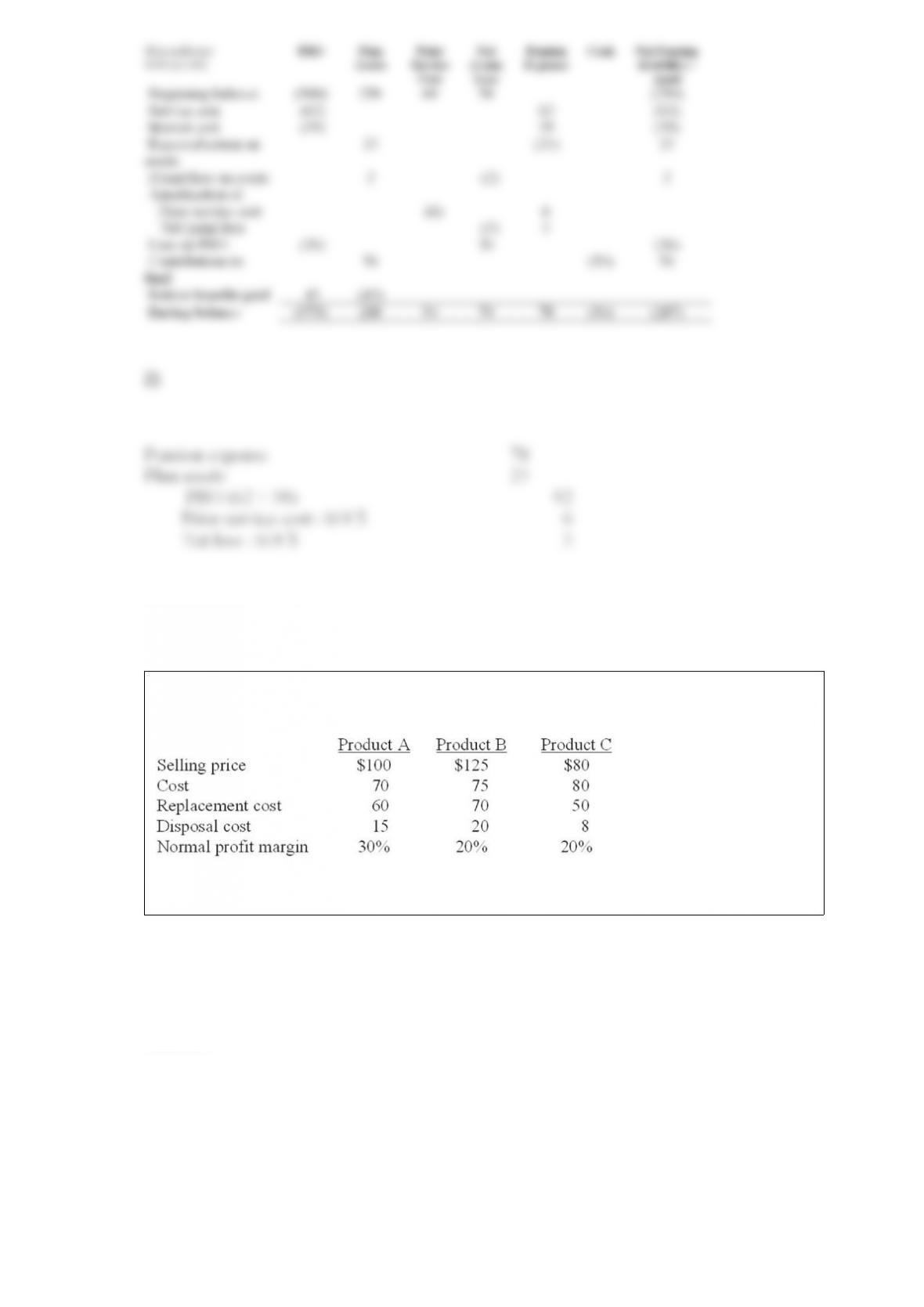
Memphis Wholesale Market applies lower-of-cost-or-market valuation to individual
products and has collected the following data:
Determine the balance sheet inventory carrying value for Products A, B, and C.
Answer:
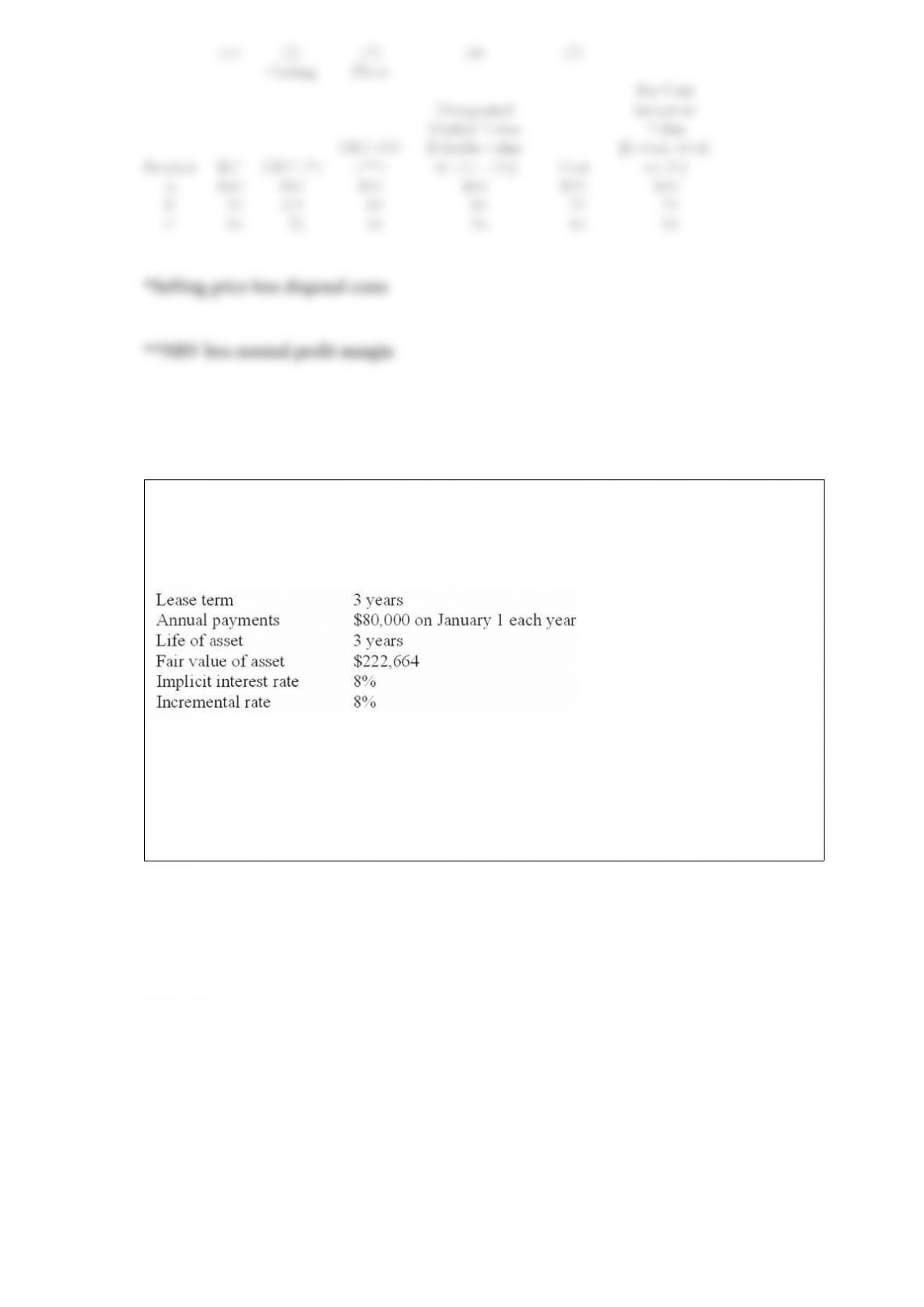
Python Company leased equipment from Hope Leasing on January 1, 2013. Hope
purchased the equipment at a cost of $222,664.
Other information:
There is no expected residual value.
Required:
Prepare appropriate journal entries for Python for 2013. Assume straight-line
depreciation and a December 31 year-end.
Answer:
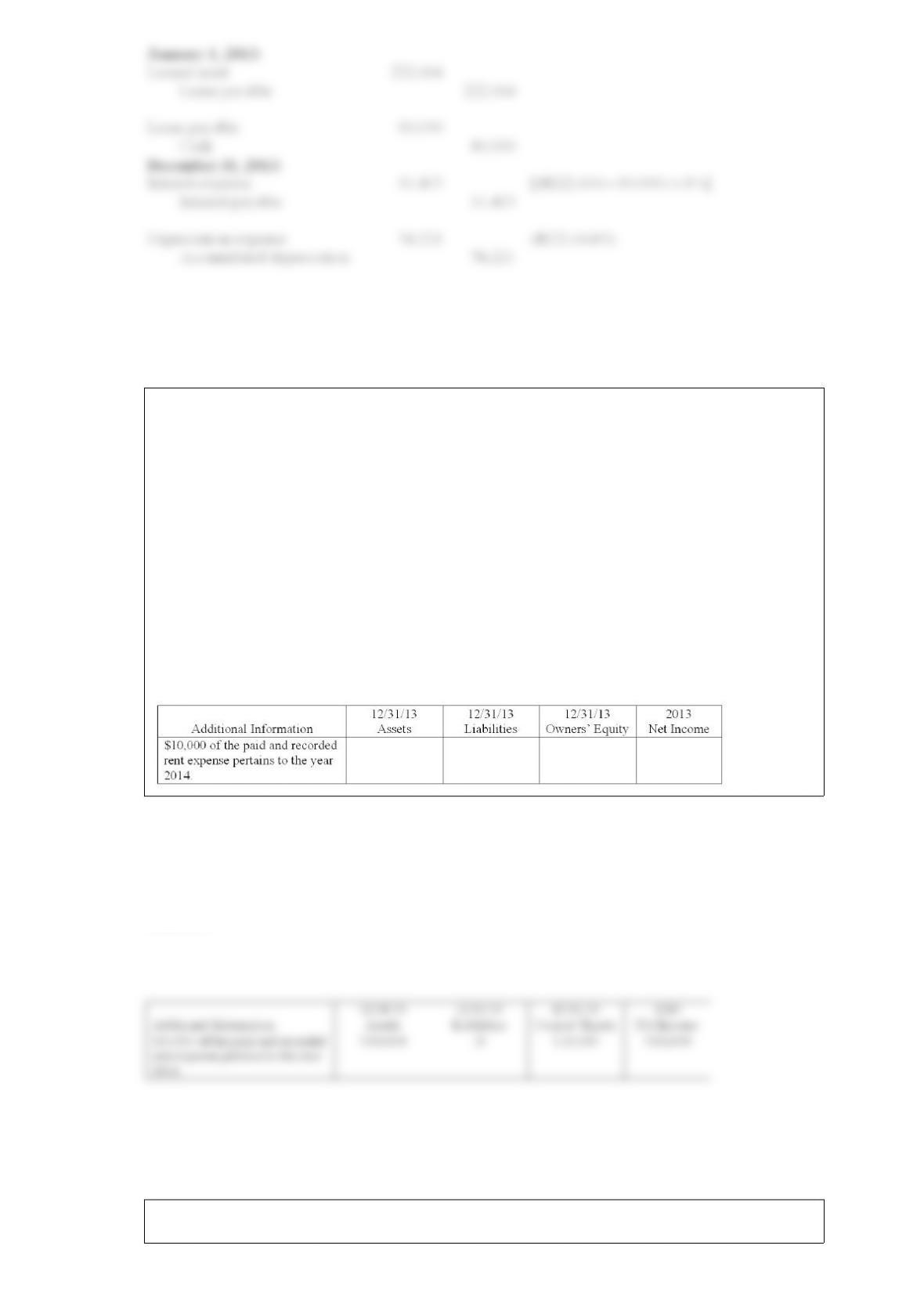
Suppose that Laramie Company’s adjusted trial balance ignored the following
information. For each item of information, indicate what effects, if any, these omissions
would have on the stated components of Laramie Company’s 2013 Income Statement
and 12/31/13 Balance Sheet. Assume no income taxes.
Use the following code for your answers and be sure to include the dollar amounts of
the effects next to the letter O or U:
N = No Effect
O = Overstated
U = Understated
Answer:
You are reviewing O’Brian Co.’s adjusted trial balance for the year ended 12/31/13. You
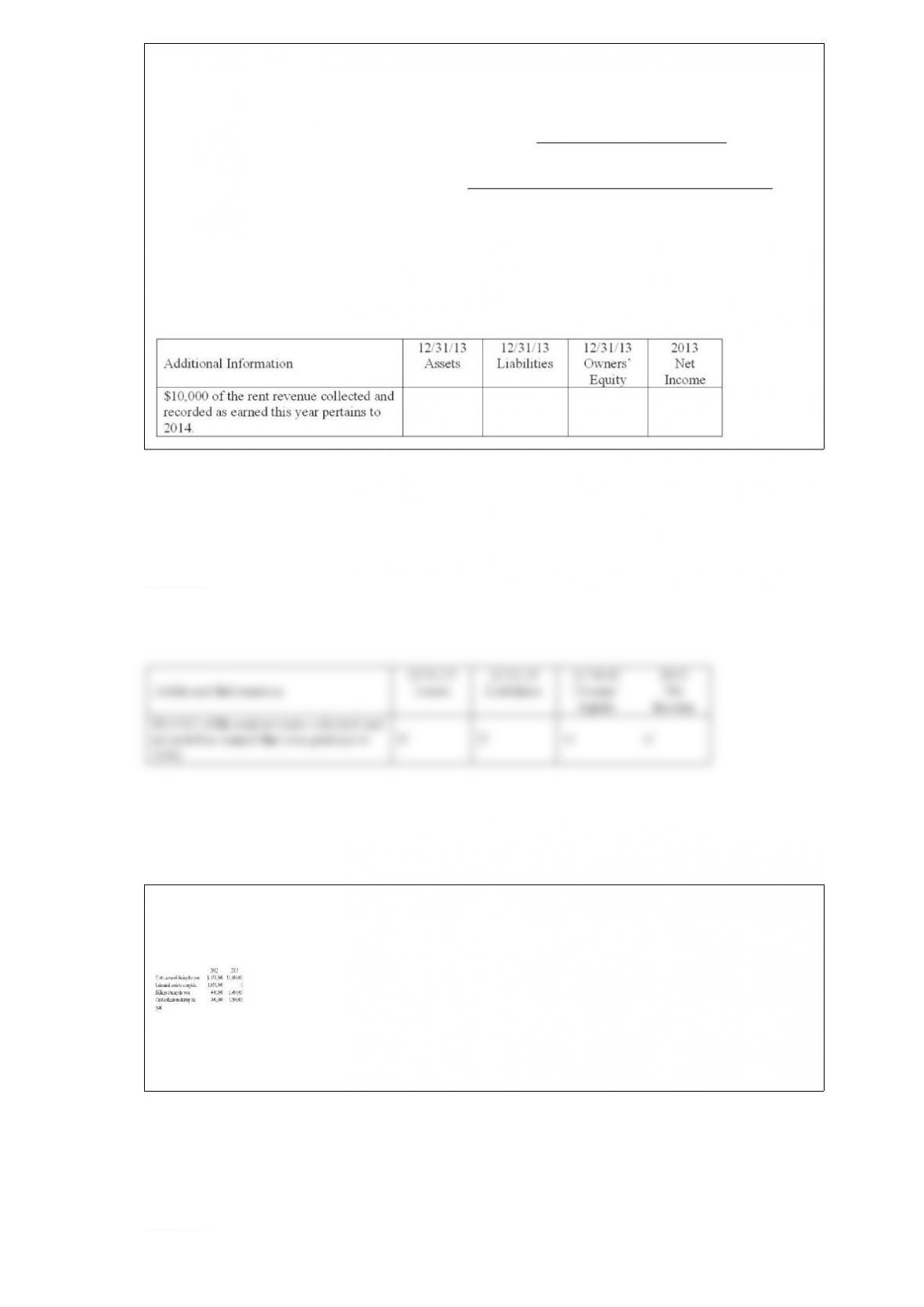
notice several omissions and incorrect items during your review, some of which are
noted below. For each one, you are to determine what effect, if any, these items would
have on the stated components of O’Brian Co.’s 2013 Income Statement and 12/31/13
Balance Sheet if they are not corrected or updated. Assume no income taxes.
Use the following code for your answers. You need not include any dollar amounts.
N = No Effect
O = Overstated
U = Understated
Answer:
Beavis Construction Company was the low bidder on a construction project to build an
earthen dam for $1,800,000. The project was begun in 2012 and completed in 2013.
Cost and other data are presented below:
Assume that Beavis uses the completed contract method for revenue recognition.
Required: Compute the amount of gross profit recognized during 2012 and
Answer:
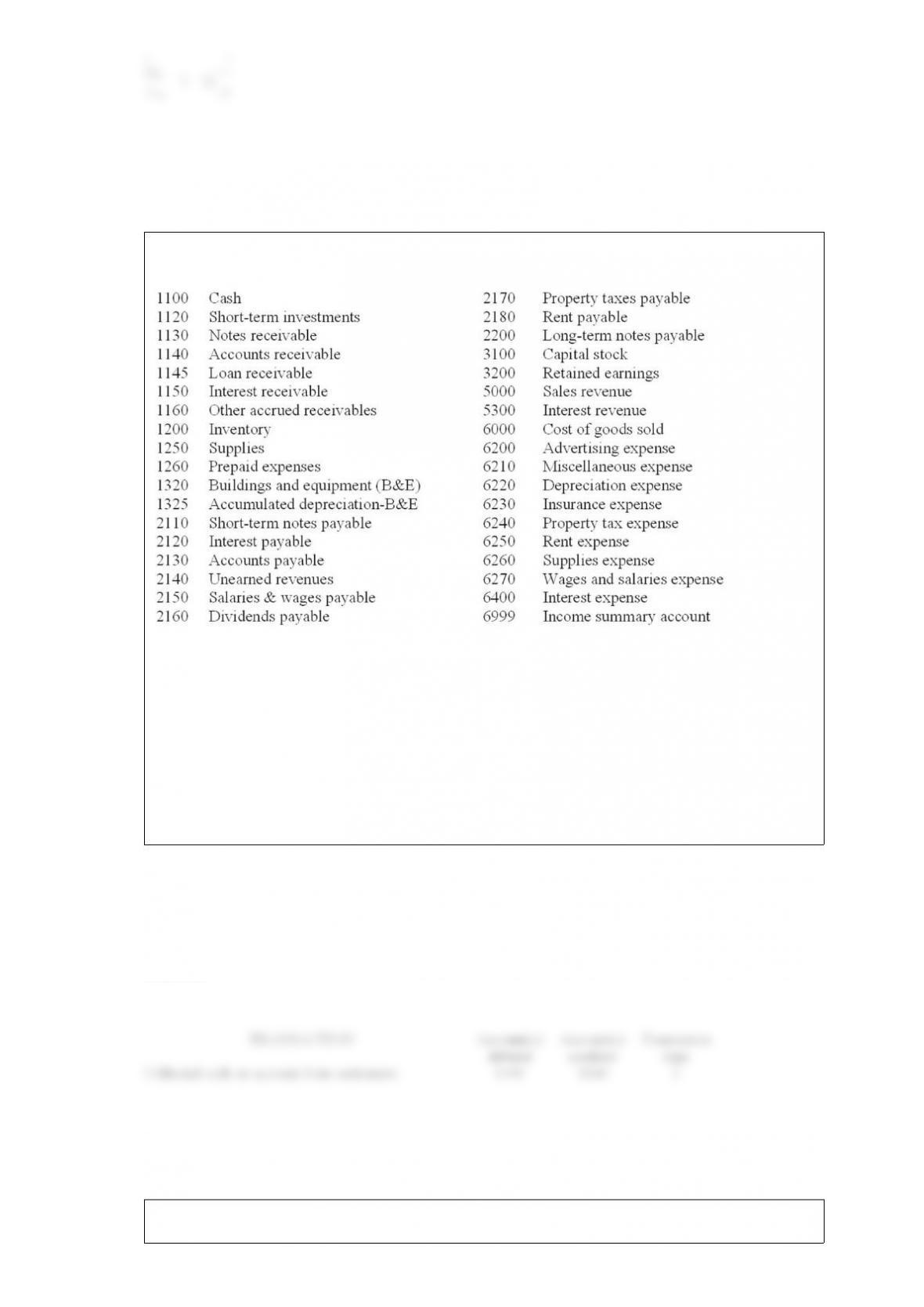
Using the chart of accounts provided, indicate by account number the account or
accounts that would be debited and credited in the following transactions and indicate
the type of transaction as: (1) an external transaction, (2) an internal transaction
recorded as an adjusting journal entry, or (3) a closing entry. The company uses a
perpetual inventory system. All prepayments are initially recorded in permanent
accounts.
Collected cash on account from customers.
Answer:
Describe the approaches of reporting changes in accounting principles.

Answer:
Coronado Land Sales sold for $245,000 a parcel of land that cost $180,000. The cost
recovery method was appropriately used. Collections on the sale were: $60,000 in 2012,
$90,000 in 2013, and $95,000 in
Required: Prepare journal entries to record the sale, cash collections, and recognition
of gross profit (if appropriate) in 2012, 2013, and
Answer: