1) glen inc. and armstrong co. have an exchange with no commercial substance. the
asset given up by glen inc. has a book value of $48,000 and a fair value of $60,000. the
asset given up by armstrong co. has a book value of $80,000 and a fair value of
$76,000. boot of $16,000 is received by armstrong co.
what amount should armstrong co. record for the asset received?
a.$60,000
b.$64,000
c.$76,000
d.$80,000
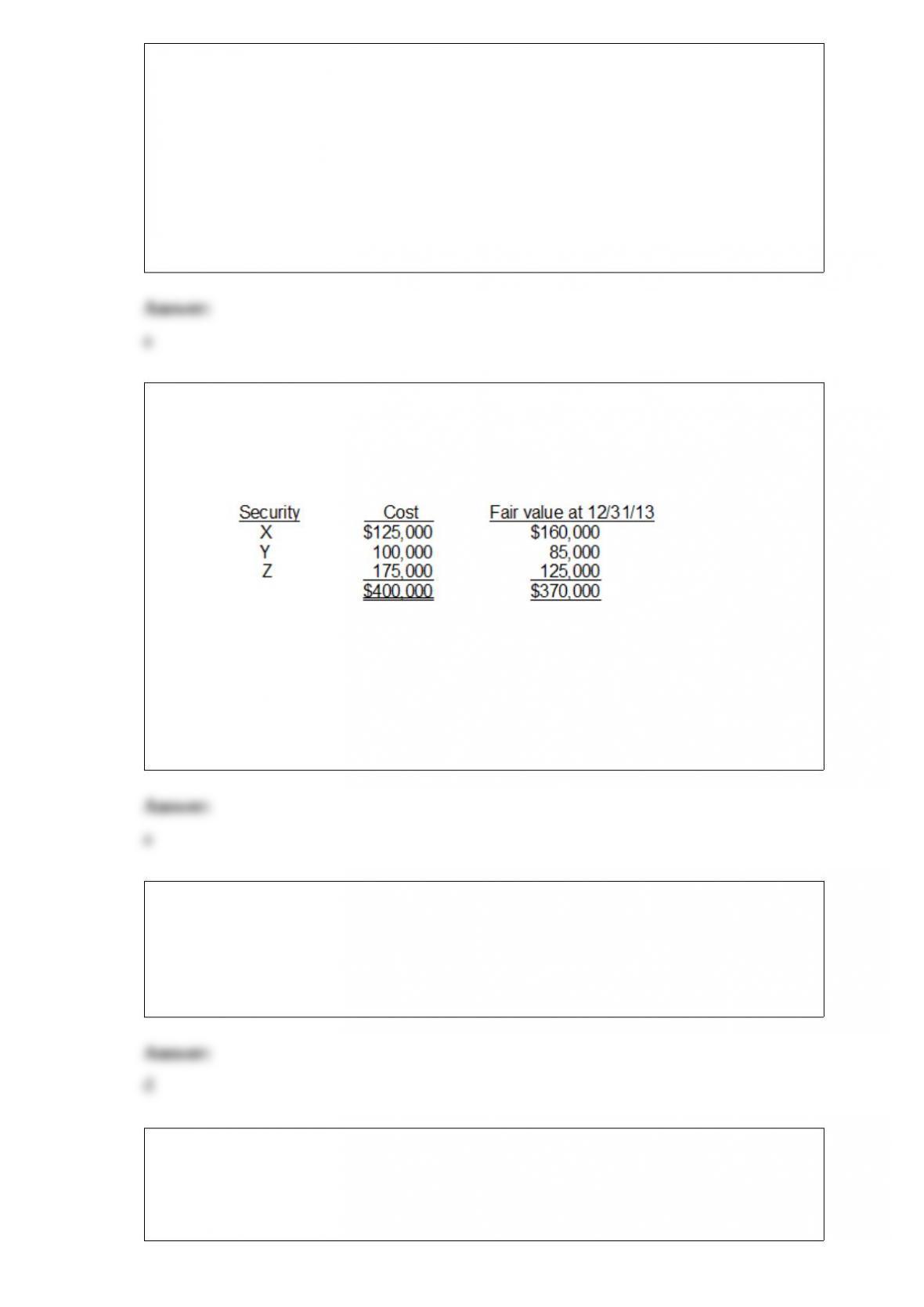
2) on its december 31, 2012 balance sheet, calhoun company appropriately reported a
$10,000 debit balance in its fair value adjustment (available-for-sale) account. there was
no change during 2013 in the composition of calhouns portfolio of equity investments
held as available-for-sale securities. the following information pertains to that portfolio:
the amount of unrealized loss to appear as a component of comprehensive income for
the year ending december 31, 2013 is
a.$40,000
b.$30,000
c.$10,000
d.$0
3) bonds that pay no interest unless the issuing company is profitable are called
a.collateral trust bonds
b.debenture bonds
c.revenue bonds
d.income bonds
4) taxable income of a corporation
a.differs from accounting income due to differences in intraperiod allocation between
the two methods of income determination
b.differs from accounting income due to differences in interperiod allocation and

permanent differences between the two methods of income determination
c.is based on generally accepted accounting principles
d.is reported on the corporation’s income statement
5) messersmith company is constructing a building. construction began in 2012 and the
building was completed 12/31/12. messersmith made payments to the construction
company of $1,500,000 on 7/1, $3,150,000 on 9/1, and $3,000,000 on 12/31. average
accumulated expenditures were
a.$1,537,500
b.$1,800,000
c.$4,650,000
d.$7,650,000
6) which of the following is not an intangible asset?
a.trade name
b.research and development costs
c.franchise
d.copyrights
7) in accounting for compensated absences, the difference between vested rights and
accumulated rights is
a.vested rights are normally for a longer period of employment than are accumulated
rights
b.vested rights are not contingent upon an employee’s future service
c.vested rights are a legal and binding obligation on the company, whereas accumulated
rights expire at the end of the accounting period in which they arose
d.vested rights carry a stipulated dollar amount that is owed to the employee;
accumulated rights do not represent monetary compensation
8) hay company had january 1 inventory of $120,000 when it adopted dollar-value lifo.
during the year, purchases were $720,000 and sales were $1,200,000. december 31
inventory at year-end prices was $151,800, and the price index was 110.
what is hay companys gross profit?
a.$498,000
b.$499,800
c.$511,800
d.$1,060,200
9) which of the following criteria must be met before an event or item should be
recorded for accounting purposes?
a.the event or item can be measured objectively in financial terms
b.the event or item is relevant and reliable
c.the event or item is an element
d.all of these must be met
10) smithson corporation had a 1/1/12 balance in the allowance for doubtful accounts of
$20,000. during 2012, it wrote off $14,400 of accounts and collected $4,200 on
accounts previously written off. the balance in accounts receivable was $400,000 at 1/1
and $480,000 at 12/31. at 12/31/12, smithson estimates that 5% of accounts receivable
will prove to be uncollectible. what is bad debt expense for 2012?
a.$4,000
b.$14,200
c.$18,400
d.$24,000
11) which of the following represents a form of communication through financial
reporting but not through financial statements?
a.balance sheet
b.president’s letter
c.income statement
d.notes to financial statements
12) which of the following intangible assets could not be sold by a business to raise
needed cash for a capital project?
a.patent
b.copyright

c.goodwill
d.brand name